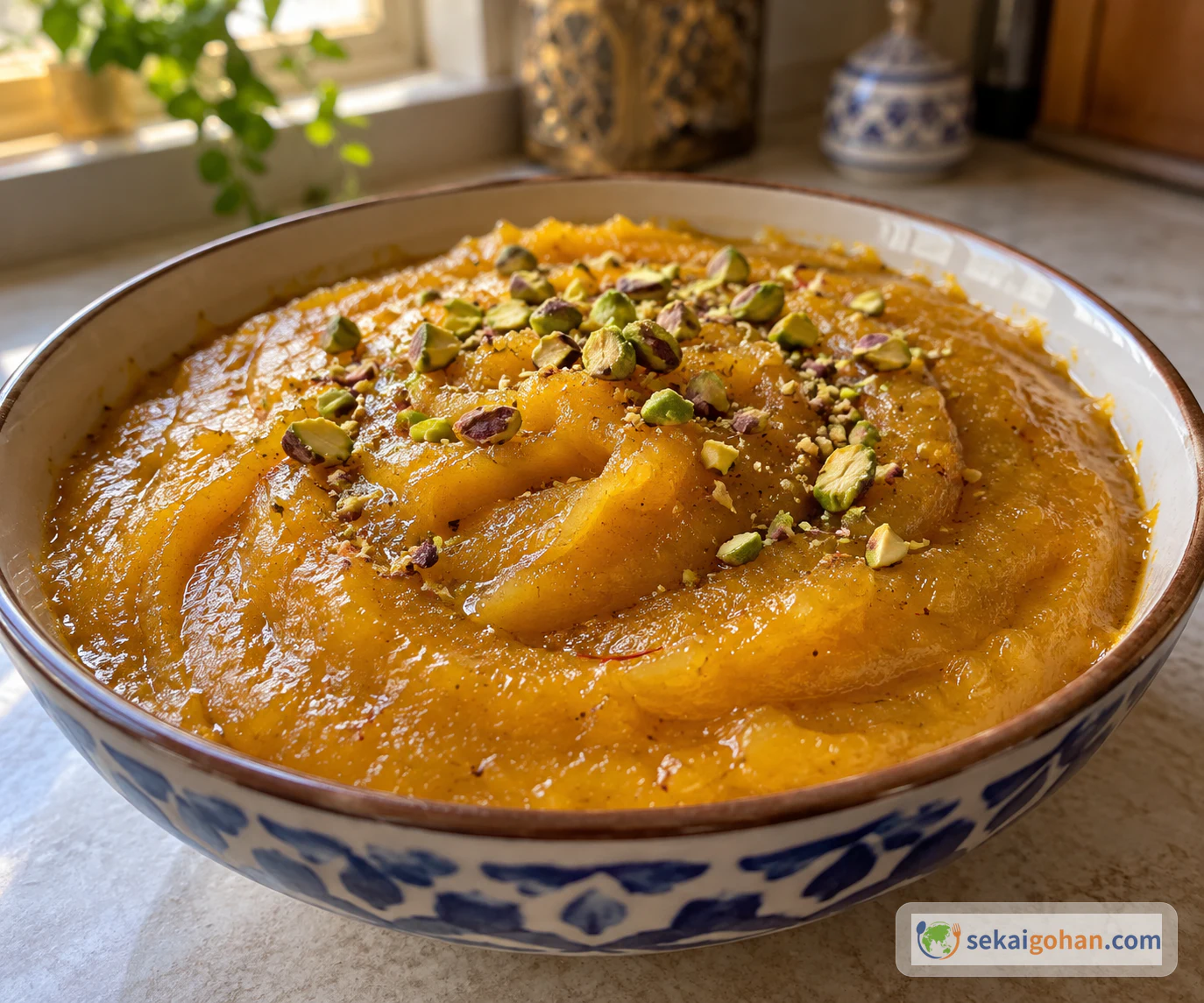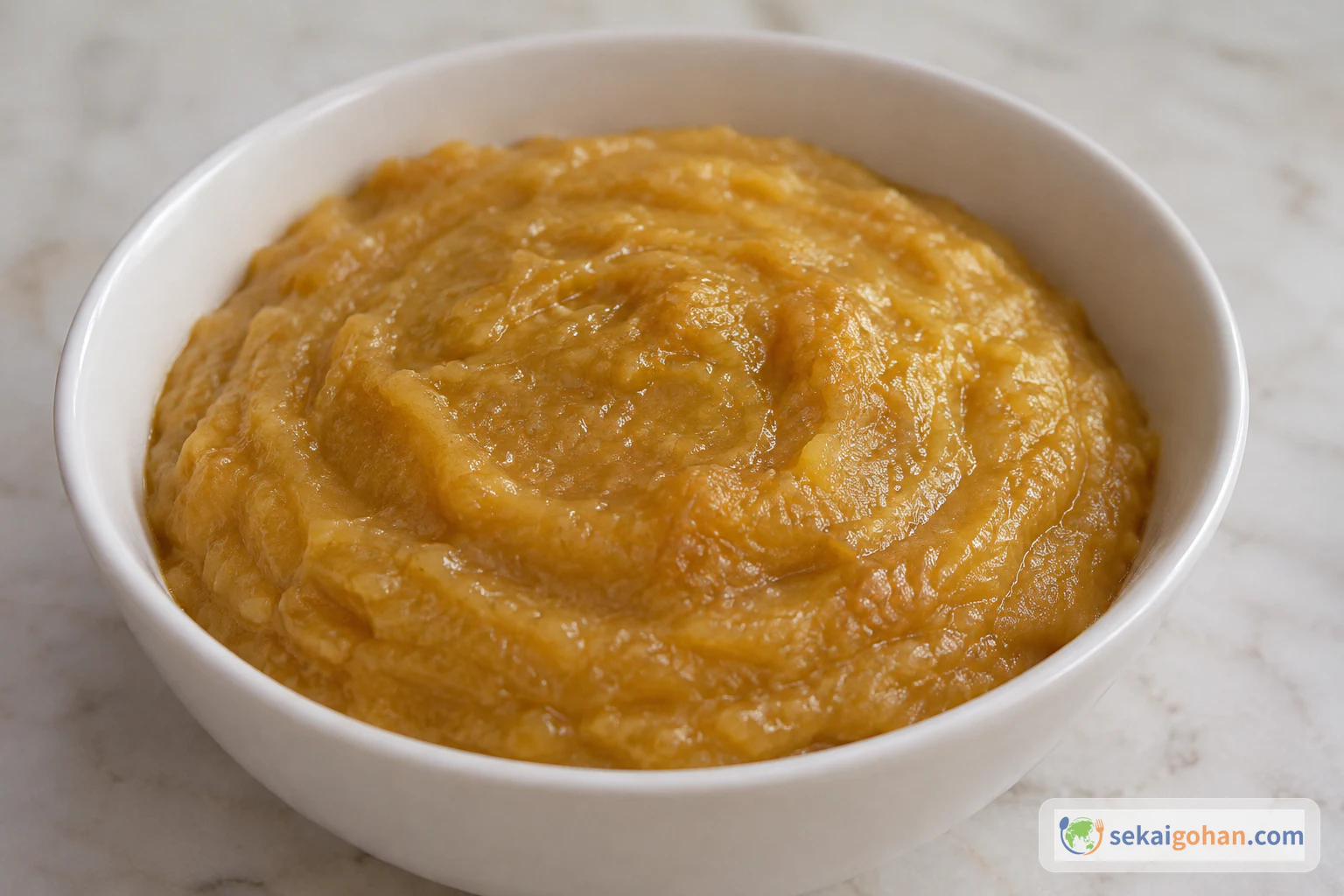
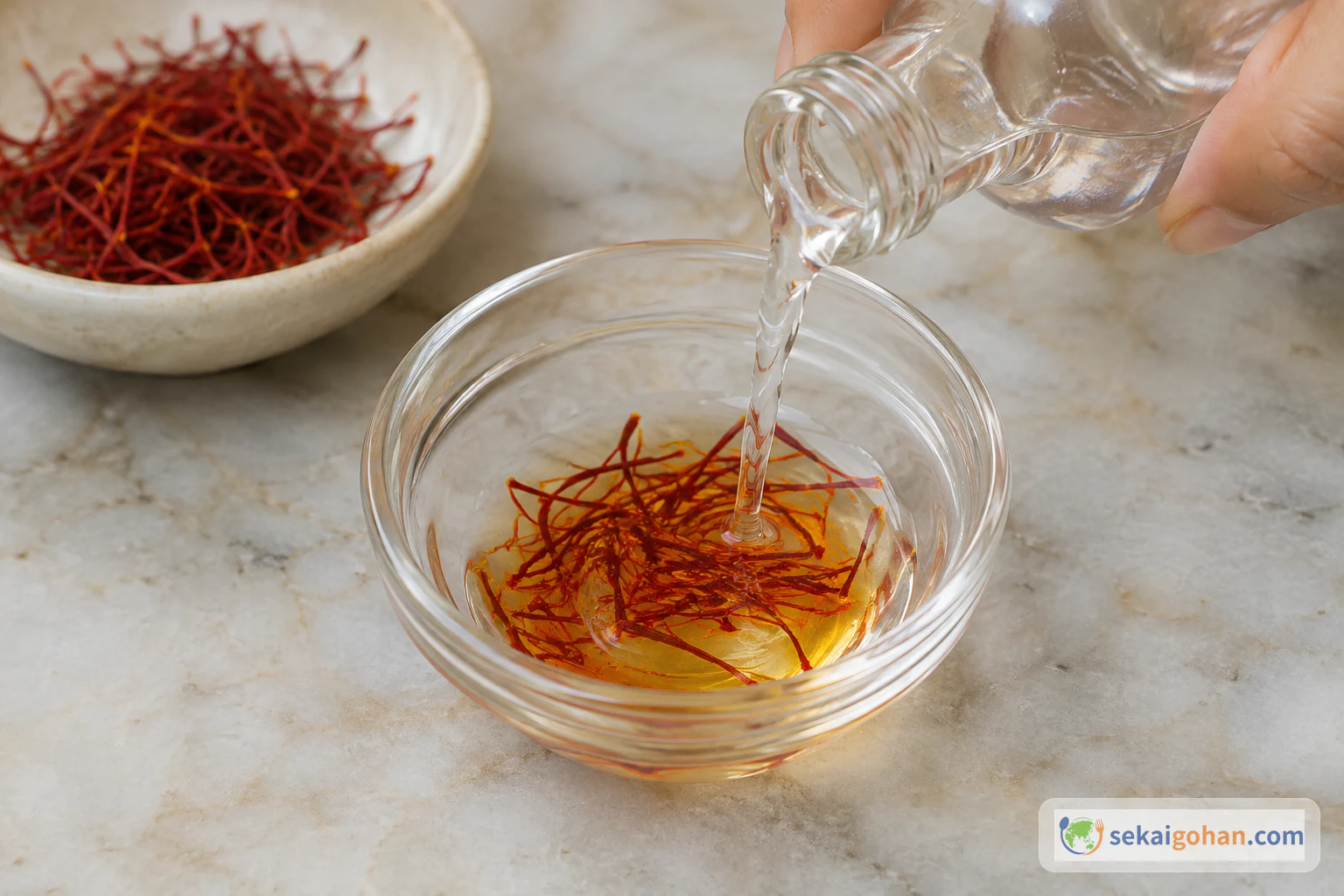
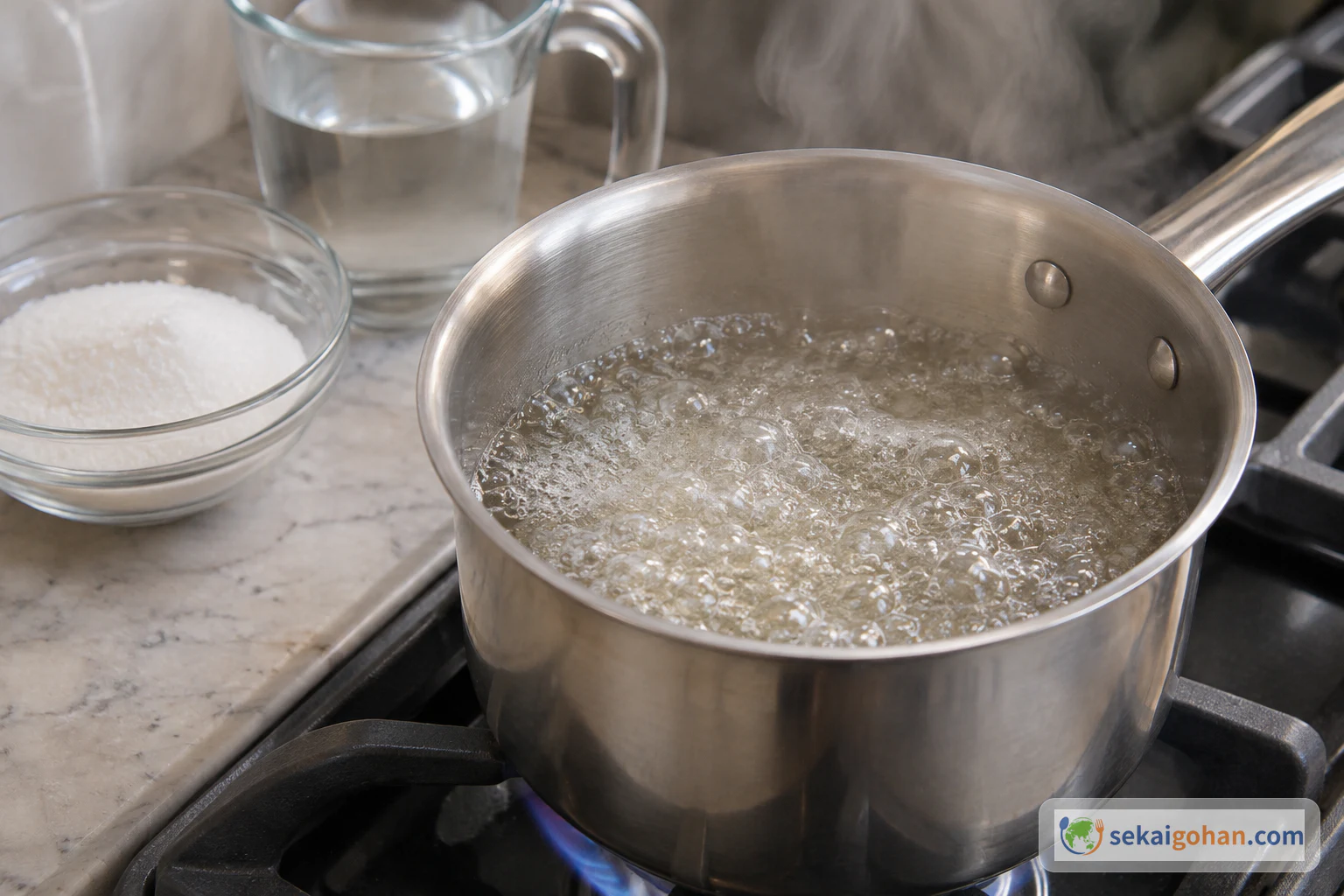
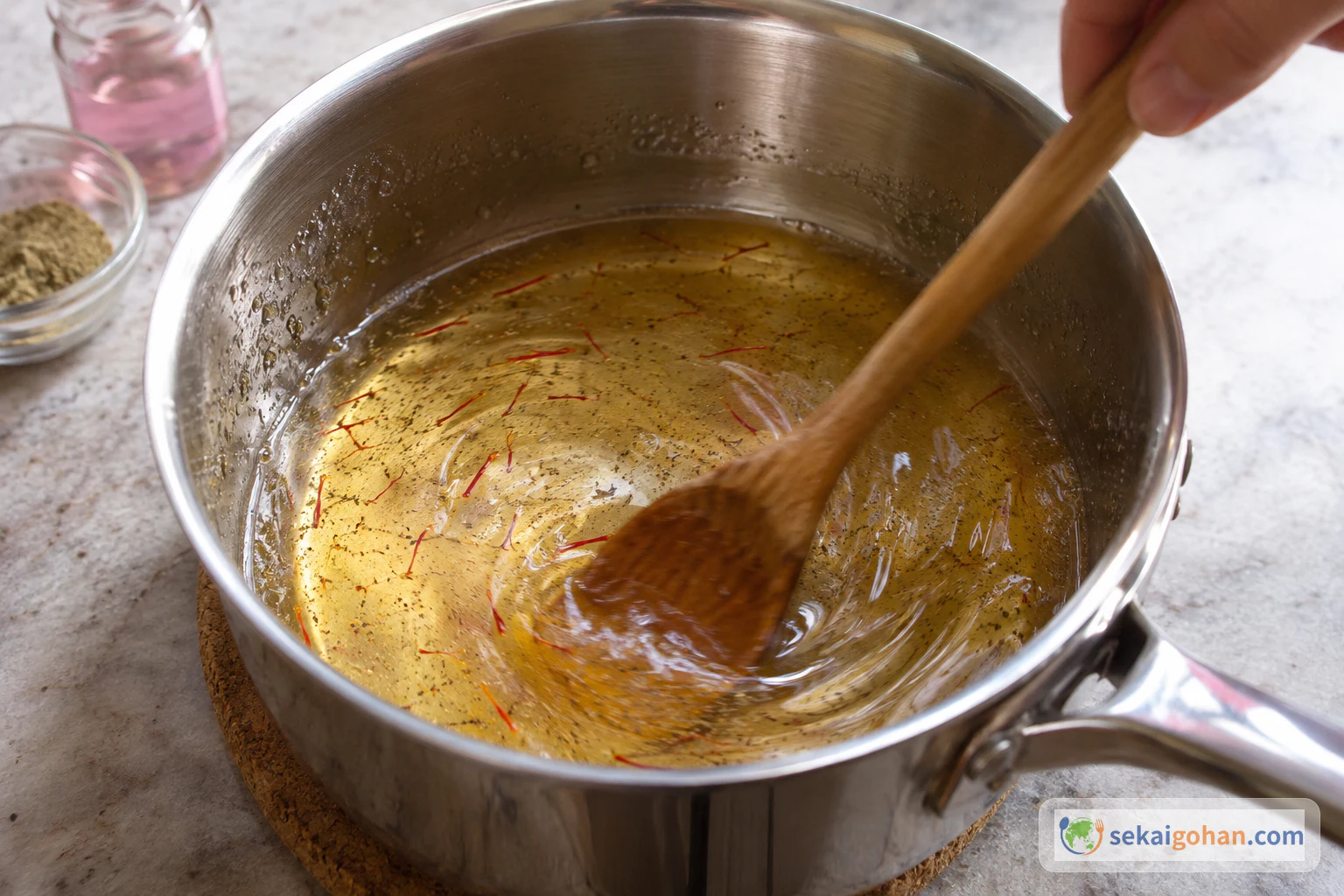
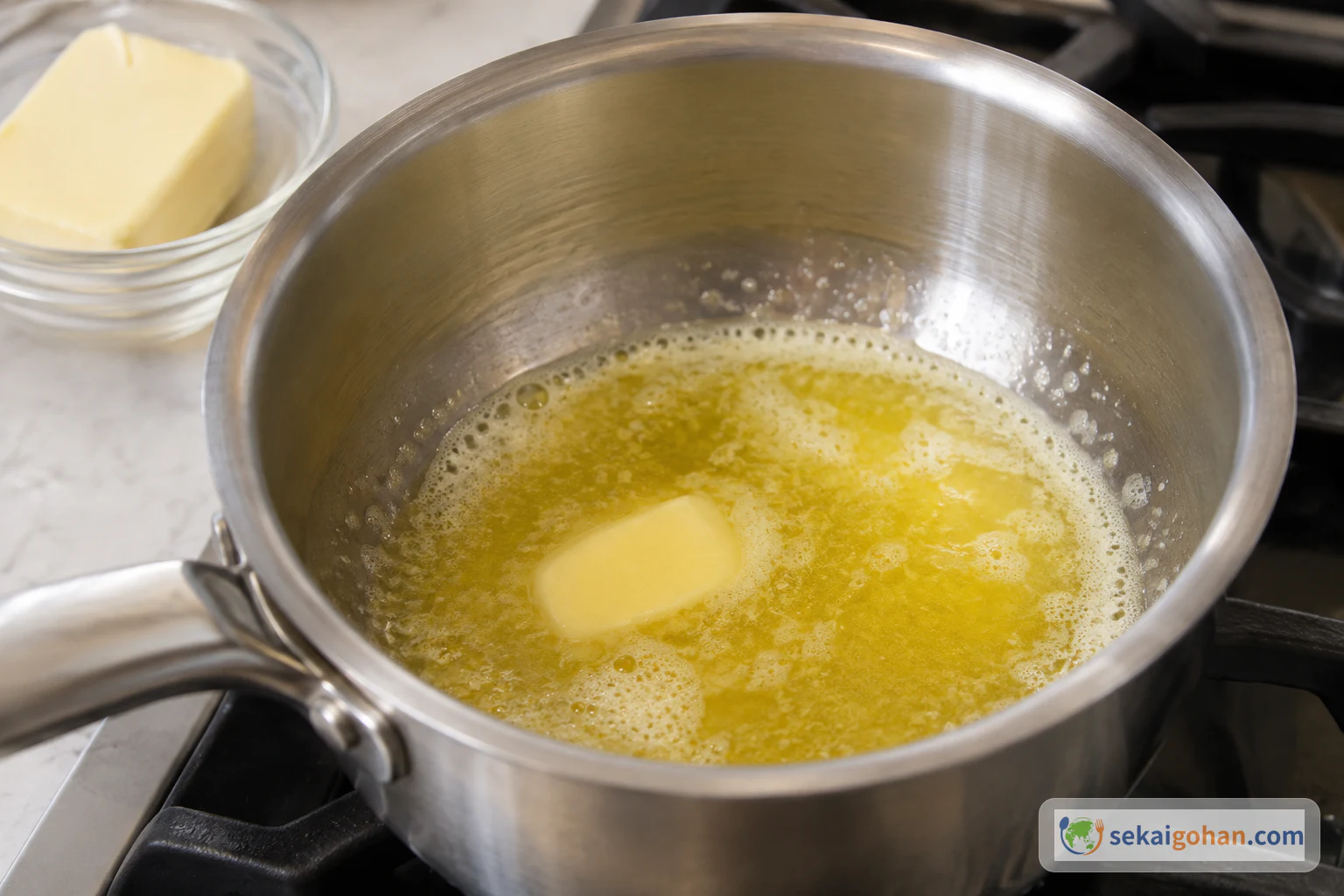
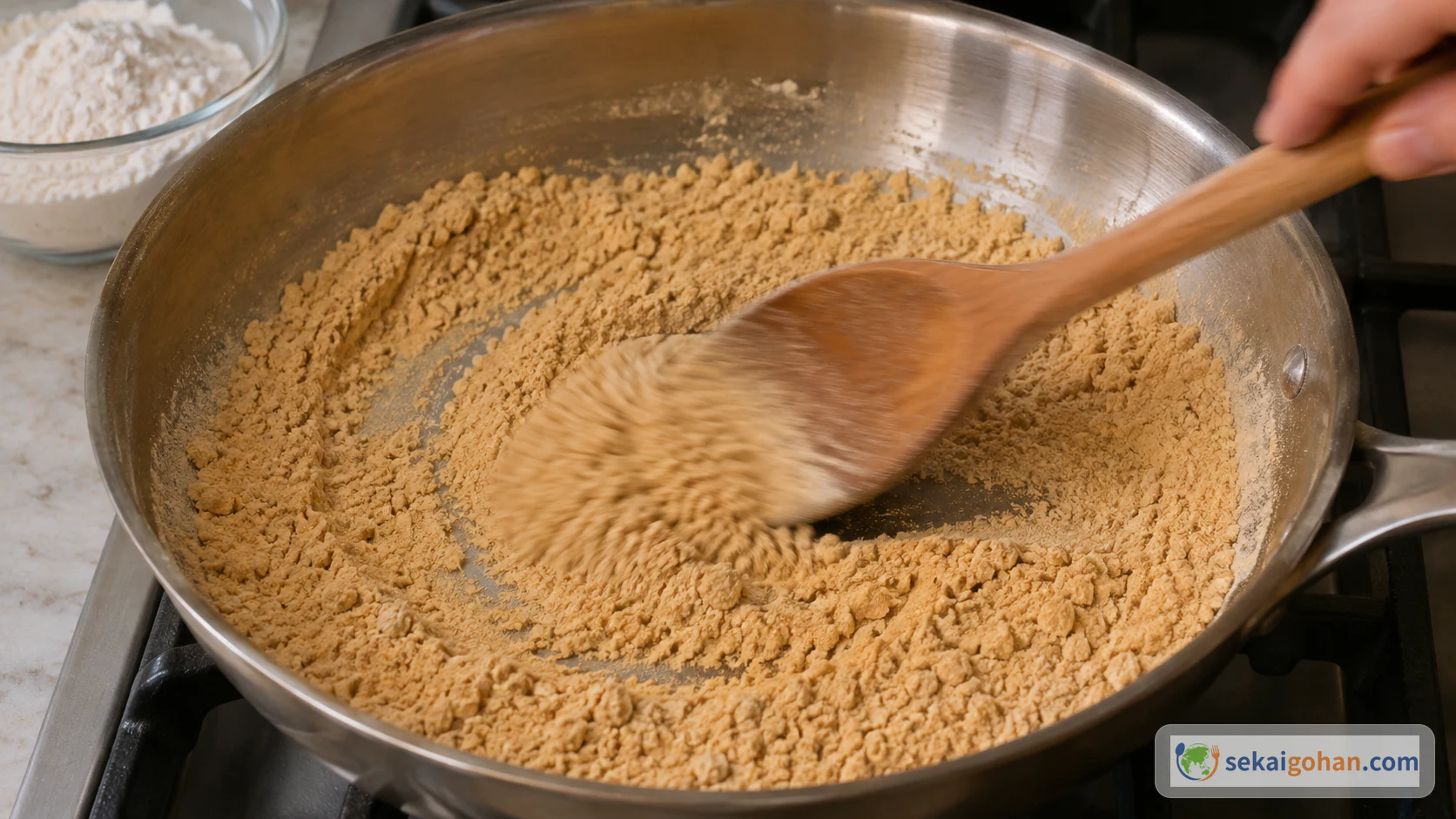
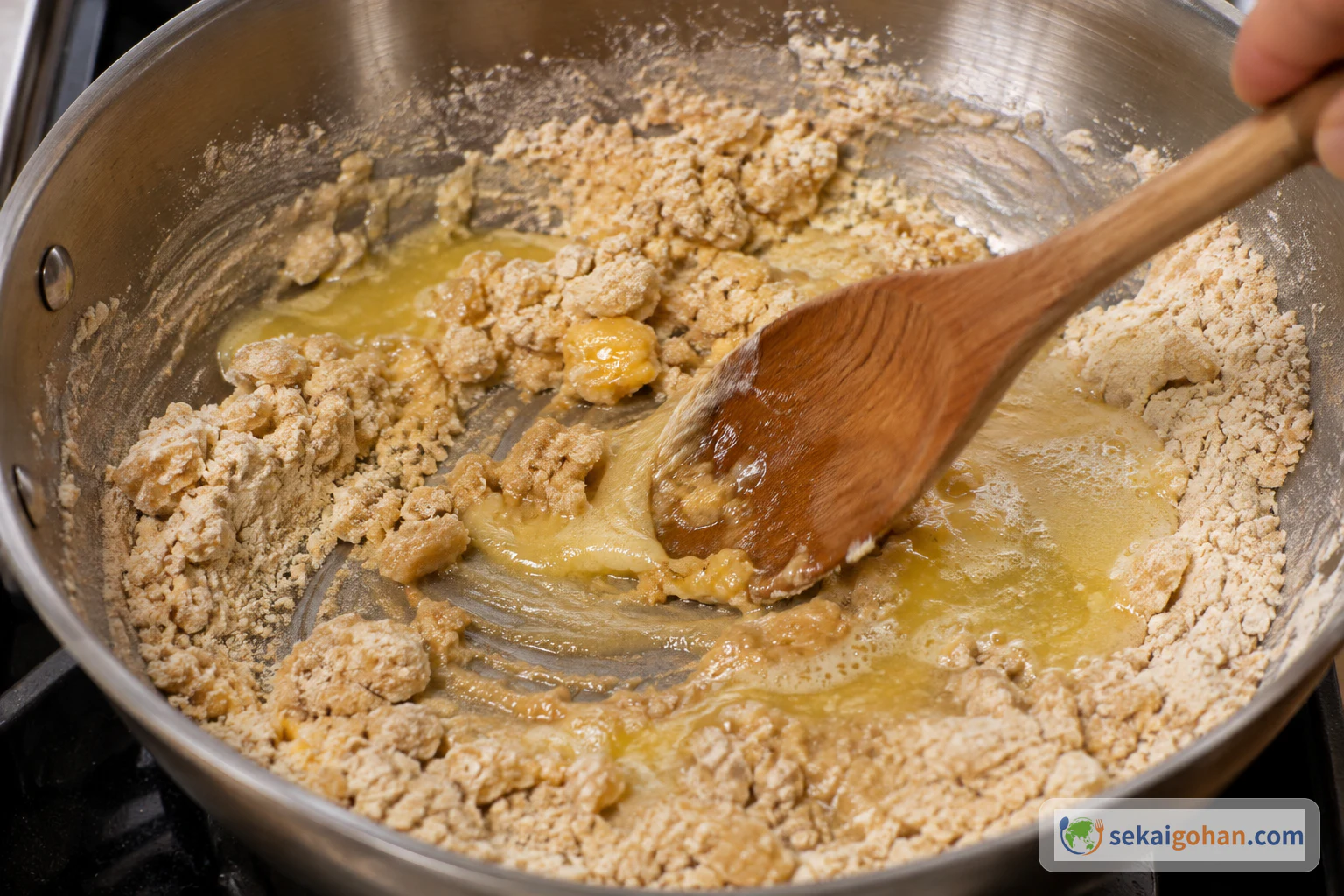
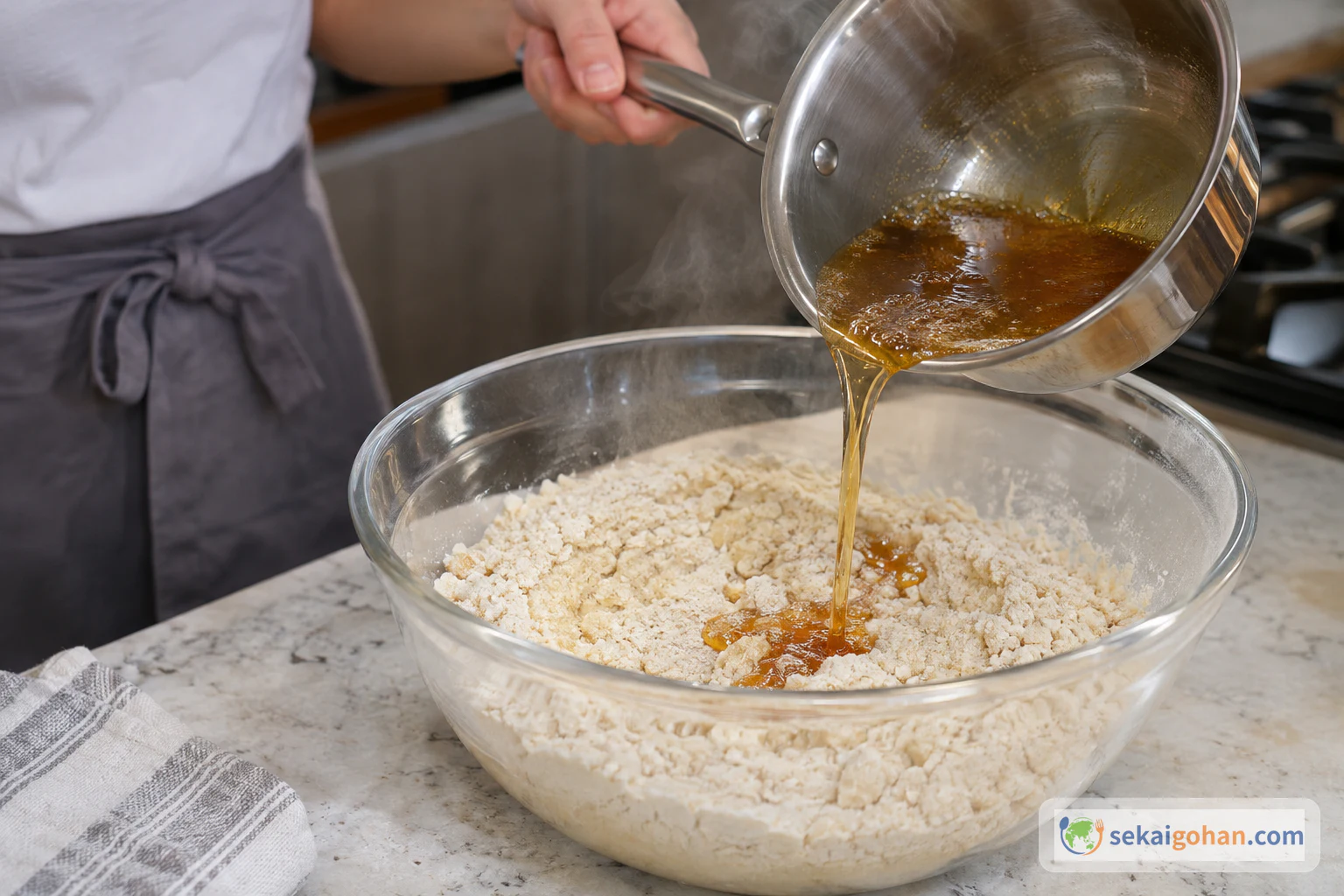
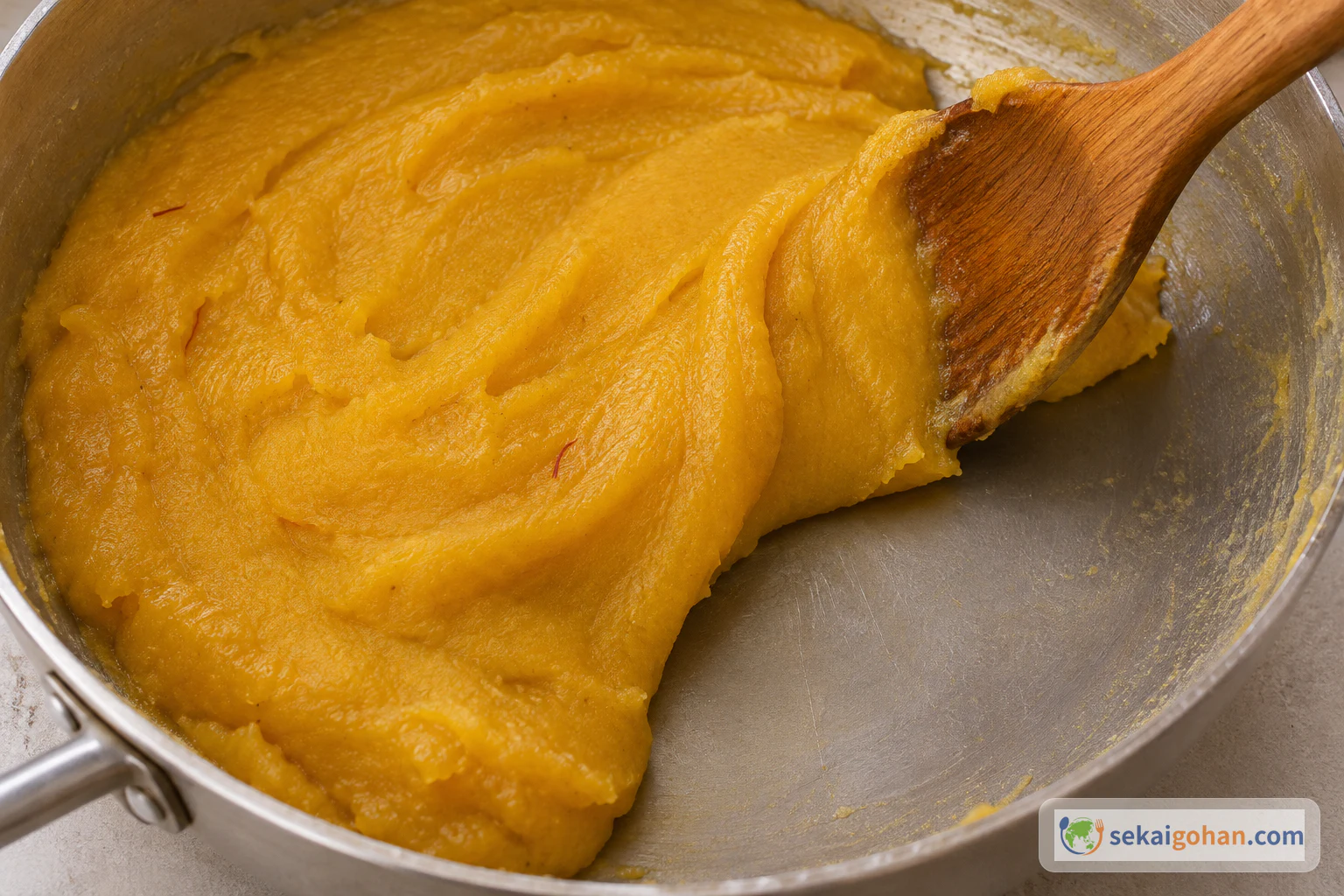
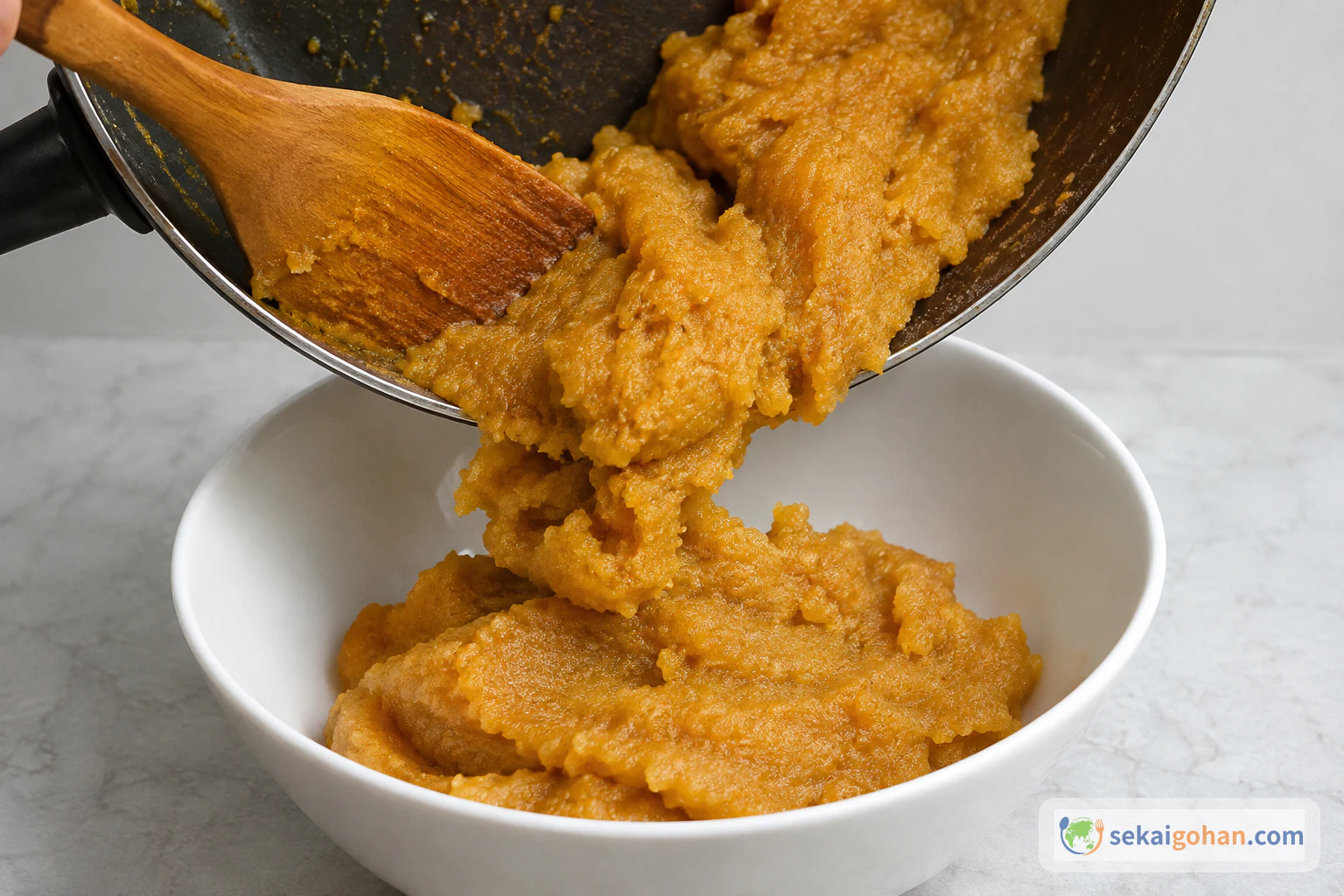
Flour goes into a large dry pan over medium heat. As you stir, it slowly turns golden and starts to smell woody, almost like toasted nuts. Next comes melted butter, then a syrup scented with cardamom, saffron and rosewater, and everything in the pan pulls together into a thick, fragrant golden paste. That's khabees, a toasted-flour sweet from the Gulf, and you'll find it in our United Arab Emirates collection. This recipe serves four. You do need to plan ahead a little, because the saffron soaks in the rosewater for about an hour. Once that's done, most of the work is watching the flour and keeping the spoon moving.
What Khabees Is
Abu Dhabi's heritage register lists khabees as a sweet made from toasted flour, honey or sugar, and spices. The main idea is toasted flour combined with a sweet liquid, enriched with ghee and flavored with cardamom, saffron and rosewater.
The name is also spelled differently in some places. A 2021 listing calls it Khabeesah and gives the ingredients as roasted flour, water, sugar and saffron. Asseada is a separate dish in that listing, described as semolina and saffron.
Ingredients: Serves 4
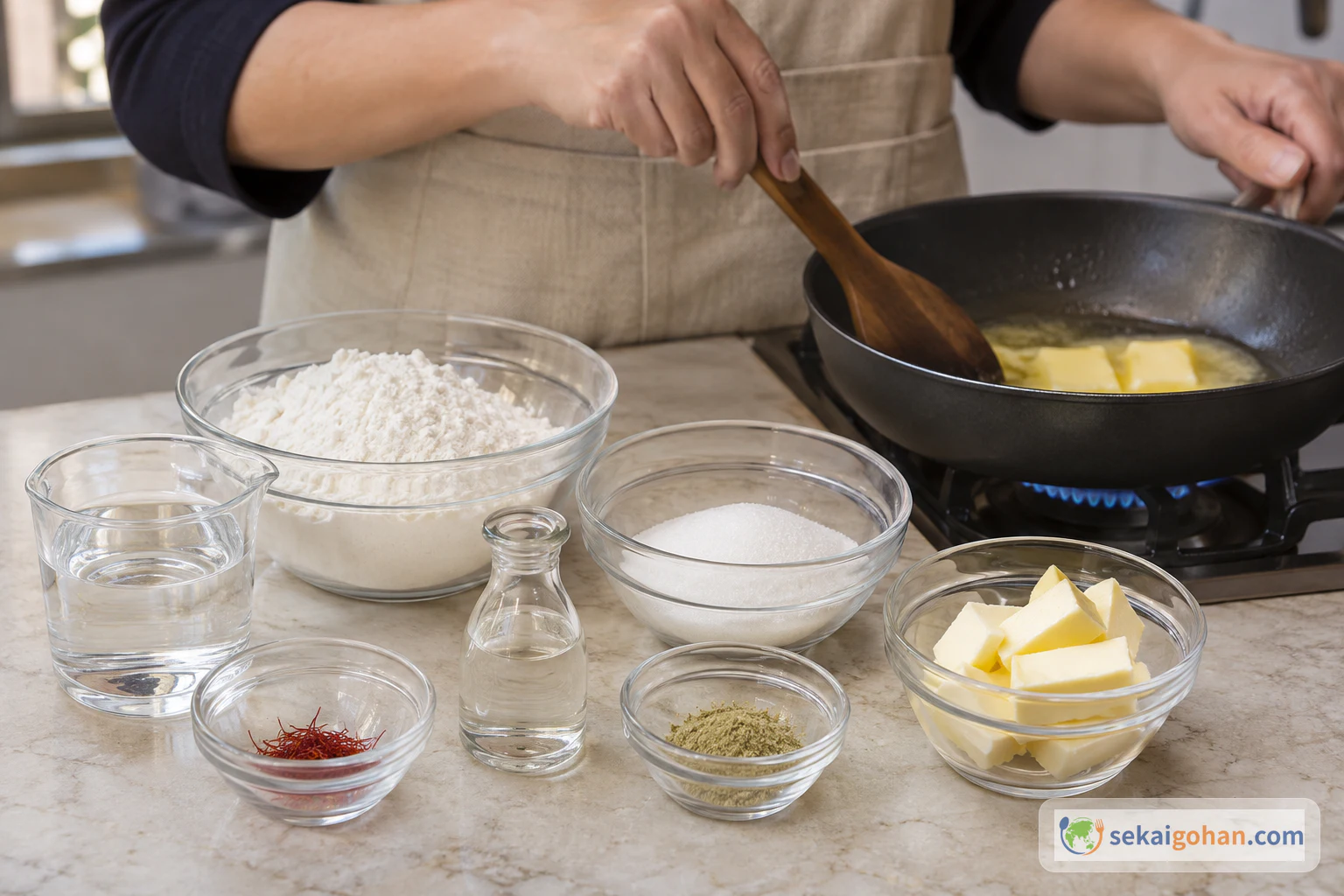
Equipment
- Small clear dish for steeping the saffron
- Small saucepan for the syrup
- Small clean pan for melting the butter
- Large pan for toasting the flour and finishing the paste
- Wooden spoon
- Wooden spatula for turning out the finished paste
- Plain serving bowl
- Kitchen scale, measuring cups and measuring spoons
Choosing Ingredients for Khabees
- Rosewater: Buy rosewater sold for cooking.
- Cardamom: Use ground cardamom. Whole pods won't spread through the syrup as fine spice the way ground cardamom does, so if you only have pods, get ground cardamom before you start.
- Flour: Use all-purpose flour. The color and scent cues in the method are based on it.
- Butter: Use unsalted butter, and melt it before it goes into the flour.
Method: From Saffron Steep to Thick Golden Paste
The syrup can splatter when it meets the flour mixture. Pour gradually and keep your face away from the pan.
Steps 14 and 15 are one continuous action. They are shown separately so the pour and the stirring are both visible.
Troubleshooting Khabees
The clock matters less here than your eyes and nose. Toast the flour until it looks and smells right.
| What you notice | What to do |
|---|---|
| The flour is golden and woody before 15 minutes | Move on. Fifteen minutes is the most you should need. |
| The flour isn't golden and woody at 15 minutes | Go by color and scent, not the clock. |
| The butter and flour look clumpy | That's normal at this stage. Keep mixing and continue with the syrup. |
| The syrup is splattering | Add it more slowly, keep stirring and keep your face away from the pan. |
| The paste hasn't pulled cleanly from the pan after the extra minute | Either point works for finishing: after the additional minute, or when the paste pulls away cleanly. |
Khabees Variations
Every cook makes khabees a little differently. This version uses sugar and butter and adds all of the syrup gradually. Other versions change these elements:
| Element | Other versions | This recipe |
|---|---|---|
| Sweetener | Honey or sugar | Sugar |
| Fat | Ghee | Melted unsalted butter |
| Syrup | Part of the liquid is set aside | All of the prepared syrup goes in gradually |
| Additional flavors | Optional coconut, raisins, pistachios and almonds | None |
Frequently Asked Questions
Is khabees unique to the United Arab Emirates?
The version here is a regional Gulf recipe. The dish is also recorded as part of Emirati heritage.
Is the hour-long saffron soak a kind of fermentation?
No. The soak just draws the saffron's flavor and color into the rosewater.
Why aren't there grams or milliliters?
The amounts are given in cups, ounces and teaspoons, so you don't have to convert anything.