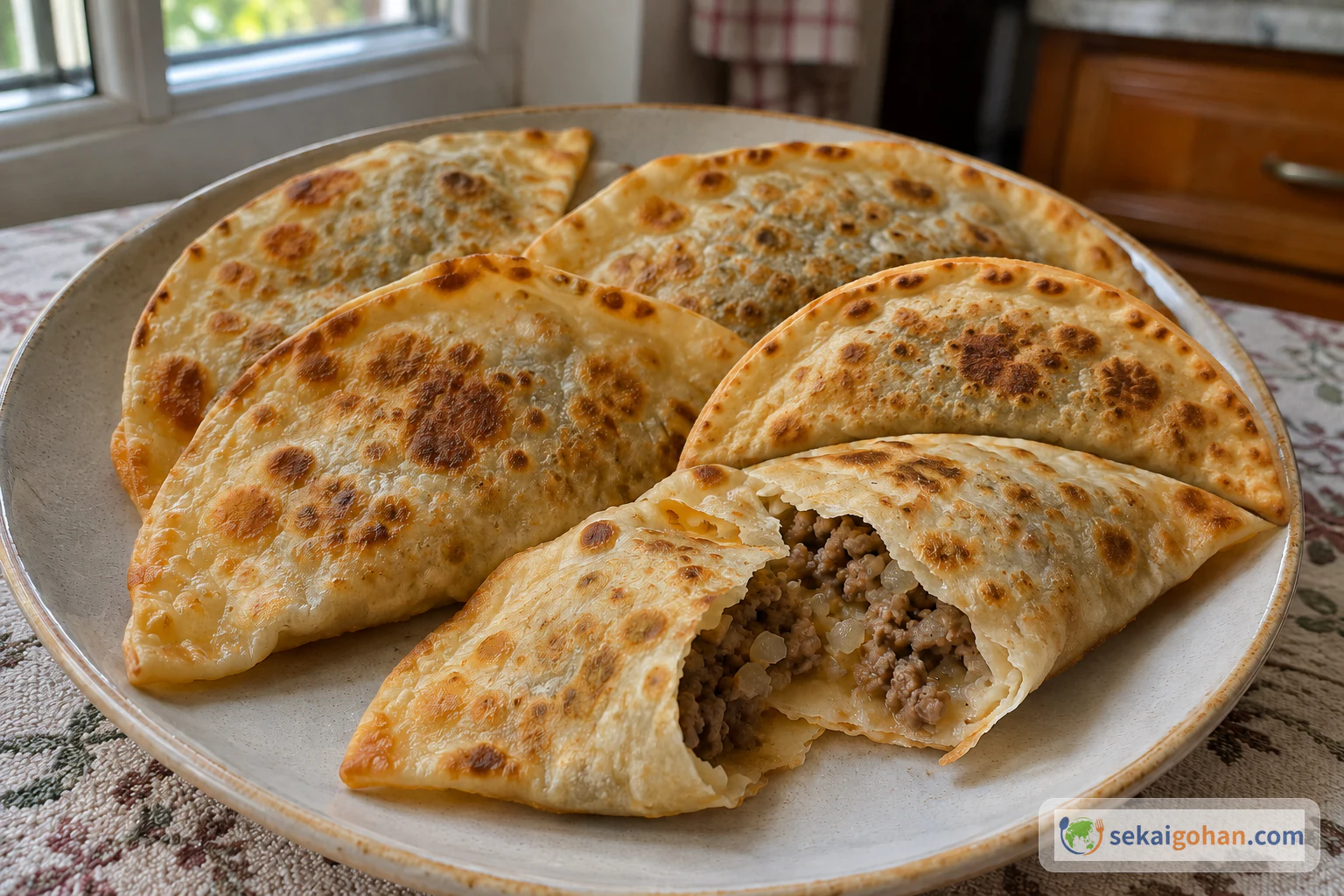
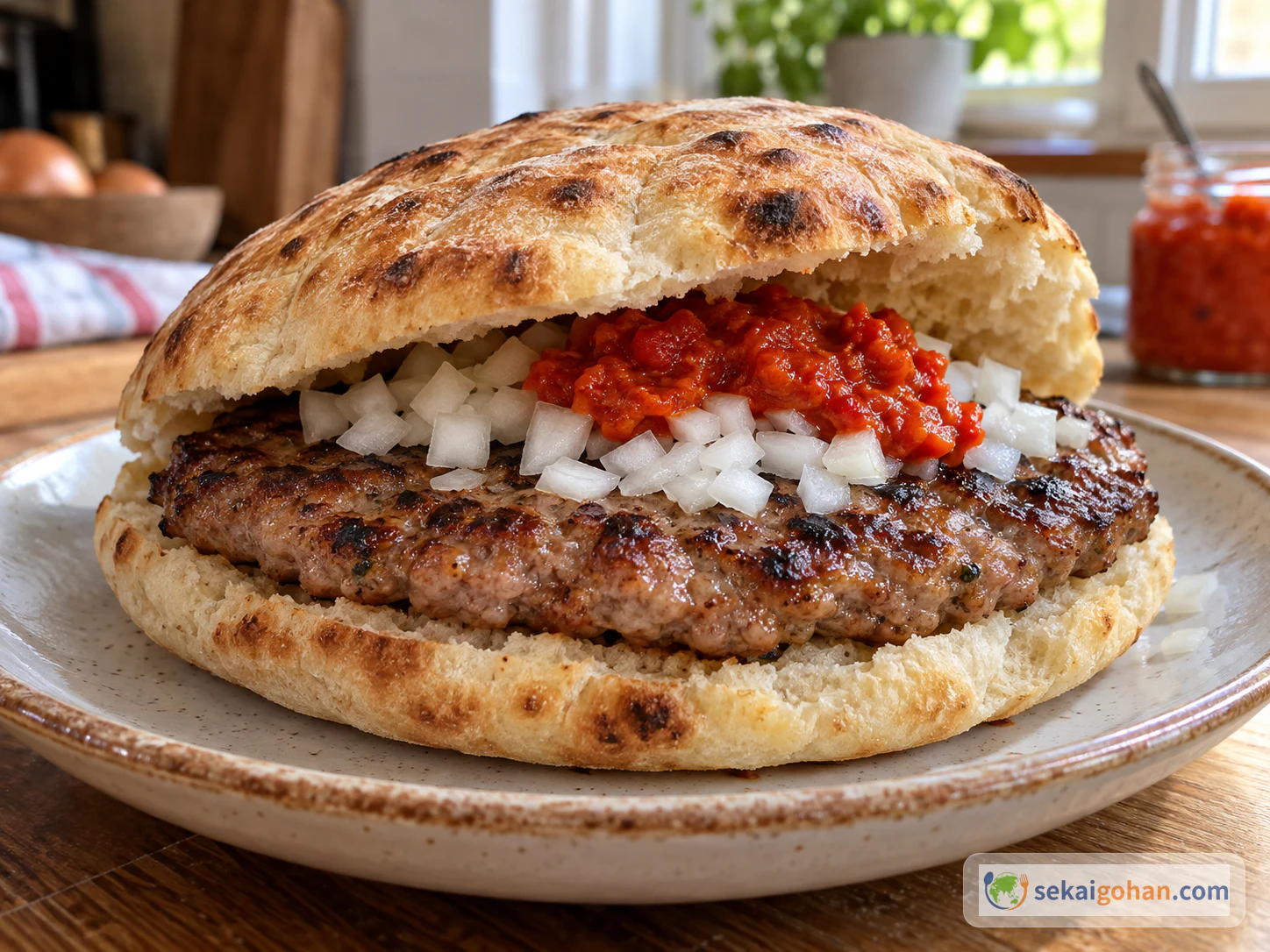
A Sunday-morning market in the old quarters of Bucharest: butter-scented air drifts from a stall where a grandmother cooks thin rounds of dough on a hot griddle, white cheese oozing from the middle. This is plăcintă, Romania's national pie, made from a thinly rolled wheat dough wrapped around a filling and cooked in a skillet or the oven. The favorite filling is fresh cow's-milk cheese (brânză de vaci), but pumpkin, apple, cabbage and potato are just as much at home inside. That's the charm of it: plăcintă can be sweet or savory.
Plăcintă in Romanian Life and History
In Romania, plăcintă is the origin point of home cooking. It's grandmother's food, a weekend breakfast, a snack for the children and something to offer guests, and it turns up on every occasion. Ask a Romanian for their mother's favorite dish and you will often hear "plăcintă." The same family of thin-dough pies is eaten widely in Moldova and western Ukraine, too.
Roman roots
The word comes from the Latin "placenta," a flat cake of wheat dough layered with cheese and the direct ancestor of today's plăcintă. Romania, then called Dacia, became a province of the Roman Empire in AD 106, and during roughly 170 years of Roman rule, Roman food culture took root among the Dacians along with the Latin language. The name passed straight from Latin into Romanian, one more sign that Romanian is a Romance language.
In the medieval principalities of Wallachia, Moldavia and Transylvania, plăcintă was the everyday food of peasants. Needing little more than flour and cheese, it was a staple for getting through hard winters, and it appears frequently in documents of the 14th and 15th centuries.
Ottoman influence and hard times
Ottoman rule from the 16th to the 19th century brought Turkic pie culture such as burek into Romania, and the thin layers of dough in plăcintă reflect börek traditions. Still, the name and basic structure of plăcintă existed in Romania before the Ottomans arrived.
Burek is a phyllo pie of Ottoman origin. Plăcintă is a thin-dough pie of Latin origin. They look similar but have different origins. Burek is rolled into a spiral and baked in the oven. Plăcintă is folded into a square and cooked in a skillet. The plăcintă dough is also slightly thicker. The taste is entirely different.
Under communism (1947–1989), food shortages were severe, but flour and cheese were easier to get, so plăcintă became a survival food that carried people through hard times. Even under the austerity policies of the Ceaușescu regime, families in rural areas kept making it at home.
Plăcintă today
After the 1989 revolution, Western fast-food chains arrived and younger people's eating habits diversified, yet plăcintă held its place and has been re-evaluated as a Romanian tradition. Cafés and restaurants in Bucharest serve modern takes, including upscale versions wrapped around truffle cheese or smoked salmon. The ingredients are cheap, it's simple to make, it adapts to almost anything, and old and young both love it. Few dishes manage all four at once.
Transylvania and Moldova
Transylvania has a distinct style in which sour cream is kneaded into the dough, making it moister and softer so it blends better with the cheese filling. Hungarian cultural influence is strong in the region, and this style shares influences with the Hungarian rétes (thin-dough pastry).
Plăcintă is also a national dish of the Republic of Moldova, which was separated from Romania in the Soviet era but shares the same food culture, so Moldovan plăcintă is almost identical to the Romanian kind. In Chișinău, the capital, the plăcintă chain "La Plăcinte" is hugely popular. It has expanded to Bucharest as well, helping a younger generation rediscover a traditional dish.
Grandmothers, seasons and holidays
For Romanians, plăcintă is the dish of the "bunica" (grandmother). In rural areas, grandmothers stand in the kitchen on weekends baking it for their grandchildren, and that scene is a childhood memory for many Romanians and a symbol of nostalgia. The fillings follow the seasons: cheese and herbs in spring, sour cherries in summer, pumpkin and apple in autumn, cabbage and potato in winter. Look at the filling and you can tell the time of year.
Romania is an Orthodox Christian country, and plăcintă follows the religious calendar closely. During Lent, when meat and dairy are avoided, it is made only with vegetable fillings such as cabbage and potato, and cheese plăcintă returns to the table when the fast ends. On the morning of Easter (Paște), people bake plăcintă generous with cheese to share the joy of the Resurrection, much as mujaddara is a Lenten meal in Lebanon.
Christmas has its own version: poppy seed plăcintă is set on the Christmas Eve table. Romanian Christmas is a time for family, and plăcintă stands for those bonds, the same role svíčková plays at the Czech Christmas dinner.
Street food
In Romanian cities, stalls called "simigerie" specialize in bread and pastries, and plăcintă is one of their most popular items. In central Bucharest and the old town of Cluj-Napoca, it's an everyday sight to see office workers on their commute with a plăcintă in hand. At about 5–15 lei, it makes a perfectly good breakfast with a coffee.
Ingredients (serves 4 / about 8 pieces)

In Romania the cheese used is brânză de vaci, a fresh cow's-milk cheese. The closest equivalent elsewhere is cottage cheese (the sieved, smooth type). Ricotta can also stand in, but it is a little wetter, so squeeze it lightly in a cloth. Cream cheese is too high in fat and makes a heavy result.
Even 1 teaspoon of dried dill sets the aroma of the filling. If the cheese alone tastes flat to you, don't leave the dill out: it gives the green fragrance of Romanian home cooking.
Choosing Ingredients for Plăcintă
Every ingredient for plăcintă can be found at an ordinary supermarket. The one thing to watch is the cheese. Check how wet your cottage cheese is before using it: if it's too wet, water seeps from the filling during cooking and the dough turns soggy, so drain it in a sieve for about 10 minutes first. If it's too dry, the filling will be crumbly; loosen it with sour cream.
| Ingredient | Substitute | Difference in the result |
|---|---|---|
| Cottage cheese | Ricotta | Slightly watery. Drain before use |
| Sour cream | Plain yogurt | More sour, but a perfectly good substitute |
| Dough | Spring roll wrappers (two layers) | Easy. The texture is close |
| Dill | Flat-leaf parsley | The flavor differs, but it still gives a fresh note |
Method
Making the dough
Plăcintă dough resembles the phyllo dough of burek, but it is somewhat thicker. You don't need to roll it thin enough to see through.
Plăcintă Cooking Tips and Fixes

The right dough is soft, a little softer than an earlobe. A stiff dough is hard to roll out and turns too crisp after cooking, so add slightly more water and, if it gets sticky, adjust with dusting flour. The dough for pierogi is a good guide to the softness you're after.
Butter is what makes plăcintă crisp, and about 1 teaspoon in the skillet is not enough. Use 5 g of butter (a little over 1 teaspoon) per piece and make sure it reaches the whole surface. The cheese bread khachapuri gets its crispness from butter in the same way.
If the outside burns while the cheese inside stays cold, the heat is too high. Cook slowly over low-medium heat until the cheese has melted, about 6–8 minutes in total for both sides. Covering the pan helps, since the steam heats the cheese faster.
Serving and Variations of Plăcintă
Serving plăcintă

Here's a Romanian grandmother's secret: brush a thin layer of melted butter over each plăcintă as it comes out of the pan. The surface turns glossy and the butter aroma rises. Then pile them on a plate one on top of another, the Romanian way, so the steam reaches the pieces beneath and softens the inside of the dough. Cover a stack of about 5 with a cloth and wait 5 minutes for the ideal texture, crisp outside and moist inside. It's the same principle as steaming burek under a cloth after baking.
Dust with powdered sugar for a sweet, dessert-like version, or serve with sour cream as a savory meal. In Romania, plăcintă with cafea cu lapte (milk coffee) is the classic breakfast, and tea suits the sweet kinds. A Romanian white made from Fetească Albă pairs well with savory cheese plăcintă, and plenty of people reach for a beer instead, such as Ursus or Timișoreana.
Savory fillings
The greatest appeal of plăcintă is the freedom of the filling. Wrap whatever is in season and you can make almost any flavor.

| Name | Filling | Character |
|---|---|---|
| Plăcintă cu brânză | Fresh cheese | The most popular. Recipe above |
| Plăcintă cu varză | Cabbage | Wraps sautéed shredded cabbage. A winter staple |
| Plăcintă cu cartofi | Potato | Wraps mashed potato. Very filling |
| Plăcintă cu ceapă | Onion | Onion cooked to a deep amber. Simple but deep |
Sweet fillings
| Name | Filling | Character |
|---|---|---|
| Plăcintă cu mere | Apple | Grated apple with cinnamon and sugar. The taste of autumn |
| Plăcintă cu dovleac | Pumpkin | Wraps sweetened cooked pumpkin. Popular around Halloween |
| Plăcintă cu vișine | Sour cherry | Tart cherries. Dusted with powdered sugar |
| Plăcintă cu mac | Poppy seed | Wraps poppy seed paste. A Christmas staple |
| Plăcintă cu nuci | Walnut | Crushed walnuts with sugar and cinnamon. A staple for festive days |
Bake the pumpkin whole with its skin in a 200°C (390°F) oven for 40 minutes. Break the flesh up with a spoon and mix in 2 tablespoons sugar and 1 teaspoon cinnamon, then use it as the filling. Just as pastel de choclo makes the most of the sweetness of corn, pumpkin plăcintă brings out the natural sweetness of the pumpkin.
Frequently Asked Questions
Q1. What is the difference between plăcintă and burek?
Their origins differ: plăcintă goes back to ancient Rome and its name derives from Latin, while burek derives from Turkic and goes back to the Ottoman Empire. Plăcintă is basically skillet-cooked and burek basically oven-baked, and their taste and texture are quite different.
Q2. Which is authentic, skillet or oven?
Both. The skillet was the mainstream in rural areas, while the oven is preferred in cities and on special days. Skillet cooking makes it crisper; oven baking gives a moister result.
Q3. Can it be frozen?
Yes, before cooking. Wrap the filled parcels in plastic and freeze, then cook them in the skillet straight from frozen, adding 2–3 minutes to the cooking time. Freezing after cooking is not recommended because the dough turns limp.
Q4. What filling is good for children?
Apple plăcintă is the most popular with children: grate the apple, mix in sugar and cinnamon, and finish with a dusting of powdered sugar. "Nutella plăcintă," wrapped around chocolate spread, is a favorite of modern Romanian children.
Q5. What can I do with leftover dough?
Bake it alone in thin sheets and sprinkle with salt for crisp chips, or float it in soup. Fried in oil, it becomes a crunchy snack like the shell of an empanada.
Q6. I want to know more about Romanian food
Plăcintă is a good entrance to Romanian cuisine. For a stewed dish to go alongside, sarmale, meat filling wrapped in sour cabbage, is the easiest next dish to make, and there's also mici (grilled minced meat) and ciorbă (sour soup). Elsewhere in Eastern Europe there's a rich culture of wrapping in dough, from pierogi (Polish dumplings) to khinkali (Georgian meat dumplings), and Georgia also offers satsivi (Georgian chicken in walnut sauce).
Related Articles: Eastern European Pies and Wrapped Dishes
Eastern European pie culture: Burek is Bosnia's spiral meat pie, of Ottoman origin. Khachapuri is Georgia's cheese bread, with the same "dough plus cheese" combination as plăcintă. Pierogi are Poland's filled dumplings, whose filling can likewise be changed freely.
Wrapped dishes of the world: Empanada is Argentina's filled pie. Manti are Central Asian steamed dumplings. Dolma is the Turkish dish wrapped in grape leaves. "Wrapping something in something" is a cooking impulse shared by all humanity.
Eastern European home cooking: Borscht is Ukraine's beet soup. Goulash is Hungary's paprika stew. Together with plăcintă, they make up the dishes that stand for Eastern Europe's "grandmother's cooking."
Conclusion: The Universality of "Wrapping"
Plăcintă is a dish that has lived on in Romanian homes for more than 2,000 years since the ancient Roman "placenta." It begins with the barest ingredients, flour and cheese. Yet its taste carries the weight of 2,000 years of history.
The plăcintă you make in your own kitchen may be a little different from a Romanian grandmother's. But that's fine. Change the filling freely and wrap seasonal ingredients: that act is the essence of plăcintă. Cheese, pumpkin or apple, it is still "wrap in dough and cook in a skillet." In this simple motion lies 2,000 years of Romanian wisdom. The plăcintă you cook in your kitchen becomes the newest page of that history.