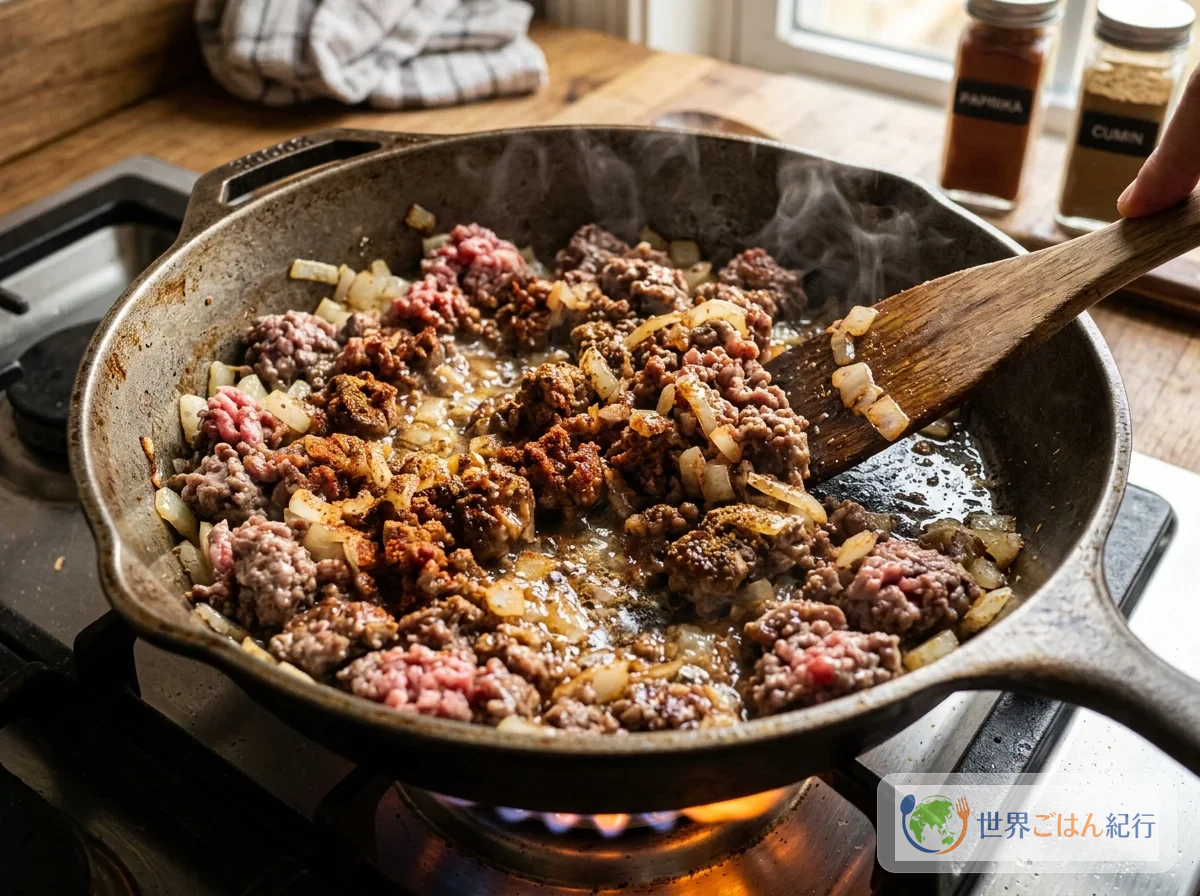
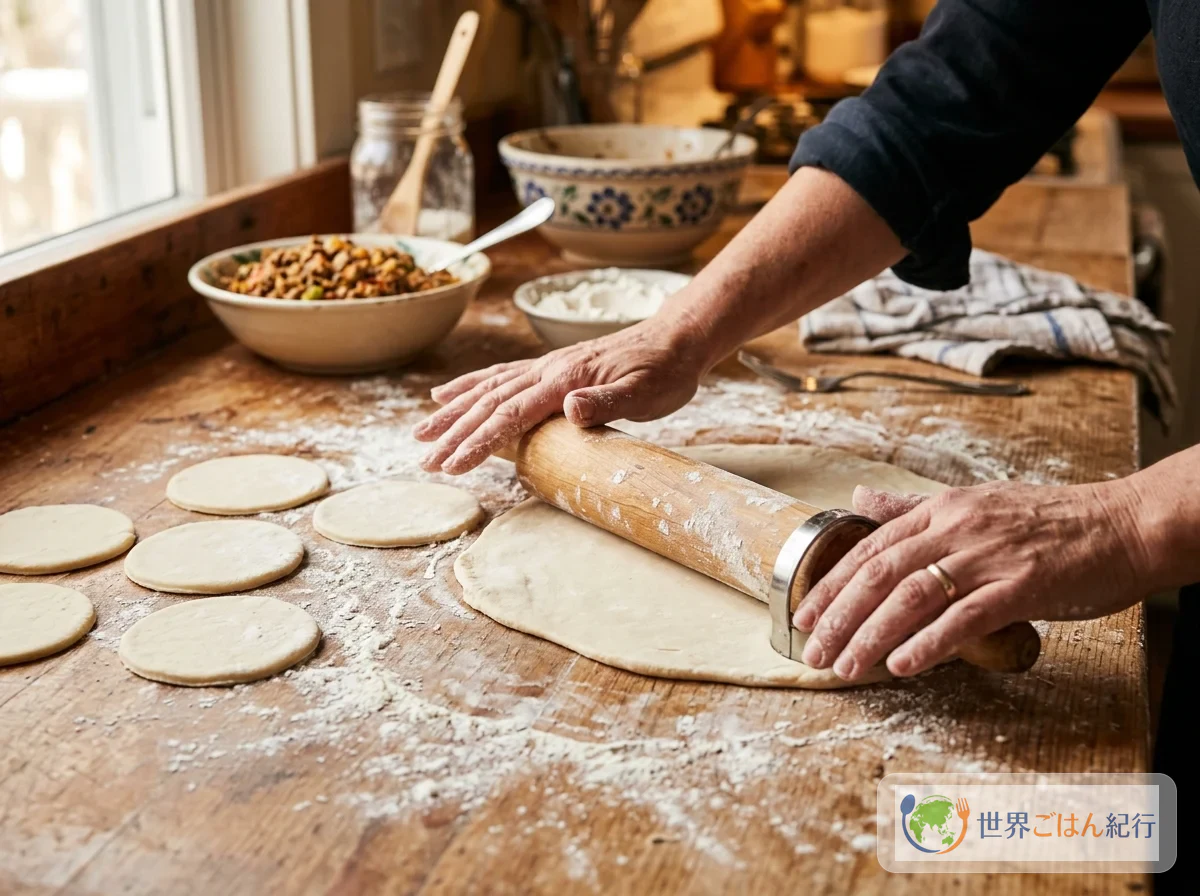
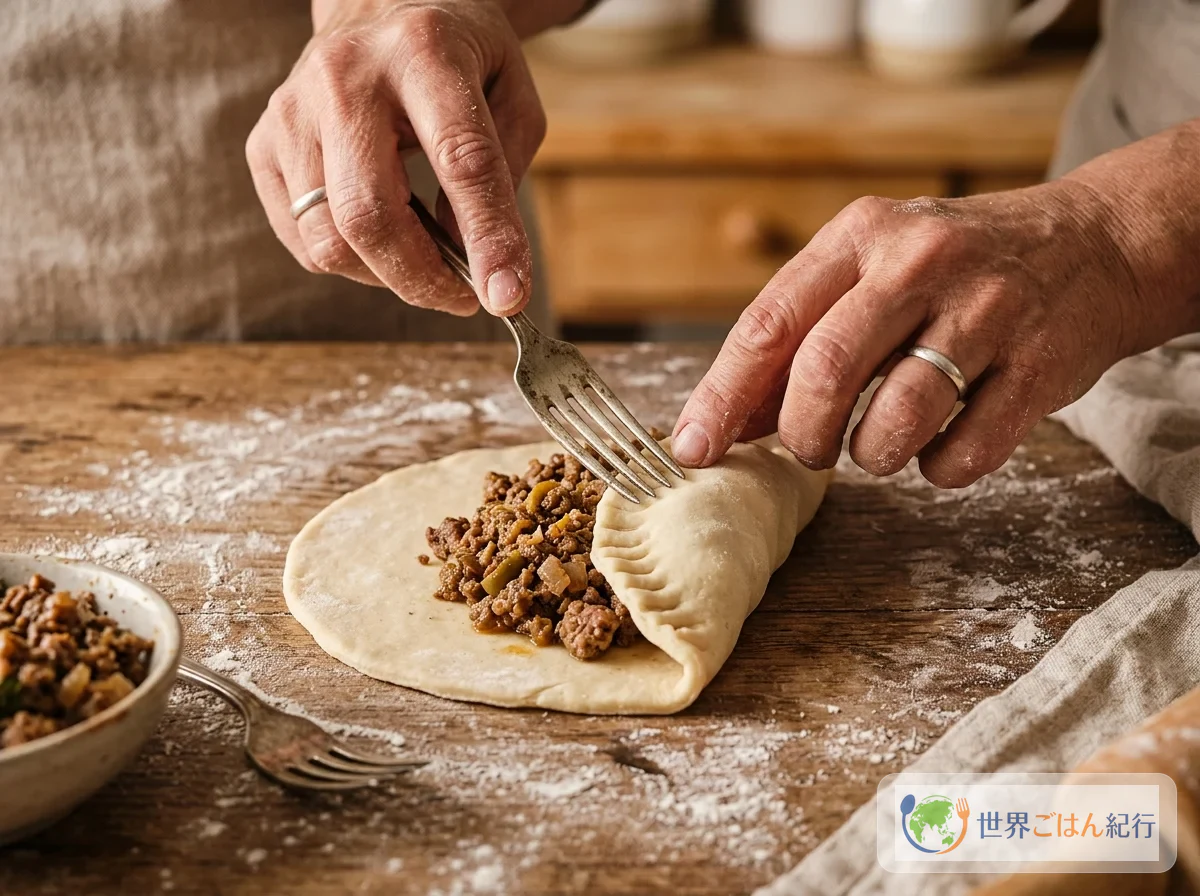
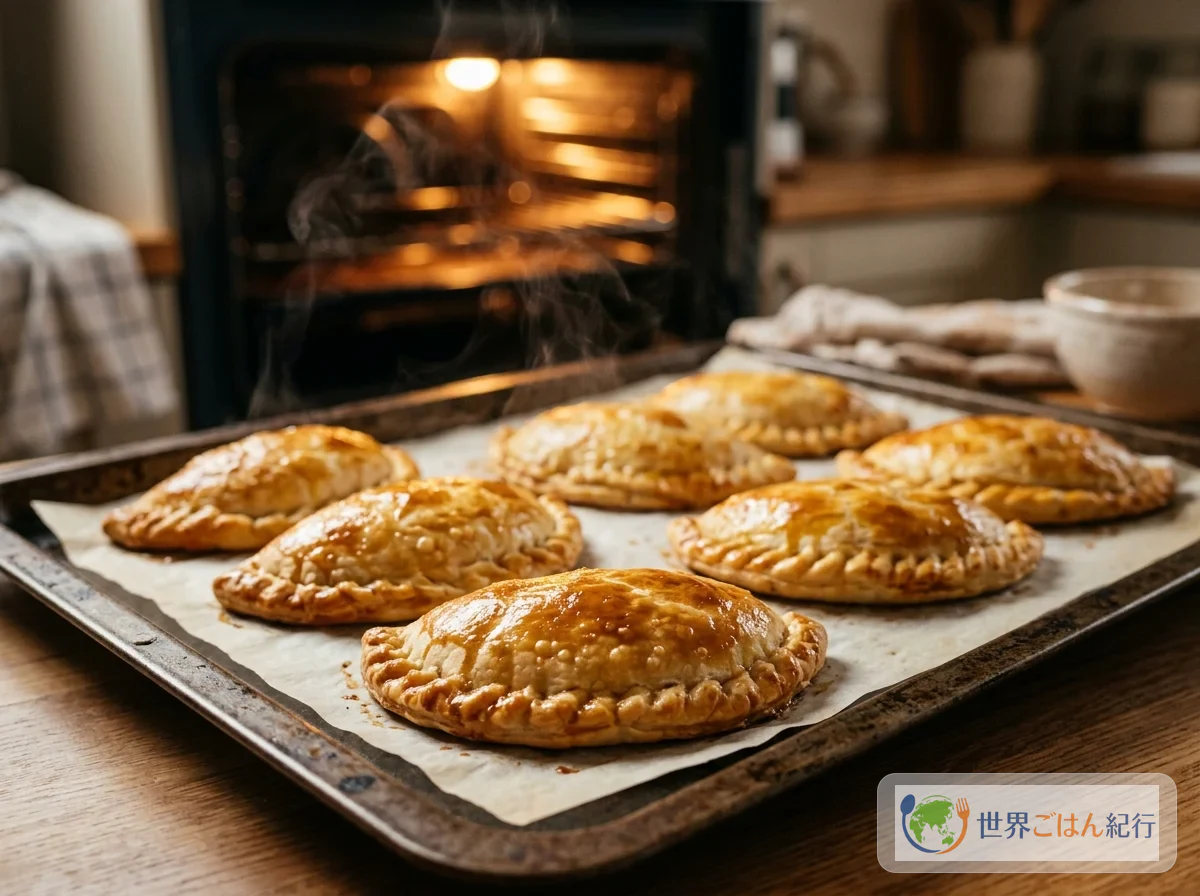
The sweet smell of sautéed onions meets the red scent of cumin and paprika. Add ground beef, and the kitchen suddenly feels like a little snack shop somewhere in South America. These small hand-held pies are half-moons of dough wrapped around a savory filling of beef, onions, hard-boiled egg, and green olives, then baked until golden. The crust is light and crisp, and the briny bite of the olives cuts right through the rich, cumin-scented meat.
Argentine Empanadas and Where They Come From
From the Iberian Peninsula to the Pampas
The Spanish verb empanar carries the sense of wrapping food in bread or dough, and the dish's roots lie on the Iberian Peninsula. In Spain and Portugal, meat or fish wrapped in dough and baked has been eaten since the Middle Ages, and these pies are linked to the baked parcels of the Arab world, such as sambusak.
The empanada reached South America with Spanish colonization in the 16th century. It blended with local ingredients such as potatoes, corn, and chiles, and evolved its own forms in each region. In Argentina it took on beef, onions, hard-boiled egg, olives, and cumin.
Empanadas by province
In Argentina, the filling, the fat, the closing method, and the cooking method all change from province to province. Much like gyoza differ from home to home, the real question is whose way you want to follow. Famaillá, in Tucumán Province in northwestern Argentina, is even known for its empanada festival, which makes the point nicely: this is a dish for comparing.
| Region | Typical filling and cooking | What to aim for at home |
|---|---|---|
| Salta | Potato, chile, and scallions, known for a juicy filling (both baked and fried versions exist) | Chop the filling fine and add a little heat for the right feel |
| Tucumán | Hand-cut meat with plenty of cumin and paprika | Coarsely chopped beef trimmings rather than ground beef also works |
| Mendoza | The combination of beef, olives, and sweet paprika is easy to make | Close to this recipe. The sourness of the olives is the key |
| Córdoba | Some versions lean sweet and salty | Just 1 tsp of sugar in the dough makes it easier to eat |
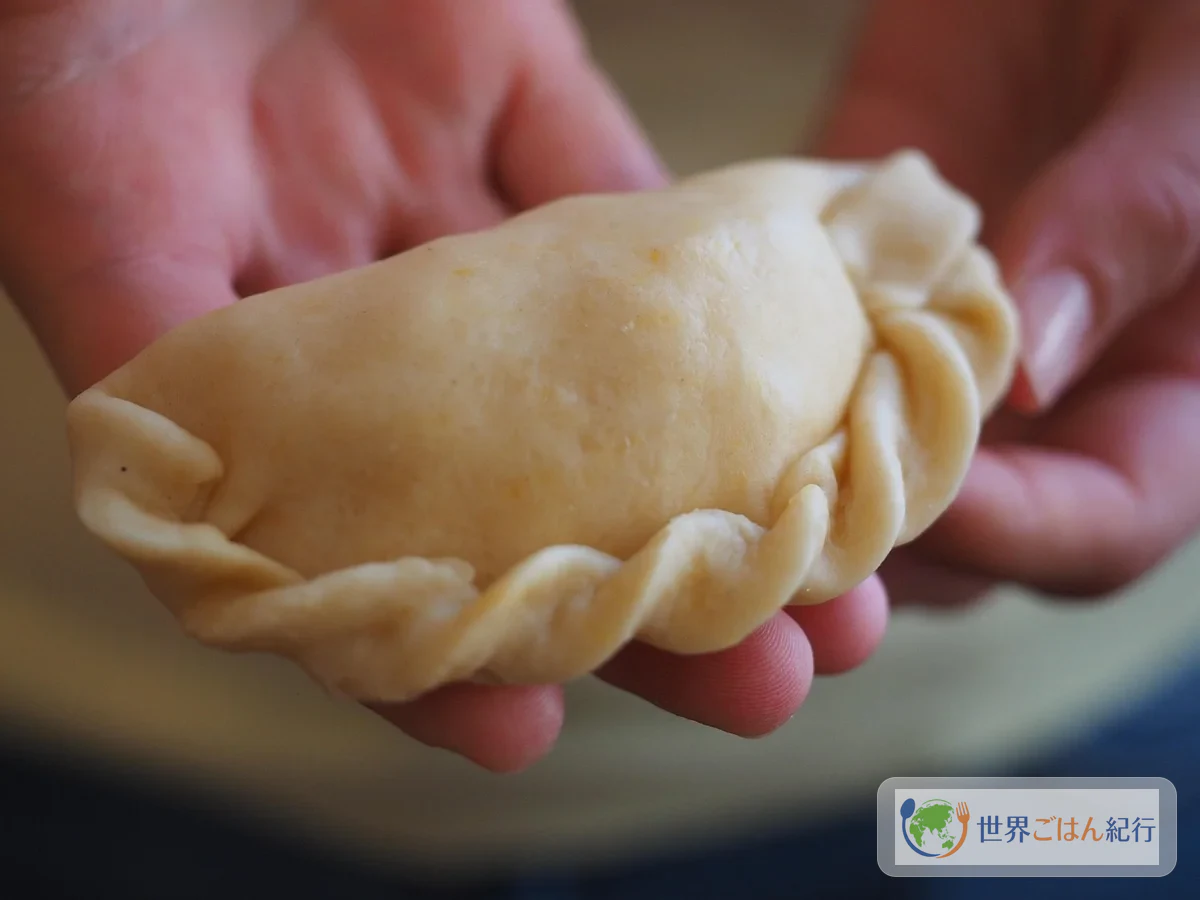
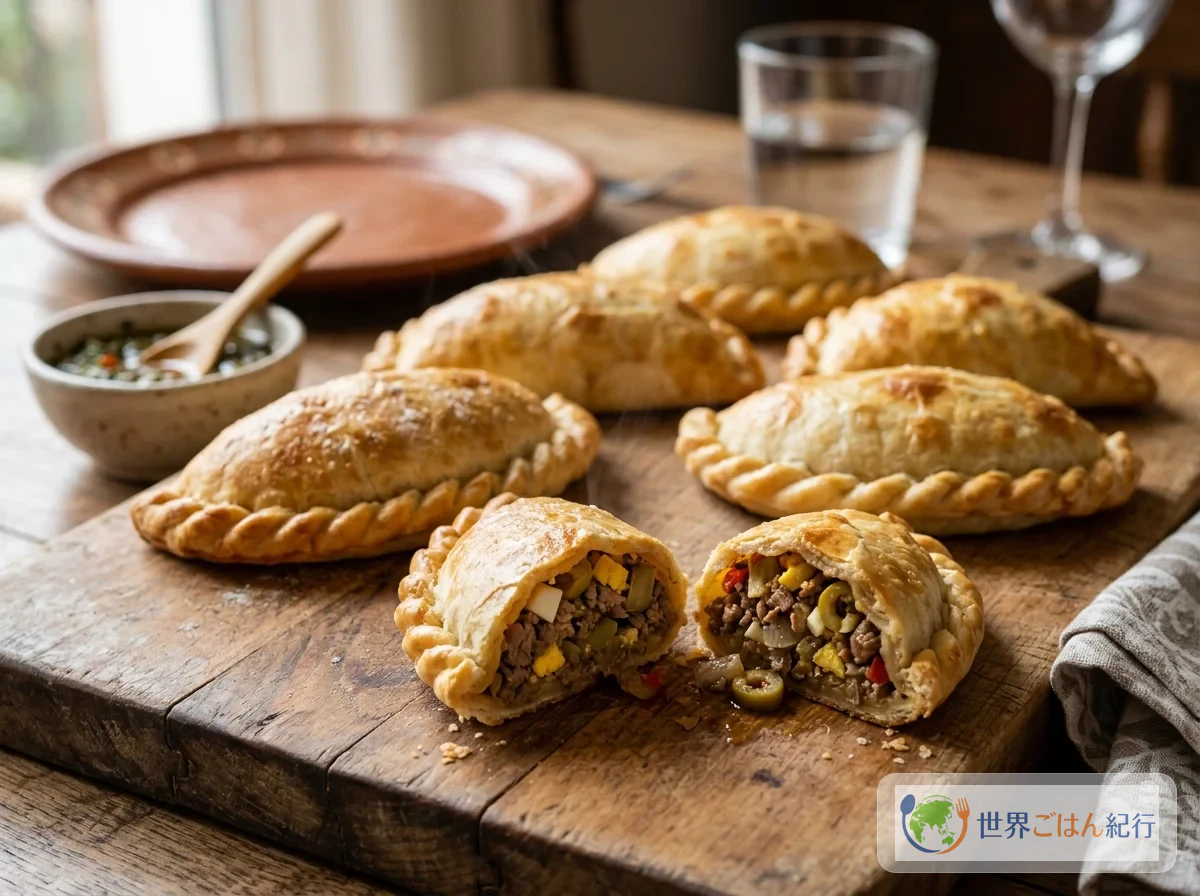
In Argentina some shops tell the fillings apart by the decorative edge called the repulgue. It is closed in different ways across regions, shops, and homes, and some cooks change the pattern for each filling so you can pick them out on a big platter. Pressing the edge with a fork is perfectly good to start with.
How empanadas are eaten
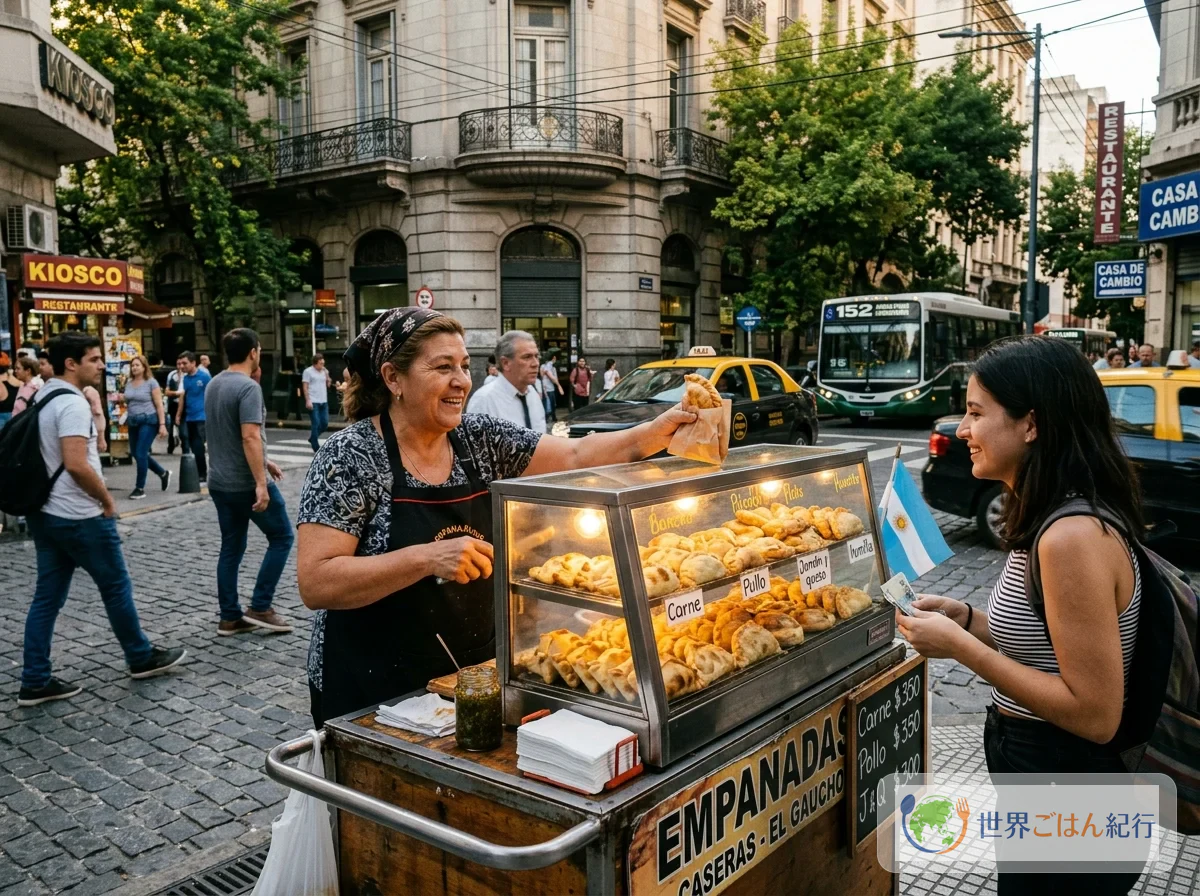
Picture the scenes where empanadas turn up: watching football, family gatherings, snacks brought to share. You hold one in your hand, and the conversation goes on as you compare a few. The way a family wraps a big batch together on Sunday is a lot like making dumplings.
In Buenos Aires, you can sometimes buy them fresh from the oven at empanada shops, bakeries, and diners. Picking 2 or 3 for lunch with a drink makes a quick everyday meal, somewhere between a proper meal and a snack.
Empanadas across South America
It is not only Argentina: Chile, Colombia, Venezuela, and Ecuador each have their own empanadas. Chile makes them larger and is known for a filling called pino, which draws on the sweetness of onions. In Colombia and Venezuela, fried empanadas made with corn flour are widely eaten, with a texture quite different from the Argentine version baked with wheat flour. Under the same name the flour, the oil, and even the way the filling is cut all change, which shows just how wide South America is.
Wrapped dishes around the world
Dishes that wrap a filling in dough and cook it exist all over the world. Among the half-moons, there are pierogi, which are boiled and then pan-fried (pierogi), and khinkali, which seal in meat juices (khinkali).
| Dish | Country/region | What they share | Difference |
|---|---|---|---|
| Gyoza (jiaozi) | China/Japan | Meat wrapped in a wheat dough | Steamed, pan-fried, or boiled. Smaller |
| Curry bun (karepan) | Japan | Meat wrapped in dough and fried | Yeast-leavened dough. Curry-flavored |
| Samosa | India | Triangular pastry with meat or potato | Strongly spiced. Fried is the norm |
| Pasty | England | Half-moon meat pie | Beef, potato, and rutabaga are classic |
| Khinkali | Georgia | Meat-filled, like a soup dumpling | The broth is sealed inside |
| Pierogi | Poland | Half-moon filled dumplings | Boiled, then pan-fried in butter |
| Brik | Tunisia | Thin dough wrapped around egg and meat | Brik pastry is close to a spring roll wrapper |
Set side by side, the empanada's strengths stand out: it is easy to carry, good even cold, and easy to make in a household's or shop's own way. At home, wrap them together as a family, like dumplings, and bring them to the table straight from the oven.
Ingredients (serves 4, about 12 empanadas)
Nutrition (per serving, one of four; about 3 empanadas)
Of the 480 kcal, the 22 g of protein comes from the ground beef and hard-boiled eggs. The 26 g of fat comes from the butter dough and the fat in the meat. The 1.5 oz (40 g) of carbohydrates come mainly from the flour dough. Green olives are strongly salty and sour even in small amounts, so taste the filling and adjust before you add too many.
Pitted green olives are sold in jars and cans in most supermarkets. Specialty and Mediterranean grocers also carry large, meaty Spanish Manzanilla olives. Stuffed olives with red pimiento will show a little red in the cut surface, as in the photo.
This dish contains wheat, milk, and egg. If you have a milk allergy, replace the butter with lard or shortening. Some regions of Argentina use beef fat or lard instead.
Shopping notes: only the spices and a rolling pin need extra effort
Ground beef, onions, eggs, flour, and butter are all easy to get at a regular grocery store. The two things worth hunting for are cumin and paprika, which form the skeleton of the aroma, and a rolling pin so you can roll the dough to an even 0.125 inch (3 mm).
Even a small amount of cumin cuts through the weight of the meat and gives the dry aroma typical of Argentine beef dishes. If you substitute curry powder, the result drifts toward a curry bun, so for the first batch plain cumin keeps the flavor on course.
Choosing Ingredients for Empanadas
Spices
| Spice | Where to buy | Notes |
|---|---|---|
| Paprika (sweet) | Supermarket spice aisle | Spanish pimentón de la Vera (smoked paprika) adds a smoky note if you have it |
| Ground cumin | Supermarket spice aisle | The backbone of the empanada's flavor. Curry powder can stand in, but it changes the direction of the flavor |
| Oregano (dried) | Supermarket herb aisle | A small amount added at the end of the filling gives a drier aroma |
Dough ingredients
Everything for the dough is easy to find in a regular grocery store, and ordinary all-purpose flour is enough. Butter can be salted or unsalted, but because the filling is already seasoned, unsalted is easier to adjust.
Frozen puff pastry works too. One sheet yields four 4.5 inches (12 cm) rounds, so two sheets make 8 empanadas, and it is economical to make the remaining dough from scratch.
Some Argentine recipes use lard (pork fat) or beef fat (grasa de vaca) instead of butter. In Salta and Tucumán, known for fried empanadas, the aroma of the fat greatly changes the character of the dough. For a first try, replace only half the butter with lard so you can compare the difference.
Green olives
Green olives largely decide the flavor of the empanada. Pitted green olives in jars are the easiest to use, and specialty grocers carry large, meaty Spanish Manzanilla olives with a deeper flavor.
People often ask about black olives, but they taste quite different. The fresh sourness and bitterness of green olives is the accent of the filling, and this is the one ingredient with no substitute.
On a busy day you can use frozen puff pastry. Cut 4.5 inches (12 cm) rounds from it half-thawed and fill a little less. The layers puff easily, so seal the edges with a thin coat of beaten egg instead of water, and rest the empanadas in the refrigerator for 10 minutes before baking to keep them from tearing.
Common Empanada Problems and Fixes
Dough that will not turn crisp
Empanada dough bakes light because cold fat is left in lumps within the flour; it needs no folding like puff pastry. In the high heat of the oven, those chunks of butter melt and give off steam, and the steam lifts the dough into thin layers. That is what "crisp" really is. If the butter melts and mixes into the flour first, the layers never form and the dough turns hard and chewy.
Keep the butter in the refrigerator until just before use, cut it into 0.5 inches (1 cm) cubes, and rub it into the flour quickly. In summer, chill the flour too.
A low oven is the other common cause, so bake hot and fast. The vinegar also helps: when gluten develops strongly, the dough becomes elastic and drifts toward bread. Knead as little as possible, and the vinegar, at a level you cannot taste, keeps the dough from tightening and makes it easier to handle.
A soggy bottom or a pie that falls apart
Fill the dough only with a cooled filling. Do that and bake hot, and the bottom stays dry and the empanada holds together when you pick it up. Seal the edges firmly, especially with cheese fillings, so nothing leaks out.
Empanada Variations
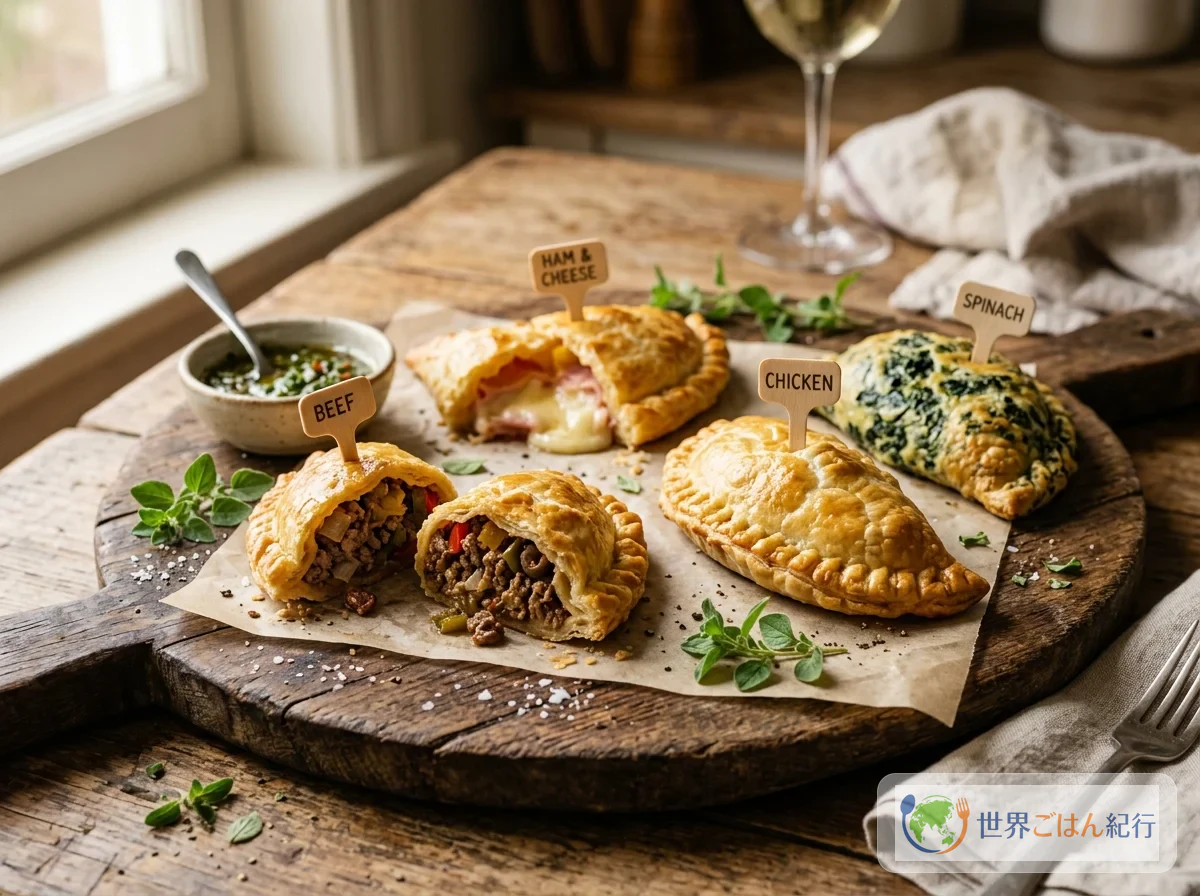
Chicken (pollo) empanadas
A filling of 10.5 oz (300 g) boiled, shredded chicken breast mixed with 1.75 oz (50 g) cream cheese and chopped scallions. It is lighter than the beef version and easy to eat even when cool. In Argentine home cooking, beef and chicken versions are often set out side by side so people can choose.
Ham and cheese (jamón y queso)
Just wrap 6 slices of thin ham and 5.5 oz (150 g) of mozzarella in the dough. The filling needs no cooking, which makes this the easiest variation, and it is handy for kids' snacks and lunch boxes. Seal the edges tightly so the cheese stays inside.
Spinach and cheese (verdura)
A filling of 7 oz (200 g) boiled spinach, squeezed dry and chopped, mixed with 3.5 oz (100 g) ricotta, 1 egg, and a pinch of nutmeg. This is the one to make when you want a meatless filling, and the richness of the dairy gives it plenty of body.
Fusion twists
Add 1 tbsp of curry powder to the filling for a "curry bun-style empanada"; the Japanese curry bun and the Argentine empanada are built almost the same way. Adding potato for a croquette-style version is also fun, and 1 tbsp miso with ground pork gives a sweet-salty flavor close to a savory bakery bun.
Canned tuna and mayonnaise release moisture easily, so mix in 2 tsp of breadcrumbs before wrapping to keep the bottom from getting wet. If you plan to take empanadas for lunch the next day, season the filling a bit stronger so the flavor holds up when cold.
Dessert version (empanada de dulce)
In Argentina the empanada is also a well-loved dessert. The classic is the empanada de dulce de membrillo (quince paste empanada), made with a sugar-dusted dough filled with jam and fried. At home, you can easily bake empanadas filled with apple jam or custard. Add 2 tbsp sugar to the dough and a sprinkle of cinnamon, and you have a sweet empanada for a snack.
Fried empanadas
Baking is the mainstream in Buenos Aires, but fried empanadas are well known in the north of Argentina (Salta and Tucumán). Fry in 350°F (170°C) oil for 2–3 minutes per side until golden. Frying makes the dough lighter and more brittle and brings out the aroma of the filling, though the dough absorbs oil, so they are heavier to eat than the baked version.
Serving and Storing Empanadas
Serving and pairing
Bring the whole baking sheet to the table and pick up the empanadas by hand as the heat settles. Pastry and meat get heavy on their own, so set out a sour salad, a lemon-squeezed ceviche, or a bean-and-meat stew like feijoada alongside.
On the day empanadas are the main dish, put a sour ceviche first and it cuts through the weight of meat and butter. The next day, continue with the bean-and-meat feijoada and you have a South American run of meals. For other wrapped dishes, try khachapuri, khinkali, and pierogi from Eastern Europe.
To keep exploring, look at each country's dishes in the overview of South American cuisine, then try corn-flour empanadas or Bolivia's salteña to see the differences clearly.
Nutrition
Making empanadas yourself lets you adjust the meat fat, the butter, and the saltiness.
| Nutrient | Per serving (one of four, about 3 empanadas) | Role |
|---|---|---|
| Protein | about 22 g | Two sources: ground beef and hard-boiled egg |
| Fat | about 26 g | Saturated fat from butter and oleic acid from olives. Switching to lard raises saturated fat |
| Carbohydrates | about 1.5 oz (40 g) | From the flour dough. Mixing in 1/3 whole wheat flour adds fiber |
| Vitamin E | small amount | From green olives |
| Iron | present | From ground beef. Add beans or leafy vegetables to the menu |
| B vitamins | present | B12 and B6 from beef and egg |
Baking rather than frying means the dough does not absorb oil. Use leaner ground beef and cut the butter to 2 oz (60 g), and the total fat is easy to lower. Whole wheat flour in place of 1/3 of the flour adds a toasty aroma, but too much makes the dough crack, so try a small amount the first time.
Storage and freezing
Empanadas can be frozen once they are filled and sealed, and they go straight into the oven without thawing. It is much like stocking dumplings, so make beef the base and mix in chicken, ham and cheese, and spinach and cheese a little at a time to avoid getting bored. A batch wrapped on the weekend turns into an easy weeknight dinner or lunch-box dish.
| State | Storage | Shelf life | Notes |
|---|---|---|---|
| Unbaked (raw) | Refrigerator | Same day | Cover with plastic wrap so the dough does not dry out |
| Unbaked (raw) | Freezer | 2 months | Freeze on a tray, then move to a freezer bag. Bake from frozen at 400°F (200°C) for 28–30 minutes |
| Baked | Refrigerator | 3 days | Keep in an airtight container. Reheat in a toaster oven for 5–8 minutes; a microwave makes the dough limp |
| Baked | Freezer | 1 month | Bake from frozen in a 350°F (180°C) oven for 10–12 minutes |
FAQ
Q1. The filling is too wet to wrap.
The moisture comes from the onions. When you move the cooked filling to a tray to cool, lay paper towels under it to absorb the extra liquid. Chilling it for 30 minutes in the refrigerator also firms it up and makes it easier to wrap, and mixing in 1 tbsp of breadcrumbs soaks up moisture too.
Q2. What filling works for kids?
Ham and cheese can be made with almost no seasoning, so it is easy to serve to children who dislike spices. Mixing in canned corn gives a sweeter choclo (corn and cheese) filling. To branch out on the meat side, wrap a small amount of a strongly scented ground-meat mixture such as kofte, and the same half-moon takes on a different character.