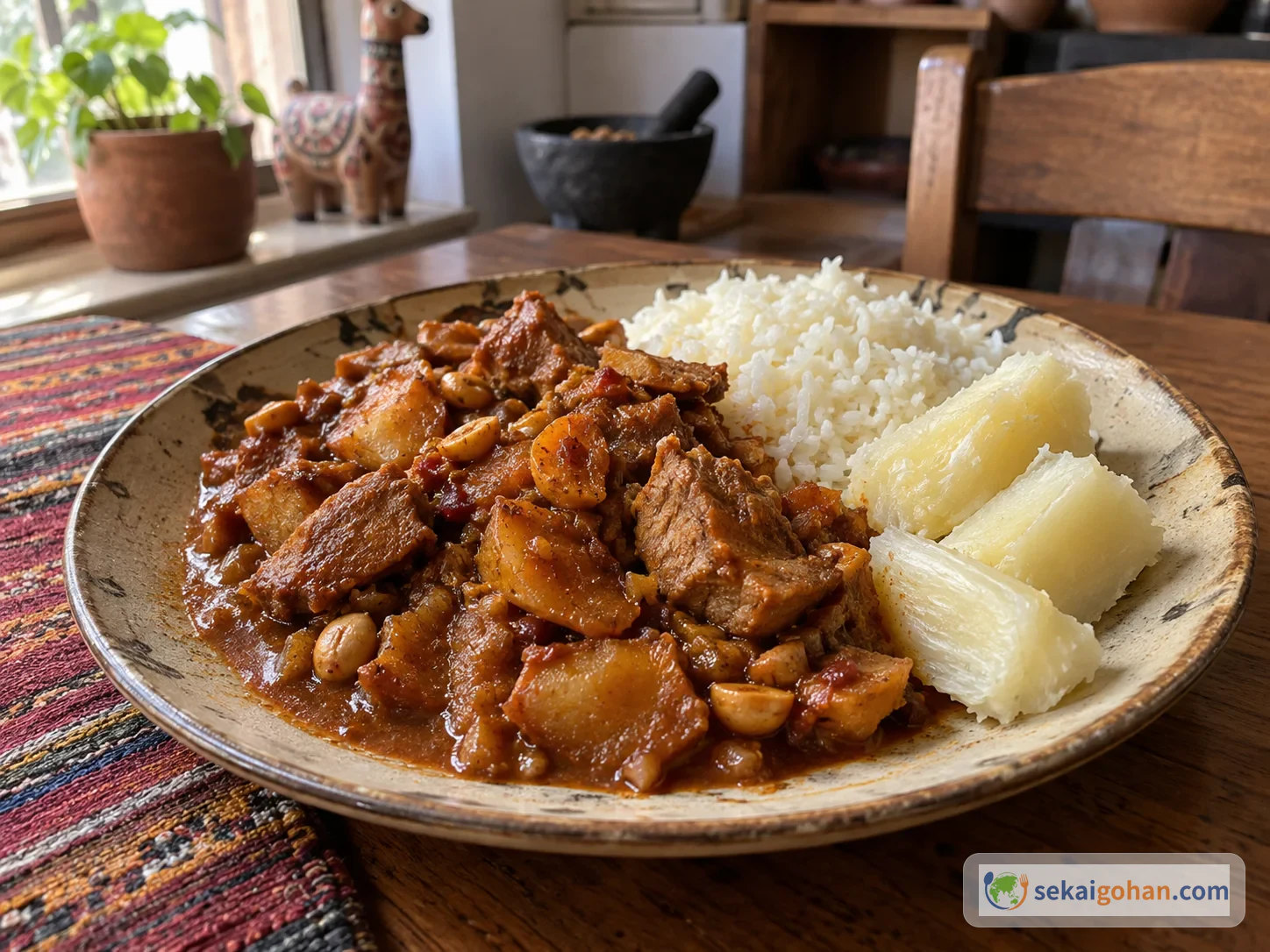
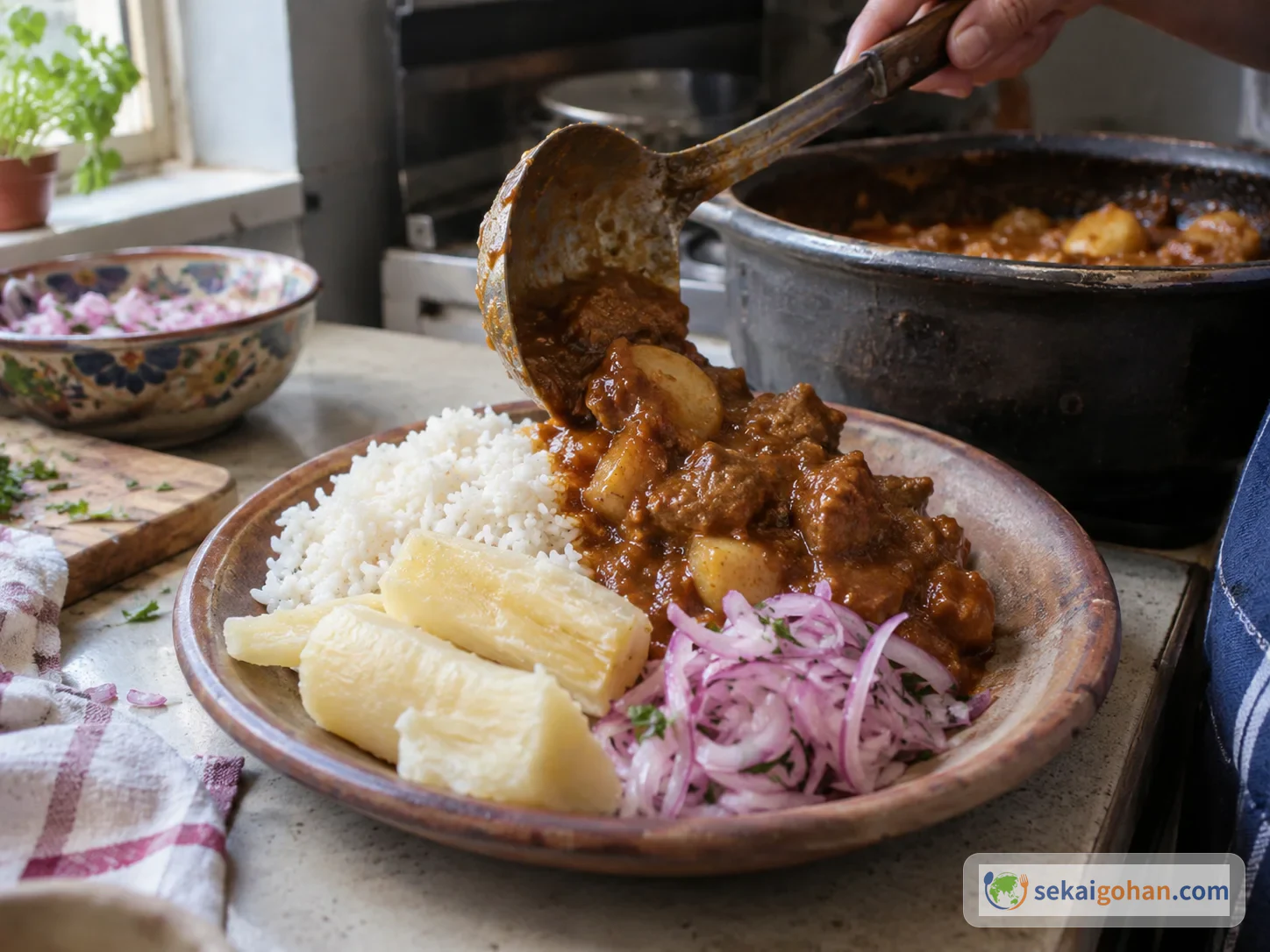
Lift the lid and the steam carries up the sweet scent of chili and the toasty aroma of dried potatoes. Inside is a glossy red sauce, with white rice and boiled yuca waiting beside the pot. Carapulcra is a Peruvian stew of dried potatoes simmered with pork or chicken, aji panca, spices, and peanuts. Think of it as a red stew with dried potatoes as the star and you can guess the taste. The aji panca gives color and a fruit-like aroma more than heat, and the peanuts add body and a toasty note at the end. The dried potatoes soak overnight, so start the day before you plan to eat.
Carapulcra and Peru's Dried Potatoes
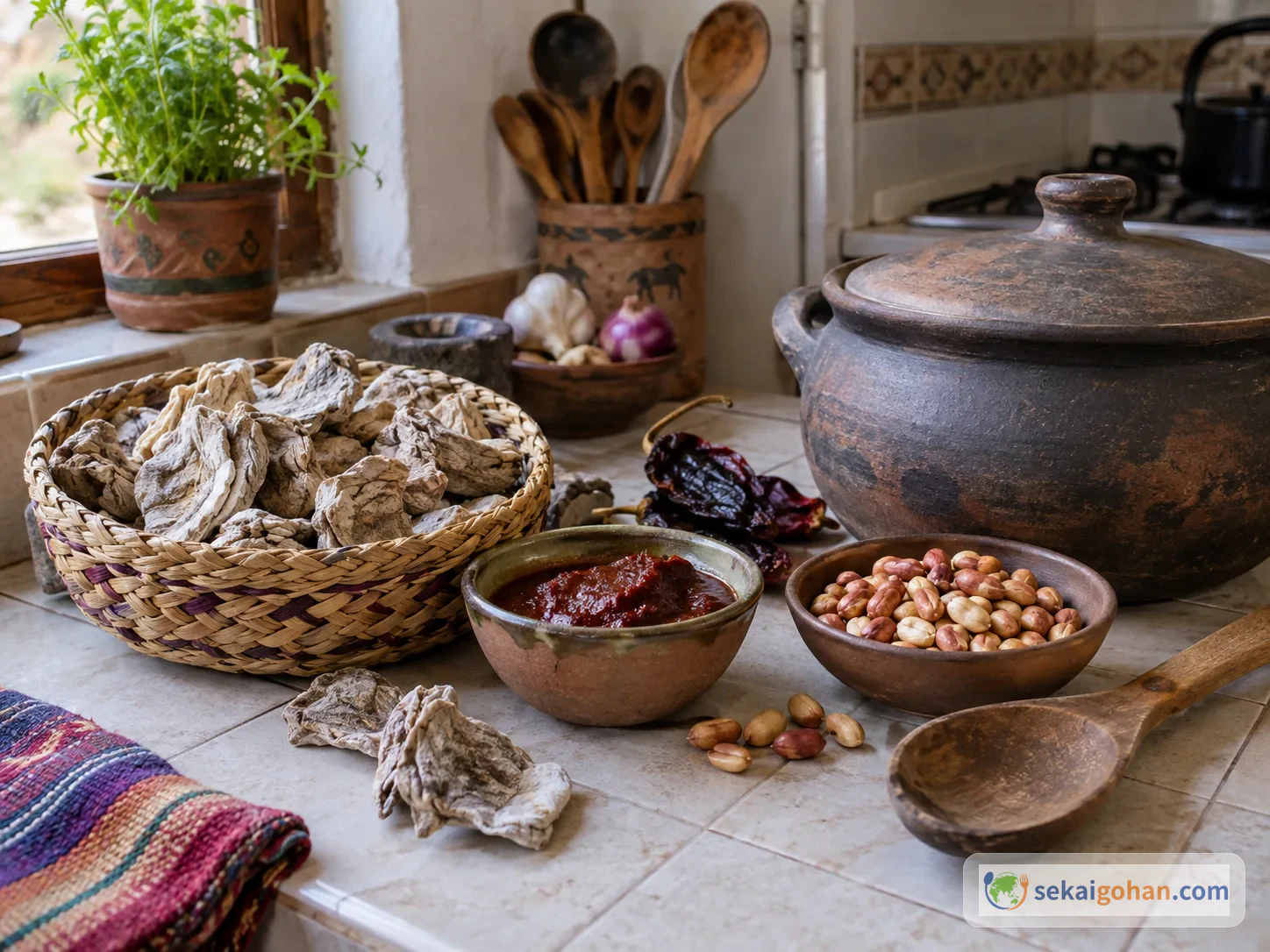
Carapulcra is an old Peruvian dish built on dried potatoes, which are peeled potatoes dried so they keep. Drying gives them a toasty aroma that fresh potatoes lack, and a texture that holds up in a long stew. It is the aroma of dried, not fresh, potatoes that is the backbone of this pot.
"Kalapurca," cooked with hot stones, is an older form of carapulcra. Pork, chicken, rice, and yuca were added to the dish later.
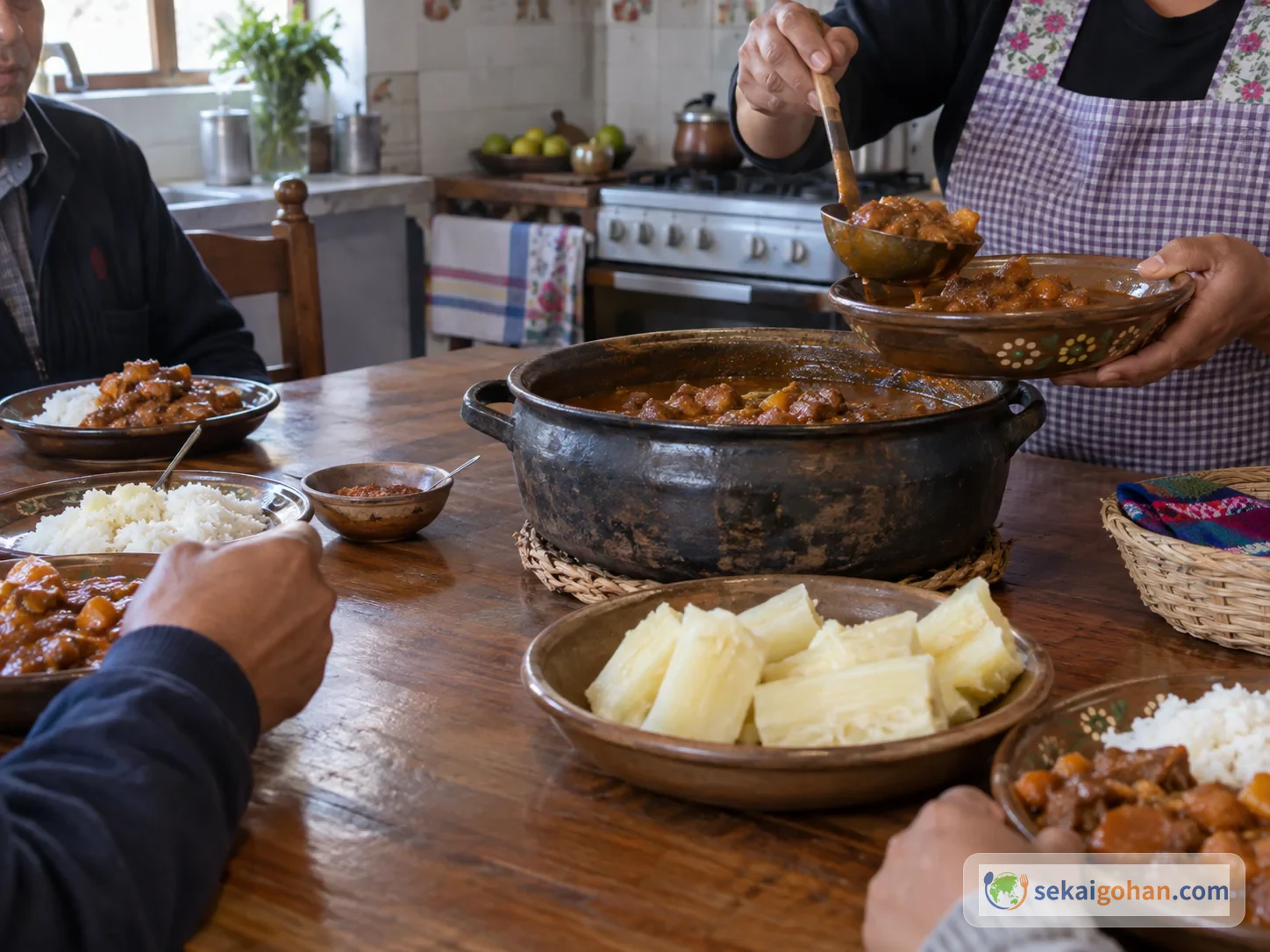
Today carapulcra is a dish for family celebrations, Sunday tables, and festivals. The Andean dried potatoes are layered with ingredients that joined over time and by region, such as pork, chicken, rice, and yuca. A food made to keep turned into a festive pot the whole family gathers around.
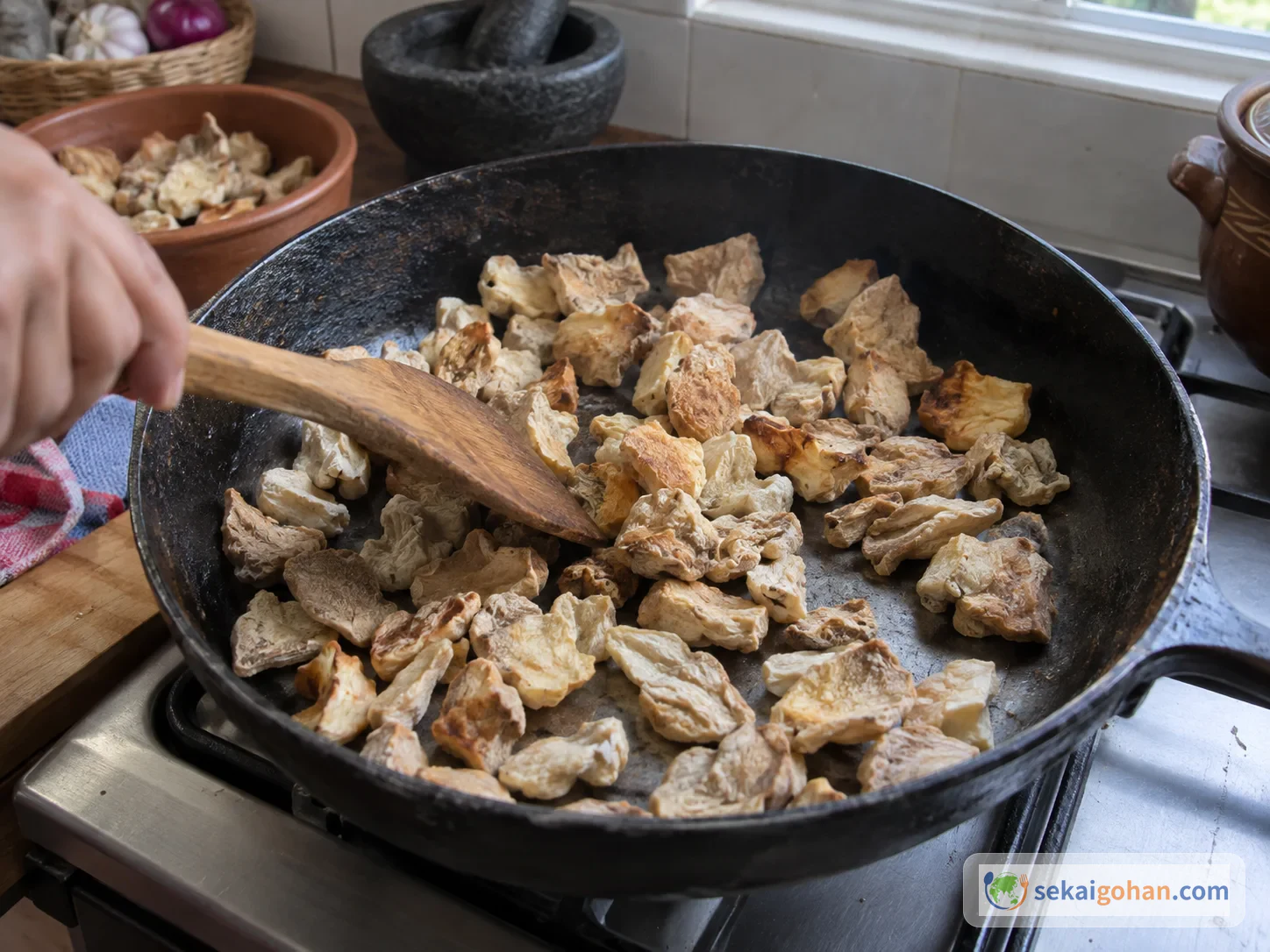
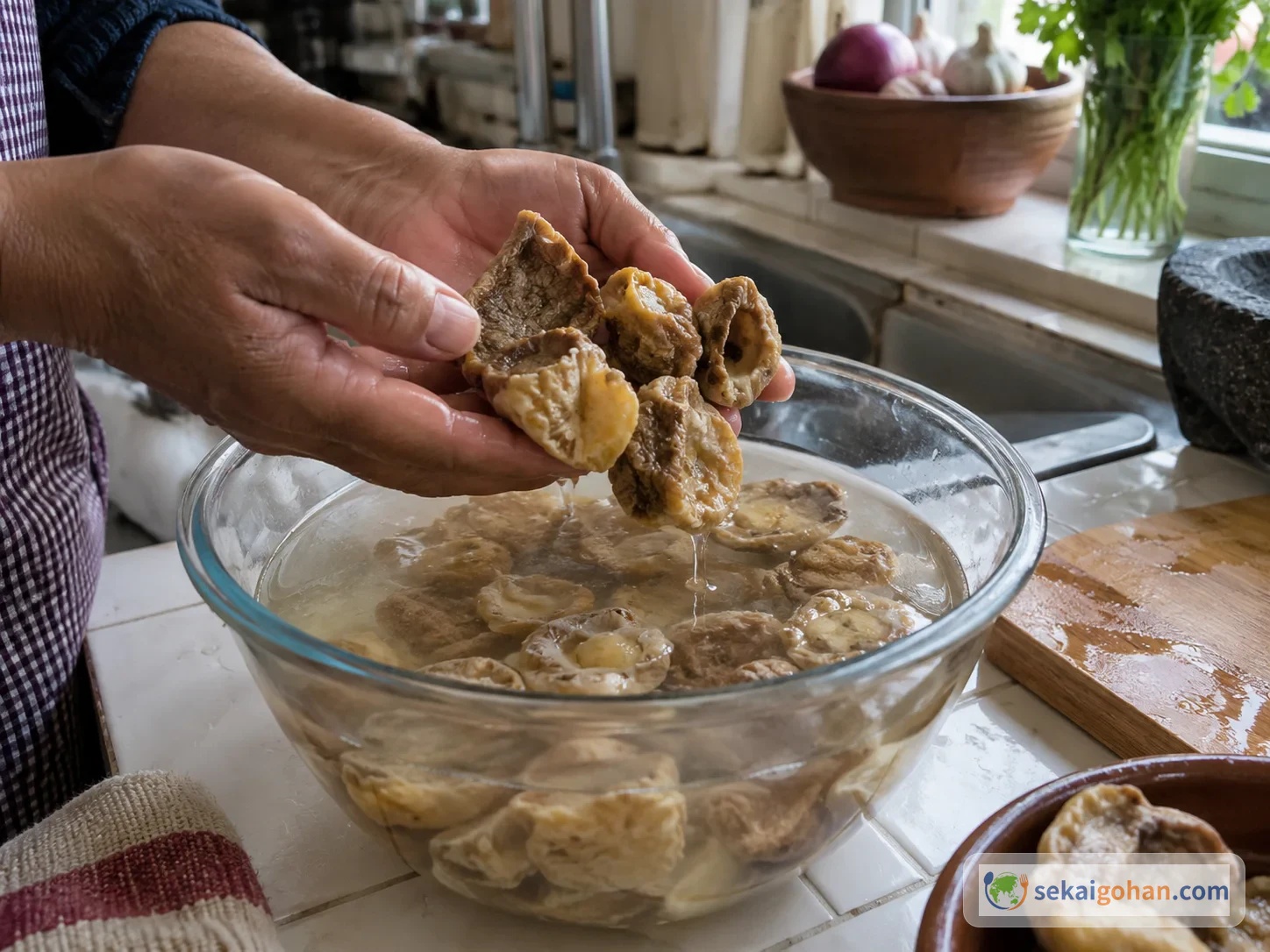
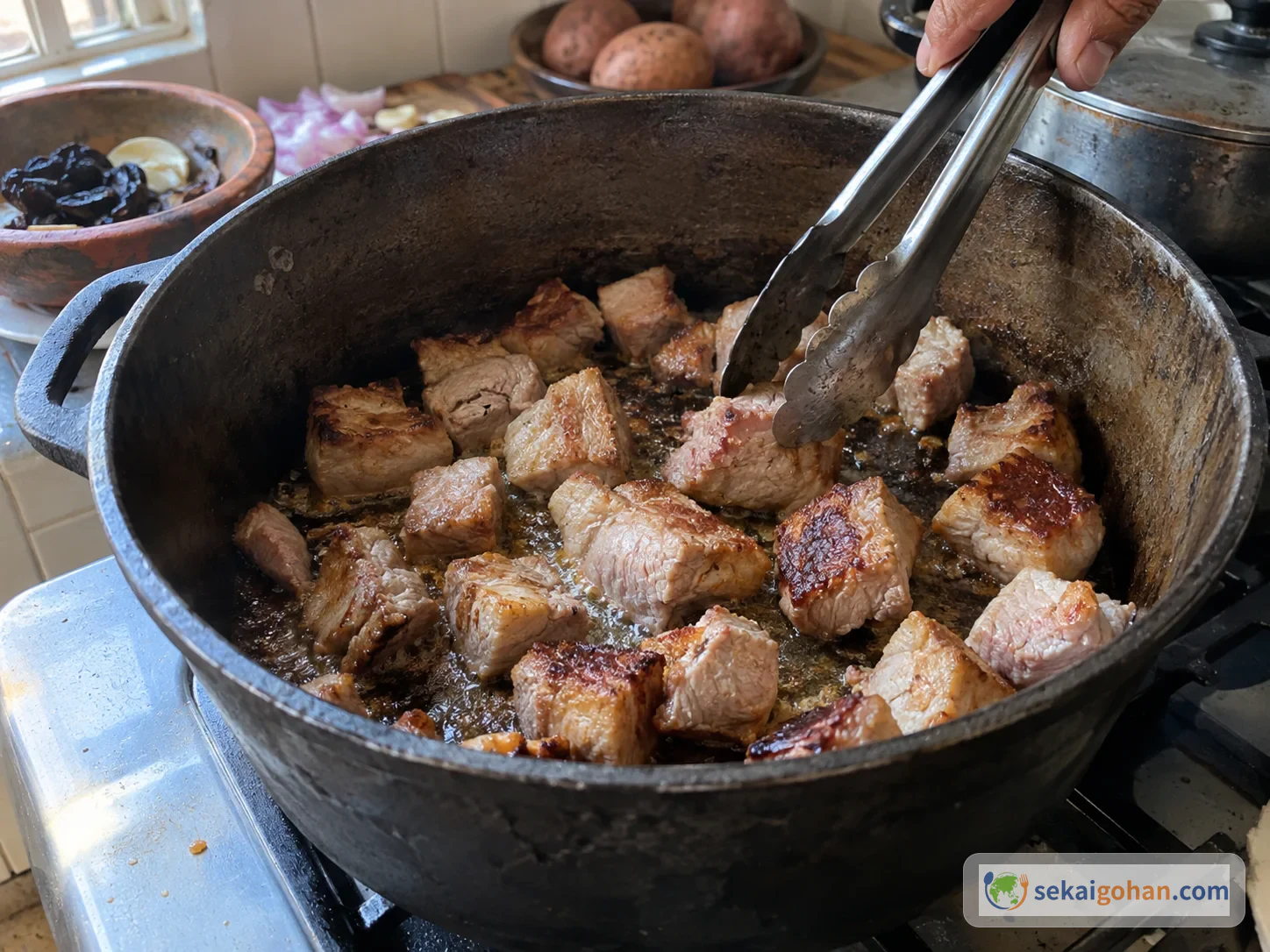
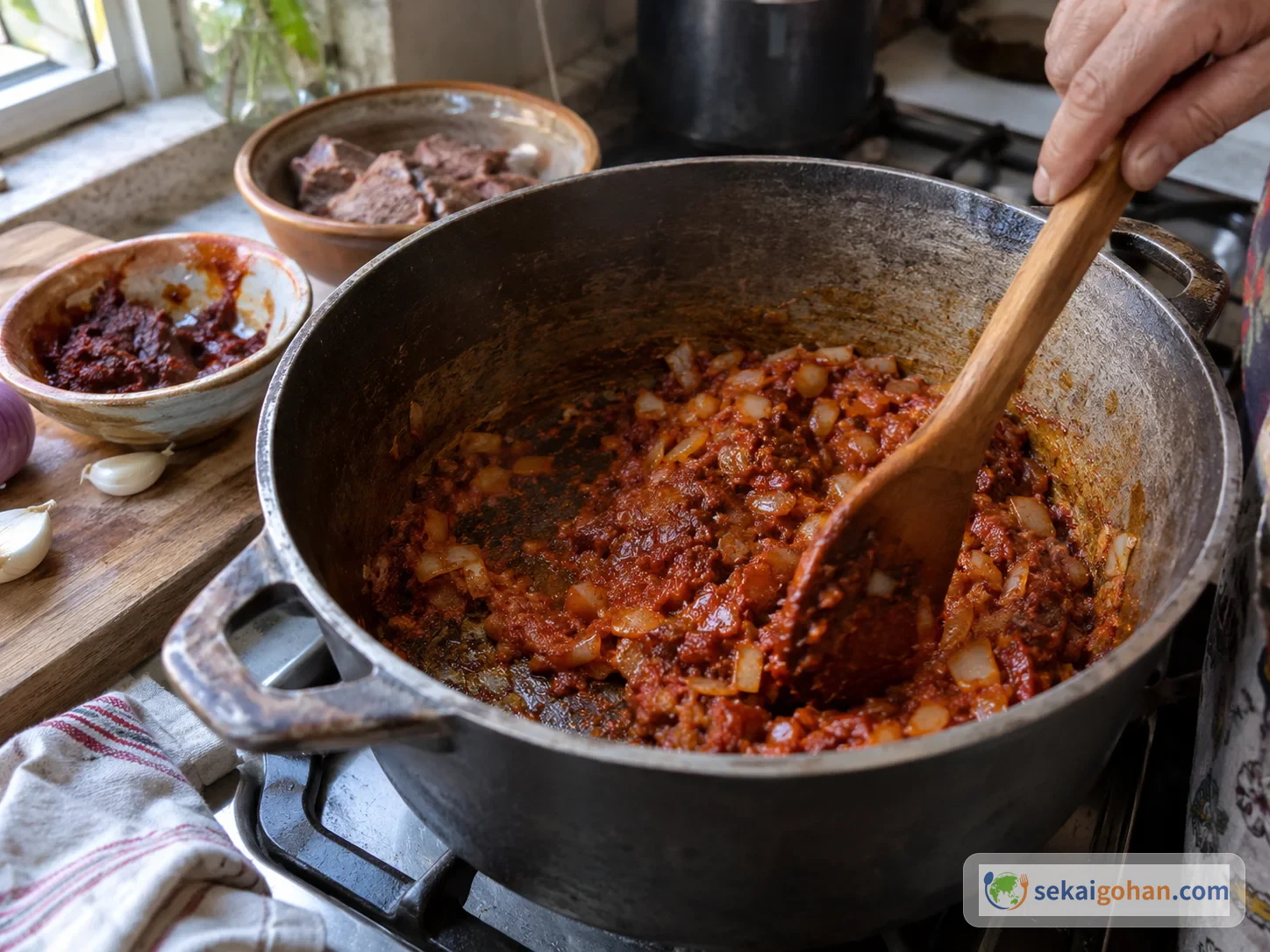
This version uses pork, and the dried potatoes are rehydrated until they're fluffy but still hold their shape. It is the layering of chili aroma and the depth of a stew, not heat, that gives the dish its taste. Three steps matter most: dry-toast the dried potatoes and rehydrate them overnight, build the flavor base without burning it, and add the peanuts at the end and reduce.
Look for "aji panca" and "papa seca (dried potatoes)." Aji panca decides the aroma of the dish, so search by that name and compare brands and sizes from the results. Look for papa seca the same way, at import grocers or specialty online shops. An ordinary pot is fine, along with whatever pork, onion, and garlic you have in the kitchen.
It contains peanuts, so do not serve it to anyone with a peanut allergy. Check the labels of the broth and seasonings as well as the unsalted roasted peanuts. Do not eat yuca raw: peel off the thick skin and cook until the center is soft. Keep the cutting board and knife used for pork or chicken separate from tools for vegetables and plating, or wash them before use.
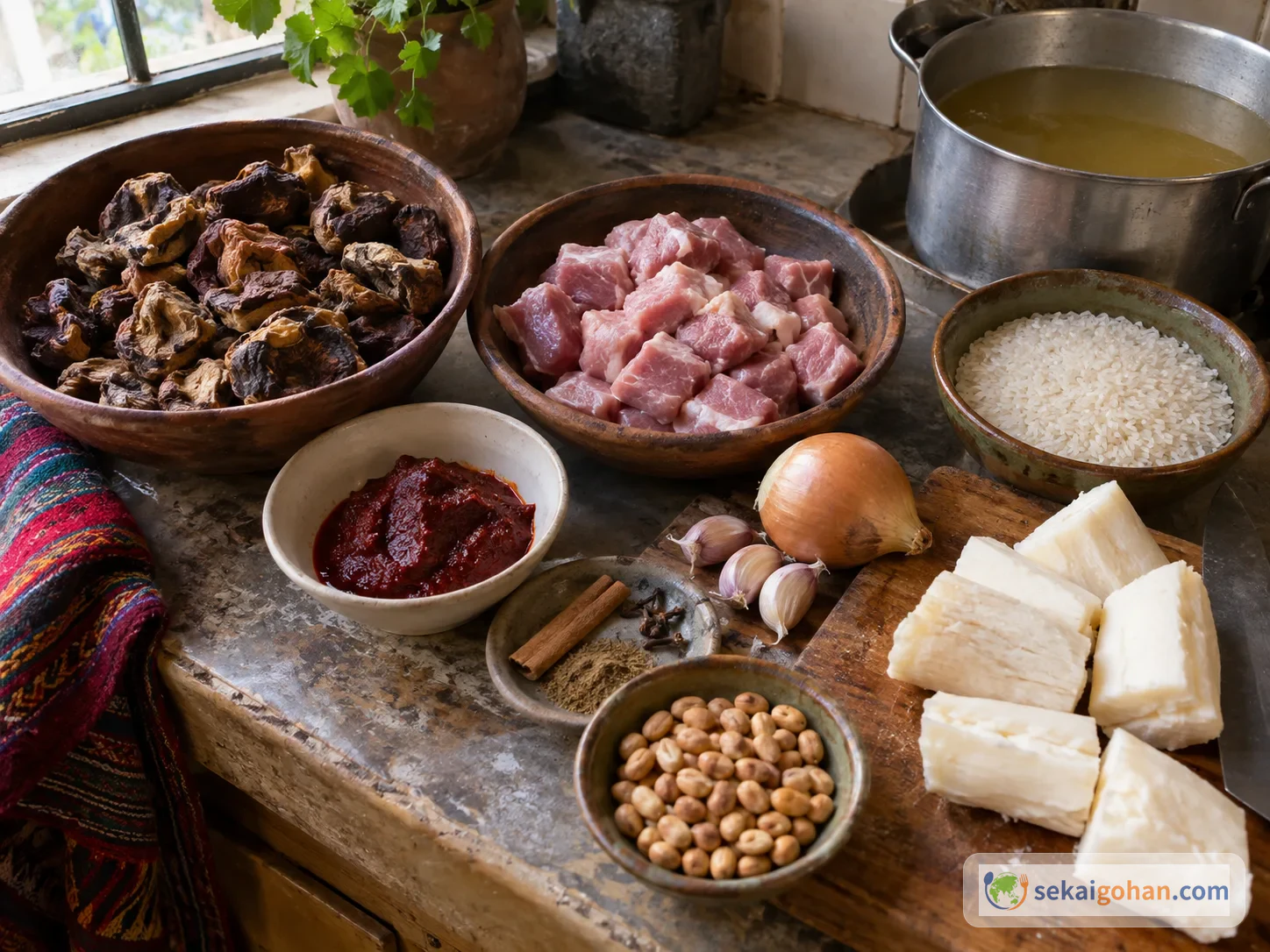
Ingredients (serves 4)
Choosing Carapulcra Ingredients and Substitutes
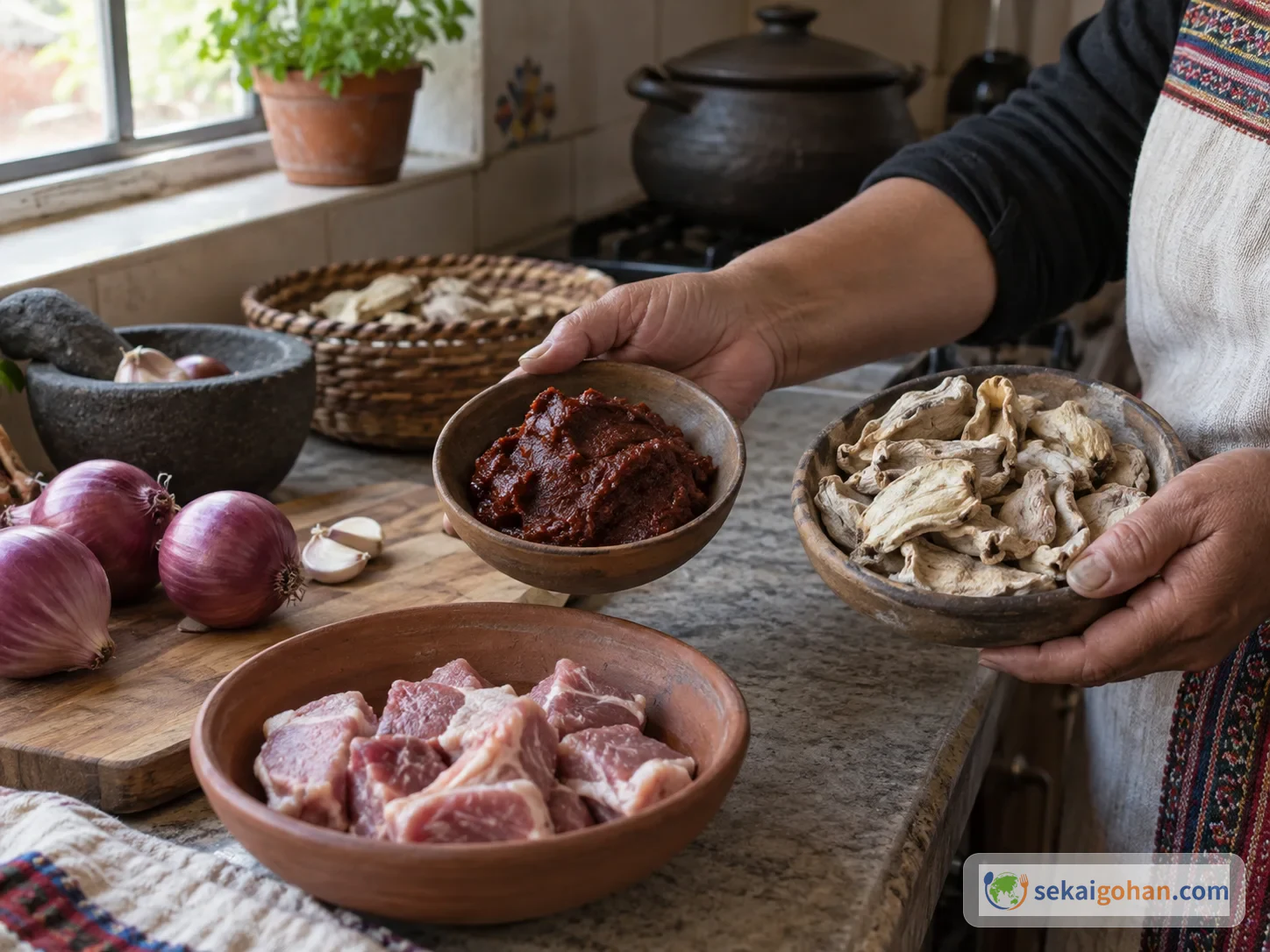
Track down dried potatoes before you start, because they carry the texture and the toasty aroma. Fresh potatoes have a different water content and break down differently, so they can't be used in the same amount or rehydrated the same way. Make it with fresh potatoes and you get a different stew, with the amounts and liquid worked out again.
If you have no aji panca, use red paprika powder with a little heat. It covers the color and mild heat, but it won't match the fruit-like aroma. Choose a substitute by whether you are making up the color, the heat, or the aroma, and you'll know what changes in the result.
For the meat, use pork shoulder or pork belly. To make it with chicken, use 1 lb (500 g) chicken thighs instead. Chicken cooks through faster than pork, so check it as it simmers and make sure the center holds 75 degrees C for at least 1 minute. You lose some of the body that pork fat and long simmering give, but the dried potatoes and aji panca still define the dish.
If you have no port, use red wine, or leave it out and add the same amount of broth. If you use wine, keep the step that cooks off the alcohol.
Fixing Carapulcra Texture and Sauce
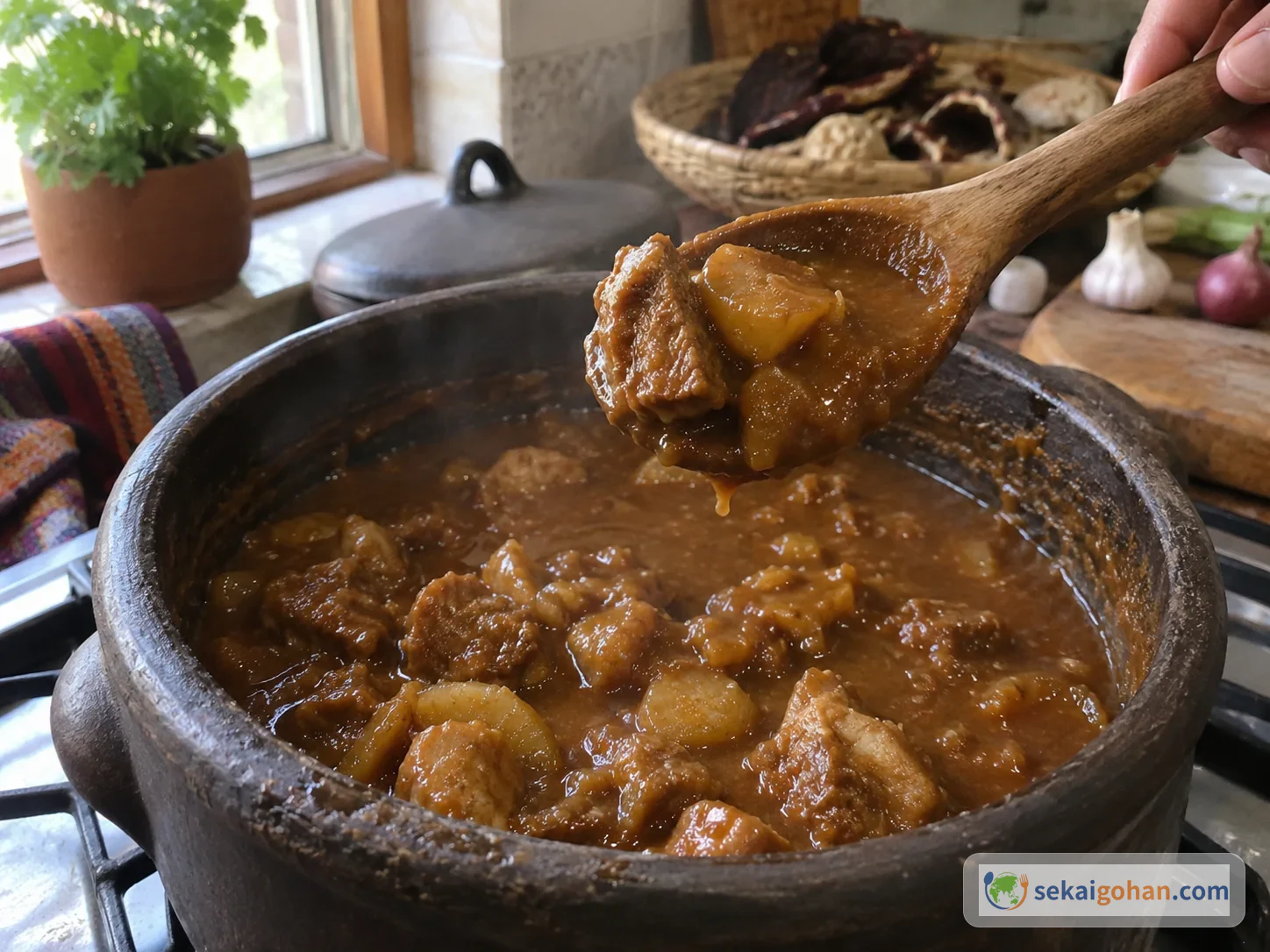
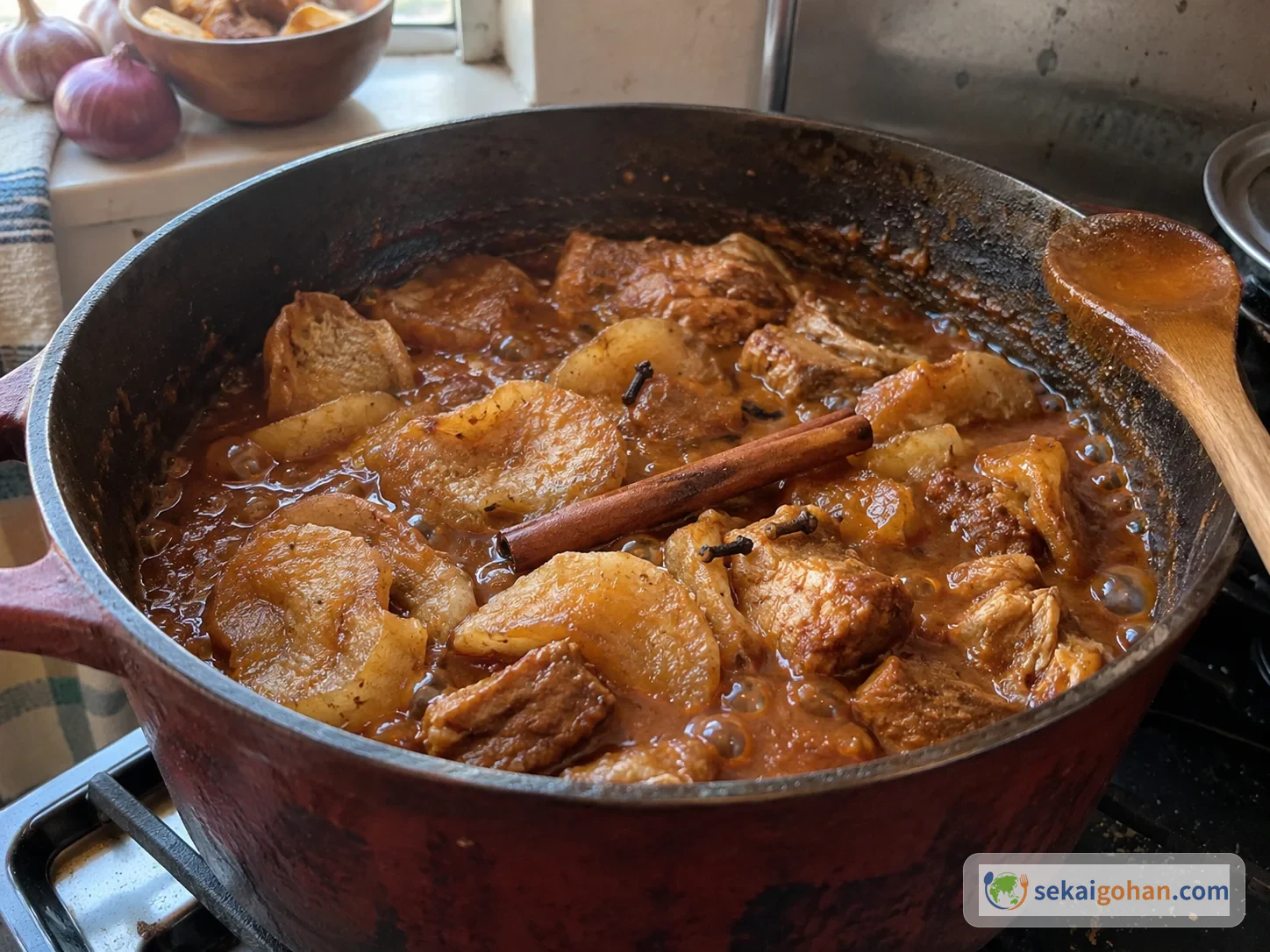
The dried potatoes should be fluffy to the bite with their shape intact, neither hard in the center nor broken down into a mash. If they're about to turn to mash, stop the heat right there. The sauce should be thick enough to remain on the back of the spoon, coating it thinly before it slowly drips off.
If the taste is vague, add salt a little at a time. If all you can taste is heat, add a little broth and simmer a few minutes rather than thinning it with a lot of water.
If the liquid reduces so far that you can see the bottom of the pot, add hot broth 3.5 tbsp (50 ml) at a time and wait on low heat until it bubbles again. If only the centers of the potatoes are hard, keep cooking 10 minutes at a time with the lid slightly ajar, and check after adding broth. Trying to soften them fast over high heat breaks down the outsides and toughens the meat.
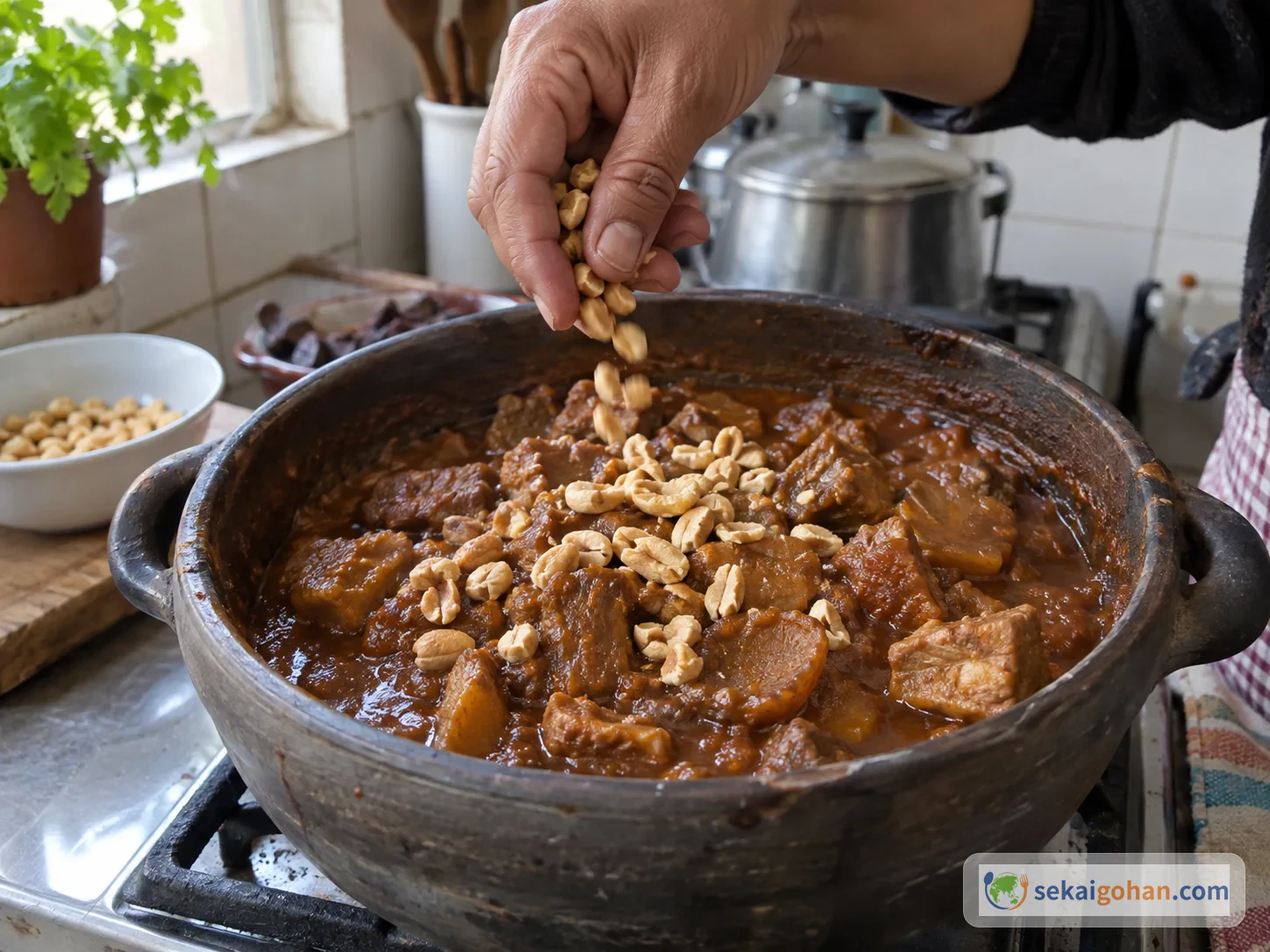
Peanuts at the end, sourness on the plate. Add the peanuts in the last 10 minutes, and the cilantro and lime at plating, so the stew doesn't flatten their aromas. The 10 minutes of resting lets the sauce meld with the other ingredients, so leave the liquid and salt mostly alone right after you turn off the heat.
Serving Carapulcra, Chincha Style
White rice is the main partner, with the sourness of yuca and red onion on the side.
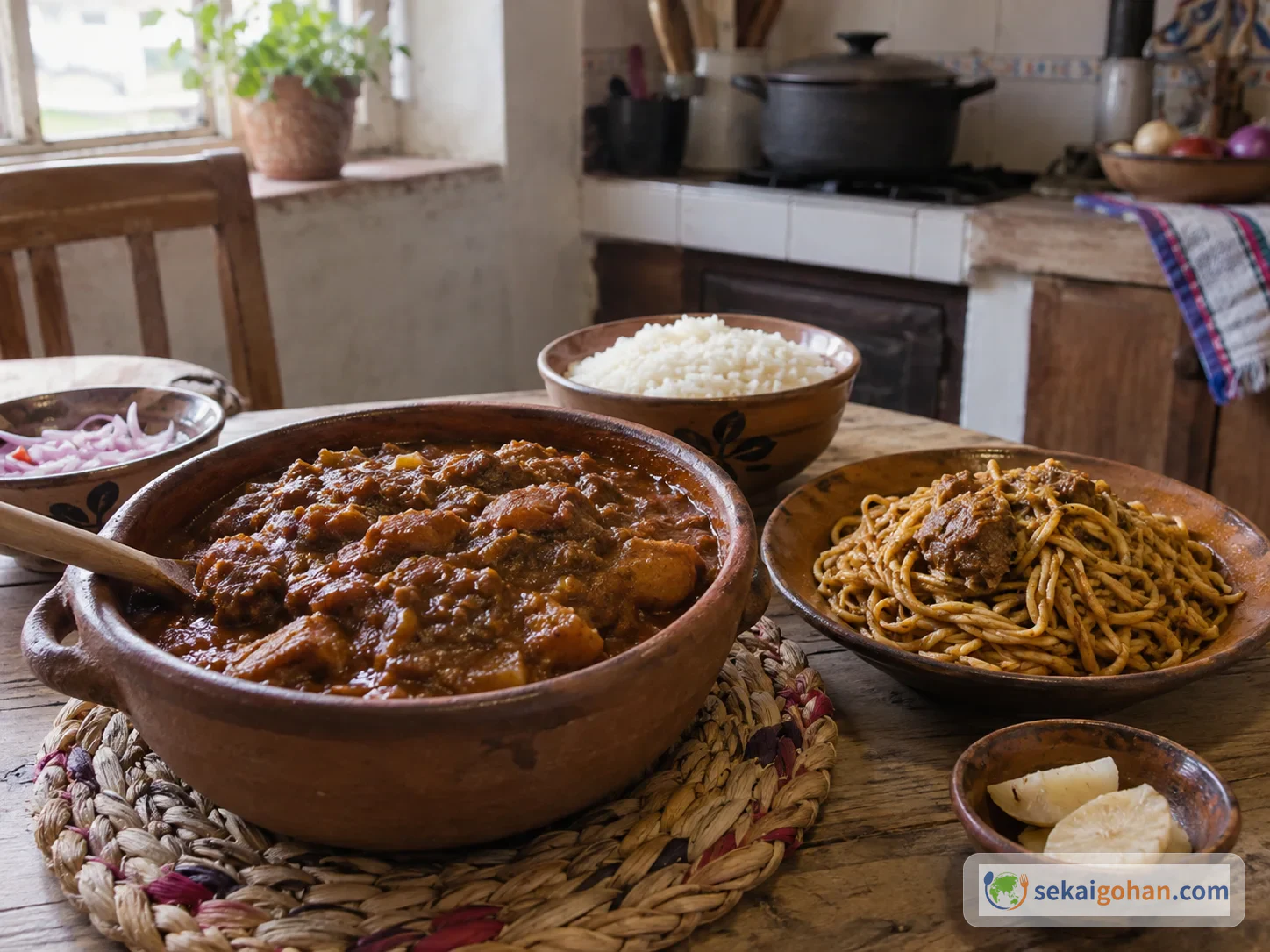
In Chincha, carapulcra is paired with sopa seca, known as "manchapecho." Sopa seca is a separate dish made with dried noodles, so serve it on its own plate or beside the carapulcra, never mixed into the pot. Served together, the two make a regional festive plate rather than a stew on its own.
In Chincha, carapulcra goes with celebrations such as weddings, along with wood fires, clay pots, and local wine. At home, an ordinary stove and pot work fine. White rice and yuca are enough to keep the shape of the meal, and adding sopa seca brings it closer to the Chincha combination.
Storage and Frequently Asked Questions
Can I make it the day before?
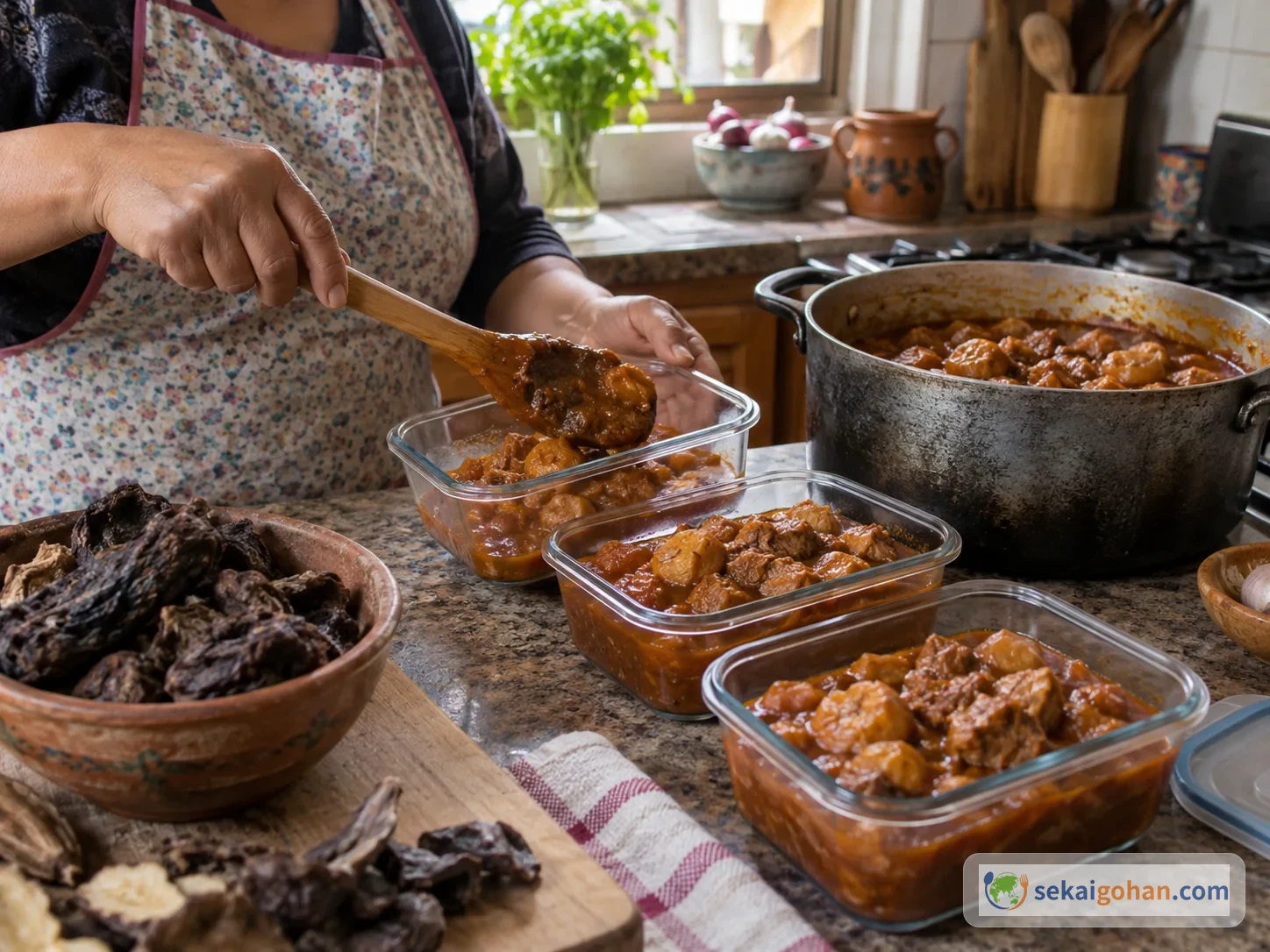
Yes. Don't leave it at room temperature for long once it has cooled slightly. Divide it into shallow, clean containers so it cools quickly, and keep the refrigerator at 10 degrees C or below. Before eating, reheat it until the whole pot boils or the center reaches 75 degrees C or more. By the next day the sauce has firmed up, so add a little broth and loosen it over low heat. Don't eat anything that smells or looks off, or that you aren't sure was stored properly.
What if I cannot eat peanuts?
Without the peanuts you lose the toasty note and the slight thickness, and no substitute gives the same finish. If anyone at the table has an allergy, keep peanut-containing ingredients and utensils away from the pot, and if in doubt, don't serve it.
What other Peruvian dish should I make?
For another dish with aji panca or potatoes, try how to make aji de gallina. For a home dish with beans and rice on one plate, try tacu tacu. For more on Peru's regional dishes, read Introduction to Peruvian cuisine.