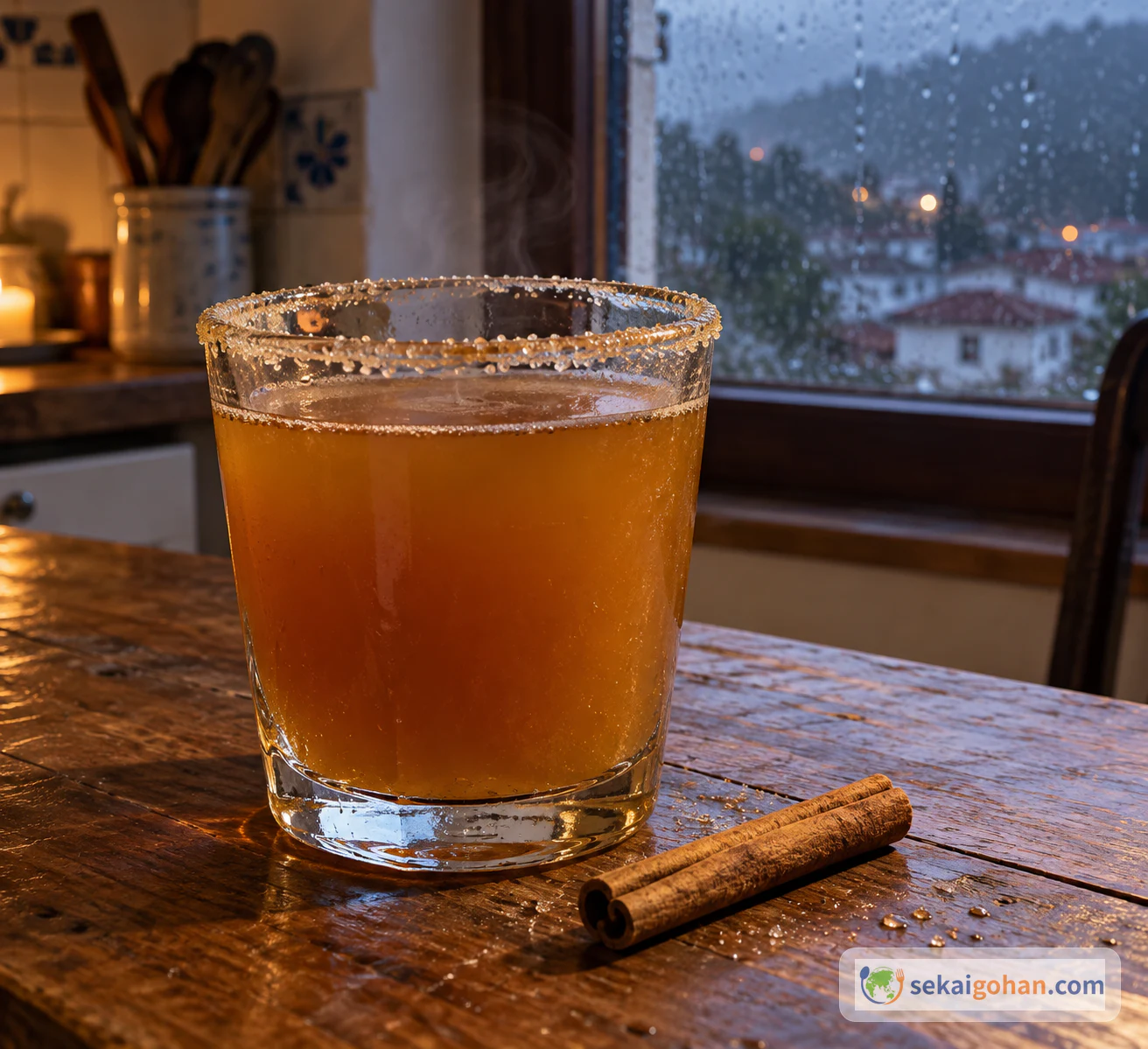
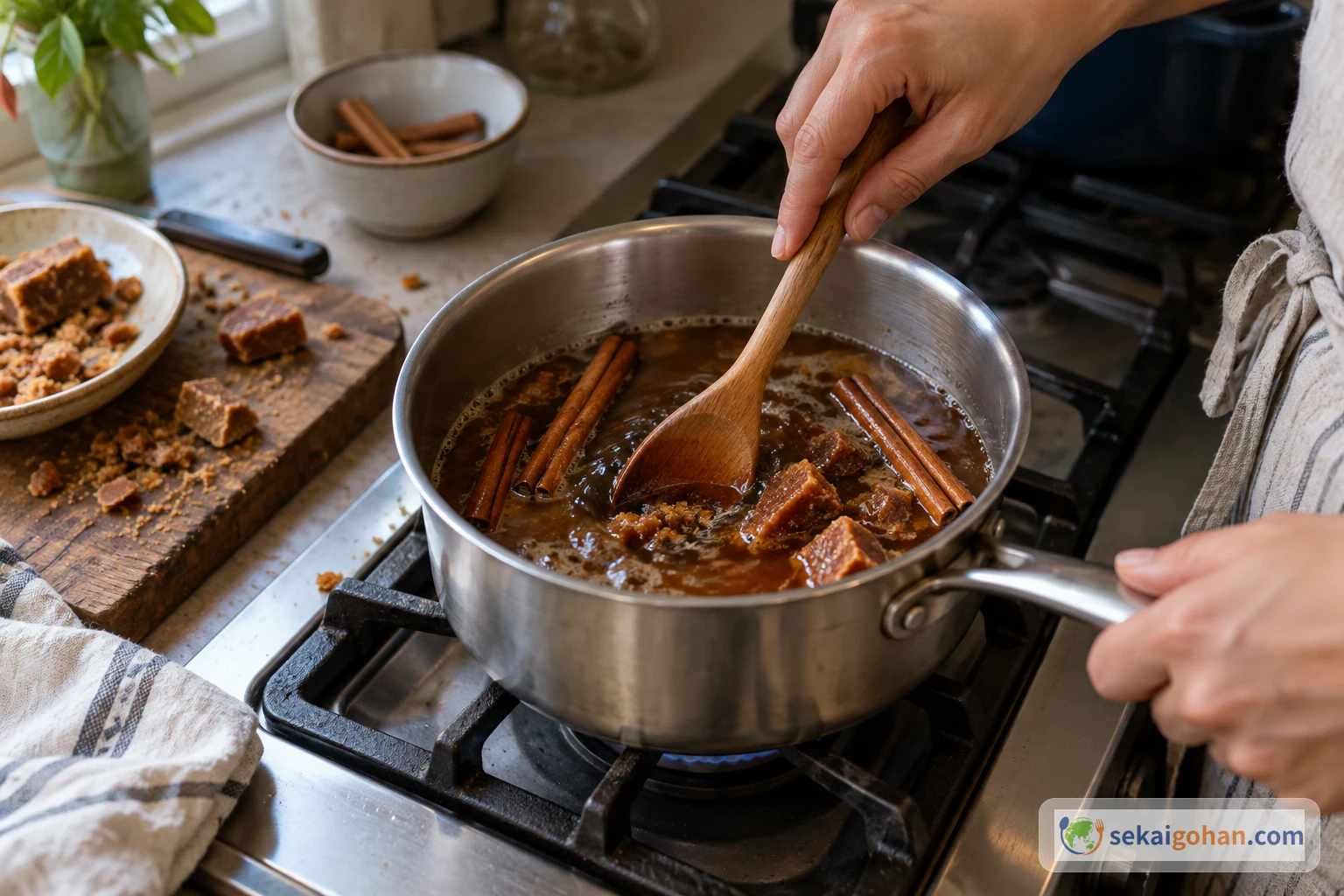
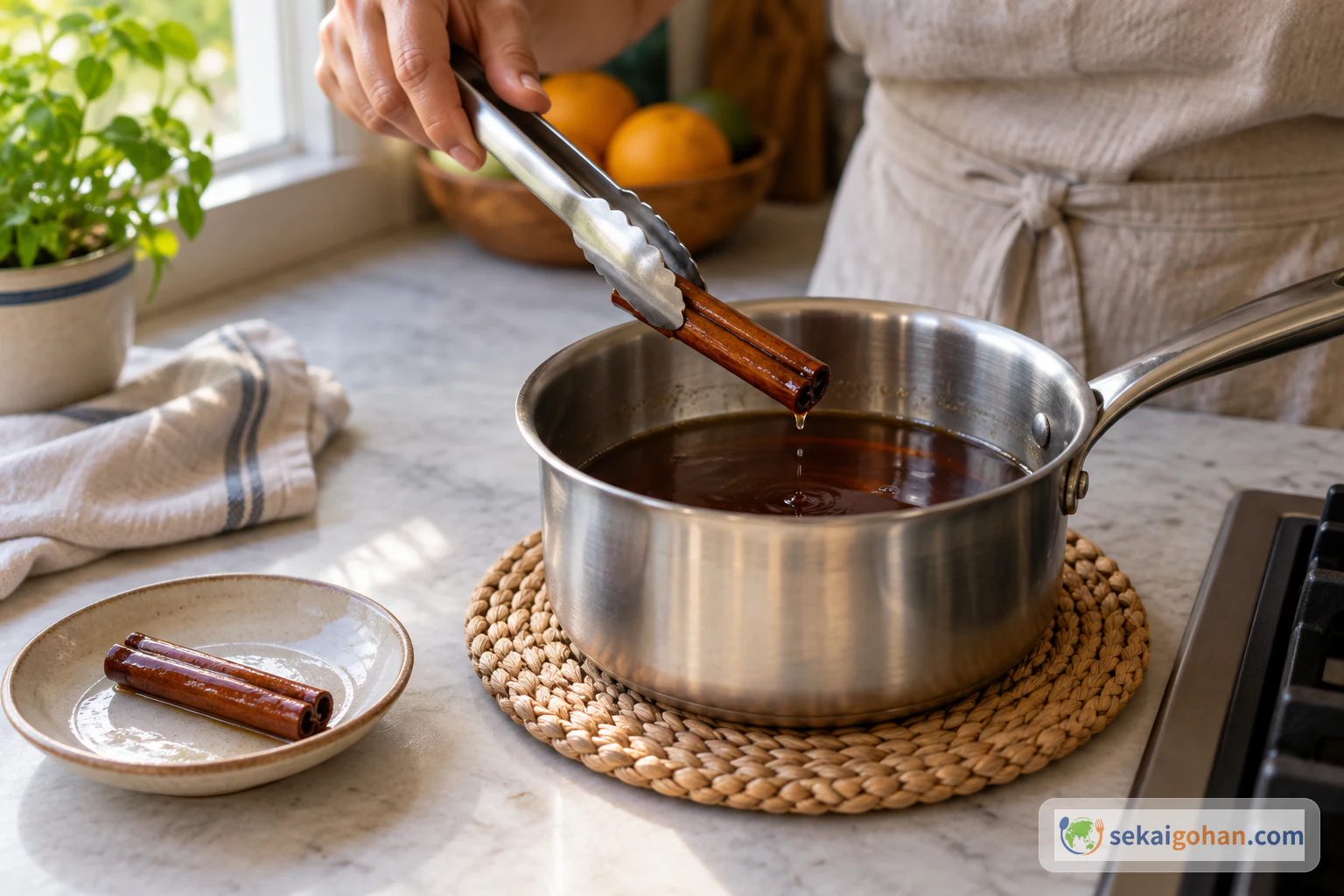
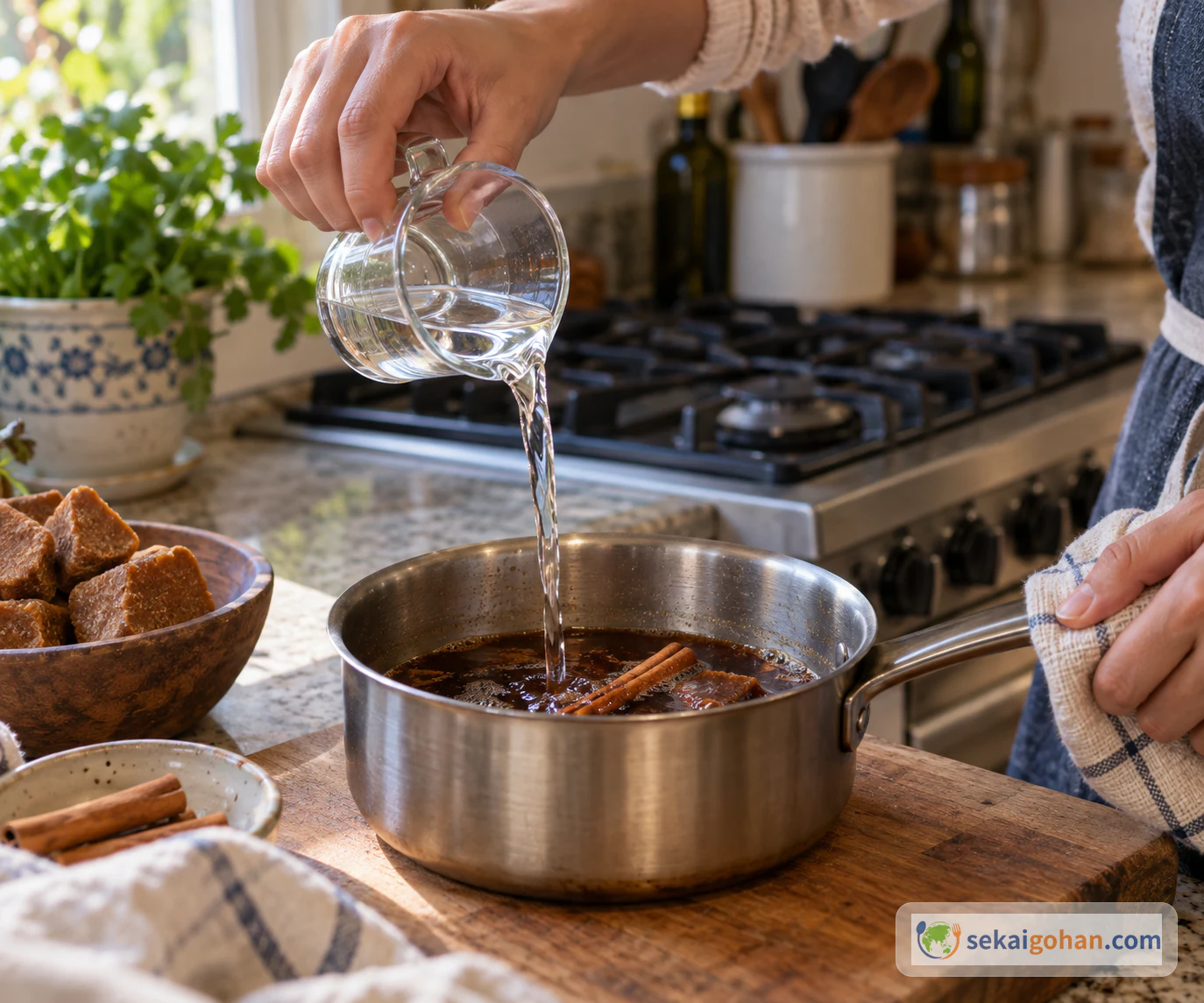
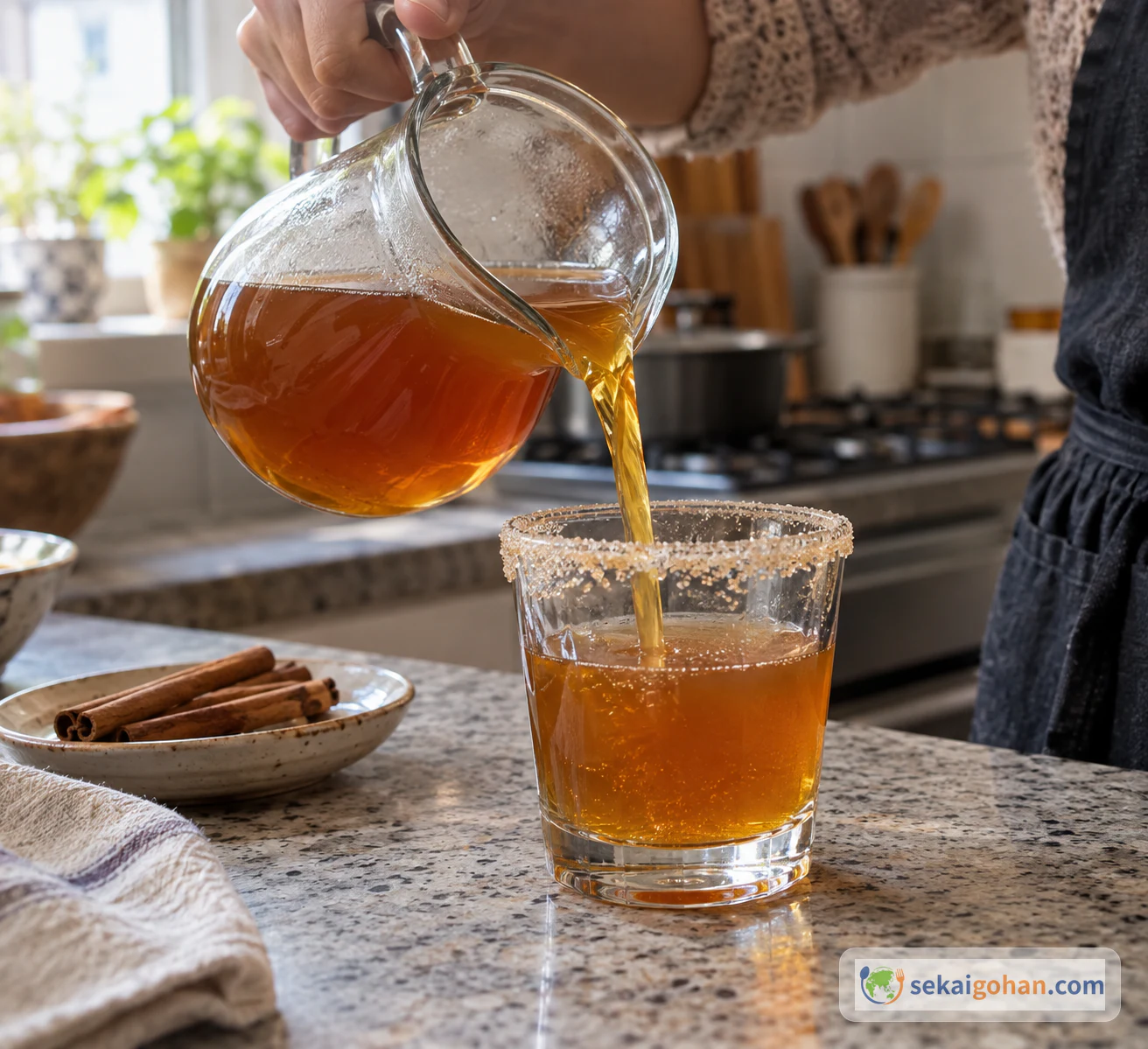
A small pan of water darkens as shaved panela melts into it, and the cinnamon sticks loosen their scent into the steam. That's the start of canelazo, a hot, sweet Colombian drink that pairs a panela-and-cinnamon base with aguardiente, an anise-flavored spirit. It tastes of molasses-deep sugar and warm spice, and the anise comes through right at the end.
Canelazo in Colombia
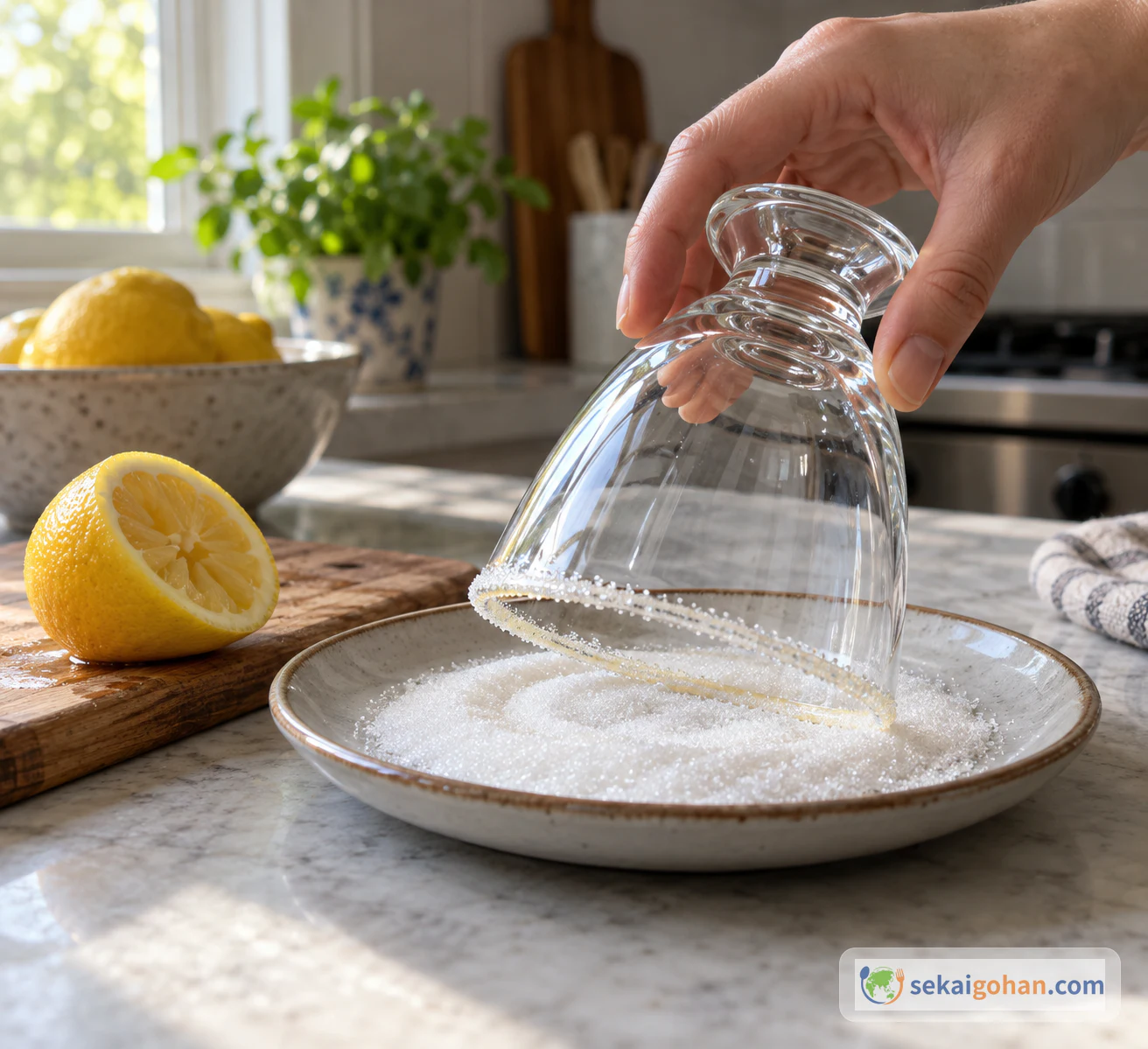
Canelazo is a drink for Bogotá's cold, rainy days. It also shows up in December during the Novena de Aguinaldos, the season of evening prayer gatherings before Christmas. This version uses water, shaved panela, cinnamon sticks and aguardiente, plus a lemon and sugar for the rim of the glass. Panela, an unrefined cane sugar, gives a sweetness with a molasses-like depth. The cinnamon brings warmth and the aguardiente adds its note of anise.
The origin of canelazo is unknown. There are a few possible explanations, but none of them is established history. What is clear is that the recipes vary a lot. The name is used for related drinks beyond Colombia, and even within Colombia the proportions change from cook to cook. In Ecuador, for instance, chapil takes the place of aguardiente.
Ingredients: One Batch
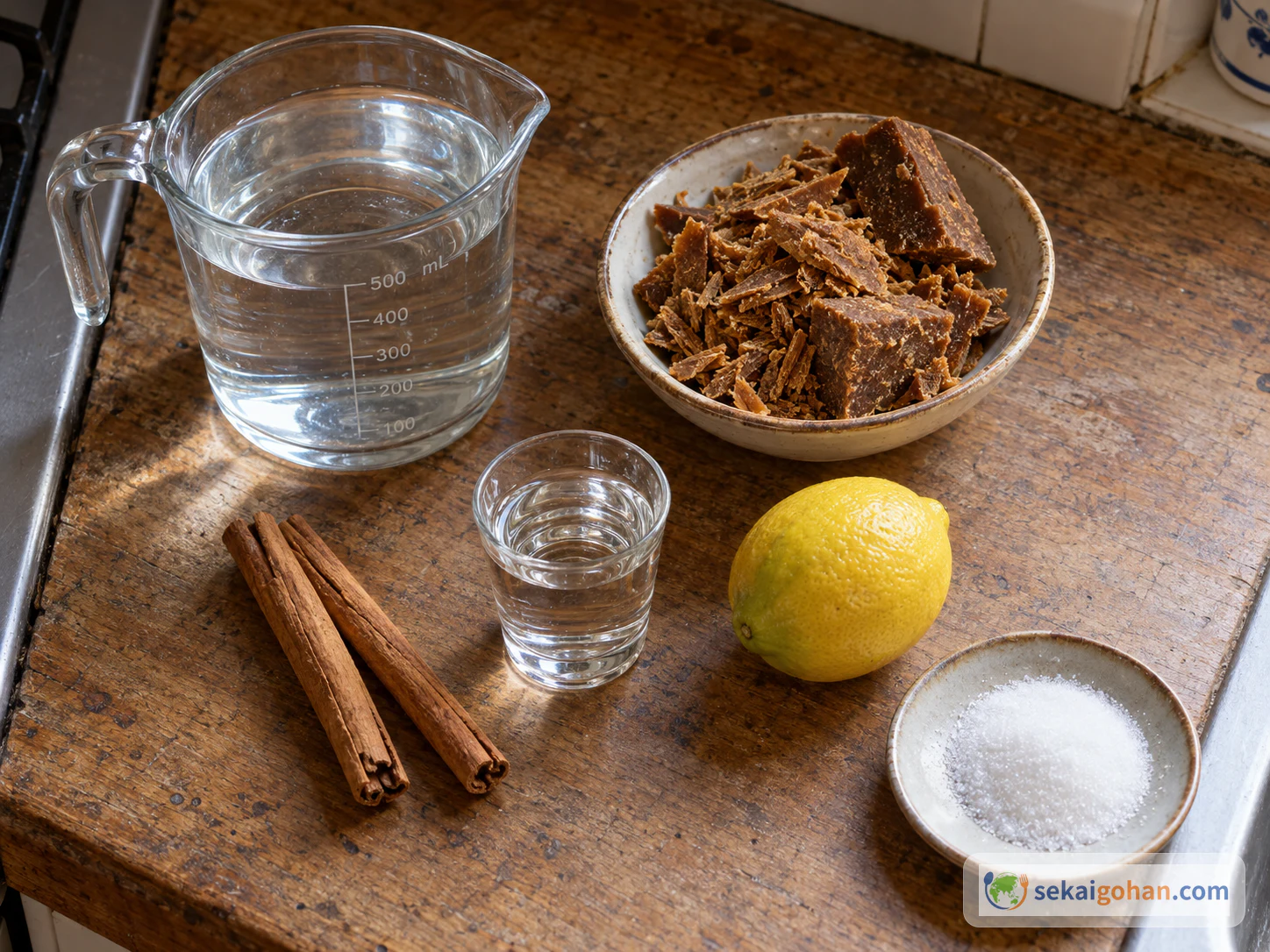
The amounts below make one batch.
1 taza is a 240 mL cup and 1 tablespoon is 15 mL. Measure the panela as level spoonfuls.
Use an ordinary yellow lemon; its juice is not stirred into the drink.
Equipment
- A small saucepan
- A 240 mL measuring cup and a 15 mL tablespoon
- A wooden spoon
- Clean tongs and a small dish for the cinnamon sticks
- A heat-resistant surface to set the pan on away from the burner
- A small plate for the sugar
- Heat-resistant glasses or mugs that the maker labels as suitable for hot drinks
Choosing Panela, Aguardiente and a Glass
Panela. In many places panela is a specialty ingredient. Kokuto (Japanese unrefined brown sugar) can stand in for it, but its aroma, molasses content and texture are different. The powdered kind is easy to measure, but expect a drink that tastes a little different from one made with panela.
Aguardiente. It's hard to find in an ordinary supermarket. Sambuca or another anise liqueur can take its place, but the flavor will change, and the same volume may carry a different strength. Rum and other spirits move the drink even further from the original.
Glass. A thick glass isn't necessarily safe for hot liquid. Use a glass or mug that the maker labels for hot drinks, and never pour hot liquid into thin glass.
Method: Warm, Take Off the Heat, Then Add the Spirit
The steps below use what you can see as your cue.
Canelazo Troubleshooting
| Problem | What to check | What to do |
|---|---|---|
| Panela is still undissolved | The panela was a coarse block, or the spirit went in too soon | Keep stirring until no grains remain, then add the aguardiente |
| The aroma is weak | Ground cinnamon was used, or the sticks were left out | Use whole sticks. Ground cinnamon or a long boil won't fix it |
| Too sweet or too strong | Personal taste | Adjust the sweetness and alcohol to taste |
| Worried about the glass | Thin glass, or glass not marked for hot liquids | Use a glass or mug that the maker labels for hot drinks |
Serving Canelazo, Leftovers and Other Versions
Serving and storage
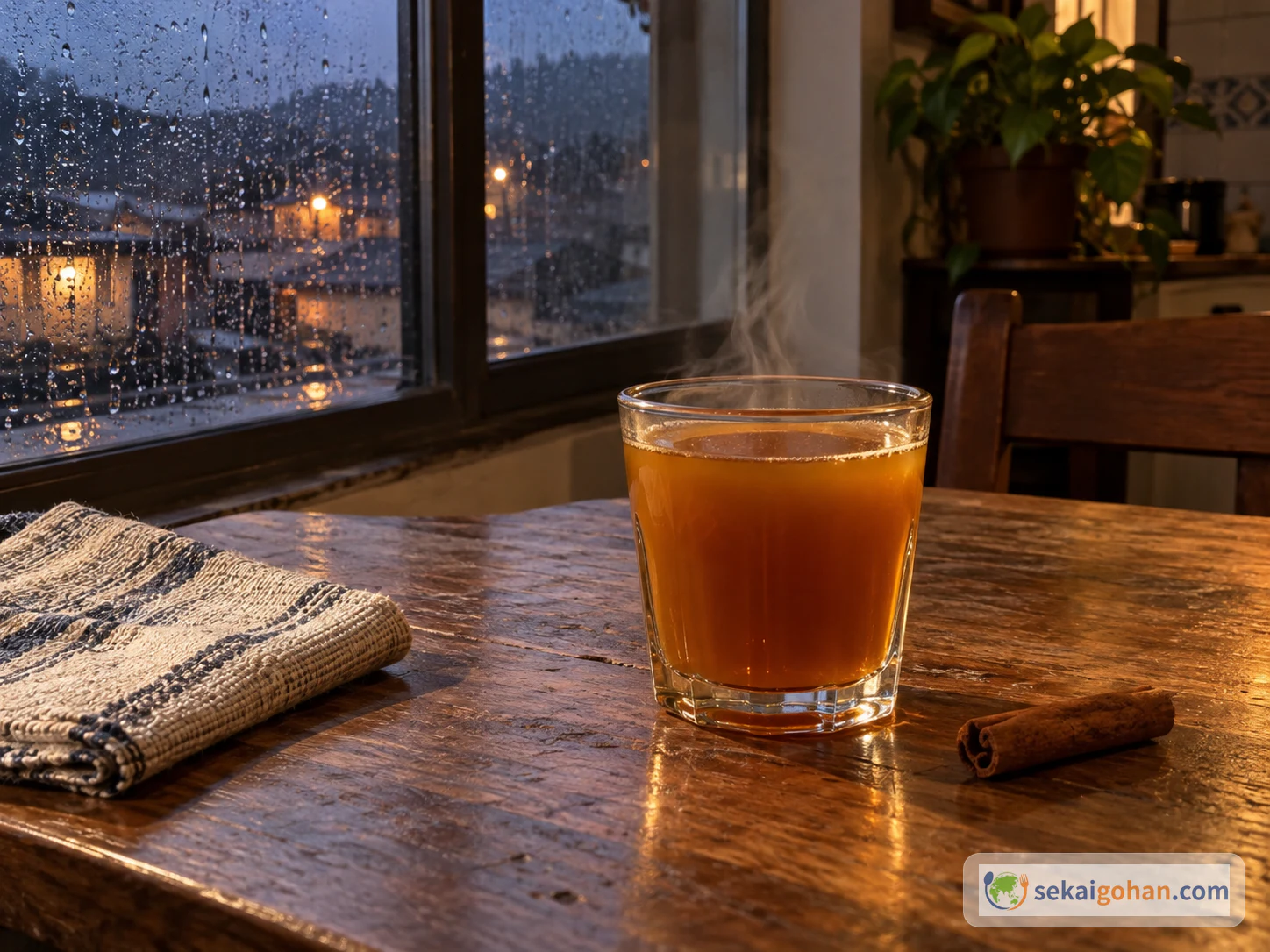
Serve canelazo hot, in a thick heat-resistant glass or mug. In Boyacá it's also served in small earthenware cups. There's no established way to store or reheat it, so make it when you plan to drink it. If you need to get ahead, keep the panela liquid and the aguardiente separate until you serve.
Who should not drink it
Canelazo contains aguardiente, and warming does not make it alcohol-free. Do not serve it to anyone under the legal drinking age. In Japan, drinking under the age of 20 is prohibited. It is also not for anyone who is pregnant or breastfeeding or who will be driving.
Canelazo is an alcoholic drink. Don't offer it to anyone under the legal drinking age, anyone who is pregnant or breastfeeding, or anyone who will be driving. In Japan, drinking under the age of 20 is prohibited, separately from the age of adulthood of 18, and in Colombia the law prohibits selling alcohol to minors. Using less aguardiente gives a milder drink, but it's still alcoholic. A version made with no spirit at all is a different drink.
Other canelazo recipes
A Boyacá recipe. The Boyacá version uses 3 taza aguardiente, 3 taza aguapanela (panela water) and 6 cinnamon sticks. Everything is mixed and warmed in a water bath without boiling, then served hot in thick glass or earthenware. With equal parts spirit and aguapanela it's far stronger than the recipe above, too strong to make at home.
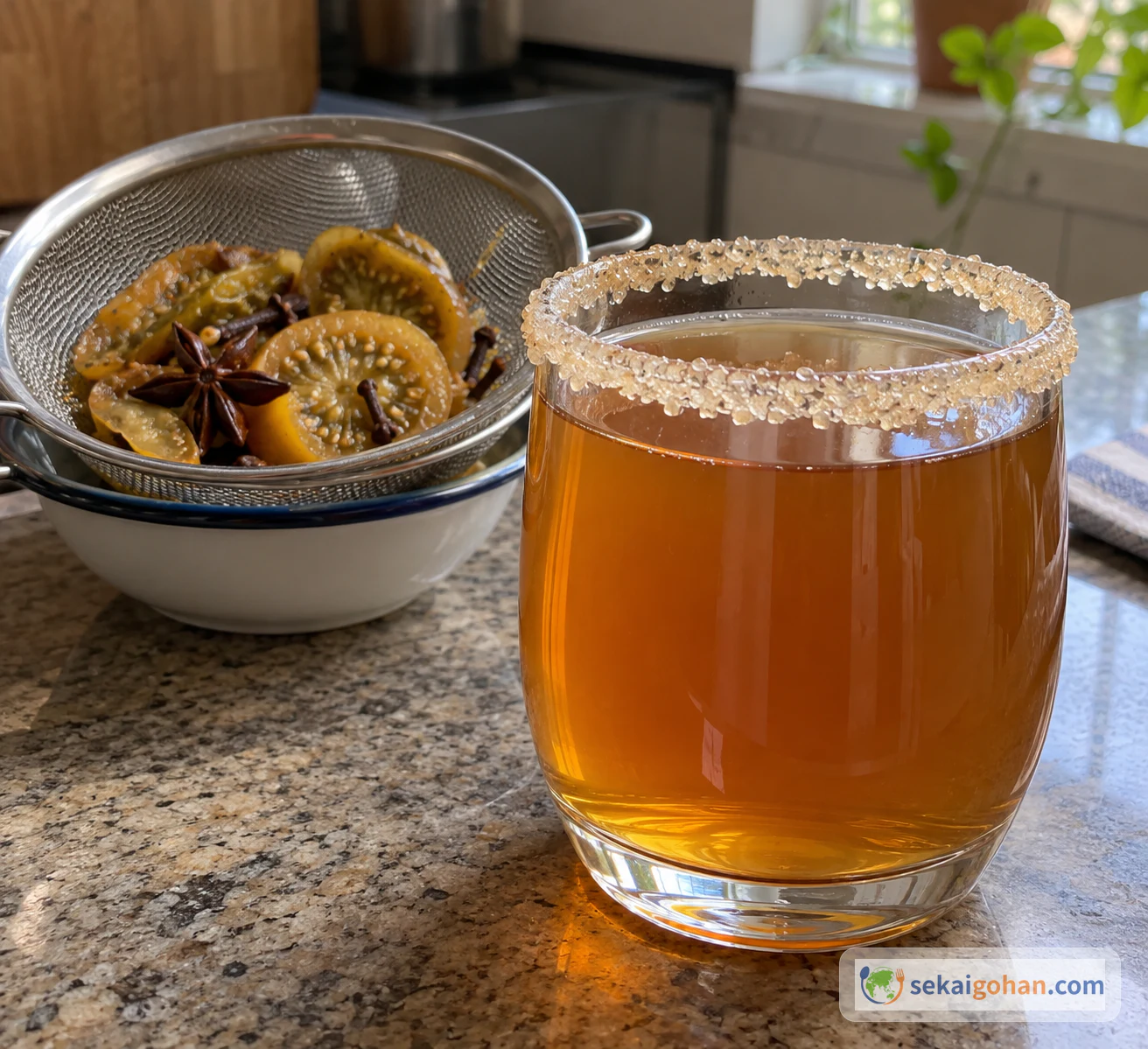
A fruit-and-spice version. One Colombian cook makes canelazo for 4 servings with 1 quarts (1 L) hot water, 1 taza grated panela, 250 cc aguardiente, 3 cloves, 4 star anise, 1 lulo or naranjilla and 2 cinnamon sticks. The spices and fruit simmer over low heat and are then strained out. The spirit goes into the hot infusion, and the solids are thrown away rather than returned to the glass.
Optional extras. A little orange or yellow lemon juice, or a star anise, makes a nice addition. The lemon in the ingredient list is only for the rim.
You'll find more dishes and drinks from the same country on the Colombia page.
Frequently Asked Questions
How long should I heat it?
Warm it gently, just until the panela has dissolved. Then take the pan off the heat before you stir in the aguardiente. Nothing goes back on the burner after that.
Does heating cook off the alcohol?
Don't count on it. The aguardiente goes in off the heat and isn't warmed any further, so treat canelazo as an alcoholic drink.
How many glasses does this make?
The ingredient list makes one batch. How many glasses you get depends on their size.