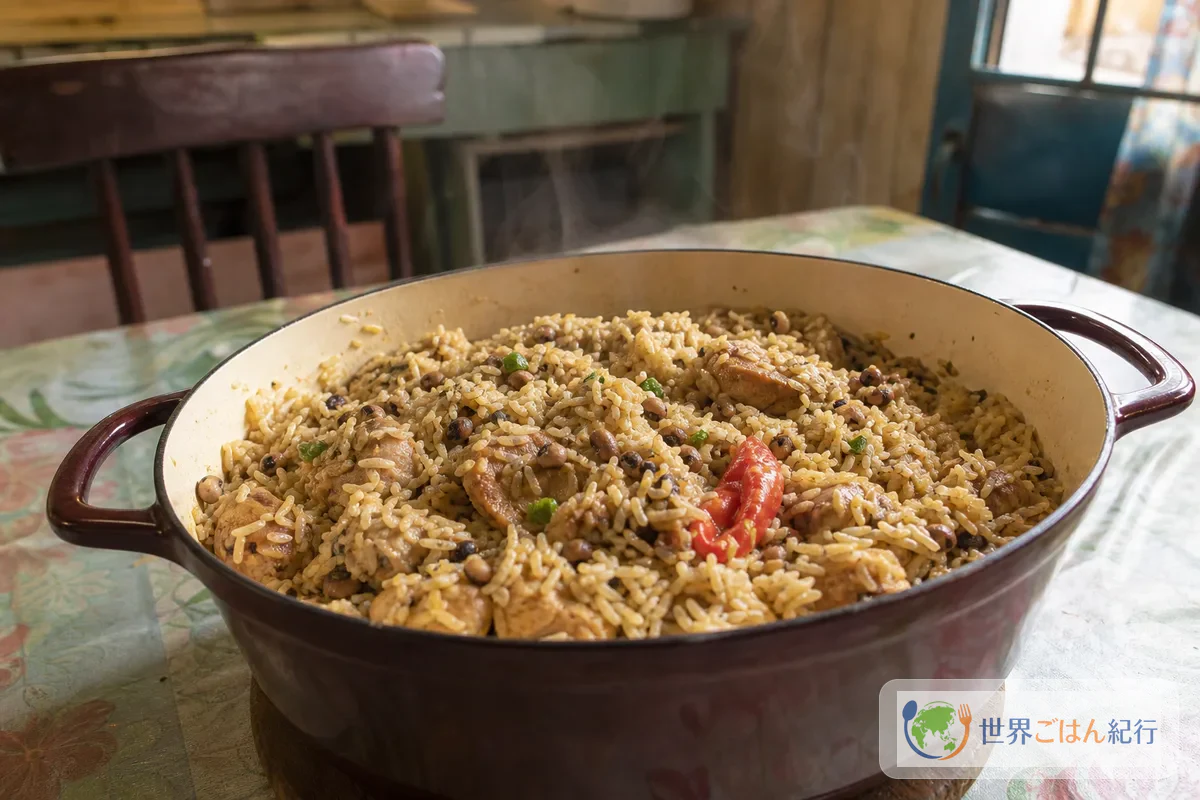
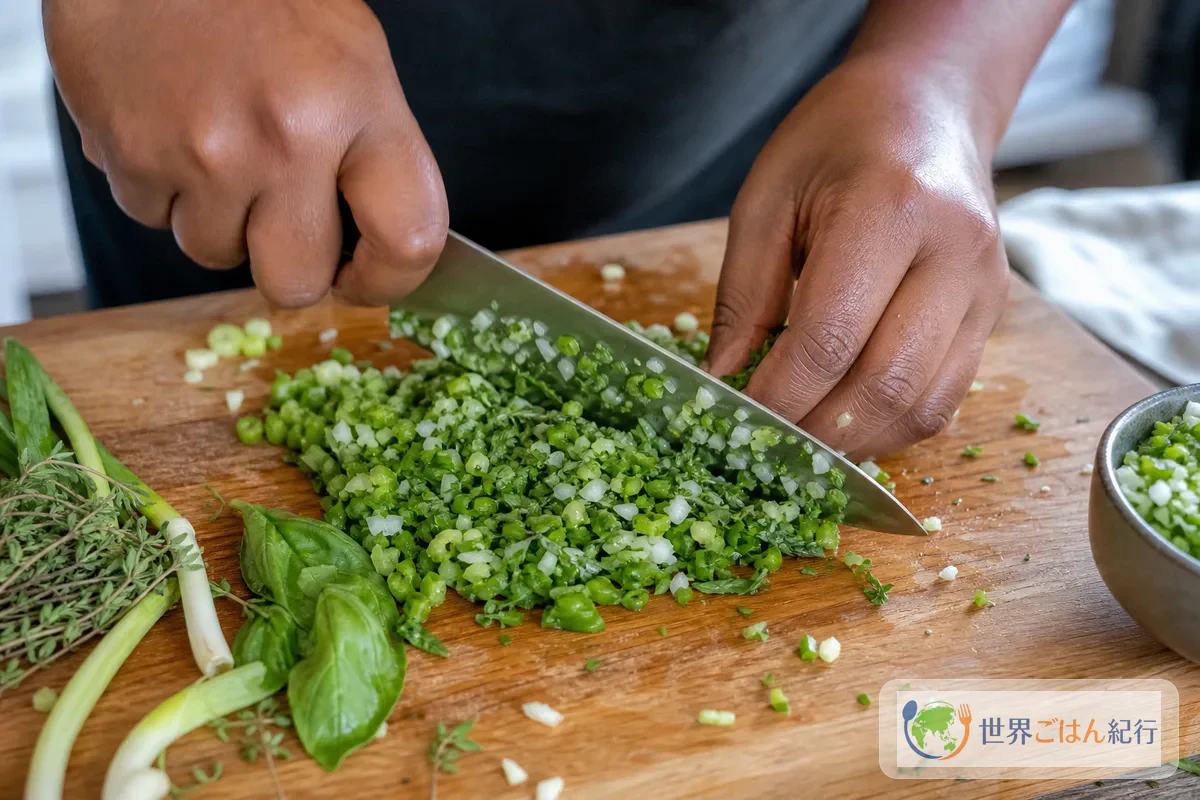
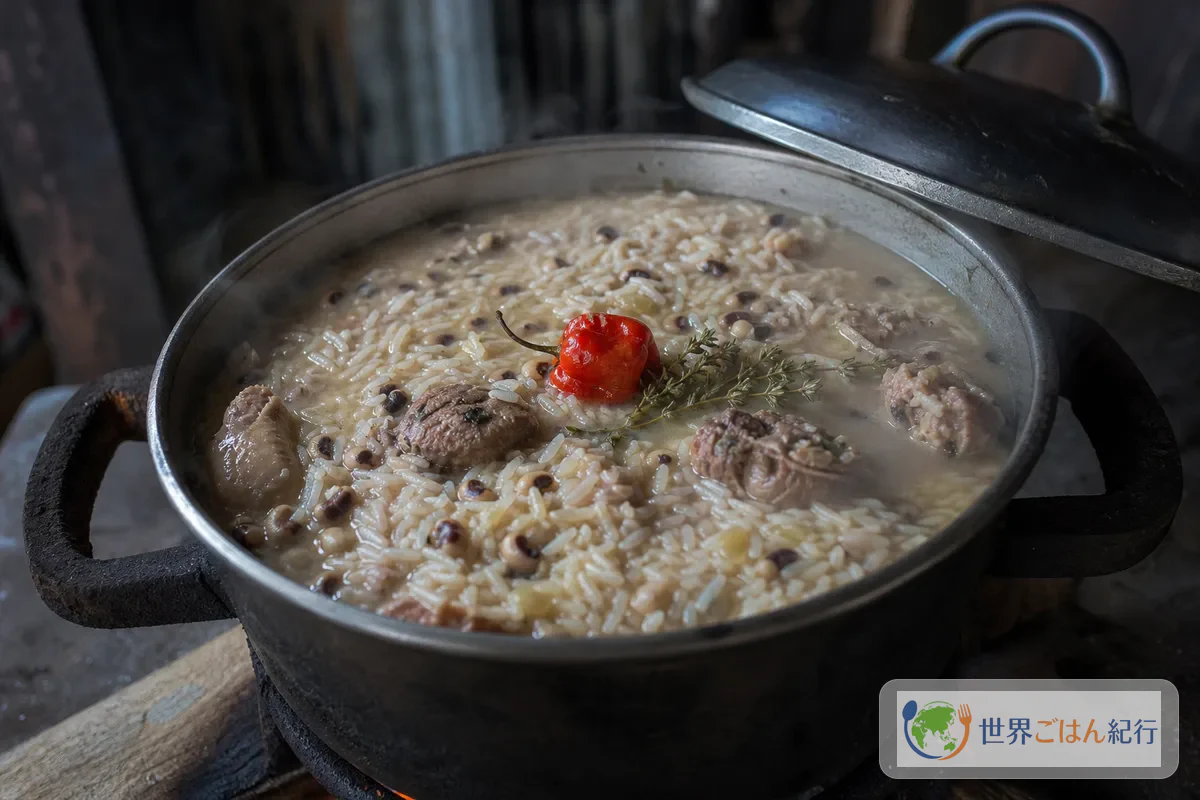
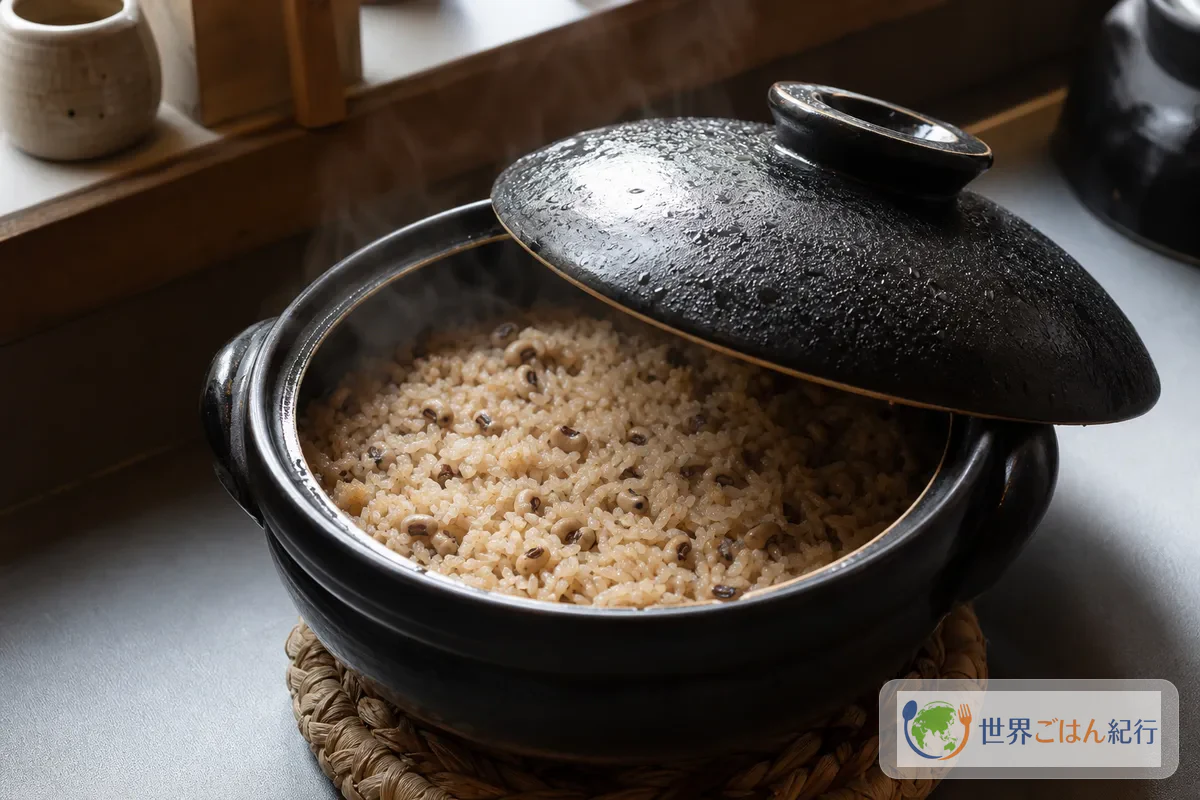
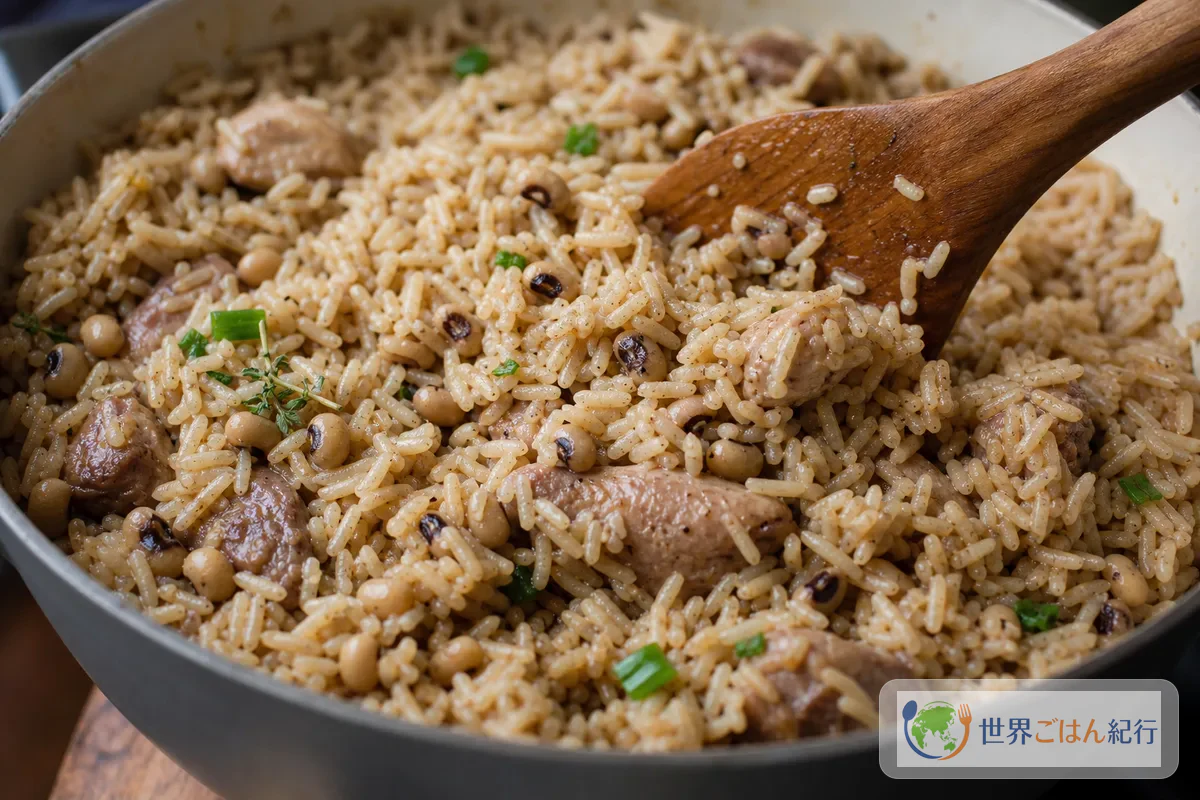
Lift the lid and a white cloud of coconut steam comes up with the scent of thyme and scallion. Black-eyed peas dot the surface, and the rice has drunk up the liquid while each grain still moves on its own. You scoop beans, meat, aromatics, and rice together from the bottom of the pot. This is Guyanese cook-up rice: rice, beans or peas, meat, and herbs cooked in one pot in coconut milk. It's rich and rounded, and as the name says, it takes whatever you have on hand.
About Guyanese Cook-Up Rice
Cook-Up Rice in Guyana
In Guyana it's customary to make a big pot at New Year's, and Guyanese cooks tie New Year's Eve to cook-up rice. There's also bush cook-up rice, made over an outdoor fire. The dish scales easily: you add or take away ingredients to suit the number of people eating.
Everyone gathers around the same kind of pot, but the meat, the firmness of the beans, and the moisture left at the end change from one pot to the next. Black-eyed peas, pigeon peas, red kidney beans, and chickpeas all turn up, and some versions have no meat at all. So rather than following one fixed rule, watch how fast the rice takes up the liquid and cook to match it.
Every region and household has its own method. At home, it helps to stick with one kind of bean, such as black-eyed peas, and take care of the coconut and herb aromas. Each part has its own job. Black-eyed peas give you the fluffy core you feel when you bite, coconut milk brings the fat that rounds out the rice, and thyme and scallion send their aroma up from deep in the pot.
From West Africa to the Caribbean
Cook-up rice traveled from West Africa to Guyana. Ghana's waakye also pairs rice and beans, and that idea of cooking beans and rice in one pot crossed the Atlantic and settled into Guyana's kitchens. The Guyanese version adds coconut milk, green herbs, and chile, which makes it a moist staple and a main dish at once.
Its neighbors make good comparisons. Trinidad's pelau is a one-pot rice dish built on the color and toastiness of caramelized sugar. Next to Jamaica's rice and peas, cook-up rice, with its meat and several kinds of beans, takes even more forms from kitchen to kitchen. Put these pots side by side and you can see that Caribbean rice dishes don't split neatly by country. They change with the fire, the beans, and what the table needs.
Ingredients, and Substitutes to Decide on First
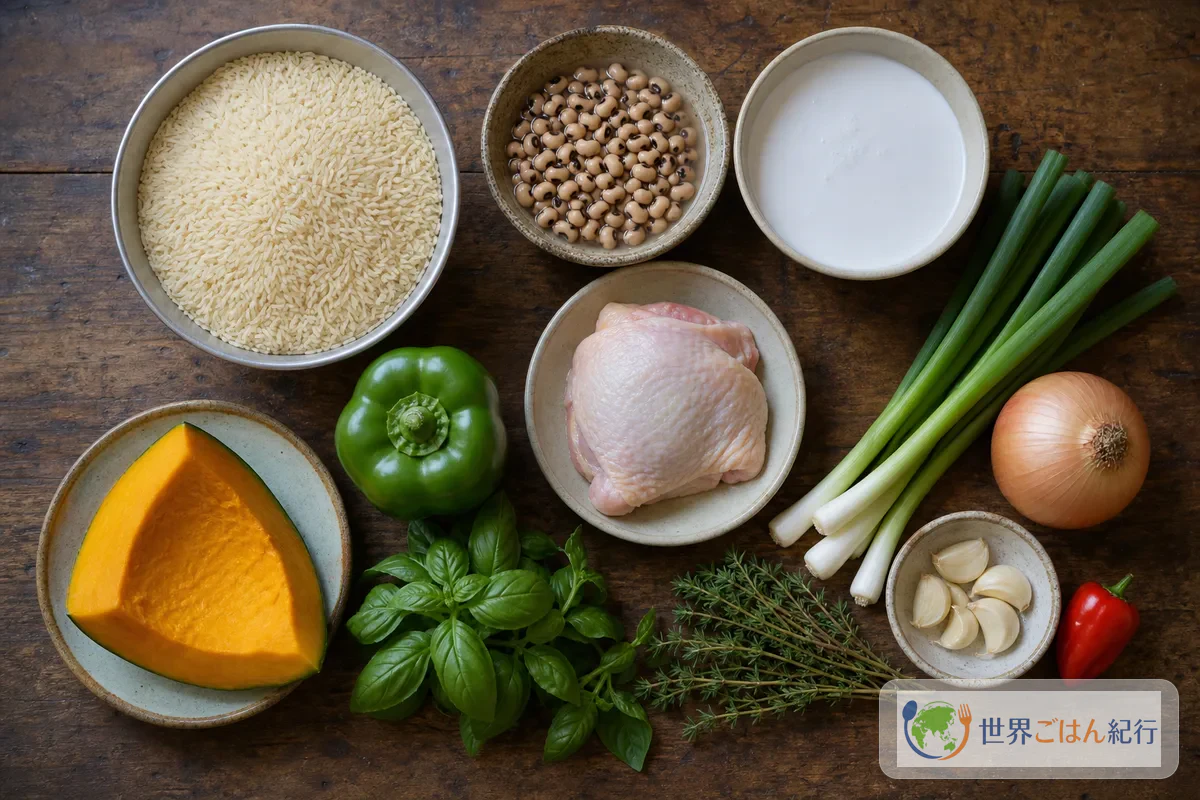
Serves 4. It is made a little generously, with eating the liquid-soaked rice the next day in mind. Use a heavy pot of about 9.5 inches (24 cm) in diameter with a tight-fitting lid.
Cook-up rice can include coconut milk, black-eyed peas, chickpeas, red kidney beans, basil, broadleaf thyme, wiri wiri pepper, okra, and pumpkin. Here the ingredients are narrowed, and the combination of black-eyed peas and chicken is used so that the state of the pot is easy to read.
This uses coconut, chicken, and legumes. Check the label on commercial chicken stock and bouillon for wheat, soy, or dairy. Cutting a chile spreads its heat through the broth. The first time, use one chile whole, and add hot sauce or black pepper at the table for easier adjustment.
Choosing Ingredients for Cook-Up Rice
Coconut milk
Coconut milk gives the rice its fat and the sweet aroma that clings to it. Cook with water alone and the beans and chicken still come together, but the dish feels thin and the herbs can turn sharp.
Buy a canned, unsweetened product of around 1¾ cups (400 ml) with no sugar in the ingredients, one you can use up as soon as it's open. Cans vary in thickness, and that thickness decides how heavy the finished dish is. With a thin type, cut the water by 20–30 ml. With a thick cream, add the same amount, so the total liquid stays about the same.
If you don't like coconut or want a smaller batch, try half the amount first. That wastes less than thinning unsweetened coconut cream with water. Milk or soy milk changes the acidity and aroma, so think of the result as a different dish in the style of cook-up rice.
Beans
Canned black-eyed peas can warm through in the same pot as the rice. If you're using dried beans, wash them the day before, soak them in plenty of water for at least 8 hours, and boil them in a separate pot until they're just short of crushing between your fingers. Raw dried beans added with the rice won't soften before the rice falls apart, so don't skip this step.
Each bean changes the flavor. Black-eyed peas have a light, earthy aroma that suits coconut. Pigeon peas bring a green-bean aroma and more presence in each bite, red kidney beans darken the broth and add sweetness, and chickpeas are fluffy and filling but take longer to cook than black-eyed peas. If you mix two or more kinds, add canned ones together and boil dried ones separately by type. When cooking from dried, swap some of the water for bean cooking liquid, but not all of it, and keep an eye on the saltiness.
Rice
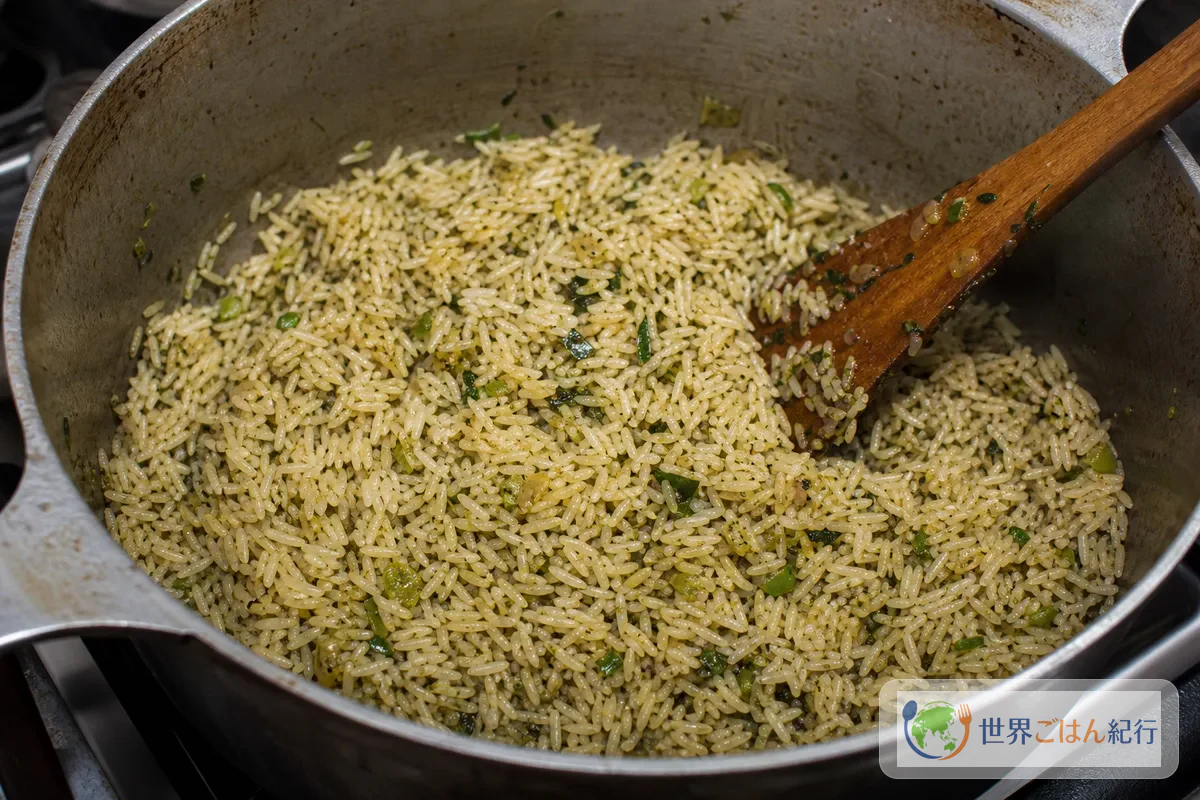
Parboiled rice is the easiest to work with. It has been steamed and then dried, so the grains hold up in the liquid and stay less sticky when mixed with beans and chicken. Otherwise, use washed long-grain rice, well drained. Basmati is easy to find if you want long grains and fragrance, though it isn't the rice used in Guyanese homes, and any long-grain rice you already have will do.
Short-grain rice gives a stickier, quite different texture. If that's what you have, cut the water by 3.5 tbsp (50 ml) and stir even less.
Fixing Common Cook-Up Rice Problems
Good cook-up rice is drier than porridge and moister than fried rice. Look for fat that tastes mellow, beans that are soft but whole, and rice that is moist without clumping. Moisture keeps moving into the rice as the steam settles, so take the pot off the heat while the rice still feels slightly moist.
The rice is hard
If the liquid is nearly gone and only the center of the rice is still white, add 3.5 tbsp (50 ml) of boiling water and return the pot to low heat. Cover without stirring the bottom and check every 5 minutes. Use boiling water only: cold water stops the boil and tends to soften just the outside of the grains.
The rice is sticky
Turn off the heat, take off the lid, and turn the rice from the bottom just two or three times with a paddle to let the steam out. You can also spread it thin on a wide plate, but only the amount you're about to serve, because the chicken and beans shouldn't sit at room temperature for long. Short-grain rice won't fully recover, so next time switch to long-grain.
The bottom scorched
As soon as you smell scorching, gently move just the top part to another pot. Scraping and stirring the bottom spreads the bitterness through everything. If the rice you moved is hard, add a little boiling water and let it rest. Toasty browning is fine to eat, but leave the bitter char behind.
The chicken is not cooked through
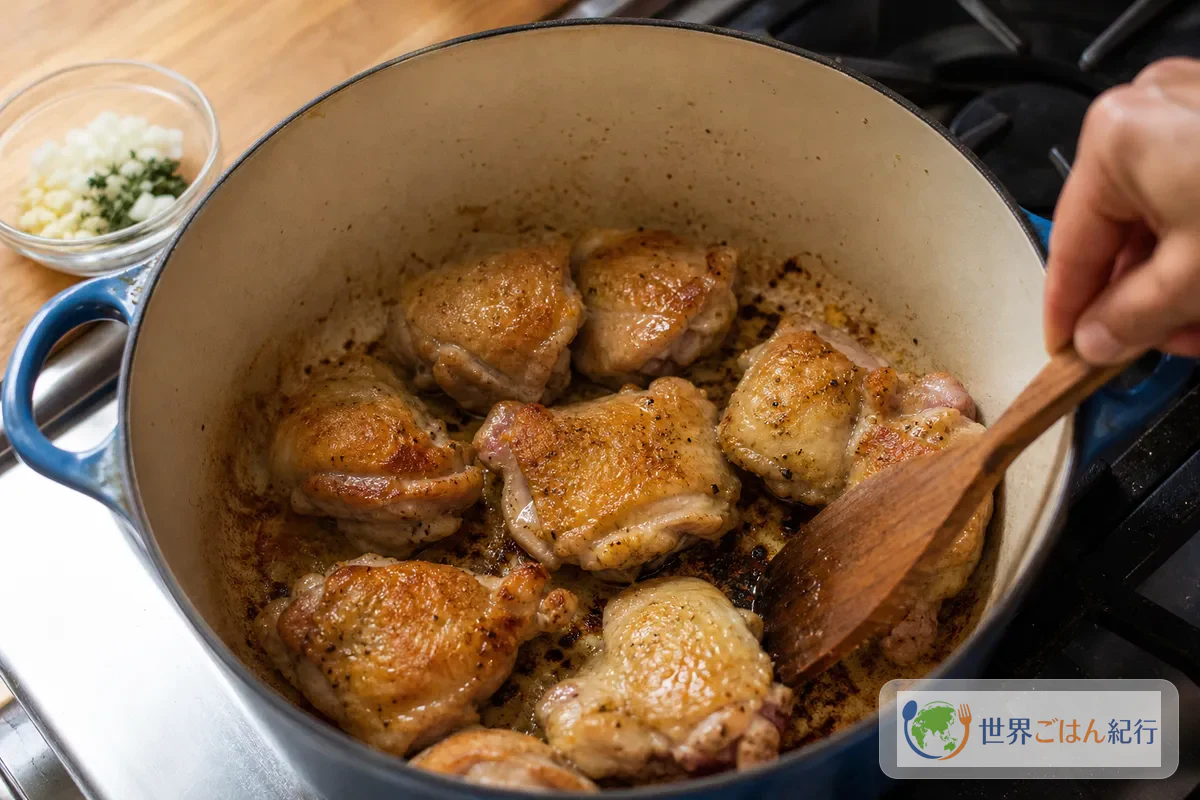
A browned surface tells you nothing about the inside, so break open a thick piece and check that it's cooked all the way to the center. If the rice looks like it will finish first, take out the chicken, cook it in another pot, and return it just before eating. Next time, cut the chicken into 1 inches (3 cm) cubes so it keeps pace with the rice.
Serving, Storing, and Varying Cook-Up Rice
Serving
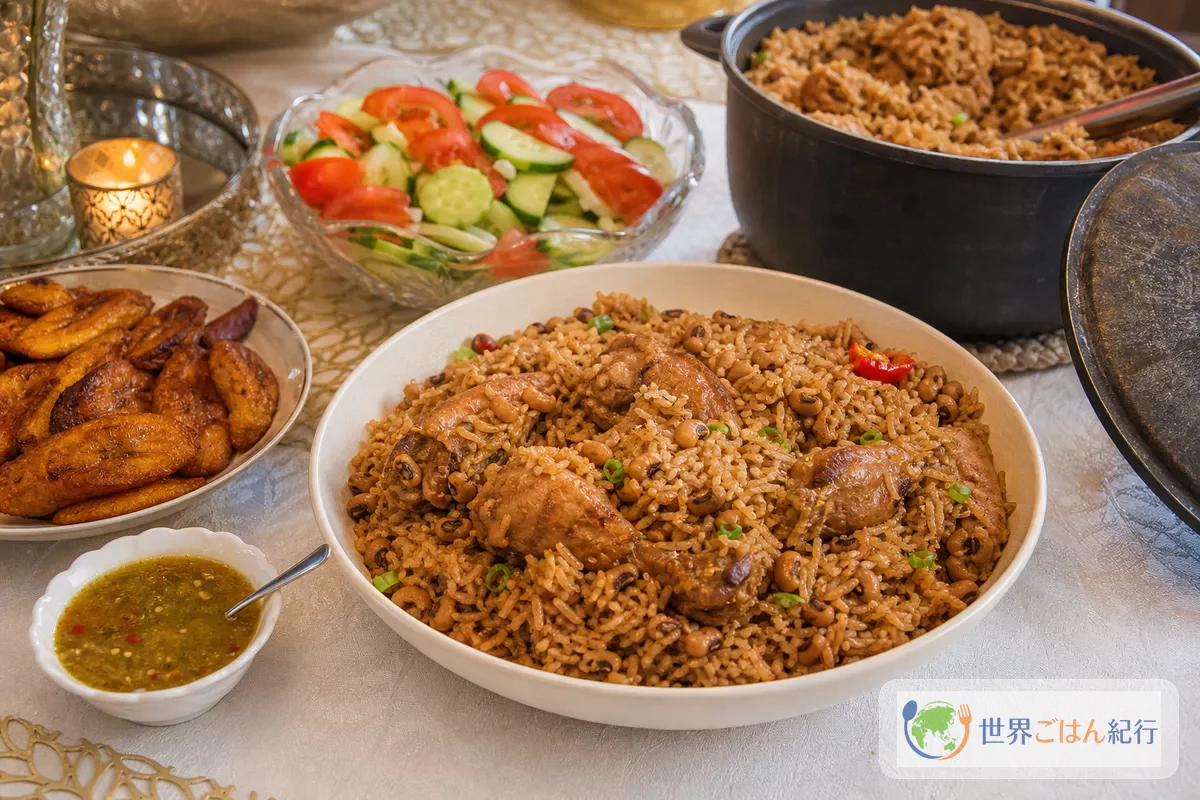
Cook-up rice looks better when you don't tidy it up too much. Turn it out all at once onto a large dish, scatter on a little scallion, and set out a cucumber and tomato salad, fried plantain, and hot sauce on separate plates. That way people can add their own sourness and heat to the sweet coconut and fluffy beans.
Don't mix the whole thing at the table, either. Let each person scoop from wherever they like: the spot with more chicken, the one with more beans, or the corner where the squash is starting to fall apart. By the next day the broth has settled and the rice has firmed up a little, and if you found the first day too rich, you may like it better.
Storing and reheating
Don't leave the pot at room temperature. Divide the rice into shallow containers to cool, seal what goes in the refrigerator, and reheat only what you'll eat, all the way to the center. For longer storage, freeze single portions so you aren't reheating the rice again and again. If it has dried out by the next day, add 1–2 tsp of water or coconut milk before warming it to bring back the texture.
Variations
For a vegetable-leaning cook-up rice, combine black-eyed peas, chickpeas, red kidney beans, okra, and pumpkin. You can also serve meat on the side and let the rice and beans lead. If you leave out the chicken, increase the oil to 1 1/2 tbsp and use 12.5 oz (350 g) net of beans, and the dish stays satisfying.
Some households use beef, pork, or salted meat instead of chicken thighs. Boil salted meat first to draw out the salt, and use less salt than the ingredient list calls for. Fish on the side works too, but it breaks apart if you simmer it with the rice, so pan-fry it separately.
Frequently Asked Questions
Where can I buy black-eyed peas?
Look in international markets, bean specialty shops, and online. If you can't find dried ones, use canned black-eyed peas. Pigeon peas or red kidney beans also work, though the aroma and color change. Without beans, cook-up rice loses the backbone of its texture, so keep at least one of chickpeas or mixed beans.
Can I make it with low-fat coconut milk?
Yes, but there's less fat coating the rice and the aroma is lighter. With a low-fat type, start with 1 cups (250 ml) of water rather than all 1¼ cups (300 ml), and add more as you check the firmness of the rice. Don't add sugar to make up for the richness, because it pushes the dish toward sweet.
What if I don't have wiri wiri pepper?
Small red chiles, habanero, or Scotch bonnet can stand in. To keep the heat down, simmer the chile whole and uncut so only its aroma goes into the pot, then take it out before serving. The aroma won't match the original, but with hot sauce on the side, the whole pot won't get too hot.
Do I need a pressure cooker?
No. A heavy pot with a tight-fitting lid, simmered until the rice is soft, is enough when you're using canned beans and long-grain rice. If you'd like to soften dried beans in a pressure cooker, cook them separately and then add them to the recipe.
Related Guyanese Dishes
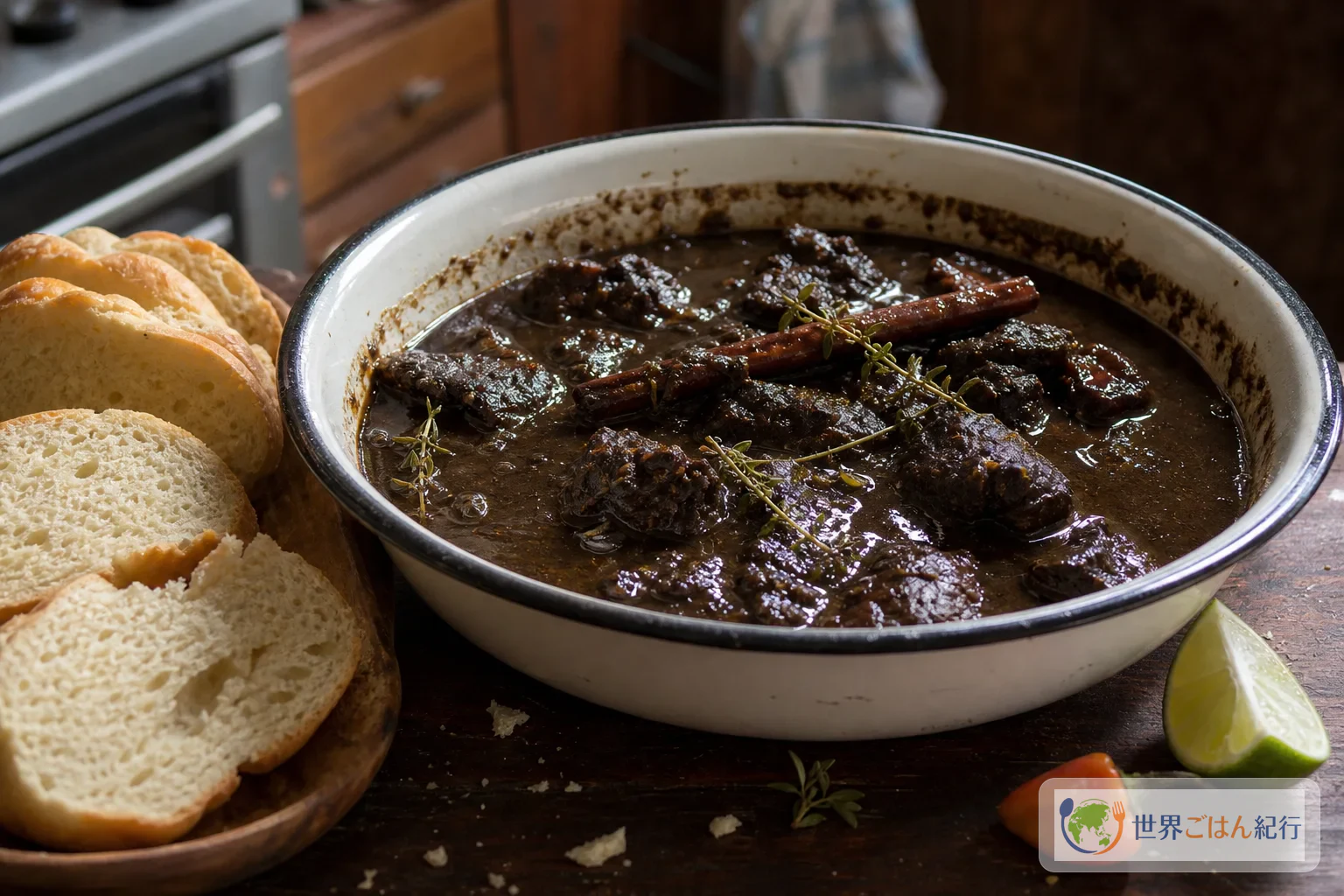
- Guyanese pepperpot: a black holiday pot of meat stewed with the bitterness of cassareep and spices
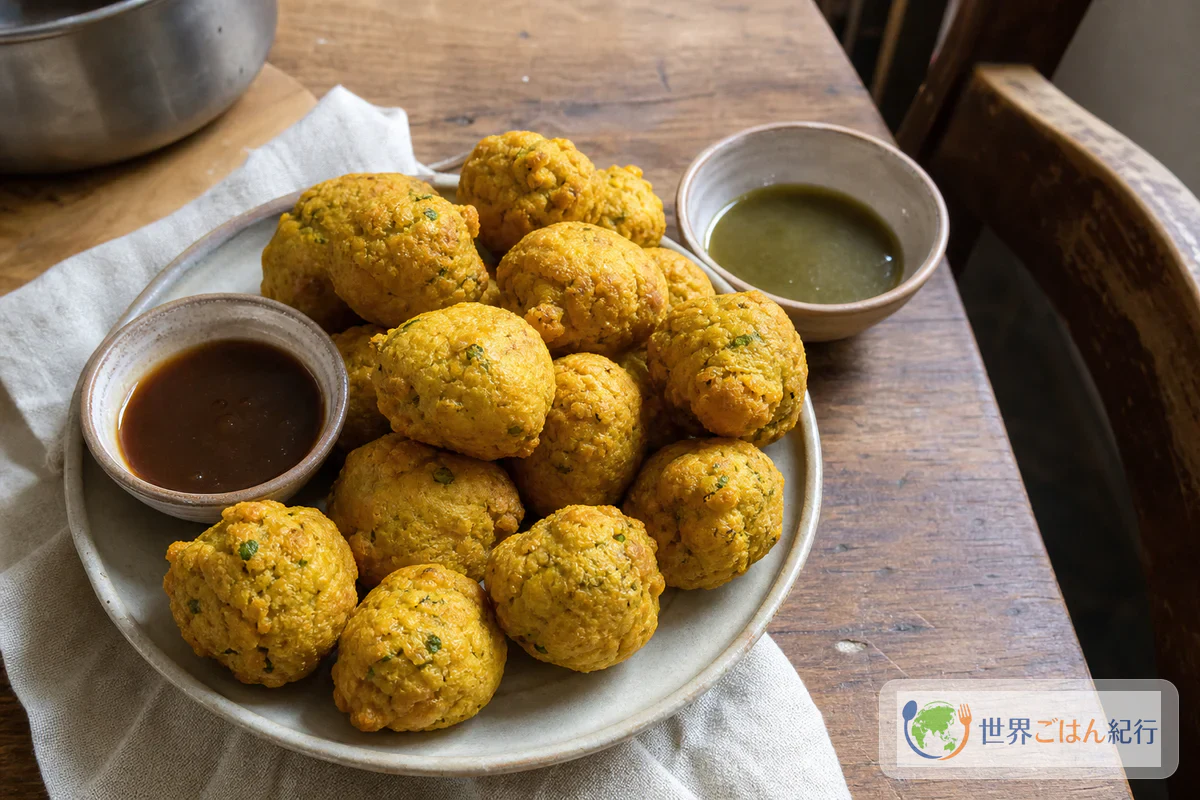
- Guyanese pholourie: a snack of fried split-pea fritters eaten with tamarind sauce
- To widen your shopping for Guyanese cooking, Trinidad's pelau: another one-pot rice dish that uses caramelized sugar