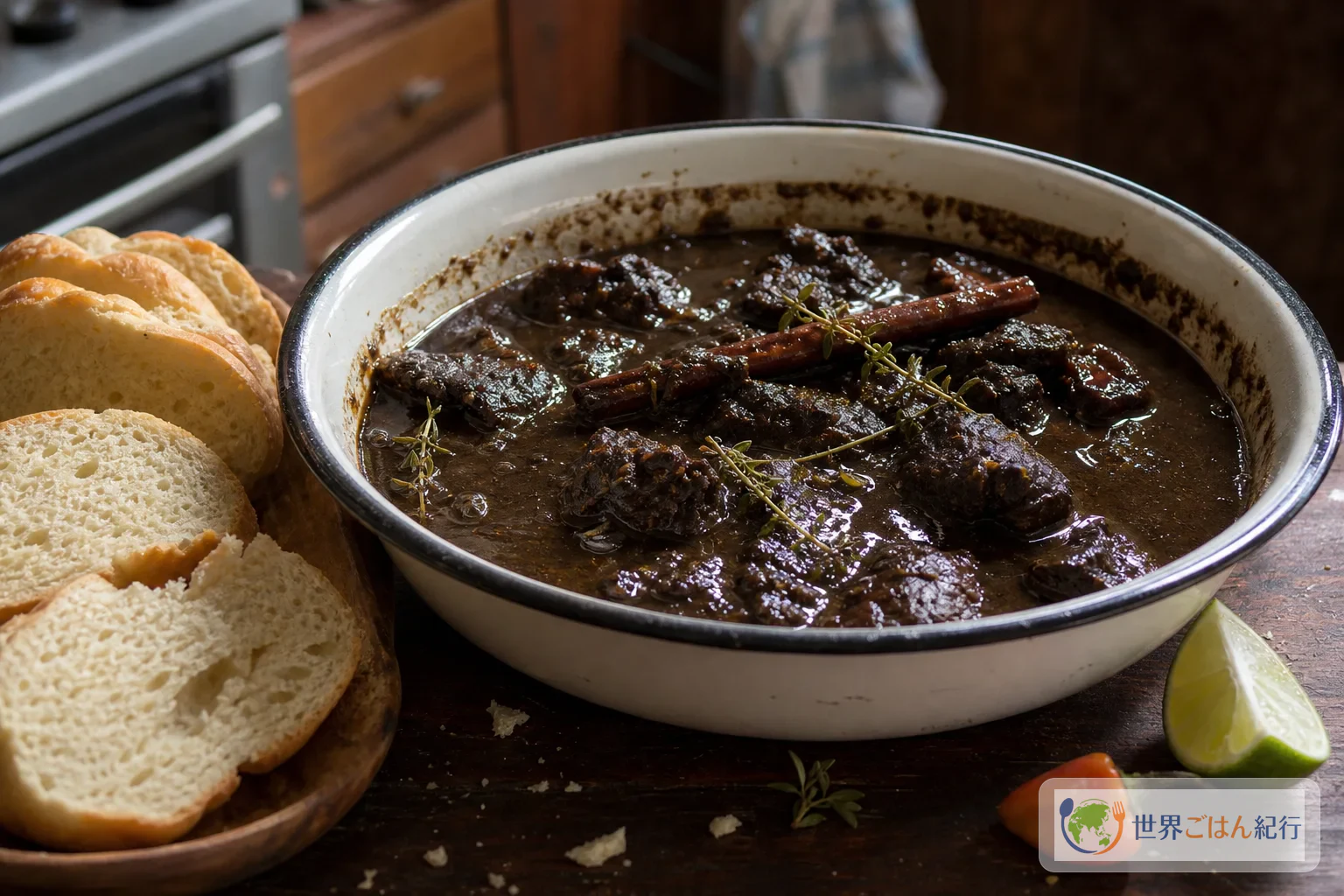
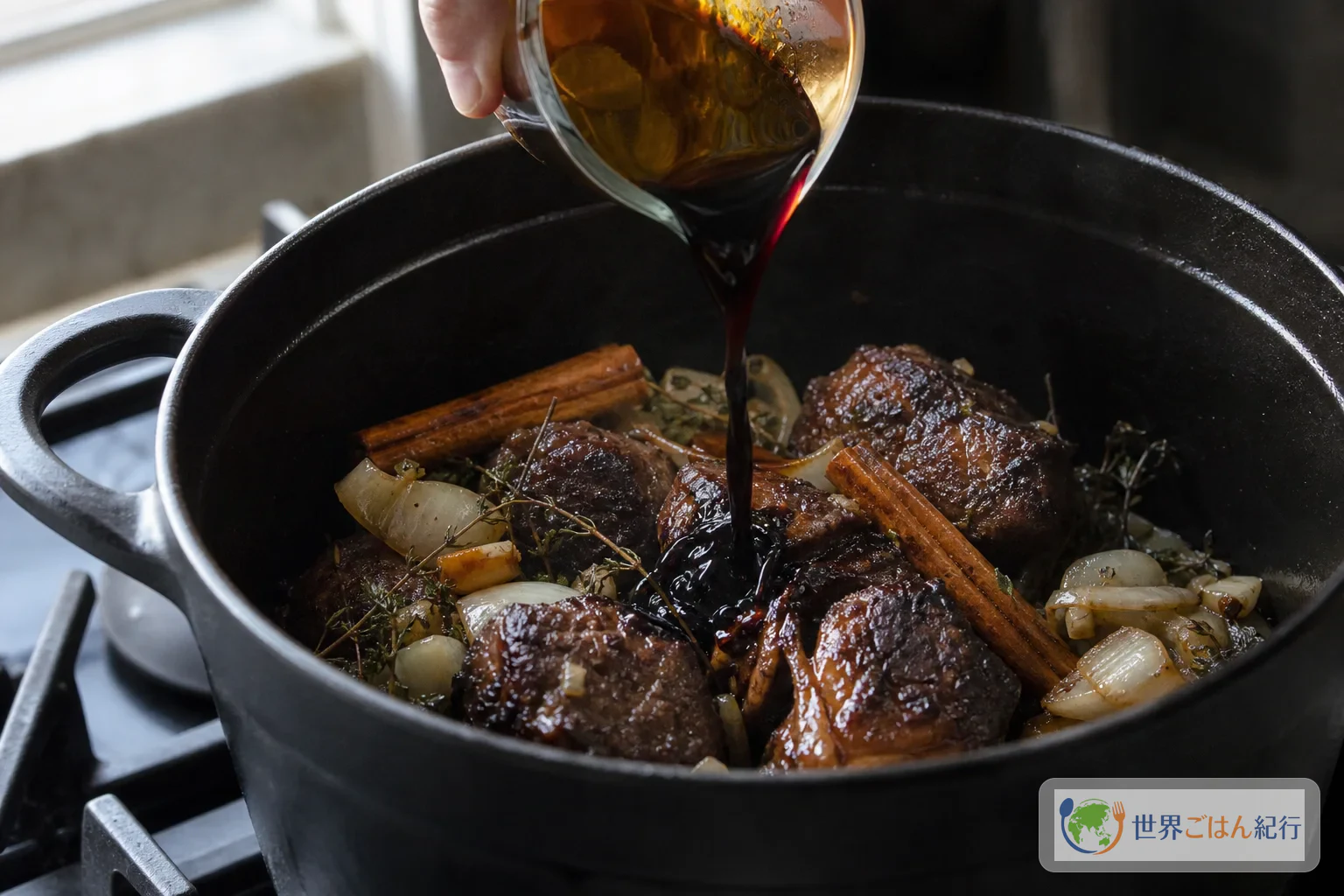
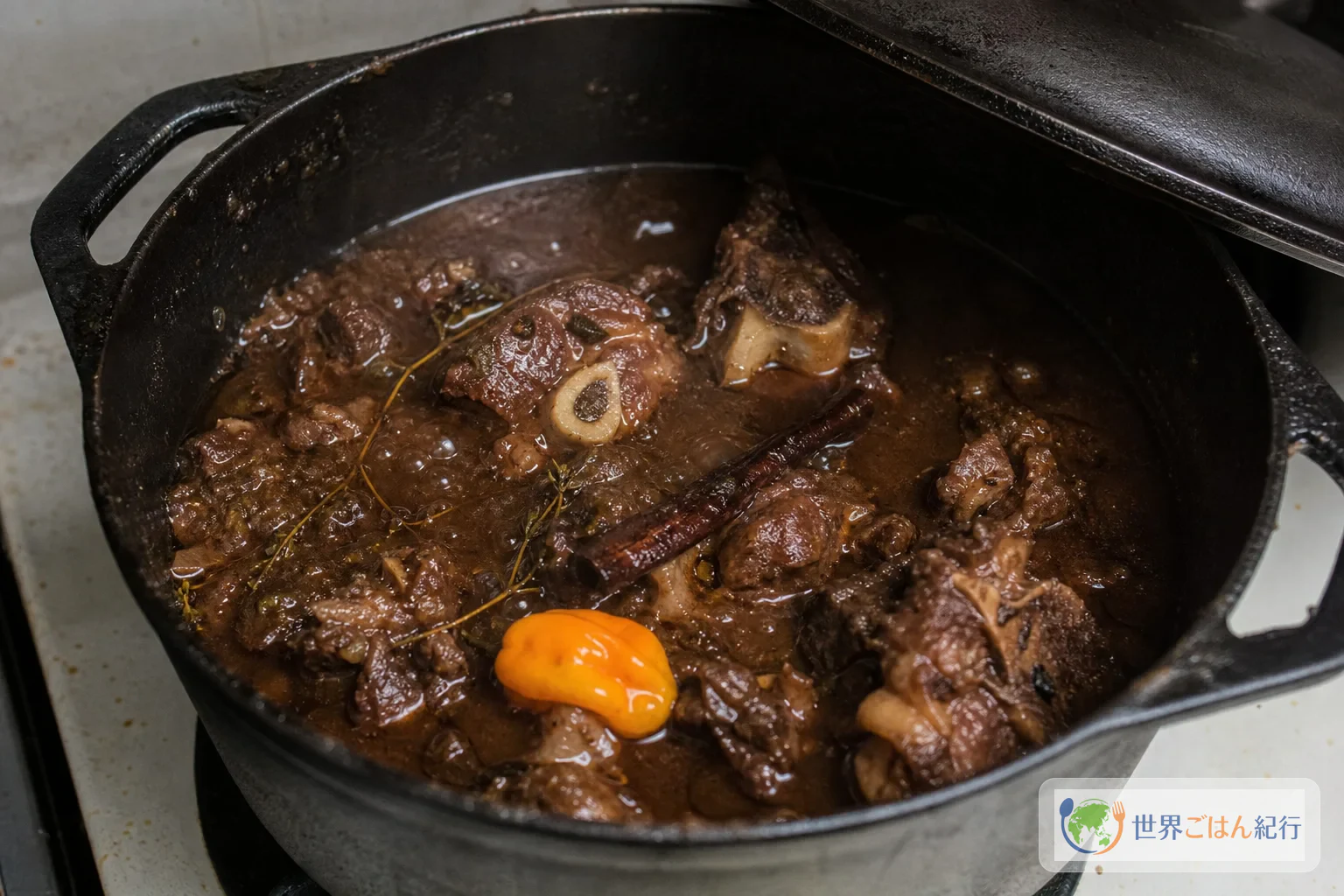
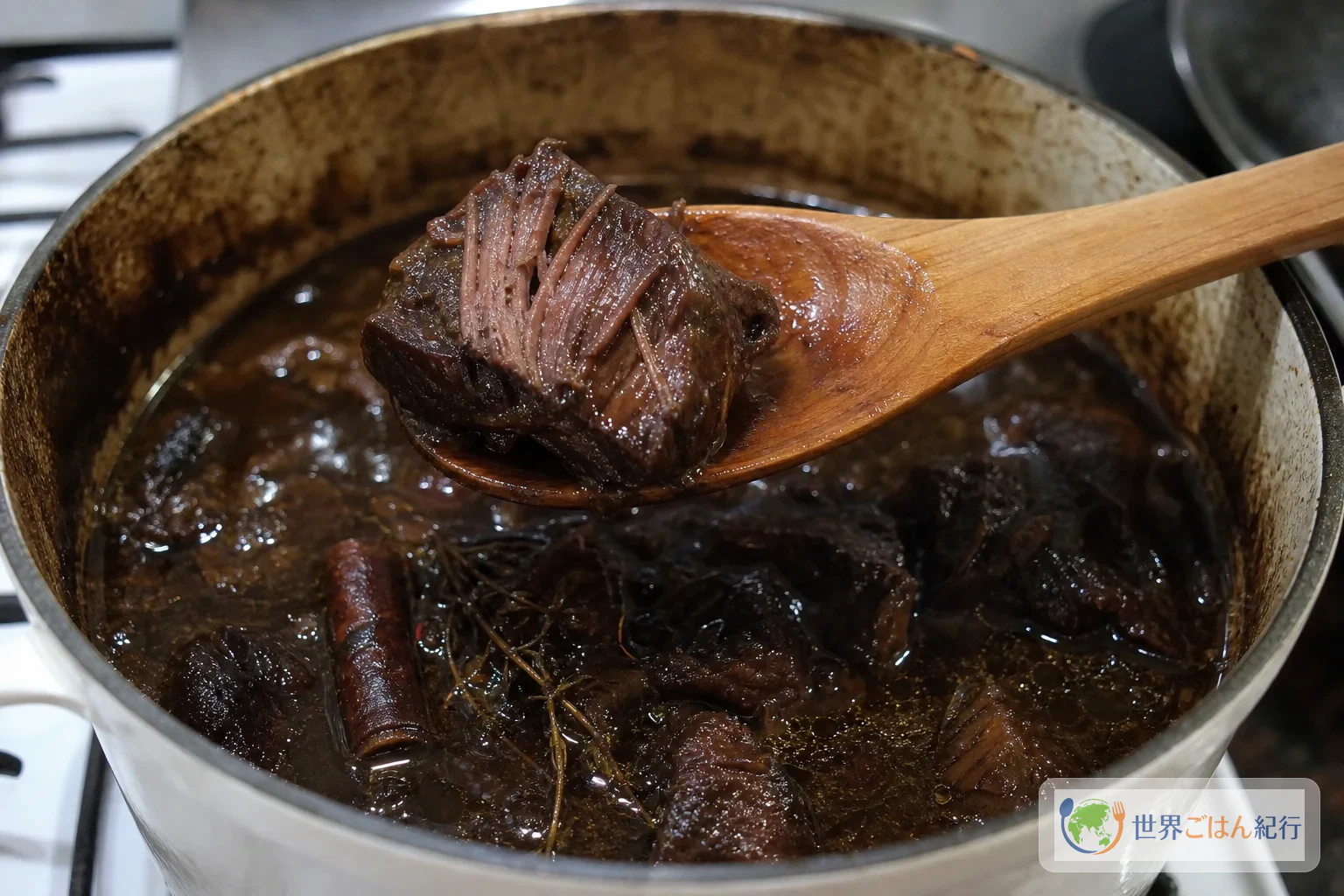
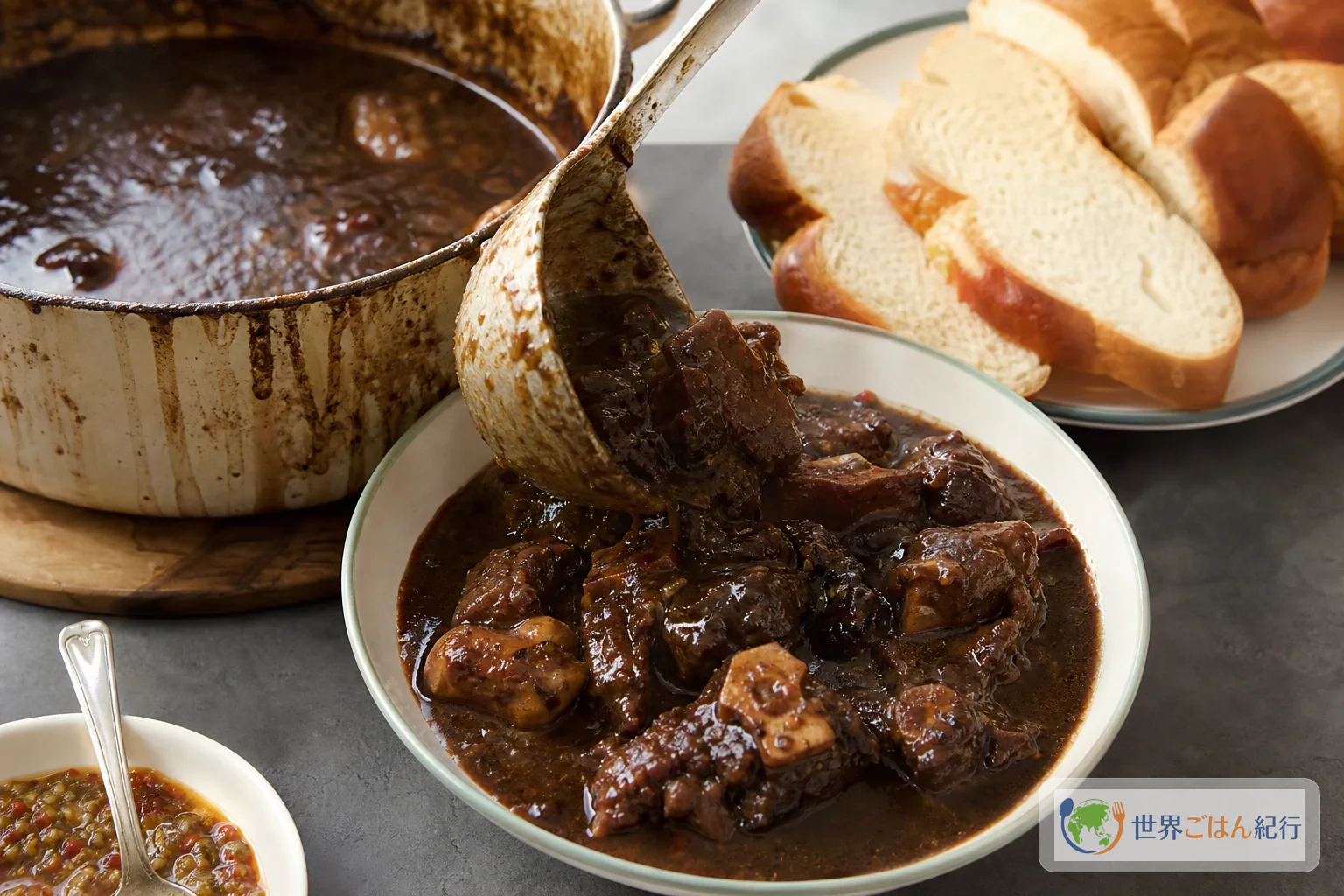
Lift the lid a little, and the scent comes up slowly: black molasses, cinnamon, clove, chile, and meat fat. At a glance, Guyanese pepperpot looks like a cousin of beef stew. The first bite is far more complex: sweet, bitter, and hot, with a little sourness. Tear off some bread and let it soak up the black broth. Even at breakfast, it feels like the start of a holiday table.
Guyanese Pepperpot and Its Place in the Caribbean
Pepperpot is Guyana's long-simmered meat stew. Beef, pork, oxtail, cow heel, and the like cook slowly with cassareep, cinnamon, clove, allspice, and chile. There's no fixed mix of meats. In Guyana it is famously eaten with bread on Christmas morning.
At the center of the dish is cassareep, a black seasoning liquid made from cassava. It gives the stew its color, its aroma, its keeping quality, and a pleasant bitterness all at once. Add the warmth of the spices, the fruity aroma of Scotch bonnet, and the body the broth gains as it soaks into bread, and you have the dish. Cassareep is hard to find outside the Caribbean. A substitute makes a stew that is strictly pepperpot-style, but if you hold on to that sweet-bitter black broth and the long, low simmer, it is still a very good stew to make at home.
Pepperpot also connects to its neighbors. It shares the aromatic Scotch bonnet of Jamaican jerk chicken, the sweet caramel notes of Trinidad's pelau, and the holiday role of meat in Haitian griot.
| What to look at | What matters in Guyanese pepperpot |
|---|---|
| Local name | Pepperpot. The Guyanese style is made with cassareep |
| Main ingredients | Beef shank, pork shoulder, oxtail, and other meats that gain flavor the longer they stew |
| Aroma | Cassareep, cinnamon, clove, allspice, Scotch bonnet |
| How to eat | With bread, soaking up the black broth. Better with bread than with rice |
| What to hold on to | Cassareep, or a sweet-bitter black broth. Long, low simmering |
Ingredients: Serves 4
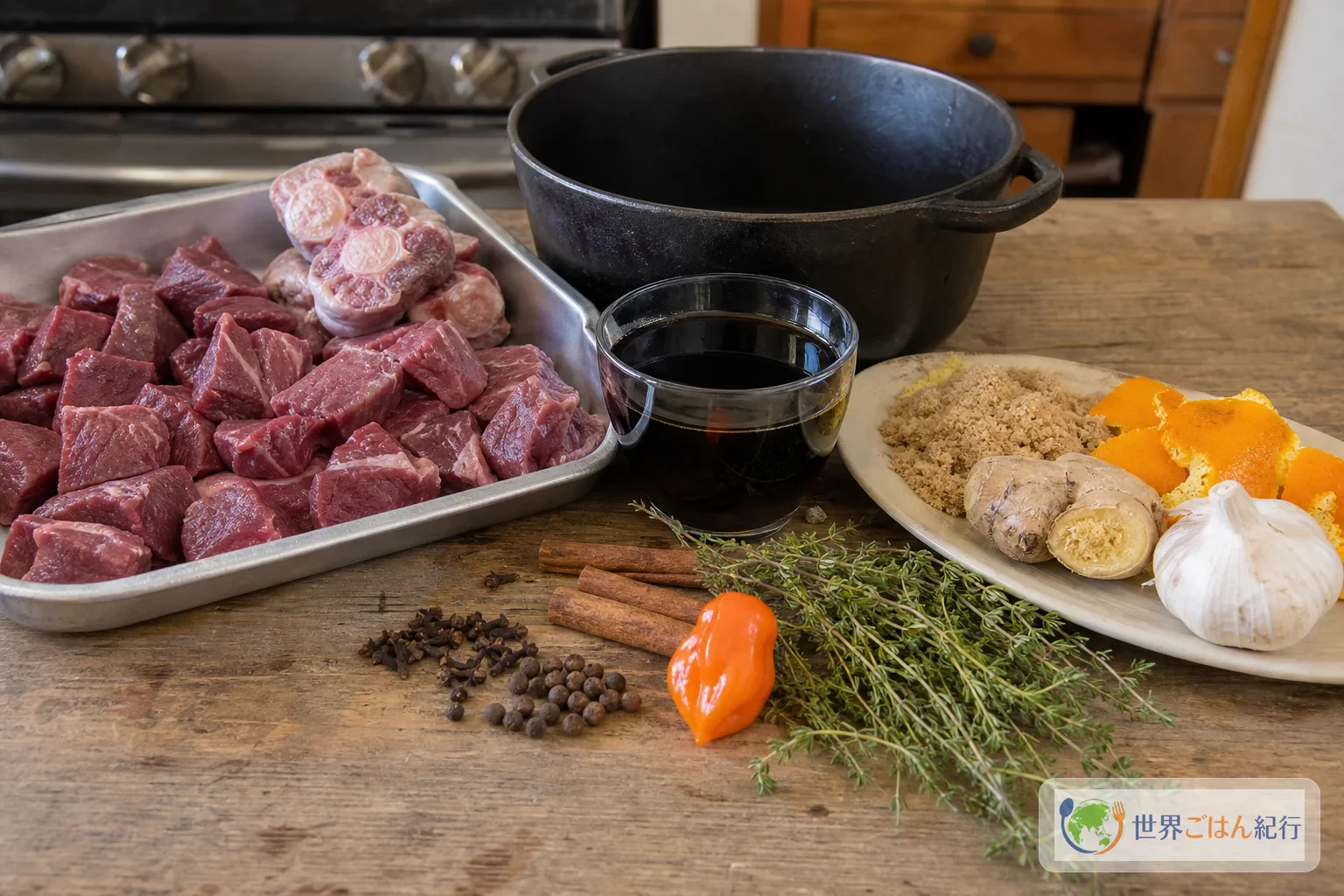
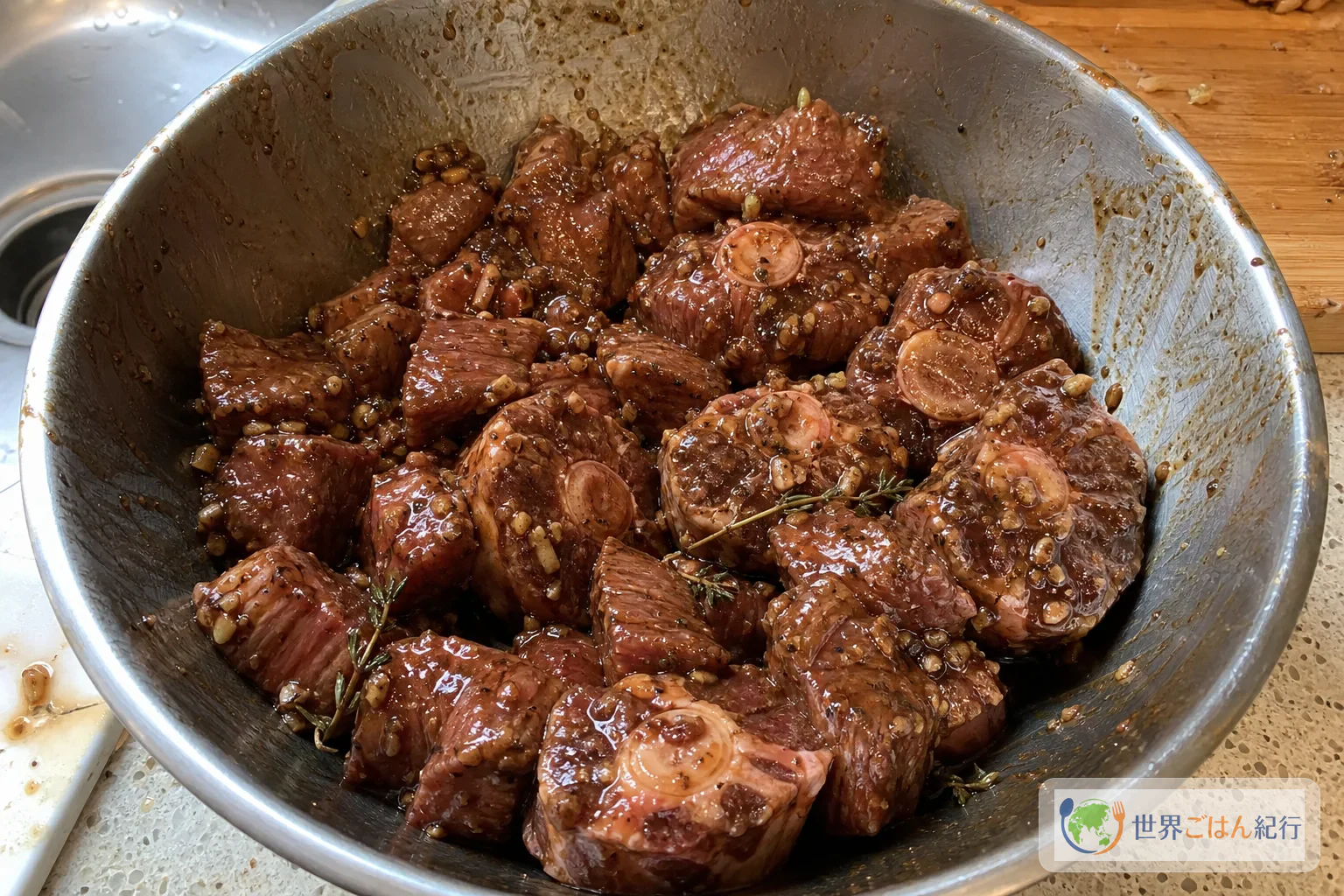
Beef shank alone works. A little pork shoulder adds fat and makes it more satisfying with bread. Oxtail is expensive, so add it only when you can get it. Bone-in meat deepens the broth.
Mix all of the substitute liquid together before using it. Cassareep's cassava-derived character cannot be copied, but if you keep the black sweet-bitterness, the spices, the chile, and the long simmer, it is still a good introduction to pepperpot.
Choosing Ingredients and Substitutes for Pepperpot
If you can find cassareep, at online shops or international markets, buy it first. Don't make it yourself from fresh cassava at home: the safety of cassava depends on the variety and how it is processed. Use cassareep sold for cooking, or make a pepperpot-style stew with the substitute liquid. Even without cassareep, allspice, the heat of a Scotch bonnet-type chile, and a heavy pot make a real difference. In a thin pot over high heat, the black sugars scorch on the bottom easily and the bitterness suddenly turns harsh.
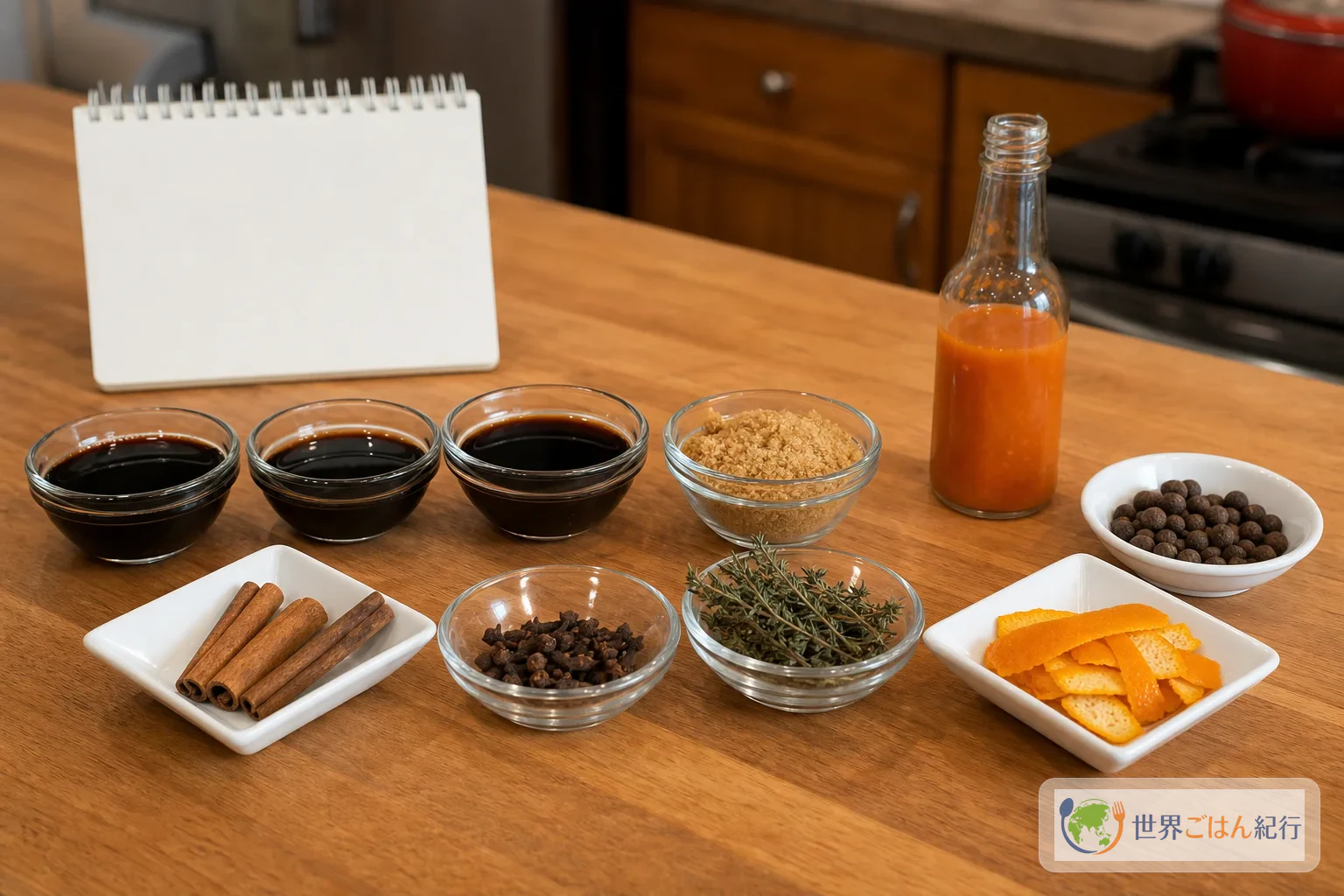
| Ingredient in doubt | Substitute | How to think about substituting |
|---|---|---|
| Cassareep | Black treacle, soy sauce, balsamic vinegar, coffee | Add color, sweetness, saltiness, acidity, and bitterness separately |
| Scotch bonnet | A little habanero, Scotch bonnet sauce | Aroma is the point, so plain chile flakes alone are weak |
| Oxtail | Spare ribs, more beef shank | Makes up for the savor of bone. It can be left out |
| Thyme | Dried thyme | Rosemary sends it in a different direction |
| Bread | Sandwich bread, baguette, round rolls | Plain, lightly toasted bread suits it better than sweet bread |
With supermarket substitutes, the balance between black sweetness and saltiness is easy to lose. Too much treacle pushes it toward confectionery, and too much soy sauce toward braised pork belly or shigure-ni. Keep the substitute liquid mild at the start and taste as you reduce in step 6. If it is too sweet, add 1 tsp balsamic vinegar; if it is too salty, add 3.5 tbsp (50 ml) water and 1 tsp brown sugar.
The Scotch bonnet goes in whole so that its aroma, more than its heat, moves into the broth. Piercing or chopping it releases the heat all at once. If some of your guests don't like spicy food, take it out partway through and let everyone add pepper sauce at the end.
Method: Grow the Black Broth Without Scorching It
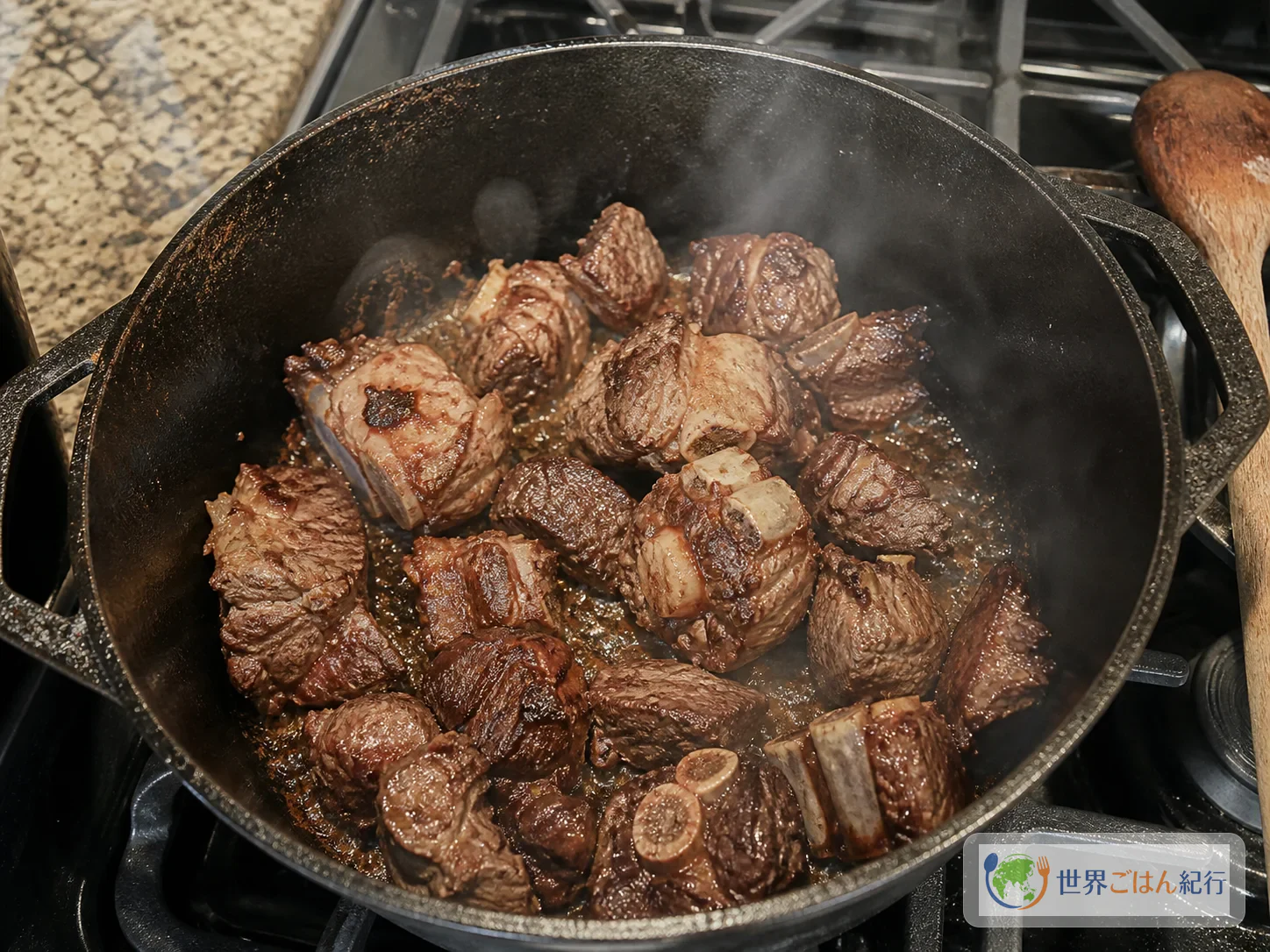
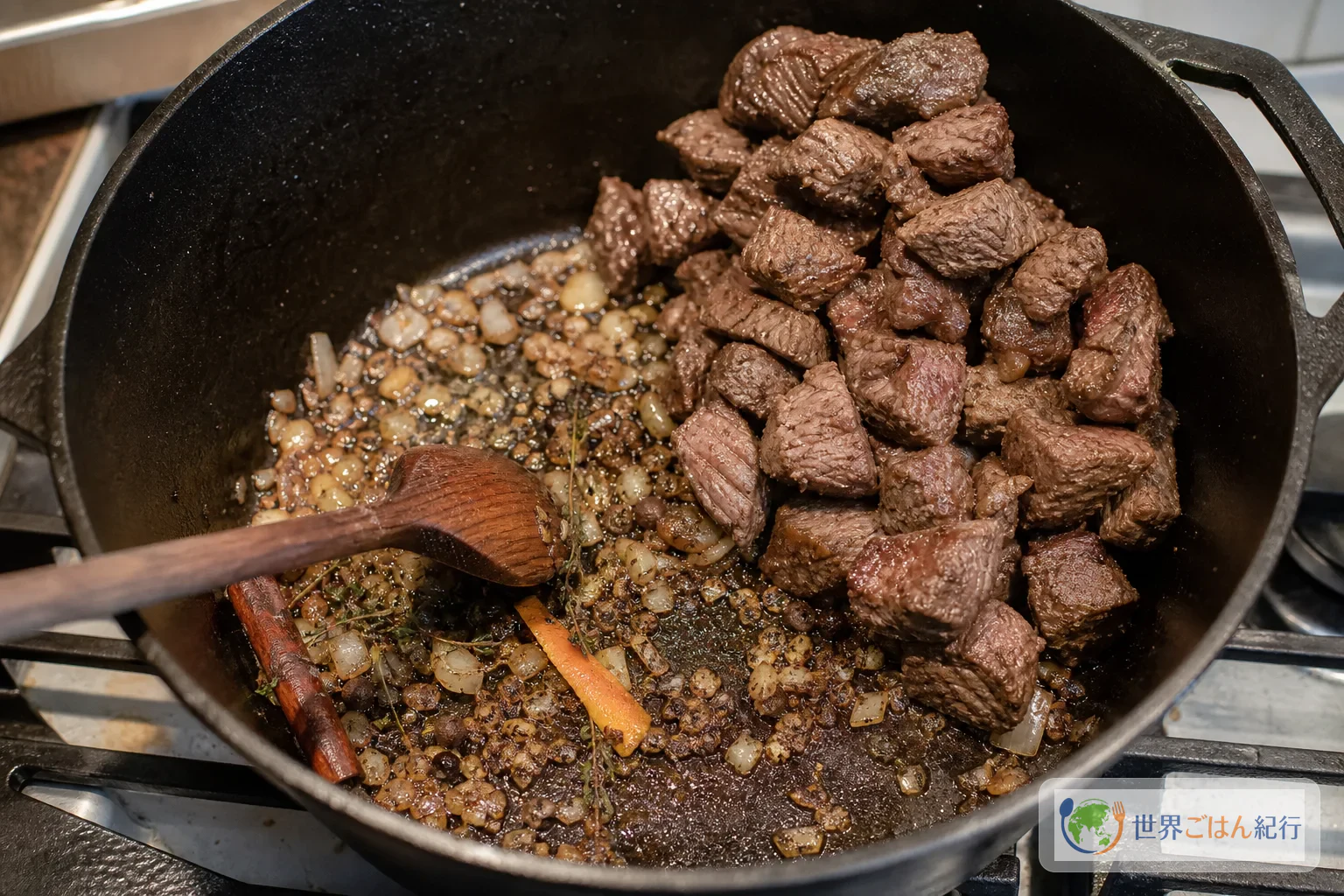
Pepperpot turns bitter if you rush to reduce it. Salt the meat first, brown the surface, loosen the cassareep with water, and wait a long time over low heat at the end. Sweep the bottom of the pot with a wooden spoon, and if sugar looks about to stick, add 3.5 tbsp (50 ml) of water at a time.
Common Pepperpot Problems and Fixes
Most pepperpot failures come from heat control rather than seasoning. Scorch cassareep or treacle on the bottom over high heat and you get the bitterness of burning, not of spice. Simmer low and long, and take the lid off only at the end to settle the thickness.
| State | Cause | How to fix |
|---|---|---|
| Too bitter | Sugar scorched on the bottom of the pot | Move it to another pot without scraping up the scorch, and add ½ cup (100 ml) water and 1 tsp sugar |
| Tough meat | Not simmered long enough, or heat so high it tightened | Return to low heat at 85–95°C and simmer 30 minutes at a time |
| Thin broth | Finished with the lid on | Remove the lid and reduce for 10–15 minutes over low heat |
| Too hot | The chile split | Take out the chile and adjust with 1 tsp sugar and 3.5 tbsp (50 ml) water |
| Flat flavor | Too few spices, no acidity | Add a little allspice and 1 tsp balsamic vinegar at the end |
Serving and Storing Pepperpot
Bread comes first. Lightly toasted sandwich bread works, and so does a thick slice of baguette sunk into the broth. If you'd rather have rice, firmer-cooked long-grain rice or a bean rice like the one served with Cuban ropa vieja suits it better than plain white rice. The next day, shred a little leftover meat into sandwiches; the black broth soaks into the bread, and it's very satisfying.
Add something sour and something raw so the rich stew doesn't tire you out: vinegared cucumber and onion, cabbage with a squeeze of lime, or a tomato salad is enough. On a Caribbean table, treat pepperpot as the dish for the broth and set it beside meats like Puerto Rican pernil or jerk chicken.
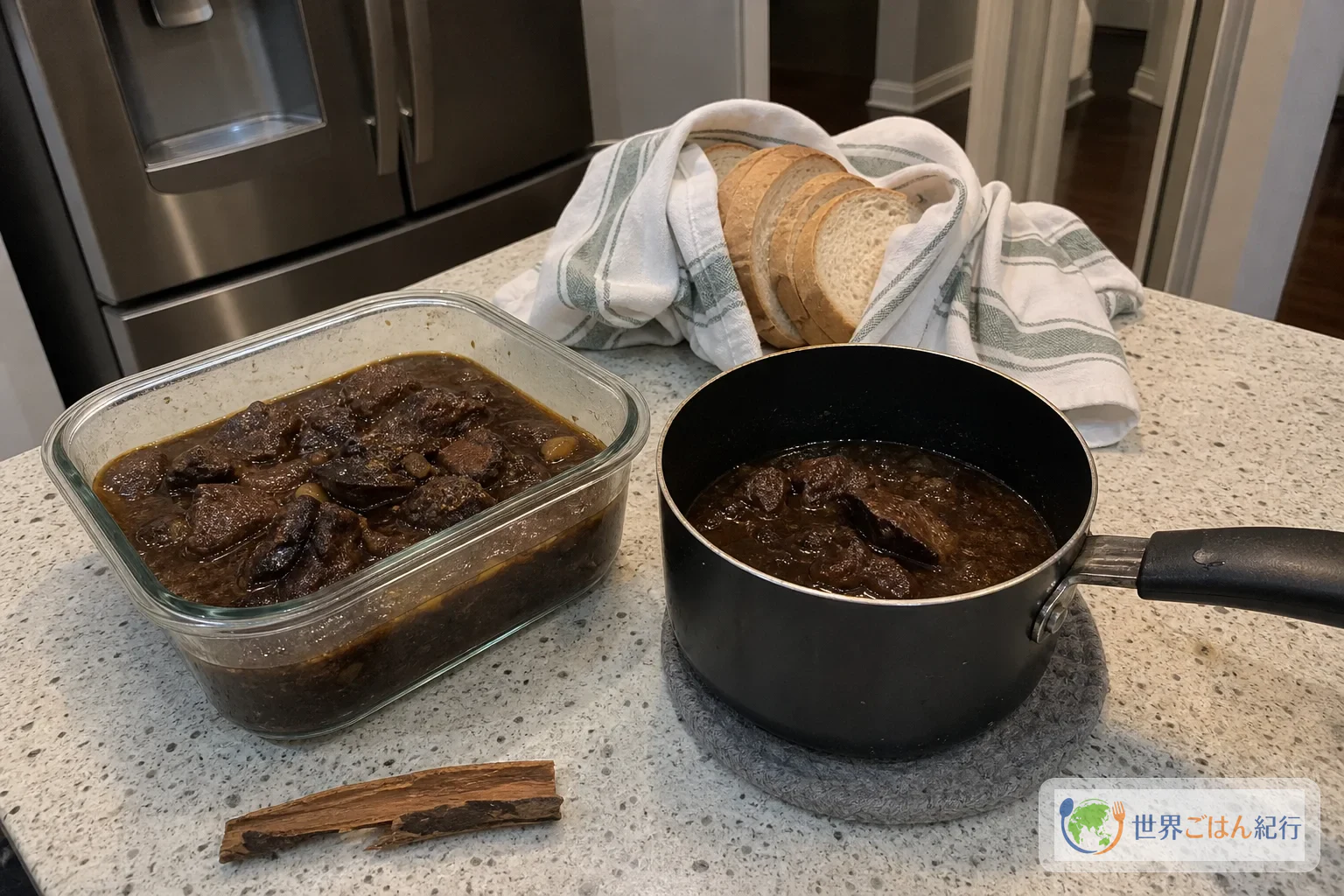
Cassareep pepperpot is traditionally warmed and eaten over several days, but home kitchens vary, so put safety first and keep it in the refrigerator or freezer. Once it has cooled, move it to storage containers within 2 hours. Plan on 3 days in the refrigerator and 3 weeks in the freezer. After a night in the fridge the fat sets; remove as much as feels heavy, return the stew to a pot with 2–3 tbsp water, and warm over low heat for 8–10 minutes. In a microwave, heat at 600 W for 2 minutes, stir once, then add 1 minute at a time. Check that it is hot to the center.
Frequently Asked Questions
Can I make it with beef only?
Yes, with beef shank or beef chuck alone. Pork shoulder or oxtail adds fat and the savor of bone, but neither is required. With beef only, use 2 lb to 2.25 lb (900 g to 1 kg) in total and stew for about 3 hours.
Can I make it in a pressure cooker?
Yes. Follow the method through step 4, then cook 25 minutes at high pressure with 15 minutes of natural release. Remove the lid and reduce for about 15 minutes over low heat. A long simmer in an ordinary pot develops the aroma more gently.
Is it better made the day before?
Yes. Overnight in the refrigerator, the meat and broth blend, and the flavor settles more than when freshly made. Skim the fat on the surface and warm it slowly over low heat before serving.
- Metemgee, "Guyanese Pepperpot": consulted for its explanation as Guyanese home cooking centered on cassareep, the combinations of meat, and the idea of long stewing.
- CaribbeanPot, "Simple Guyanese Pepperpot Recipe": consulted for the context of dipping in bread, the use of cinnamon and cassareep, and a home stewing method.
- PBS Food, "Pepperpot": checked for the keeping quality of cassareep, eating with bread, and its place as a holiday dish.
- Alica's Pepperpot, "Pepperpot on Christmas Morning": consulted for the custom of eating it on Christmas morning and its explanation as home cooking using red meat and pork.