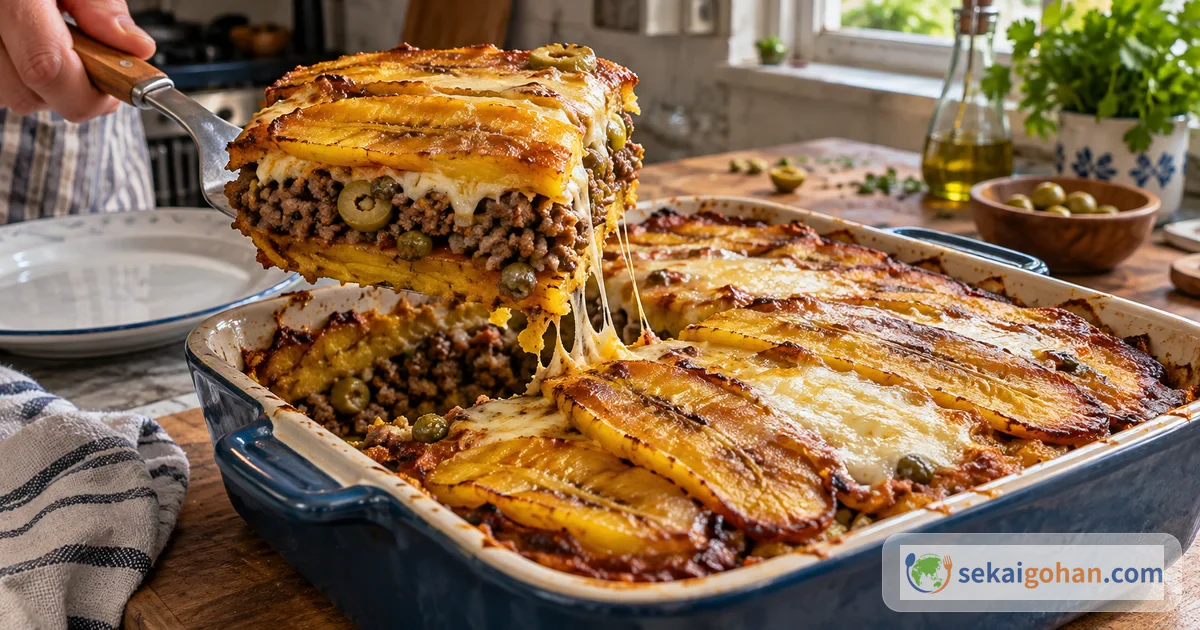
Plantains left to ripen until the peel turns black fry up caramelized on the outside and soft and sweet inside. Layer them in a baking dish with ground beef studded with olives and capers, melting cheese, and more plantains, then pour beaten egg over the top and bake. What comes out of the oven is a casserole that alternates sweet and salty in every forkful. Pastelón is Puerto Rican home cooking, and every family has its own recipe. Swap the plantains for pasta and it is almost a lasagna.
Pastelón, Puerto Rico's "Big Pie"
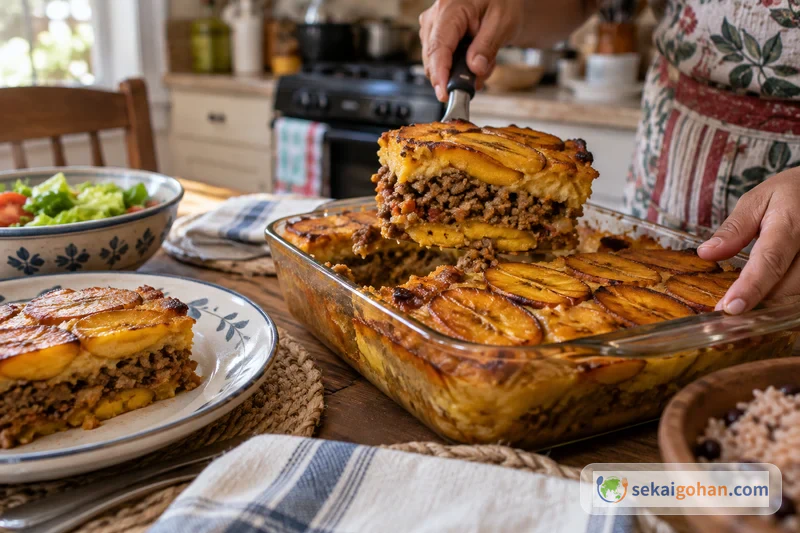
In Spanish, pastelón means "big pie," and that's more or less what it is: fried ripe plantains layered with picadillo (a stewed ground-meat filling) and baked. It has a long history on the island. A recipe appears as a "baked pie" in a 1948 English-language Puerto Rican cookbook, so by the middle of the twentieth century at the latest, it was already known as Puerto Rican home cooking.
Plantains on the Puerto Rican Table
The plantain originated in Asia and reached the Americas in the 1500s by way of Africa, and people brought from Africa spread it across the Caribbean islands. Today Puerto Rican cooks can't do without it. They fry it green as tostones, or bake it sweet and ripe as maduros. Pastelón puts the sweetness of the ripe side front and center.
Its close cousin piñón shows up again and again in the island's standard cookbooks, including one from 1954.
Puerto Rico also has a dish very like pastelón, called piñón. The main difference is that piñón layers sliced ripe plantains, while pastelón uses mashed plantains. In practice, versions made with sliced plantains are often also called pastelón.
Ingredients (serves 8, one 8-inch (20 cm) square baking dish)
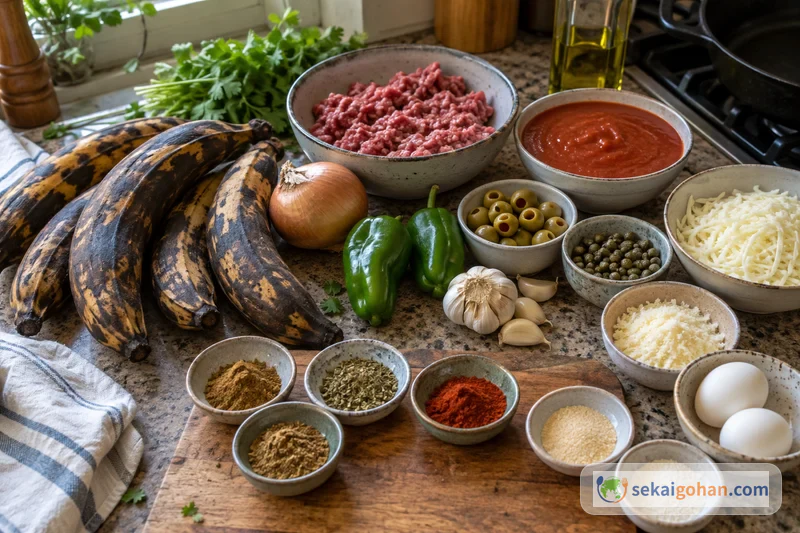
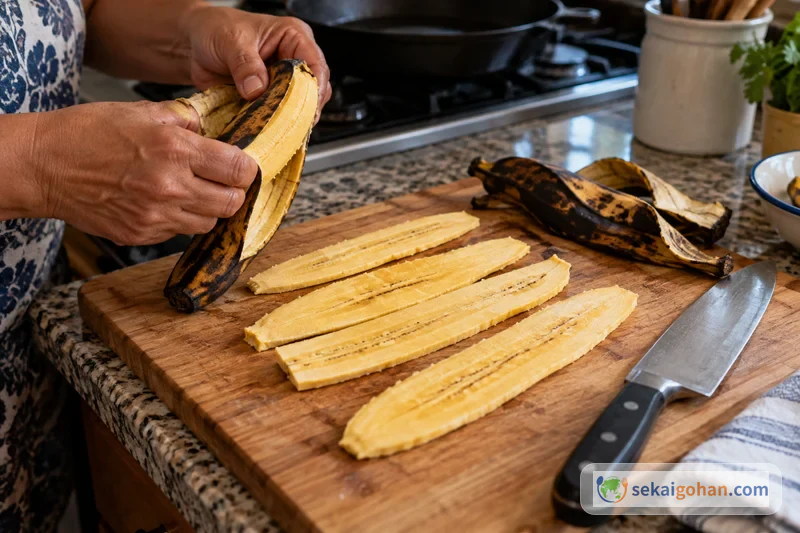
For pastelón, the ideal plantain is so black that almost no yellow is left on the peel. To ripen yellow ones faster, put them in a paper bag at room temperature.
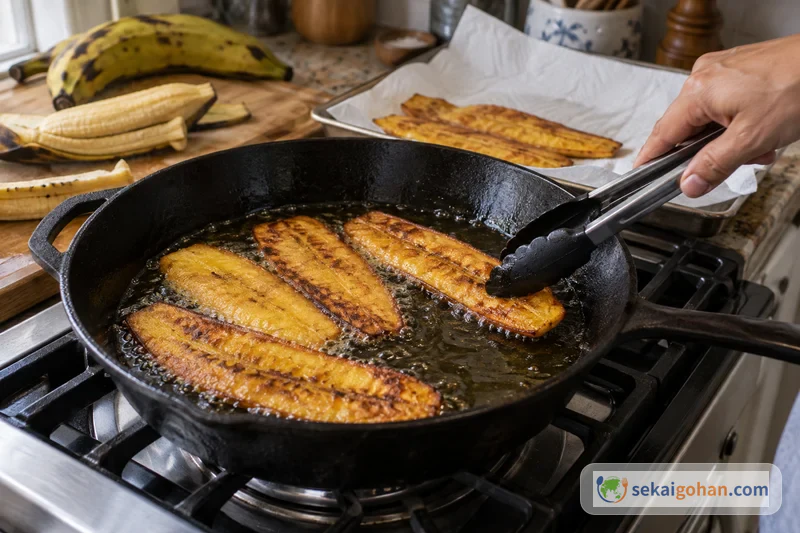
Ripe plantains are high in sugar, so they spatter in the oil and burn easily. Don't let the oil get too hot, and use tongs to turn them. The dish contains egg and dairy, so take care when serving anyone with allergies.
Choosing Plantains and Meat for Pastelón
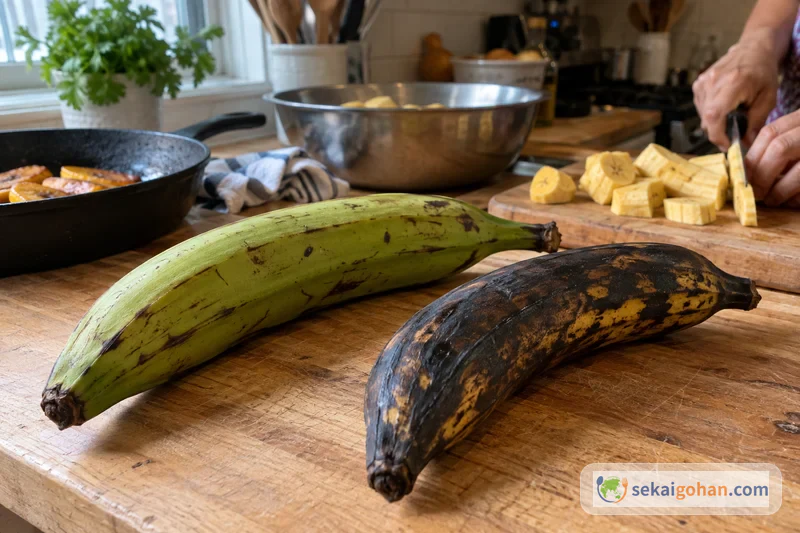
Getting ripe plantains is the hardest part. In many places you'll have to buy green ones at an international grocery or online and leave them at room temperature until the peel is almost black. Green plantains are starchy and hard, with no sweetness, so they don't suit pastelón. Ripening can take a while depending on the season and how warm your kitchen is, so buy them early. Ordinary eating bananas won't work as a substitute either: they are too soft and sweet and fall apart when fried.
For the picadillo, ground pork or chicken works as well as beef.
How to Make Pastelón
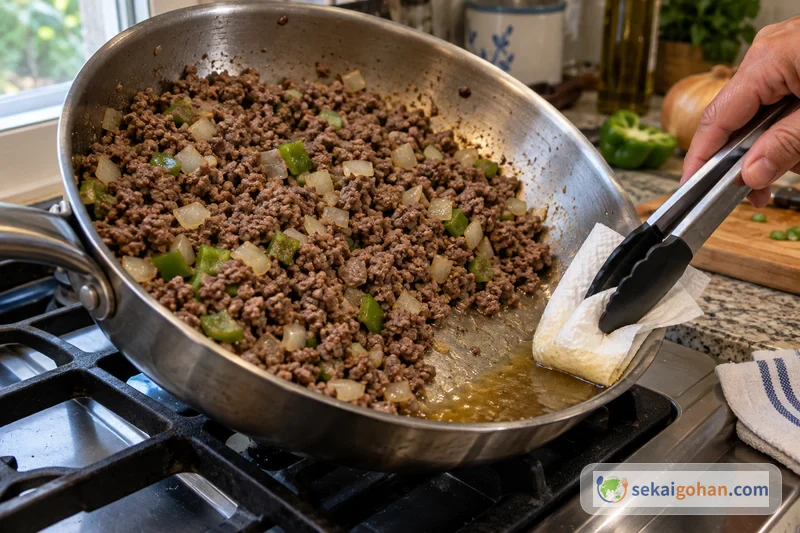
Allow about 30 minutes of prep, and about 55 minutes to fry the plantains, make the picadillo, layer, and bake. Preheat the oven to 350°F (180°C) before you layer.
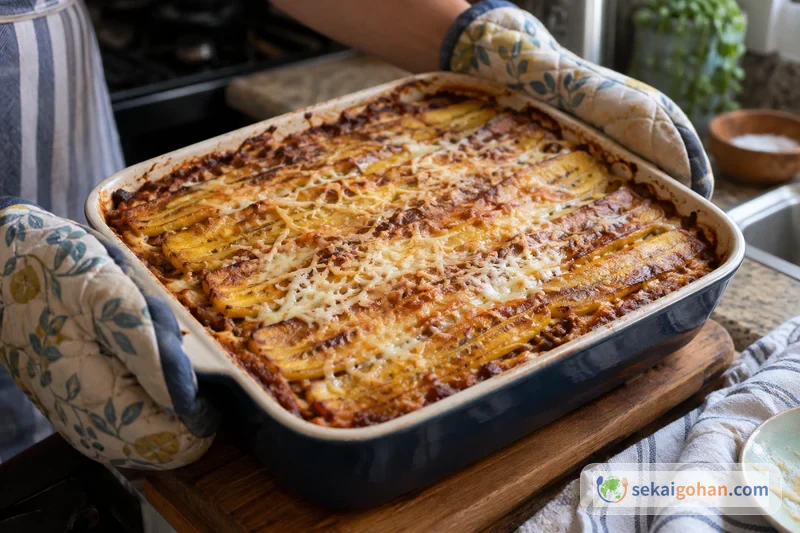
The baking dish is very hot when it comes out. Use oven mitts, and let it rest about 10 minutes before cutting. If the egg has not completely set, bake it 5 minutes more at a time.
Getting Pastelón Right: Sweet, Salty and Set
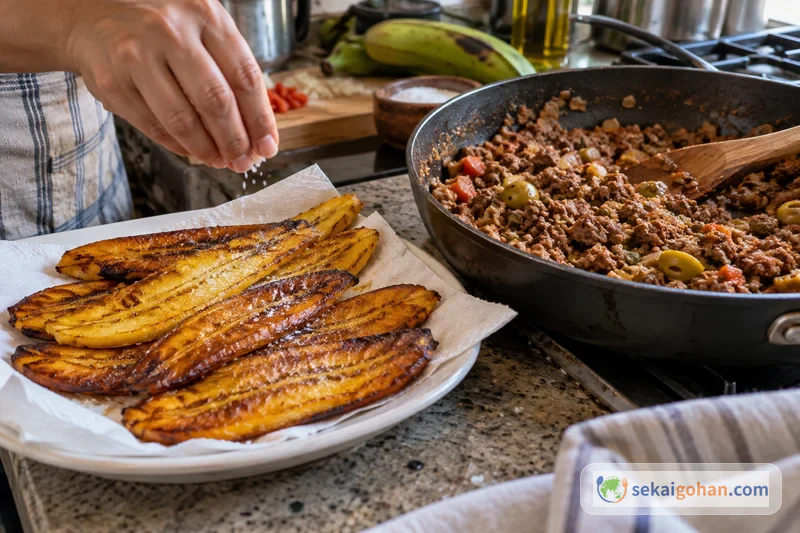
Pastelón works because the sweetness of ripe plantain keeps trading places with the saltiness of olives and capers. Under-ripe plantains have no sweetness, and the dish becomes little more than a layered starch bake. Choosing fully ripe plantains is the surest way to get it right.
Salt the plantains while they are hot from the oil; it brings out their sweetness. If you forget, the baked casserole tastes dull.
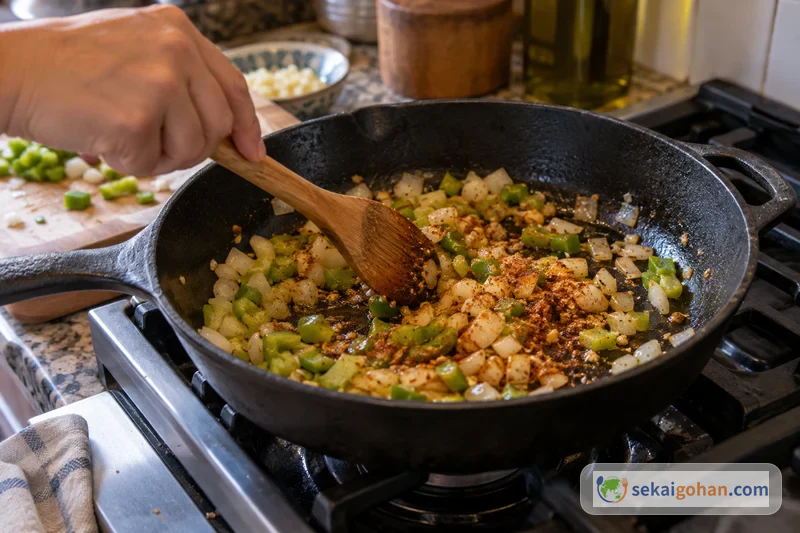
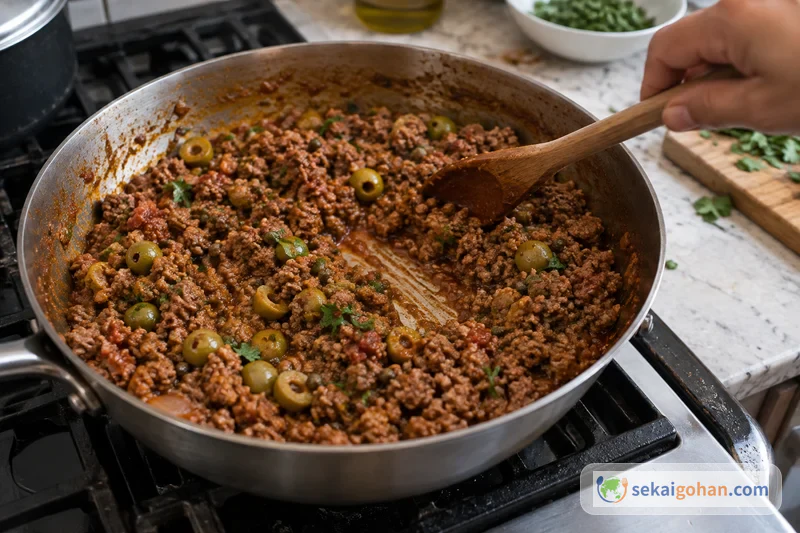
Season the picadillo a little strongly. Tucked between sweet plantains and cheese, it tastes milder than it does on its own. Cut the olives and capers on the large side, too, so each bite still gets a salty hit.
You can make the picadillo up to 2 days ahead and refrigerate it. If you do, add about 10 minutes to the baking time so the center is heated through.
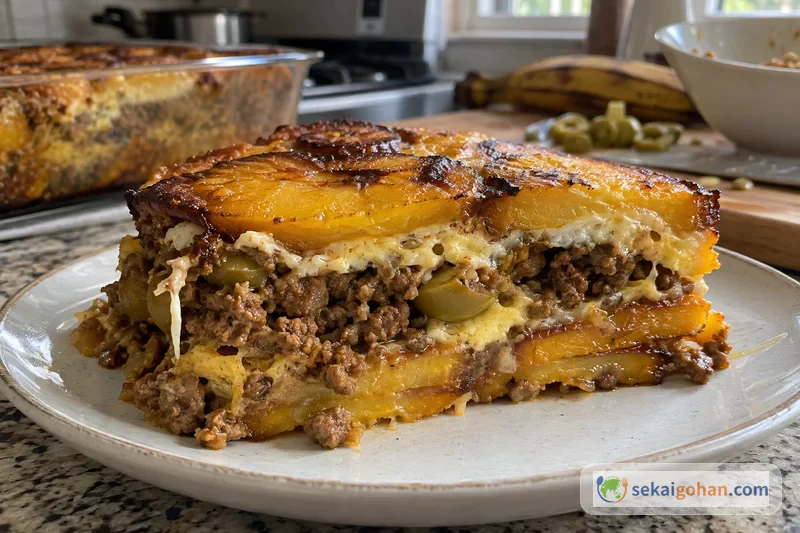
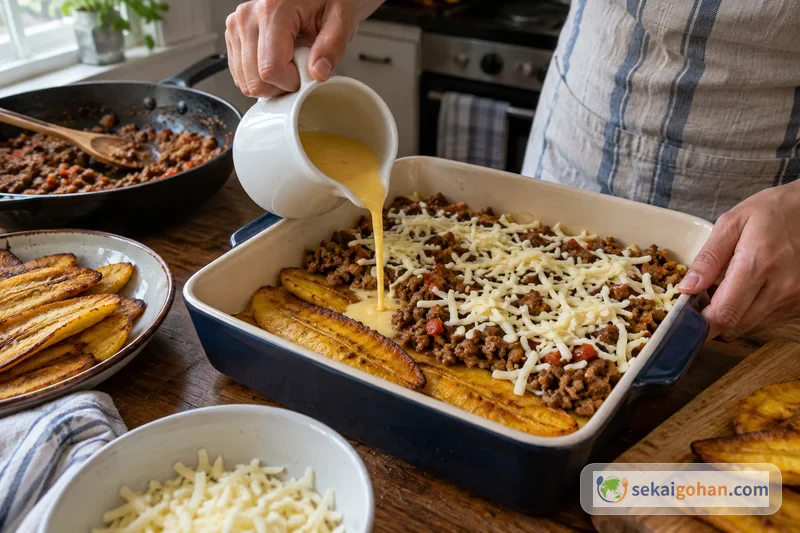
The beaten egg poured over the layers is what holds everything together. It seeps into the gaps between plantain and meat and sets in the oven, so the casserole keeps its shape when you cut it. Some recipes leave the egg out entirely.
Serving Pastelón and Variations
Serving
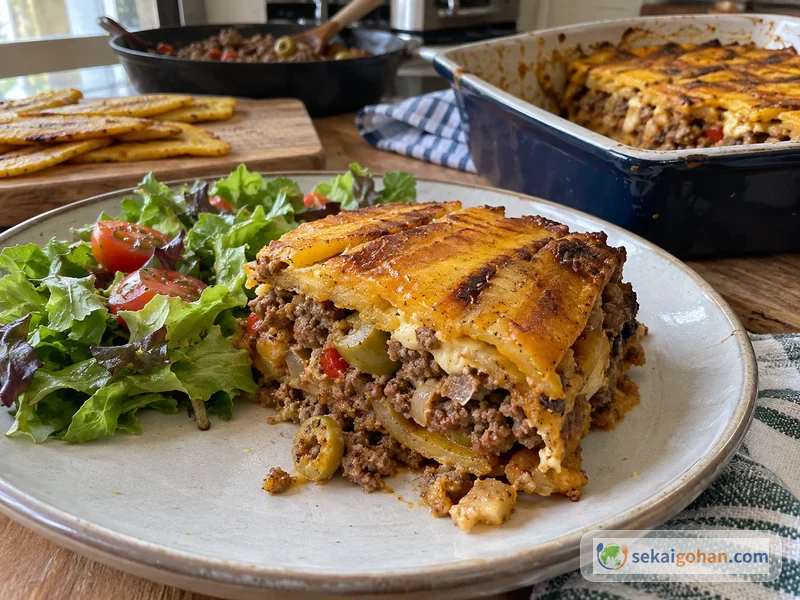
Cut the baked pastelón into squares and plate them. Clean layers of plantain, meat, and cheese in the cross-section tell you it baked well. A light salad on the side balances the sweet, rich casserole.
For a Puerto Rican spread, set it beside mofongo, green plantains mashed with garlic. It's striking how ripe and green plantains turn the same ingredient into completely different dishes. Pernil, slow-roasted pork shoulder, is another fixture of Puerto Rican celebration tables.
Mashed Pastelón and Other Variations
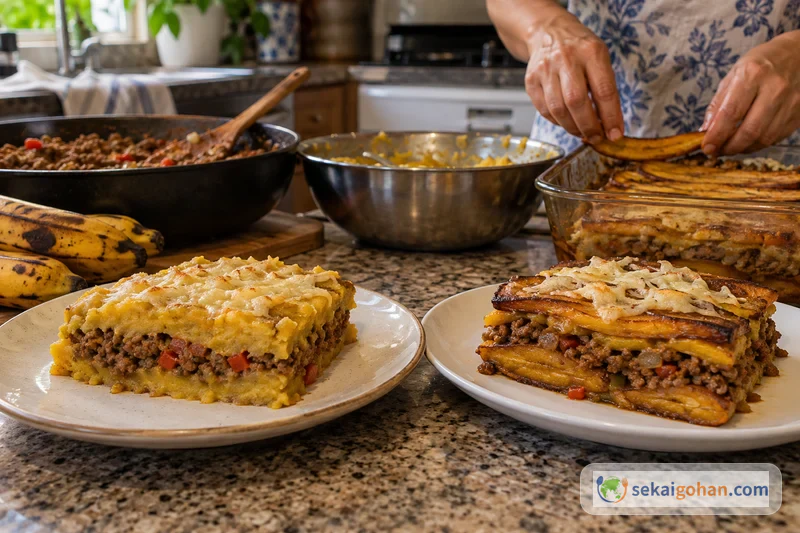
If you'd rather not fry, boil the ripe plantains in their skins for about 20 minutes, or peel and steam them, then mash them smooth in a food processor. Spread half the mash in the dish, add the picadillo, top with cheese and the rest of the plantain, and bake. The result is a moist pastelón with puréed layers, and this is actually the more typical form.
Adding raisins, as in Cuba's picadillo a la habanera, gives the filling even more layered sweetness.
Frequently Asked Questions
Can I use frozen ripe plantains?
Yes, some recipes call for them. Thaw them, then pan-fry them as in the recipe or mash them in a food processor.
What if I don't have an oven?
You can make it in a skillet, covered, over low heat, cooking it slowly so the egg and cheese cook through. The oven gives it a better toasty flavor, though.
Can I make it ahead?
Let the baked pastelón cool, cut it, and refrigerate it. Reheat it in a microwave or oven until it is hot in the center, and finish it soon.