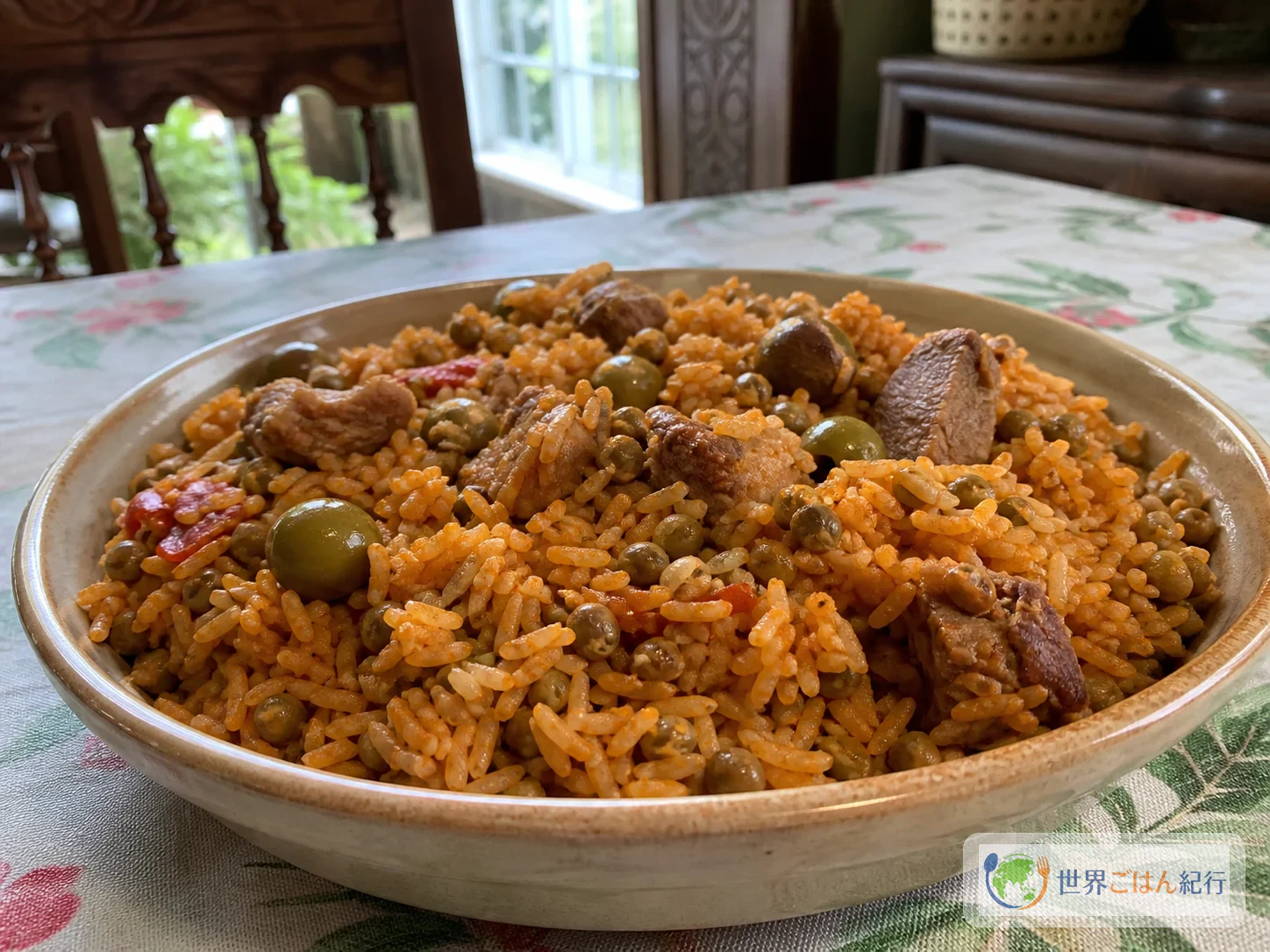
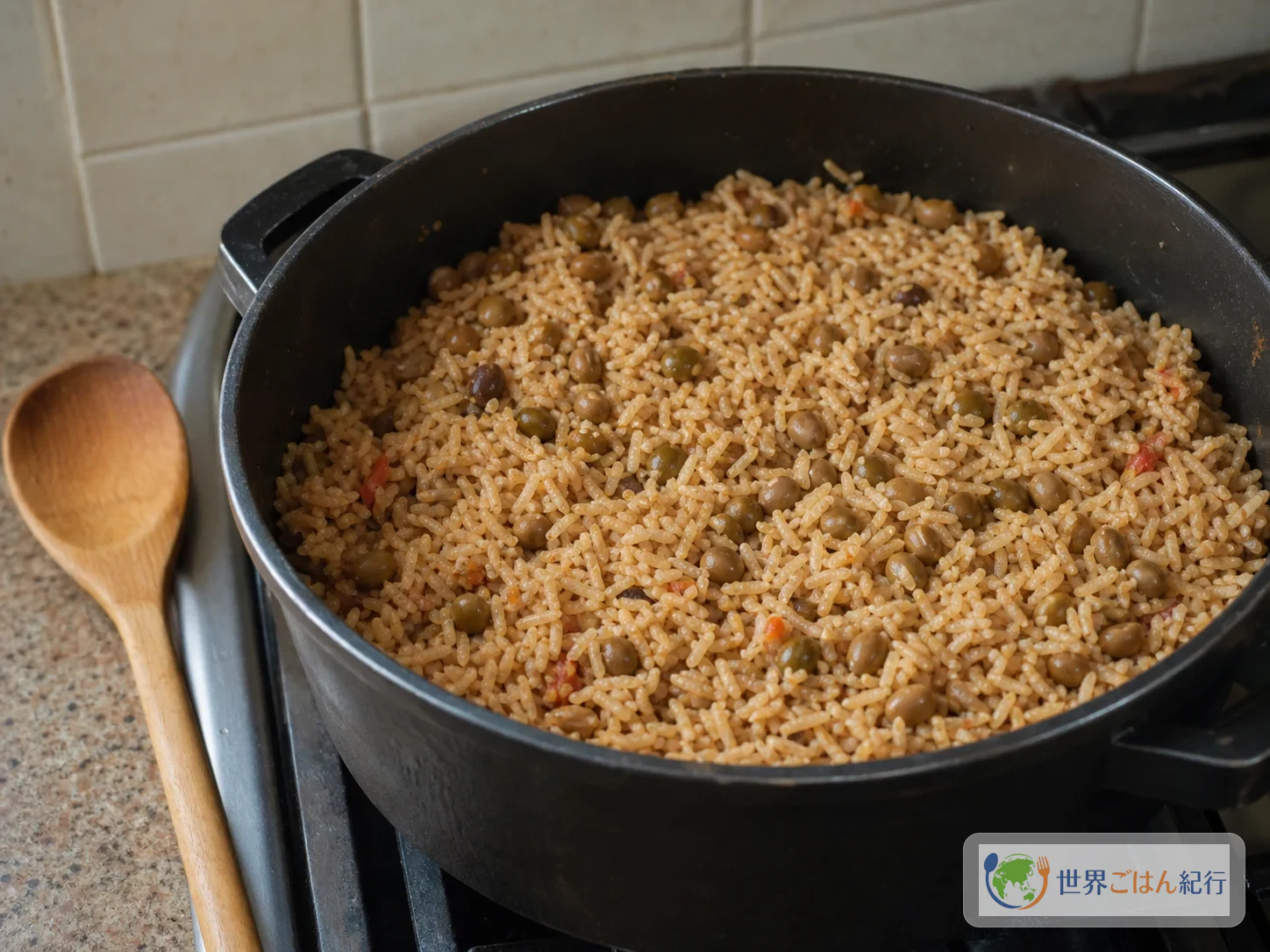
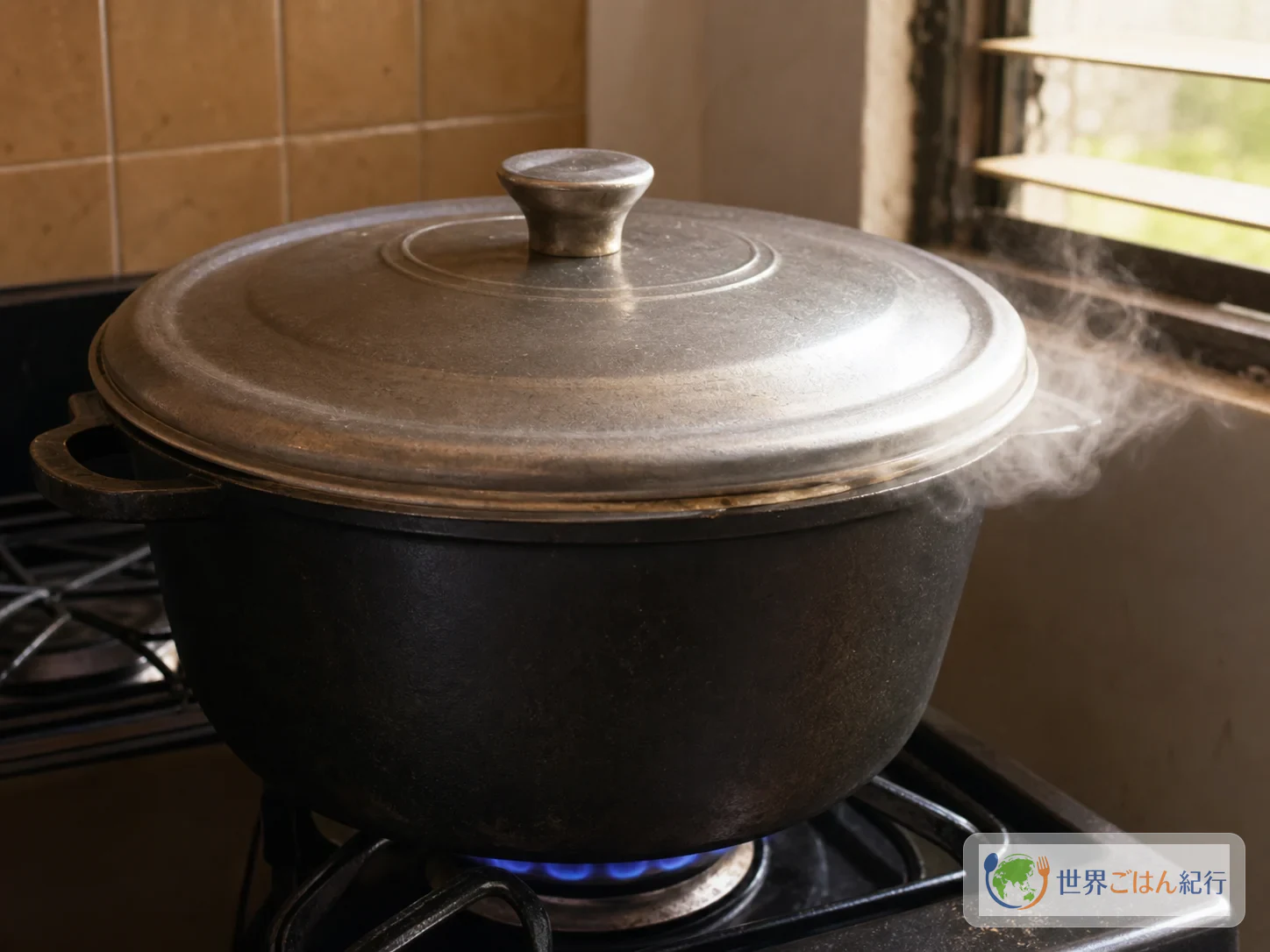
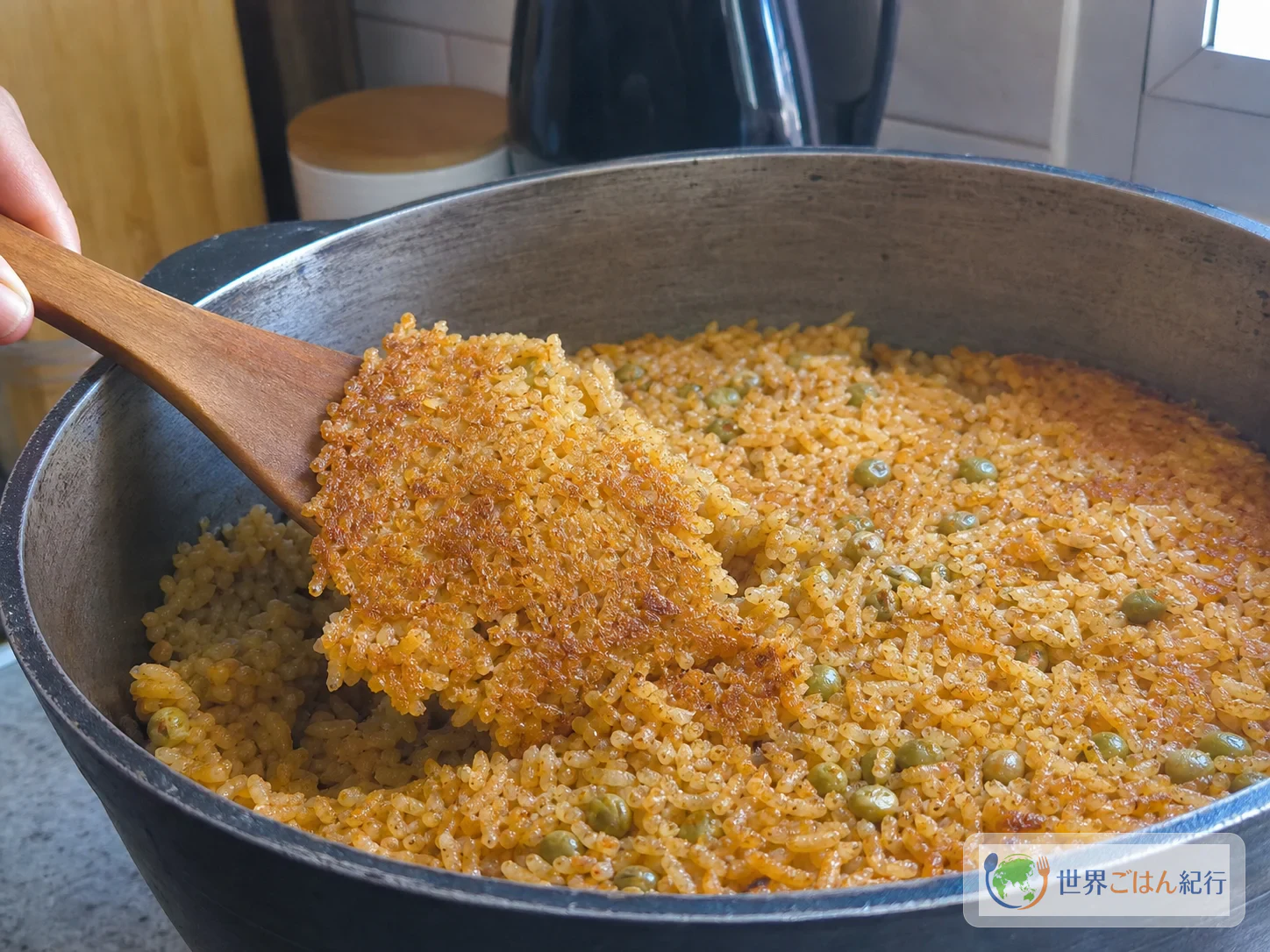
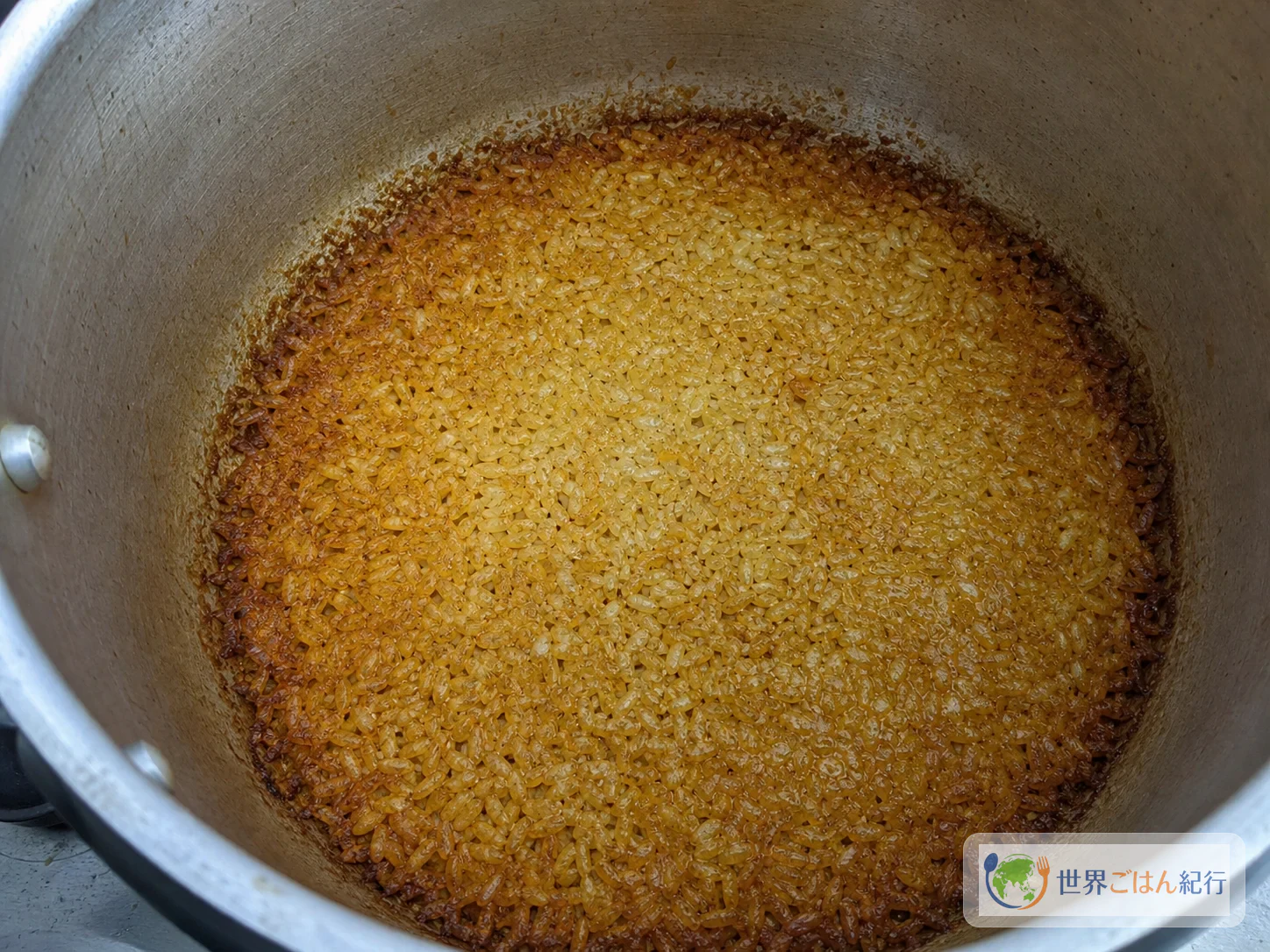
Just before the lid comes off, all you hear is weak steam pushing at its edge and the quiet pop of oil on the bottom of the pot. Lift it, and green peas appear among the white rice, each grain wearing a pale orange coat from the annatto oil. Arroz con gandules is a Puerto Rican staple: rice cooked in one pot with gandules (pigeon peas in English), salty pork, olives, capers, tomato, and sofrito. Push a rice paddle to the bottom before you scoop, and you'll find a thin brown film mixed into the rice. That's pegao, the toasty layer that forms on the bottom of the pot, and it's served right along with everything else.
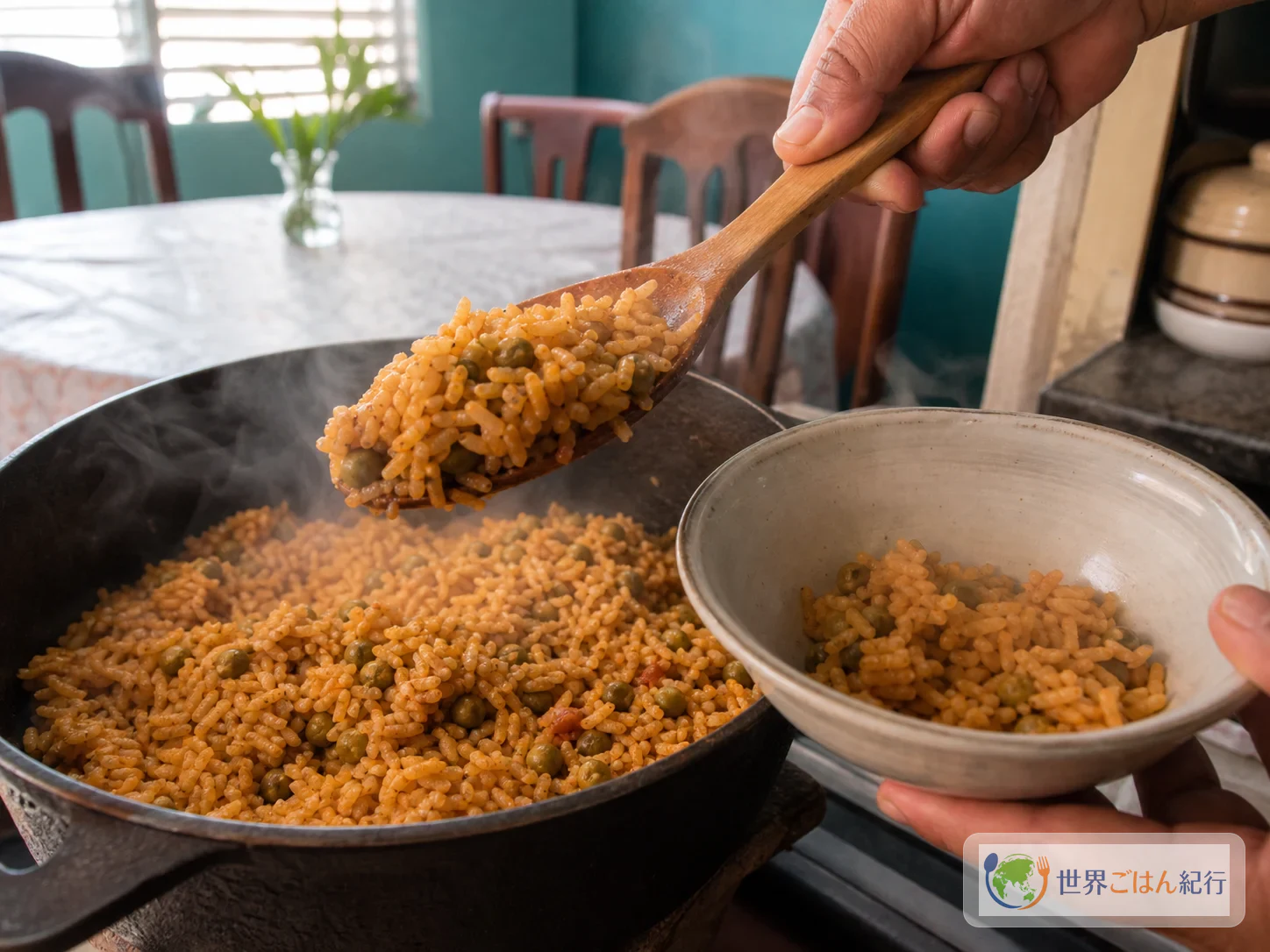
Arroz con gandules at the Puerto Rican table
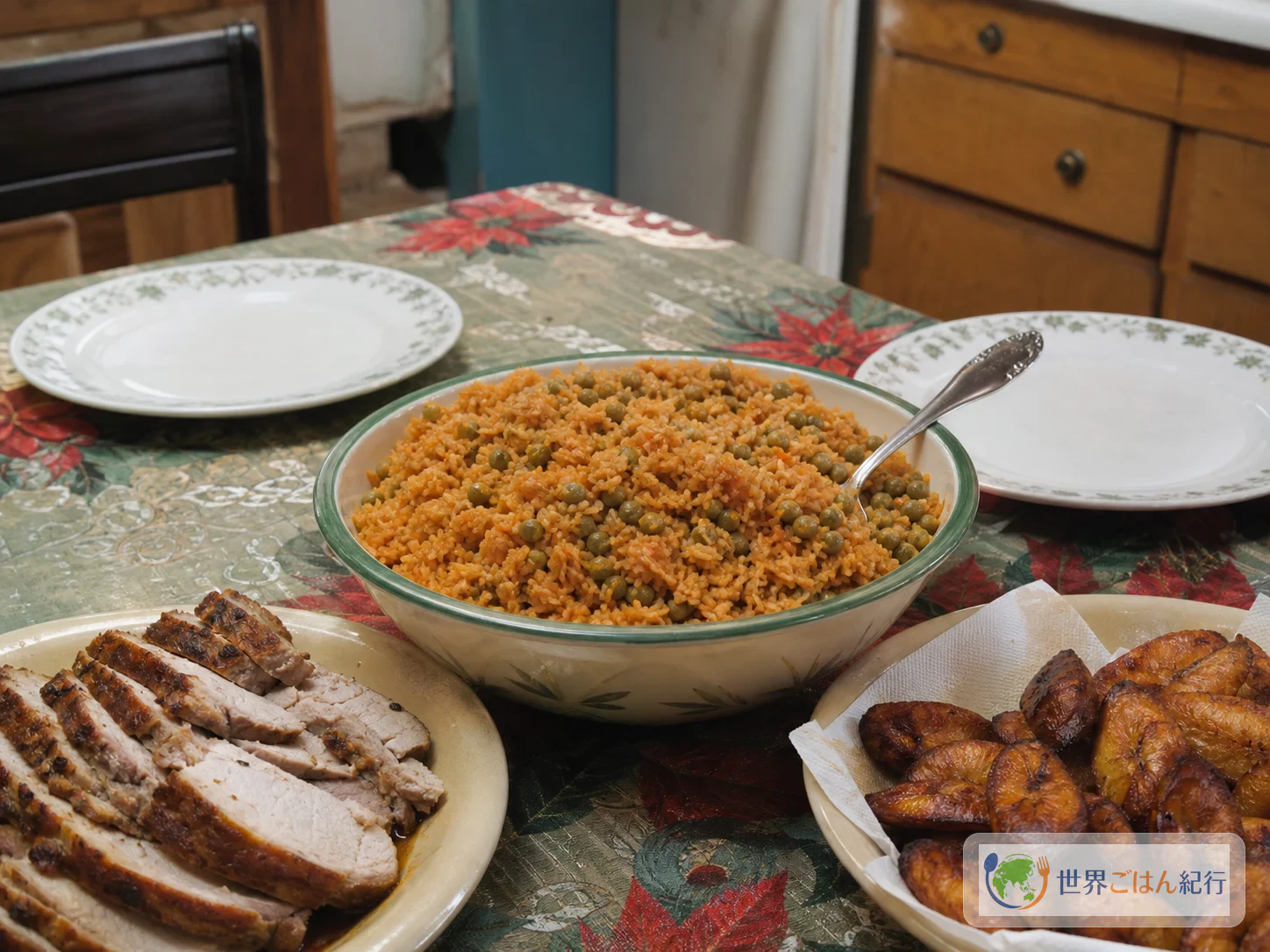
A rice for family gatherings
Arroz con gandules is eaten in Puerto Rico all year, but it belongs especially to Christmas and family gatherings. Rice and beans cook together in one pot instead of being served separately, so it's easy to portion out for a crowd. And because the beans, pork, and olives are all in there too, it can anchor the table without a separate starch and side.
The flavor comes in layers rather than as one note: the green of the aromatics, the saltiness of the pork, the earthiness of the beans, the color of annatto, and the sour bite of olives and capers.
Sofrito and the pigeon pea's journey
Sofrito in Puerto Rican cooking is an aromatic base of onion, pepper, garlic, cilantro, and more. It reflects the crossing of Indigenous, Spanish, and African food cultures, and how a region builds its aromatics tells you more about it than memorizing dish names.
The gandul's scientific name is Cajanus cajan. It was domesticated mainly on the Indian subcontinent and spread to Africa and the Caribbean along trade and colonization routes. It's pigeon pea in English, gandules in Puerto Rico, gungo peas in Jamaica. Think of the bean's name as a map of its journey, and even a can label becomes interesting. For another Caribbean pairing of beans and rice, see our Jamaican rice and peas.
Decide the rice and the aroma backbone before the beans
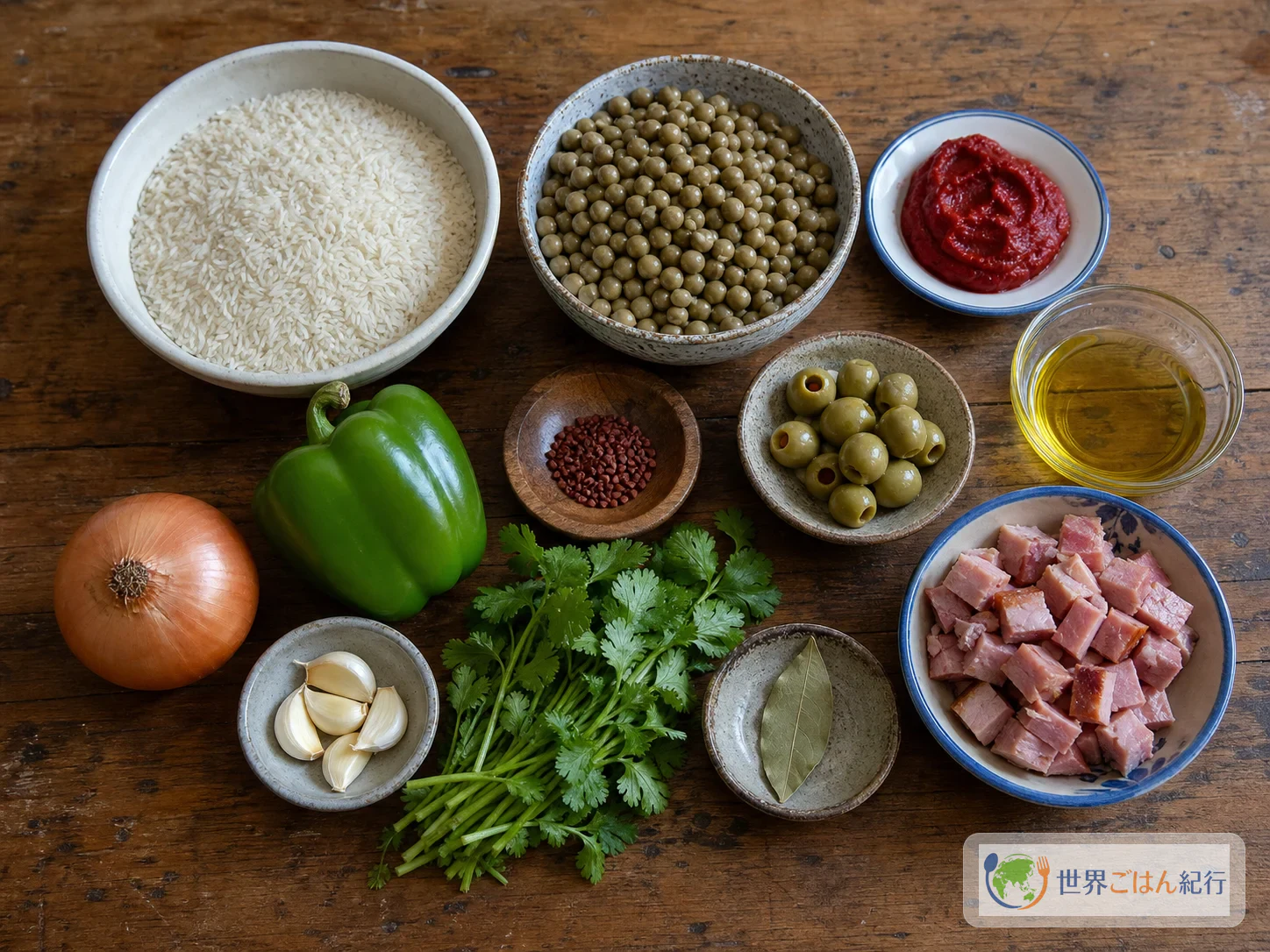
Serves 4.
Measure the rice, then open the canned beans.
Do not discard the bean liquid: set aside about ½ cup (100 ml), and make up the remainder with unsalted hot water or stock to total 2½ cups (600 ml) of liquid.
Annatto seeds turn the oil red-orange when steeped and color the rice evenly.
If buying, choose seeds with annatto as the only ingredient rather than powder, so you can judge the color as it transfers to the oil yourself.
If you will not make the aroma every time and want a quick way to color only, you can use a sazón that contains annatto.
If you only want the color and cannot think of dishes to use up a bag of about 10 oz, skip buying it.
On the product page, check whether the name says "seeds" or "whole," and check the contents and ingredient list.
Rinse the rice, drain it in a colander, and let it sit 15 minutes.
Giving the surface moisture time to drain keeps the oil from being diluted when the rice goes into the pot and helps the rice take on the aromatic oil in the first minute.
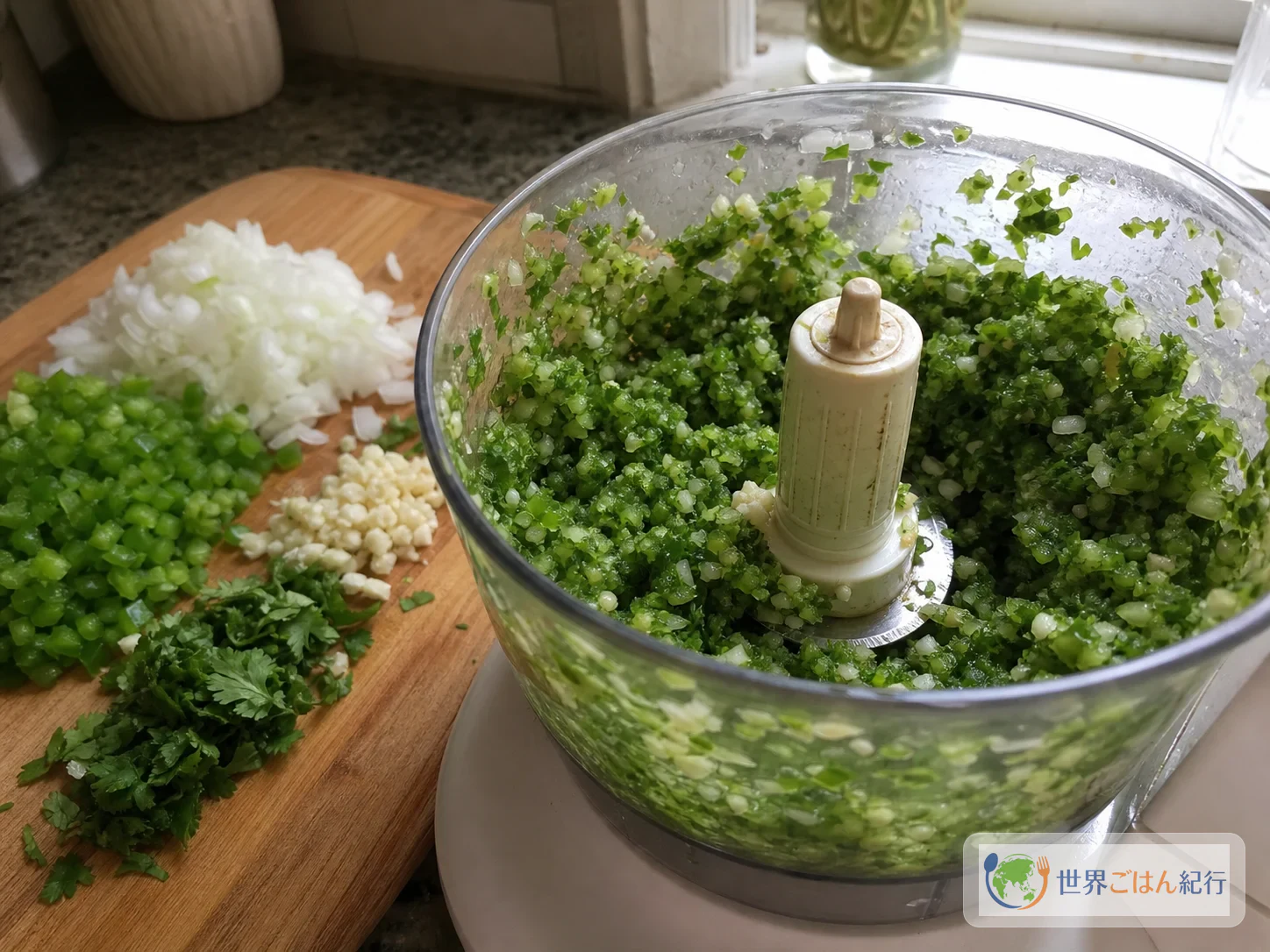
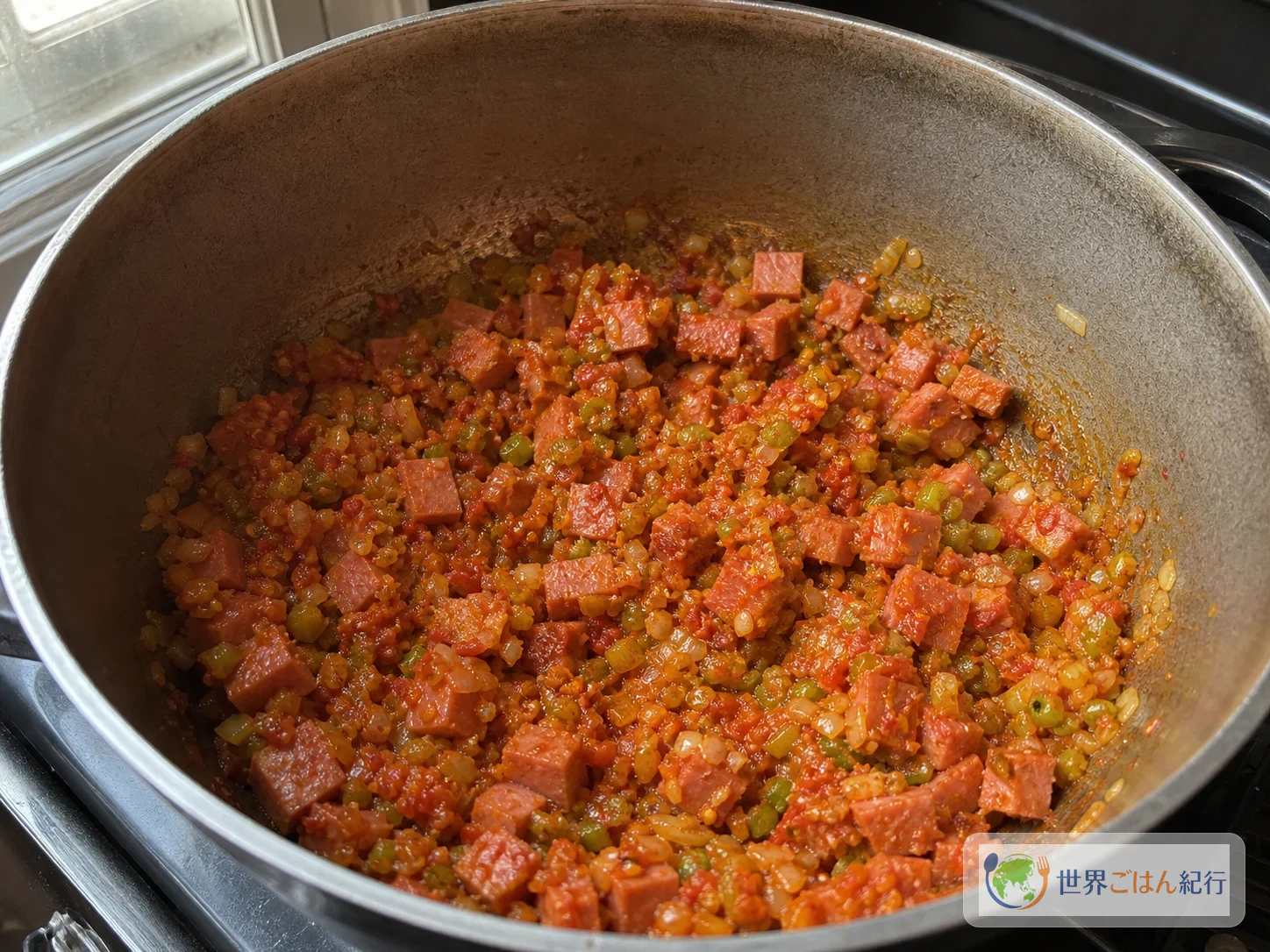
Sofrito is an aromatic base of finely combined onion, green pepper, garlic, and cilantro.
Do not make it a smooth paste; leave grains of about 0.125 inch (2–3 mm).
This coarseness creates small layers of aroma between the grains of rice.
Choosing gandules, rice, and aromatics
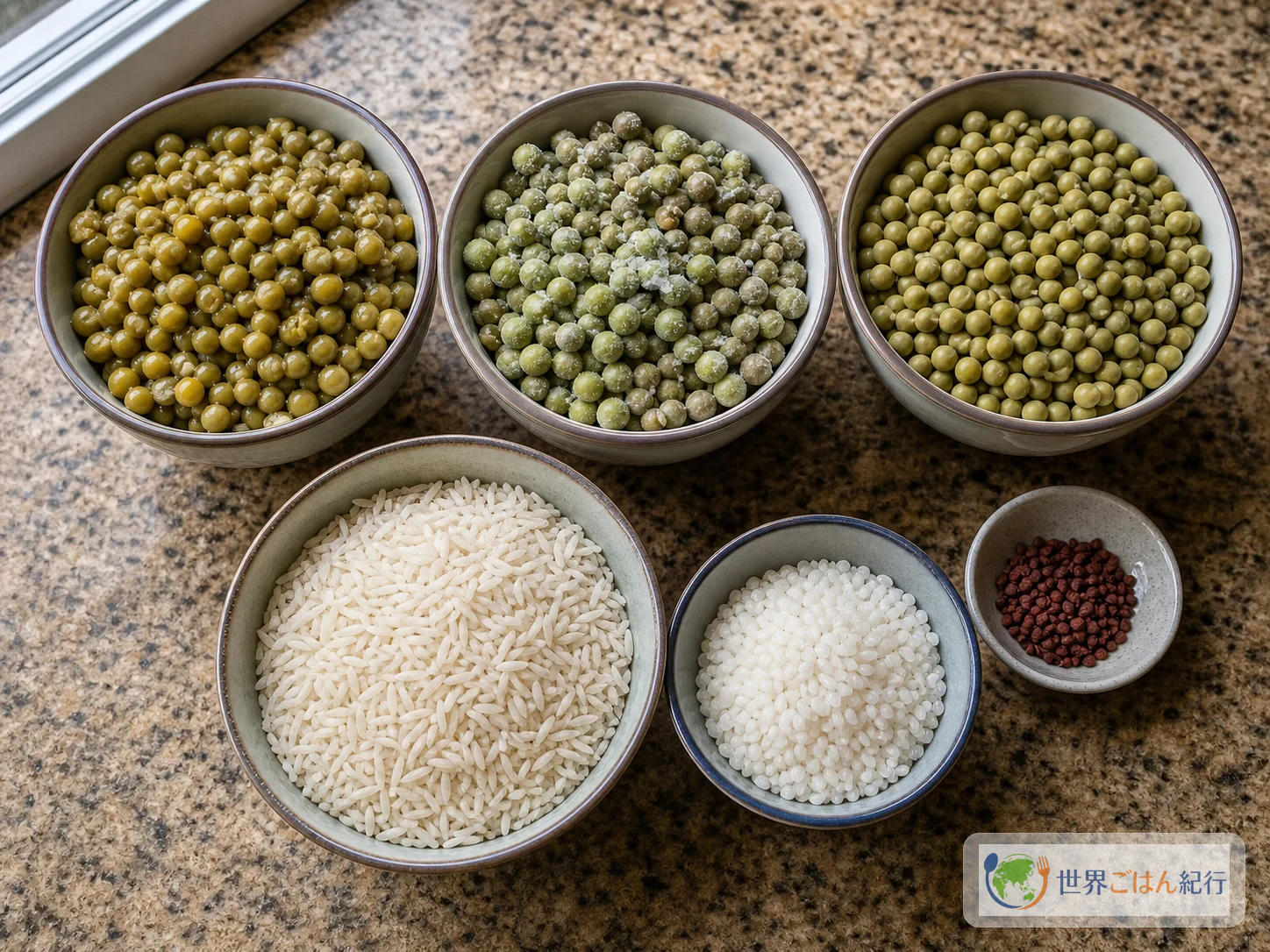
For your first pot, use canned gandules and long-grain rice. That combination lets you get a feel for the bean aroma and the shape of the grains before you start changing things.
Gandules and substitutes
Canned gandules are the easiest place to start, and if you use the can liquid as part of the cooking liquid, the bean aroma moves into the rice. Frozen peas let you control the salt yourself, and their skins are less likely to break. Dried peas need soaking in plenty of water and boiling until tender in a separate pot; cook them raw with the rice and the rice softens long before the bean centers do.
Chickpeas and kidney beans work as substitutes, though you'll lose the green aroma specific to gandules. If you just want rice with beans, substitute freely. If you want the backbone of Puerto Rican flavor, it's worth hunting down the real thing.
Long-grain or short-grain rice
Long-grain rice keeps its grains separate and soaks up the aromatic oil and bean flavor. Short-grain works too, but start with 2 cups (500 ml) of liquid instead of 2½ cups (600 ml), soak the rice for 30 minutes and drain it, and keep stirring to a minimum. It comes out softer, with a thicker pegao. That's a different result, not a failure.
Annatto oil and sofrito
Making your own annatto oil lets you adjust the depth of color as you watch. Heat 2 tbsp (30 ml) unsalted oil with 20 g annatto seeds over medium-low for 2–3 minutes, and stop when red-orange spreads from around the seeds, before a toasty smell rises. If it smokes, the heat is too high; take the pot off the burner and let it cool a little, but don't set it straight on a wet cloth. Strain out the seeds, which aren't meant to be eaten, and keep the oil.
A knife is all you need for sofrito: chop the onion, pepper, garlic, and cilantro one at a time. Going too fine from the start releases water, so the mixture steams instead of frying. About 15 minutes of knife work does the job, and it lets you watch the size of the onion pieces as you go.
A small food processor earns its place if you make bean dishes, stews, and marinades several times a week and like to freeze aromatics in cubes. Look for a capacity that takes onion and pepper at once, a pulse setting for coarse chopping, and a detachable blade and container that are easy to wash. If you have nowhere to store one, skip it; the dish doesn't depend on it.
| What to change | Option | Change in the result |
|---|---|---|
| Beans | Canned | Most stable; the can liquid adds aroma |
| Beans | Frozen | Easier to adjust salt and keep the beans' shape |
| Beans | Dried | Needs pre-boiling; stronger bean aroma |
| Rice | Long-grain | Grains stay apart; pegao is easier to make |
| Rice | Short-grain | Soft and cohesive; sensitive to liquid and stirring |
| Aroma | Annatto oil | You control the depth of color |
| Aroma | Seasoning containing annatto | Quick, but check the salt and spice blend |
Stirring, heat, and pegao
How often to stir
The biggest decision in this dish is how many times you stir. Loosen the bottom just once while the liquid boils after you add it, then keep the lid on and the paddle out while it steams on low. If you stir only until it boils, the beans stay whole and each grain keeps its shape.
Timing the switch to low heat matters too. Drop the heat with water still pooled and the rice goes sticky before it cooks through; turn it off before the liquid is gone and the centers stay hard. Wait until the rice on the surface shows and small holes form at the edge of the pot, then move on to steaming.
Fixing mushy or hard rice
If the rice turns mushy, don't try to drive off the moisture over low heat. Turn off the heat, let it sit 5 minutes, then spread it in a shallow dish to let the steam escape, since stirring the bottom only makes it stickier. If a hard center remains, add just 2 tbsp hot water around the edge of the pot, cover, and give it 5 more minutes on low. Add water a little at a time and check; pouring in a lot at once softens only the surface.
Pegao
Pegao is optional. Pale gold, with a light firmness when you chew and a toasty smell, means it's good to eat; black and bitter means it's burnt. Heavy iron or aluminum pots spread heat evenly across the base, while thin pots develop hot spots even on low.
For your first pot, don't aim for pegao at all: turn off the heat after steaming. Once you know the quirks of your pot and your stove, stop at that pale golden toastiness, and the rice on the bottom becomes the part people reach for.
Serving and storing arroz con gandules
If you're roasting a large cut of pork as the centerpiece, Puerto Rican pernil rounds out the festive menu.
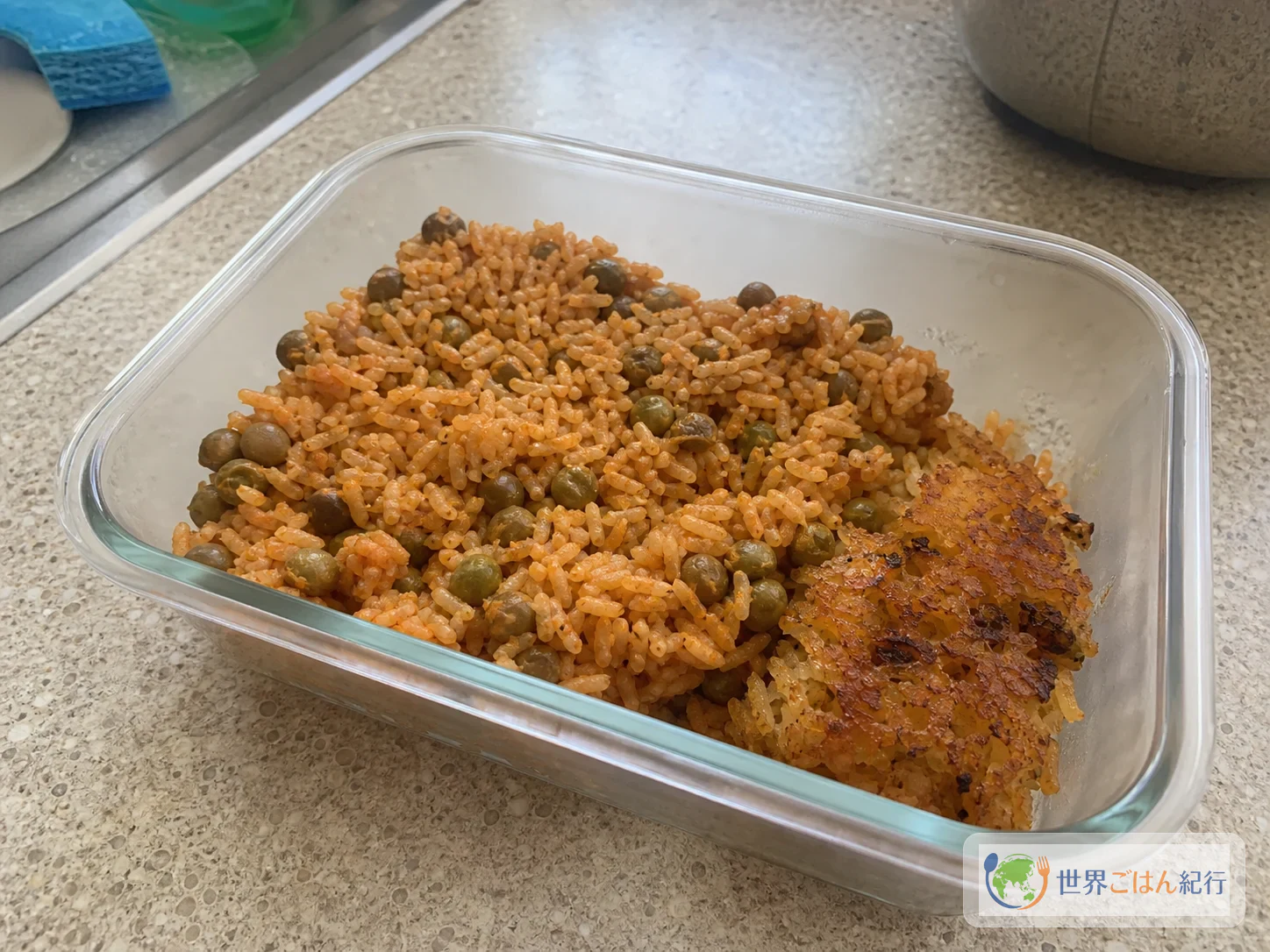
Leftovers shouldn't sit out long. Divide them into shallow containers within 2 hours of the meal and refrigerate for up to 3–4 days. Reheat until hot in the center.
In a microwave, spread one serving in a shallow dish, sprinkle 1–2 tsp water over it, and heat until hot in the center.
If you want to cut salt, reduce the ham, rinse the beans lightly before using, and add salt at the end after tasting.
If you have allergies or dietary restrictions, check the labels of the ham, seasonings, and processed beans, and check the ingredients of substitutes.
Frequently asked questions
What should I search for to find gandules?
Try "pigeon peas," "gandules," or "green pigeon peas." With canned, check the drained weight, the salt, and how much liquid is in the can. Frozen peas release a lot of water as they thaw, so use a little less liquid for the rice.
Can I use store-bought sofrito?
You can, but the ratio of onion, pepper, garlic, and herbs varies by product, and so does the salt. Check the label before swapping it in for the recipe's 3.5 oz (100 g), and adjust the salt at the end. Knife-chopped sofrito keeps little bits of aromatics in the rice, and it's every bit as good for this dish.