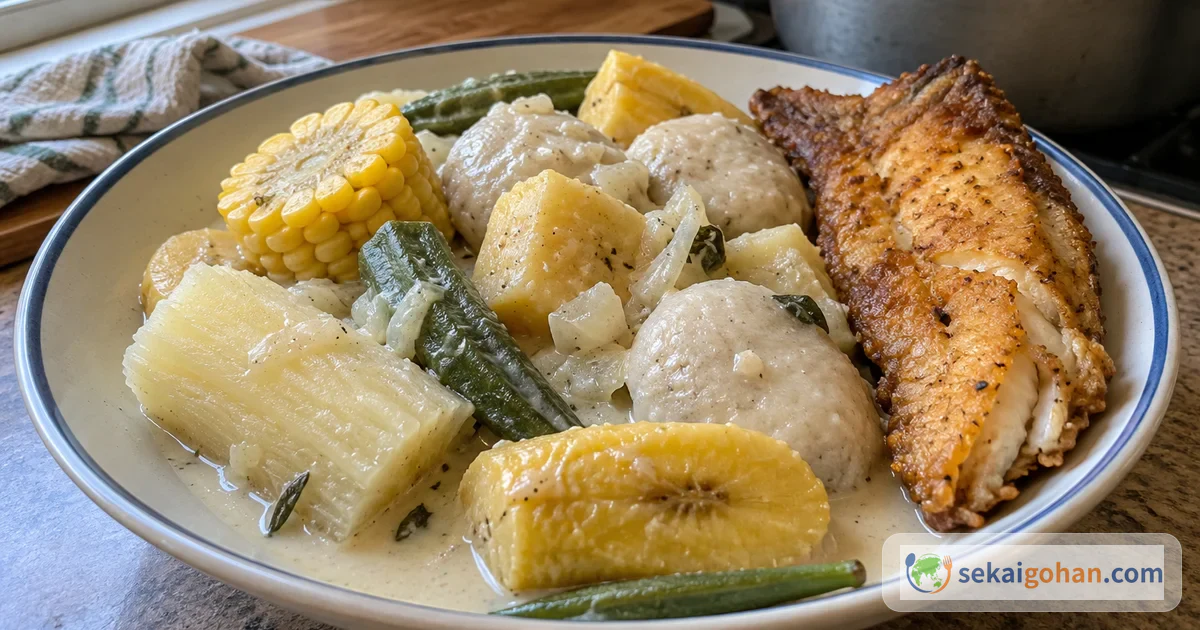
Take a pork shoulder out of the refrigerator after a night in its marinade, and the smell of garlic, oregano, vinegar and citrus fills the kitchen. The big piece of meat goes into a low oven, and for the first few hours nothing much happens. By evening the air in the house has changed: the fat has melted, the skin has dried, and amber juices have pooled in the bottom of the pan. Pernil (pernil asado) is Puerto Rico's celebration roast, a pork shoulder full of garlic and oregano, roasted slowly until it pulls apart under crackling skin. Even the waiting is part of the feast.

Pernil, Puerto Rico's Nochebuena Roast
Pernil is Caribbean roast pork. Shoulder or leg is marinated in garlic, oregano, salt, pepper, and vinegar or citrus, then roasted low for a long time. It is eaten in Puerto Rico, the Dominican Republic, Cuba, Venezuela, Colombia and elsewhere. In Puerto Rico, pernil means a generous roast of skin-on pork shoulder served on Christmas Eve (Nochebuena) and at family gatherings. It's a practical way to bring the whole roast pig, lechón, into a home kitchen.
In Spanish, "pernil" means a large piece of pork leg or shoulder. As a Puerto Rican home dish, it is skin-on shoulder roasted low with garlic. The finished skin is called "cuero" or "cuerito", and people look forward to it as much as the meat.
Pernil on the Puerto Rican table

At a Puerto Rican celebration, pernil almost always shares the table with arroz con gandules (rice with pigeon peas), pasteles, tostones, avocado, a mayonnaise-style potato salad and coquito.
The island's mountains have their own monument to pork. Guavate, near Cayey, is known as the "Pork Highway" for the lechoneras, roast-pork restaurants, lined up along PR-184. On weekends families drive up the mountain road and settle in for a long meal of roast pork, mofongo, yuca, rice dishes and cold drinks. Pernil is a home oven dish, but this island habit of roasting pork slowly and sharing it is the culture it comes from.
How pernil differs from other roast pork
What sets pernil apart is where the seasoning goes. You cut slits into skin-on picnic shoulder and push a paste of garlic, salt, oregano and vinegar right into the meat. Then you make a pocket under the skin, leaving it attached, for more of the seasoning. The roast is long, so aroma that only sits on the surface won't last to the end. When you cut into the shoulder, garlic you can taste all the way to the center is what makes it pernil.
If mofongo tastes of the island's plantains and garlic, pernil tastes of pork and family occasions. Haitian griot is simmered in citrus and then fried, so its outside is crisper, and Jamaican jerk chicken is all spice and smoke. Pernil sits between them, built on garlic, oregano and the tenderness of low roasting. Like Cuban ropa vieja, it is a big piece of meat that keeps going the next day in sandwiches or arepas.
Ingredients (serves 6): Getting Close Without Skin-On Pork

For the closest result, skin-on, bone-in pork shoulder is ideal. But skin-on shoulder can be hard to find outside a butcher or wholesale source. For a first attempt, boneless pork shoulder without skin works. You'll get the pull-apart tender meat of pernil, but the crisp skin, the cuerito, will be a different thing.
Helpers when you can't get skin-on pork
| Situation | What to use | Verdict |
|---|---|---|
| Only skinless shoulder is available | Pork shoulder 4 lb (1.8 kg) | The meat is delicious. Give up on cuerito and brown the surface harder |
| You want the skin texture too | Cook 10.5 oz (300 g) skin-on pork belly separately | Not fully authentic, but adds a crisp part to the table |
| No bone-in meat | Boneless block | Shorten the roasting time and judge by internal temperature |
| Small oven | Two 2.25 lb (1 kg) blocks | Divide the seasoning in the same ratio. Roasting time is shorter |
This recipe uses pork. If you use store-bought adobo seasoning, sazón or Worcestershire-style sauces, check the label: some products contain wheat, soy, dairy and other allergens. Cook pork thoroughly to the center. For pull-apart tenderness, cook the meat to an internal temperature of around 194°F (90°C).
If you can get sour orange (naranja agria), use it. It is hard to find in many stores, so the substitute is ¼ cup (80 ml) orange juice mixed with 2 tbsp lime juice and 1 tbsp vinegar. That gets the balance of sweetness and acidity close. Lemon alone makes the aroma sharp, and orange alone makes it too sweet.
Adobo or sazón makes it easier to get the flavor of a Puerto Rican home kitchen. Many products are very salty, so for a first try, use a small amount as an aroma helper and weigh the salt separately. When shopping, choose the meat first, then the dried oregano, and add the adobo or sazón last.
Pernil means roasting a big piece of meat, so check the size of the meat against your roasting pan before you buy.
Choosing Pork for Pernil, and Substitutes
The seasoning is the easy part. The hard part is that skin-on, bone-in pork shoulder can be tricky to find, so ask a butcher if you can. Crisp skin also takes some temperature control.
With a big piece of meat, thinking only in "teaspoons" makes the seasoning inconsistent. For a first attempt, aim for salt equal to 1.2–1.5% of the meat's weight. If you use adobo seasoning, which contains salt, reduce the total. Too little salt gives a thin roast pork that tastes only on the surface.
Vinegar and citrus won't make the meat dramatically tender. Long cooking does that by loosening the shoulder's connective tissue. The acid's main job is to cut the heaviness of pork fat and brighten the garlic and oregano. Too much gives a boiled-pork smell, so keep the balance.
Skinless shoulder
If you can't buy skin-on meat, use up to 3.25 lb (1.2–1.5 kg) of pork shoulder. Reduce the marinade to about 3/4 to match the weight, and shorten the roasting time. You lose the cuerito, but with garlic and oregano stuffed into the slits and a low roast, you still get plenty of pernil's aroma and tenderness. Finish the surface at high heat for deeper browning.
Skin-on pork belly for cuerito
If you want cuerito but can't find skin-on shoulder, cook some skin-on pork belly separately. Salt 10.5 oz (300 g) skin-on pork belly, roast at 325°F (160°C) for 1 hour, then puff the skin at 450°F (230°C). It isn't the same as skin from the shoulder itself, but a crisp piece of skin on the table brings back the fun of pernil.
Method: Marinate Overnight, Roast Low Until Tender
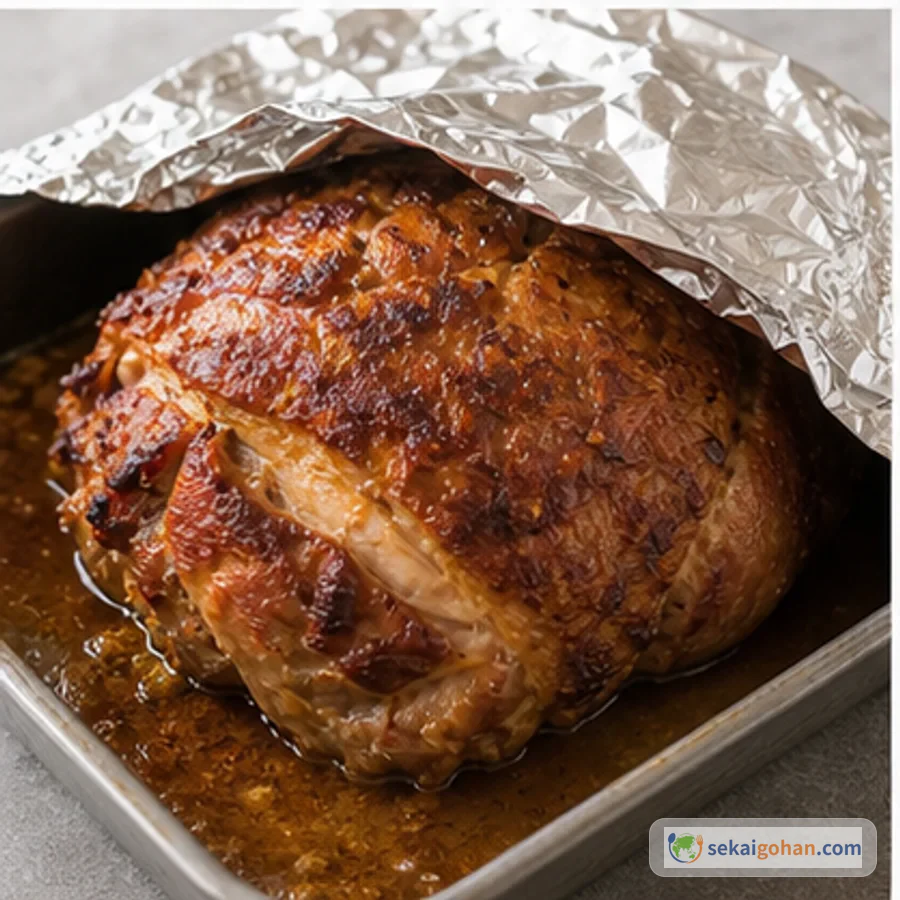
Start the day before. If you try to do everything on the day, the flavor won't reach the center and the roasting time is hard to predict. Marinate for at least 8 hours, preferably overnight. On roasting day, plan for dinner rather than lunch.
Small ovens have the top heating element close to the meat, so skin burns easily. Prioritize the low roasting step that makes the meat tender, and check the high-heat finish every 10 minutes. If the skin burns first, remove the skin and crisp it separately under a broiler or in a toaster oven for a cleaner result.
Pernil Troubleshooting: Crisp Skin and Tender Meat
For crisp skin, the surface has to be dry. After applying the marinade, blot only the skin lightly with paper towel, sprinkle on a thin layer of salt, and let it dry in the refrigerator. The flavor goes under the skin and the top stays dry.
When the skin won't crisp, moisture is almost always the reason. Any one of these is enough to ruin it: thick marinade left on the skin, no time drying in the refrigerator, foil touching the skin and steaming it during the low roast, or too little high heat at the end.
For skin-on, bone-in shoulder, expect about 35–40 minutes per pound, but shape, bone and your oven all change the time. A lower internal temperature is enough for safety. For pernil's pull-apart texture, though, aim for around 194–199°F (90–93°C), when the shoulder's connective tissue has loosened. Without a thermometer, push in a fork and twist. The fibers should pull apart without resistance.
Serving, Storing and Varying Pernil
Sides for pernil

Garlic and fat hit hard here, so serve rice, beans, plantains and something acidic alongside to keep you coming back for more. You don't need the whole celebration spread at home. Fresh white rice, a can of black beans simmered lightly, a lettuce and tomato salad and mofongo will get you quite close to a Caribbean table. Mofongo layers garlic with the aroma of chicharrón, so on days when pernil is the star, make a smaller batch for balance.

Sandwiches and leftovers

Before you pull the meat apart for tacos or sandwiches, return a little of the juices to it. Pulled cold, it dries out easily and the aroma fades. In bread, add thinly sliced onion, pickles, mustard and lime so the fat doesn't feel heavy.
Storing pernil

Pernil is a roast made with leftovers in mind. Fresh from the oven, the skin is the star. By the next day the meat's aroma has settled, and it works well in sandwiches, arepas, fried rice and soup. Store it carelessly, though, and it dries out fast.
Once the meat has cooled a little, pull it into large pieces, add 2–3 tbsp of pan juices to each container and store. In the refrigerator, use it within 3 days. To freeze, divide it into single portions with the juices and use within 2–3 weeks. A microwave alone will dry it out, so reheat it in a skillet with 1–2 tbsp water or juices, covered, over low heat, letting it steam back to moist.
Keep the skin apart from the meat. In the refrigerator it absorbs moisture and goes soft, so eat it the same day. If some is left, re-crisp it briefly the next day in a toaster oven or broiler, and stay close, because it burns easily.

Buying a big piece of meat can feel daunting. Plan the leftovers, and 4 lb (1.8 kg) in the basket looks much less intimidating: a pernil sandwich for the next day's lunch, and pernil over rice with black beans for dinner. One roast covers two days of cooking.
Pressure-cooker pernil and other variations

On days when you can't give the oven 5 hours, tenderize the meat in a pressure cooker first and brown it in the oven afterward. Put the marinated meat and ½ cup (100 ml) water in the pressure cooker and cook under pressure for 45 minutes. After a natural release, take the meat out and roast at 425°F (220°C) for 20 minutes. The aroma falls a little short of a long oven roast, but it's an excellent weeknight fix.
For a Venezuelan take, stuff leftover meat into arepas with avocado, white cheese and black beans. For a Cuban direction, make a stronger mojo of lime, orange and garlic and pile it all into bread, Cuban-sandwich style.
Frequently Asked Questions
Can I use pork belly instead of pork shoulder?
You can, but the result gets too fatty. Pernil depends on the shoulder's mix of lean meat, fat and connective tissue, which turns tender over a long roast. Belly alone makes cuerito easy, but the whole meal gets heavy. Use belly as a source of skin and keep shoulder as the main event.
Does the marinade need to be overnight?
Overnight is best. In a pinch, 4 hours is the minimum, but the flavor is less likely to reach the center of thick meat. If you're short on time, cut more slits and push the garlic paste in firmly. Rub only the surface and the center will taste like ordinary roast pork.
Can children or people who don't like spicy food eat it?
Yes, it's an easy dish to eat. Pernil's aroma comes from garlic, oregano and citrus, and chili heat plays no real part. Anyone who wants heat can add a little hot sauce or pique at the table. For children, halve the cumin and serve extra salad and white rice.