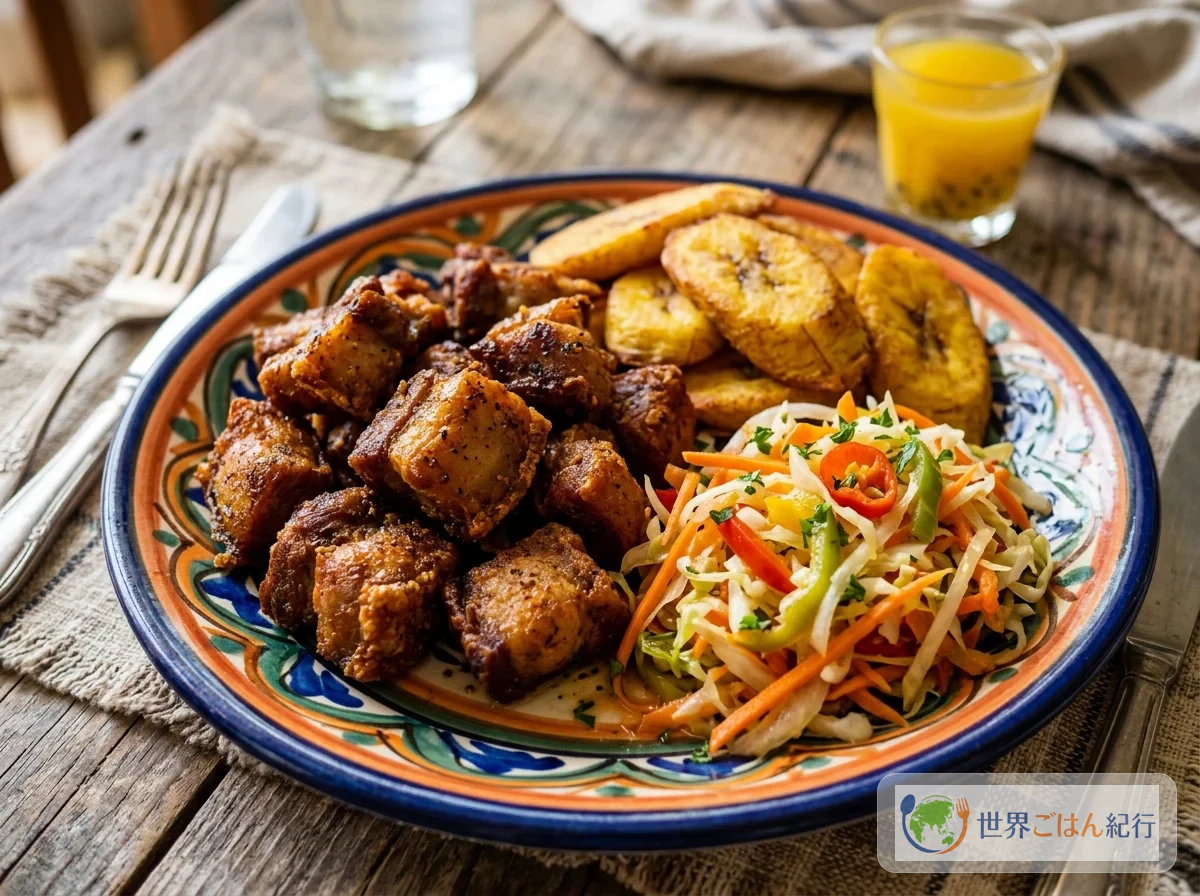
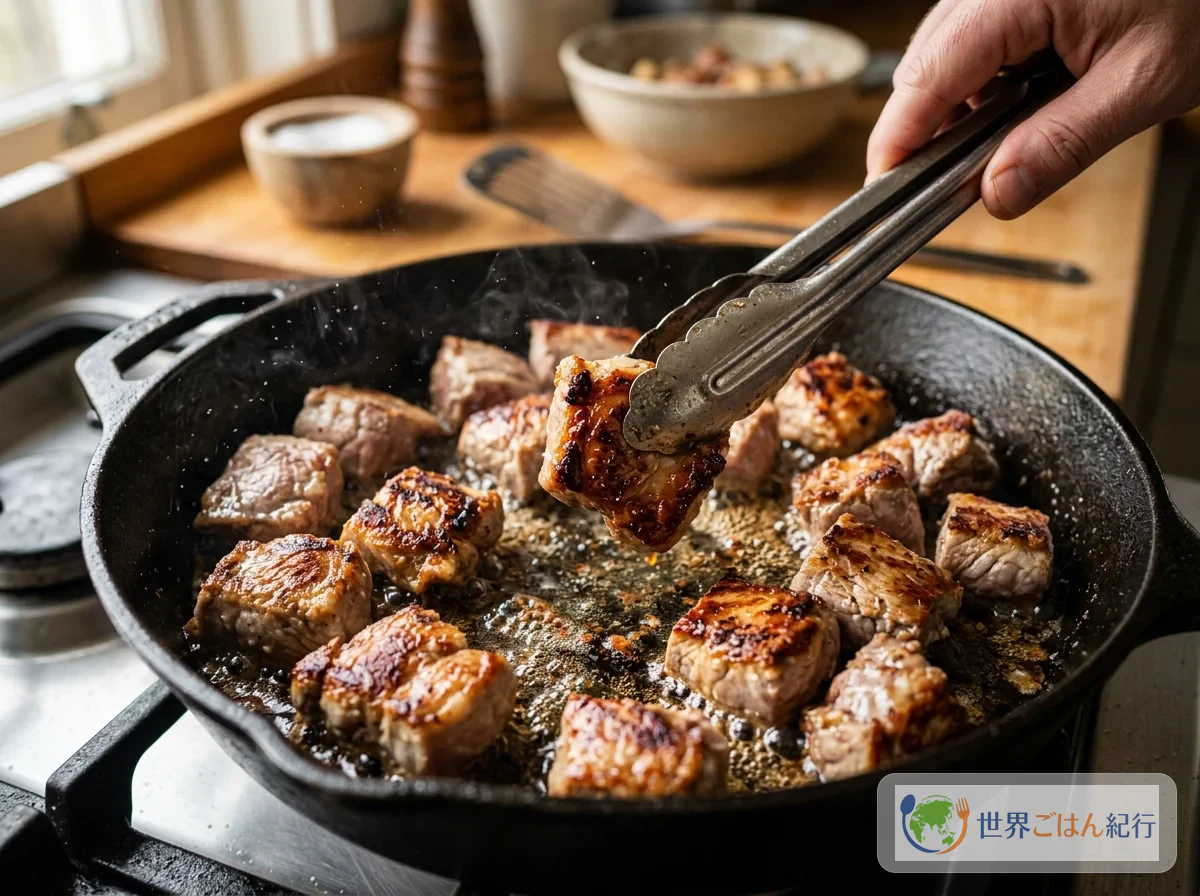
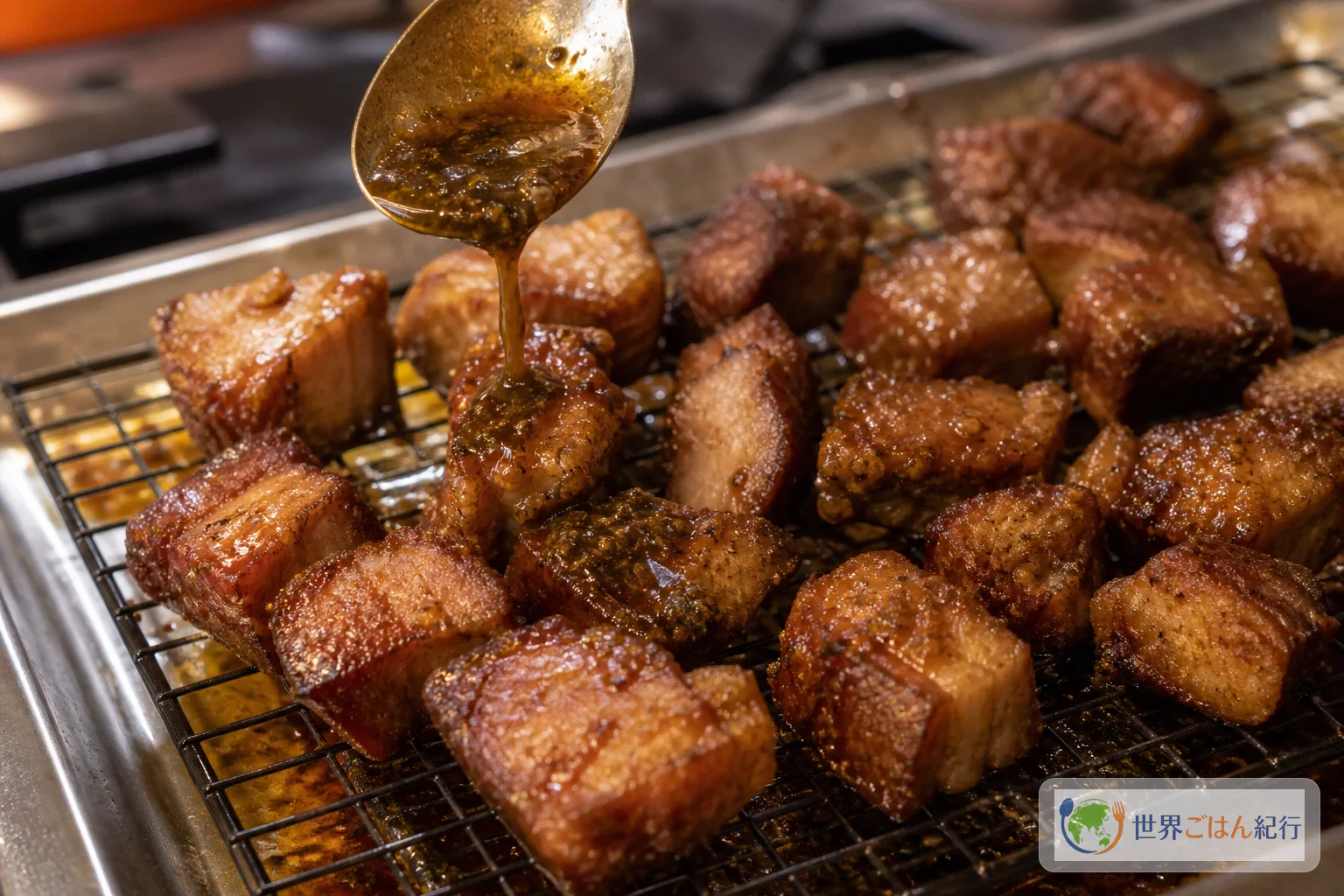
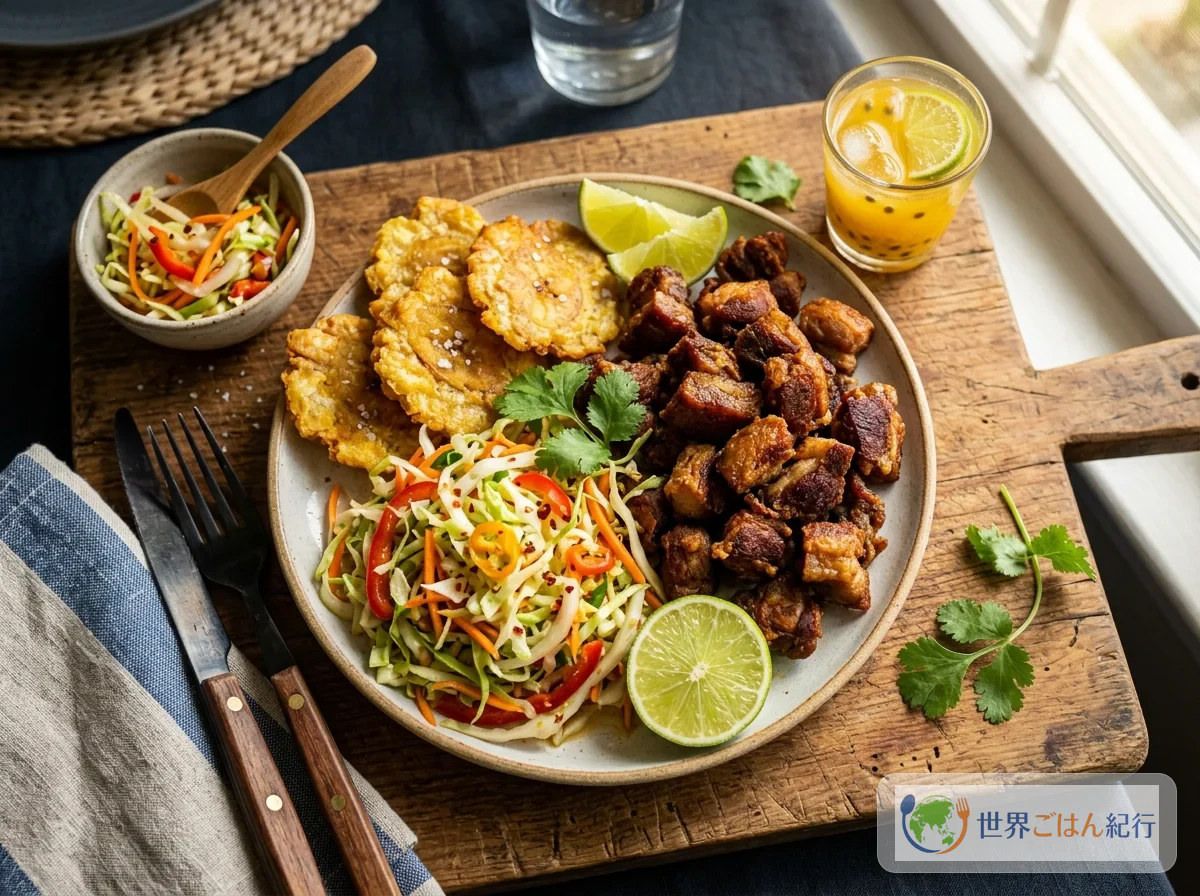
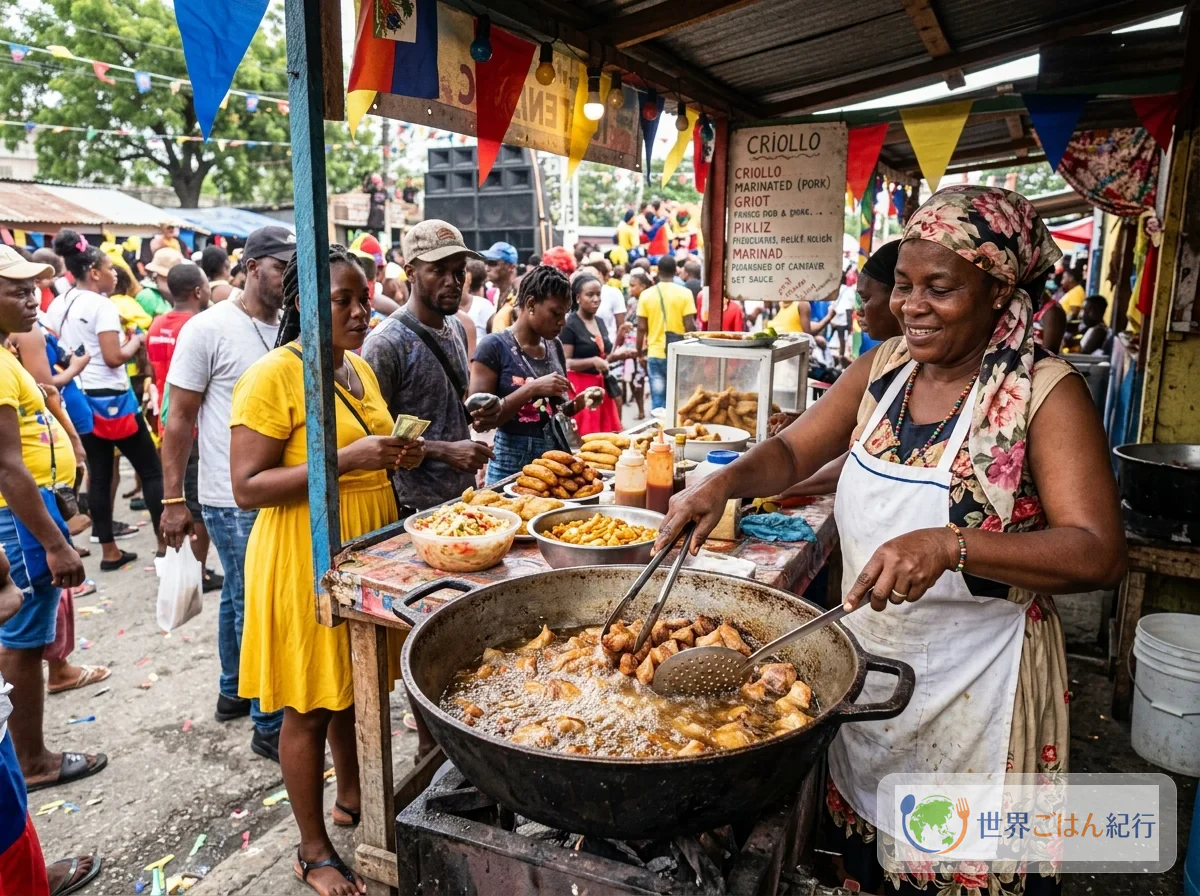
At the first bite, the outside cracks with a toasty crunch, and then spiced juices flood your mouth. The surface is browned and crisp, the inside moist and juicy, and both textures come in the same piece of meat. Griot (also griyo) is Haiti's national dish: pork shoulder generously marinated in citrus juice and the spice paste called epis, simmered, and then pan-fried. The citrus and epis give it a deep, bright spice flavor, and the second cooking gives it the crust.
About Griot
The name and its cousins
In Haitian Creole, griot means "fried pork," from the French "grillot," a piece of grilled meat. Dominican chicharrón de cerdo and Cuban masitas de puerco are close relatives. Griot stands apart for its citrus-and-epis marinade and for its two-stage method of simmering and then frying. Among Caribbean dishes it ranks with Trinidad's doubles and Jamaican jerk chicken.
The three roots of Haitian cooking
Haiti occupies the western third of the island of Hispaniola. Its Creole cuisine draws on three cultures. The French colonial era brought sauce culture and the use of herbs. People brought from West Africa contributed okra, plantain, and one-pot cooking. The Indigenous Taíno people of the Caribbean added cassava, chile, and smoking techniques.
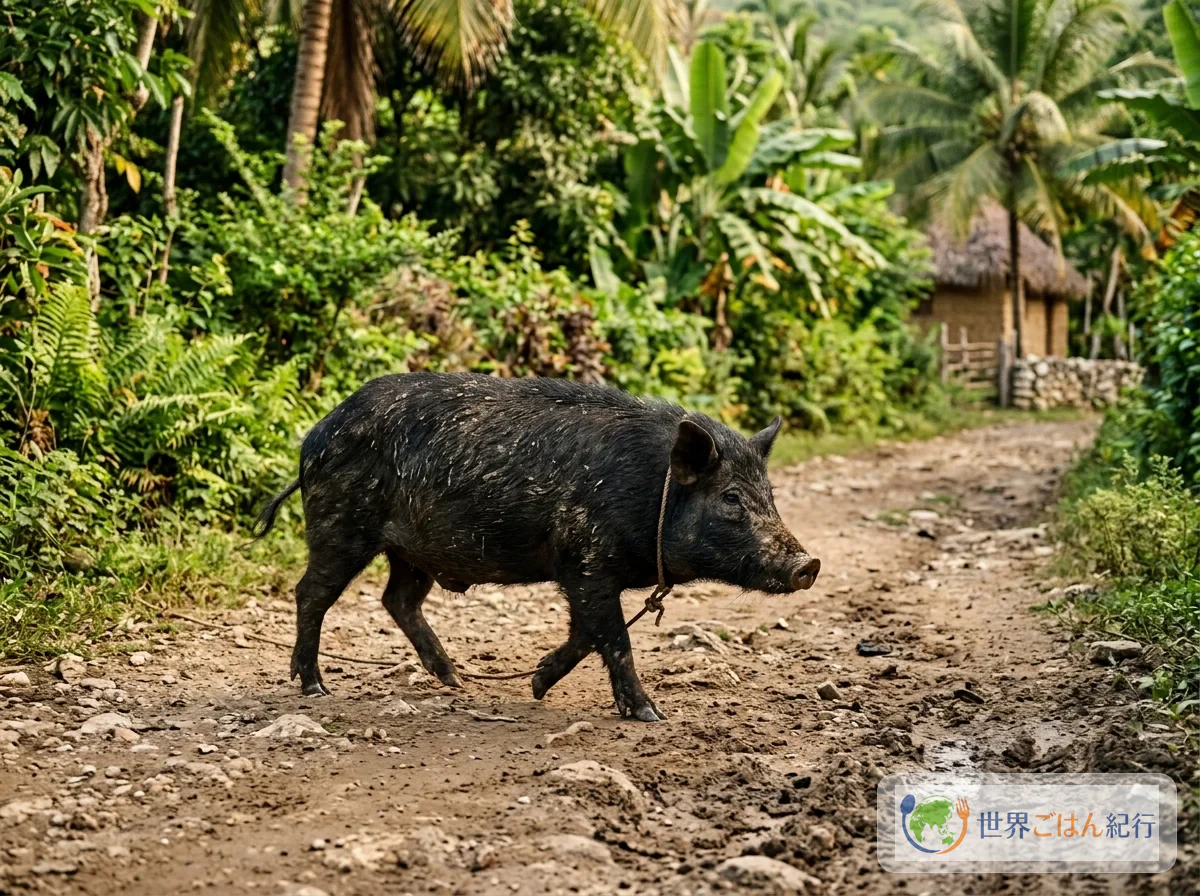
Griot brings all three together. The French confit, a technique of cooking in fat, combines with the citrus marinade from West Africa and the spice paste from the Taíno, and in griot you can't tell where one ends and the next begins.
Griot and the Haitian Revolution
Haiti won its independence in 1804 and became the world's first Black republic. The Haitian Revolution is the only successful slave revolution in history; the enslaved defeated the French colonial power. Plantation workers had once made dishes like griot quietly for themselves, deodorizing pork with citrus and frying it. Through the revolution these dishes became national dishes and symbols of freedom.
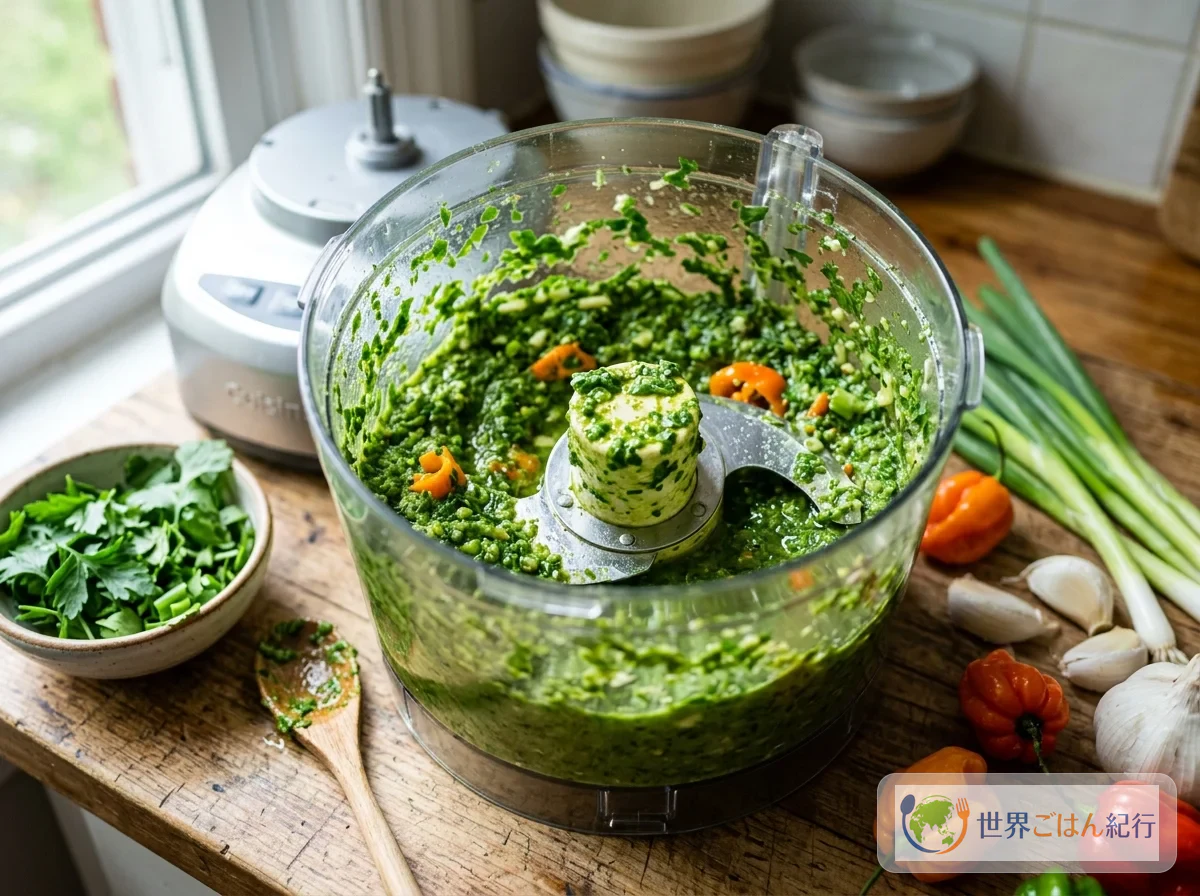
Epis, the smell of home
Every Haitian household has its own epis. The recipe is passed down by word of mouth, and each family is sure its version is the best. A Haitian refrigerator without a jar of it is hard to imagine, because epis is both a seasoning and the smell of home.
Since the 2010 earthquake, the Haitian diaspora has spread Haitian food around the world. Haitian restaurants have rapidly increased in New York, Miami, Montreal, and Paris, and griot in particular has gone viral on social media as an "ambassador of Haitian taste," with Haitian food influencers continuing to share their mothers' recipes.
Choosing and Handling Griot Ingredients
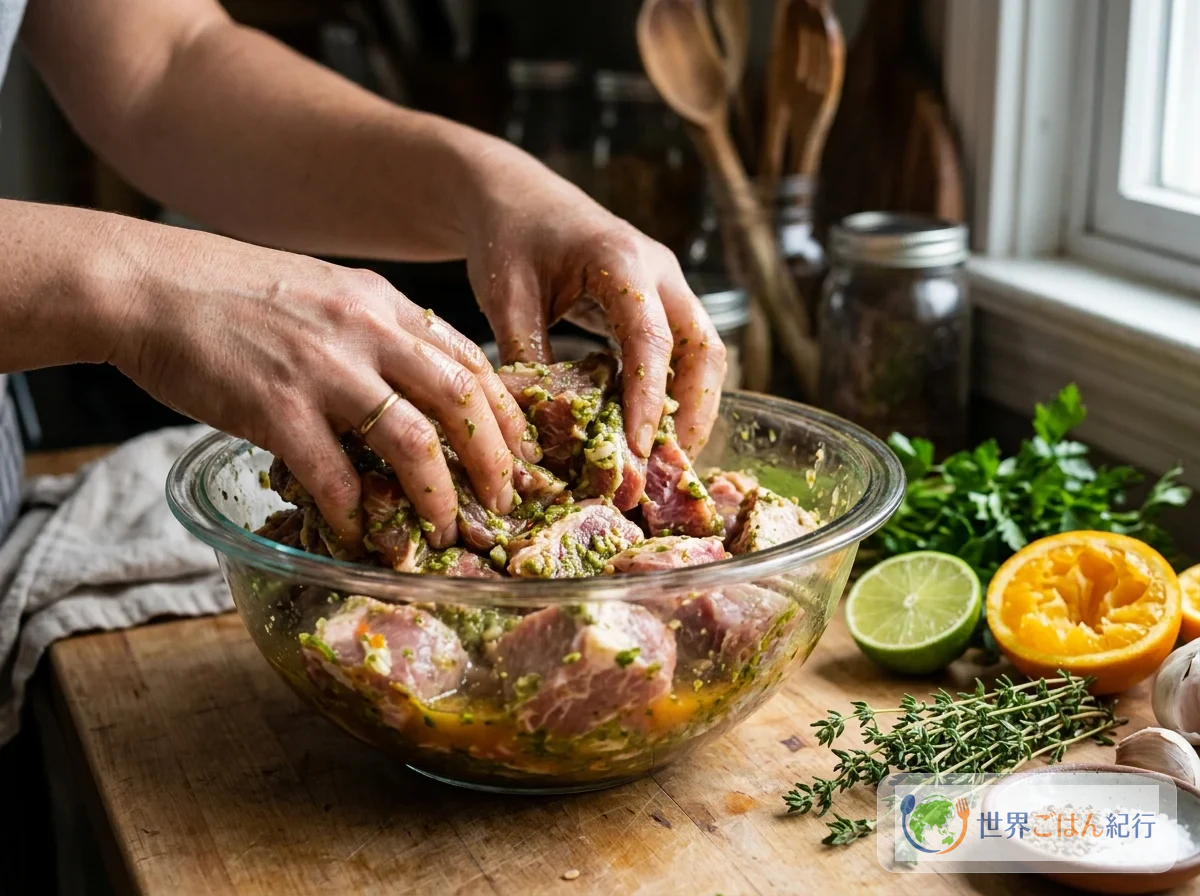
The depth of flavor in griot depends directly on how much citrus juice you use. Haitian cooks use enough to submerge the pork completely. Treat the amount in the recipe as the minimum, and add more if any meat sticks out of the juice. The acid softens the pork's proteins and takes away any gaminess.
Scotch bonnet is about as hot as habanero (100,000–350,000 SHU). The heat compounds concentrate in the seeds and the white ribs (placenta), so remove them carefully if you want less heat. Wear rubber gloves when you cut it, and keep your hands away from your eyes and other mucous membranes, since contact causes severe pain.
Griot Cooking Tips and Fixes
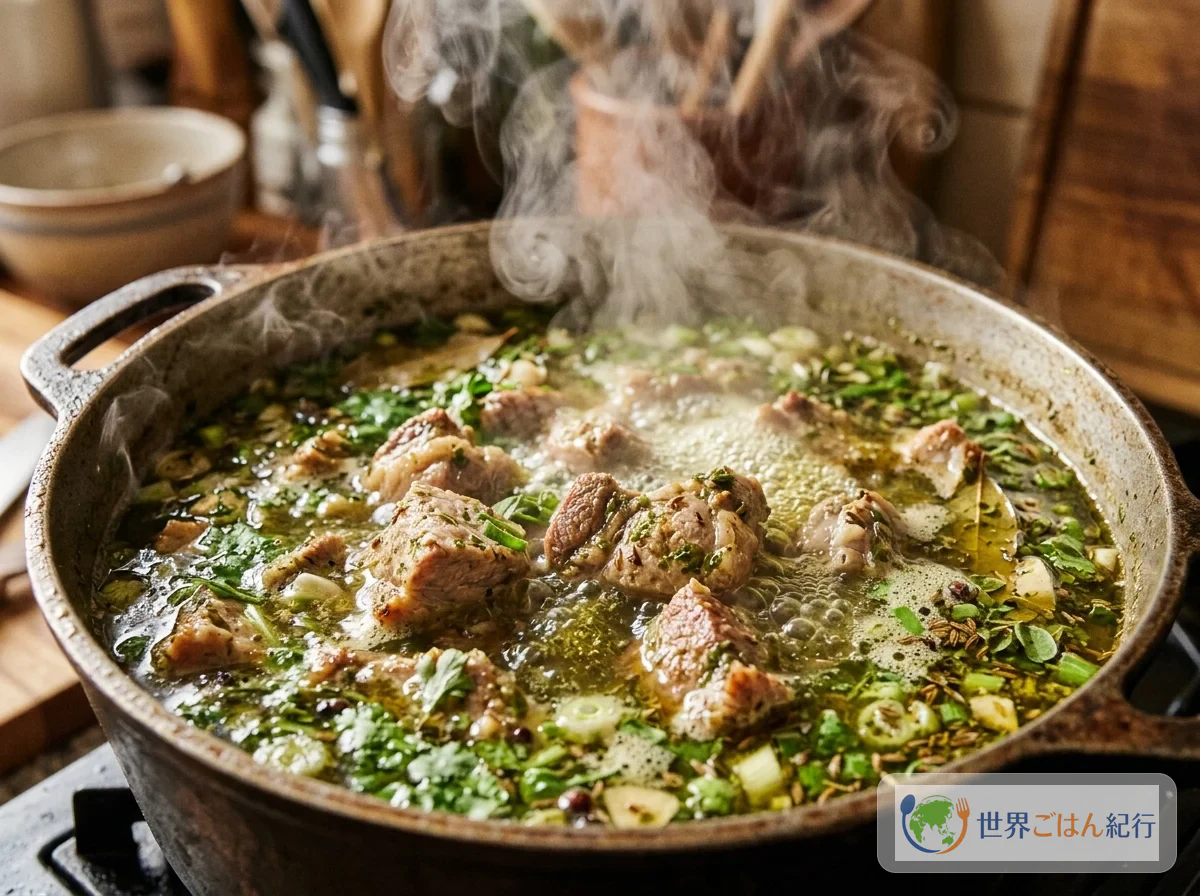
The liquid from step 3 holds all the concentrated flavor of the epis and citrus. You can spoon it over the meat at the end, and using it as the cooking liquid for diri kole (rice and beans) deepens the flavor surprisingly. Freeze any that's left over as a base for your next griot or stew.
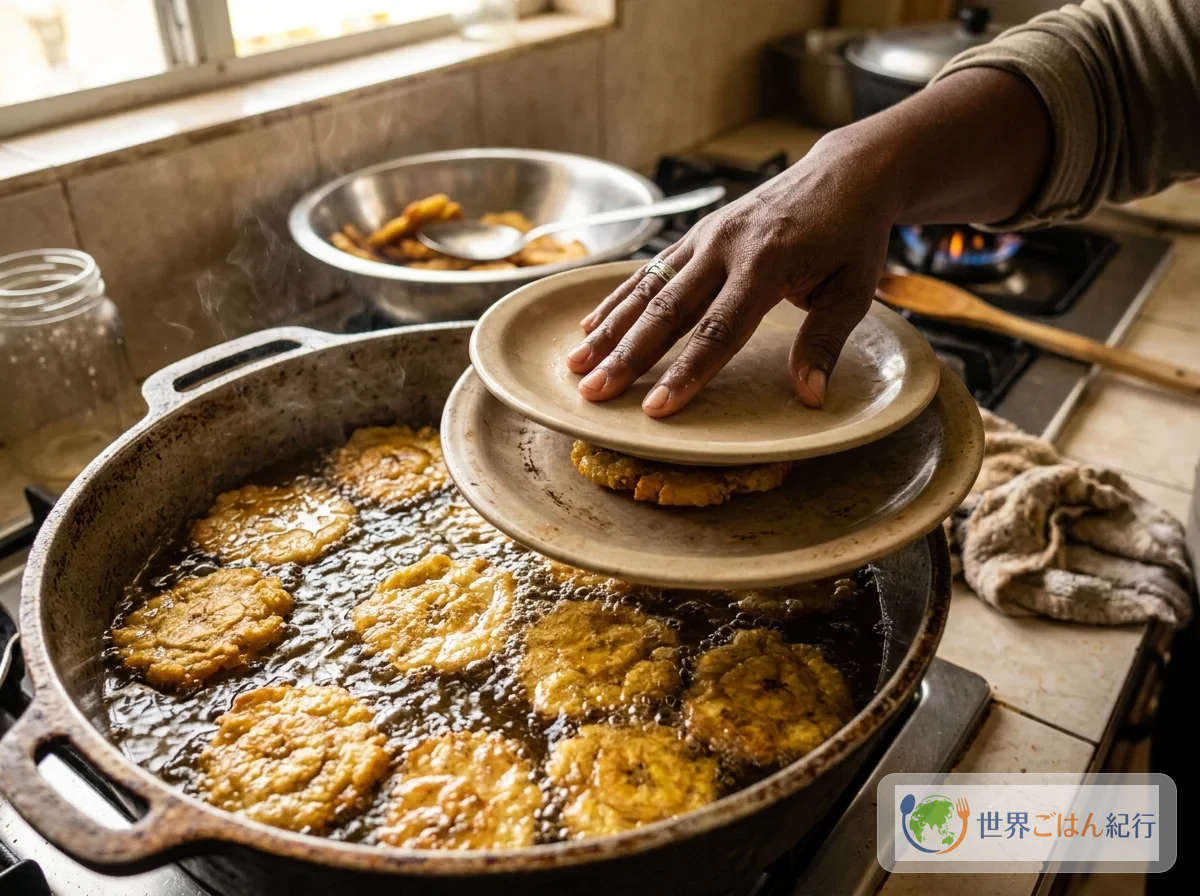
If you skip pressing the plantain after its first fry, you end up with nothing more than thick-cut fried banana. Pressing increases the surface area, so the second fry turns it far crisper. Press boldly, just short of splitting it. A flat-bottomed plate or the bottom of a mug gives even pressure.
Griot Variations
Chicken griot (Griot Poulet)
Use 1.75 lb (800 g) bone-in chicken thighs in place of pork. Keep the same epis and citrus marinade, but shorten the simmer to 30 minutes, then pan-fry 5 minutes skin side down and 3 minutes on the other side. The skin turns crackling, and the result is lighter than pork griot. Haitians call it griot poulet and make it when pork is hard to get.
Goat griot (Tassot Cabrit)
Made with 600 g goat meat by the same method, tassot cabrit is as popular in Haiti as pork griot. The goat simmers longer, for 60 minutes, until fully tender before it goes into the pan. Citrus and epis tame goat's characteristic gaminess and leave a deep, savory flavor. Look for goat meat at halal butchers.
Air fryer version
Instead of pan-frying, cook the simmered pork in the air fryer at 400°F (200°C) for 12–15 minutes, turning the pieces once. You use far less oil, and because the pork carries fat from simmering, the surface still crisps well. Braised meat dishes like Indonesia's rendang and Turkey's köfte also work well in an air fryer.
Lime and honey version
Add 2 tbsp honey to the marinade. The honey's sweetness balances the citrus and caramelizes in the pan into a glossy finish. This version is a favorite in the Cap-Haïtien region of northern Haiti, and children love it.
More Caribbean and Latin American Dishes
- Jerk chicken (Jamaica) — Jamaica's spice-grilled chicken
- Doubles (Trinidad) — The Caribbean's curried fried bread
- Mofongo (Puerto Rico) — Garlic-flavored mashed plantain
- Mole poblano (Mexico) — A complex sauce of chocolate and spices
- Feijoada (Brazil) — A stew of pork and black beans
- Chimichurri — Argentina's herb sauce
- Empanada — Argentina's filled pastry
Frequently Asked Questions
What is the difference between griot and carnitas?
Mexican carnitas is pork slowly confited in lard, with the surface browned over high heat at the end. Griot is marinated in citrus and spices, simmered in liquid, and then pan-fried. Carnitas is all about the richness of the fat, while griot is built on the acidity of citrus and the complex spice of the epis.
Can I use epis in other dishes?
Yes. Epis is the all-purpose seasoning of Haitian cooking and goes with chicken, fish, beef, stir-fried vegetables, soups, and almost anything else. Make a big batch and freeze it, and a spoonful gives everyday cooking a Haitian flavor. Try it on fried chicken for a completely different taste.
Can I use pork belly instead of pork shoulder?
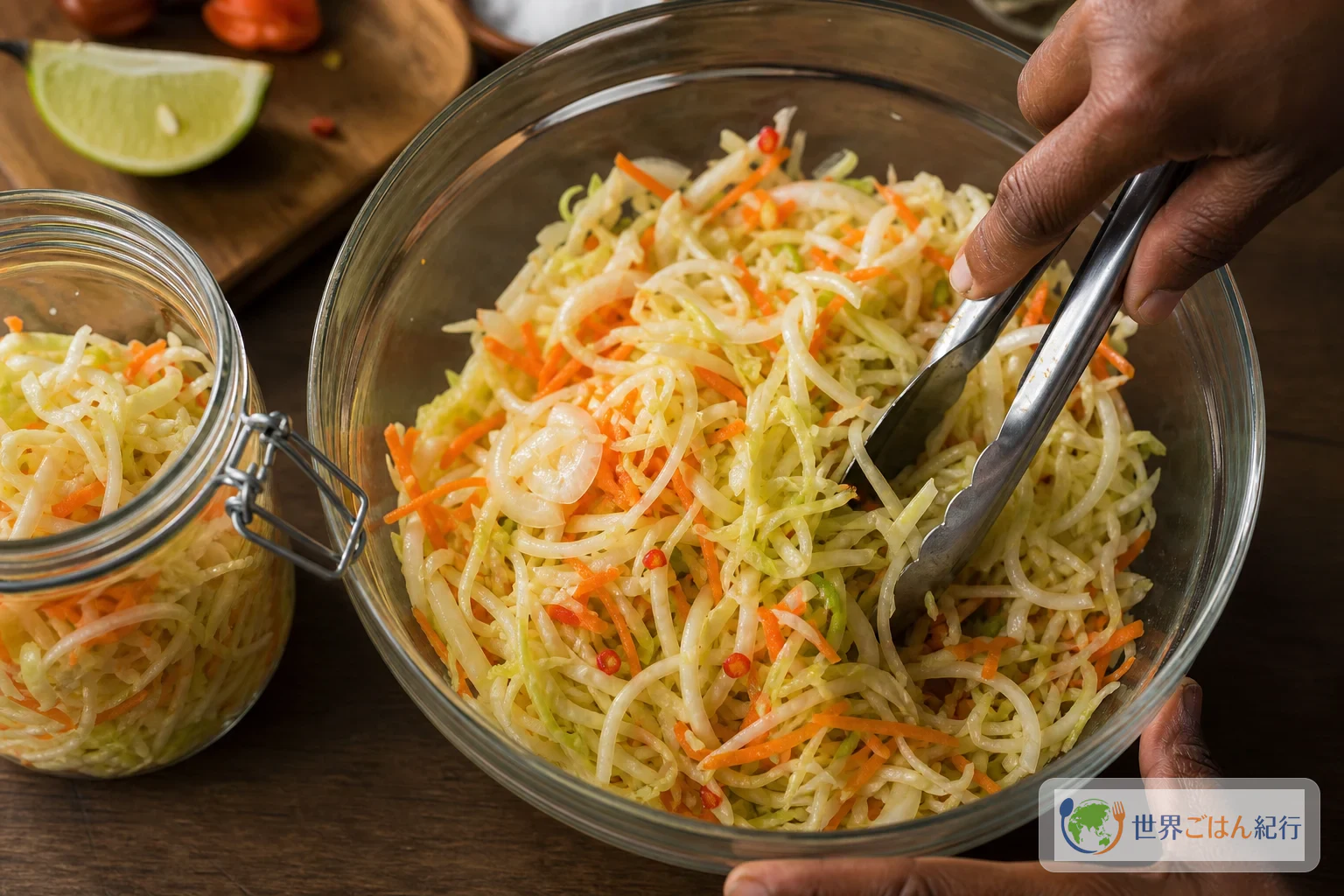
Yes. Belly has more fat, so it crisps even more in the pan, and Haitian street stalls use it often. It is higher in calories, though, so serve more pikliz alongside to balance it.
Griot Nutrition (per serving, of 4)
| Nutrient | Amount |
|---|---|
| Energy | 520 kcal |
| Protein | 1.25 oz (38 g) |
| Fat | 1 oz (28 g) |
| Carbohydrate | 1.25 oz (32 g) |
| Fiber | 4 g |
| Sodium | 680 mg |
| Vitamin C | 42 mg |
| Iron | 2.8 mg |