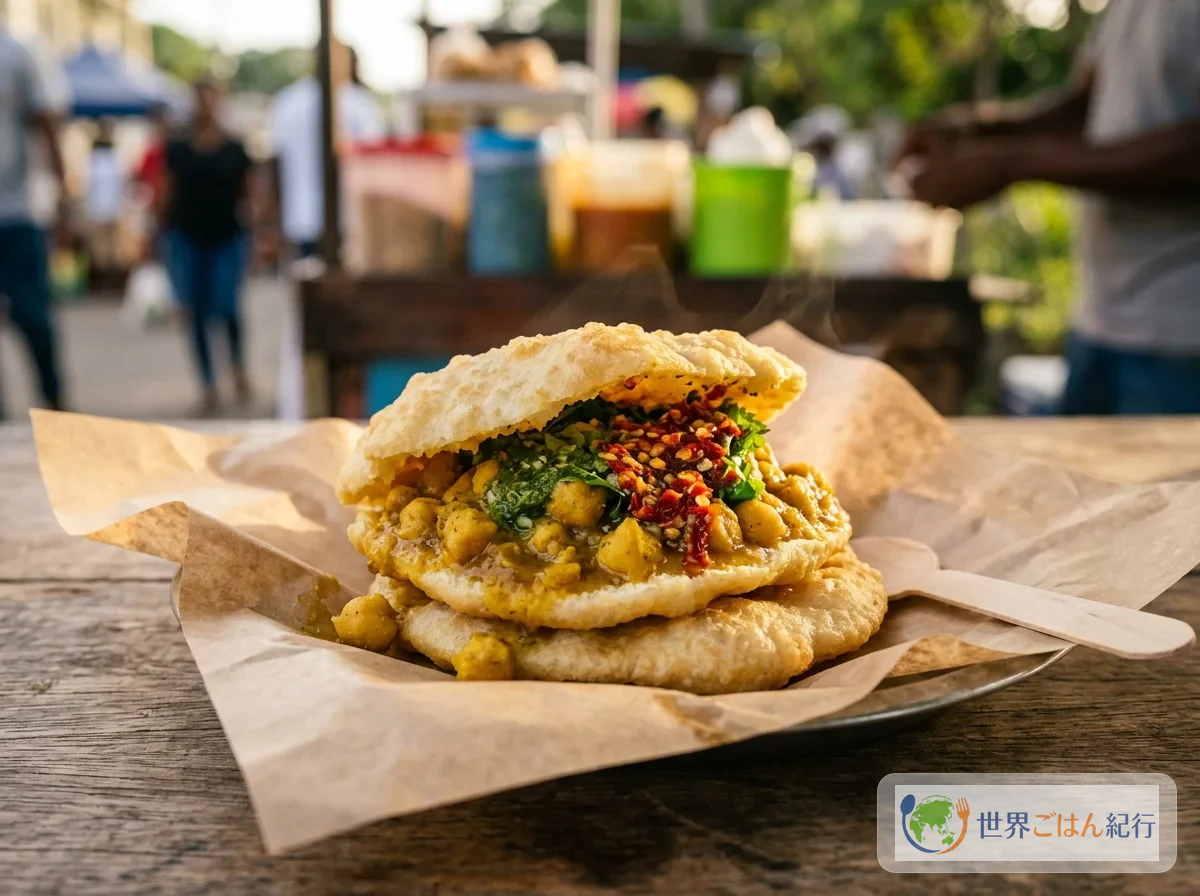
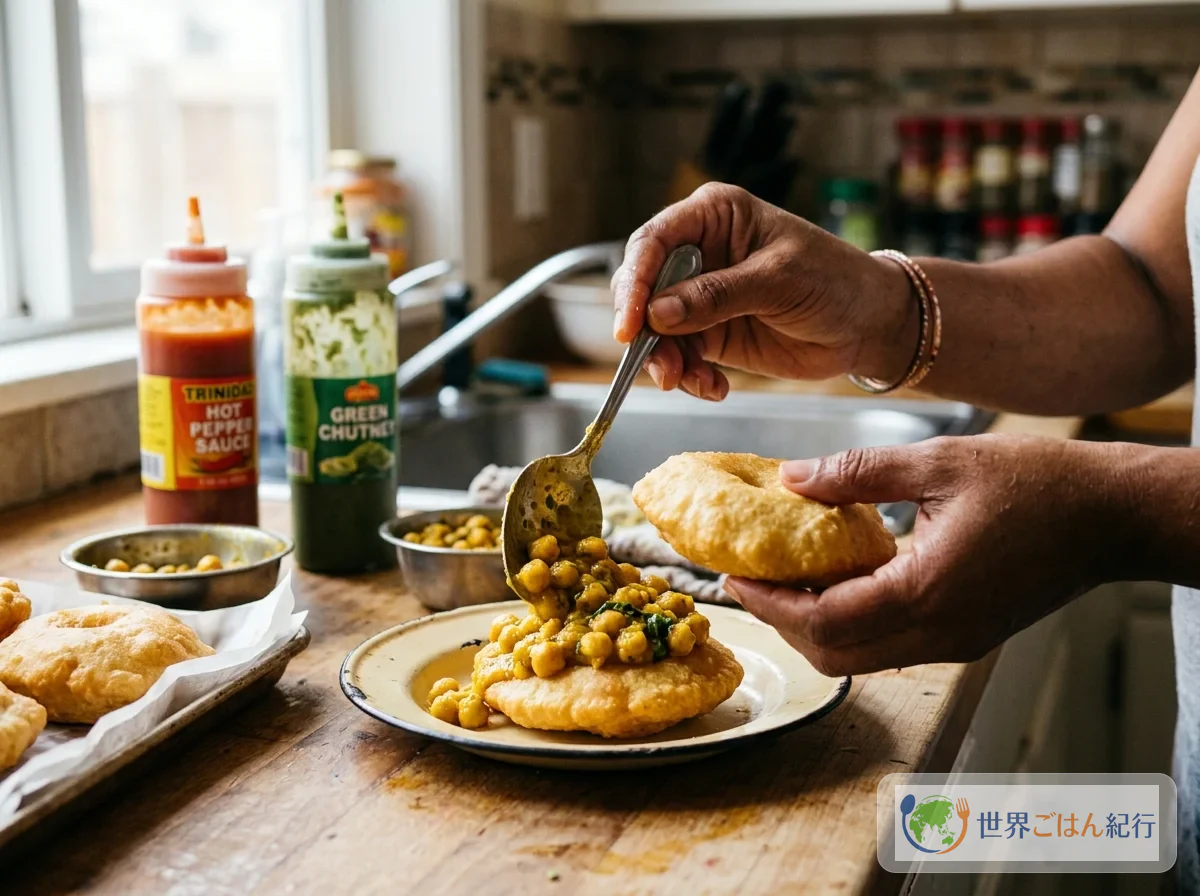
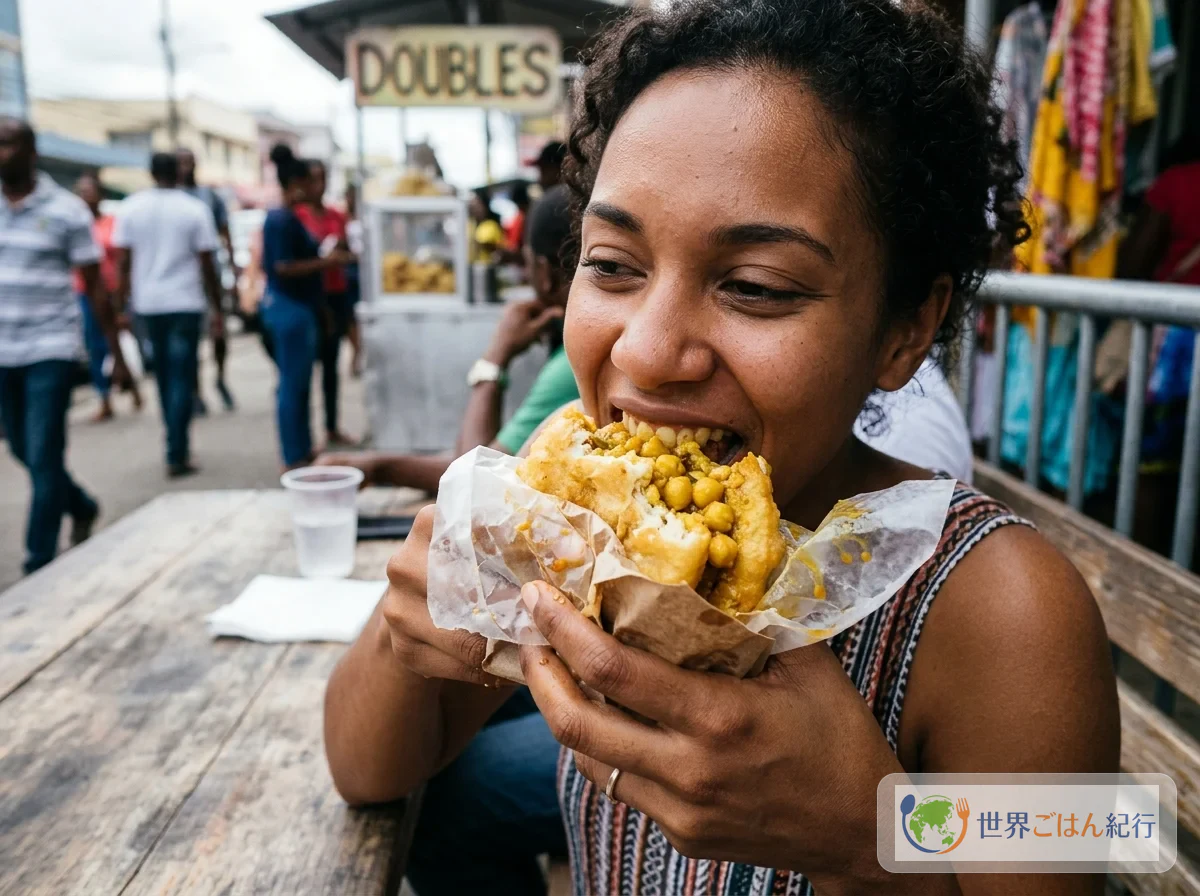
Some mornings in Trinidad, long lines form along the roadside before the day has properly started. At the front of each one is a big iron pot and a pile of yellow dough. The vendor drops dough into hot oil without looking, stacks two puffed breads, piles spiced chickpea curry between them and hands it over on a sheet of paper. This is doubles, the national street food of Trinidad and Tobago: soft fried bread called bara wrapped around a spicy, fragrant chickpea curry called channa. It's cheap, messy and very good.
About Trinidad Doubles
The name is simple. It uses two pieces of bread, so it's "doubles." (One piece is a "single," but almost no one orders it.) South American and Caribbean street food comes in many forms, but doubles show Indian influence more strongly than any other (see our guide to South American cuisine). They're loved the same way as Jamaican jerk chicken and Colombian bandeja paisa.
Indian roots of doubles
Trinidad and Tobago is a small island nation of about 1.5 million people, and the story of doubles starts with its history. In 1845, indentured laborers from India began arriving in British-ruled Trinidad, mainly from Uttar Pradesh and Bihar, to work the sugar plantations after the abolition of slavery. They brought their food with them, including chana puri, the chickpea curry and fried bread that's a breakfast standard in northern India.
In Trinidad's climate, with local ingredients and contact with other cultures, chana puri changed into something new. The bread became thinner and softer than Indian puri, and the channa picked up the scotch bonnet pepper typical of the Caribbean.
Emamool Deen and the first doubles
There's a firm record of where doubles began. In the late 1930s in Princes Town, in southern Trinidad, Emamool Deen, from an Indo-Trinidadian family, started selling bara and channa from a tray loaded on his bicycle. He sold them separately until one day a customer asked him to "put the channa between two bara." That was the first doubles.
His son Ashford Deen took over and in the 1940s expanded sales to Port of Spain, the capital. The Deen family still runs doubles stalls in Trinidad and is known for "the original doubles."
Doubles sell for around TT$5–10, but the low price hides a sharp business model. A popular vendor sells 500–1000 in the seven hours between 5 a.m. and noon, at a cost of about 20%. As a low-investment, high-turnover business, doubles stalls are built into the Trinidadian economy, and quite a few vendors have made a fortune from them.
Doubles as a morning ritual
For Trinidadians, morning doubles are a ritual: the same stall every morning, the same vendor, and a way of ordering all its own. "Slight" means go easy on the channa, "with everything" means all the toppings, "plenty pepper" means make it hot, and "double up" means give me two. A regular gets served just by catching the vendor's eye.
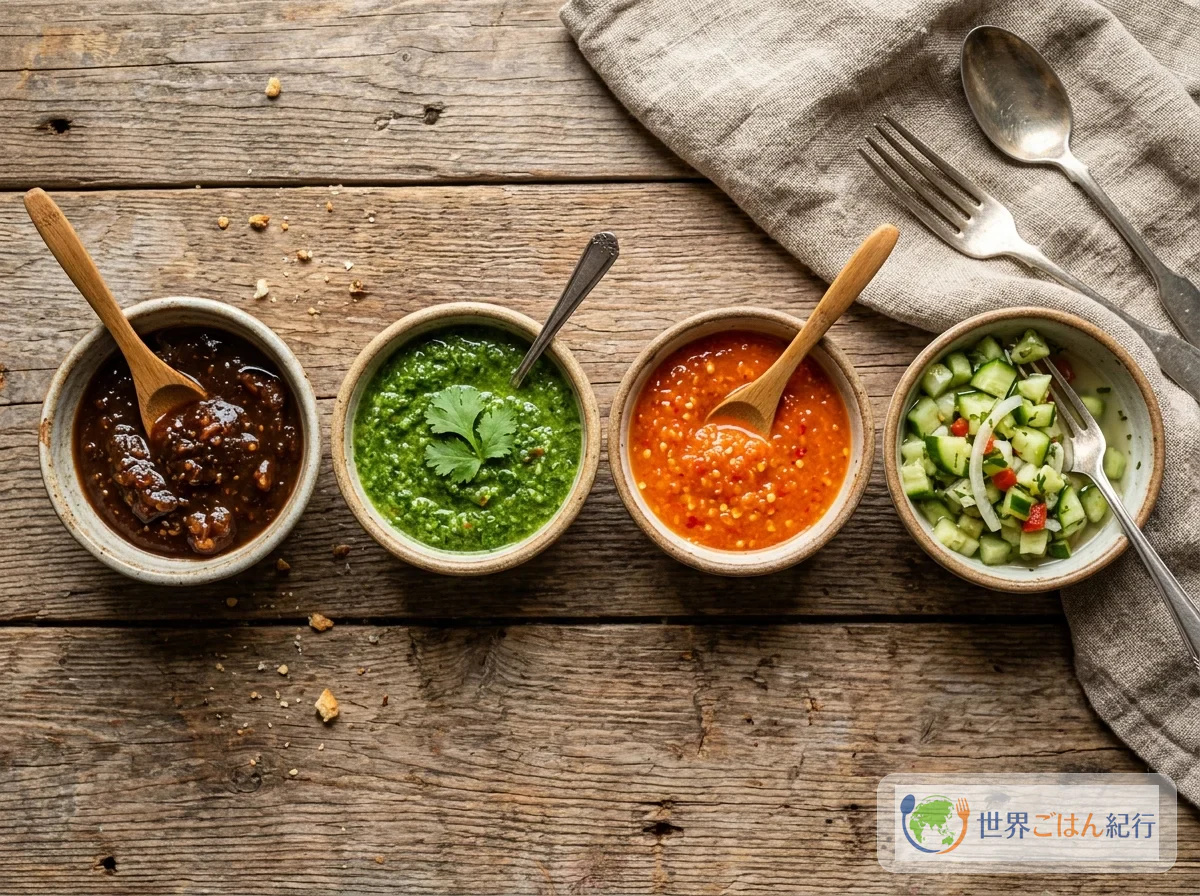
For Trinidadians abroad, doubles are the taste of home. Brooklyn in New York, Scarborough in Toronto, Brixton in London: wherever there's a Caribbean community, there's a doubles stall. In 2015 doubles were named on a list of the world's best street foods.
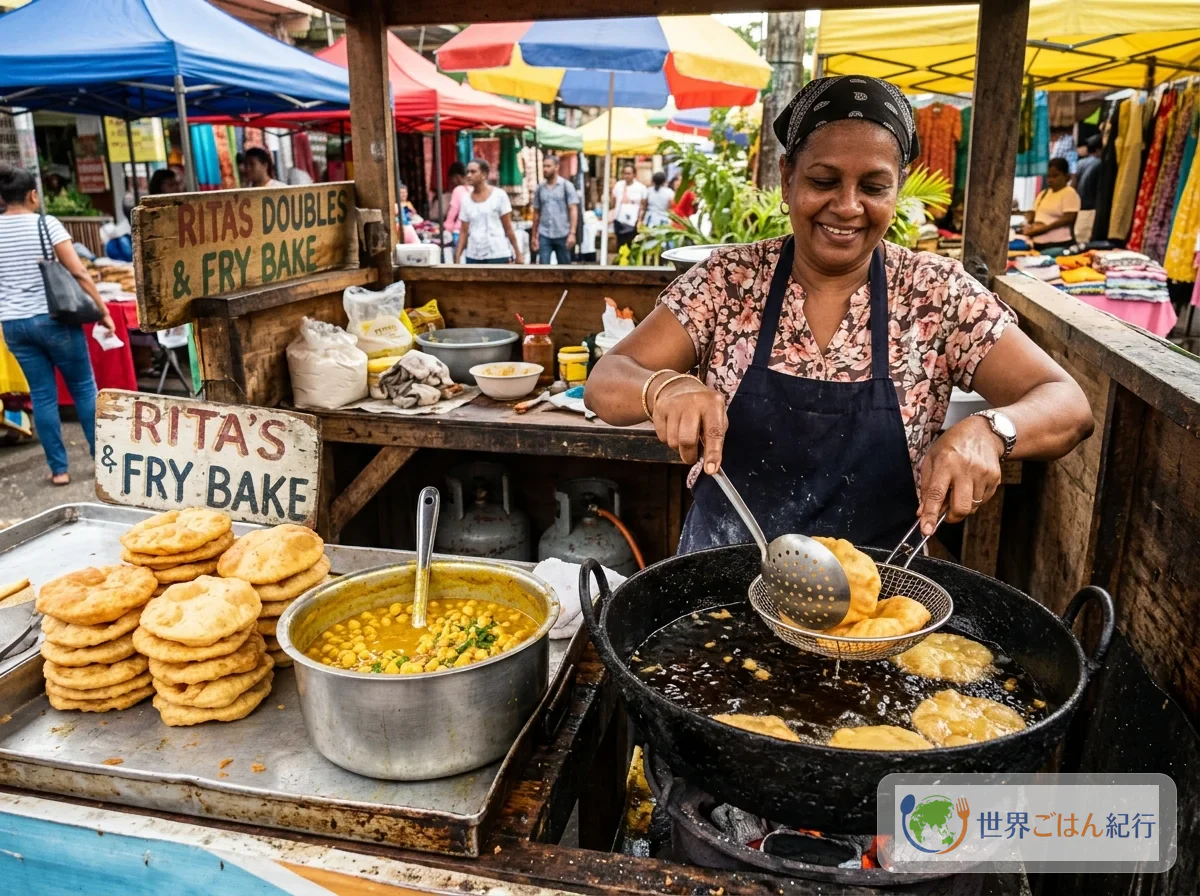
Ingredients (serves 8, makes 8 doubles)
Doubles are made of two parts: bara (fried bread) and channa (chickpea curry). Neither stands alone. Doubles exist only when the softness of the bara meets the spice of the channa.
| Ingredient | Amount | Substitutes & notes |
|---|---|---|
| All-purpose flour | 10.5 oz (300 g) | A mix of 7 oz (200 g) cake flour and 3.5 oz (100 g) bread flour also works |
| Turmeric | 1 tsp | For color and flavor. Don't omit |
| Ground cumin | 1/2 tsp | — |
| Sugar | 1 tbsp | Food for the yeast |
| Dry yeast | 1 tsp (5 g) | Instant yeast needing no proofing is convenient |
| Salt | 1/2 tsp | — |
| Warm water | ¾ cup (200 ml) | 38–40°C. Too hot kills the yeast |
| Oil for frying | as needed (1 inches (3 cm) deep in the pot) | Vegetable or canola oil |
Channa (chickpea curry)
| Ingredient | Amount | Substitutes & notes |
|---|---|---|
| Chickpeas (canned, cooked) | 14 oz (400 g) (2 cans) | You can also soak 7 oz (200 g) dried chickpeas overnight and boil them |
| Onion | 1, finely chopped | — |
| Garlic | 4 cloves, finely chopped | — |
| Vegetable oil | 2 tbsp | — |
| Turmeric | 1 tsp | — |
| Ground cumin | 1 tsp | — |
| Ground coriander | 1 tsp | — |
| Mustard seeds | 1/2 tsp | Cumin seeds if you don't have them |
| Curry powder | 1 tbsp | A Caribbean-style curry powder is best |
| Salt | 1 tsp | Adjust to taste |
| Water | ½ cup (150 ml) | — |
| Scotch bonnet pepper | 1 | Habanero, or 3 dried red chiles, as a substitute |
Doubles contain wheat flour (bara) and chickpeas (channa). Authentic doubles include scotch bonnet pepper, one of the world's hottest chiles. If you can't find it, substitute habanero or dried red chiles. If you don't like heat you can leave out the chile. For children, make it without chile and let adults adjust the heat with pepper sauce on the side.
Toppings and condiments
| Ingredient | Amount | Substitutes & notes |
|---|---|---|
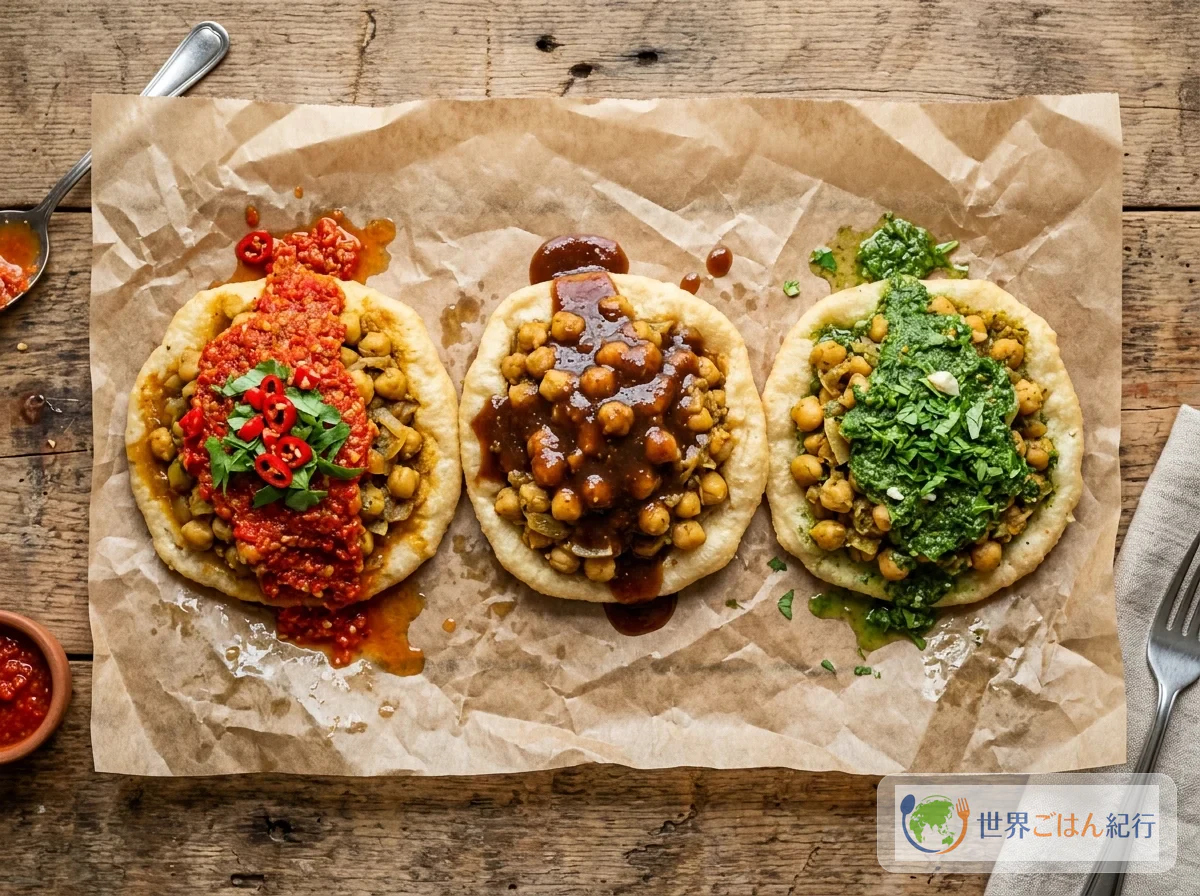
| Tamarind chutney | 4 tbsp | 2 tbsp Worcestershire sauce plus 1 tsp sugar works |
| Coriander (cilantro) chutney | 4 tbsp | Blend cilantro, garlic and lemon juice |
| Pepper sauce | as needed | Tabasco also works |
| Cucumber pickle | as needed | Thinly sliced cucumber plus vinegar, sugar and mustard seeds |
Dissolve 2 tbsp tamarind paste in ½ cup (100 ml) water, add 2 tbsp sugar, a little salt and 1/4 tsp ground cumin, and simmer over low heat for 5 minutes. This sweet-and-sour sauce takes doubles up a level. Leftovers keep for 2 weeks in the refrigerator. Tamarind is a versatile seasoning that also works in Thai som tam and pad thai.
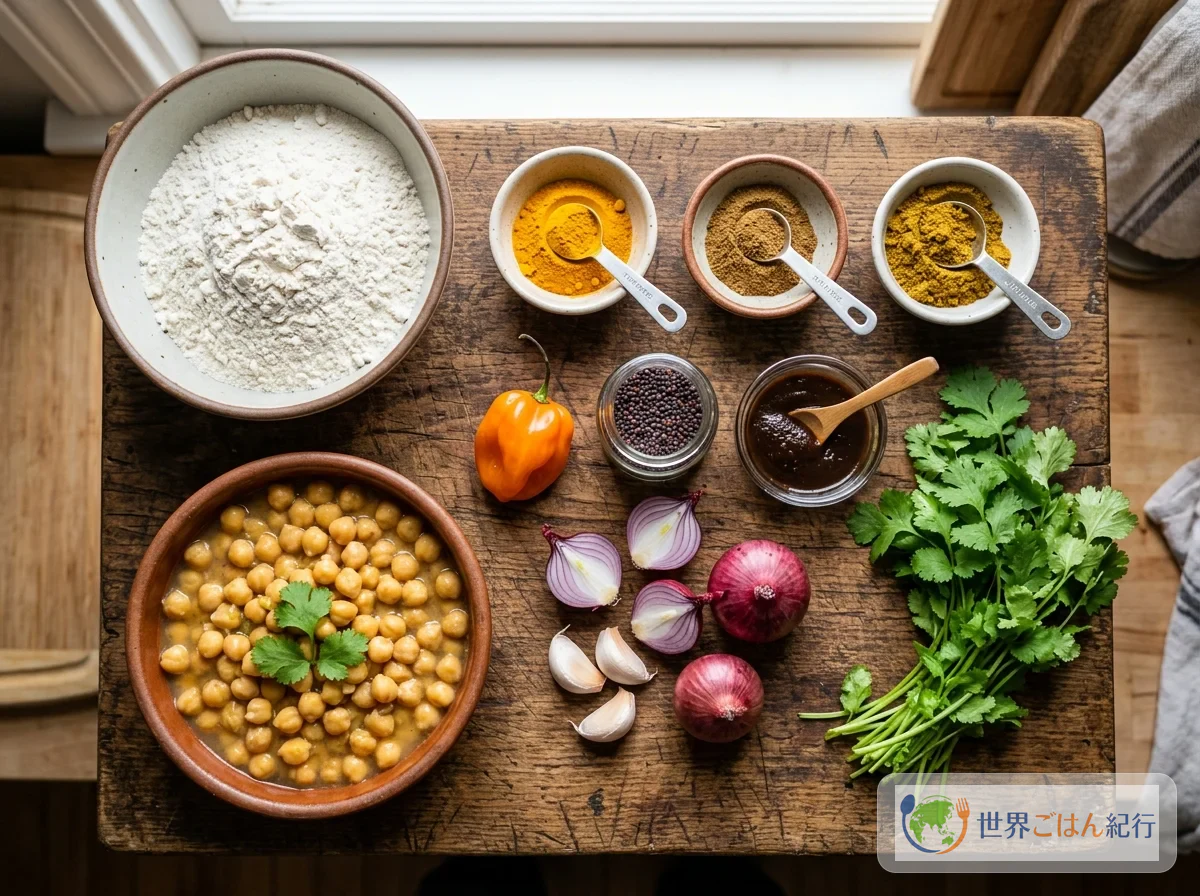
Choosing Ingredients for Doubles
Canned chickpeas make very good doubles. Dried chickpeas, soaked and boiled, give firmer beans, but canned ones come close to the real thing. Pour the can liquid into the pot too: it holds starch from the chickpeas and thickens the channa.
Scotch bonnet peppers can be hard to find. Good substitutes are (1) frozen habanero, (2) scotch bonnet hot sauce (Grace brand is popular in the Caribbean), or (3) 3–4 dried red chiles. With dried chiles, add 1 tsp mango chutney to get closer to the fruity heat of scotch bonnet.
Instructions
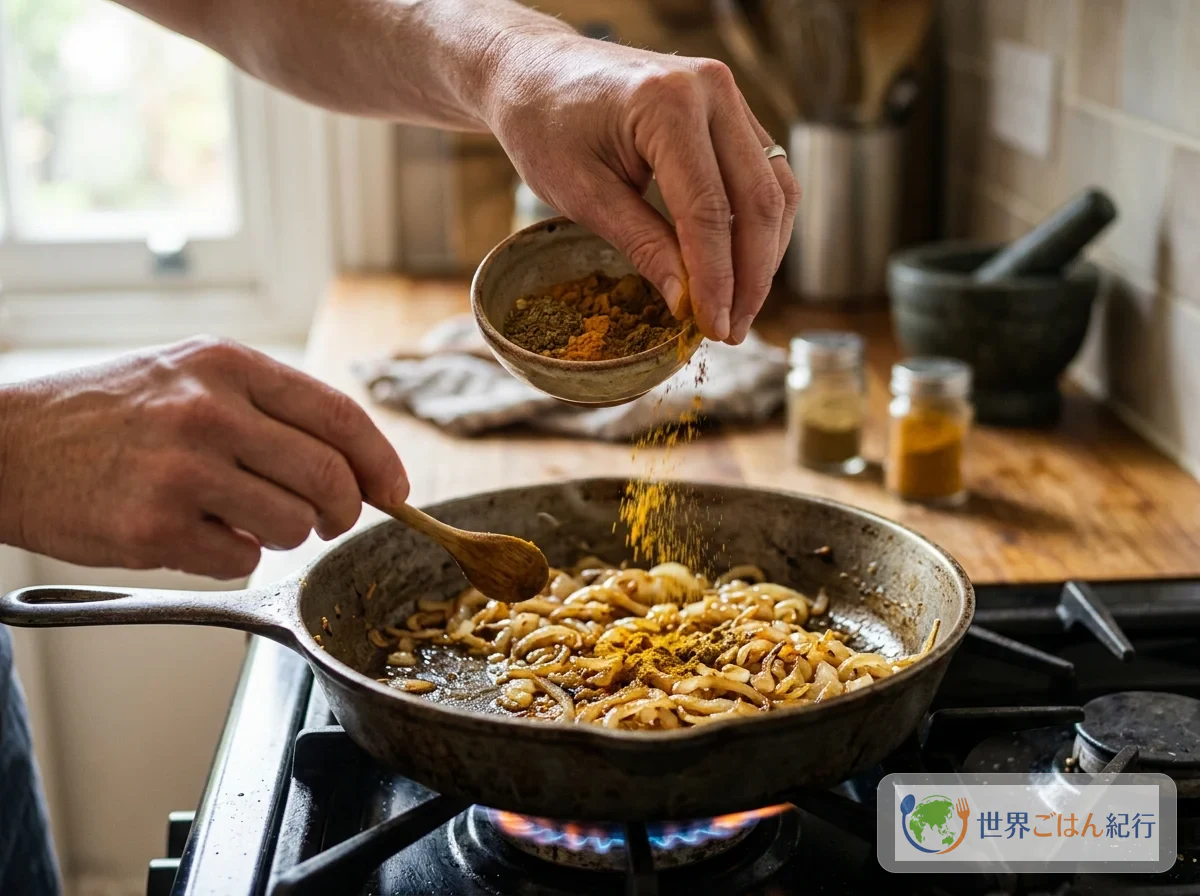
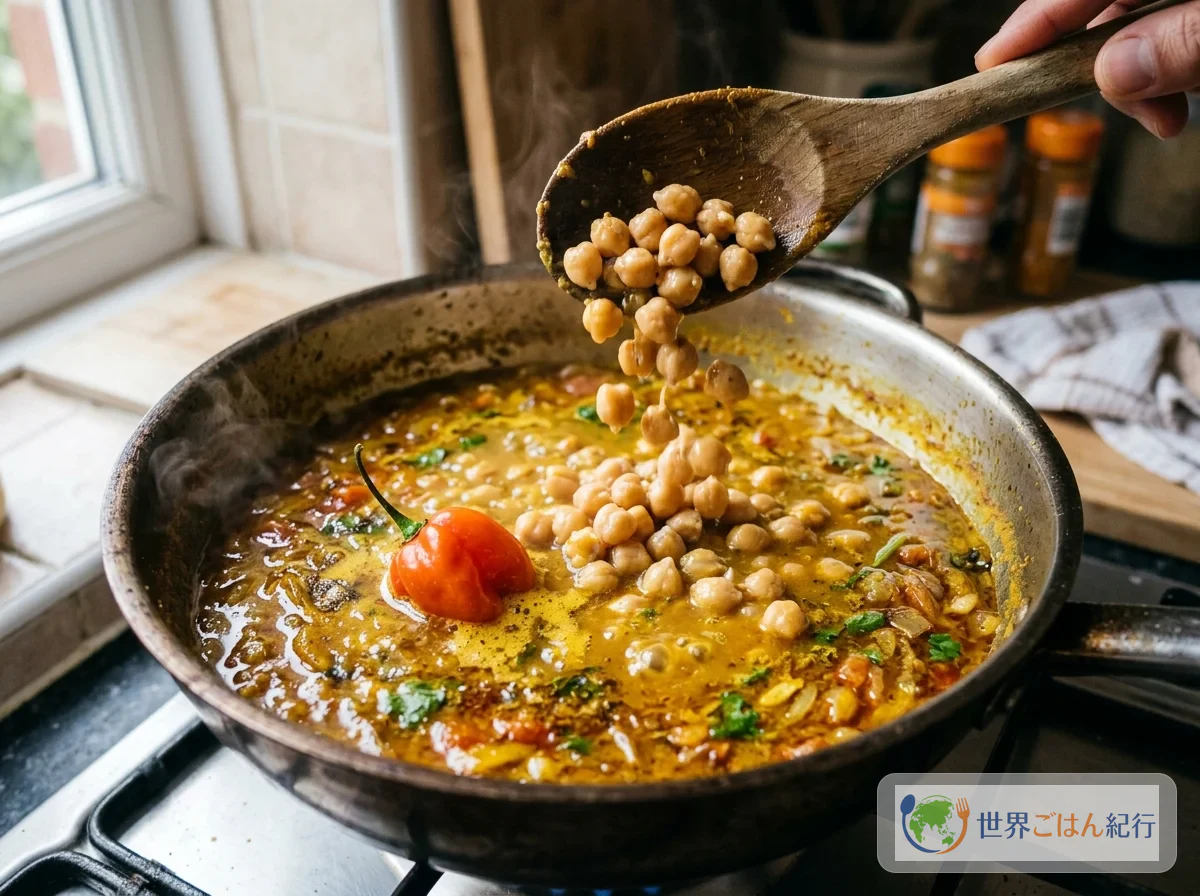
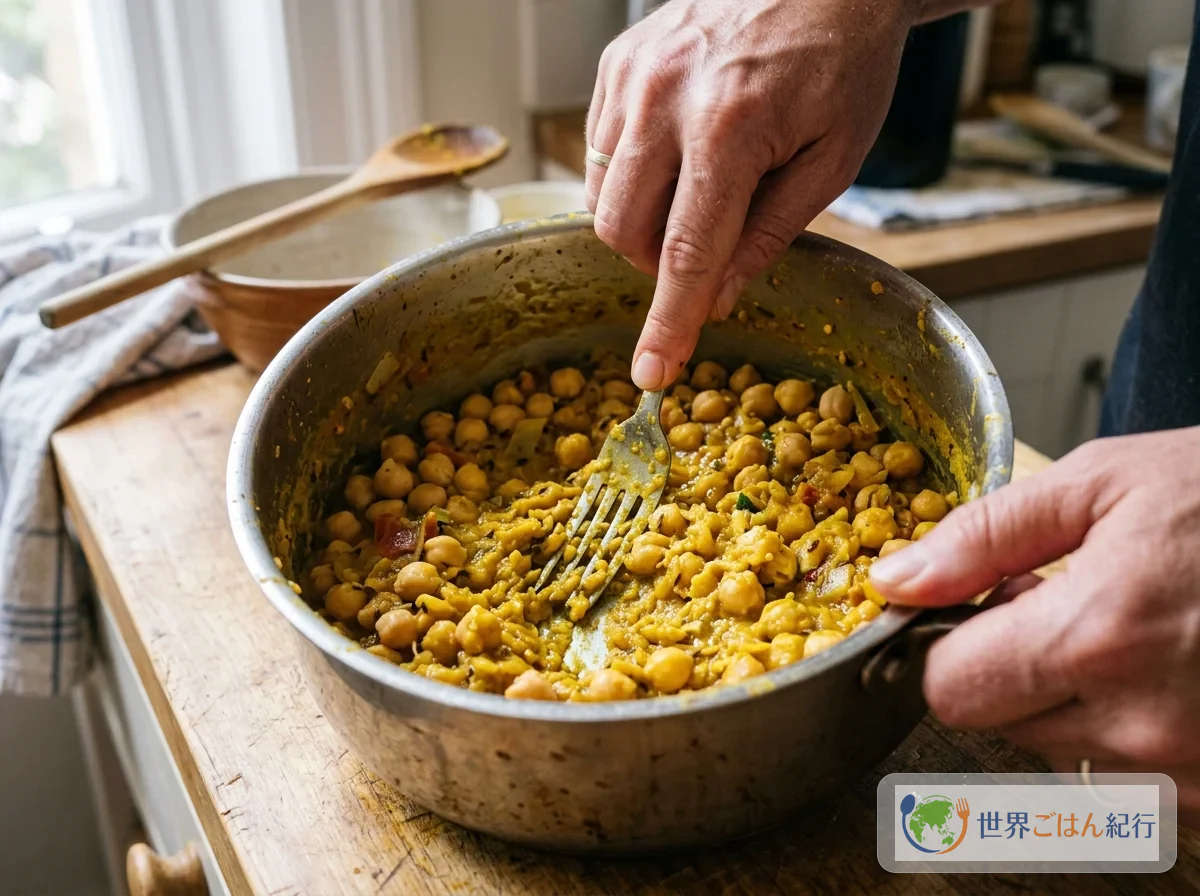
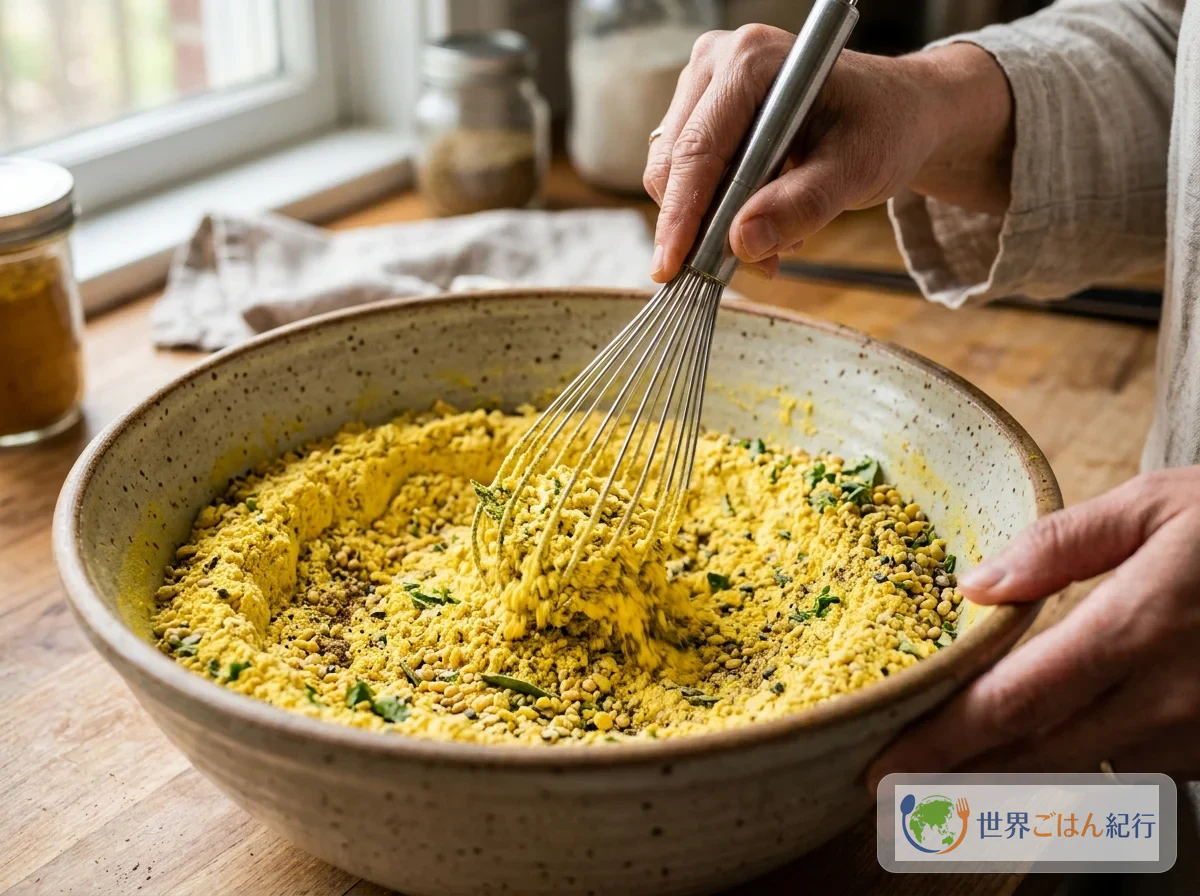
Doubles come together in three stages: (1) make the channa curry, (2) make the bara dough and let it rise, and (3) fry the bara and assemble. It is efficient to make the channa first.
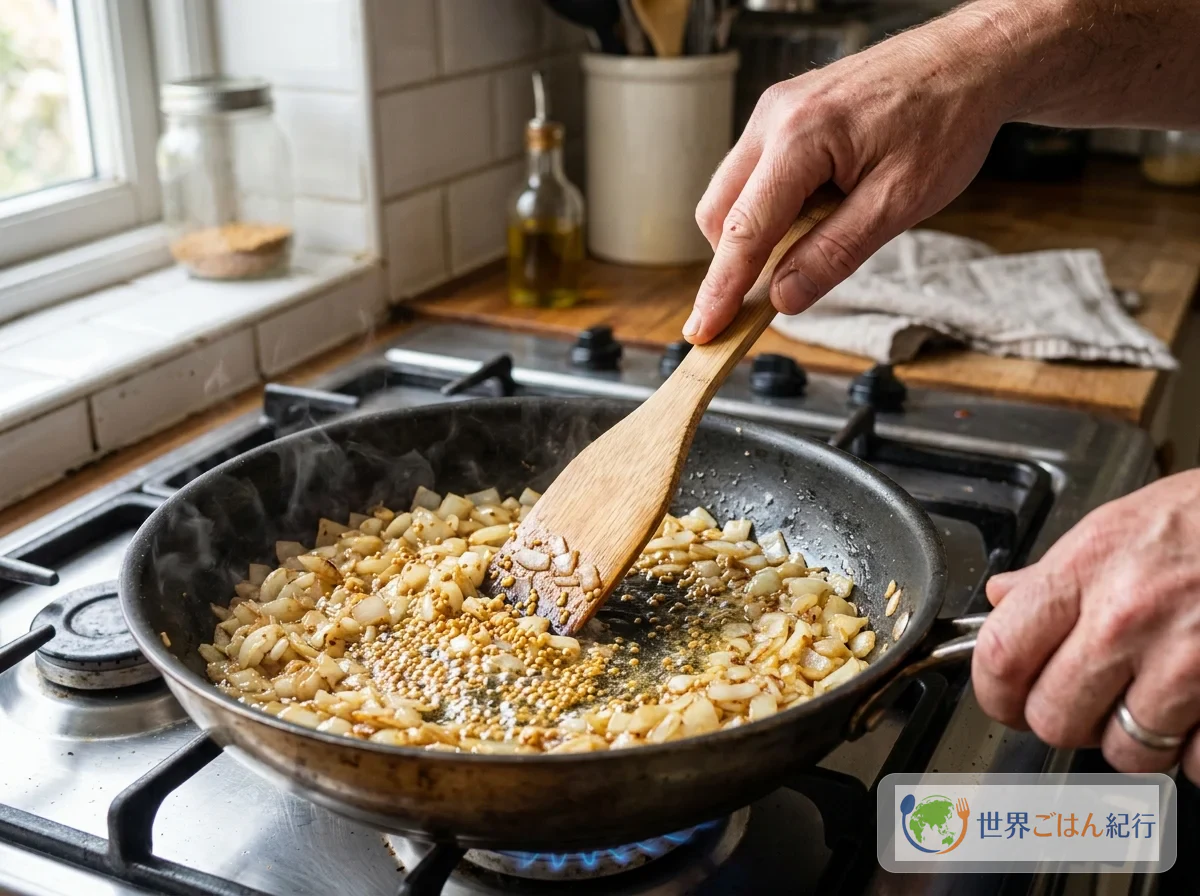
Make the channa (chickpea curry)
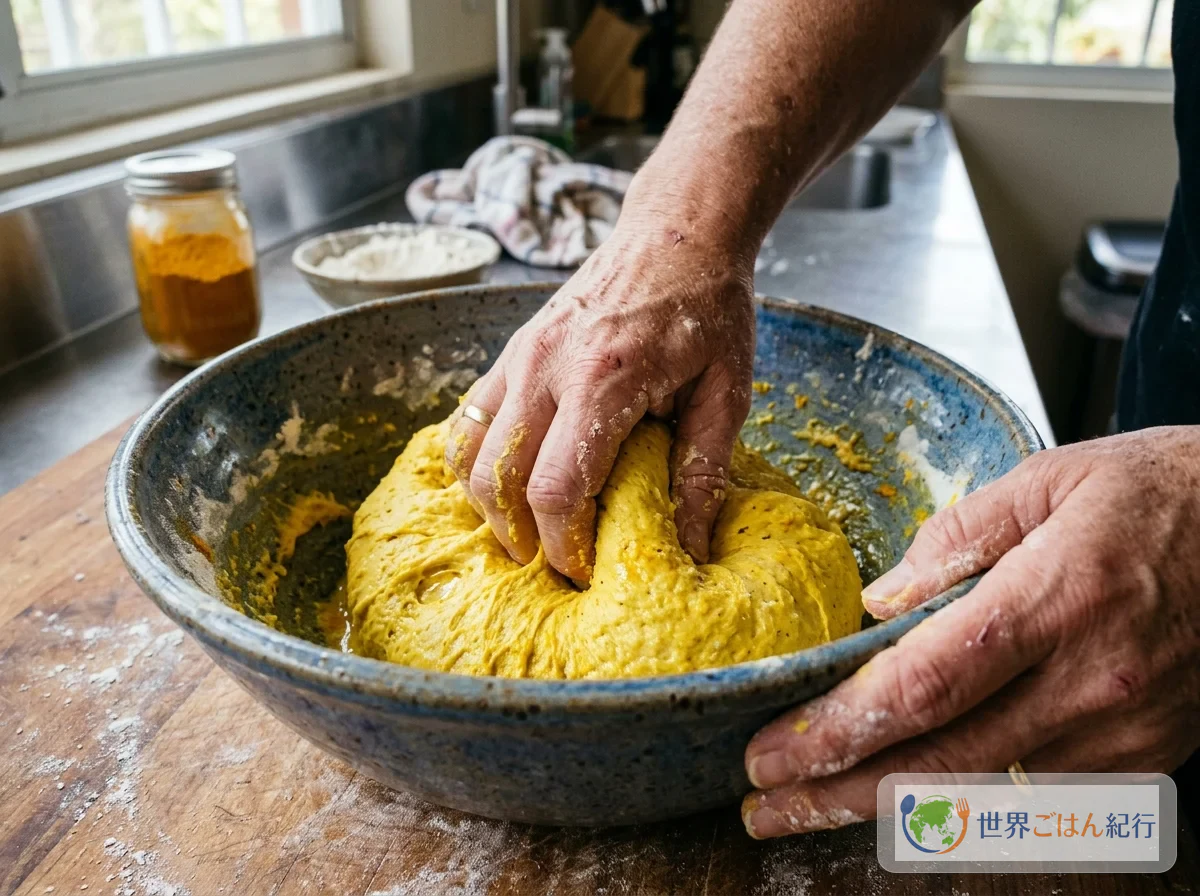
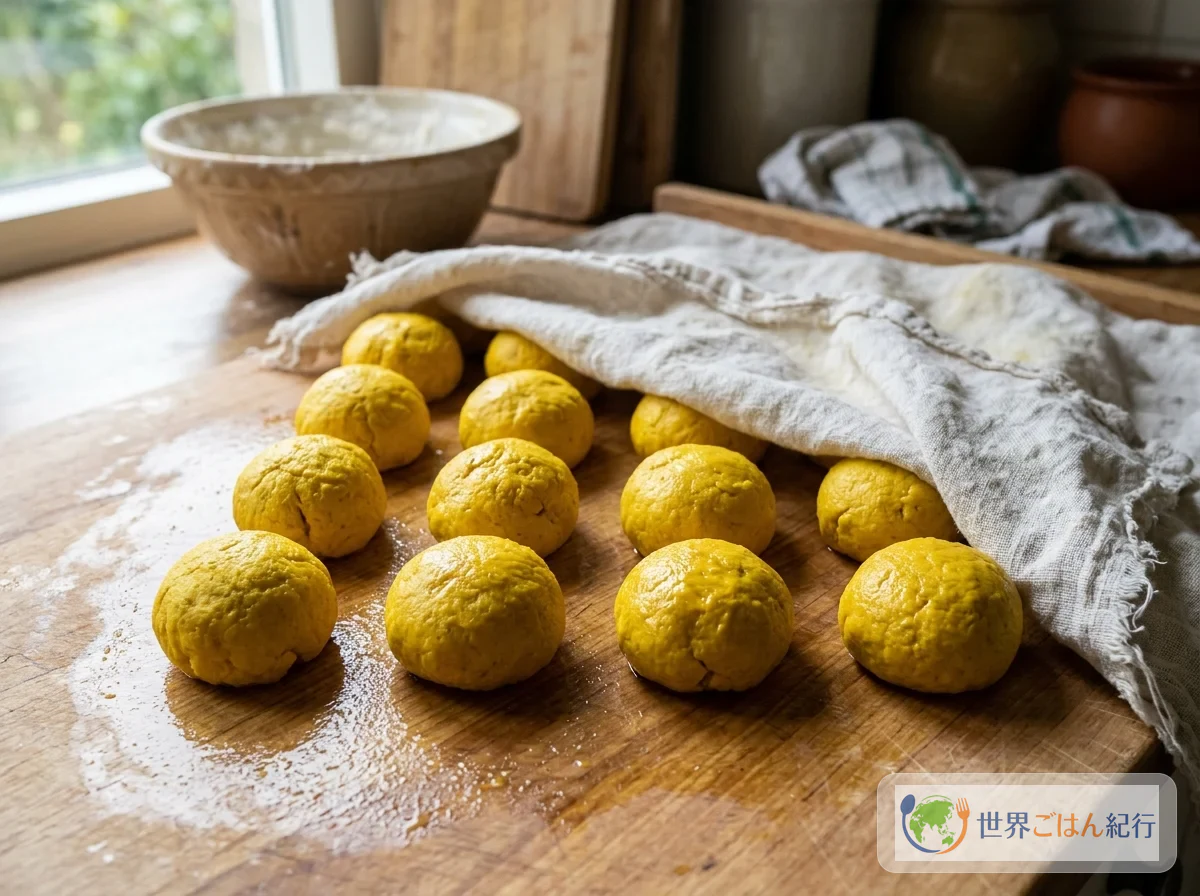
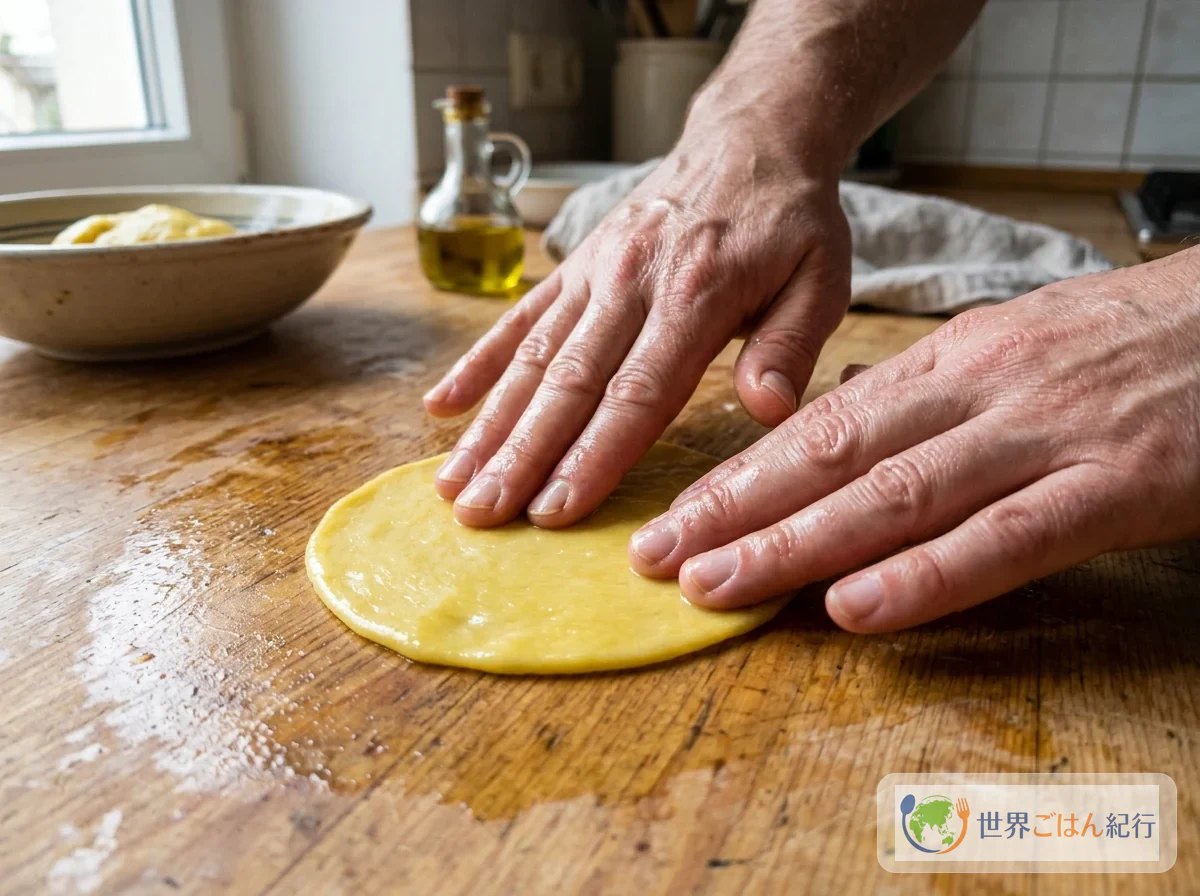
Make the bara (fried bread) dough
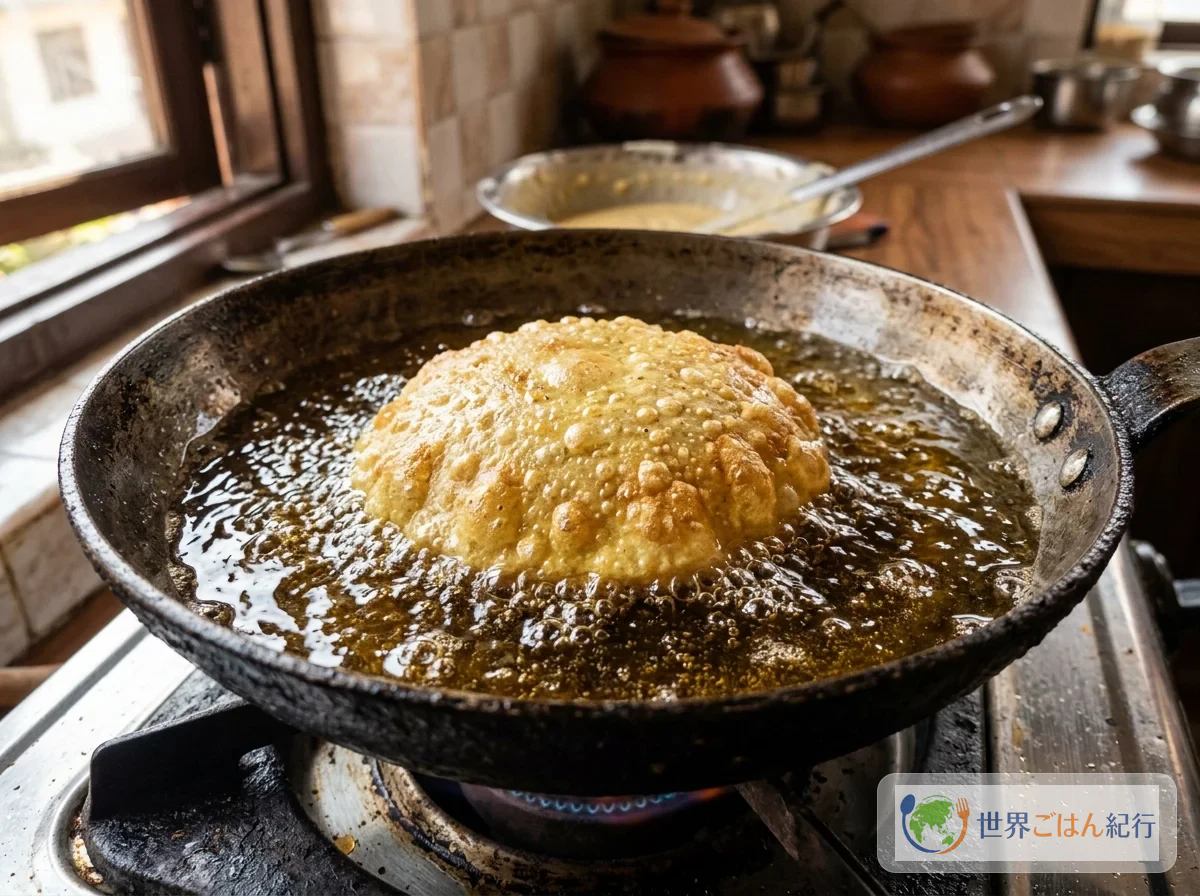
Fry the bara
Assemble
Fixing Common Doubles Problems
The finish of the bara changes dramatically with oil temperature. 350°F (175°C) is the sweet spot. At 350°F (170°C) or less it soaks up oil and gets greasy, and at 350°F (180°C) or above the outside cooks before the inside can puff. Without a thermometer, drop a small piece of dough into the oil: if it floats within 3 seconds, the temperature is right. As with Lebanese falafel, temperature control is everything in frying.
If your bara won't puff, there are three likely causes. The dough may not have risen enough, so give it over 1 hour in a warm place; in winter, the oven's proofing function (95°F (35°C)) is reliable. The oil may be too cool, since below 350°F (175°C) the bara won't puff. Or the dough may be too stiff, in which case work in warm water 1 tbsp at a time until it softens.
Bara also absorbs moisture as it sits and turns too soft, so eat it within 5 minutes of frying. Trinidadian vendors don't start frying until they've taken your order. At home, finish the channa first and fry the bara just before eating.
Serving, Storing and Varying Doubles
Serving and storage
In Trinidad doubles are mostly breakfast, though some people eat them all day as lunch or a snack, and they're popular as party finger food. At home they suit brunch or a weekend lunch.
Channa gets better as it sits and the spices meld. Make it the night before, rest it in the refrigerator overnight and reheat it, and you'll be closer to the taste of a Trinidad doubles stall. It keeps 3 days in the refrigerator and 1 month in the freezer.
Variations
Bara with chickpea flour: Replace 1/4 of the all-purpose flour with chickpea flour (besan) for a more fragrant bara with stronger bean flavor. Besan is available at Indian grocery stores.
Aloo doubles: Potatoes sautéed with spices in place of chickpeas are also a Trinidadian standard. Cut 10.5 oz (300 g) potatoes into 0.5 inches (1 cm) cubes and sauté-simmer them with the same spices. It's close to the aloo sabzi served with Nepali dal bhat.
Extra-hot "pepper doubles": Order "plenty pepper" at a Trinidadian stall and you get chopped scotch bonnet. At home, increase the hot sauce, and if you can handle the heat, mix chopped fresh habanero into the channa.
Miso channa: Replacing half of the curry powder with white miso makes a rich channa in a different style. Shallow-frying the bara can cut calories. Bean dishes take to this kind of adaptation, as Egyptian koshari shows.
Nutrition (per piece, approximate)
Doubles are naturally vegan: no egg or dairy goes into the bara dough, and the channa is entirely plant-based, which has drawn worldwide attention to them as a vegan street food. They're fried, but the chickpeas bring plenty of plant protein and fiber. At about 340 kcal each, they have fewer calories than a hamburger (about 500 kcal) or a hot dog (about 400 kcal), and the soluble fiber in chickpeas helps gut health and suppresses sharp rises in blood sugar.
| Item | Per piece |
|---|---|
| Calories | 340 kcal |
| Protein | 12 g |
| Fat | 14 g |
| Carbohydrates | 1.5 oz (44 g) |
| Fiber | 7 g |
| Salt | 1.7 g |
More dishes to cook
Once you know the aroma of channa and scotch bonnet, try another Trinidadian home dish, pelau, the burnt-sugar chicken and rice, and the Caribbean way with beans, rice and heat comes into focus. From the same region, Chimichurri and Empanada use similar ingredients and aromas.
Frequently Asked Questions
Can I make bara ahead?
Yes. Wrap portions of unbaked dough individually and freeze them in a zip bag, then thaw and fry whenever you want doubles.
What is the difference between doubles and Indian chole bhature?
They look similar but are different dishes. Indian bhature are made without yeast (or with baking powder) and are big and thick, while the bara of doubles is yeast-leavened, thin and small. The chickpeas are spiced differently too, with scotch bonnet and mustard seeds in doubles. Set beside Indian khichdi or Pakistani nihari, doubles show the Caribbean's own spice culture.