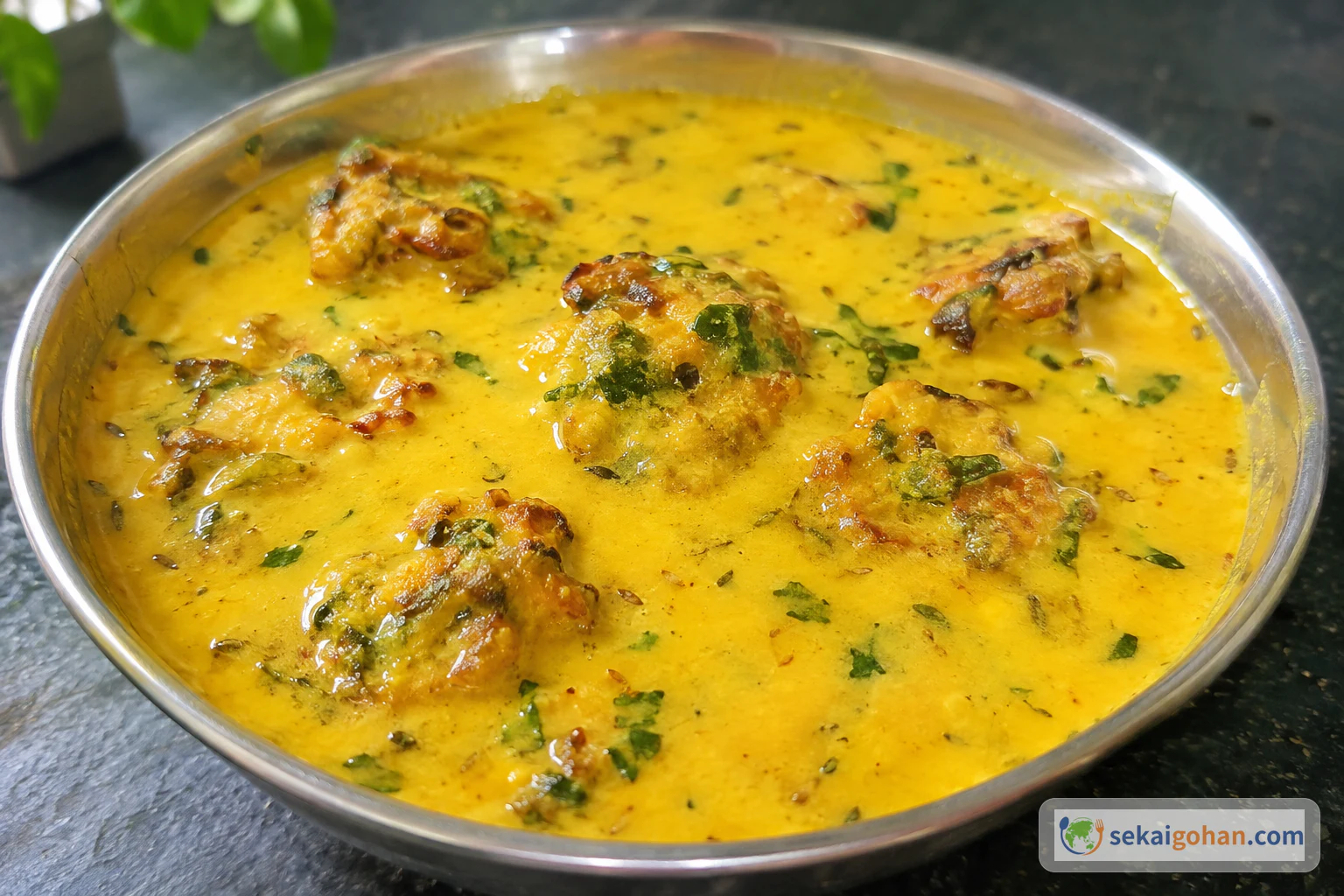
Karachi, 5 a.m., still dark. A line has already formed outside a street-corner eatery, where a large copper pot (degh) sends up the smell of spices and melting marrow, and laborers jostle to be first to dip their naan in. This is nihari (Nihari / نہاری), Pakistan's pride, a "morning stew curry." In the mouth, the deep richness of marrow rises from under layers of spice, and then the julienned ginger and lemon cut through it. That mix of heavy and bright is what nihari is all about.
What nihari is and where it comes from
Nihari belongs to the family of South Asian spiced cooking. Beef shank and bones are simmered overnight over low heat with plenty of spices, and the gelatin and fat from the marrow thicken the gravy until it turns rich. It is finished with a generous heap of julienned ginger, green chiles, cilantro and lemon juice, and traditionally eaten with fresh naan. It is often called Pakistan's national breakfast dish. Pakistan has other long-simmered dishes, but haleem works wheat and lentils into the meat and comes together like a porridge, so the meat breaks down in a completely different way.
From the Mughal court to street eateries
The name comes from the Arabic nahar (نهار), meaning "morning." Nihari began as a court dish in Delhi in the late Mughal period in the 18th century. Court cooks tended the pot through the night, and it was served after the dawn prayer. When the Mughal Empire fell, nihari moved from the court to street eateries. Around the Jama Masjid in Old Delhi, famous shops that date back to the 19th century still line the streets.
The Partition of 1947 changed nihari's story. Muslims who moved from Delhi to Karachi and Lahore (muhajirs) brought nihari-making with them, and in Karachi their eateries mixed with the food culture of Sindh until a distinct Karachi-style nihari emerged. The city's famous nihari shops have lines from early morning. Dhaka in Bangladesh and Delhi and Lucknow in India have kept their own versions of the dish.

Three major schools of nihari
Pakistan and India have three major schools of nihari.
| School | Characteristics | Representative city |
|---|---|---|
| Delhi style | Restrained spices. Brings the umami of the marrow forward | Delhi |
| Karachi style | Strong spices and plenty of oil. The heat of chile | Karachi |
| Lahore style | Mild with some sweetness. Generous with ghee and refined | Lahore |
This recipe follows the Karachi style. To move closer to the Delhi style, halve the cayenne pepper and increase the ghee. Moroccan tagine is another long-simmered classic, but the marrow-based body of nihari sets it apart.
Friday nihari
In Pakistan, eating nihari on Fridays is still a strong custom, tied to the Friday prayer (Jumu'ah) in Islam. People start cooking on Thursday night and eat with the family after the early-morning prayer on Friday. For many families, Friday nihari is a special occasion, much like the Sunday curry, and Friday has its own food traditions across the Islamic world, just as Egyptian koshari is a staple. If you already know Nepali dal bhat or Indian khichdi, nihari is the heavier, more powerful cousin, a dish that warms you to the core.
Ingredients (serves 6)
| Ingredient | Amount | Substitutes & notes |
|---|---|---|
| Beef shank | 1.75 lb (800 g) | Cut a large block into 4–5 cm cubes |
| Beef bones with marrow | 4 pieces | Oxtail also works. Order from a butcher |
| Onions | 3, thinly sliced | For fried onions |
| Neutral oil or ghee | 5 tbsp | Ghee recommended. The richness is in another class |
| Water | 2.75 quarts (2.5 L) | Allowing for what evaporates during the simmer |
| All-purpose flour | 3 tbsp | For thickening. Dissolve in ½ cup (100 ml) water |
| Salt | 2 tsp | Adjust as you taste |
This recipe contains wheat (all-purpose flour is used for thickening) and milk (if you use ghee). If you are allergic to wheat, you can substitute rice flour or cornstarch for the thickening flour. Using neutral oil instead of ghee makes it dairy-free. If you have a nut allergy, check that store-bought fried onions contain no nuts.

The heart of nihari is its spice mix. Ready-made "nihari masala" is available at halal shops. But a homemade blend is far more fragrant.
Nihari masala (spice mix)
| Spice | Amount | Role & notes |
|---|---|---|
| Ground coriander | 2 tbsp | The base aroma |
| Ground cumin | 1 tbsp | Earthy depth |
| Turmeric | 1 tsp | Color |
| Cayenne pepper | 2 tsp | Heat. Adjust to taste |
| Paprika | 1 tbsp | Red color and sweet aroma |
| Fennel seeds (ground) | 1 tsp | Sweet coolness |
| Black cardamom | 2 pods (seeds crushed) | The most important spice. Smoky, deep aroma |
| Green cardamom | 4 pods (seeds crushed) | Floral aroma |
| Cloves | 4 (ground) | Pungent sweetness |
| Cinnamon stick | 1 (broken up) | Warmth |
| Black pepper | 1 tsp | Sharp heat |
| Nutmeg | 1/4 tsp | Faint sweetness |
| Mace | 1/4 tsp | The outer coat of nutmeg. Without it, double the nutmeg |
| Bay leaves | 2 leaves | Added during the simmer |
Finishing garnishes (the lifeline of nihari)
| Garnish | Amount | Notes |
|---|---|---|
| Ginger | 1 large knob (julienned) | For finishing. Be generous |
| Green chiles | 3–4 (sliced) | Heat to taste |
| Cilantro | 1 handful (coarsely chopped) | The key aroma |
| Lemon | 1 (cut into wedges) | Squeeze over to eat |
| Fried onions | 3 tbsp | Store-bought is fine. For topping |
The deciding aroma of nihari is black cardamom. It is an entirely different plant from green cardamom, with a smoky, almost cured aroma. Look for it at import grocers or specialty spice sellers. Leaving it out halves the nihari character. Be sure to get it.

Choosing spices for nihari
Packaged nihari masala is sold at halal shops and online, and it works fine. If you use a store-bought mix, skip the spice-mix step and follow the amounts on the package. A homemade blend is fresher, though, and far more fragrant.
Serving and storing nihari
Pakistanis eat nihari in a particular order. First squeeze the lemon and stir it through the whole gravy. Then push the julienned ginger down into the gravy and let it sit. Now tear off some naan, dunk it deep and eat. Scoop the marrow out with a spoon and eat it on naan; that is the most luxurious bite of all.

Nihari is even better the next day, so make extra. Overnight in the refrigerator the spices blend completely and the marrow gelatin sets, giving the gravy more body. To reheat, loosen it with a little hot water and warm it until just before boiling. Eat it within 3 days; it keeps for 1 month frozen.
Side dishes
Nihari is filling on its own, but on the Pakistani table it comes with these sides:
- Naan / sheermal: nihari's most authentic partner. Sheermal is a rich naan brushed with ghee and baked
- Whole-wheat roti: a whole-wheat flatbread, plainer in taste than naan
- Kachumber: a salad of onion, tomato and cucumber, seasoned with lemon juice and chile
- Raita: yogurt mixed with cucumber and mint. Softens the heat
Eating with roti is common across South Asia, as with Sri Lankan kottu roti. Rice works too, as in Southeast Asian nasi lemak, and many Pakistani households serve basmati rice with nihari.
Variations
Chicken nihari uses bone-in chicken thighs (cut up) instead of beef, and the simmering time drops to 2–3 hours. It is the second most popular nihari in Pakistan after beef, and a good choice if you prefer something lighter. Chicken bones release gelatin as well, so the gravy still thickens nicely.
Mutton nihari is the version many people consider the best. In Japan, lamb shoulder or lamb shank can stand in. It simmers for the same 4–5 hours as beef, and the distinctive flavor of lamb pairs beautifully with the spices. Jordanian mansaf is another lamb stew, a Middle Eastern specialty.
For a pressure cooker version, add the water in step 4 and cook under pressure for 45 minutes to 1 hour. Once the pressure is released, open the lid and do the flour thickening in step 6. The flavor is a little less deep than a slow simmer, but it is still delicious.
More dishes to cook
- Kabuli Palaw - uses ingredients and aromas from the same region.
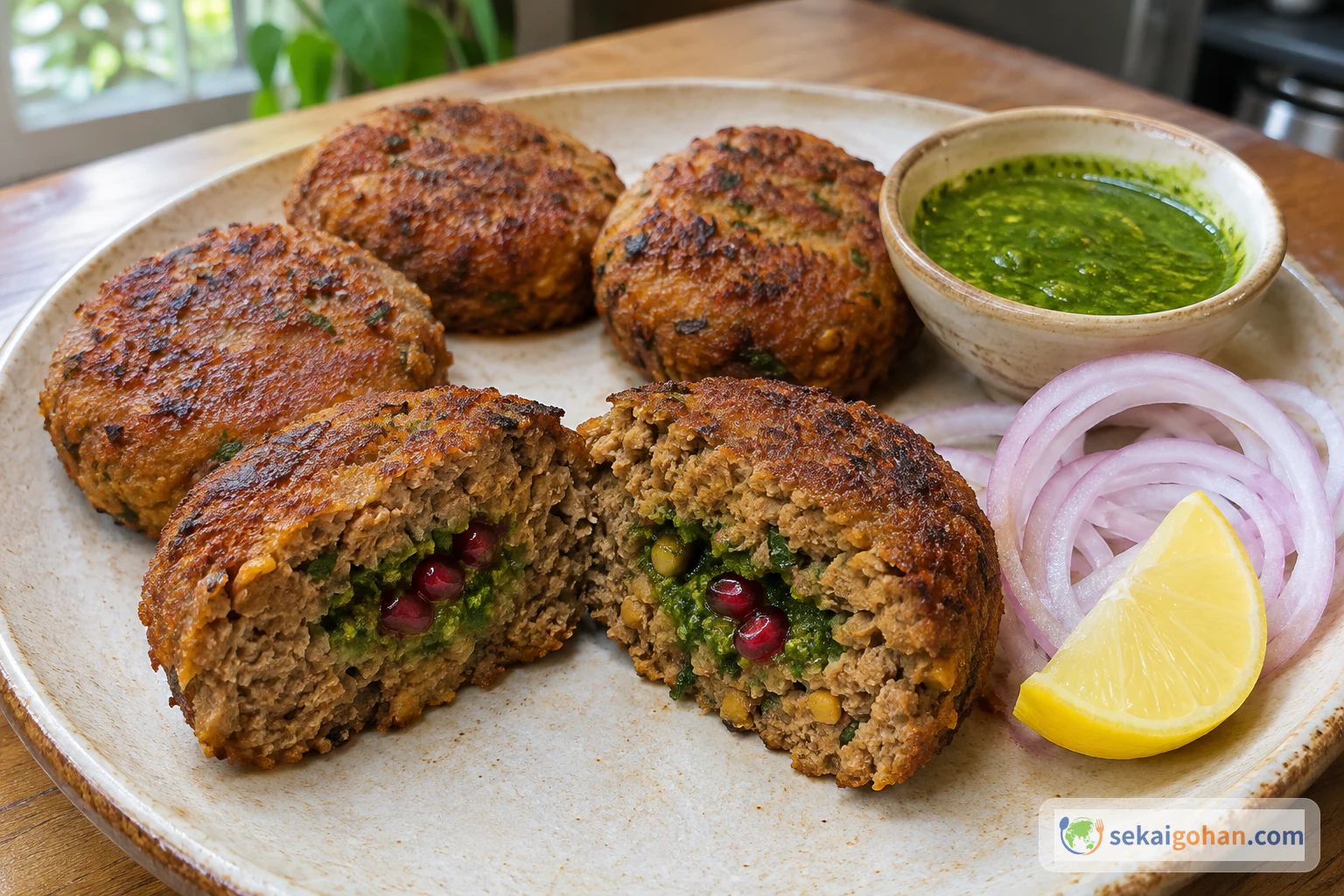
- Chapli Kebab - another Pakistani meat dish, cooked flat on a griddle rather than stewed, with a street-food feel.
- Ilish Bhuna - uses ingredients and aromas from the same region.
- Biryani - with nihari, one of South Asia's two great spiced dishes.
Frequently asked questions
Q1. Is nihari spicy?
It uses plenty of spices, but the heat depends on how much chile you add. For a milder version, cut the cayenne to 1 tsp and skip the finishing green chiles. For children, leave out the chiles entirely and use only paprika for color.
Q2. I've never eaten bone marrow. Will I be okay?
Marrow is as smooth as butter and has almost no off-odor. It melts into the gravy as it simmers, so most people eat it without noticing. In Pakistan, scooping out the marrow left in the bones is considered the greatest luxury.
Q3. Can I make it without simmering overnight?
Yes. This recipe takes 4–5 hours, and a pressure cooker can bring that down to 1.5–2 hours. Still, the longer it simmers, the more marrow gelatin dissolves and the better the spices blend, so give it more time if you can.