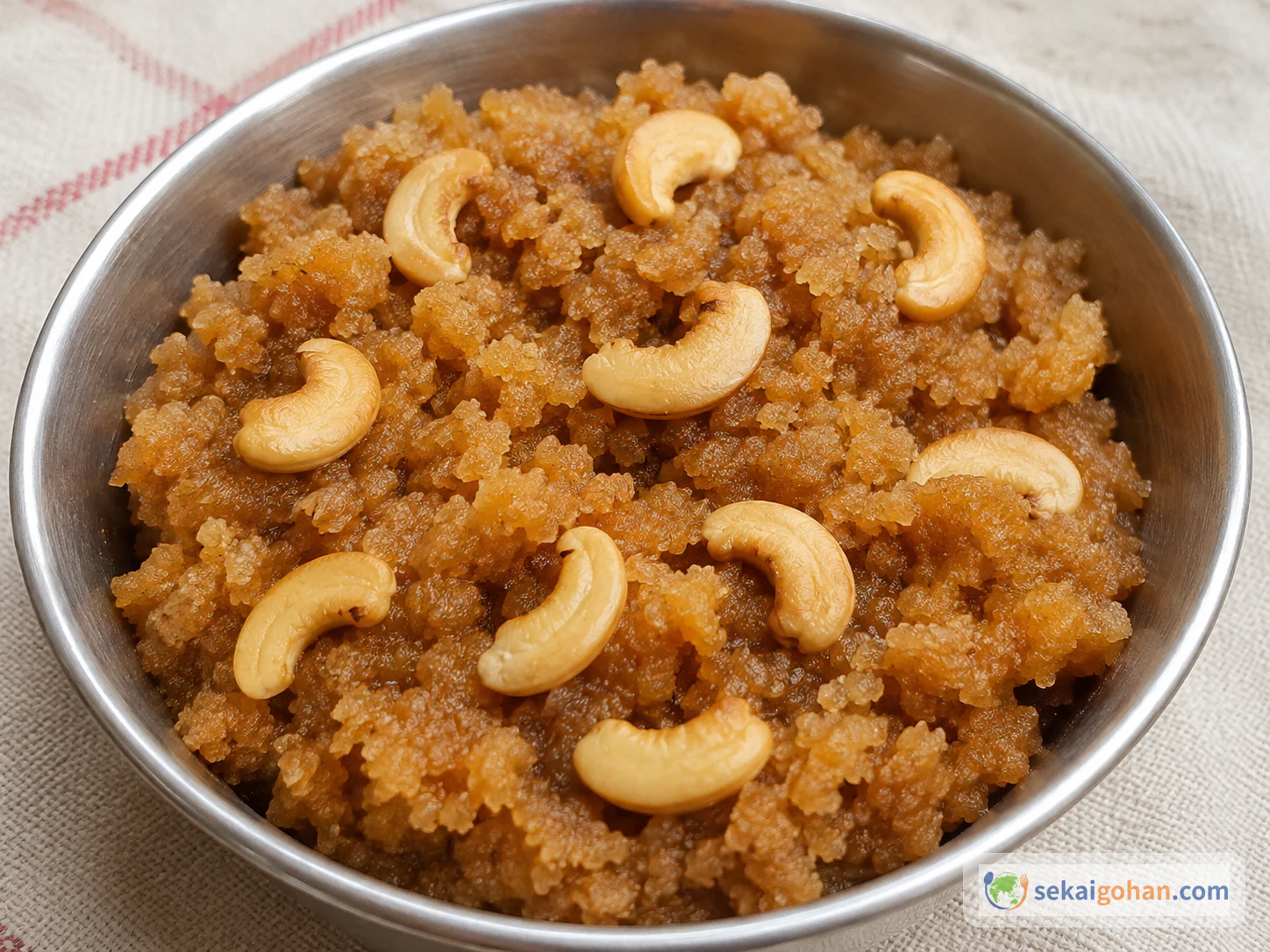
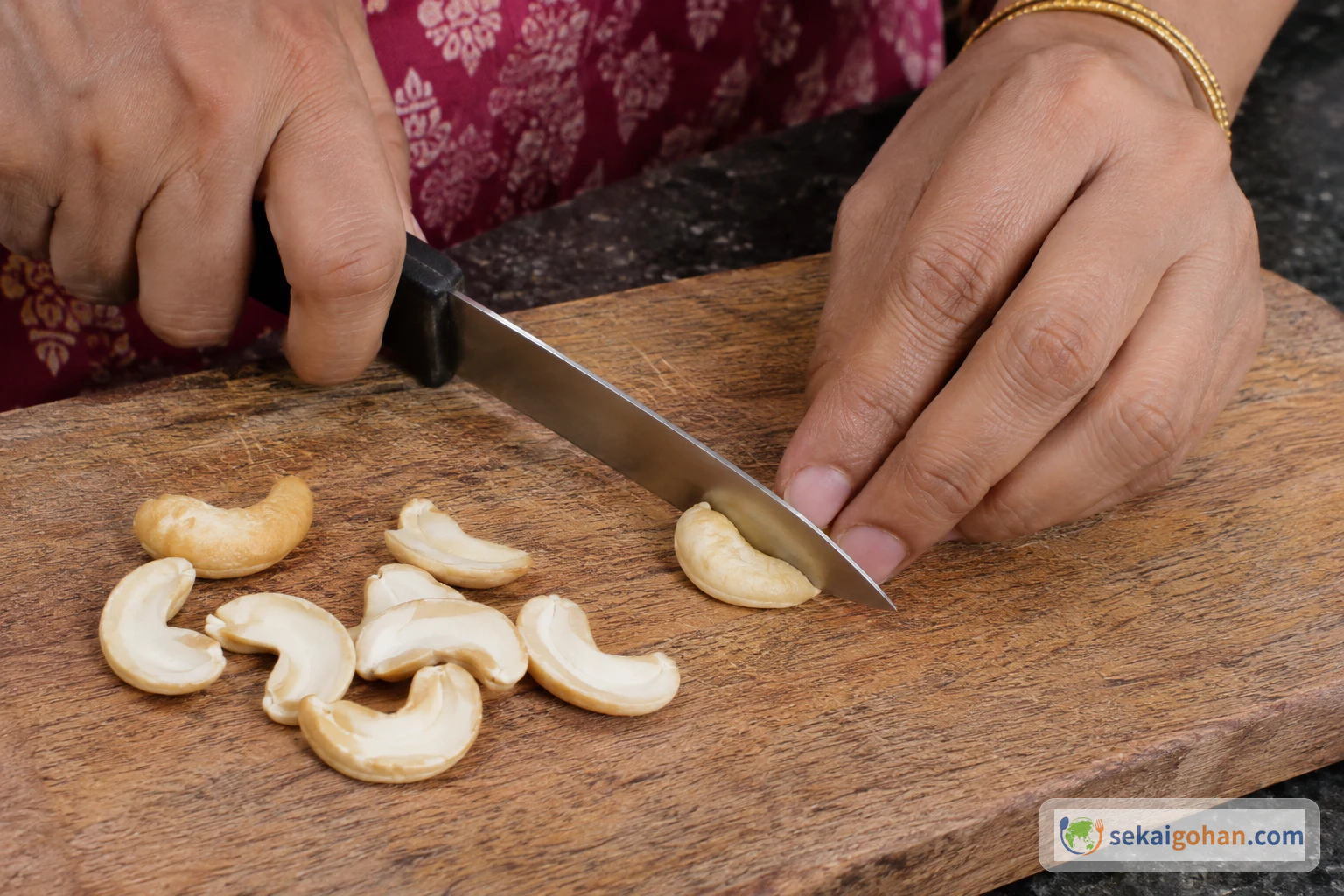
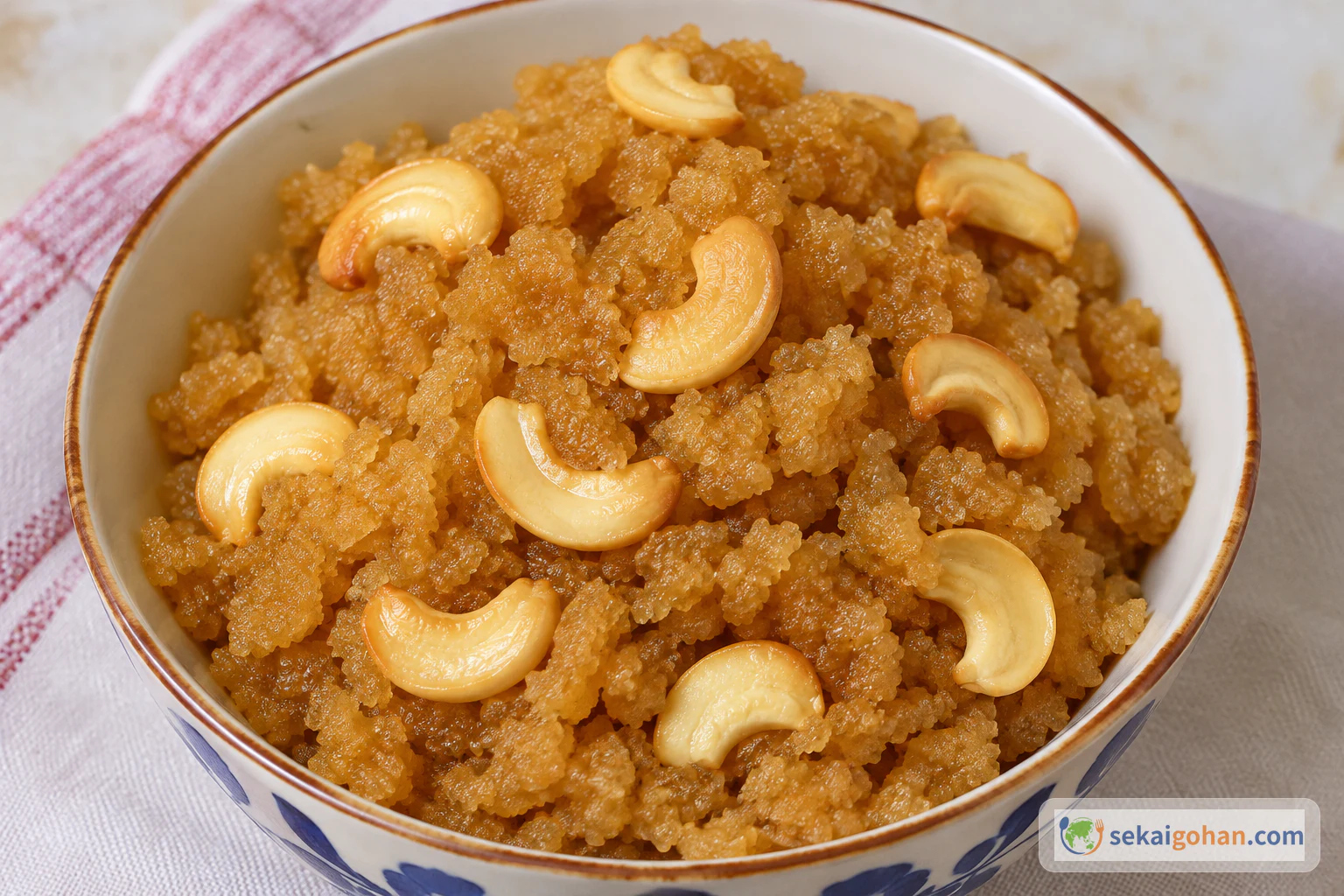
Some families in Isanpur end the wedding rites with the newlyweds feeding each other kansar, a warm, crumbly bowl of wheat that has soaked up jaggery syrup. Kansar (કંસાર, also written Kansaar) is a Gujarati sweet made from whole-wheat flour and jaggery, scented with green cardamom and finished with halved cashews. The jaggery's molasses-like aroma and the grainy character of whole wheat come first, with the cardamom and cashews behind them. The fat here is vegetable oil, so the flavor comes from the jaggery and wheat rather than from ghee.
For more dishes from the same country, see the India page.
What Kansar Is and Where It Is Eaten
Kansar is a sweet for weddings and other auspicious occasions in Gujarat. It belongs to a group of wheat preparations served at such times, alongside lapsi and sheera. These are separate dishes with separate names, even though they share the same base.
The dish varies from region to region, with different versions across South Gujarat, North Gujarat and Saurashtra. The grind of the wheat is one point of difference. Fine wheat flour is called loat, and coarse wheat is called fada, with grains about the size of sugar grains or small moong beans.
Ingredients for 8 Servings
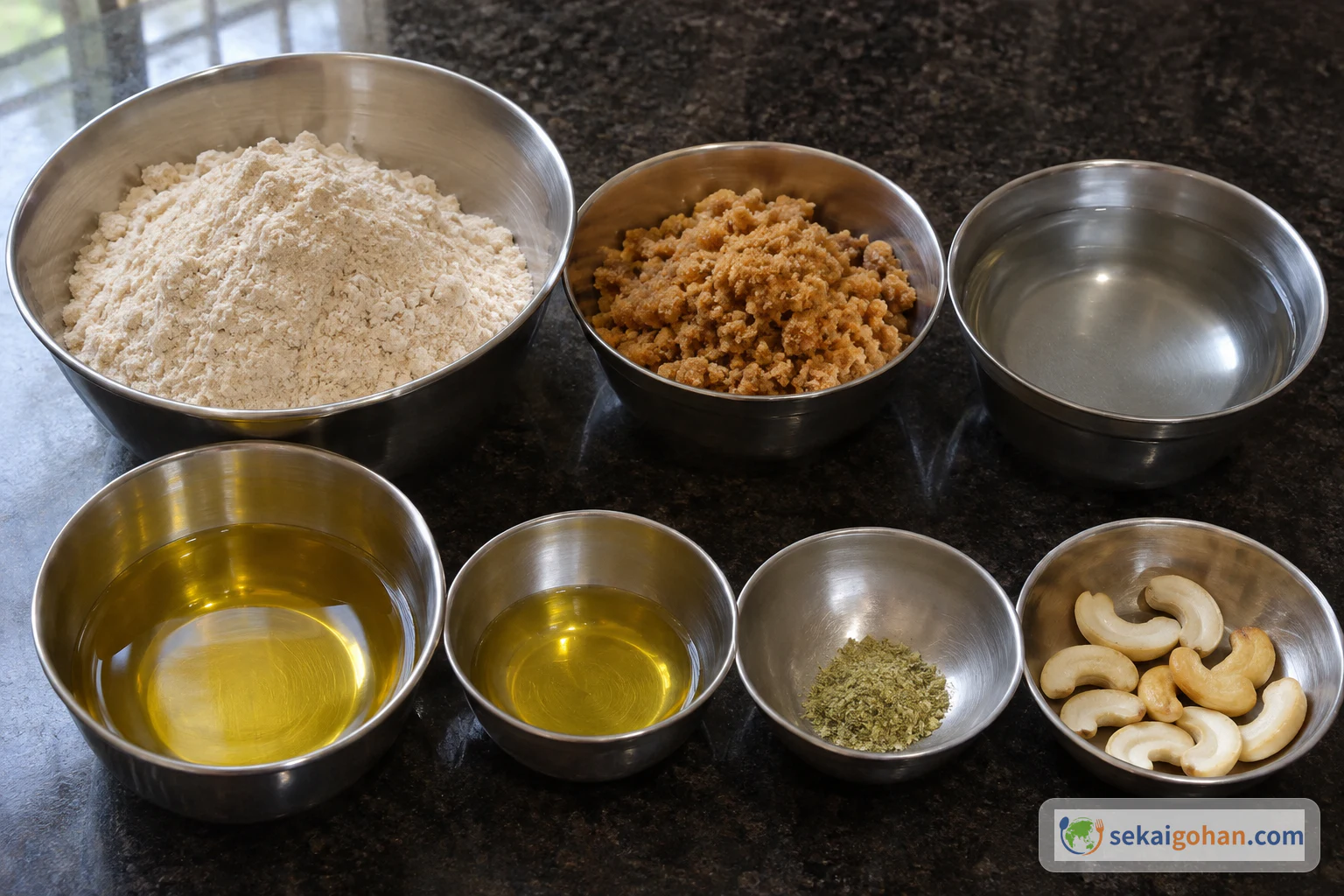
Keep the two portions of oil separate, and do not add them to the flour at the same time.
This dish contains wheat (gluten) and cashews (a tree nut), and it uses rapeseed or canola oil. Food allergies can be severe, so anyone affected should check ingredient labels and the risk of cross-contact.
Equipment
- Mixing bowl
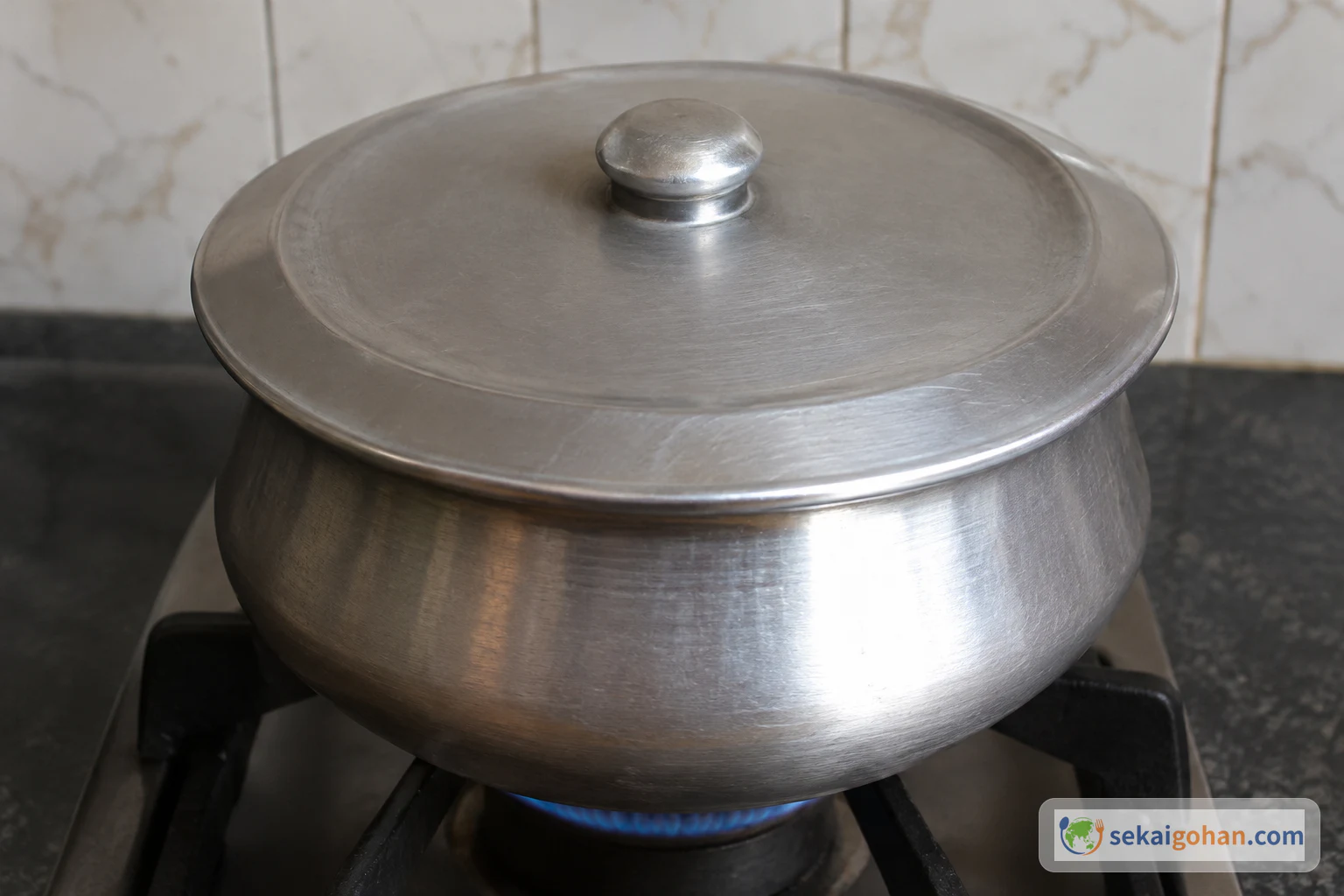
- Pot with an ordinary opaque lid, preferably heavy-bottomed
- Whisk or wooden spoon
- Spoon for mixing in the finishing ingredients
- Knife and a stable cutting board
- Measuring cups and spoons
- Small bowls for the prepared ingredients
- Serving bowls
Choosing Ingredients for Kansar
Flour: use whole-wheat flour.
Jaggery: look for gur or jaggery at an Indian grocer or online. Japanese kokuto (black sugar) works if you can't find it, though its molasses aroma, moisture and sweetness differ, so the result will too. A paler sugar such as sanontō has less color and aroma and takes you further from this sweet.
Oil: choose a mild rapeseed or canola oil. Sesame oil has a strong aroma that changes the flavor.
Cardamom: grinding whole green cardamom just before you use it gives the freshest scent. You can leave it out, but the dish loses one of its main aromas, and cinnamon won't stand in for it.
Cashews: buy ready-to-eat, unsalted roasted kernels, which means there's no roasting step at home.
Method: From Dry Crumbs to a Moist, Warm Sweet
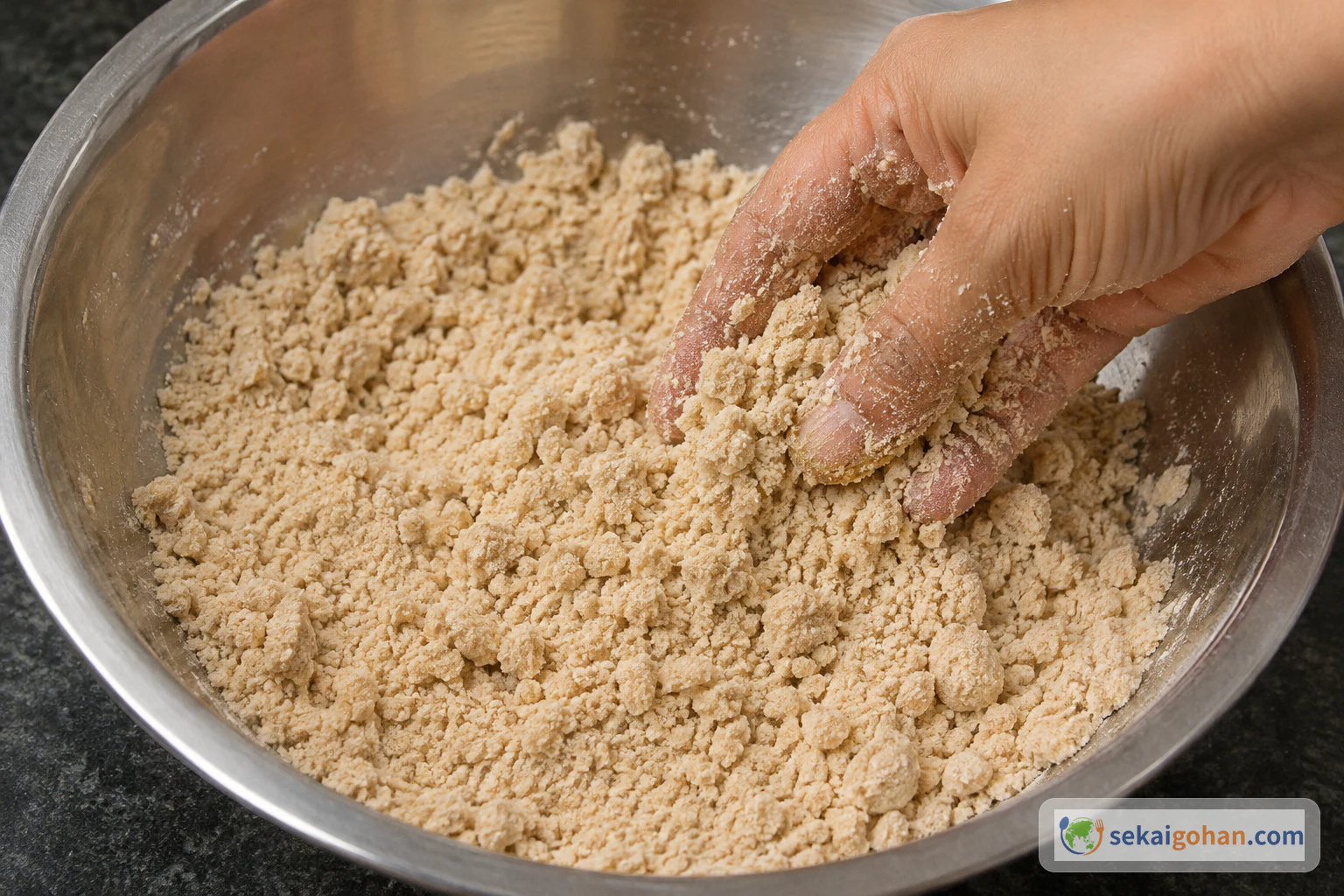
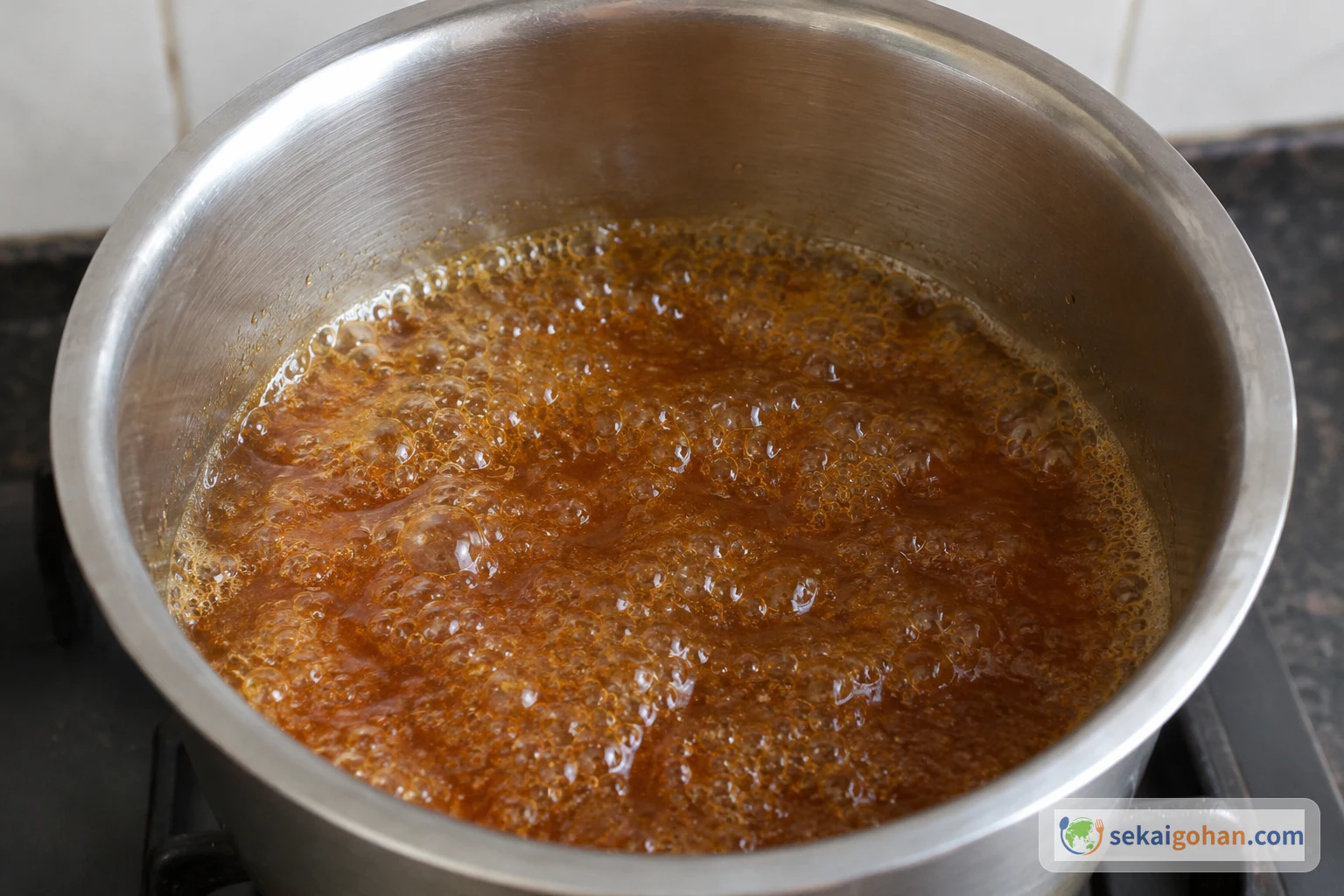
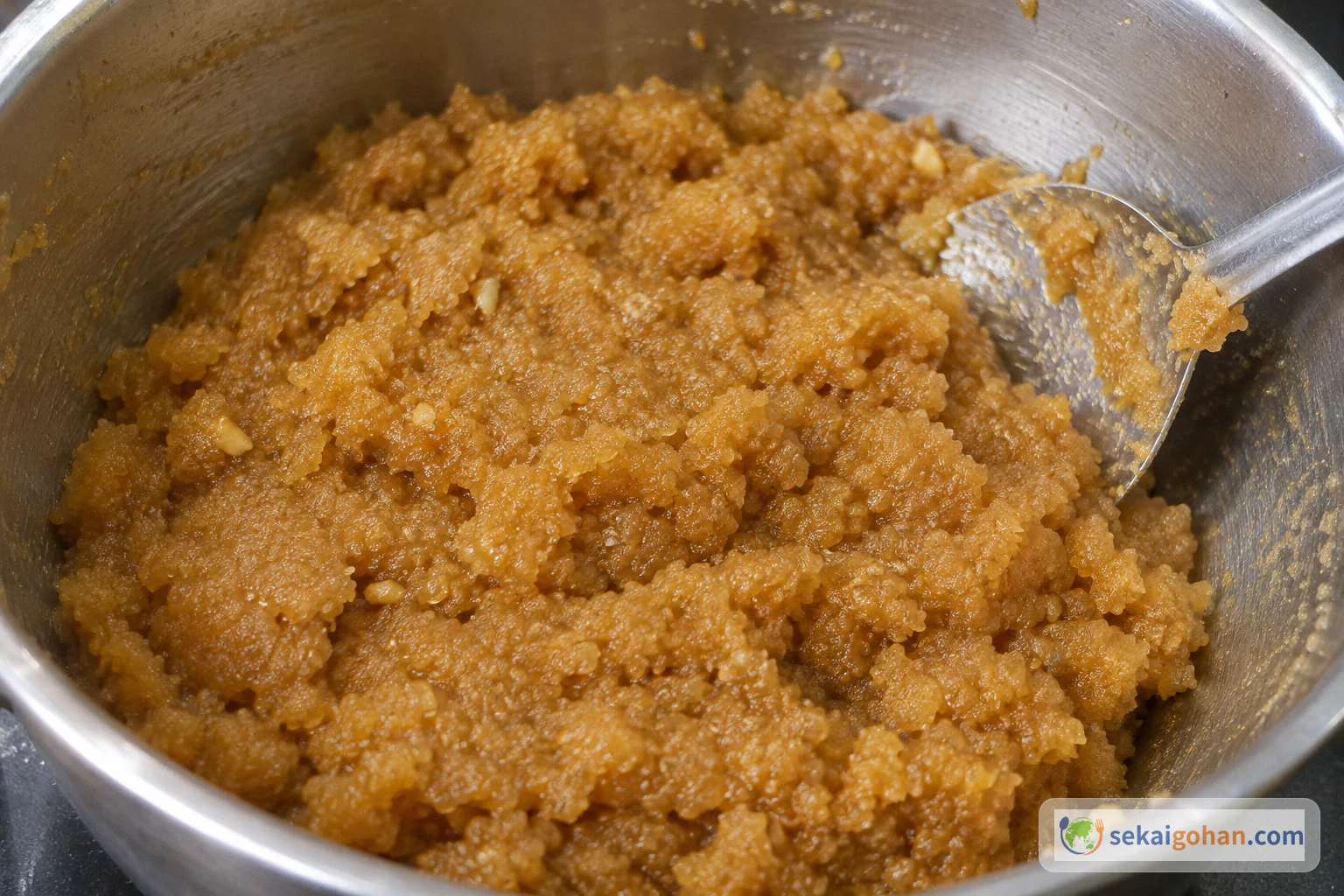
The pictures show each stage. Follow the amounts and steps in the text.
Common Kansar Problems and Fixes
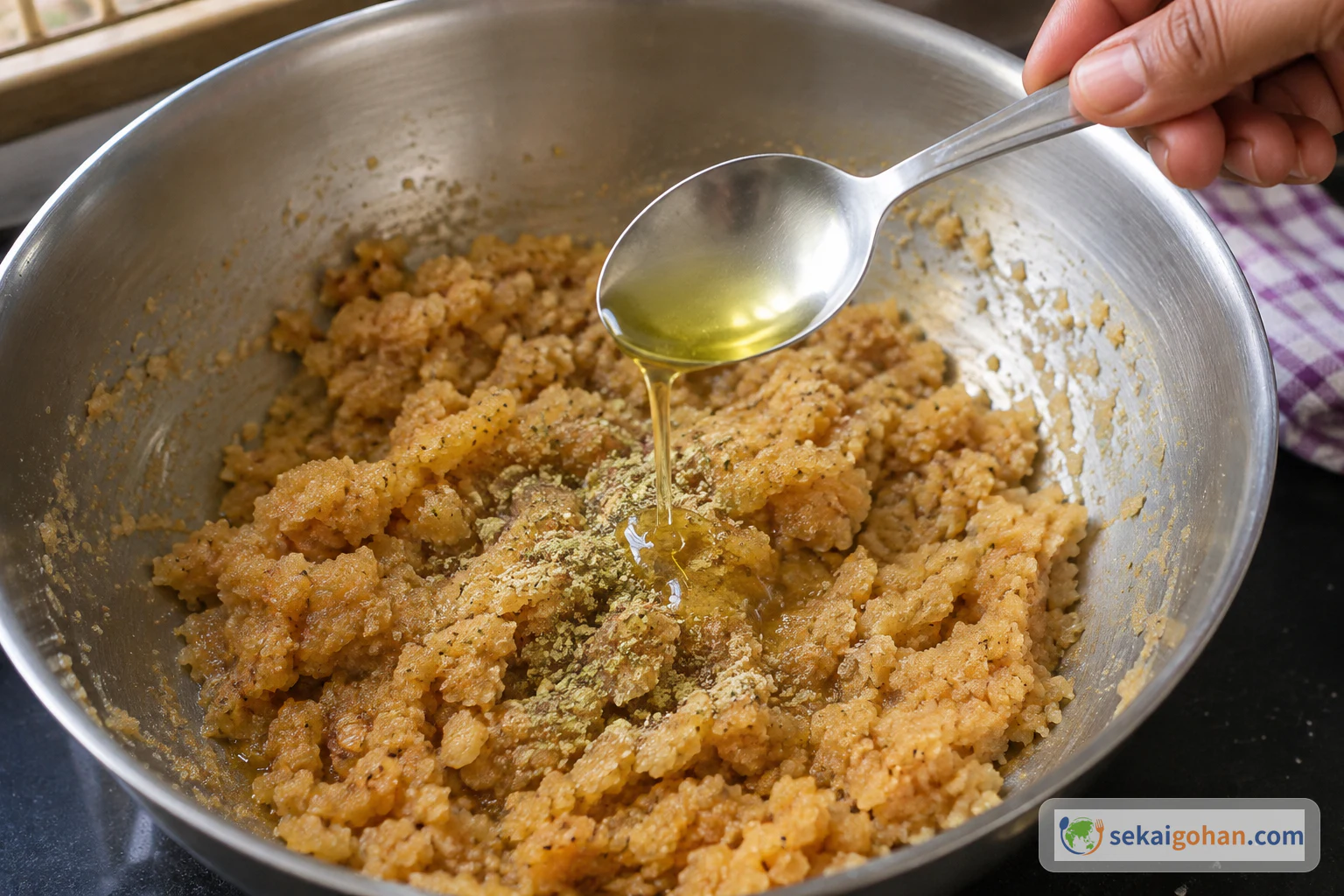
Rub the oil into the flour first, let the crumbs absorb the jaggery syrup over the lowest flame, and only then add the cardamom and the second portion of oil.
The individual stages aren't timed, so go by what you see in the pot.
| What you notice | Likely cause | What to do |
|---|---|---|
| Some crumbs are oily while others stay floury | The oil isn't evenly rubbed in | Keep rubbing by hand until the whole bowl is even, before the crumbs meet the syrup |
| The flour turns into a wet dough in the bowl | Liquid was added too early | Keep the water and jaggery for the pot |
| Syrup still pools in the pot | The crumbs haven't finished absorbing it | Keep stirring over the lowest flame, and hold off on the lid |
| Lumps form or the bottom starts to catch | Heat is too high, or stirring has stopped | Turn the flame to its lowest and keep stirring |
| The color doesn't seem to change much | Color isn't the signal for this stage | Judge by the absorbed syrup and moist grains, not by browning |
Serving Kansar and Variations
Serve kansar hot, with the halved cashews on top. This version keeps to a short list: whole-wheat flour, jaggery, water, cardamom, oil and cashews. Ghee, milk, semolina or fada, rice flour, raisins, extra sugar or steaming will each take it toward a different dish.
Sweetness is something cooks adjust to taste. Here the jaggery carries all of it, with no added sugar.
Frequently Asked Questions
Are kansar and lapsi the same?
No. Kansar, lapsi and sheera are separate wheat preparations for auspicious occasions, and each varies by region.
Can I use coarse wheat flour?
Coarse fada gives a different texture. Water needs also vary with wheat quality, and no water amount is given for coarse wheat, so treat it as an experiment.
Does "10 halved cashews" mean 10 nuts or 10 pieces?
The wording doesn't settle it. It could mean 10 whole nuts cut in half or 10 half pieces.
Can I make kansar ahead?
Kansar is best served hot. For leftovers, handle the food cleanly, divide it into shallow containers, cool it quickly, refrigerate it, and reheat it thoroughly.