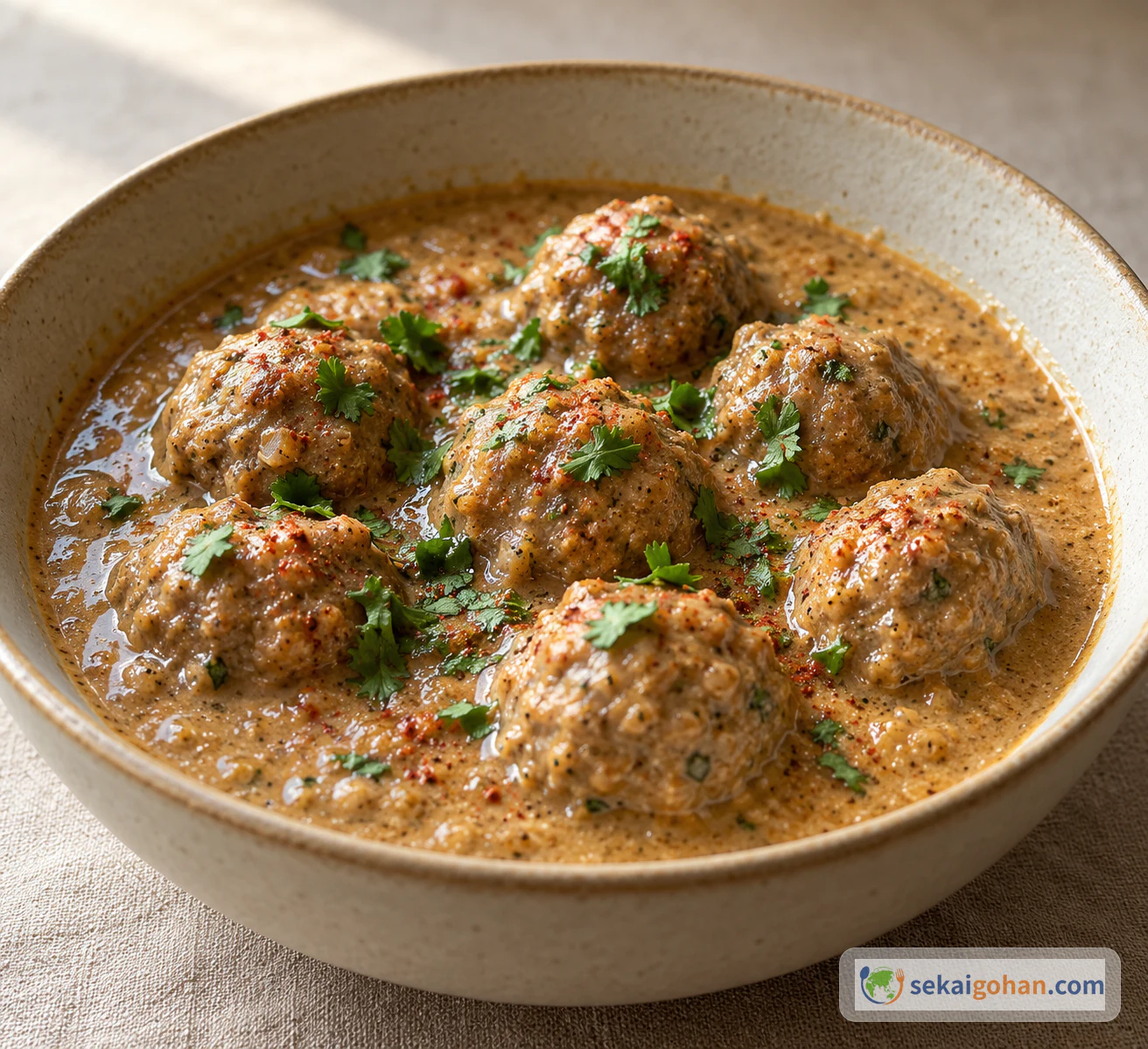
When the sun hangs low and the wooden spoon starts to drag across the bottom of the pot, the haleem (Haleem) is almost ready. In the bowl it looks brown and plain. Add fried onion, ginger, green chili, cilantro and lemon, though, and it looks like a plate from a street stall. Haleem is a thick, porridge-like stew of wheat, lentils and bone-in beef cooked down together, and in Bangladesh it belongs to iftar during Ramadan. One spoonful brings the sweetness of collapsed lentils, the body of the wheat and the savory depth of the meat. Lemon and green chili lighten it at the end.

Haleem in Bangladesh
In Bangladesh, haleem is both a dish made at home and one bought from shops and shared. The streets around Chawk Bazaar in Old Dhaka are known for their rows of Ramadan foods, and haleem is one of them. The thick texture keeps you full, but it also holds all those flavors together in a single mouthful. Compared with Pakistani haleem, the Bangladeshi toppings are a little brighter.
Aim for a consistency where the meat fibers are still slightly visible, the wheat grains linger on the tongue, and the flavor changes as you mix in the toppings, rather than a perfectly smooth paste. In an ordinary pot, the easy test is: "the trail of the wooden spoon stays for 1 second."
Ingredients: Gather the Cracked Wheat, Lentils and Bone-In Meat Separately

This serves 6. Made in a small amount, haleem scorches easily on the bottom, and the meat's cooking liquid tends to be thin. Make it for 6, and add a little water when you reheat it the next day.
This recipe contains wheat, beef and dairy. Check the label on store-bought fried onions, since they can be made in factories that handle wheat, milk and nuts. If you avoid dairy, replace the ghee with 4 tbsp neutral oil, leave out the yogurt, and add 2 tsp lemon juice to the meat seasoning.
Buy bone-in beef, onion, yogurt and lemon at a nearby supermarket. Look farther afield for coarse cracked wheat, red lentils and strongly scented spices. If you keep cooking South Asian food, the same dried goods go into khichdi and biryani too.
How to read the nutrition information
The nutrition values are for the whole pot of 6 servings. One serving is about 610 kcal, around 1.25 oz (35g) protein and around 25g fat. Less ghee and fried onion makes it lighter, but the aroma thins out too. For dinner, serve it with one naan. As a small starter, halve the portion and serve cucumber, onion and lemon beside it so it is easier to keep eating.
Method: Combine the Bone-In Meat's Liquid and the Wheat at the End
Cooking everything in one pot looks easy, but with a home burner the wheat sinks to the bottom, and the bottom of the pot tends to scorch before the meat softens. Keeping the meat pot and the wheat pot separate and combining and working them at the end reduces mistakes with heat.
Common Haleem Problems and Fixes

In a home kitchen, haleem usually goes wrong because of the order of steps rather than the ingredients. Combine the meat before the wheat and lentils are soft and the grains stay gritty. Add a lot of water to avoid scorching and it tastes thin. That's why the liquid from the bone-in meat is made first, the wheat and lentils are cooked down separately, and the two are combined and worked together over low heat at the end.
Nearly every problem shows up in the consistency: runny, scorched on the bottom, or grainy. Behind each one is one of two causes. Either the water boiled off before the grains softened, or the haleem wasn't worked enough after combining.
| Condition | Cause | How to fix it |
|---|---|---|
| Watery | The wheat and lentils are soft, but it was not cooked down enough at the end | Take off the lid and work it over low heat 5 minutes at a time |
| Grains are hard | Not soaked enough, not cooked enough | Add ¾ cup (200ml) boiling water and cook 15 more minutes over low heat |
| The bottom scorches | The heat is too high, or the bottom wasn't scraped often enough | Don't scrape the scorched bottom; move only the top to another pot |
| Meat remains in lumps | Not cooked enough, or torn too large | Take out only the meat and tear it again to about 2 inches (5 cm) long and 0.125 inch (3 mm) wide |
| The taste is heavy | Too few toppings and acidity | Add lemon, ginger, green chili and cilantro in the bowl |
Blending until completely smooth is quick, but haleem is better when you stop short of that. It isn't a potage, and some wheat texture and meat fiber should remain. If the grains bother you, mash only the wheat and lentils, then stir the meat back in.
How to Eat It, Storage, and Frequently Asked Questions
Spoon the haleem into the center of a bowl and layer the toppings on top. Take the first bite without lemon, then squeeze some in, and finally add a little green chili. You can taste the flavor change with each step. Naan or roti makes it easy to scoop up the sticky stew, and that's closer to how it's eaten locally than white rice.
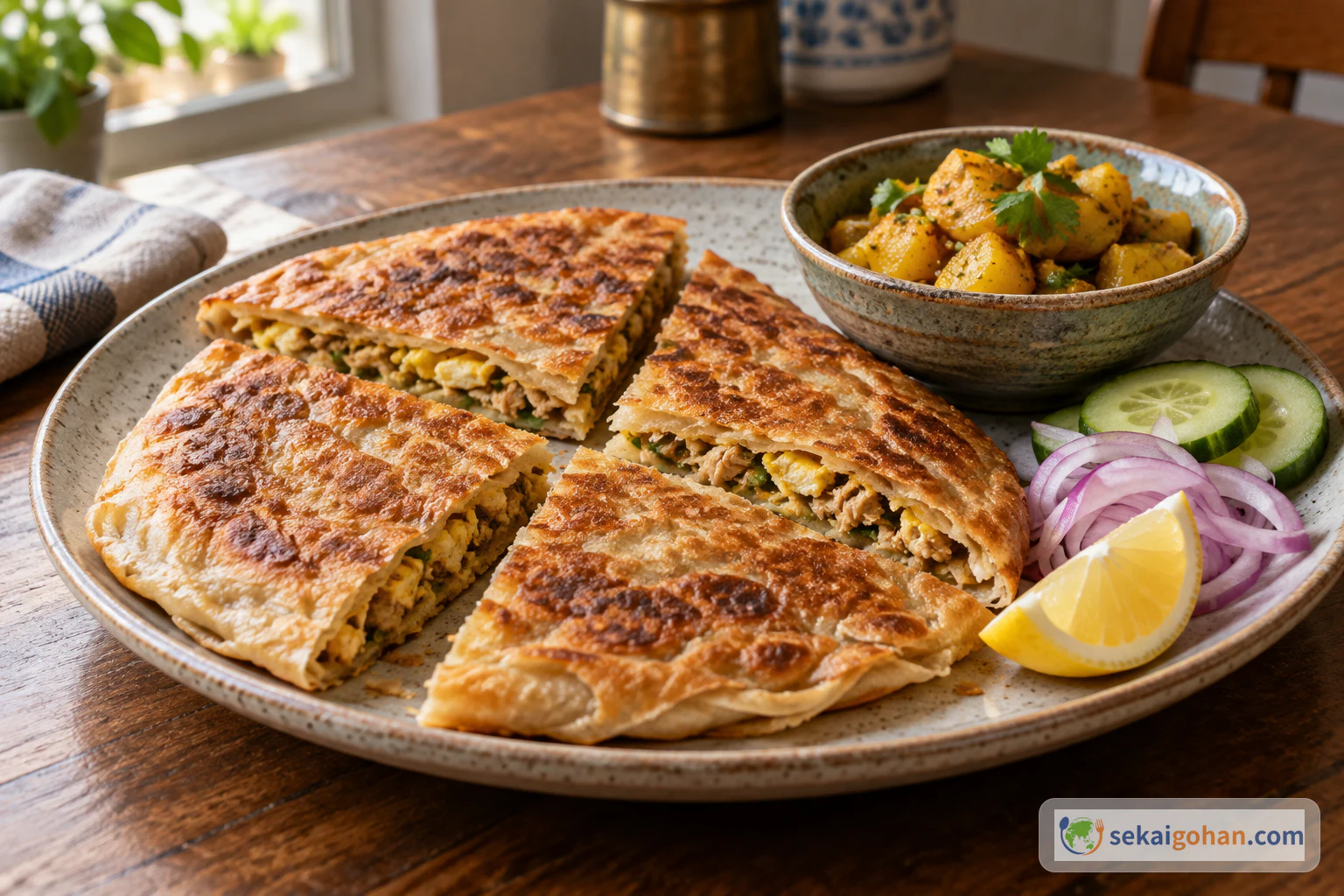
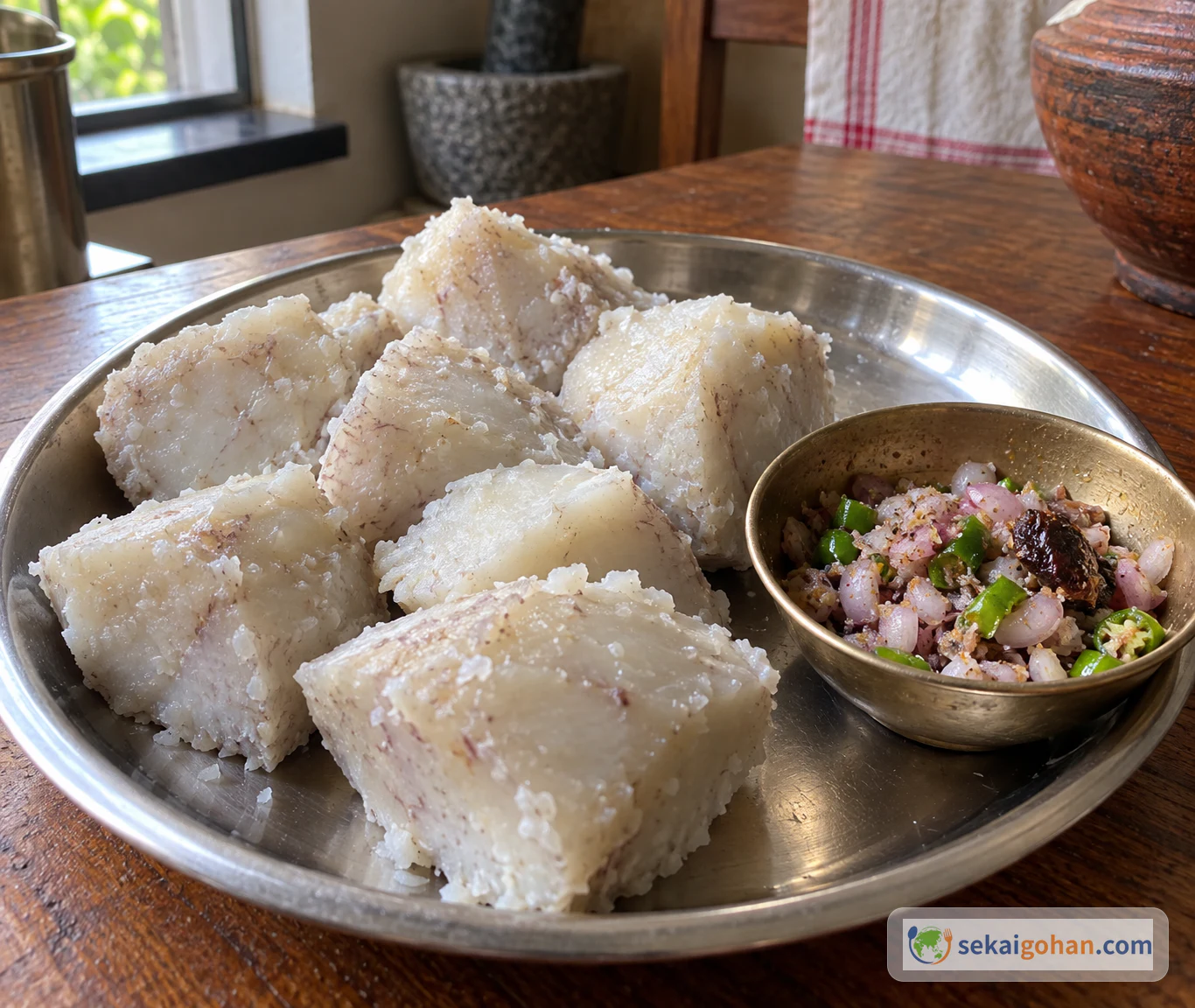
For a Ramadan-style table, small portions go well with sweet drinks, fruit and light fried foods. As the main dish at dinner, set a plate of sliced cucumber, red onion, tomato and lemon beside it so the meal doesn't feel heavy. With samosa, keep the haleem mild and let it play the thick, soup-like partner to the toasty fried pastry. Serve it on a different day from fish dishes like ilish bhuna. For small, punchy sides, try aloo bhorta, potatoes bound with mustard oil, or begun bhorta, with its charred roasted eggplant. Their heat and sourness give relief between mouthfuls of the heavy stew.
To store, let the haleem cool, divide it into clean containers, and refrigerate for up to 3 days. It stiffens as it cools because the wheat and lentils keep absorbing moisture. To reheat, add 3.5 tbsp (50ml) to ¼ cup (80ml) water per serving to a pot and stir over low heat for 5 to 7 minutes until it bubbles. In a microwave, put it in a deep heatproof container, add 2 tbsp water, heat at 600W for 2 minutes, stir, and then heat 1 minute at a time. It's ready when it's hot to the center and smooth again.
What is the difference from Pakistani haleem?
The Bangladeshi style here finishes with the liquid from the bone-in meat and cuts the richness with toppings and lemon. Pakistani haleem comes from the same South Asian tradition, but some versions are worked smoother and lean harder on chaat masala or aromatic oil. If you make both, use the same dried goods and vary only the toppings and cooking liquid. The difference is easier to taste that way.
What do I do if I can't get bone-in meat?
Use 1.5 lb (650g) beef shank with 2 chicken drumettes to give the liquid body. Thin lean slices alone make the meat fibers too fine and the liquid too light. If thin slices are all you have, treat it as a different home version: brown the meat, combine it with the wheat and lentils early, and shorten the cooking time.
Can I make it not spicy?
Yes. Reduce the red chili powder in the pot to 1/2 tsp, and serve the green chili and chaat masala at the table. Turmeric, cumin, coriander and garam masala add aroma more than heat, so keep them as they are. A mild pot also suits people who like bean dishes such as dal bhat. For children or anyone who avoids heat, extra lemon and cilantro add brightness without spice.
Does the flavor drop if I make it ahead?
No. By the next day, the wheat and lentils have blended together even more. Reheat it gently, because high heat scorches the stiffened haleem on the bottom of the pot, and finish with fresh lemon and ginger. Keep the toppings separate in storage, since mixing them in dulls their aroma. Add the fried onion, green chili and cilantro just before eating.