Drag a wooden spoon along the bottom of the pot and the wheat and lentils move heavily, while the beef fibers slowly come apart. Haleem (حلیم) is thicker than a curry and too heavy to drink like a soup. In this Pakistani dish, cracked wheat, lentils and meat cook for hours until they merge into something like a porridge. You taste the sweetness of the wheat, the roundness of the lentils, the savor of beef and the fragrance of ghee. At the end, green chili and lemon cut through all of it.

Haleem in Pakistan
Haleem doesn't look like much. It's brown and sticky, and a photo gives little idea of the flavor. Then you squeeze on lemon, top it with fried onion and ginger, scoop up a bite with naan, and your impression changes. It's rich but easy to keep eating, because the garnishes do half the work.
In Pakistan, haleem is eaten at iftar during Ramadan and handed out during Muharram. Karachi restaurants serve it as a thick paste of wheat, lentils, meat and spices, fully blended, with lemon, mint, ginger, green chili and fried onion. At home, it suits a day when you have time to cook for hours, when you're sharing with others, or when you want leftovers for tomorrow.
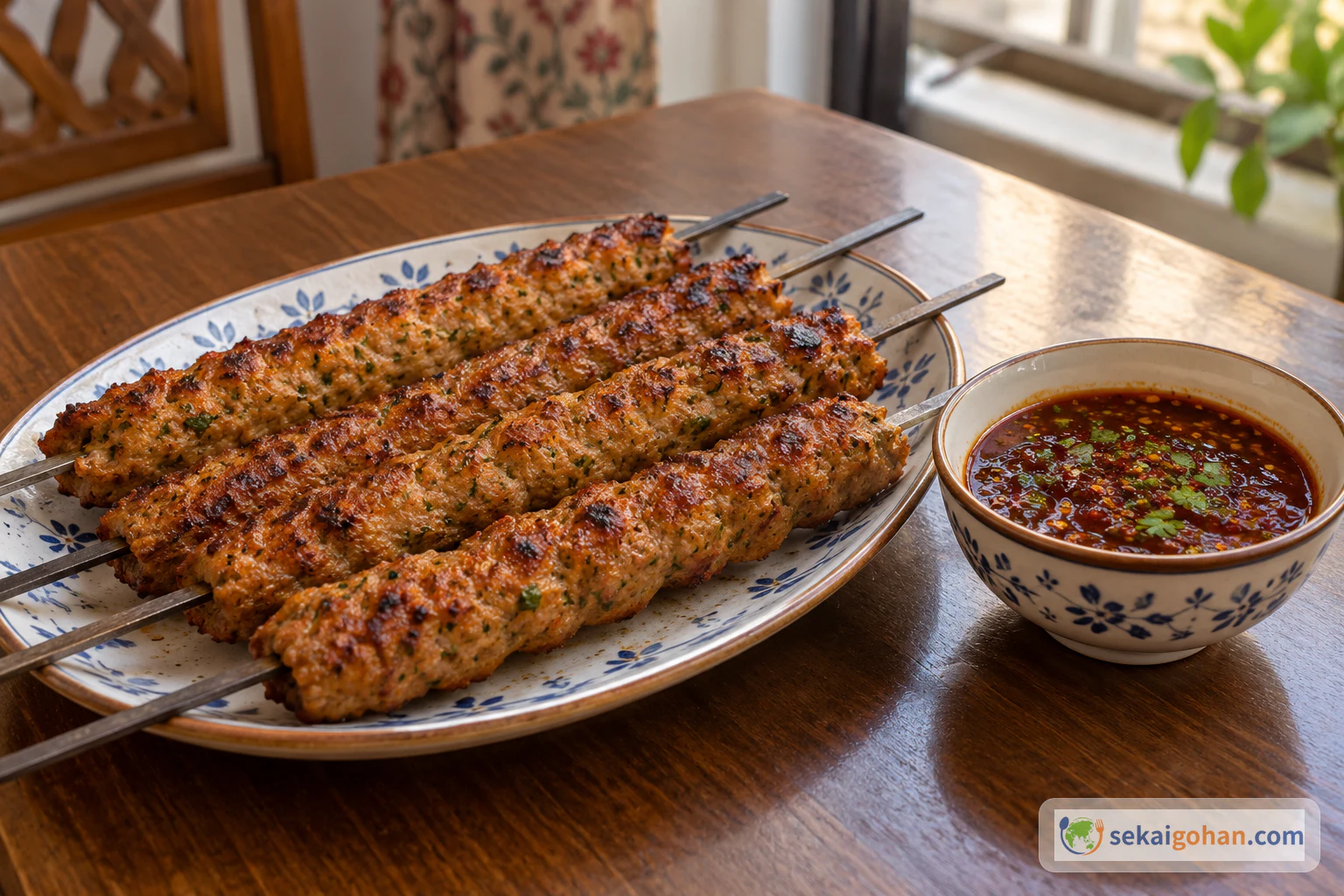
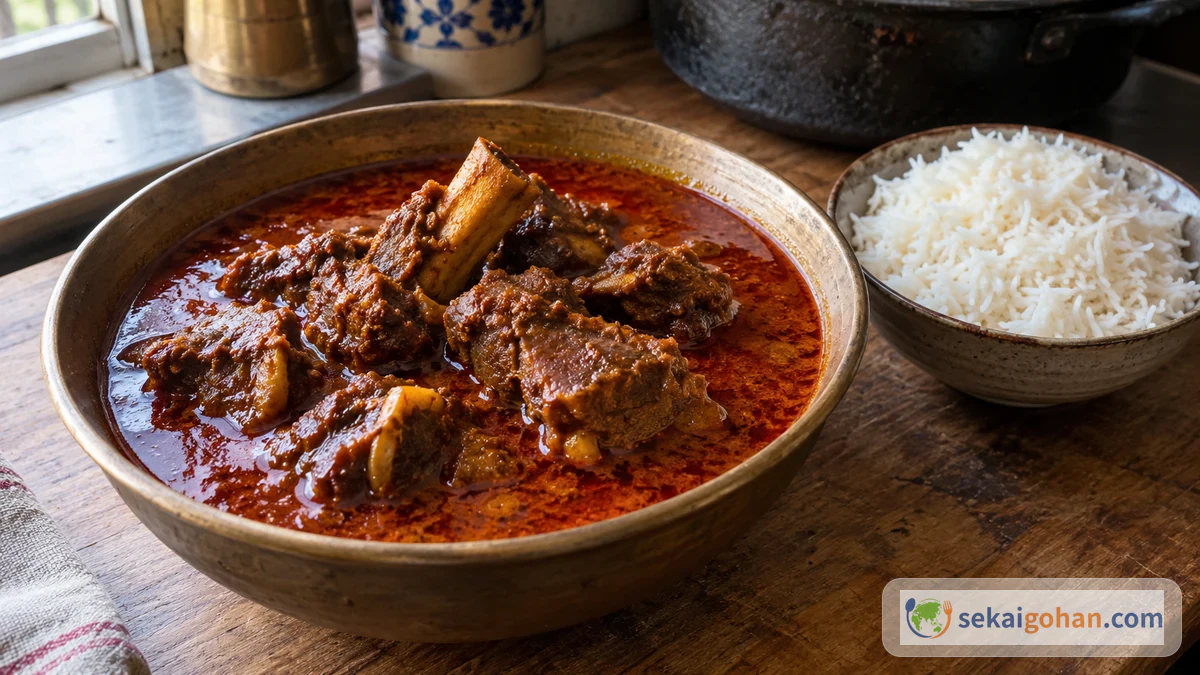
Haleem is lighter than nihari, which is heavy with bone marrow, and it can sit beside chapli kebab as a main of wheat and meat. Armenian harissa is also wheat and meat cooked and mashed together, but Pakistani haleem goes further with lentils, spices and garnishes.
In haleem, the meat, wheat and lentils are mashed together into one. Khichra keeps the meat and grains more distinct. This recipe makes a smooth, Pakistani home-style haleem you can scoop up with naan.
Ingredients: think of wheat, lentils and meat separately

This makes 6 servings. Haleem scorches easily in small batches, so cook the full batch. Chuck, shank or a block of round all work for the beef, but choose a chunk rather than thin slices, since it is cooked long and shredded.
This recipe contains wheat, beef and dairy. It uses ghee and yogurt; to avoid dairy, cook with neutral oil, leave out the yogurt, and add 2 tsp lemon juice to the meat seasoning for a different flavor. Store-bought fried onions may be made in facilities that handle wheat, milk and tree nuts, so check the label.
What is worth shopping for online is not the meat but the cracked wheat, lentils and strongly scented spices. Buy beef, onions and yogurt locally and gather only the dry goods in one order to cut waste. Many of these ingredients also go into khichdi and biryani, so it is an easy dish to buy for if you plan to keep cooking South Asian food.
How to read the nutrition information
The whole recipe makes 6 servings. Per serving, it has about 650 kcal, around 1.25 oz (35 g) protein and around 1 oz (29 g) fat. Reducing the ghee and fried onion lowers the fat, but the aroma and satisfaction also fade. As a dinner main, serve one naan; as a light soup course, use small bowls with a salad on the side.
Choosing ingredients and substitutes for haleem

Texture matters more than aroma here. The cracked wheat and lentils should break down well, fine threads of meat should run all through it, and when you tilt the spoon the haleem should fall slowly. Get that right and it eats like haleem even if the spices are a little mild.
Three things should stay the same: a coarse grain, lentils that fall apart, and the finishing garnishes. Coarse bulgur can stand in for cracked wheat, but a fine grain like couscous turns pasty quickly. If you have no chana dal, use more red lentils. Red lentils alone make it too light, though, so keep some chew with pearl barley or rolled barley. For the meat, beef shank, chuck and lamb shoulder all work, so buy whichever is easiest to find.
Method: simmer on low heat, then stir until it becomes one
Don't simmer the meat and grains together from the start. Soften them separately, then combine. Grains sink to the bottom and meat takes time to cook through, so one pot scorches easily and leaves grains behind even after stirring.
Troubleshooting haleem: watery, scorched or grainy

The hard part in a home kitchen is the thickness. If you combine the meat with the wheat and lentils before the grains are soft, the grains stay whole and the texture turns gritty. Too much water keeps the bottom from scorching but makes the porridge taste thin. That's why this recipe softens the meat and the grains separately, combines them, and finishes with a final stir over low heat.
Most failures come down to two causes: the water cooked off before everything got soft, or the pot wasn't stirred enough after combining.
| Condition | Cause | How to fix |
|---|---|---|
| Watery | Wheat and lentils are soft, but it was not reduced enough at the end | Uncover and stir over low heat in 5-minute stretches |
| Hard grains | Not soaked enough, not cooked enough | Add ¾ cup (200 ml) boiling water and cook 15 more minutes on low heat |
| Scorched bottom | Heat too high, too little scraping of the bottom | Do not scrape the scorched part; move only the top layer to another pot |
| Chunks of meat left | Not cooked enough, shredded too coarsely | Take out only the meat and shred it finer |
| Flavor is heavy | Too few garnishes and too little acidity | Add lemon, ginger, green chili and cilantro in the bowl |
A blender gets it perfectly smooth fast, but haleem should keep some body from the grain and some meat fiber. A short blend of the wheat and lentils alone is fine. If you blend the meat in completely, the texture turns uniform and the fibers that make it haleem disappear. If the grains still bother you, mash the wheat and lentils with a masher and add the meat back afterward. That keeps enough texture that it doesn't get tiresome to eat.
Serving and storing haleem

At the table
Put the haleem in the center of a bowl and scatter the garnishes on top. Take the first bite without lemon, squeeze on lemon for the next, and add a little green chili at the end, and you'll notice how the flavor changes. Naan or roti makes it easy to scoop up the sticky parts, and it's closer to how haleem is eaten locally than white rice.
Keep the pot itself mild. In Pakistan, at restaurants and at home, everyone adds lemon, ginger, green chili, chaat masala and fried onion to their own bowl. For a family meal, put only 1 tsp red chili powder in the pot, and let people who like heat add more at the table. That way one pot works for children and older relatives too. It's also a good approach on days when you serve Kabuli palaw or samosas.
For a South Asian table, set raita beside it and add a small portion of chapli kebab for something grilled, so the meal is more than one rich porridge.
Storage and reheating
Plan on 2 days in the refrigerator. Typical cooked leftovers keep 3 to 4 days, but haleem gets handled by hand when it's served, so allow less time. Reheat until it is steaming hot throughout, 74°C (165°F). To freeze, put single portions in shallow containers and eat them within 2 weeks.
A microwave alone tends to leave the center cold. Instead, put one portion of haleem and 2 tbsp water in a pot and stir over low heat for 5 to 7 minutes, until it bubbles. If it's stiff enough that the spoon leaves a line on the bottom, add water 1 tbsp at a time. If it's runny, uncover and reduce for 2 minutes. Add lemon and cilantro after reheating so they keep their aroma.
FAQ

Q1. I have no cracked wheat. Can I use oats?
You can, but the result is closer to a different dish. Oats dissolve quickly, so replace 6.5 oz (180 g) cracked wheat with 4 oz (120 g) oats and shorten the cooking to about 20 minutes. You lose some of the grain texture and chewy sweetness, so for a first batch, I'd look for coarse bulgur.
Q2. Can I make it with chicken?
Yes, with 1.25 lb (600 g) boneless chicken thighs. Shorten the meat pot to 45 to 60 minutes, and add bone-in pieces if you want more stock flavor. Chicken doesn't have the weight of beef or lamb, so use a little more ghee and fried onion and raise the black pepper to 1 tsp to keep the flavor from going flat.
Q3. How do I adapt it for a pressure cooker?
For the meat, plan on 35 minutes at pressure and a 15-minute natural release. It's easier to judge the thickness of the wheat and lentils in a regular pot. If you cook them in the pressure cooker too, reduce the water to 1.5 quarts (1.5 L) and cook at pressure for 18 minutes. Then open the lid and stir over low heat to adjust the thickness.
Q4. How much can I prepare the day before?
You can soak the wheat and lentils, slice the onions and measure the spices the day before. You can also cook and combine the meat and wheat, refrigerate it, and stir while reheating the next day. Spread it in a shallow container before refrigerating so it cools quickly, because in a deep pot the center stays warm for a long time.
Q5. What should I serve with it to make a meal?
Haleem already contains meat, lentils and wheat, so keep the sides light: naan, a cucumber and onion salad, raita and lemon are enough. If you add one more dish, a vegetable dish such as aloo gobi suits it better than anything fried. For a meat dish, a small portion of grilled chapli kebab works better than nihari, so the spices don't double up.