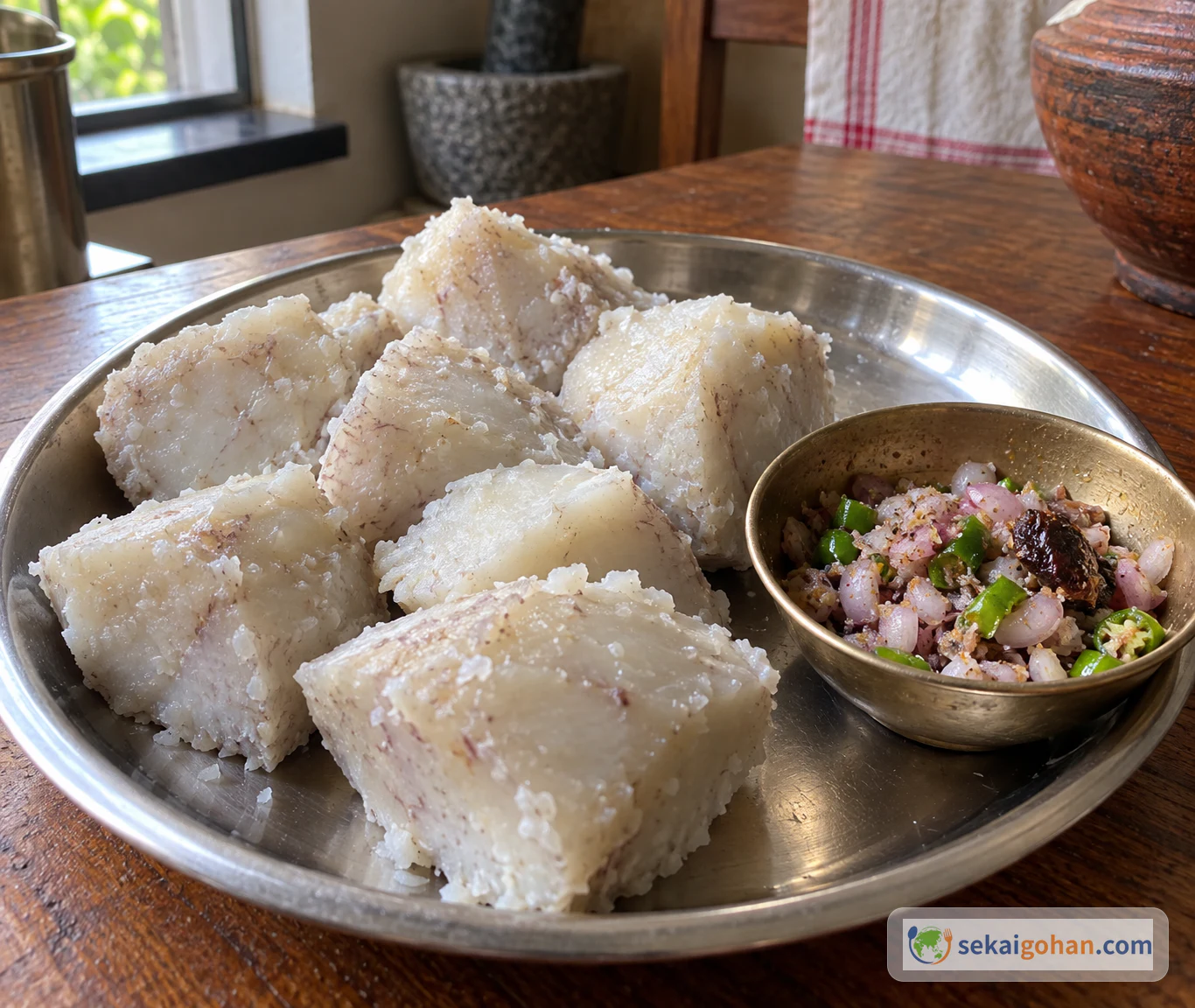
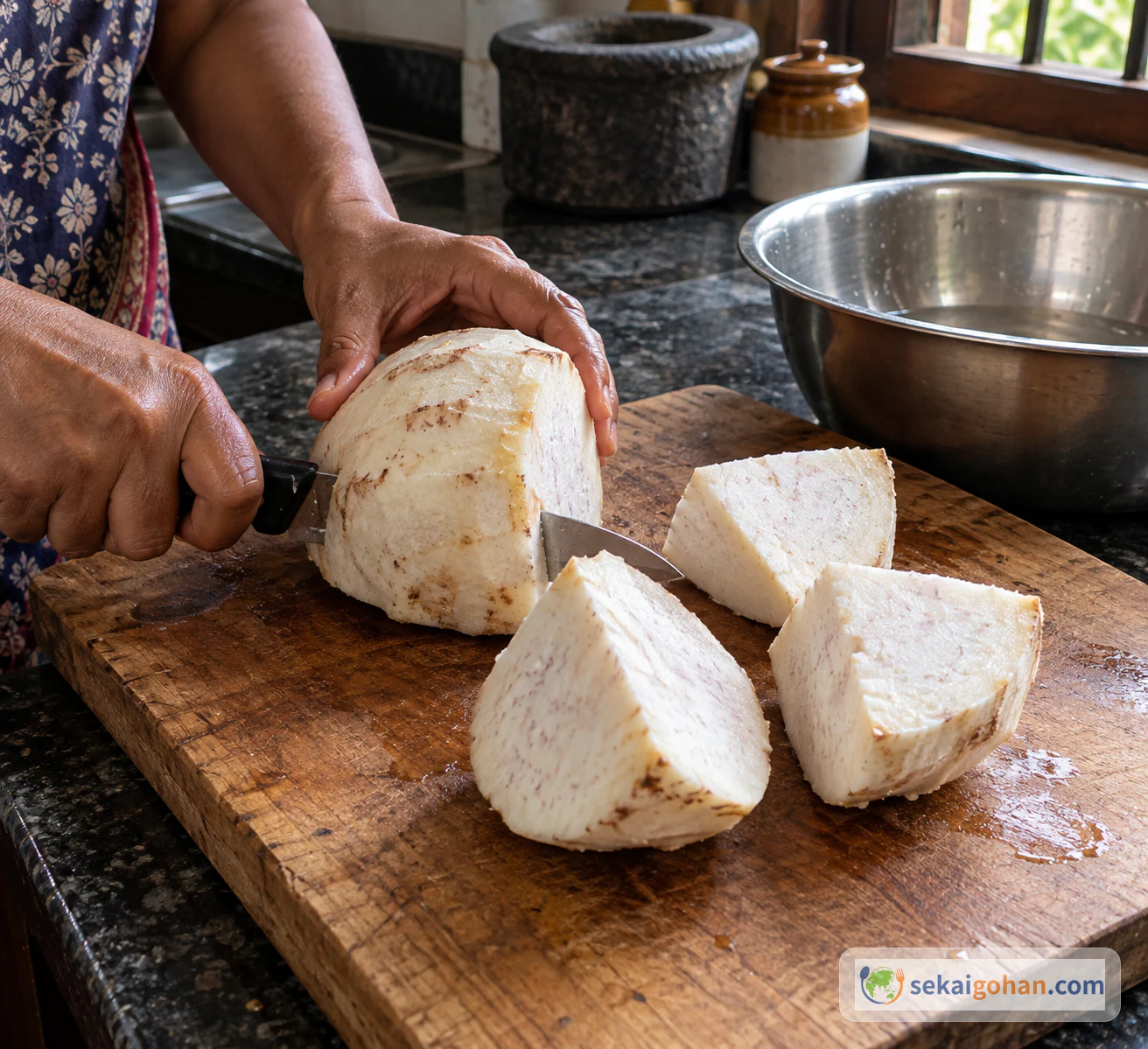
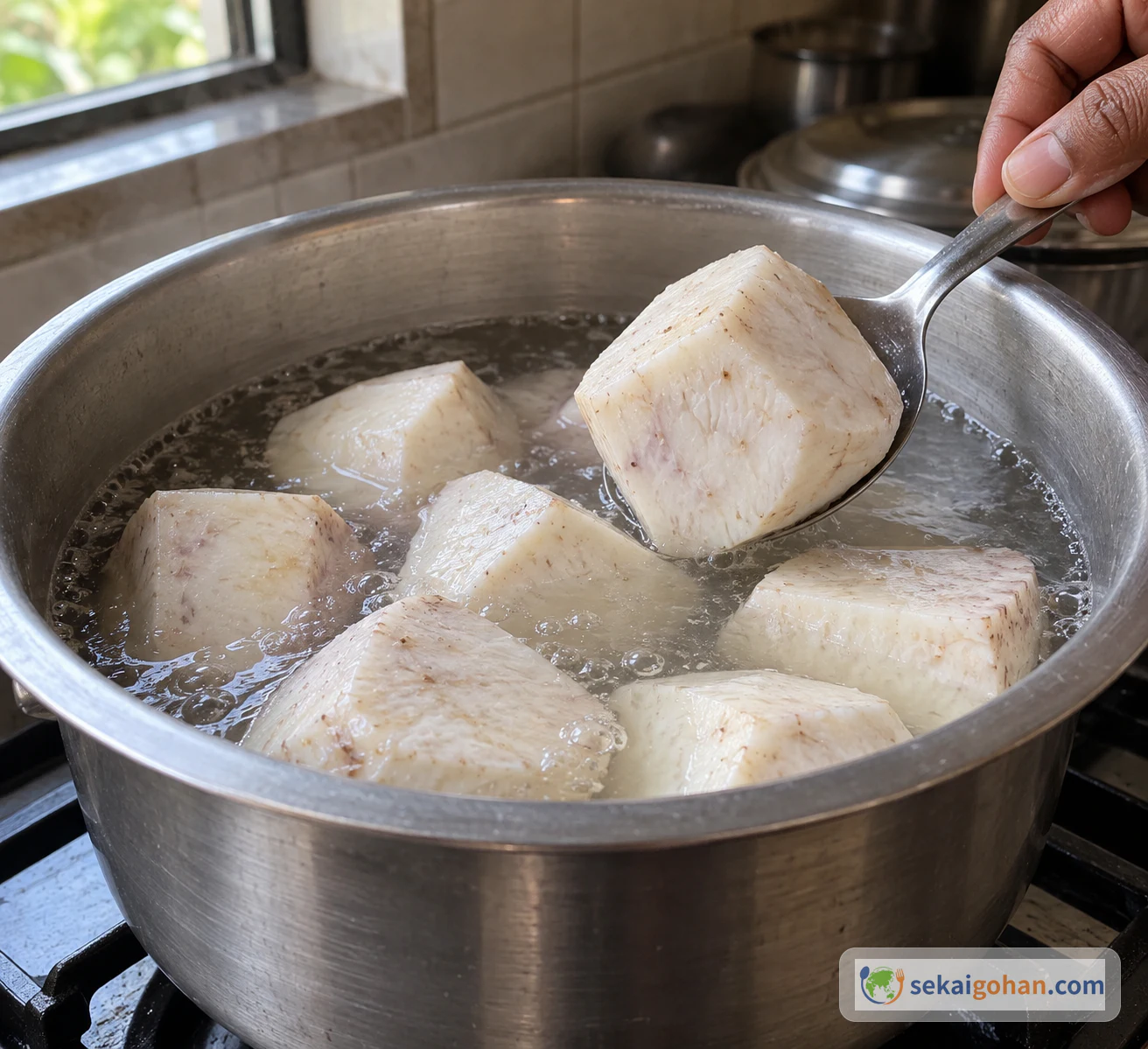
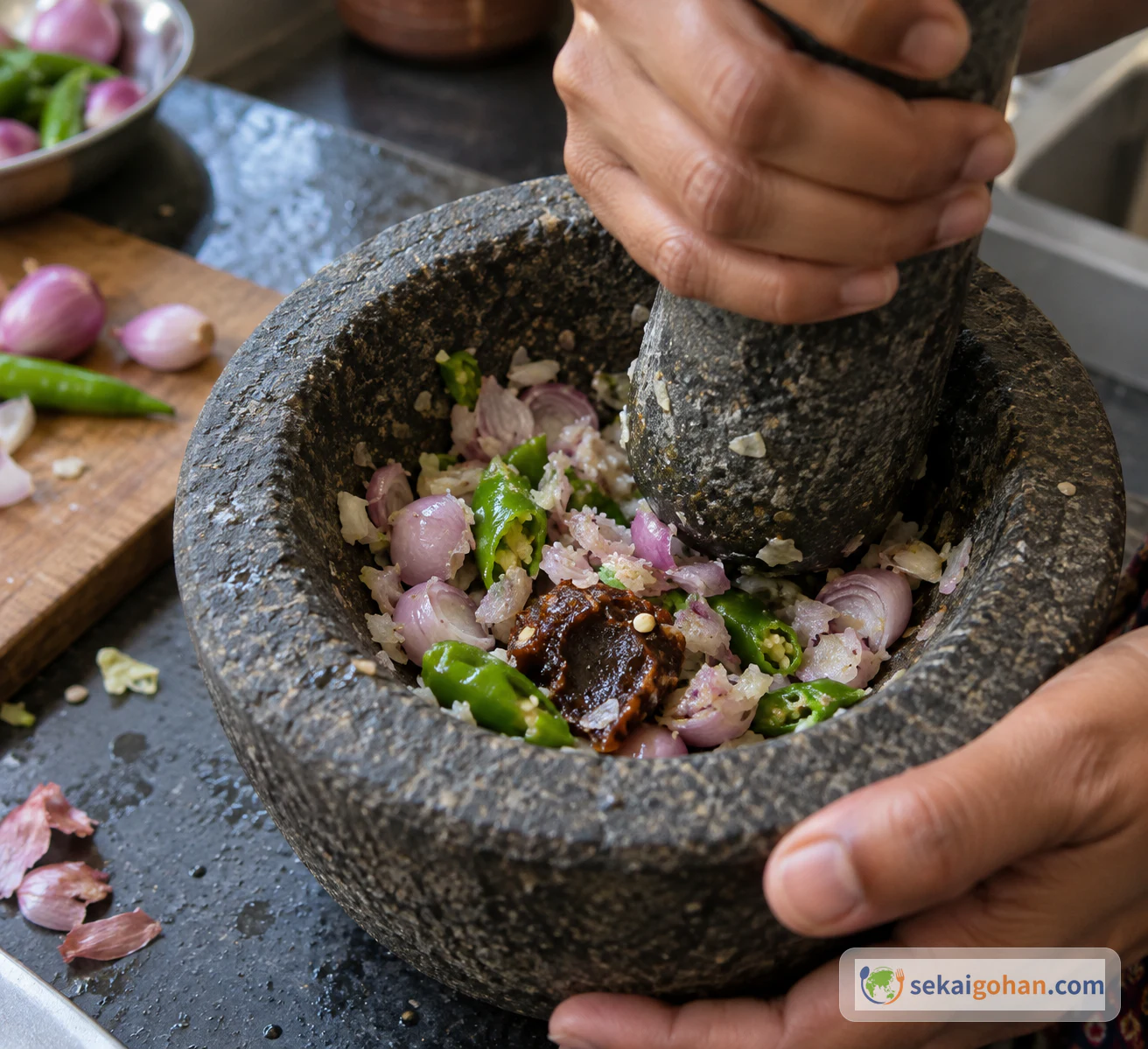
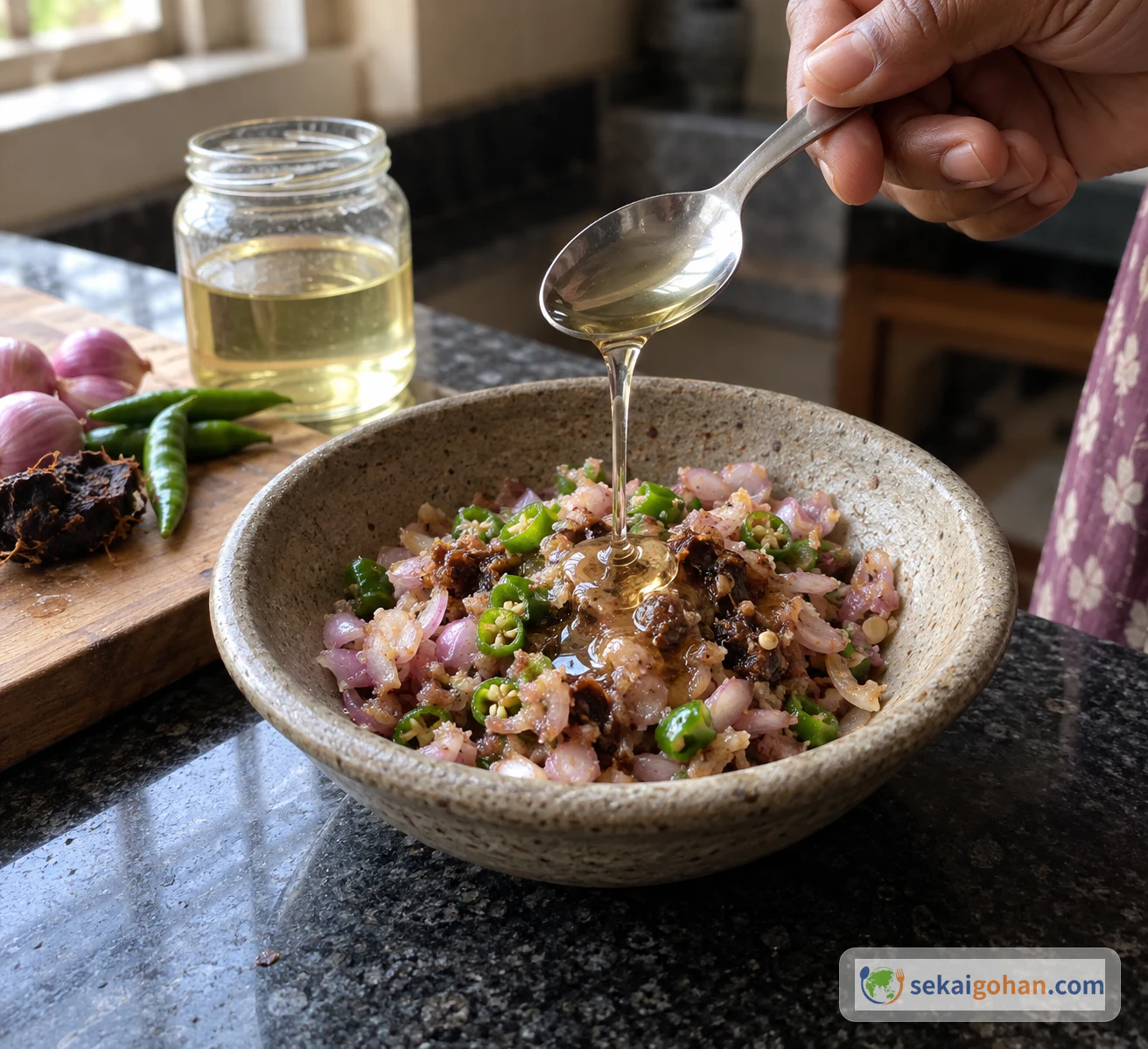
Large pieces of peeled taro come out of the pot still steaming, and beside them sits a small bowl of shallots, green chillies and tamarind crushed together into a rough paste. In Kerala this is chembu puzhungiyathu: chembu is the Malayalam name for taro, and the dish is simply the boiled corm, salted and tender but still holding its shape, with a fiery dip finished with a little coconut oil. There is no spice blend, no gravy and no tempering on the taro itself. The pleasure is in the contrast between the plain, mild corm and the sharp, hot dip, and the two stay apart until they meet on your plate.
Chembu Puzhungiyathu in Kerala
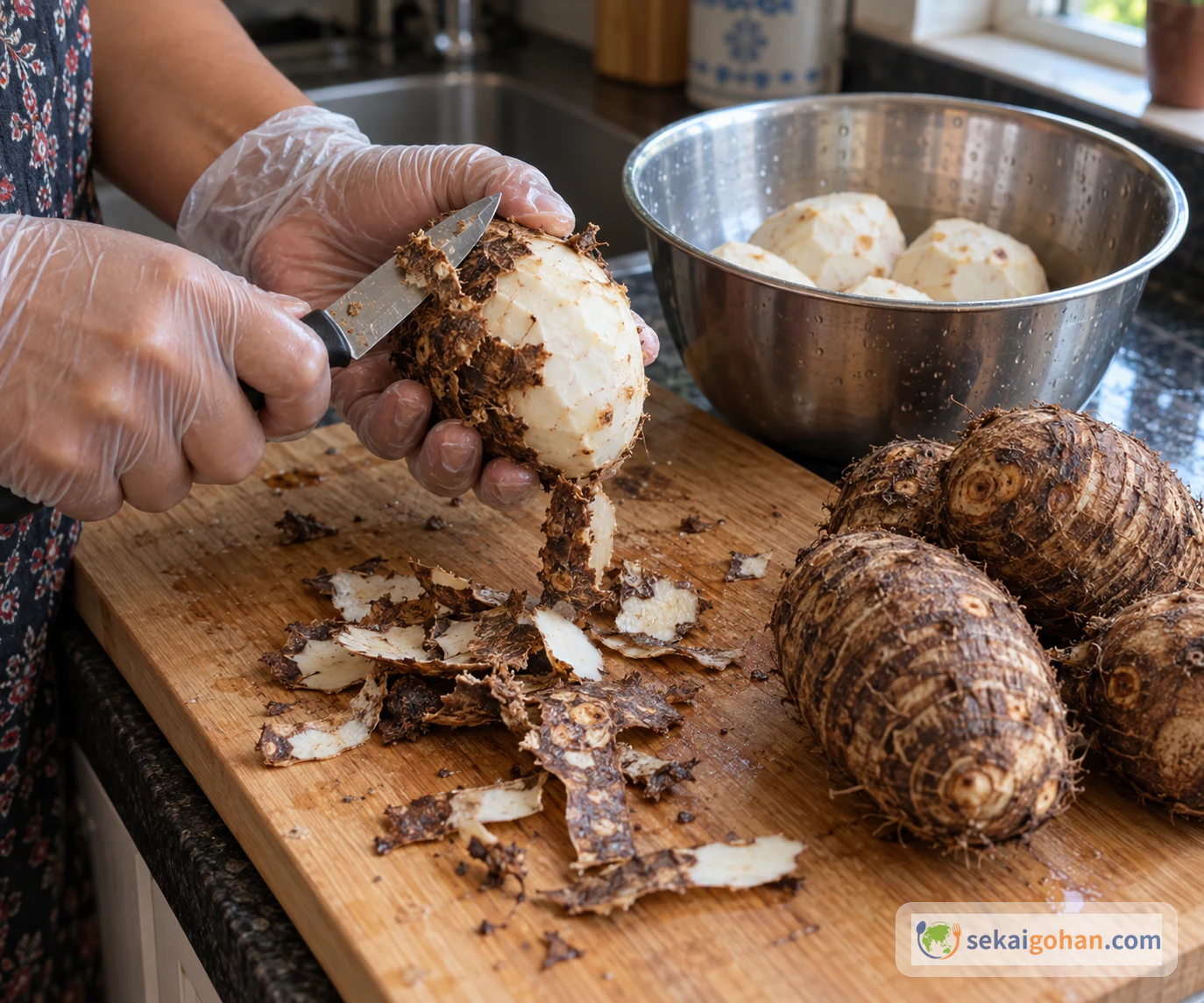
Taro, Colocasia esculenta, is chembu in Malayalam and arvi or arbi in Hindi. The dish uses the boiled corm only, not the leaves or stalks.
At the Rajapuram toddy shop in Kavalam, boiled chembu comes to the table with boiled yam and tapioca, crushed kanthari chilli and a spicy fish curry. It's a good picture of how this plain boiled taro holds its own next to stronger-tasting dishes. For more dishes from the same country, see India.
Ingredients for About 2.25 lb (1 kg) of Taro
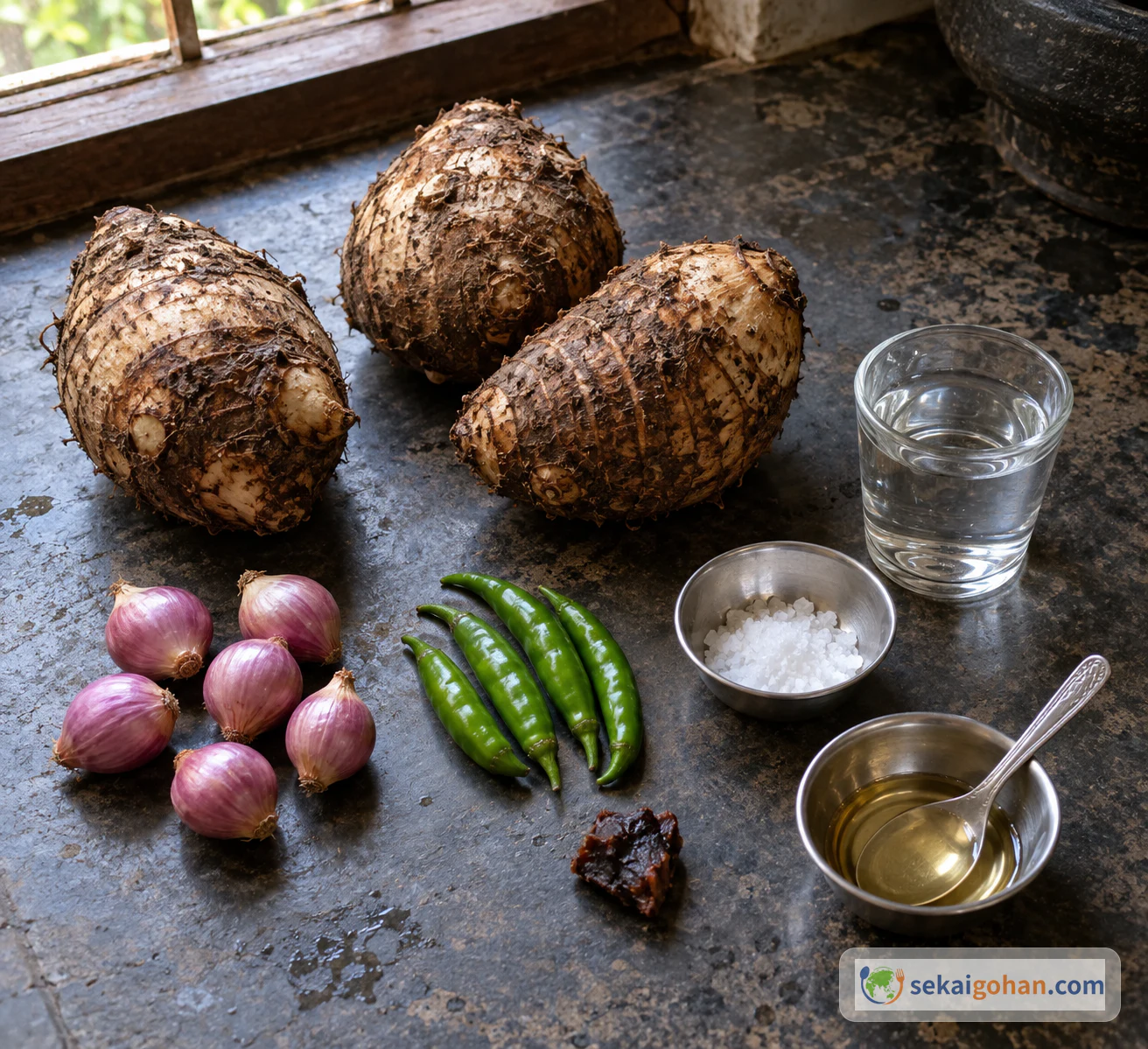
The amounts are stated for about 2.25 lb (1 kg) of taro. There are two separate salts: one for the boiling water and one for the dip.
Equipment
- Gloves for handling the taro
- Small knife and cutting board
- Large, deep pot
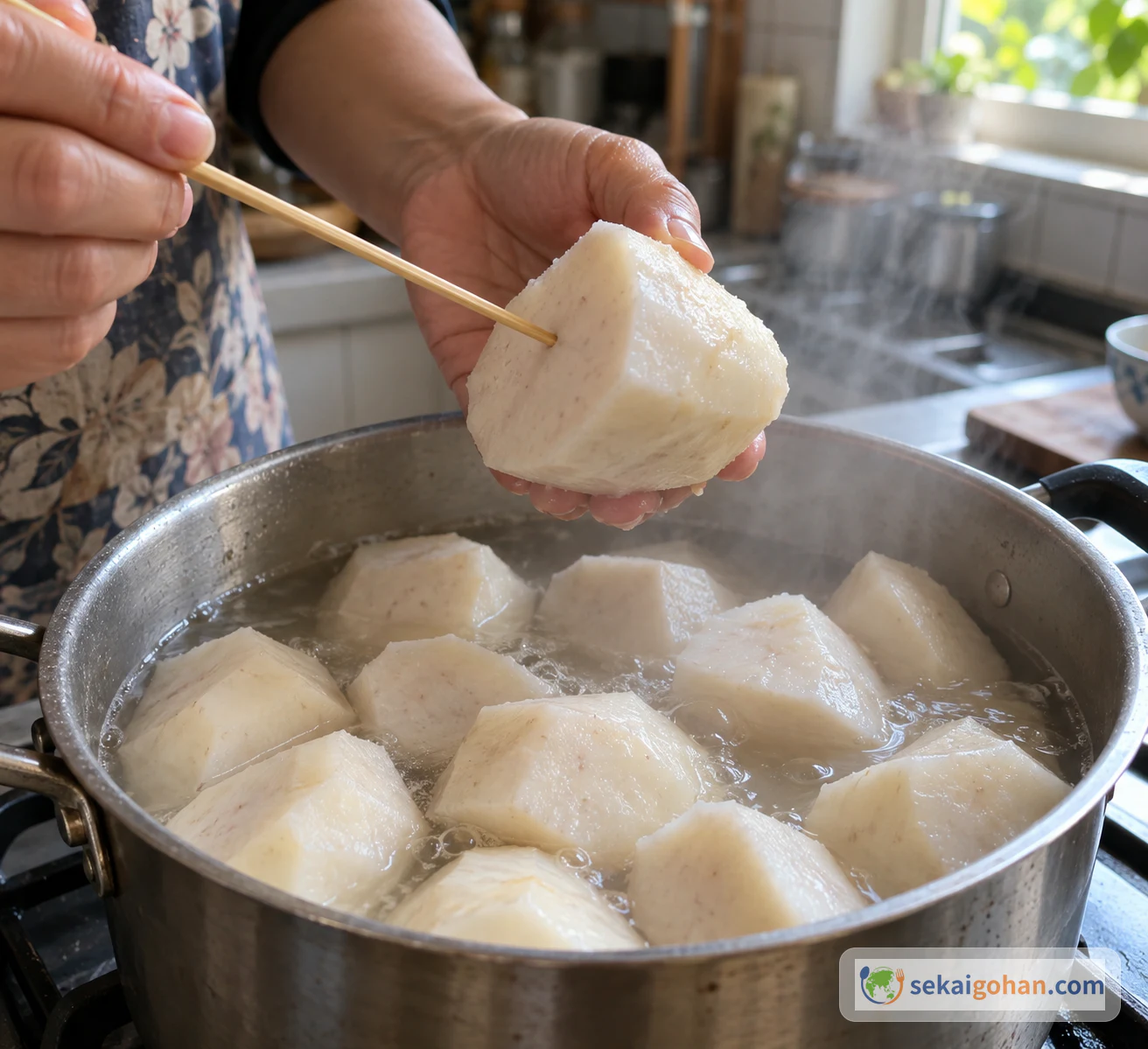
- Bamboo skewer or fork
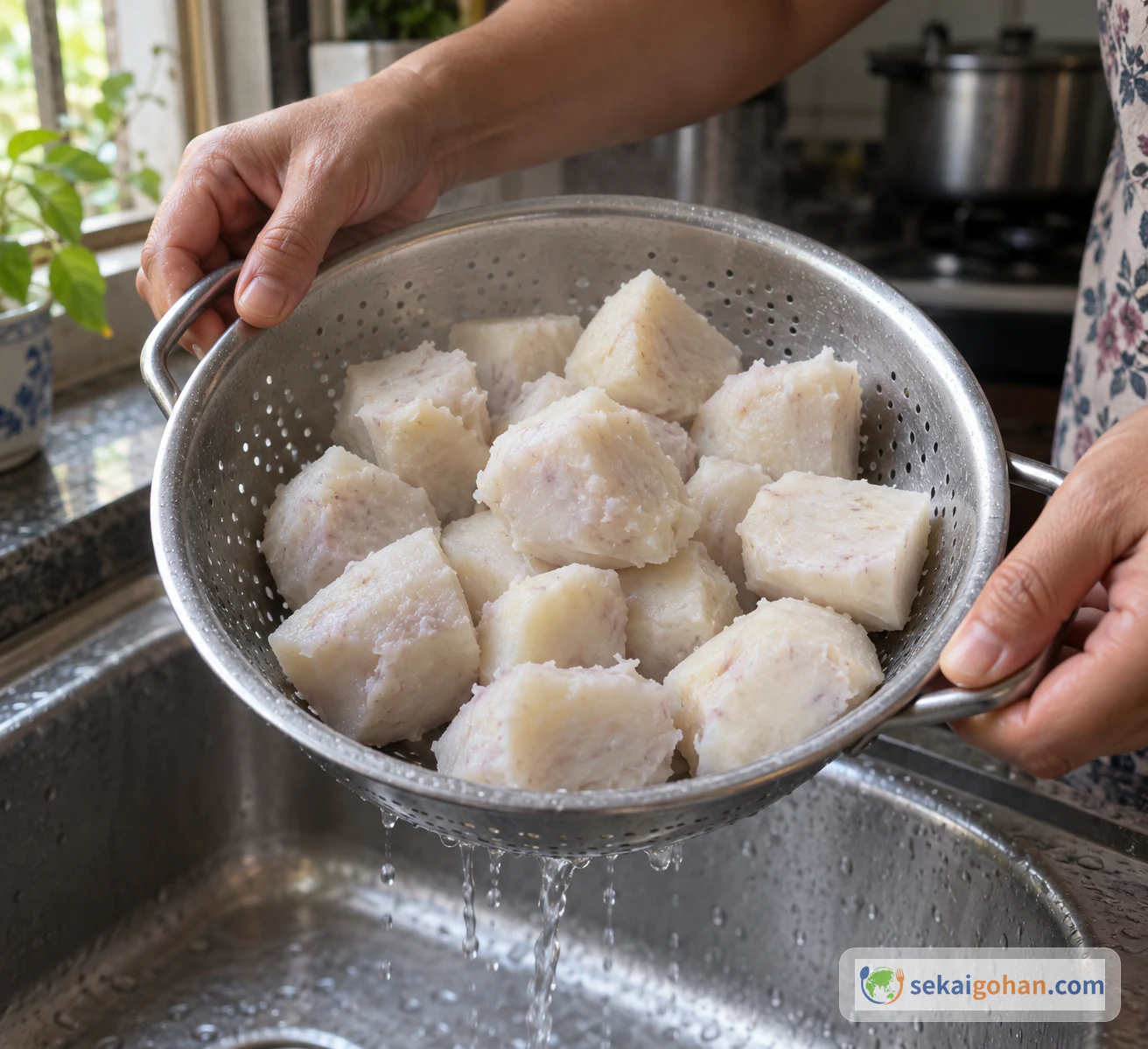
- Colander
- Mortar and pestle
- Small bowl for the dip
Choosing Taro and Substitutes
Buy edible taro from a reliable supplier, and never gather wild or unidentified taro-like plants. Peeling, cutting and thorough boiling reduce irritation from edible taro, but they do not make wild taro safe. Cook every piece through to the center and never serve it raw or half-cooked.
Look for fresh corms labeled taro, chembu, arvi/arbi or Colocasia. Malanga (Xanthosoma) can look similar in the shop, but it is a different plant, so buy by the label rather than by appearance.
Japanese satoimo is also Colocasia and may be easier to find. Its variety and size differ, so keep an eye on the pieces in the pot as they cook.
For the tamarind, use one small piece or 1 tsp tamarind paste, which saves you hunting down block tamarind. Products vary in strength, so taste the dip before you finish it.
Method: From Rough Corm to Tender Pieces and a Coarse Dip
Cook the taro until "tender but firm." There is no fixed time: test the pieces with a skewer or fork and stop when the center gives way while the piece keeps its shape.
Fixing Problems with Boiled Taro and the Dip
| Problem | Likely cause | What to do |
|---|---|---|
| The center is still hard | Not cooked long enough, or the pieces are very large | Return them to the boiling water and keep testing with a skewer. Never serve undercooked taro |
| The pieces fall apart | Boiled past "tender but firm" | Start testing earlier next time; serve the broken pieces as they are |
| The corm looks or behaves unlike taro | Malanga (Xanthosoma) or an unidentified corm was bought | Buy produce clearly labeled as edible taro/Colocasia from a reliable supplier |
| The dip is too hot | Four green chillies are strong for some eaters | Use fewer or milder chillies next time |
| The dip is far too sour | Both tamarind piece and paste went in | Use only one of the two |
Serving Chembu Puzhungiyathu and Variations
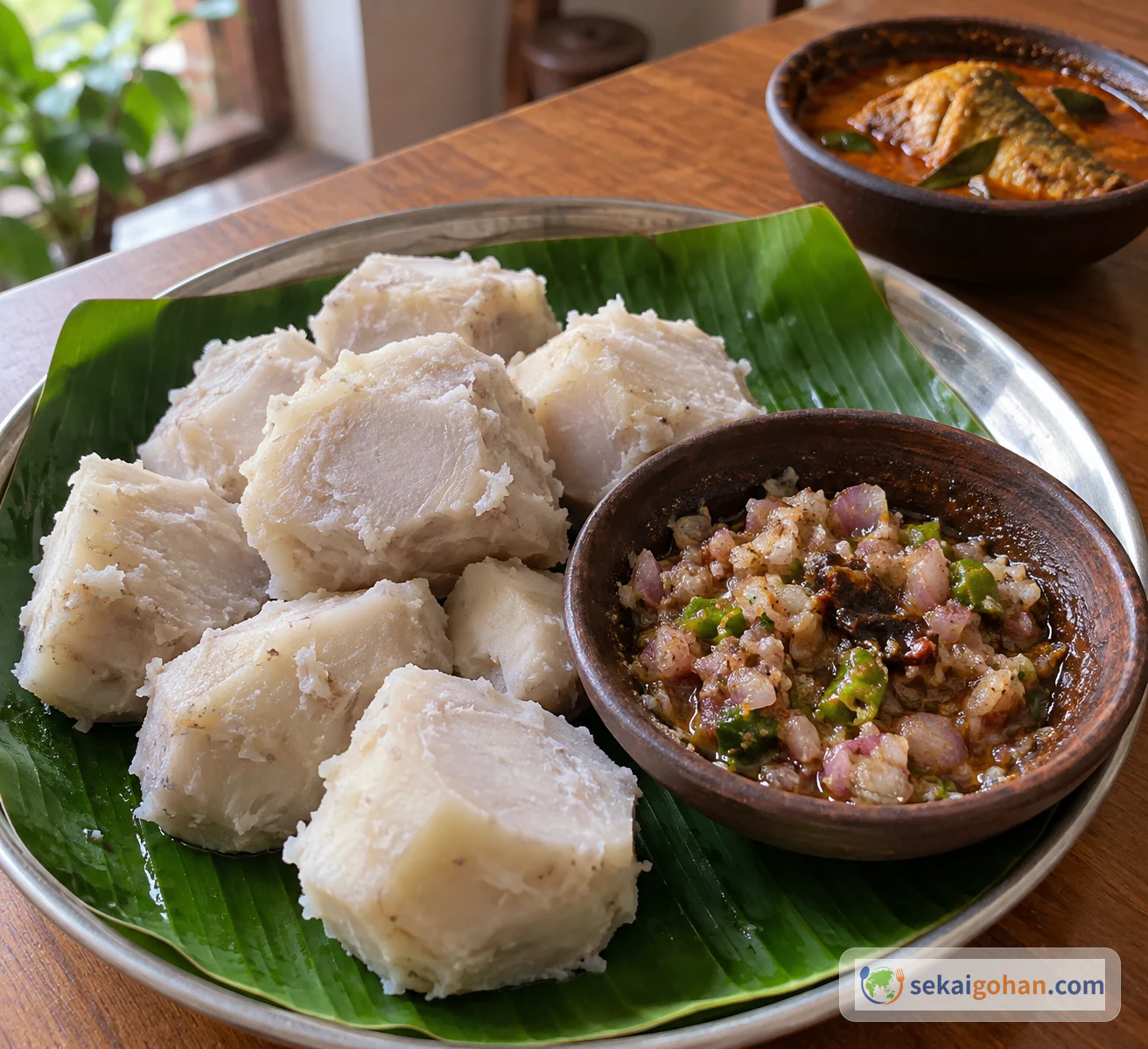
Serve the drained taro hot with the dip on the side, so everyone can take as much heat as they like. If there's a fish curry on the table, as at the Kavalam toddy shop, set it alongside. Eat it freshly made.
The dip is easy to adjust. Crush the shallots more or less to suit you (the base recipe calls for a coarse crush), and choose milder green chillies, or fewer of them, if you want less fire. Another Kerala recipe serves boiled chembu with mulaku pottichathu, a separate dip of yogurt, pearl onions and green chillies; use it in place of the tamarind and coconut oil dip rather than mixing the two.
Frequently Asked Questions
Are malanga and taro the same?
No. Malanga is Xanthosoma and taro is Colocasia esculenta, two different plants. This recipe uses taro.
How many minutes should I boil it?
There is no fixed time. Boil until the center is tender all the way through and the pieces are still intact, testing with a skewer or fork.