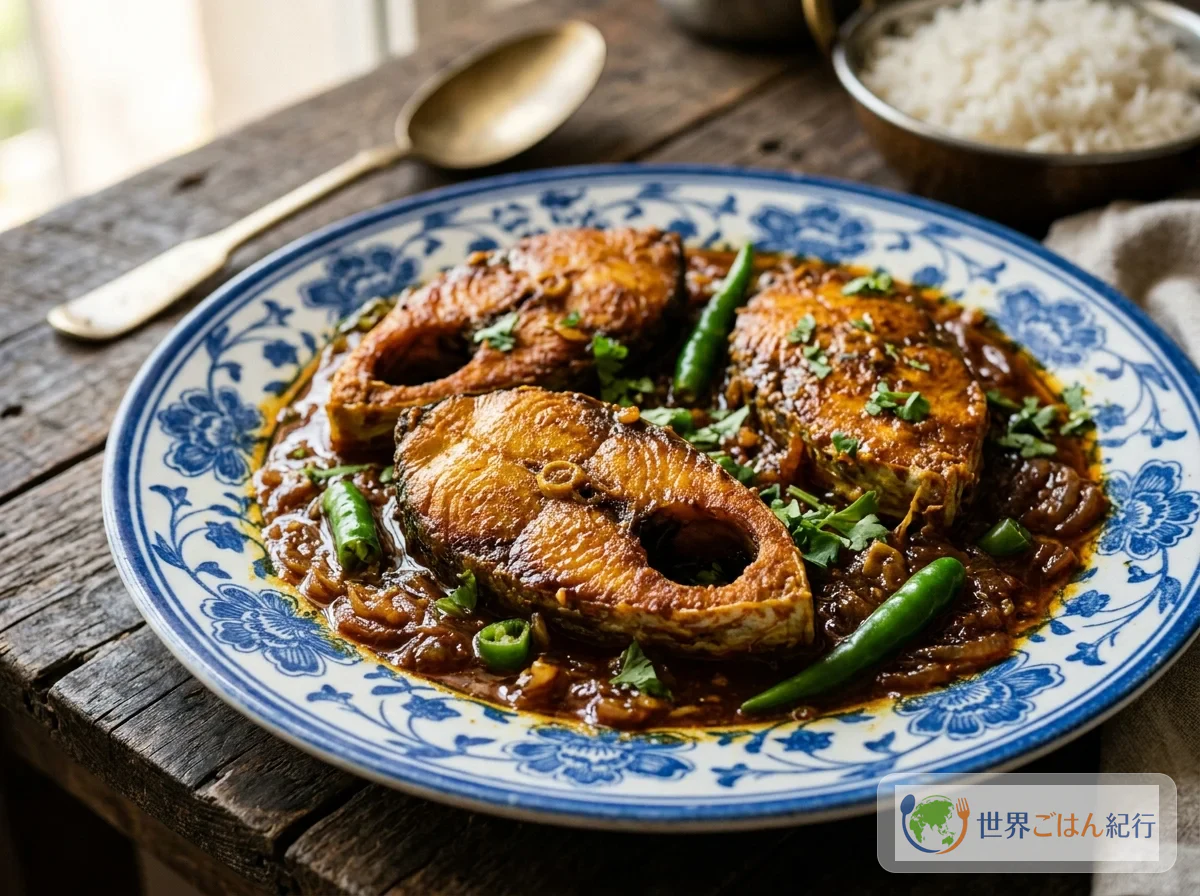
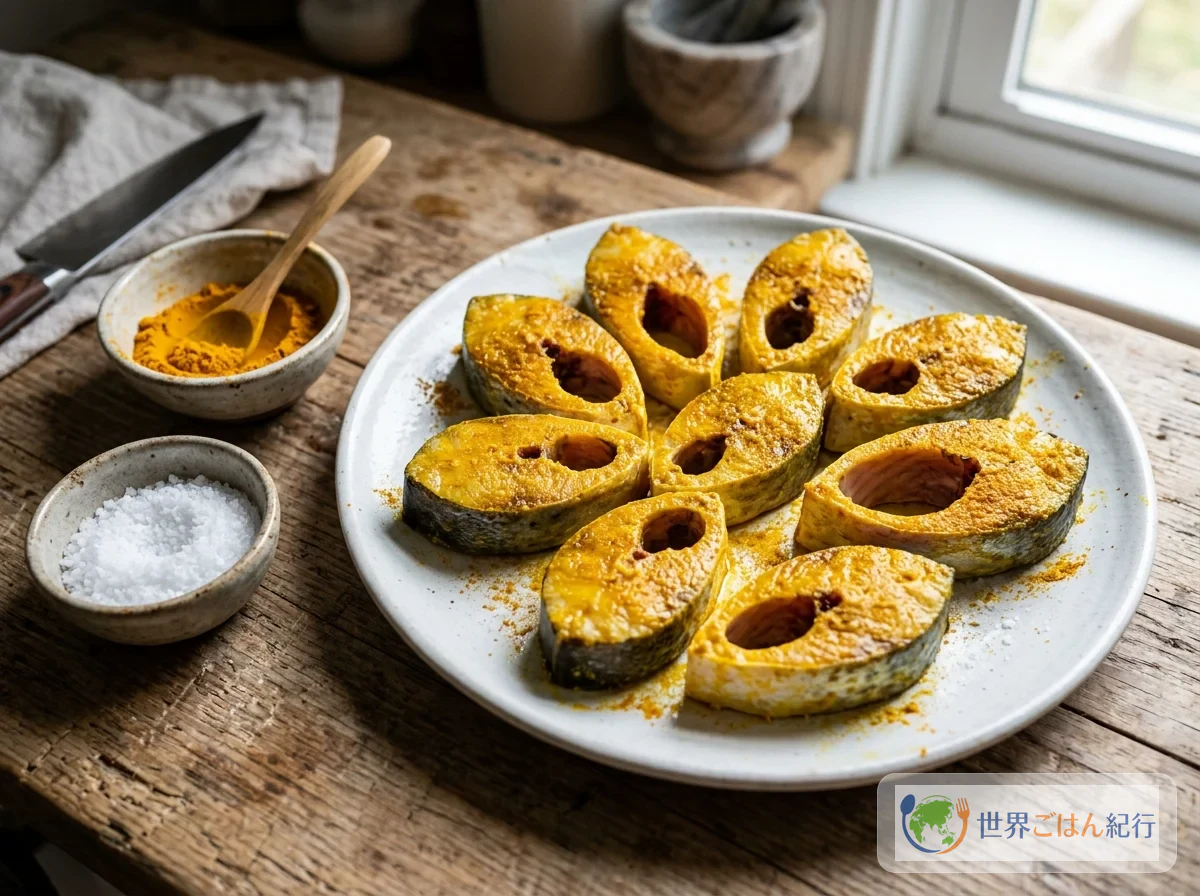
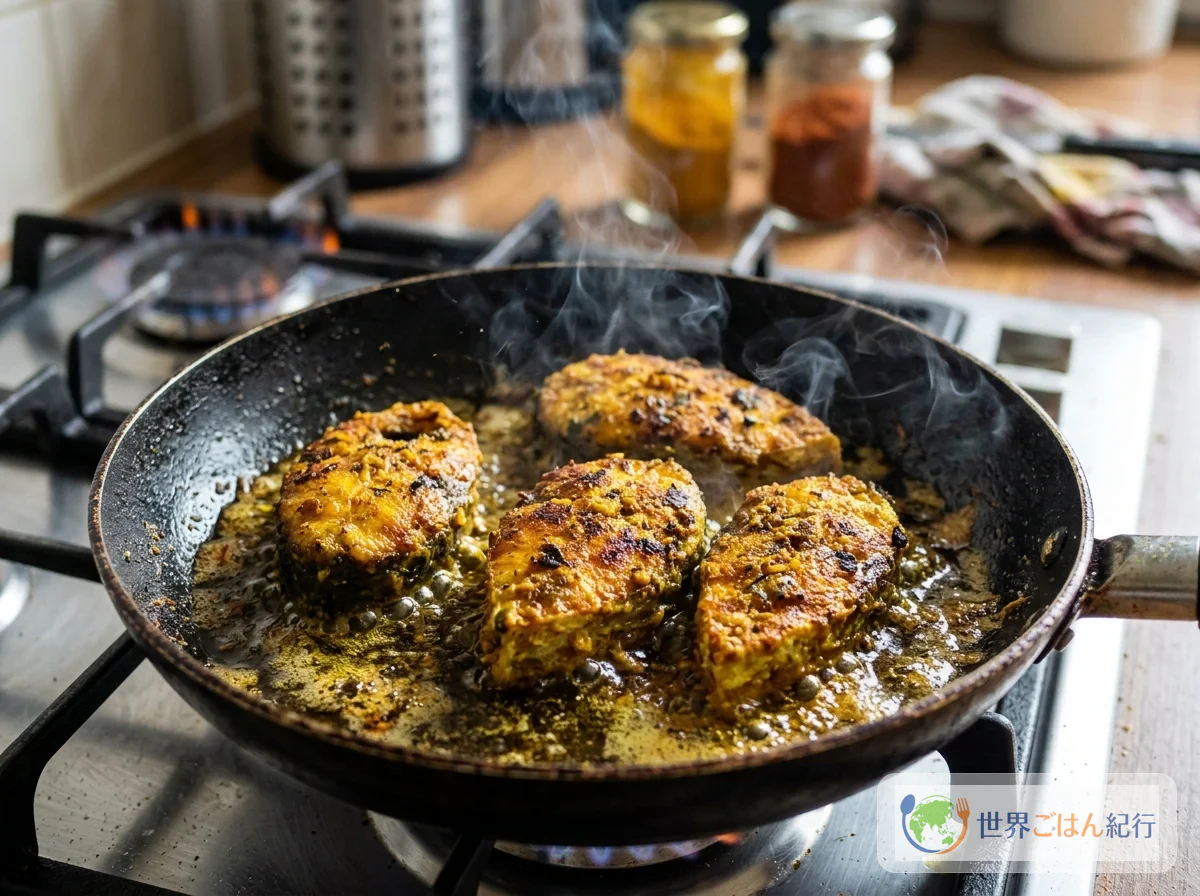
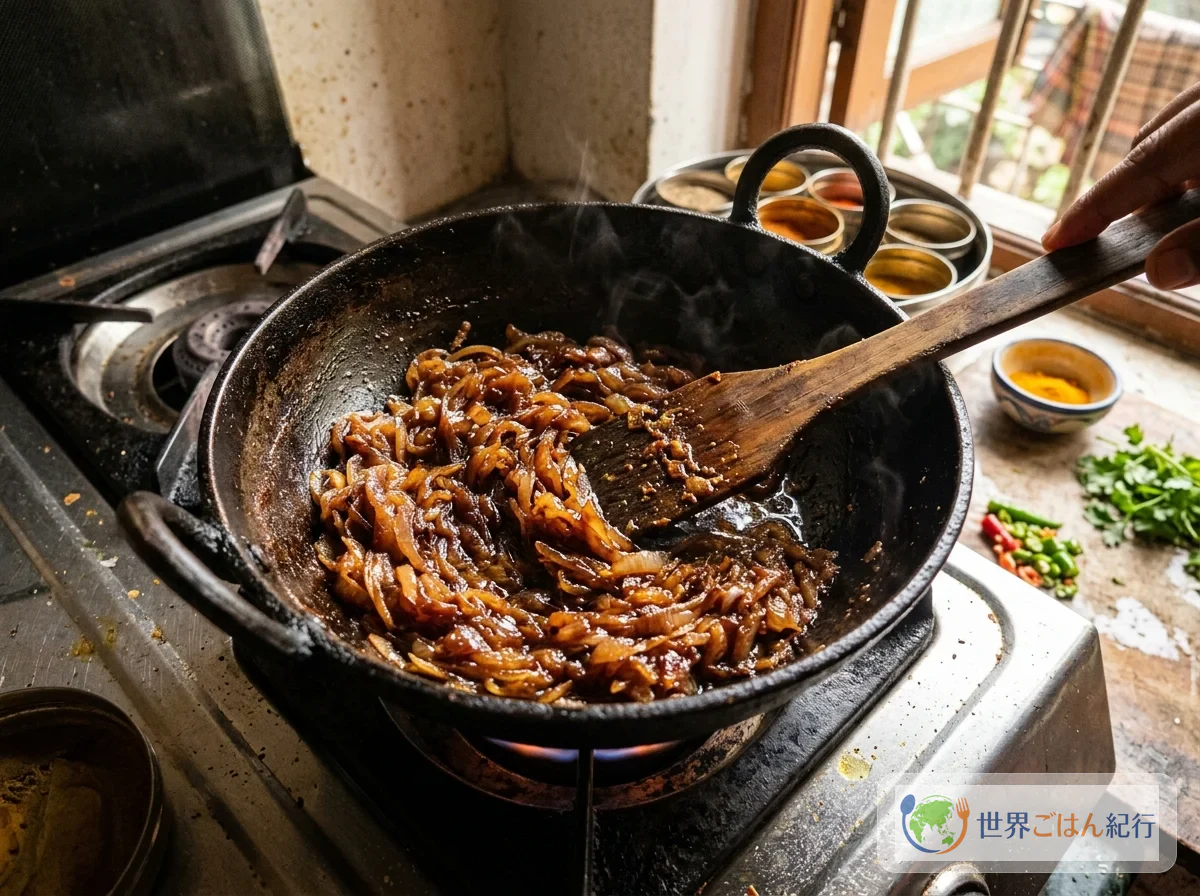
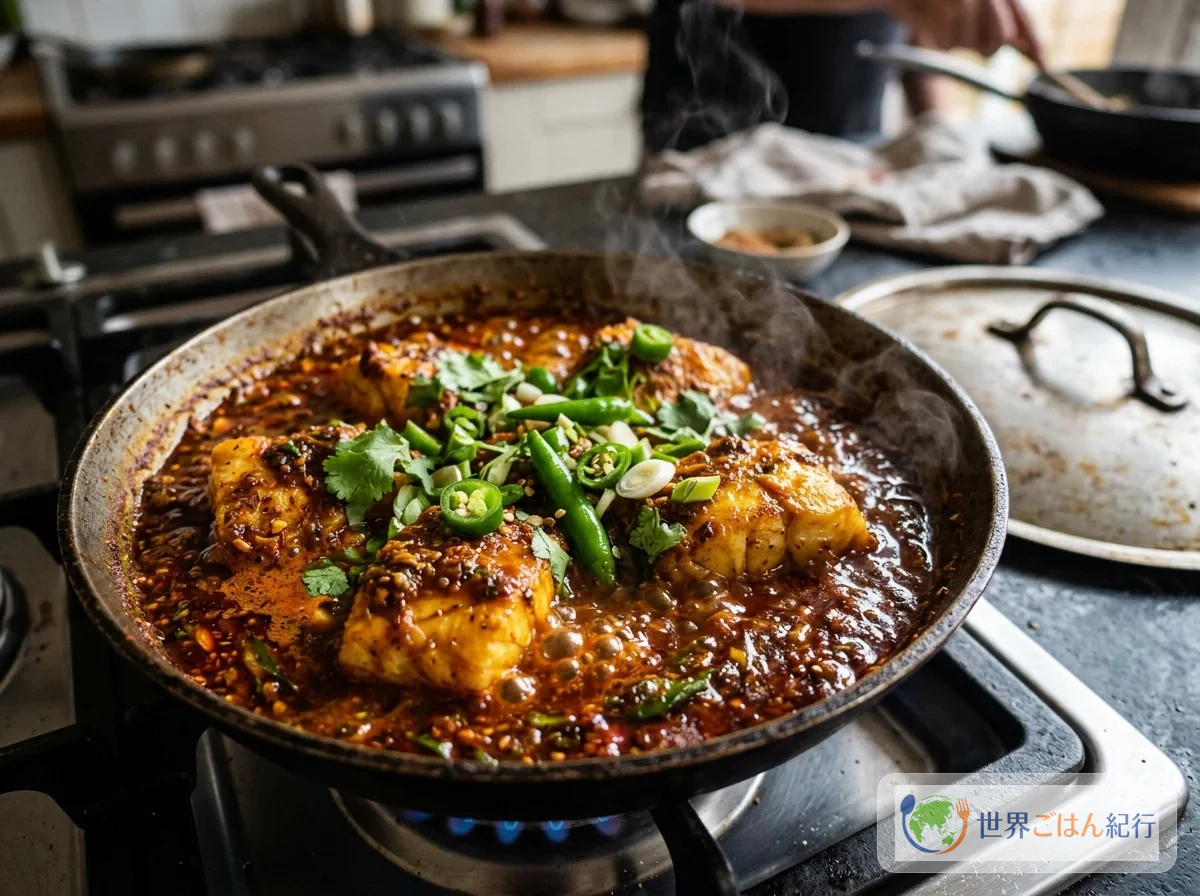
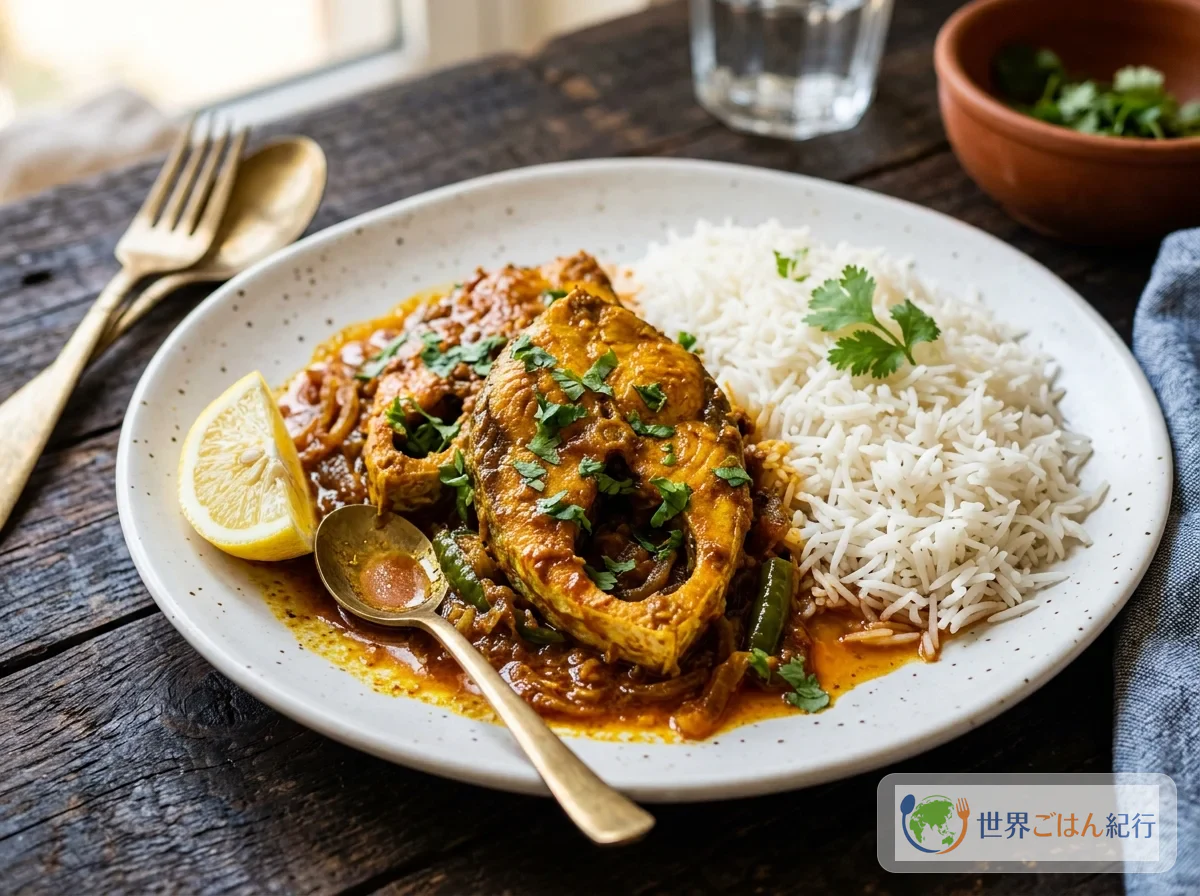
Heat mustard oil in a skillet and the first thing that reaches you is its sharp, pungent smell. Then you lay in the turmeric-coated fish. When the silver skin has turned yellow and the oil quiets a little, the kitchen already smells of Bengali fish cooking. Ilish bhuna (Ilish Bhuna) is a Bangladeshi fish curry: hilsa (Ilish / Hilsa) fried and coated in a sauce reduced from onion, tomato, garlic, ginger, and spices. It is rich with the fish's own fat, warm with chile, and made to be eaten with plenty of rice.
Ilish bhuna and hilsa in Bangladesh
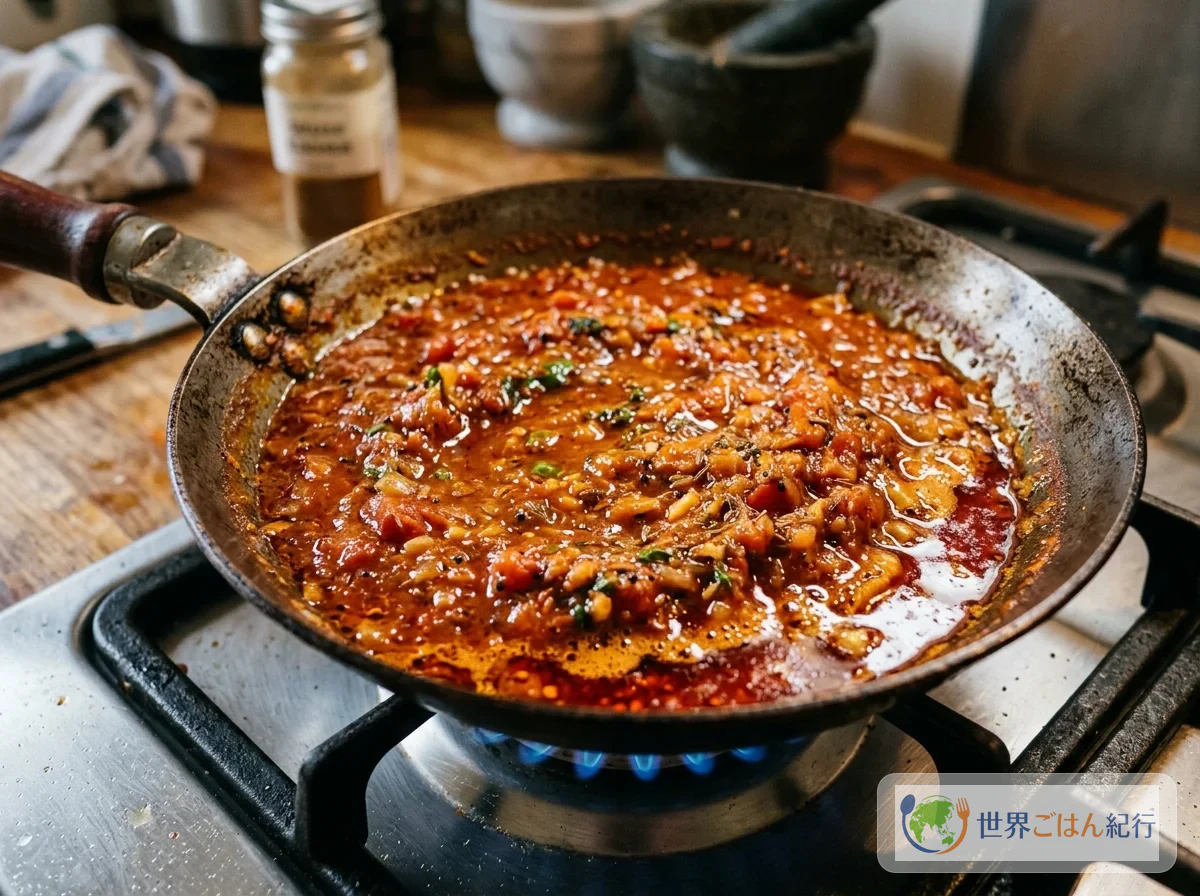
Bhuna is a method more than a recipe: you fry the oil and aromatics, then reduce the sauce until it clings to the fish instead of pooling around it. The result is lighter than rich haleem, and it works more as a main dish than the strongly scented aam er achar. Two things decide the dish: handling a bony fish without breaking it, and reducing the sauce until the oil seeps out.
Hilsa is a migratory fish and the national fish of Bangladesh. Because it moves between the sea, estuaries, and rivers, people name it after the waters it swims in: the Padma, the Meghna, the Jamuna, and the Bay of Bengal. Bangladeshi food is built on rice and fish, and hilsa sits at the top of those fish, prized for its taste and for the way season, market, gift-giving, and family memory gather around it.
On the days hilsa is served, the talk at the table starts with the size and origin of the fish. Even simply grilled, a fatty cut smells rich, and with mustard and green chiles it calls for a lot of rice. It has many bones and asks for some care as you eat. That is part of eating hilsa.
Ilish, Hilsa, and Hilsha are spellings of the same fish. Its scientific name is Tenualosa ilisha. In Bengali it is written ইলিশ.
Ingredients (serves 4)
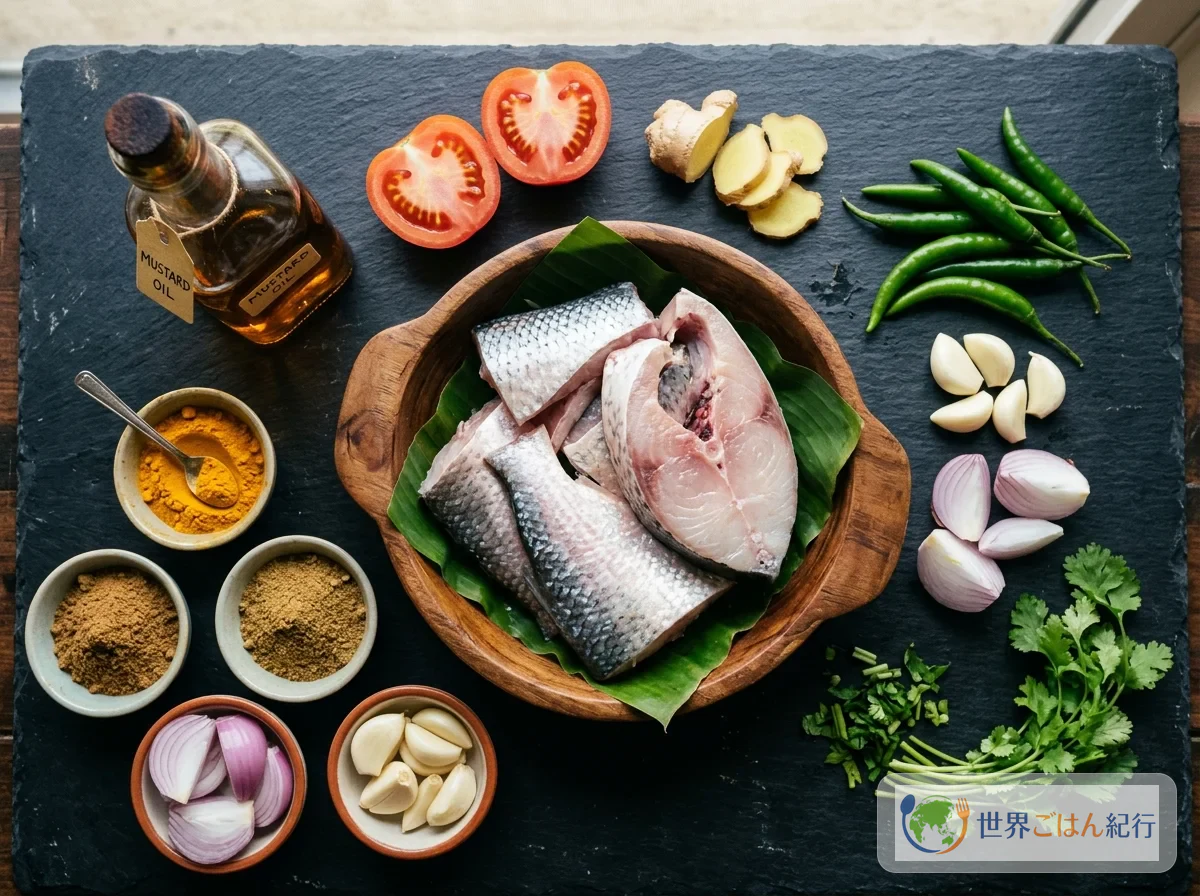
Use a skillet about 9.5 inches (24 cm) in diameter, or a shallow heavy pot. Keep the hilsa pieces whole, so a wide-bottomed pan is easier.
This dish contains fish and mustard. Hilsa, herring, mackerel, and sardines have many small bones. When serving children or older people, make it with mackerel fillets or Spanish mackerel, whose bones are easy to remove. It has no shellfish or dairy.
Choosing fish and mustard oil for ilish bhuna
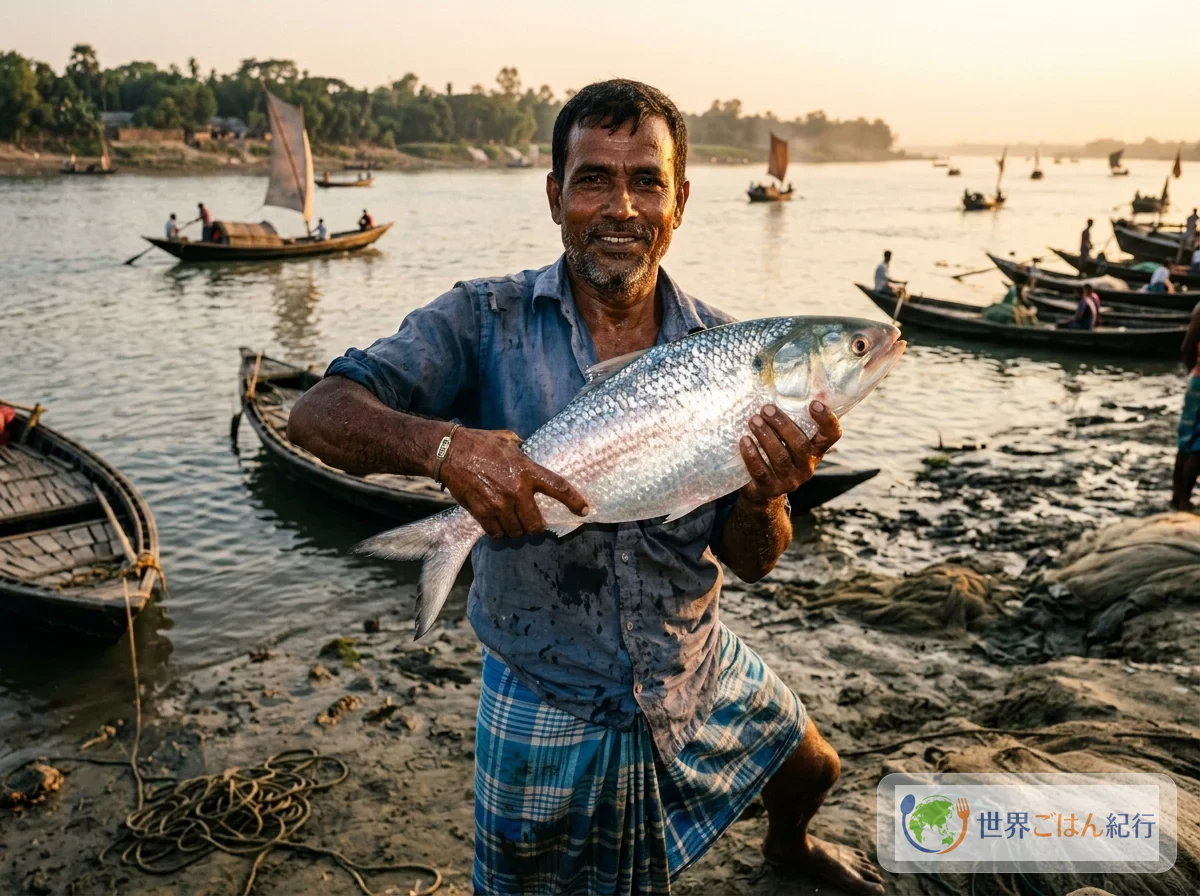
Real hilsa is the first choice, but it is hard to find in an ordinary supermarket. Look for it frozen at South Asian grocers, and expect size, fat, and bone fineness to vary from shop to shop. It's worth practicing the heat with an easy-to-find fish first, then moving on to hilsa from an import grocer. Fatty herring, mackerel, and sardines are the best stand-ins, because mustard oil, turmeric, and green chiles are there to meet a rich, robust fish, and a fat the spices can cling to suits this dish better than a light white fish.
| Fish | Why it works | Adjustment |
|---|---|---|
| Hilsa | Closest in aroma, fat, and bones | Breaks easily, so don't flip |
| Herring | Same family of fat and small bones | If the fillets are thin, shorten simmering to 6 minutes |
| Mackerel | Strong fat that holds against spices | Reduce mustard oil to 3 tbsp and add a little more lemon |
| Sardines | Cheap, fatty, goes with rice | If small, sear 1 minute per side |
| Spanish mackerel | Few bones, easy to eat | The fat is lighter, so reduce the sauce a bit thicker |
| Cod | Low fat, flesh breaks easily | Low priority as a substitute |
Whatever fish you use, keep its fat and the thickness of the sauce in mind. With a lean fish, the tomato and spices come too far forward, so reduce the water to ½ cup (100 ml) and make the sauce a little thicker so it coats the fish and still tastes full over rice.
Buy the fish, onion, tomato, garlic, and ginger nearby, and look for edible mustard oil, garam masala, and basmati rice at South Asian grocers or online. Mustard oil comes first. It goes into aloo bhorta, ilish bhuna, and aam er achar, so if you cook Bangladeshi food regularly, the bottle won't go to waste.
How to make it: keep the fish whole, reduce the sauce
Sear the fish, make the sauce, return the fish. These are the three stages. Hilsa is fatty and breaks easily, so don't move it around when searing or simmering.
Hilsa and herring have many small bones. At the table, rather than breaking the fish up and mixing it into the rice, first lift off bits of flesh a little at a time, avoiding bones, and combine them with the rice. If bones worry the table, fillets of mackerel, Spanish mackerel, or yellowtail let people eat calmly.
Common problems with ilish bhuna
| Symptom | Cause | Fix |
|---|---|---|
| The fish breaks | Seared too lightly, or flipped while simmering | Sear the surface first and spoon the sauce over while simmering |
| Watery sauce | Added water before reducing the tomato | Remove the fish and reduce over medium heat for 2 to 3 minutes |
| Bitter | Scorched the powdered spices over high heat | Add powders over low heat. If scorched, starting over is quicker |
| Tough fish | Cooked twice too much, in searing and simmering | Sear only the surface and simmer about 8 minutes on low |
| Mustard aroma too strong | Too much oil, or unfamiliar | Next time use 3 tbsp and add 1 tbsp neutral oil |
Use mustard oil labeled for edible use, and heat it. If the aroma is too strong for you, resist swapping all of it for neutral oil, which weakens the character of the dish. For a first try, use 2 tbsp mustard oil and 2 tbsp neutral oil, then adjust to your family's taste.
Serving and storing ilish bhuna
At the table, put white rice at the center with a little aloo bhorta or begun bhorta beside it, and you have the shape of a Bangladeshi home meal. On days you want some acidity, add just 1 tsp of aam er achar. For a sweet ending, bhapa pitha goes well.
Leftovers keep in the refrigerator for about 2 days. Let the dish cool slightly, then move the fish and its sauce to a shallow container. Reheat in a small pot or skillet rather than the microwave: add 1 tbsp water, warm over low heat for 4 minutes so the flesh breaks less, and turn off the heat as soon as it is hot through.
Freezing changes the texture of hilsa and herring bones and flesh. If you want to make ahead, freeze only the sauce, for about 2 weeks, and sear the fish on the day you eat. Don't refreeze the sauce after thawing.
Dishes to make next
- Aloo bhorta - A potato side mixed into rice, also made with mustard oil.
- Begun bhorta - Roasted eggplant, easy to set beside fish.
- Aam er achar - Sour green mango that cuts the fat of hilsa.
- Chingri malai curry - Another Bengali seafood dish, shrimp finished smooth with coconut milk, a main for guests.
- Bhapa pitha - A steamed sweet from Bangladesh, good after the meal.
FAQ
Q. Where can I find hilsa?
South Asian grocers sometimes carry it frozen; look for the spellings Hilsa, Ilish, and Hilsha. If you buy online, handle it as frozen fish and don't refreeze it after thawing.
Q. Can I make it with this recipe's proportions without hilsa?
Yes. Herring or mackerel is easiest. Herring, with its many bones, is closer to the local way of eating, while mackerel rarely fails in a home kitchen. A white fish on its own gets overwhelmed by the mustard oil and spices.
Q. Can I leave out the mustard oil?
You can, but the aroma changes a lot. Use 3 tbsp neutral oil and stir in 1/2 tsp prepared mustard off the heat at the end to bring back some of the pungent scent, though it won't match the green aroma of real mustard oil.
Q. Can I make it without heat?
Reduce the green chiles to 2 and the red chili powder to 1/3 tsp, and add 1 tsp paprika if the color looks weak. Reducing the onion and tomato matters more than the heat; that is the foundation of the flavor.
Q. I'm not good at avoiding bones.
Spanish mackerel, yellowtail, or boneless mackerel works well. It becomes a home version of the dish, but still a tasty fried-and-simmered fish that suits rice. When you do cook hilsa, save it for a meal where you have time to eat slowly.