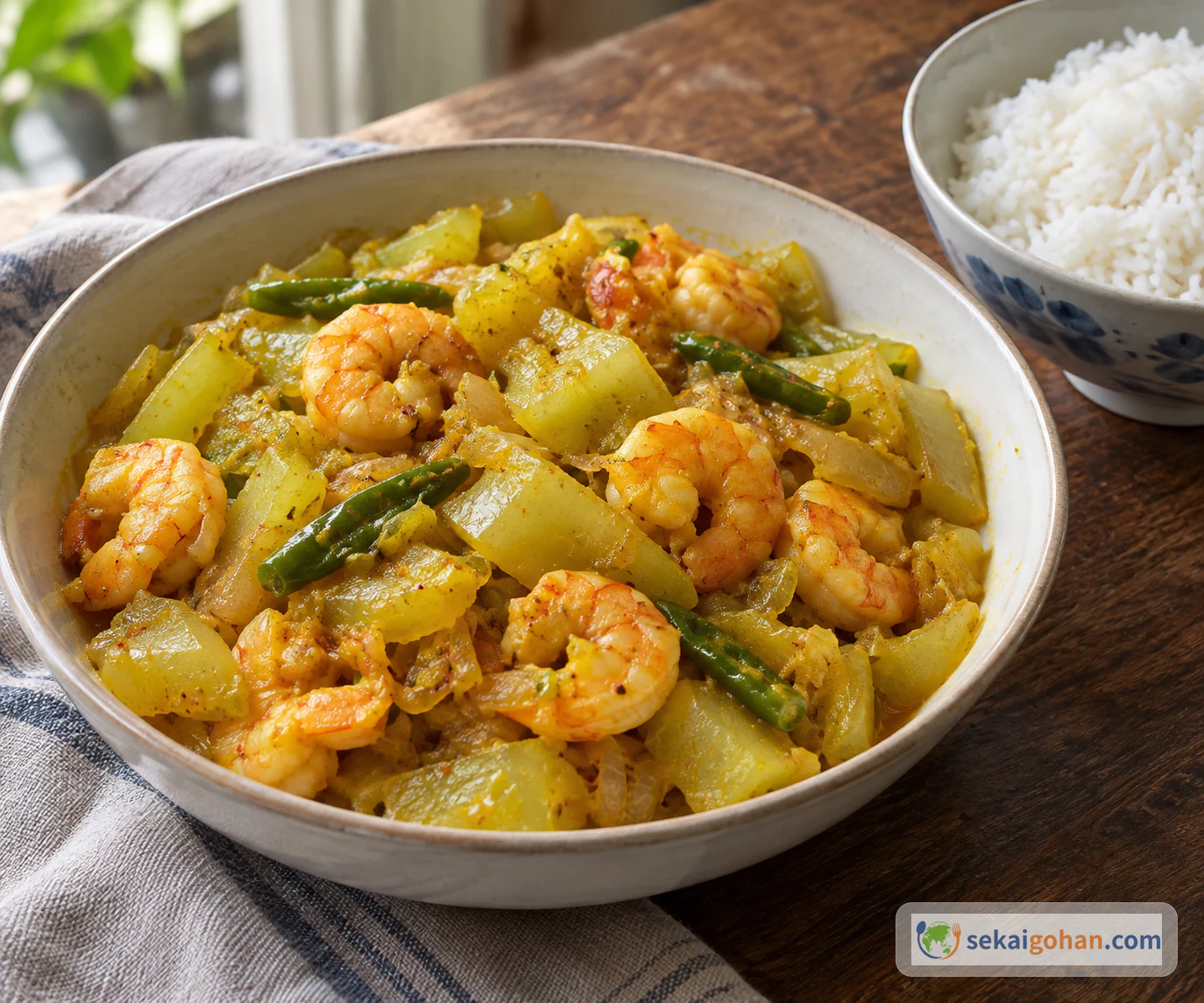
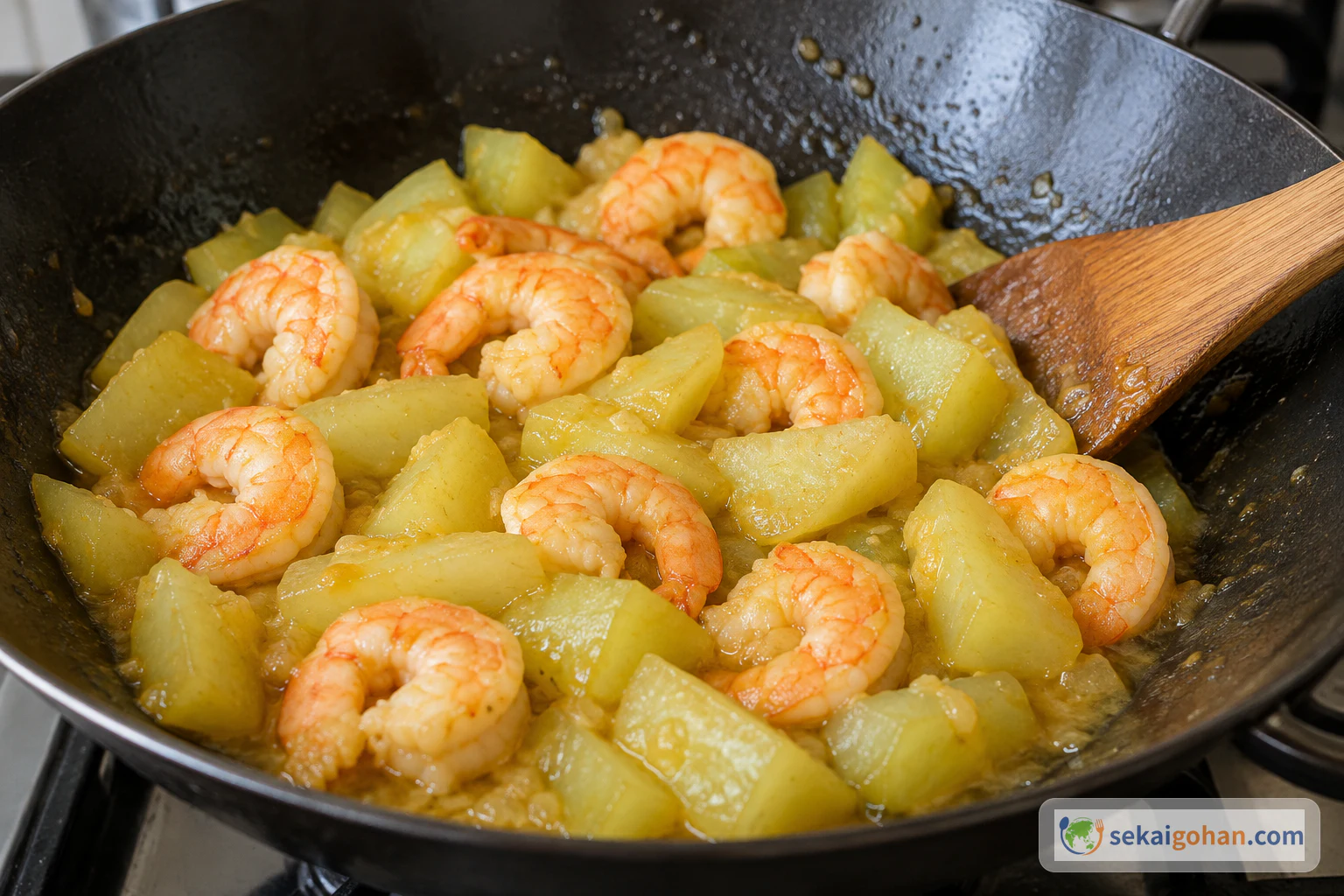
A plate of hot white rice, a spoonful of pale, tender gourd glossy with mustard oil, and pink shrimp tucked through it. That is lau chingri, the Bengali pairing of soft bottle gourd and shrimp, eaten with hot rice at lunch. The name simply puts the two side by side: lau (লাউ) is bottle gourd and chingri (চিংড়ি) is shrimp. The spice list is short and mustard oil carries the aroma, so what comes through is soft gourd, seared shrimp and that sharp, mustardy edge.
Lau Chingri in Bengali Home Cooking
Lau chingri is a Bengali home dish, and the same name is used in both India and Bangladesh. Every household seems to have its own way with it, which is part of the pleasure. For more dishes from across the country, see India.
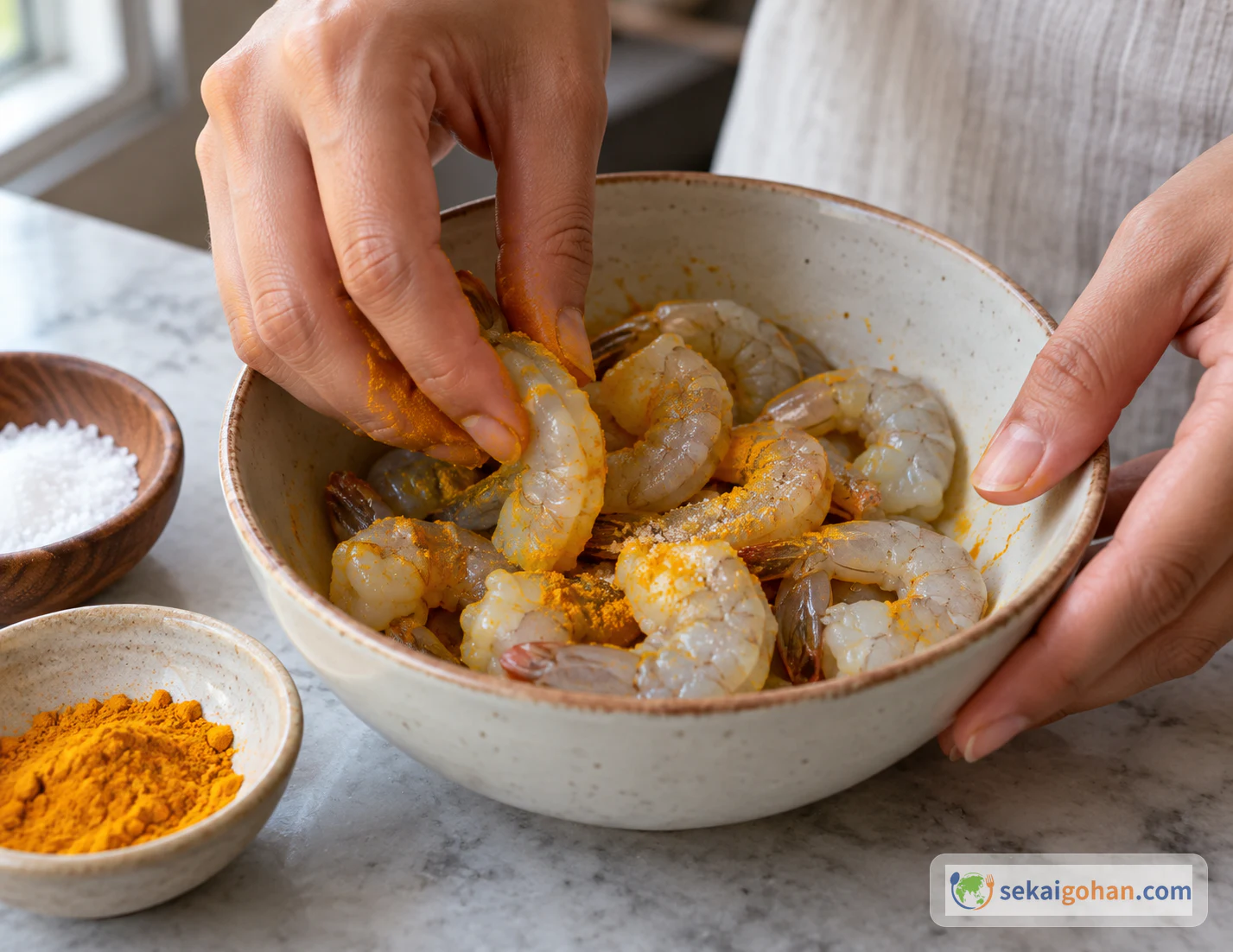
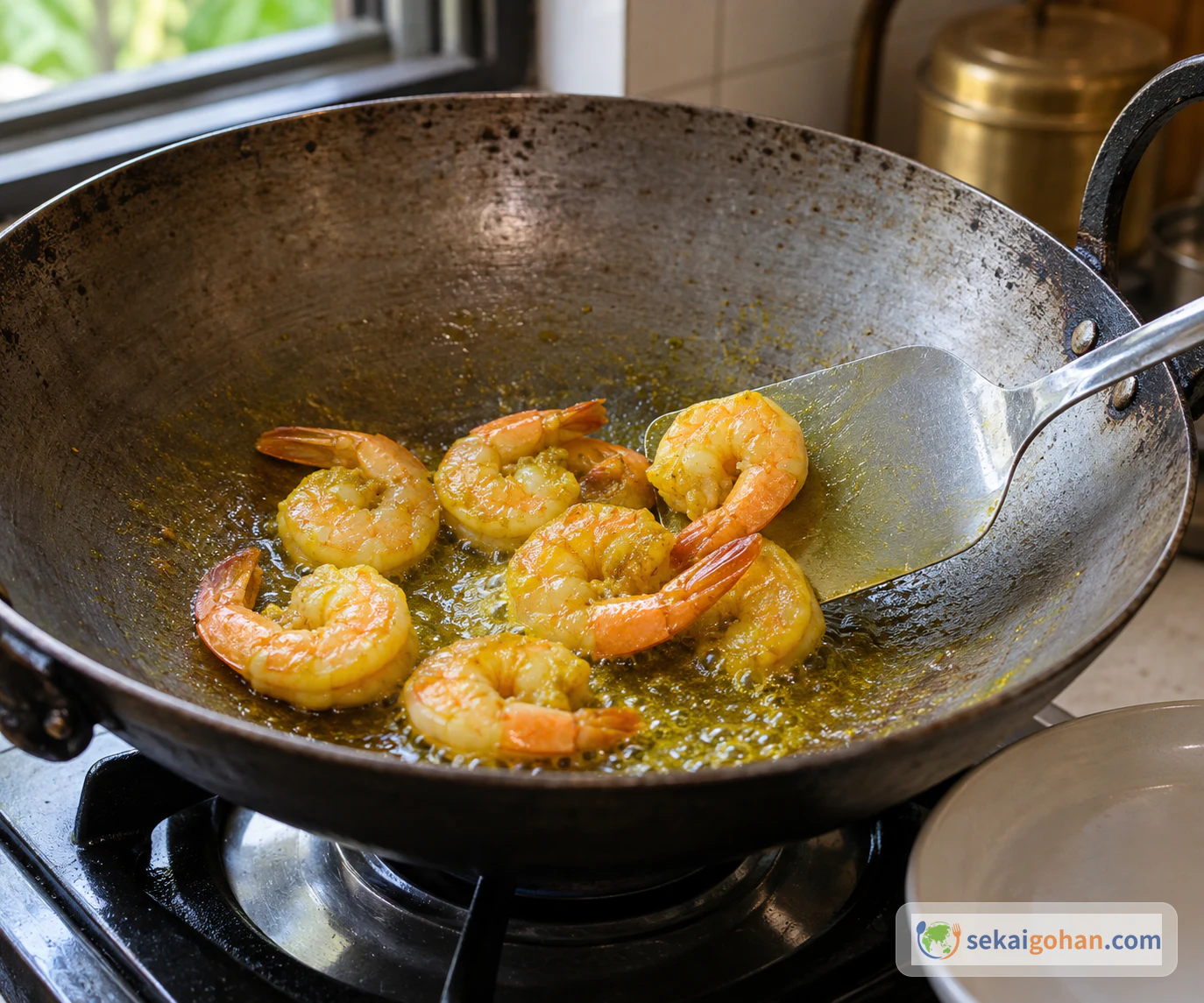
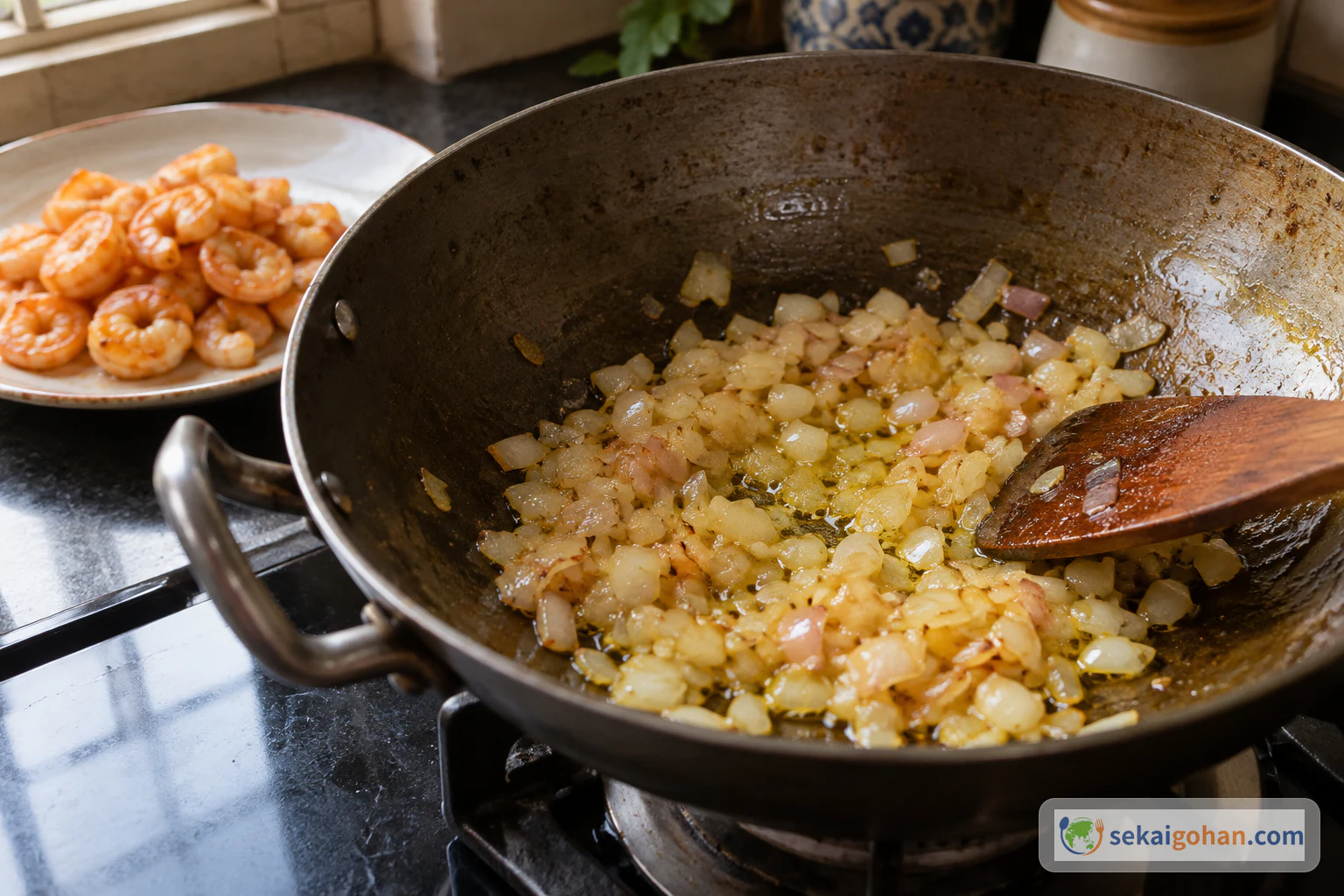
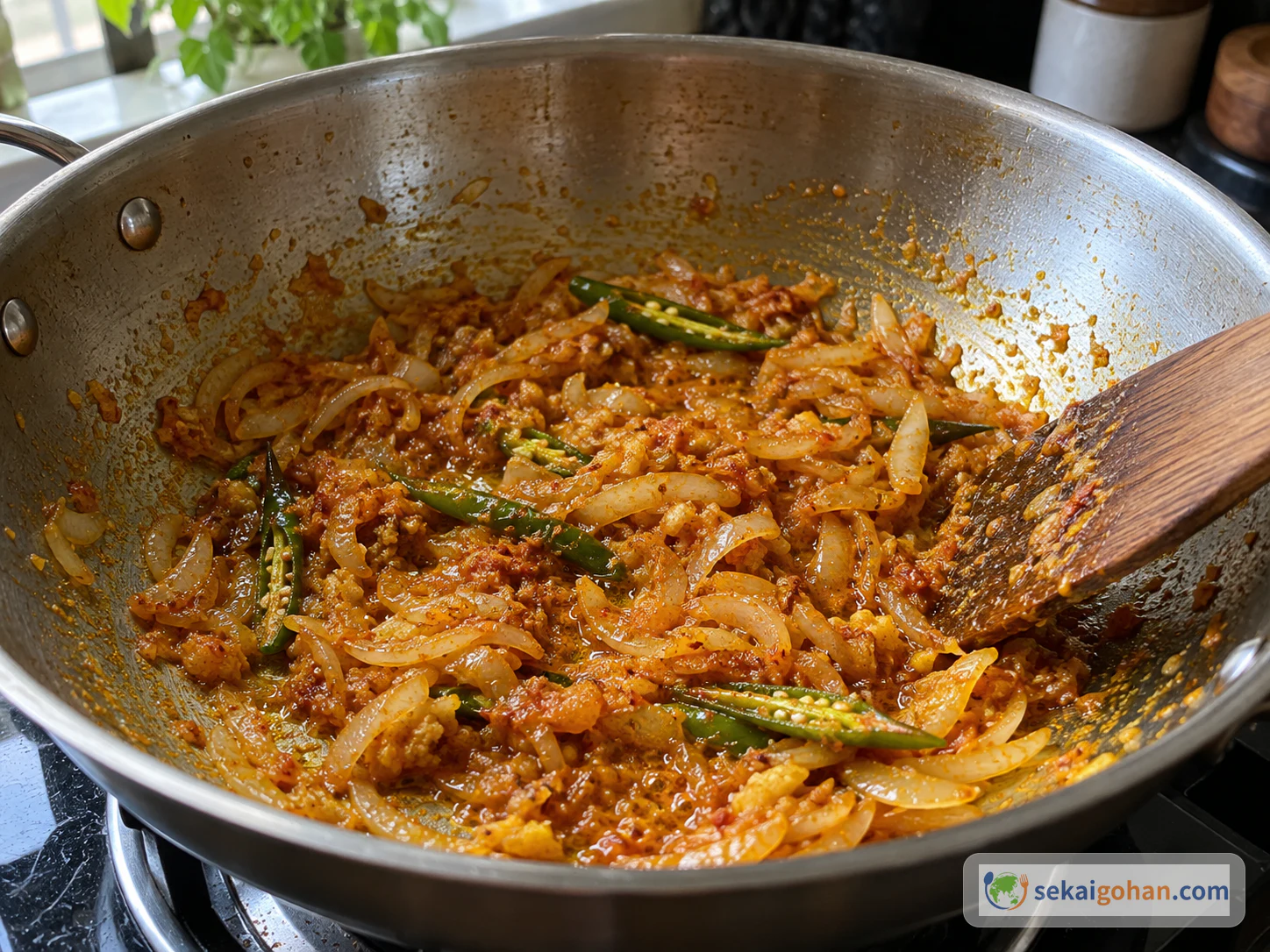
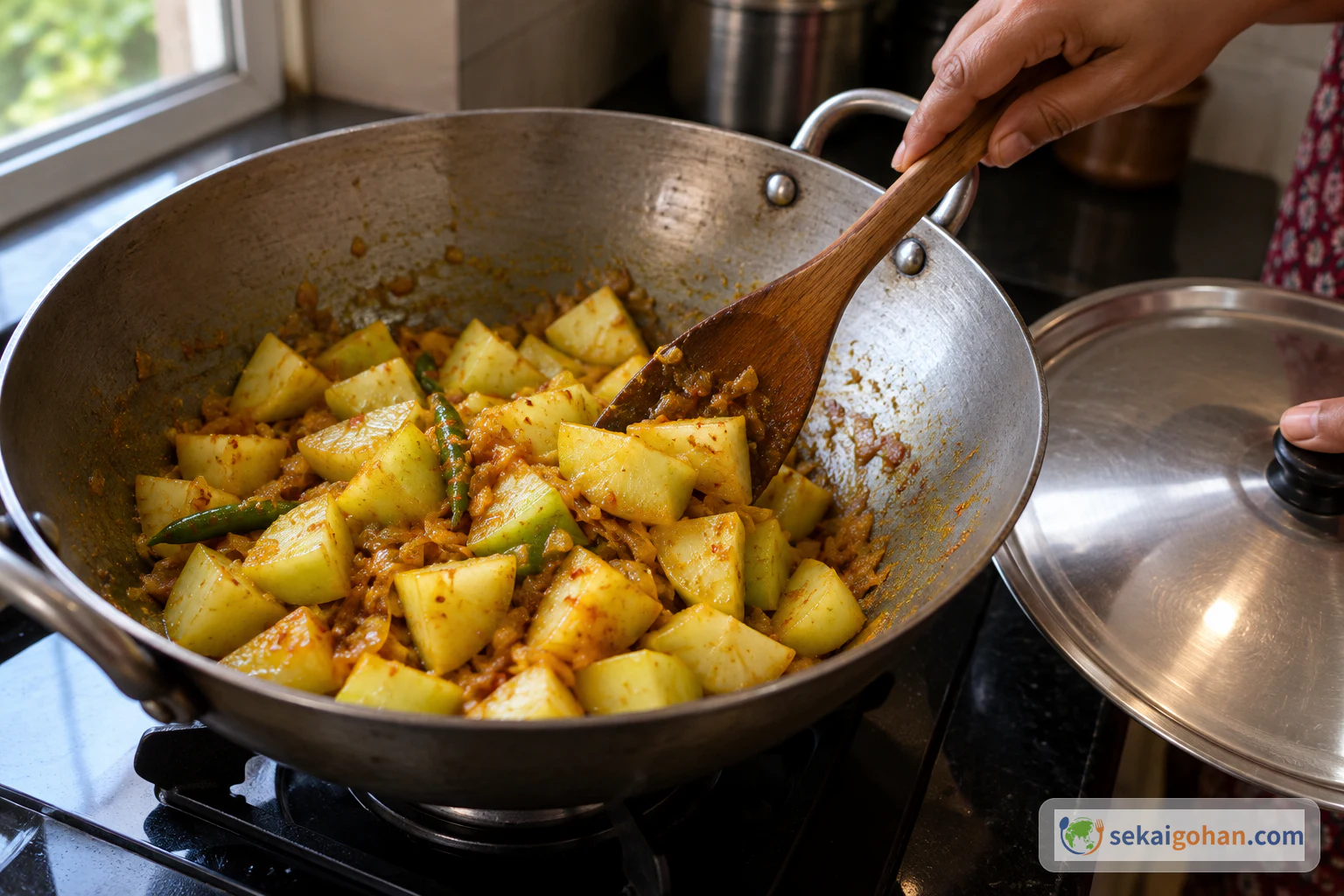
What matters most in this version is the order of the pan, not a long spice list. The shrimp are seasoned, seared and lifted out, and the onion and spices go into the same oil. The peeled gourd then cooks covered in its own liquid, with no water added, and the shrimp go back in only once the gourd is soft. Keep to that order and the gourd stews in its own juices while the shrimp stay tender. Judge each stage by how the pan looks.
Other households season and sequence the dish differently, and the changes go beyond seasoning:
| Version | Seasoning and fat | Order in the pan |
|---|---|---|
| This version | Onion, ginger-garlic paste, green chilies, turmeric, red chili powder, mustard oil | Shrimp seared and removed, gourd cooked covered in its own liquid, shrimp returned at the end with a little mustard oil |
| Cumin-and-coriander style | Whole cumin seeds, green chilies, coriander powder, cumin powder, turmeric, coriander leaves | Gourd covered and cooked without added water until its liquid dries off |
| Household style from Bangladesh | Small shrimp, chopped onion, onion paste, garlic paste, green chilies, coriander leaves, soybean oil | Shrimp cooked with the onion and seasonings first, then the gourd added and cooked covered over medium heat for 10–15 minutes |
All three let the gourd's own moisture do the cooking. If the lau chingri you know tastes of cumin and coriander leaves, that is a different household style, and those spices belong to it rather than to this one.
Don't confuse it with chingri malai curry, either. That dish simmers shrimp in coconut milk, and gourd plays no part; the two just share the word for shrimp.
Ingredients for Lau Chingri
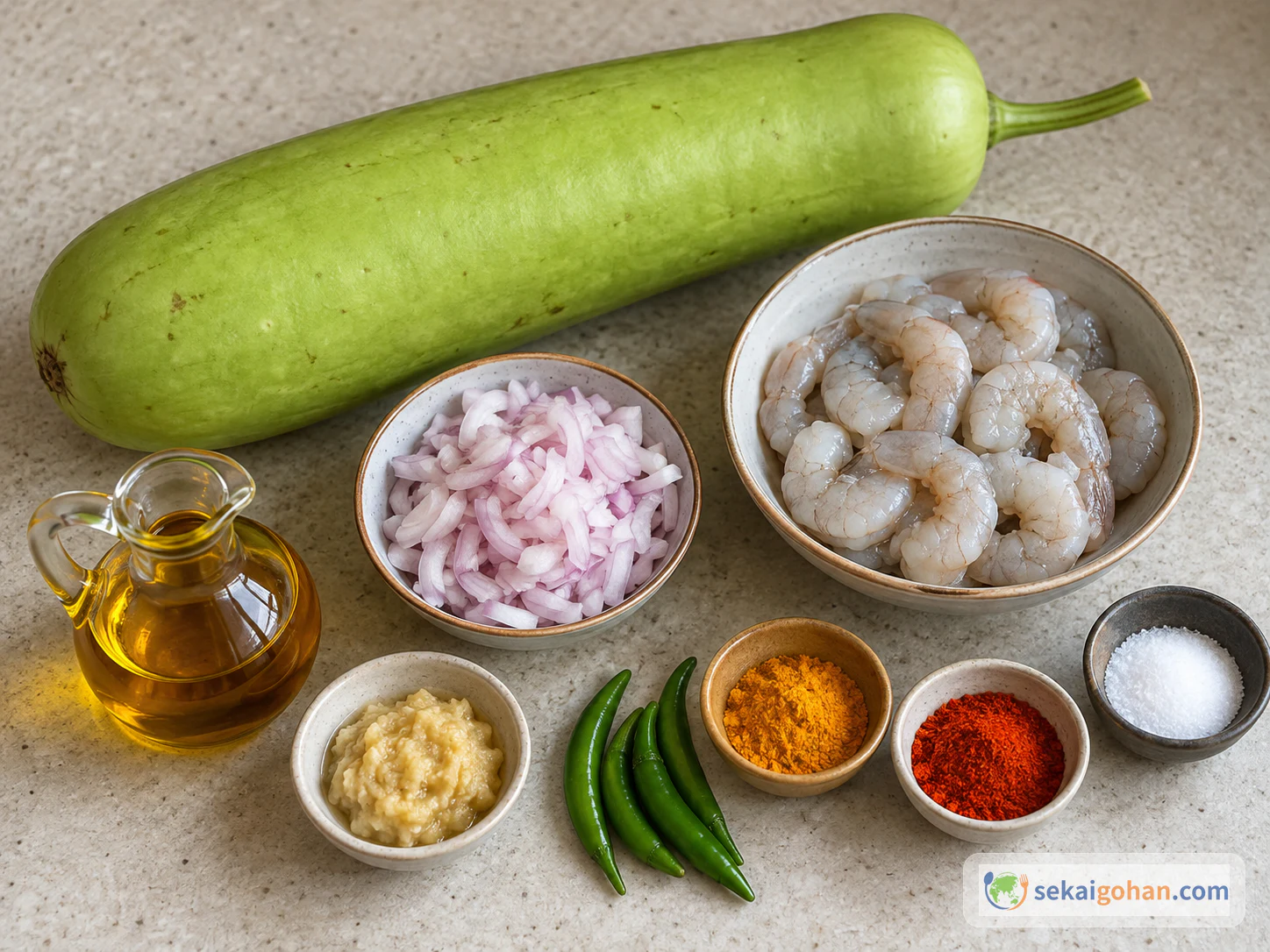
These are the only ingredients. There is no water in the list: the gourd supplies the liquid.
Equipment
- A wok or deep pan with a lid
- A peeler or knife for the gourd
- A small bowl for seasoning the shrimp
- A cutting board and plate kept for raw shrimp
- A separate clean plate for the seared shrimp
- A spatula
Choosing Bottle Gourd, Mustard Oil and Shrimp
Bottle gourd. Look for a bottle gourd sold as a vegetable for cooking, with white flesh. You'll find it at South Asian or other import grocers, and in Japan sometimes as yūgao. A ridged luffa or a winter melon differs in moisture and texture and makes a different dish. Above all, never use an ornamental or craft gourd: ornamental gourds have been linked to food poisoning, and gourds can carry bitter compounds, so use only varieties grown for eating. Gourds vary a great deal in size, so treat "one gourd" as one ordinary cooking gourd and season by taste.
Mustard oil. This is where the dish gets its sharp, mustardy aroma. Look for it at South Asian grocers or online, and check that the bottle is labeled for food or cooking use. A neutral vegetable oil will cook the dish if you can't find it, but the mustard aroma will be gone.
Shrimp. Use medium shrimp, cleaned. Frozen shrimp are fine if you thaw them in the refrigerator.
Ginger-garlic paste. If you buy it ready-made, read the ingredient label.
Method: Sear, Set Aside, Soften, Return
The shrimp are cooked twice: briefly at the start, and again at the end until done. Between those two moments they wait on a clean plate while the gourd softens.
Fixing Problems with Lau Chingri
| Problem | Likely cause | What to do |
|---|---|---|
| The bottom catches before the gourd releases any juice | Heat too high early on, or the lid off | Keep the lid on. Start over moderate heat (medium is a reasonable starting point) and stir now and then. If it is about to scorch, add a small splash of water |
| The dish is thin and watery | Water added on top of the gourd's own juice | Let the gourd's own moisture do the cooking. Pans and stoves vary, so if liquid is left, cook a little longer uncovered |
| Shrimp are tough or shrunken | They cooked alongside the gourd the whole time | Sear briefly, set aside, and return only once the gourd is soft |
| Unsure whether the shrimp are done | Judging by the clock | Look at the shrimp: firm, pearly and opaque all through |
| The flavor drifts toward a different dish | Spices from another household version added | Leave out cumin, coriander leaves and similar |
Serving, Adjusting and Storing Lau Chingri
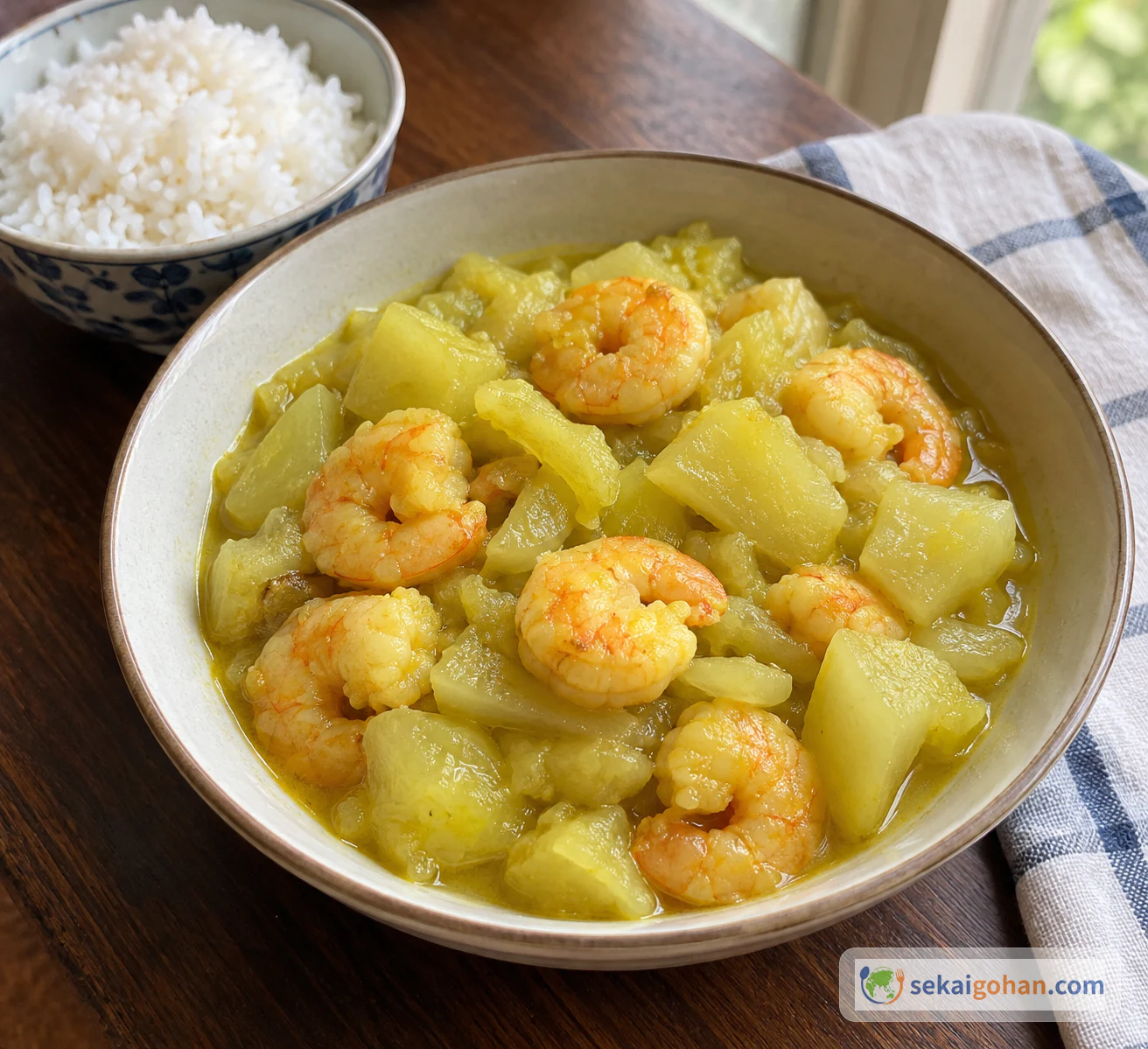
Serve lau chingri at lunch, the gourd and shrimp spooned beside a portion of plain hot rice. It can be the main event or one dish among several.
For milder heat, use fewer green chilies; the dish gets gentler, though you lose some of their fresh aroma too. Cut the gourd into small pieces, and remember that smaller pieces soften sooner, so go by texture.
This dish contains shrimp (crustacean shellfish). If you use store-bought ginger-garlic paste, check its ingredient label.
The U.S. Food and Drug Administration advises:
- Cook shrimp until the flesh is firm, pearly and opaque.
- Thaw frozen seafood in the refrigerator.
- Do not leave seafood at room temperature for more than two hours.
Keep the board and plate used for raw shrimp separate from the plate for the seared shrimp and the serving dish.
Leftovers. Don't leave seafood at room temperature for more than two hours.
Frequently Asked Questions
Should I add water?
No. The gourd cooks covered in its own liquid. Add a small splash only if the pan is about to scorch.
How long does it cook?
There is no set time. Cook the gourd until it is soft, and the returned shrimp until they are pearly and opaque. The Bangladeshi household style gives a time for the gourd, but it uses a different order, so that time doesn't carry over.
How much mustard oil goes in at the end?
The ingredient list has 3 tbsp of mustard oil, and you finish the dish with a small drizzle more. Whether that drizzle counts toward the 3 tbsp is up to you.
How is the turmeric divided between the shrimp and the pan?
Split the 1/2 tsp: a little on the shrimp and the rest in the pan with the onion, so you don't add the full amount twice.
Is it very spicy?
That depends on your chilies and your red chili powder. For a milder dish, use fewer green chilies.