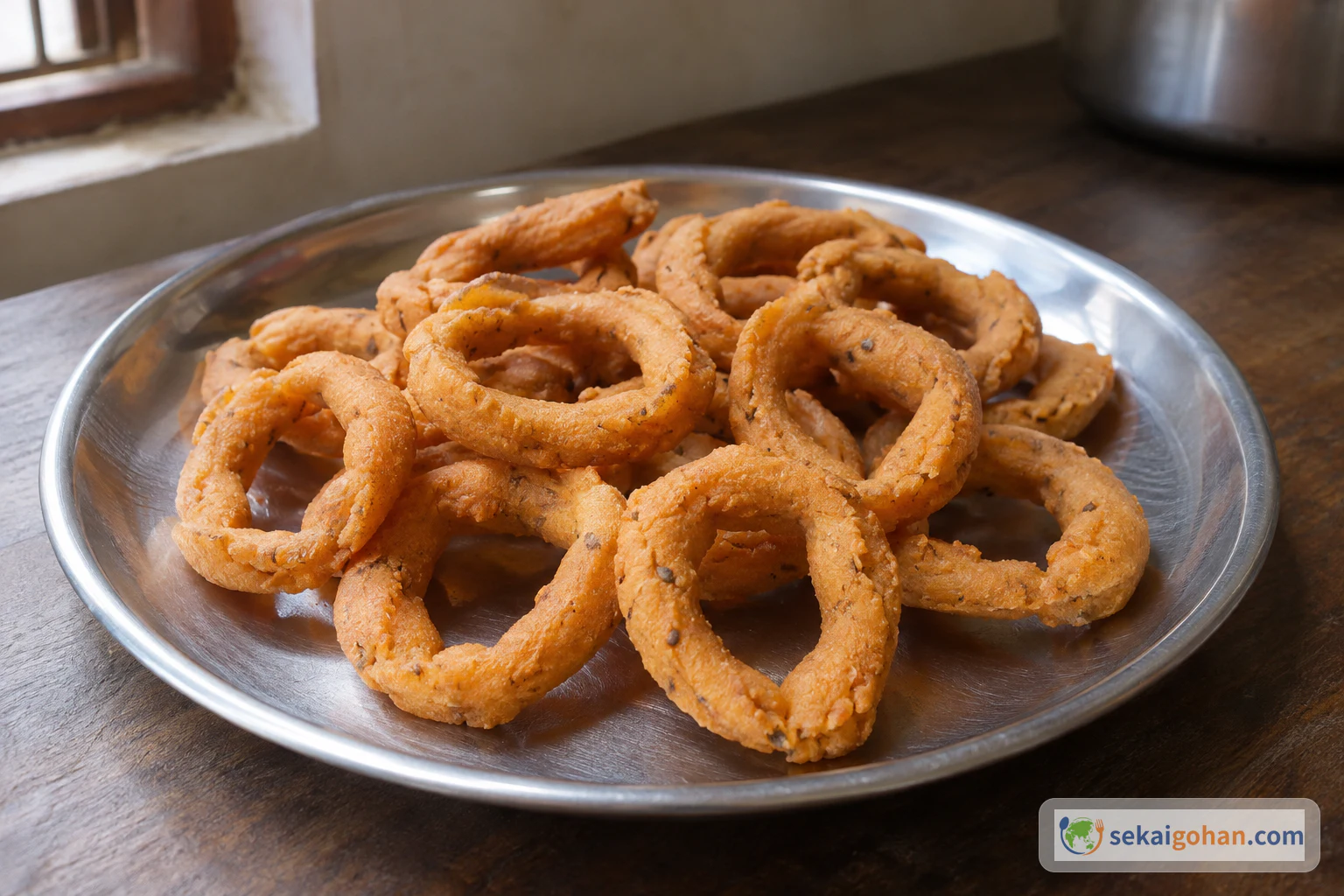
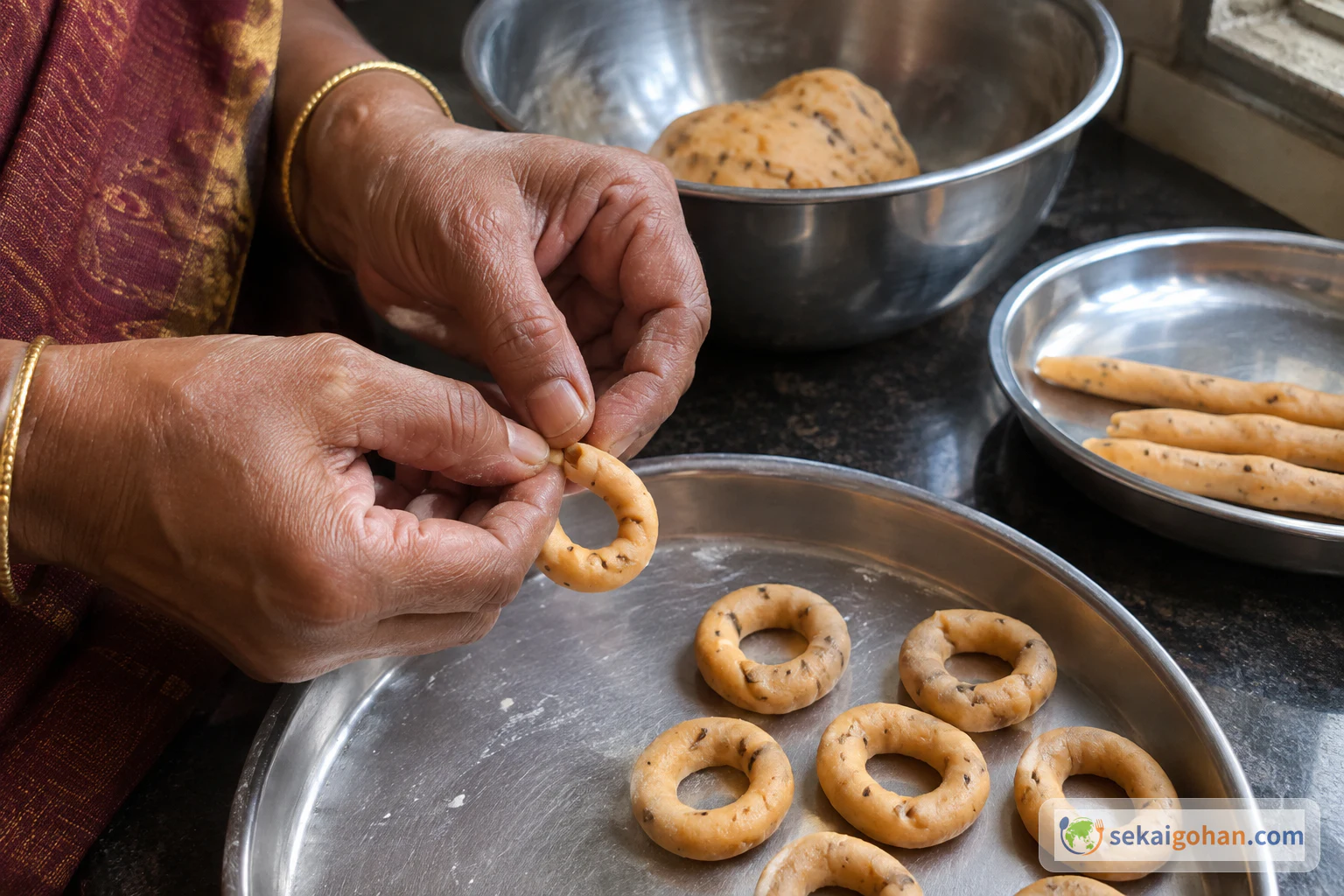
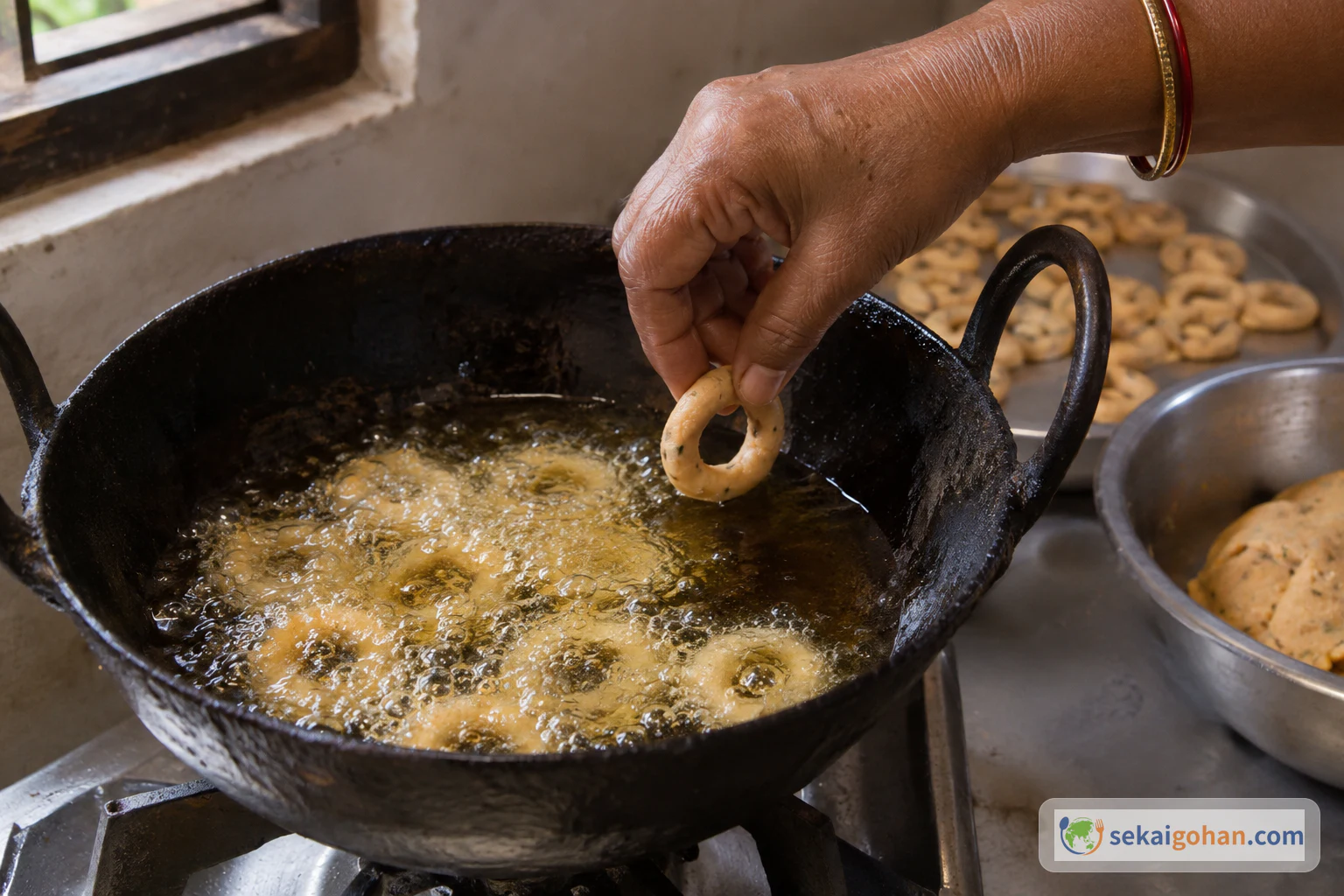
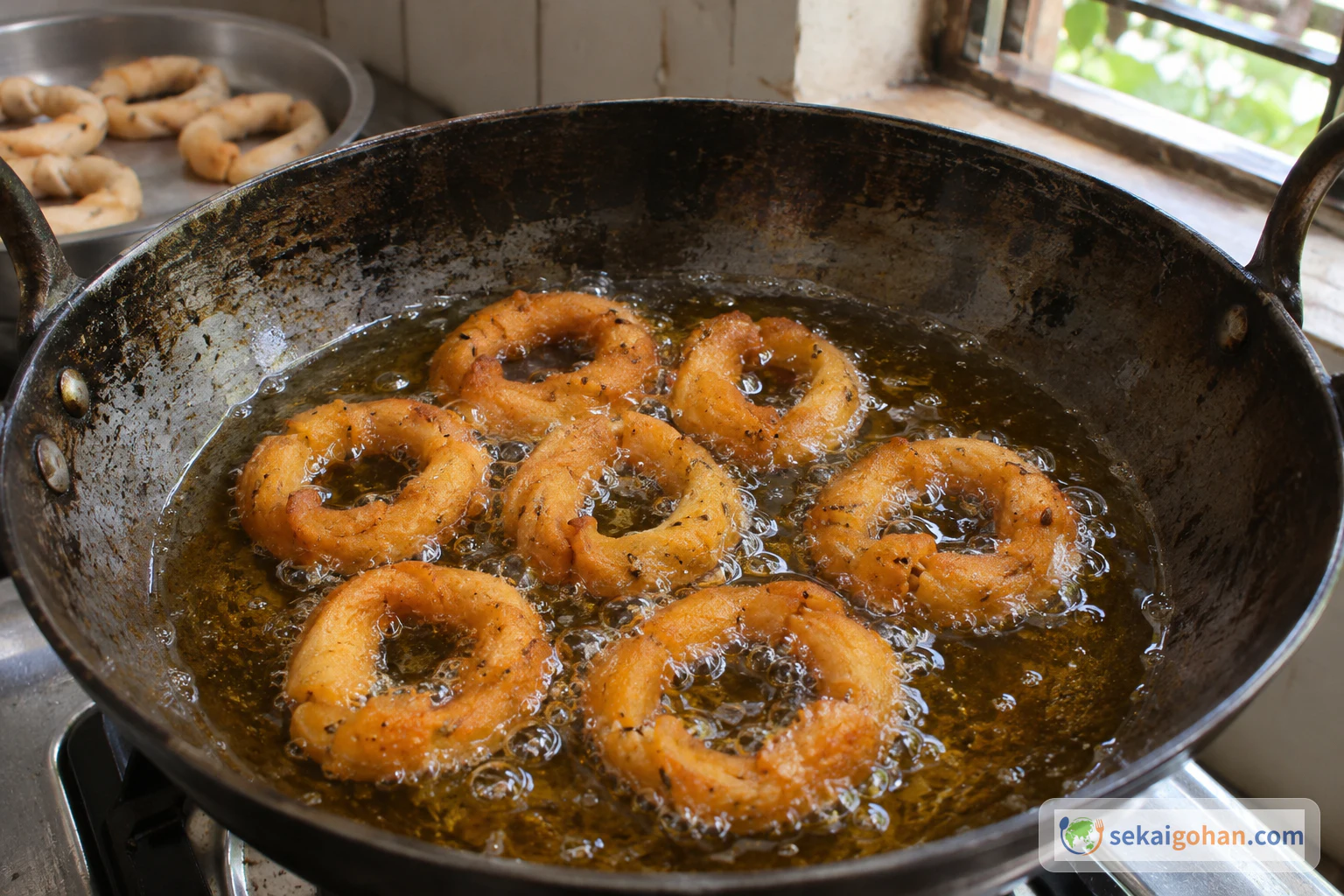
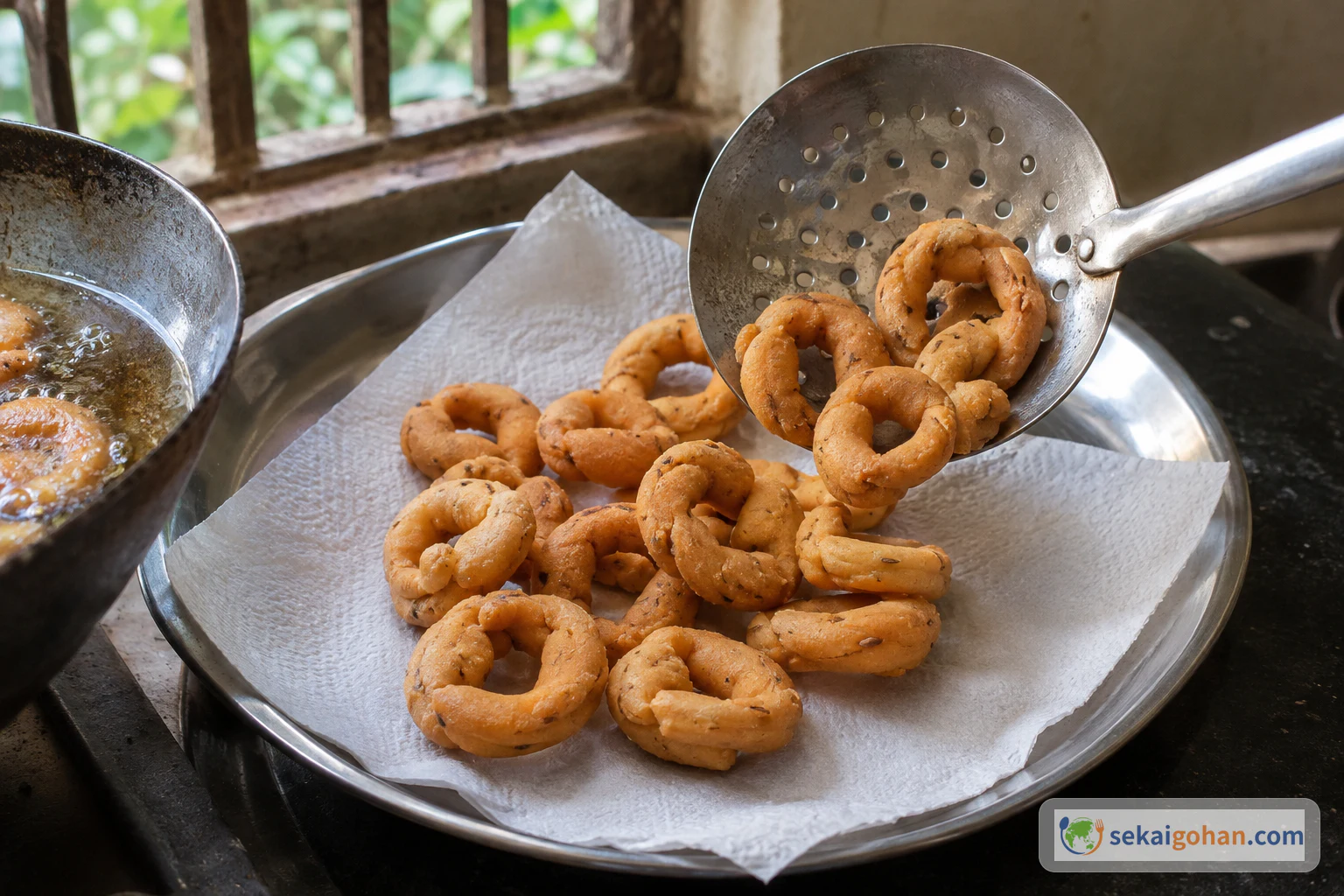
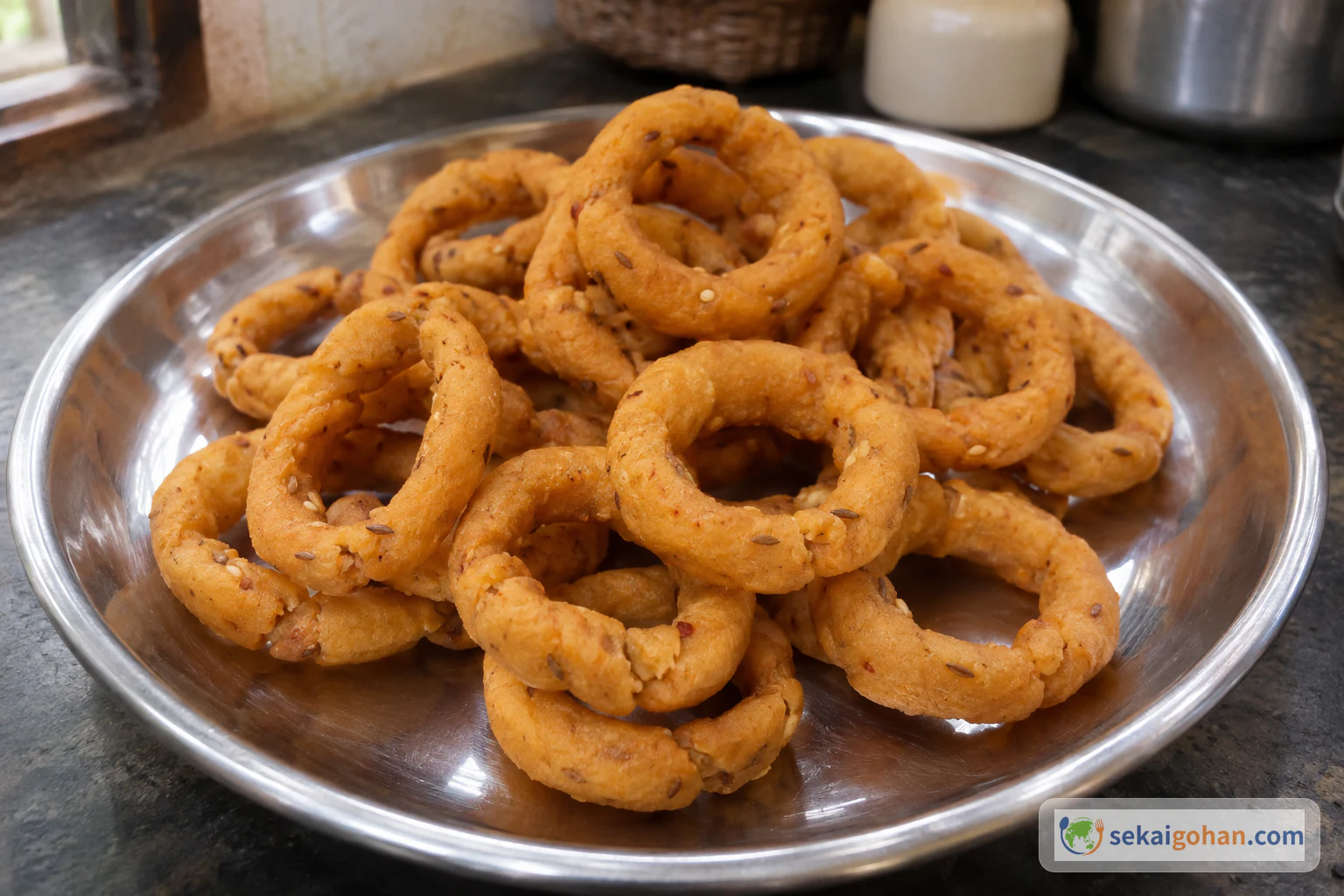
Kodubale go into hot oil a dozen at a time and come out golden brown on both sides. These small, hand-rolled rings are a fried snack from Karnataka, and this is a home recipe from Bengaluru. The dough is mostly wheat flour with some rice flour and fine semolina. Sesame and cumin go in, along with a paste of fresh coconut, chilli powder, asafoetida and salt. You shape every ring by hand, so it takes some time, but the work moves in clear stages.
Kodubale from Karnataka
Kodubale comes from Karnataka in southern India. The dough is mostly maida (refined wheat flour), with rice flour and fine chiroti rava. Sesame and cumin are mixed into the flours, and fresh coconut ground with chilli powder gives the dough its flavor.
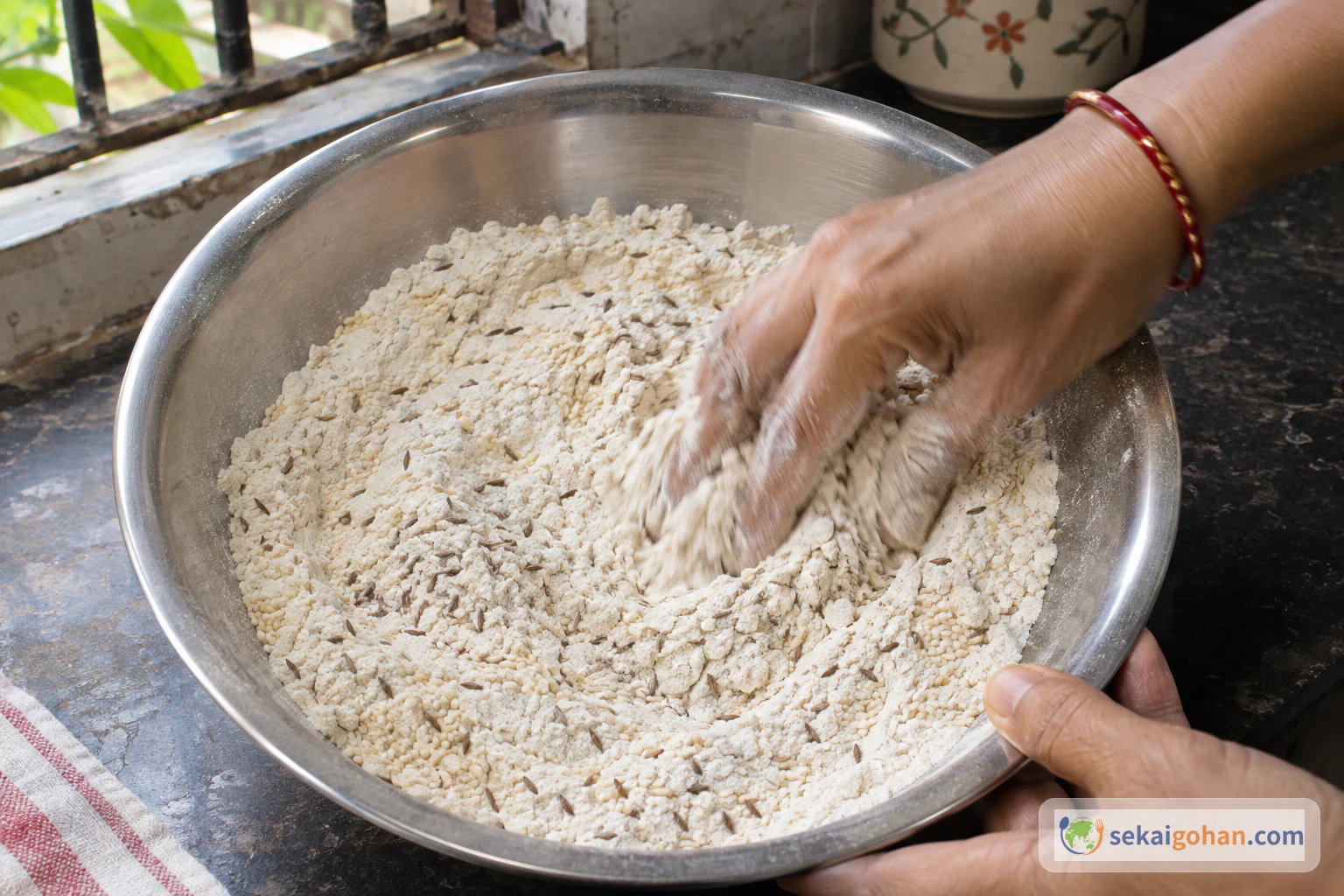
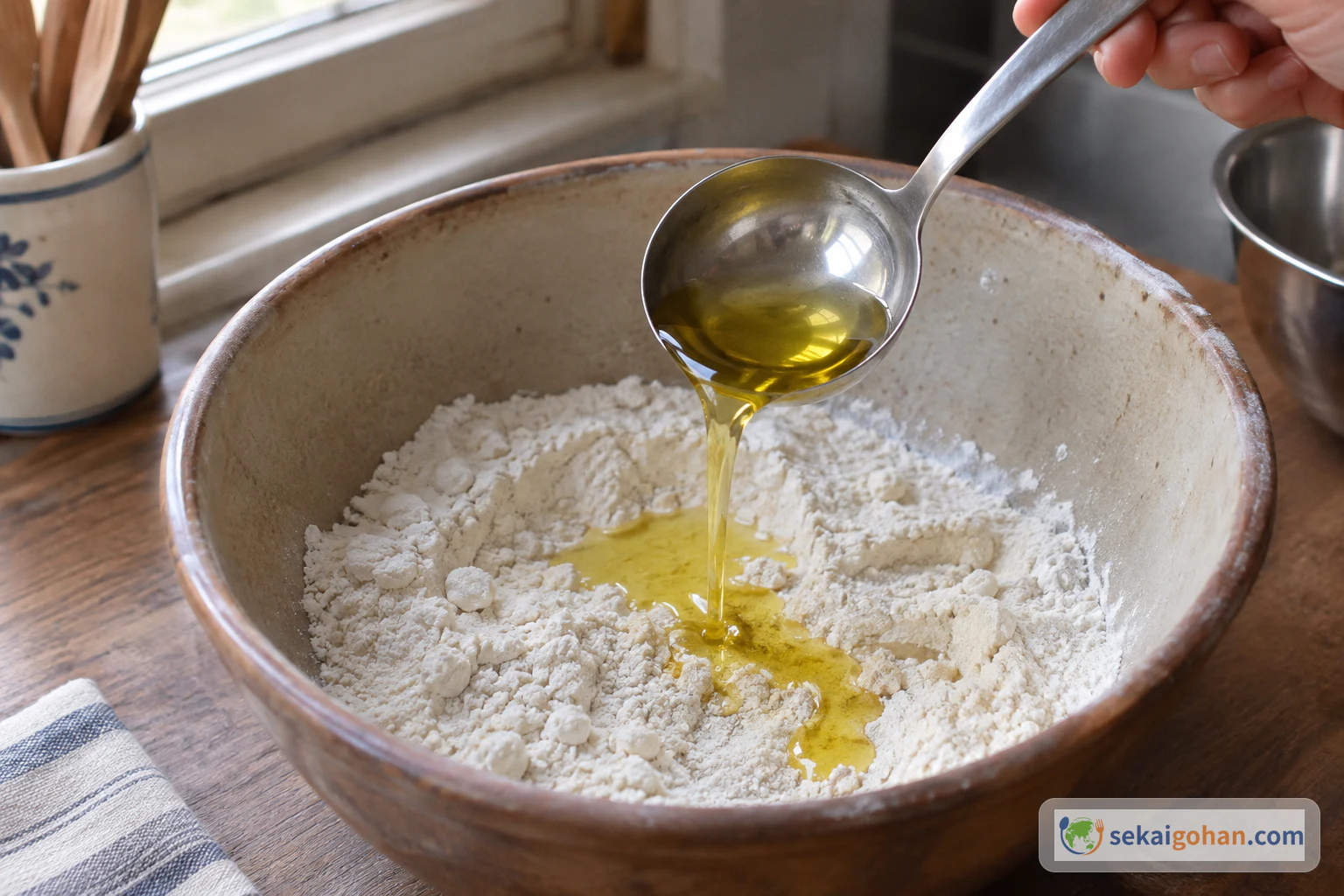
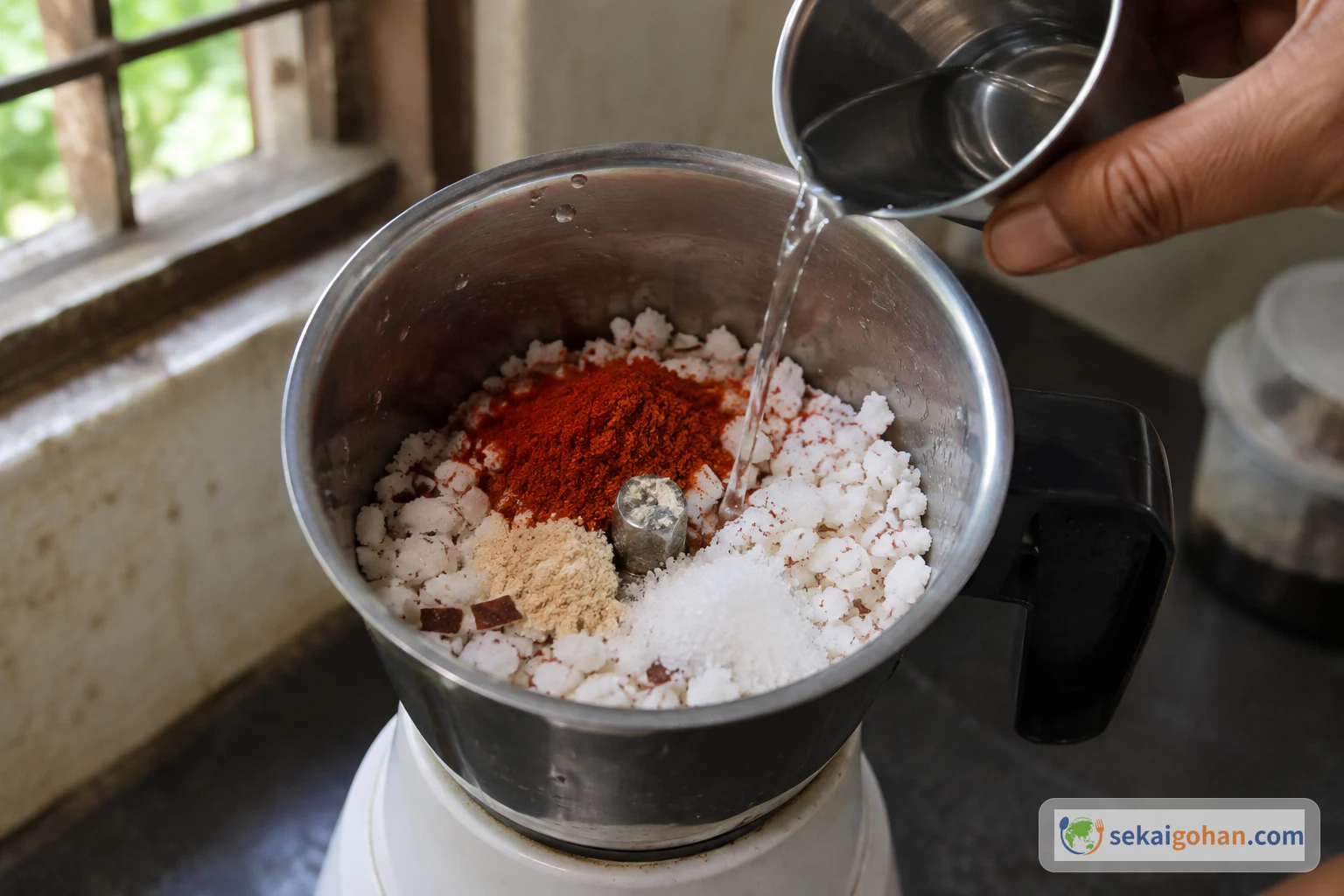
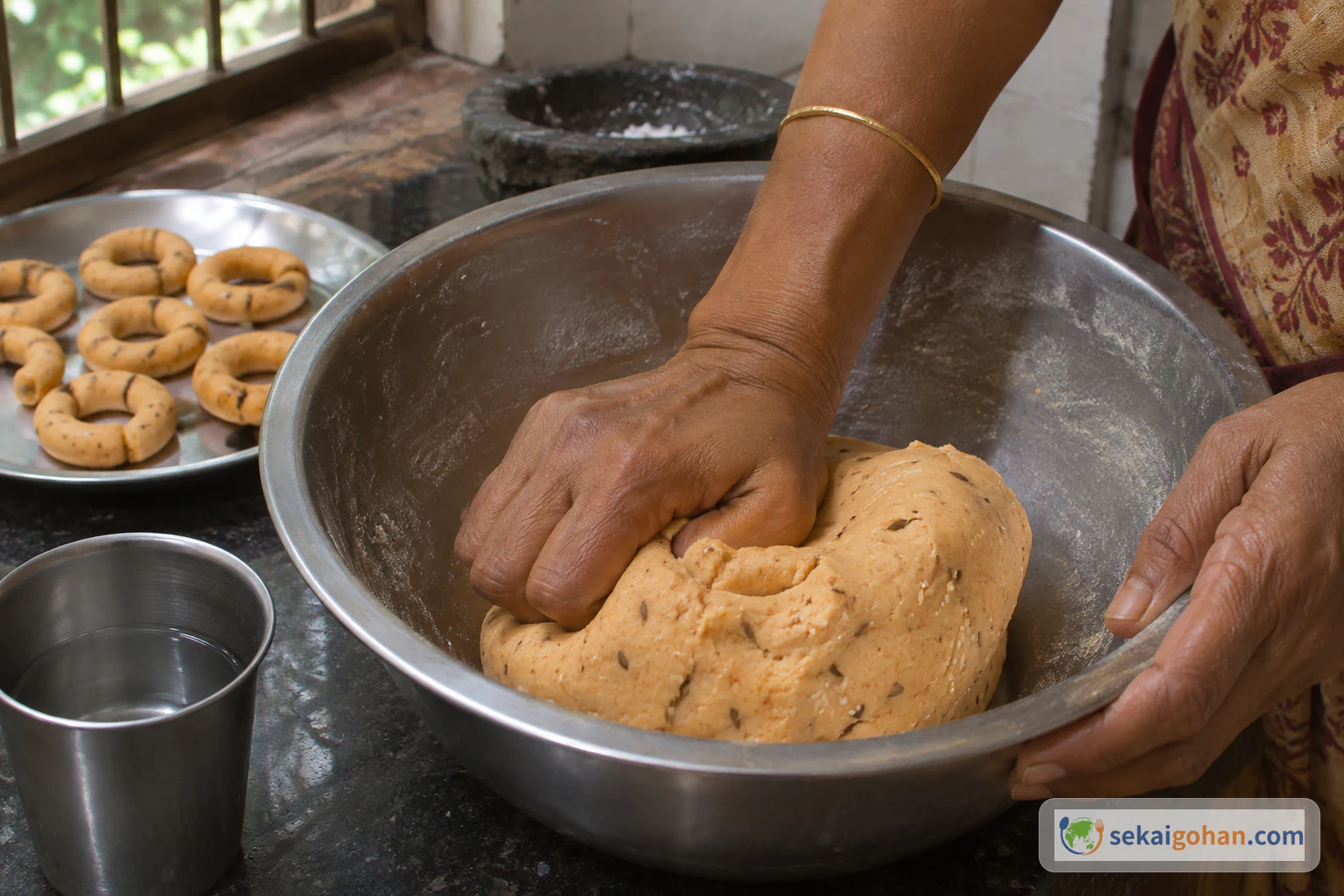
First you mix the three flours and two kinds of seeds dry, then pour in hot oil. Grind the coconut paste and knead it into the flour until the dough is soft and smooth. Then comes the handwork. Pinch off pieces the size of a large marble, roll each one into a thin cylinder and join the ends into a ring. Fry the rings in batches until they're golden brown on both sides.
A full batch uses a little less than 2.25 lb (1 kg) of mixed flour and makes approximately 125 pieces. Your count will depend on how big you make each ring.
Ingredients
Equipment
- Large mixing bowl
- Small pan for heating the dough oil
- Ladle
- Sturdy spoon or spatula for mixing in the hot oil
- Grinder or blender jar for the coconut paste
- Damp cloth
- Plate for the shaped raw rings
- Large, heavy-bottomed wok (kadhai)
- Slotted spoon or similar utensil for adding, turning and lifting the rings
- Plate lined with absorbent paper
Choosing Ingredients for Kodubale
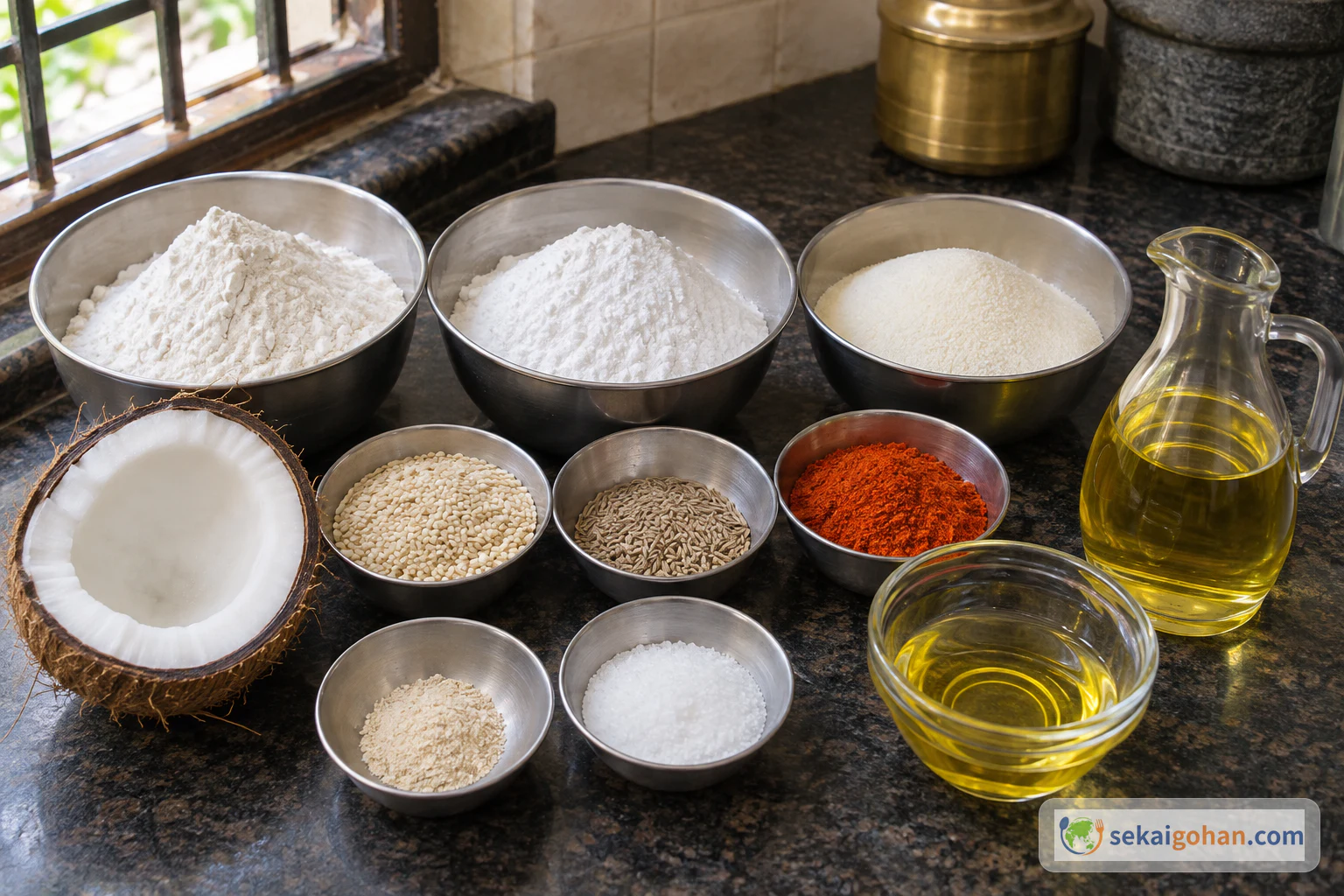
Maida is refined wheat flour, and plain (all-purpose) flour is the closest everyday equivalent. Use ordinary rice flour. Glutinous or sweet rice flour behaves differently, so it won't work as a substitute. Chiroti rava is a very fine semolina sold in Indian grocery stores. If you can't find it, use the finest semolina you can buy.
Keep the cumin as whole seeds rather than ground. The chilli powder should be finely ground. Coarse chilli flakes or whole dried chillies change both the texture of the paste and the look of the dough. The coconut is fresh: one small coconut or half a large one, ground into the paste.
Some amounts are approximate. The dough oil is "1 ladle, approximately 1/4 cup," added hot. If the dough fails the fistful test, add a little more. Water goes into the paste only as needed for grinding, and into the dough only if it needs it. Salt appears twice in the ingredient list, but the 15–20 g ground into the paste is all the dough needs. The "salt to taste" line is the same salt, not extra.
Method
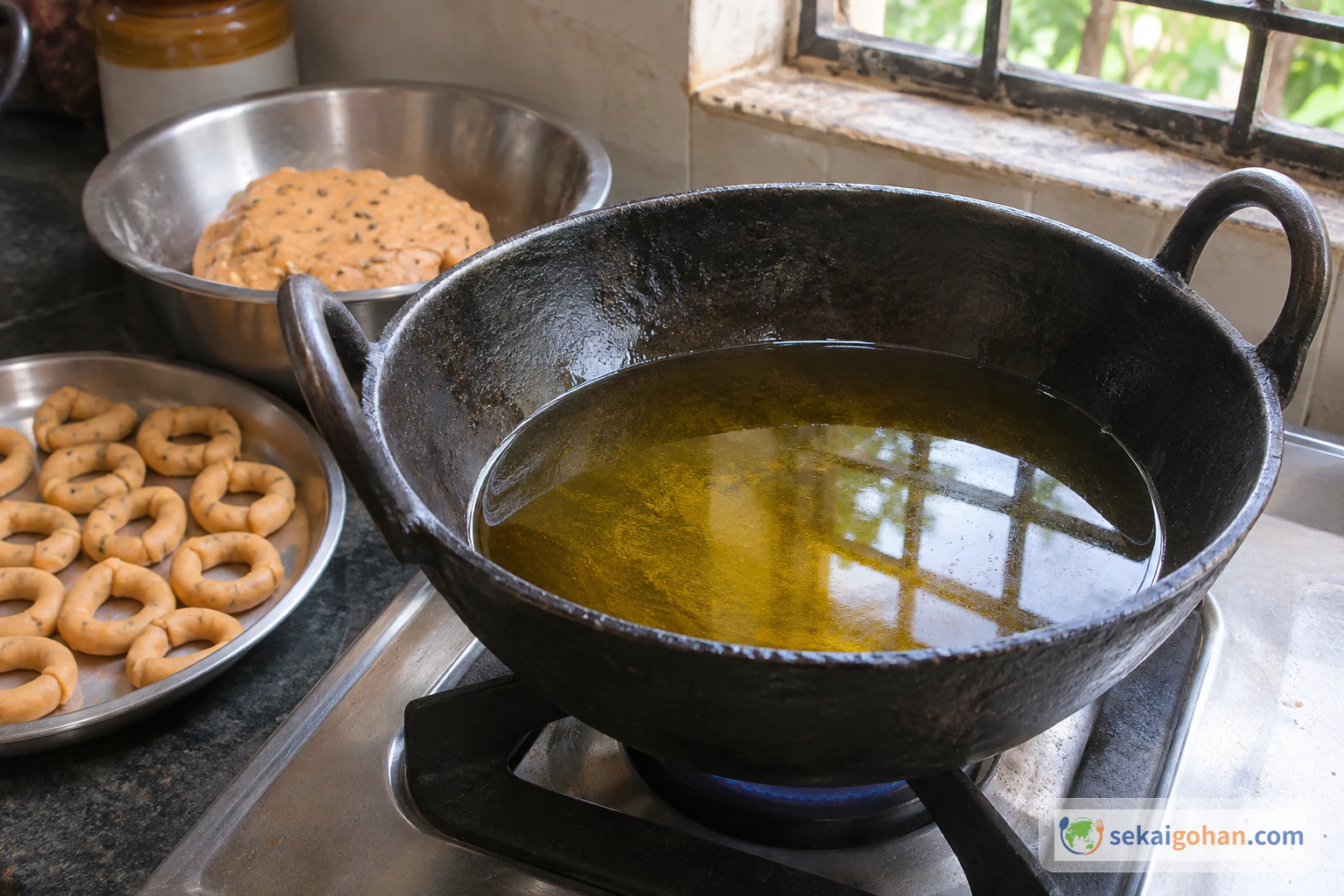
Hot oil goes into the dough early, and the frying oil stays on the heat for a long time. Mix the hot dough oil in with a utensil, not your fingers. Wait until the mixture is comfortable to handle before you squeeze or knead it. Don't leave the frying oil unattended while it is on the heat.
Kodubale Dough and Oil: Troubleshooting
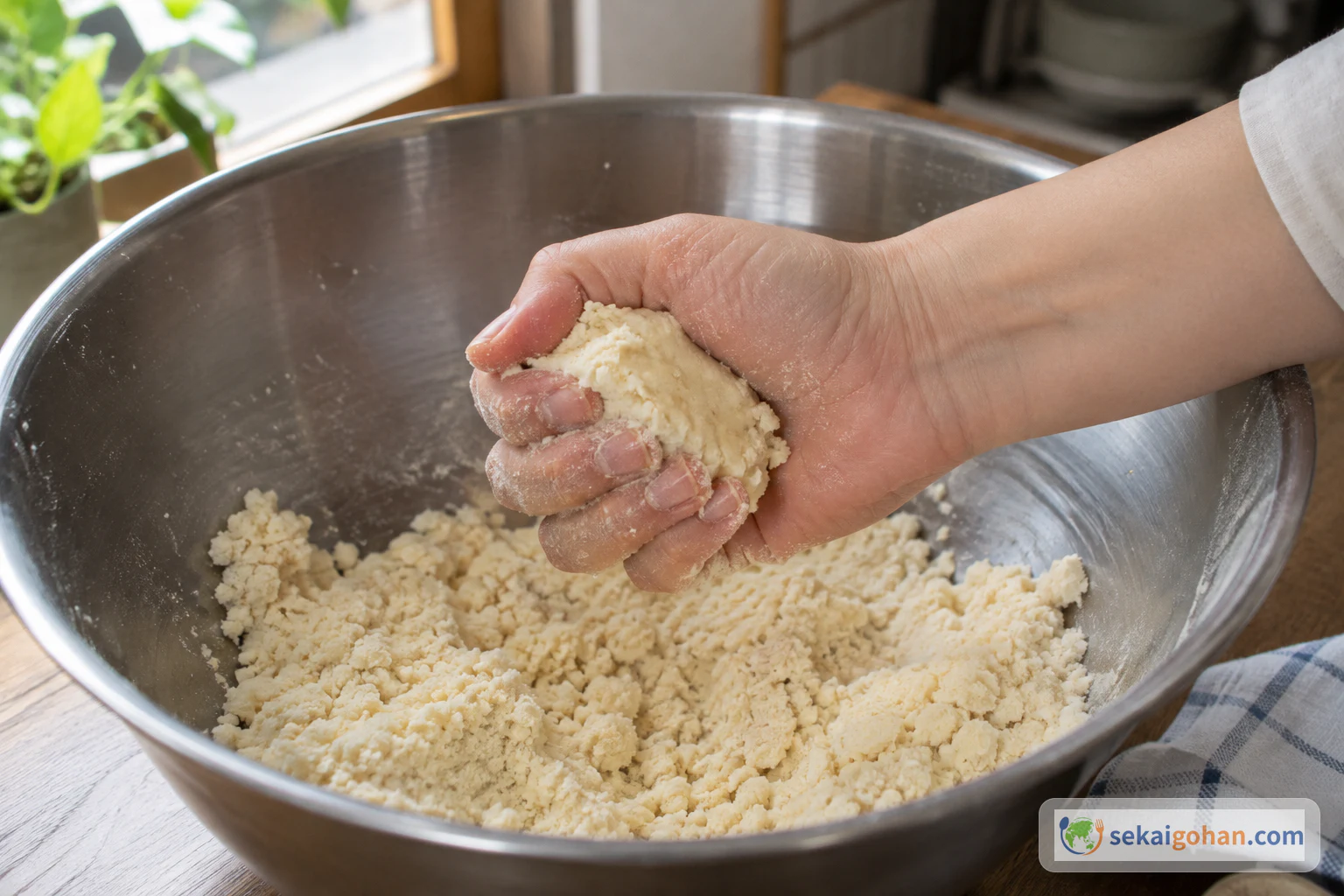
Most of the decisions here are made by hand and eye, not by the clock. Hot oil goes into the flour, so stir it in with a spoon or spatula. Wait until the mixture is comfortable to handle before you press a fistful or knead.
| What you see | What it means | What to do |
|---|---|---|
| A pressed fistful holds its shape | There is enough oil in the flour | Go on to the coconut paste |
| A pressed fistful crumbles at once | The flour needs a little more oil | Add a little more oil, mix, and test again |
| The paste won't grind fine | The grinder needs a little liquid | Add water a little at a time, only as much as needed |
| The kneaded dough is dry and won't come together | It needs a little moisture | Add a little water and knead until soft and smooth |
| The surface of the dough is drying while you shape | It has been left uncovered | Keep it under the damp cloth between pieces |
| The oil is smoking | It is hotter than the recipe asks for | Turn the heat down and don't add rings until it has stopped smoking |
| The rings are colored on one side only | They haven't been turned | Turn them a few times while they fry |
Each batch takes about 5–6 minutes, but go by color: the rings are done when they're golden brown on both sides. Keep shaping and frying as separate stages, and never leave the frying oil unattended to shape more. If you're new to deep-frying, shape a full batch of 12–15 rings before any go into the oil. That way you won't be reaching for dough while the pan is working.
Frequently Asked Questions
Can I use less chilli?
This recipe uses 2 tsp of chilli powder. If you cook with the very hot mankattiro chilli, use 1 tsp instead.
Do I have to use white sesame?
No. Any sesame seeds will do. The photographs show white sesame.
Can I test the oil by dropping in a small piece of dough?
This recipe doesn't use a dough test. Instead, check that the oil is hot but not smoking. When it's ready, the rings rise to the surface as soon as they go in.
Can I keep leftovers?
Yes. Let the kodubale cool to room temperature, then store them in an airtight container.