Kombdi Vade: Konkan-Style Coconut Chicken Curry with Fried Vade (कोंबडी वडे)

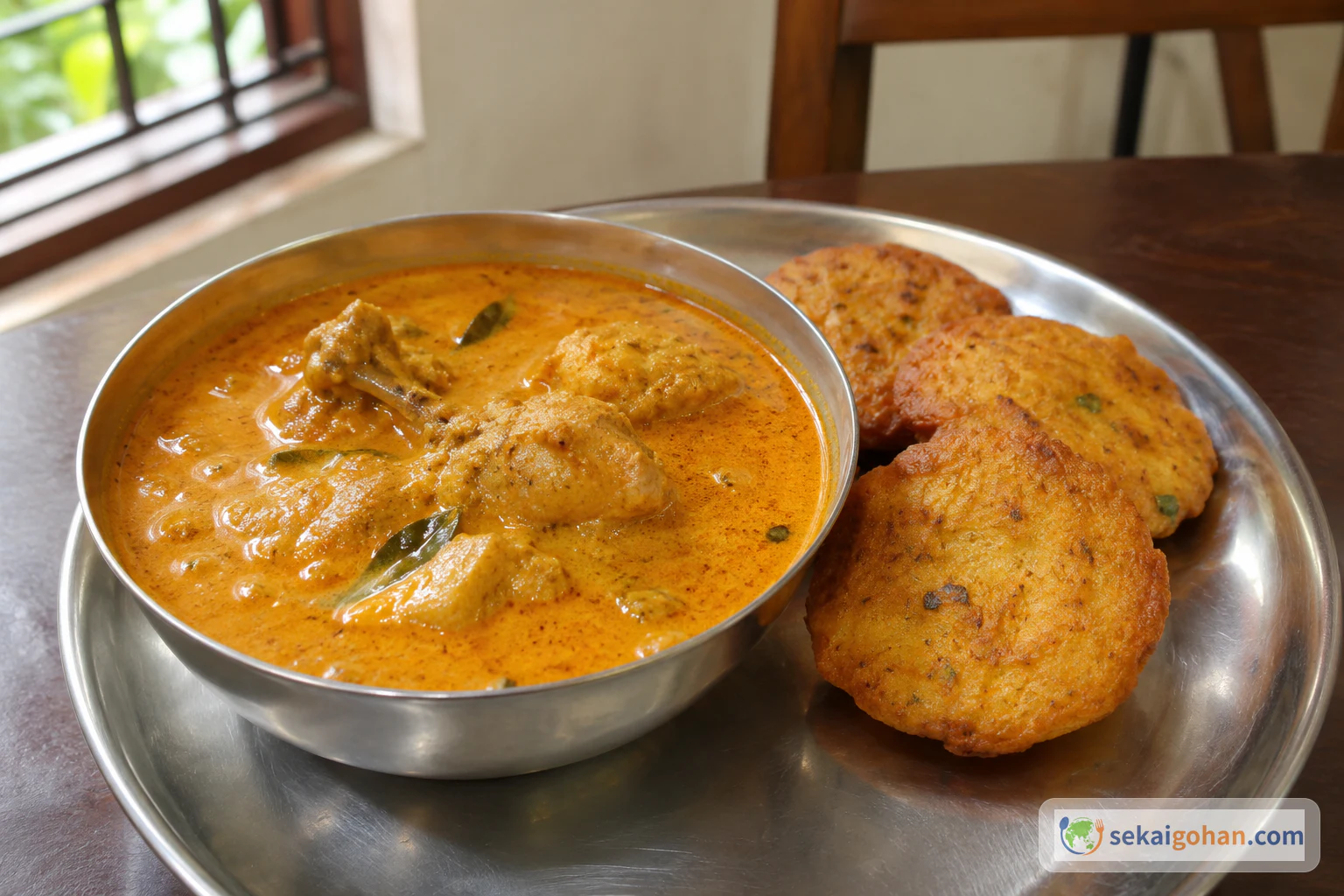
Kombdi vade: a Konkan-style chicken curry served beside golden fried vade
Cuisine
Indian (Maharashtrian, Konkan)

How to make kombdi vade, the coastal Maharashtrian pairing of a coconut chicken curry with fried vade made from rice flour, besan, wheat flour and a soaked urad dal paste. Follows one published home recipe, with a thermometer check for the chicken, safe handling of raw dough, and notes on the many ways vade flour differs from home to home.

Cooking flow

Cooking steps

STEP11 / 10

Marinate the chicken

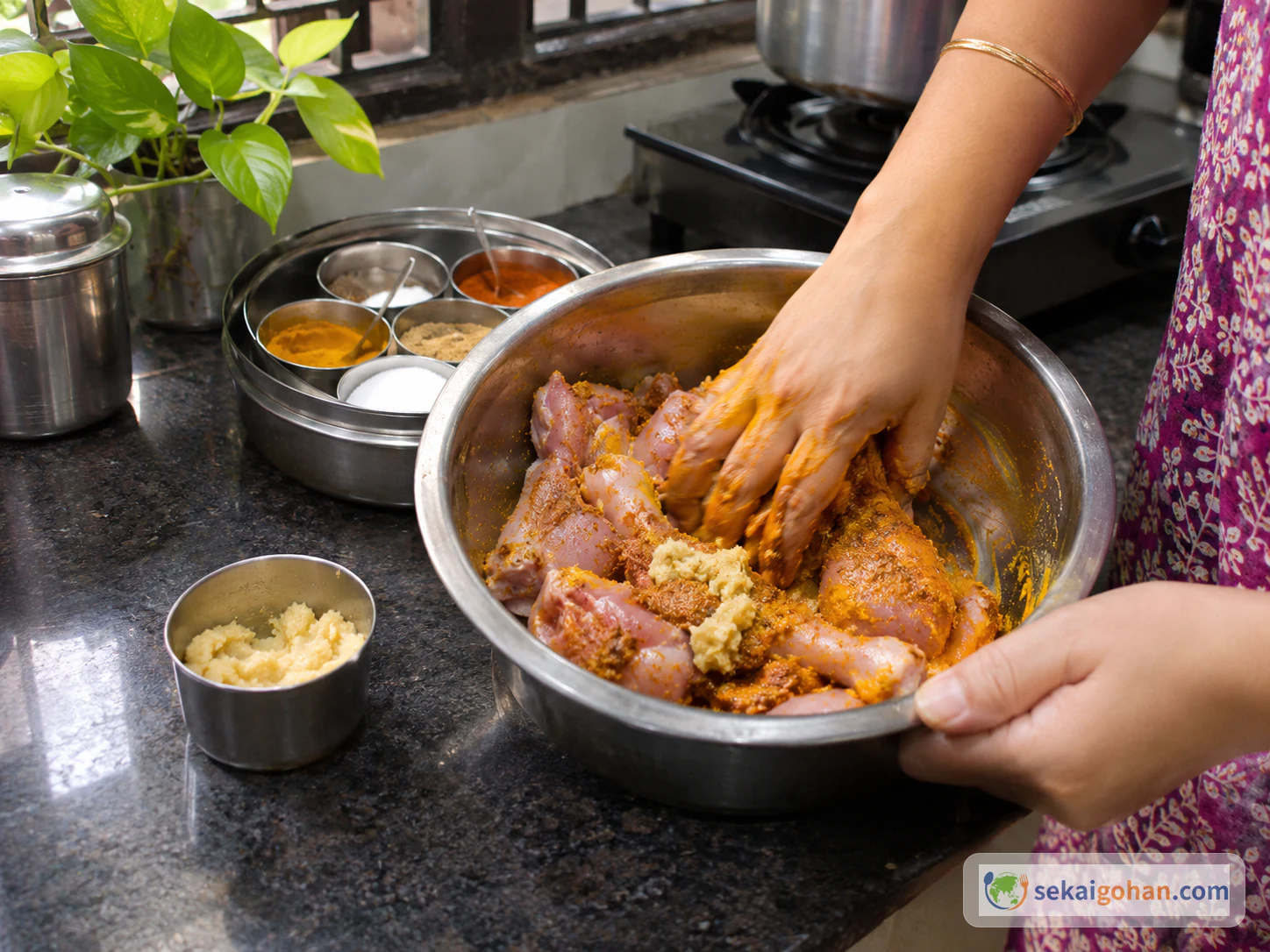
Chicken pieces being coated with ginger garlic paste and spices in a bowl
Coat the chicken in a bowl kept only for raw poultry

Put 1 lb (500 g) chicken in a bowl used only for raw poultry. Do not rinse the chicken. Add 1 tbsp ginger garlic paste, 1/2 tsp turmeric powder, 1 tbsp mix masala and salt to taste, and mix until the pieces are evenly coated. Cover and set aside in the refrigerator for a while.

Wash your hands, the board and anything else that touched the raw chicken with hot soapy water before moving on.

STEP22 / 10

Sauté the spices, onion and coconut

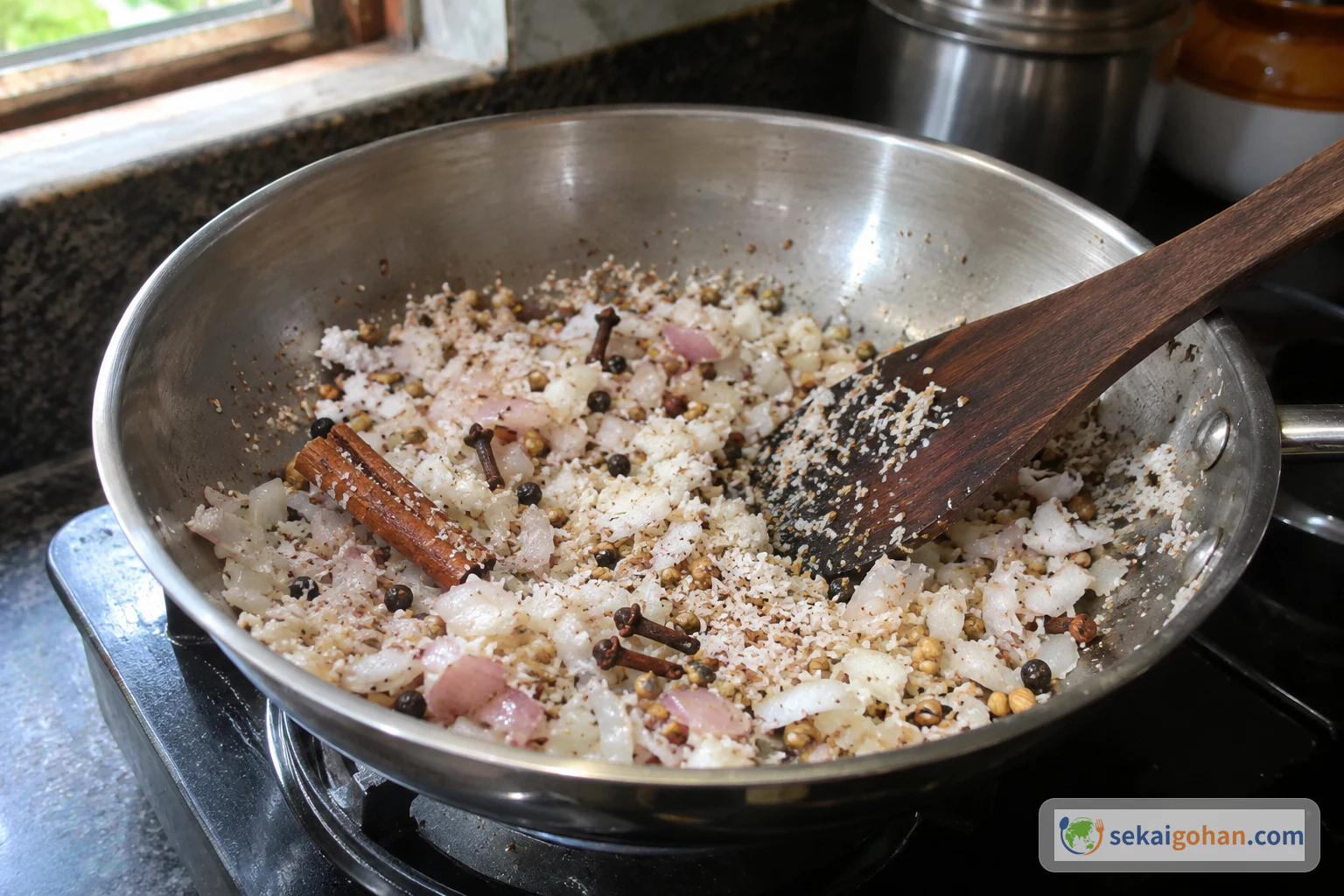
Whole spices, onion and grated coconut being sautéed in a pan
Sauté until fragrant, without letting the spices burn

Heat 2 tbsp oil in a frying pan. Add the cinnamon, cloves, black peppercorns, coriander seeds and poppy seeds, then the chopped onions and grated coconut. Sauté until the spices smell fragrant and the onion has softened. Keep stirring so the spices and coconut do not blacken.

STEP33 / 10

Cool and grind to a paste

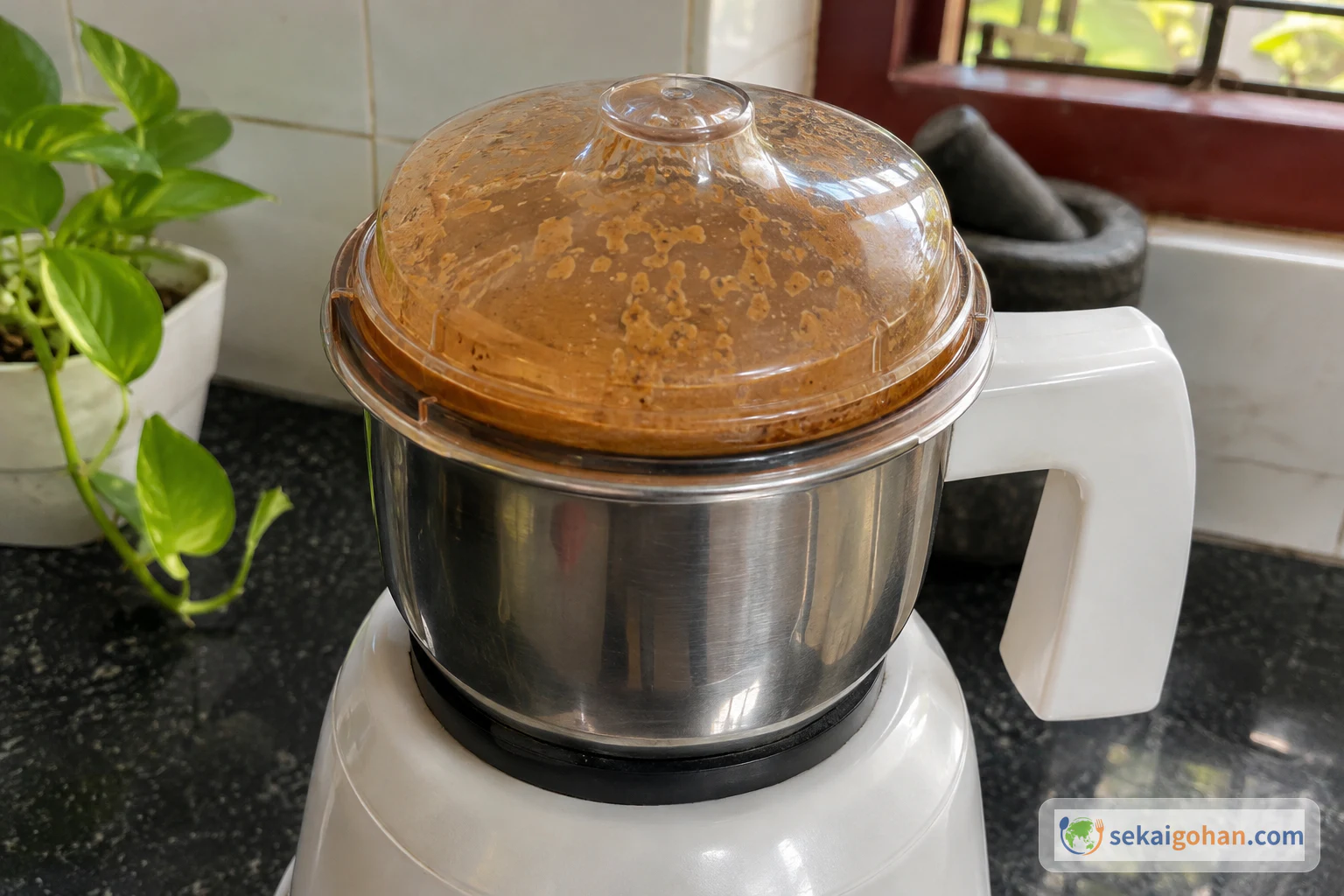
A closed mixer jar holding the ground spice, onion and coconut paste
Cool the aromatics first, then grind with the lid on

Take the pan off the heat and let the mixture cool before it goes into the mixer. Grind it with a little water to a smooth paste, with the lid securely closed. Follow your mixer's instructions, and never reach into the jar while the blades can move.

STEP44 / 10

Cook the chicken in the paste

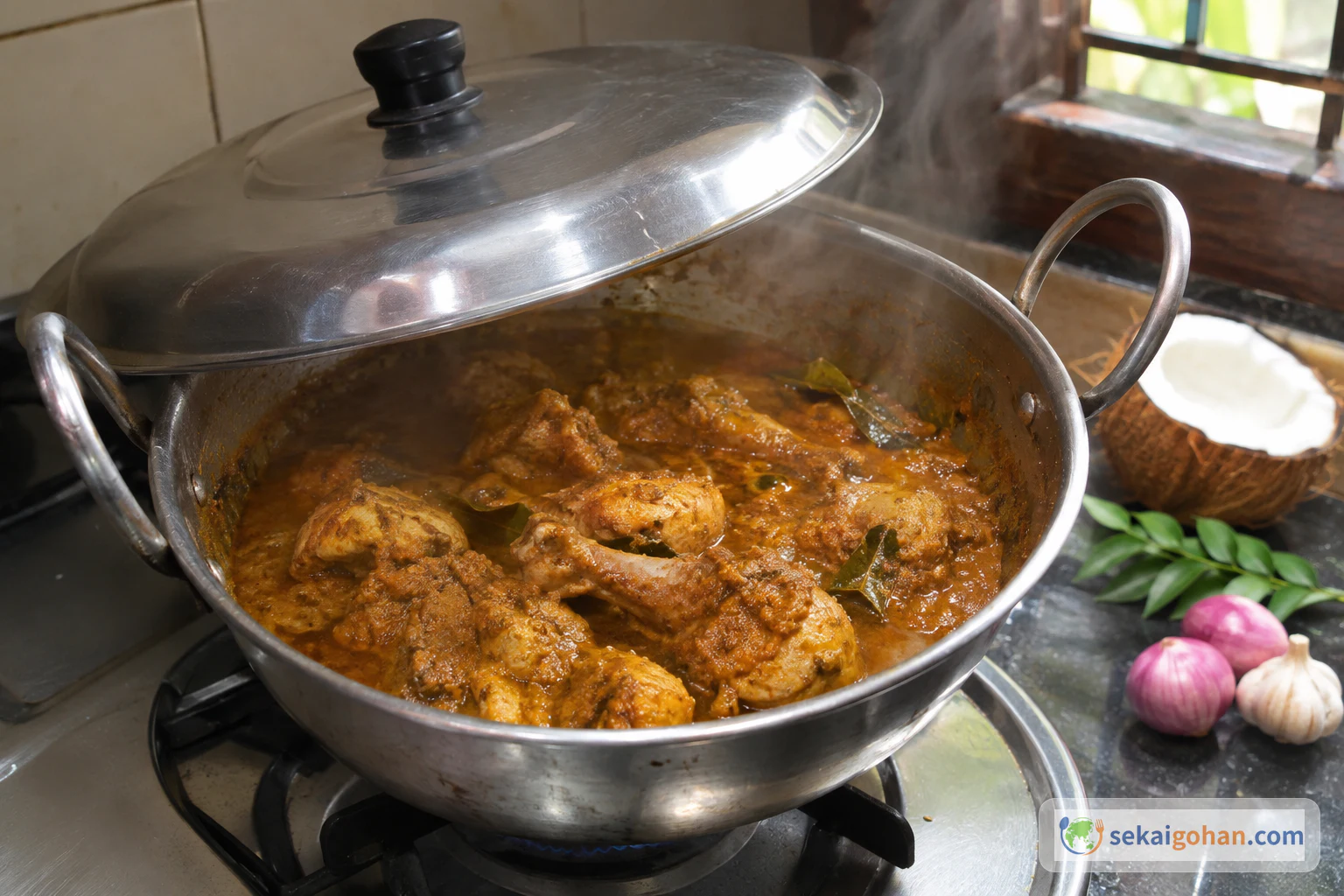
Marinated chicken simmering in the brown coconut and spice paste
Cook until the thickest piece reaches 165°F (74°C)

Heat 2 tbsp oil in a separate heavy pot. Add the ground paste, the marinated chicken and water as needed. Cook over medium heat for about 15–20 minutes, stirring now and then.

Check the thickest piece of chicken with a food thermometer: it should reach 165°F (74°C). Do not let the probe touch the bone. Cooking time and color alone do not tell you the chicken is safe; keep cooking until the thermometer reads 165°F (74°C).

STEP55 / 10

Add the coconut milk

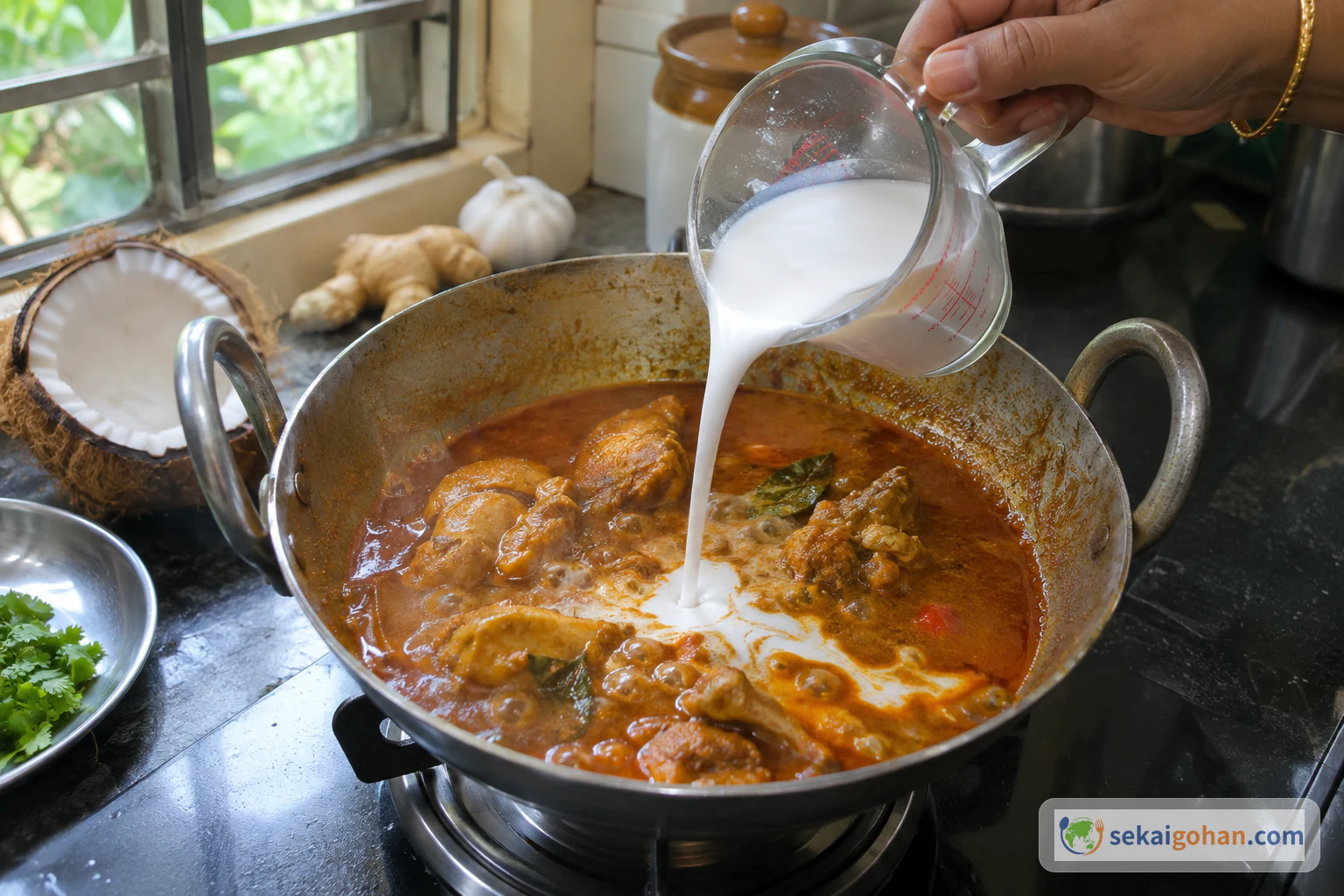
Coconut milk being poured into the cooked chicken curry
Coconut milk goes in only after the chicken is cooked

Pour in 1 cup coconut milk and let the curry simmer until it is hot throughout. Taste and add salt if needed. Keep the curry warm while you make the vade.

STEP66 / 10

Soak and grind the urad dal paste

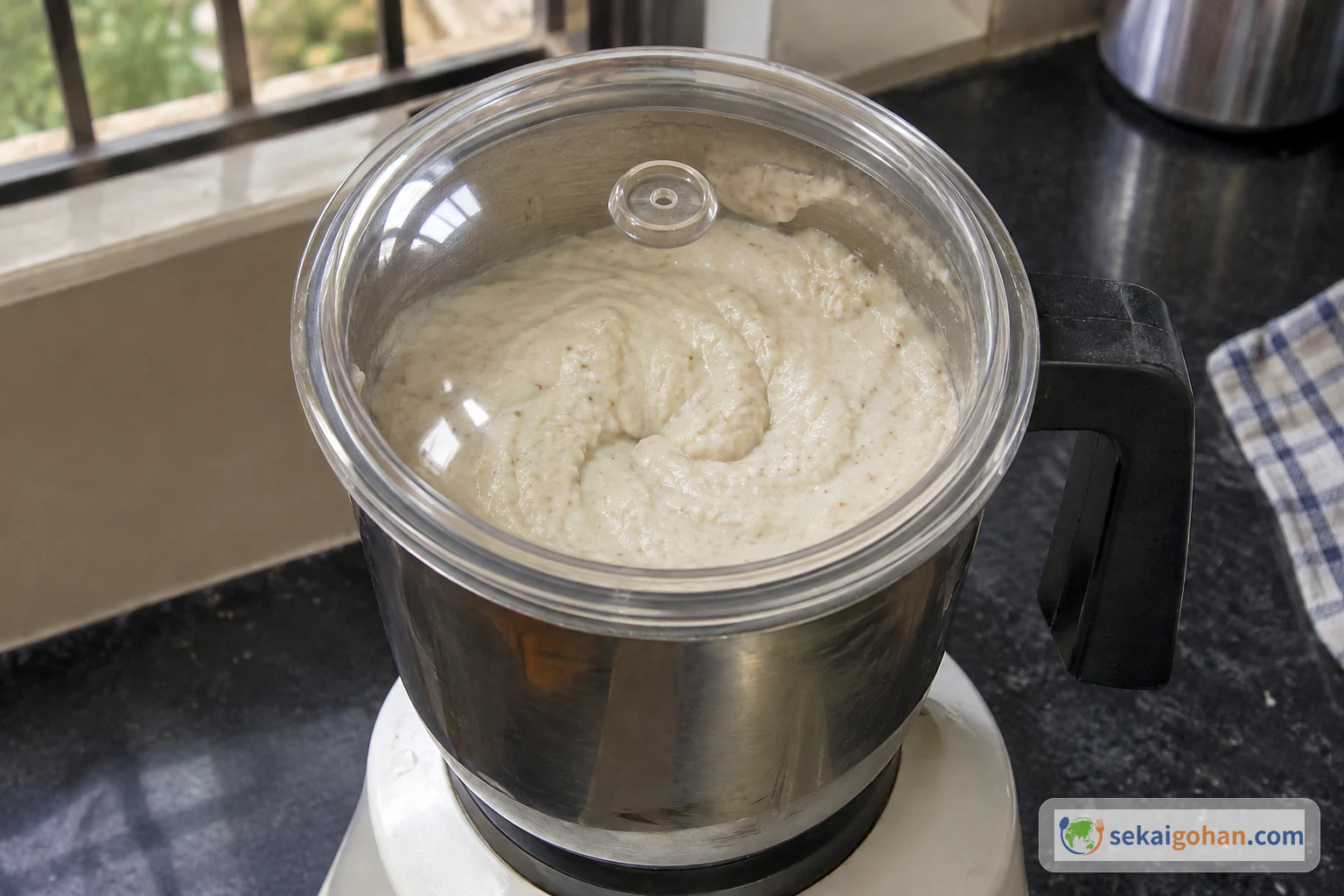
A closed mixer jar of smooth paste made from soaked urad dal, cumin and fenugreek
Grind the overnight-soaked dal and seeds to a smooth, thick paste

The night before, put 4 tbsp urad dal, 1 tbsp cumin seeds and 10–12 fenugreek seeds in a clean bowl, cover with clean drinking water, cover the bowl and leave it overnight in the refrigerator.

The next day, drain the soaking water. Grind the dal and seeds in the mixer with a little fresh water as needed to make a smooth, thick paste, with the lid securely closed.

STEP77 / 10

Make a soft dough

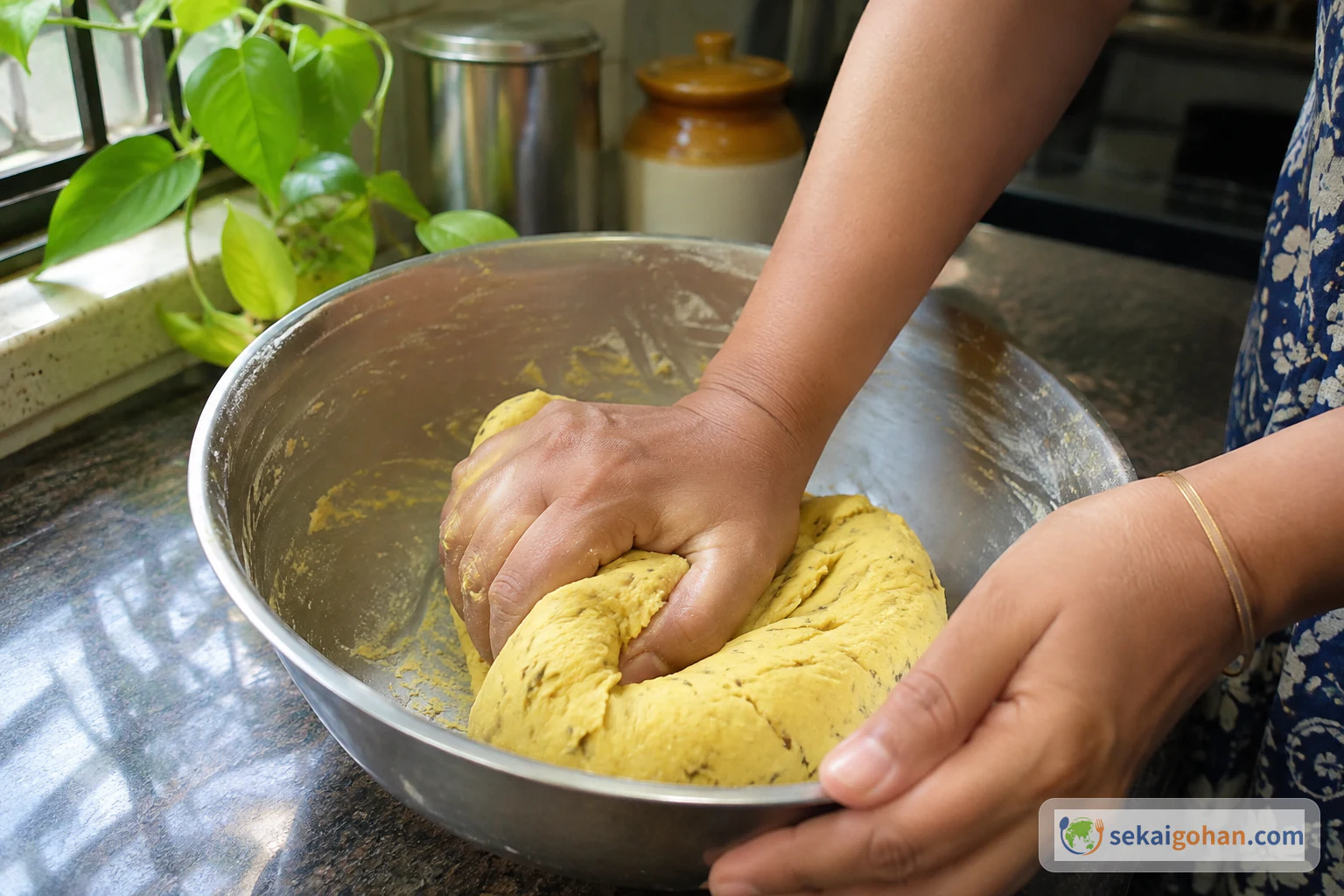
Hands kneading soft yellow vade dough after all the ingredients have been combined
Add water a little at a time until the dough is soft

In a large bowl, combine 2 cups rice flour, 1 cup besan, 1 cup wheat flour, 1/2 tsp turmeric powder, the urad dal paste, 2 tbsp oil and salt to taste. Add water a little at a time and knead into a soft dough.

Do not taste the raw dough; raw flour and dough are not safe to eat until fully cooked.

STEP88 / 10

Shape the vade

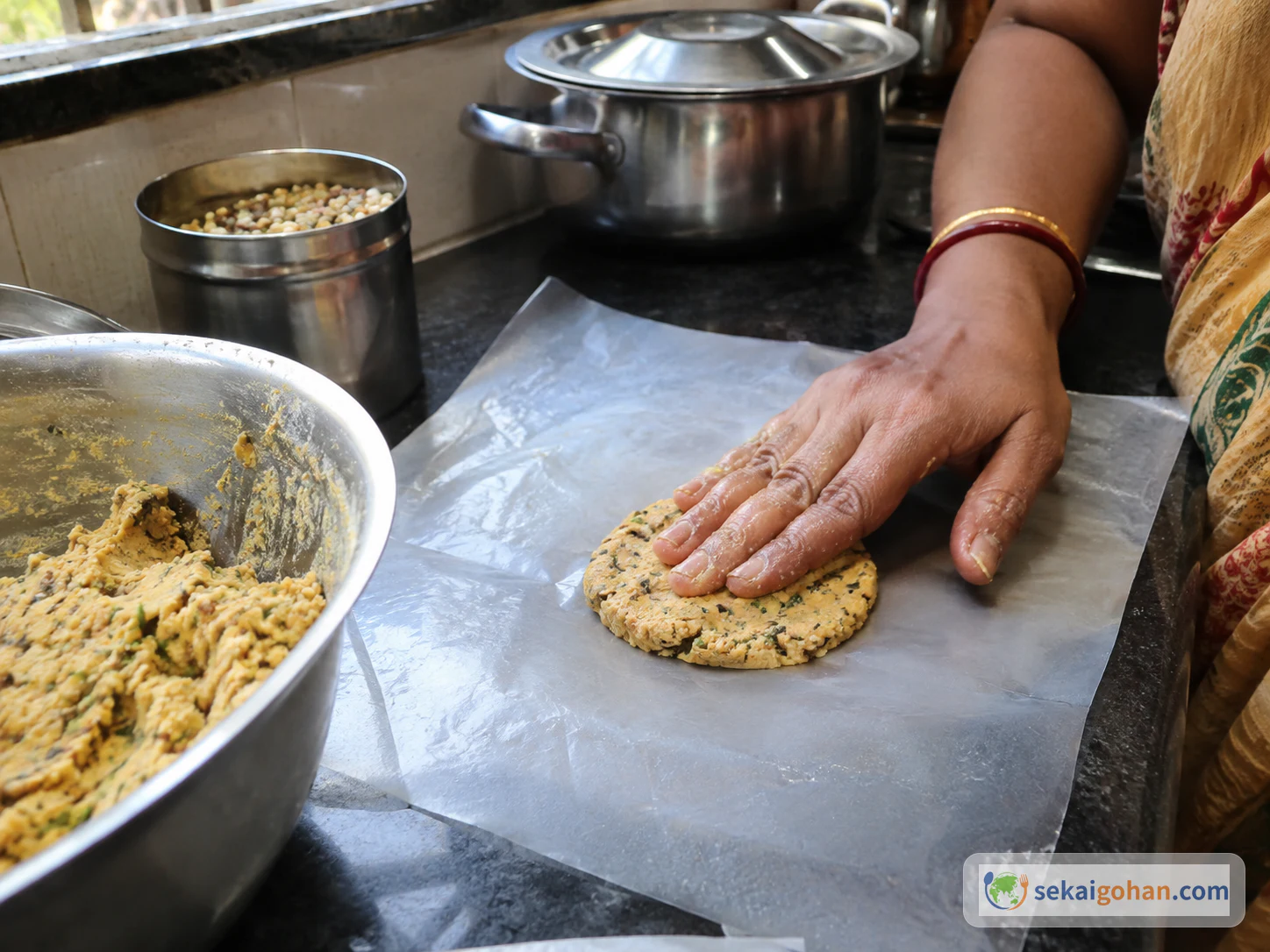
A small portion of vade dough being flattened into a thick disc on a food-safe sheet
Shape small, thick discs on a clean food-safe sheet

Divide the dough into small portions and roll each into a ball. Flatten each ball into a thick disc on a clean food-safe sheet. Wash your hands and clean the surfaces after handling the raw dough.

STEP99 / 10

Fry the vade

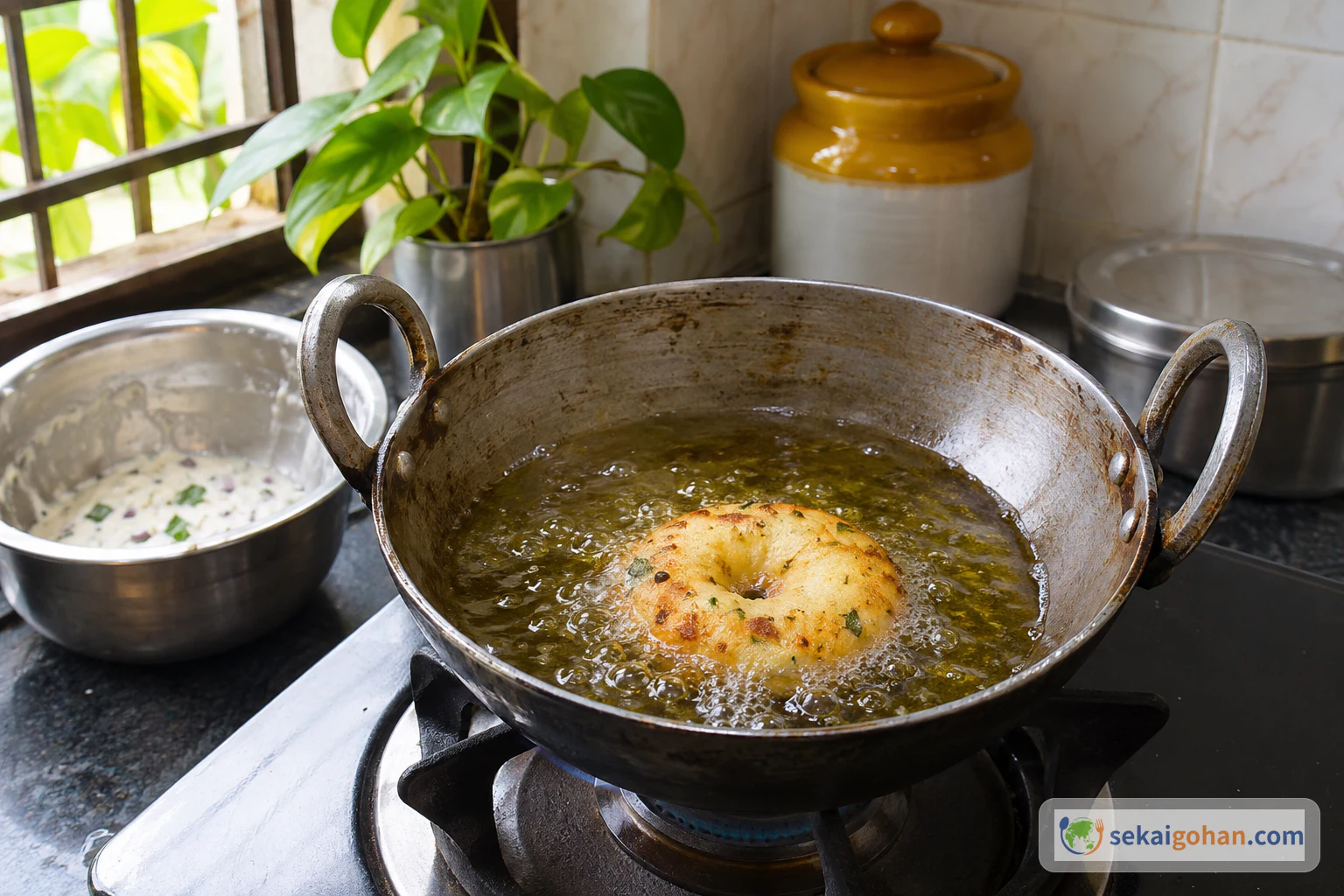
A shaped vade deep-frying in a kadai, with golden-brown spots forming
Fry until golden-brown spots form and the vade are cooked through

Heat oil for frying in a kadai or deep, heavy pan. Lower the vade gently into the hot oil, away from you, and fry until golden-brown spots form on the surface and the vade are fully cooked through, turning them as they cook. Lift them out with a slotted spoon and drain on a rack or paper towels.

STEP1010 / 10

Serve the curry with the vade

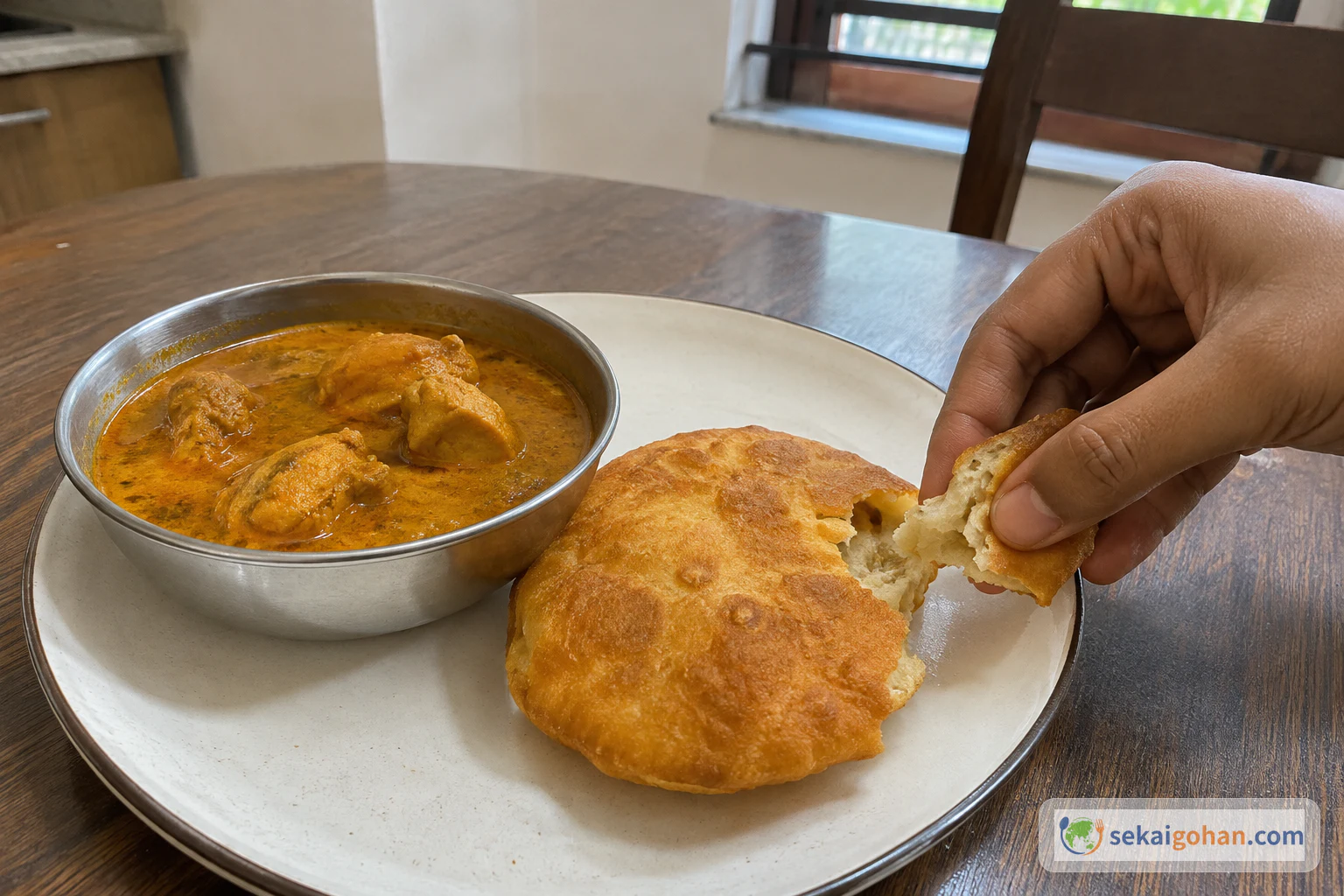
A hand tearing a fried vade beside a bowl of coconut chicken curry
Tear the vade and dip it into the curry

Serve the hot vade with the chicken curry. Tear the vade and dip it into the curry, letting the bread soak up the coconut gravy. Use clean serving tools, never ones that touched the raw chicken or raw dough.

0 / 0
Ingredients

Ingredients

1 / 1

Ingredients

Ingredient Amount Role
Chicken 500 g Curry: main ingredient
Ginger garlic paste 1 tbsp Curry: marinade
Turmeric powder (for the chicken) 1/2 tsp Curry: marinade
Mix masala 1 tbsp Curry: marinade
Salt (for the curry) to taste Curry: seasoning
Oil (for the aromatics) 2 tbsp Curry: sautéing the spice paste ingredients
Cinnamon 1 inch Curry: spice paste
Cloves 4 Curry: spice paste
Black peppercorns 10–12 Curry: spice paste
Coriander seeds 1 tbsp Curry: spice paste
Poppy seeds 1 tbsp Curry: spice paste
Onions 2, chopped Curry: spice paste
Grated coconut 1/2 cup Curry: spice paste
Water (for the curry) as needed Curry: grinding the paste and cooking the chicken
Oil (for the gravy) 2 tbsp Curry: cooking the paste and chicken
Coconut milk 1 cup Curry: finishing
Urad dal 4 tbsp Vade: soaked and ground paste
Cumin seeds 1 tbsp Vade: soaked and ground paste
Fenugreek seeds 10–12 Vade: soaked and ground paste
Rice flour 2 cups Vade: dough
Gram flour (besan) 1 cup Vade: dough
Wheat flour 1 cup Vade: dough
Turmeric powder (for the vade) 1/2 tsp Vade: dough
Oil (for the dough) 2 tbsp Vade: dough
Salt (for the vade) to taste Vade: seasoning
Water (for the vade) as needed Vade: soaking, grinding and kneading
Oil for frying as needed Vade: deep-frying
0 / 0

Kombdi vade puts two textures on one table: a coconut chicken curry with plenty of gravy, and thick fried vade to tear and dip into it. The curry and the vade are one dish, and you eat them together. It comes from coastal Konkan Maharashtra, and the curry is spicy and rich with coconut. People cook it for festivals, special occasions and Sunday family meals, when the whole table has gathered.

Kombdi Vade on the Konkan Coast

The name tells you what's on the plate. Kombdi is the Marathi word for chicken, and vade here means fried flatbreads. The dish goes by more than one name: Konkan-style kombadi vade, or Chicken Malvani, a Malvani curry made with bone-in chicken. For more dishes from the country, see our Indian recipes.

Coconut goes into the curry twice. Grated coconut is sautéed with whole spices and onion and ground into the paste, and coconut milk goes in at the end. Malvani masala generally means roasted spices, coconut and red chilies. This curry uses a general "mix masala" instead.

The vade flour changes more than anything else from home to home. Some cooks use rice flour and urad dal, and others use wheat or nachni (finger millet) flour. One home recipe uses a bhajani: rice, jowar, wheat, chana, urad and poha, each roasted on its own, cooled and coarsely ground. The bhajani is then kneaded with warm water and rested before frying. Here the vade start from urad dal, cumin and fenugreek, soaked and ground to a paste, then mixed into rice flour, besan and wheat flour, shaped by hand and deep-fried.

Ingredients for the Curry and the Vade
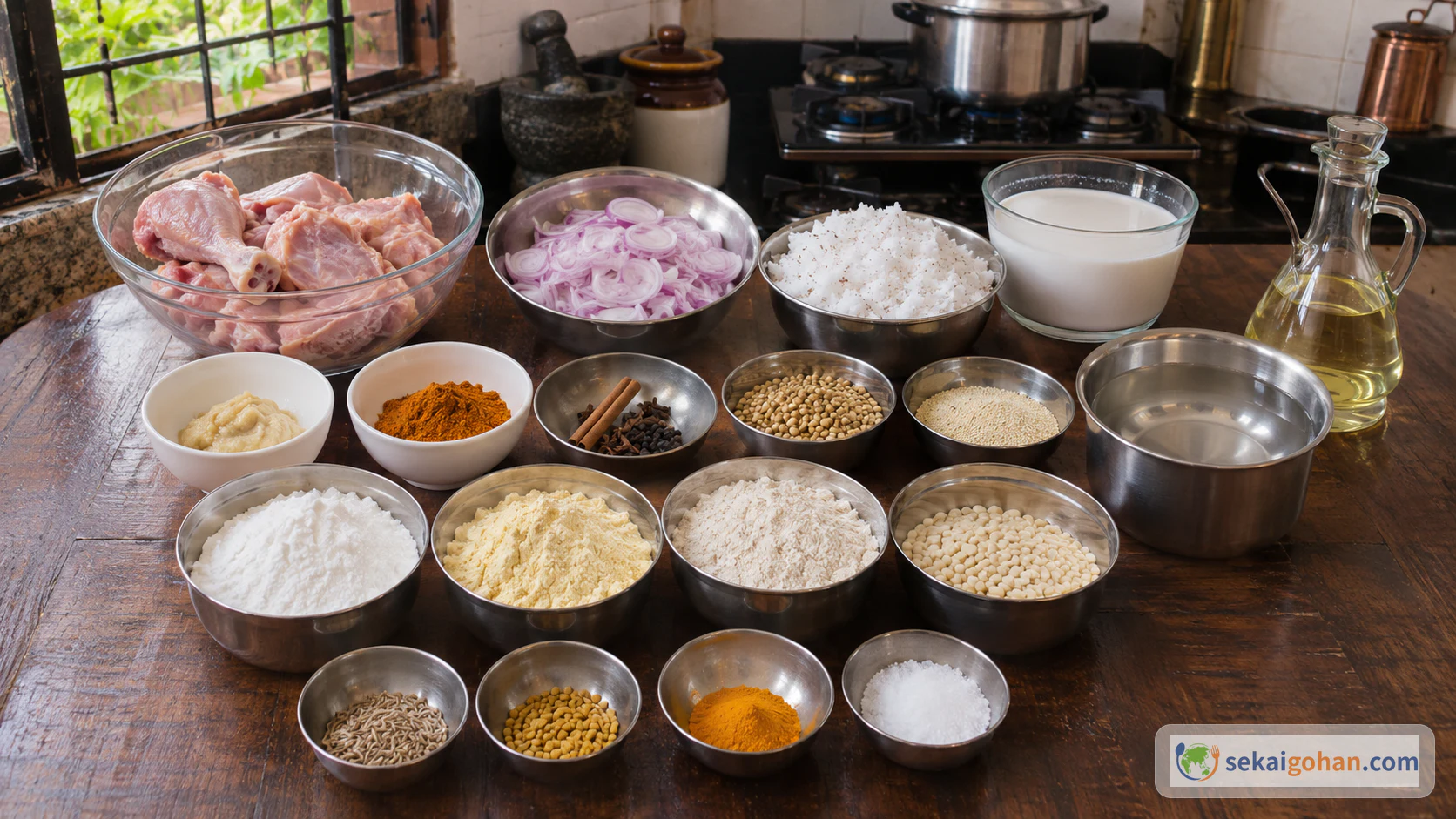
Ingredients for kombdi vade, grouped by stage for the chicken curry and the vade, seen from above
Keep the raw chicken in its own bowl, apart from the flours and dal for the vade

Equipment

  • Bowl kept only for the raw chicken, plus a separate cutting board and utensils for it
  • Frying pan for sautéing the aromatics
  • Heavy pot for the curry
  • Mixer or grinder with a secure lid
  • Large bowl for mixing the vade dough
  • Clean food-safe sheet for shaping the vade
  • Kadai or deep, heavy pan for frying
  • Slotted spoon and a rack or paper towels for draining
  • Food thermometer

Choosing Ingredients for Kombdi Vade

Mix masala. Choose a general Indian spice blend you like. Blends differ in their spices and heat, and a Malvani masala or curry powder will give you a different curry. If you want less heat, pick a blend with less chili, and taste the curry only after the chicken is fully cooked.

Chicken. Use whichever cut you like best.

Urad dal. Whole black urad, split urad and skinned white urad dal can each give the paste a different color and texture.

Flours. Rice flour, besan (chickpea flour) and wheat flour each do their own job in the dough. Corn flour, potato or corn starch, and other bean or dal flours can't stand in for them.

Ready-made vade bhajani. A store-bought bhajani or vade flour lets you skip the soaking and grinding. Its blend is different, though, so it makes a different vade. Follow the package directions and check the ingredient list.

Allergens. This dish contains wheat (gluten), legumes (urad dal and chickpea flour) and coconut. Check the labels on the mix masala and any packaged flours for other allergens and shared-facility statements.

Method: Curry First, Then the Vade

Start the vade paste the night before

Step 6 comes after the curry in the order of the recipe, but its soak starts the evening before. Put the urad dal, cumin and fenugreek to soak the night before you cook, then make the curry and the vade on the day.

Kombdi Vade Troubleshooting

The chicken is done when the thickest piece reads at least 165°F (74°C) on a food thermometer, with the probe kept away from the bone. Cooking time alone can't tell you that. Keep the tools for raw chicken apart from those for cooked food, and keep raw dough off any surface where the cooked vade will go.

Problem What to try
The dough cracks when you flatten it Work in a little more water, a small amount at a time, and knead again. Keep the flour amounts the same.
The dough is too sticky to shape Next time, add the water more slowly, a little at a time.
You're unsure the oil is hot enough Fry one small piece of dough first and watch how it colors before frying the rest.
The vade brown before they cook through Lower the heat and fry fewer at a time so each one gets enough time in the oil.
The chicken looks done but the thermometer reads below 165°F (74°C) Keep cooking and check again in the thickest piece, away from the bone.

Serving and Storing Kombdi Vade

Put onion and lemon on the table with the curry and vade. After a spicy Konkan or Malvani meal, many people drink solkadhi, which is made from kokum and coconut milk.

Refrigerate leftovers promptly in a covered container, and keep your refrigerator at 40°F (4°C) or below.

Frequently Asked Questions

How big should the vade be?

Shape small, thick discs so they cook all the way through.

Can I leave out the urad dal?

The urad dal paste is a key part of this vade dough, and without it you get a different vade. If you want to skip the soaking and grinding, a ready-made bhajani is the easier route, but it makes a different vade.

Can I make it without wheat flour?

Other vade versions use different grains. To make a gluten-free vade, you'd need to work out a new ratio of rice and legume flours. Expect a different texture and a dough that holds together differently.

Is cooking the chicken for 15–20 minutes enough?

That's how long it cooks, but the time alone won't tell you it's safe. Measure the thickest piece with a food thermometer, away from the bone, and make sure it reads at least 165°F (74°C).

Why soak the dal in the refrigerator?

Keeping the dal covered in the refrigerator overnight keeps it clean until you grind it the next day. You're only soaking it, not fermenting it.
Sources