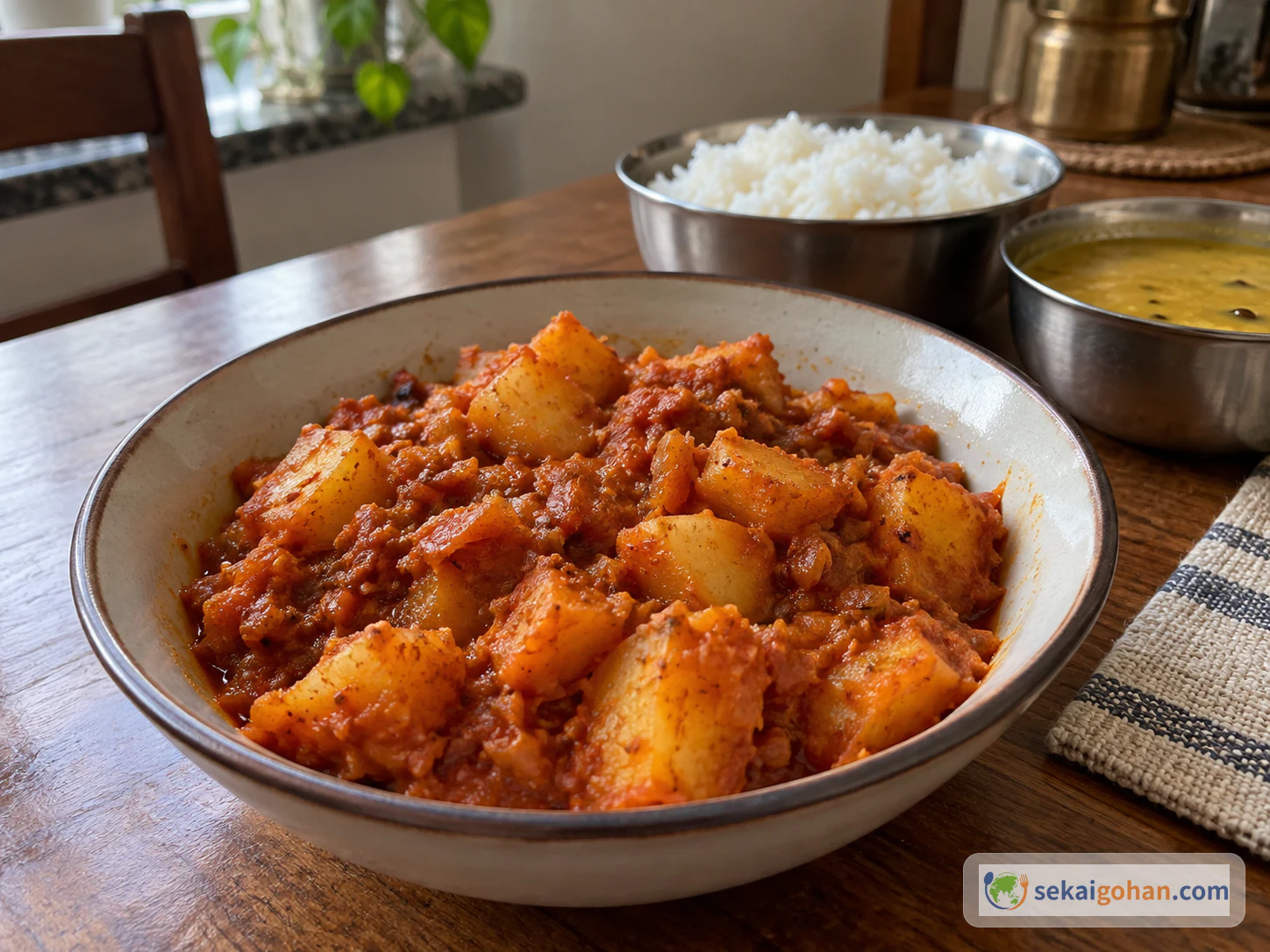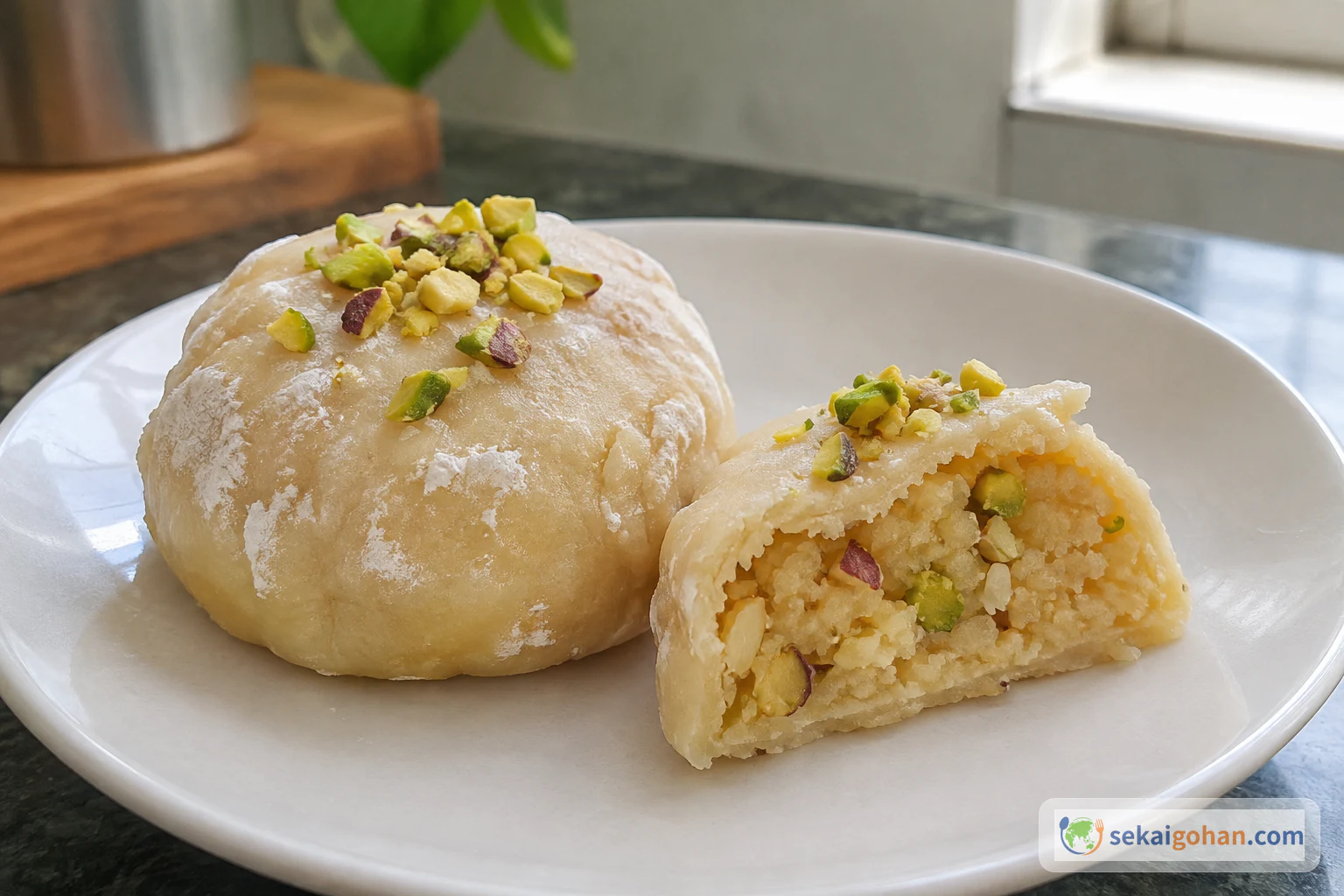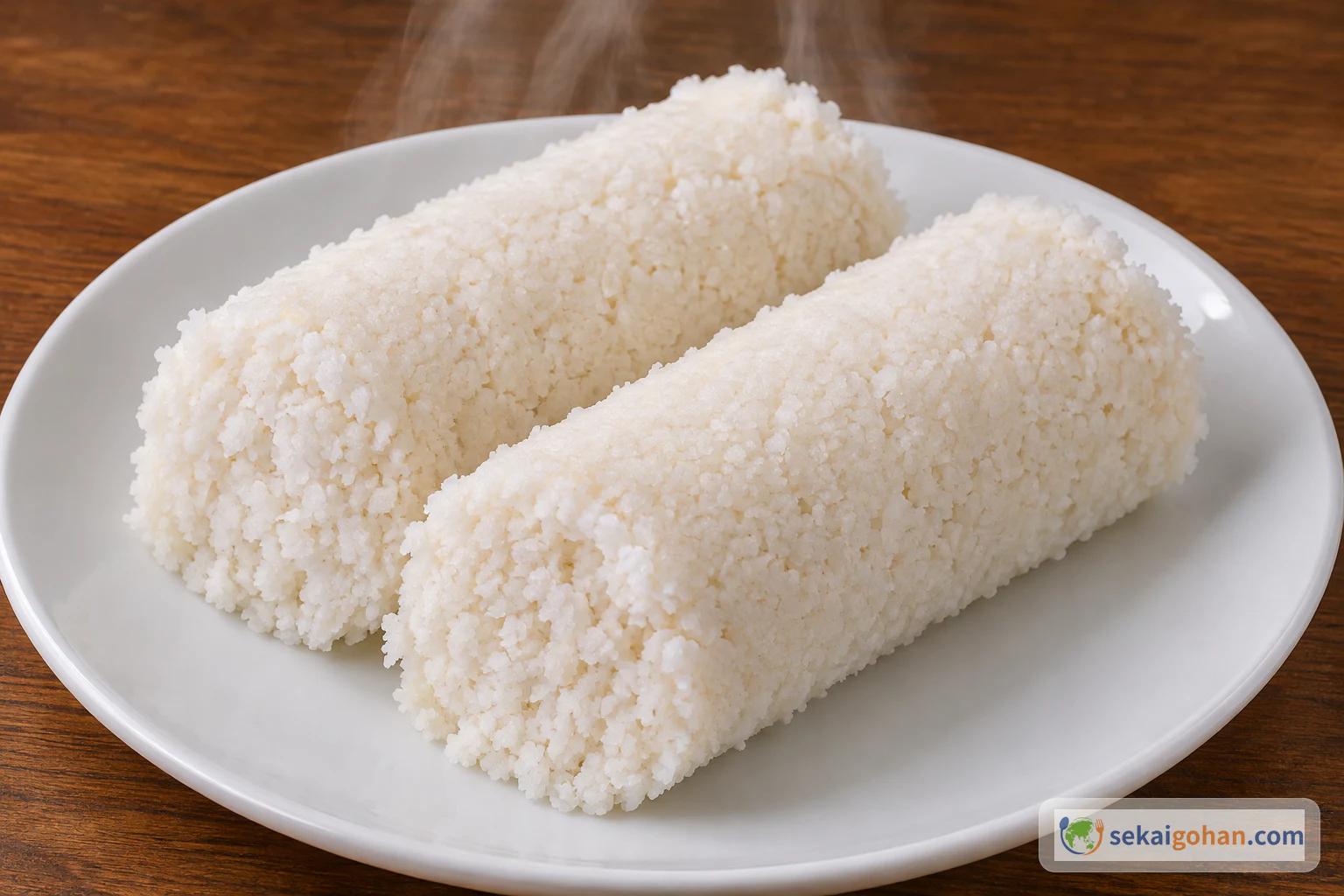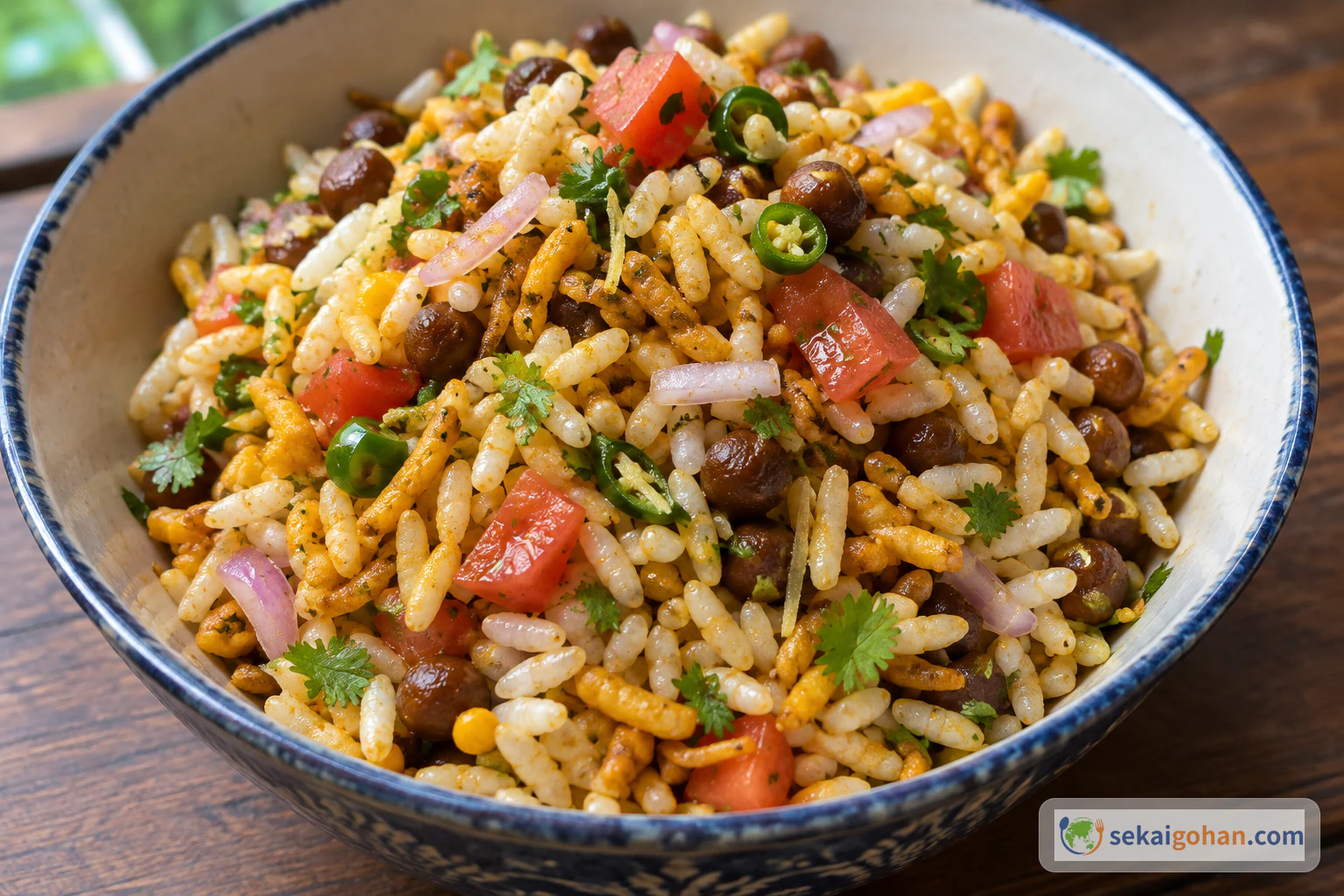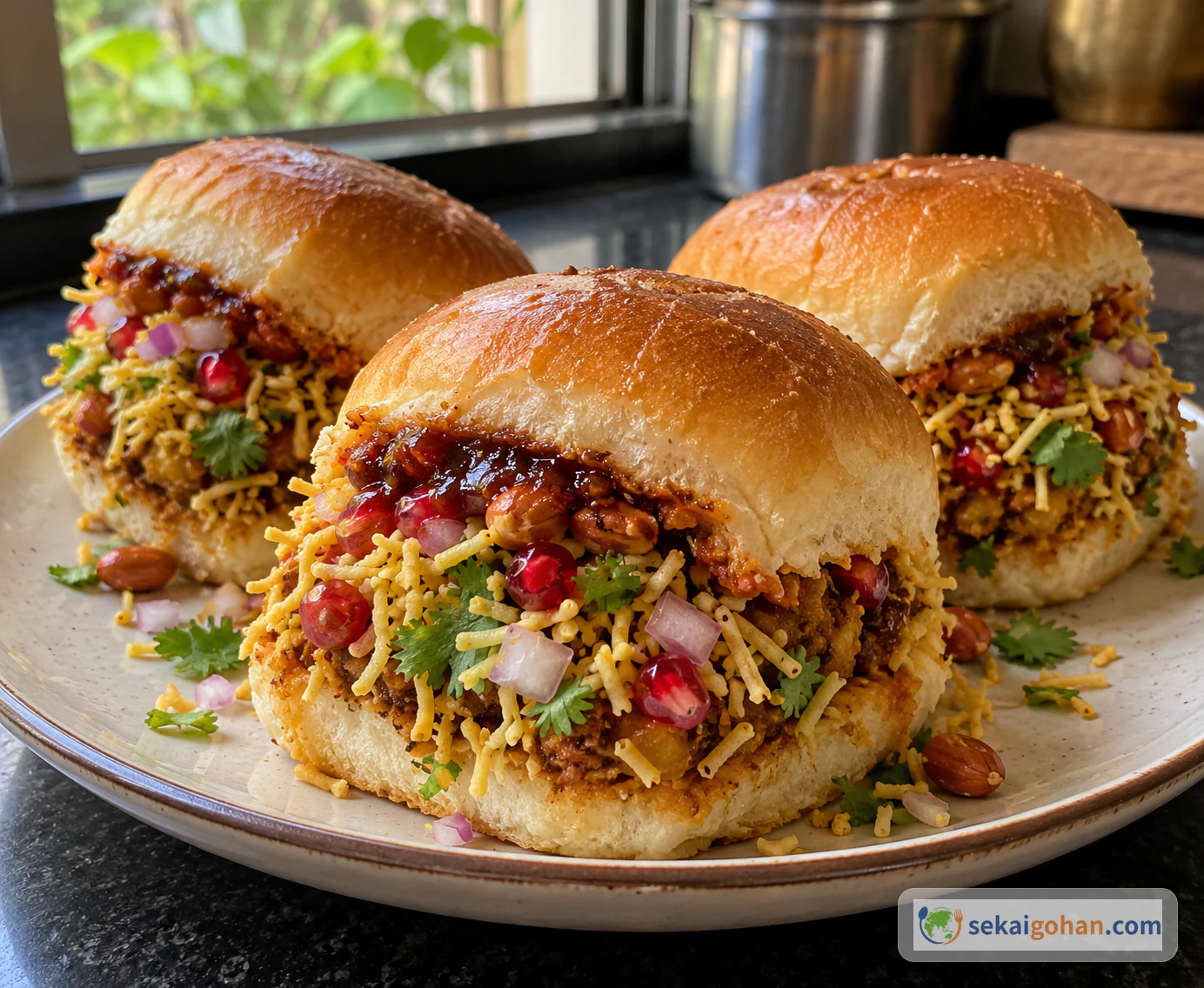
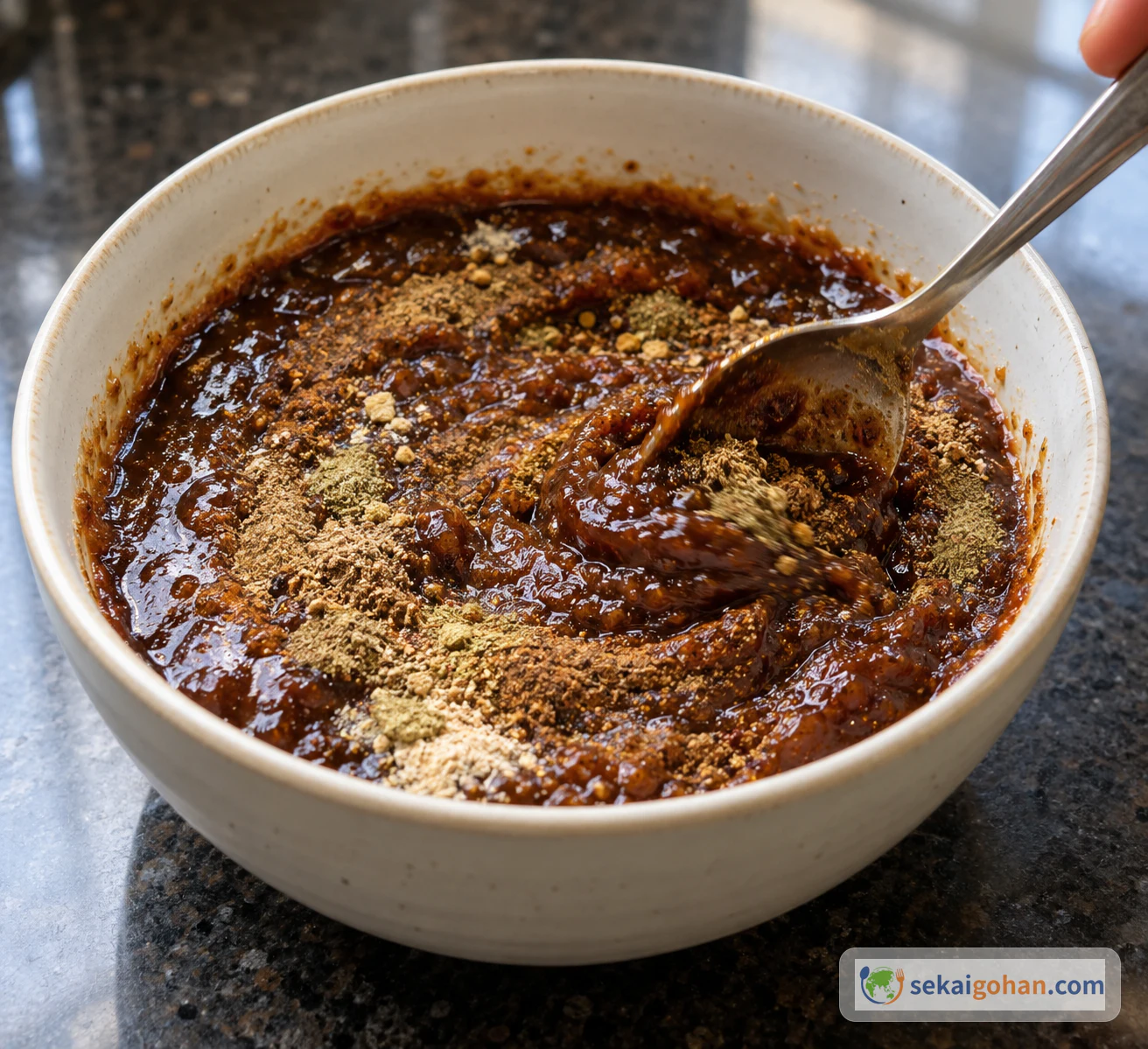
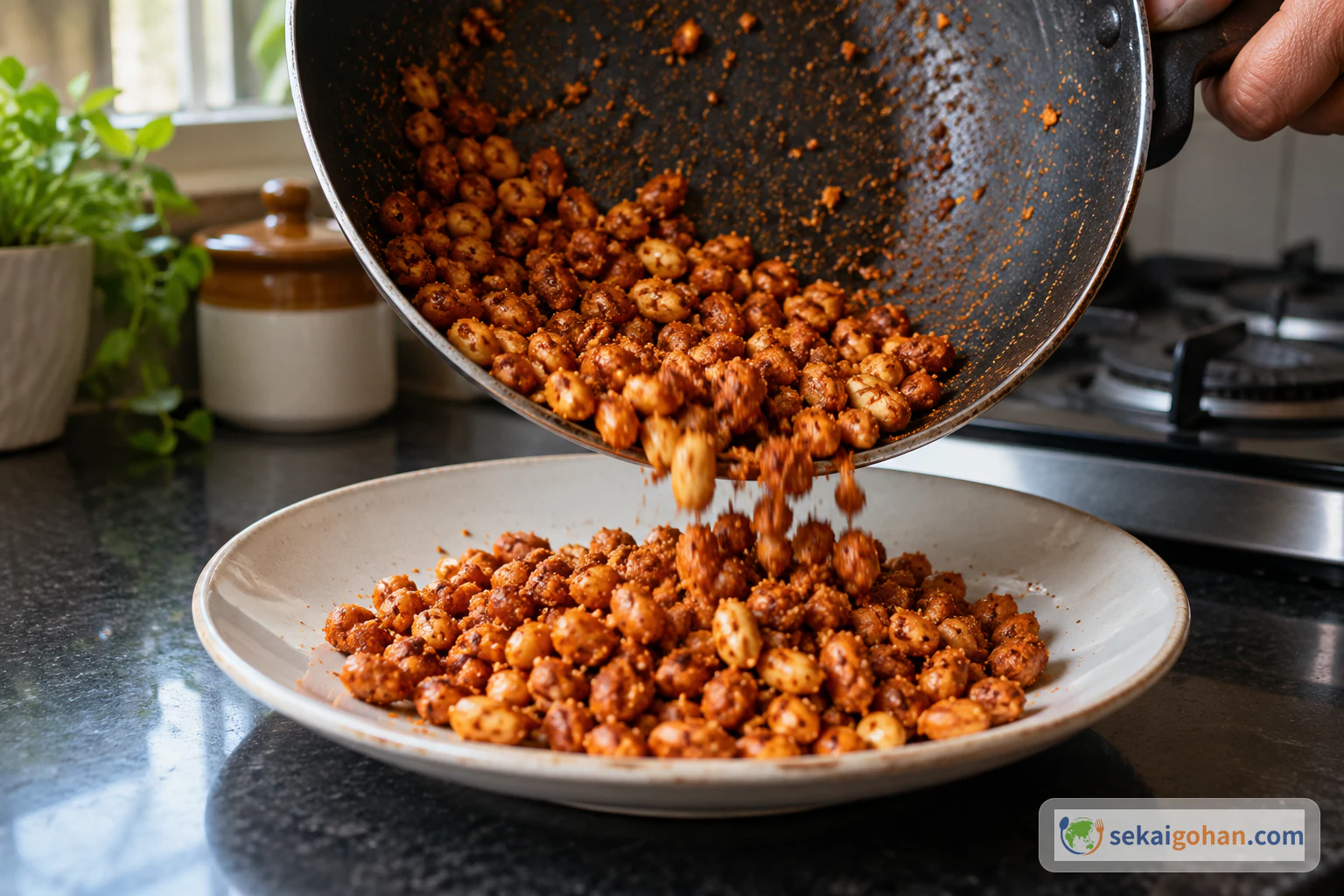
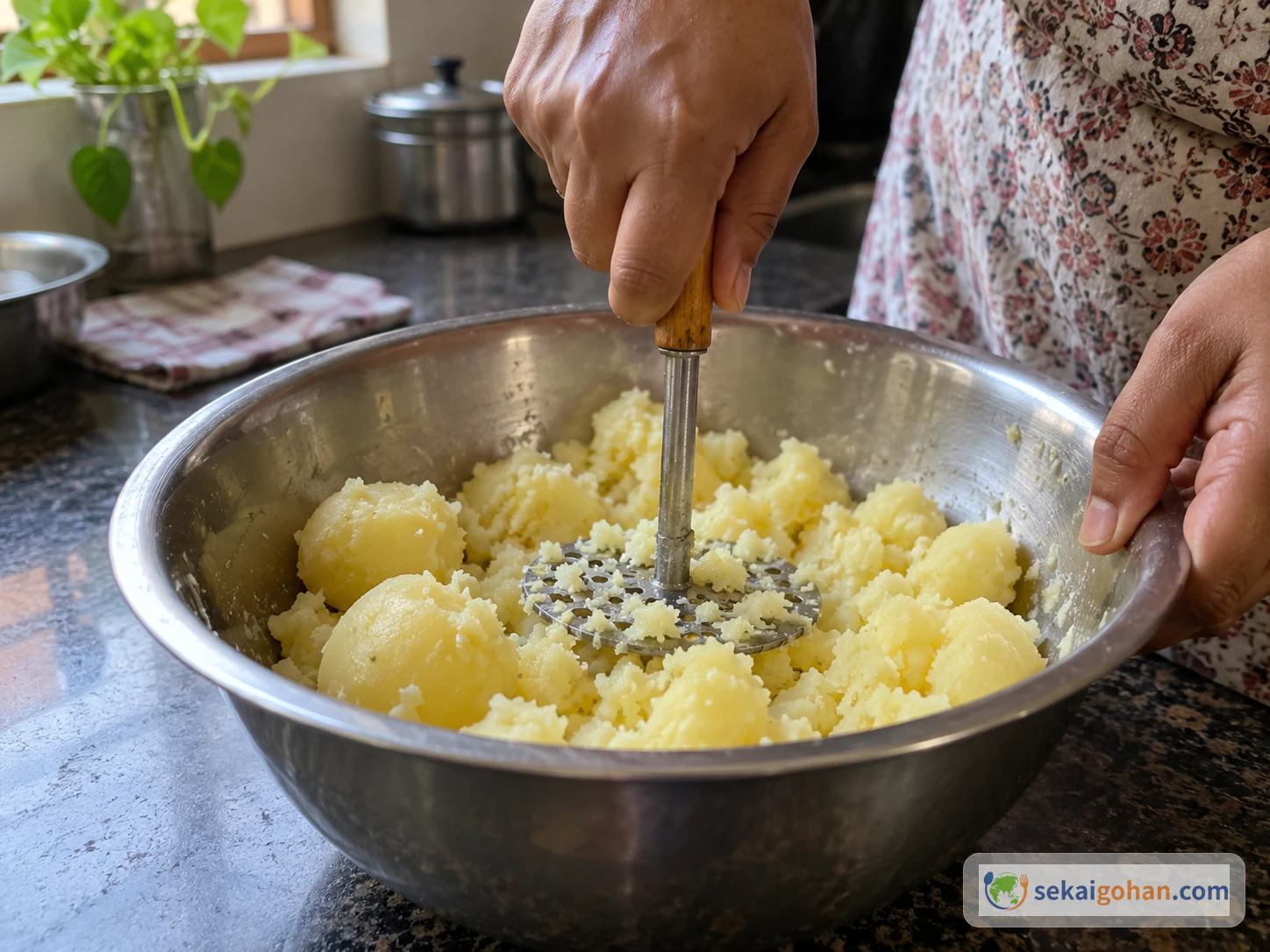
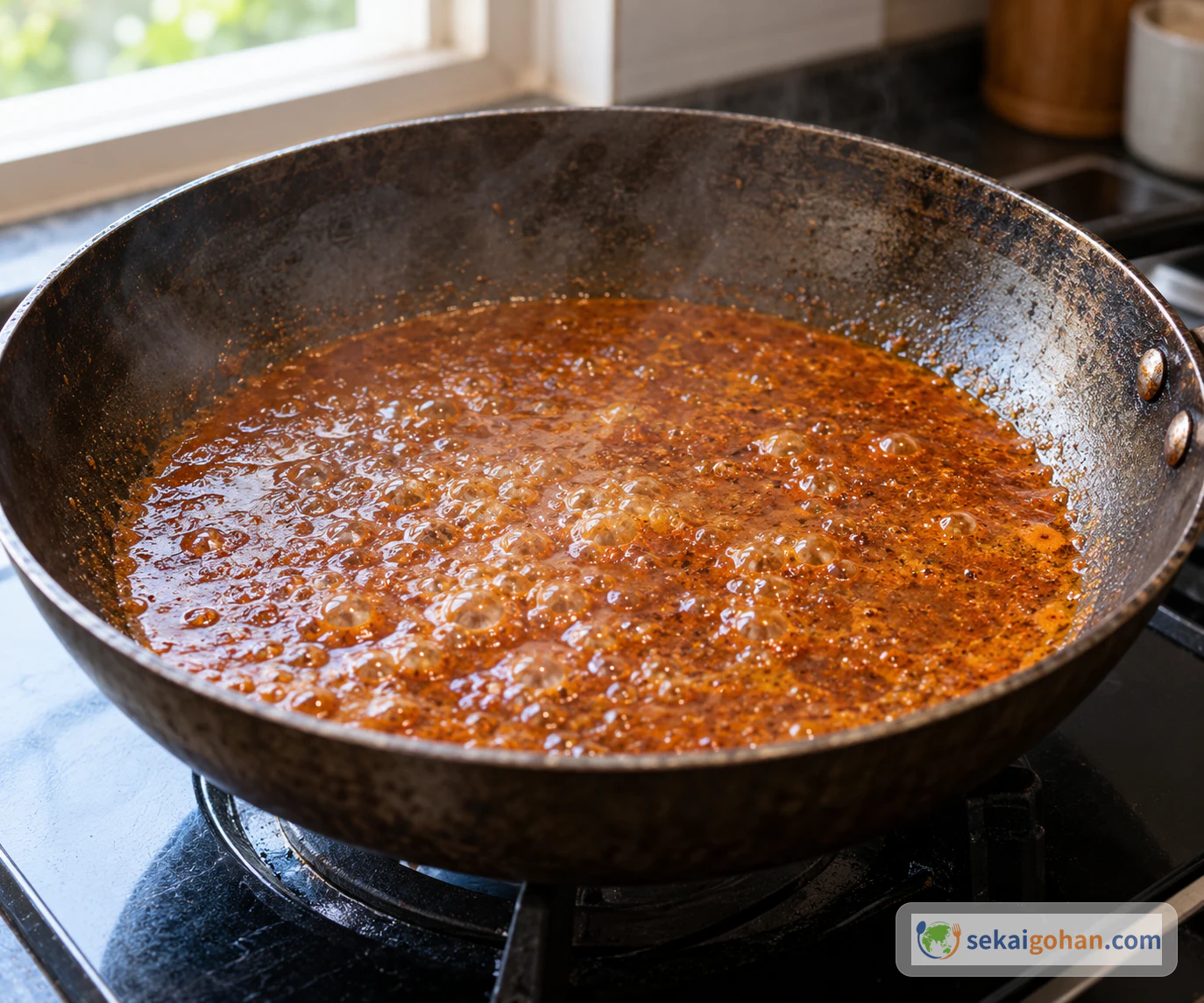
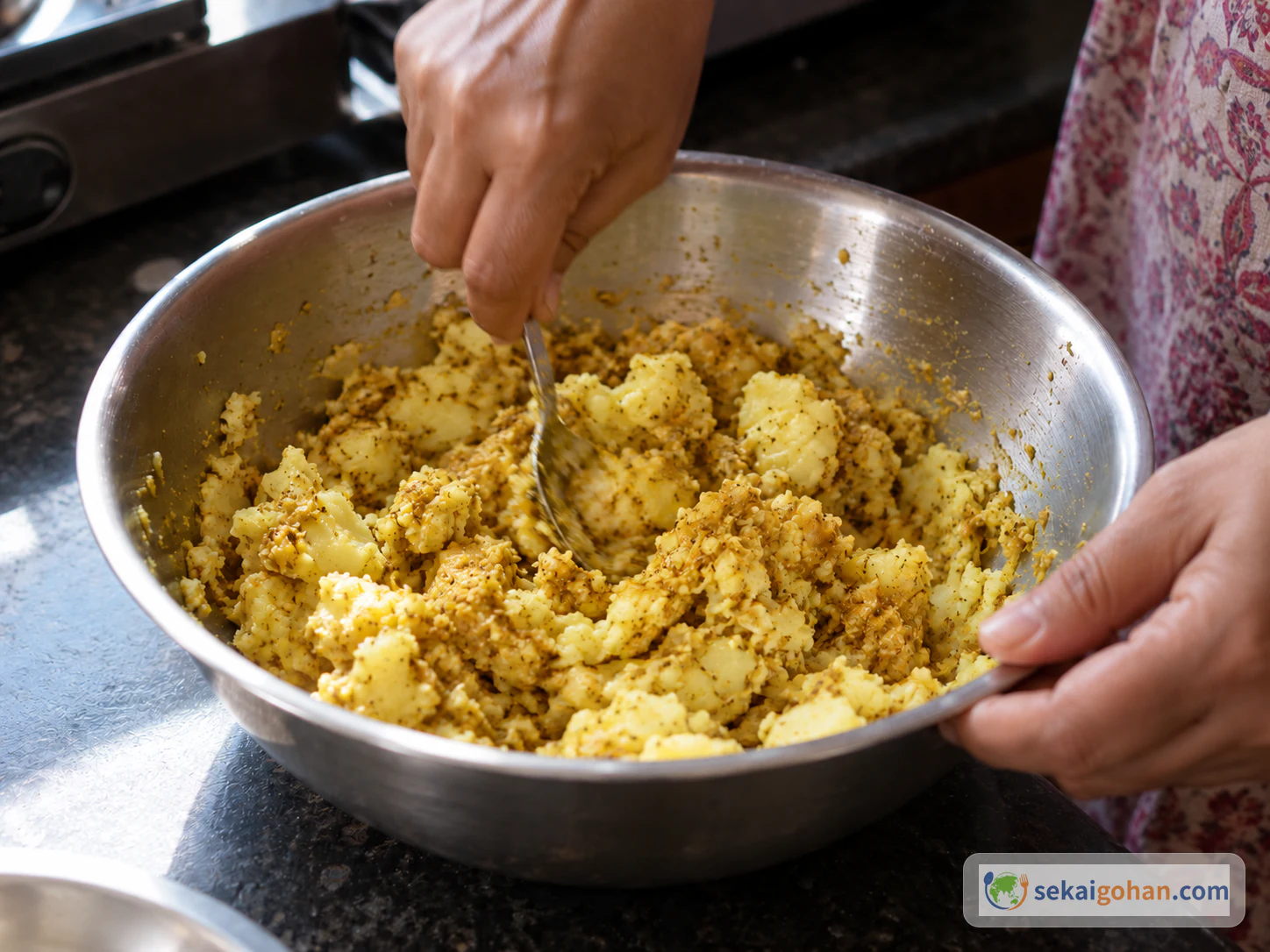
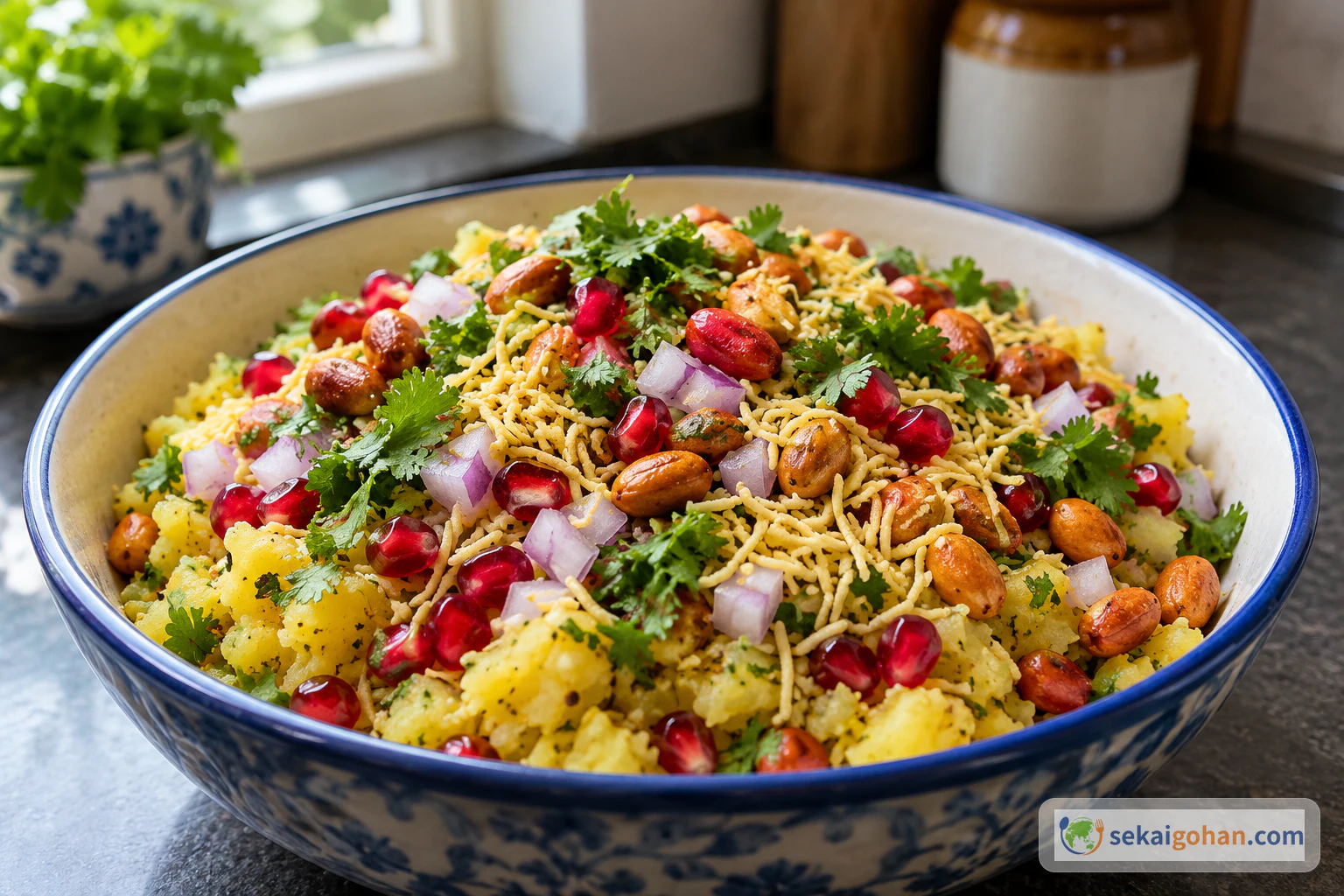
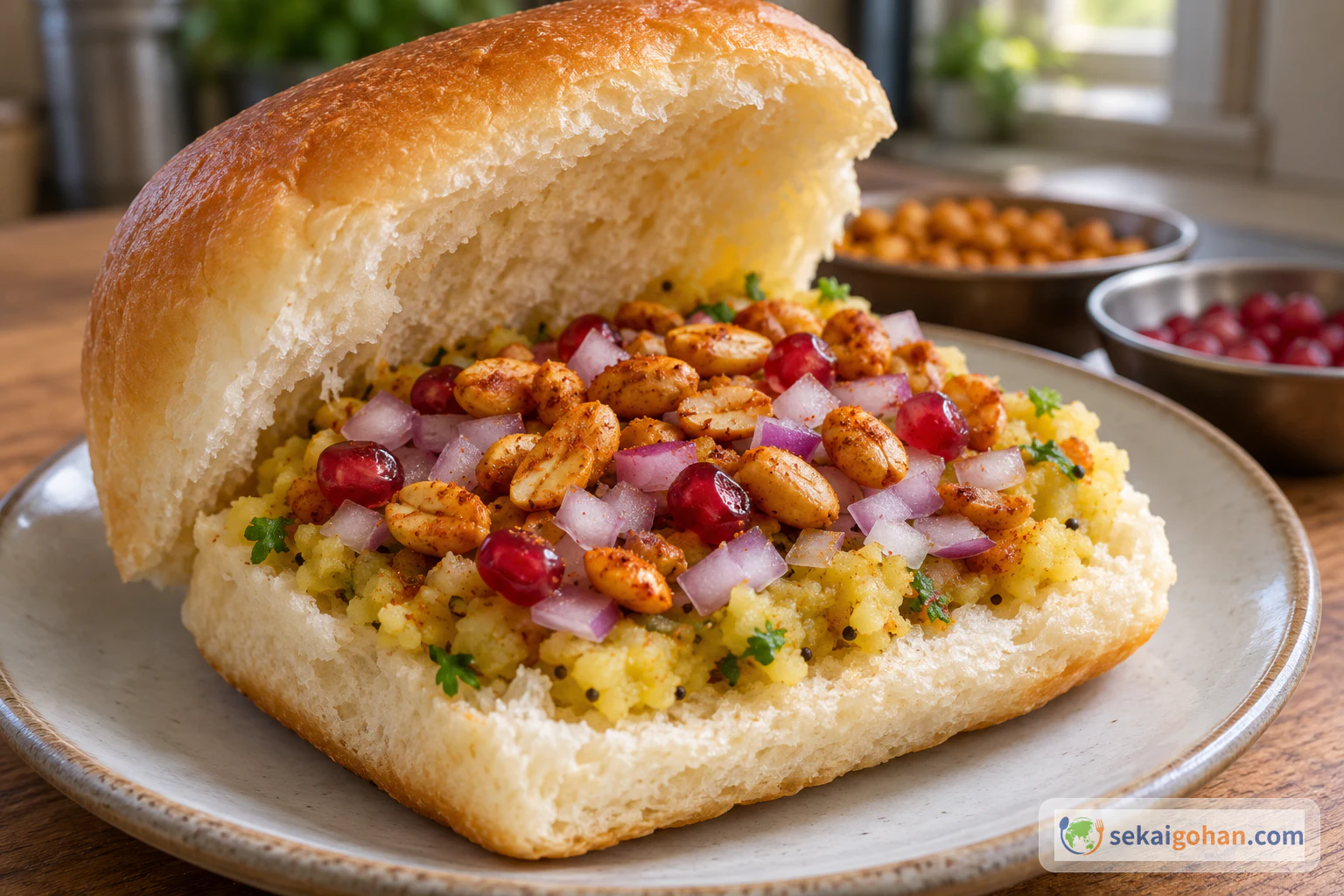
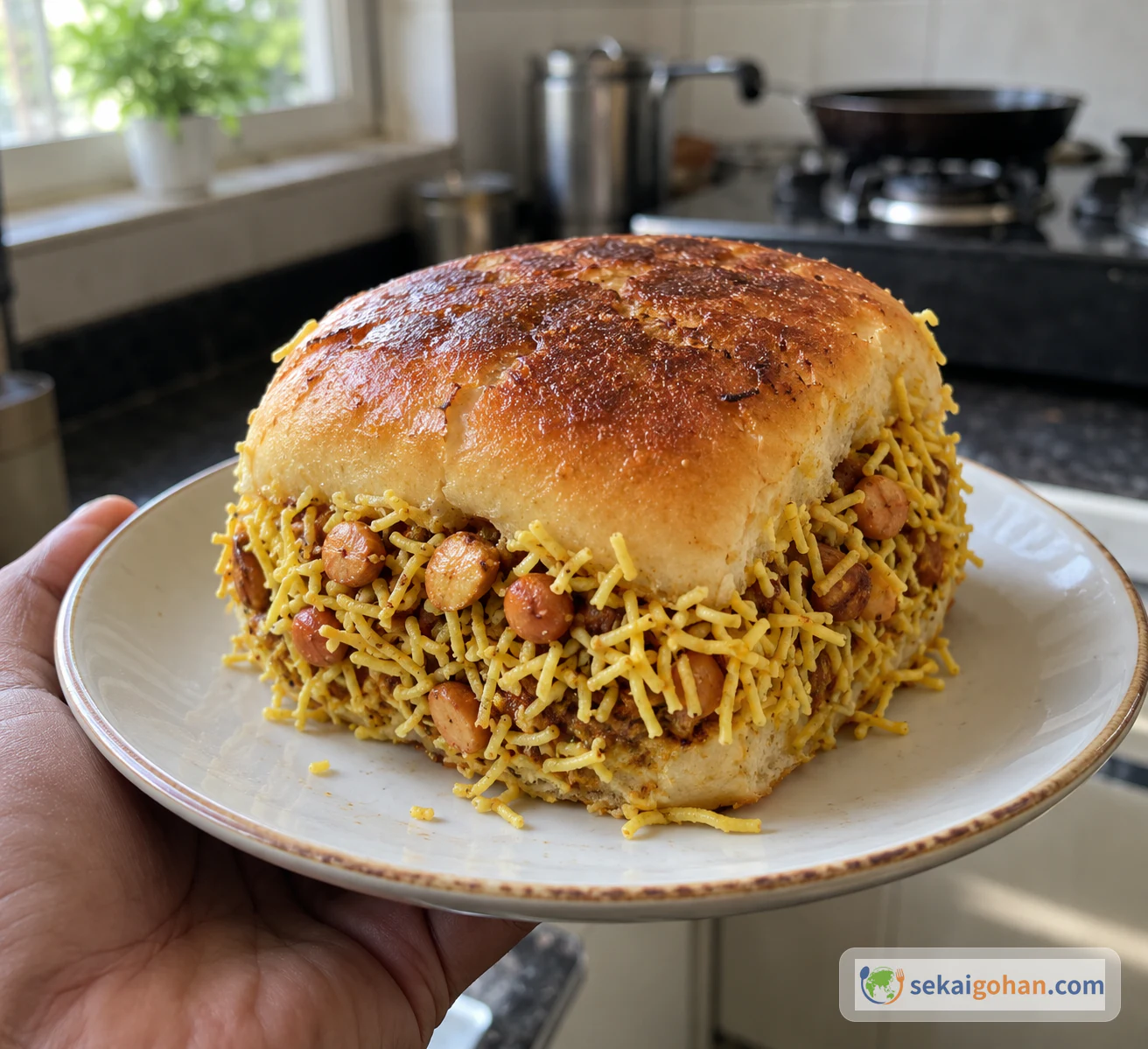
Spiced potato, sweet-sour tamarind and a hot red garlic chutney all go inside one soft roll, and the outside gets a crunchy, fresh coating. That's dabeli, a street snack from the Kutch region of Gujarat. Boiled potato is mashed with a special masala, tucked into ladi pav and finished with pomegranate and roasted peanuts. Every bite brings soft bread, warm spice, sweetness, garlic heat and crunch together.
About Kutchi Dabeli
The dish is often called Kutchi Dabeli after the Kutch region. It belongs to the same family as other Indian street food, but it stands apart. Pav bhaji also uses pav, but serves a vegetable bhaji alongside. Panipuri shares a tamarind chutney but fills fried hollow shells with liquid. In dabeli, the filling and the coating are built around the bread itself. For more dishes from the country, see our India page.
How Dabeli Is Built
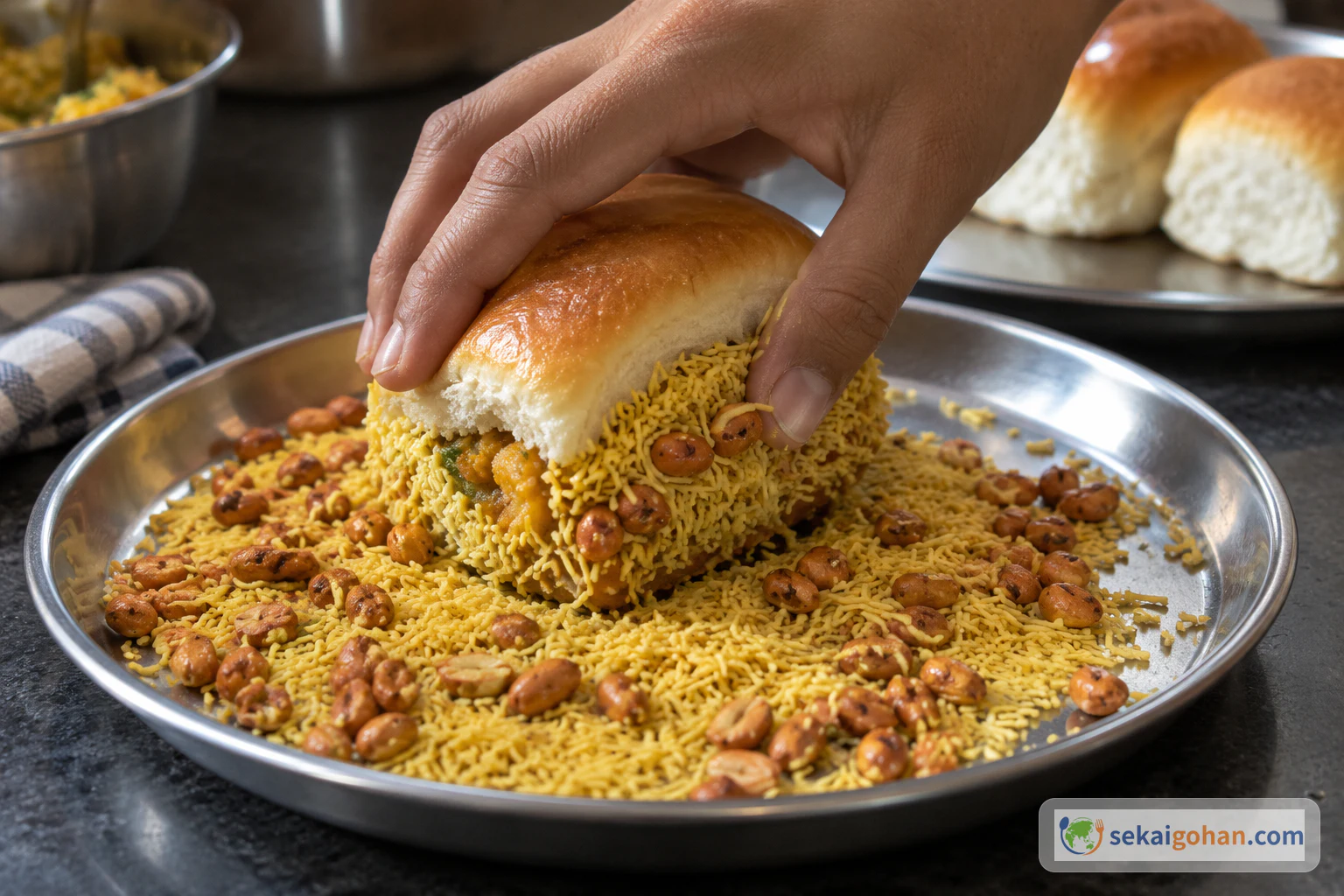
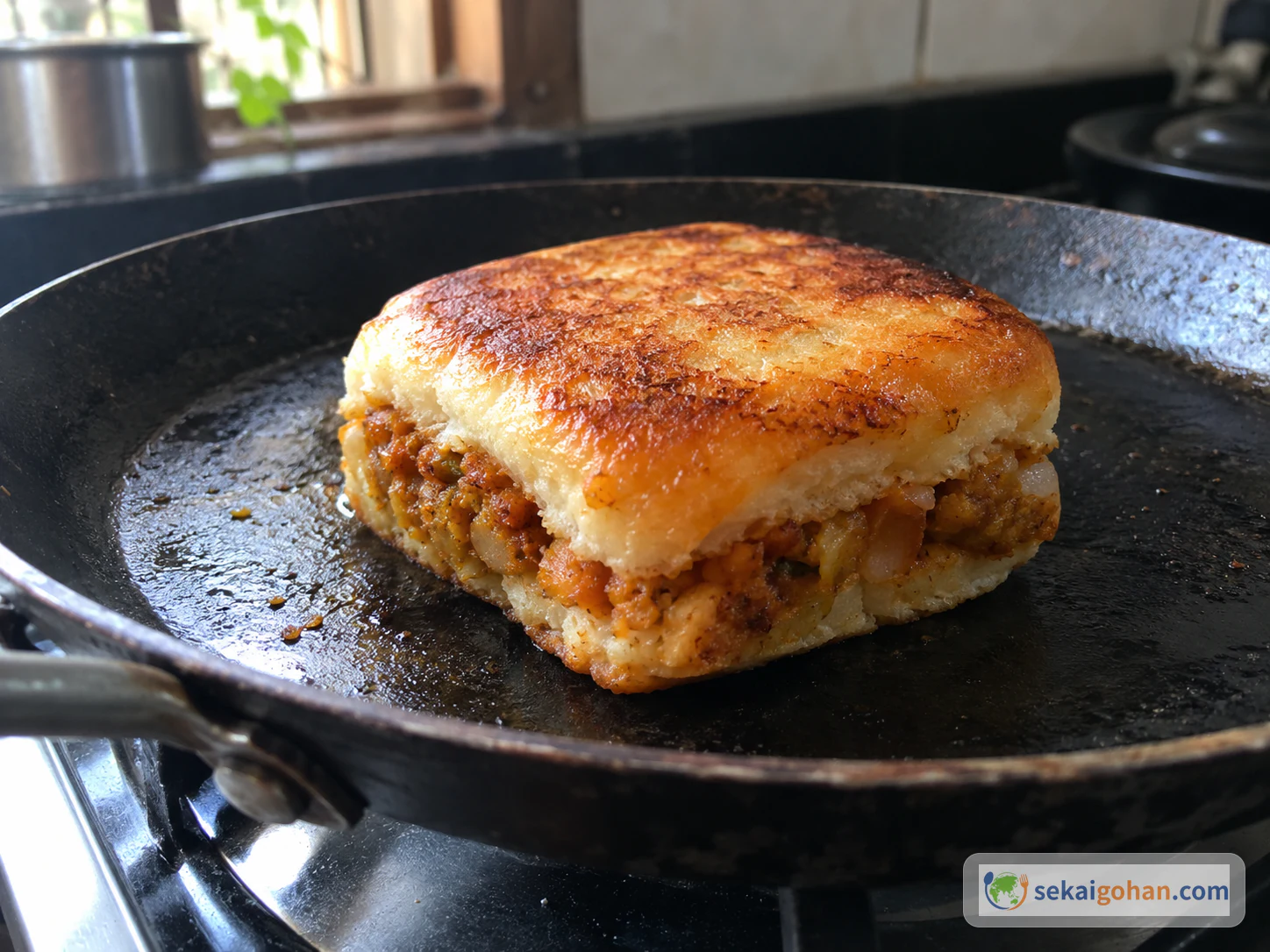
Think of the inside and the outside as two separate jobs. Inside the pav goes the spiced potato filling with the two chutneys. On the three open sides goes a coating of sev, peanuts, onion, pomegranate and coriander. The pav is toasted in butter only once both are done. Onion never goes into the cooked filling here. It's scattered over the filling bowl, tucked inside each pav and used on the second coating plate.
This version makes 8 dabeli, with the Dabeli masala, tamarind-date chutney, red garlic chutney and masala-roasted peanuts all made at home. The pav and the sev are bought. Start with the tamarind-date chutney, since it needs time to cool. Then make the masala, the garlic chutney and the peanuts, followed by the potato filling. Last, fill each pav, press it into the two coating plates one after the other, and toast both sides until hot and crisp.
Ingredients for 8 Dabeli
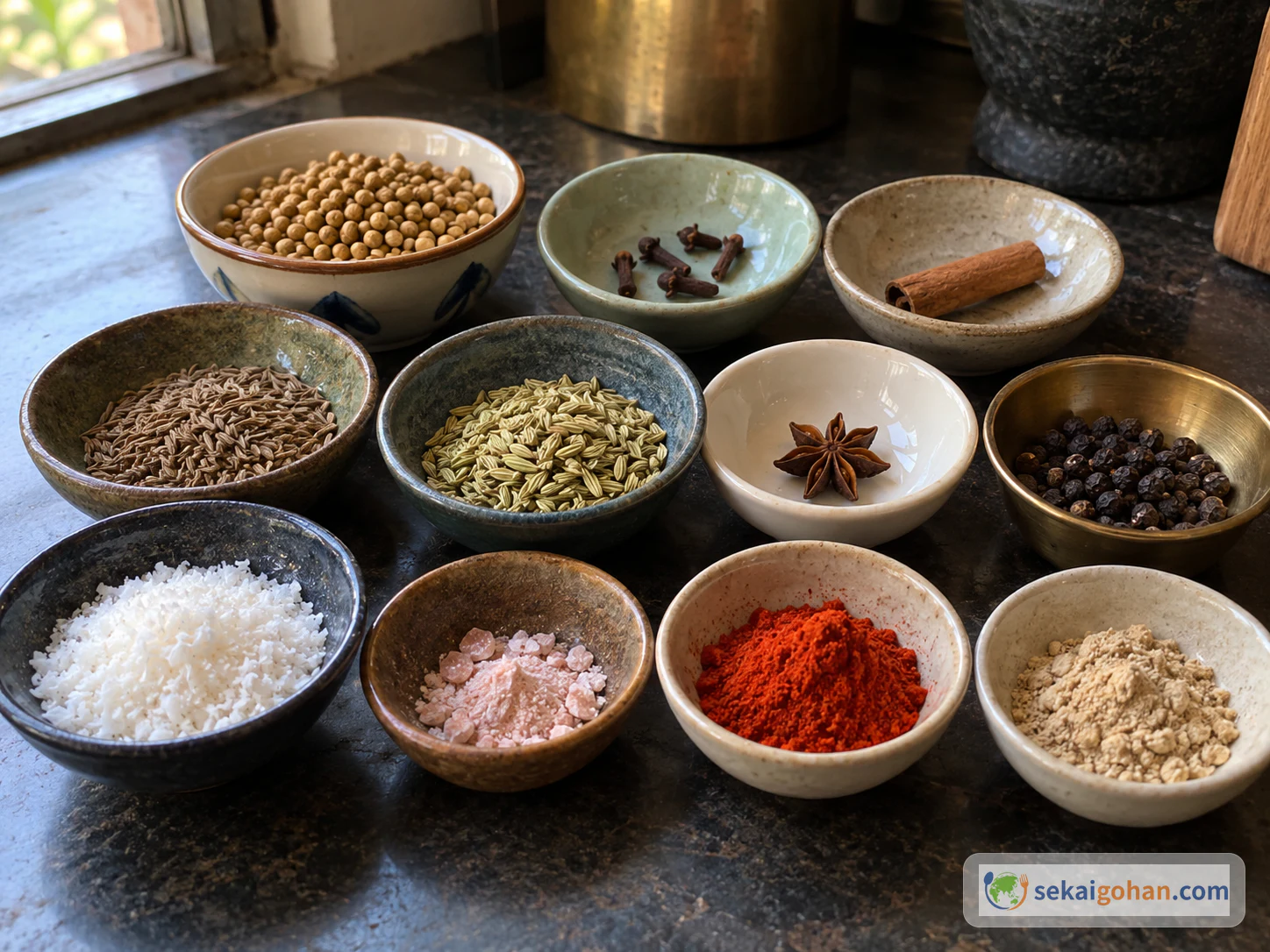
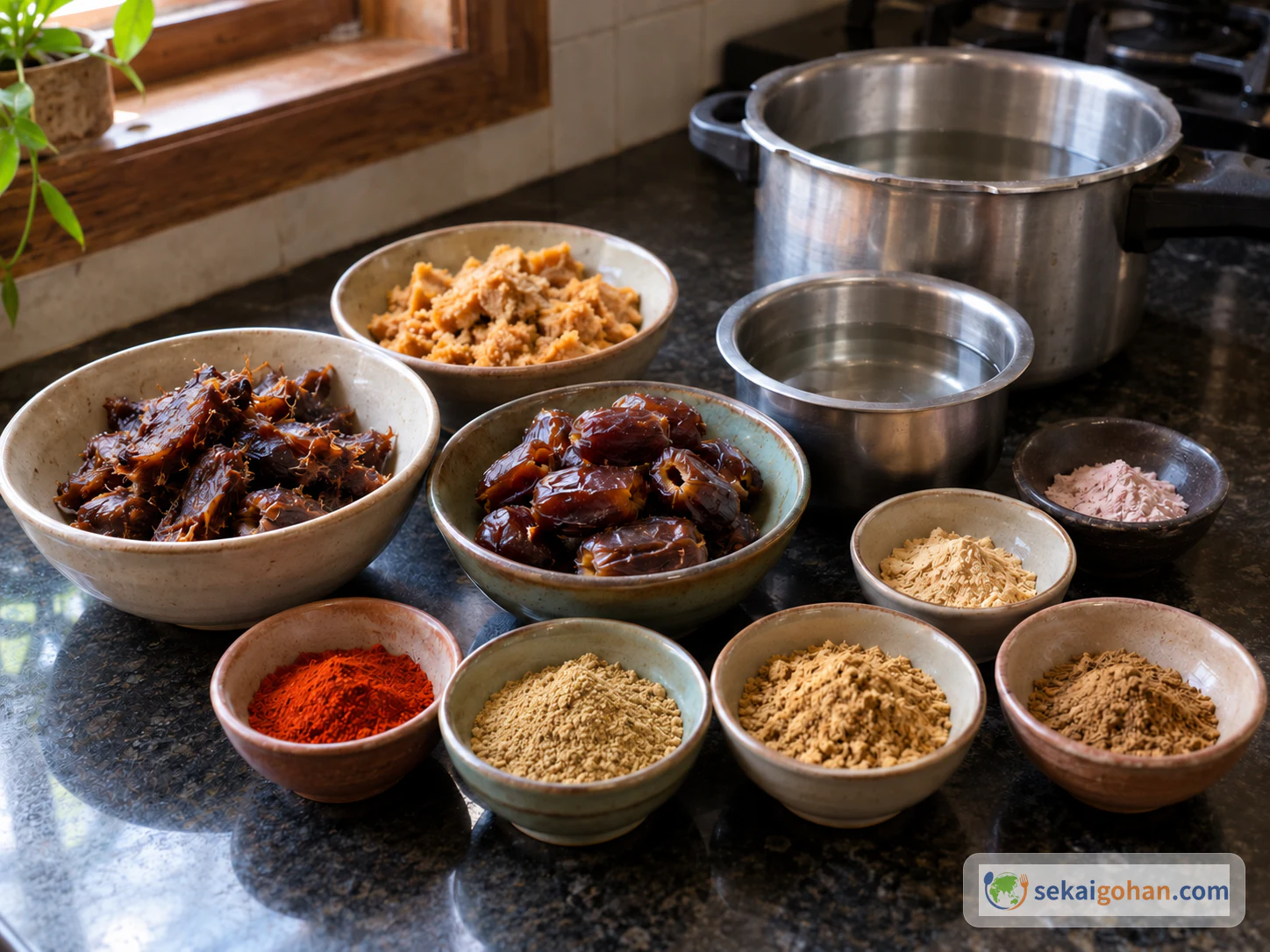
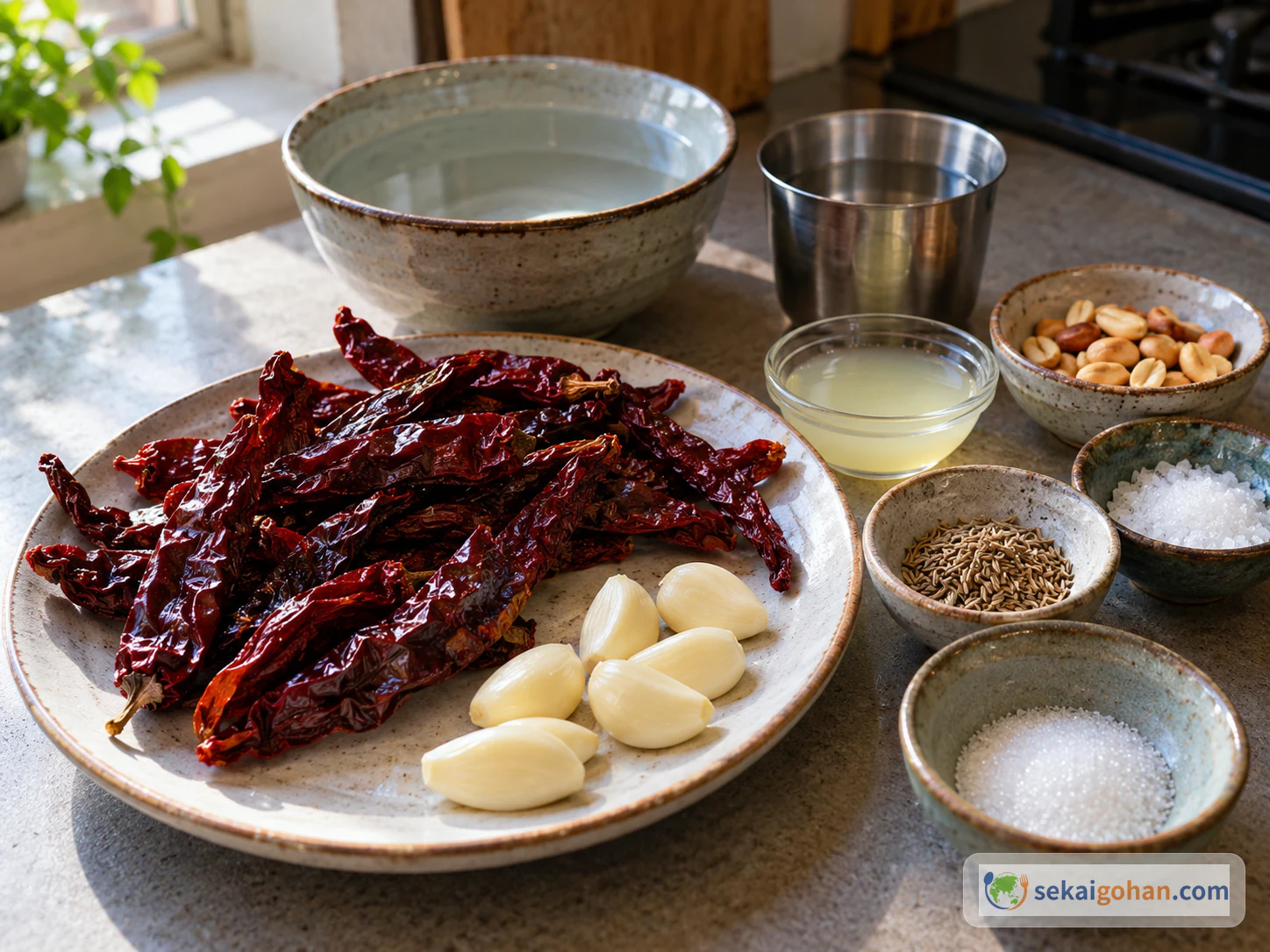
The recipe has six groups. The masala, both chutneys and the spiced peanuts are made first and then used in the filling and assembly. The masala is enough for about 12 dabeli, and the tamarind-date chutney makes ¾ cup (200 ml). Keep the different waters apart; each one has its own job.
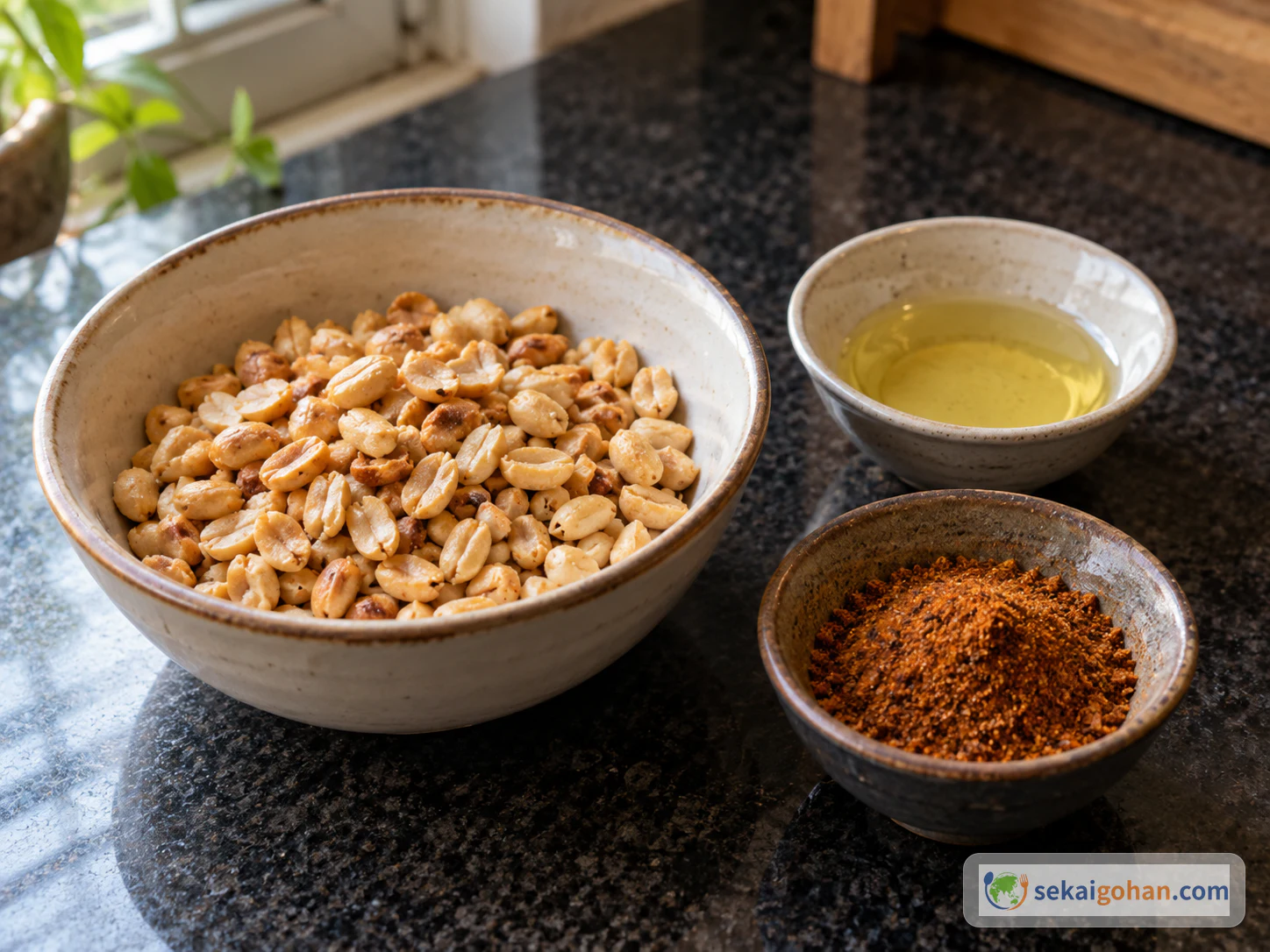
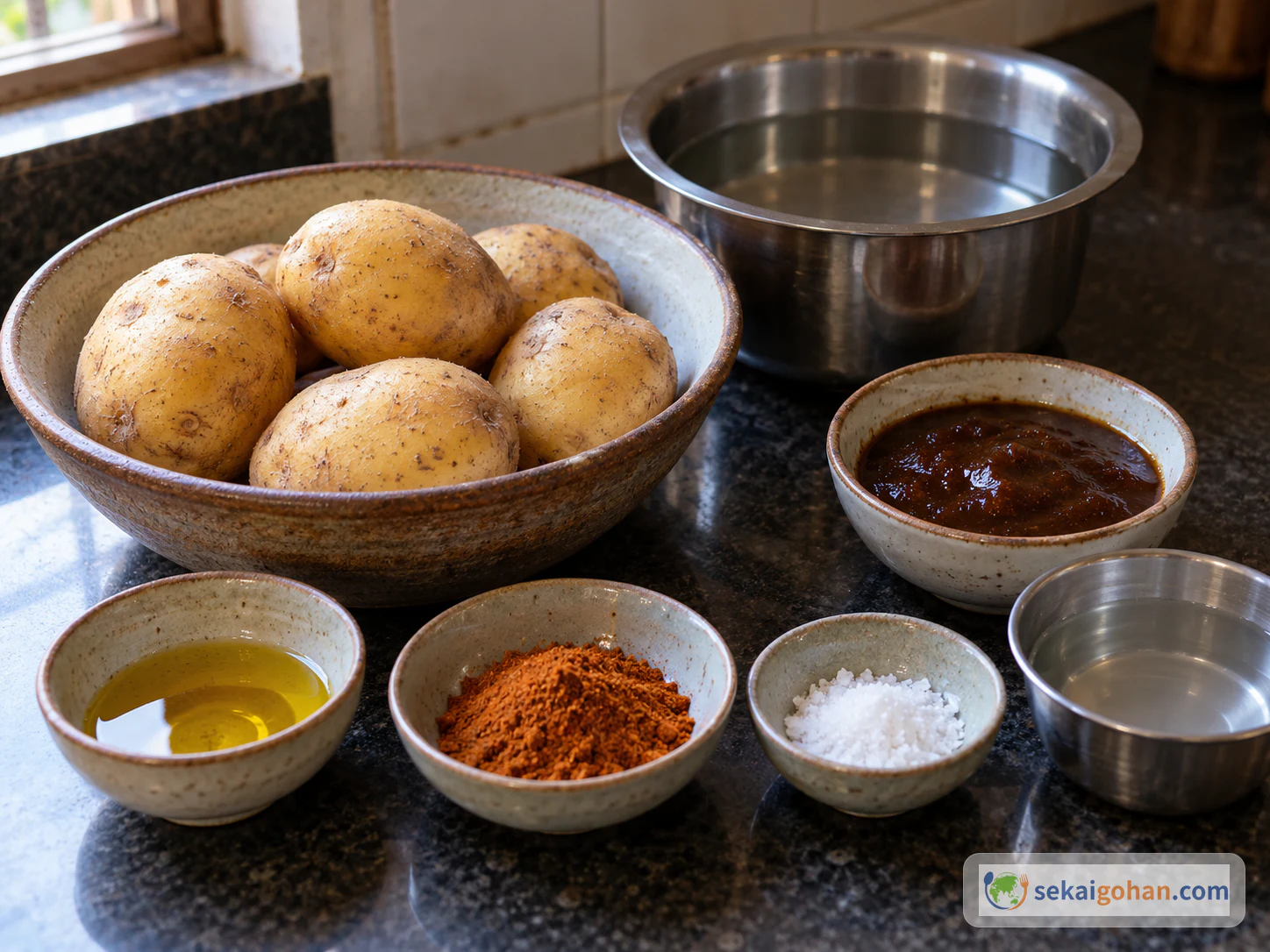
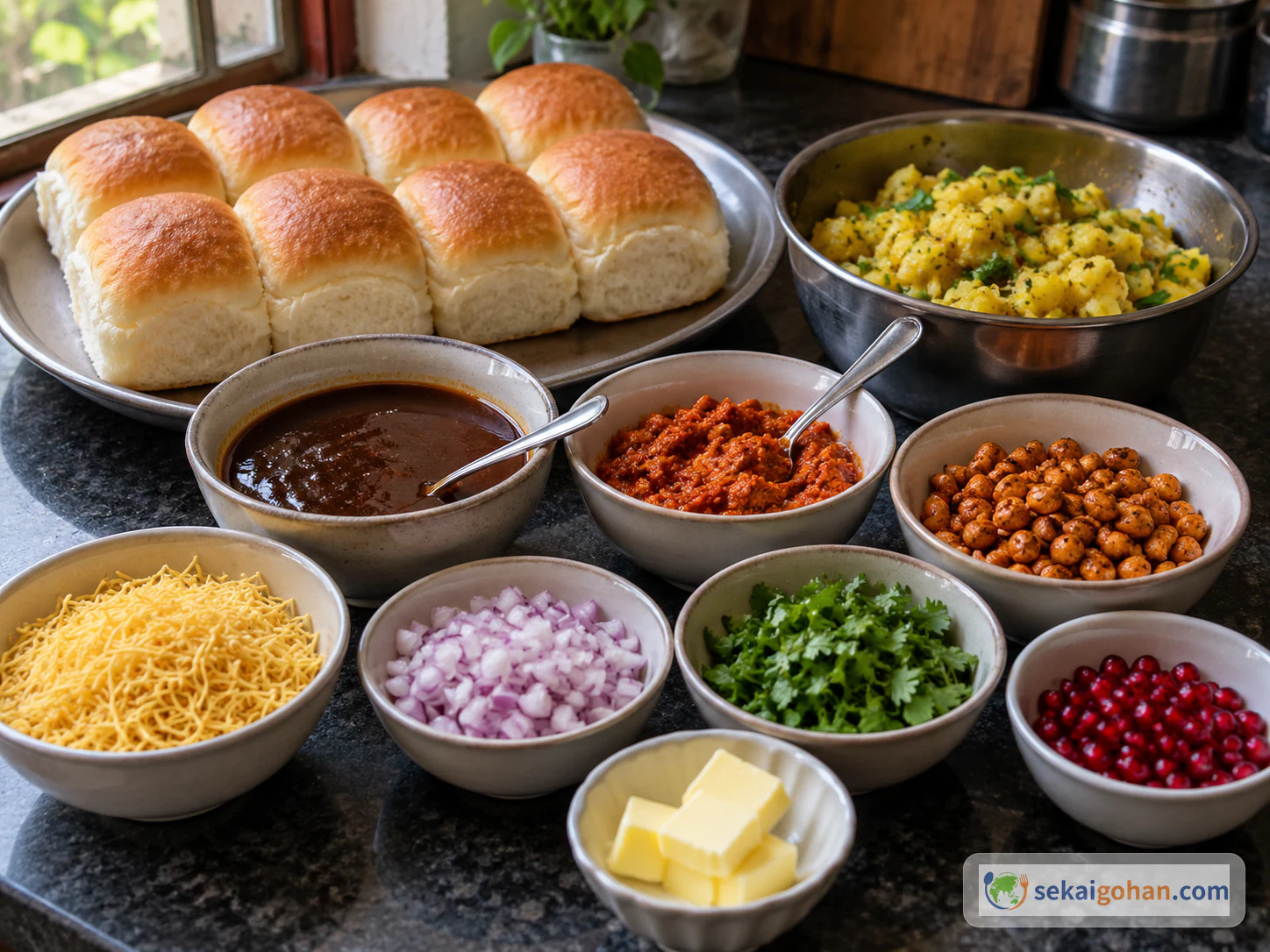
Equipment
- 6.25 quarts (6 L) stovetop pressure cooker with a trivet
- Heatproof inner bowl with a cover that fits inside the cooker
- Spoon for mashing, and a fine sieve
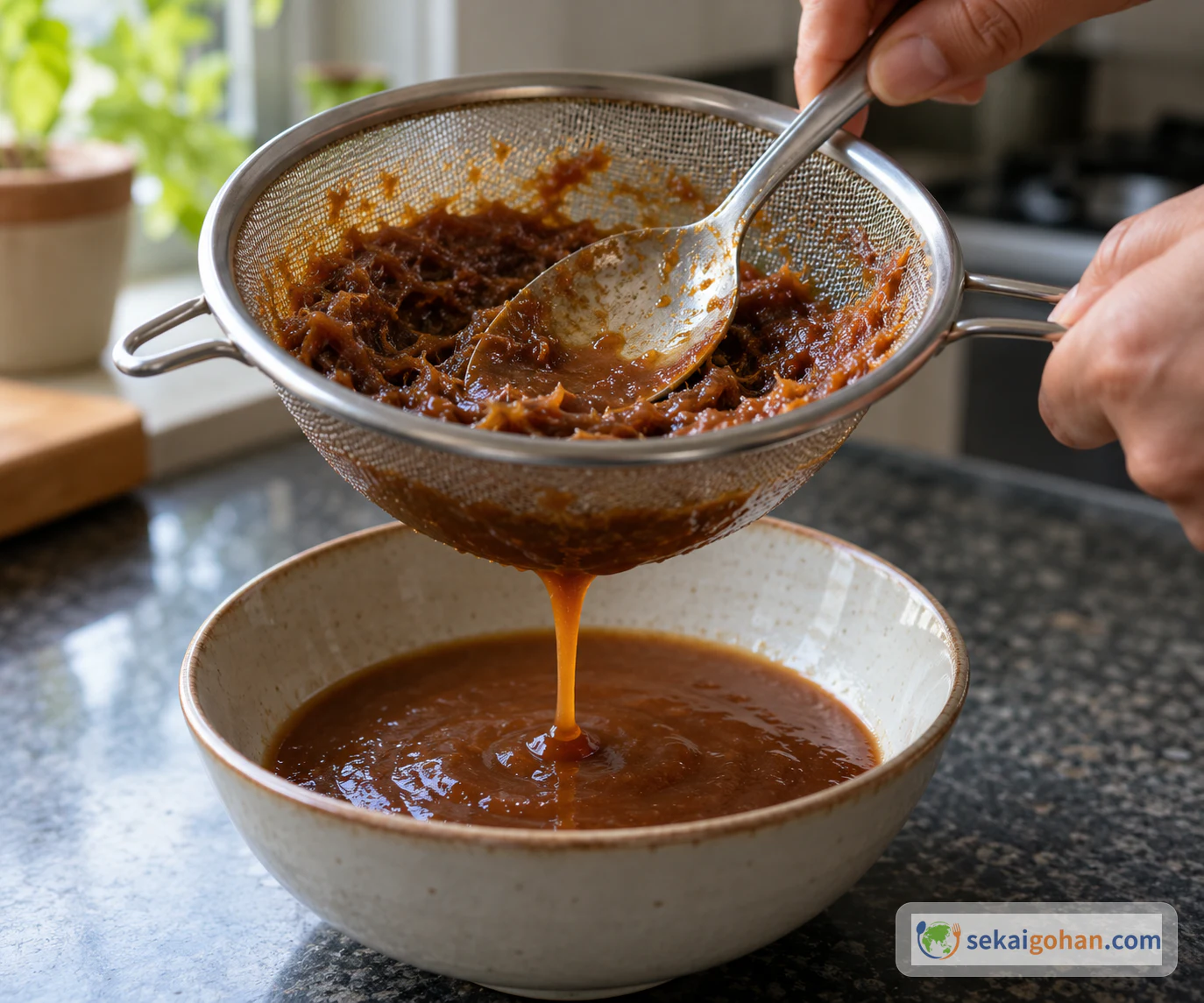
- Clean lidded container for the tamarind-date chutney
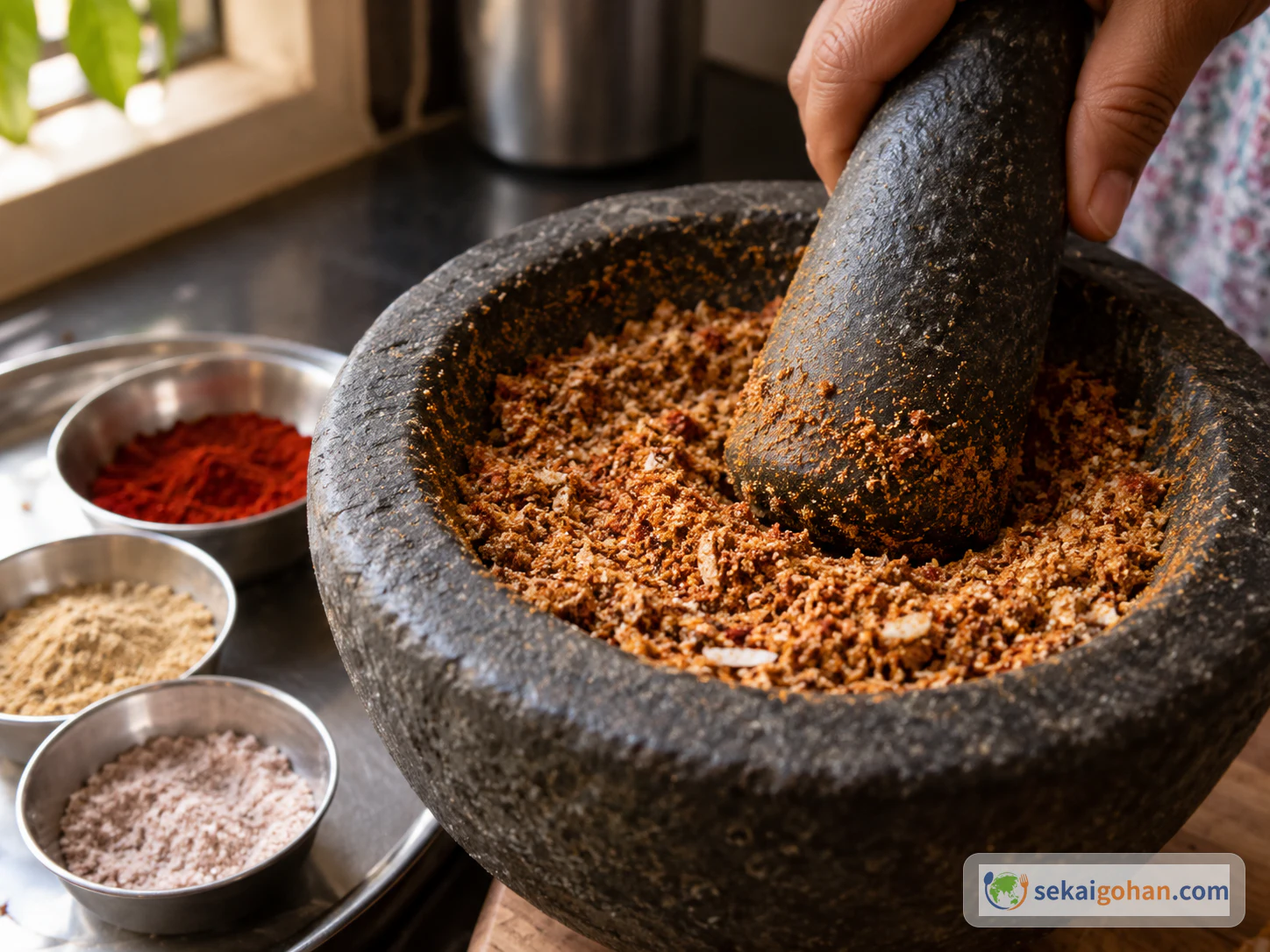
- Dry pan for roasting the masala
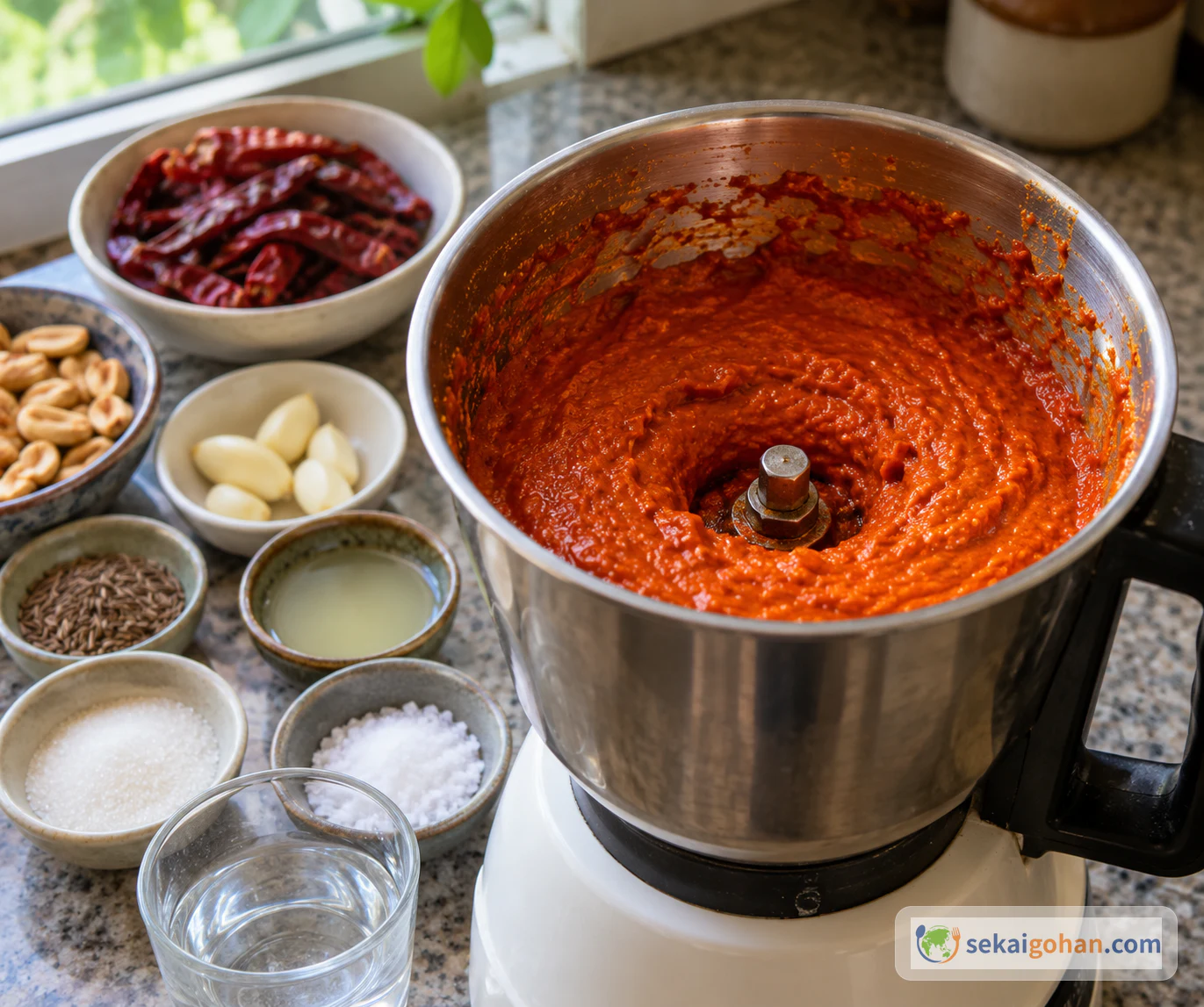
- Grinder for the masala and the garlic chutney
- Saucepan, colander and potato masher
- Pan for the peanuts and filling, and a serving bowl
- Bread knife
- Two separate plates for coating
- Skillet and spatula for toasting
Choosing Ingredients for Dabeli
The produce (potatoes, onion, lemon, coriander, pomegranate, garlic) needs no special shopping. A few items are worth asking for by name, usually at an Indian or South Asian grocer:
- Amchur (dried mango powder) and black salt / kala namak, both used in the masala and the tamarind chutney.
- Kashmiri chili powder and dried Kashmiri chilies. The powder goes into the masala and the whole chilies into the garlic chutney.
- Jaggery and deseeded tamarind for the tamarind-date chutney.
- Sev, the thin, crunchy fried noodles made from gram flour.
- Pav. Small, soft rolls. Dinner rolls or buns also work.
Since the masala and both chutneys are homemade, skip ready-made Dabeli masala and bottled chutney.
This recipe contains peanuts and butter. The ingredients of pav and sev differ by product, so check the package labels for wheat, milk and other allergens before you buy. No product or version here is guaranteed free of any allergen.
Method: Chutneys First, Then the Filling, Then Eight Pav
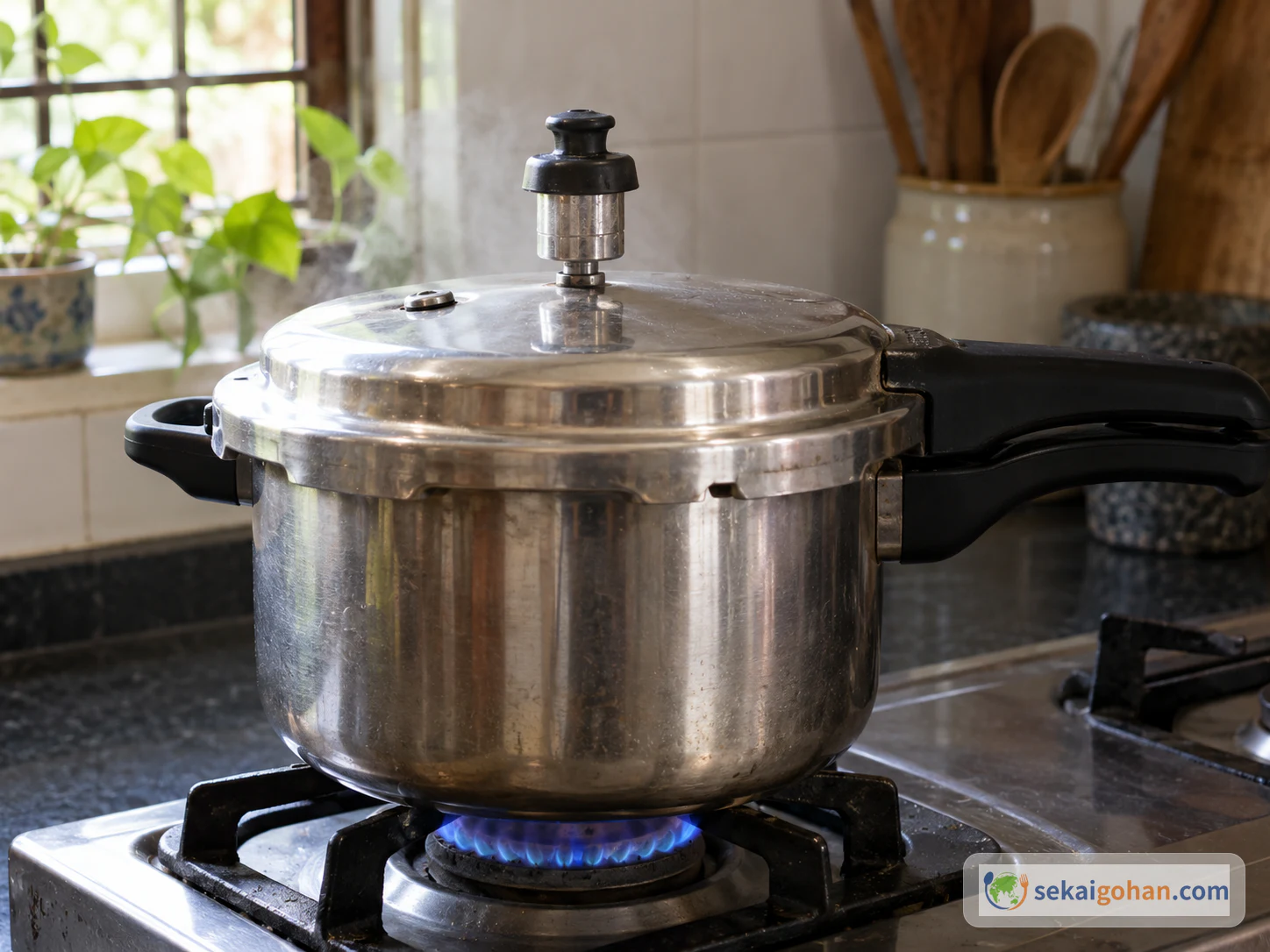
The tamarind-date chutney is cooked for 3 whistles over medium heat in a 6.25 quarts (6 L) stovetop pressure cooker. Do not convert this to minutes or pressure settings for a different cooker. Never touch the lid or valve while it is under pressure, and wait for the pressure to release completely on its own before opening.
Steps 1–3 make the tamarind-date chutney, 4 the masala, 5 the garlic chutney, 6 the spiced peanuts, 7–10 the potato filling, and 11–14 the assembly, coating and toasting.
Common Dabeli Mistakes and Fixes
Most of what goes wrong comes from mixing things that should stay apart, like the waters, the coating plates or the powders added at the wrong time.
| Point | What to do | Why it matters |
|---|---|---|
| Waters | Keep the 2 cups inner-bowl water, 1 cup cooker water, 1 cup chili-soaking water, 1/4 cup grinding water, potato-boiling water and 1/2 cup filling water separate | Each has its own job; the cooker water and chili-soaking water never go into a chutney |
| Pressure cooker | Leave the valve alone until the pressure has released completely on its own | The inner bowl comes out only after full natural release |
| Tamarind chutney powders | Add the five powders after pressure cooking, then cover briefly | They are part of the finish, not the cooking liquid |
| Chutney texture | Press the mashed chutney through a fine sieve | Straining removes the fibers and solids |
| Salt | Leave the peanuts unsalted | The homemade masala already contains black salt |
| Onion | Keep onion out of the cooked filling | Onion is a fresh garnish only |
| Coating plates | Coat in the sev-and-peanut plate first, then the onion-pomegranate-coriander plate | Mixing the plates blurs the two coatings |
| Leftover toppings | Use "remaining" and "half of the remaining" as the steps say | The amounts are not fixed |
Dabeli Variations
Each of these replaces the base choice. Don't use it alongside the original.
- Chili powder in the garlic chutney. Use 1 tbsp Kashmiri chili powder in place of the 12 dried chilies.
- Milder star anise. If star anise tastes too strong to you, use half of the small star anise in the masala.
- Garam masala in the tamarind chutney. Use 1/4 tsp garam masala in place of the 3/4 tsp roasted coriander powder.
- Other ways to cook the tamarind chutney. In an Instant Pot, pressure cook 9–10 minutes, then let the pressure release naturally. In a stovetop pot, use its own ghee (1/2 tsp), hing (1/8 tsp) and extra water. These belong to the pot method only.
- Other ways to cook potatoes and toast. Pressure-cook the potatoes instead of boiling them: 10 minutes on high pressure, or 3 whistles in a stovetop pressure cooker. For a larger batch, toast the dabeli for 2 minutes in an oven preheated to 350°F / 175°C instead of in a skillet.
Frequently Asked Questions
How long does it take?
The main recipe takes 25 minutes prep, 25 minutes cooking and 50 minutes total. The tamarind chutney adds 15 minutes prep and 15 minutes cooking, 30 minutes in all.
Can I make the chutneys ahead?
Yes. Make the chutneys and masala the day before, and refrigerate the tamarind-date chutney in a clean container (step 3). Serve the finished dabeli right after toasting.
How much tamarind chutney do I need, 200 ml or 3/4 cup?
The tamarind-date chutney makes 200 ml. The assembly calls for 3/4 cup: 2 tbsp in the filling and 1 tbsp inside each pav.
Do I need to make the pav and sev?
No. Store-bought pav (or dinner rolls or buns) and sev work well. Check their package labels for allergens.