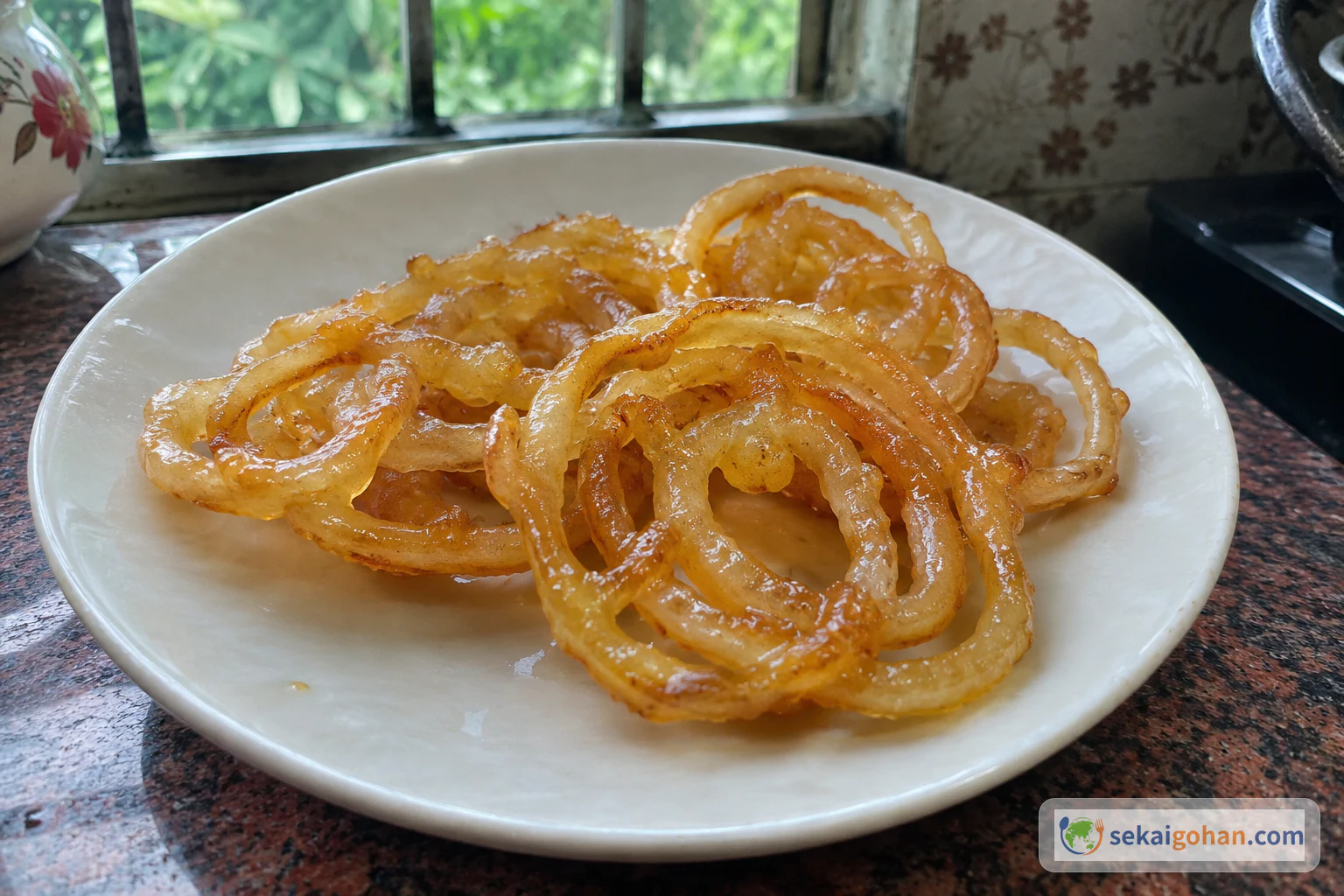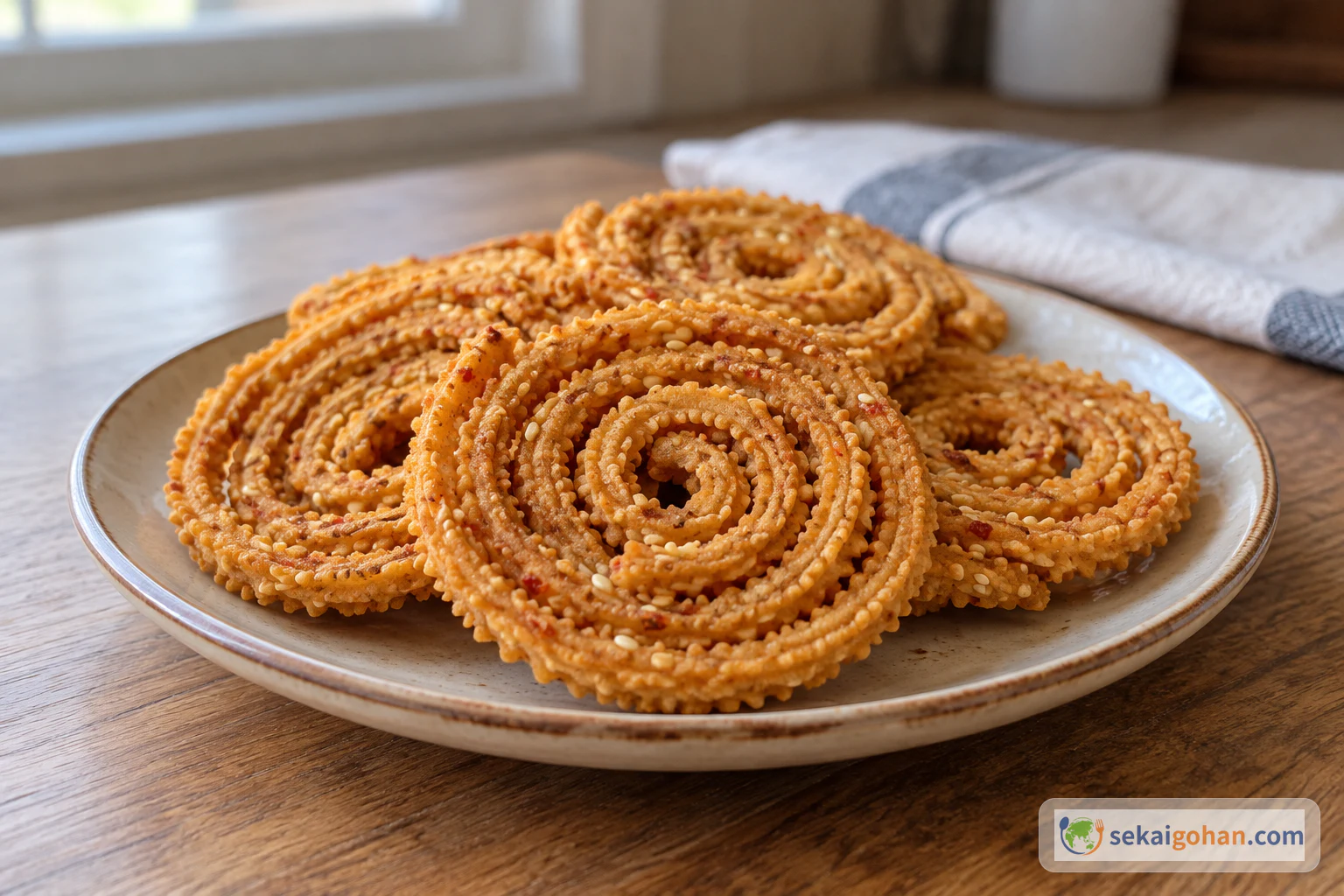
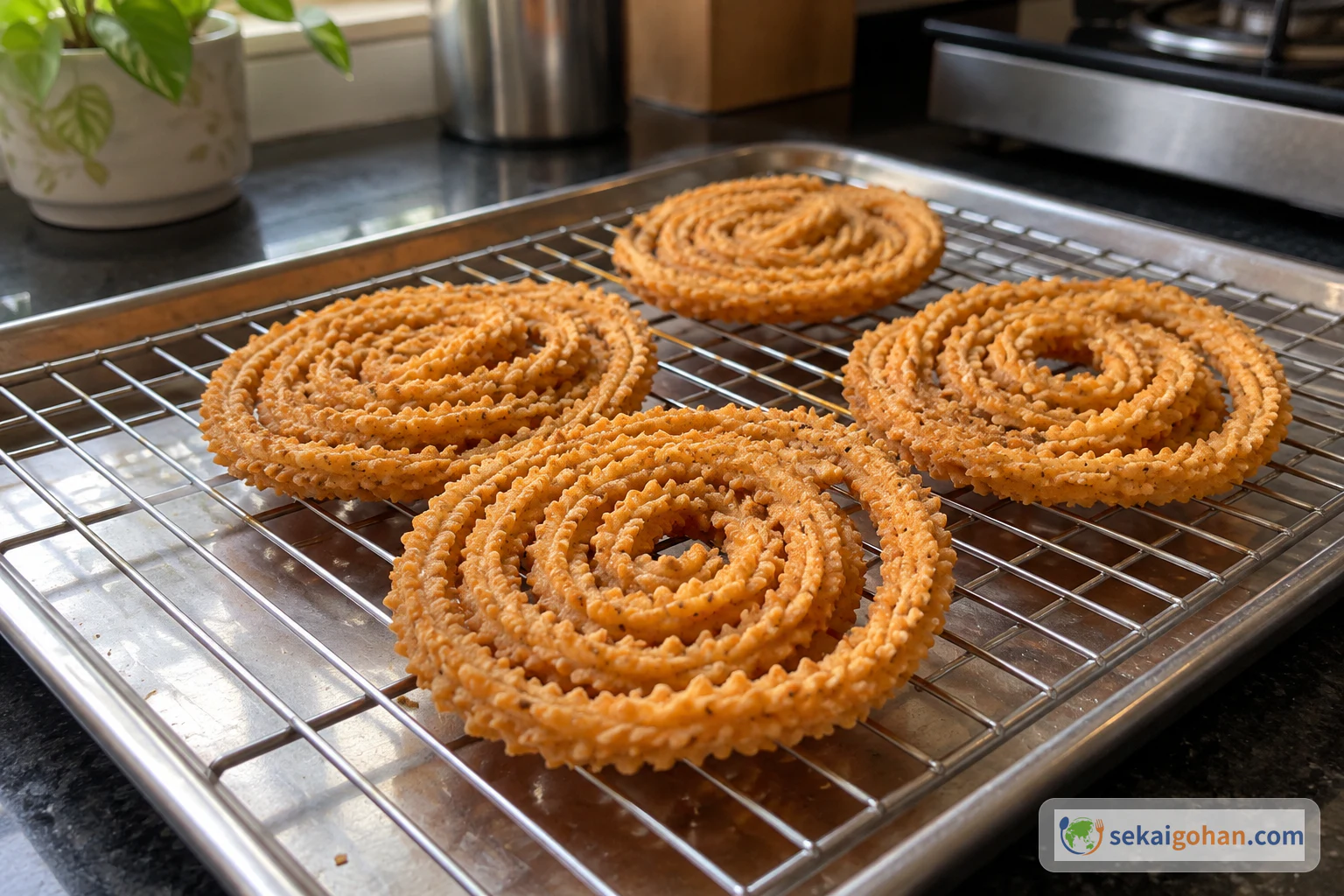
A small plate of golden coils, each one a ridged strand wound around itself, with flecks of sesame and red chilli in the crust. Set it beside a hot cup of masala chai and you have the scene this snack fits best. Chakri is a crunchy spiral from India, pressed from a dough of rice flour, besan and fried gram powder straight into hot oil. Depending on where you are, you'll also hear it called chakli, chakralu or murukku. For more dishes from the same country, see our India page.
Chakri Across India
Names and Regional Styles
The same spiral snack goes by different names in different parts of India. Chakri is the name used in Gujarat, chakli in Maharashtra and Karnataka, chakralu in Andhra Pradesh, and murukku in Tamil Nadu and Kerala.
The recipes overlap but aren't identical. Murukku is commonly made with rice and black-gram flour, while chakli blends can include chana (chickpea) flour. Southern murukku is based on rice flour, and some homes in Gujarat make chakri with steamed whole-wheat flour. This version uses rice flour with both besan and fried gram powder.
The Chakli Press
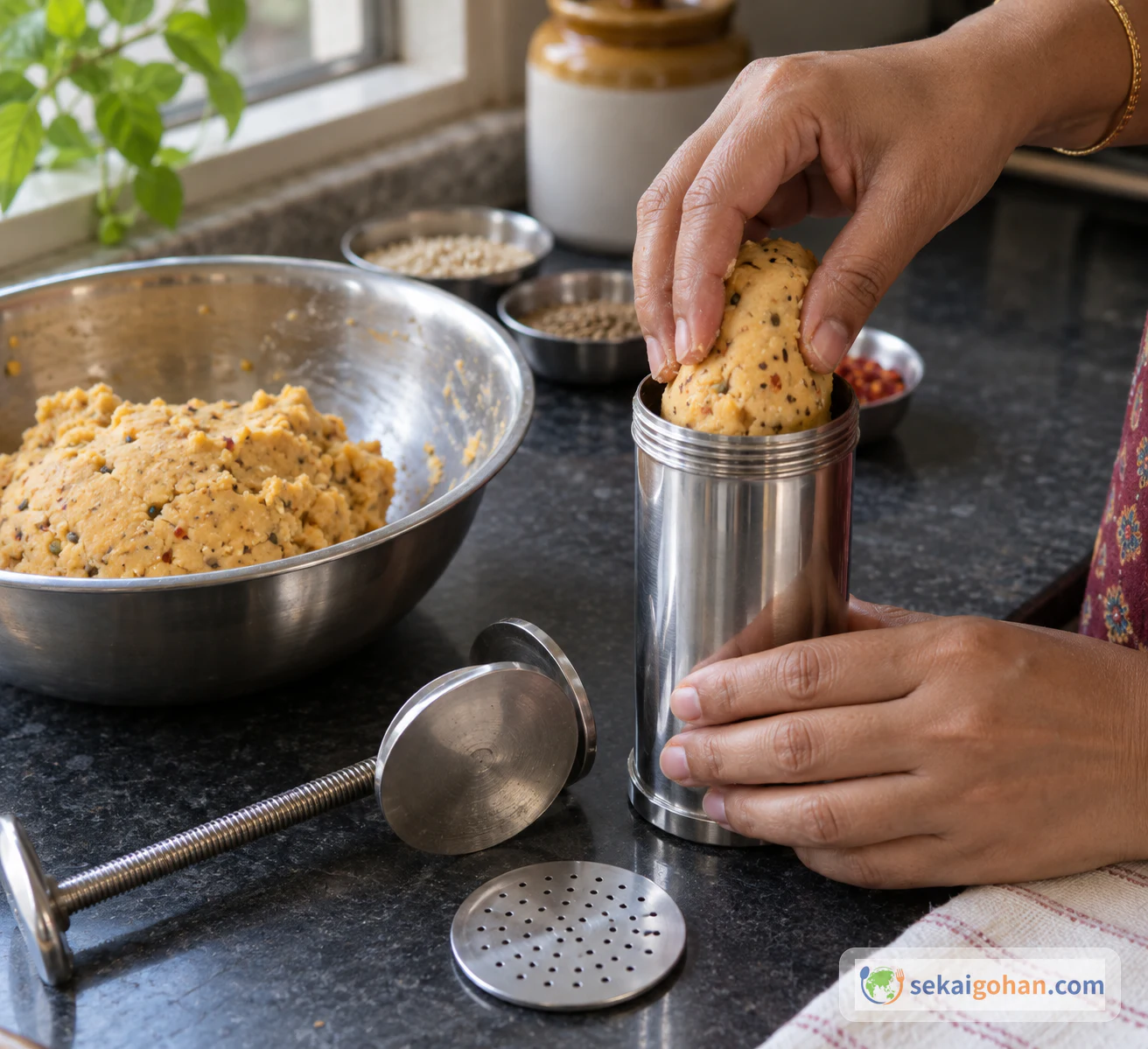
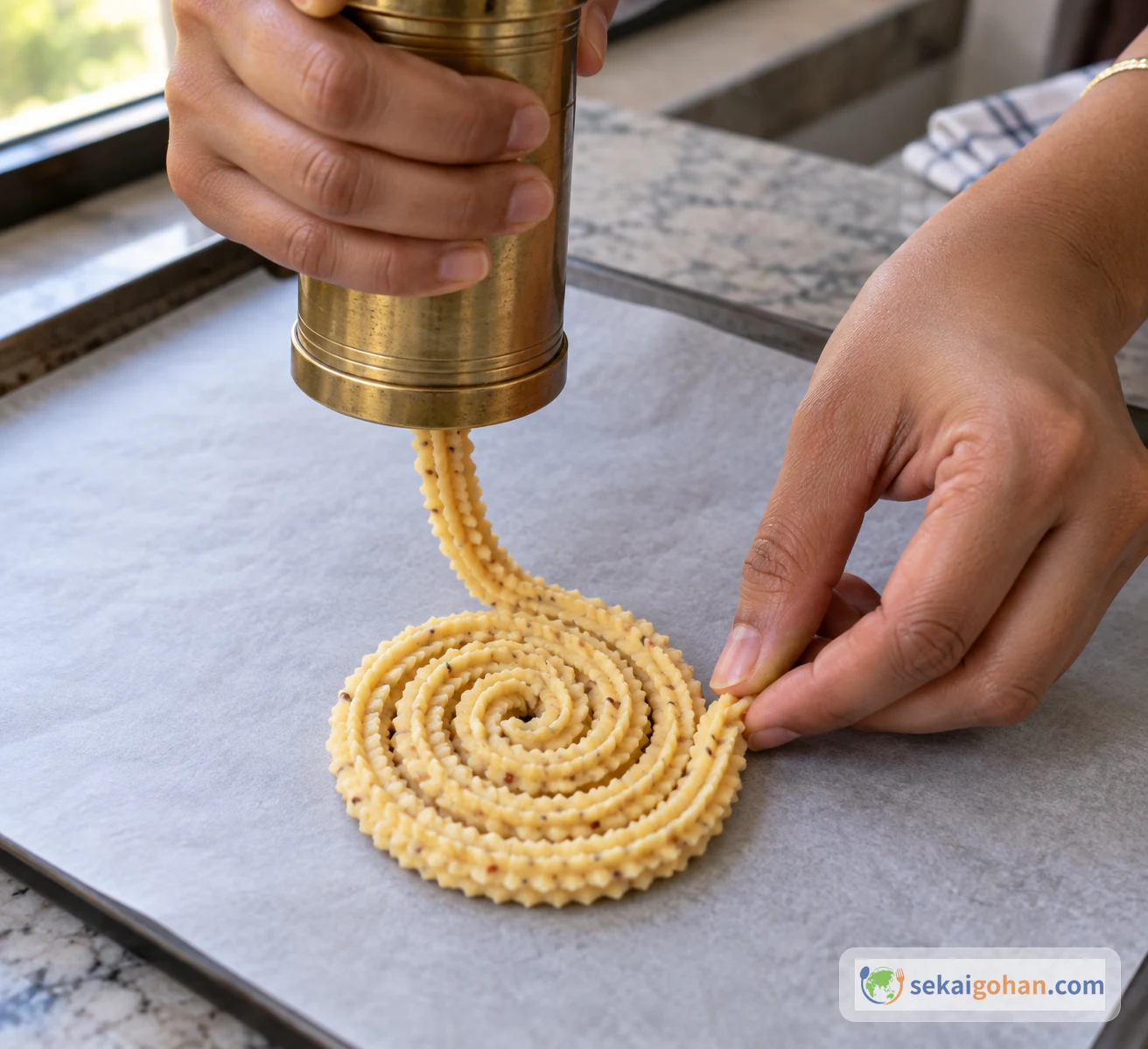
The shape comes from a tool. The chakli press, also called a murukku maker, is hand-operated: you load dough into its cylinder, and a plunger pushes it out through a plate at the end. The plates are interchangeable, each giving a different strand and finished form, from a single ridged strand to other coil shapes. This recipe uses the plate for the classic ridged spiral.
The spiral itself is made by hand. Press the strand onto parchment while moving in a circle from the center outward, then close the end against the last ring. Small differences in that motion show up in the finished pieces, which is why homemade coils are rarely perfectly uniform.
Diwali and Everyday Tea
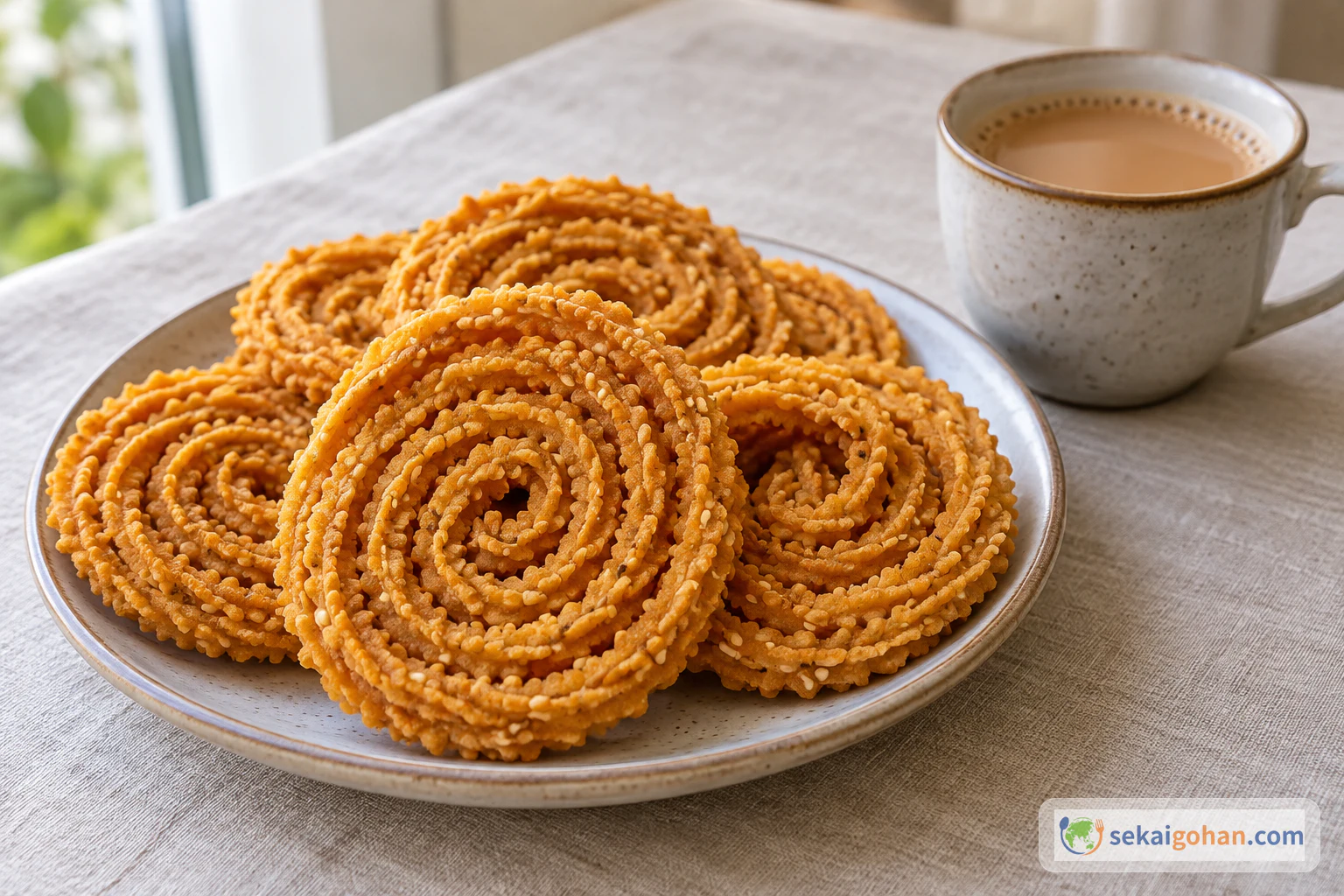
At Diwali, homes in Karnataka and Maharashtra exchange homemade sweets and snacks with friends and neighbors, and a batch of crisp spirals suits the occasion well. The rest of the year, chakli is a tea-time snack: a small plate of coils next to a cup of hot masala chai.
Ingredients for 14 Chakri
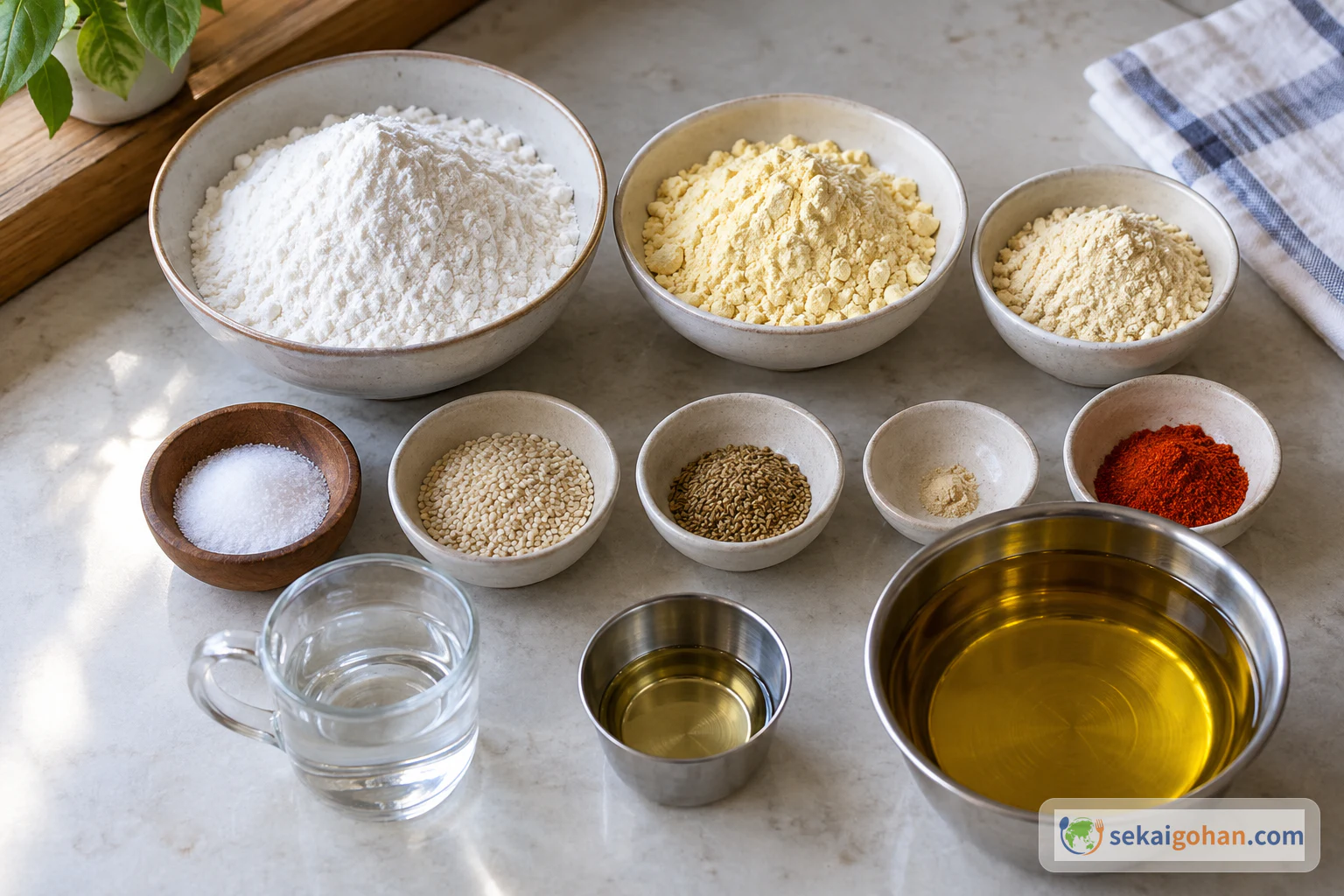
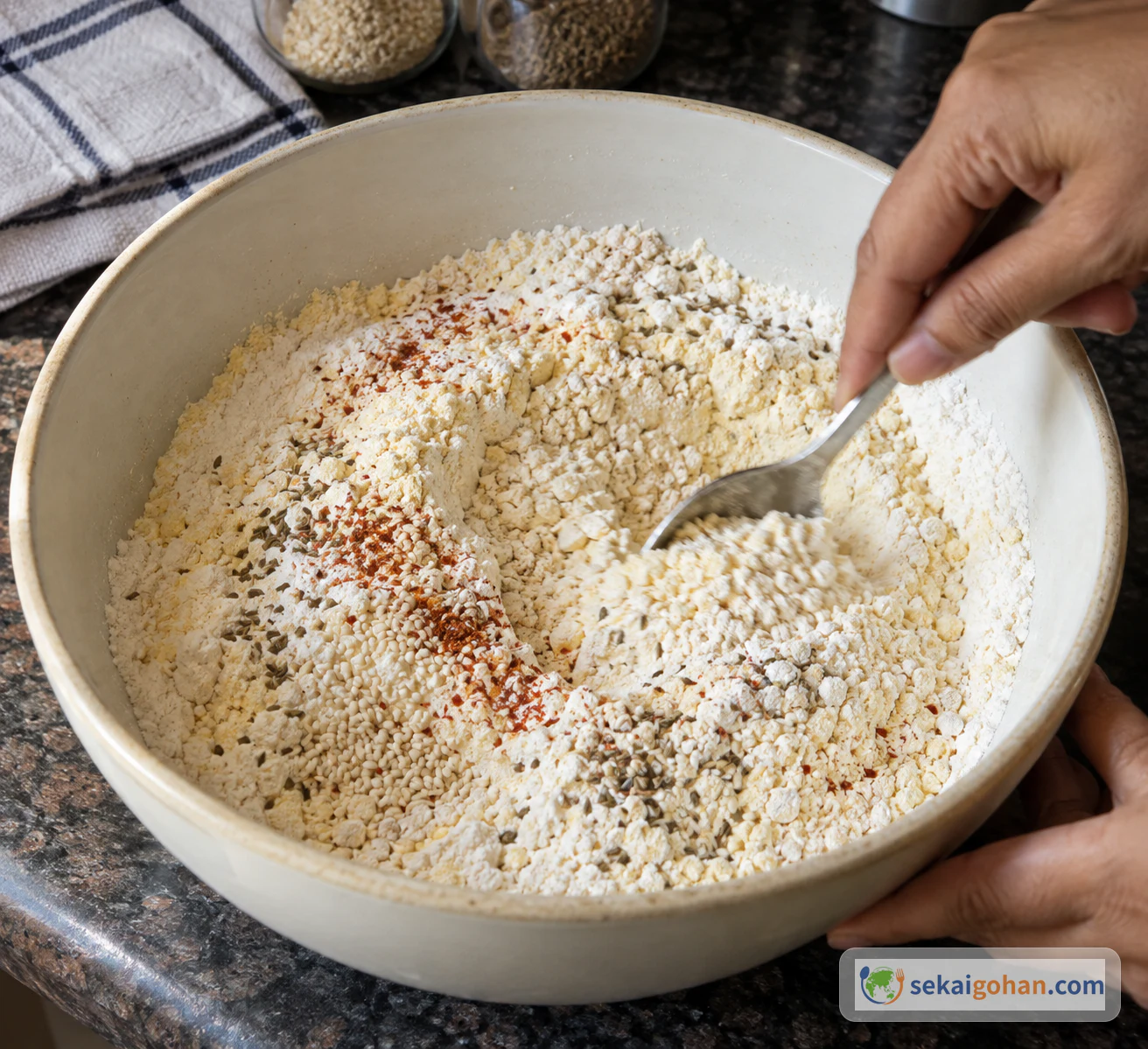
These are the amounts for one batch of 14 pieces. Rice flour, besan and fried gram powder are three different ingredients, and all three go into the dough. The 1 tablespoon of oil for the dough and the oil for frying are separate.
Equipment
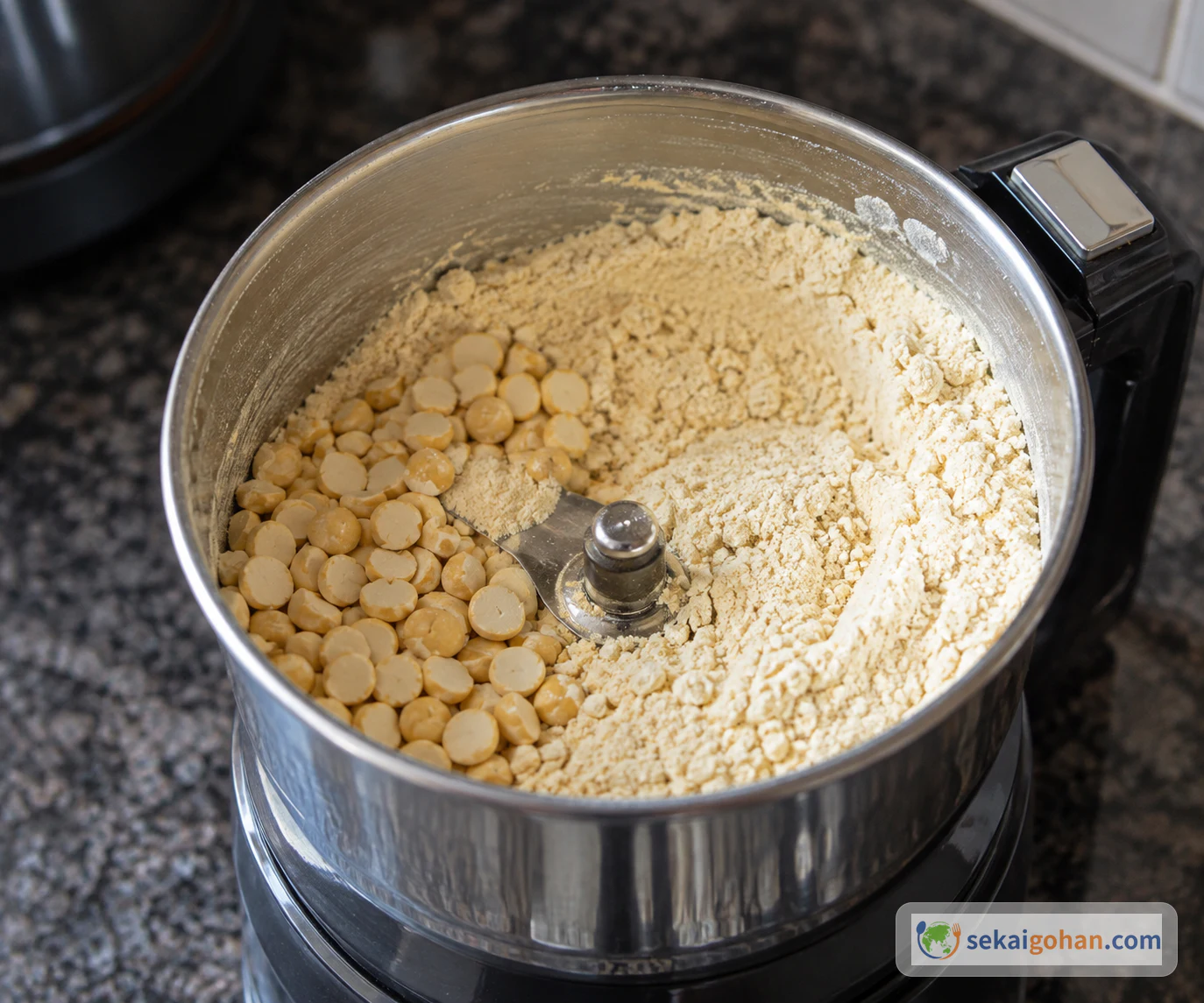
- Small grinder (only if you grind whole fried gram yourself)
- Mixing bowl
- Spoon
- Measuring cups and spoons
- Chakli press (murukku maker)
- Parchment paper
- Deep pan for frying
- Steel colander or cooling rack
- Airtight steel or glass jar
Choosing the Powders for Chakri
Besan and fried gram powder are not the same thing. Besan (gram flour) and fried gram powder (also sold as roasted gram powder) are two separate ingredients, and the dough uses both. If you can't find fried gram powder, replace it with the same amount of besan, for 1/2 cup besan in total. Measure carefully so you don't mix up the two amounts.
At an Indian grocery, look for these by their general names: besan or gram flour, fried gram powder or roasted gram powder, ajwain, hing and hulled sesame seeds. The same goes for the press: ask for a chakli press or murukku maker rather than a particular brand.
This recipe contains sesame and two gram (chickpea) products. If you buy packaged powders or spices, read their ingredient and allergen labels.
Method: From Three Powders to Golden Spirals
Plan on 7 minutes of preparation, 23 minutes of cooking and 30 minutes in total for 14 pieces. Shape the spirals before the oil goes on the heat. The oil heats while you shape the rest.
Chakri Dough and Frying Problems
Use three separate powders: rice flour, besan and fried gram powder. Mix the dough; do not knead it. Test the oil with a small piece, and leave the coils alone for their first minute or two in the pan.
| What happens | What to look at | What to do |
|---|---|---|
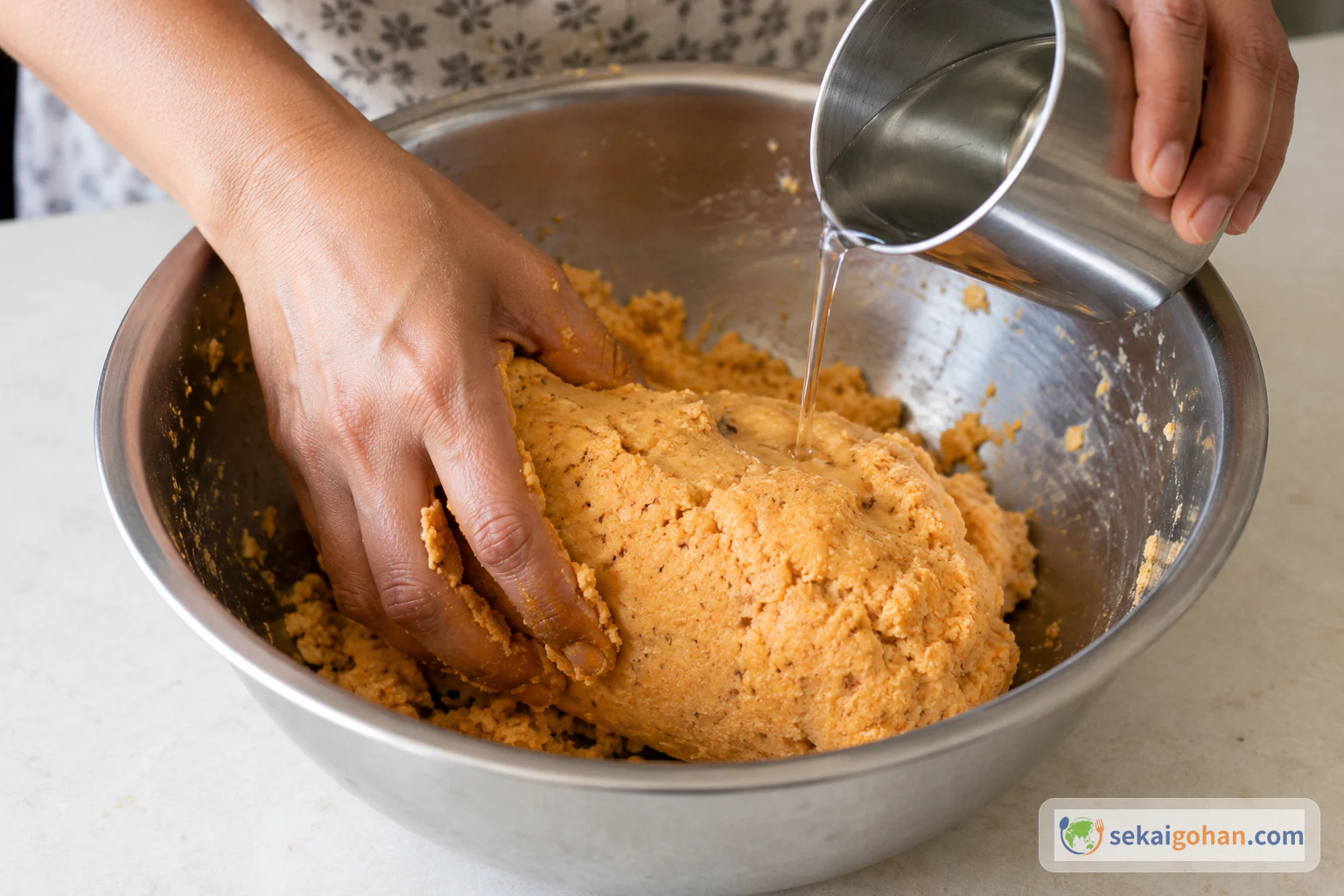
| The dough is sticky | Too much water went in at once | Add water only 1 teaspoon at a time after the first 3 tablespoons, and stop once the dough holds together without sticking |
| The dough will not hold together | Not enough water yet | Keep adding water 1 teaspoon at a time, mixing rather than kneading |
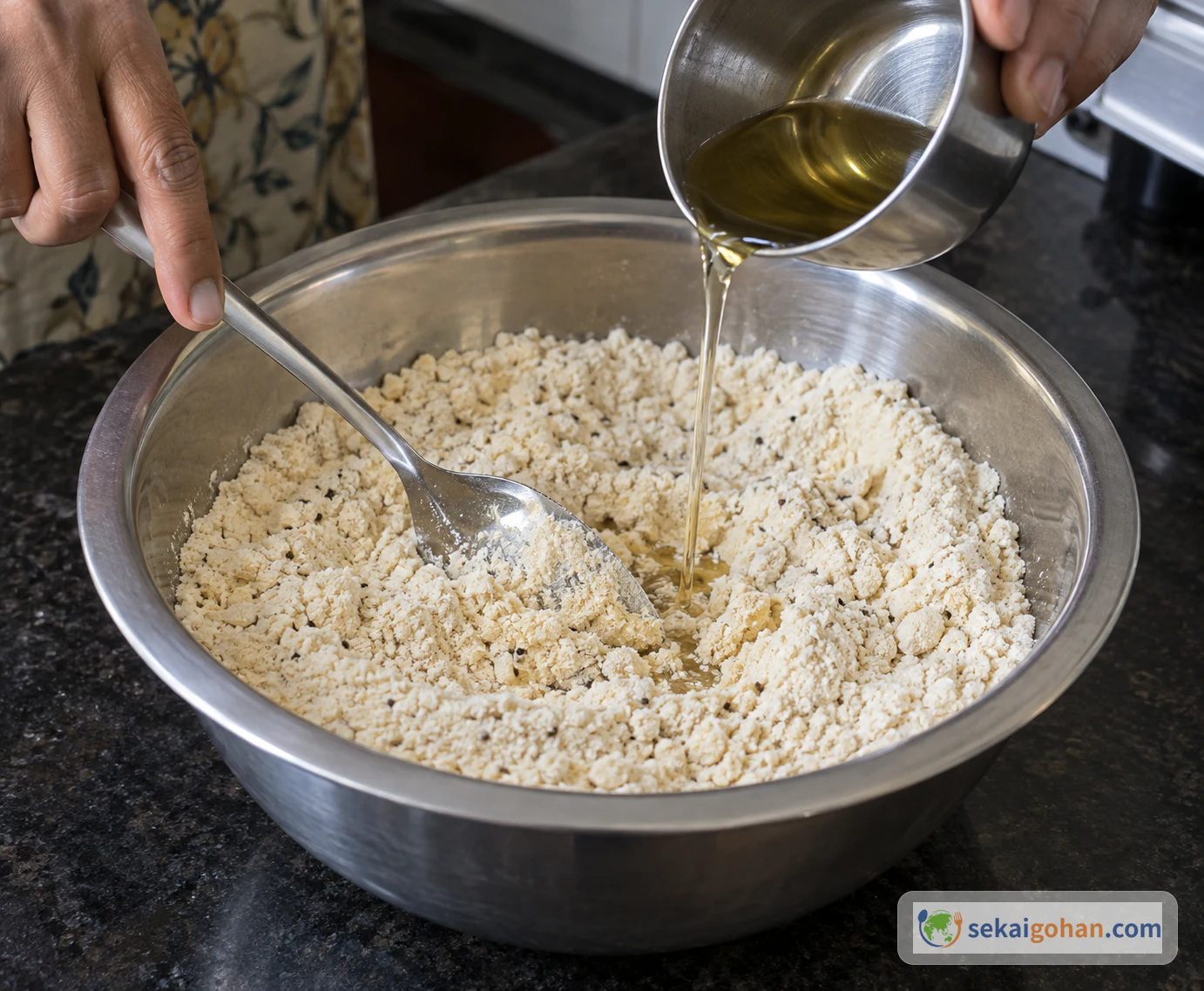
| The dough oil smokes | It was heated too long | The oil for the dough should be very hot but not smoking. Stop heating before smoke appears |
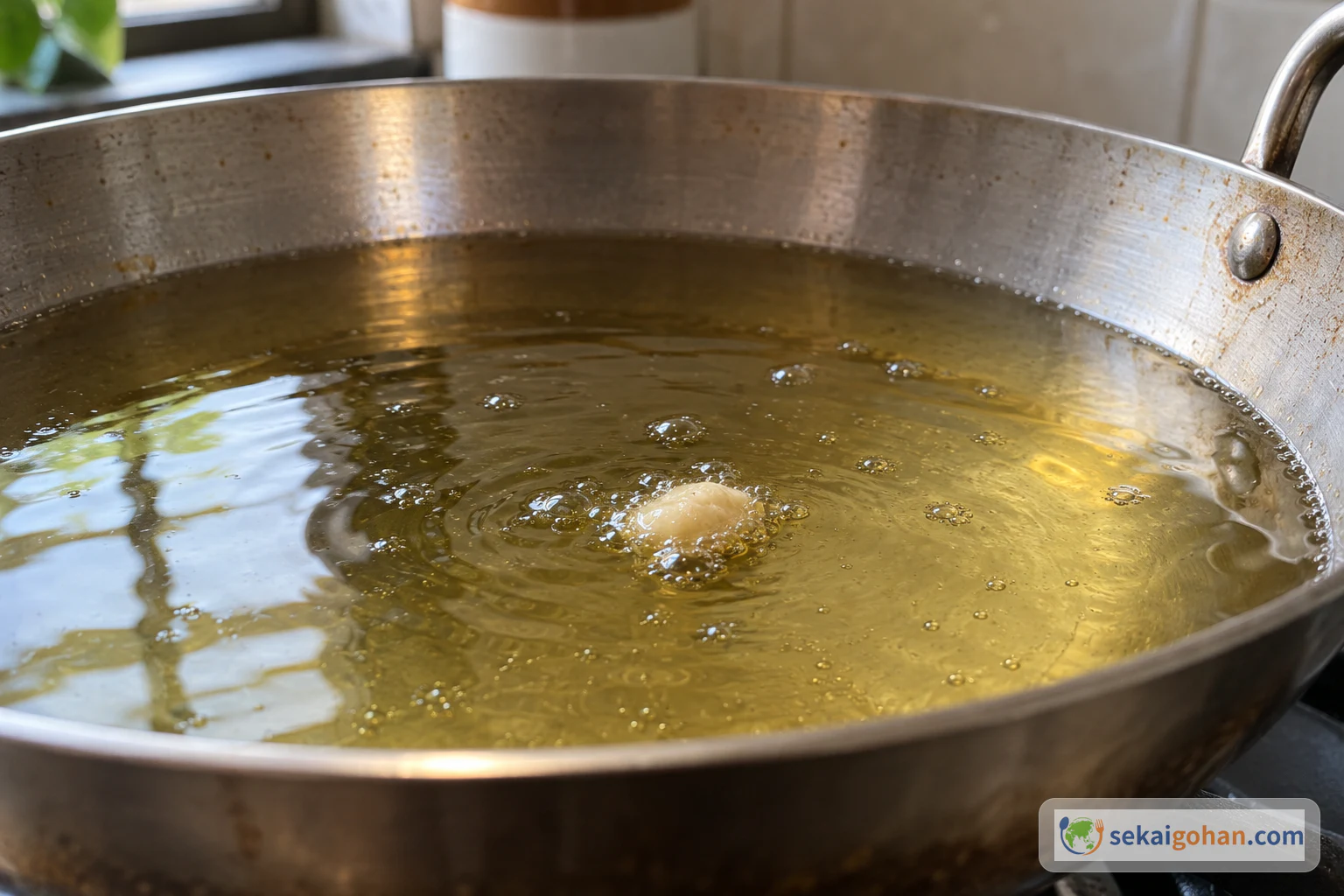
| The test piece sinks and stays down | The oil is not hot enough yet | Keep heating over medium-high and test with another small piece |
| The test piece browns | The oil is past the point the test looks for | The test piece should sizzle and rise without browning. Wait until a fresh piece behaves that way |
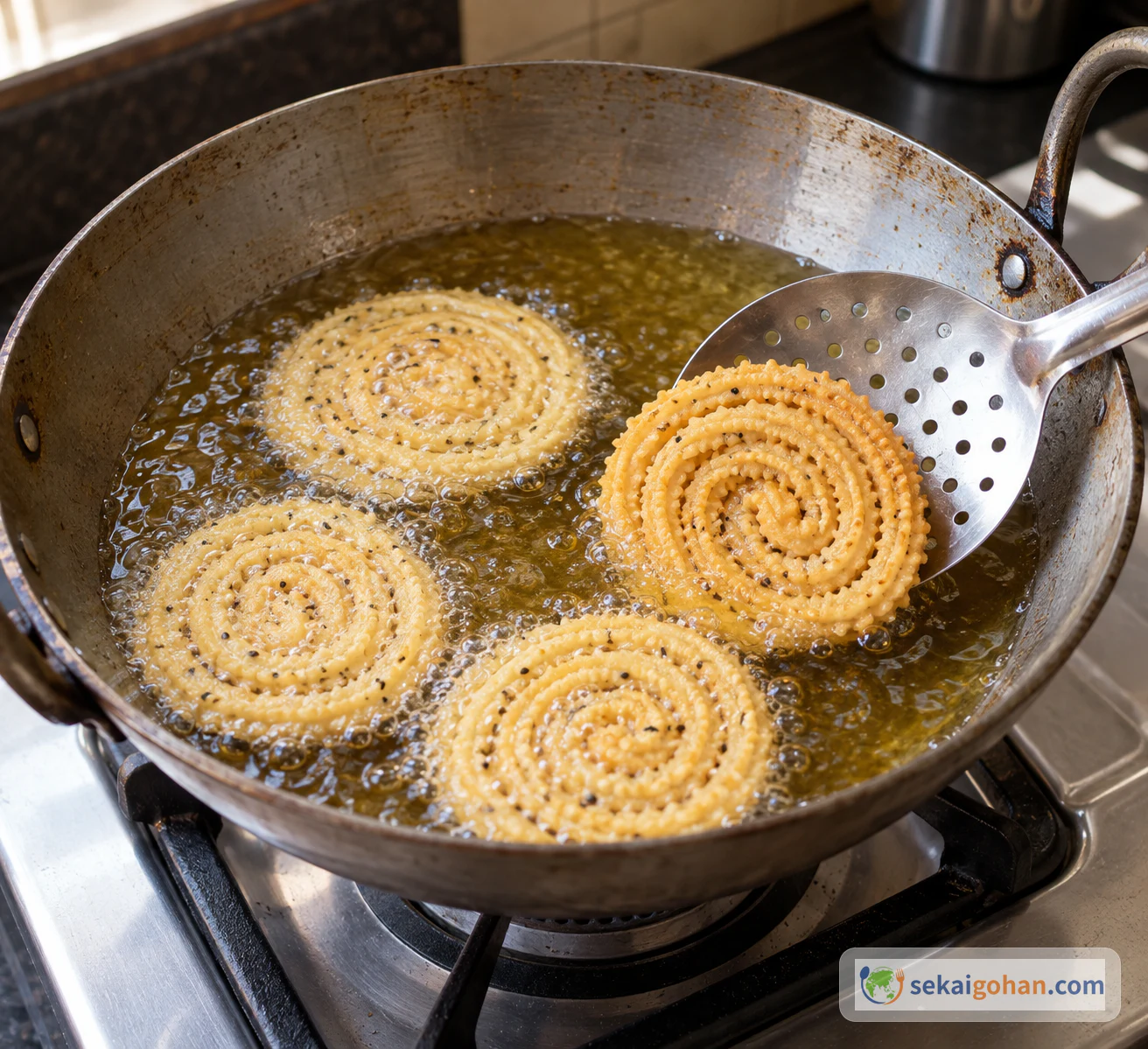
| A coil breaks apart when turned | It was moved too early | Leave the spirals untouched for 1 to 2 minutes until they firm up, then turn them |
Storing and Varying Chakri
Once the chakri come out of the oil, cool them on a steel colander or cooling rack until completely cool, then transfer them to an airtight steel or glass jar.
A few small changes are possible within the recipe:
- Milder or hotter. Red chilli powder ranges from 1/2 to 3/4 tablespoon; use the lower amount for a milder batch.
- Hot butter instead of hot oil. The dough can take 1 tablespoon of either. The method here is written for oil.
- Besan in place of fried gram powder. Use the same amount of besan, for 1/2 cup besan in total.
- A different press plate. Interchangeable plates change the strand and shape; this recipe uses the ridged spiral.
Frequently Asked Questions
Can I leave out the ajwain?
Yes. Ajwain is optional, though this recipe uses 1 tablespoon. Without it, the spirals have a different aroma.
Do I need a thermometer for the oil?
No. Heat the oil over medium-high and drop in a small piece of dough. It's ready when the piece sizzles and rises to the surface without browning. Then fry on medium heat.