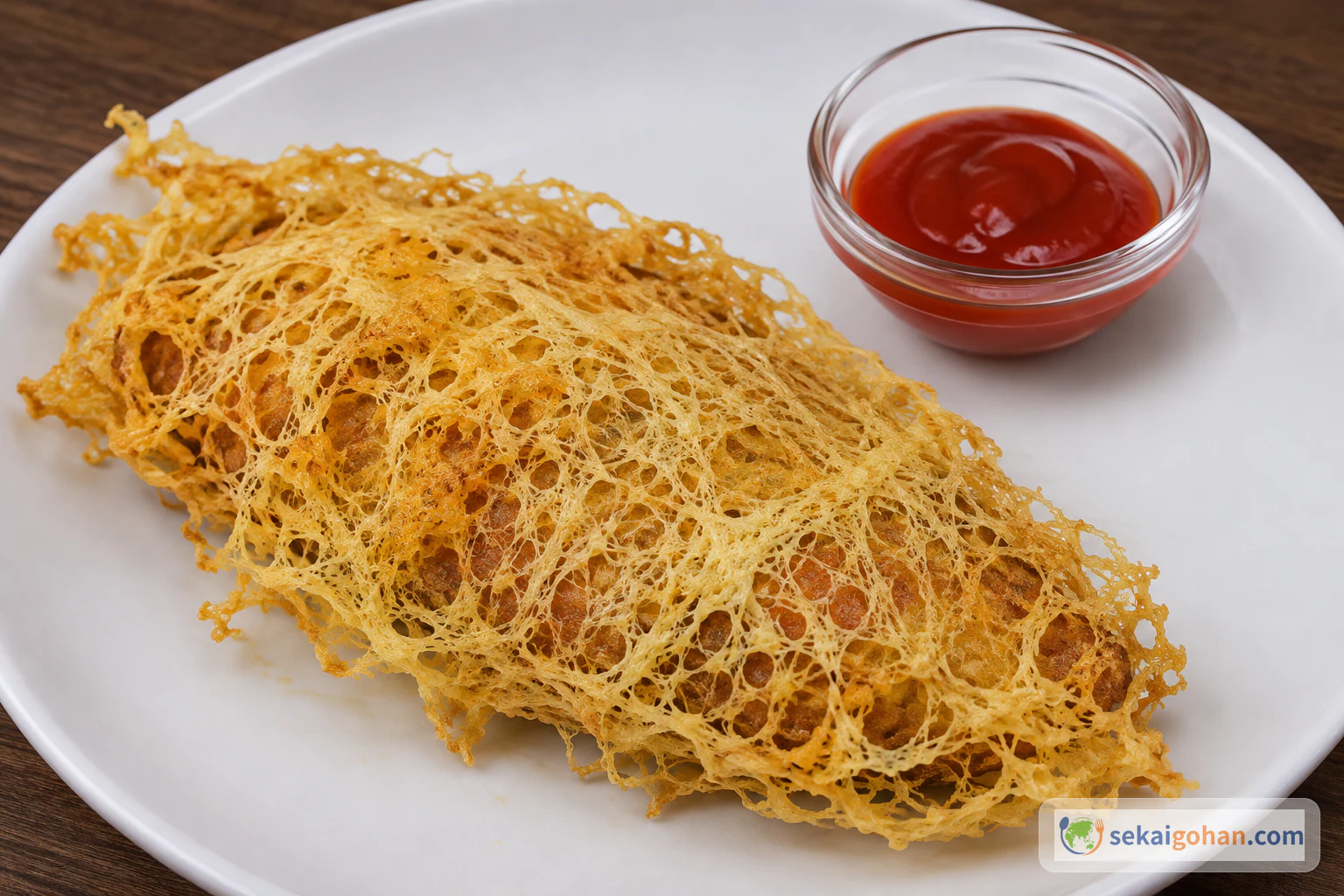
Kabiraji: Kolkata Fish Cutlet in a Lacy Egg Net

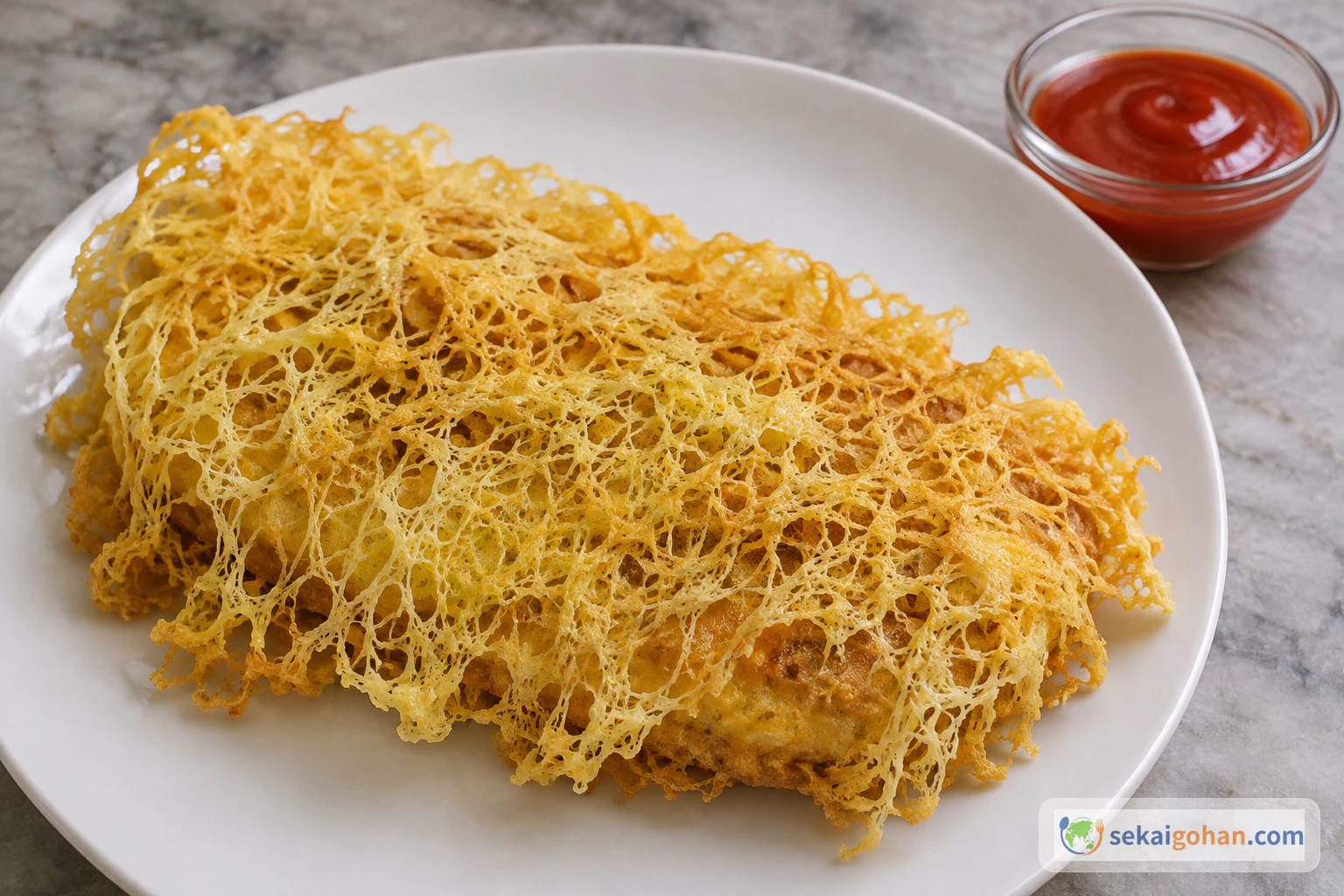
Fish kabiraji wrapped in a thin egg net, with tomato ketchup served separately
Serves
4 servings
Level
Intermediate
Cuisine
Indian

How to make fish kabiraji (also spelled kobiraji), the Kolkata dish of crumbed bhetki fried and wrapped in a thin egg net. This recipe for 4 servings is based on Mita Mondal's version, with its changes to the pepper, batter handling and net-making clearly explained, along with food thermometer checks, comparisons with other versions, and a plain note that this combined recipe has not been test-cooked.

Cooking flow

Cooking steps

STEP11 / 17

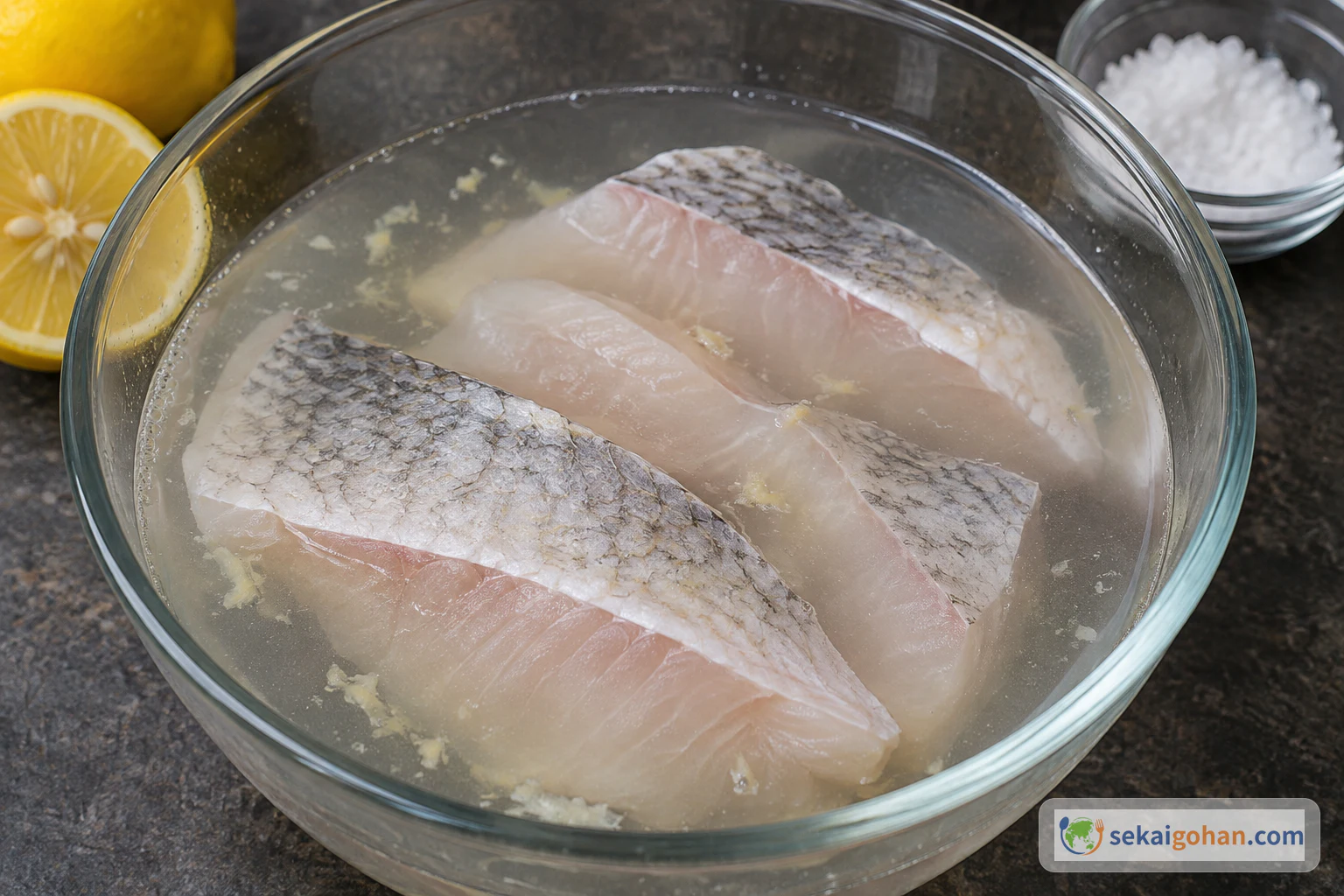
Soak the fish in lemon water

Bhetki fillets soaking in water with lemon juice and salt
The fish soaks in water with lemon juice and salt

Stir the lemon juice and some salt into 1/2 liter of water. Add the fish and put the bowl in the refrigerator for 15–20 minutes. The lemon water does not sanitize the fish.

STEP22 / 17

Load the blender

STEP 2

Peel the onion, garlic and ginger, and cut them into pieces your blender can handle. Put them in the blender jar with the coriander and green chilies.

STEP33 / 17

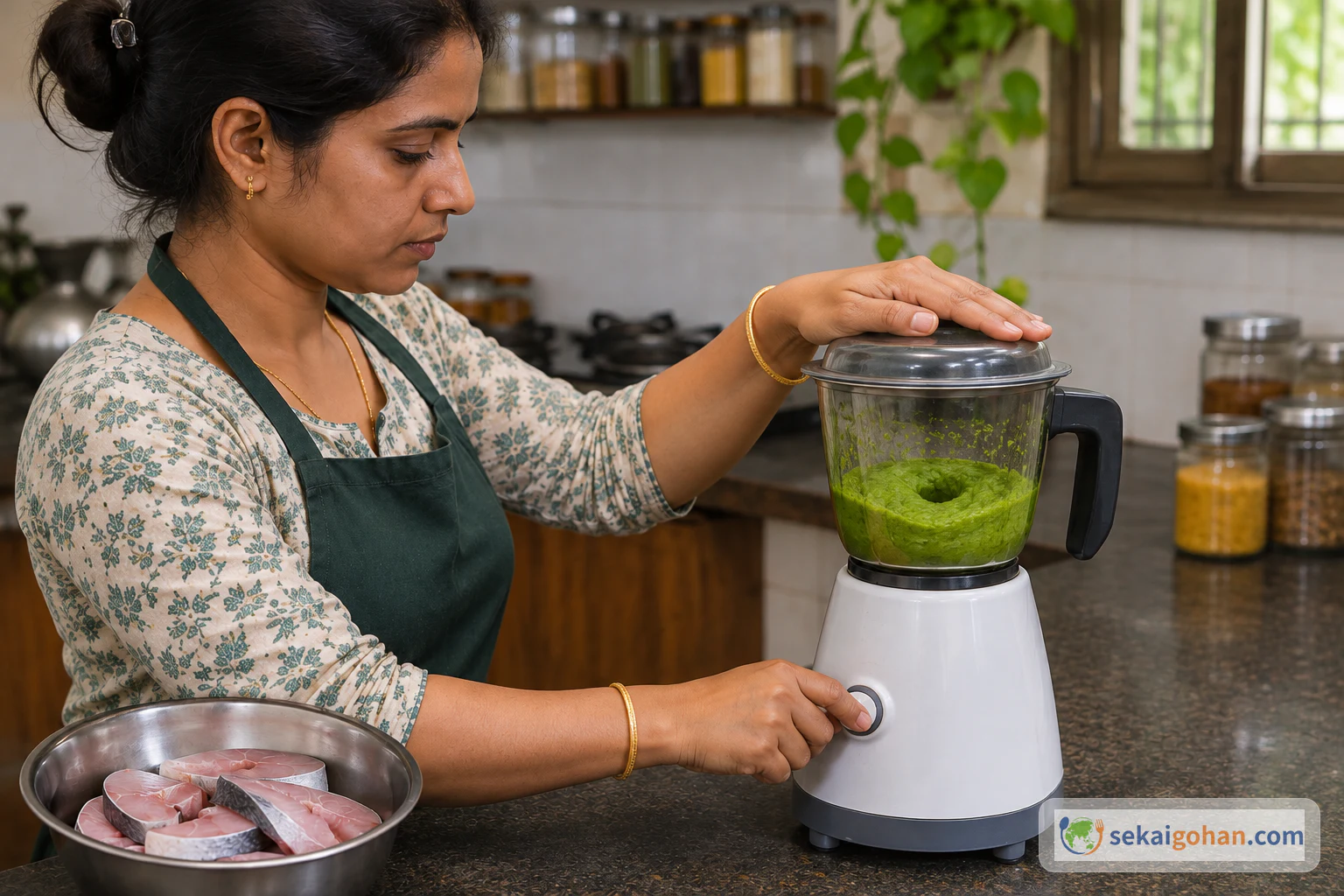
Blend a paste without water

A cook blending coriander, green chilies, onion, garlic and ginger into a thick paste without water
The aromatics become a thick paste with no added water

Blend into a thick paste. Do not add water.

STEP44 / 17

Drain the fish

STEP 4

Lift the fish out of the soaking liquid and let the liquid drain off. Discard the liquid.

STEP55 / 17

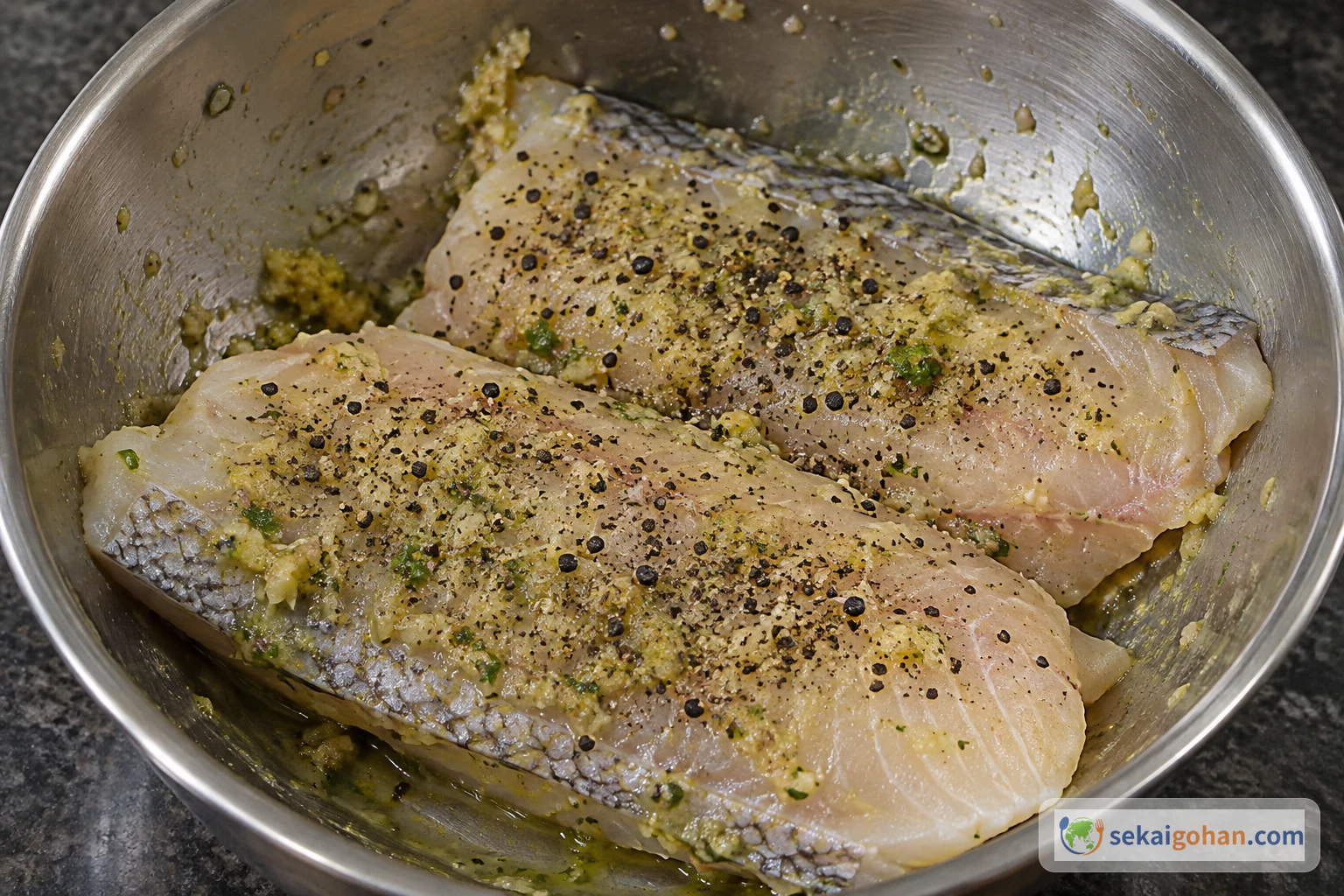
Coat and marinate the fish

Drained bhetki fillets coated with aromatic paste and ground black pepper
Coat both sides with paste and ground black pepper

Coat both sides of the fish with the paste and 2 tsp ground black pepper. Refrigerate for about 10 minutes. Wash your hands afterward.

STEP66 / 17

Beat the eggs

STEP 6

Beat the 4 whole eggs in a clean bowl. Keep the fish away from this bowl.

STEP77 / 17

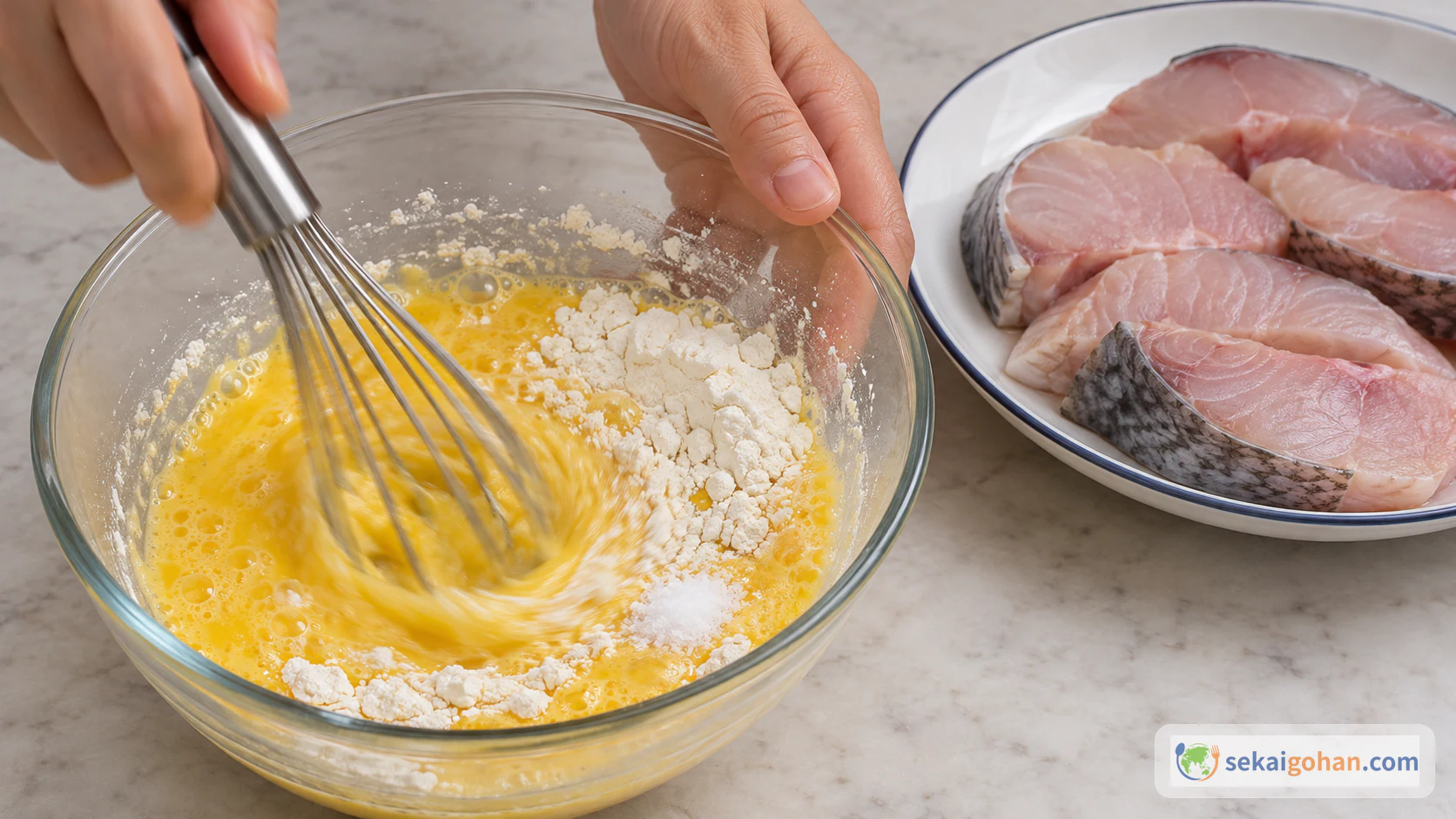
Finish and divide the batter

A whisk mixing whole eggs, cornstarch and a little salt, with raw fish kept apart on a separate plate
Mix and divide the batter while the raw fish stays apart

Whisk in 4 tbsp cornstarch and a little salt. Right away, before any fish touches it, pour about 1/3 of the batter into a second bowl. This is the fish batter. The rest, about 2/3, is the net batter, and no fish should touch it.

STEP88 / 17

Set out the breadcrumbs

STEP 8

Spread the breadcrumbs on a separate plate.

STEP99 / 17

Dip the fish

STEP 9

Dip each marinated fillet in the fish batter, using only the smaller portion. When all the fish is dipped, discard whatever is left in that bowl.

STEP1010 / 17

Coat with breadcrumbs

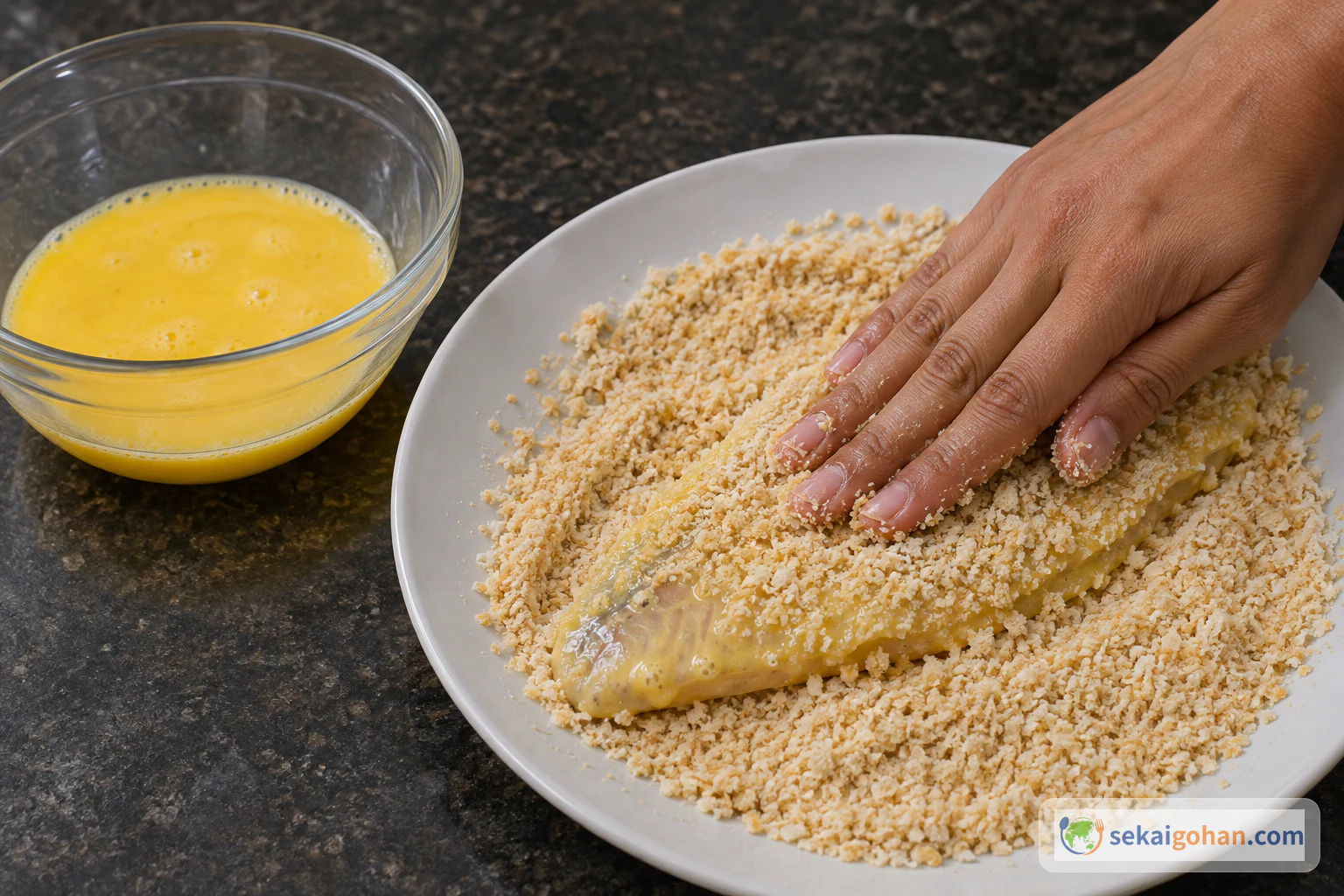
An egg-coated bhetki fillet being pressed into breadcrumbs on a plate
Press the dipped fillet into the breadcrumbs

Press each dipped fillet into the breadcrumbs until coated. Discard any leftover crumbs, and wash your hands.

STEP1111 / 17

Add the fish to the oil

STEP 11

Heat the oil in a frying pan over low to medium-low heat. Gently lower the crumbed fish into the oil.

STEP1212 / 17

Fry and check the fish

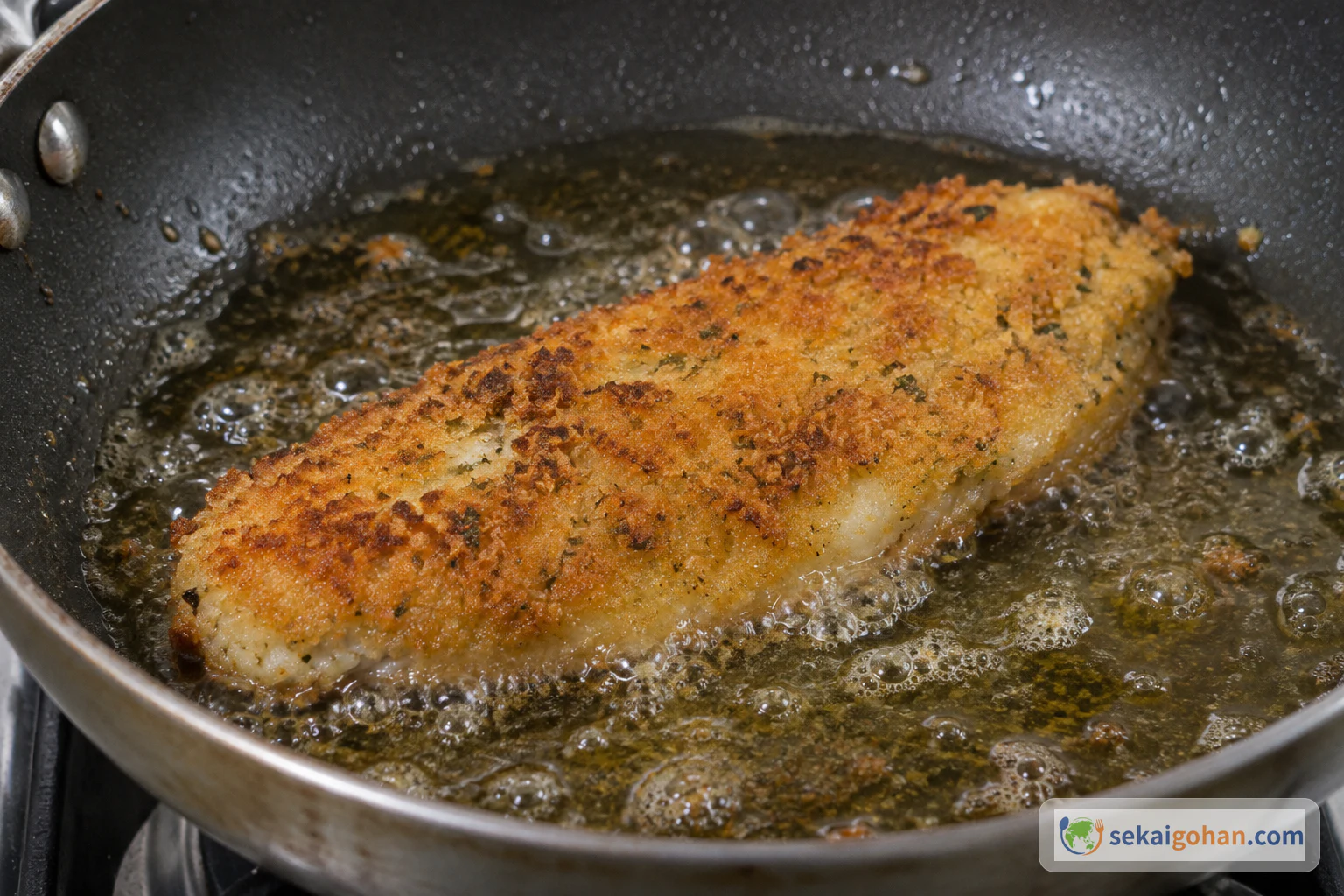
A crumb-coated bhetki fillet frying in oil in a pan
Use the time as a guide and check the center with a thermometer

Fry for about 5 minutes, turning the fish as it cooks. Check the center with a food thermometer. It should read 145°F (about 63°C), and the flesh should be opaque and separate easily with a fork. Don't rely on color or time alone. If the center falls short, keep frying.

STEP1313 / 17

Drain on clean paper

STEP 13

Using a clean utensil, lift the fish onto clean paper to drain. Never put it back on a plate that held raw fish. Wash everything that touched raw fish with hot soapy water.

STEP1414 / 17

Pour the egg net

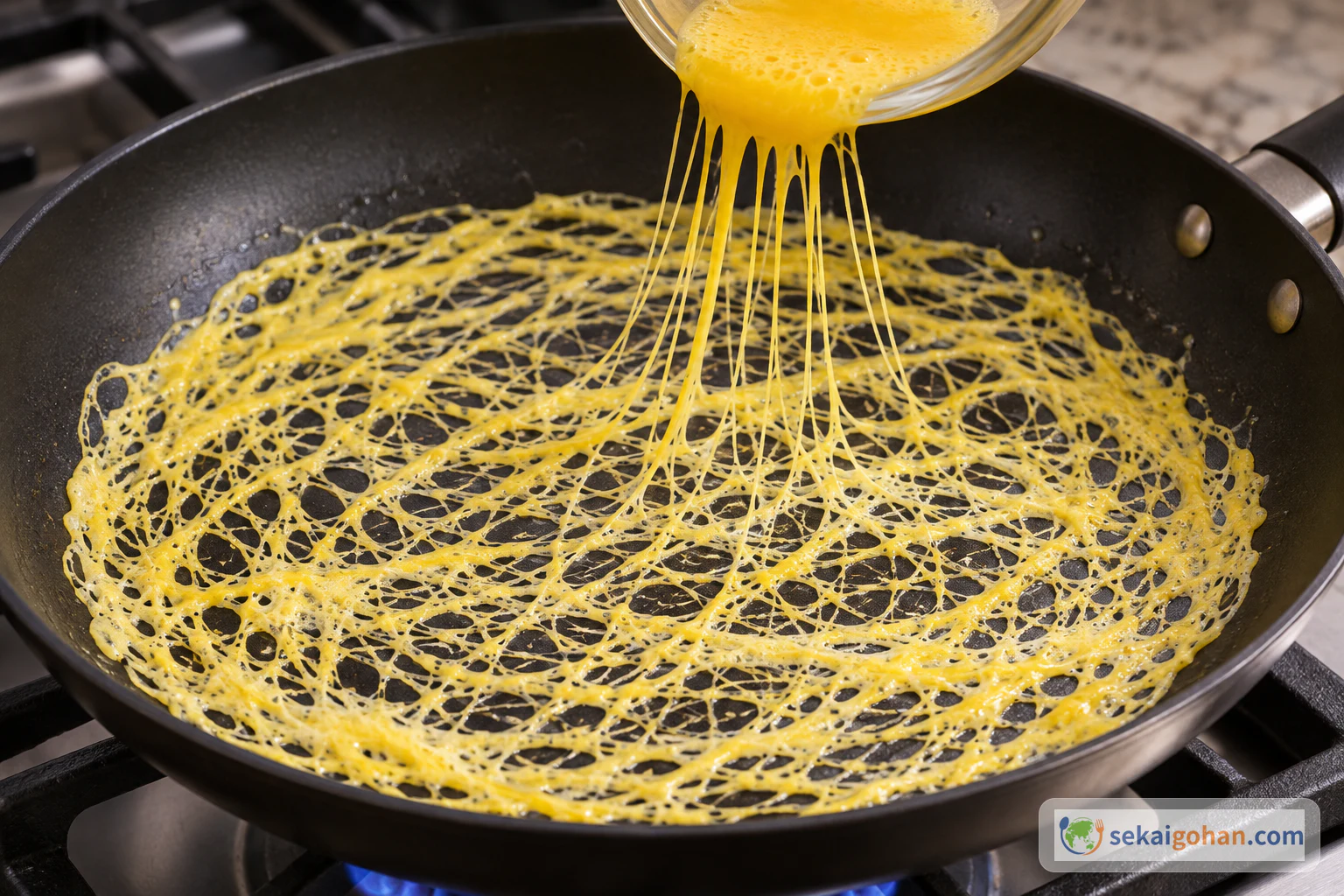
Thin streams of egg batter falling over a pan and forming a lacy net
Pour thin streams of clean batter to build the net

Use only the net batter that no fish has touched. Pour it from a spoon or spouted vessel in thin streams over the hot oil, crossing the streams to form a lacy net. Do not use your fingers. Keep your hands and face back, because the oil can spatter. If you run short, beat a fresh egg. Never top up with fish batter.

STEP1515 / 17

Place the fish on the net

STEP 15

Use a clean utensil to set one piece of fried fish on the net in the pan.

STEP1616 / 17

Wrap and fry again

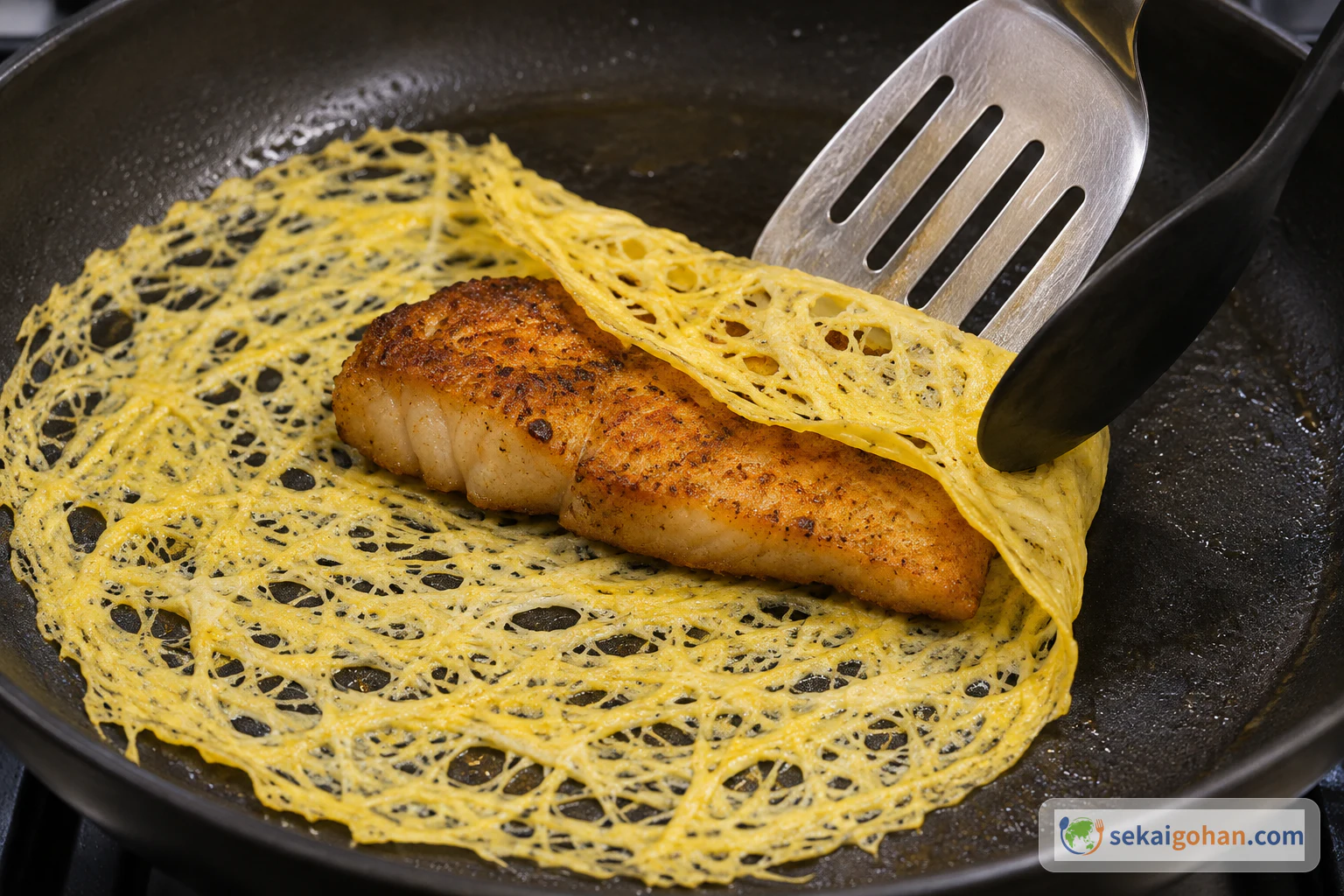
Utensils folding the egg net around a fried fish fillet in the pan
Fold the net around the fried fish, then fry again

Fold the edges of the net around the fish with clean utensils. Fry over low heat for a couple more minutes. Check with a food thermometer: the egg should reach 160°F (about 71°C), and the center of the fish should still be at least 145°F (about 63°C). If either falls short, keep frying. These are food temperatures, not oil temperatures. Repeat steps 14–16 for the remaining fish.

STEP1717 / 17

Drain and serve hot

A finished fish kabiraji on a plain plate with tomato ketchup in a separate bowl
Serve hot, with ketchup on the side

Drain the kabiraji on clean paper and serve hot, with tomato ketchup on the side.

0 / 0
Ingredients

Ingredients

1 / 1

Ingredients

Ingredient Amount Role
Bhetki fillets 500 g The fish at the center of the dish
Water 1/2 liter For the soak
Lemon juice from 1 lemon For the soak
Salt to taste For the soak and the batter
Coriander 10 g Aromatic paste
Green chilies 4 Aromatic paste
Onion 1 Aromatic paste
Garlic 6 cloves Aromatic paste
Ginger 1/2 inch Aromatic paste
Ground black pepper 2 tsp Marinade seasoning
Whole eggs 4 Batter for the fish and the net
Cornstarch (corn flour) 4 tbsp Mixed into the egg batter
Breadcrumbs as needed Coating for the fish
White oil as needed For frying the fish and the net
Tomato ketchup as needed Served on the side
0 / 0

Strands of egg batter hit the hot oil and set almost at once into a lacy, golden net. A crumbed, fried fillet of bhetki goes on top, and the net is folded around it, so every bite has crisp crumbs, soft fish and a shaggy, crackly shell of egg. That's fish kabiraji, a Kolkata favorite built on just two layers: the fried fish cutlet and the thin egg net wrapped around it.

Fish Kabiraji in Kolkata

Fish kabiraji is linked with the cabin-style cutlets of Kolkata, the ones that arrive covered in egg. You'll also see the name spelled kobiraji, and it isn't only made with fish: chicken and mutton versions exist too. This one uses bhetki. Nobody has settled where the dish or its name came from. If you'd like to keep exploring, you'll find more of the country's cooking on our India page.

Ingredients: 4 Servings
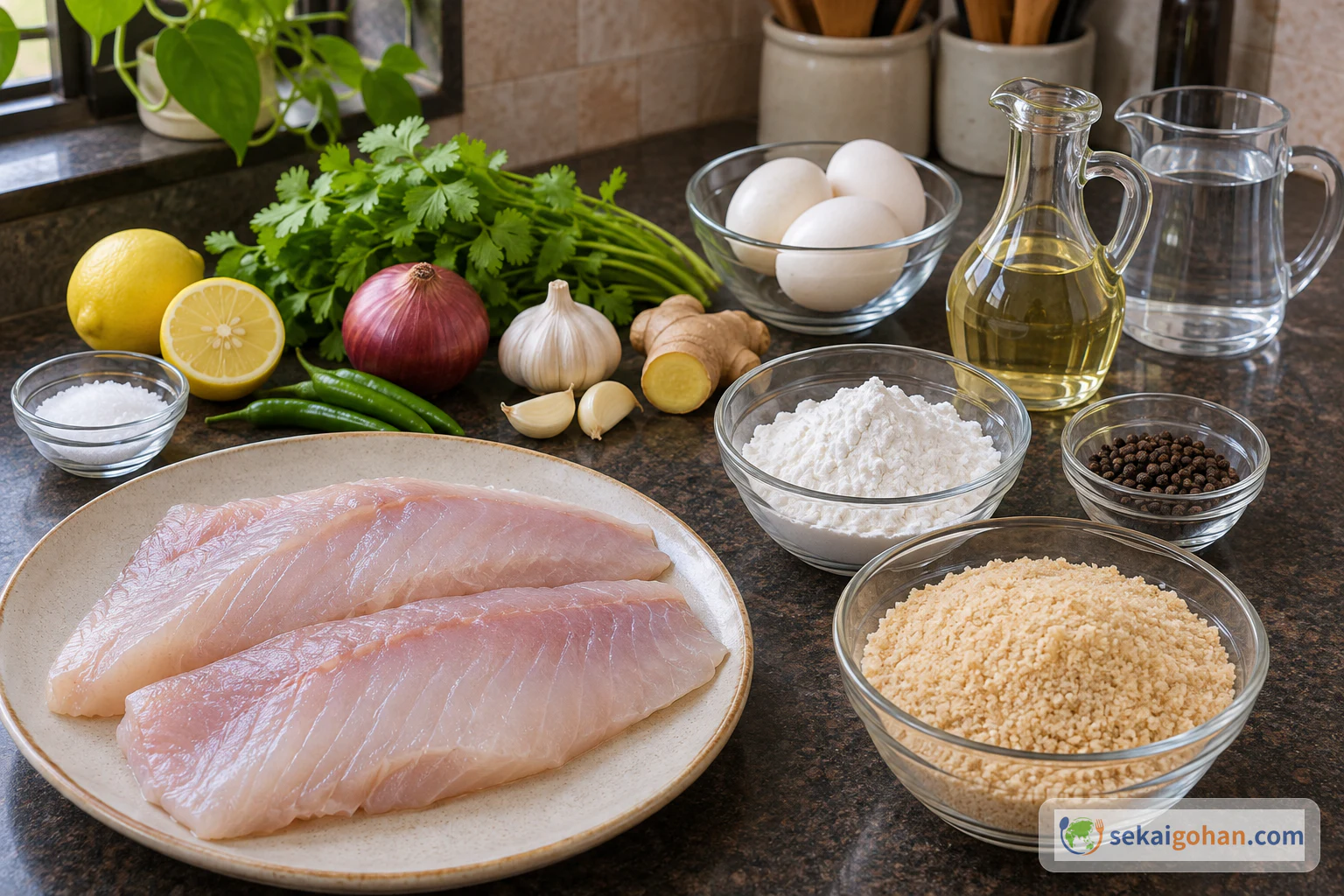
Bhetki fillets, aromatics, whole eggs, cornstarch, breadcrumbs and other kabiraji ingredients
Grind the black pepper before you measure it

Equipment

  • Blender
  • Cutting board and knife
  • Separate bowls for the soak, the marinade, the fish batter and the net batter
  • Whisk
  • Plate for the breadcrumbs
  • Frying pan
  • Spoon or spouted vessel for pouring the net
  • Clean utensils for lifting and folding
  • Food thermometer
  • Clean paper or a clean plate for draining

Choosing Ingredients for Kabiraji

  • Bhetki: Known in English as barramundi. The recipe is written for this fish, and no replacement is suggested.
  • Cornstarch: In kabiraji recipes, "corn flour" means cornstarch. Look for a fine white powder. Yellow cornmeal and maize flour (makki ka atta) are different products, and so is potato starch, so none of them will work here.
  • Eggs: Use whole eggs, not just the whites. Keep one extra on hand in case the net batter runs short.
  • Black pepper: If you're starting with whole peppercorns, grind them before you measure.
  • Allergens: This dish contains fish and egg. Check the labels on what you buy, especially the breadcrumbs, which may contain wheat.

Method: Fish First, Then the Net

Before you start

Keep the net batter away from raw fish from the moment you divide it. Wash anything that touches raw fish, including cutting boards, dishes, utensils and counters, with hot soapy water. Wash your hands with soap for at least 20 seconds. Hot oil can spatter, especially when you pour the net.

Fixing Kabiraji Problems and Storing Leftovers

Use a food thermometer to tell when it's done, and treat the frying times as a guide. Fin fish should reach 145°F (about 63°C) and egg dishes 160°F (about 71°C). Golden crumbs can fool you, because color tells you nothing about the temperature at the center.

Keep raw fish and the net batter apart. Split the egg batter before any fish touches it, about 1/3 for coating the fish and about 2/3 for the net. Throw out any leftover egg wash, and never reuse a marinade that has touched raw food unless you boil it first. Both the soak and the marinade go in the refrigerator.

What happens Likely reason What to do
The time is up, but the fish center is below 145°F (about 63°C) Time is only a guide Keep frying and check again
The crumbs have color, but the temperature is low Color does not show the center's temperature Don't go by color; keep frying until the thermometer reading is right
The net batter runs out The net portion can run short Beat a fresh egg. Don't add fish batter
Fish touched the net batter The bowls got mixed up or a utensil was shared Don't use that batter for the net. Discard it and beat fresh egg
The oil spatters as you pour The stream is too heavy Stand back and pour a thinner stream
The paste won't blend There is too little liquid to move the blades Stop the blender and scrape it down rather than adding water
The batter looks yellow and gritty Cornmeal or maize flour in place of cornstarch Start again with white cornstarch

Refrigerate leftovers within 2 hours, or within 1 hour if the air temperature is above 90°F (32°C).

Frequently Asked Questions

Is corn flour the same as cornstarch?

Here it is. In this batter, corn flour means cornstarch, the fine white powder. India's food standards treat corn starch as a separate product from whole maize flour.

Why divide the batter instead of using one bowl?

If you divide it before any fish goes in, the net batter never touches raw fish. The net portion can run short, so the method lets you beat in a fresh egg.

Can I flick the batter with my fingers instead?

Some cooks do, but it puts your hand right over the hot oil. Pouring a thin stream from a spoon or a spouted vessel makes burns less likely.

Does the lemon soak make the fish safe?

No. The lemon water doesn't sanitize the fish. Keep the fish in the refrigerator while it soaks and marinates, then cook it to the temperatures given in the method.

Sources