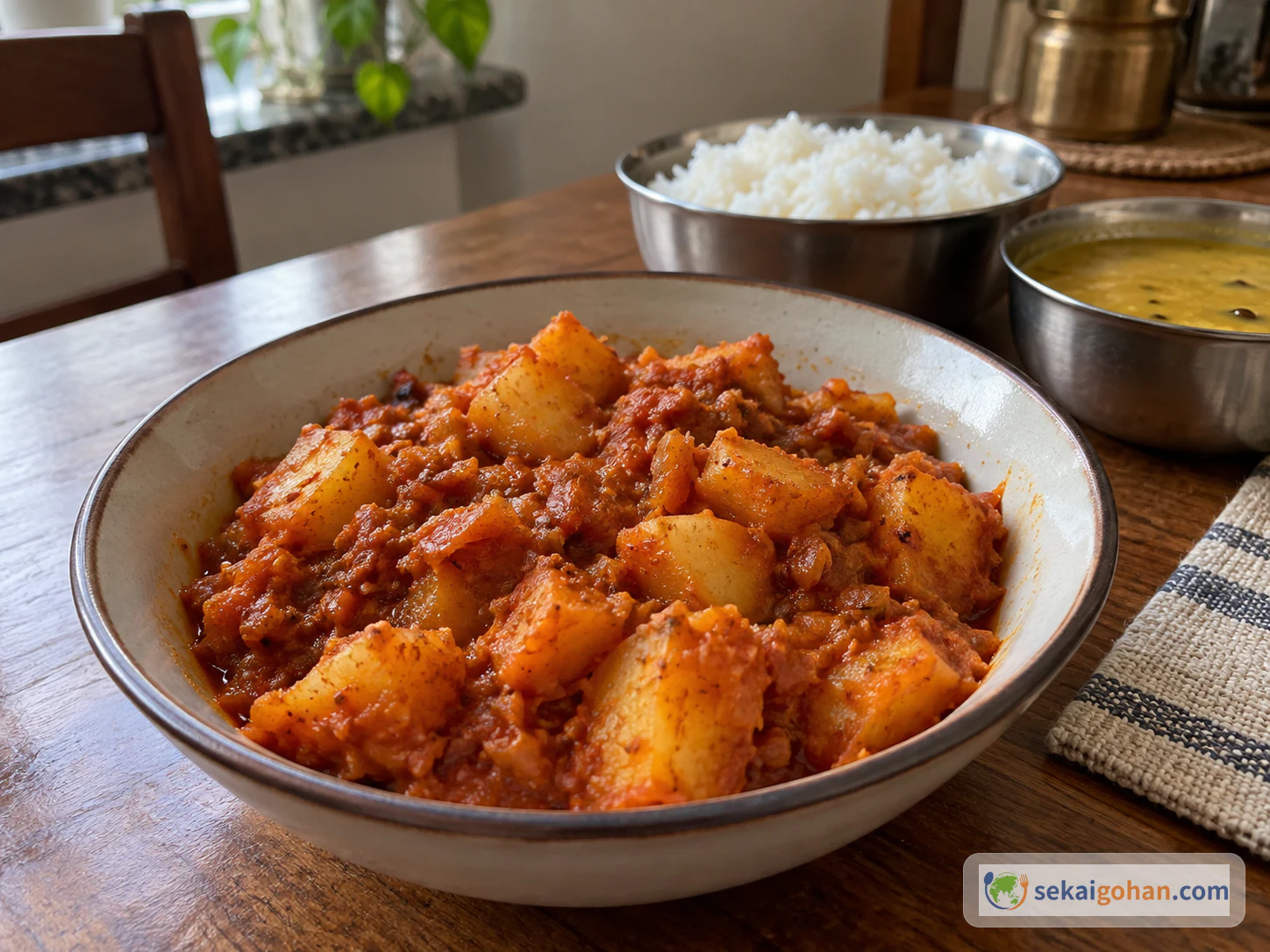
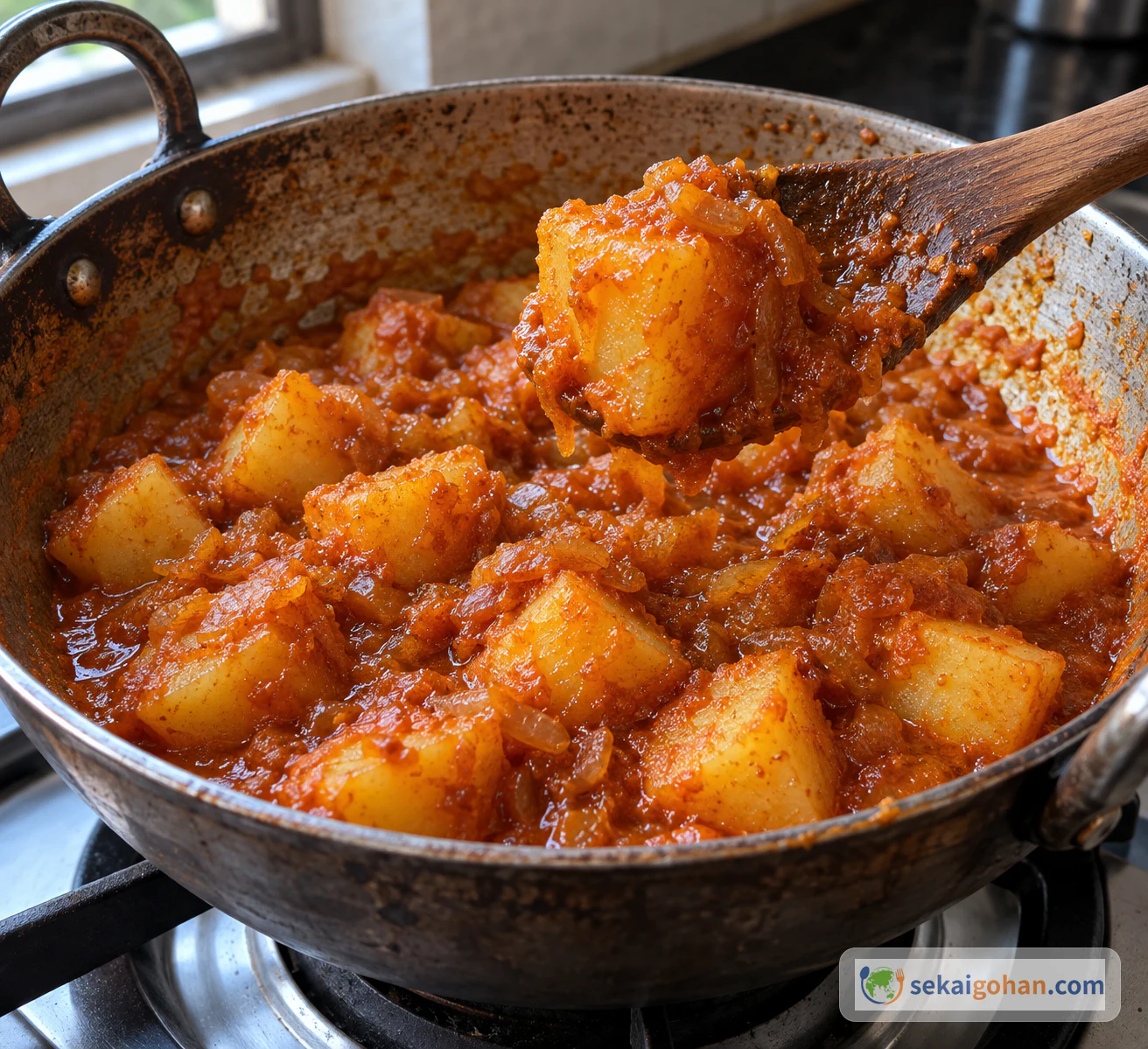
Picture a plate of plain white rice and a bowl of dal. Next to them sits a small heap of potato cubes, glossy with a red-orange gravy that smells sharply of tamarind. That's batata saung, a Konkani home dish from India's southwest coast. It's very simple: boiled potatoes and onions fried in coconut oil, simmered with red chili powder, salt, tamarind and water until the gravy turns thick and clings to every cube. You won't temper any whole spices, and the ingredient list is short. What you're after is a balance of sweet onion, sour tamarind and red-chili heat, with the coconut oil's aroma over everything and the potatoes still holding their shape.
Batata Saung in Konkani Home Cooking
Batata saung comes from the Konkani cooking of the coastal Canara region in southwestern India. It's a home dish of the Chitrapur Saraswat Brahmin (Bhanap) community, built around boiled potatoes, tamarind and red chili. For more dishes from across the country, see our India country page.
The dish moved out of the home kitchen in 2017, when Simply Saraswat opened in Borivali, Mumbai. The owner wanted to present the food of Chitrapur Saraswat, Bhanap and Amchi tables, and Batata Song went on the restaurant's Saraswat thali as a mildly spiced gravy.
Even with the word "batata" in both names, this dish has nothing to do with Lebanon's batata harra. They share potatoes, and that's about it.
Ingredients for 4: Potatoes, Onions, Tamarind and Coconut Oil
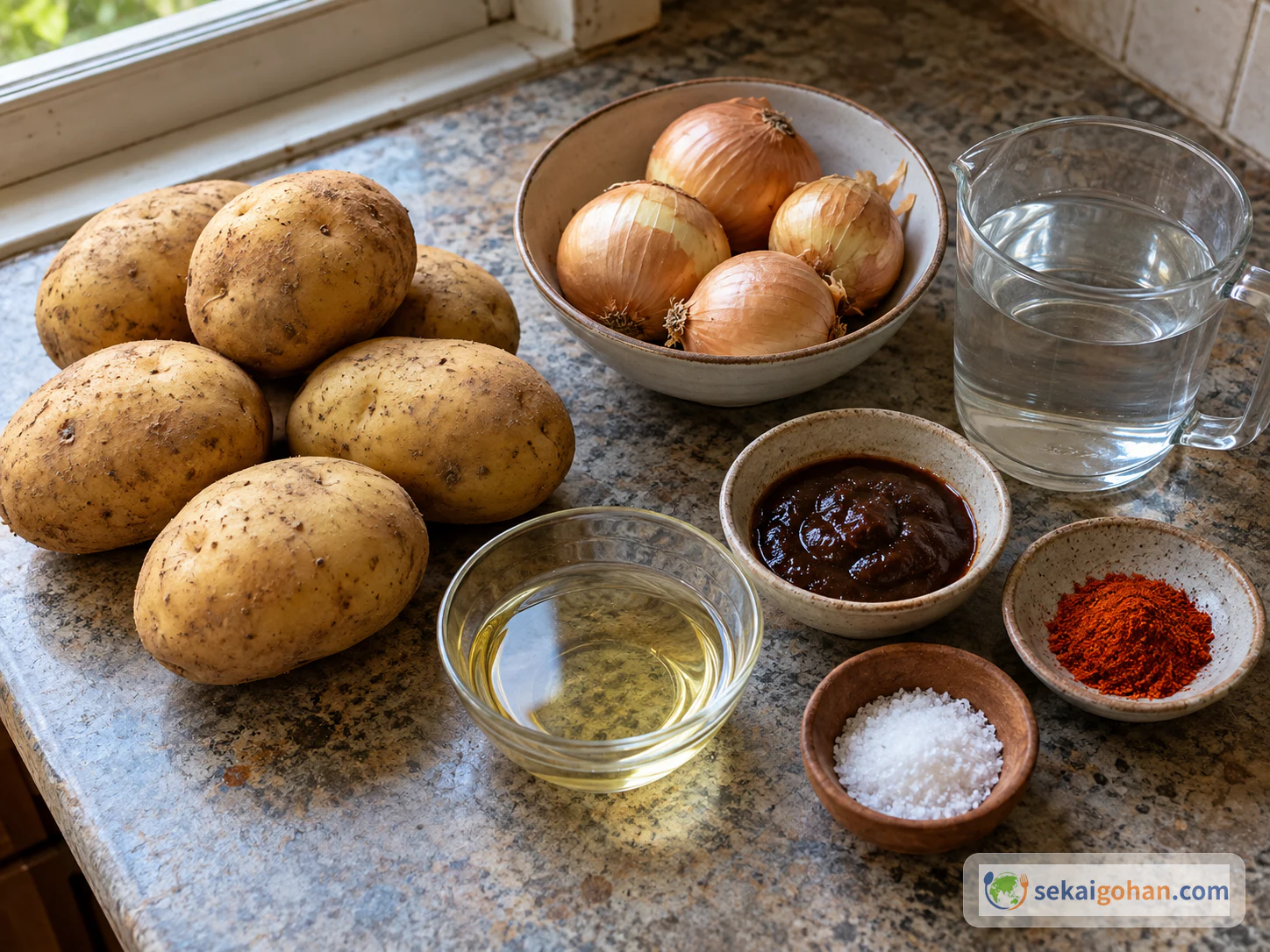
This dish contains coconut (coconut oil). If coconut is a concern, use another cooking oil. Check the label of your tamarind paste and chili powder for any allergen or shared-facility statements.
Equipment
- Saucepan for boiling the potatoes
- Knife and cutting board
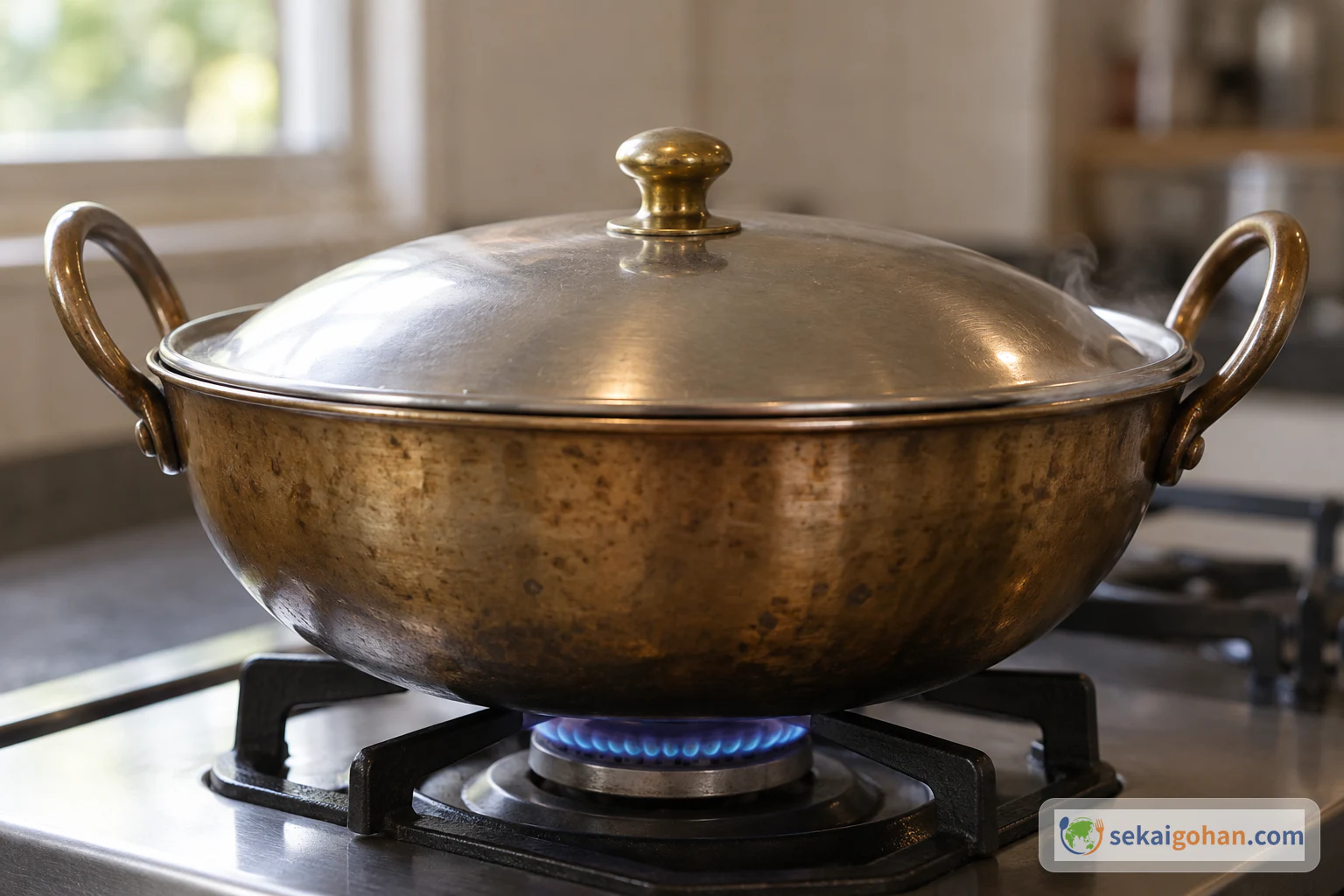
- Heavy-bottomed pot or kadai with a lid
- Wooden spoon or spatula
- Measuring cup and spoons
Choosing Ingredients for Batata Saung
Potatoes and onions. Ordinary supermarket potatoes and onions are fine, and you don't need a particular variety. Weigh them if you can, because their sizes vary a lot. Very fresh, juicy onions will also put more water into the pot.
Tamarind. Tamarind paste is the easier choice because you can measure it. You can also use the liquid squeezed from 1 lemon-sized ball of tamarind. The two differ in strength, so taste as you add instead of swapping them one for one. Look for tamarind paste or concentrate at Asian or Indian grocers or in the international aisle. Everything else is in an ordinary supermarket.
Red chili powder. Chili powders vary widely in heat. If you don't know how hot yours is, start with a little less than 1 tsp and add more once you've tasted the gravy. Byadgi or Kashmiri chili also works here.
Oil. Coconut oil gives the dish its typical aroma. A neutral cooking oil works too, but the dish will smell milder.
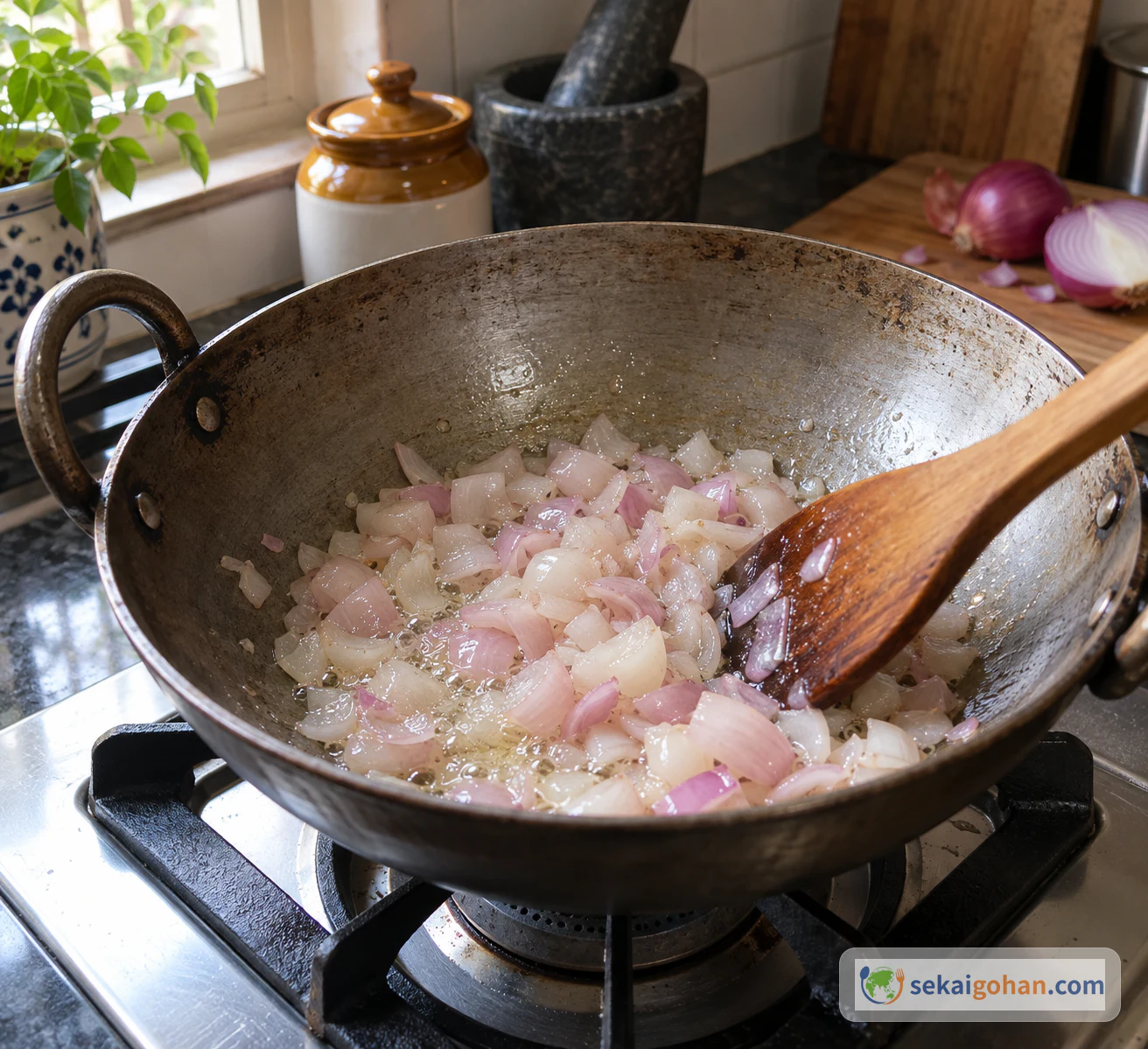
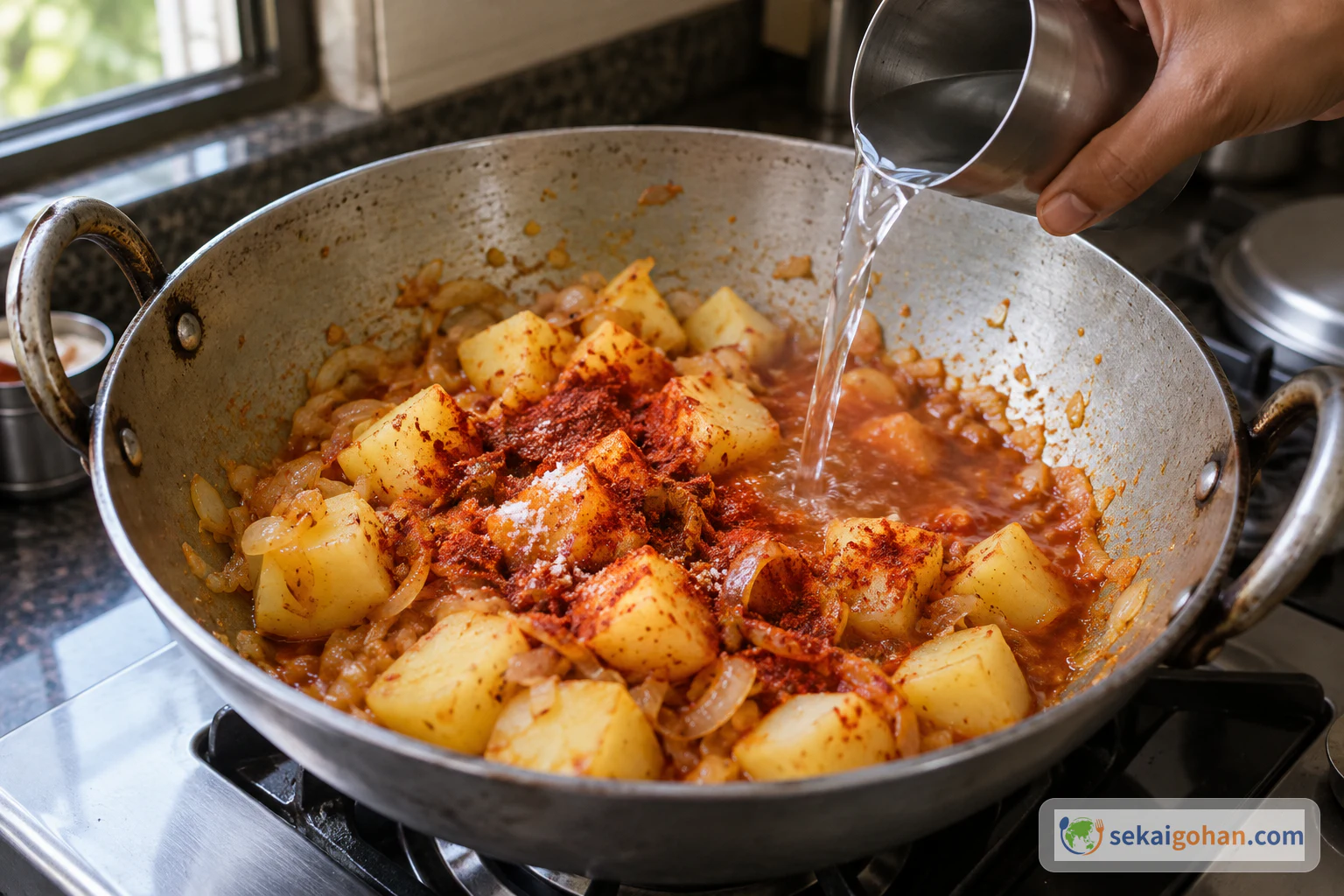
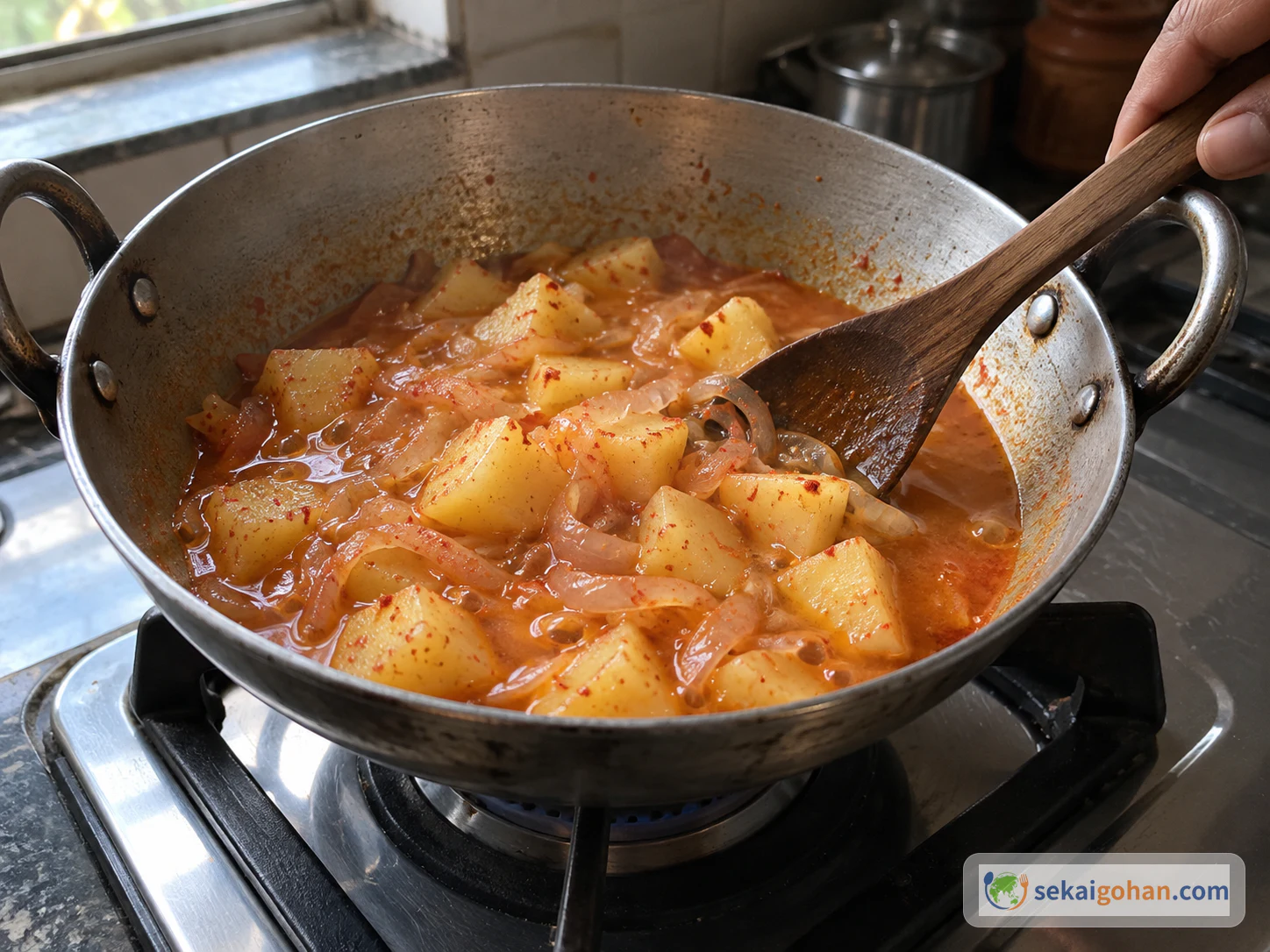
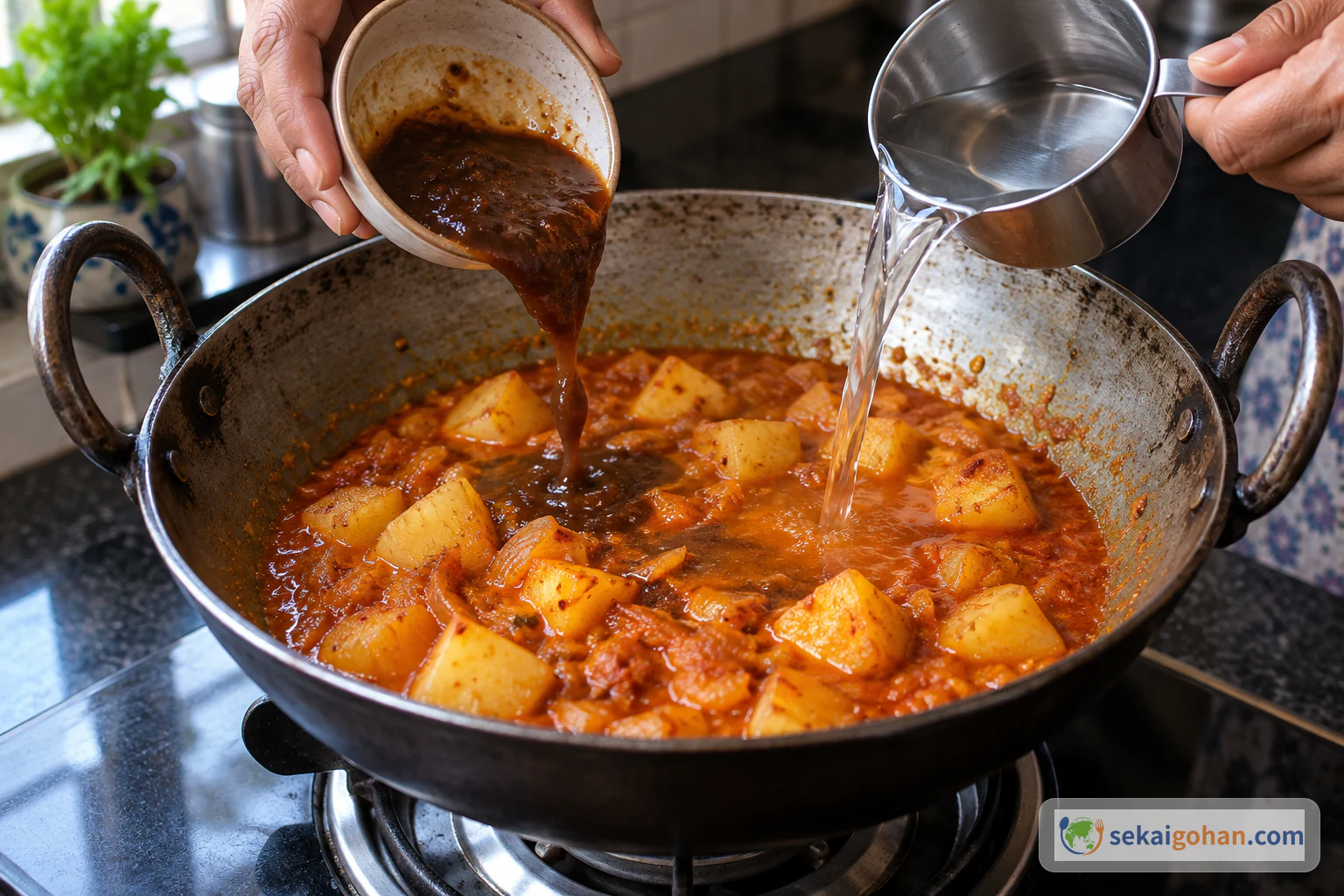
Method: Keeping the Potatoes Whole While the Tamarind Soaks In
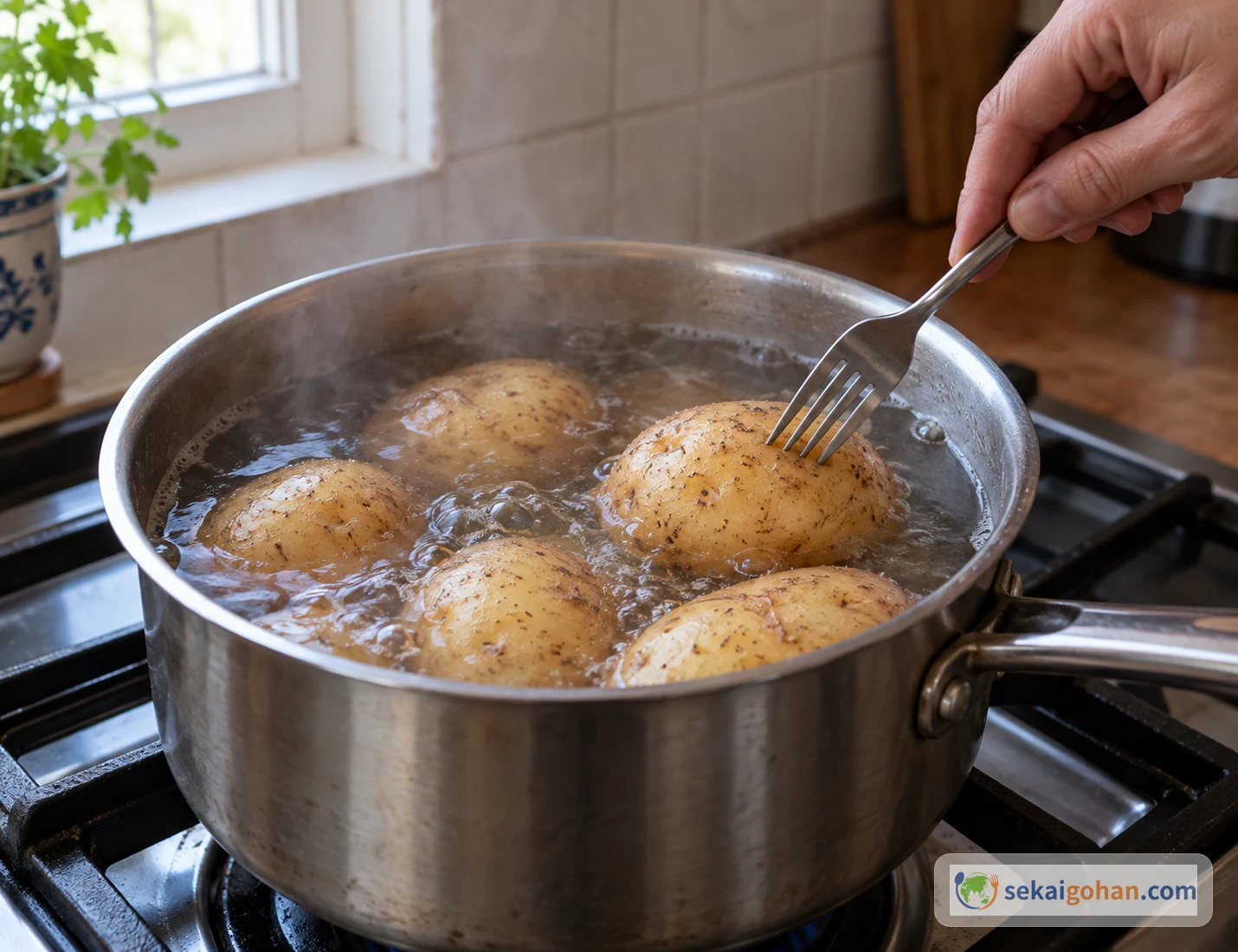
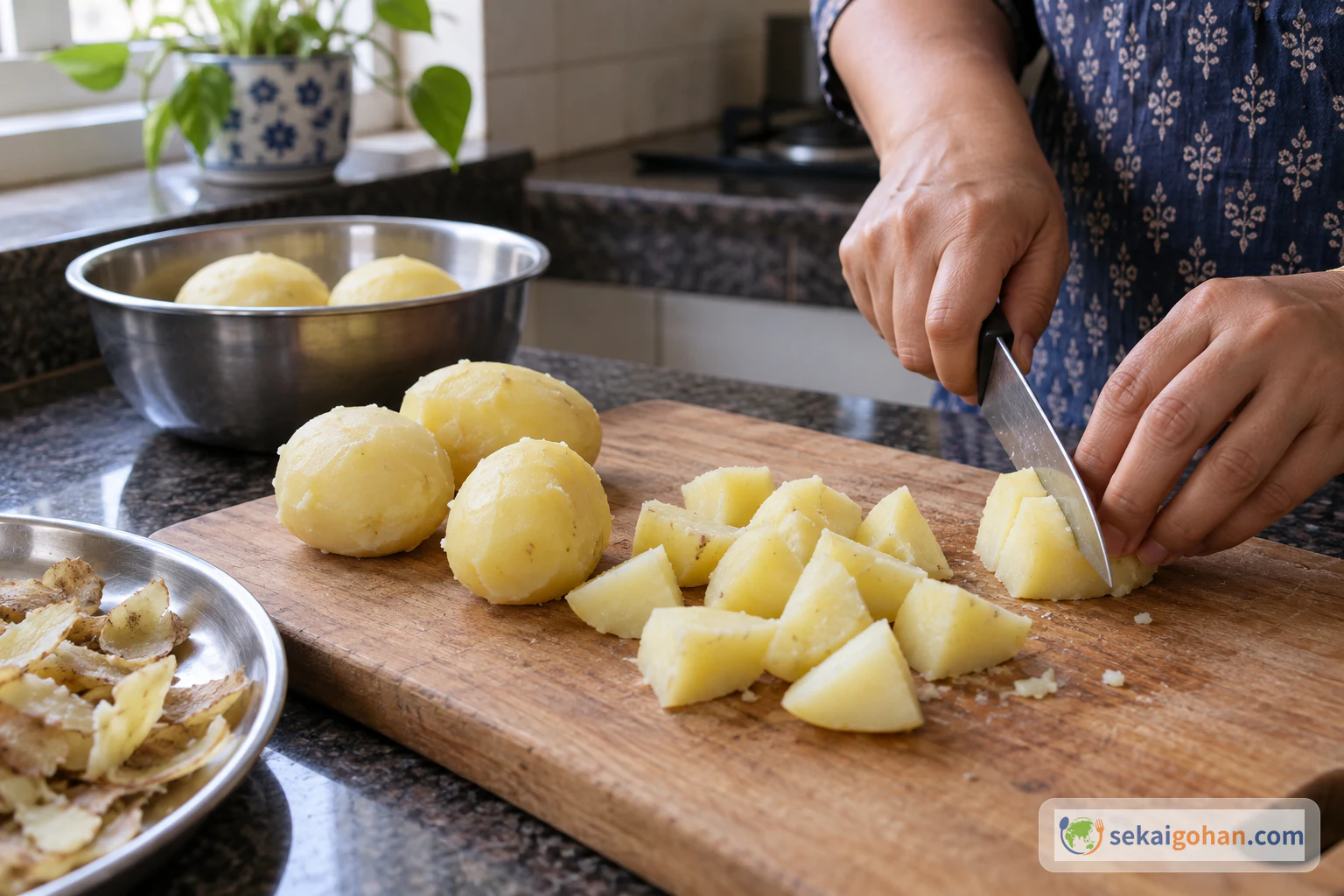
Stop boiling the potatoes while they are still firm, and stir gently once the tamarind is in. Both protect the shape of the cubes.
Fixing Common Batata Saung Problems
| Problem | Likely cause | What to do |
|---|---|---|
| The potatoes break apart | Boiled too soft at the start, or stirred hard | Next time, stop boiling while the potatoes are still firm. Once they're cubed, turn them gently from the bottom instead of stirring |
| Too hot | A hotter chili powder than expected | Start with less chili next time and add more after tasting. Plain rice and dal on the plate also soften the heat |
| Too sour | Strong tamarind, especially from a block | Make the dish with the base amounts first. The optional teaspoon of jaggery at the end adds sweetness alongside the sourness, though it won't remove it |
| Watery gravy or sticking | Heat too high or too low, or a very wide or narrow pot | Keep the covered simmer on low, and check and stir now and then. How fast the gravy thickens depends on your heat and your pot |
Serving Batata Saung and Related Versions
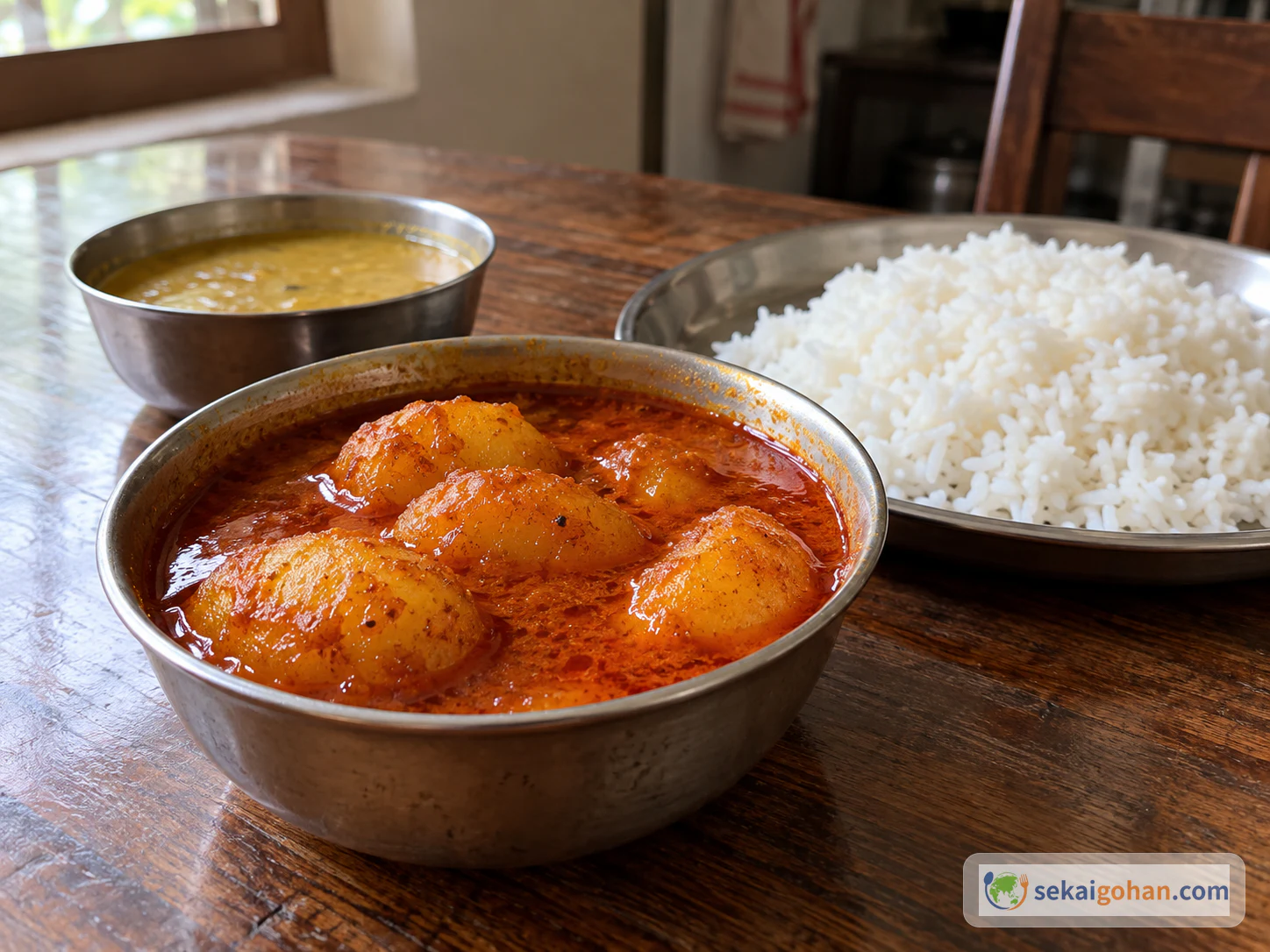
Serve batata saung with white rice and a dal such as Dali Toye. Ghee at the table is optional. The plain rice soaks up the gravy, and the dal gives you a break between bites of sour, spicy potato. At home, steamed rice and any simple dal you already make will do the job.
There are other versions of the dish. One adds cumin along with the red chili powder and tamarind extract, in different proportions. Batata losne saung is its own dish. "Losne" means garlic, and the dish uses plenty of it, along with small potatoes, roasted and soaked Byadgi chilies and tamarind. Byadgi chilies look very red but are fairly mild. The recipe above contains no garlic.
Frequently Asked Questions
Is Batata Song a different dish from batata saung?
No, they're two spellings of the same dish. "Saung" is pronounced "song," and Simply Saraswat's 2017 thali used the spelling Batata Song.
Is batata saung very spicy?
That depends on your chili powder. If you're not sure how hot it is, start with less and add more after tasting the gravy.