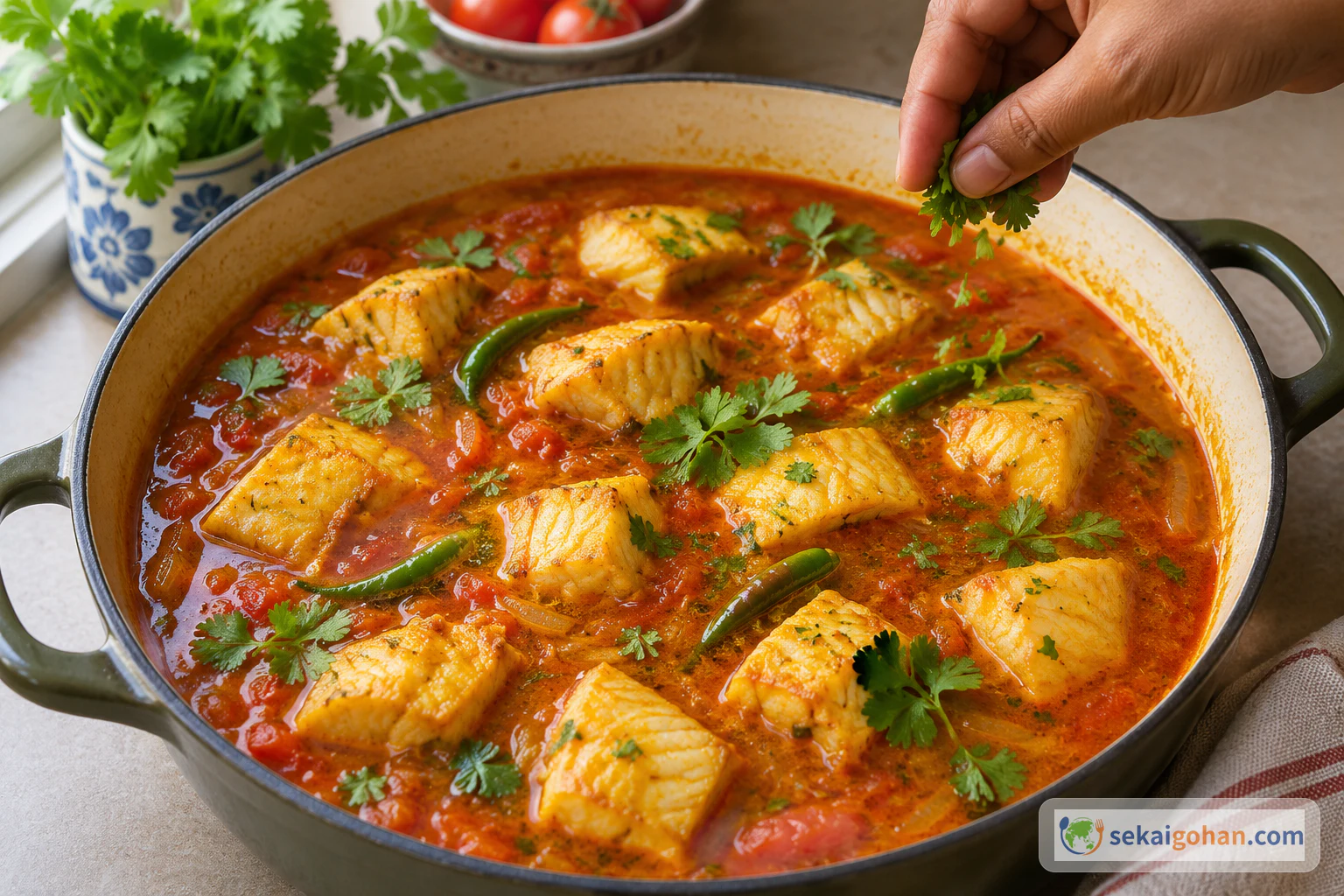
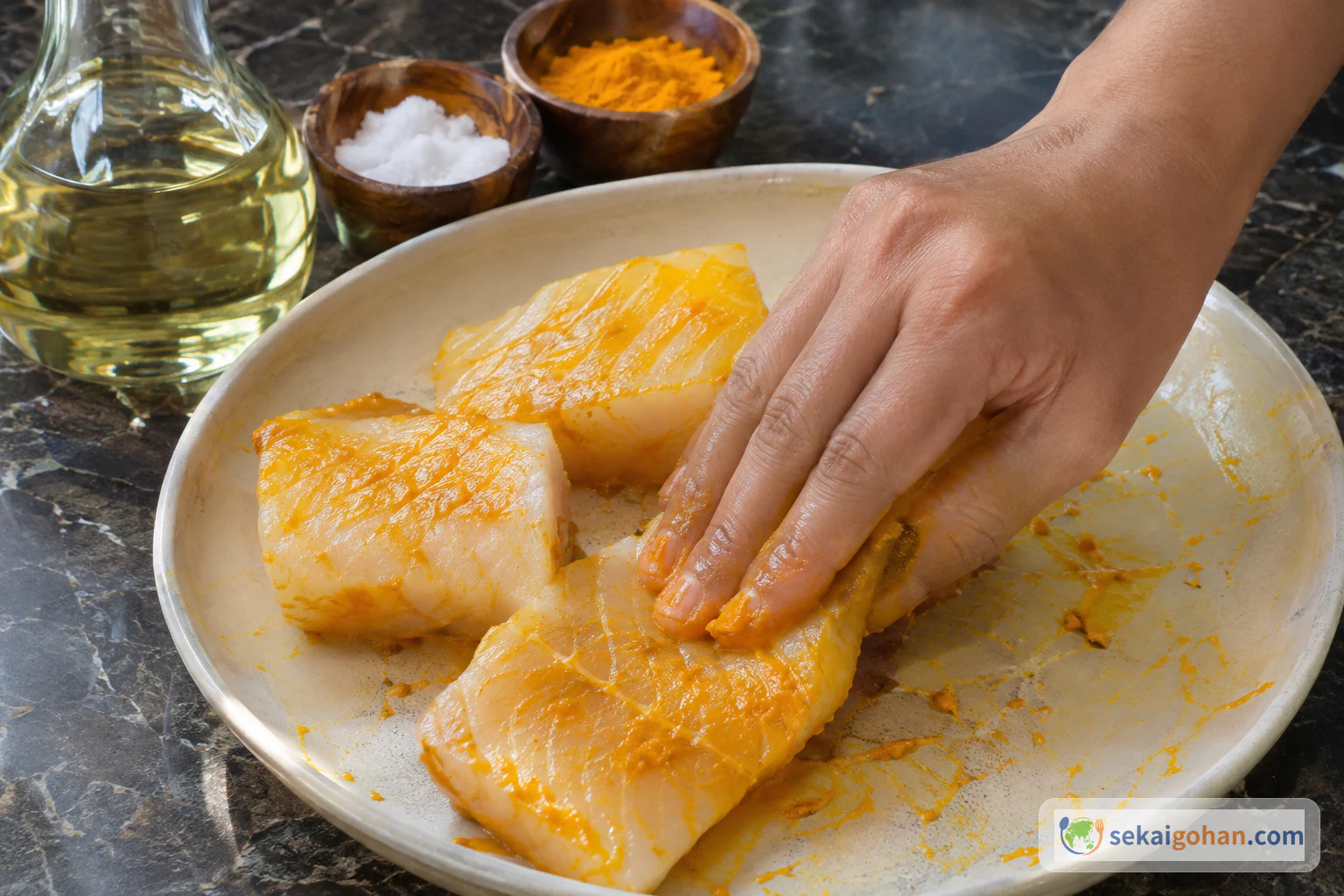
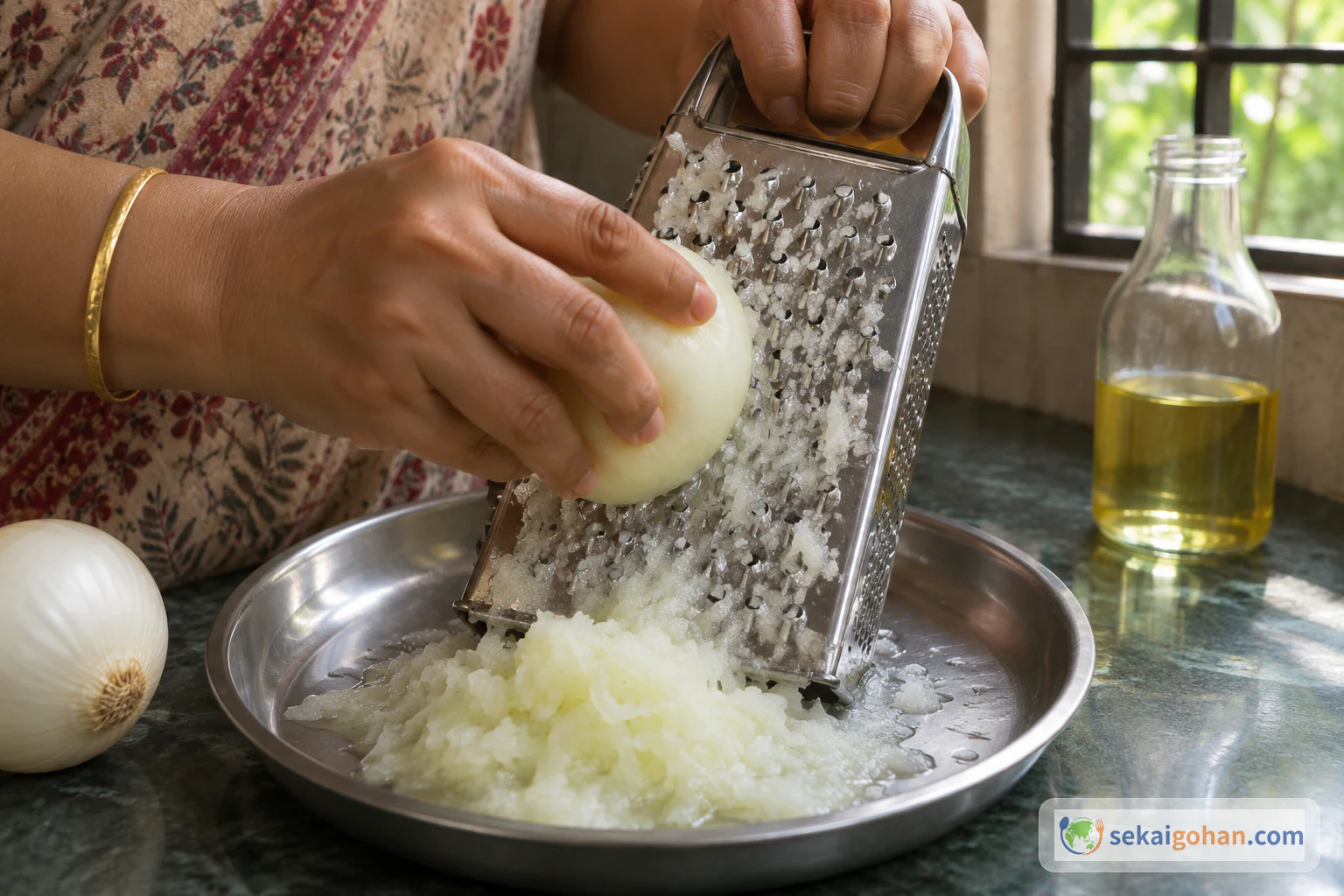
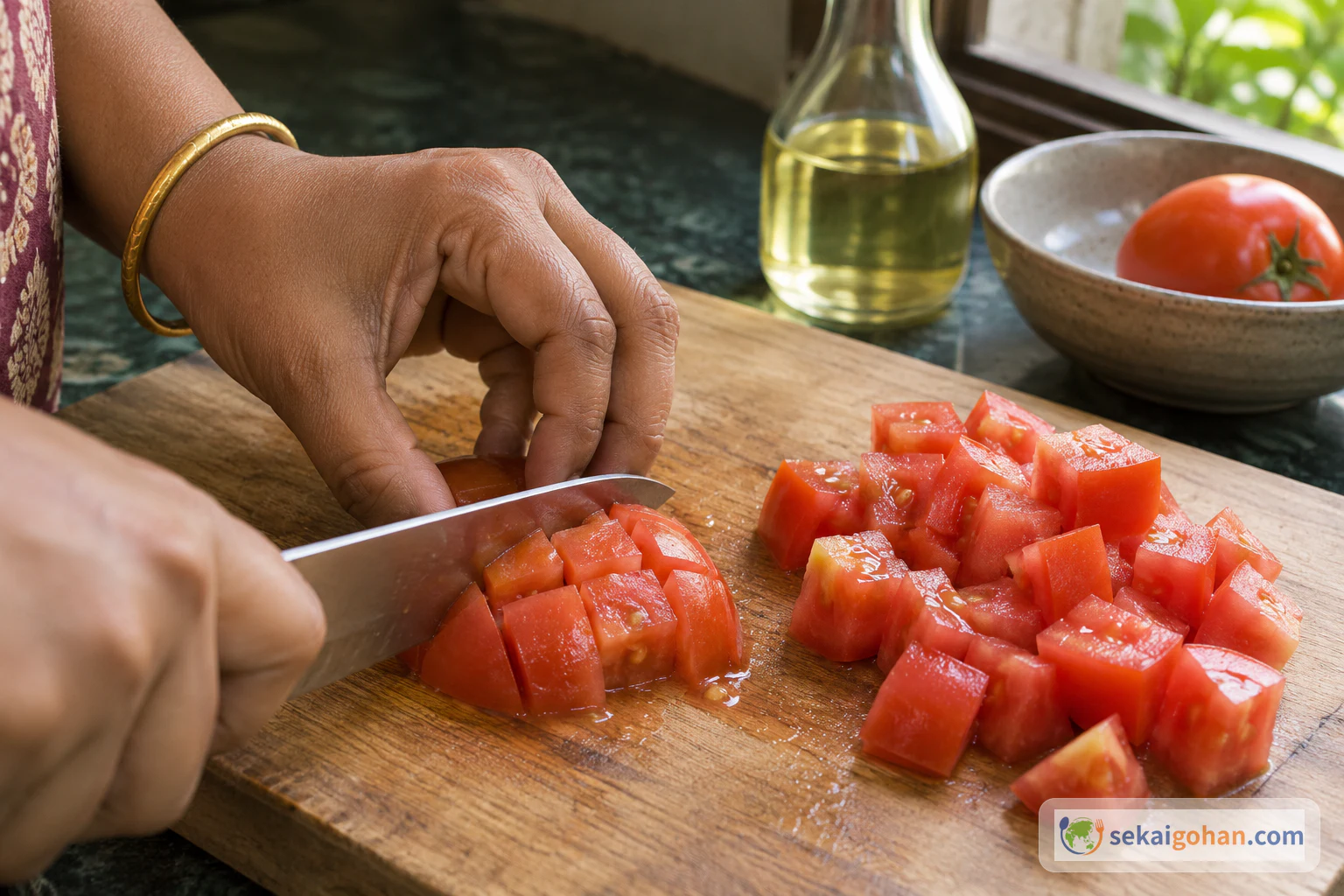
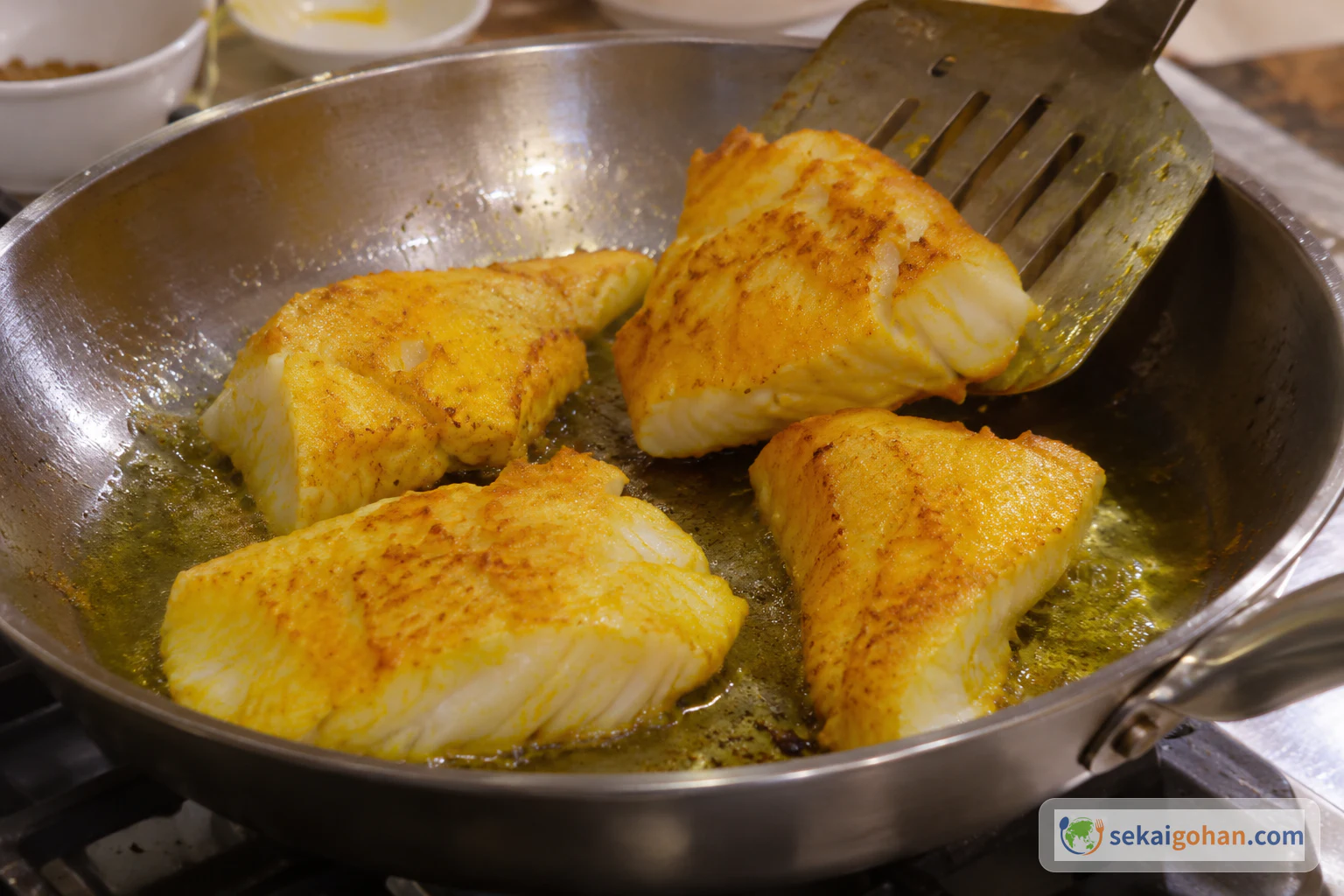
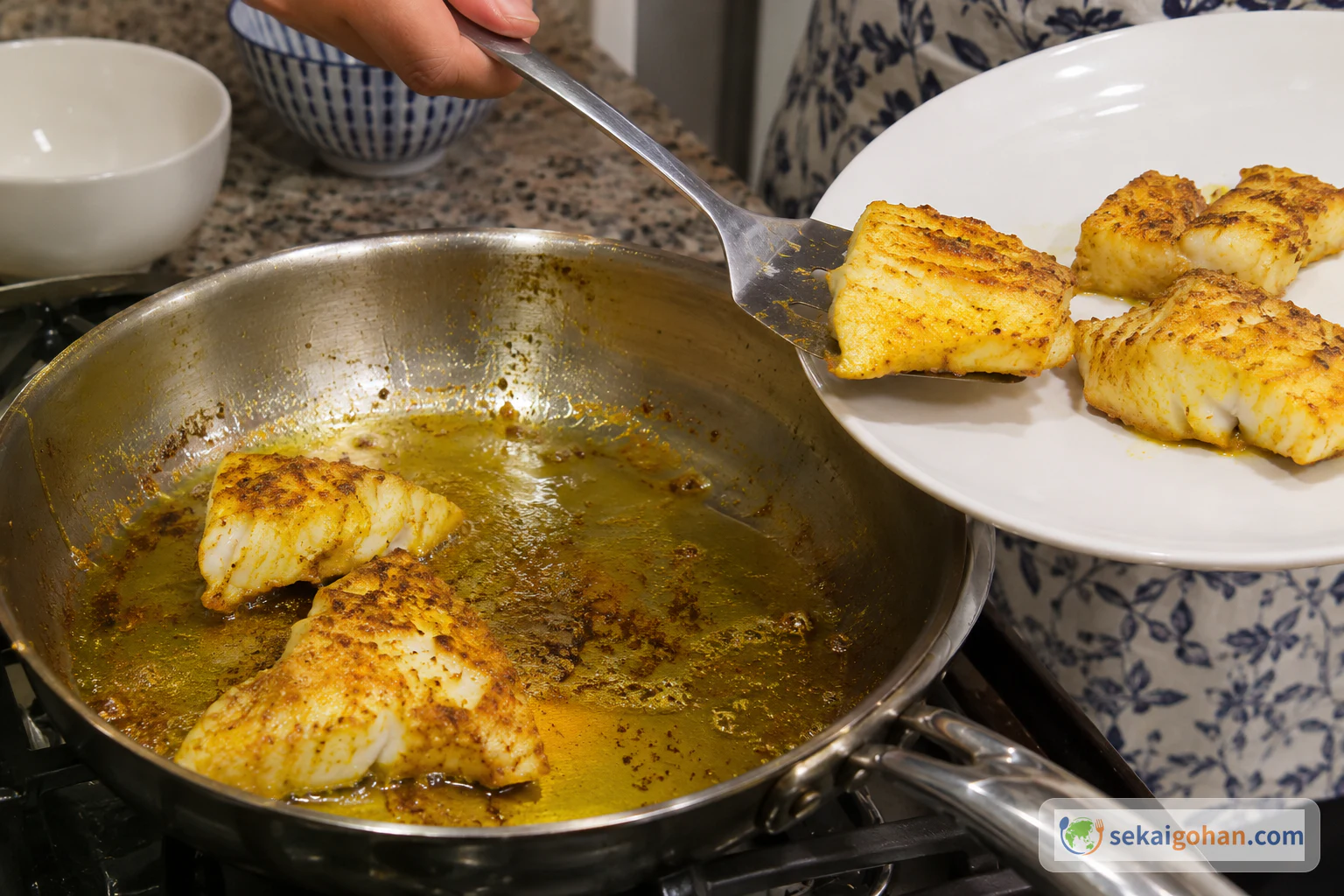
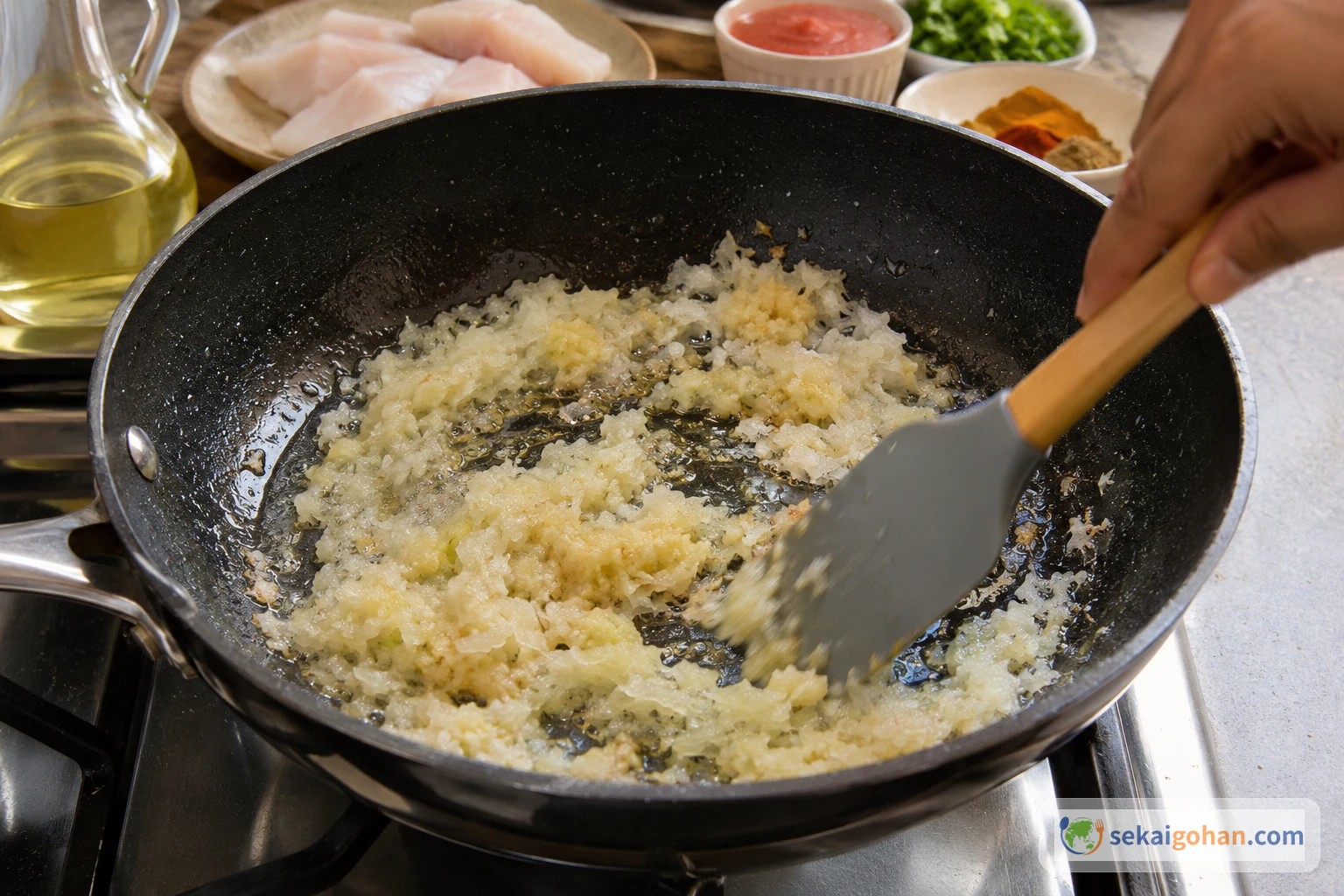
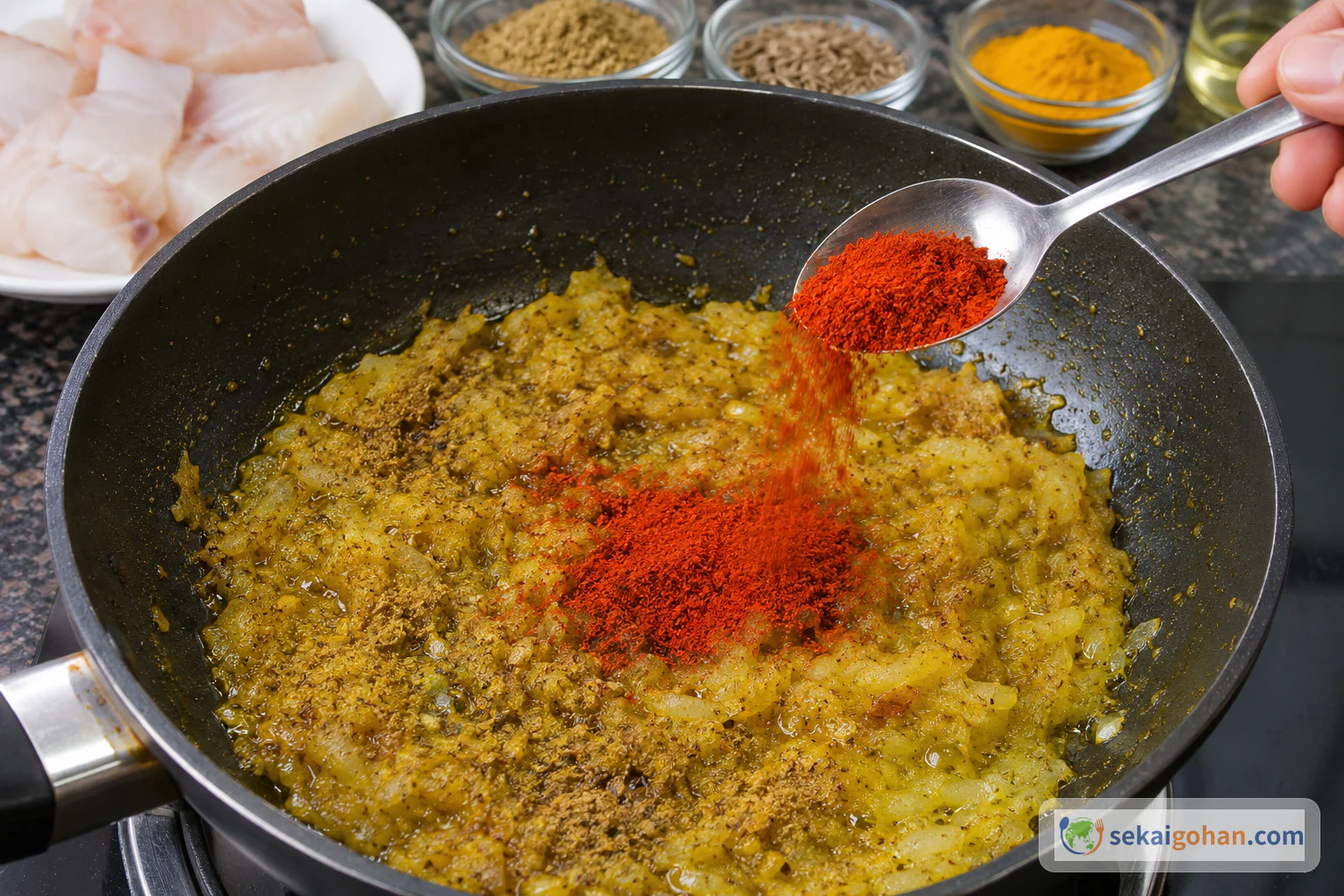
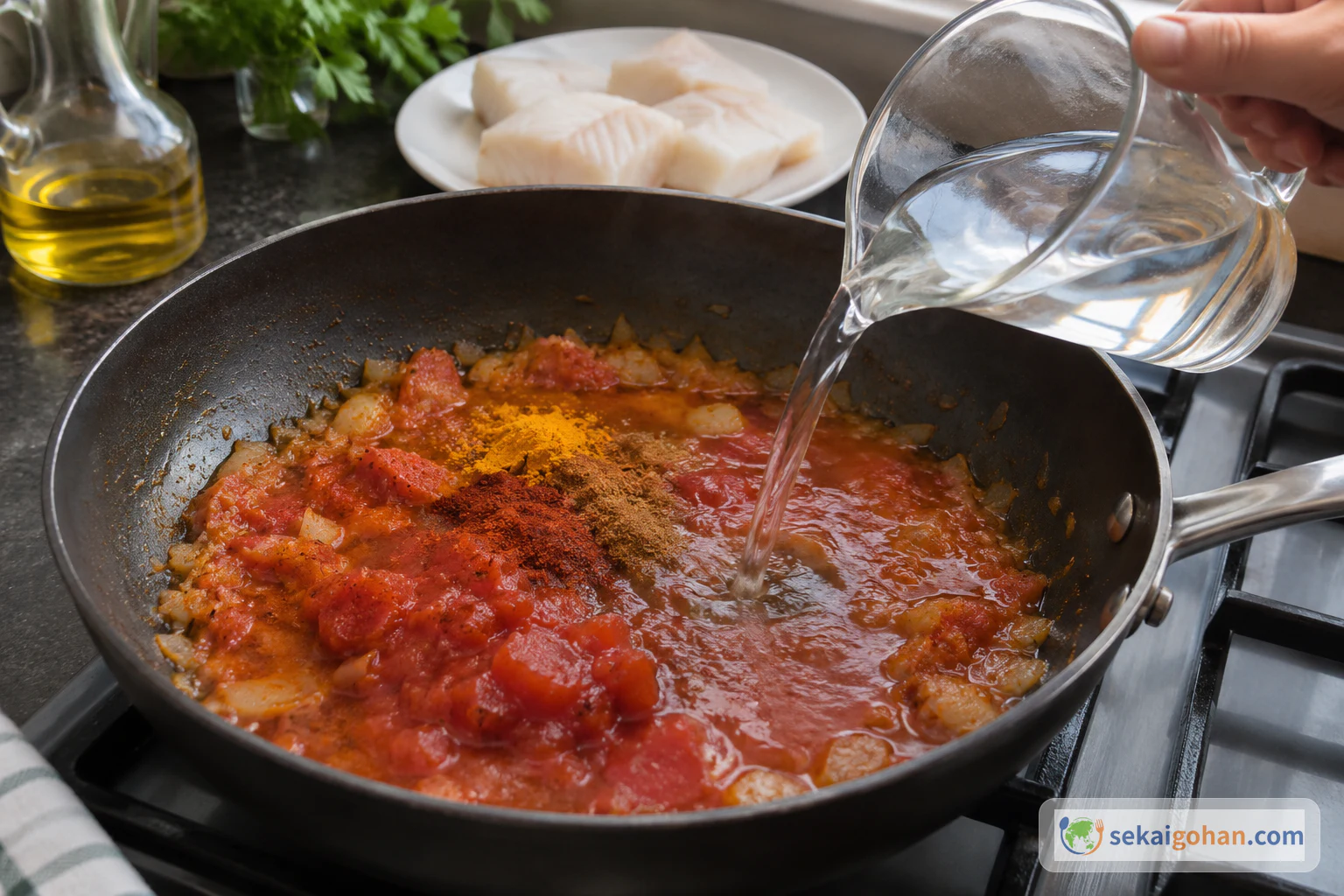
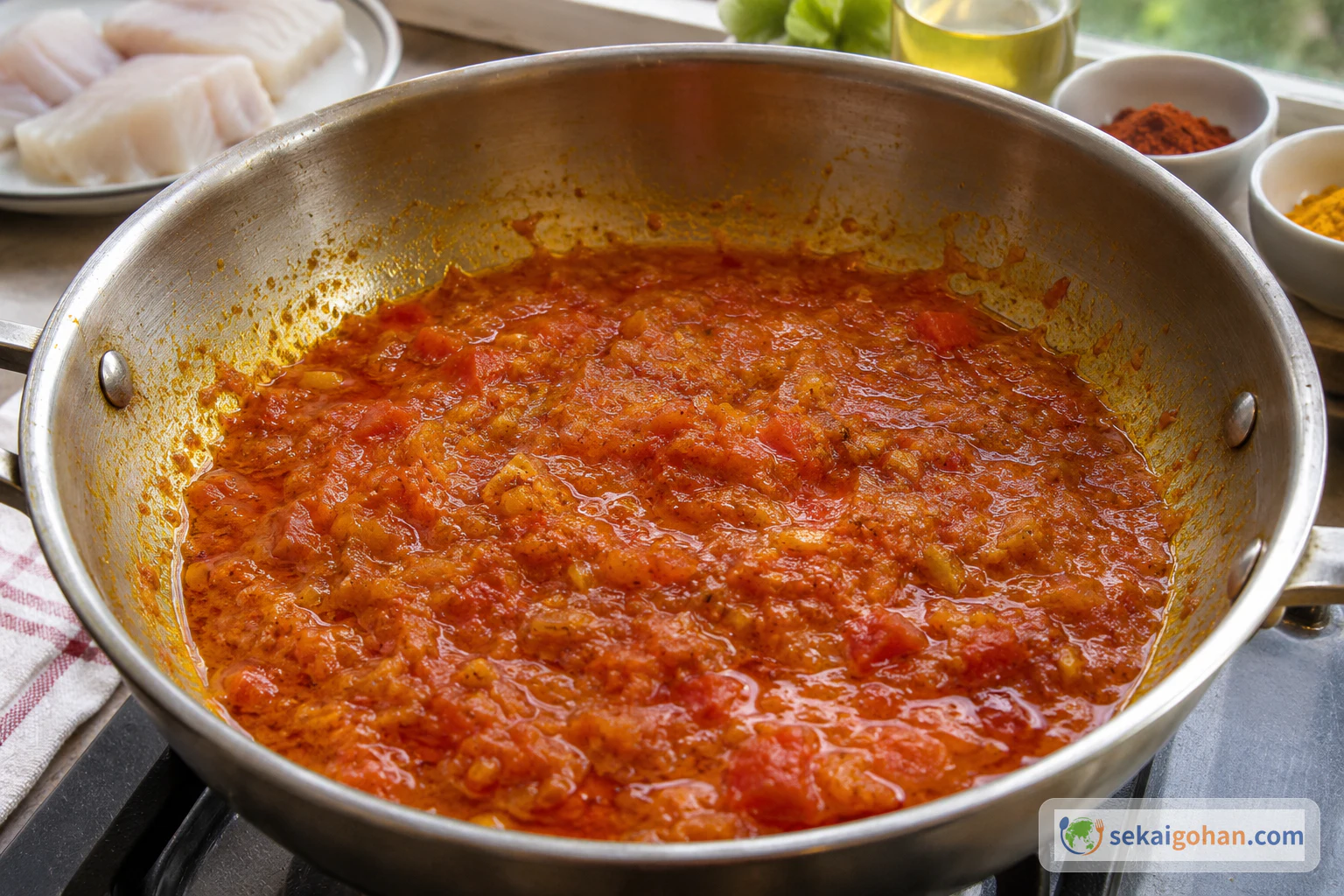
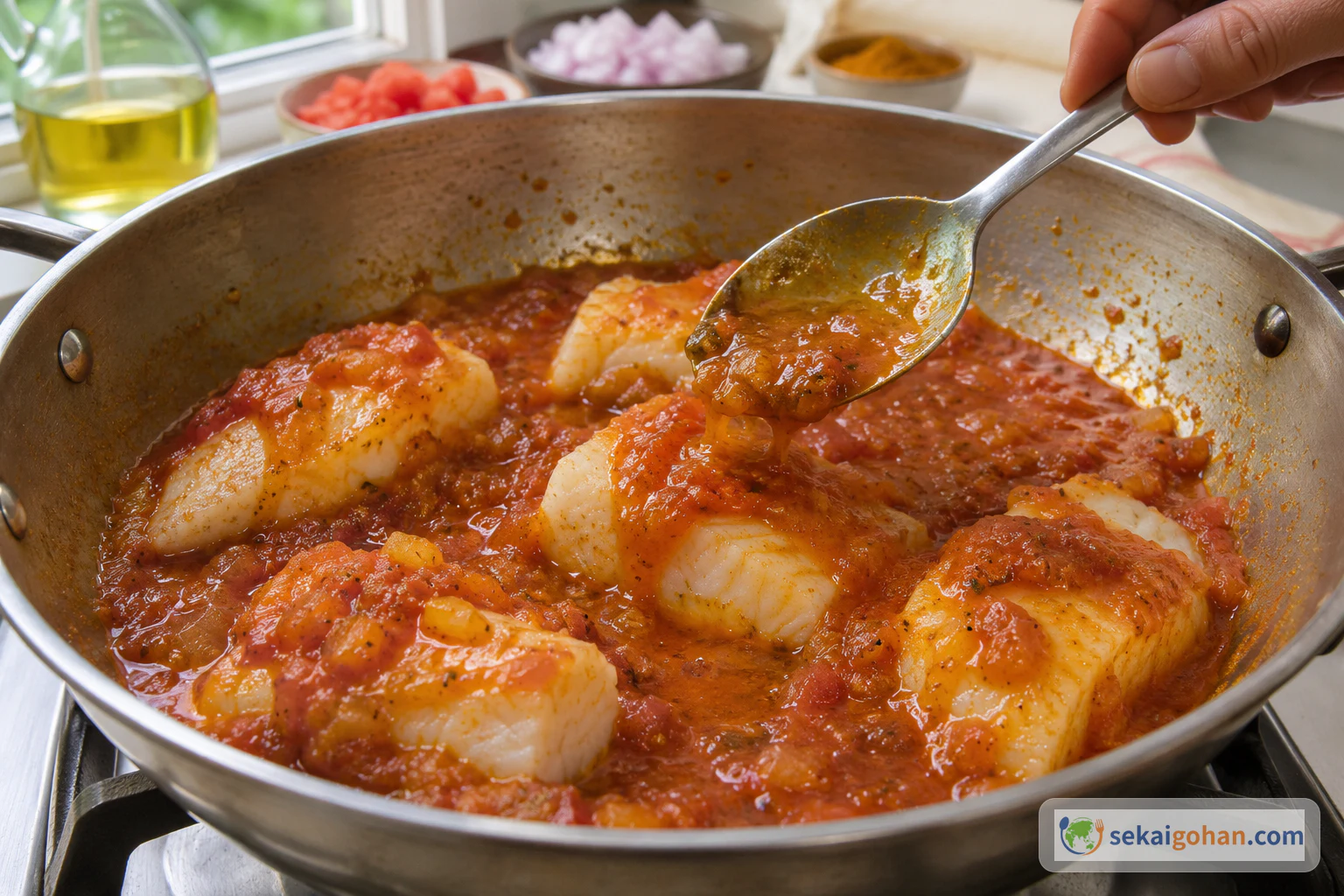
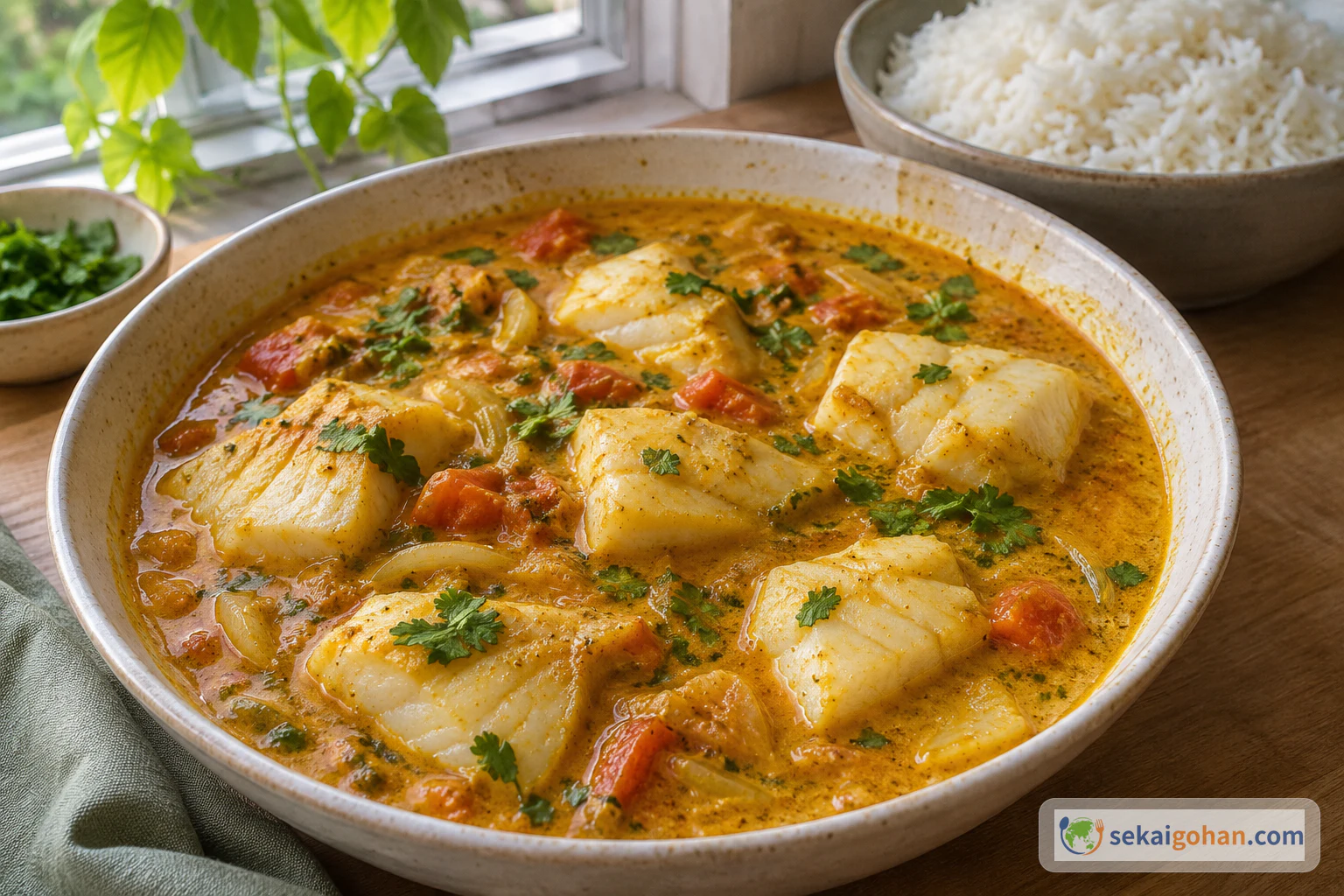
"Machey bhatey Bangali," goes the saying about the cuisine of Bangladesh, and it places rice and fish at the base of the table. Machher jhol is one of the clearest expressions of that pairing: fish in a light, spiced stew. In this version, thick pieces of white fish are rubbed with salt and turmeric and seared. They are set aside while grated onion, garlic, ginger, ground spices, tomato and warm water cook down in the same pan. Then the fish goes back in to finish in the sauce.
About Machher Jhol
Jhol is a light stew, and fish, vegetables, chicken or meat can all go into it. Machher jhol is the fish version, and it takes many forms. The Bengali table isn't confined to one recipe or one country's borders, and the name also turns up in fish stews in Odia, Maithili and Bhojpuri.
Fish and rice are only part of the picture. Leafy vegetables, lentils and gourds get equal attention, and every region has its own habits. Among the fish dishes of Sylhet is pabda jhol, which makes a good comparison with the pabda family recipe described further down. You can find more dishes from Bangladesh on Sekai Gohan.
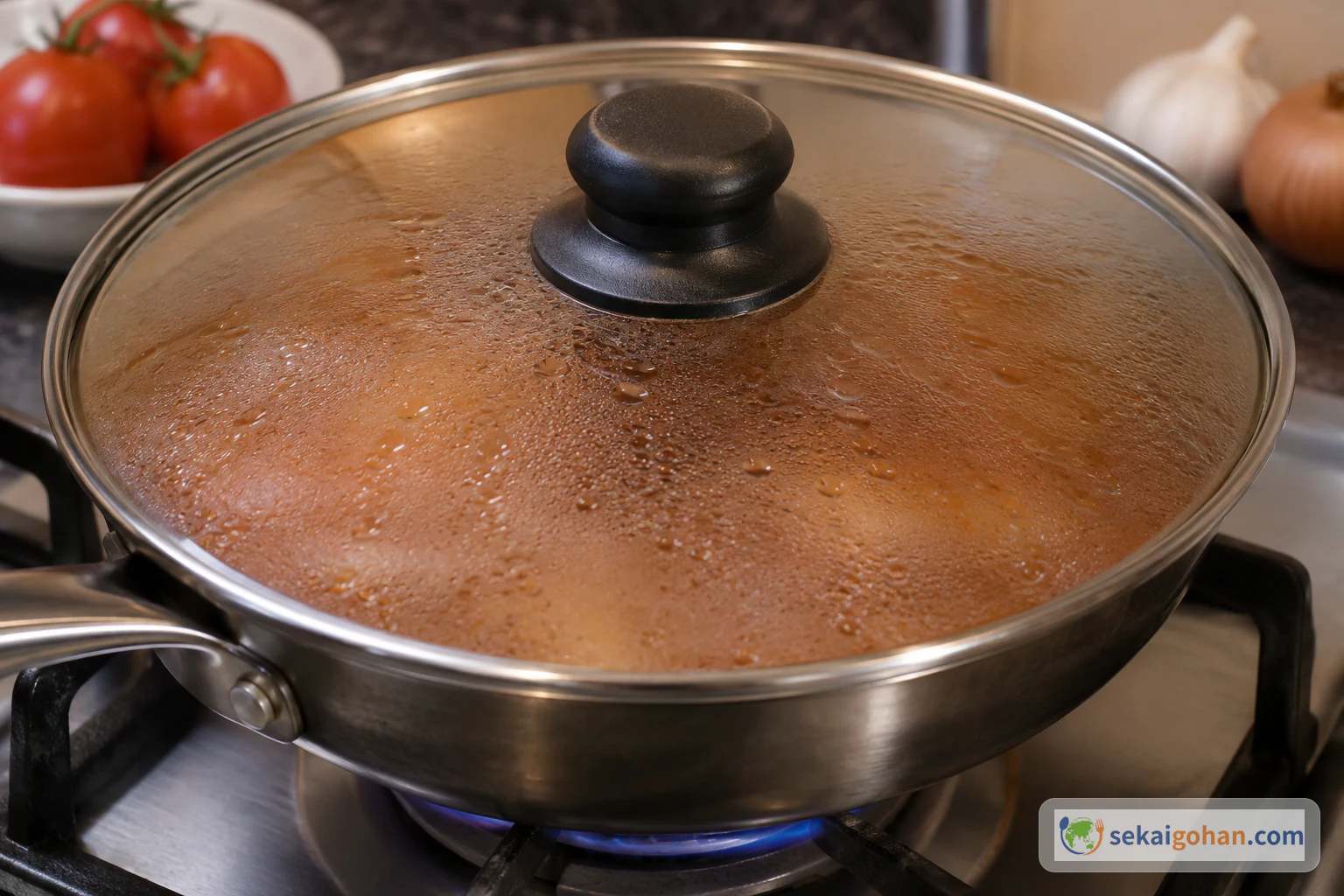
Sear the fish without cooking it through. Reduce the sauce on its own until oil rises to the surface and seeps to the sides. Only then, put the fish back in to finish cooking under a lid.
Ingredients: 6 Servings, 12 Pieces of Fish
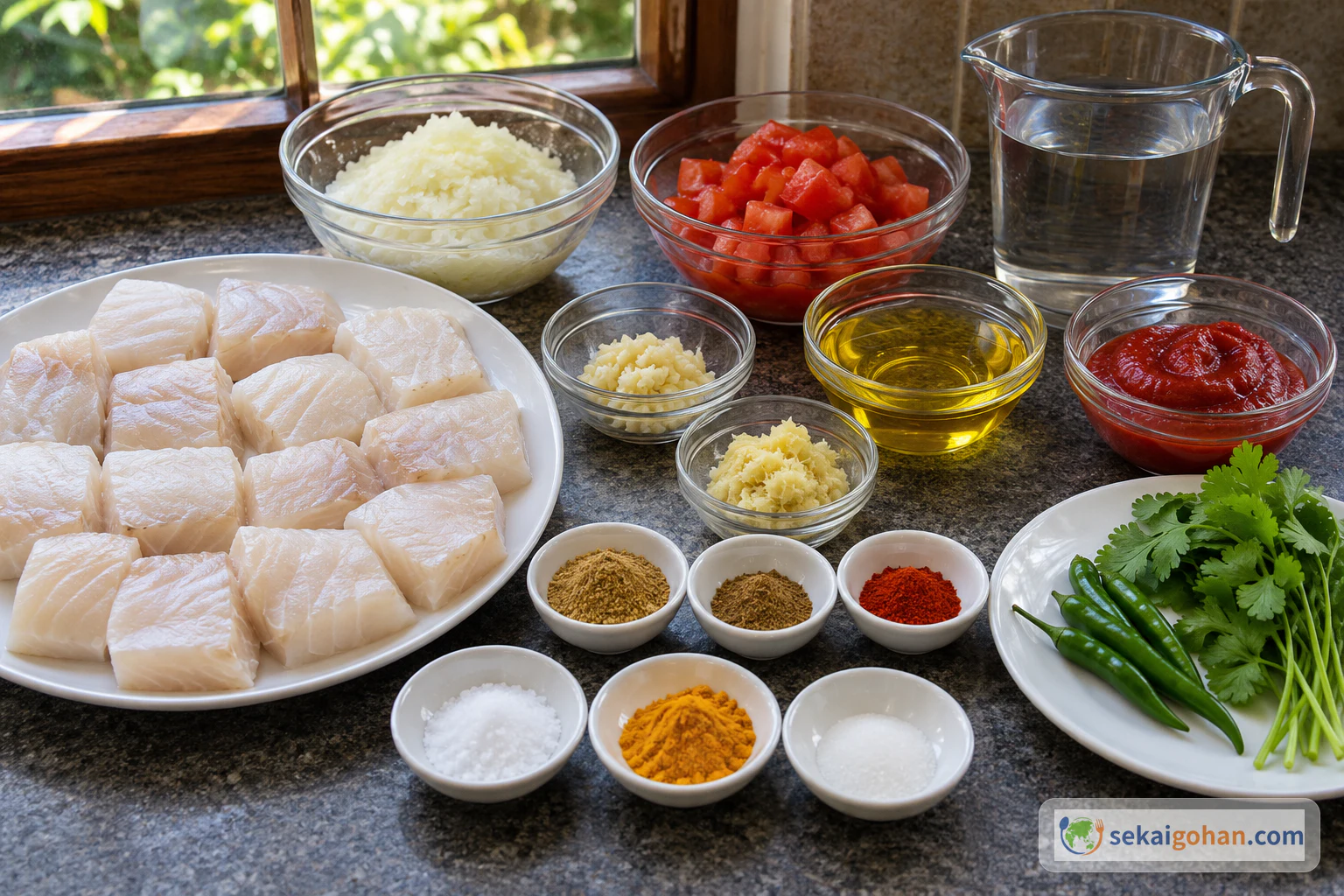
Wash the green chillies and coriander sprigs well under running water before using them.
Equipment
- Wide, shallow pan with a lid
- Cutting board and knife
- Separate clean board and tools for vegetables and garnish
- Small dish for mixing the salt and turmeric
- Bowl or dish with a cover for resting the fish
- Grater
- Mortar and pestle or another tool for crushing the garlic and ginger
- Clean plate for the seared fish
- Spatula and spoon
- Fork or food thermometer for checking the fish
- Serving dish
Choosing the Fish and Oil for Machher Jhol
Choose thick, skinless, boneless white fish such as cod or halibut. The recipe makes 6 servings from 12 equal pieces, so cut them evenly and they'll cook at the same pace.
The steps use neutral vegetable oil. Of the 6 tbsp, 5 tbsp go into searing. The last tablespoon goes into the pan after the fish comes out, just before the aromatics, as in other Bengali fish curries. Mustard oil is handled differently, as explained under other versions.
Method: Sear, Build the Sauce, Then Finish the Fish
Each step is one action, so the list is long. The fish is cooked through only near the end, under the lid.
Fixing Common Machher Jhol Problems
The seasoned fish rests, covered, in the refrigerator, not on the counter. After that, most trouble comes from the sauce. It needs real time to reduce, and it's worth watching the pan rather than the clock.
| What you see | What to do |
|---|---|
| The aromatics begin to burn or stick | Add a splash of water, then carry on. Don't use the 600 ml of warm water for this |
| The seared fish is still raw in the center | That's expected at this stage. It finishes cooking in the sauce |
| No oil has appeared after 15 minutes of reducing | Keep reducing over medium-high heat until oil rises to the surface and seeps to the sides of the pan |
| The fish won't fit in one layer | Keep the pieces as close to one layer as you can, and spoon sauce over all sides of every piece |
| The fish isn't opaque after 5 minutes under the lid | Keep cooking, covered, and check again until it reaches 63°C (145°F) or is opaque and flakes easily with a fork |
Other Versions of Machher Jhol
Plain rice, served separately, is the natural partner. Beyond this recipe, machher jhol changes from kitchen to kitchen. The versions below use different ingredients and methods, so their amounts don't transfer to the recipe above.
| Version | What makes it different |
|---|---|
| Mustard oil option | Heat the 5 tbsp until smoking hot to remove its bitter pungency, then lower the heat to medium-high before adding the fish |
| Pabda family recipe | Handed down from a father, it uses pabda or catfish, mustard oil and hot water. The fish is seasoned and fried, then joined with a separate paste-based gravy |
| Rui machher jhol | Uses rohu with potatoes and gourds, and mustard oil. Tempering and vegetables follow the second addition of oil |
| Cod and cauliflower version | Uses cod and cauliflower, with mustard oil |
| Divided mustard oil version | Divides mustard oil between the sauce and the fish, and sears the fish in a separate pan |
| Potato and ghee version | Uses potatoes and ghee. The ghee is added to the oil left after frying, before the onion goes in |
Frequently Asked Questions
Does this recipe serve 6 or 12?
It makes 6 servings. The 12 refers to the pieces of fish.
Can I use rohu or bone-in fish?
Rohu is the fish used in Bengal, and thick white fish such as cod or halibut stands in for it here. These steps are written for skinless, boneless pieces, so for rohu, a recipe written for it is a better starting point than adapting this one.
Can the fish rest on the counter?
No. Rest the fish, covered, in the refrigerator for 30 minutes.
Is it safe to use the green chillies and coriander uncooked?
They go on as a garnish after the fish is fully cooked. Wash them well under running water, and keep them away from boards, plates and tools used for raw fish.