Spoon a little dal over steaming white rice, then set a few yellow pieces of green mango at the edge of the plate. You don't mash them in. You take them with a bite of rice, and only then do the sourness, the salt, and the raw, green heat of mustard oil come up.
That's aam er achar (Aam er achar / আমের আচার), the green mango pickle found on tables in Bangladesh and across Bengal. Unripe mango is firmed up with salt and turmeric, then dressed in hot mustard oil where whole spices from the panch phoron family have bloomed. Some versions add a little sugar or jaggery, so sour, hot, sweet, and the smell of the oil all arrive together.
Aam er Achar on the Bengali Table
Nobody eats a lot of achar at once. A small amount goes at the edge of the plate and ties together the rice, the dal, the fish, the eggs, and the vegetables. The spices are strong from the oil and the green mango is sour, so every bite changes the pace of your rice.
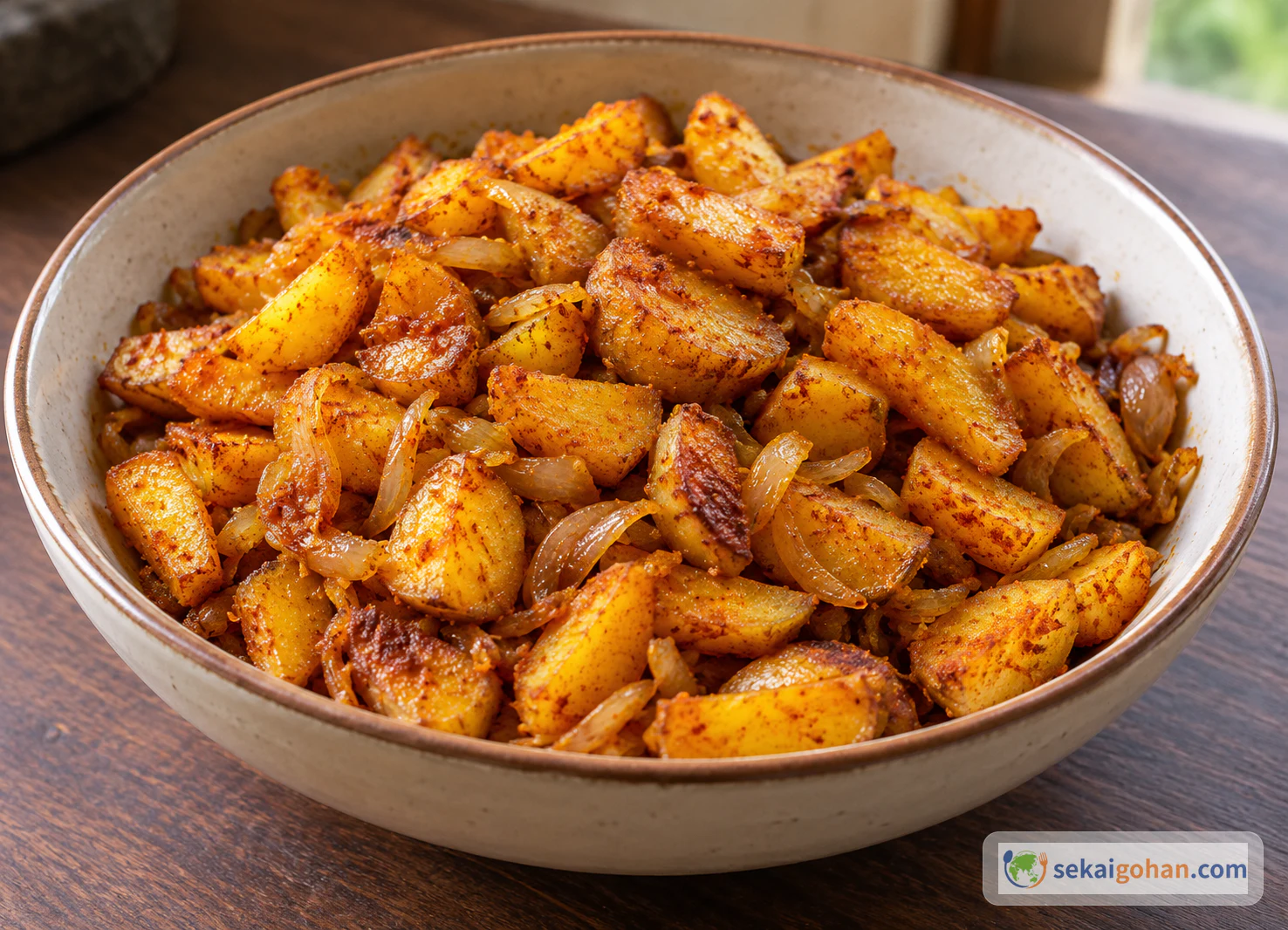
It has its own job among the other dishes on a Bangladeshi table. Aloo bhorta, a spicy potato mash, is a flavoring side you mix into warm rice; aam er achar adds sourness on top of that. It cuts the richness of the fragrant fish dish Ilish bhuna, and next to the dense lentil-and-grain stew Haleem, it wakes up the palate.
In village and family kitchens, people make a large batch in mango season and keep it going with oil, salt, and sunshine. This version is a small batch: the mango is cooked briefly in a pan, cooled completely, packed into a clean jar, and kept in the refrigerator, which makes both flavor and safety easier to manage the first time.
আম (aam) means mango, and আচার (achar) means pickle. In English it is spelled Aam er achar, Aamer achar, Aam achar, and other ways. This recipe uses hard, sour green mango, not ripe sweet mango.
Ingredients | One Small Jar

This fills one jar of about 1¼ cups (300 ml). It is sized for 8 servings of 1 to 2 teaspoons each, served beside white rice and dal rather than as a main dish.
Mustard oil and mustard seeds come from mustard. Do not serve this to anyone with a mustard allergy. This recipe is not a shelf-stable canned pickle. Pack it into a clean jar, keep it in the refrigerator, and finish it within about 2 weeks. Do not eat any that shows bubbles, an off smell, ropy strands, or mold on the surface.
Sourcing Ingredients
Green mango is sold at Asian and South Asian grocery stores and online. Do not substitute ripe yellow mango. Cooked, it turns into a sweet jam and loses both the sourness and the bite that achar needs. If you can't find green mango, combine 9 oz (250 g) of firm green papaya with 9 oz (250 g) of a sharply tart apple. That only approximates the texture and the sour role.
The ingredients worth seeking out are mustard oil, the whole spices, and turmeric. Salt, vinegar, and sugar are fine from any grocery store. Culinary-labeled mustard oil gives this dish its outline. Make it with only rice bran oil or a neutral oil and it drifts toward "sweet and sour stir-fried mango."
If gathering the whole panch phoron feels like too much at the start, begin with three spices: 1 tsp mustard seeds, 1 tsp cumin seeds, and 1 tsp fennel seeds. Fenugreek and nigella add depth, but on a first batch bitterness and availability are more likely to cause trouble. Add them once you are comfortable.
Mustard oil is the first thing worth getting. You can use it for aloo bhorta and fish bhuna as well as achar, so it earns its place if you keep cooking Bengali food.
Even if you skip the full panch phoron, cumin seeds are a whole spice that carries over to many other South Asian dishes. Once you've smelled how they smell the moment they hit the oil, you'll notice the difference from using only ground spices.
Turmeric is the first powder to go on the green mango. It does more than color: it builds an earthy note that links up with the mustard oil. You use very little, so a small jar is plenty.
Choosing Ingredients and Substitutes for Aam er Achar
The things to protect are the sourness of green mango, the aroma of mustard oil, and the texture of whole spices. You can make it without every ingredient, but each swap changes the character of the dish. Mustard oil matters most: without its raw, green pungency, the flavors of mango, vinegar, sugar, and spices tend to fall apart.
| Ingredient you're unsure about | What to protect | Substitute |
|---|---|---|
| Green mango | Hard sourness, bite of the skin | 9 oz (250 g) green papaya plus 9 oz (250 g) sharply tart apple. The mango aroma will be weaker |
| Mustard oil | The nose-clearing pungent aroma, the outline of yellow oil | 5 tbsp rice bran oil, with 1 tsp prepared mustard stirred in after turning off the heat. The authentic character is much weaker |
| Panch phoron | The change in aroma when you bite a seed | Narrow it to three: mustard seeds, cumin seeds, and fennel seeds |
| Jaggery | Round sweetness with a slightly earthy aroma | 1.5 oz (45 g) raw cane sugar. With dark brown sugar, stop at 1.25 oz (35 g) |
| Rice vinegar | Sourness and stability for a small refrigerated batch | 2 tbsp distilled white vinegar plus 1 tbsp lemon juice |
If you're narrowing the panch phoron, 1 tsp each of mustard, cumin, and fennel seeds is enough for a first batch. You lose some depth without fenugreek and nigella, but you also lose the risk of bitterness from scorching.
Leave nigella seeds out rather than swapping in black sesame. They look alike, but the aroma they release in the oil is entirely different. Without them, just let the mustard and cumin seeds pop a little more carefully and the flavor holds together.
Fenugreek turns bitter suddenly if scorched, so stop at 1/2 tsp the first time. For more aroma, toasting it slowly over low heat and crushing half works better than adding more.
Method | Draw Out the Water, Then Lock the Aroma in Oil
If green mango goes into the oil still holding its water, the flavor turns blurry. First draw the water out with salt and turmeric, dry the surface, then let the spices pop briefly in the oil.
Common Problems with Aam er Achar
Most failures come from water and scorching, not from the ingredients. Once the achar is in the jar it's hard to fix, so check it while it's still in the pan.
| Symptom | Cause | Fix |
|---|---|---|
| Watery liquid pools at the bottom of the jar | Salted water was not discarded, or the mango was not dried enough | Return it to the pot and reduce for just 2 to 3 minutes over gentle medium heat |
| Bitter | Fenugreek or dried chilies were scorched | Remove the burnt seeds and soften the edge with 1 tsp sugar and 1 tsp vinegar |
| Oil feels heavy | Too much eaten at once, or straight from the refrigerator | Serve 1 teaspoon at a time and move it to a small dish 10 minutes before the meal |
| Mango is soft | Ripe mango was used, or it was simmered too long | Next time choose hard green mango and stop STEP 5 at 5 minutes |
| Weak aroma | Oil was too cool, or only ground spices were used | Heat the oil to about 350°F (170°C) and let the whole spices pop for 20 to 30 seconds |
Go easy on sweetness even if it seems lacking at first. After a night in the refrigerator the sourness mellows and the sugar comes through more strongly, so stop at 1.5 oz (45 g) jaggery for the first batch. If it still seems too sour the next day, return it to the pot with 2 tsp sugar and 2 tsp water and rewarm it over low heat for 2 minutes.
Judge the salt with a little achar on a bite of white rice, not on its own. It's eaten mixed into rice, so a pickle that tastes perfectly seasoned straight from the spoon will taste weak at the table.
Serving and Storing Aam er Achar
Serving
The simplest way is beside white rice and dal, whether an oil-tempered lentil dish like Dal tadka or a thinner lentil soup. Spoon dal over the rice, break up just 1 teaspoon of achar over it, and the sourness tightens the sweetness of the lentils.
For a more Bangladeshi table, pair it with Aloo bhorta. The bhorta, with its mustard oil and green chilies, pushes you to eat more rice, while the achar brings sourness and crunch. Set small amounts on either side of the rice rather than piling them together, mix in a little at a time, and you won't tire of either.
With fish, it suits oily, spiced dishes like Ilish bhuna, and even when you can't find hilsa and use mackerel, the green mango cuts the fat. Beside Haleem, 1 teaspoon is plenty; any more and the whole meal turns too sour. For another dish with ingredients and aromas from the same region, try How to make Aasmi.
Storage
Keep the achar in the refrigerator and finish it within about 2 weeks. Wash the jar with detergent and pour boiling water over it, or wipe it with food-safe alcohol, then dry it thoroughly; any droplets left behind let moisture collect under the oil layer.
Serve with a dry, clean spoon only. A spoon with rice or dal on it makes the pickle spoil faster, so put what you need on a small dish and return the jar to the refrigerator right away.
These quantities are designed for a refrigerated side dish. Long storage at room temperature requires meeting specific requirements for acidity, salt, heat processing, and jarring, which this batch is not built for.
FAQ
Q. Can I make it with ripe mango?
I don't recommend it. Ripe mango is sweet and collapses when cooked, so the result is closer to a sweet-sour chutney than achar. Hard, sour green mango is what gives you the bite of the skin and the sourness beside rice.
Q. How spicy is it?
With 3 dried red chilies, the heat only flavors the oil and isn't intense. If you want it hotter, add 1/4 tsp chili flakes before packing the jar. For children or anyone sensitive to spice, use 1 red chili and shake out the seeds.
Q. Can I freeze it?
I don't recommend freezing. The cells of the green mango break down and it turns watery after thawing. A small batch finished within 2 weeks in the refrigerator keeps the aroma of the oil and the crunch.