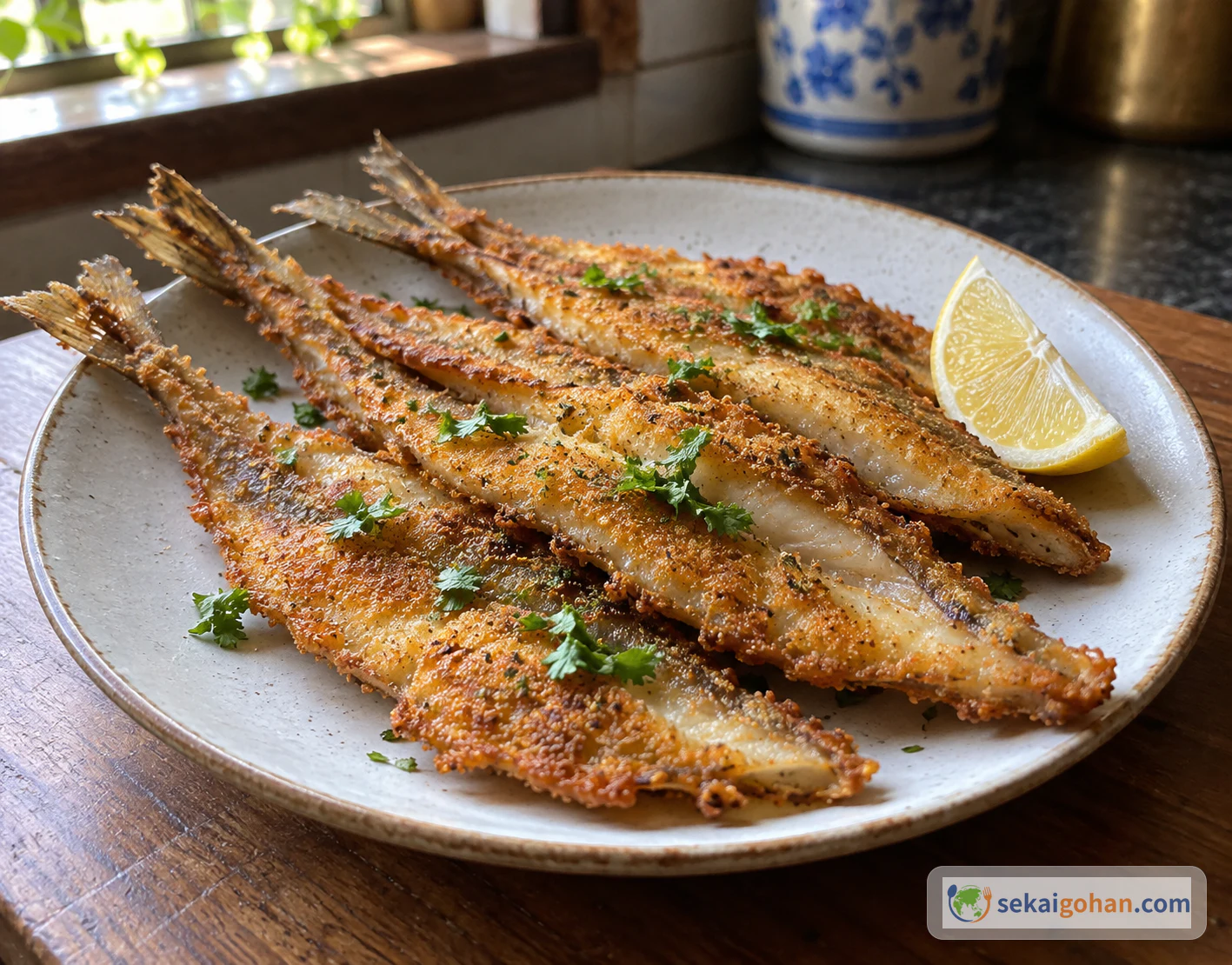
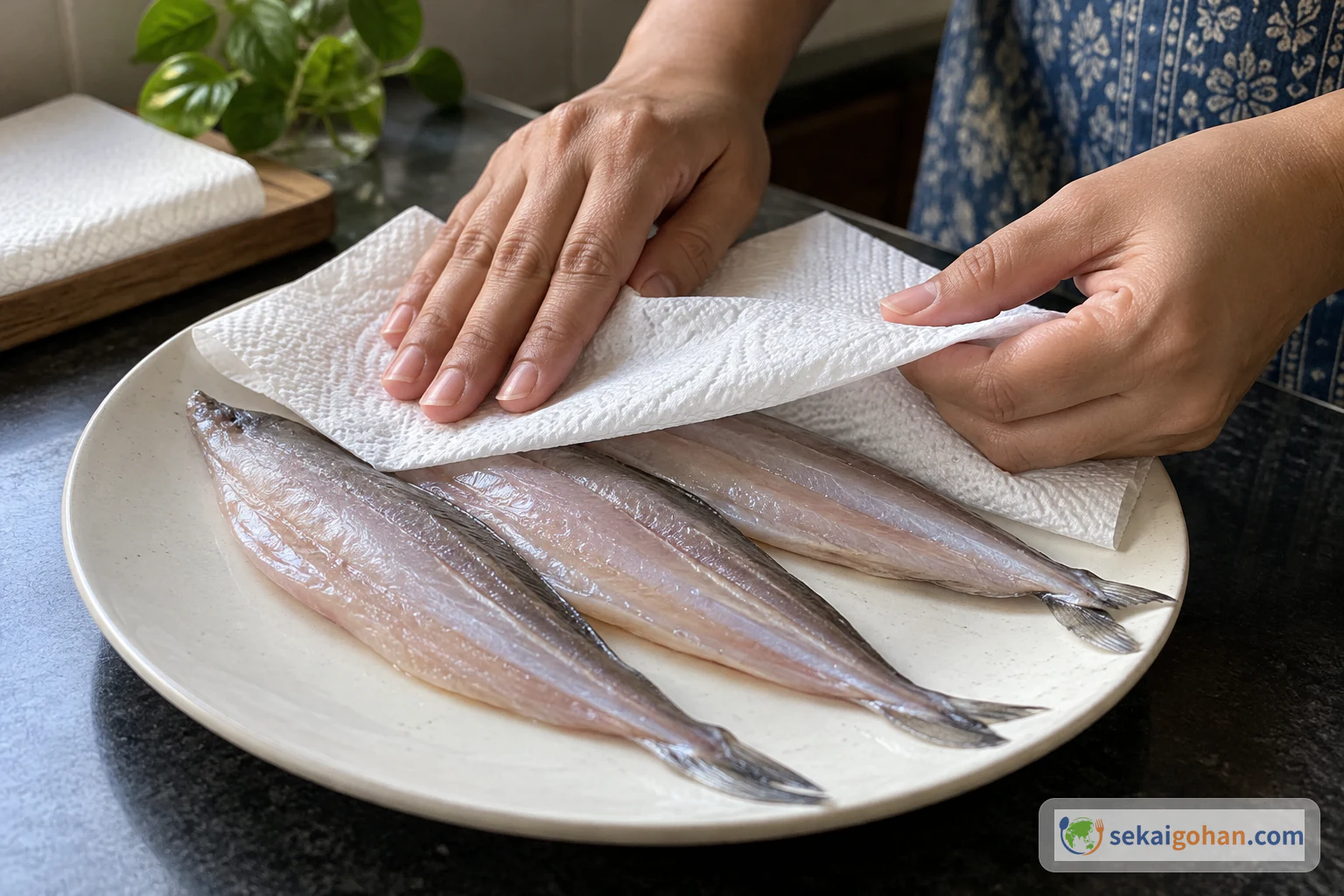
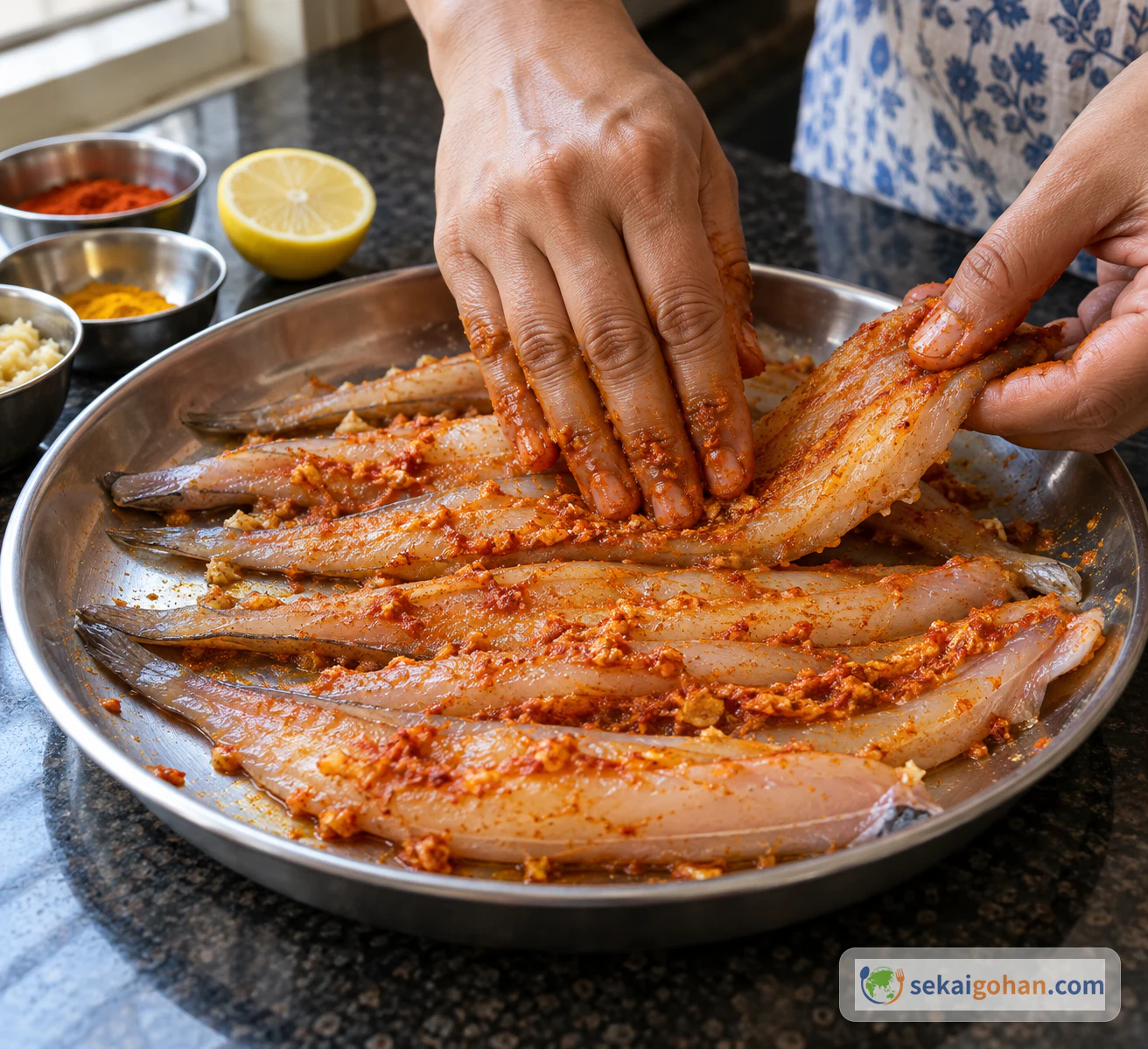
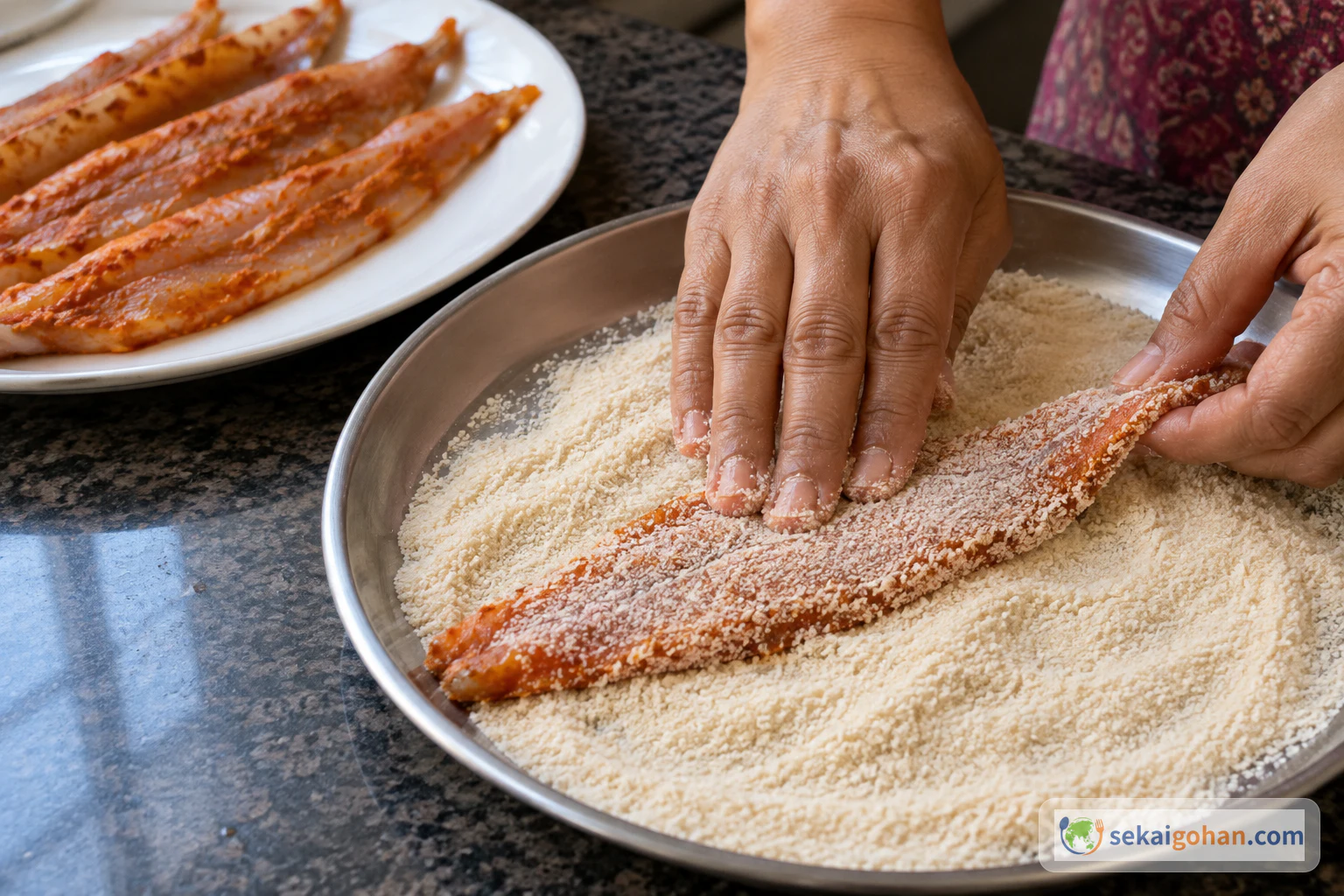
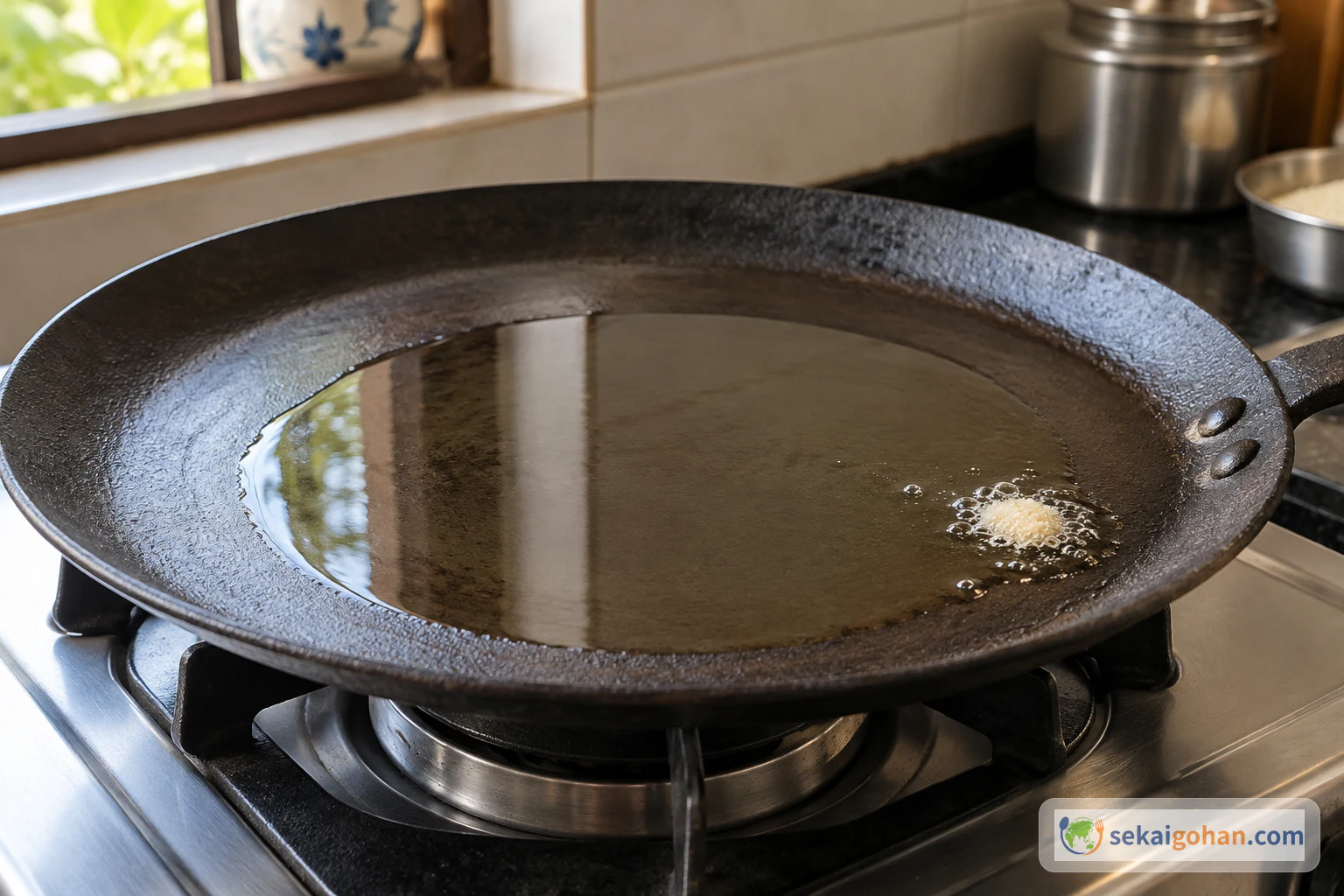
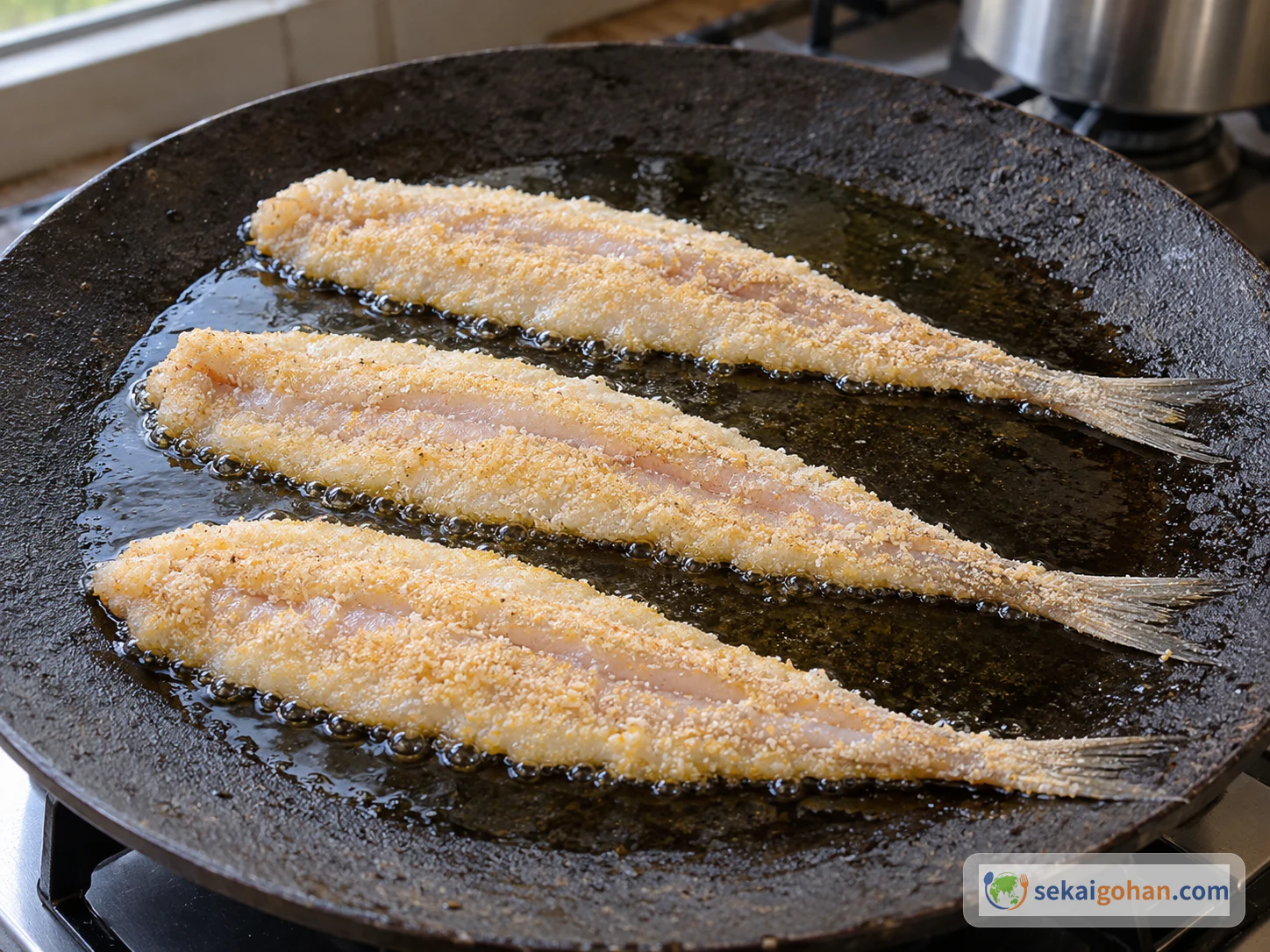
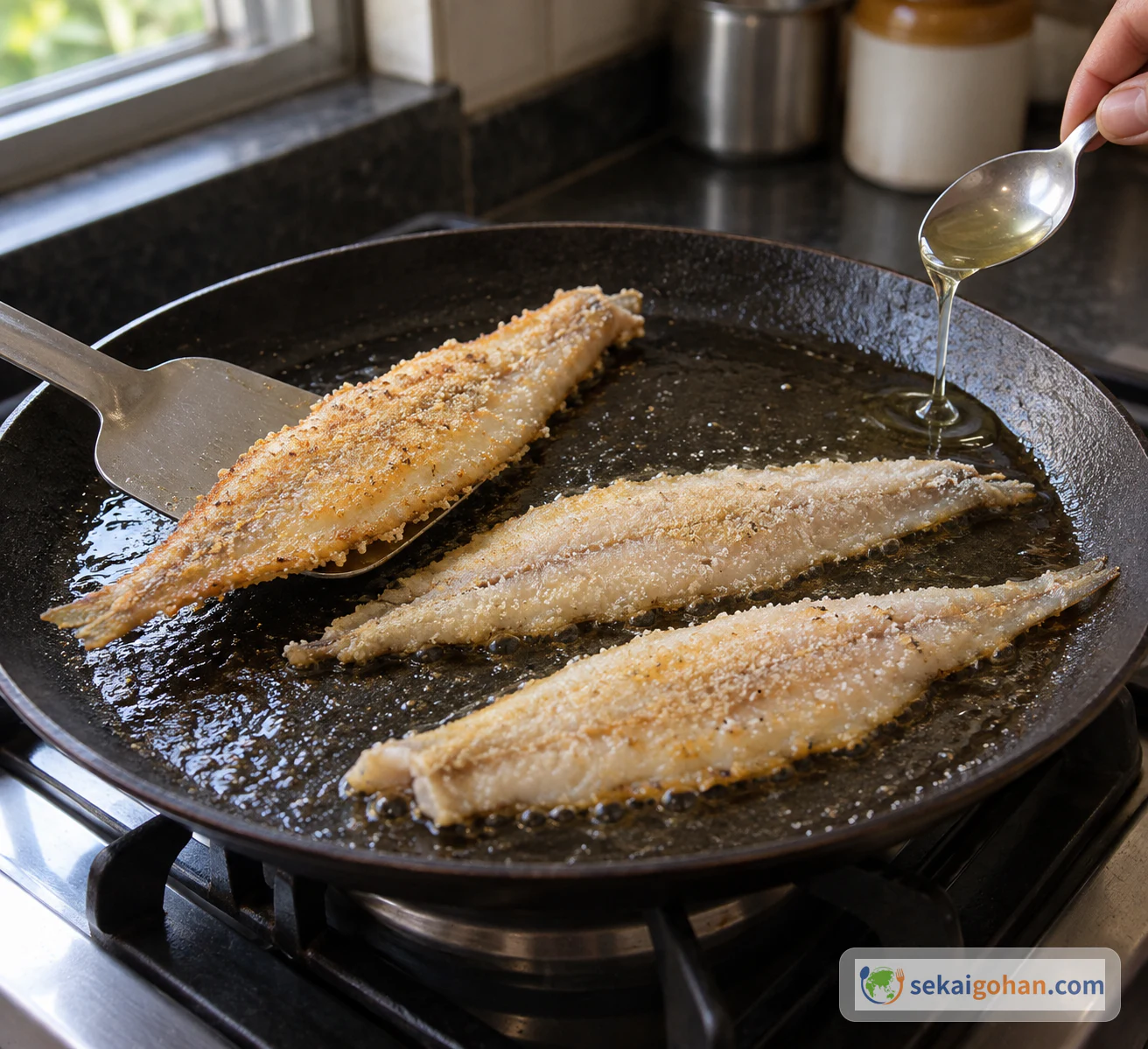
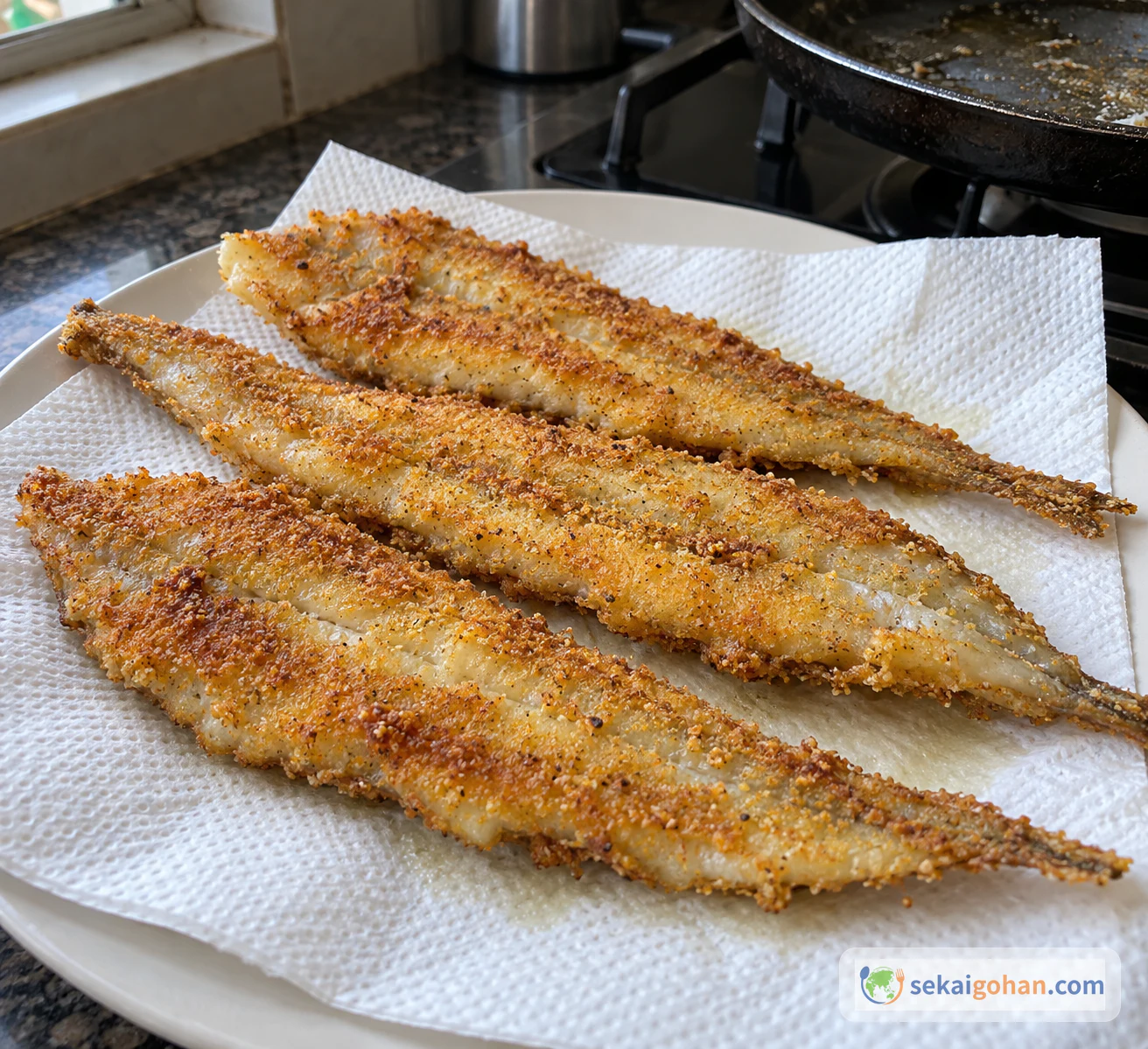
The split fish are pressed between sheets of kitchen paper, the paper is changed, and they're pressed again. Next comes a quick rub of garlic, ginger, chilli, turmeric and lemon, then a coat of fine rava and rice flour, and the fish goes straight into a shallow layer of oil on a flat pan. Bombil fry comes from the west coast of India. Bombil, also called Bombay duck, gets a light crust and is shallow-fried until the outside turns thin and toasty while the flesh stays soft. That contrast is the whole point of the dish. This Maharashtrian, Koli-style version serves three.
About Bombil Fry
The name surprises people. Despite what it says, Bombay duck is a fish, not a duck. Fried Bombil is a coastal dish, and you'll find more from the same country on the India country page.
The coating and spices change from kitchen to kitchen. The Koli style here uses fine rava and rice flour, with garlic, ginger, Kashmiri chilli, turmeric and lemon in the marinade. A Mumbai restaurant version uses only rice flour, seasoned with lemon juice, turmeric and red chilli. Malvani and Gomantak restaurant-style cooks lean mostly on fine rava with a little rice flour, and they season the fish with a ginger-garlic-green chilli paste and a spice masala.
Ingredients (3 servings)
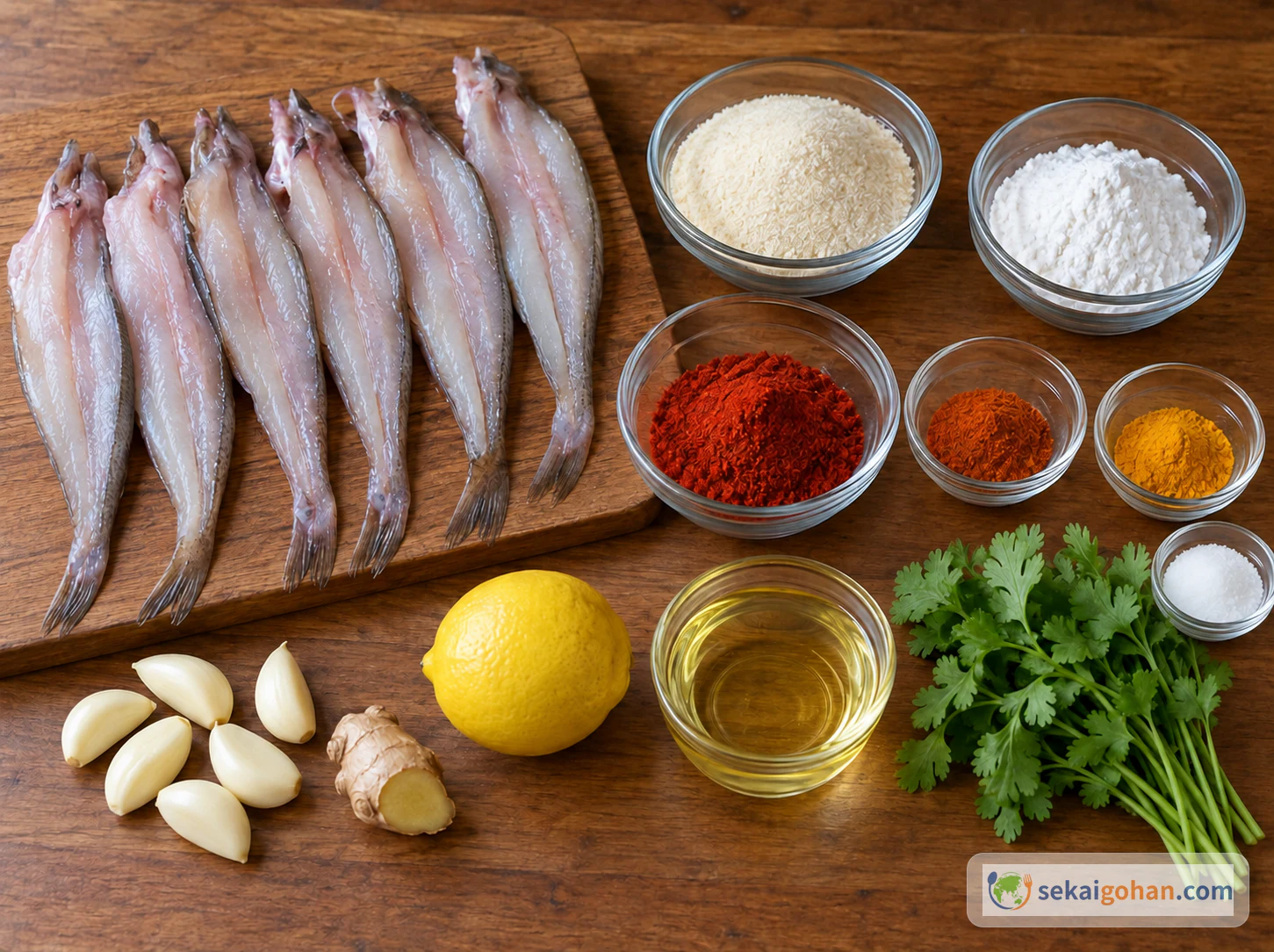
These are the amounts for 3 servings. The fish are counted by number. Salt is used twice: to taste in the marinade, and a pinch in the coating. The oil and lemon are each split between two stages of the method.
This dish contains fish and wheat (in the rava), and it is fried in groundnut (peanut) oil, so take care if anyone at the table has a peanut allergy. Keep raw fish, the plates and paper it touches, and your hands separate from ready-to-eat food to avoid cross-contamination.
Equipment
- Flat pan or tawa
- Wide spatula
- Kitchen paper
- Separate plates or shallow dishes for the marinade, the coating and the fried fish
- Food thermometer (optional, for checking doneness)
Choosing Ingredients for Bombil Fry
The fish. Look for it under the names Bombil or Bombay duck, and ask your fishmonger. A different fish cooks differently and has a different texture, so you'd end up with a different dish.
Fine rava. Rava here means fine wheat semolina. Coarse semolina will give you a grainier crust.
Rice flour. Stick with rice flour. Potato starch and cornstarch change the texture of the coating, so they won't work as substitutes.
Oil. Use groundnut oil. If you switch oils, for example because of a peanut allergy, expect the flavor to change.
Heat and garnish. The chilli powder and the coriander are both optional.
How to Make Bombil Fry
Dry first, marinate briefly, coat and fry without waiting. The cooking times depend on the size and thickness of the fish, so judge by the color of the crust and the state of the flesh as well as by the clock.
Bombil Fry Troubleshooting
Blot the fish well, keep the marinade short, coat each fish just before it goes into the pan, and turn it only once.
Bombil is delicate, so most problems come from moisture, a crowded pan, or turning the fish too much.
| Problem | Likely cause | What to do |
|---|---|---|
| The coating is soggy or sticky | Moisture left on the fish, or coated fish left waiting | Blot for the full time, changing the paper, and coat each fish right before it goes into the pan |
| The fish breaks apart | Turned more than once, or moved before the first side set | Leave the first side untouched until the coating has set, then turn once with a wide spatula |
| The crust won't crisp | Pan crowded, or the oil not hot enough | Fry in a single layer without overlapping, and wait until a pinch of rava sizzles at once |
| The oil is smoking | The pan is too hot | Lower the heat; the oil should sizzle, not smoke |
| The flesh still looks translucent | Thick fish, or the second side cut short | Keep frying until the flesh is opaque and flakes easily, or reaches 145°F (63°C) in the center |
Serving and Variations
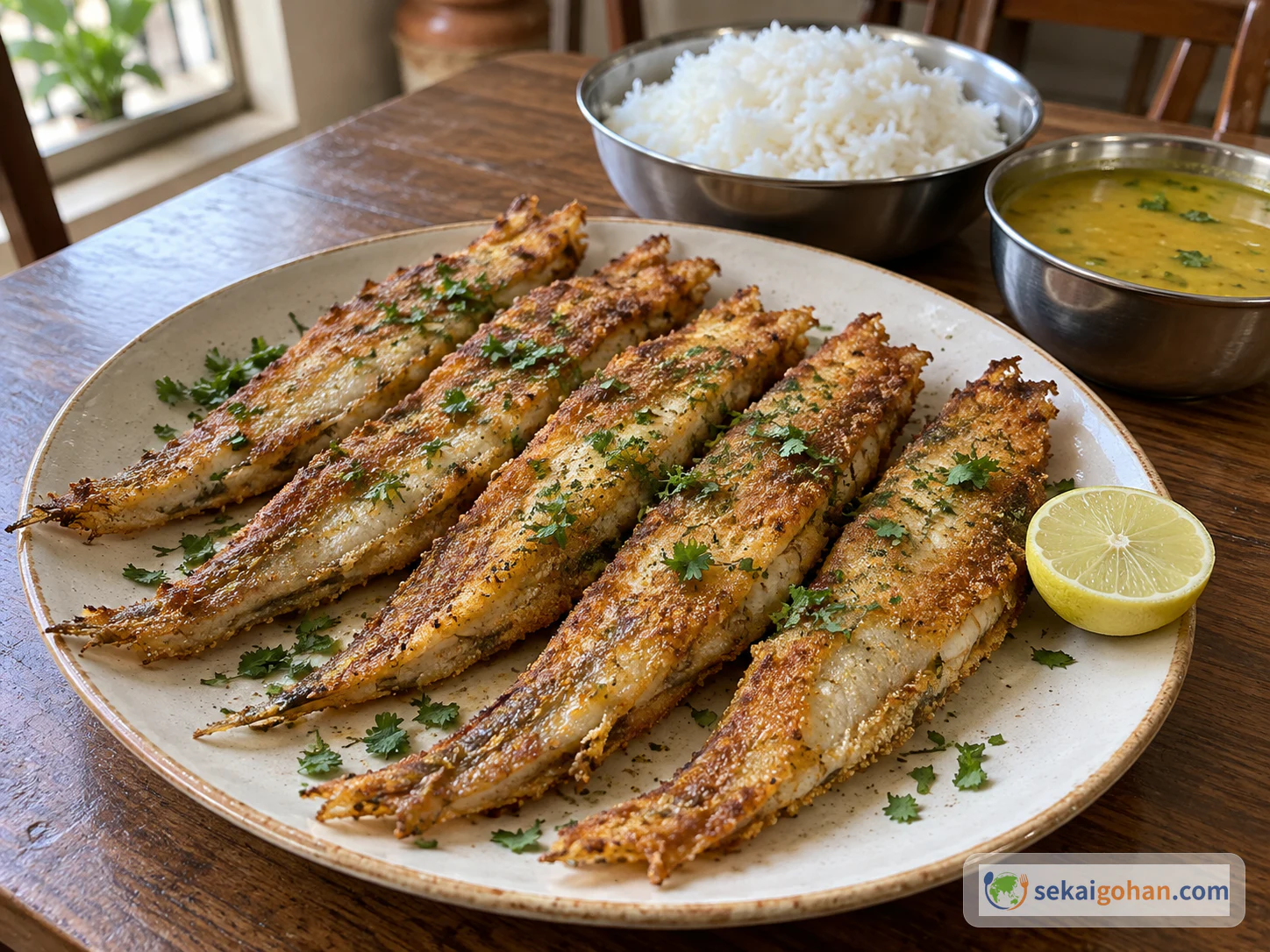
Serve Bombil fry with rice and dal. Squeeze the rest of the lemon over the fish at the table, and scatter the coriander if you're using it. Eat it soon after frying, while the crust is still crisp.
Once you've made it this way, try one of the other styles:
- A rice-flour-only coating (Mumbai restaurant style). Use 6–7 fish, 2 tsp lemon juice, 1 tsp turmeric, 1 tsp red chilli, 1 cup rice flour, oil and salt. Rest the fish for 15–20 minutes, then shallow-fry both sides.
- A ginger, garlic and green chilli version (Malvani / Gomantak style). Use 5–6 fish, 1 tbsp lemon juice, 1 tbsp ginger-garlic-green chilli paste and a spice masala, with a coating of 3 tbsp fine rava and 1 tbsp rice flour. This style can also use kokum agal for its sourness. That choice goes with this version, so it doesn't automatically replace the lemon in the recipe above.
- Milder or plainer. Leave out the chilli powder for less heat, or the coriander if you want just the fish and its crust.
Frequently Asked Questions
Does Bombil fry contain wheat?
Yes. Rava is fine wheat semolina, and in this recipe it's mixed with rice flour to make the coating.
How do I know the fish is cooked through?
Go by the flesh, not the clock. The fish is done when the flesh is opaque and separates easily with a fork, or when the center reaches 145°F (63°C).