
Lobiya: Punjabi-Style Black-Eyed Bean Curry (Lobia)

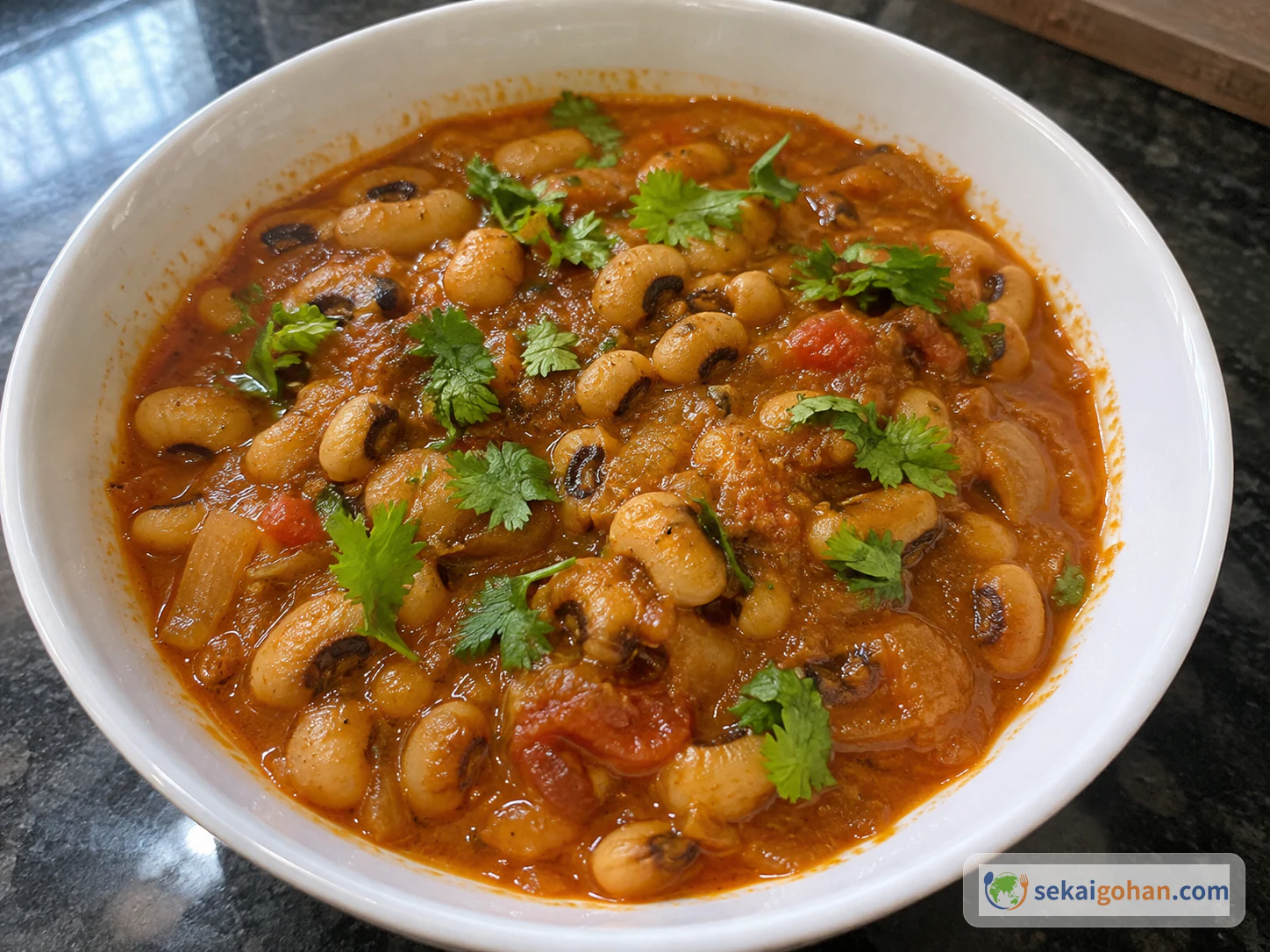
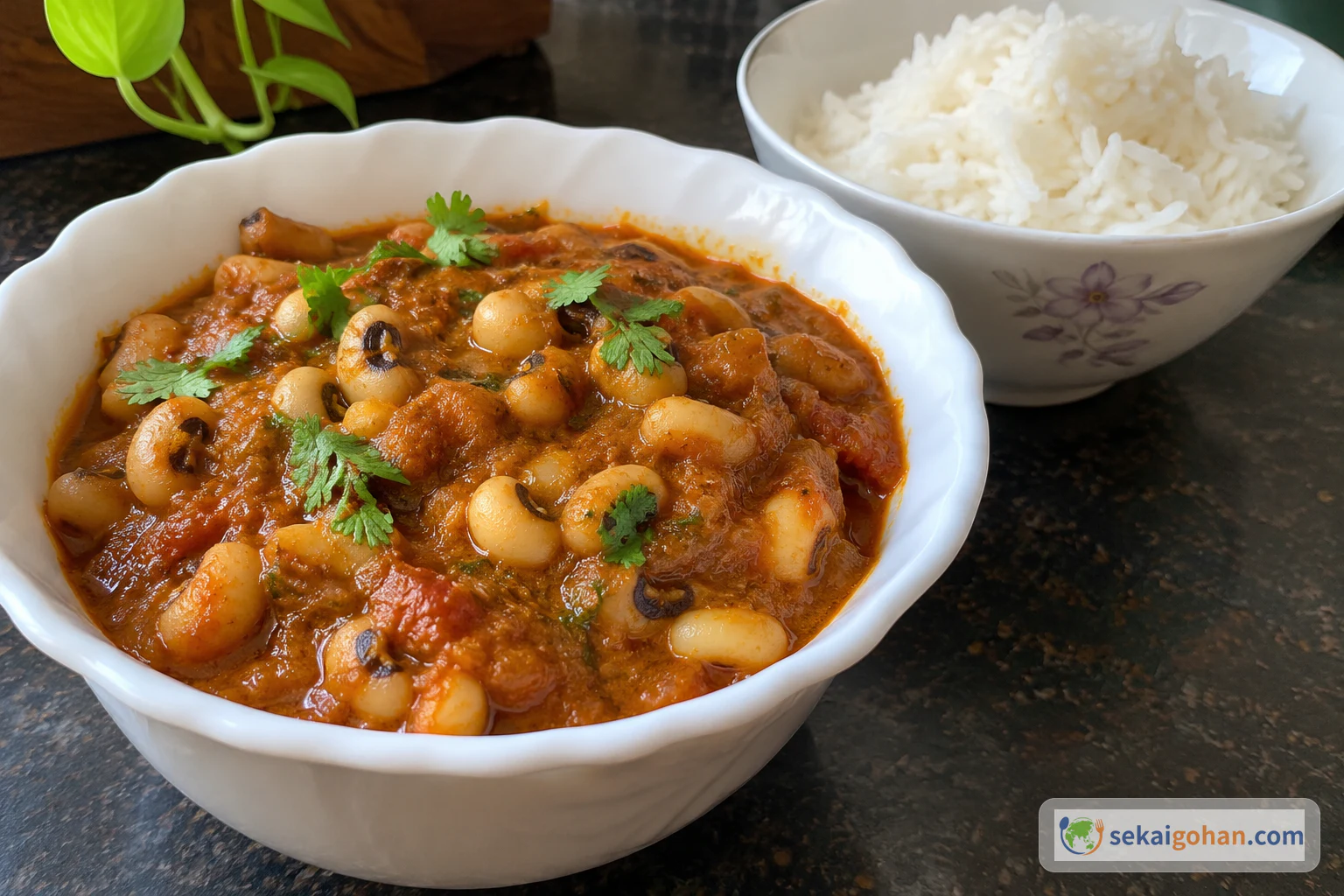
A bowl of finished lobiya: black-eyed beans in a medium-thick onion and tomato gravy, garnished with coriander leaves
Serves
4 servings
Cuisine
Indian

How to make lobiya, a Punjabi-style curry of black-eyed beans in an onion, tomato and spice masala. Covers the 30-minute soak, cooking the masala down, sizing and using a pressure cooker safely, and reaching a medium-thick gravy.

Cooking flow

Cooking steps

STEP11 / 11

Soak and drain the beans

Soaked beans draining in a colander over a sink
Let the soaking water run off

Put 1 cup dried black-eyed beans in a colander and rinse them with clean water. Move the beans to a large bowl, cover them with plenty of water and soak for 30 minutes, keeping them fully under water. Pour them back into the colander, rinse once more with clean water, and leave them until the water has finished dripping off. The beans should look pale and plump, with no water left pooling.

STEP22 / 11

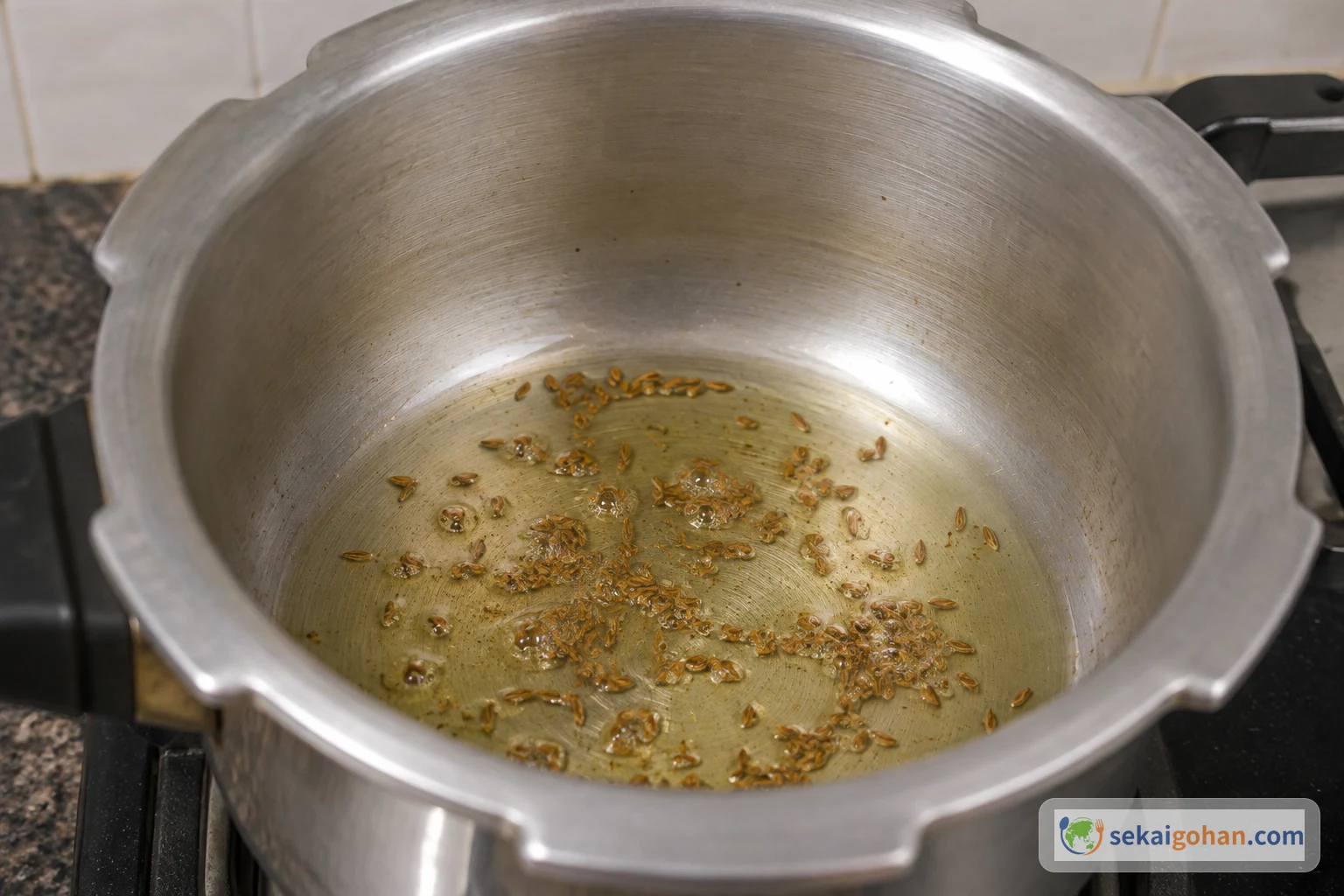
Toast the cumin in hot oil

Brown cumin seeds sizzling in oil in a pressure-cooker pan
Let the cumin crackle before the onion goes in

Check that the cooker's steam vent and gasket are in good order, as its manual directs. Heat 2 Tbsp oil in the open base of the cooker. Add 1/2 tsp cumin seeds to the hot oil. The seeds are ready when they crackle and sizzle.

STEP33 / 11

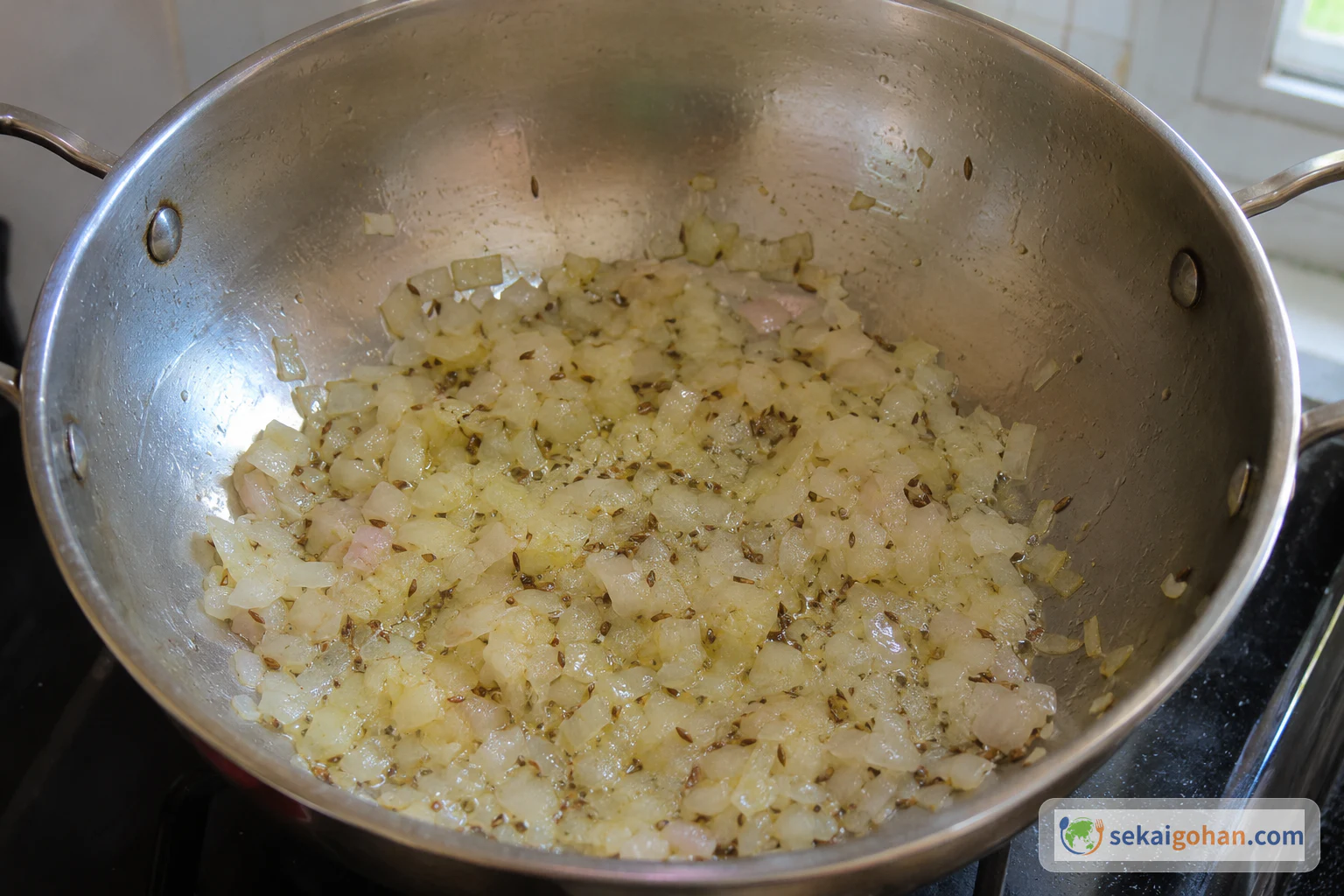
Soften the onion

Soft, translucent onion being stirred with cumin seeds
Stop at translucent, before the onion turns dark brown

Add 1/3 cup chopped onion to the cumin oil. Stir until the onion is soft and translucent. It does not need to turn dark brown, so stop before it takes on dark color.

STEP44 / 11

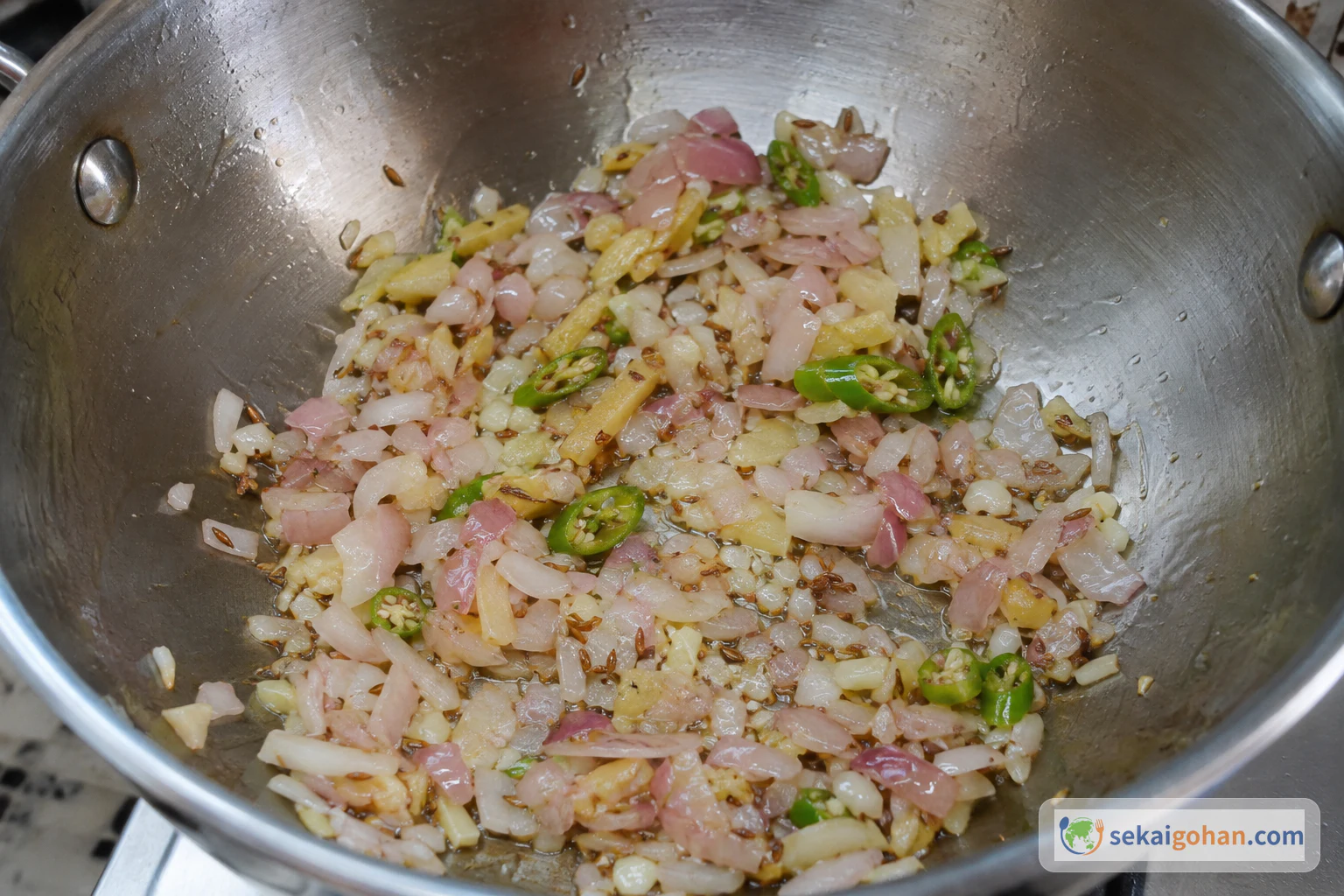
Sauté the aromatics

Onion, cumin, ginger, garlic and green chili sautéed together in one pan
Sauté the aromatics with the onion

Add 1/2 tsp chopped ginger, 1/2 tsp chopped garlic and 1/2 tsp chopped green chili to the onion. Stir everything together and sauté briefly before adding the tomato. The mixture should smell fragrant and look evenly mixed in the pan.

STEP55 / 11

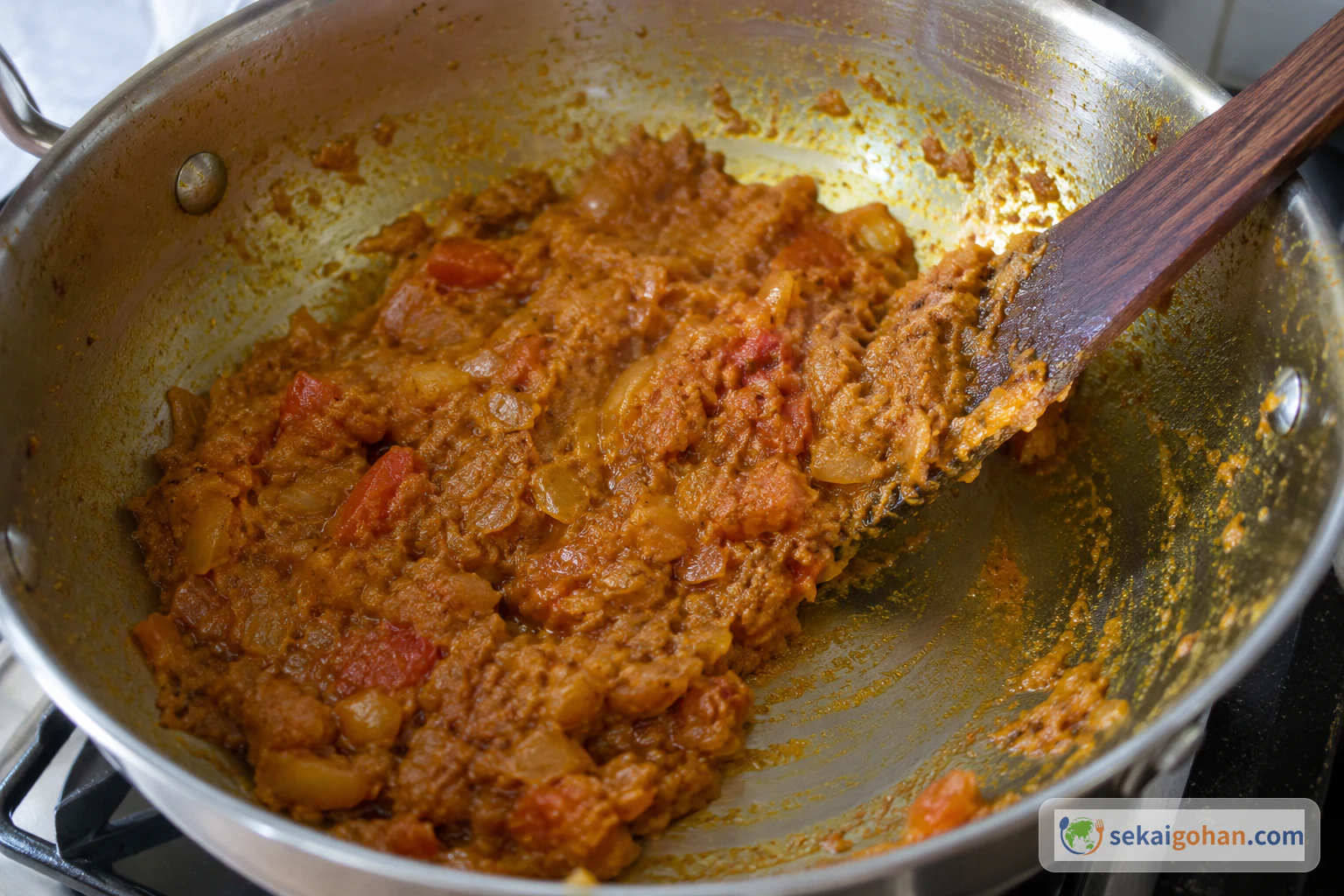
Cook down the masala

A soft, thick masala moved aside with a wooden spatula, with oil glinting at the pan's edge
Look for a masala that pulls away from the sides with a little oil showing

Add 1/2 cup chopped tomato and stir it into the onion mixture. Add 1/4 tsp ground turmeric, 1/2 tsp red chili powder, 1/2 tsp garam masala and 1 tsp ground coriander. Over low heat, stir and fry the mixture (bhunao), stirring constantly so it does not scorch. It is done when the masala turns soft and thick, pulls away from the sides of the pan and a little oil separates.

STEP66 / 11

Coat the beans and add the water

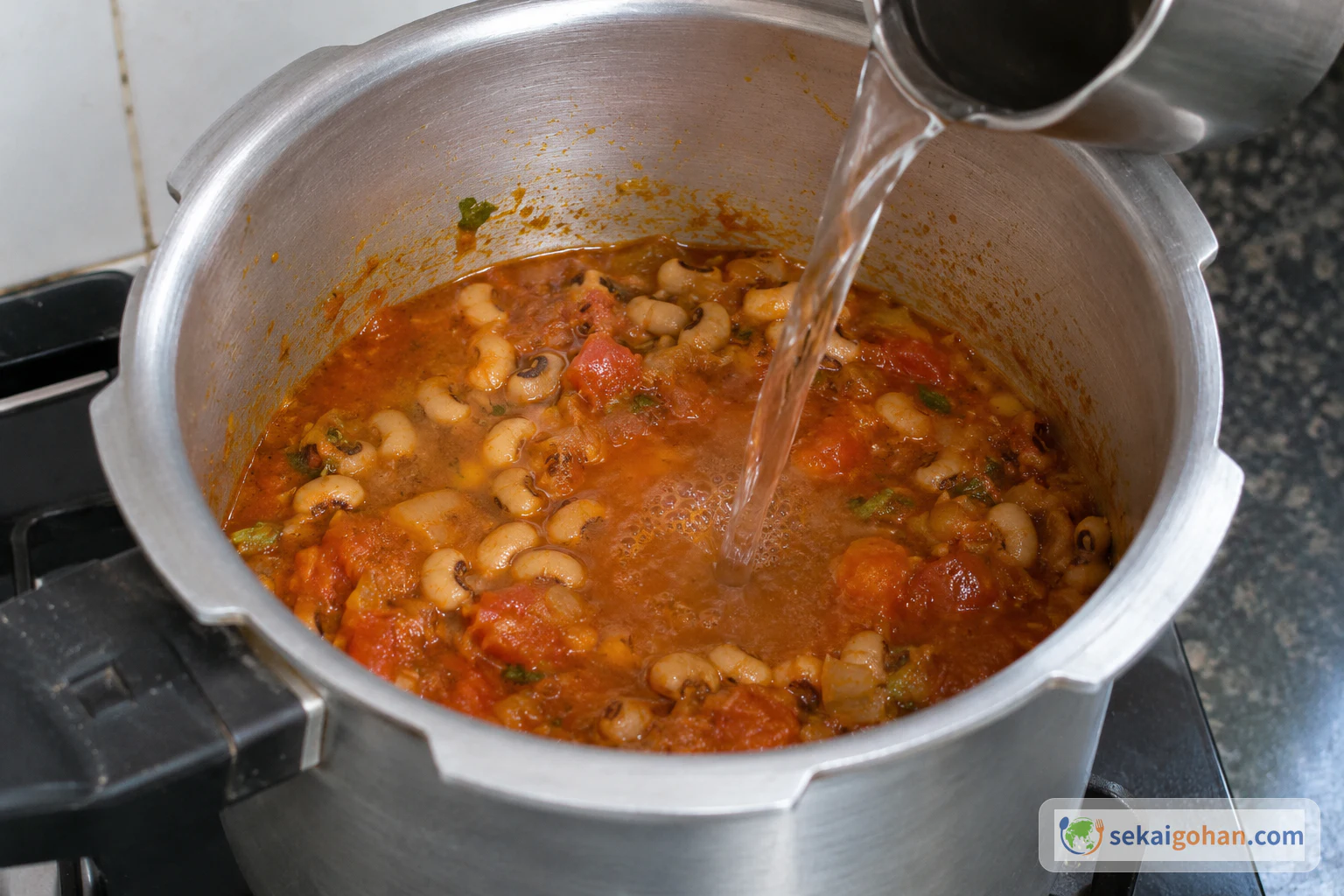
Water being poured over beans and masala in an open pressure-cooker base
Add all the water, and use a larger cooker if the batch does not fit

Add the well-drained beans to the cooked masala and stir until they are coated with it. Pour in 3 cups water and add salt to taste. Beans and water together must stay within the cooker's limit for beans and no more than one-third of its total capacity. If they do not fit, move everything to a larger compatible cooker. Do not reduce the water. Stir until evenly mixed.

STEP77 / 11

Lock the lid and pressure-cook

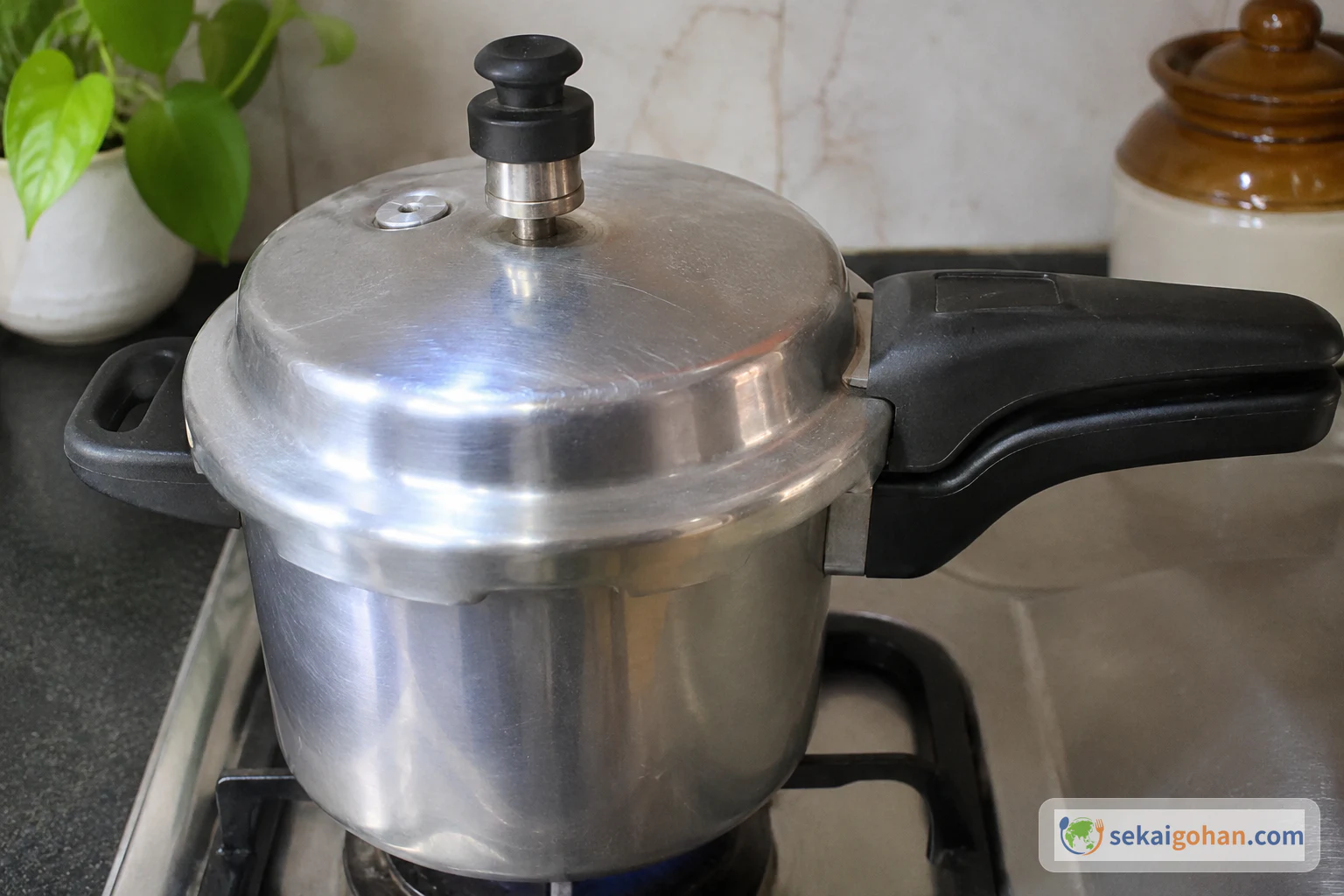
A closed, locked pressure cooker on a hob
Follow the manual for your cooker's pressure and heat

Close the lid securely and confirm that it is locked, following the cooker's manual. Bring the cooker up to pressure as its manual directs. Cook for 9–10 minutes, or for 8–9 whistles on a whistling cooker. The cooker should stay closed and locked on the hob throughout.

STEP88 / 11

Release the pressure naturally

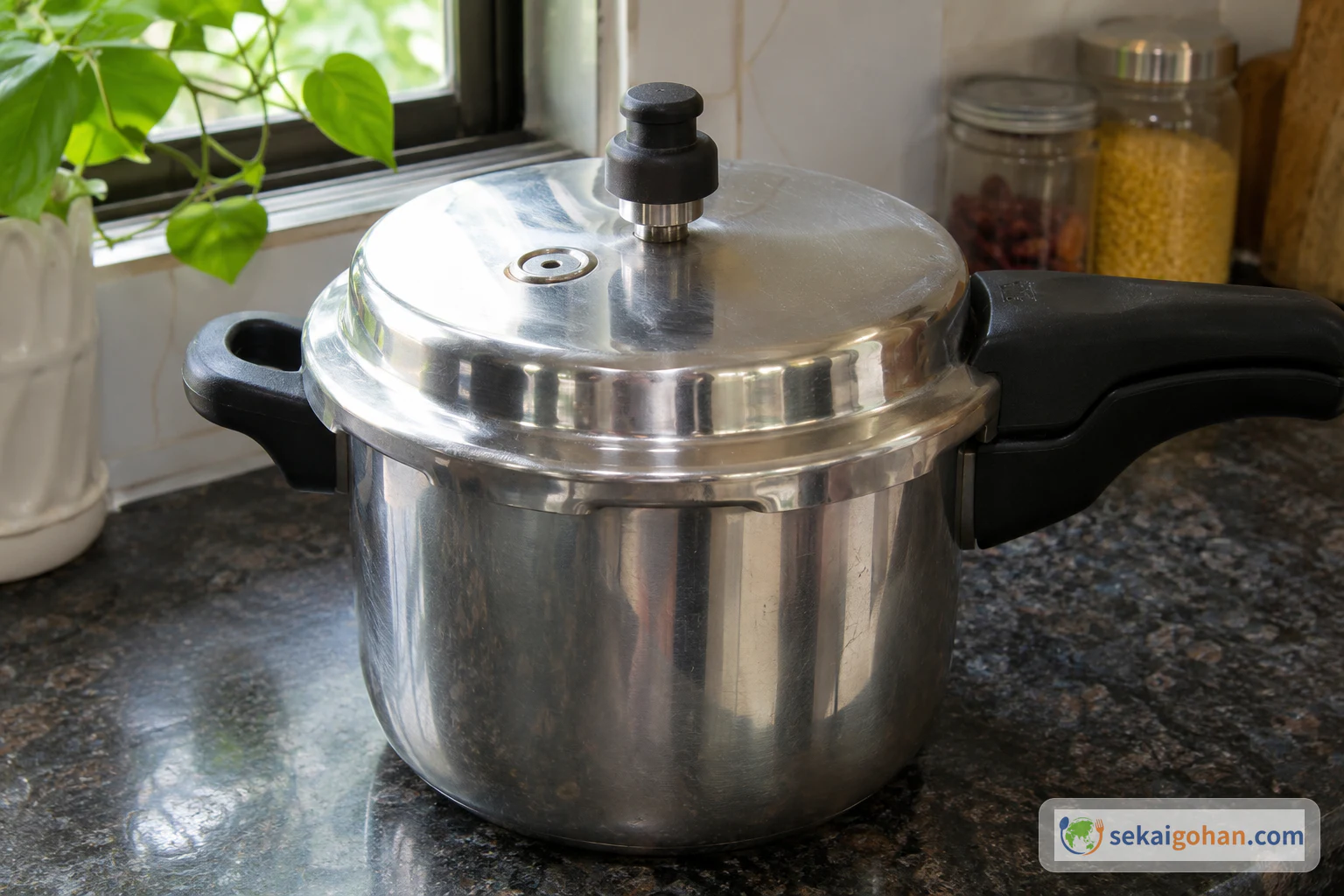
A closed pressure cooker resting off the hob
Leave the lid closed while the pressure falls naturally

Take the cooker off the heat and leave it closed so the pressure falls on its own. Do not force the release. Confirm that the pressure has fully dropped in the way the manual describes. The cooker is ready to open only once the pressure is completely gone.

STEP99 / 11

Open and check the beans

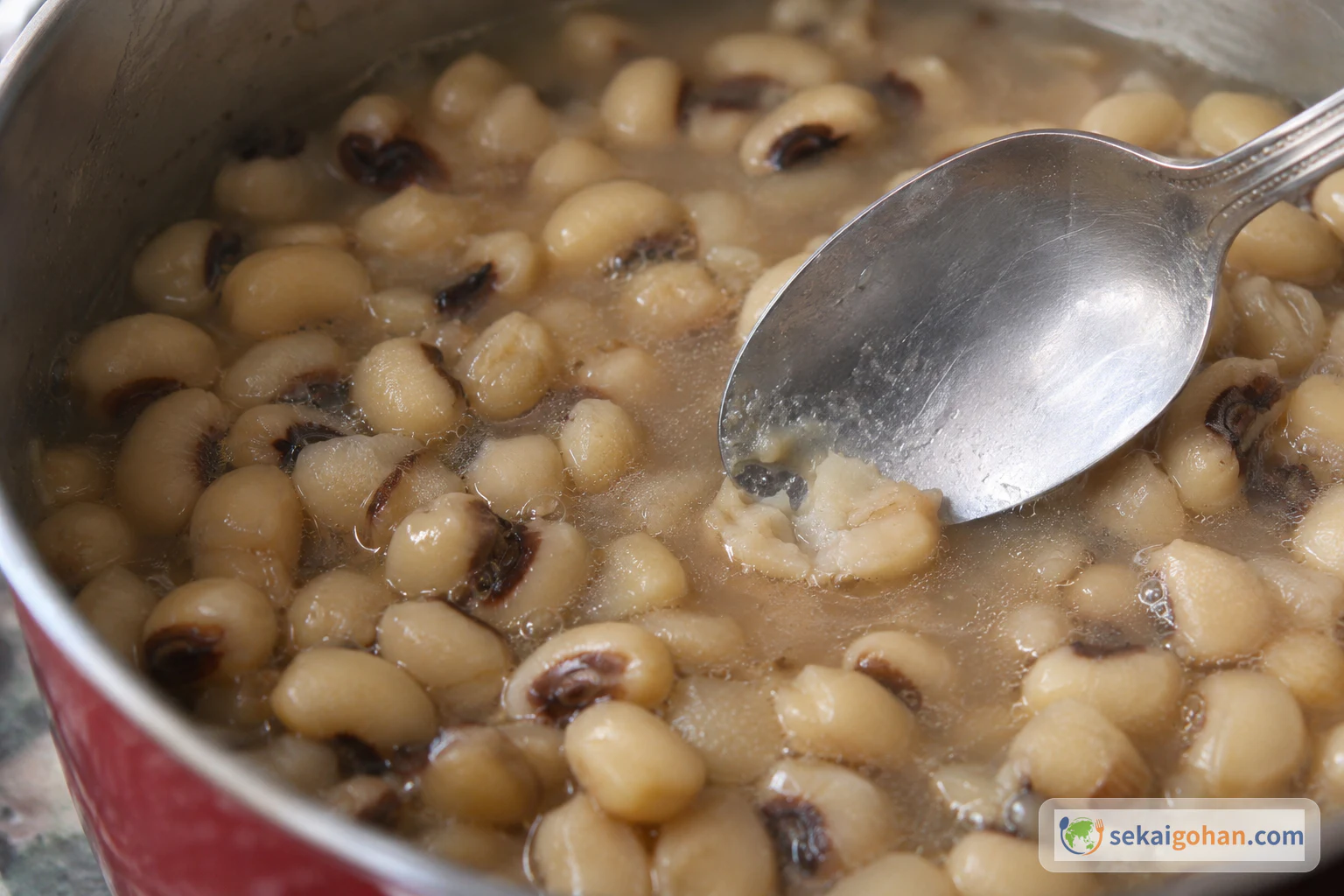
A spoon pressing and flattening a cooked black-eyed bean in the pot
Use a spoon to check the center of a bean

Open the lid by its handle, angling it away from you. If the lid resists, do not force it. Press a bean with a spoon and check that it is soft all the way to the center. Do not touch the hot beans with your bare hands. If the center is still hard, close the cooker and cook longer as the manual directs, then let the pressure drop and check again before moving on.

STEP1010 / 11

Simmer the gravy

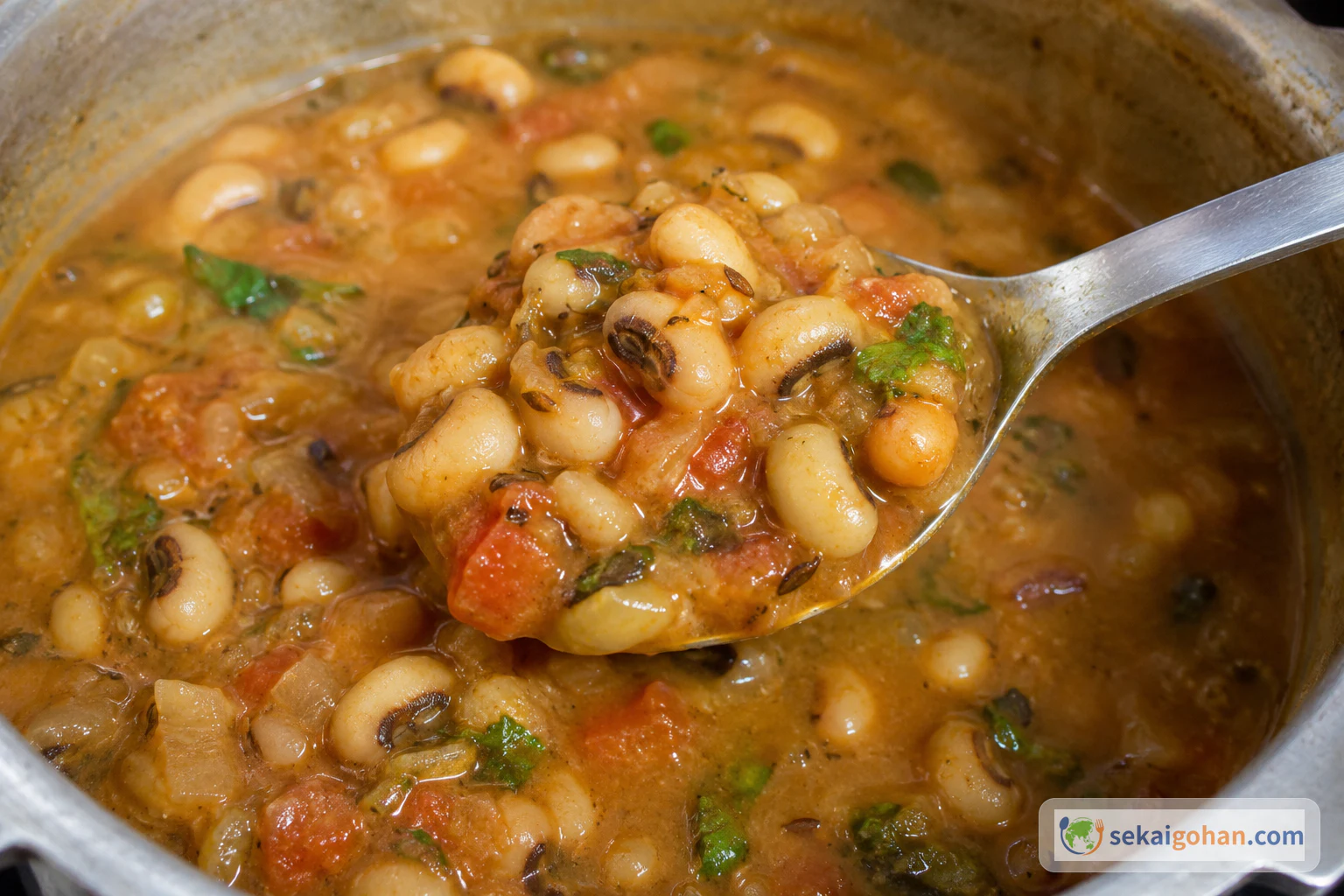
A spoon holding soft whole beans in a medium-thick tomato gravy
Aim for between a watery soup and a dry paste

Simmer without the lid until the liquid has reduced and the gravy starts to thicken. To thicken it further, press a few beans against the side of the pot with the spoon, keeping most of the beans whole. Lift some gravy with the spoon. It is ready when it is a medium-thick gravy with soft, intact beans, neither a watery soup nor a dry paste.

STEP1111 / 11

Finish with coriander and serve

Finished bean curry in a bowl, with plain rice served separately
Serve hot, with plain rice on the side if you like

Wash the fresh coriander leaves well under running water, drain them, then chop them. Add 2 Tbsp to the finished curry and stir gently to fold the leaves through. The stir mixes them in; it does not cook them. Serve the lobiya hot, with plain rice on the side if you like.

0 / 0
Ingredients

Ingredients

1 / 1

Ingredients

Ingredient Amount Role
Dried black-eyed beans (lobiya) 1 cup The body of the dish
Water for rinsing and soaking as needed Separate from the cooking water
Oil 2 Tbsp Blooms the cumin and cooks the masala
Cumin seeds 1/2 tsp First aroma in the oil
Onion, chopped 1/3 cup Base of the masala
Ginger, chopped 1/2 tsp Aromatic
Garlic, chopped 1/2 tsp Aromatic
Green chili, chopped 1/2 tsp Fresh heat
Tomato, chopped 1/2 cup Body and acidity for the masala
Ground turmeric 1/4 tsp Ground spice
Red chili powder 1/2 tsp Ground spice and heat
Garam masala 1/2 tsp Ground spice blend
Ground coriander 1 tsp Ground spice
Water for cooking 3 cups Cooks the beans and forms the gravy
Salt to taste Seasoning
Fresh coriander leaves (cilantro), chopped 2 Tbsp Fresh finishing herb. Wash well under running water, drain, then chop
0 / 0

Cream-colored beans, each with a small dark eye, go into the pressure cooker on top of a masala of onion, ginger, garlic, green chili, tomato and ground spices. After the cooker is opened, the beans simmer uncovered until the liquid turns into a medium-thick gravy, and chopped coriander leaves go in last. This is lobiya, a Punjabi-style black-eyed bean curry: soft beans in an onion and tomato gravy warmed with spices. The beans are also called lobia or rongi, and the spelling varies from cook to cook. Georgian lobio is a different dish. You can find more Indian dishes on our India page.

Ingredients (4 Servings)
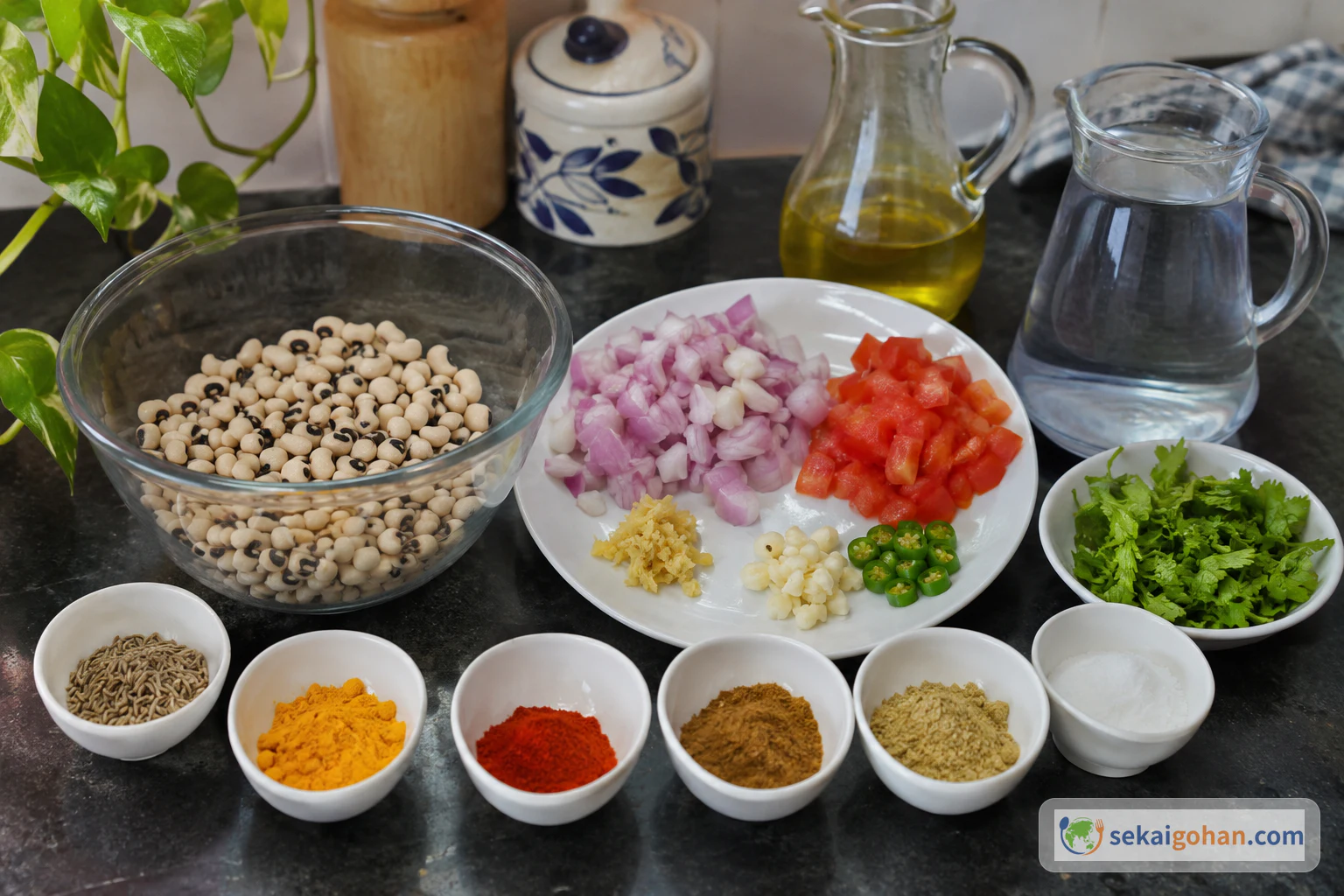
Black-eyed beans, onion, tomato, ginger, garlic, green chili, coriander leaves, oil, water, salt, cumin seeds and ground spices set out separately
Everything for lobiya, measured and chopped before the oil goes on

Equipment

  • Pressure cooker suited to the full amount of beans and water, with its manual
  • Colander
  • Large bowl
  • Measuring cups and spoons
  • Sturdy spoon for stirring and checking the beans
  • Knife and cutting board

Choosing Beans and a Pressure Cooker for Lobiya

Buy dried black-eyed beans, which are pale with a dark eye. The ginger, garlic and green chili are chopped in small amounts and go into the pot together, so get them ready before you start heating the oil.

Before you begin, check the fill limit in your cooker's manual. Even a 3-liter cooker may be too small for this amount of beans and water. Black-eyed beans need the same care under pressure as any other bean: the beans and water together should fill no more than one-third of the cooker. Check the steam vent and gasket, make sure the lid is locked, and confirm that the pressure has fully dropped before you open it.

Fill limit and lid safety

Use a cooker large enough that the beans and water stay within both its manual's limit for beans and one-third of its total capacity. If the batch does not fit, use a larger cooker rather than reducing the water. Never force the lid open.

Fixing Common Lobiya Problems

What you're aiming for

Cook the beans until they are soft at the center, keep most of them whole, and stop when the gravy is neither watery nor a dry paste.

Most problems with lobiya come down to the cooker or the uncovered simmer at the end. Here's what to look for and what to do.

What you see What to check What to do
Beans and water exceed the fill limit Your manual's limit for beans and one-third of total capacity Use a larger compatible cooker. Do not reduce the water
The lid will not open Whether the pressure has fully dropped Wait and follow the manual. Never force the lid
The center of a bean is still hard Press another bean with a spoon Cook longer as the manual directs, then check again after the pressure drops
The gravy is watery Whether it has simmered long enough uncovered Keep simmering without the lid, and mash a few beans if you like
The gravy is turning into a dry paste Whether the uncovered simmer has gone too far Take it off the heat, and stop the simmer sooner next time
The masala is starting to scorch The heat level during the bhunao Lower the heat and keep stirring

Frequently Asked Questions

How long does lobiya take?

Prep takes 10 minutes and cooking takes 20, so 30 minutes in total. Add the 30-minute soak on top of that.

Are 9–10 minutes and 8–9 whistles the same?

No. Cookers vary, so treat both as a starting point, follow your manual, and judge doneness by pressing the center of a bean.

Is the fresh coriander cooked?

No. The coriander goes in raw at the very end, so wash it well under running water, drain it and then chop it.

Can I change the amount of coriander or leave it out?

Yes. Anywhere from 1 to 2 Tbsp works, and the recipe uses 2 Tbsp. It's a finishing herb, so you can leave it off if you prefer.

How long does it keep?

Lobiya tastes best eaten fresh. That advice is about flavor, not safety.

What about allergies?

If you have an allergy, check the labels on your ingredients, including any spice blends.
Sources