Ashoka Halwa: A Glossy South Indian Sweet of Mung Beans and Ghee (Asoka Halwa)

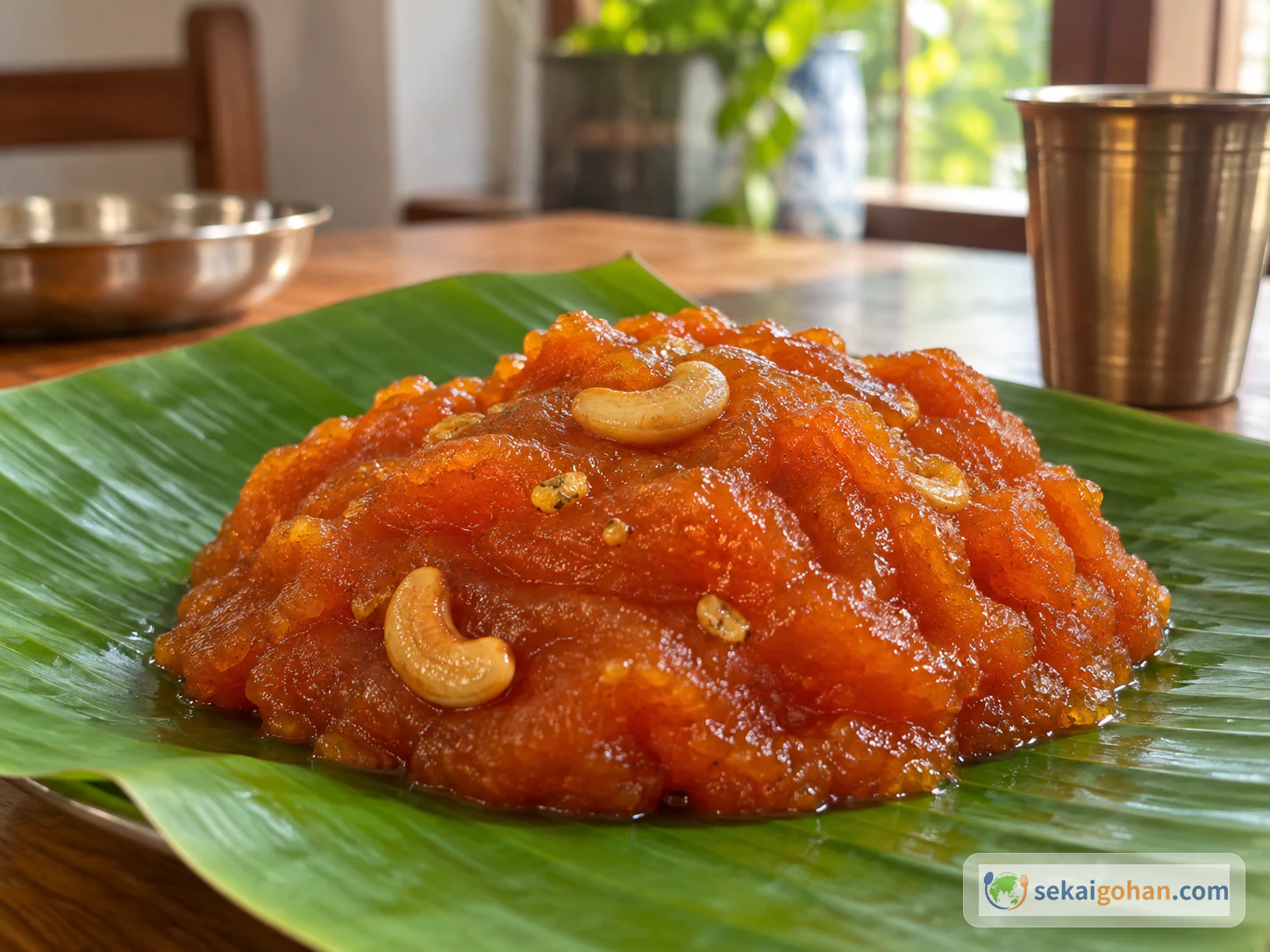
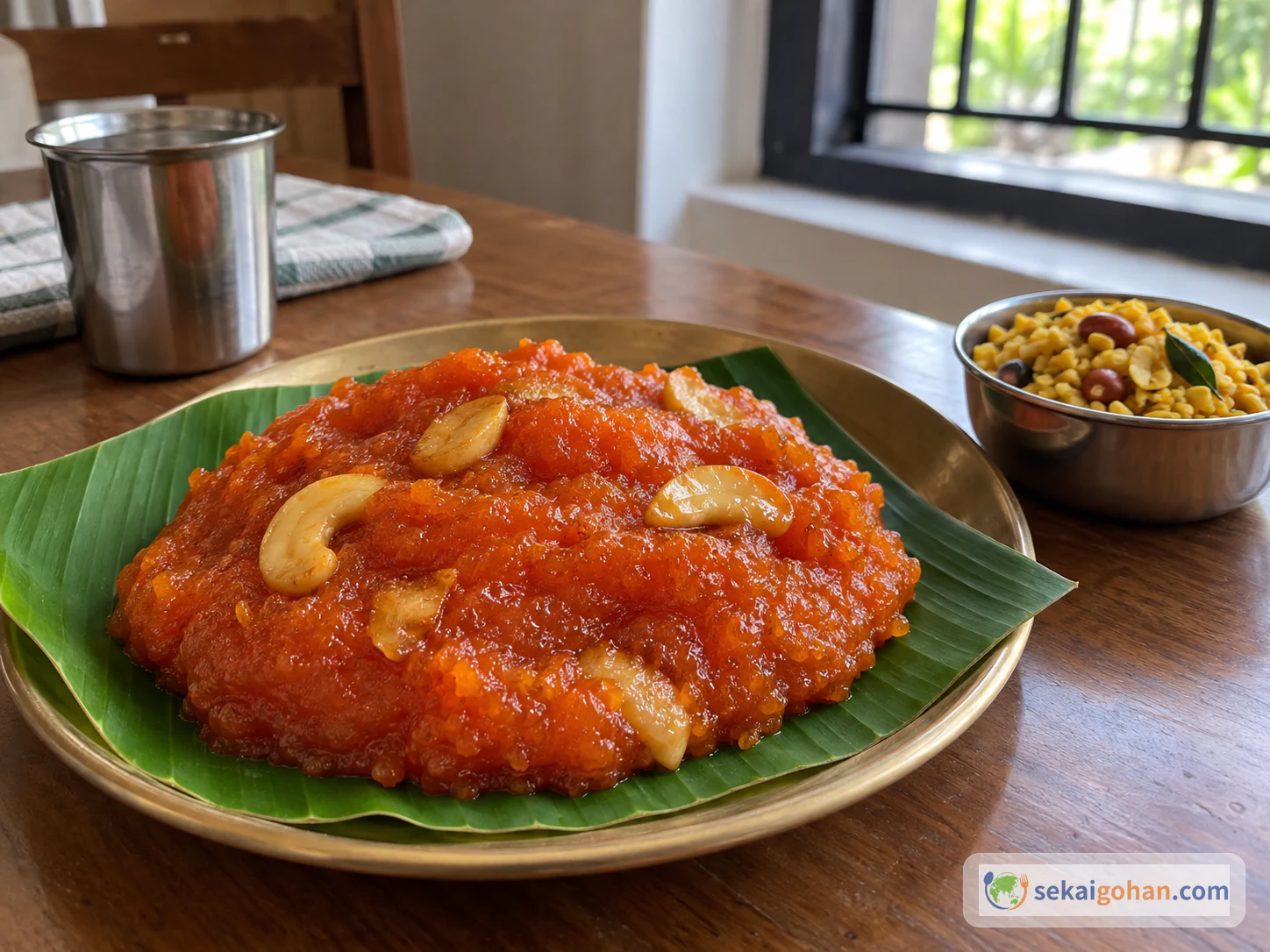
Glossy, reddish Ashoka halwa served on a banana leaf
Serves
2 cups
Level
Intermediate
Cuisine
Indian (Tamil Nadu)

How to make Ashoka halwa (Asoka halwa, pasi paruppu halwa), the yellow mung bean, wheat flour and ghee sweet linked with Thiruvaiyaru in Tamil Nadu. Covers cooking the dal into a smooth paste, roasting the flour, working in oil and ghee a little at a time until the halwa turns glossy and leaves the pan, plus how recipes differ, ingredient choices and allergens.

Cooking flow

Cooking steps

STEP11 / 8

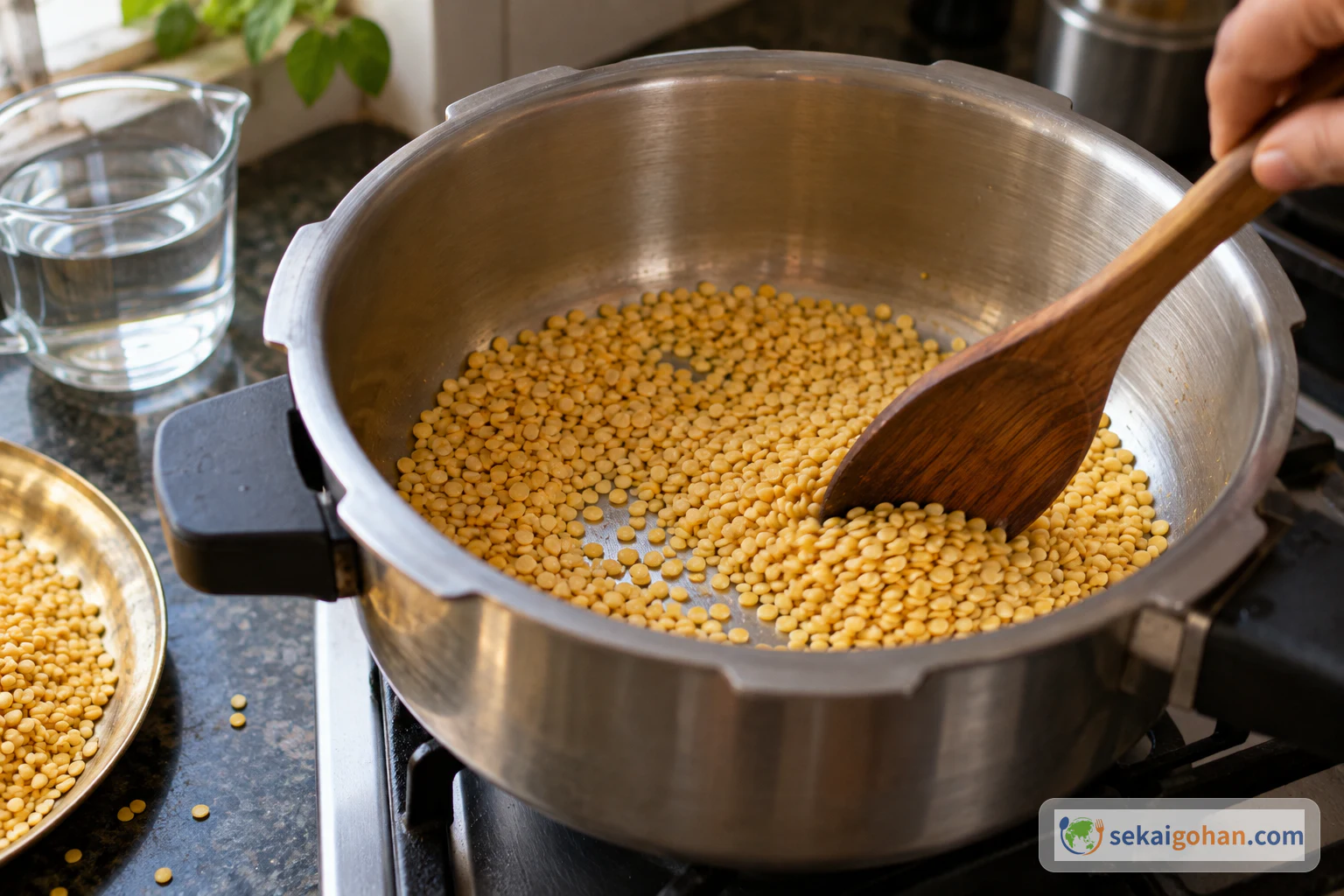
Dry-roast the dal, then cook it until very soft

Yellow split mung beans being lightly dry-roasted without browning
Roast just until the dal is warm and fragrant, still yellow, before adding the water

Put 1/2 cup yellow moong dal in a pressure cooker or pot and dry-roast it over high heat for 1 minute, stirring, without letting it change color. Add 3 cups water and cook until the dal is completely soft and crushes easily against the side of a spoon.

In a pressure cooker, cook for 3 whistles on a low flame. Then check the dal itself: if any grains still feel firm, cook longer.

STEP22 / 8

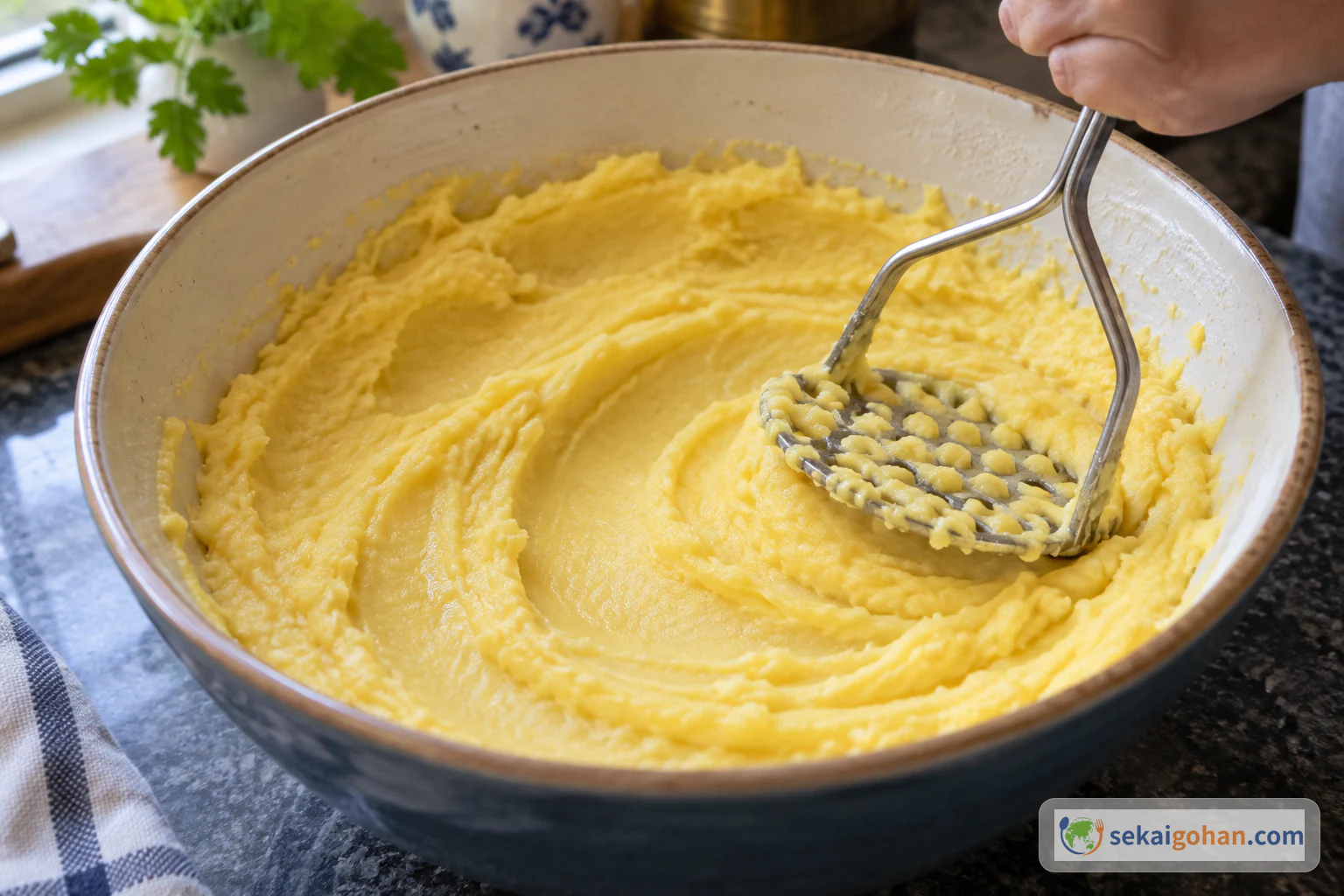
Mash the dal into a smooth paste

Softly cooked mung beans being mashed smooth so no grains remain
A thick, even, pale yellow paste with no whole grains left

Mash the cooked dal with a masher, or blend it, into a smooth paste without adding water. Don't pour in all of the cooking water or add extra liquid here. Aim for no visible grains: any coarseness in the paste carries through to the finished texture.

STEP33 / 8

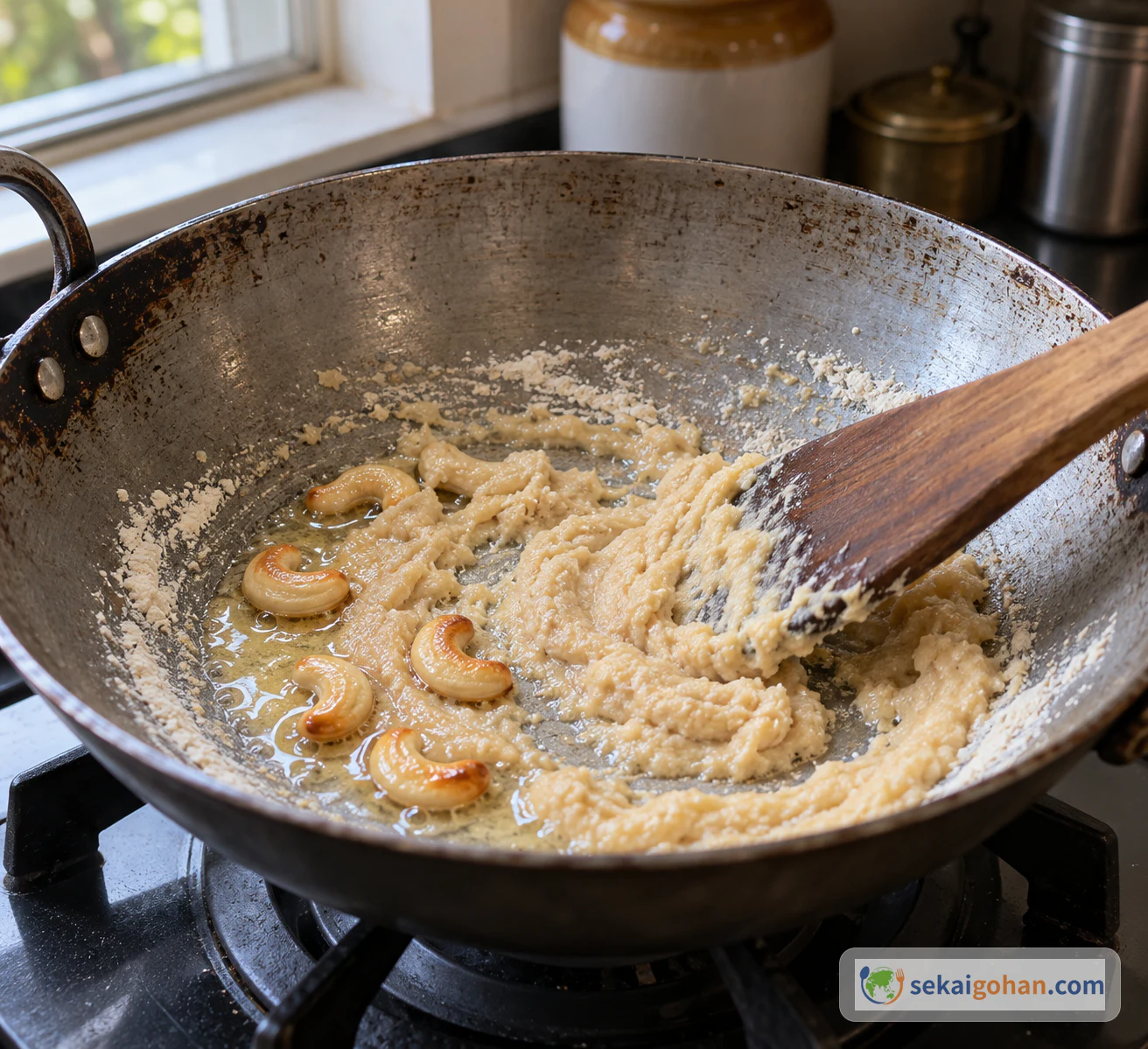
Fry the cashews and roast the two flours in oil

Cashews fried in oil, with wheat flour and maida added and stirred until fragrant
Keep the heat low so the flour turns fragrant without scorching

In a heavy pan, heat 1/4 cup of the oil and fry the 5 cashews until golden. Lower the heat, add 1/4 cup wheat flour and 1 tbsp maida, and stir constantly over low heat so the flour doesn't clump or catch, until it smells toasty and no longer smells of raw flour. Keep the remaining 1/4 cup oil aside for step 6.

STEP44 / 8

Combine the dal paste with the roasted flour

Mung bean paste worked evenly into the roasted flour
Mix until there are no dry flour streaks; the mixture stays pale and matte for now

Add the dal paste to the pan and mix over medium heat until the two are completely combined, with no streaks of flour left. At this stage the mixture is thick, pale and matte.

STEP55 / 8

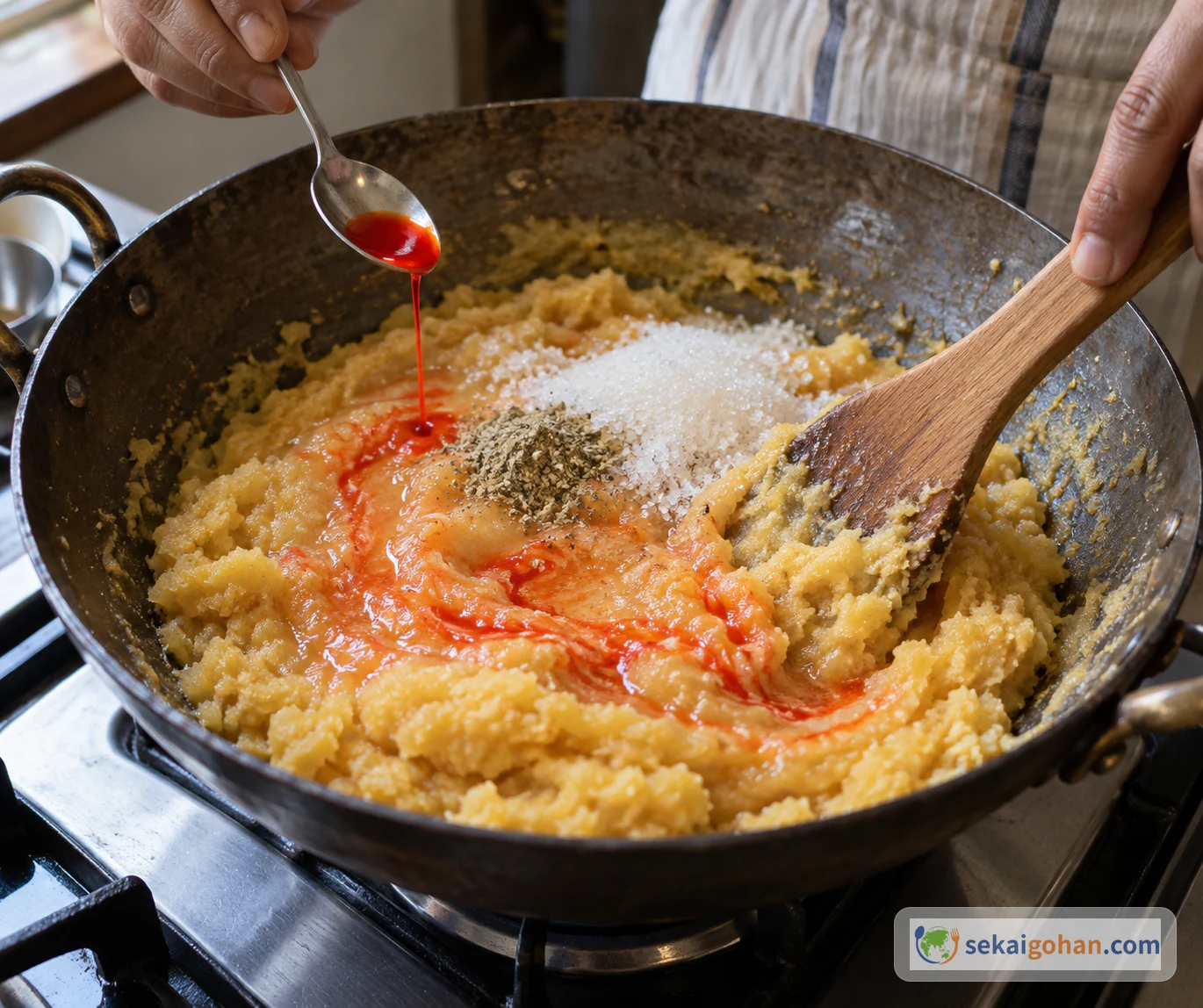
Add the sugar, cardamom and dissolved color

Sugar, cardamom and red food coloring dissolved in a little water being added
The sugar melts and the mixture loosens before it thickens again

Dissolve the 2 pinches of red food color in 1 tbsp water. Add 1 cup sugar, 1/2 tsp cardamom powder and the color mixture to the pan. As the sugar melts, the mixture will loosen noticeably. This is a normal stage of the process, so keep stirring and don't stop cooking here.

STEP66 / 8

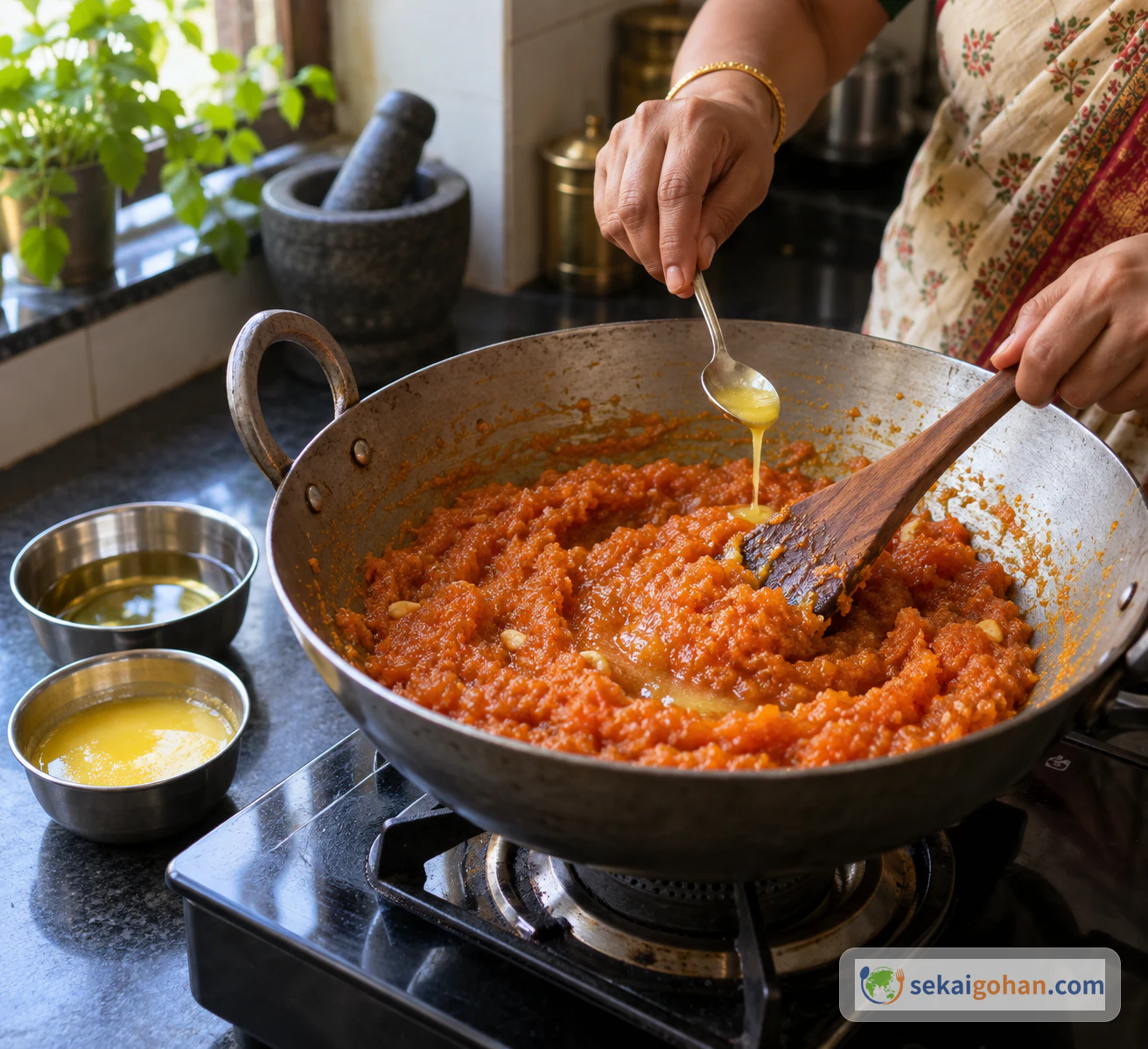
Add the oil and ghee a little at a time, alternating

A small spoonful of melted ghee being added to the loosened mixture, with the oil and ghee bowls nearby
Each spoonful of fat should disappear into the halwa before the next goes in

Adjust the heat between medium and medium-high. Add the remaining 1/4 cup oil and the 1/2 cup melted ghee in small amounts, alternating between them. Stir continuously, and wait until each addition has been absorbed and the mixture comes back together before adding the next. Adding the fat all at once makes it hard to mix in.

STEP77 / 8

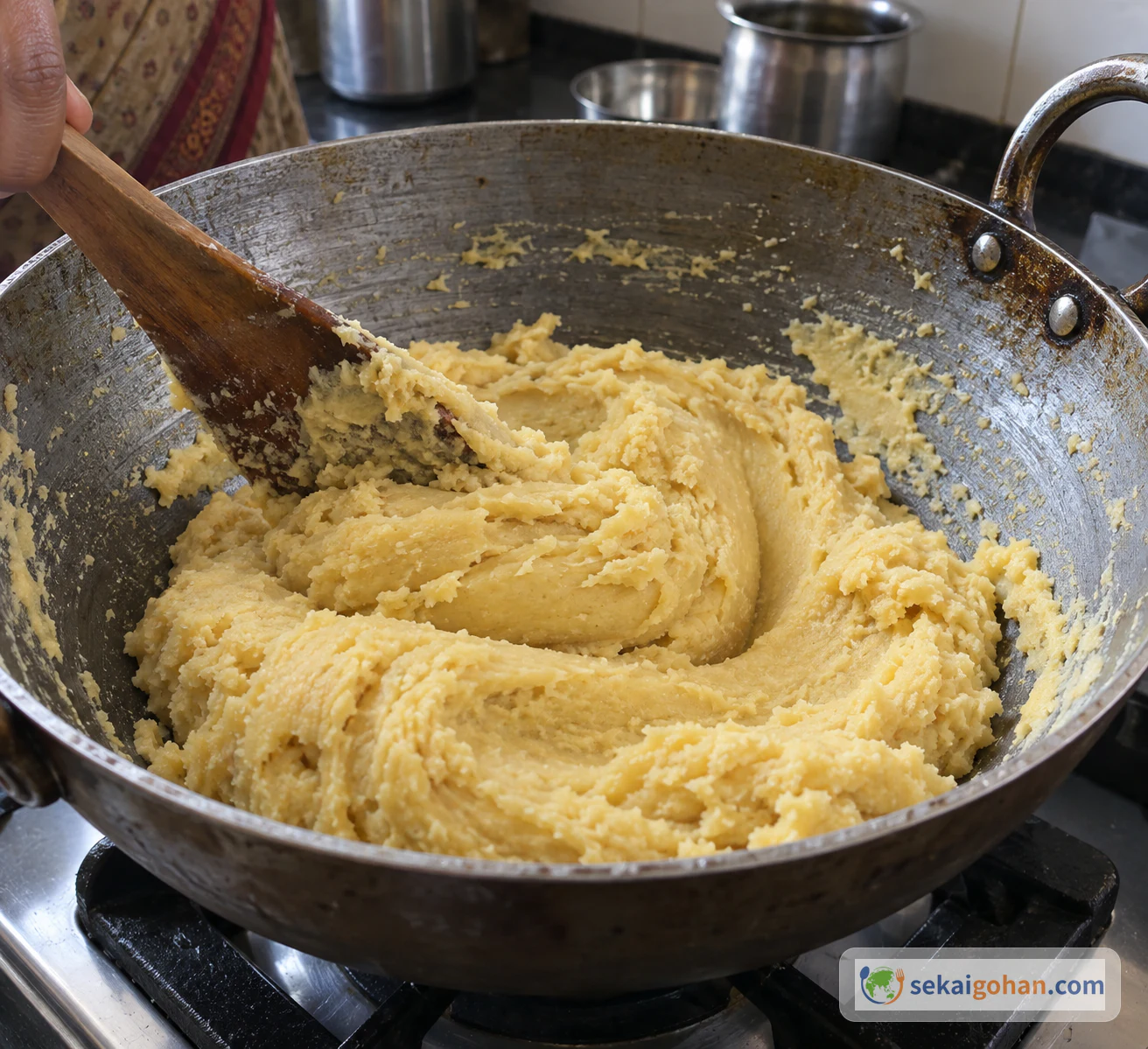
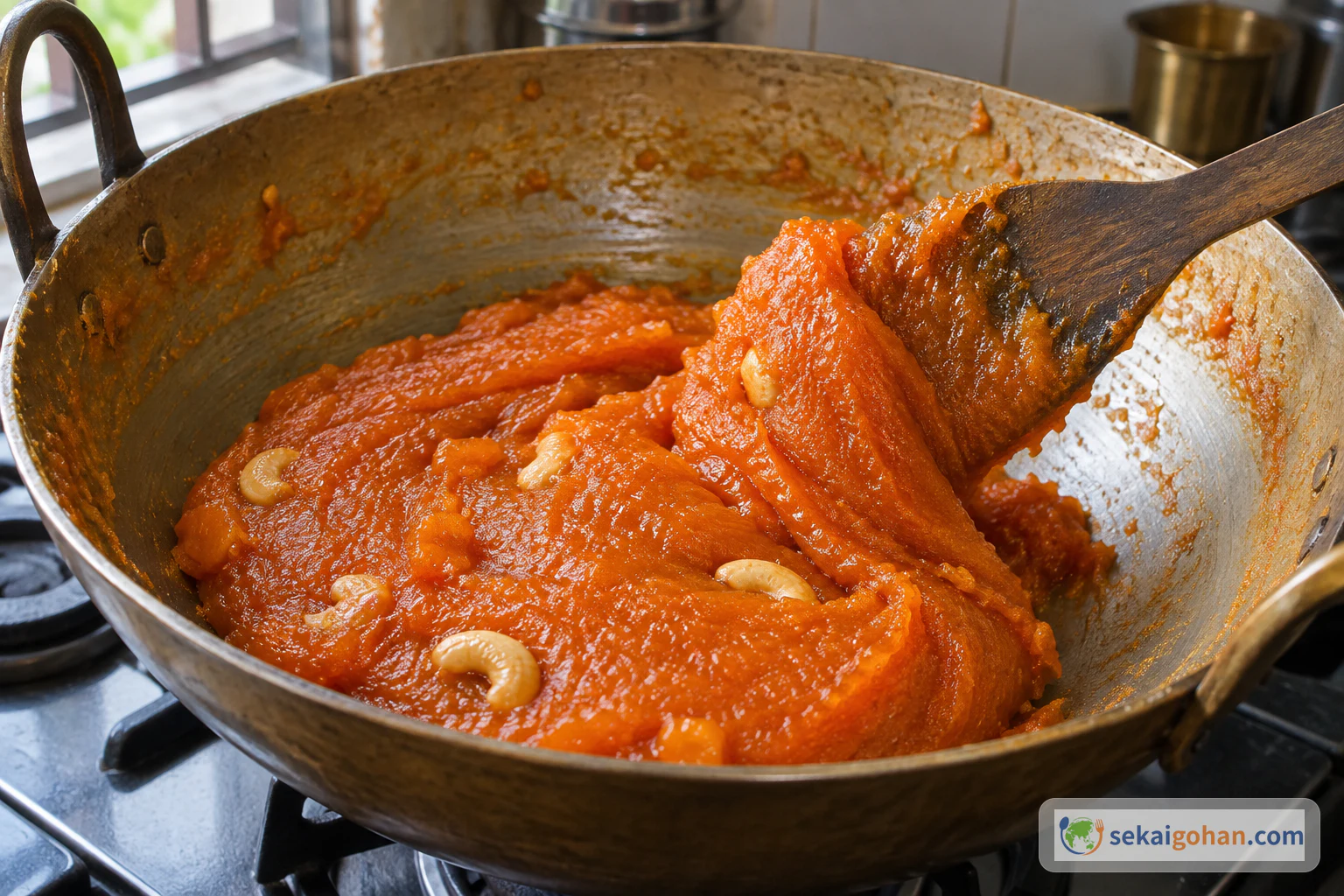
Finish when it turns glossy and leaves the pan

Glossy Ashoka halwa gathering together and pulling away from the pan
Deep color, a sheen, and a mass that moves away from the pan with the spatula

The halwa is done when it has turned a deep color, looks glossy, pulls away from the sides of the pan, and turns with the spatula as one soft mass. To check stickiness, put a little on a plate and touch it once it has cooled enough to handle; it should feel much less sticky. Never touch the hot halwa or the pan with bare hands.

The amounts of oil and ghee are a maximum, not a requirement. Adjust the quantity by watching the halwa, so if it has reached this state before all the fat is used, stop adding it.

STEP88 / 8

Serve warm

Warm Ashoka halwa served with a little savory mixture on the side
The savory mixture is an optional side, not part of the recipe

The recipe makes about 2 cups. Serve the halwa hot on a banana leaf or a small plate. If you like, put a little savory mixture on the side, kept separate from the halwa.

0 / 0
Ingredients

Ingredients

1 / 1

Ingredients

Ingredient Amount Role
Yellow split mung beans (yellow moong dal / pasi paruppu) 1/2 cup The body of the halwa. Dry-roasted briefly without browning, then cooked soft
Water for cooking the dal 3 cups For cooking the dal until soft. Not all of it goes into the paste
Wheat flour 1/4 cup Roasted in oil; supports the dal paste and builds thickness
Maida (all-purpose flour) 1 tbsp Used together with the wheat flour
Cooking oil, refined and odorless 1/2 cup total 1/4 cup for frying the cashews and flour; the remaining 1/4 cup added gradually later with the ghee. Maximum; stop once the halwa turns glossy
Ghee, melted, at room temperature 1/2 cup Added a little at a time, alternating with the oil. The main source of aroma. Maximum; stop once the halwa turns glossy
Sugar 1 cup Added after the dal and flour are combined; it melts and loosens the mixture
Cardamom powder 1/2 tsp Aroma
Cashew nuts 5 Fried in the first portion of oil
Red food color 2 pinches Optional. Dissolve in the water below. Use a product labeled for food
Water for the color 1 tbsp Only for dissolving the color; separate from the 3 cups above
0 / 0

The sugar goes into a thick, pale paste of mung beans and roasted flour, and within moments the mixture loosens and turns almost runny. That's expected. From here you keep stirring, adding oil and melted ghee a spoonful at a time and letting each addition disappear before the next. Slowly the color deepens, a sheen appears, and the whole mass starts to slide away from the sides of the pan in one soft piece. Ashoka halwa, also written Asoka halwa and known as pasi paruppu halwa, is a rich, glossy sweet made from yellow split mung beans. It comes from Thiruvaiyaru, a town in Tamil Nadu in South India.

Ashoka Halwa in Thiruvaiyaru

Thiruvaiyaru treats this halwa as its own sweet. At Andavar, a local shop, it comes hot on a banana leaf with a portion of spicy mixture, a crunchy savory snack, on the side. Andavar is also tied to the Thyagaraja Aradhana, the town's music festival, and the musicians and visitors who come for it make a point of finding the halwa. The sweet belongs to the town's food memory as much as to its kitchens.

P.V. Ramaiyer, also called Ramu Iyer, is credited with bringing the halwa to Thiruvaiyaru. The shop credits its flavor to the local water and firewood, which a home kitchen can't reproduce, so think of this as a home version rather than a copy.

Beyond the town, Ashoka halwa has no fixed definition. Recipes vary widely in how much dal they use against flour, sugar and ghee, and in whether they add maida, oil, food coloring or saffron. For more dishes from across the country, see the India country page.

Ingredients (Makes 2 cups)
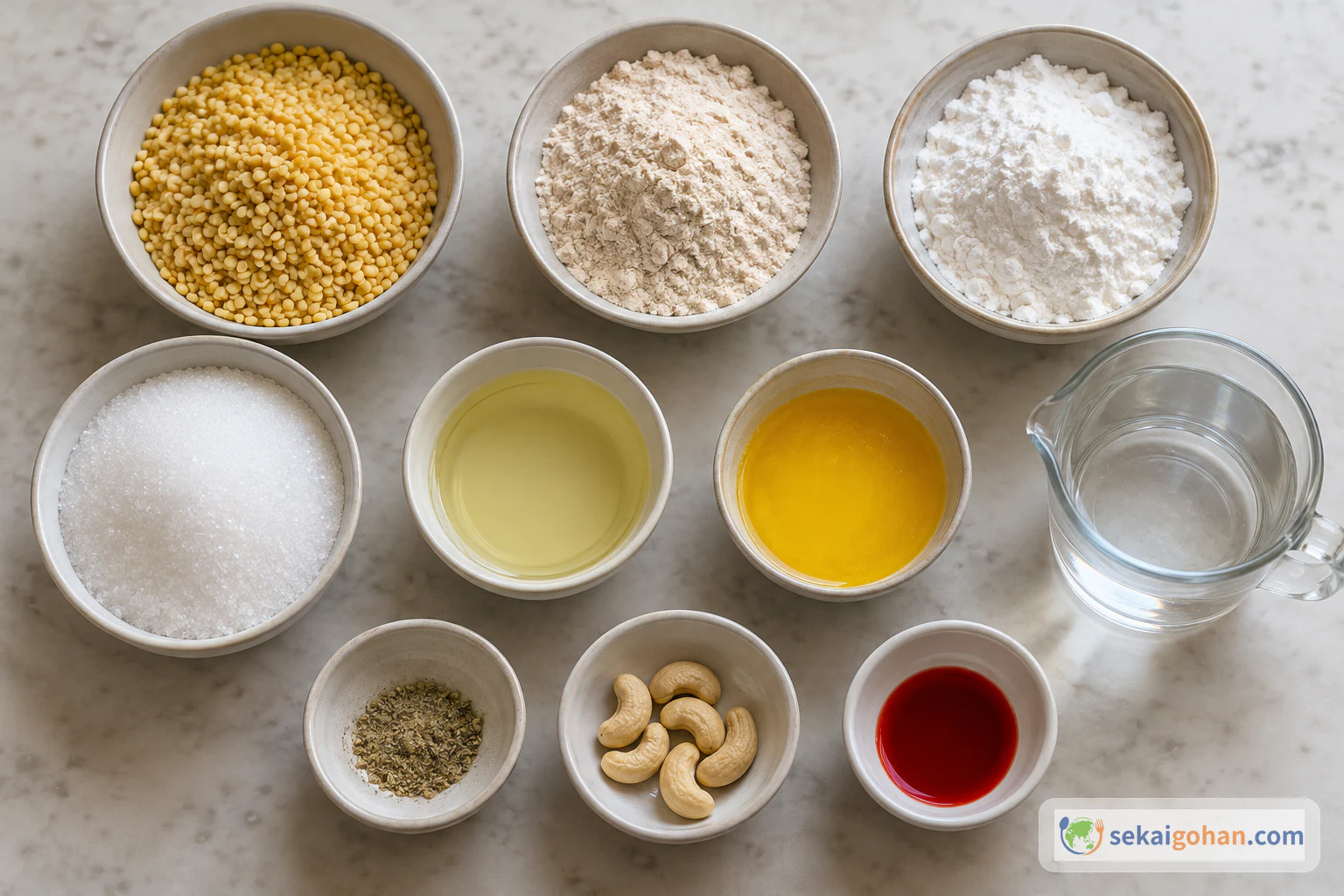
Yellow split mung beans, wheat flour, maida, sugar, ghee, cooking oil, cardamom, cashews and red food coloring
Every ingredient in this version, including the separate water for cooking the dal

1 cup = 250 ml. The oil is used in two parts, and the two quantities of water have different jobs.

Allergens

This recipe contains wheat (wheat flour and maida), cashew nuts, and ghee, which is made from milk. Check the labels on every package, including the dal, and use only coloring labeled for food.

Choosing Ingredients for Ashoka Halwa

Yellow moong dal is skinned, split mung beans. If your supermarket doesn't carry it, look at Indian grocers or online. Whole green mung beans with their skins on are a different ingredient and won't do the same job.

Ghee carries much of the aroma here, and butter or ordinary vegetable oil won't give you the same result. The cooking oil should be refined and odorless, so pick a neutral one over anything with a strong flavor.

Ordinary unsalted cashews are all you need. Maida is a refined white wheat flour, usually sold as all-purpose flour. The red food color is optional. Without it the halwa comes out paler than in the photos, but the aroma stays the same.

Equipment

  • A pressure cooker or a pot for cooking the dal
  • A heavy, deep pan or kadai for the halwa (useful for long stirring, but an ordinary pan works)
  • A potato masher or a blender
  • A sturdy spatula or wooden spoon
  • Measuring cups (250 ml) and measuring spoons
  • A few small bowls for the oil, ghee and color mixture

Method: From Smooth Dal to a Glossy Halwa

Allow 15 minutes of preparation and 30–45 minutes of cooking, depending on the quantity. The amount you make and your burner change the time, so judge doneness by how the halwa looks and moves, not by the clock.

Use high heat to dry-roast the dal, low heat to roast the flour, and medium to medium-high once the dal and sugar are in.

Ashoka Halwa Troubleshooting

Most problems come from rushing. If the dal isn't smooth, the flour isn't watched, or the fat goes in too fast, it shows. Here's how to handle the usual trouble spots.

Problem What to do
The dal paste still has grains Mash or blend it again before the sugar goes in; once the sugar is added, the grains are hard to fix
The flour looks about to burn Lower the heat right away and keep stirring
The mixture went runny after the sugar This is expected. Keep cooking and stirring; it comes back together as you add the fat
The fat isn't mixing in Stop adding fat and keep stirring until what is in the pan is absorbed, then continue in smaller amounts
The fat has separated or the halwa has scorched There is no reliable fix, so prevent it with small additions, steady stirring and controlled heat

Variations and Storage

Leaving out the cashews makes the halwa suitable for someone with a nut allergy, but check your kitchen and ingredients for cross-contact, and expect the flavor and texture to change. Some cooks use more oil and less ghee, which shifts the balance and gives a different result. Cutting back on the fat or the sugar also changes the finish, so it isn't recommended.

Store leftovers in a clean, airtight container in the refrigerator and eat them soon. Don't keep it as long as 10 days. Throw it out if it smells off or changes color. To reheat, warm a small amount at a time so it heats evenly.

Frequently Asked Questions

Is Ashoka halwa the same as North Indian moong dal halwa?

The names overlap, and this recipe goes by both Ashoka halwa and moong dal halwa. Other recipes called Ashoka halwa use different proportions and ingredients, though, so there's no single shared definition.

Do I have to use all the oil and ghee?

The listed amounts are the maximum. Add the fat a little at a time and stop once the halwa is glossy and pulls away from the pan.
Sources