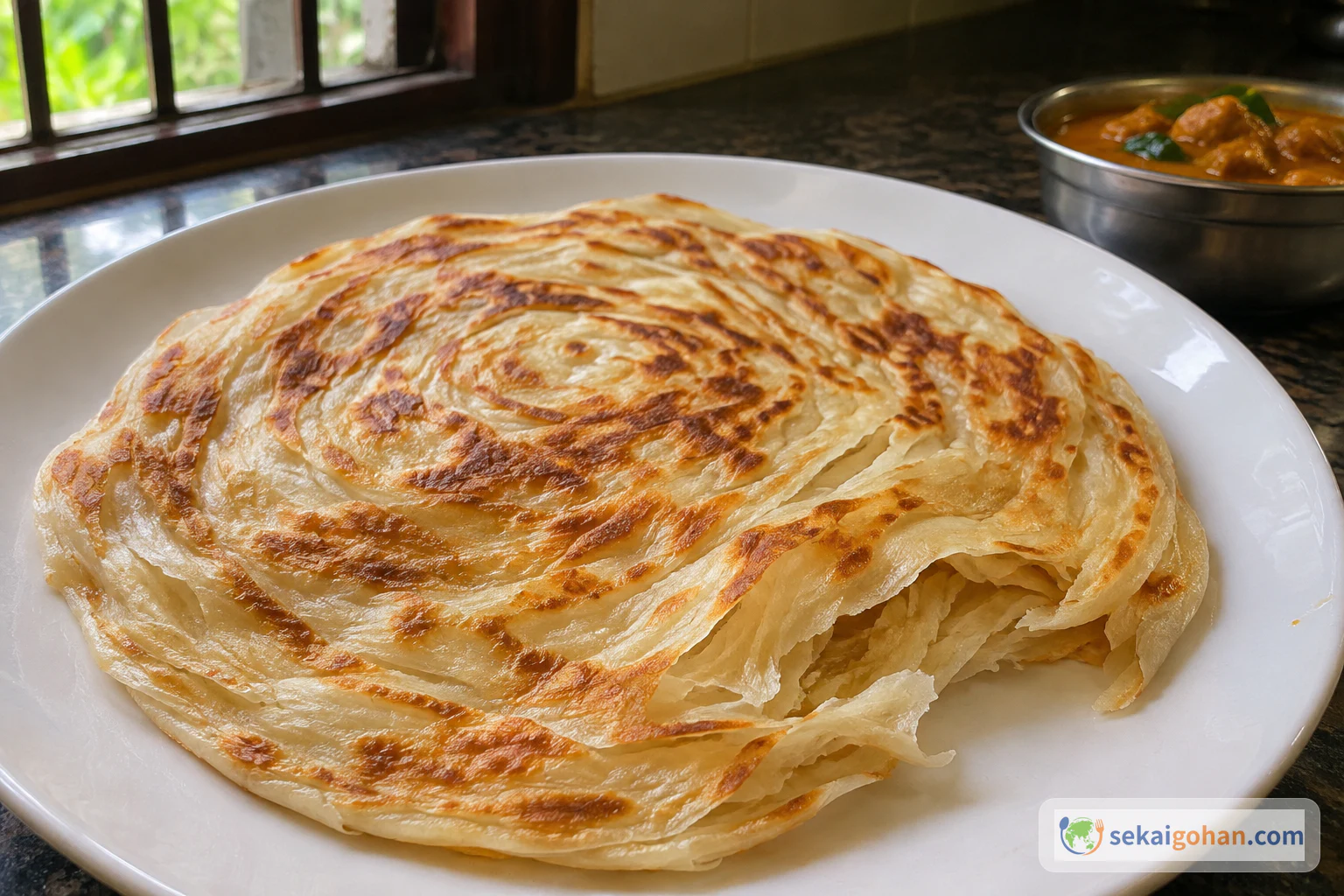
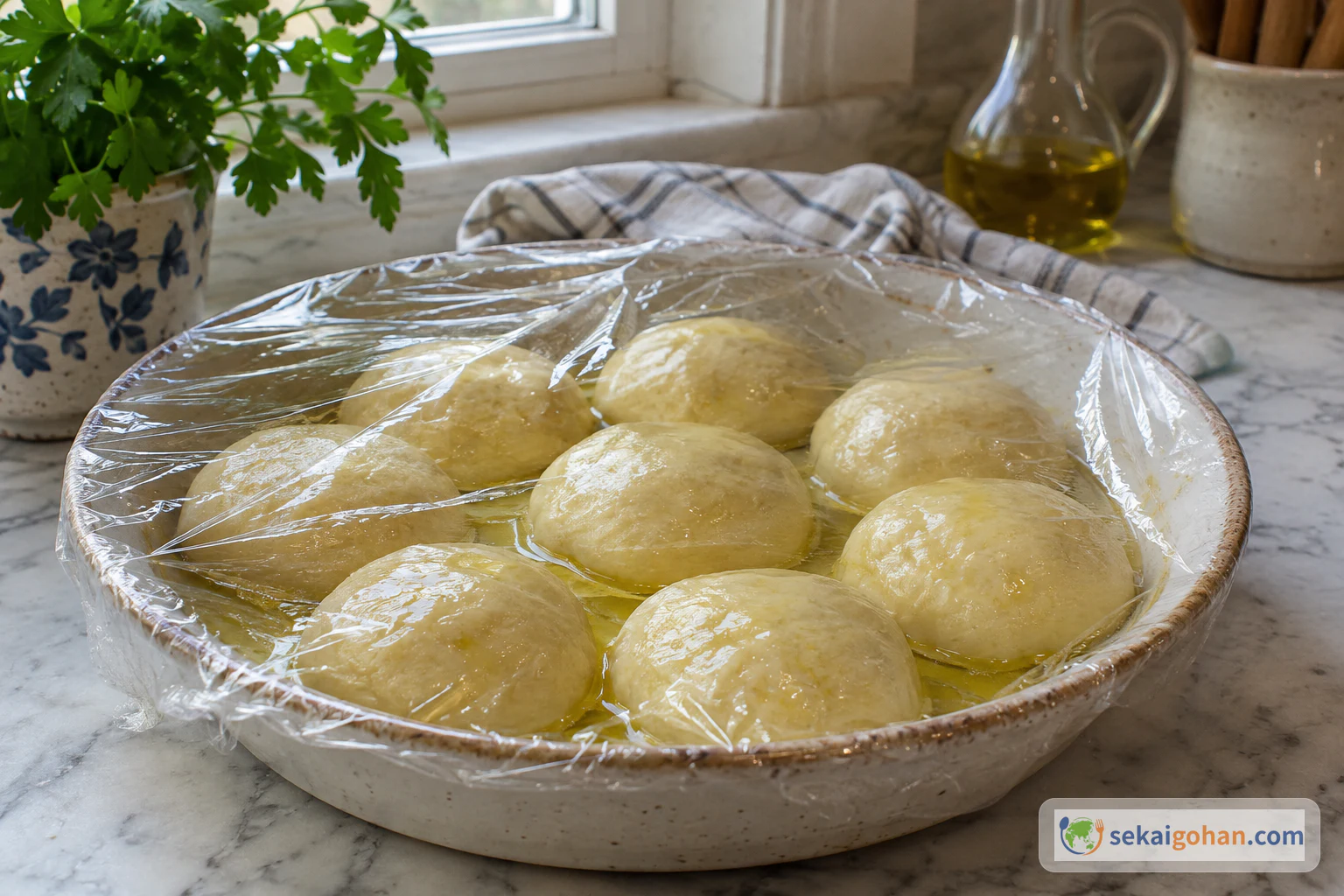
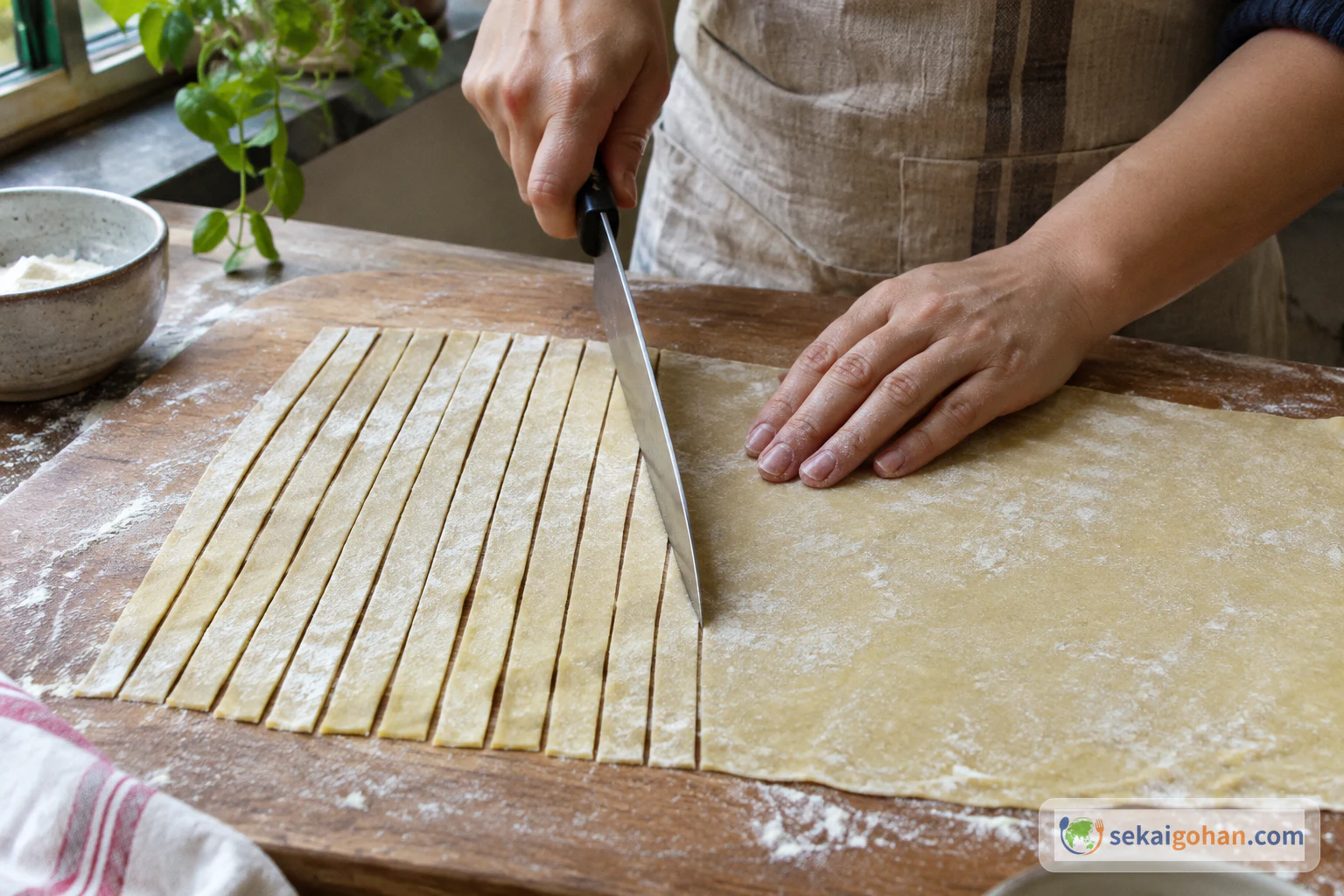
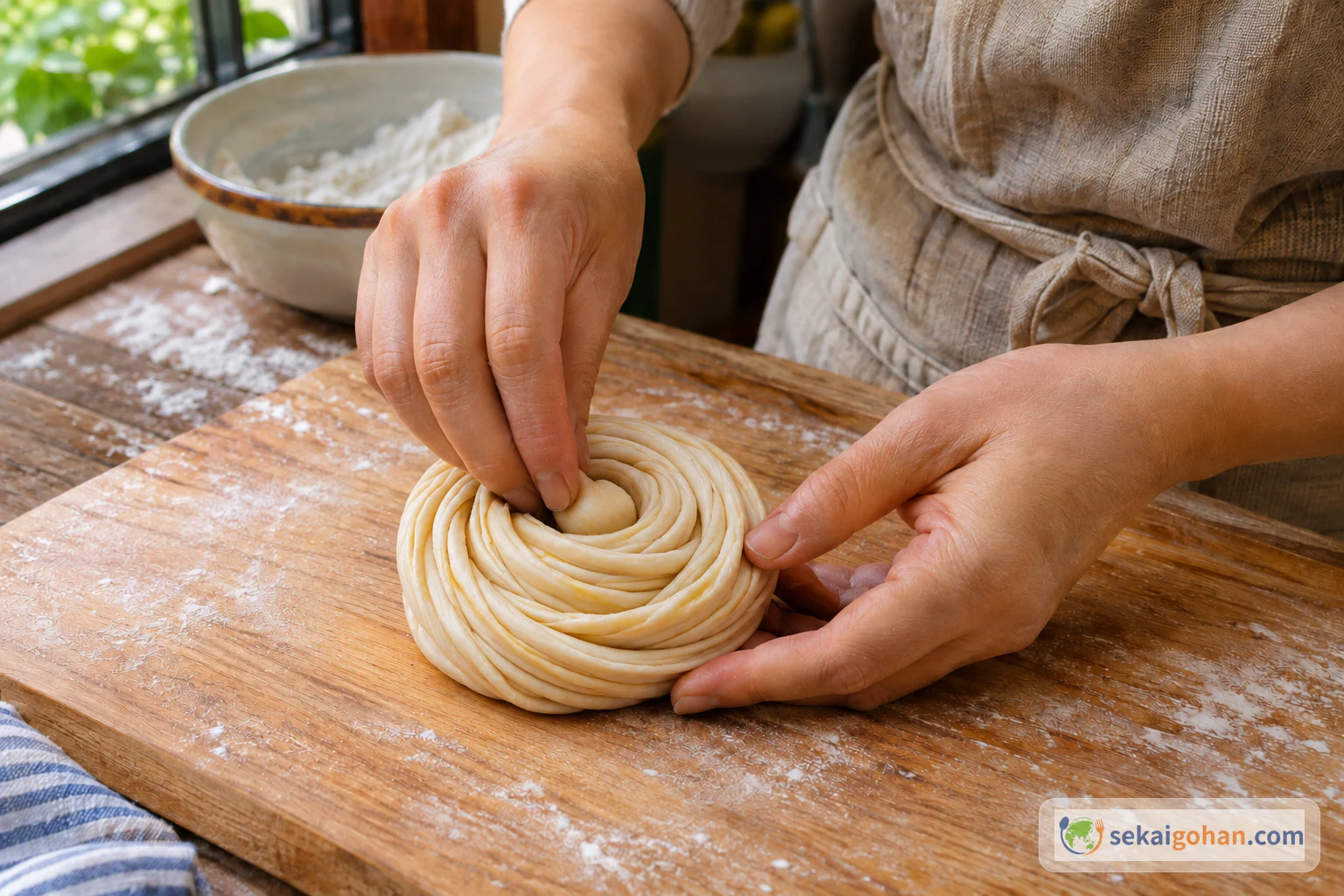
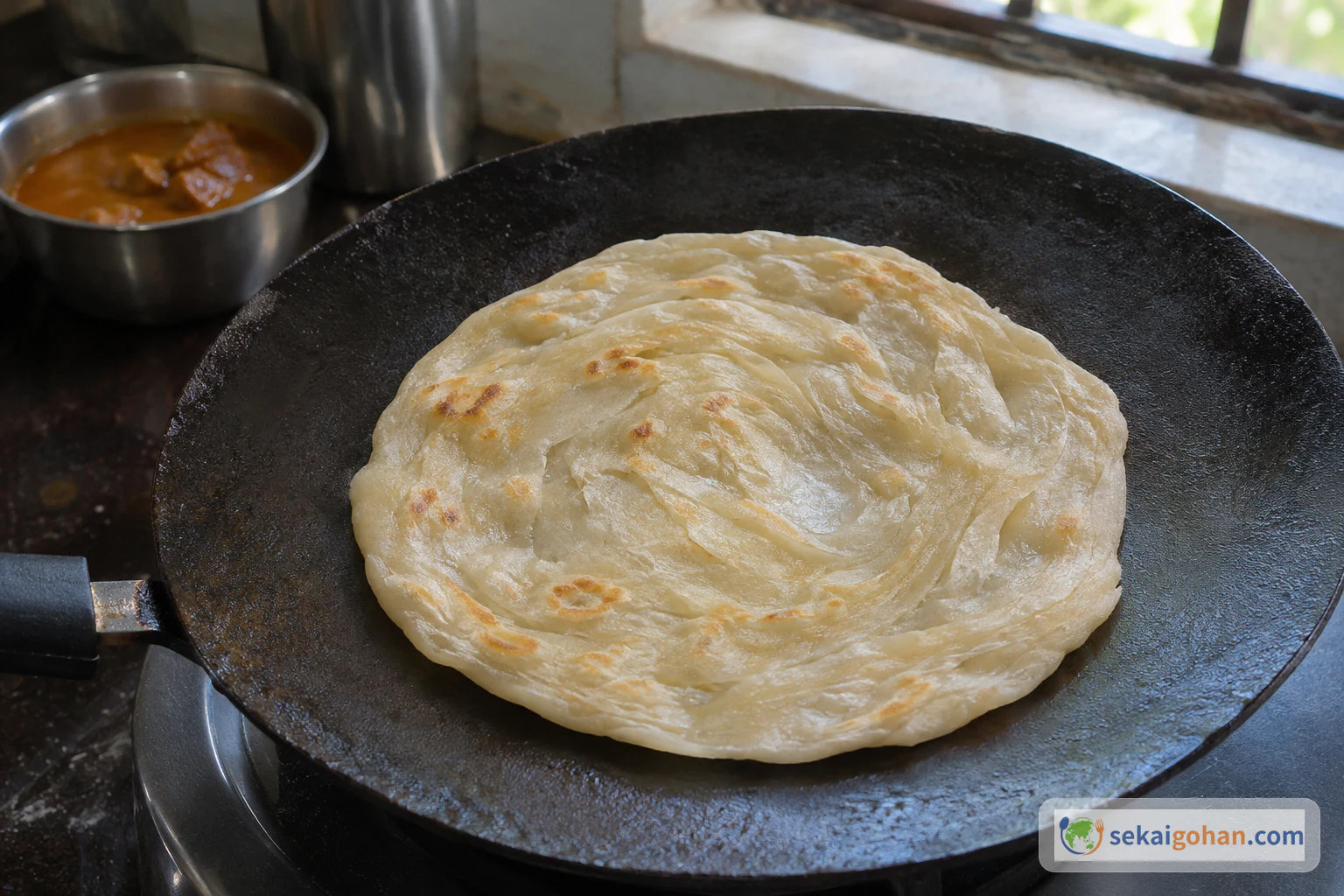
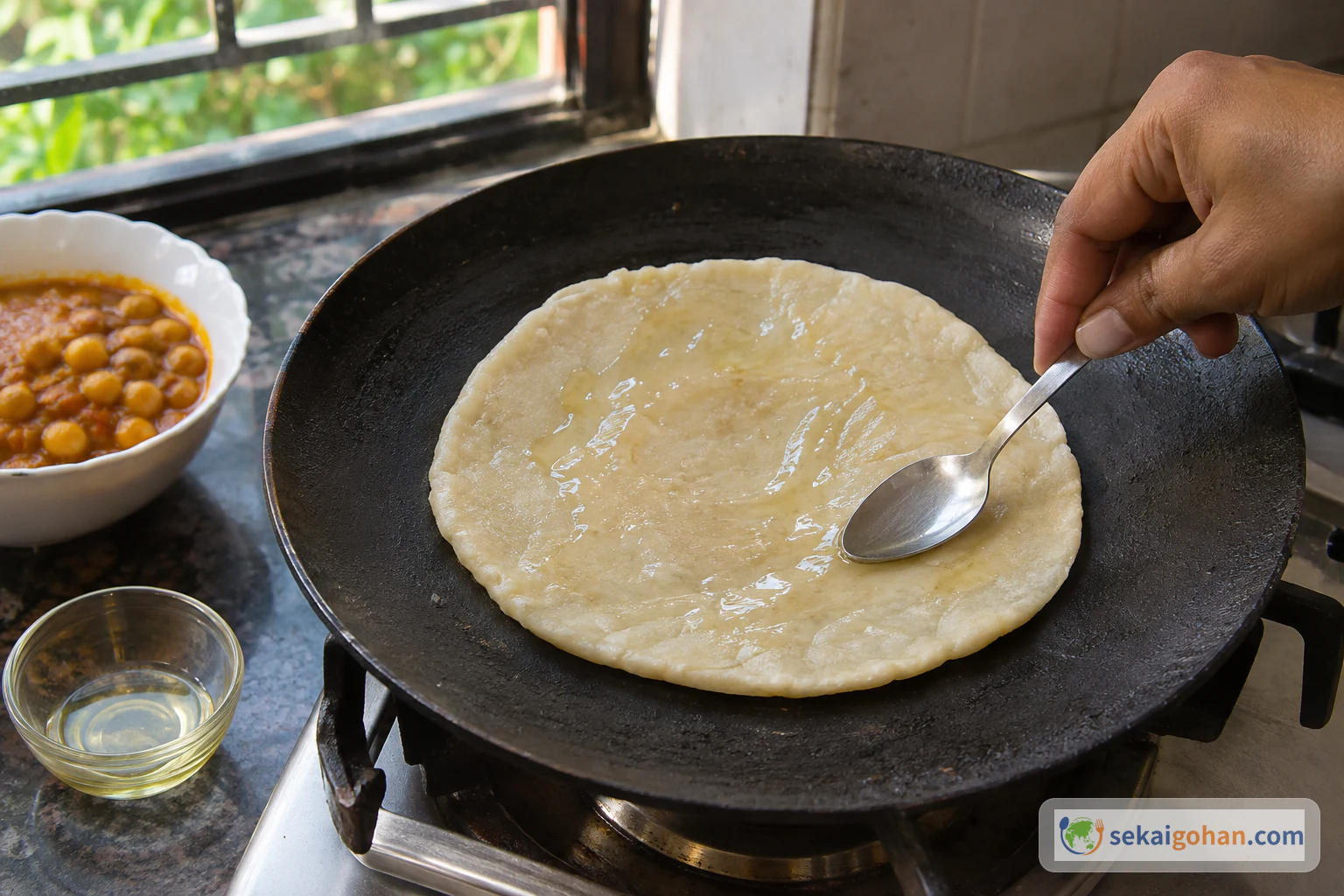
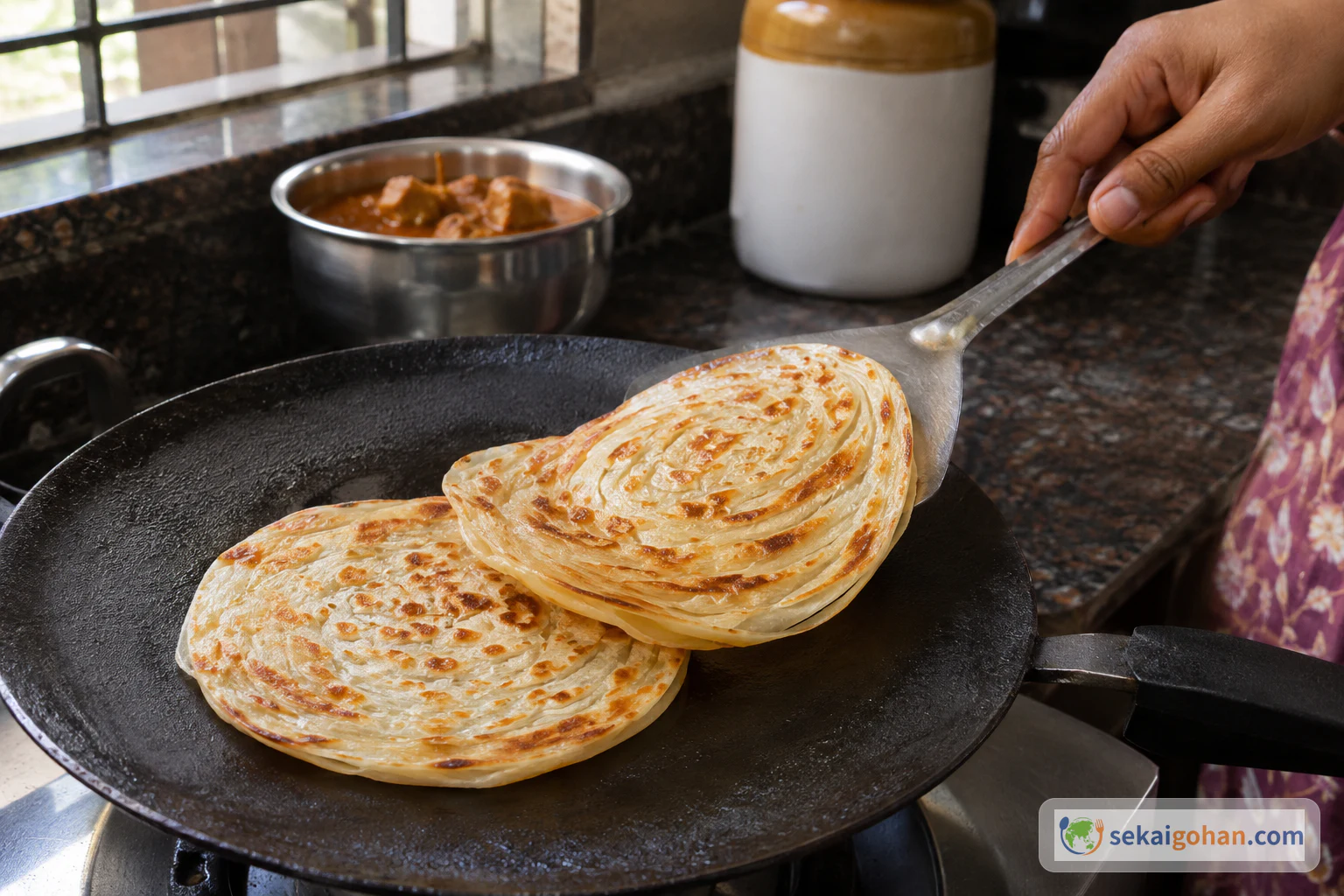
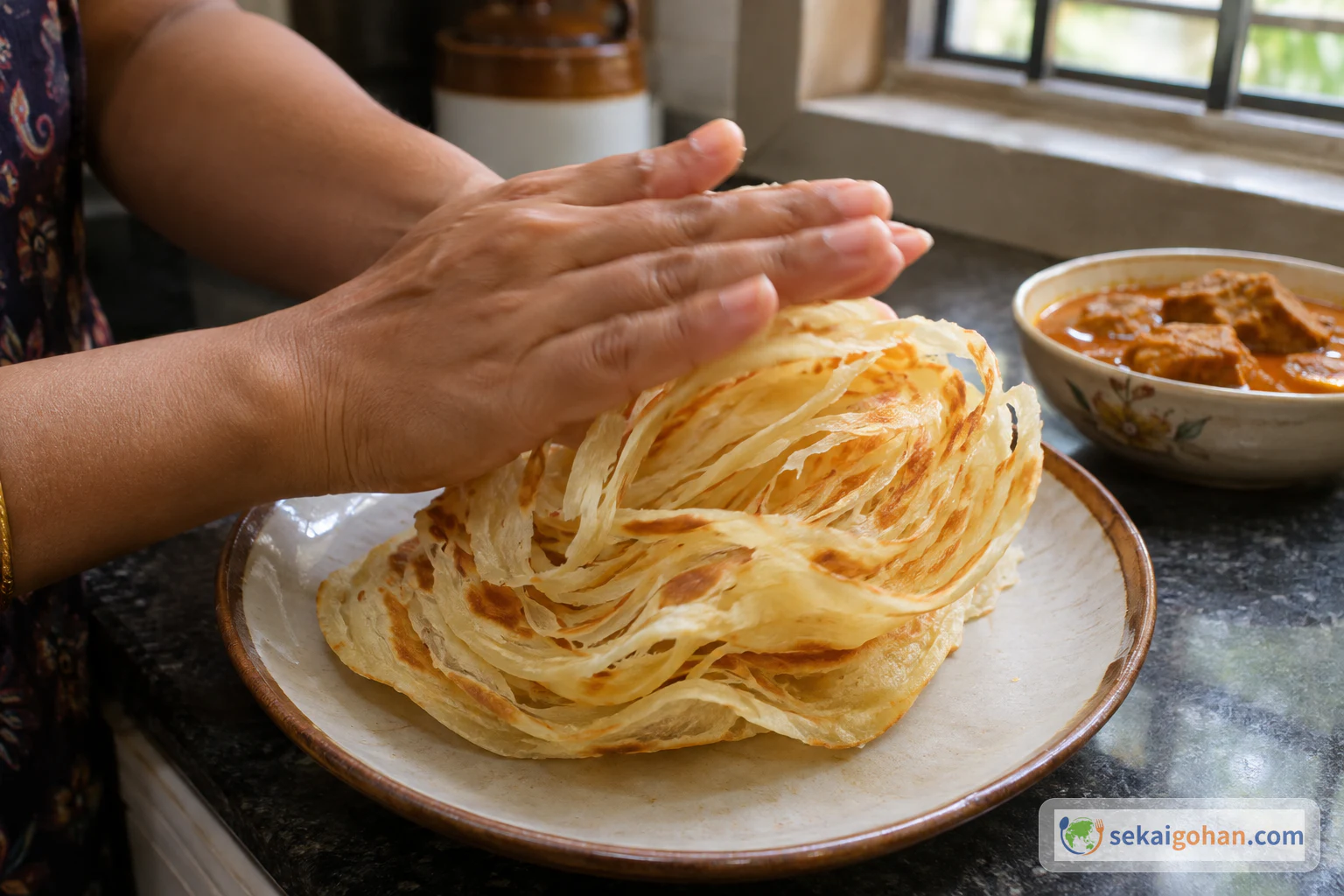
Picture a flatbread flecked with golden brown, its layers ready to pull apart and meet a bowl of curry. In Kerala, porotta is a familiar sight at eateries and roadside stalls, and it usually comes with curry. All of its layers come from the shaping. A soft dough is rolled into a thin sheet, cut into strips, then coiled back together and griddled. This version is plain and made without egg or yeast.
Kerala Parotta: Names, Origins and Similar Breads
You will see the name written Parotta and Porotta, and sometimes Malabar paratha or Kerala paratha. It's everyday food, made from maida or wheat flour, oil or ghee, and water. Some areas add egg. Nobody is sure where the bread or its name came from. What matters is the technique: develop the gluten, rest the dough, cut a thin sheet into strips, gather or coil them, griddle the bread and loosen the layers.
Not every layered or stuffed flatbread from the region is a parotta. North Indian lachha paratha is built on atta, not maida, so it's a different bread. Aloo paratha is an atta flatbread with a potato filling. Mughlai paratha from Bangladesh is a Bengali-style stuffed bread with egg and meat. For more dishes from the country, browse more recipes from India.
Ingredients for 8 Parottas
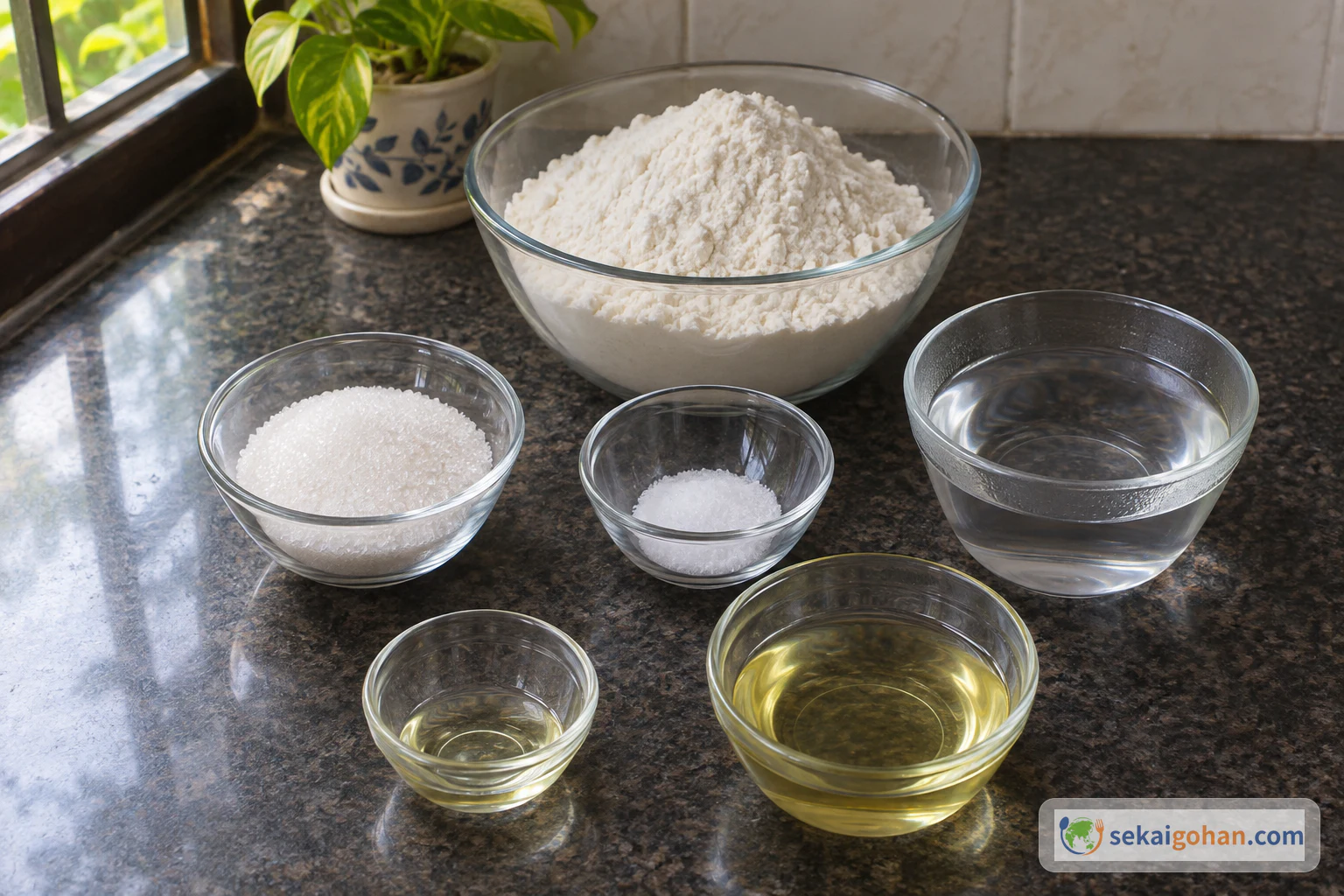
This makes 8 parottas. The two oil rows are separate uses, so keep them apart.
Equipment
- Mixing bowl and spoon
- Measuring cups and spoons
- Moist cloth and a cover for resting the dough
- Bench scraper or knife for dividing the dough
- Rolling pin
- Knife for cutting strips
- Tawa or flat griddle
- Spatula
- Small spoon for the roasting oil
- Plate
Choosing Flour and Oil for Parotta
Maida is a refined wheat flour, so use all-purpose flour here. Other flours will change the texture, and Japanese cake flour isn't the same thing. Mixing in atta pulls the bread away from the maida-led style and changes how it eats. For the fat, use a neutral oil.
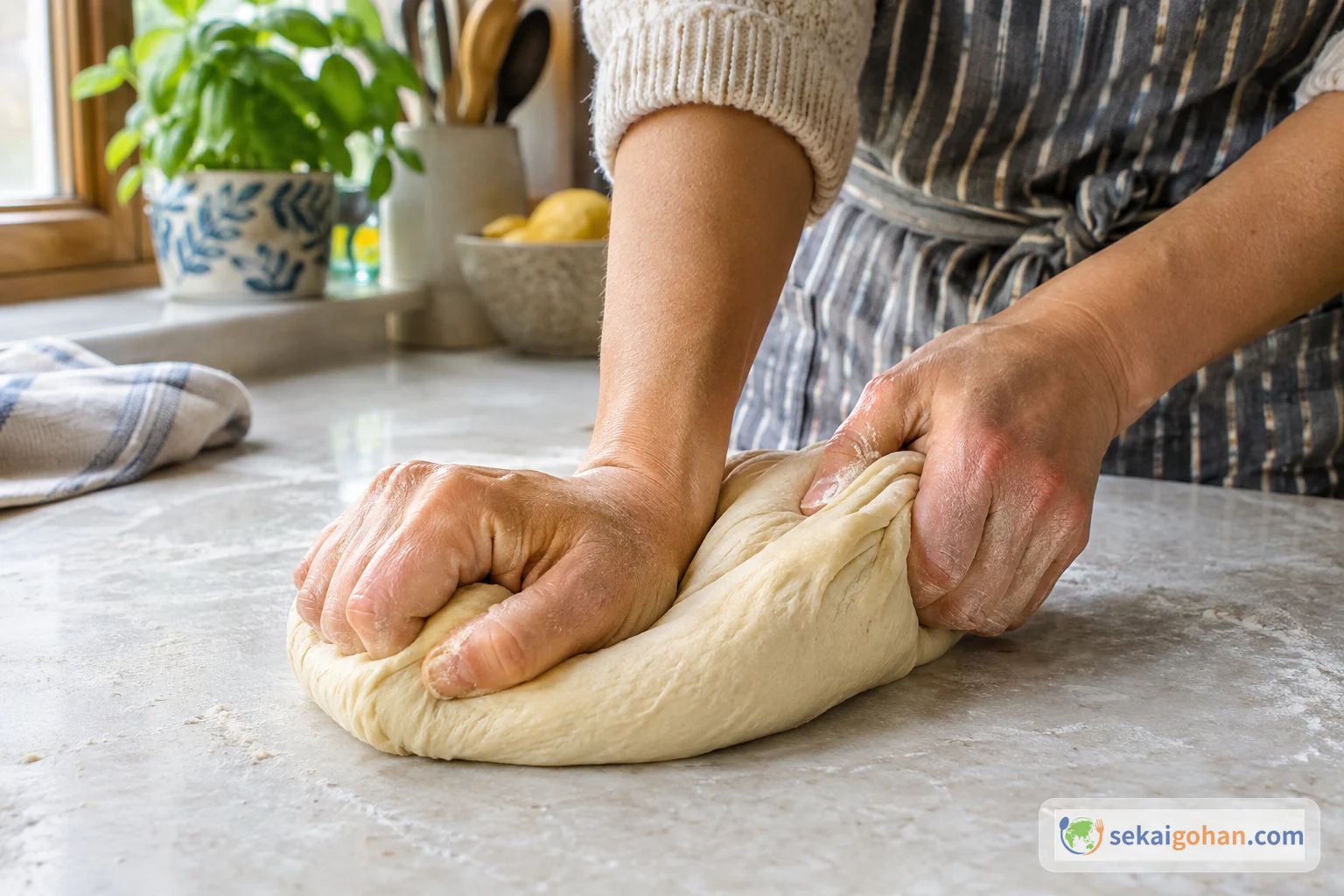
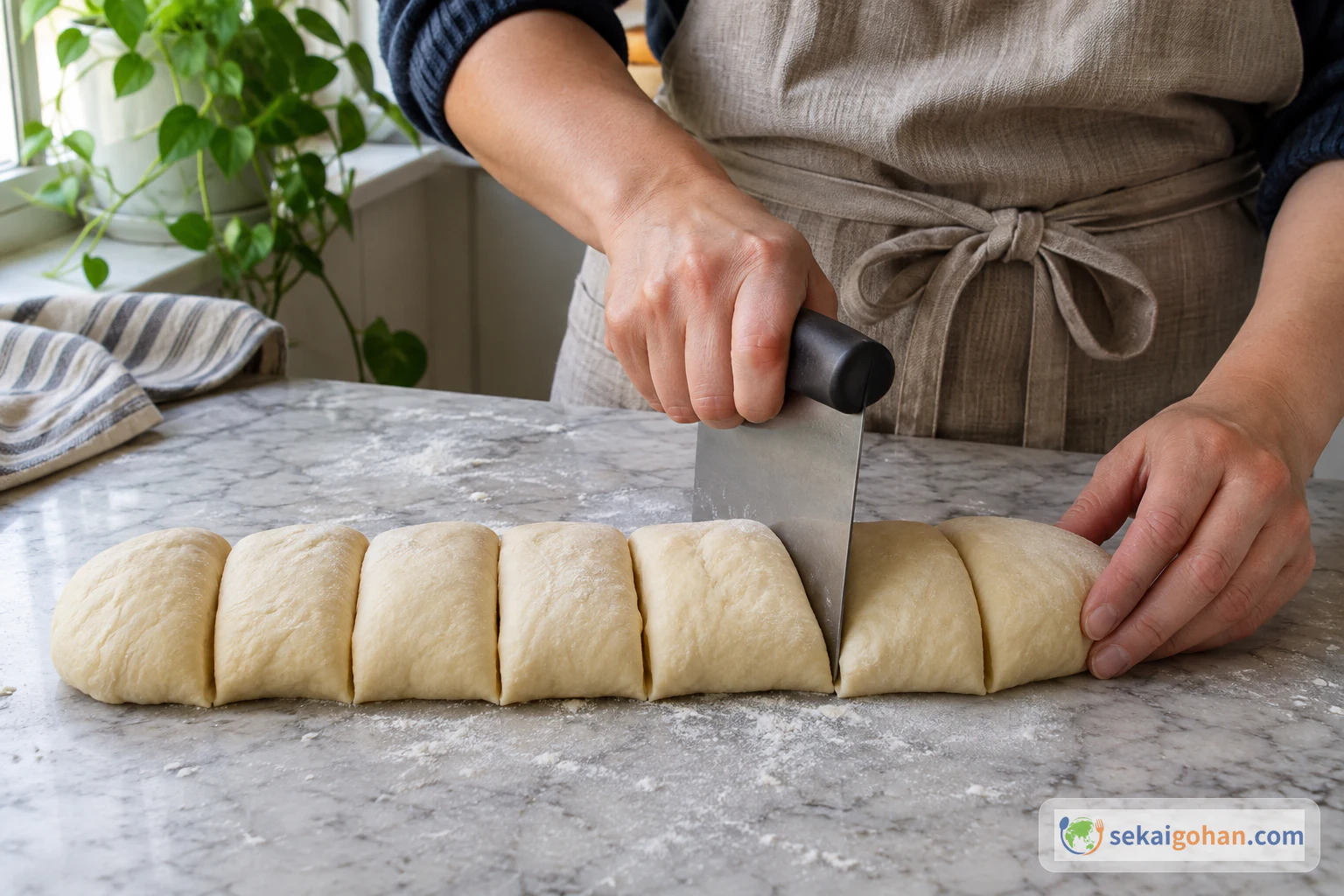
Method: From Soft Dough to Coiled Layers
The "about 30 seconds" on the tawa applies only to the first cooking of each side. It is not a total cooking time. Watch the color and crispness.
The rests are ordinary covered rests, not fermentation, because the dough has no yeast. The 15-minute rest after coiling is a step of its own, so don't skip it.
Steam from hot bread can burn your hands. Do not touch the bread right after it comes off the tawa. Loosening the layers by hand is optional; wait until the steam has settled and you can handle the bread comfortably.
Parotta Troubleshooting
If something goes wrong, check these points against the method.
| What you notice | What to check |
|---|---|
| The layers don't show | Was the sheet rolled thin, were the strips 0.5–1 cm wide, and did the coil get its full 15-minute rest? |
| The layers were lost in rolling | Roll the rested coil gently, and only to about 7–7.5 inches |
| The dough is too wet or too stiff | Add the water little by little and stop when the dough feels right. Knead for the full 12–15 minutes |
| The bread is still pale after the first turns | About 30 seconds is an early cue for each side. Keep flipping until it is golden and crisp all over |
| The rim seems underdone | Press the edges against the tawa with the spatula |
| The bread is too hot to loosen | Keep waiting, or skip the step. Clapping is optional |
Serving Parotta and Other Versions
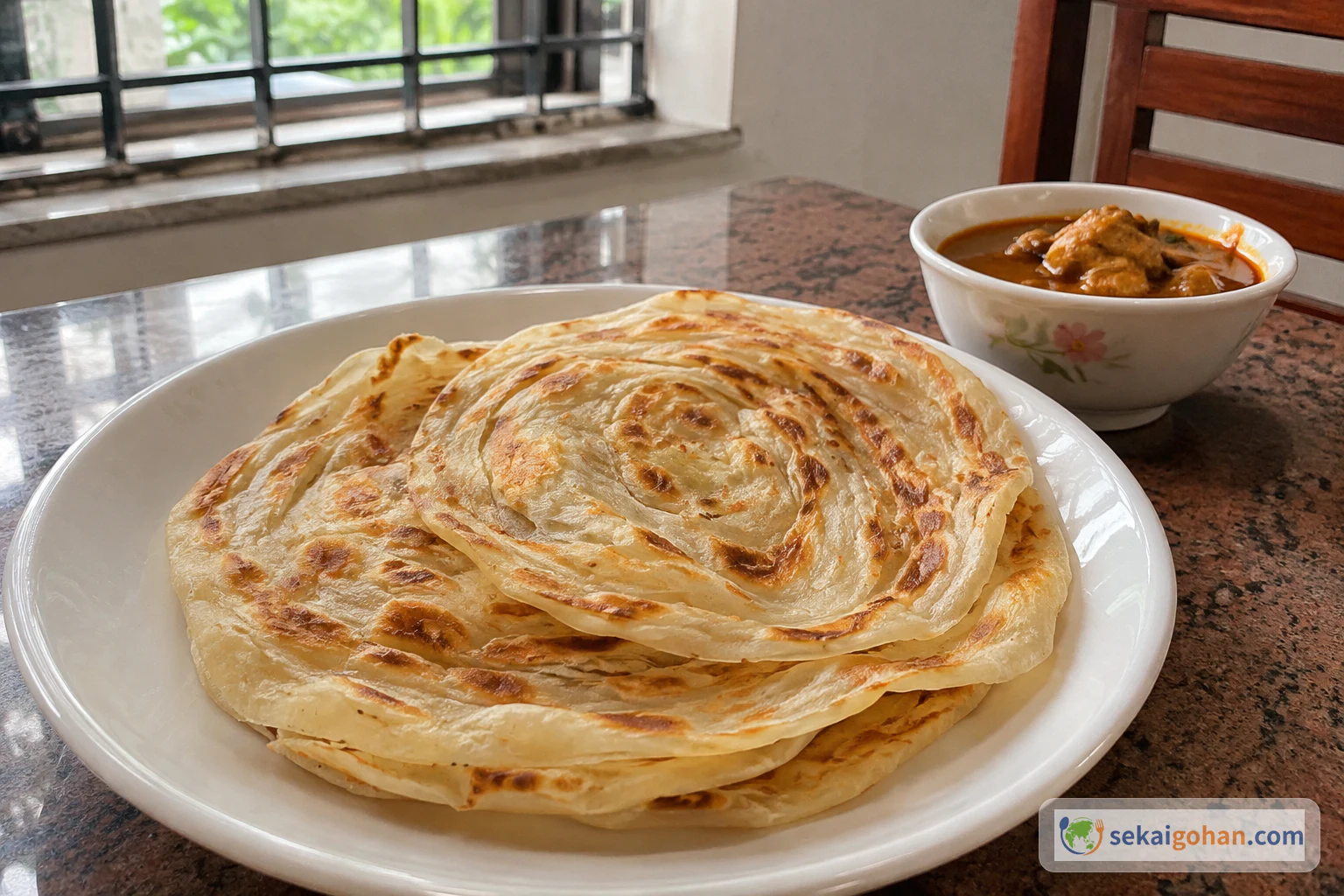
Serve parotta with curry on the side. Kerala beef fry is a good one to set beside it, and the torn layers soak up the sauce.
You can also shape the bread another way. Lift the thin sheet and gather it into pleats instead of cutting strips. Pick one method, because the two don't combine. Some restaurant-style doughs are richer and use egg, milk, ghee, lemon and baking powder. Those are separate recipes, so follow one from start to finish instead of mixing its ingredients into this dough.
Frequently Asked Questions
Is this parotta egg-free?
Yes. This version uses only flour, water, sugar, salt and neutral oil, so it has no egg, dairy or yeast. Other recipes do use egg or milk, so check the ingredient list if you are following a different one.
Is the dough fermenting during the rests?
No. There is no yeast in this dough, so the rests are just covered rests, not fermentation.