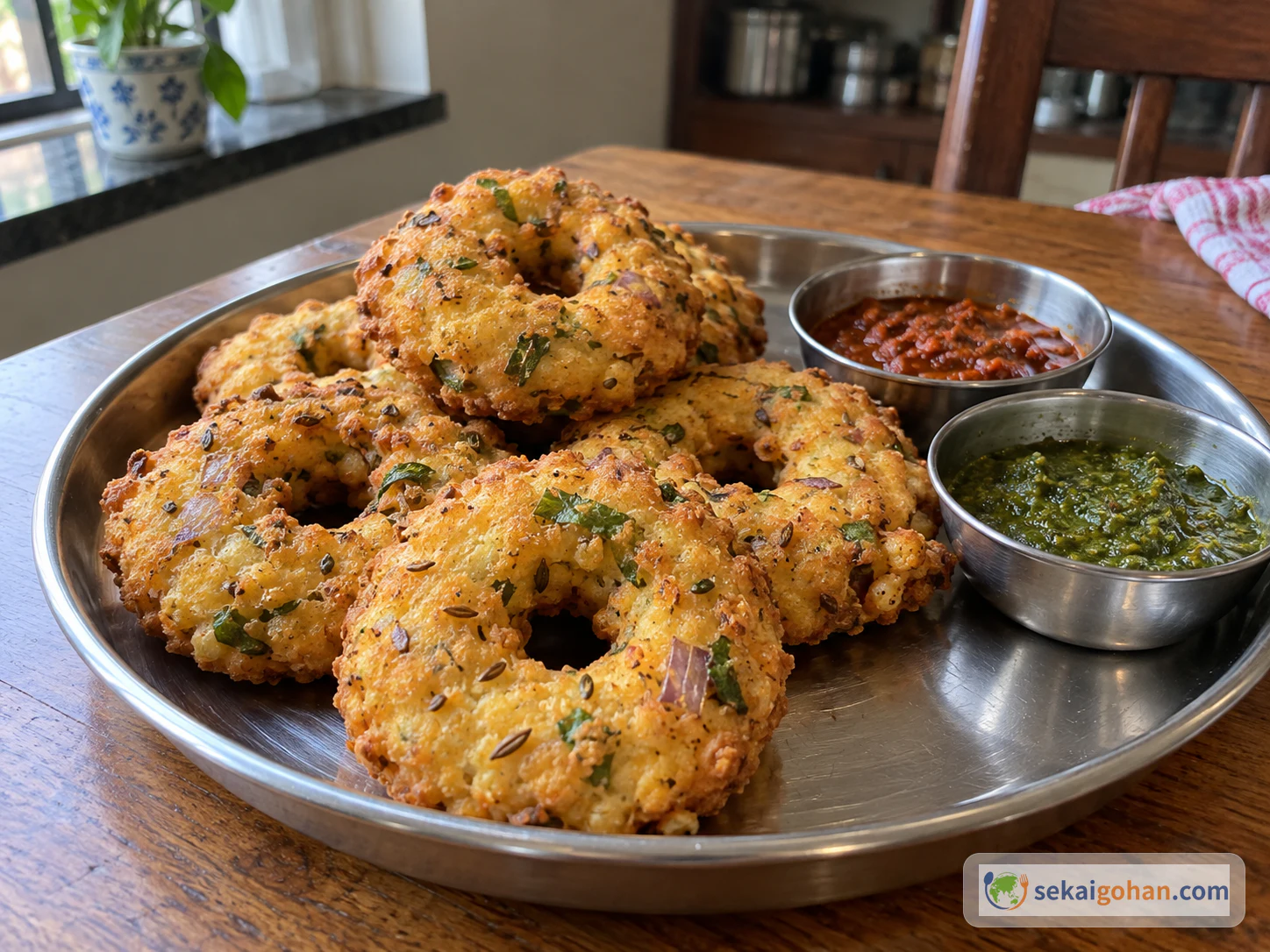
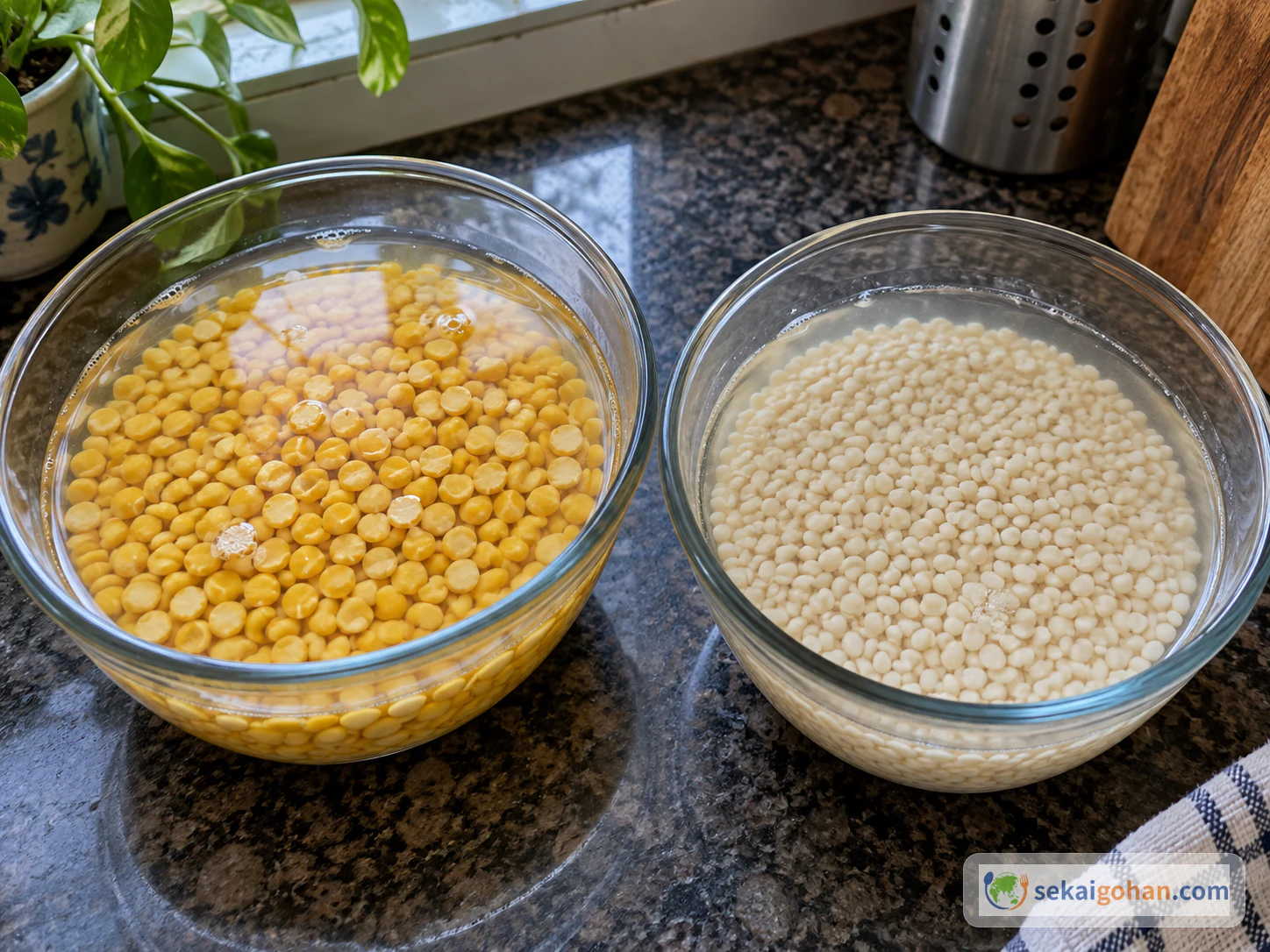
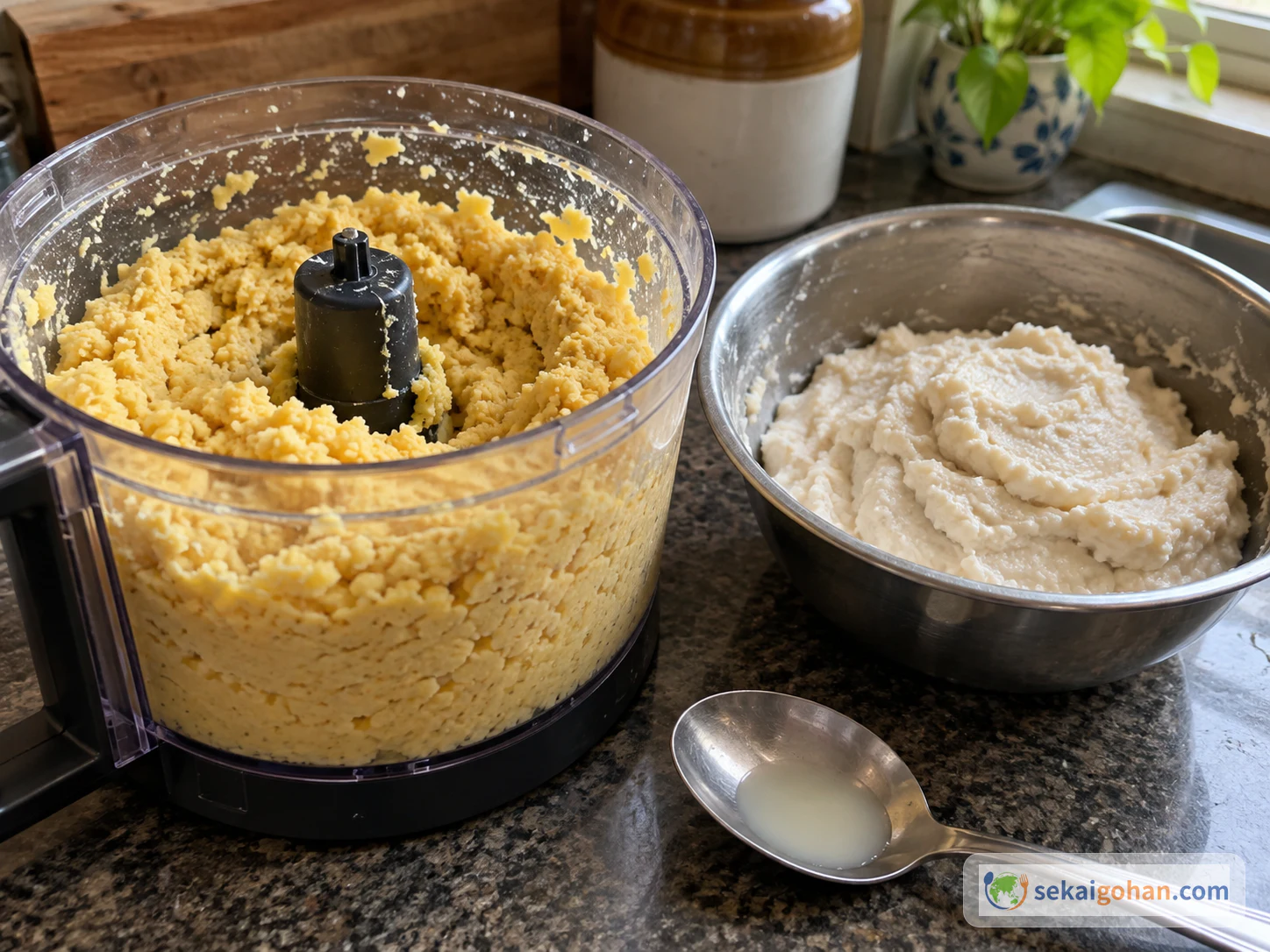
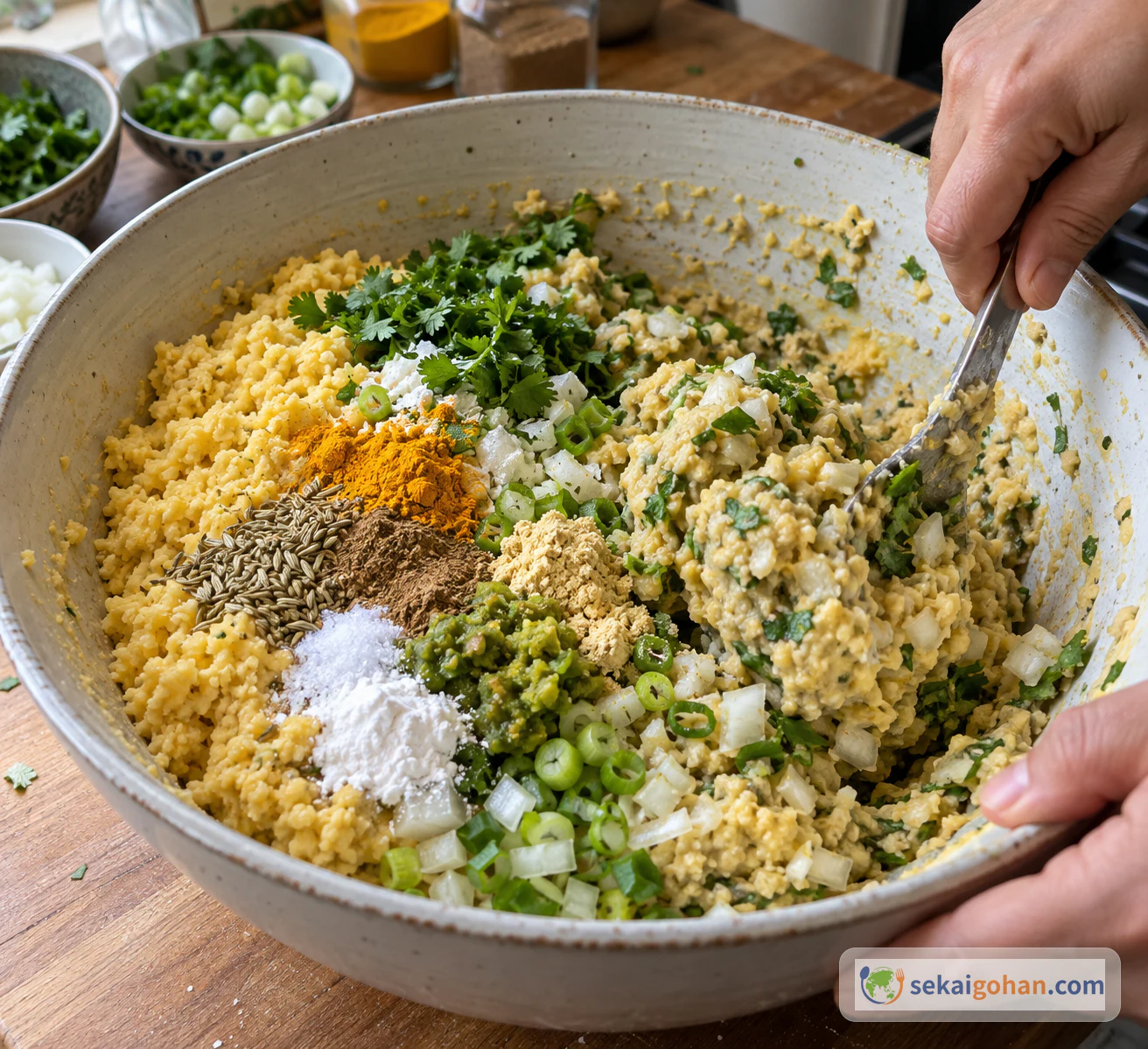
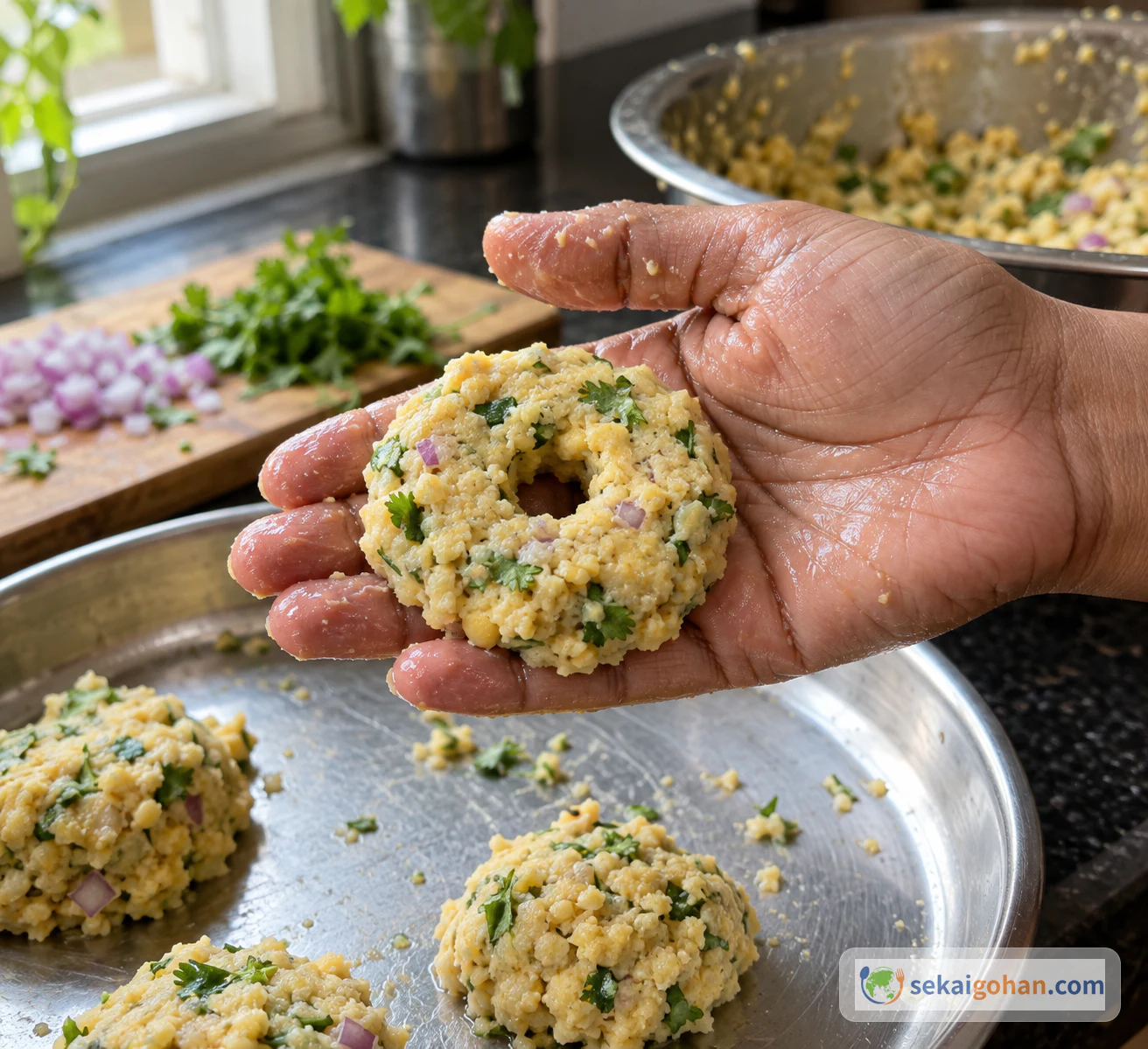
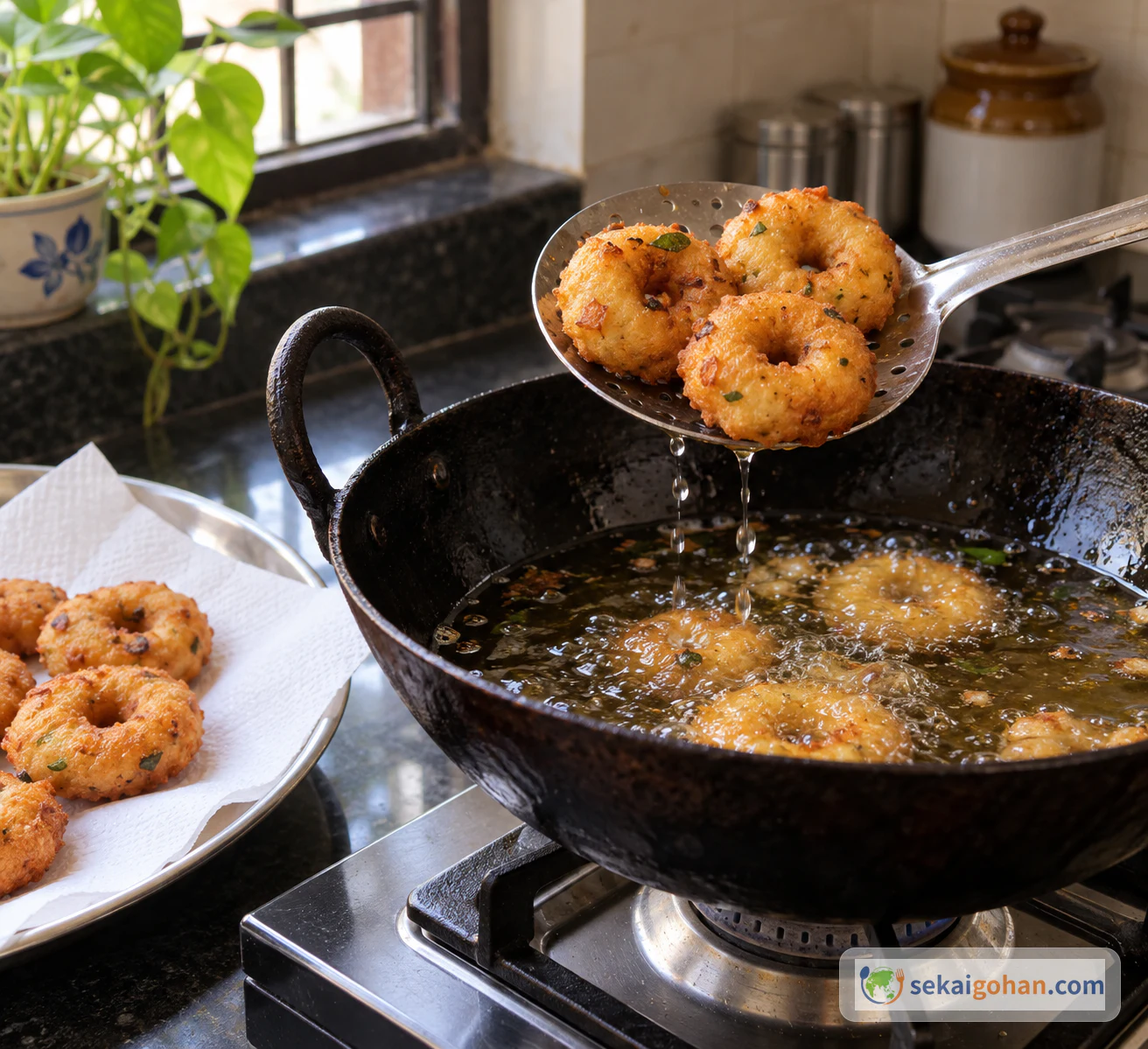
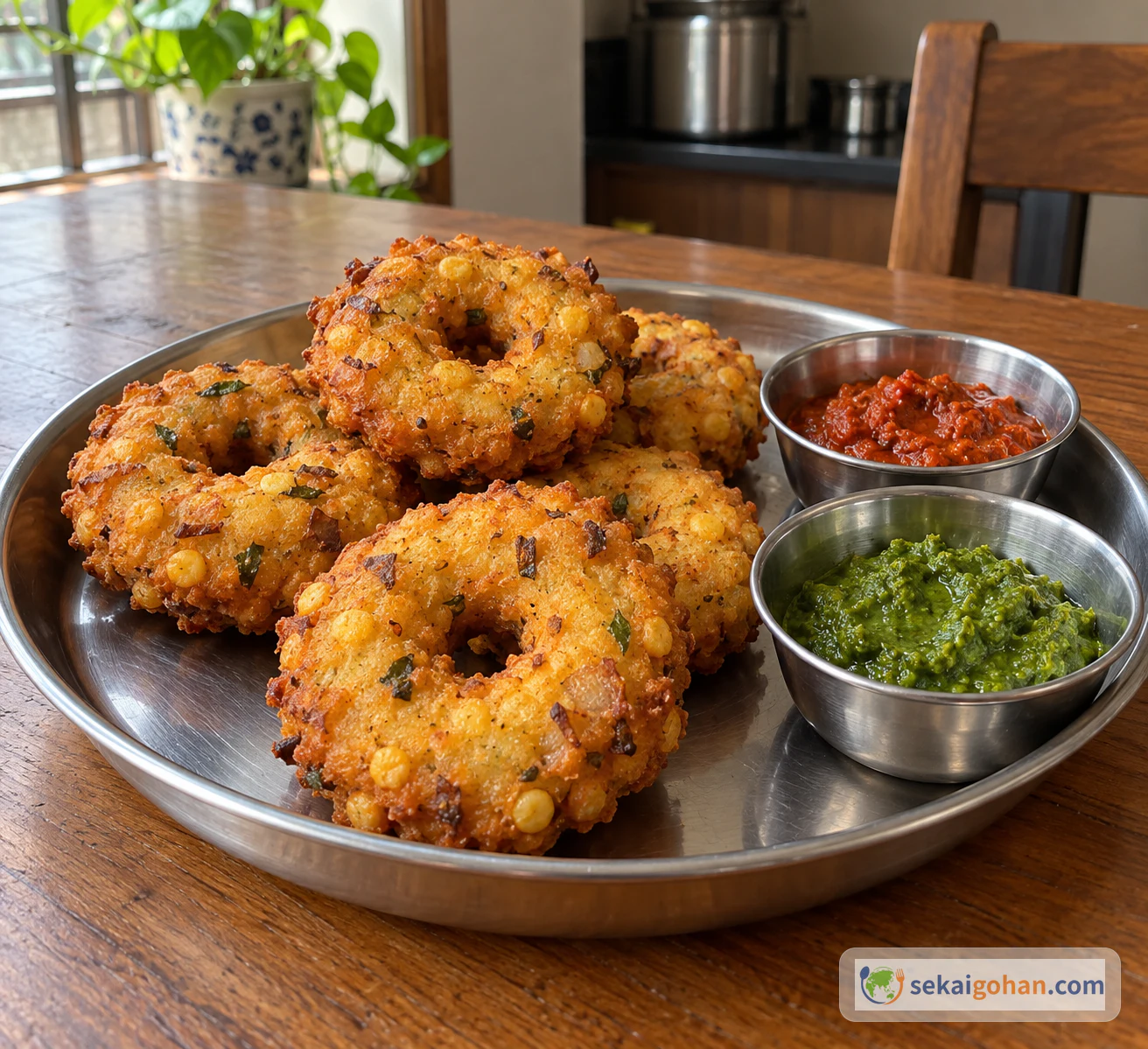
Small golden rings come out of the oil, each with a hole in the middle, and go to the table warm with red or green chilli chutney. Bara is an Indian fried snack made from chana dhal and de-skinned urad dhal. Ginger, garlic, green chilli, cumin, fennel, onion, coriander and spring onion give the batter its aroma. The recipe makes 50 serves, a good number for small canapé portions. Plan ahead, because the dhals need 8 hours of soaking.
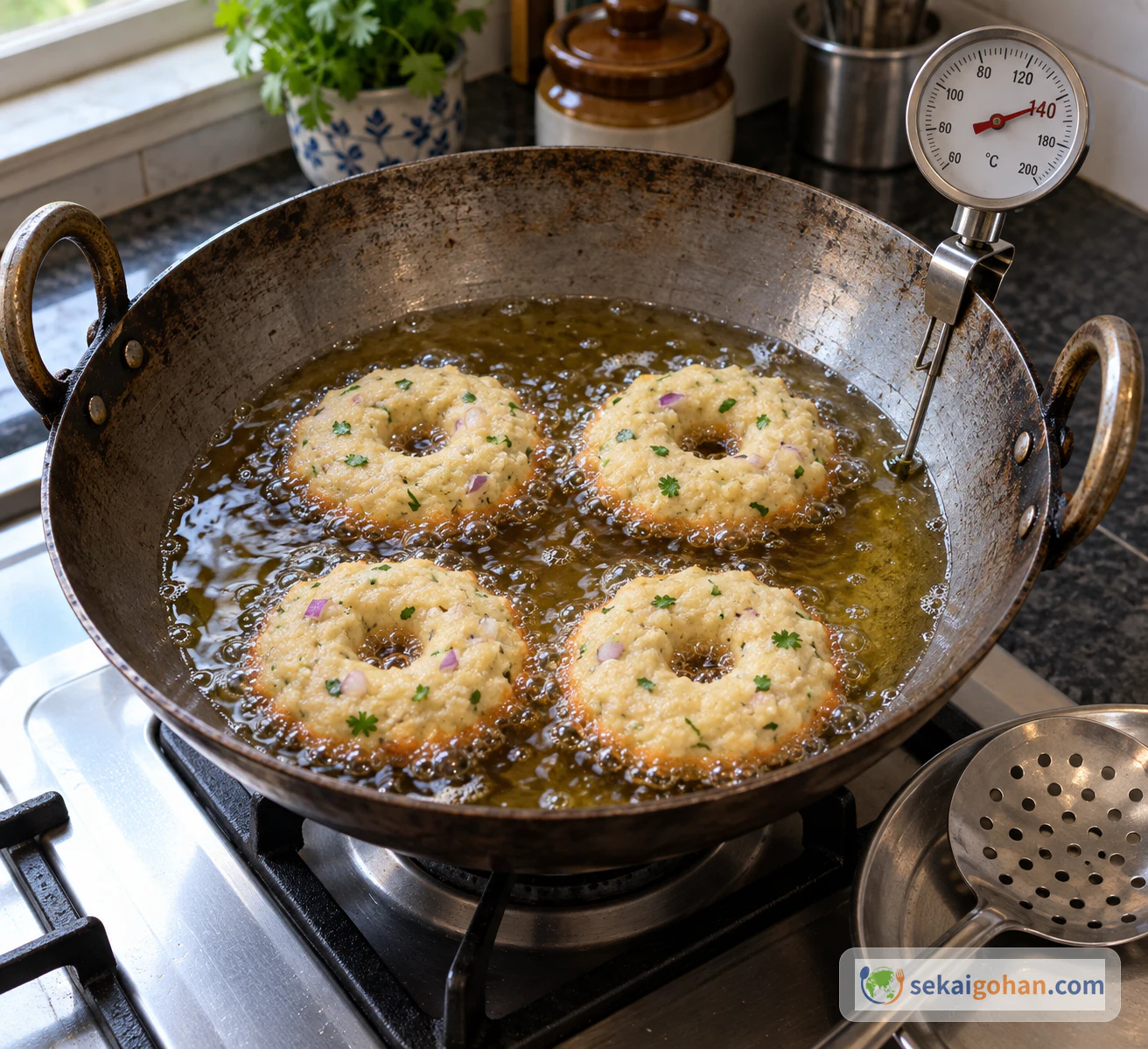
Two dhals soaked and ground separately, a thick batter with as little added water as possible, a hole in the center of every piece, and oil held at 275°F (140°C).
About Bara
In India, these dhal rings are served as a canapé at weddings, Hindu festivals and casual dinner parties. You'll find more of the country's dishes on our India page.
The name covers a lot of ground, so it's easy to mix up. Nepal's Newari bara, or wo, is a black lentil pancake cooked on a griddle, so its shape, mix and method all differ. The bara in Trinidad's doubles belongs to a different dish altogether.
Even within India, bara changes from recipe to recipe. One version shapes the ring from urad dal, semolina, onion, ginger, green chilli, baking soda and asafoetida, then serves it with yellow-pea curry or chutneys. Chhattisgarhi bara is a festival snack for celebrations such as Pola, shaped into a ring from split skinless urad dal.
Ingredients: Two Dhals and a Bowl of Aromatics
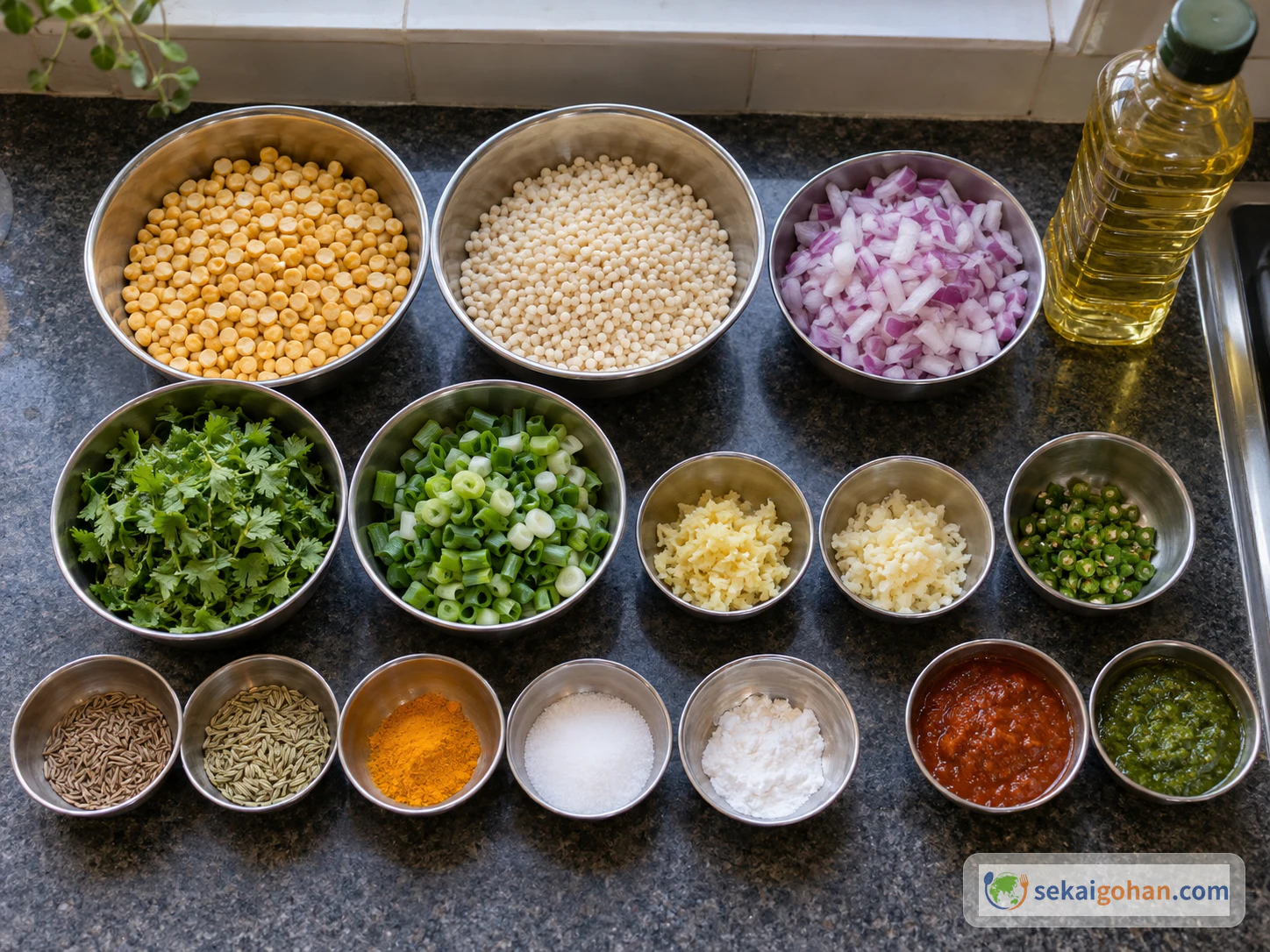
Wash the coriander and spring onions well under running water before chopping. The onion, coriander and spring onions all go into the batter and are fried, not scattered on raw at the end.
Equipment
- 2 bowls for soaking
- Food processor
- Large mixing bowl
- Measuring cup with ml markings and measuring spoons, including a 20 ml tablespoon
- Small saucepan or kadhai, deep and stable
- Cooking thermometer
- Slotted spoon
- Plate lined with paper towels
Choosing Dhals and Seasonings for Bara
Try an Indian grocer. It helps to search for these English names, or show them to the staff: chana dal, split yellow peas and de-skinned urad dal. Measure the dhals and salt by volume.
Each substitution changes the dish, so swap carefully:
| Ingredient | Notes on substitutes |
|---|---|
| Chana dhal | Whole chickpeas and soybeans give a different result |
| De-skinned urad dhal | Whole, skin-on urad soaks and eats differently. If you can't find de-skinned, ask at the shop |
| Baking powder | Use baking powder, not baking soda |
| Ground ginger and garlic | Fresh ginger and garlic don't swap in at equal measure |
| Fennel seed | Keep the fennel; cumin is already in the batter |
| Vegetable oil | Ordinary vegetable oil is right; mustard oil would take the dish somewhere else |
This recipe contains legumes. Check the labels on anything you buy, including spices and chutney, for allergens and cross-contact.
Frying Bara Safely and Fixing Problems
:::warning Frying safety This guidance comes from Japanese public safety bodies (Nishinomiya City Fire Bureau and NITE). It is general advice on oil fires, not specific to this recipe.
- Watch the temperature. Cooking oil ignites at about 700°F (340–370°C) and can catch fire within minutes of being put on the heat. The 275°F (140°C) target is far below that, but confirm it with a thermometer and never leave oil unattended on high heat.
- Stay with the pan. Don't walk away while frying. If you must leave, turn off the heat first.
- Don't fry in too little oil. A small amount heats up very quickly. Use a deep, stable pan and follow its manual on oil quantity.
- On an induction cooktop, use the frying mode and a suitable pan, and never a pan with a warped base.
- Don't count on an overheat sensor. Keep watching the oil anyway.
- Keep water out of the oil. It makes the oil spit.
- If the oil catches fire, never pour water on it. The water vaporizes suddenly, throwing burning oil and spreading the fire. While the fire is small, use an extinguisher from a distance, aiming to cover the surface of the oil.
Most problems come back to two things: water and oil temperature. Keep the batter thick and use a thermometer, and you avoid most of what's below.
| Problem | Likely reason | What to do |
|---|---|---|
| Batter sticks to your hands | Hands are dry | Wet your hands only. Water mixed into the batter makes pieces more likely to fall apart |
| Batter feels loose | Too much soaking water went in during grinding | Next time, add soaking water only if needed, and only a little |
| Oil temperature falls | Too many pieces went in at once | Fry 4 or 5 pieces at a time and let the thermometer guide the heat |
| Oil splashes | Batter was dropped in, or water got into the oil | Slide pieces in gently and shake the water off your hands first |
| Unsure of the oil temperature | No thermometer | Use one. You can't reliably judge 275°F (140°C) by the look of the oil |
Serving and Adjusting Bara
Serve the bara warm with chilli chutney on the side. The chutney is optional, so the rings can also go out on their own.
To try a smaller batch first, scale every ingredient down in the same proportion, for example to half. For milder or hotter bara, change the amount of ground green chilli.
Frequently Asked Questions
Can I use my usual measuring cup and spoons?
Check their size first. This recipe uses a 250 ml cup and a 20 ml tablespoon. A Japanese cup, for example, holds 200 ml and a Japanese tablespoon 15 ml. The safest approach is to measure by the ml markings and use a 20 ml spoon for shaping.
What temperature should the oil be, and for how long do I fry?
Keep the oil at 275°F (140°C) and fry for about 2–3 minutes on each side, until golden brown. Your pan and the size of each batch change the result, so watch both the thermometer and the color.
Do I need a kadhai?
A small saucepan or kadhai works, and so does any deep, stable pan you already own. A cooking thermometer matters more.