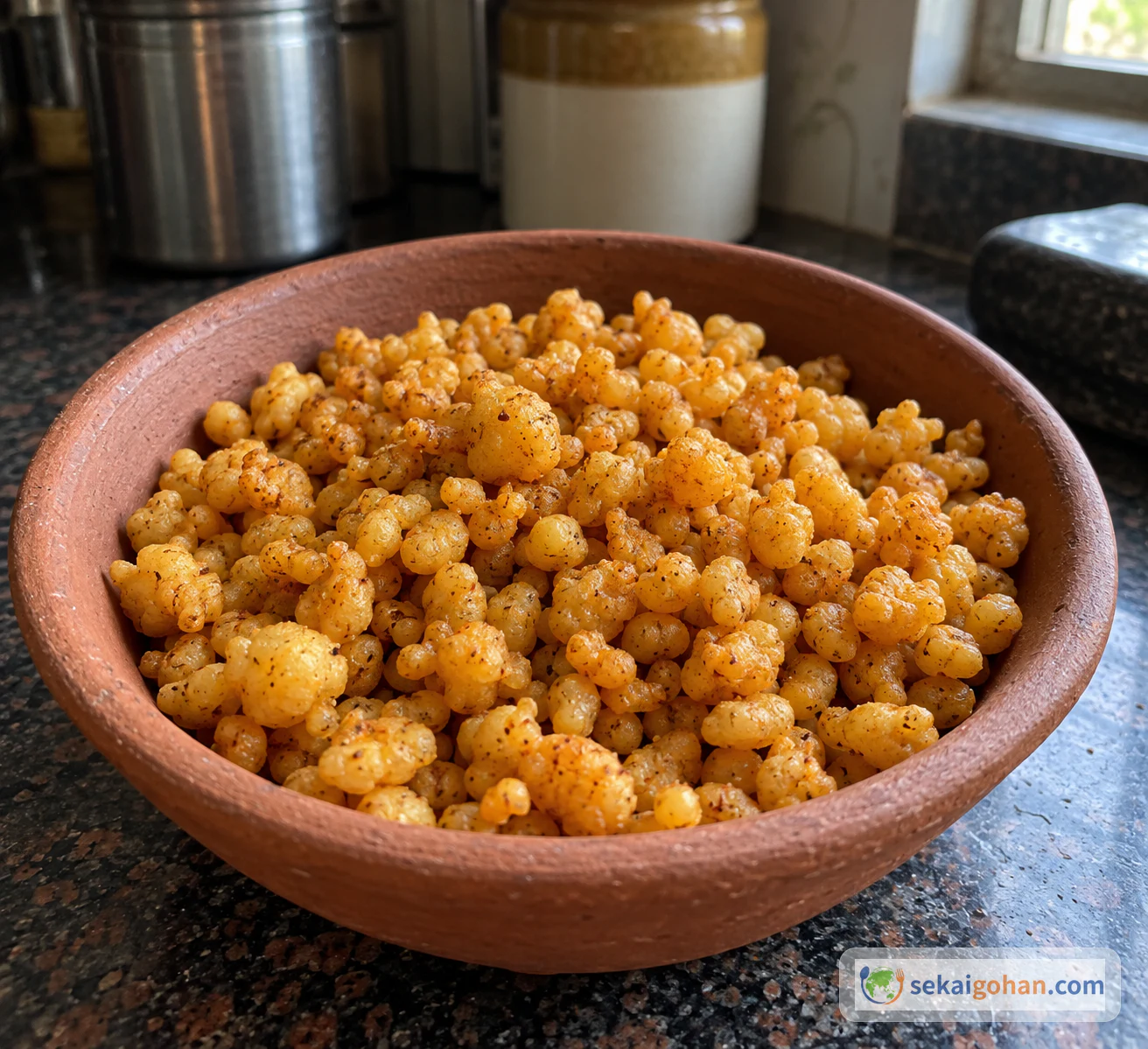
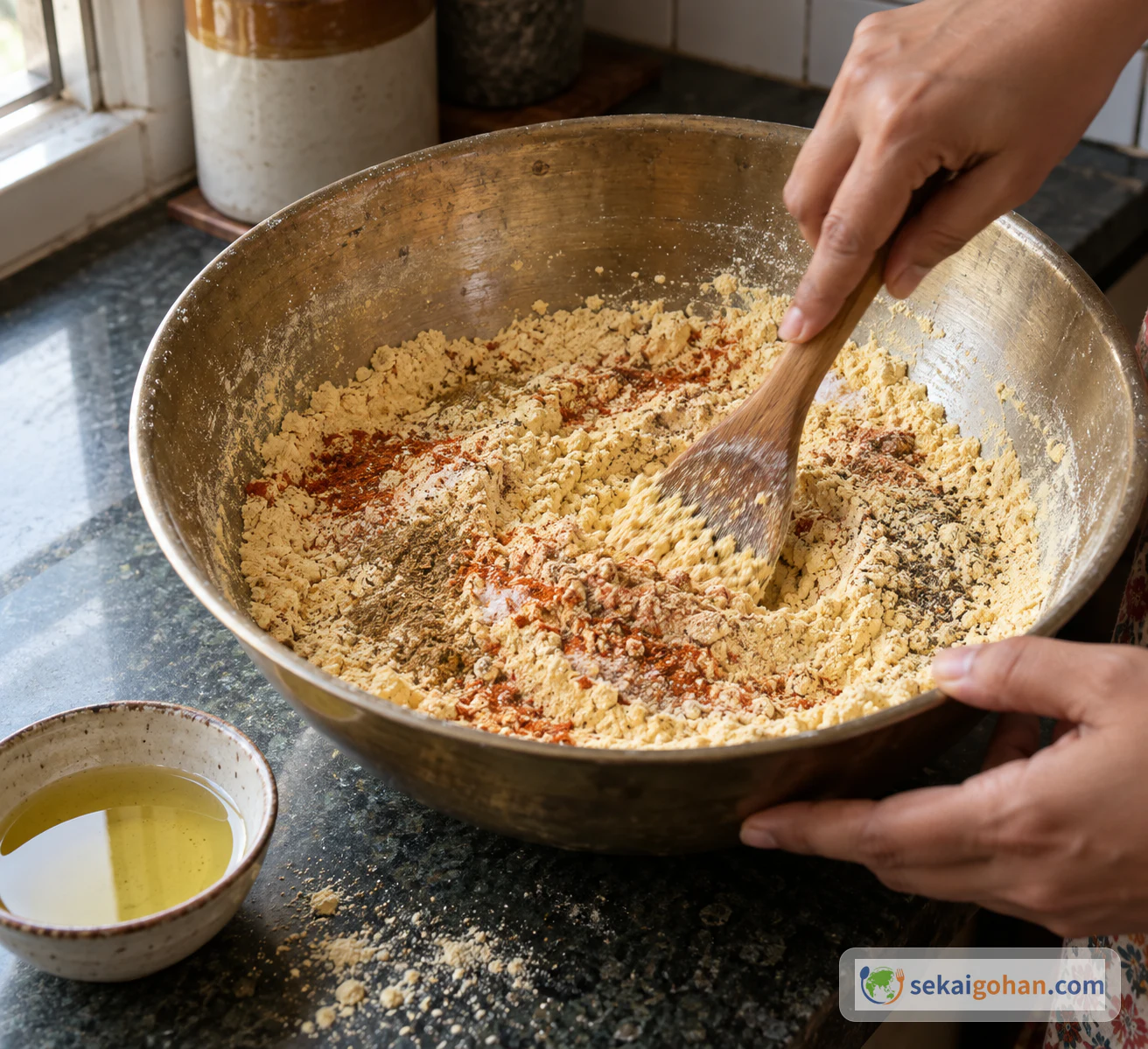
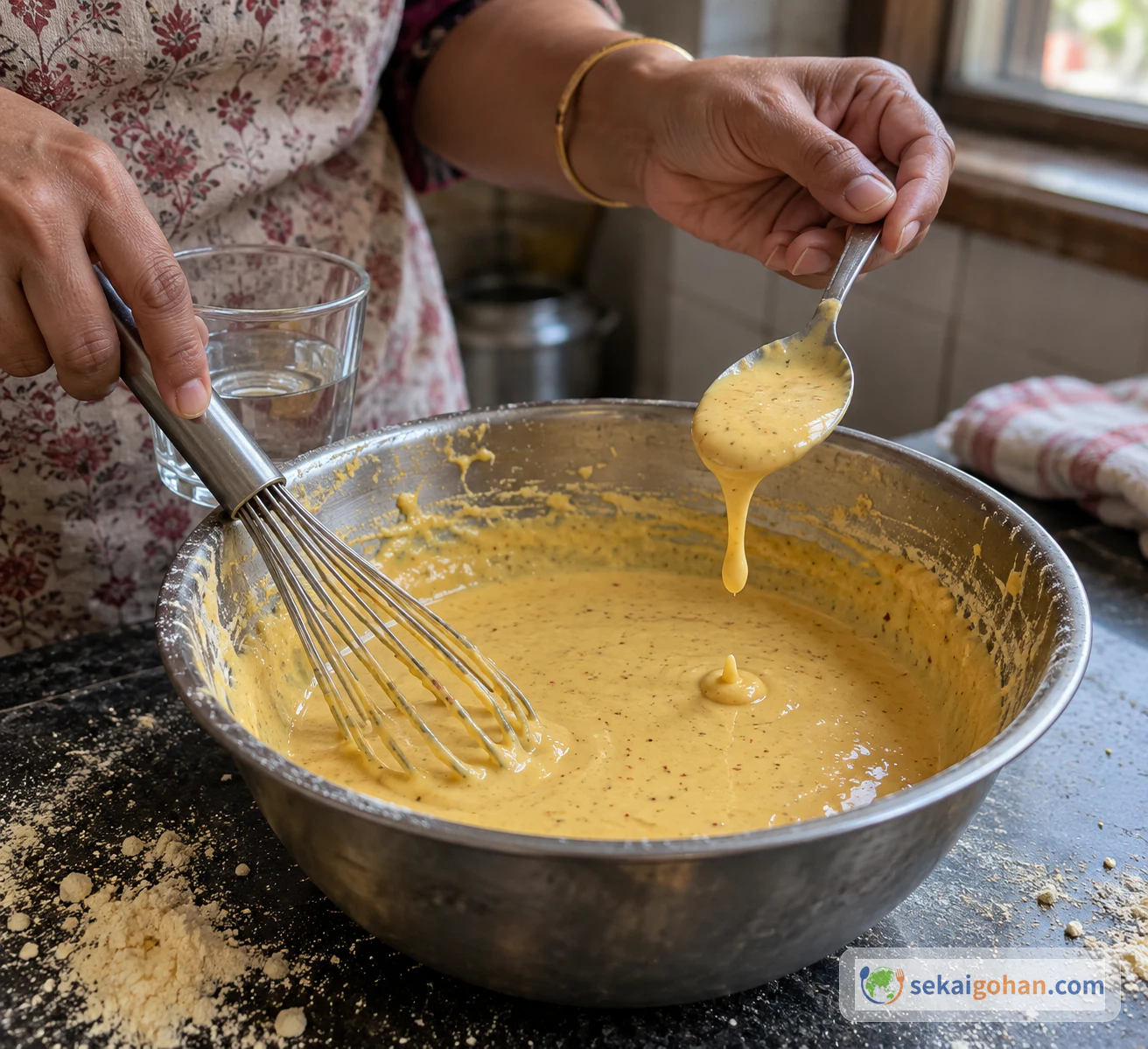
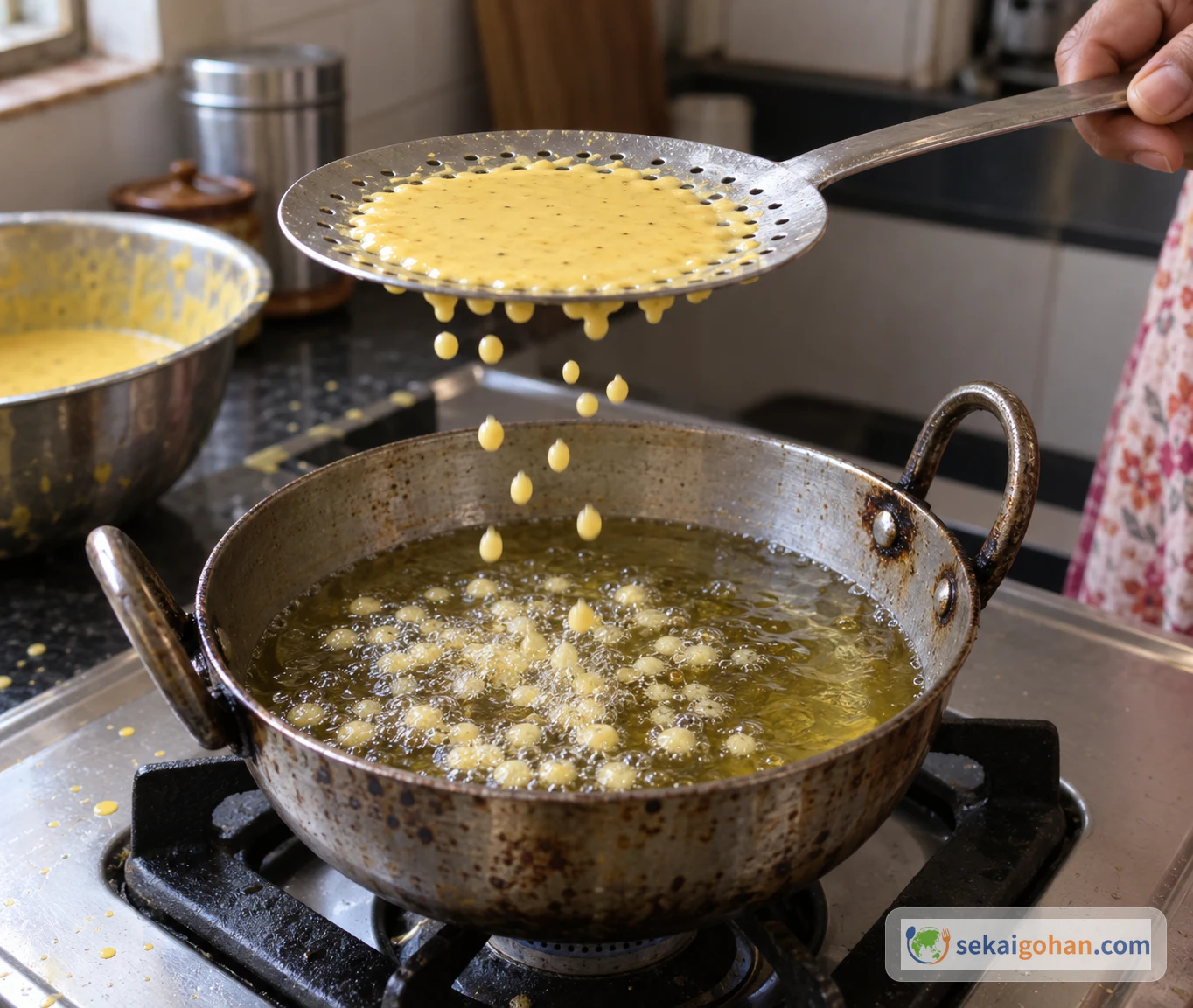
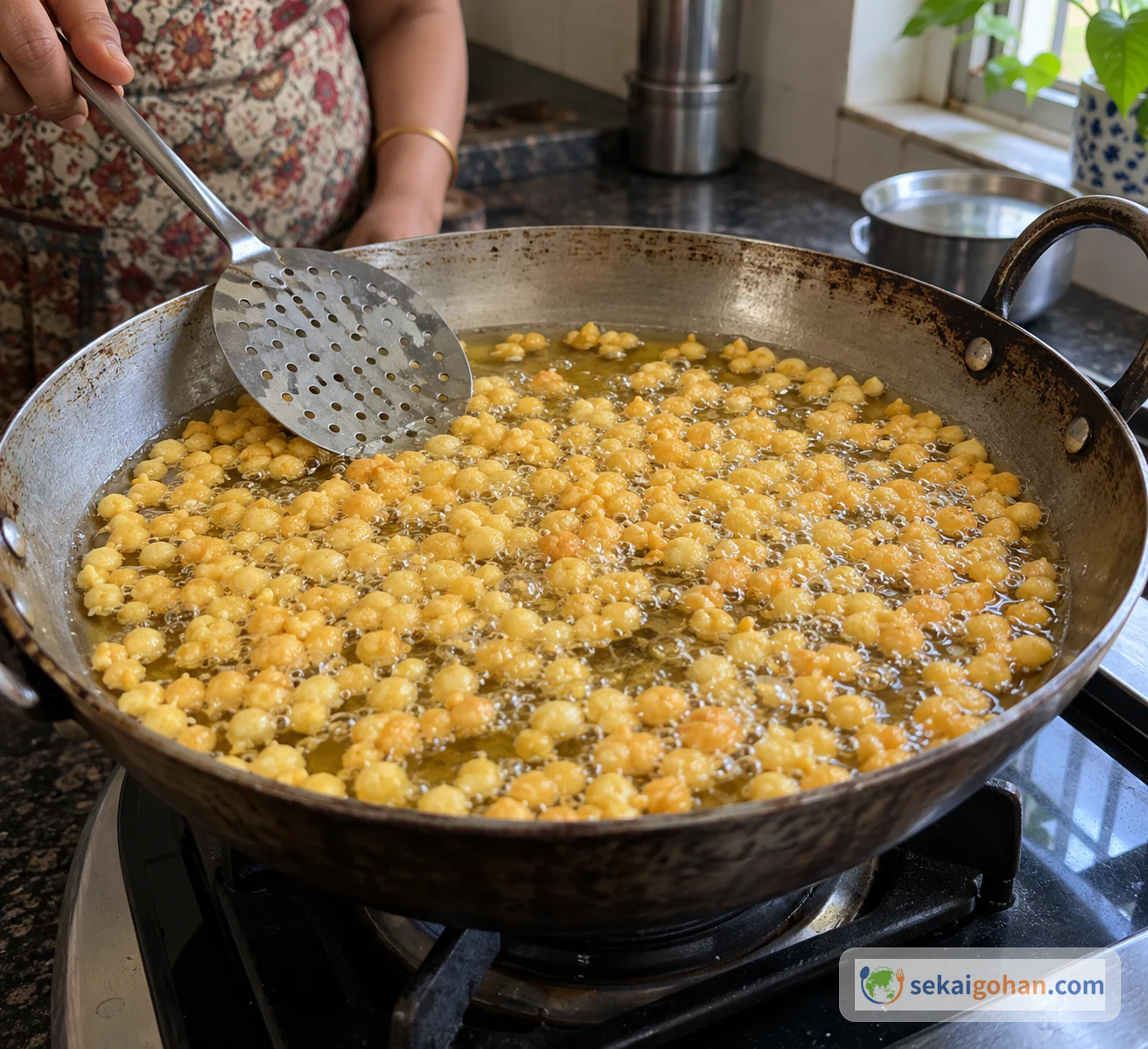
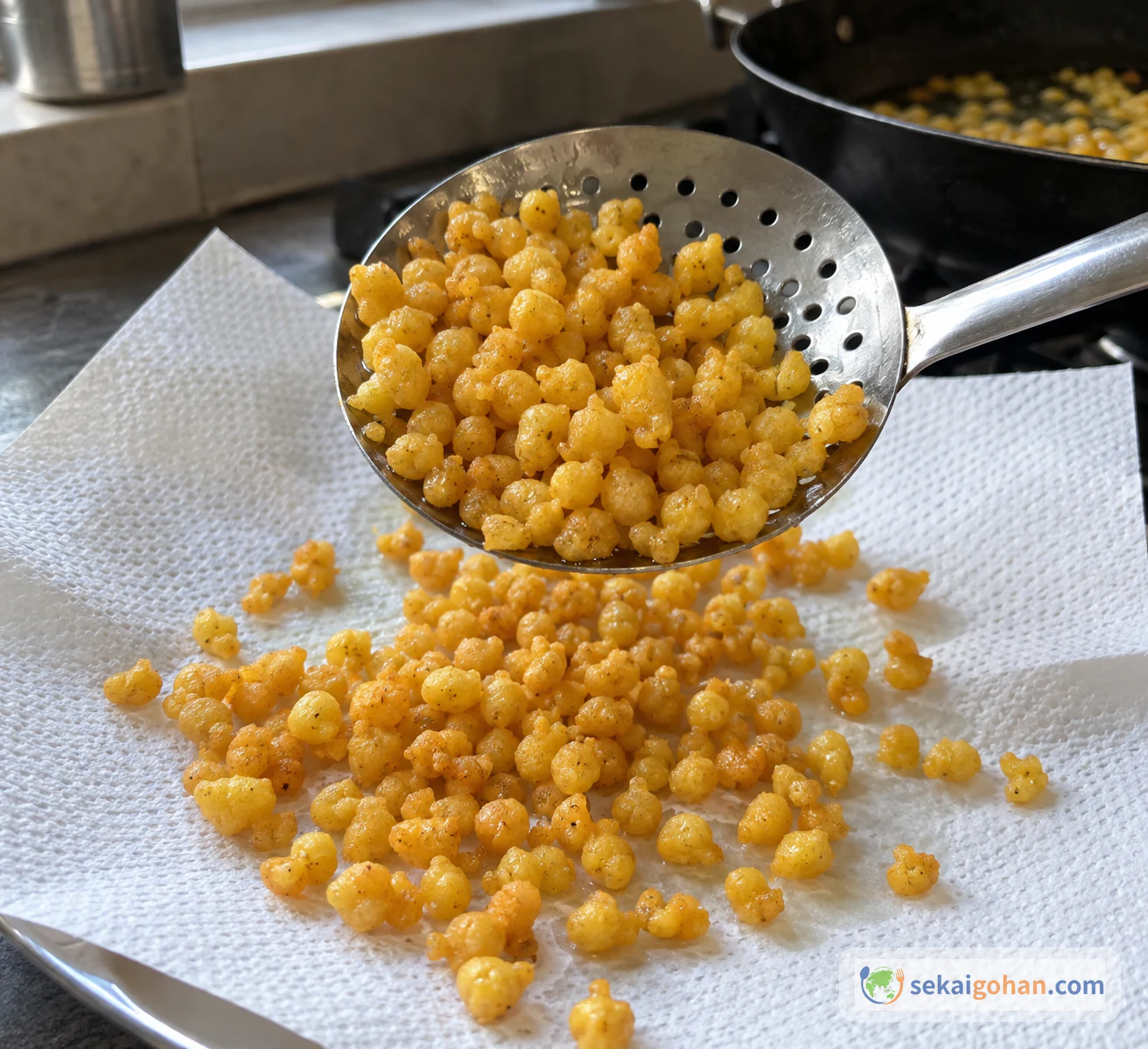
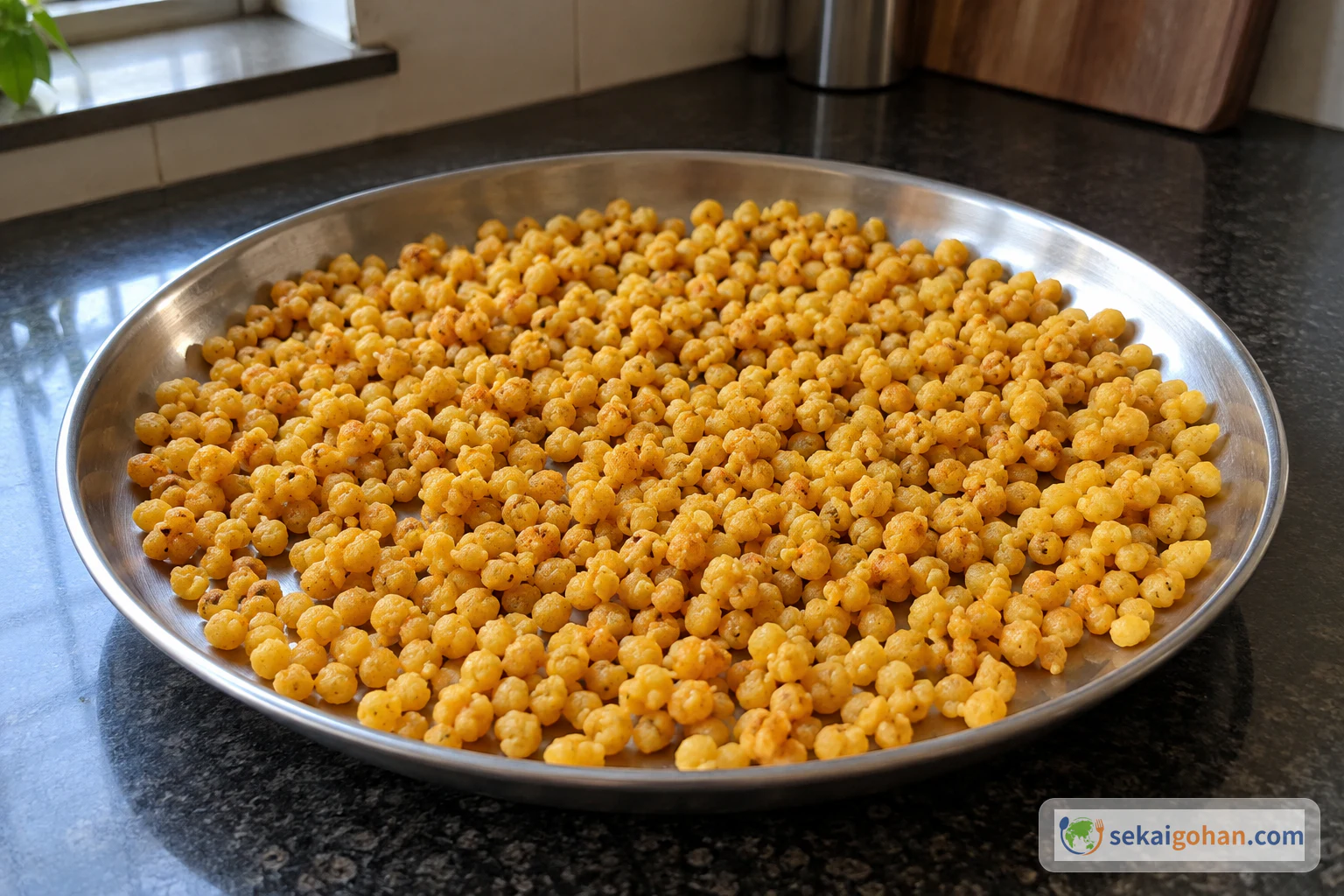
Hold a perforated ladle over a pan of hot oil, pour on a little yellow batter, and it falls through the holes in small drops. Within moments they puff into boondi: tiny golden beads of fried gram-flour batter. For masala boondi, ground chili, coriander, cumin, black pepper, dry mango powder and a touch of cinnamon go straight into the batter, so each bead comes out of the oil already seasoned and nothing needs dusting on afterward. Drained and cooled, it's a dry, crunchy, savory snack you eat by the pinch.
Masala Boondi in Indian Snacking
Boondi (बूंदी) takes its name from the word for "droplet," which is exactly how the batter falls from the ladle into the oil. The same droplets can go sweet or spicy: they're the base of ladoo as well as savory snacks like this one. Boondi is traditionally linked to Rajasthan and is known for keeping well.
The savory kind is eaten alongside other namkeen, the savory snacks made from things like lentils and peanuts. It also turns up in raita, jaljeera and boondi ki sabzi. Masala boondi itself is the dry snack, though, not boondi raita, where the droplets go into yogurt, or boondi ki sabzi, an onion and tomato curry with boondi simmered in it. For more dishes from the same country, see the India page.
Recipes differ from cook to cook. Some add rice flour and baking soda to the batter and toss the fried boondi with chaat masala and black salt. Here, every spice goes into the batter before frying.
Ingredients: US Cups (1 cup = 237 ml)
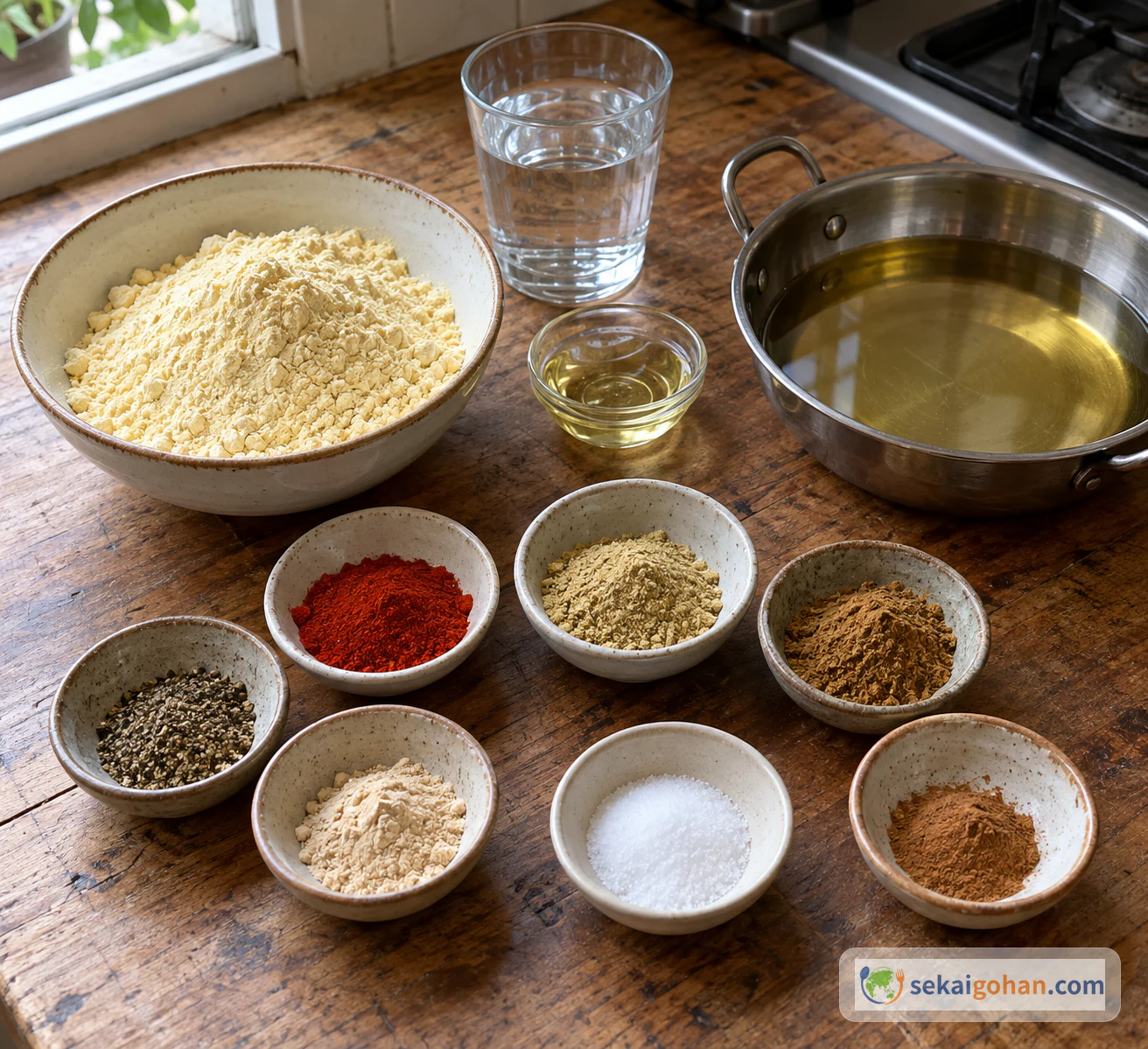
1 cup = 237 ml; don't swap in a cup of a different size. The water is two approximate measures, added gradually.
This recipe has no turmeric, rice flour, baking soda, asafoetida (hing), curry leaves, peanuts, chaat masala or black salt, and no spice is added after frying.
Equipment
- A mixing bowl
- A whisk or spoon for mixing the batter
- A perforated boondi ladle (size no. 1)
- A pan for deep frying
- A perforated ladle or skimmer for lifting out the boondi
- Paper towels for draining
- A wide plate for cooling
- An airtight container for storing
Choosing Ingredients for Masala Boondi
The flavor rests on chickpea flour, amchur and the dry ground spices, finished with salt and sourness. Keep those, and the snack stays recognizable.
Chickpea flour. Look for packs labeled besan, gram flour or chickpea flour at Indian grocers or online. Generic chickpea flour has a different grind and absorbs water differently, so add the water gradually and watch the batter. Cornstarch and potato starch won't give you the same droplets or flavor.
Amchur. Without it, the boondi is less sour and loses its fruity note. Lemon juice isn't an equal swap because it adds liquid to the batter; if you can't find amchur, serve lemon on the side instead.
Red chili powder. Chili powders vary in heat and aroma, so start with the amount listed and adjust to taste.
Cumin and the other spices. Use plain ground cumin rather than roasted. The cinnamon is small but noticeable, and leaving it out changes the aroma.
Allergens. Check the label on each besan and spice you buy, as shared production lines vary.
Don't leave the pan of frying oil unattended. If you need to step away, turn off the heat first. Keep water and wet utensils away from the oil. If the oil ever catches fire, never pour water on it; hot oil can splatter violently.
How to Make Masala Boondi
The two things to read are how the batter falls from a spoon and how the color changes in the oil. Watch the pan closely.
Masala Boondi Troubleshooting
Most problems come back to the batter and the way it leaves the ladle.
| What you see | Likely cause | What to do |
|---|---|---|
| Batter won't fall through the holes, or forms clumps | Batter too thick | Add water a little at a time, up to the total above |
| Batter runs in lines and the drops lose their shape | Batter too loose, or the hole size and batter don't match | Next time, keep the water to the amount above and add it gradually |
| A mix of large and small drops | Uneven holes, or uneven movement of the ladle | Hold the ladle steady and pour on a little batter at a time. A dedicated boondi ladle (jhara) has holes of one size |
| Boondi turns soft and loses its crunch | Sealed before it had fully cooled | Always cool completely before sealing |
Serving, Storing and Varying Masala Boondi
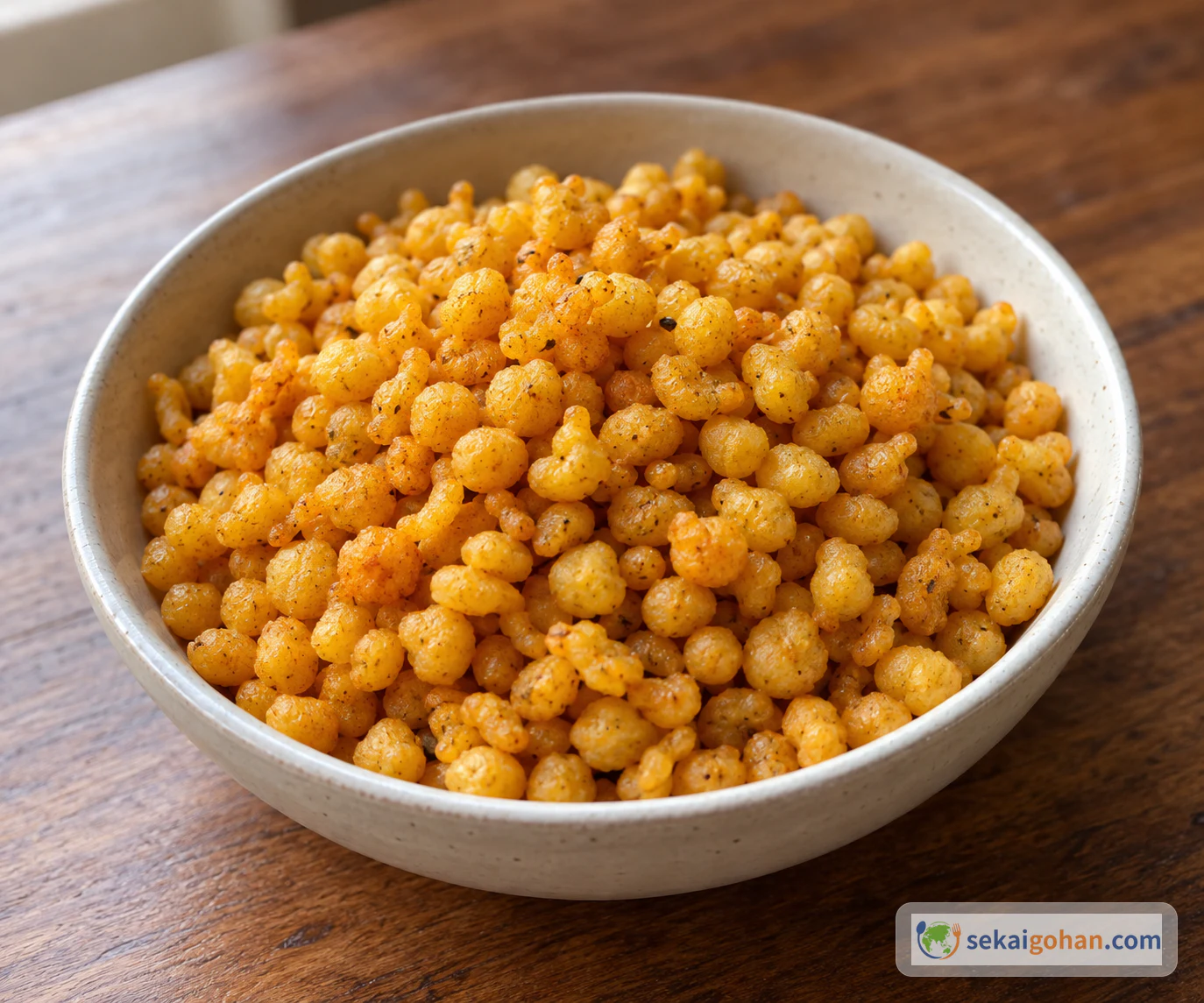
Masala boondi is ready to eat as it is, picked up by the pinch or set out with other namkeen. Stir it into yogurt or a sauce and it soaks up moisture and softens, which is how raita and boondi ki sabzi get their texture, but those are dishes with recipes of their own.
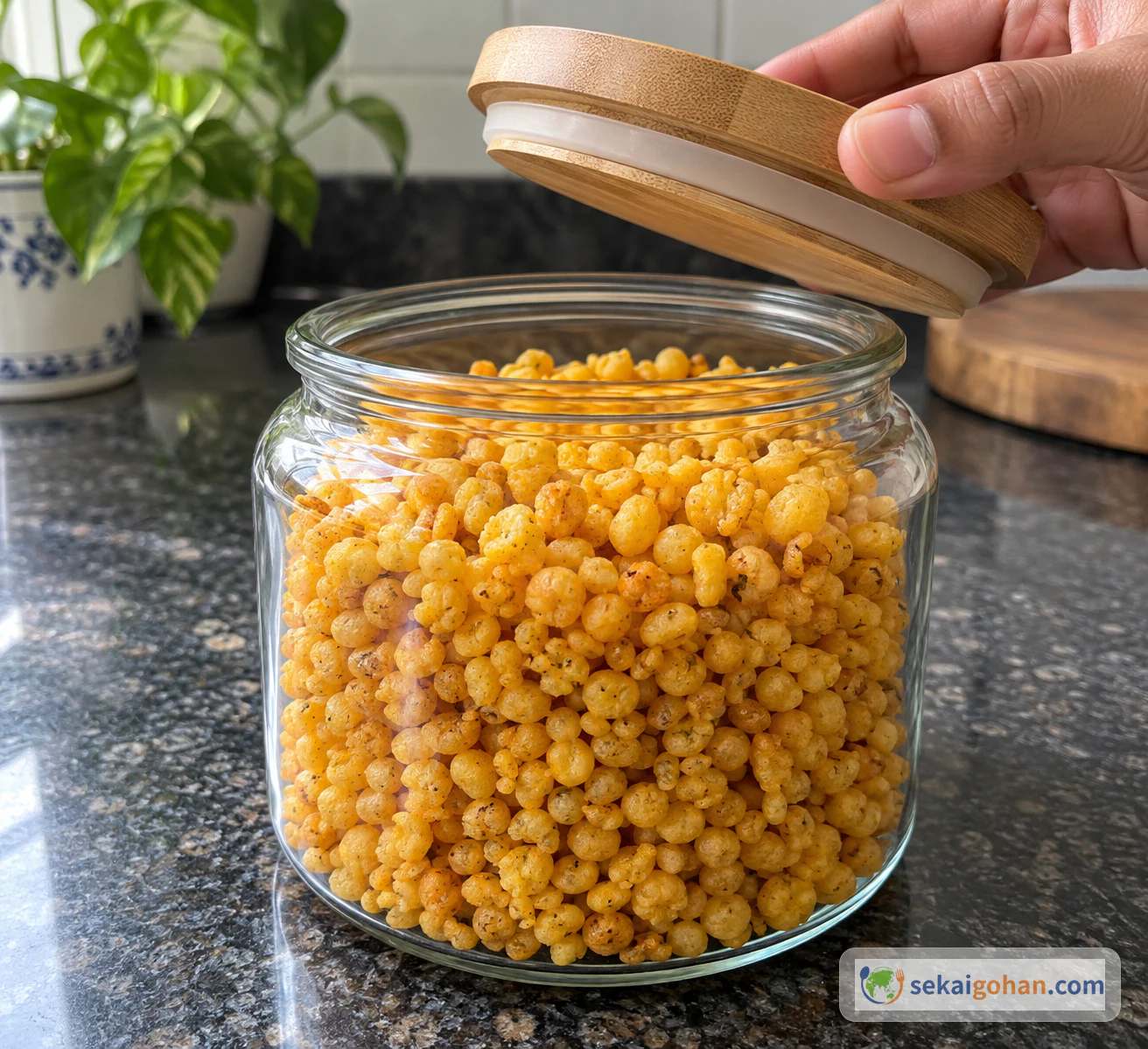
Let the boondi cool completely, then store it in an airtight container, where it keeps for 7–10 days. Sealed while still warm, it traps moisture and the droplets go soft.
To change the heat, use less or more red chili powder. Leaving out the amchur gives a milder, less sour boondi, and leaving out the cinnamon shifts the aroma.
Frequently Asked Questions
Is it boondi or boondi masala or masala boondi?
Boondi is the general name for the fried droplets, which can be sweet or savory. Masala boondi is the spiced, savory snack; it is also written boondi masala. Savory boondi is also called khara boondi or tikha boondi.
What if I don't have a boondi ladle?
This recipe uses a boondi ladle, size no. 1. Any perforated ladle or spoon can let batter fall through, but hole size and batter thickness both change the shape of the drops.