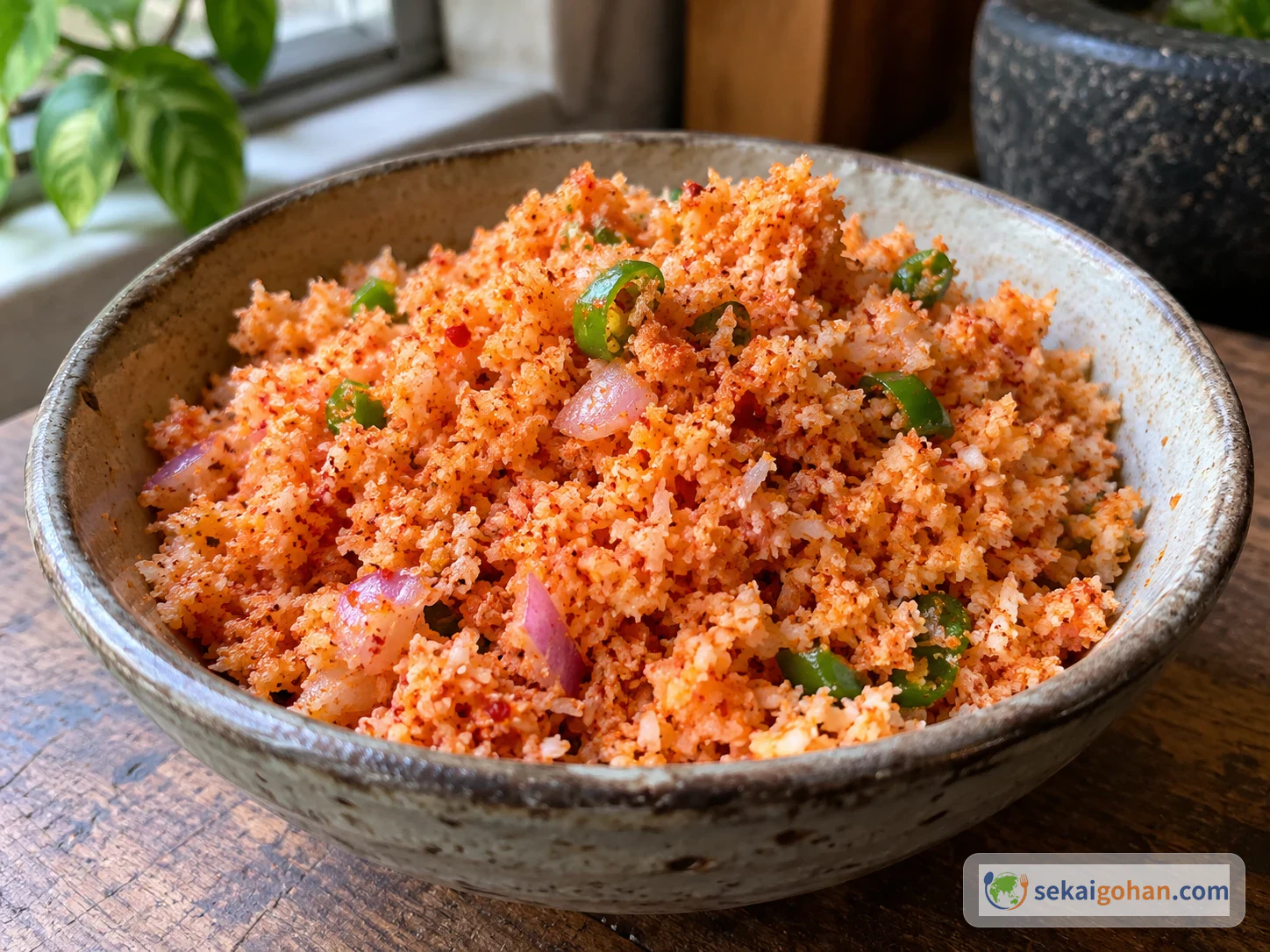
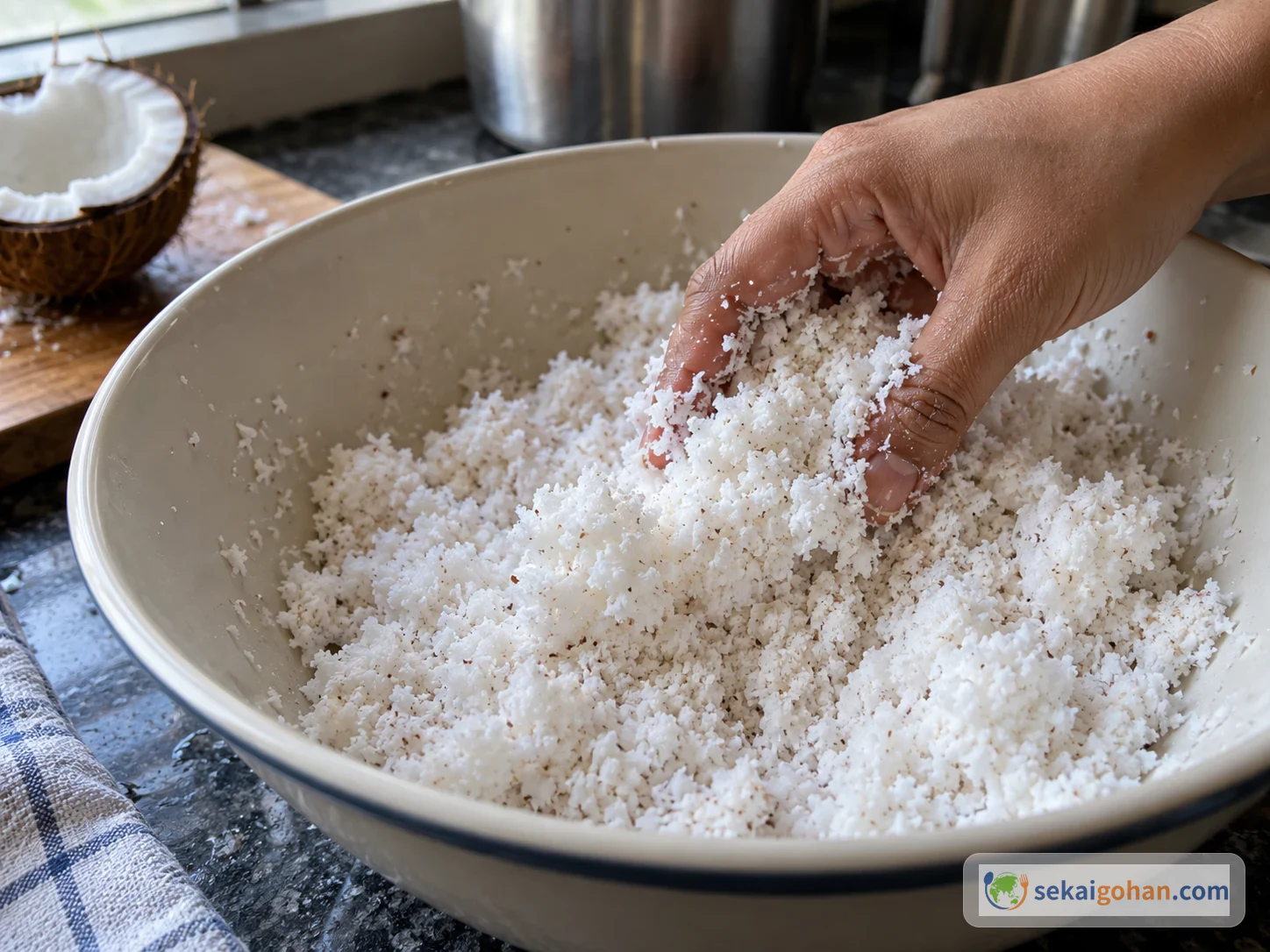
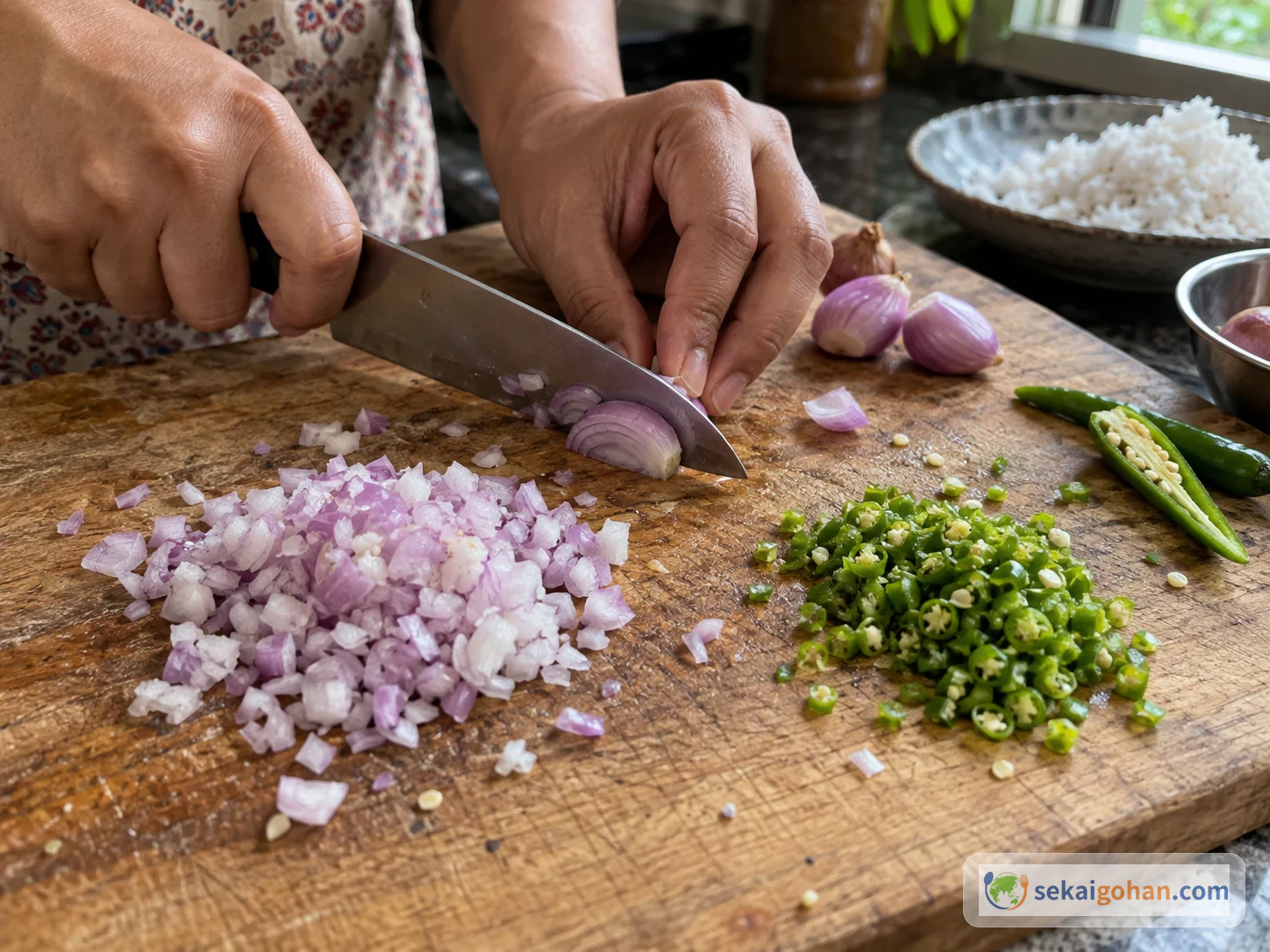
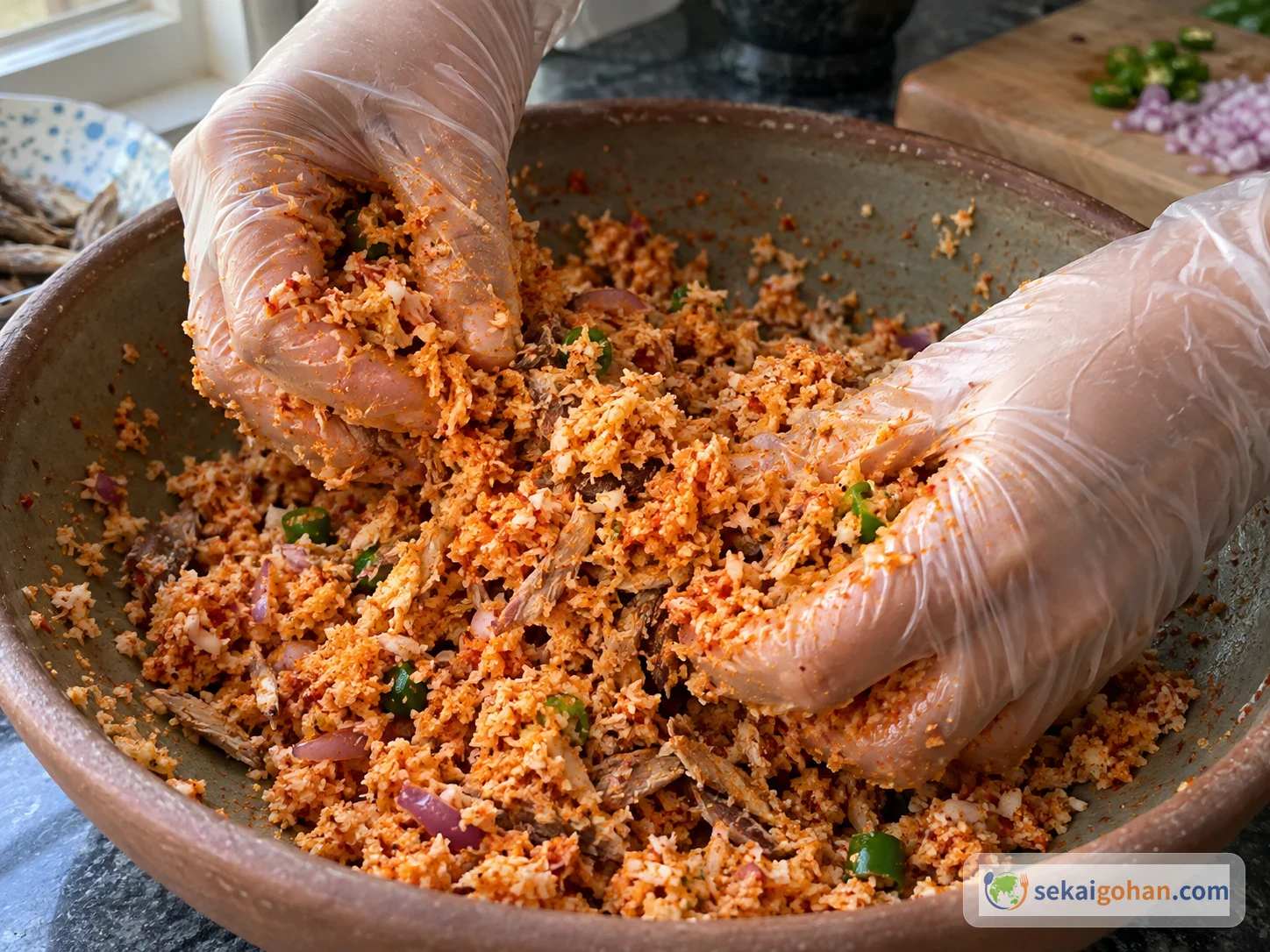
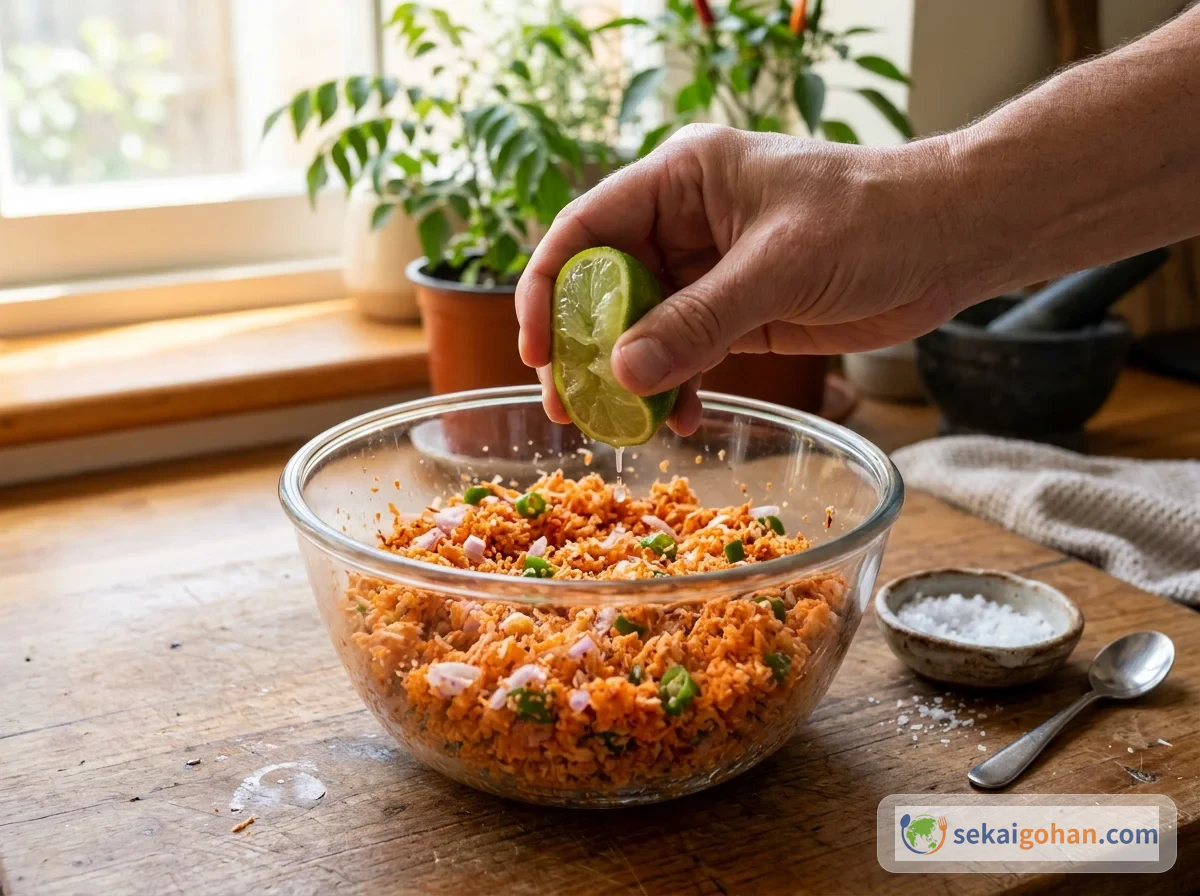
In the morning kitchen, red chili powder goes over a white mound of coconut, and you rub it in with cupped palms. Every time you press it between your fingers, oil seeps from the coconut, and the white mound turns orange before your eyes. Add chopped shallots and green chilies, crushed dried fish and, last, a good squeeze of lime, and it's done. Pol sambol is a raw coconut relish that's hot, sour and a little sweet. It goes with rice, with curry and with fresh bread, and it plays a quiet supporting role at nearly every meal in Sri Lanka.
Pol Sambol on the Sri Lankan Table
"Pol" means coconut in Sinhala. In Tamil the relish is called thengai sambal, and in English you'll also see it written coconut sambol. You make it without heat, from grated coconut, shallots, dried chilies or chili powder, lime juice and salt. It's found everywhere on the island and eaten at breakfast, lunch and dinner.
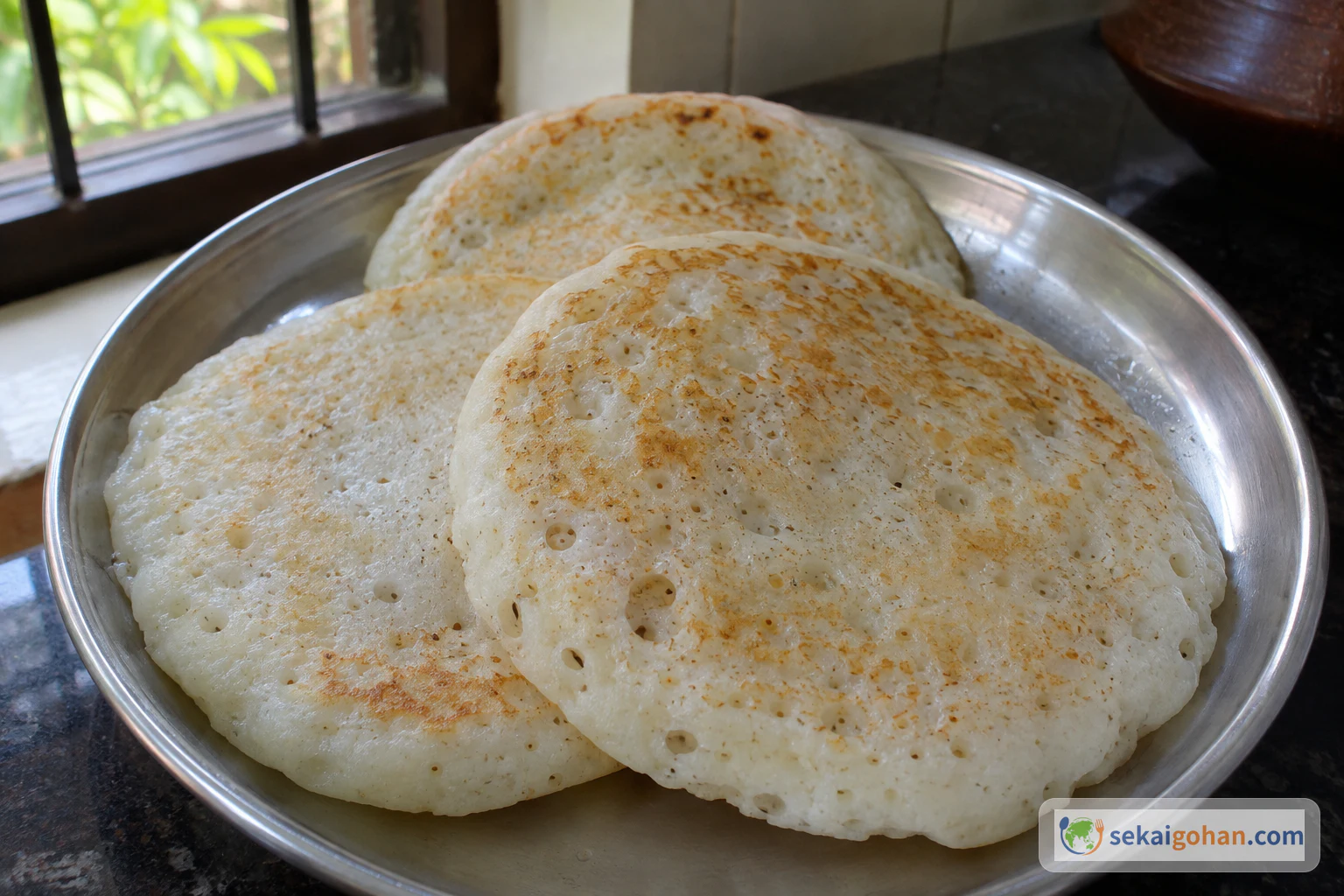
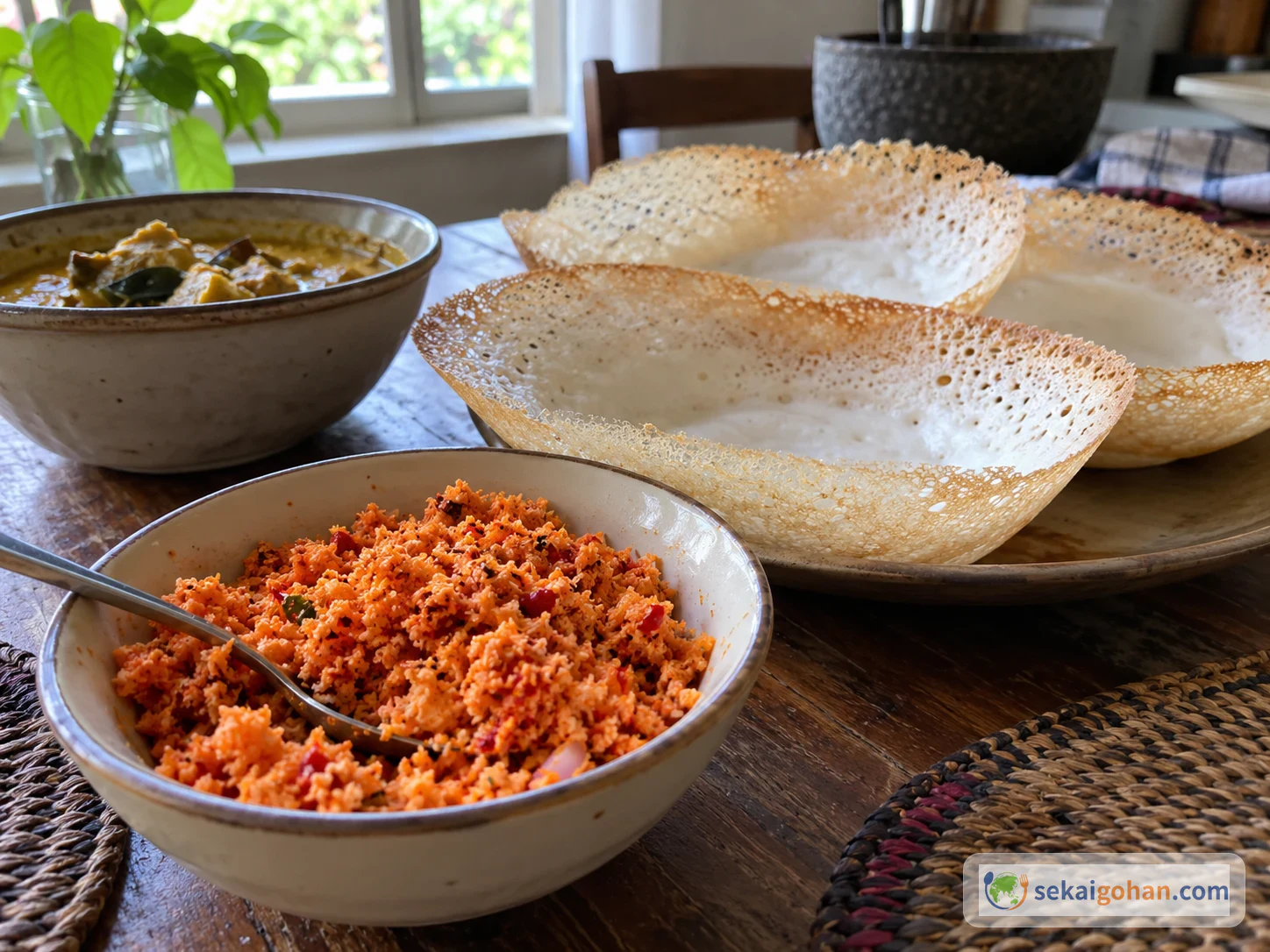
Pol sambol isn't meant to be eaten on its own. It sits next to other dishes and brings heat, acidity and the sweetness of coconut. You'll find it beside a plate of white rice and curry, with string hoppers (rice-flour dough pressed into fine strands and steamed), with hoppers, or with the coconut flatbread pol roti.
For generations, Sri Lankan cooks have made it on a miris gala (Sinhala for "chili stone"), a rectangular granite slab used with a stone rod. You coarsely crush the chilies and dried fish on the slab, then add the coconut and rub it in, so the coconut oil and the chili color blend together. Most households now mix it by hand in a bowl, but they still rub it by hand to move color and aroma.
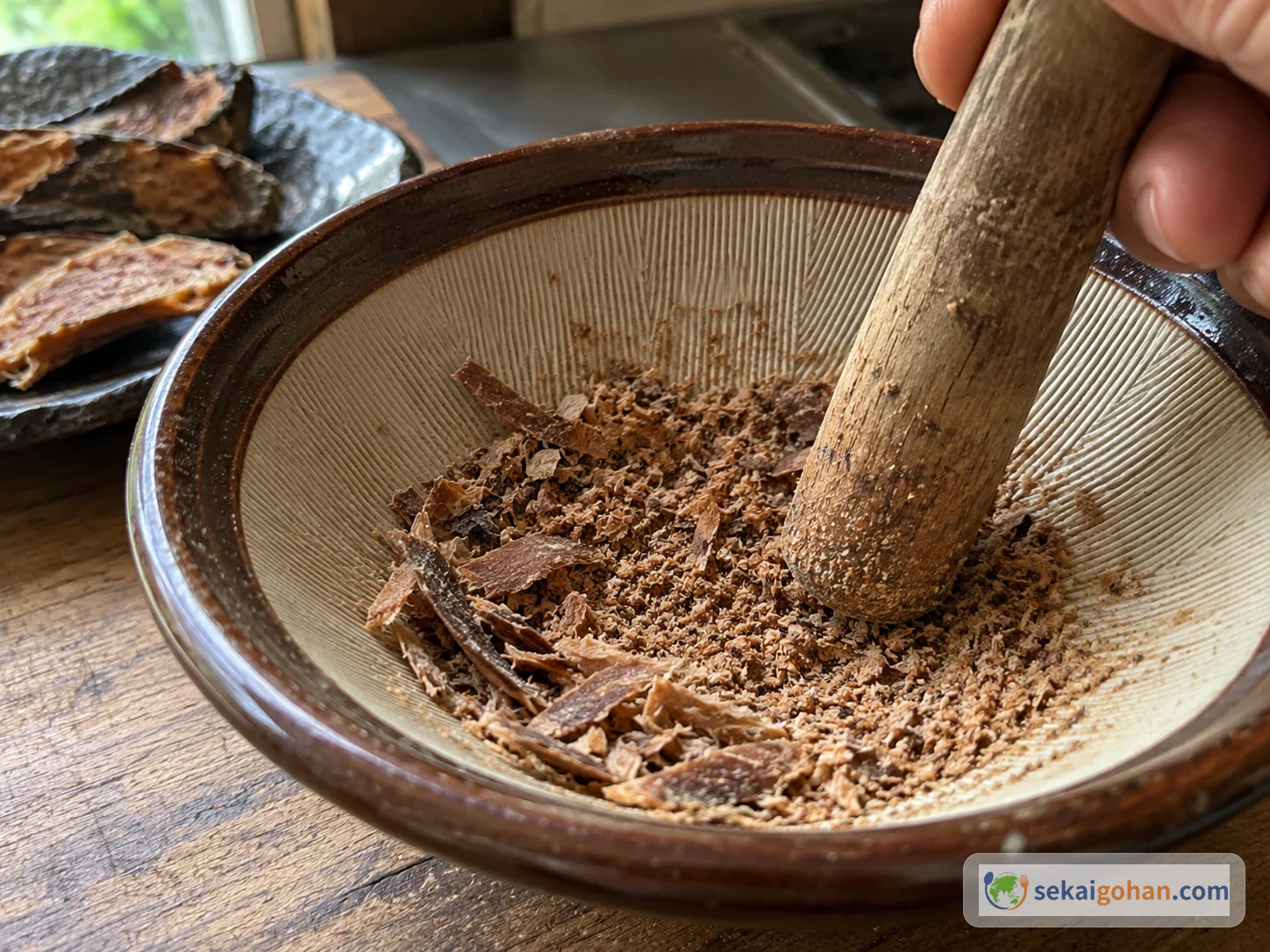
The "Maldive fish" often added to pol sambol is called umbalakada in Sinhala. It's made by smoking and drying tuna-family fish such as skipjack and is sold as chips or thin flakes. Crushed, it melts its umami and saltiness into the coconut. Because it's smoked, dried skipjack, it's very close to Japanese katsuobushi.
Ingredients (serves 4)
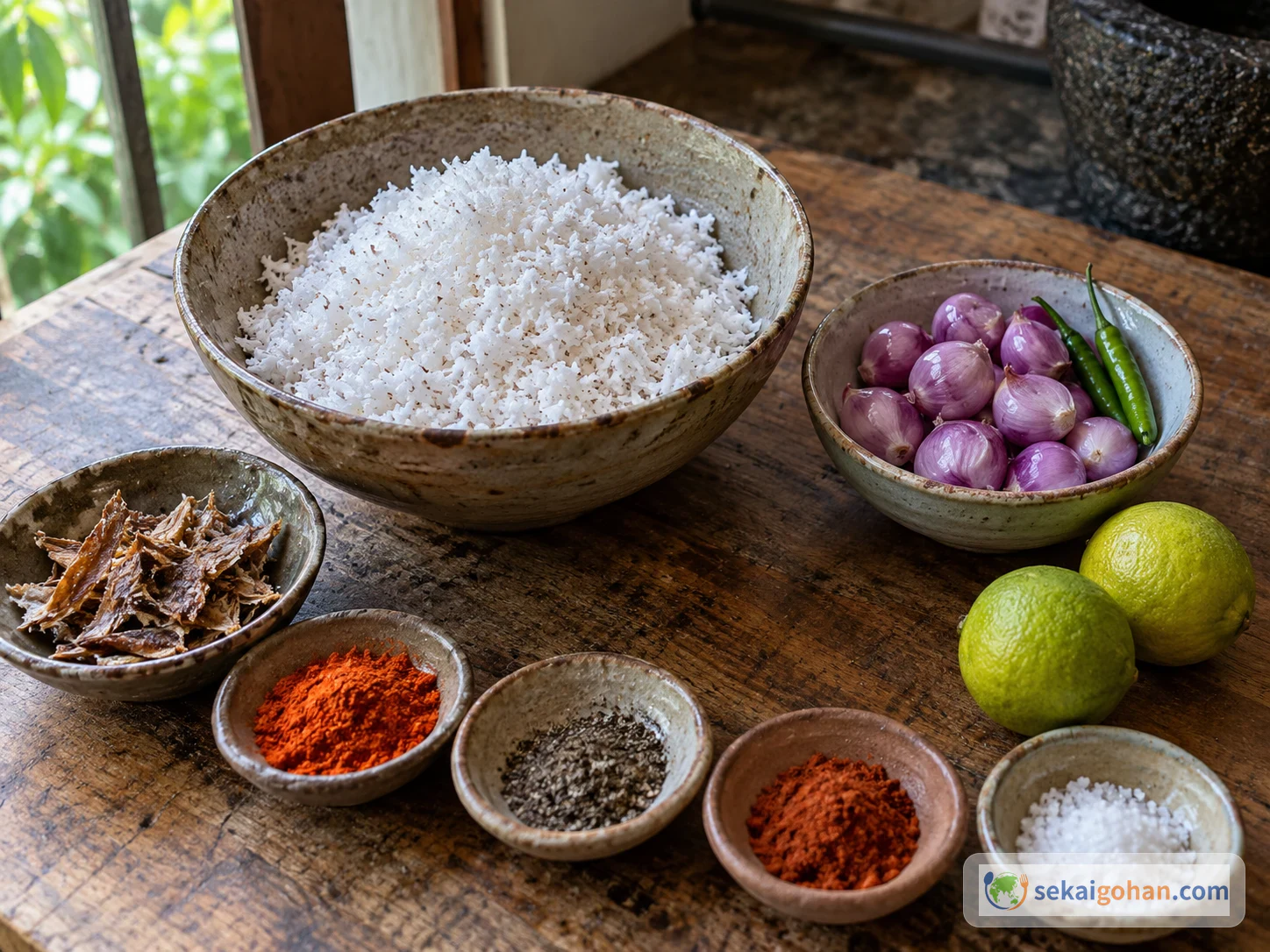
This recipe serves 4.
This dish includes fish (Maldive fish or katsuobushi). Coconut can cause allergic reactions. After handling green chilies and chili powder, wash your hands well so you don't rub your eyes. If rubbing with bare hands is hard on you, disposable gloves help.
Choosing Coconut and Other Ingredients for Pol Sambol
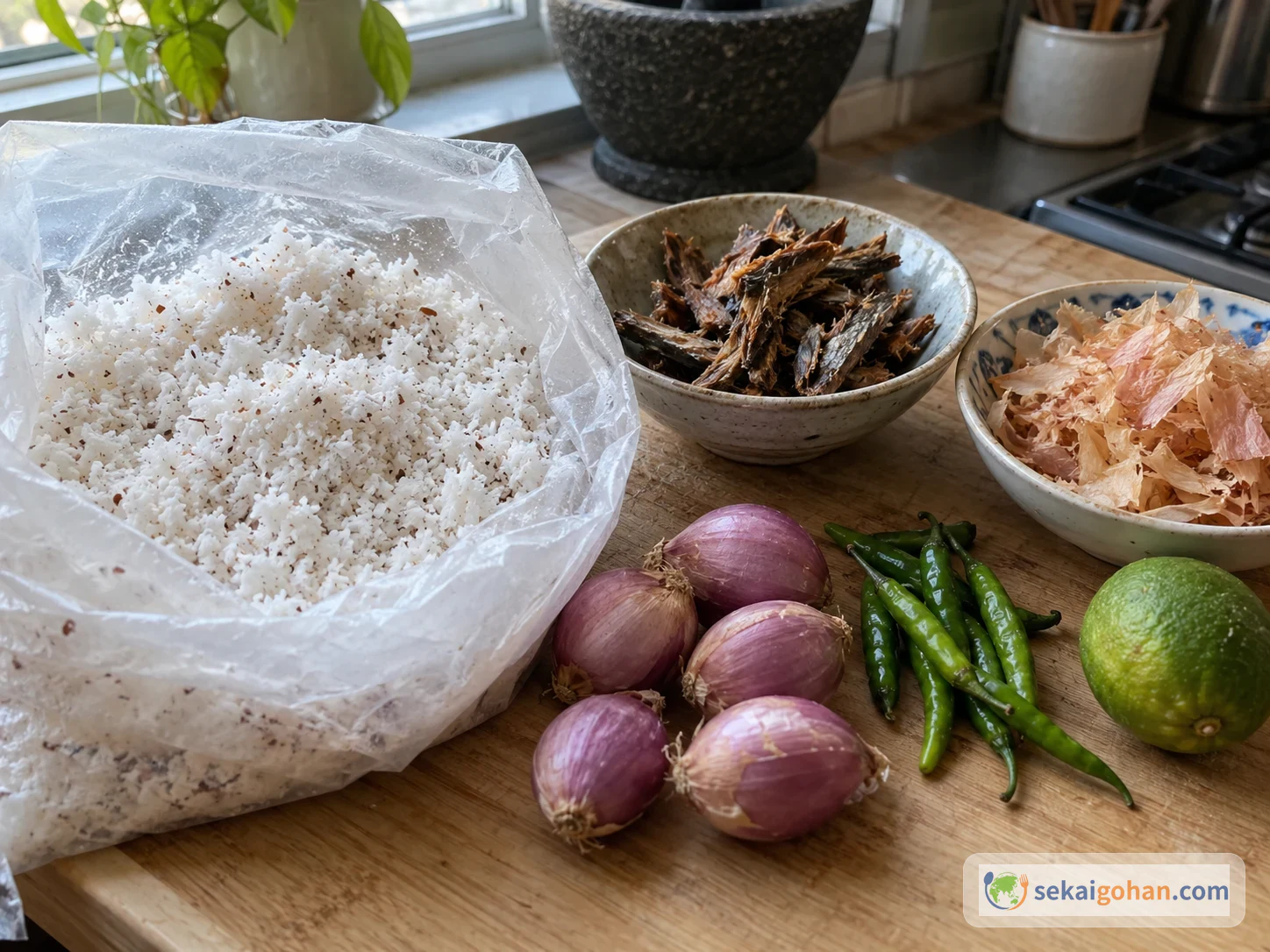
Freshly grated coconut is the hard part. In Sri Lanka people crack a coconut and scrape it on the spot, but fresh coconuts are hard to find in many places. Indian and Sri Lankan grocery stores often carry frozen grated coconut, which you can use as soon as it's thawed.
If you can't find frozen, use the desiccated coconut sold for baking. Straight from the bag it's dry and crumbly, so sprinkle 4–5 tbsp boiling water over 3.5 oz (100 g) desiccated coconut, mix it through and let it sit about 10 minutes to soften. You won't get the sweet juice of fresh coconut, but the color and aroma are still those of pol sambol.
If you can't get Maldive fish, substitute katsuobushi (dried bonito flakes). Both are smoked, dried skipjack, so the umami and aroma are very similar. Rub the flakes finer between your fingers before adding them, and use about the same amount.
Shallots are the closest match to Sri Lanka's small red onions; red onion works if you can't get them. Plain red chili flakes or powder are fine, but they're hot, so start with half and adjust. Mild paprika deepens the color.
How to Make Pol Sambol
No heat; about 20 minutes in all. If using frozen coconut, move it to the refrigerator the night before to thaw.
If you add the lime too early, the coconut gets watery, and over time the acidity fades and the flavor blurs. Set the flavor with salt and add the lime just before eating, and you can bring it to the table with the aroma still up.
Pol sambol is not cooked. It uses raw coconut and shallots, so eat it soon after making and don't leave it long at room temperature. Put any leftovers in the refrigerator right away.
Serving and Varying Pol Sambol
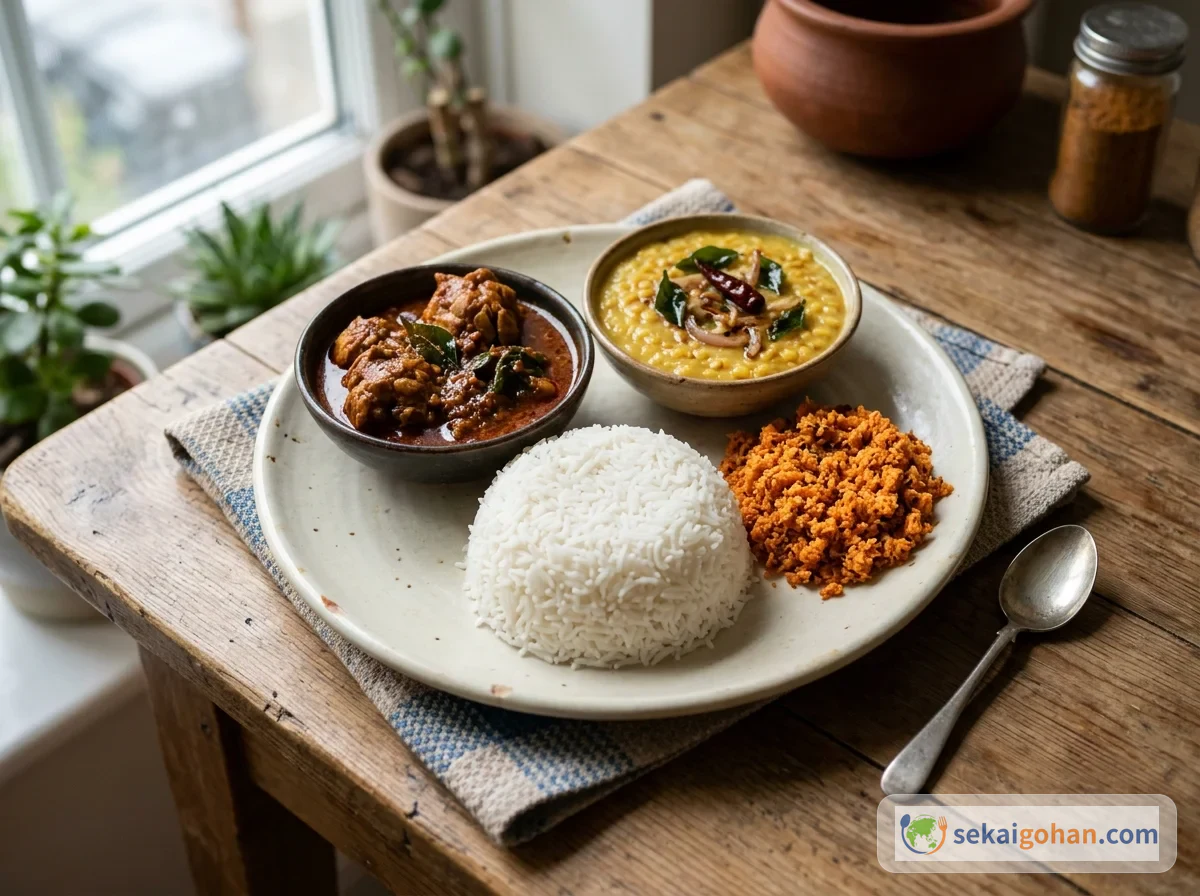
With Rice and Curry
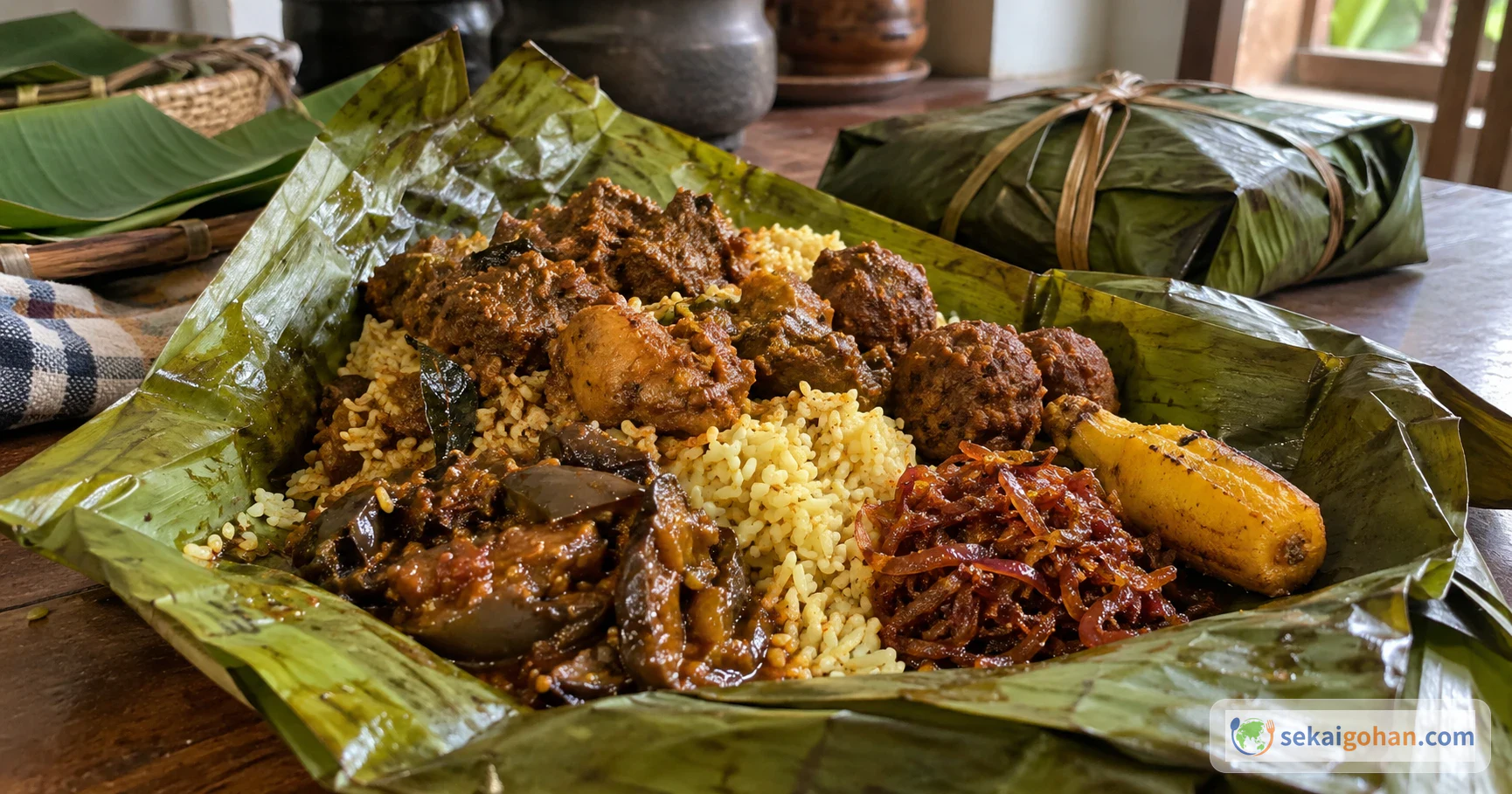
In a Sri Lankan rice and curry spread, several curries and side dishes surround the white rice, and pol sambol sits in one corner. You mix rice and curry with your fingers and add a pinch of sambol every so often. Coconut sweetness, chili heat and lime meet, and part of the fun is that the taste changes with each bite.
It's especially good with rich curries, like the chicken curry kukul mas curry or ambul thiyal, fish simmered with tamarind. At breakfast, eat it with thin, bowl-shaped hoppers or with kiribath, rice cooked in coconut milk. At home it's also surprisingly good on toast, or beside grilled fish or cold tofu.
Sri Lanka has many sambols besides pol sambol. One is "badapu pol sambol," pol sambol quickly stir-fried with onion and mustard seeds, which has a toasty note the raw version lacks.
Variations
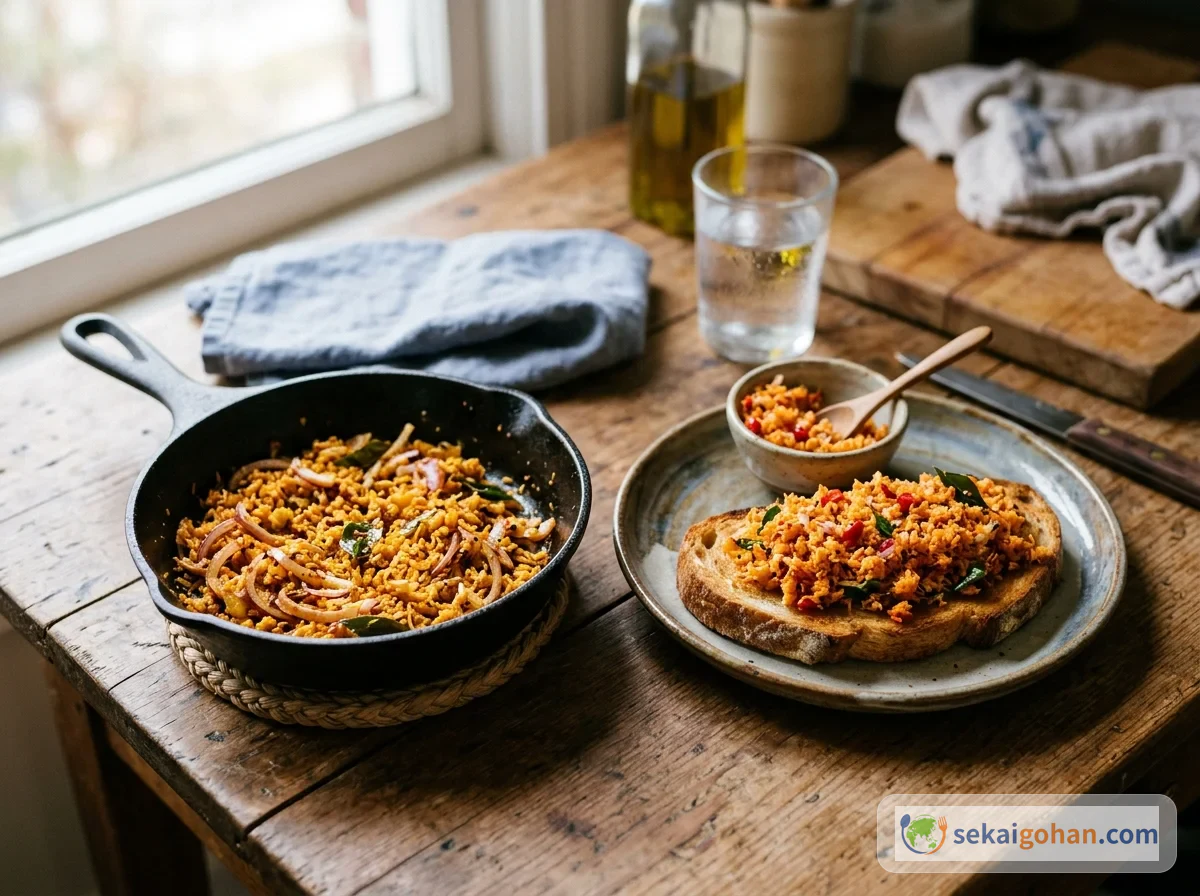
For a vegetarian version, leave out the Maldive fish and add a little more salt. The umami is lighter, but coconut, chili and lime alone still make a really good condiment.
To tame the heat, halve the chili powder and double the paprika; the color stays vivid and only the heat drops. For more fire, add extra green chilies or chop them with their seeds. Leftover sambol becomes a different dish when stir-fried. Heat a little oil in a skillet, stir-fry thinly sliced onion, then add the sambol and cook 2–3 minutes over medium heat. You end up with a fragrant topping, a bit like furikake.
FAQ
How long does it keep?
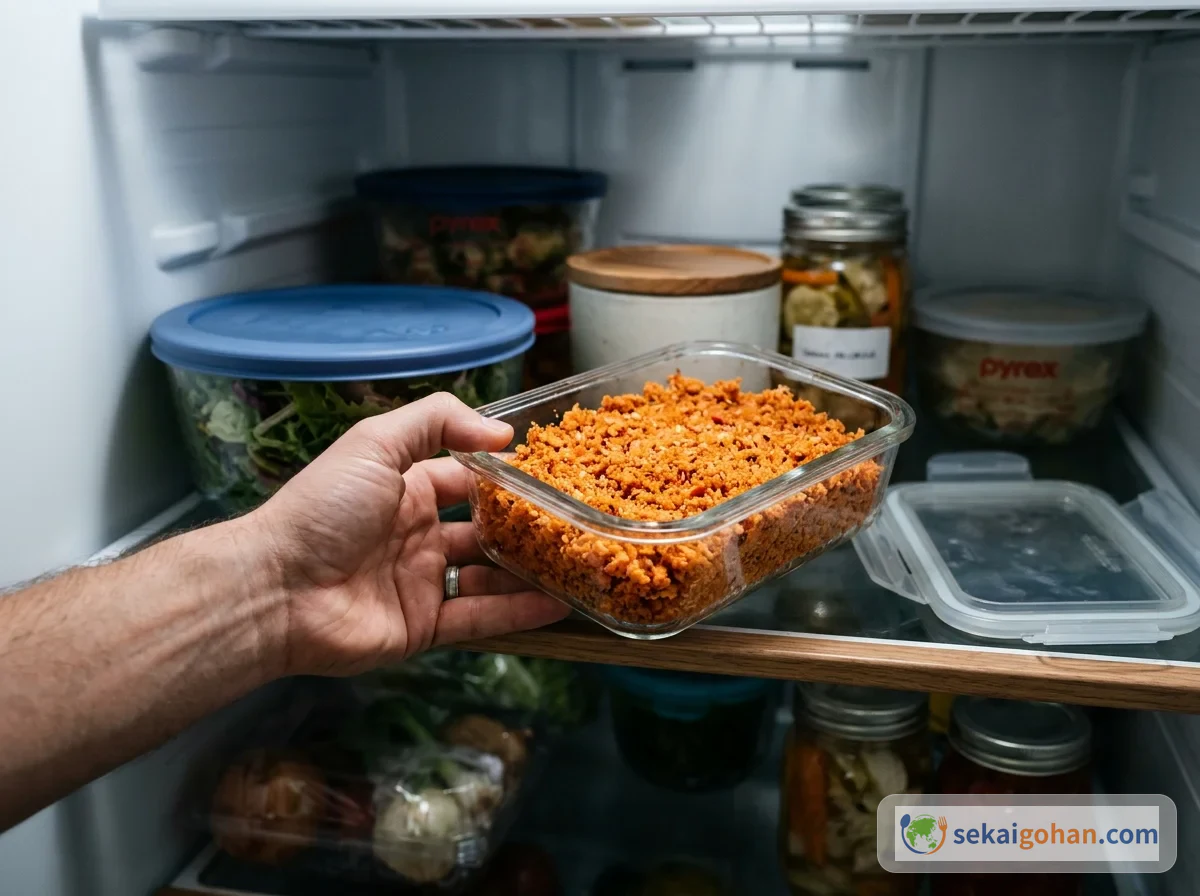
Since it's made with raw coconut and shallots, it's best eaten the day you make it. Put any leftovers in an airtight container, refrigerate and finish them by the next day. Over time the lime's acidity fades and the sambol turns watery.
Is it OK to make it with desiccated coconut only?
Yes, as long as you rehydrate it first. Left dry, it won't absorb the chili. For more moisture and richness, use coconut milk instead of boiling water. It adds sweetness and gets you a little closer to fresh coconut.
What if I have no mortar?
Put the Maldive fish or katsuobushi in a plastic bag and crush it with a rolling pin. Katsuobushi gets fine enough just from rubbing it between your fingers.
Can I make it with chili powder that isn't hot?
Paprika alone gives vivid color but almost no heat, which works well for children. A little black pepper adds just enough kick to sharpen the flavor.