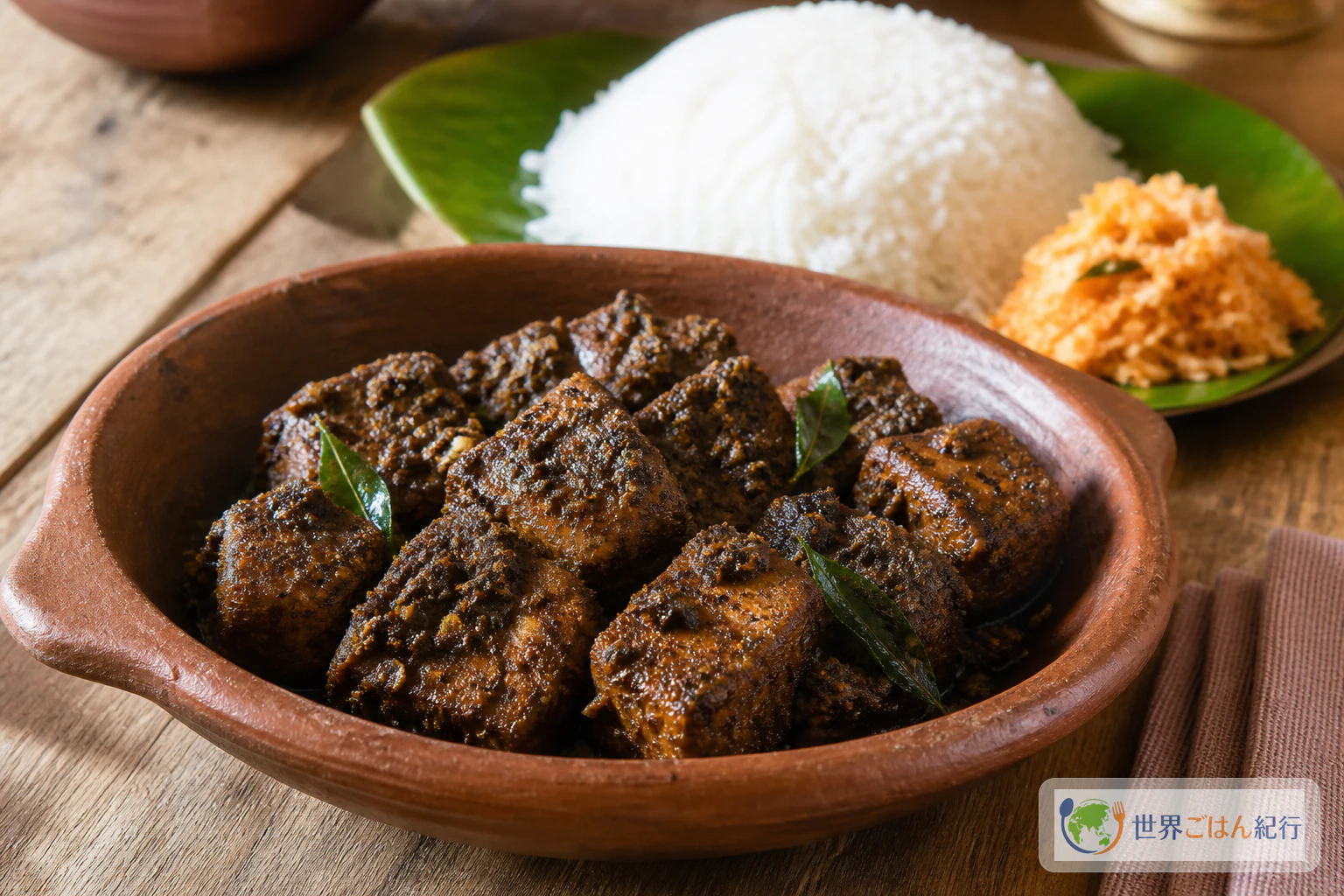
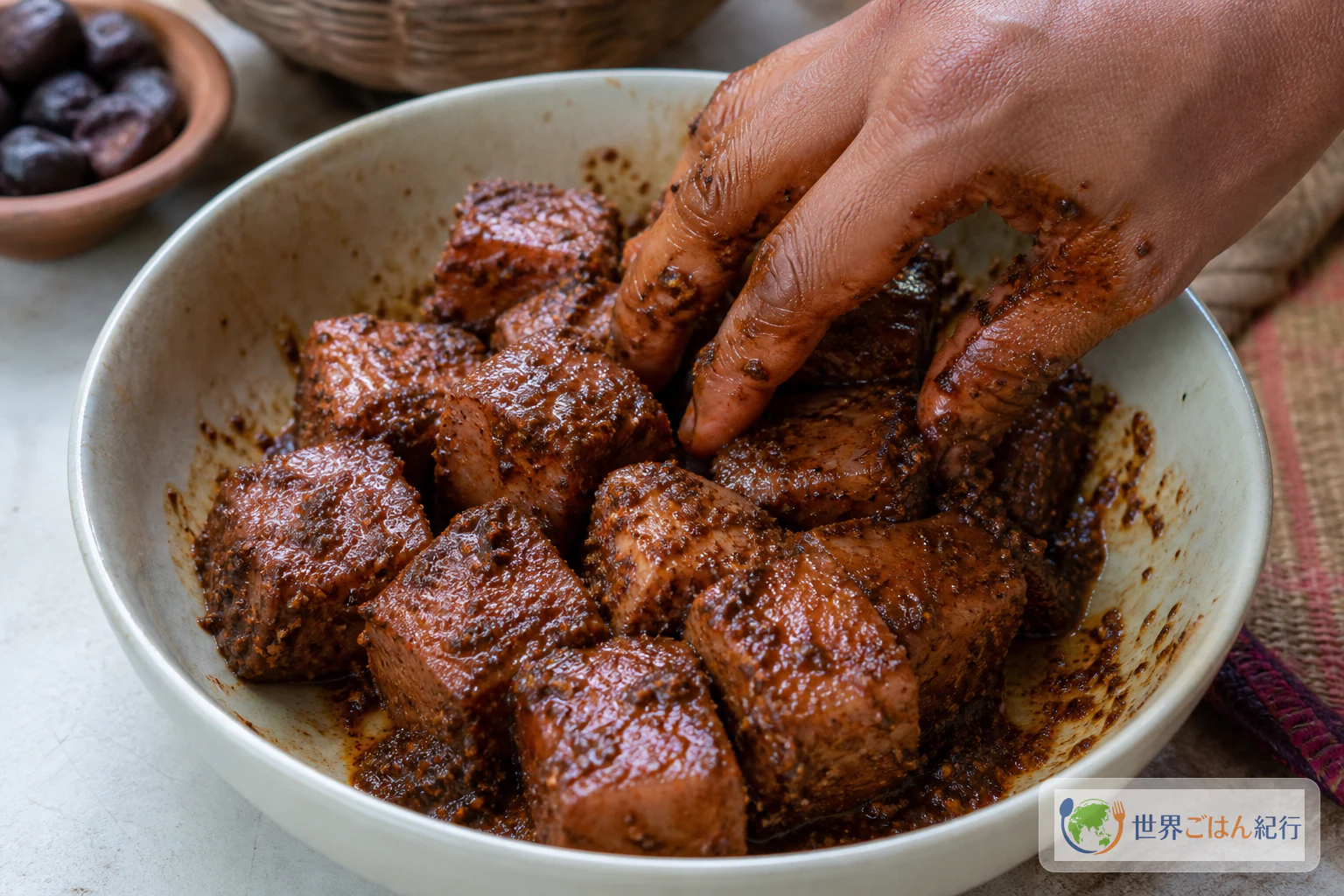
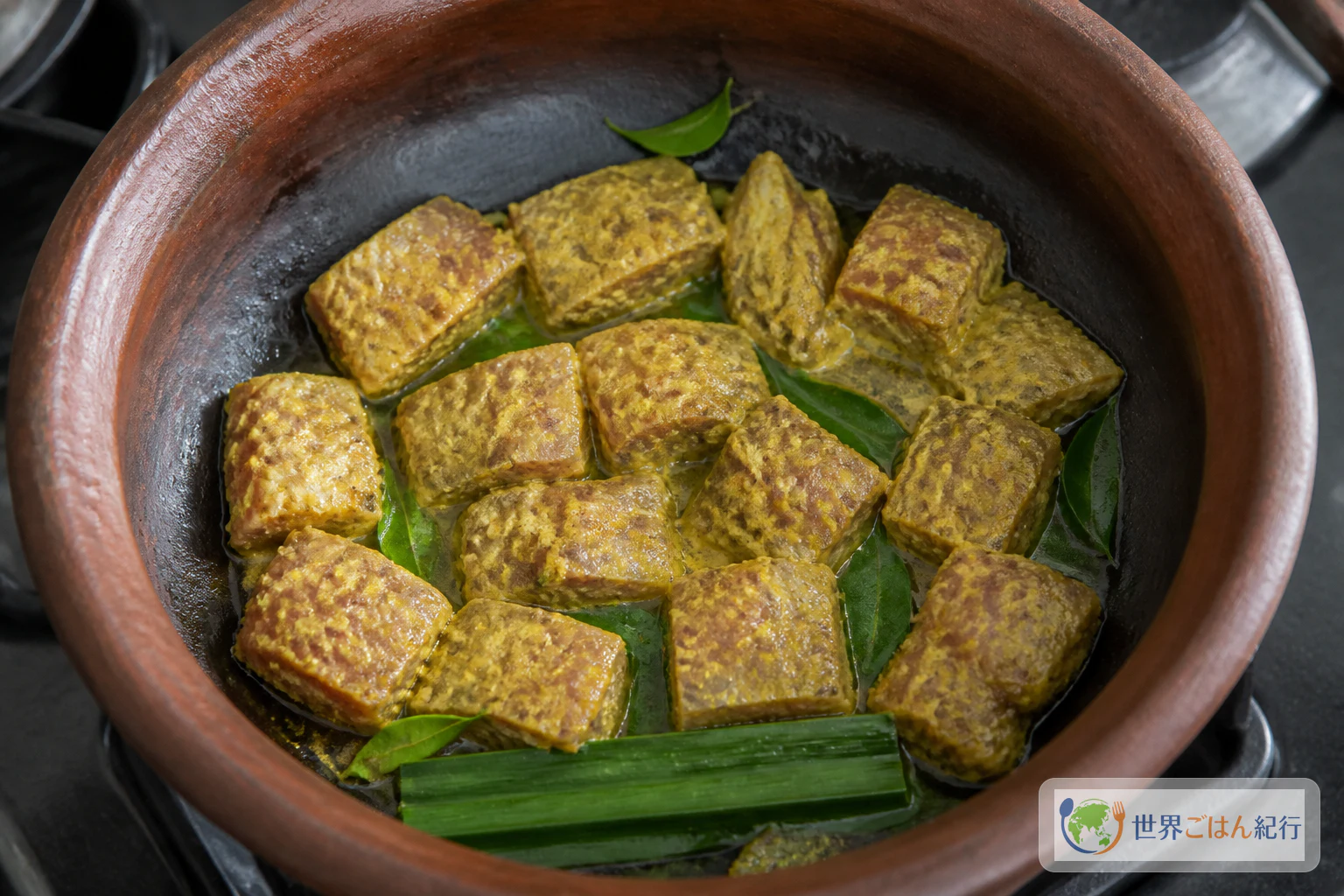
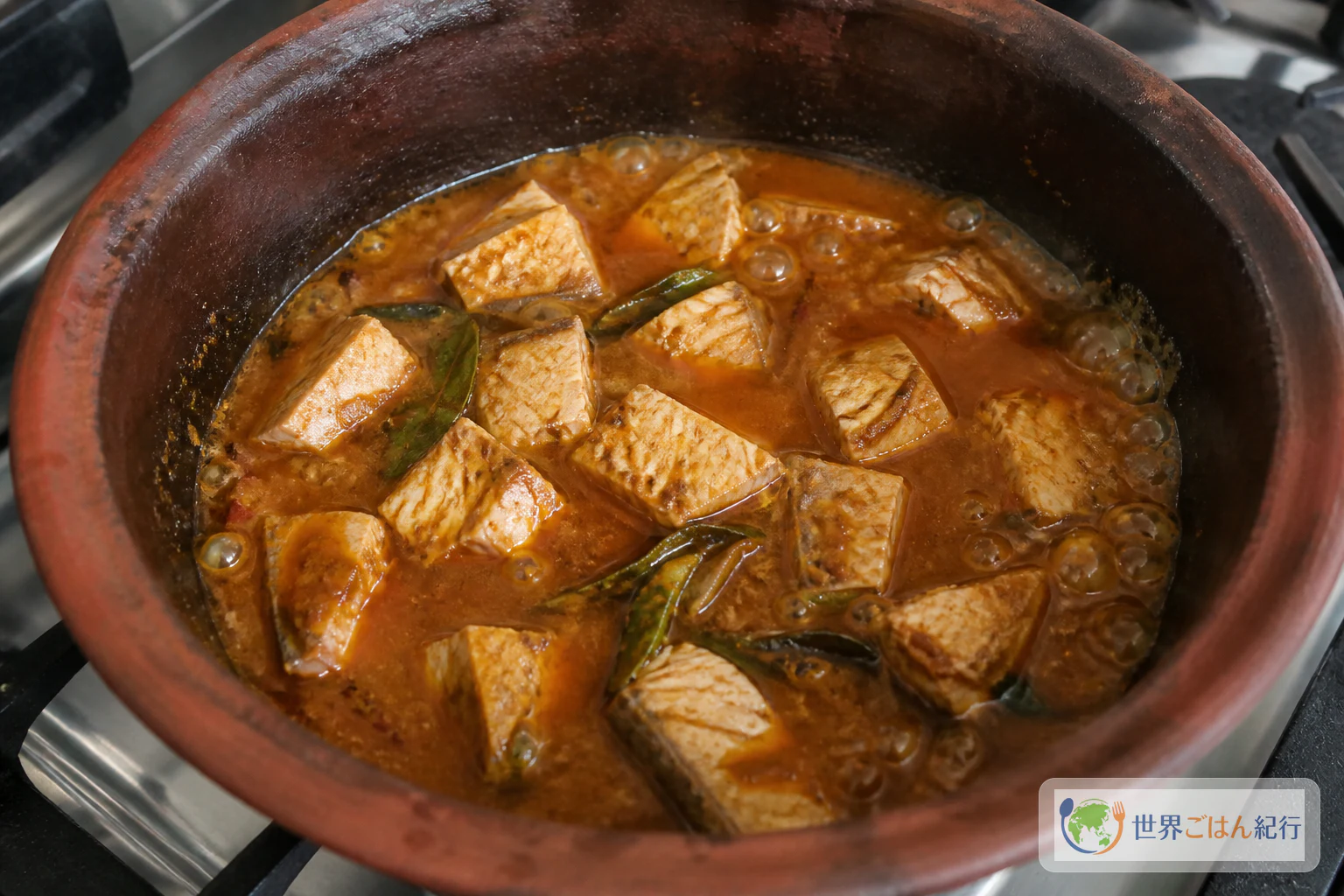
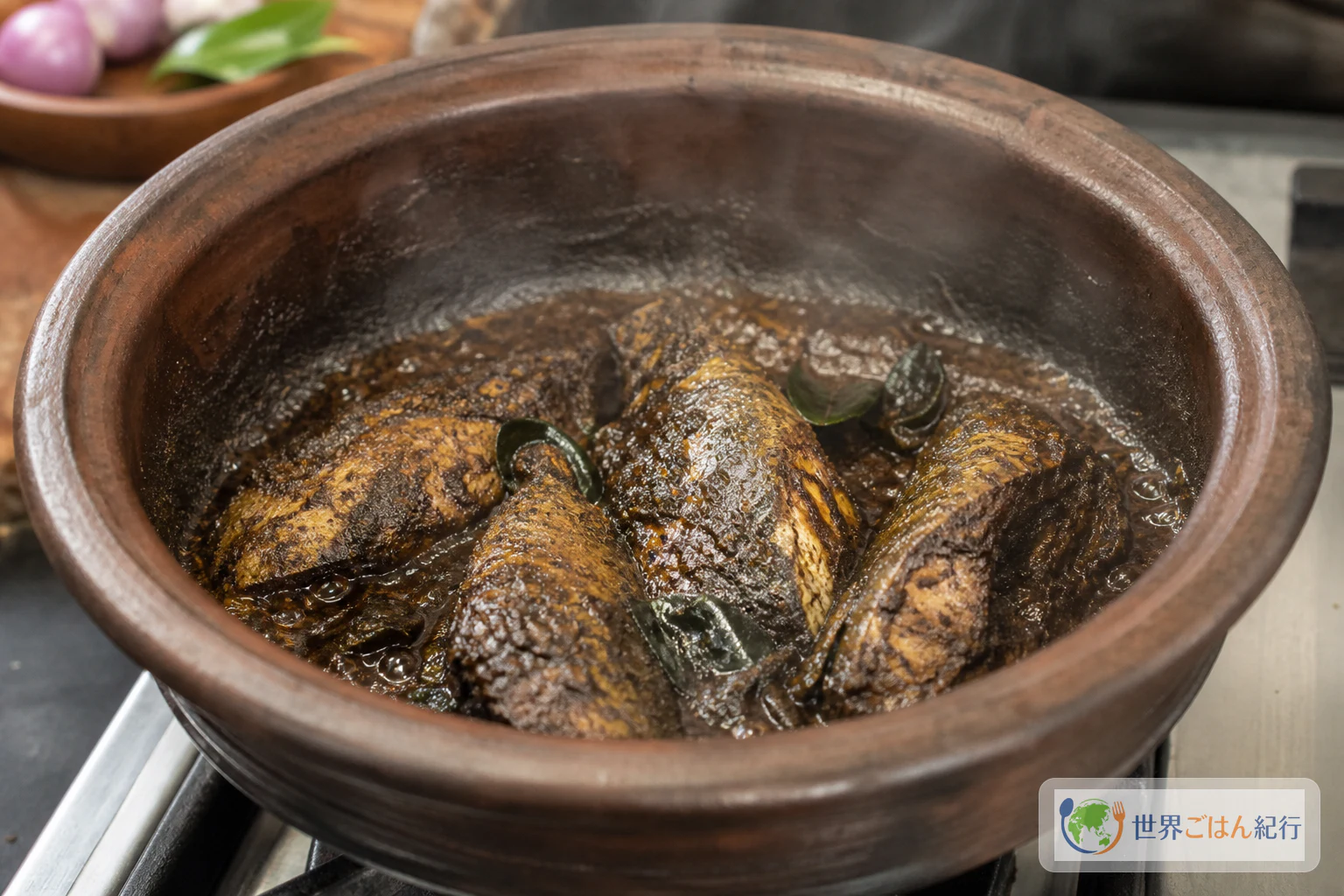
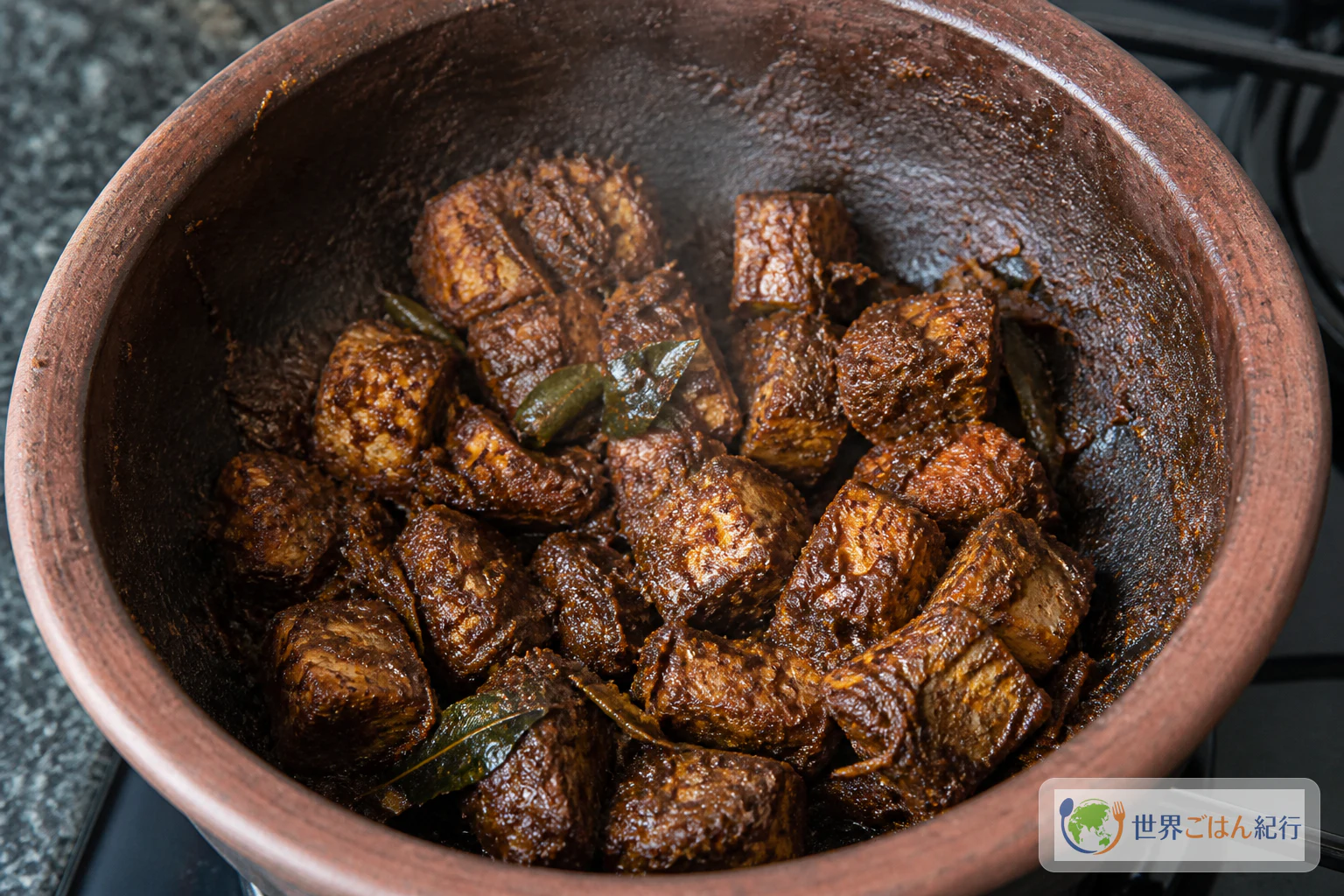
A paste of crushed black peppercorns clings to the fish while the red-brown liquid in the pot shrinks, little by little. At the end there's no soup left, just cubes of fish coated in sourness and salt. This is ambul thiyal (Malu Ambulthiyal), a fish dish from southern Sri Lanka. Its dark, round sourness comes from goraka, the dried rind of a fruit. In Japanese it is also called a "sour fish curry." Unlike curries thinned with coconut milk, though, it cooks the fish in very little liquid and takes it all the way to a dry finish.
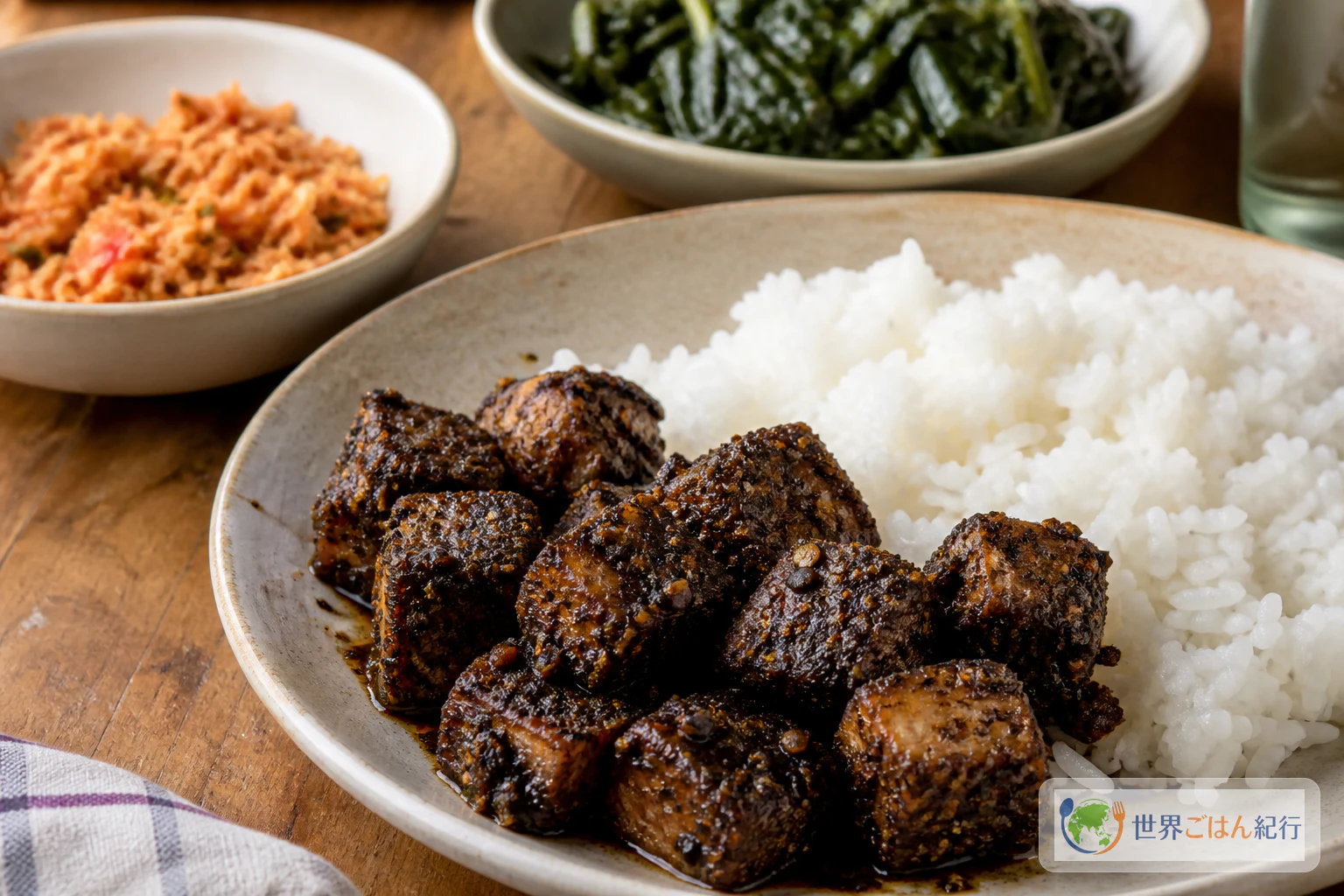
At home, the hard part isn't the spicing. You have to allow for the water the fish gives off, cook the liquid away before the flesh breaks apart, and still cook the center safely through. This version uses lean yellowfin tuna cut into 1.5 inches (4 cm) cubes. Goraka, black pepper, and salt form the backbone, with curry leaves and pandan leaf added.
Ambul Thiyal on the Southern Sri Lankan Table
The dish is traced to Ambalangoda, a coastal town in Galle District. It belongs to a food culture where rice comes with several curries and sambols. The fish doesn't sit alone in the center of the plate. It shares the table with white rice, a lentil curry, greens, and pol sambol, and because its sourness and black pepper are strong, the mild rice and the sweetness of coconut balance it out.
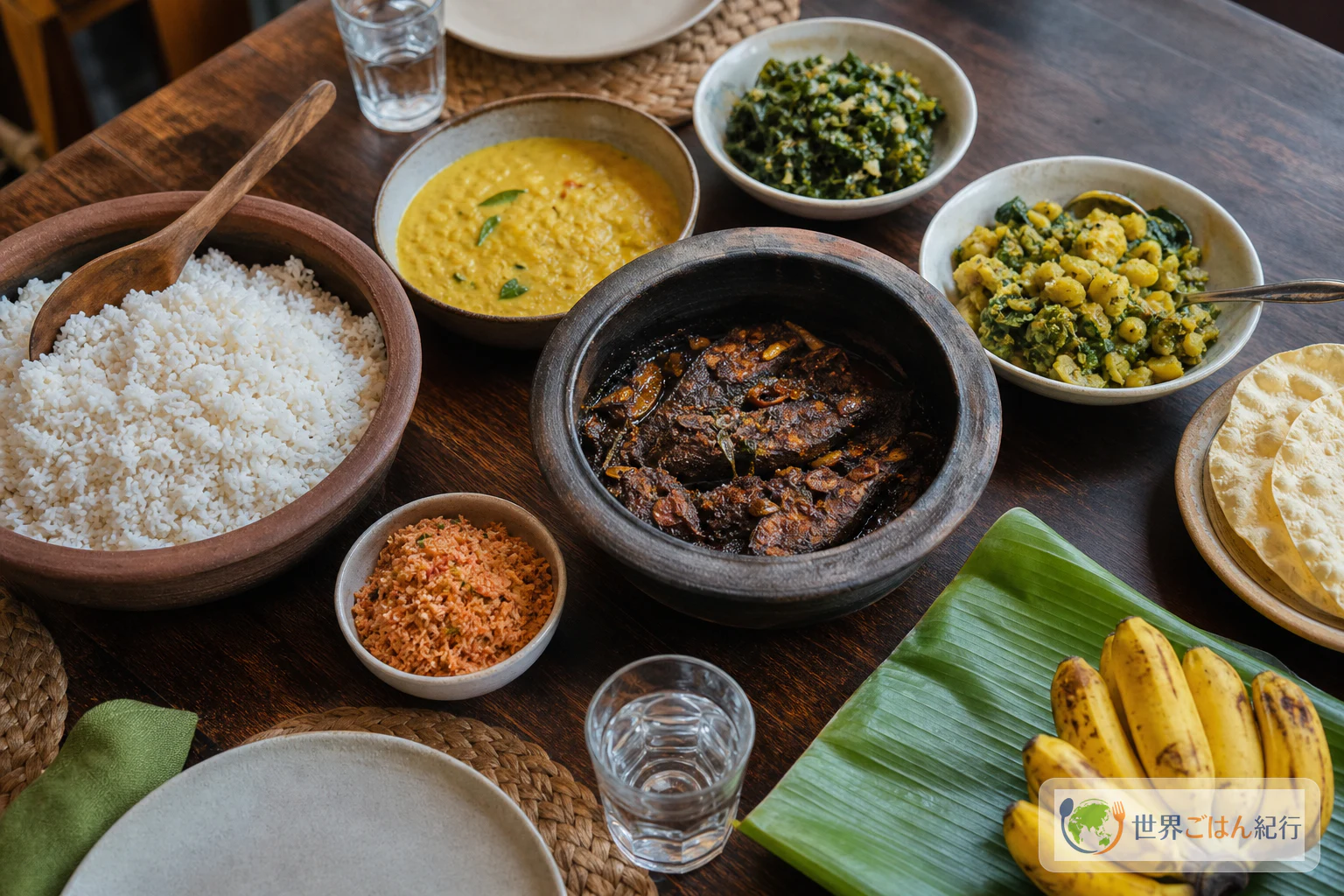
After the harvest, village tables served ambul thiyal and pol sambol with angiti bath, rice from a half-yielding crop that was cooked and mashed. People ate this way when rice mills weren't close at hand. Today ambul thiyal goes with white or red rice, or on a celebration day with coconut rice like Kiribath.
Spice blends and simmering methods shift a little from region to region, and every household has its own version. The kind of fish, the amount of goraka, and when the curry leaves and pandan leaf go in all shape the flavor. The southern style puts the sourness of the goraka up front instead of roasted curry powder. In the north and in the cities you'll find versions with more spices and sautéed aromatics.
Ingredients (serves 4): Decide the Goraka and the Fish's Water First
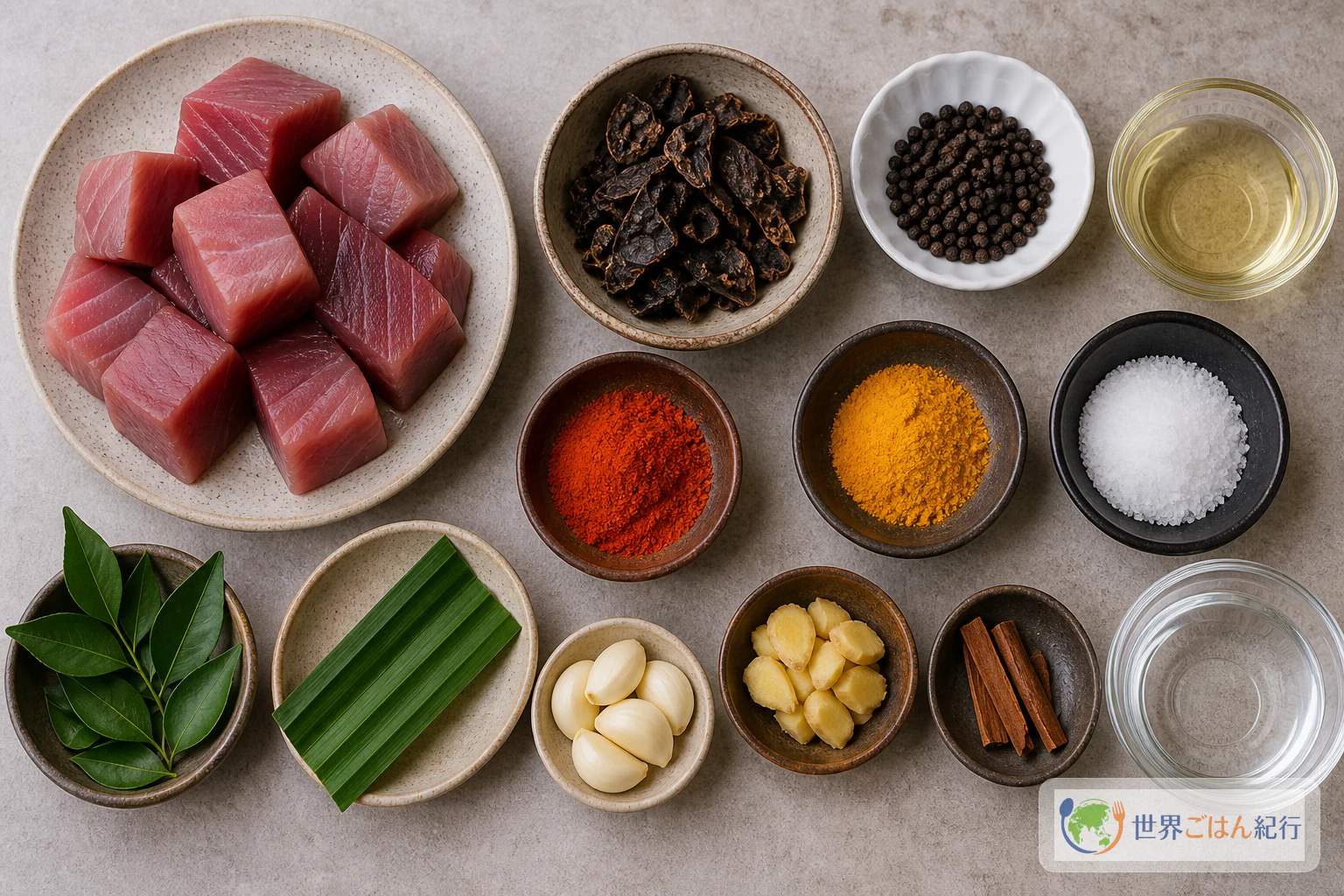
The ingredients are for four. Choose a firm-fleshed fish such as a yellowfin tuna loin, swordfish, or marlin. Fatty fish and thin fillets break down easily when simmered, so at first a block-shaped fish whose thickness you can even out is easiest to handle.
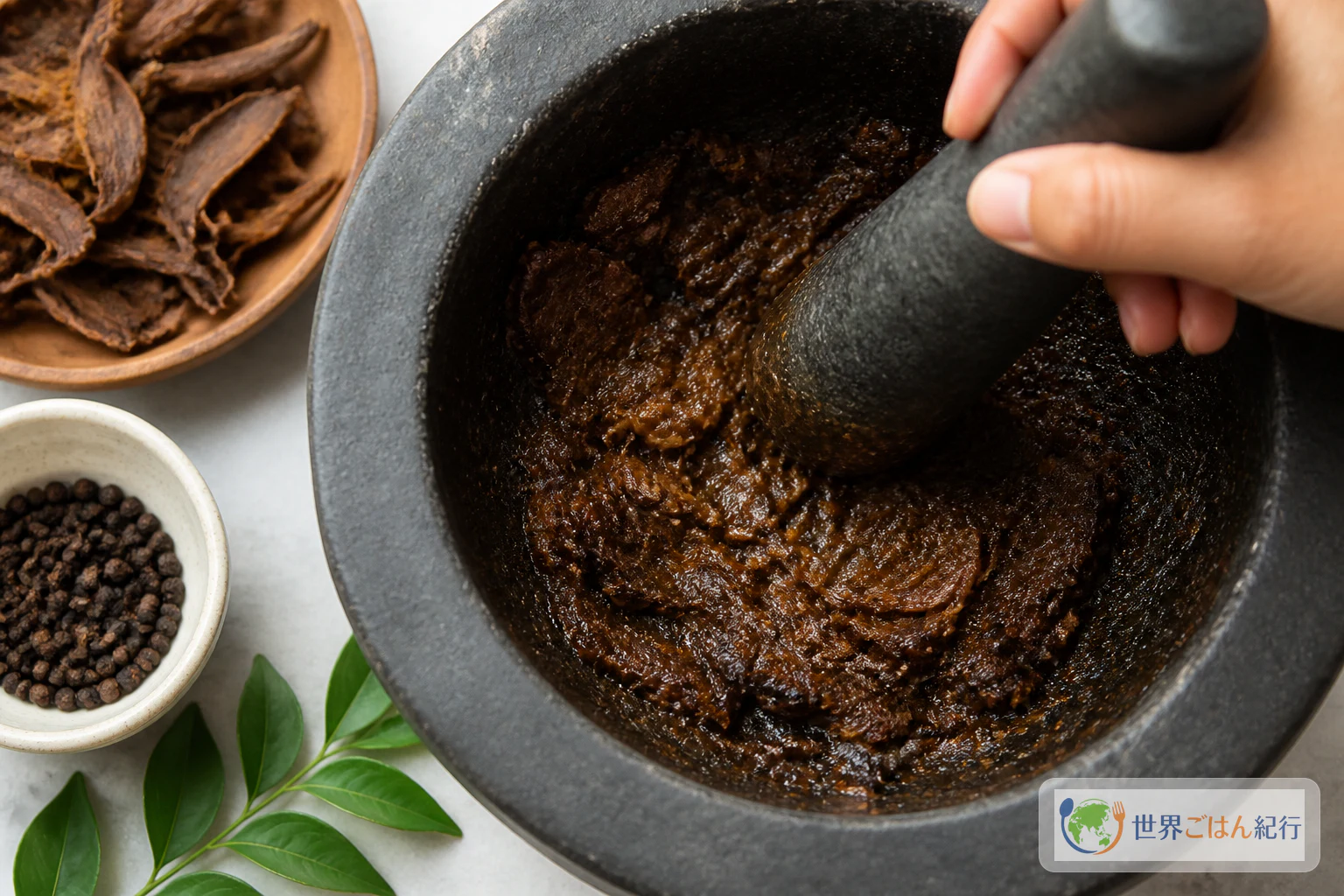
If dried goraka stays rubbery and hard, it won't turn into a paste. After soaking in warm water, crush it with the black pepper in a mortar, or blend it with a small amount of water. If you swap in concentrated tamarind paste, don't add all 25 g at once: dissolve 18 g in water, taste, and add more. The sourness of goraka is dark, while tamarind brings forward a fruity sweet-sour, so don't try to correct it afterward with sugar.
Buy the fish last, and refrigerate it as soon as you get home. Fish that has lost freshness can cause histamine poisoning, and cooking does not destroy histamine. Keep the fish cold, and check its freshness before you cook. Don't assume the sourness hides the condition of the fish.
Choosing Goraka, Tamarind, and Pepper
Goraka defines the flavor of ambul thiyal, but outside Sri Lanka most ordinary supermarkets don't carry it. If you plan to keep cooking Sri Lankan food, look for dried goraka. If you only want this one dish, start with tamarind paste to get a feel for the sourness, and order goraka next time. Tamarind changes the fruity aroma and the lingering bitterness, but it makes the dish easy to cook in an ordinary kitchen.
When you buy tamarind, read the product page rather than going by the name. Check that it's mostly tamarind, whether it's a paste or a concentrate, and whether you'll use up the size. A paste whose sourness you can adjust with water stands in for goraka better than one with strong sweeteners or flavorings. Rice vinegar alone gives a thin sourness that can't hold up against the bitterness of black pepper.
Crushing whole peppercorns gives you aromatic grains as well as fine powder. A mortar is enough. If you'll be grinding goraka fiber and black pepper into paste regularly, a small spice mill is worth it. Otherwise, chop the pepper with a knife before crushing it.
Method: Don't Stack the Fish, and Cook the Liquid Off to the End
Use a small heavy pot or a shallow clay pot about 7 inches (18 cm) to 8 inches (20 cm) across. In a pot that is too big, the liquid spreads out and evaporates quickly, so only the surface of the fish dries and the center is slow to cook. In a pot that is too small, stacking the fish crushes the pieces underneath.
Fixing Ambul Thiyal: Too Much Liquid, Too Much Sourness
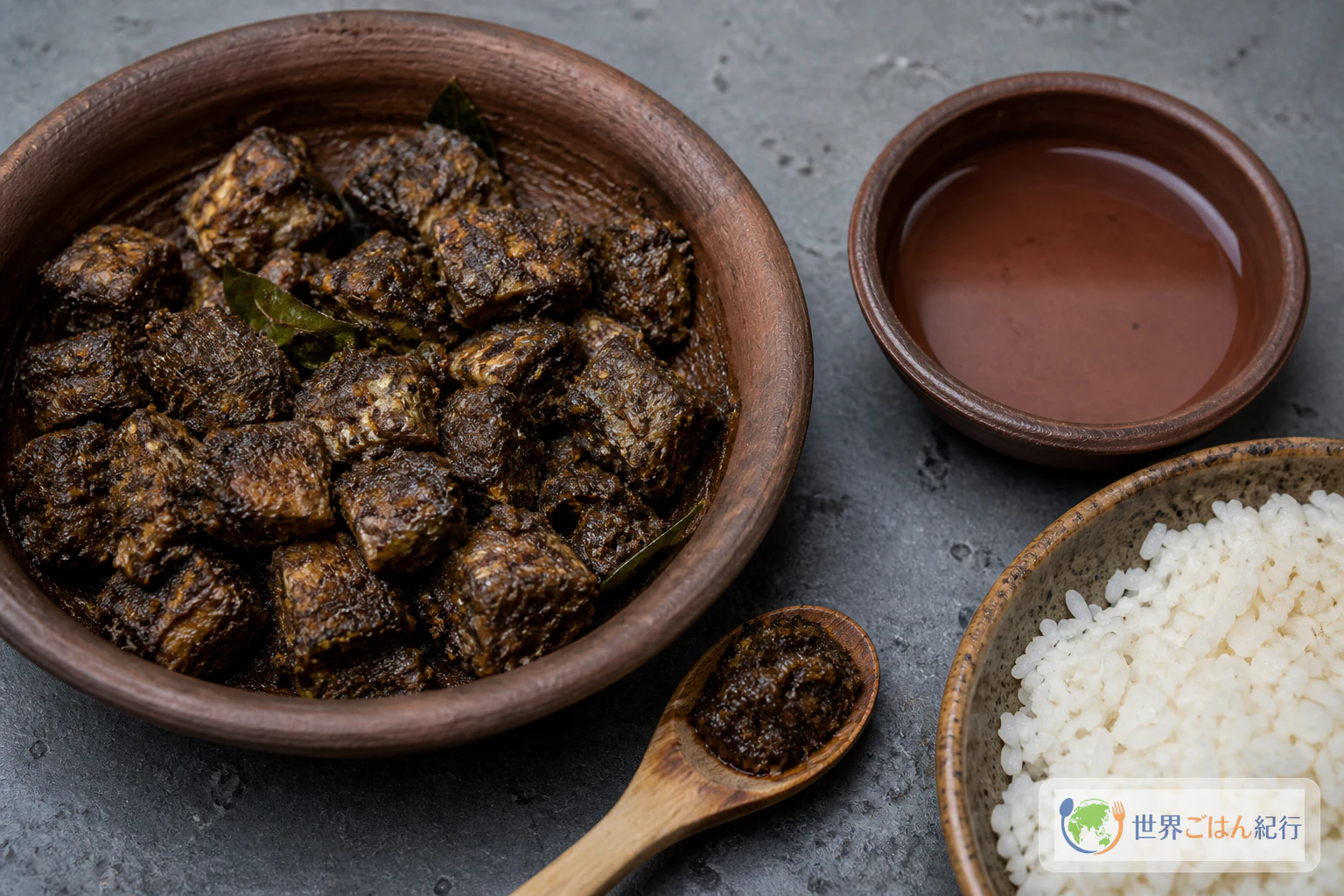
How much water ends up in the pot depends on the thickness of the fish, how well the goraka softened, and the size of the pot. Knowing how to correct along the way means you won't have to disturb the fish.
Take out the fish and set it on a separate plate, and reduce the pot alone over medium heat for 3 to 5 minutes. When the liquid reaches a thickness that leaves a thin film on the back of a spoon, return the heat to low, put the fish back in the pot, and shake for just 30 seconds. If you boil hard with the fish still in the pot, the flesh breaks before the liquid reduces.
Mix 1 tbsp water and a pinch of salt in a small dish and add it a little at a time from the edge of the pot. Instead of sweetening with sugar, check whether the fish had too little moisture for the amount of goraka. The tamarind version loses some of its sharp edge if rested for 10 minutes.
Keep chopsticks and wooden spoons out of the pot; hold the pot and shake it side to side. If the flesh has already split, don't force it back into chunks. Eat it as a flaked finish over rice. Next time, cut the fish no smaller than 1.5 inches (4 cm) cubes, and leave it alone until the liquid boils.
Serving and Variations
Rice, Hoppers, and Kiribath
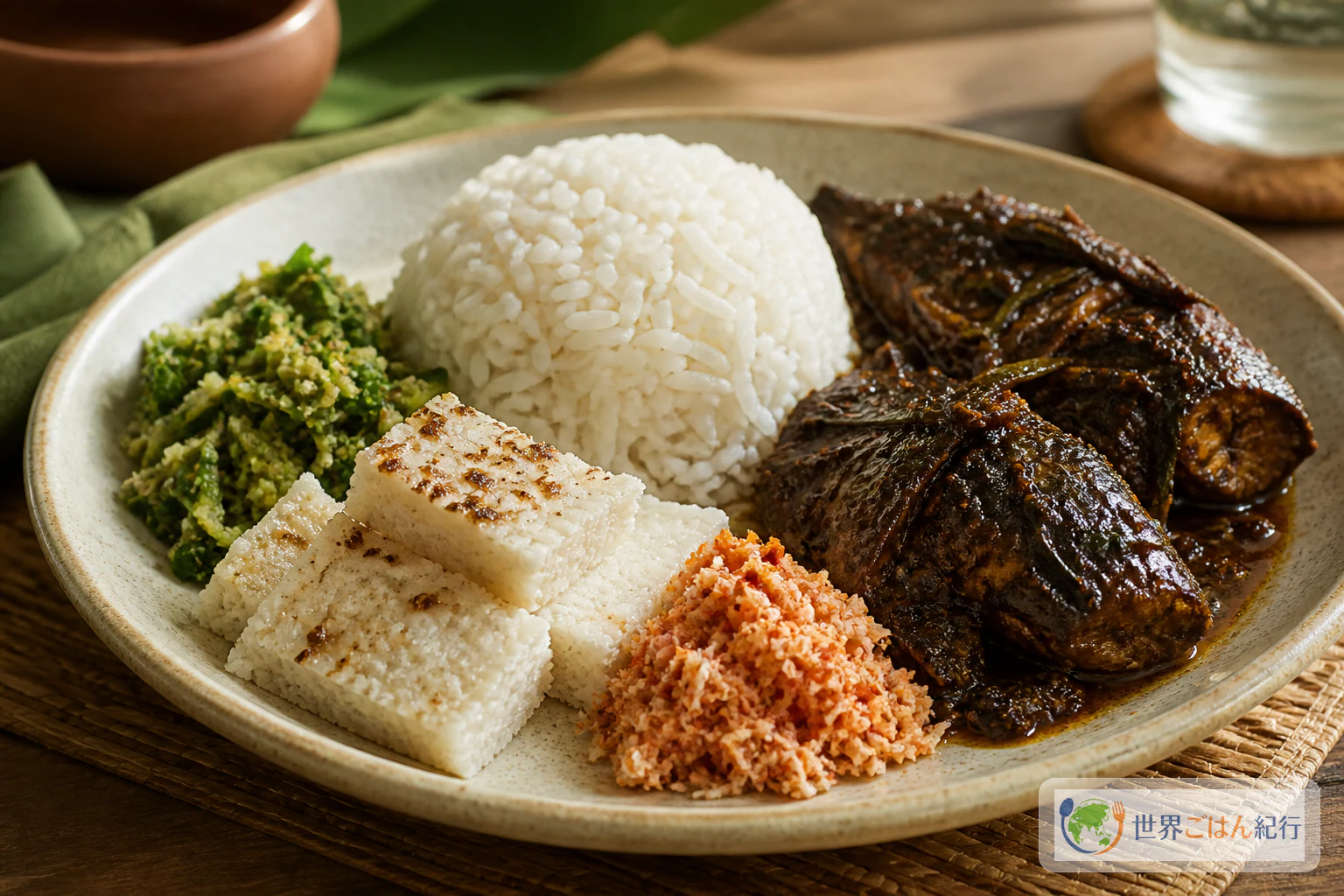
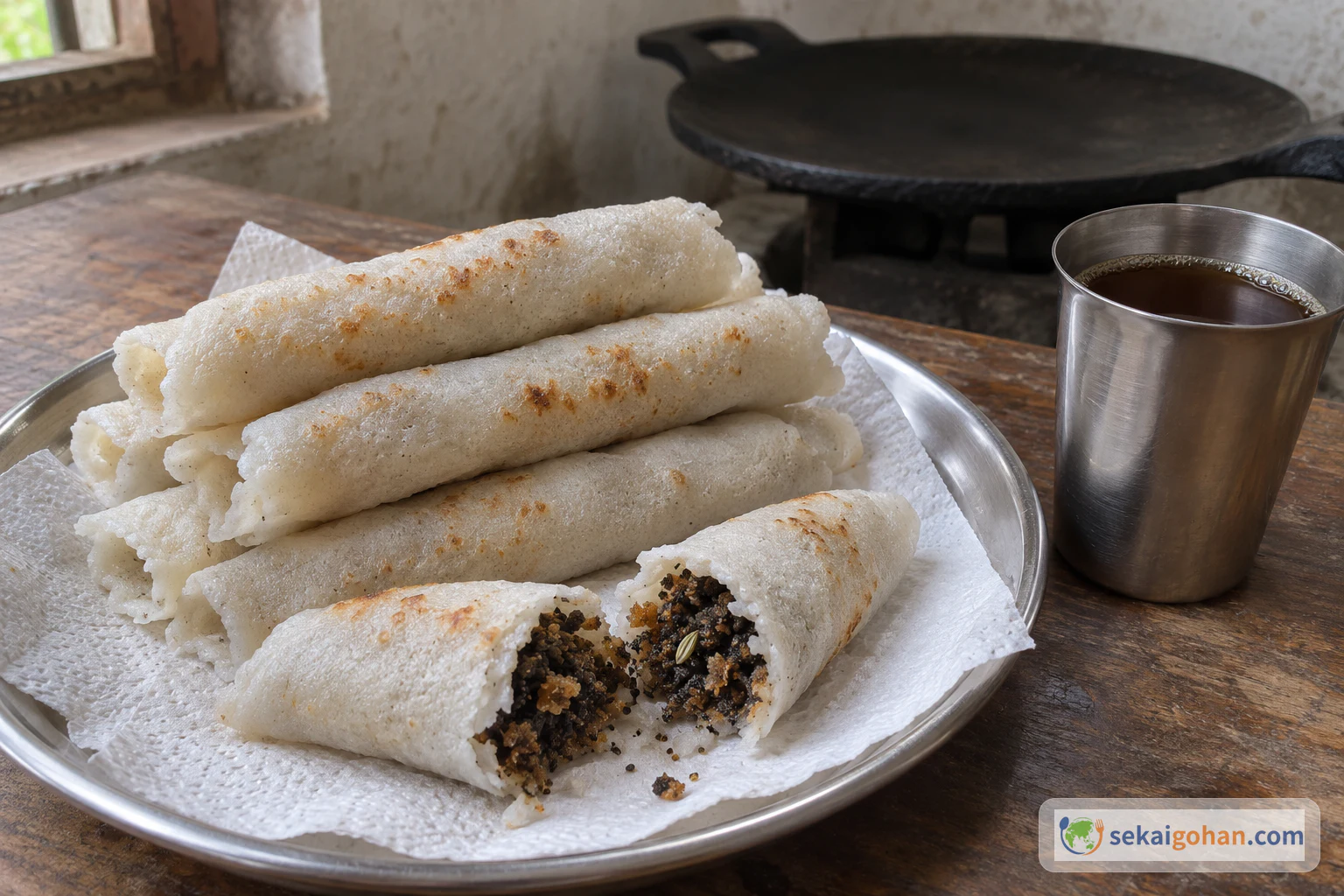
Served alone on a plate, ambul thiyal tastes strongly of goraka and salt. At a Sri Lankan rice-and-curry table, fish, lentils, vegetables, and sambol each go on the plate in small amounts, and the sourness pulls the whole meal together. Besides white rice, the staple can be red rice, pol roti, hoppers, or kiribath. A little fish in a fermented rice-flour bowl like Hoppers, or next to sweet coconut kiribath, takes the sharp edge off the sourness. It eats very differently from Kottu, where chopped roti and curry are stir-fried on a griddle.
With the simple southern version, put just a bite of fish on the rice and add pol sambol or cucumber. With the more aromatic version, keep the lentil curry and greens mild. If every side dish is spicy, the goraka's sourness gets lost, so keep at least one mild dish on the plate.
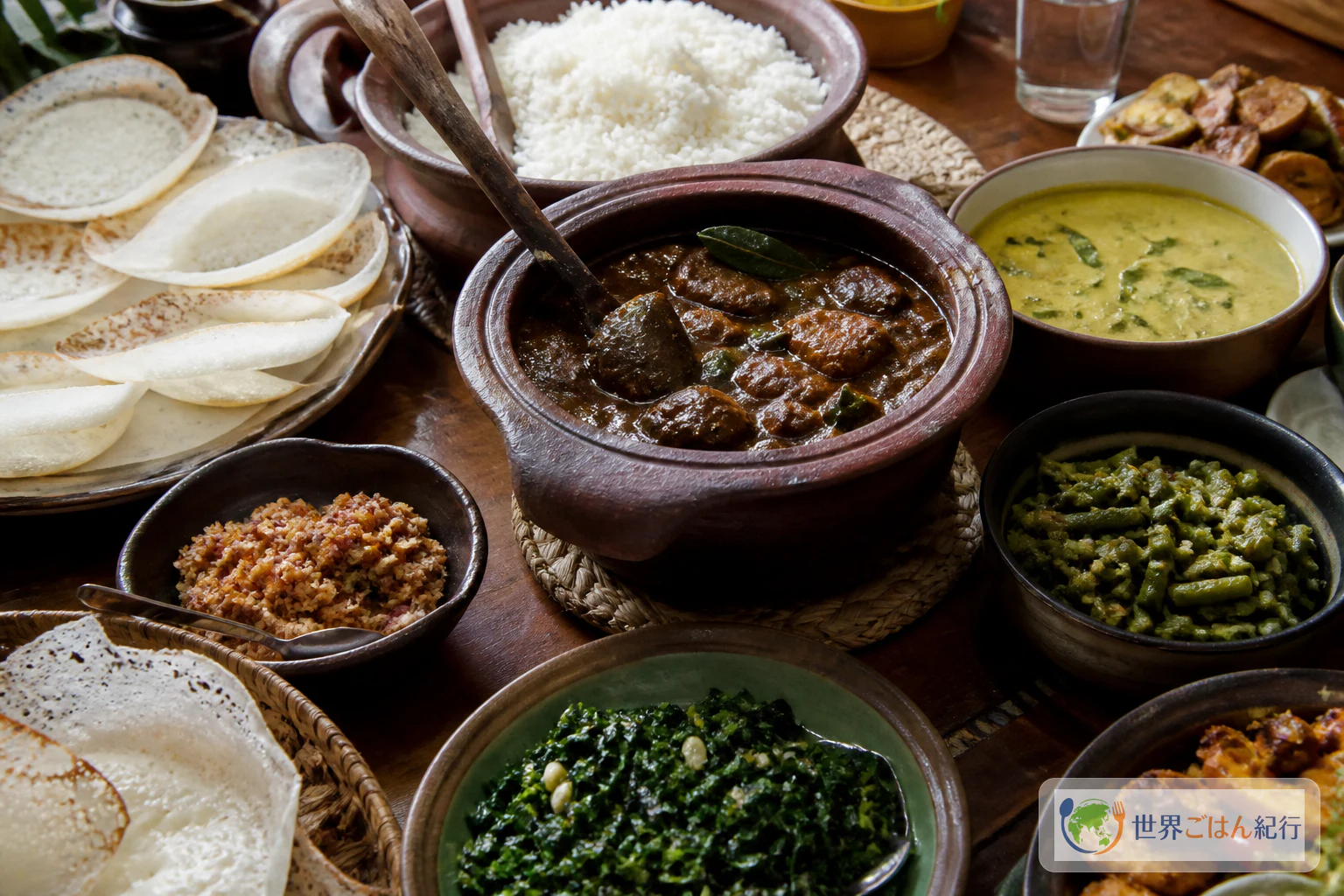
Pick the staple first and the side dishes are easier to match:
- On a celebration day, add a small amount of fish to Kiribath, cooked in coconut milk.
- For the aroma of fermented rice flour, serve it in Hoppers, baked like round bowls.
- To round out the plate, add one saucy dish such as Kukul mas curry, a chicken coconut curry.
Whatever you pair it with, go easy on the fish. Take a little with a bite of rice and some coconut or greens, and you'll taste the goraka's sourness, the heat of the black pepper, and the savor of the fish one after another.
Ambul Thiyal Variations
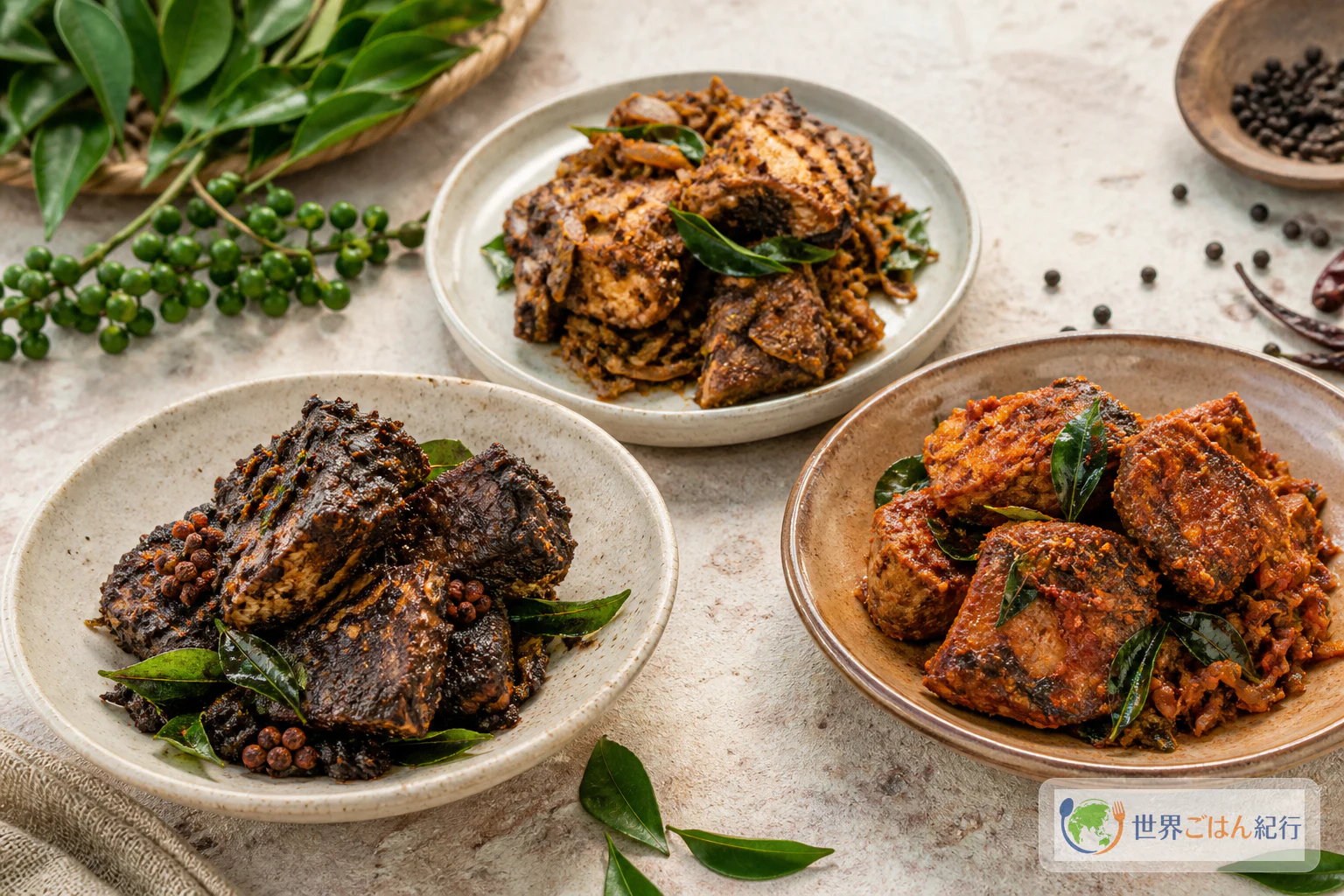
Southern-leaning. Leave out the garlic, ginger, cinnamon, curry leaves, and pandan leaf, and use only goraka, black pepper, salt, and water. The aroma is simpler, but the sourness and the fish come through most clearly.
Tamarind in place of goraka. Use 18 to 25 g tamarind paste in place of 1 oz (30 g) dried goraka. It's more sweet-sour than goraka and a little lighter in color, so keep the black pepper up. Concentrated types can be very sour: dissolve 18 g in 3.5 tbsp (50 ml) water, taste the pot, and add more as needed.
More aromatics, closer to city and home cooking. Add garlic, ginger, green chilies, curry leaves, and pandan leaf to the paste. This helps if the smell of fish bothers you. The aromatics add moisture, though, so start with ½ cup (100 ml) water. Curry powder added by the tablespoon will bury the goraka's sourness.
Oven version. For days without a clay pot, arrange the fish and paste in a single layer in an ovenproof dish, seal it with aluminum foil, and bake in an oven preheated to 350°F (180°C) for 25 minutes. Remove the foil and bake 10 to 15 minutes more, until a thin layer of sauce remains on the surface of the fish.
Swordfish. It's whiter than tuna and keeps its corners when simmered. Choose lean fillets 1 inches (3 cm) or more thick, cut into 1.5 inches (4 cm) cubes, and they'll stand up to the goraka. Mackerel and sardines are fatty and wet and pull the dish toward the fish's fat, so skip them the first time.
A version made with tamarind uses different ingredients from the local dish, though the method is the same: coat the fish in a firm aromatic paste, cook it in very little water, and drive off the liquid at the end. When you serve it, mention the tamarind so everyone knows it's a home version.
Storage, Safety, and FAQ
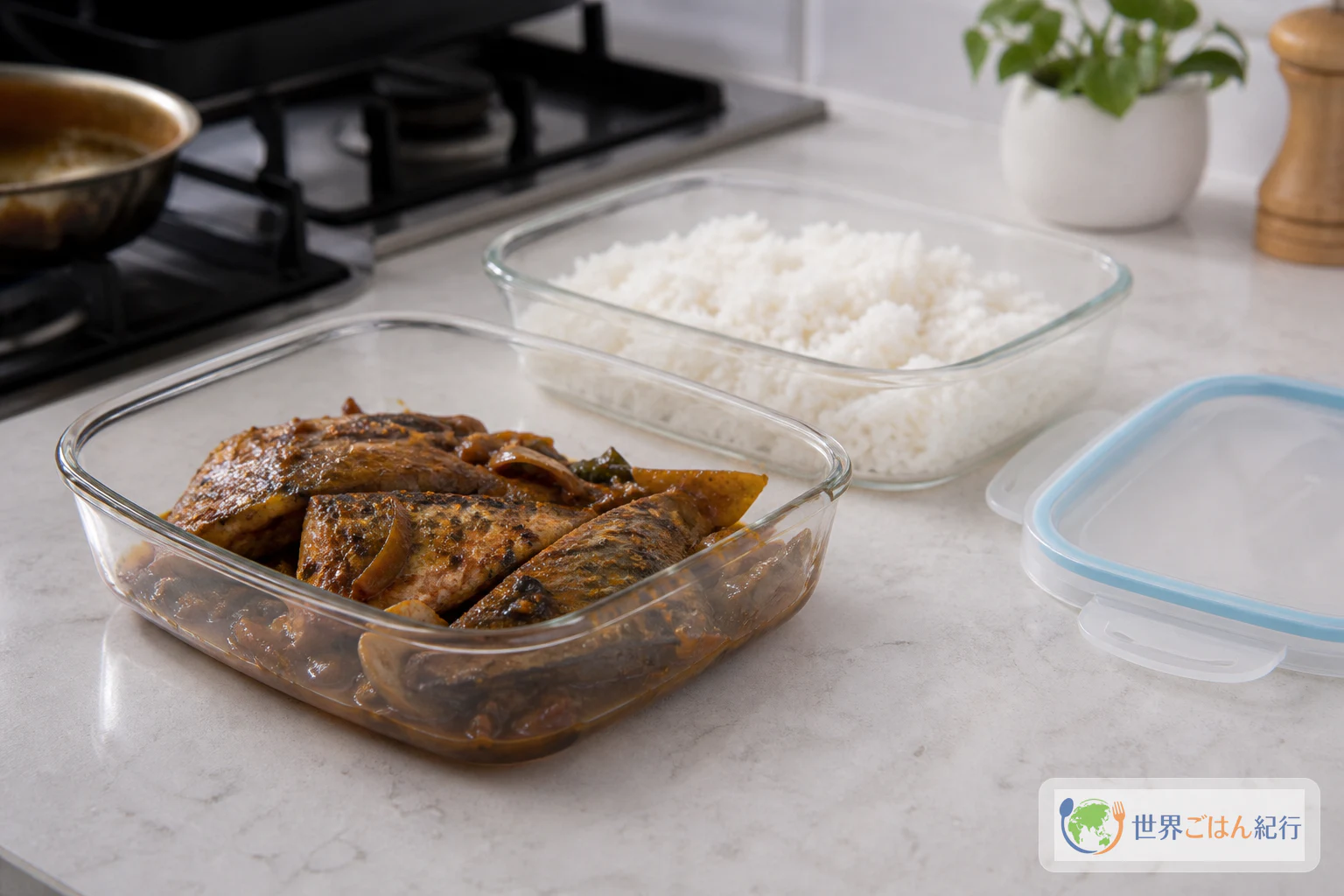
Goraka and salt keep the moisture down, but ambul thiyal still can't be kept at room temperature. Start with very fresh fish, and refrigerate everything you won't eat the day you make it. Once the fish has cooled slightly, move it into shallow containers so it chills quickly, and finish it within about a day. To reheat, add 1 to 2 tsp water to the pot, cover, and warm over low heat until it's hot in the center. If you notice an off smell, sliminess, or a sharp odor different from the sourness, throw it out.
Are goraka and tamarind the same thing?
No. Both bring sourness, but goraka is the dried rind of a garcinia fruit, with an earthy bitterness and a dark aroma. Tamarind brings the sweet-sour of its pulp, so the dish tastes lighter. It's a practical substitute, but a different ingredient.
My goraka is hard and won't crush.
If it's still hard after 10 minutes in warm water, boil the goraka alone in a little water for 5 minutes, let it cool, and then crush it. Dry goraka in a mill just spins without catching, and the fibers stay long. If the paste is too stiff it won't coat the fish evenly, so add water 1 tsp at a time until it spreads without dropping off the spoon.
Can I stir while the fish is cooking?
Better not to. Stir before the flesh has set and the paste slides to the bottom of the pot and the corners of the fish break. Hold the pot in both hands, shake it lightly, and circulate the liquid once after 5 minutes. If the fish is thick, break open one piece at the end to check that it's opaque through the center.
How do I tone down the heat?
Leave out the chili powder and reduce the black pepper to 12 g. The sourness carries the dish without the heat. Shake a little black pepper over the adults' plates afterward, and one pot works for the whole family.
Is there a substitute if someone has a fish allergy?
Without the fish it's really a different dish, so give it a different name. Coat eggplant or fried tofu in the same goraka and black pepper paste and cook it down in a little water. Wash any knives, cutting boards, and cooking chopsticks that touched raw fish with detergent before using them on cooked food.