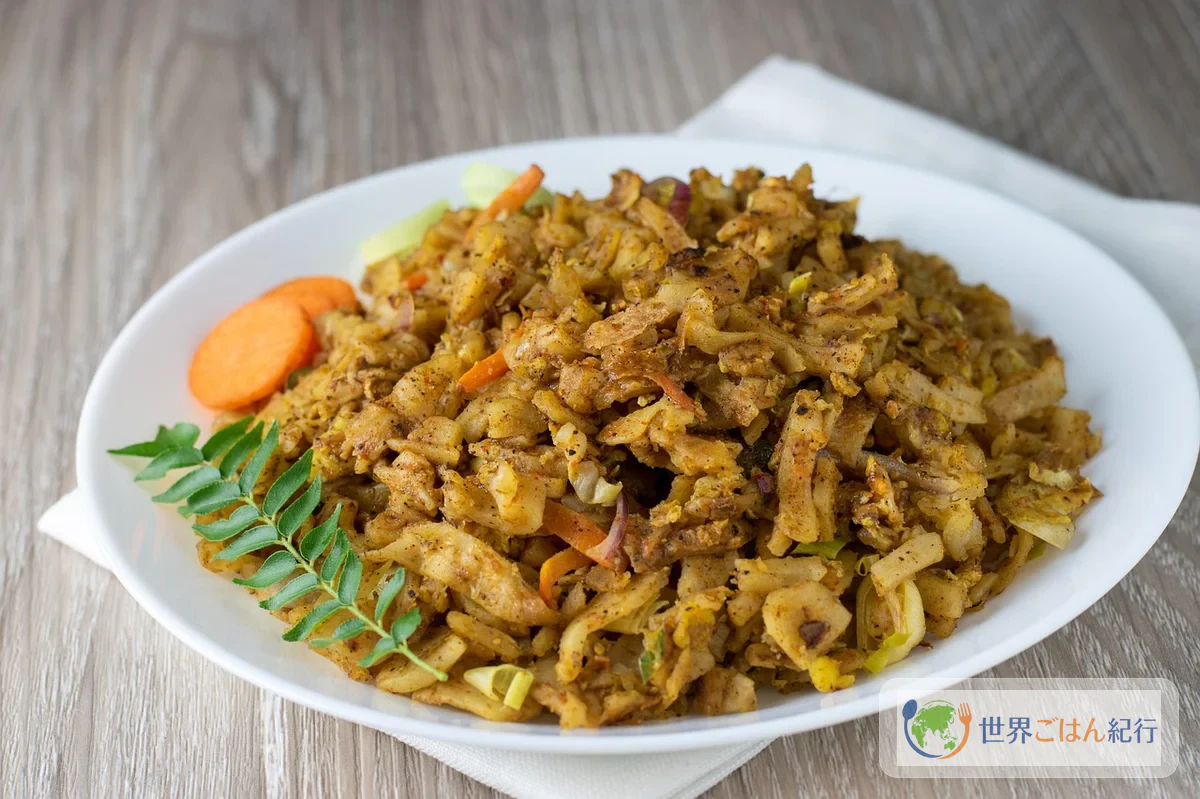
Dusk in Sri Lanka. As the sun goes down, a fast, nimble rhythm starts up on street corners all over town. Clang-clang-clang-clang: two metal spatulas on a hot griddle, chopping roti and tossing it with vegetables and meat, the cook's hands moving like a percussionist's. This is kottu roti (කොත්තු රොටි / Kottu Roti), Sri Lanka's much-loved street food of cooked godamba roti (a thin flatbread) chopped fine and stir-fried on a griddle with vegetables, meat, egg and curry sauce. You get crisp roti mingled with tender vegetables and the aroma of curry spices, and it comes together surprisingly easily from everyday ingredients.
Kottu roti in Sri Lanka
The name comes from the Tamil word koththu, "to chop," so the dish is named for exactly how it's made. Within the diverse food cultures of South Asia (in Japanese), chopping and frying bread on a griddle this way has become a Sri Lankan signature.
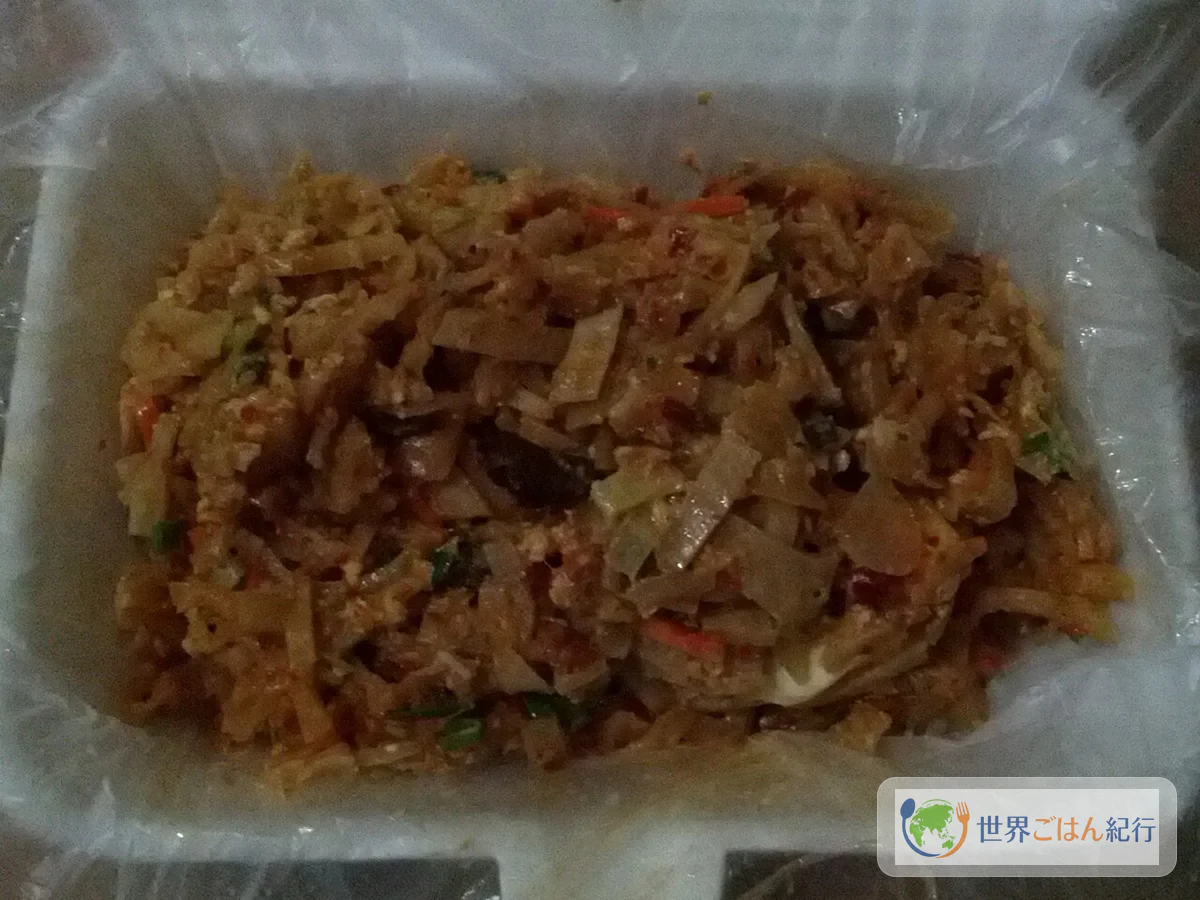
Kottu is sold at street stalls and restaurants all over the country, from Colombo to Kandy and Galle, and people of all ages love it as a go-to dinner. Many stalls open from evening into the night, with versions running from chicken and egg to vegetable, cheese and more.
It's nothing like staples such as khichdi (in Japanese) (Indian rice and lentil porridge) or dal bhat (Nepal's lentils-and-rice meal); here, bread is the star. In the South Indian state of Tamil Nadu there is also kothu parotta, made by chopping and stir-frying parotta.
Where kottu comes from
Kottu spread as a street food in eastern Sri Lanka around the 1960s and '70s, and it's tied to eastern towns such as Batticaloa and Trincomalee and to the food culture of the Moors (Sri Lanka's Muslim community). It started with cooks chopping unsold roti and refrying it with vegetables, a bit of everyday ingenuity that caught on as a cheap, filling meal.
The idea of chopping cooked bread and frying it again echoes dishes like Chinese fried rice, which turn a ready-cooked staple into something delicious. That suits Sri Lanka, an island that was long a hub of maritime trade.
The sound of kottu
Kottu is a rare dish that draws customers with its sound as well as its flavor. The rhythm of the two spatulas has a tempo and pattern that differs from shop to shop, and regulars can tell their favorite stall by sound alone.
Search YouTube for "kottu roti sound" and you'll find hundreds of videos; they've become something of an ASMR favorite. It's a reminder that cooking can be performance, like the sounds of a sushi chef at work or a Chinese cook tossing a wok.
Kottu in Sri Lankan food culture
Sri Lankan food blends influences from the Indian subcontinent, seen in dishes like biryani (in Japanese), with those of the Portuguese, Dutch and British colonial eras. Rice and curry (rice with several curries) is the everyday staple, while kottu has carved out its own place as a late-night snack and dinner. Just as laksa (in Japanese) symbolizes Malaysian street food, kottu is the face of Sri Lankan street food.
In Buddhist-majority Sri Lanka, alcohol sales are banned on Poya days (the full-moon day, once a month), and many people also avoid meat. On those days vegetable kottu and egg kottu become the stalls' main offerings.
Kottu by region
Sri Lanka is a small island nation, but kottu styles vary by region.
| Region | Characteristics |
|---|---|
| Colombo | The most variety. Plenty of modern takes such as cheese kottu and devilled kottu |
| Kandy | True to hill country, tends toward lighter versions with more vegetables |
| Galle | On the coast, so seafood kottu is a specialty. Prawn kottu is outstanding |
| Jaffna | Tamil influence means bolder spicing. There's crab kottu too |
| Nuwara Eliya | Highlands. On cold nights, soup kottu (with plenty of curry broth poured over) is popular |
Ingredients (serves 2)
In Sri Lanka, curry leaves (karapincha) are a standard addition. If you can get them, fry a few (up to about 10) with the garlic and ginger. They add a citrusy fragrance quite unlike a curry-powder curry. Without them, use 2 bay leaves instead.
Godamba roti and substitutes
The roti is the foundation of kottu's flavor. Sri Lankan godamba roti is a thin, layered flatbread similar to Indian paratha, crisp on the outside and chewy inside, and chopping and frying it gives kottu its mix of crunchy and chewy bits. Homemade roti gets you closest to the real thing.
Curry leaves are harder to replace; nothing matches them exactly. For the closest flavor, use 2 bay leaves plus a little lime zest. Asian grocers and online shops sometimes carry dried or frozen curry leaves, so if you'll be cooking Sri Lankan food often, they're worth tracking down.
Making godamba roti
- Make the dough
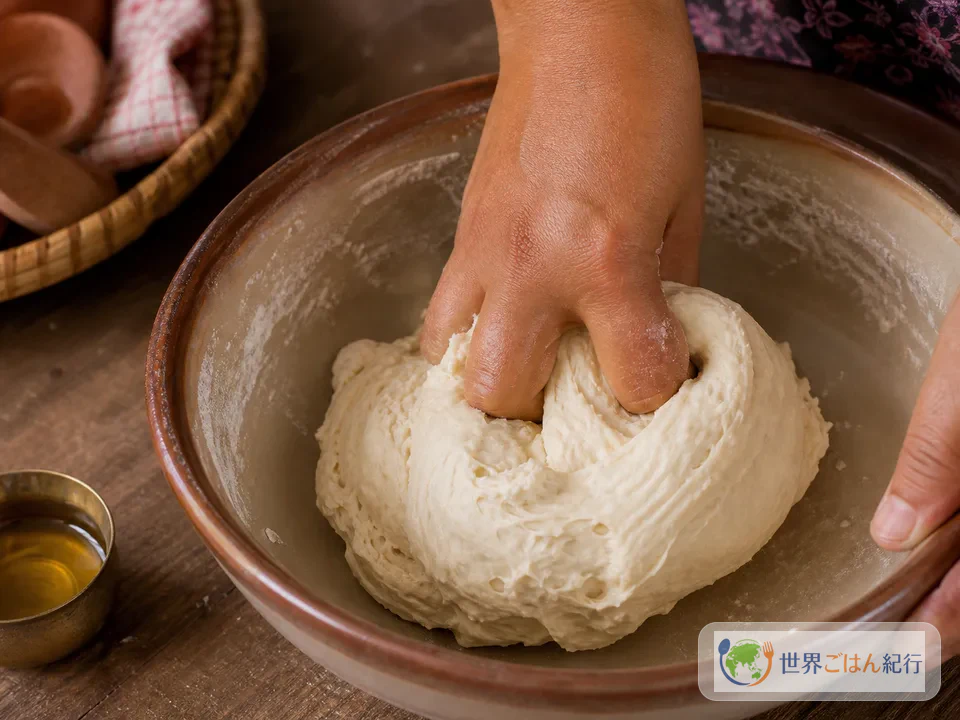
Put the flour, salt and sugar in a bowl and mix in the water a little at a time. Add 2 tbsp oil and knead for about 5 minutes, until the dough is smooth and slightly softer than an earlobe. It's ready when a fingertip dent springs back slowly and your hands are lightly oiled but not sticky.
- Rest the dough
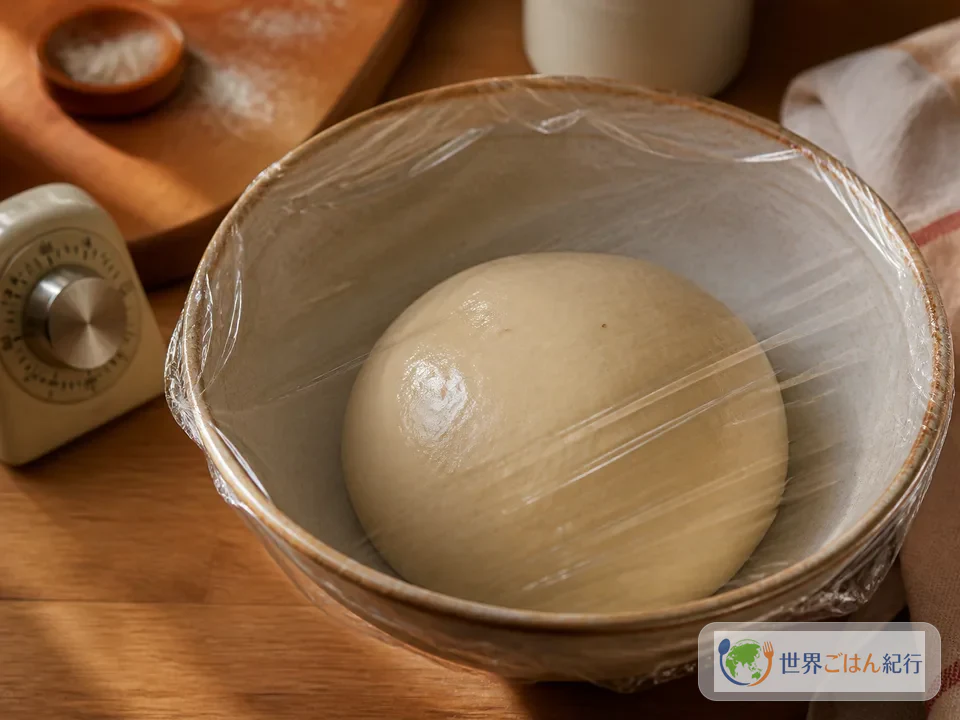
Shape the dough into a round ball about 4–4.5 inches (10–12 cm) across and brush the surface lightly with oil. Press plastic wrap directly onto the dough, cover the bowl with wrap too so nothing dries out, and let it rest at room temperature for at least 30 minutes. Once the gluten relaxes and a fingertip dent fills back in slowly, it's easy to stretch.
- Divide (2 min)
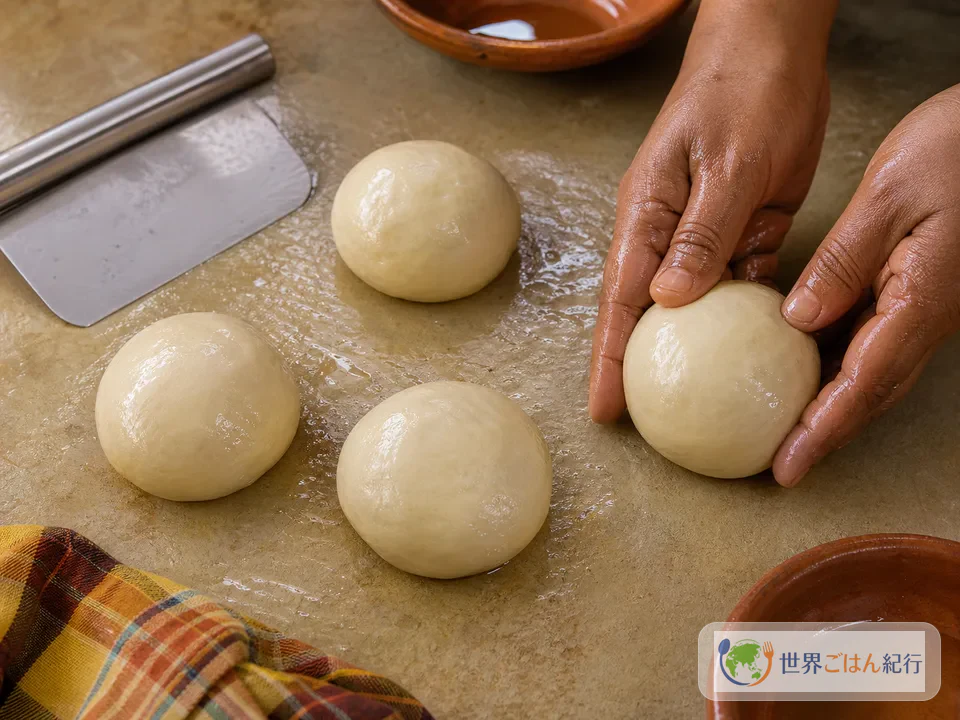
Divide the dough into 4 equal pieces and roll each into a smooth ball 2–2.5 inches (5–6 cm) across. Tuck the cut edges underneath as you shape them, then brush lightly with oil and set them side by side; this makes them easier to stretch thin later.
- Stretch (5 min)
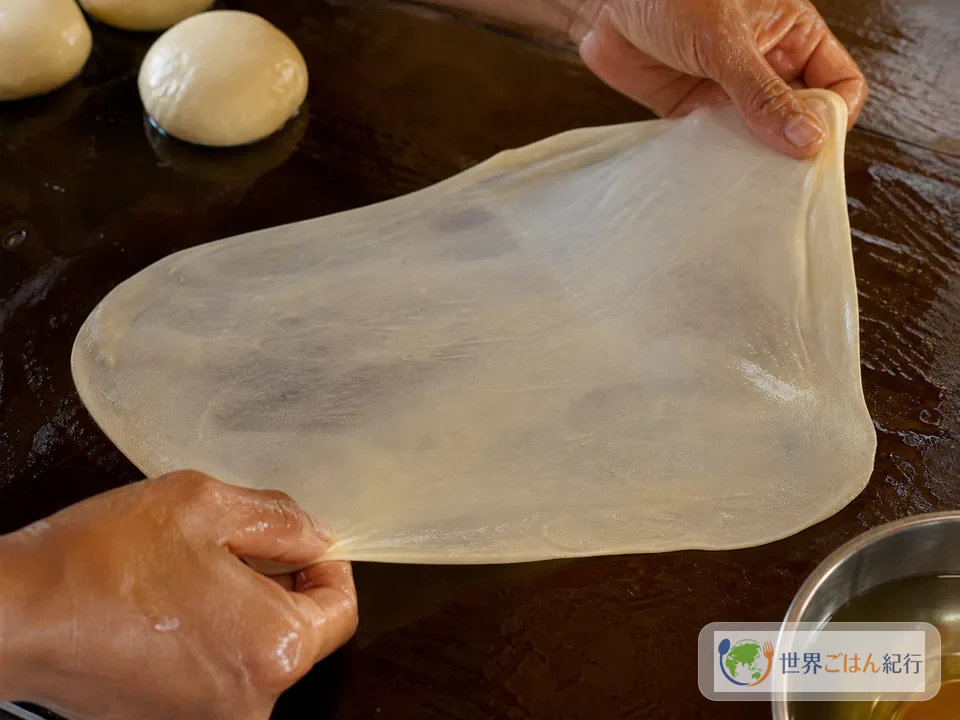
Oil your work surface (the key is oil, not flour), press a ball out with your palm to about 6 inches (15 cm) across, then stretch it gradually from the center outward with your fingertips. Ideally you'll end up with a sheet about 12 inches (30 cm) square, thin enough to see through in places. Leave any spots that look ready to tear and ease the thicker areas outward instead.
- Fold (2 min)
Fold the stretched dough in thirds from left and right to make a strip, then in thirds again from top and bottom into a square about 4–4.5 inches (10–12 cm) across. Smear a little oil on the surface with each fold so the layers don't stick together too much. This folding is what creates the layers when it cooks.
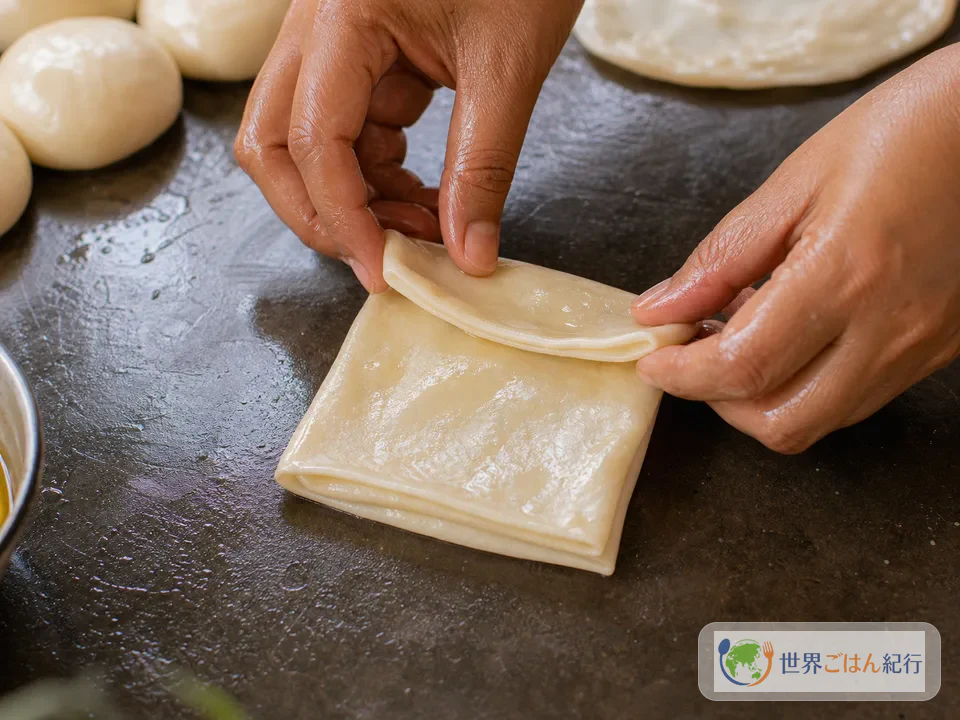
- Cook
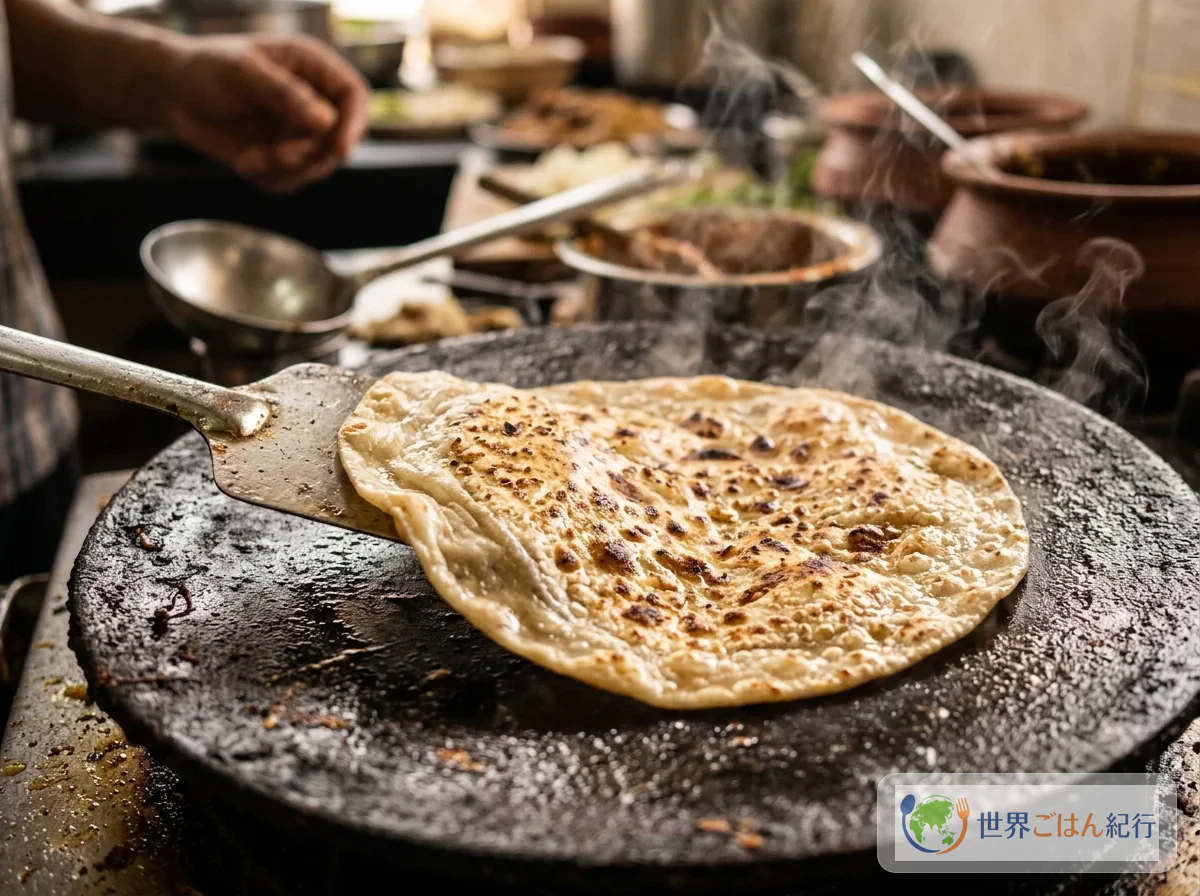
Heat a skillet over medium heat, add a thin film of oil and cook the roti 2–3 minutes per side, until both sides are browned. Let it cool for at least 30 minutes, then cut it into strips about 1 inch (2–3 cm) wide.
Pressing the roti lightly against the griddle as it cooks makes the surface crisp.
Instructions (the kottu)
1. Prep
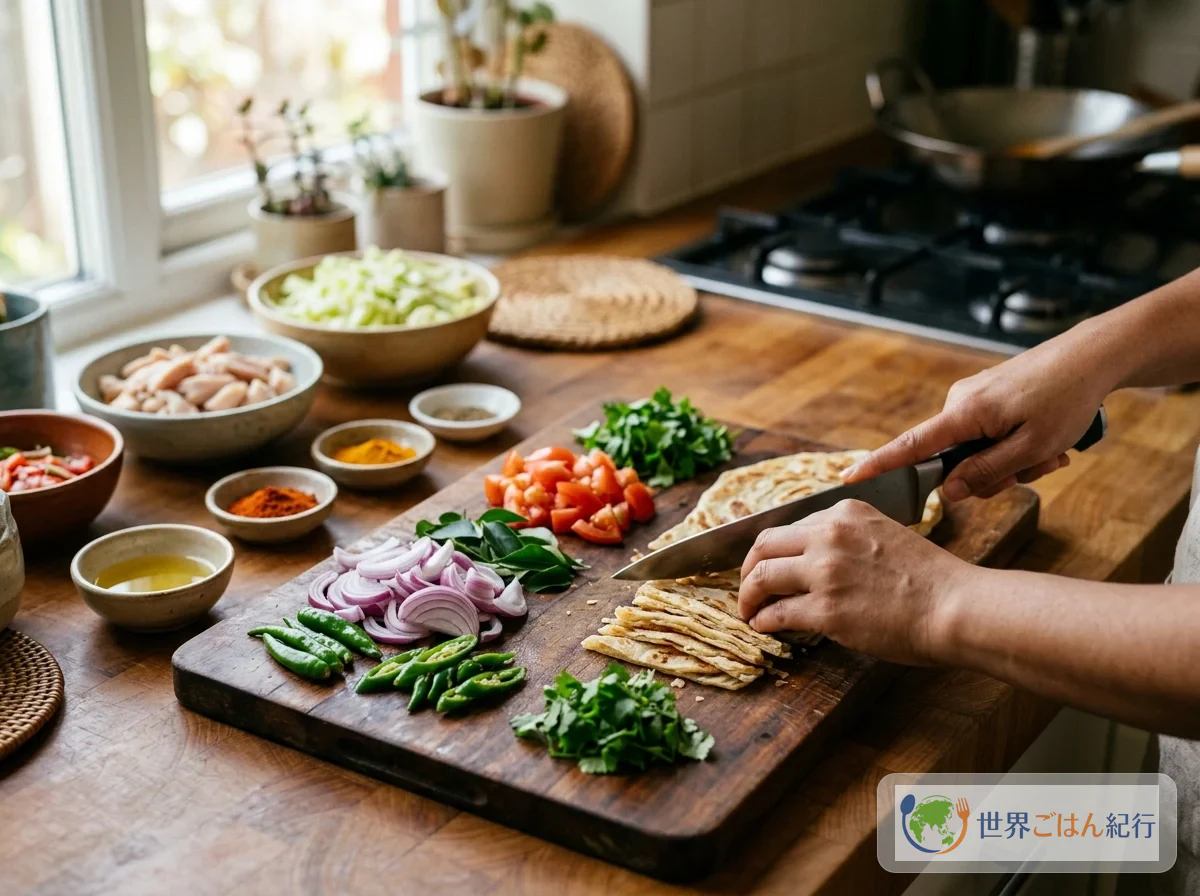
- Tear the cooked godamba roti (or substitute) into palm-size pieces, then cut them into strips 1 inch (2–3 cm) wide. They don't need to be fine; you'll chop them further on the griddle.
- Cut the chicken into bite-size pieces, season with 1 tsp curry powder, 1/4 tsp turmeric and 1/4 tsp salt, and let it sit for 15 minutes. Since you'll be searing it over high heat later, keep the pieces an even 1 inch (2 cm) or so thick.
2. Cook the meat
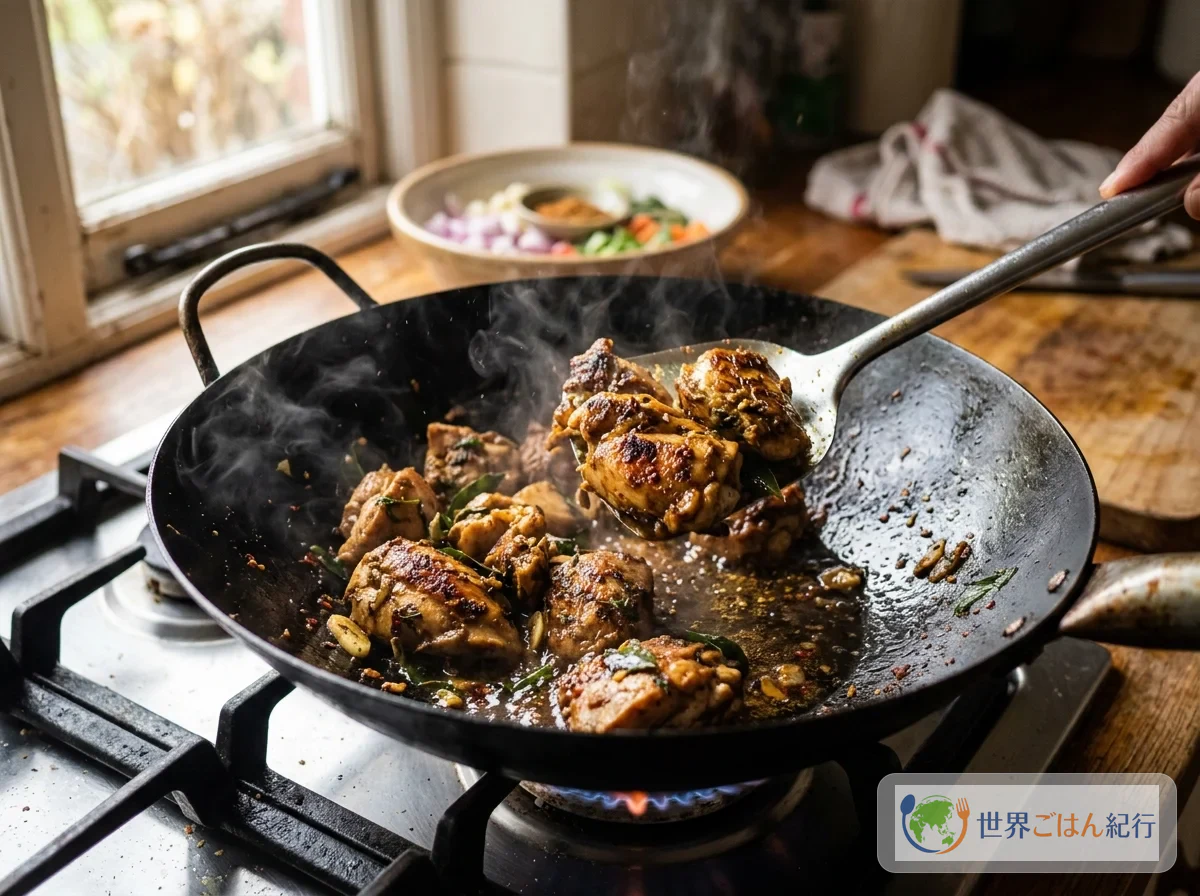
Heat a large skillet (a wok or griddle if you have one) over high heat and add 2 tbsp oil. Add the seasoned chicken and stir-fry for 3–4 minutes, until browned. Remove it for now.
3. Stir-fry the vegetables and aromatics
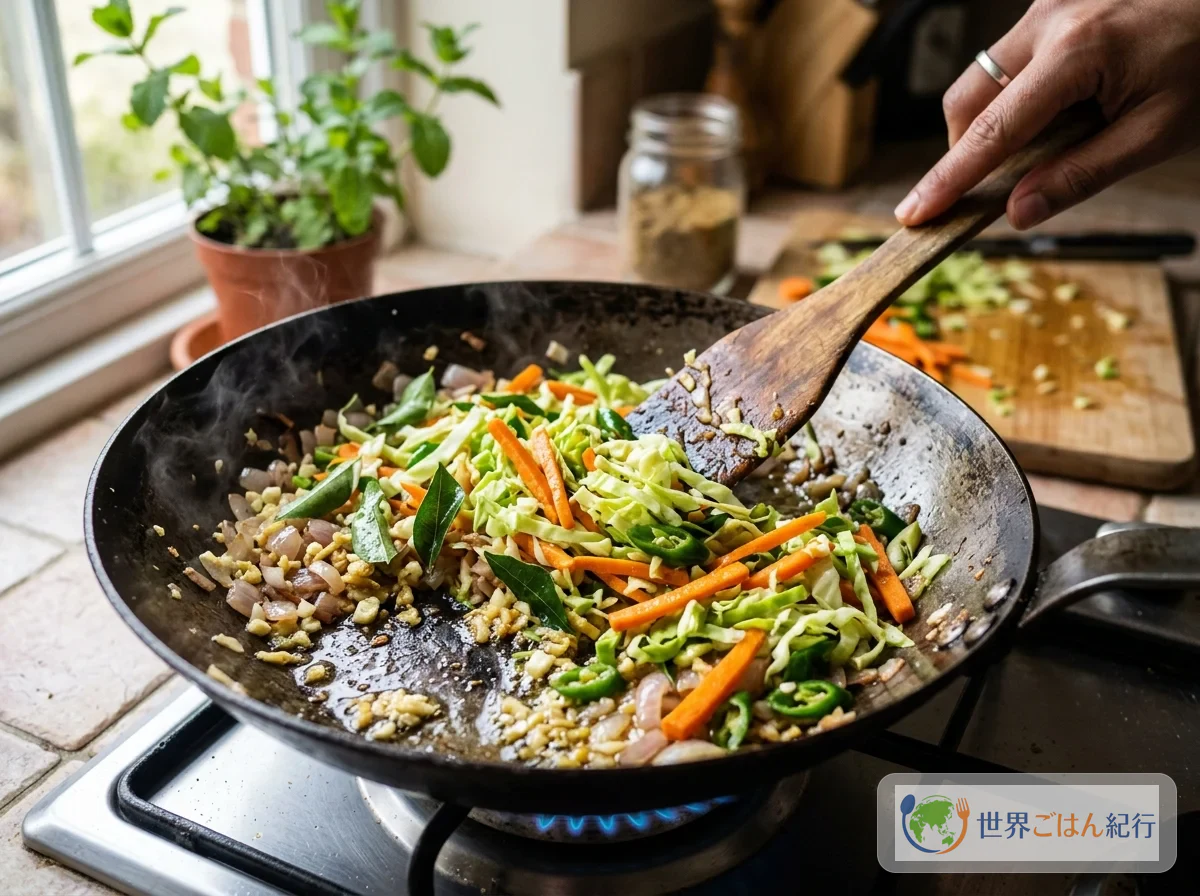
Add 1 tbsp oil to the same pan and fry the garlic and ginger (and curry leaves, if using) over medium heat for 30 seconds. Once fragrant, add the onion and cook for 2 minutes, until translucent. Then add the cabbage, carrot and green chiles and cook 2 minutes more. Aim for vegetables that are just softened at the edges but still crunchy in the middle.
4. Add the roti and chop
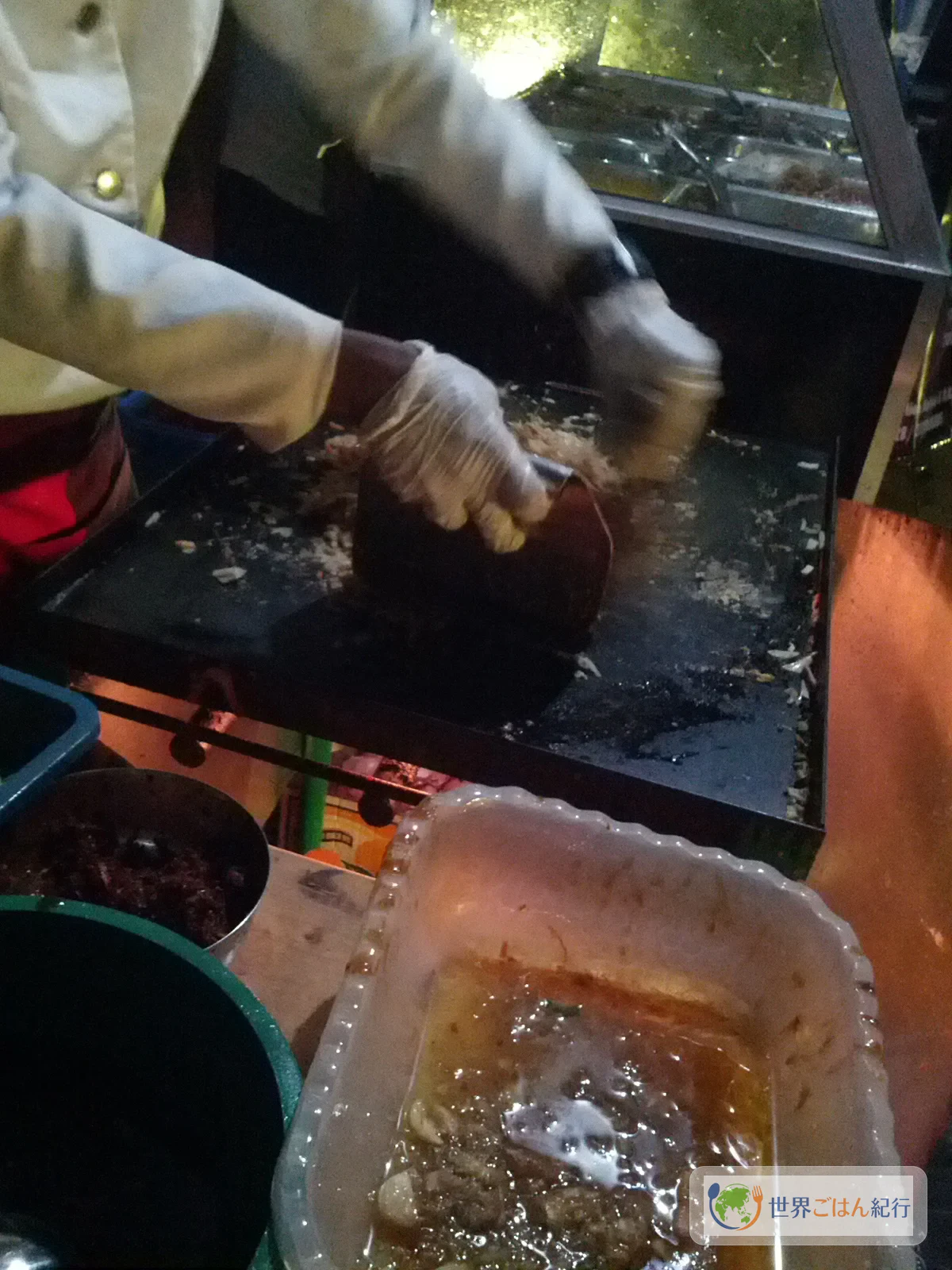
This is the heart of kottu. Add the roti strips to the pan and chop them by striking with two spatulas (or two turners) while tossing them with the vegetables. That rhythmic striking is what makes the famous clang-clang-clang.
At home, two metal turners come closest to the real thing. Keep chopping for 30 seconds to 1 minute, until the roti pieces are about the width of your little finger. It's ready when the roti, cabbage and carrot are evenly distributed rather than clumped in one spot, everything smells of the oil and aromatics, and a scoop with the spatula loosely holds together while the strips separate.
5. Add the eggs
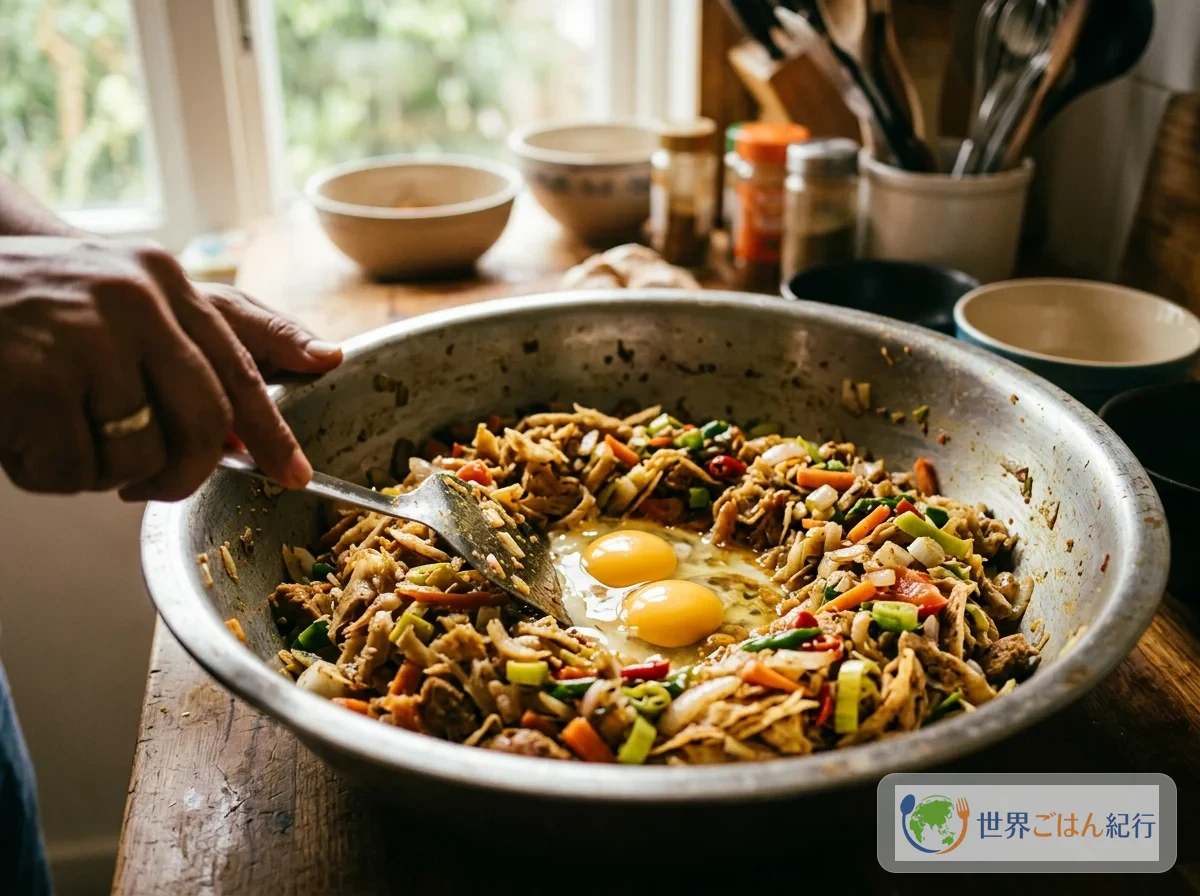
Clear a space in the center of the pan and crack in the 2 eggs. Wait about 10 seconds, until the edges of the whites start to set, then break them up in big pieces with the spatula and mix them through everything. For a moist texture, aim for egg that coats the roti and vegetables in a thin, soft-set film rather than tiny scrambled bits.
6. Return the meat and season
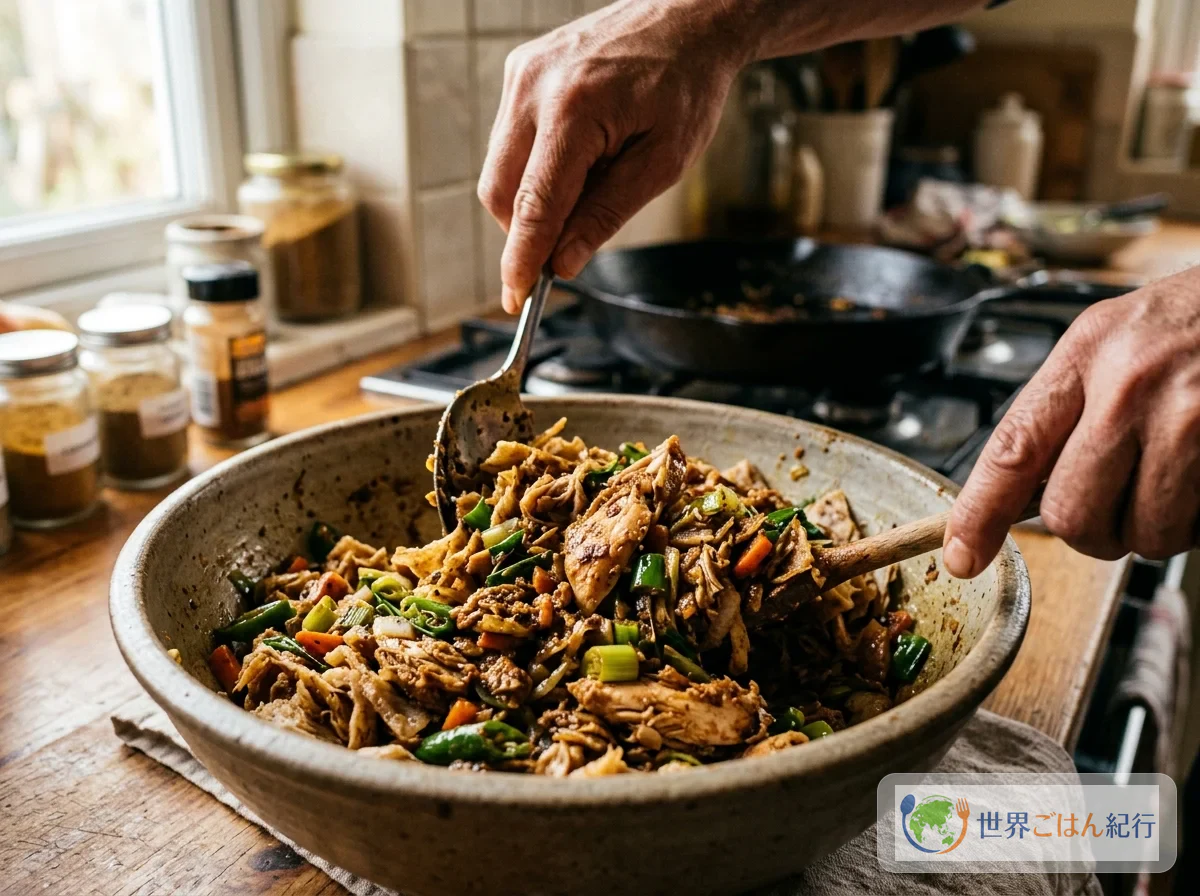
Return the chicken to the pan and add 2 tsp curry powder, the chili powder, soy sauce, 1/2 tsp salt and the black pepper. Stir-fry everything over high heat for about 30 seconds. When the chicken is cooked through to the center and the roti is crisp at the edges in places, add the long green onion, toss briefly, and it's done. The finished kottu should be evenly tinted with curry, with no liquid left in the bottom of the pan, and the roti crisp in spots but tender at the center.
Kottu roti mistakes and fixes
Most kottu problems come down to heat and timing. What matters most is to work fast over high heat and chop with rhythm.
Kottu is simple to make, but heat control and moisture management make a big difference to the result.
The roti goes soggy
This is the most common mistake, and the cause is chopping the roti while it's still warm. Always let cooked roti cool completely before chopping; it also cuts more easily that way. Ideally, cook it the day before and refrigerate it overnight. When you stir-fry, high heat is a must, because over low heat the roti steams and turns soggy.
The flavor is flat
Curry powder alone tends to taste one-note. The umami of soy sauce and the aroma of curry leaves add depth, a squeeze of lime at the end sharpens the flavors, and curry sauce on the side helps too.
The vegetables release water
Stir-fry the cabbage and carrot quickly over high heat; cooking them slowly over low heat draws out their water and makes everything soggy. Aim for no more than 2 minutes per vegetable. If water starts to pool anyway, add the roti and let it soak it up.
The eggs overcook
After adding the eggs, wait 10 seconds before breaking them up, since stirring right away breaks them into tiny bits. Mixed through while still soft, the egg acts as a binder that holds the roti and fillings together.
Serving, storing and variations
Curry sauce
Authentic kottu usually comes with curry gravy, and regulars like the curry sauce on the side so they can add as much as they like as they eat. The sauce from a simple chicken curry gives the dish more depth. Here's a quick version:
- Heat 1 tbsp vegetable oil in a small saucepan and fry 2 minced garlic cloves (and 5 curry leaves, if you have them).
- Add ¾ cup (200 ml) coconut milk, 1 tbsp curry powder, 1/4 tsp turmeric and 1/2 tsp salt.
- Simmer over low heat for 5 minutes; it's done when it thickens.
Even a hot ready-made curry, warmed and poured over, gets you most of the way there. A rich curry like rendang (in Japanese) makes a fun twist.
Serving kottu
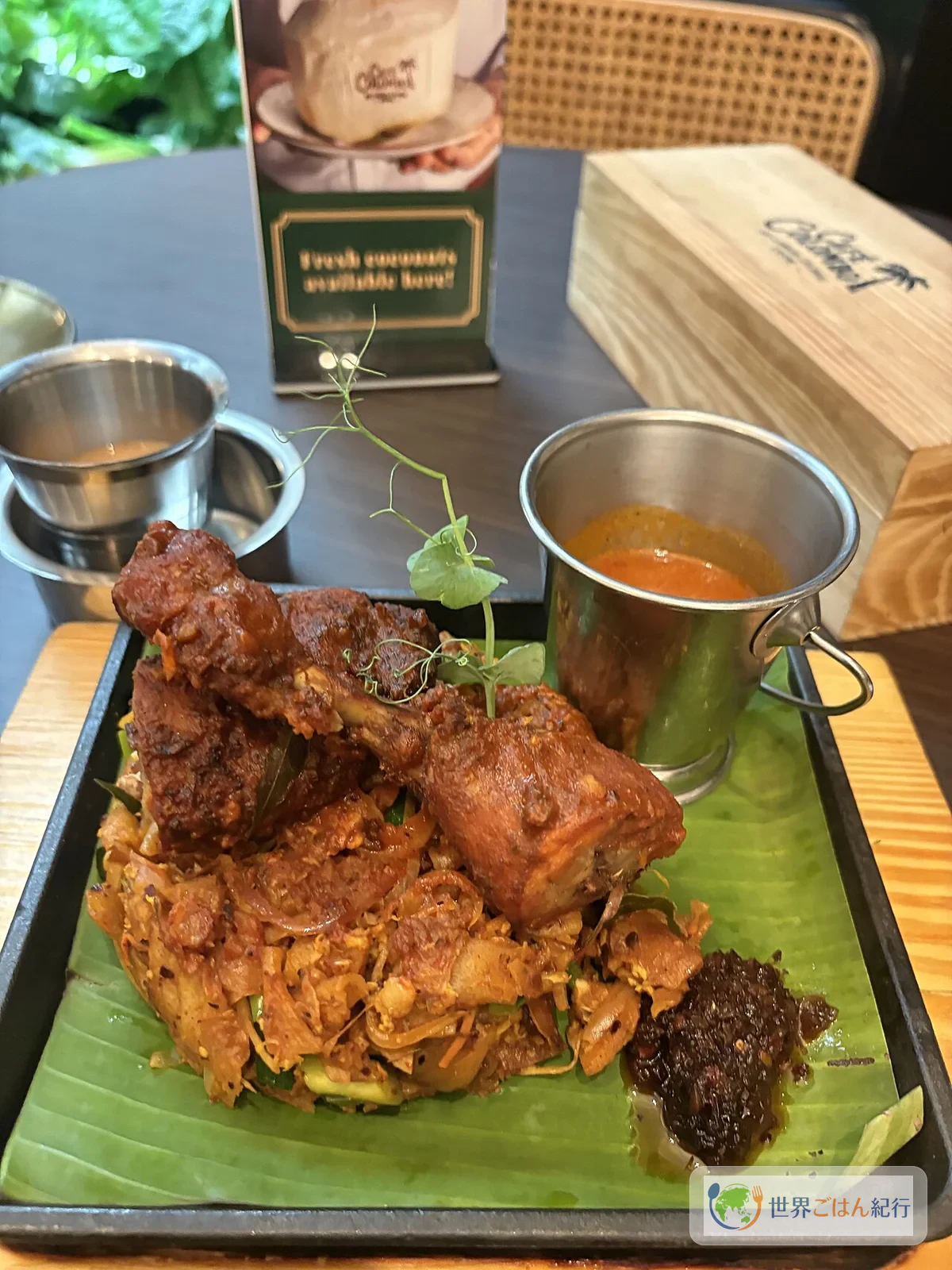
Serve kottu generously: pile it high on a white plate and spoon curry sauce over the top. Then add whatever you like alongside.
- Lime or lemon wedges cut through the richness of the spices
- Chili sauce (such as sriracha) pushes the heat even further
- To drink, ginger beer (non-alcoholic) is the local favorite. Ginger ale works in a pinch
Variations
Egg kottu
Leave out the meat and increase the eggs to 4. In Sri Lanka this is a standard choice for vegetarians who eat eggs, and it's often one of the cheapest items on a stall's menu. The richness of the egg suits the roti well.
Cheese kottu
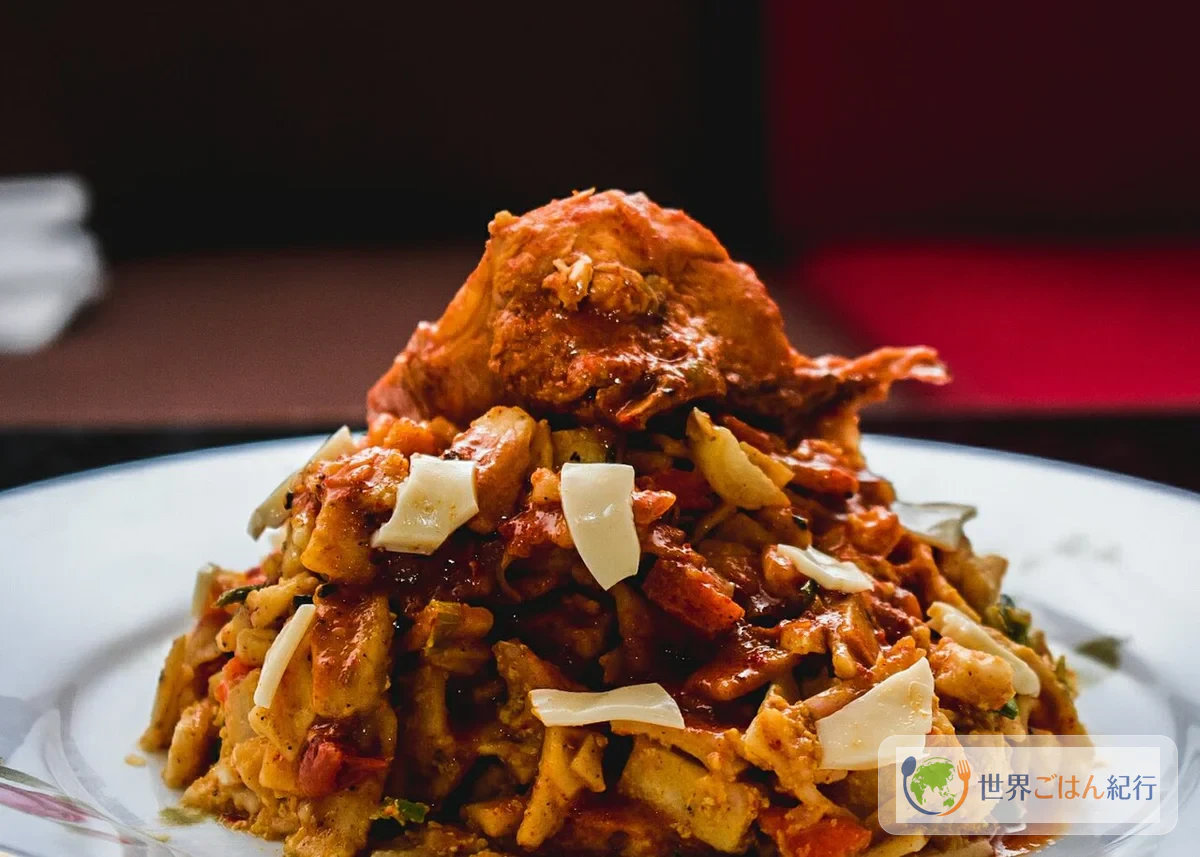
Top the finished kottu generously with mozzarella (or any good melting cheese), cover and let it steam for 30 seconds, until the cheese melts and coats the roti.
Seafood kottu
Use 5.5 oz (150 g) shrimp + 3.5 oz (100 g) squid in place of the chicken; in coastal Galle and Matara, fish fillets are sometimes used too. The savoriness of the seafood, the curry spices and that briny aroma make it irresistible, with the bold, generous feel of a seafood nasi goreng (in Japanese).
Vegetable kottu
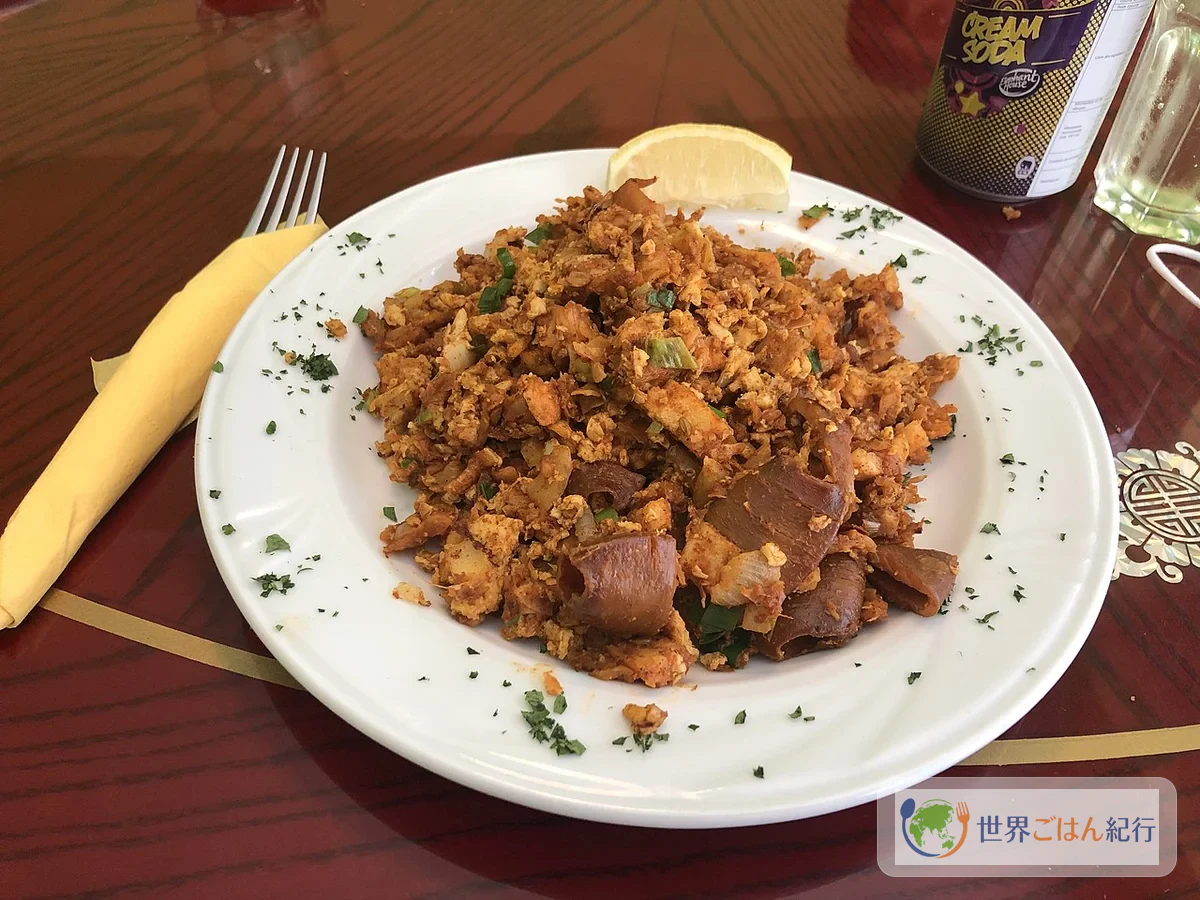
For a fully vegetarian version with no meat or egg, add green beans, bell pepper and mushrooms along with the cabbage and carrot.
Noodle kottu
Use boiled Chinese-style wheat noodles in place of the roti, skip the chopping, and stir-fry the noodles and vegetables with the curry spices. It's as easy as making stir-fried noodles, which makes it a great first taste of kottu.
Storage and making ahead
Kottu is at its best freshly made, since the roti loses its crispness over time. To reheat leftovers, cook off the moisture in a skillet over high heat; the microwave makes it soggy.
| Method | How long | Notes |
|---|---|---|
| Refrigerator | 2–3 days | Store in an airtight container. Always reheat in a skillet over high heat |
| Freezer | About 2 weeks | It can be frozen, but the roti's texture suffers |
| Roti only, made ahead | 5 days refrigerated / 1 month frozen | Cook and stash just the roti, then chop and stir-fry when you're ready to eat |
Cook a batch of godamba roti on the weekend and freeze it. When the craving hits, thaw, chop and stir-fry it with whatever vegetables are left in the fridge, and you'll have kottu in 15 minutes.
Nutrition (per serving, 1 of 2)
| Nutrient | Amount |
|---|---|
| Calories | about 1000 kcal |
| Protein | about 1.25 oz (32 g) |
| Fat | about 1.75 oz (48 g) |
| Carbohydrates | about 3 oz (85 g) |
| Fiber | about 5 g |
| Salt equivalent | about 5 g |
With all the flour in the roti and the oil for frying, even one serving is substantial. If you're watching your salt, halve the finishing salt and soy sauce and adjust at the table. To cut the fat, reduce the oil to 2 tbsp and cook in a nonstick pan.
More dishes from the region
- How to make hoppers (in Japanese) - Cook more from the same country's table.
- How to make Kabuli palaw (in Japanese) - Uses ingredients and aromas from the same region.
- How to make mas kurolhi (in Japanese) - Uses ingredients and aromas from the same region.
Frequently asked questions
Q1. Can I use store-bought naan instead of godamba roti?
Yes, it's the easiest substitute, and chapati works too. Toast frozen naan in a toaster oven, let it cool, tear it by hand and chop it. The texture is a little different from the real thing, but it still tastes great.
Q2. Can I make it in a skillet? I don't have a griddle.
Absolutely. A large skillet or wok works fine, and a cast-iron or carbon-steel pan heats best and gets you closest to the real thing. A nonstick pan works, but the roti won't get quite as crisp.
Q3. How do I adjust the heat?
Use more or less chili powder and green chile. For kids, leave both out and use curry powder only. As with pad thai (in Japanese), letting everyone add chili flakes at the table works well too.
Q4. How is it different from dal bhat or biryani?
Dal bhat is Nepal's meal of lentil soup and rice, and biryani (in Japanese) is spiced rice; both are built on rice. Kottu chops and stir-fries bread (roti), a distinctive technique even within South Asia.