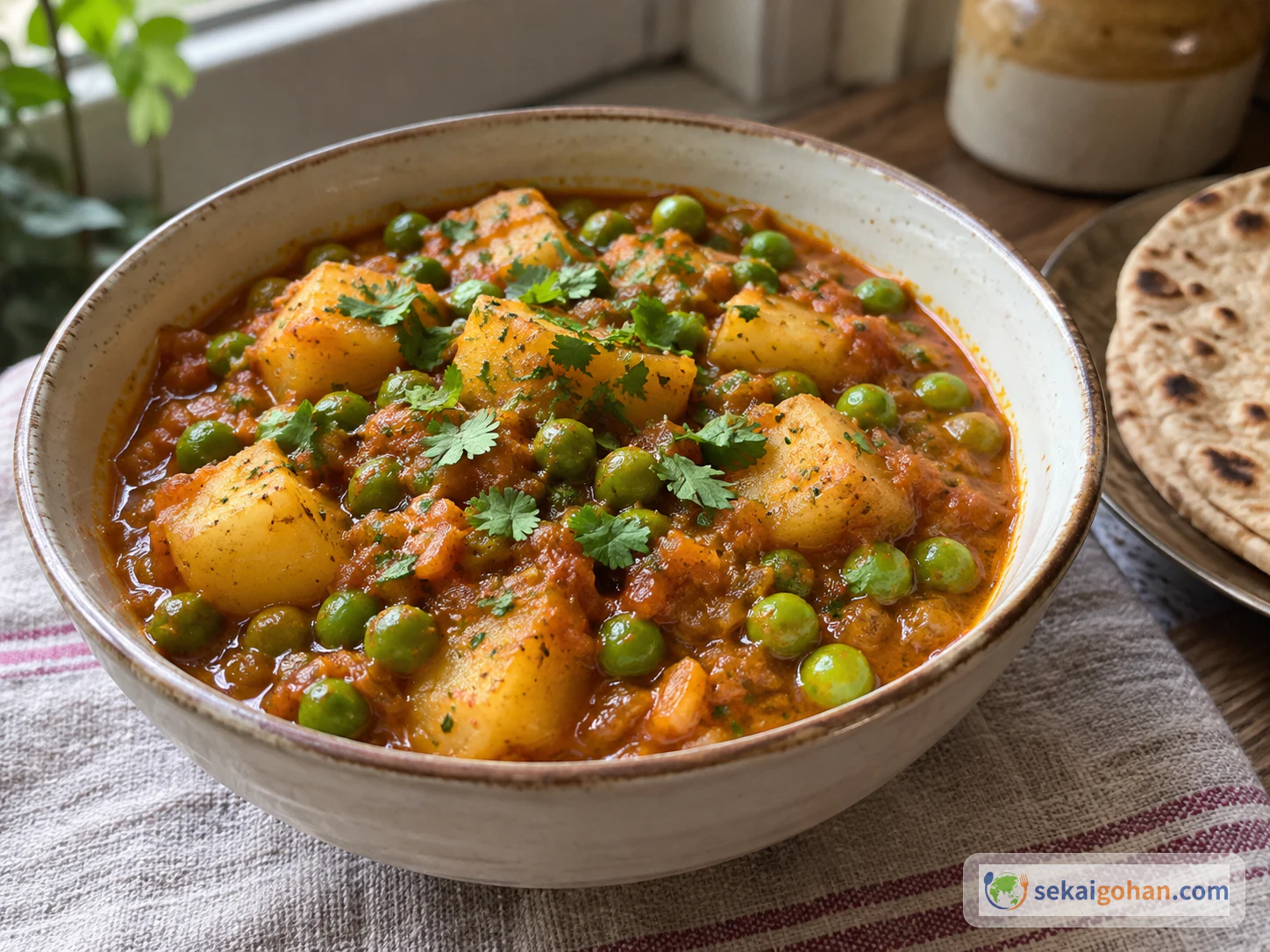
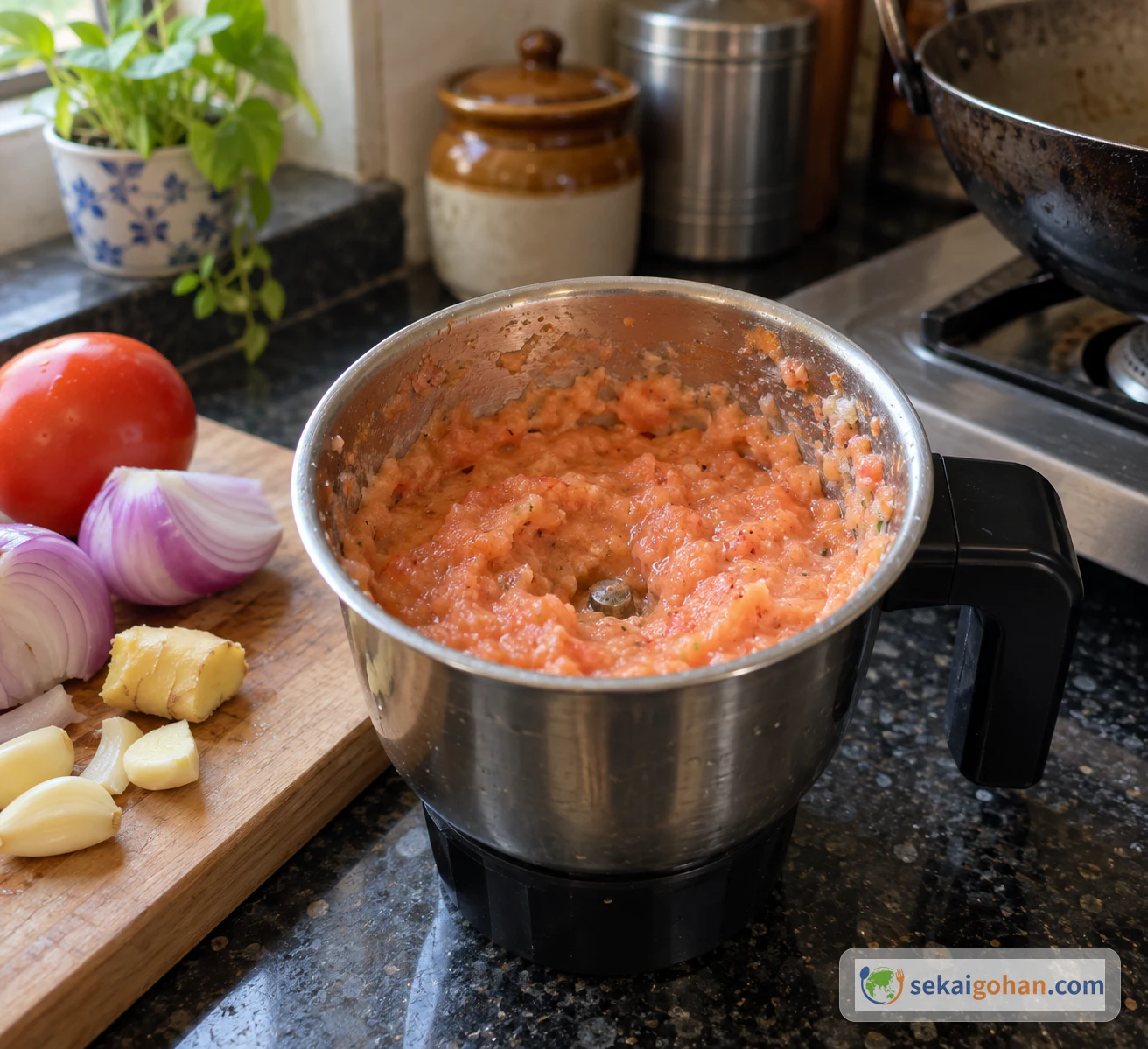
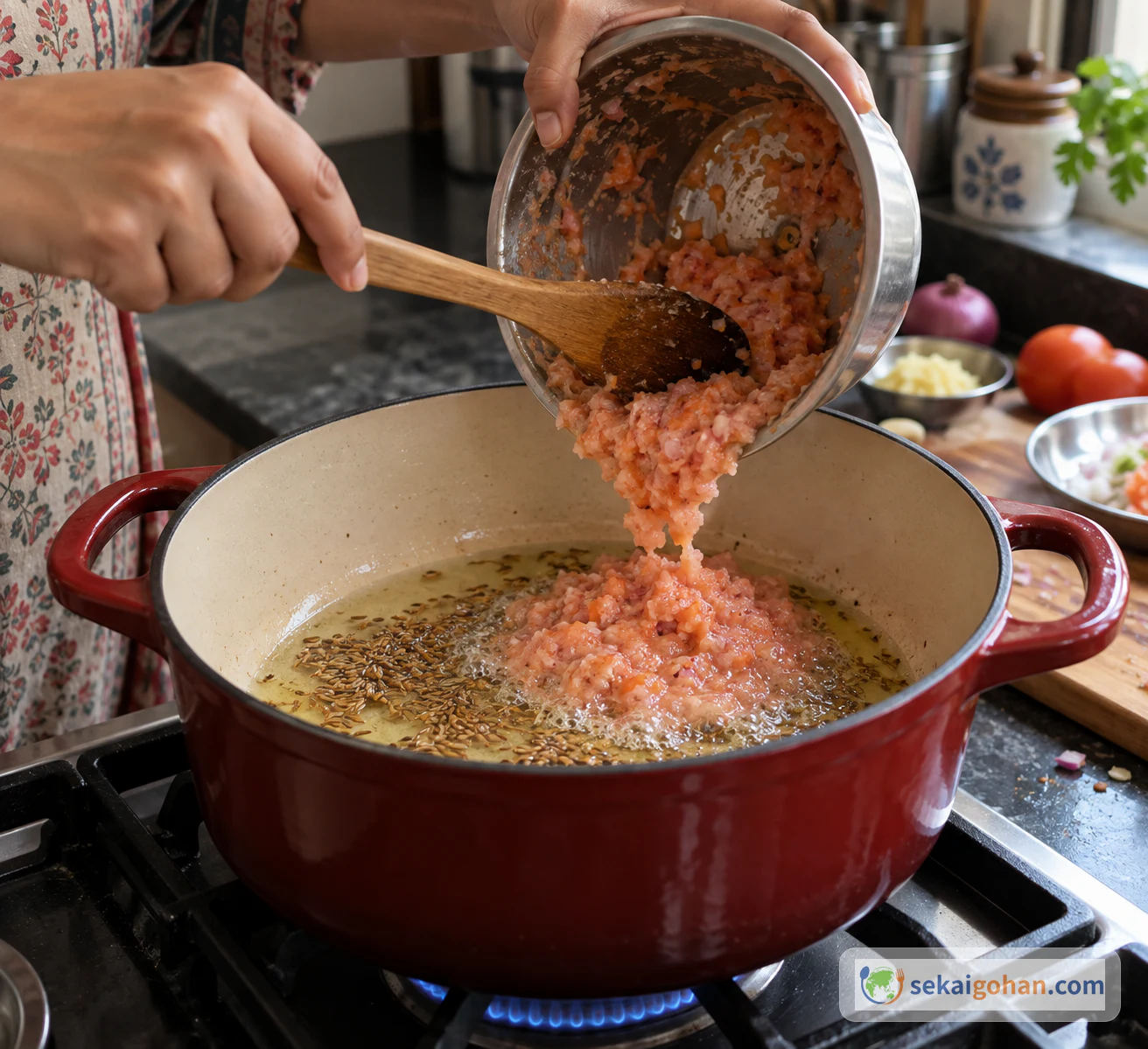
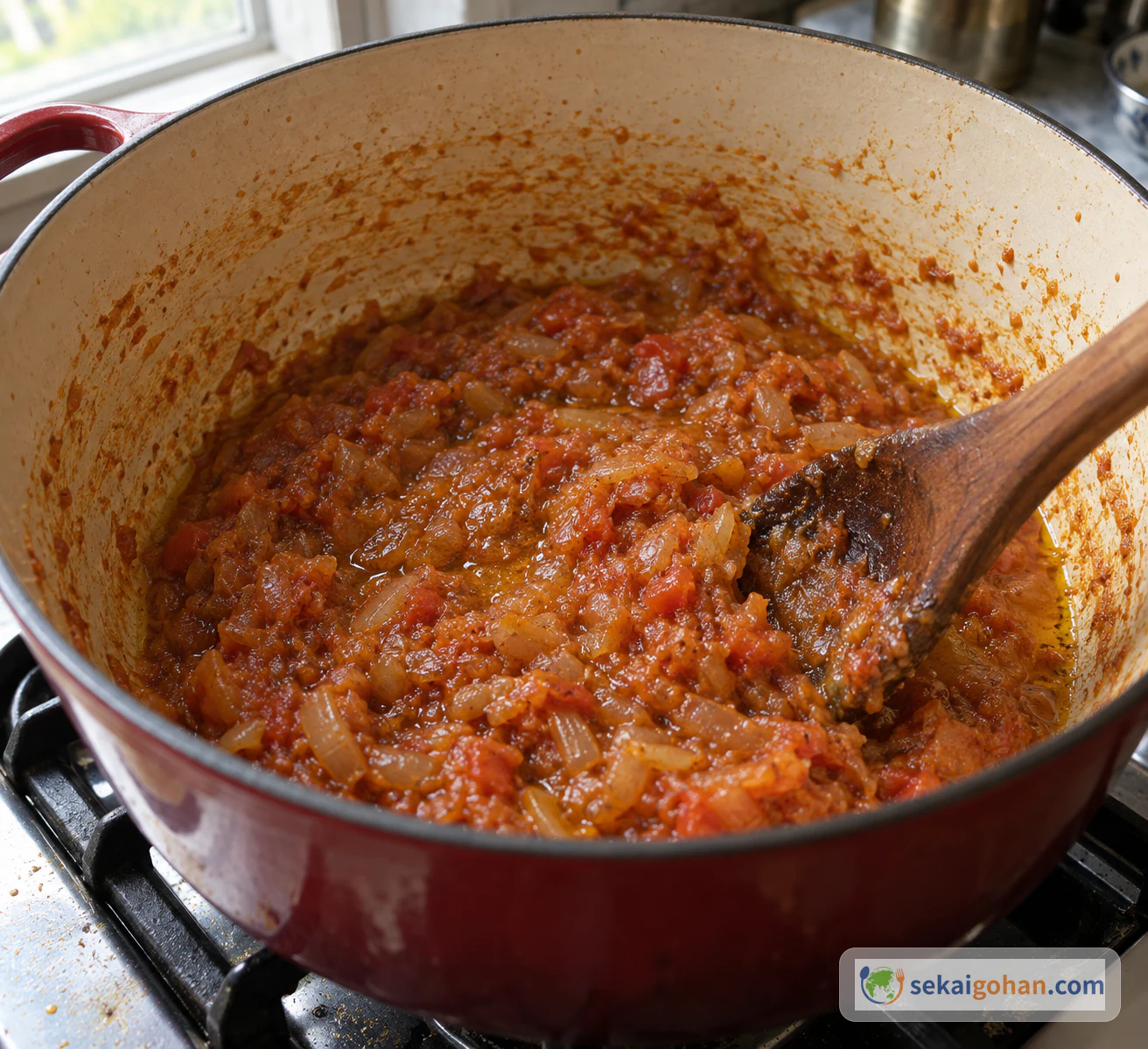
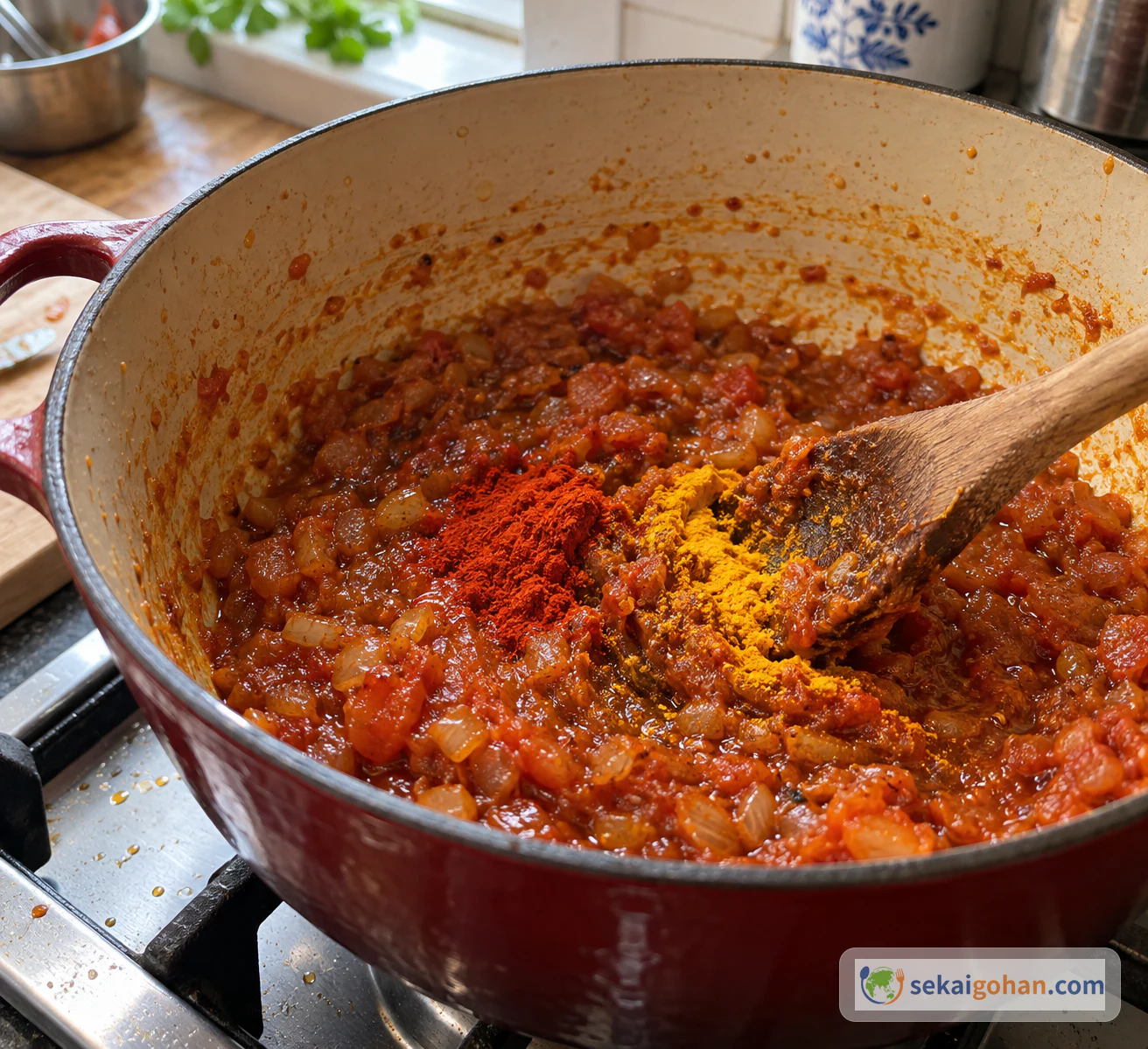
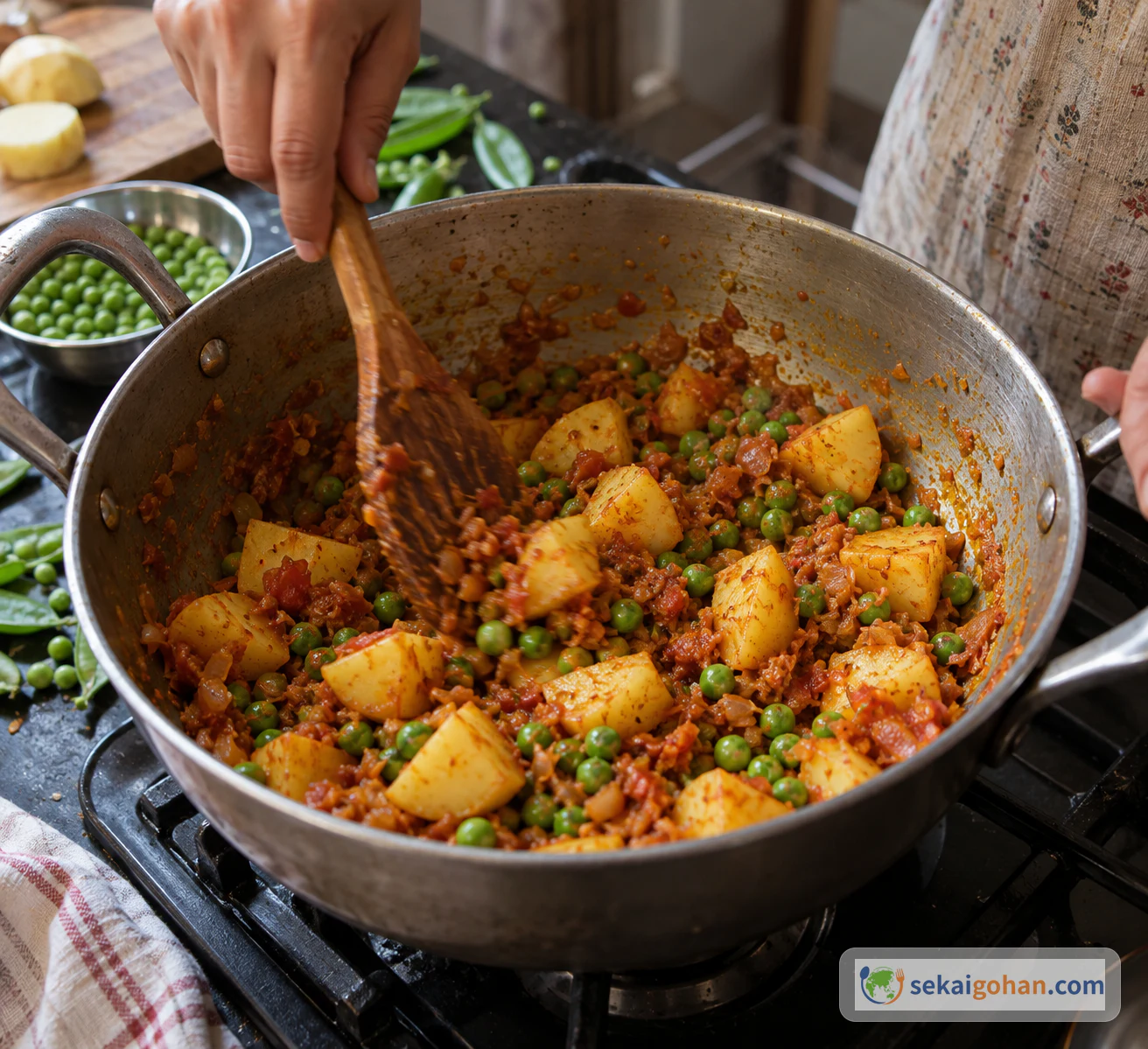
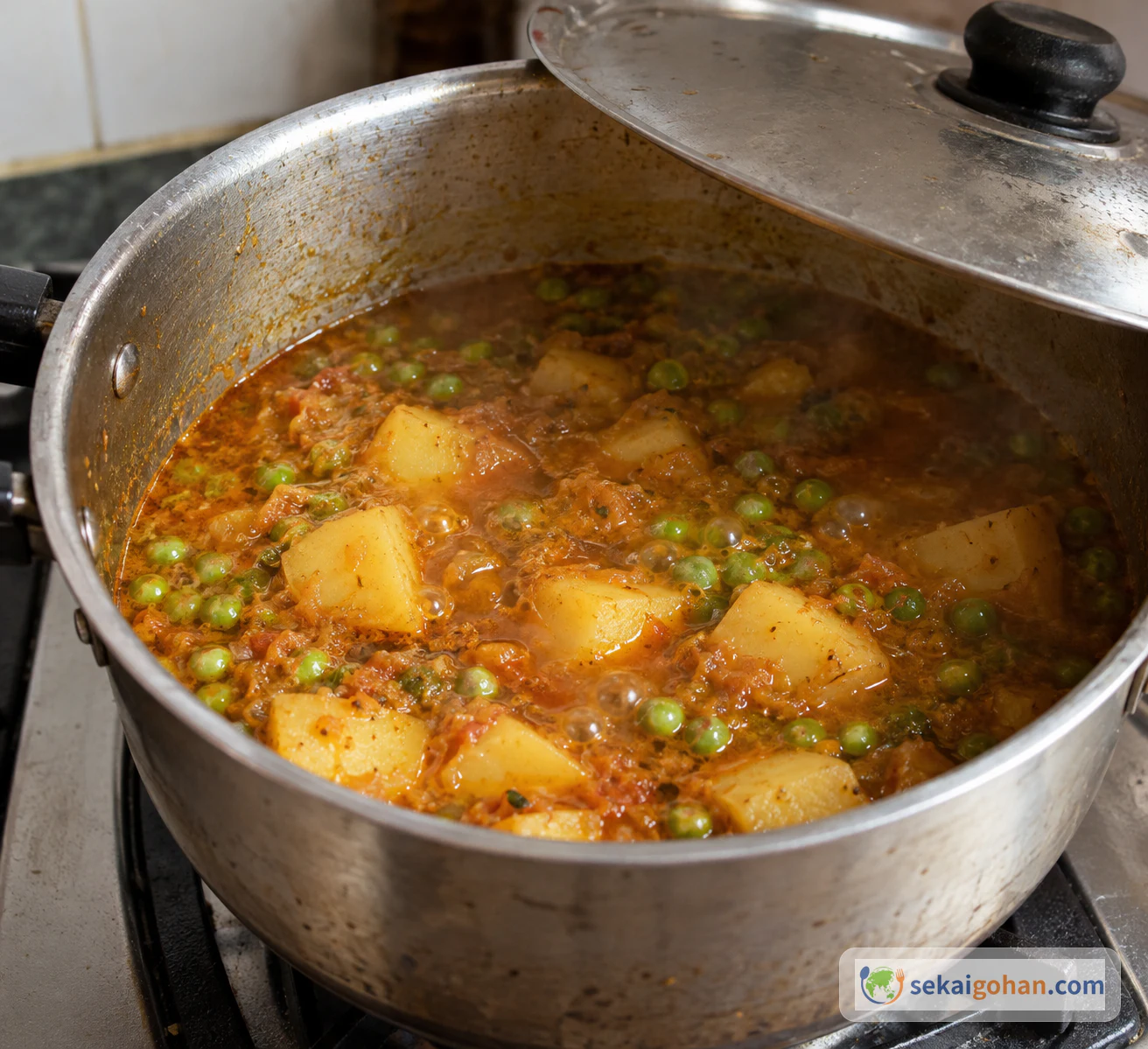
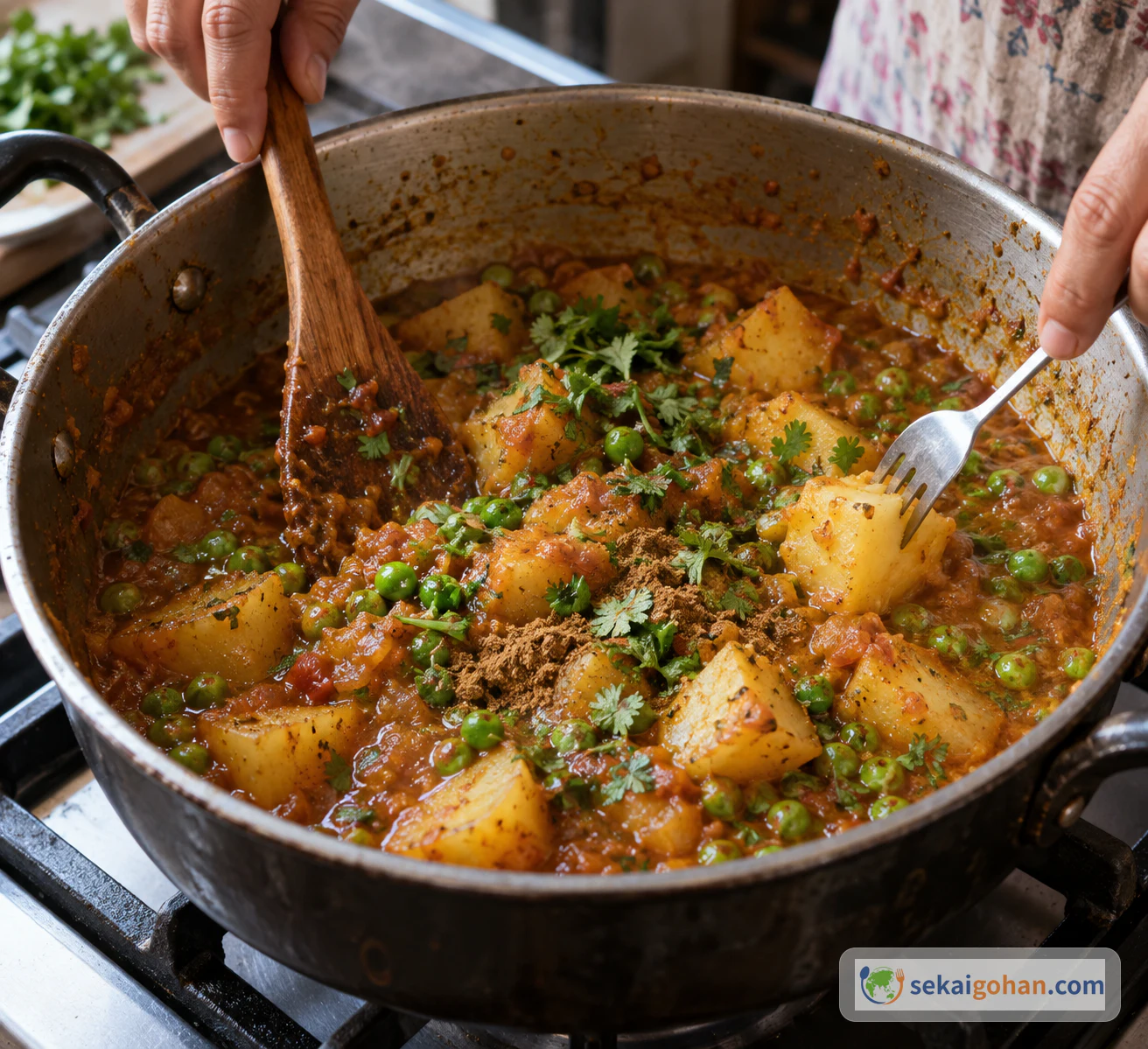
Steam rises from a weeknight pot as a smooth paste of onion, tomato, ginger and garlic hits hot oil and crackling cumin seeds, sputtering at the edges. Slowly it thickens and darkens until a thin line of oil appears at the sides. Cubes of potato and bright green peas go in, get turned through the masala, and simmer under a lid until the gravy wraps around them, with a few warm roti waiting on the side. Aloo matar is a home-style potato and pea curry from North India, warmly spiced with cumin, chilli, turmeric and a little garam masala at the end. The real trick is the potatoes: soft to the center, with their corners still intact.
What Aloo Matar Is
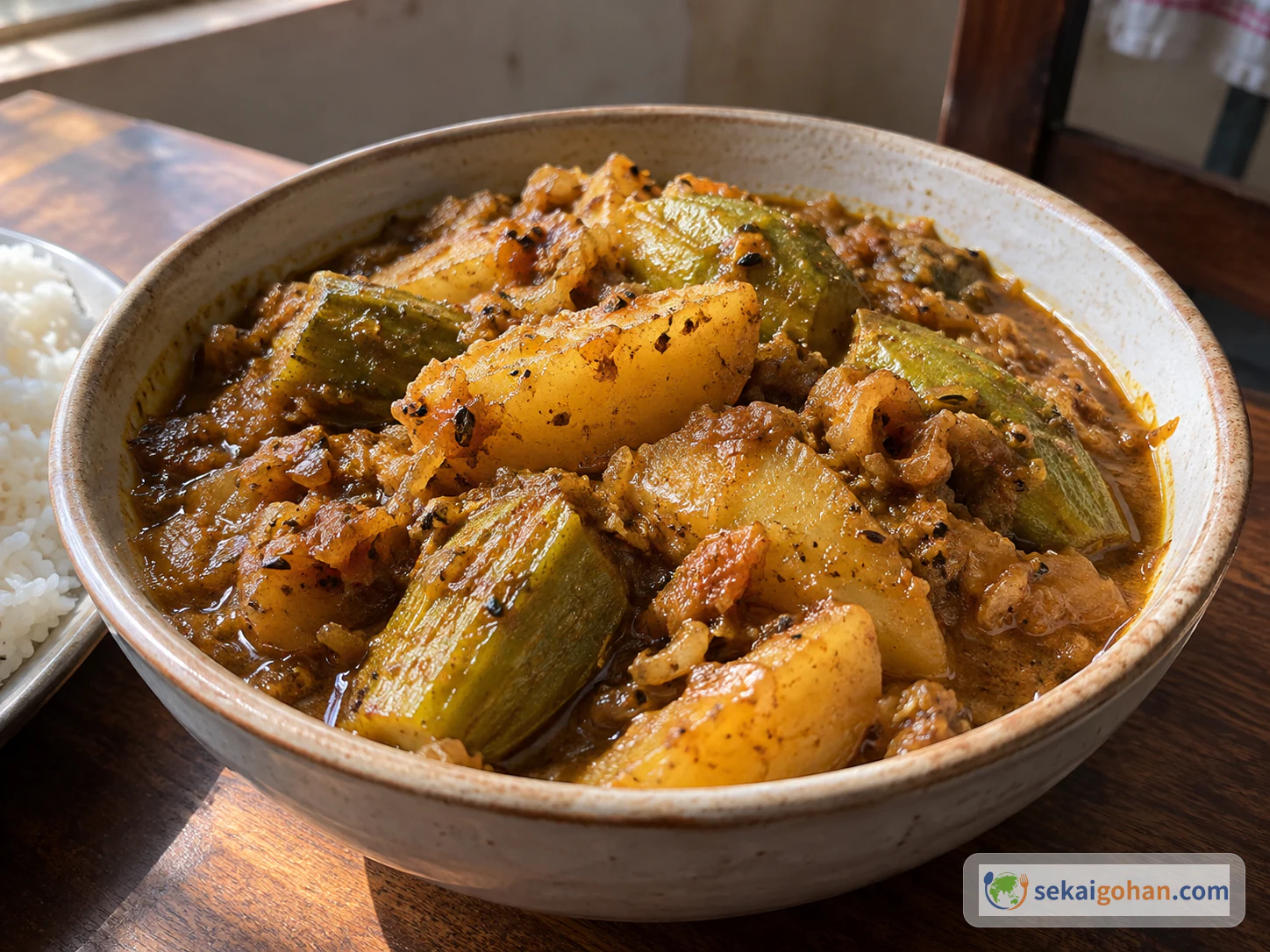
Aloo matar is a home-style potato and pea curry from North India. It is built on an onion-tomato masala and served with roti, paratha, poori, naan or rice. At home it is made three ways: as a gravy, as a dry dish and as a semi-dry dish. This is the Punjabi gravy style, aloo matar rasedaar, an everyday lunch or dinner cooked on the stovetop in an ordinary heavy-bottomed pot.
In Hindi it is written आलू मटर. In English you will see Aloo Matar, Aloo Mutter and Aloo Mattar. "Aloo" means potatoes and "matar" means peas, so the name simply joins the two main ingredients.
Recipes under the same name handle the potatoes differently. Some North Indian versions start from boiled potatoes and build a separate onion, ginger, garlic and tomato gravy. In a Bengali-style version the potatoes are fried, which changes how much sauce they absorb, and southern versions are drier. Here, raw peeled cubes are coated in the masala for about a minute and then simmered. For more dishes from the same country, start from the India country page.
Ingredients (3 servings)
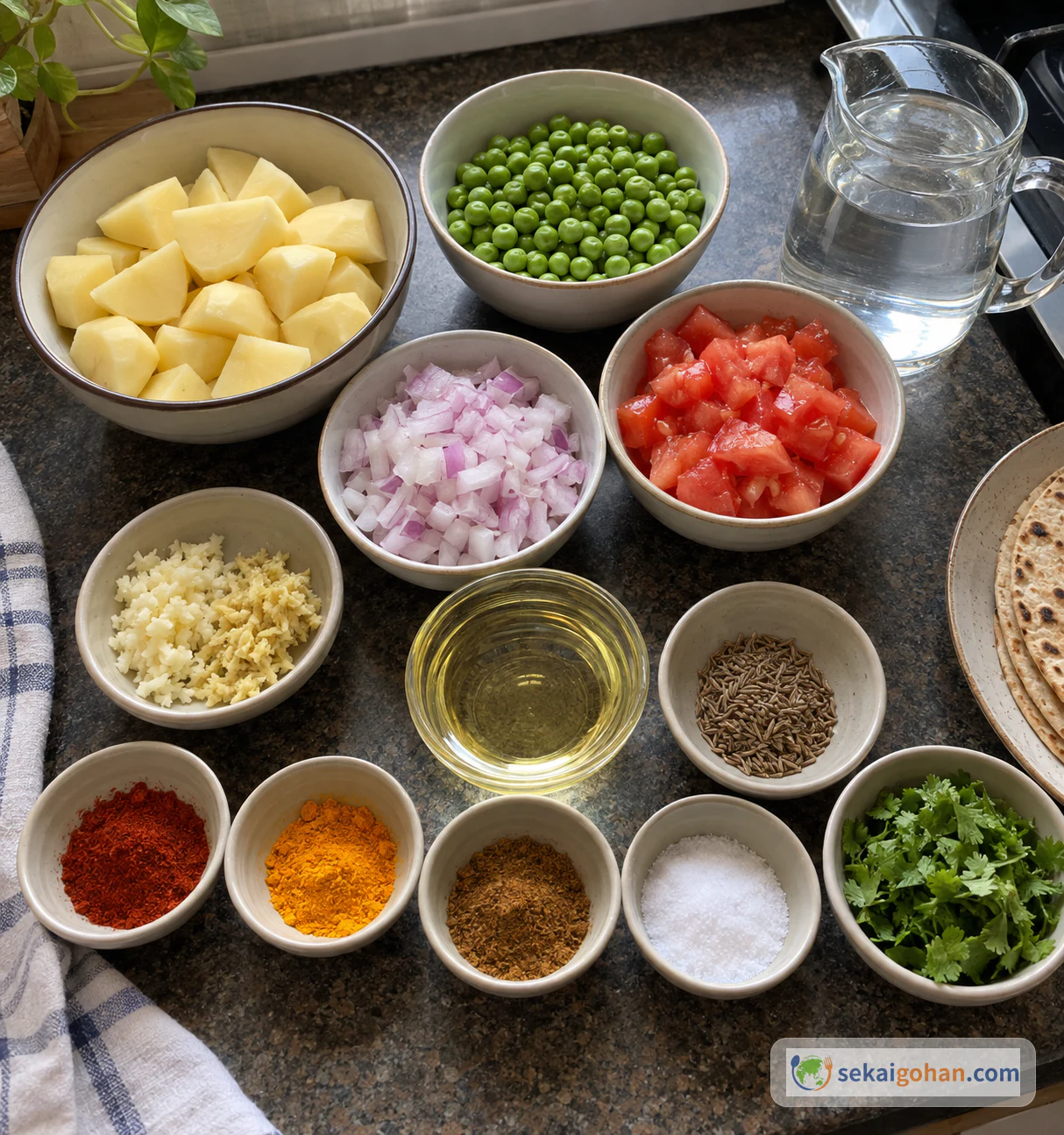
These amounts are for 1× (3 servings). Weigh the onion, tomato and potato in grams, since vegetable sizes vary too much. For ginger and garlic, use 1 tsp of each, chopped.
1 cup = 240 ml, 1 tbsp = 15 ml, 1 tsp = 5 ml.
Equipment
- Heavy-bottomed pot with a lid
- Blender or grinder jar for the paste
- Wooden spoon
- Knife and cutting board
- Skewer or fork for testing the potatoes
Choosing Ingredients for Aloo Matar
Potatoes: High-starch potatoes soften faster and thicken the gravy. For cubes that keep their shape, use an all-purpose potato.
Peas: Freshly shelled peas are the first choice, but frozen peas work too. If they are very soft, add them later in the simmer so they don't turn mushy. Frozen peas need no extra cooking time; judge by how tender they are.
Tomatoes: Ripe, red, sweet tomatoes make the masala less sour.
Spices and herbs: Look for them under their ordinary names: cumin seeds, turmeric, red chilli powder and garam masala. Finish with fresh coriander leaves, since dried leaves have a different strength of aroma.
Oil: The recipe uses neutral vegetable oil. Ghee works instead, but it changes the flavor and is a dairy product.
Roti is made from wheat, so anyone avoiding wheat or gluten should leave it out or choose another accompaniment. Check the ingredient labels on spice products, including garam masala and chilli powder blends. If you add asafoetida (hing) as a variation, check that label too, because some compounded products contain wheat.
Method: From a Water-Free Paste to Tender Potatoes
Allow 20–30 minutes for the simmer, but read the pot, not the clock. Your pot, heat and potatoes decide how long it takes and how much water you need. End each stage by what you see: oil separating from the masala, and a skewer passing easily through the potatoes.
Fixing Common Aloo Matar Problems
| Problem | Likely cause | What to do |
|---|---|---|
| The masala scorches or tastes burnt | Heat too high before the paste has cooked down | Keep the heat at low to medium-low, partly cover while it sputters, and stir. Wait until it turns glossy and the oil separates before raising the heat |
| The potatoes break apart | High-starch potatoes, or stirring hard once the pot is simmering | Cut slightly larger cubes, stir gently, and start checking high-starch potatoes earlier |
| The gravy is watery | Too much liquid for your pot and heat | Uncover and cook for a few minutes to reduce it, or mash a few cooked potato pieces into the gravy |
| The gravy is too thick | The liquid reduced before the potatoes were tender | Add the extra water a little at a time |
| The curry tastes too sour | Tomatoes that were not fully ripe | Balance with a very small amount of sugar or cream at a time; next time choose riper tomatoes |
| The potatoes are still hard | Pot, heat or potato variety | Keep simmering, covered, and test again with a skewer. Add a little water if the gravy is getting too thick |
Serving, Storing and Varying Aloo Matar
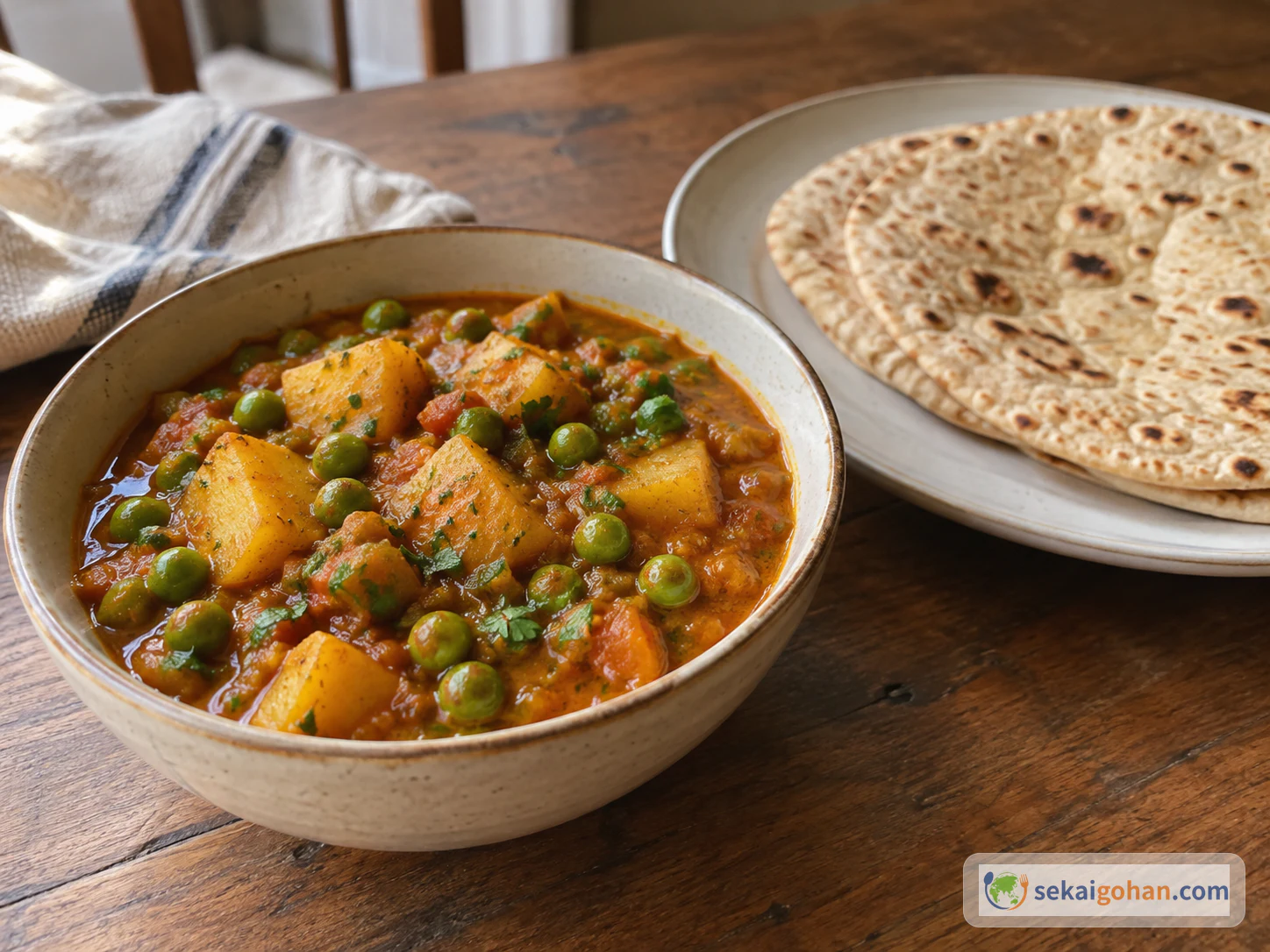
Serve it with roti, paratha, poori, naan or rice. Plain roti on the side is hard to beat: tear off a piece and use it to scoop up a potato cube, a few peas and some gravy.
Divide leftovers into small, shallow containers so they cool quickly, and refrigerate them promptly. When reheating, heat thoroughly to 167°F (75°C) or above.
Once you know the base, it's easy to adjust:
- Hotter: Add green chilli to the paste.
- Richer: Add a little cashew powder or malai (cream). These add tree nuts or dairy, so tell anyone with those allergies.
- Asafoetida (hing): Add a generous pinch with the chilli powder and turmeric. Check the label for wheat if you avoid gluten.
- Extra vegetables: Add cauliflower or carrot. This makes a mixed-vegetable dish rather than plain aloo matar.
Frequently Asked Questions
How long does it simmer?
Allow 20–30 minutes, but it depends on your pot, heat and potatoes. Stop when a skewer goes easily into the center of the potatoes and the gravy has thickened.
Why blend the paste without water?
Blend the onion, tomato, ginger and garlic without added water. The water for rinsing vegetables is separate and doesn't go into the paste.