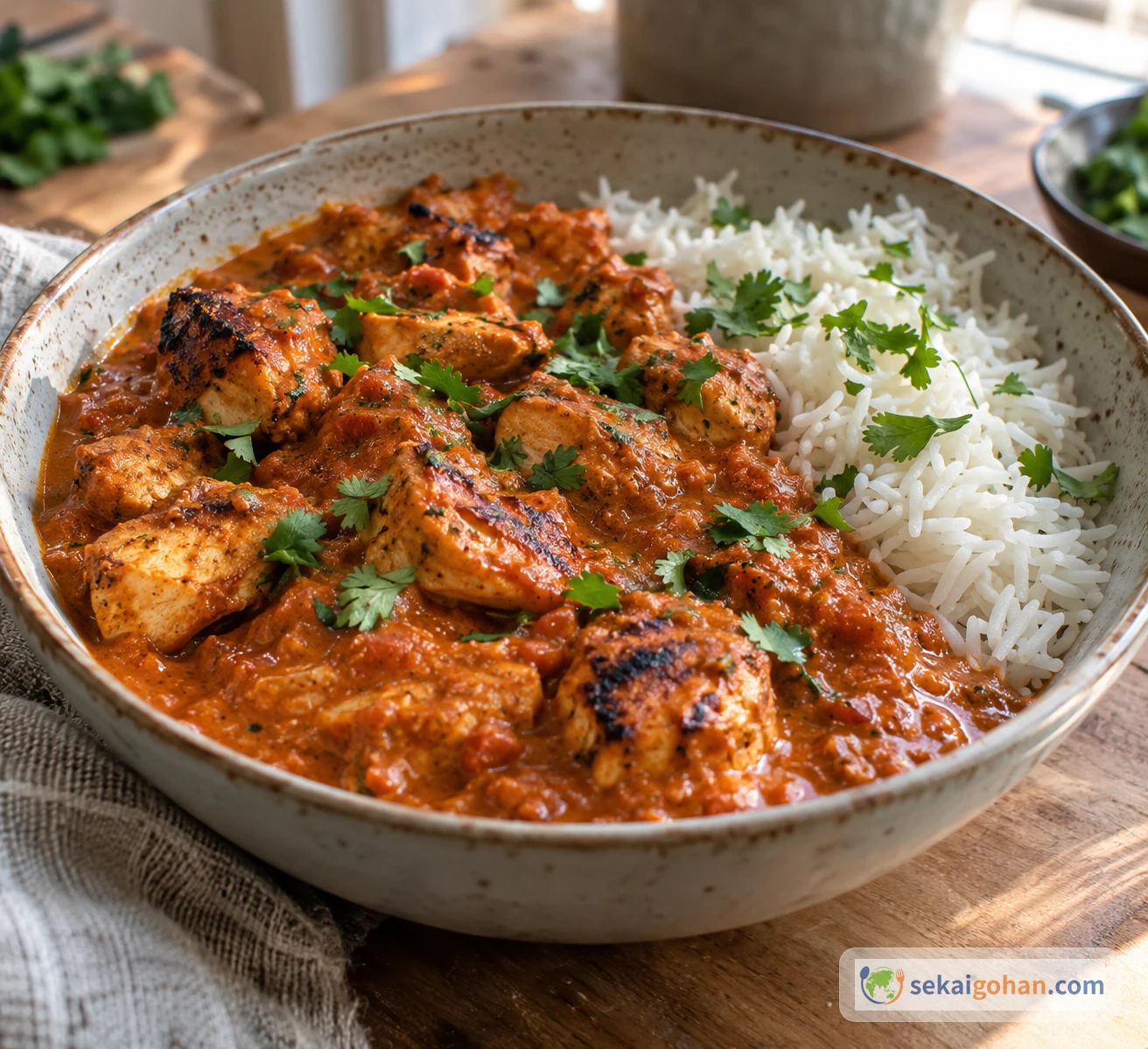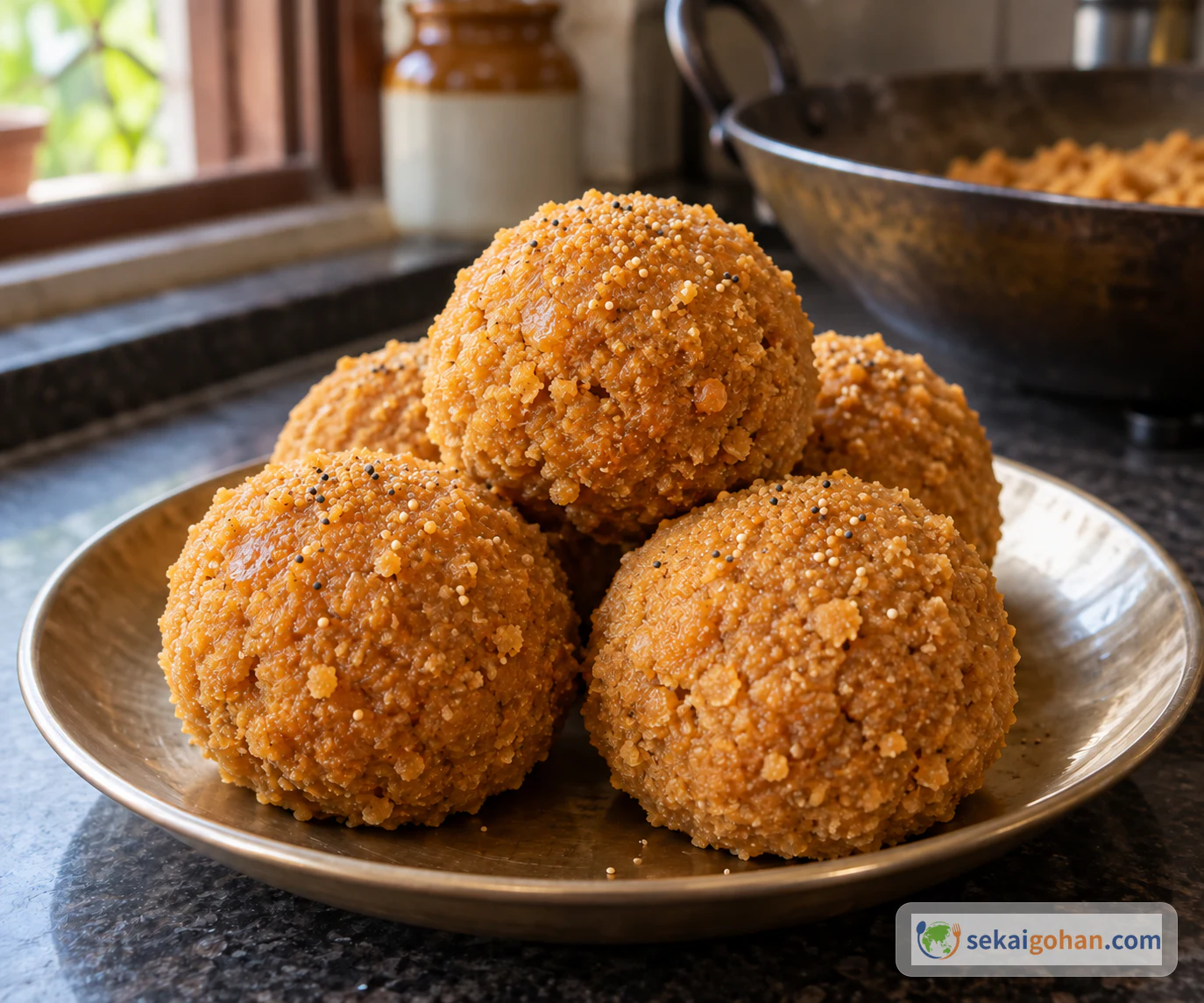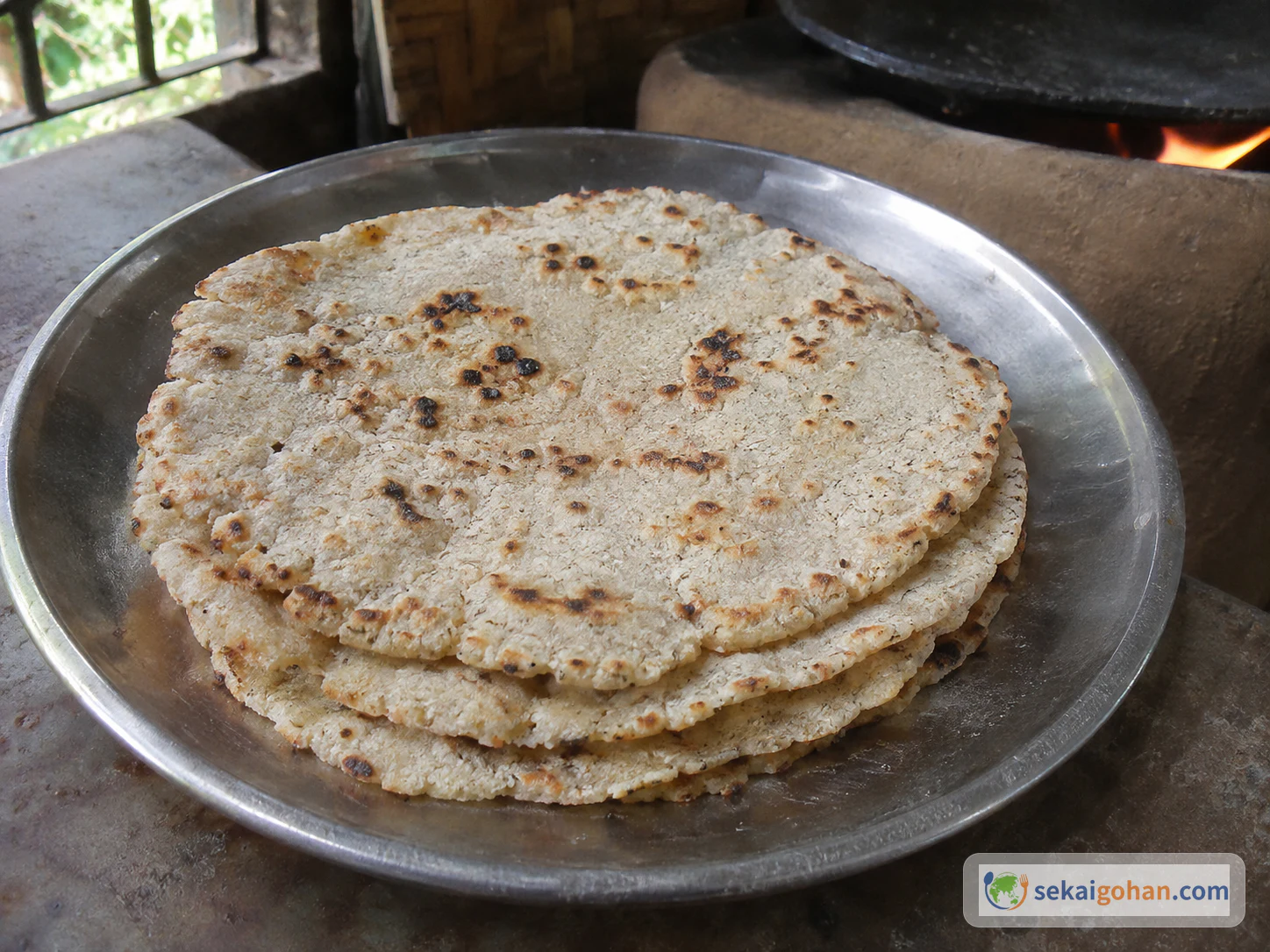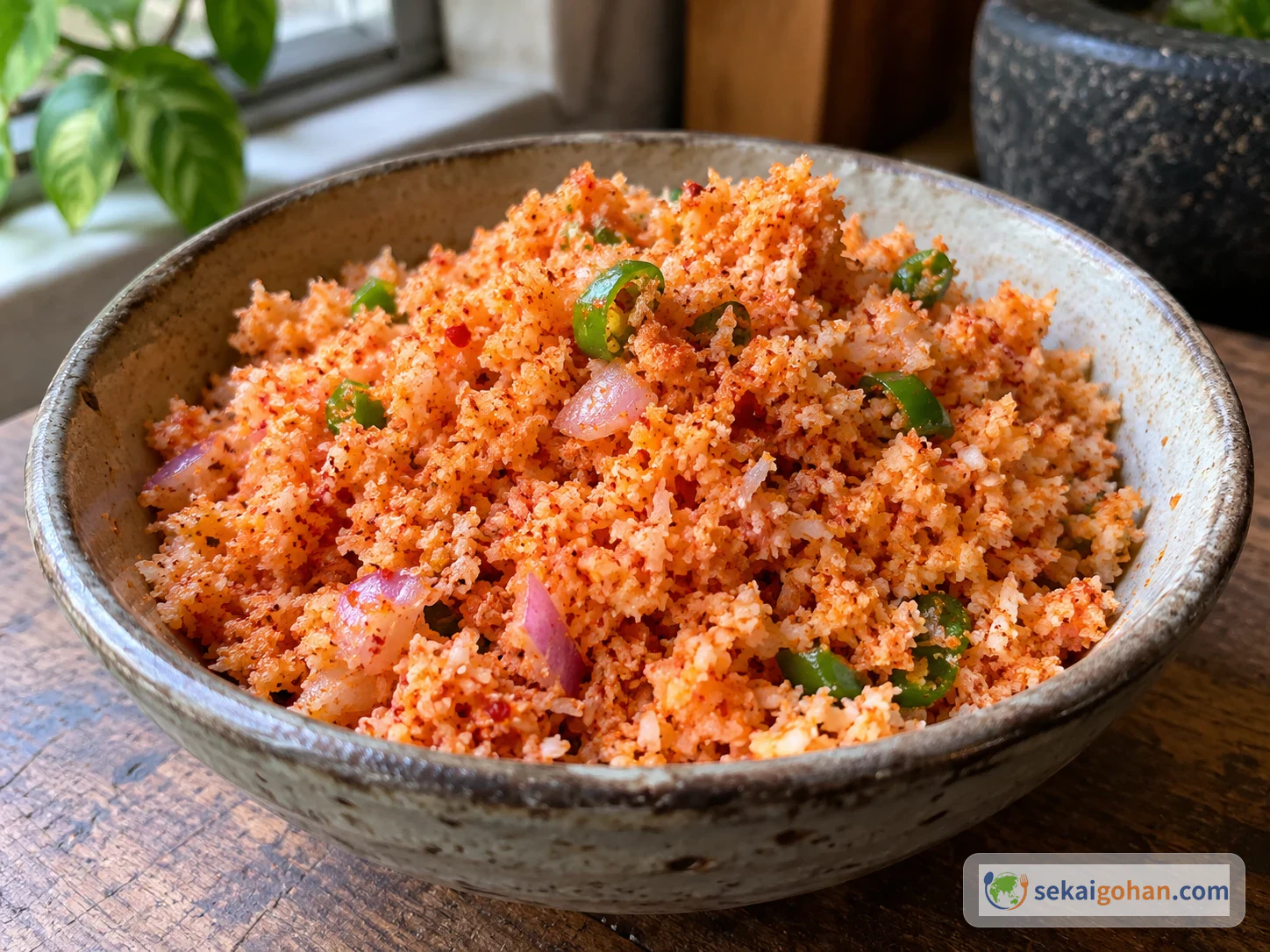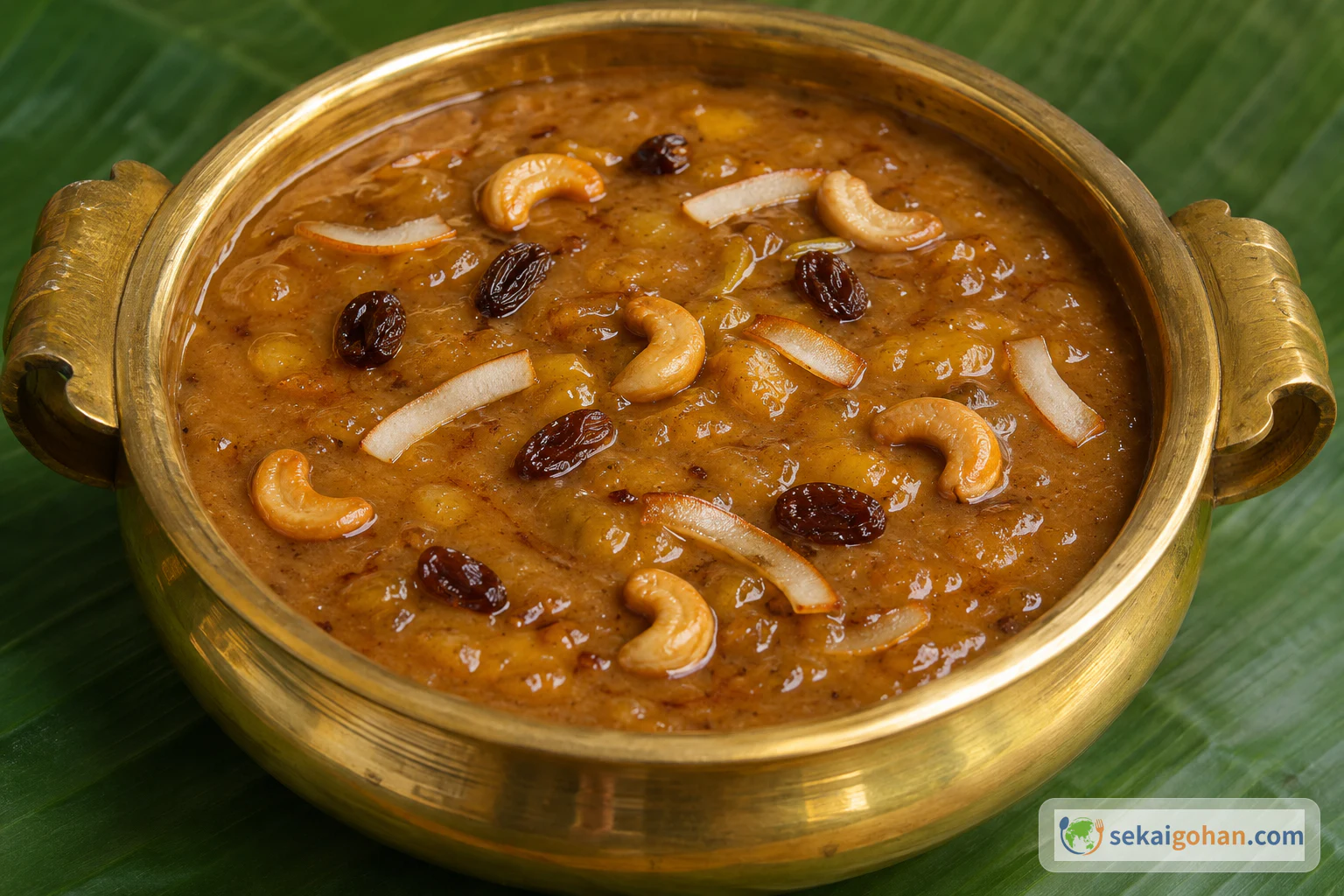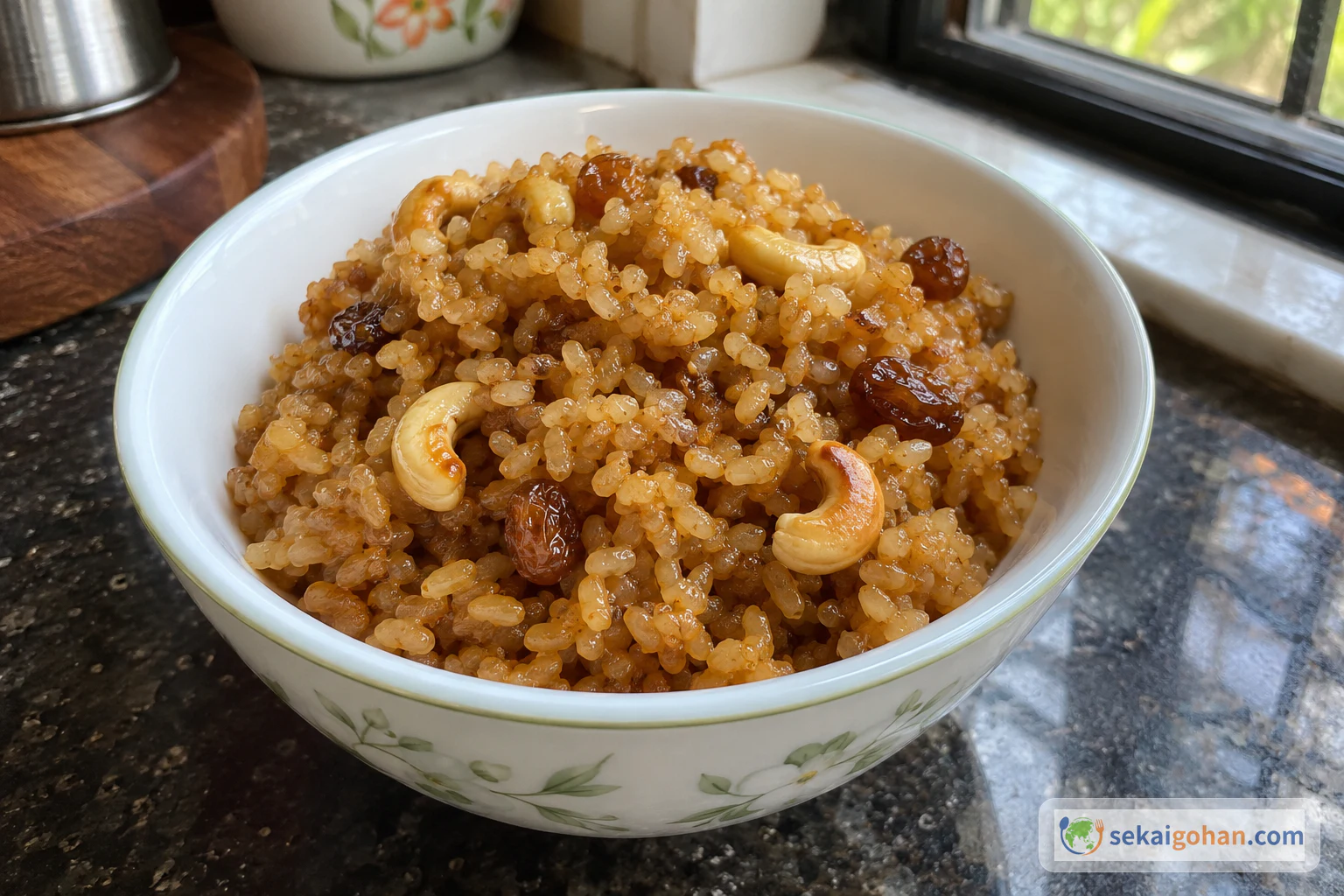
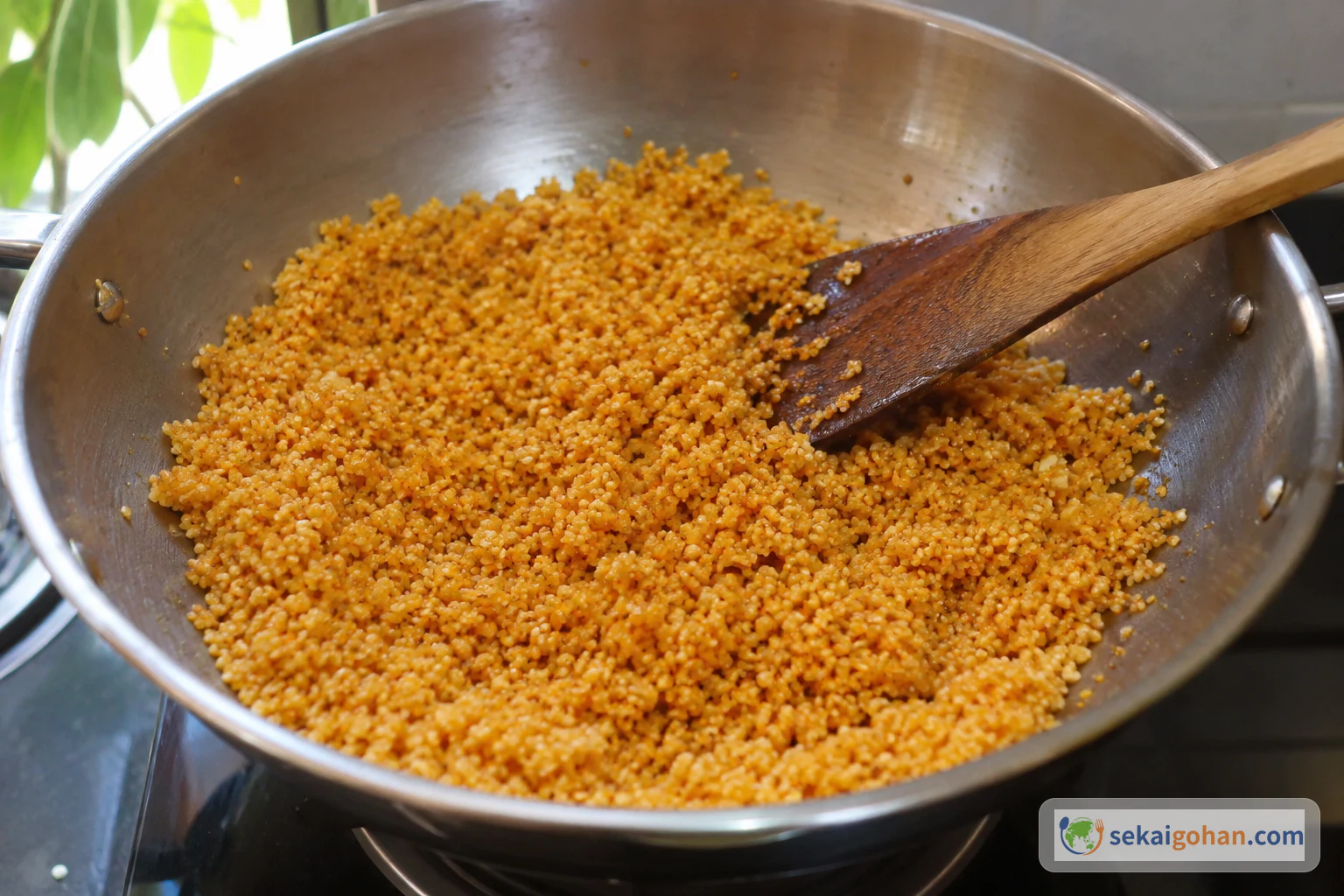
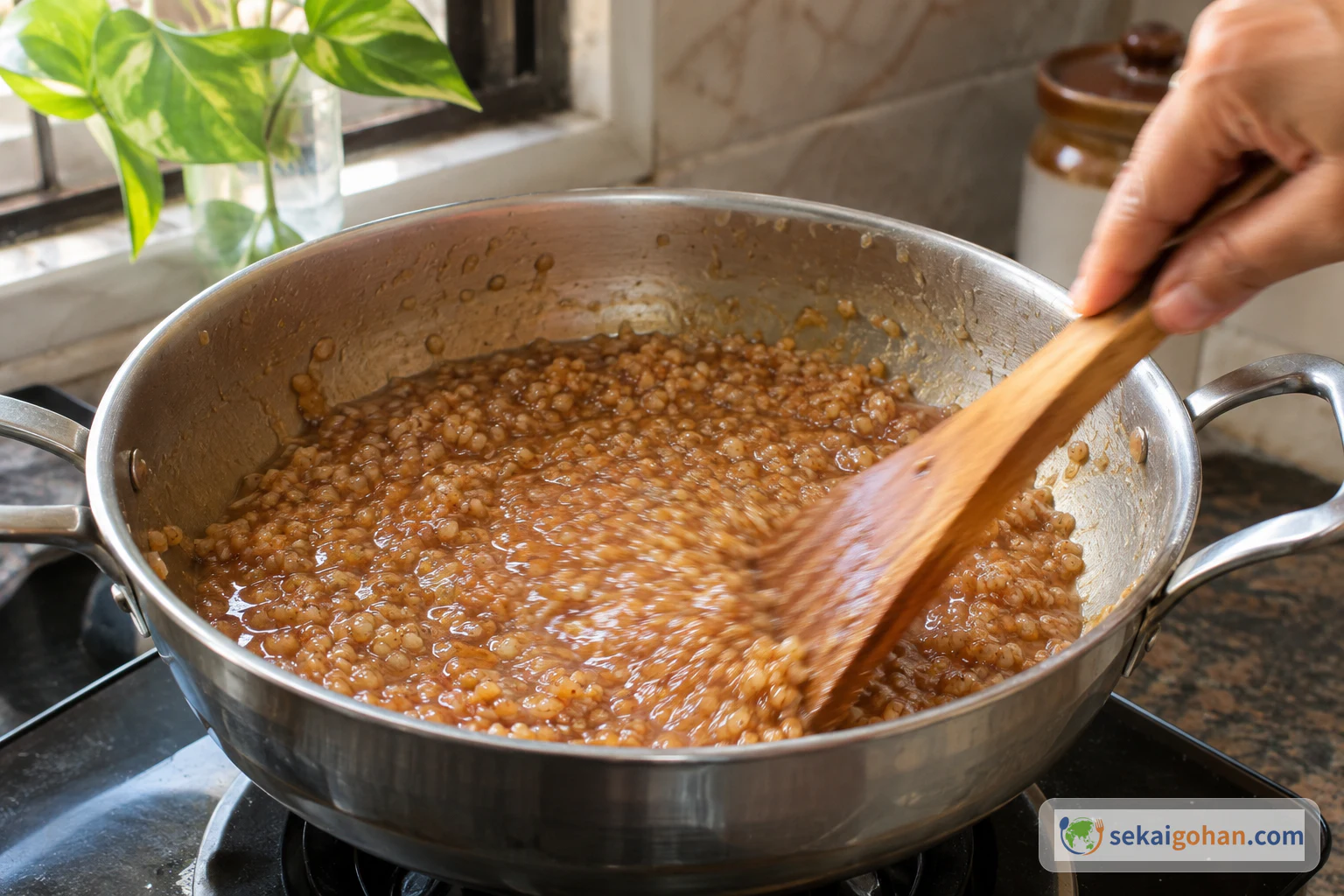
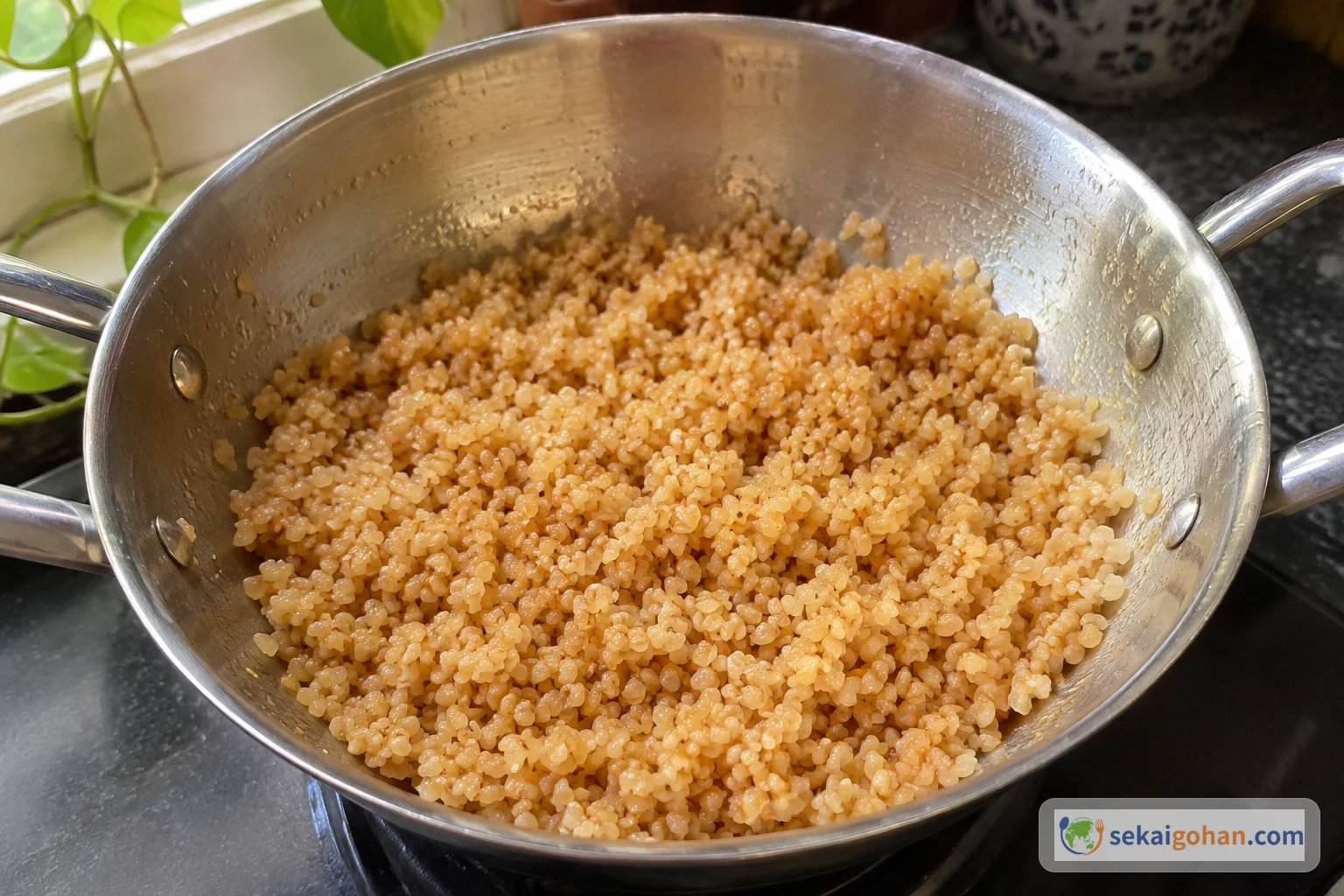
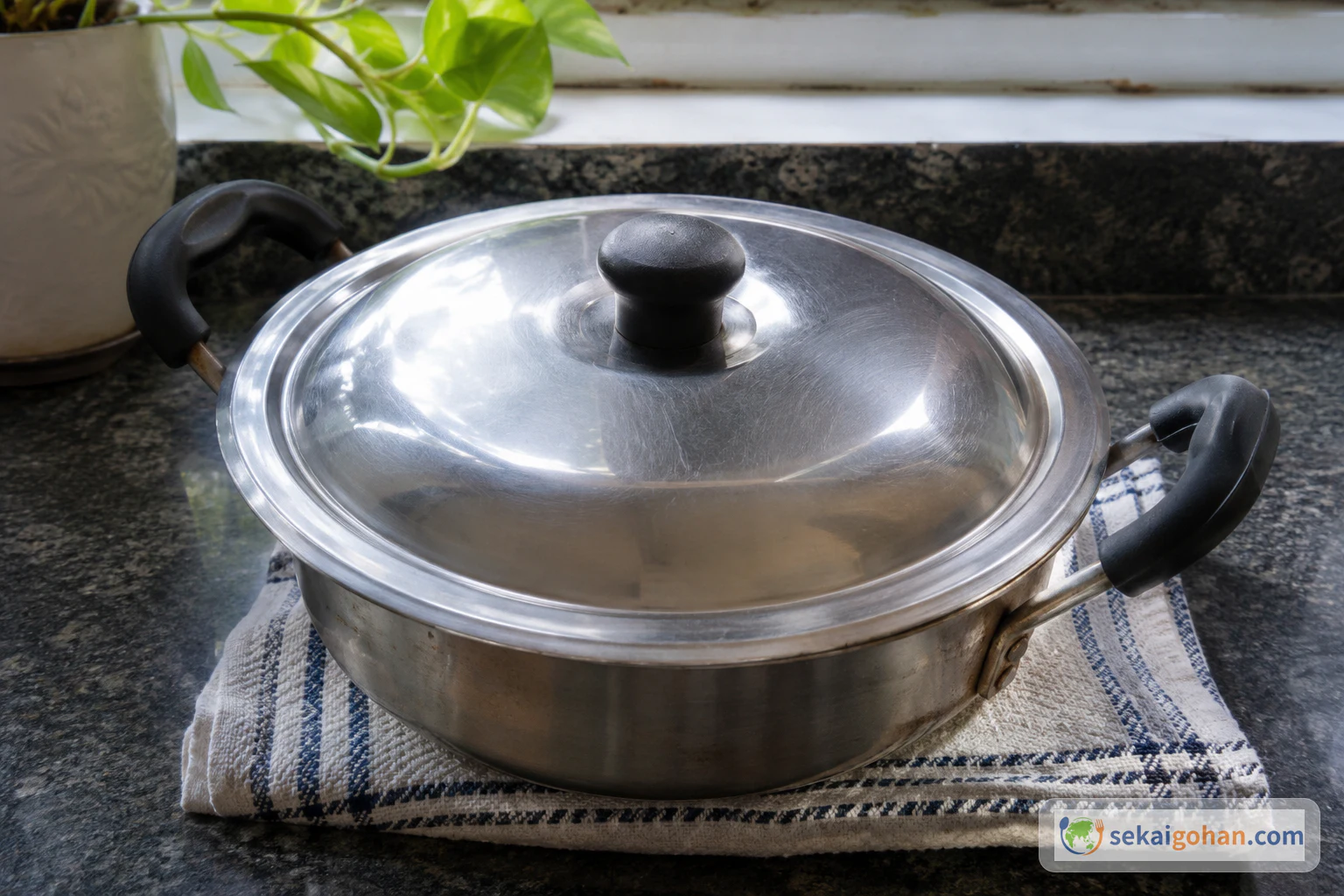
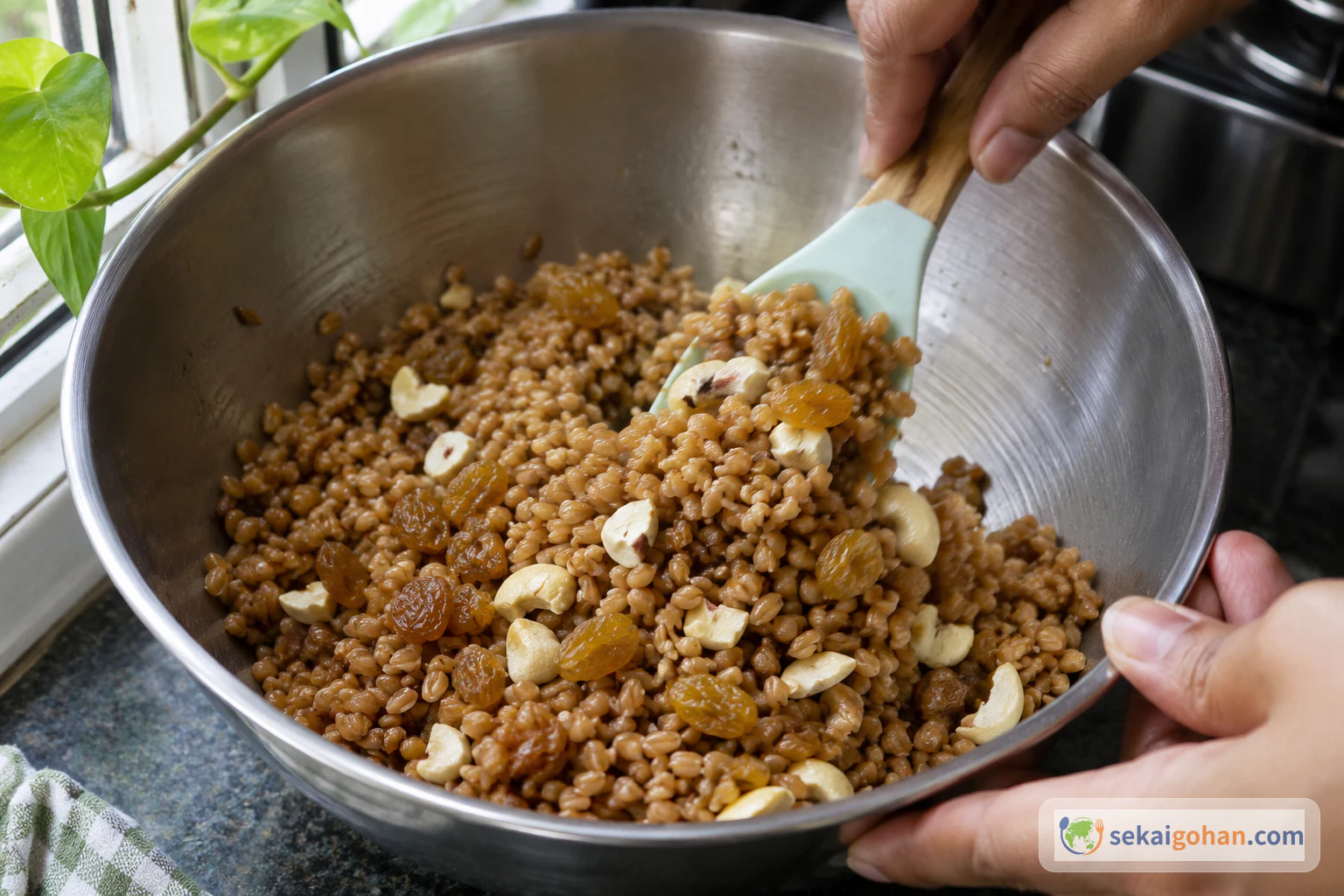
Jaggery melts into hot water in one pan. In a second, wider pan, broken wheat sizzles in ghee until it turns golden-orange and smells toasted. Then the two come together with a little cardamom, the lid goes on, and the wheat simmers over low heat until it's tender. Laapsi is a sweet Gujarati dish of broken wheat, served warm on special occasions. This is the richer version, with broken cashews and sultanas folded through the grains.
About Laapsi
Where Laapsi Is Eaten
Laapsi is part of the food of India, and this version comes from Gujarat, where people make it for auspicious days and serve it warm. Kansar, lapsi and sheera are each listed among the wheat sweets for these occasions. A wheat-flour preparation also shows up at festivals and as prasad. Gujarati cooking varies across South Gujarat, North Gujarat and Saurashtra.
Laapsi, Lapsi, Kansar: The Names
Laapsi, also spelled lapsi, is the name of this dish and of a few others, and cooks don't always agree on what each name means. Kansar and lapsi are listed as separate sweets, yet some cooks use Churma Lapsi and Kansar for one and the same preparation. Before you compare amounts with another recipe, check whether its "lapsi" is made with grains or with flour.
| Version | What sets it apart | Note |
|---|---|---|
| Broken wheat with cashews and sultanas (this recipe) | Wheat grains, jaggery liquid and cardamom, with cashews and sultanas folded in after the rest | This recipe |
| Plain, nutless laapsi | A simpler form, mentioned only in general terms | A different version |
| Churma lapsi or kansar made with wheat flour | Dry-roasted wheat flour with boiling water, jaggery and ghee | A separate, flour-based dish |
Ingredients: Serves 4
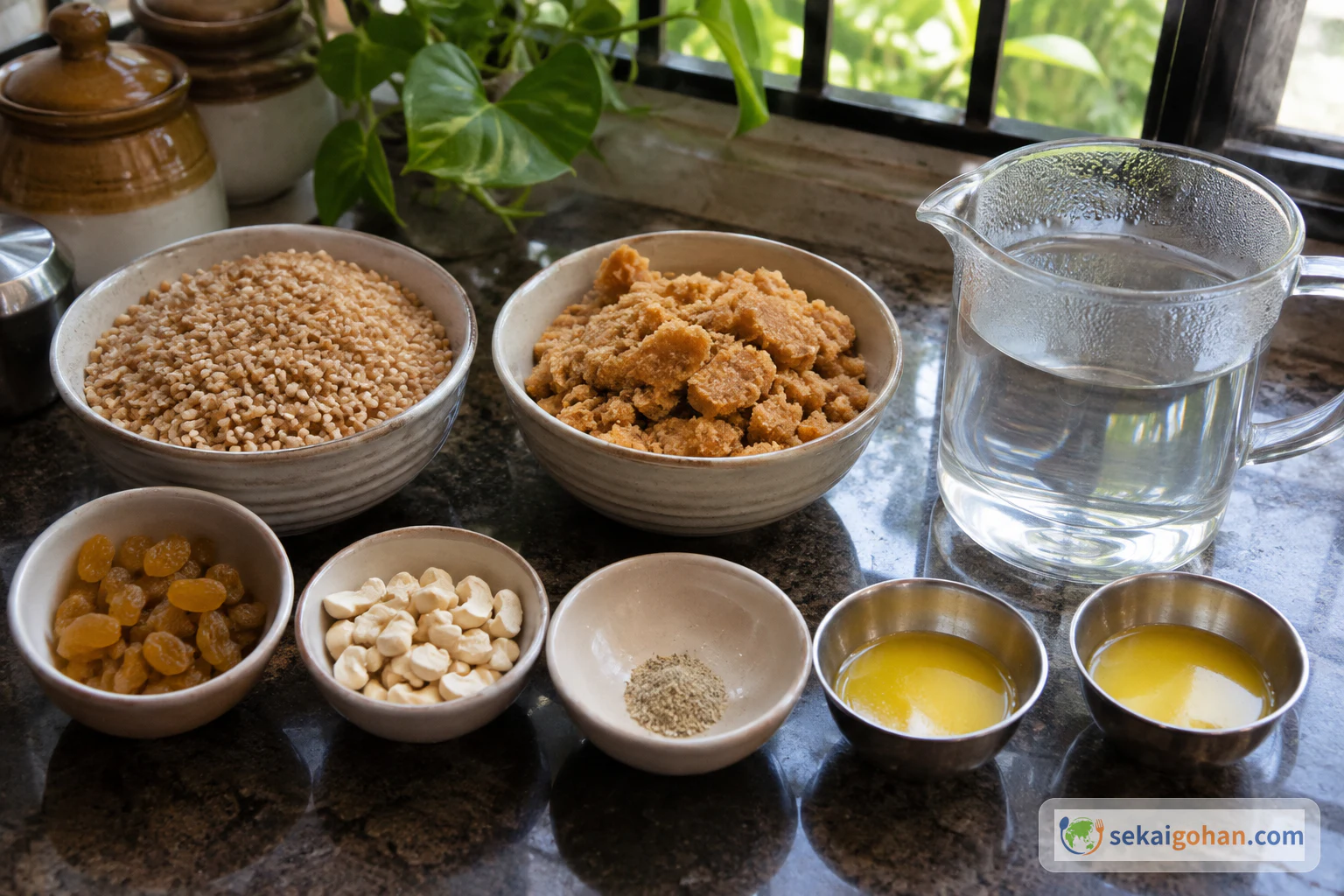
There is no extra ghee, sugar, milk or garnish at the finish.
This dish contains wheat, milk-derived ghee and cashews. Check the labels of the products you buy.
Equipment
- Heatproof vessel for dissolving the jaggery
- Strainer
- Second clean heatproof vessel for the strained liquid
- Small pan for the cashews
- Small dish for the roasted cashews
- Wide pan with a lid for the wheat
- Wooden spoon or spatula
- Measuring cups and spoons
- Serving bowls
Choosing Ingredients for Laapsi
Broken wheat. Buy actual broken grains (dalia). Coarse wheat (fada) and fine wheat flour (loat) are sold separately, and the flour makes a different dish entirely. Different types of wheat absorb different amounts of water, so keep checking the grains as they cook.
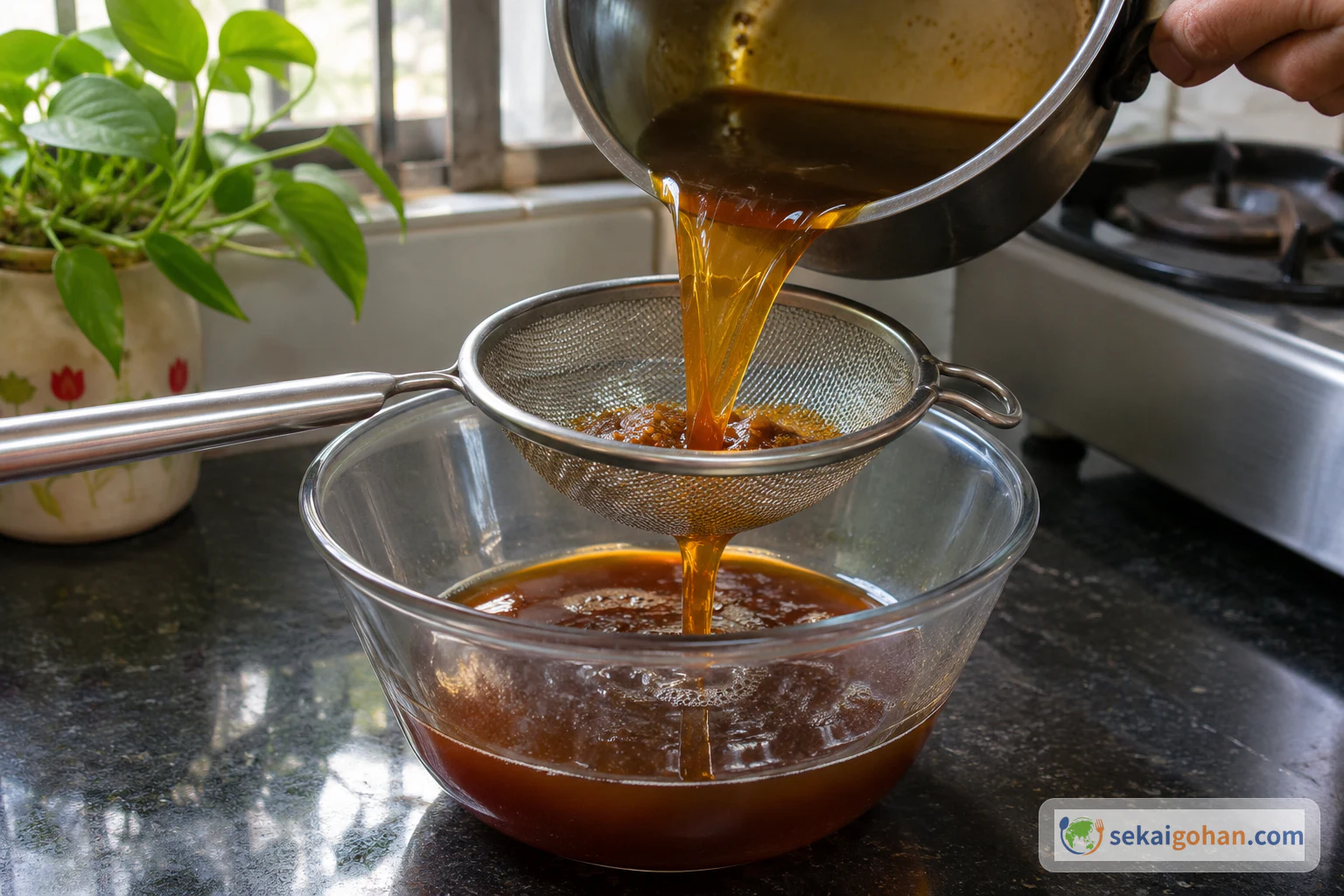
Jaggery. You dissolve the jaggery in hot water and strain it, and that strained liquid is what the wheat cooks in.
Sultanas and cashews. Use dried sultanas sold ready to eat, along with broken cashews. Both belong in this dish, and the recipe has no substitutes for them. If you avoid cashews, don't make this recipe as written.
Method: Syrup, Nuts, Wheat, Then the Rest
The method runs in four stages:
- The syrup: Straining the jaggery water catches any residue, and the liquid then waits on its own.
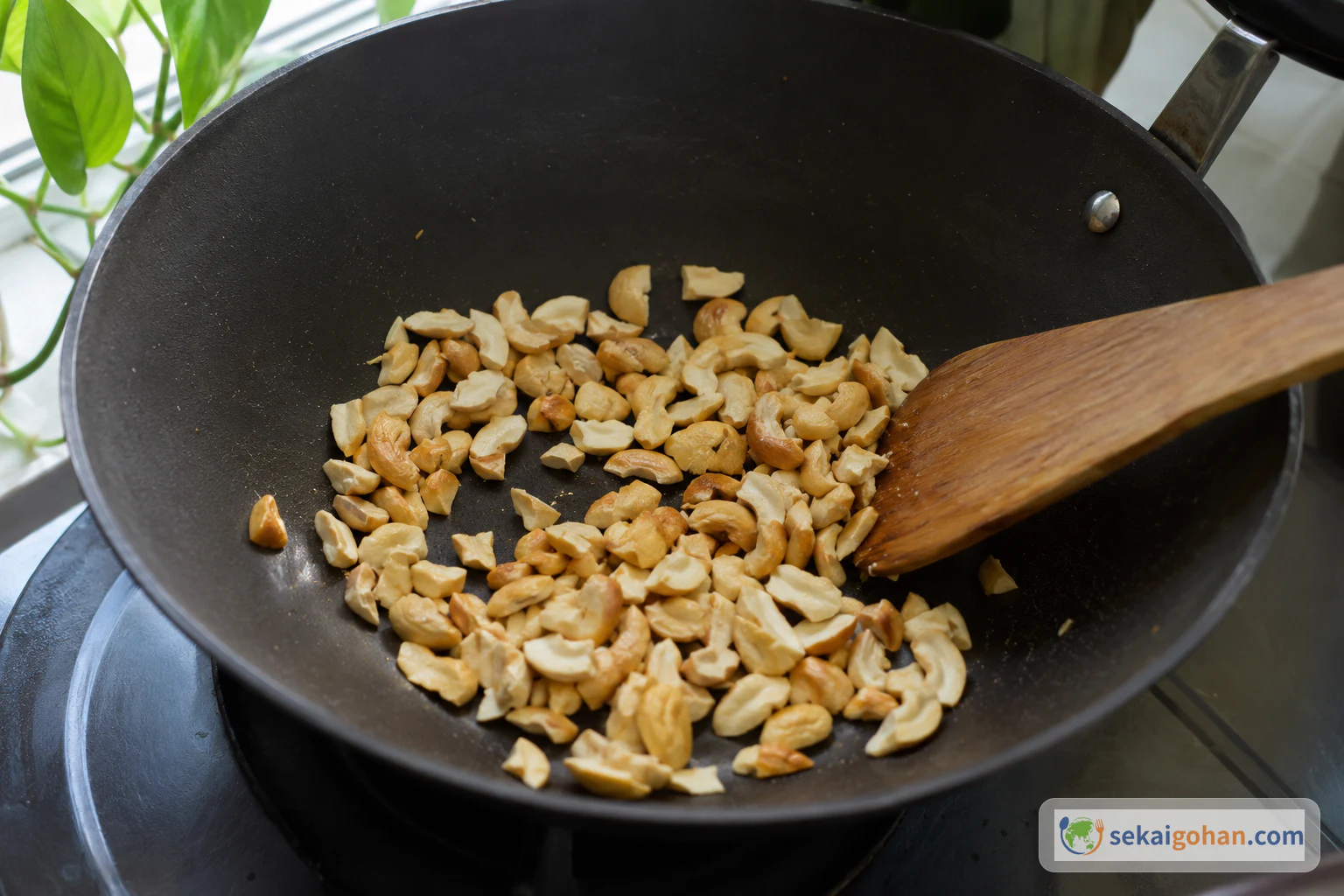
- The cashews: They need only reach a pale gold before they come out of the pan.
- The wheat: It roasts over medium heat, then simmers on low under a lid with an occasional stir.
- The finish: After a covered rest, the cashews and sultanas go in.
Use the pictures to check each stage.
Laapsi Troubleshooting
Roast the broken wheat until it smells toasted and turns golden-orange. Then simmer it gently until the grains are tender and separate, not a sticky paste. Hold the cashews and sultanas back until after the covered rest.
Watch the grains, not the clock. That one habit prevents most of the problems below.
| What you see | What to check | What to do |
|---|---|---|
| Grains are still firm after about 10 minutes | The 10 minutes is only a guide, and different wheats need different amounts of water | Keep the pan covered on low, stir now and then, and check again |
| The wheat is turning into a sticky paste | You want tender, separate grains | You can't undo this. Next time, check during the simmer and stop as soon as the grains are tender |
| Cashews are darker than light golden | They should only turn light golden | Take the pan off the heat the moment they color |
| Wheat is darker than golden-orange | It should turn golden-orange and smell roasted | Keep the heat at medium and stir the whole time it roasts |
| Residue in the jaggery liquid | The liquid should go through a strainer first | Strain it before pouring it into the pan |
| Cashews or sultanas went in early | They go in after the covered rest | Keep them in separate dishes until the lid comes off |
Frequently Asked Questions
How long does laapsi take?
Plan on 10 minutes of prep and 40 minutes of cooking, so 50 minutes in all. The covered simmer takes about 10 minutes, and the rest takes 5.
Does the pan really come off the heat before the rest?
Yes. Move the pan off the burner first, then let it sit covered for 5 minutes. That keeps the rest separate from the simmer.
Can I use whole wheat flour?
Not with this method. Flour-based versions have their own method and proportions, so if that's the dish you want, use a recipe written for it.
Can I leave out the cashews or sultanas?
They're part of this dish, so the recipe keeps them. A plainer laapsi exists, but this recipe has no method for a pot without nuts or fruit.
Can I add saffron, milk, sugar or a spoonful of ghee at the end?
None of these is part of this dish, so leave them out.