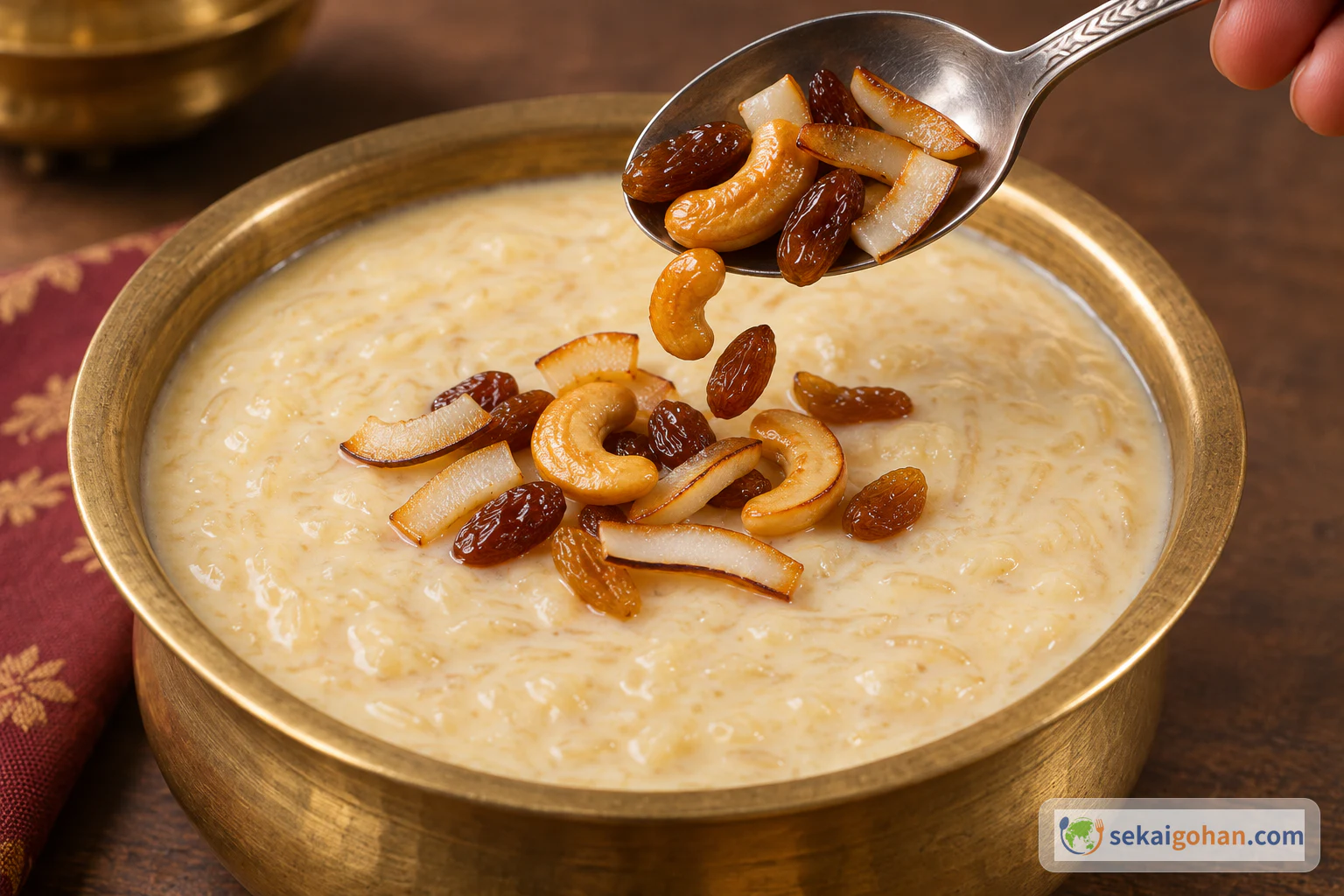
Pazhapradhaman: Kerala Ripe Plantain Pudding with Jaggery and Coconut Milk (Pazham Pradhaman)

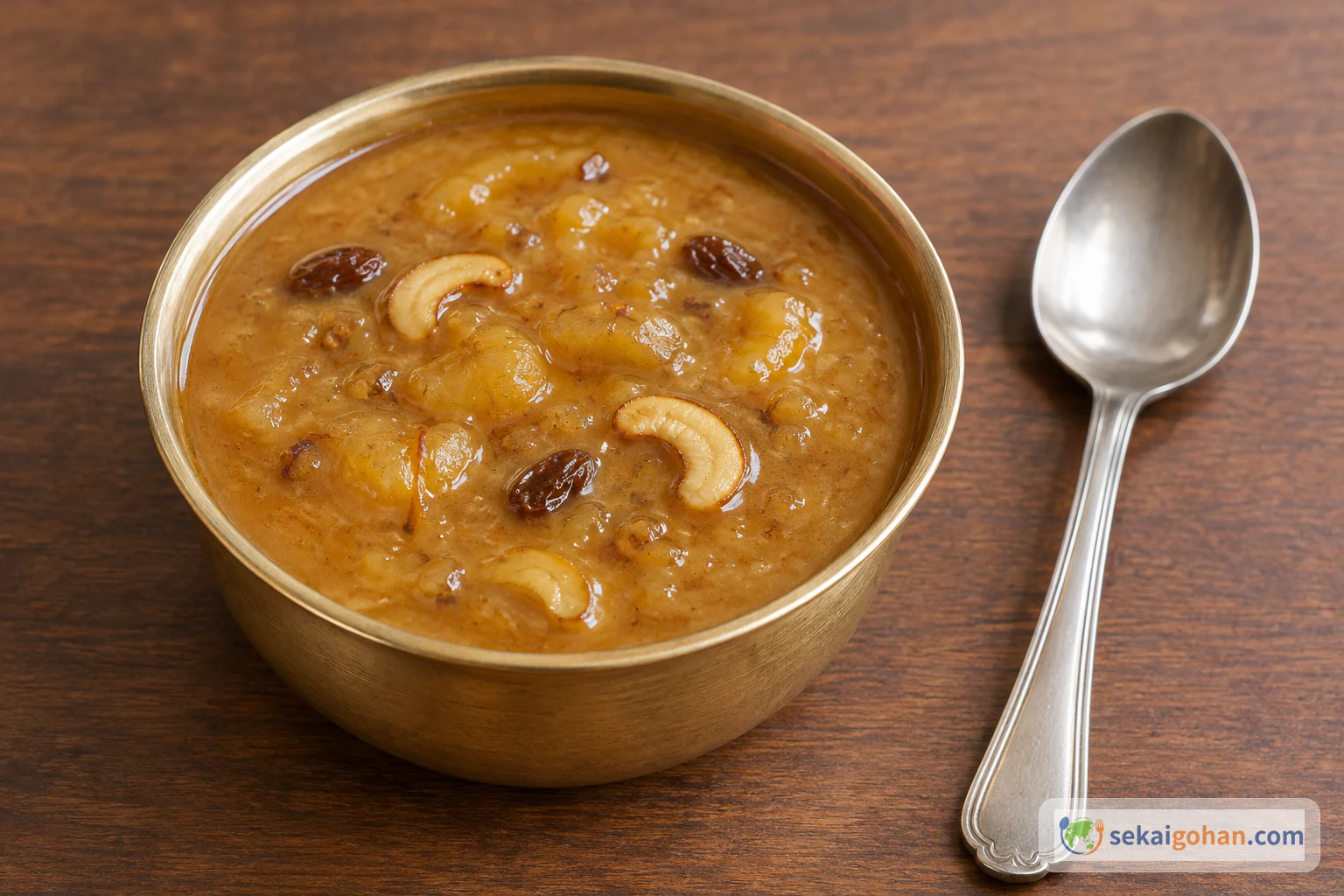
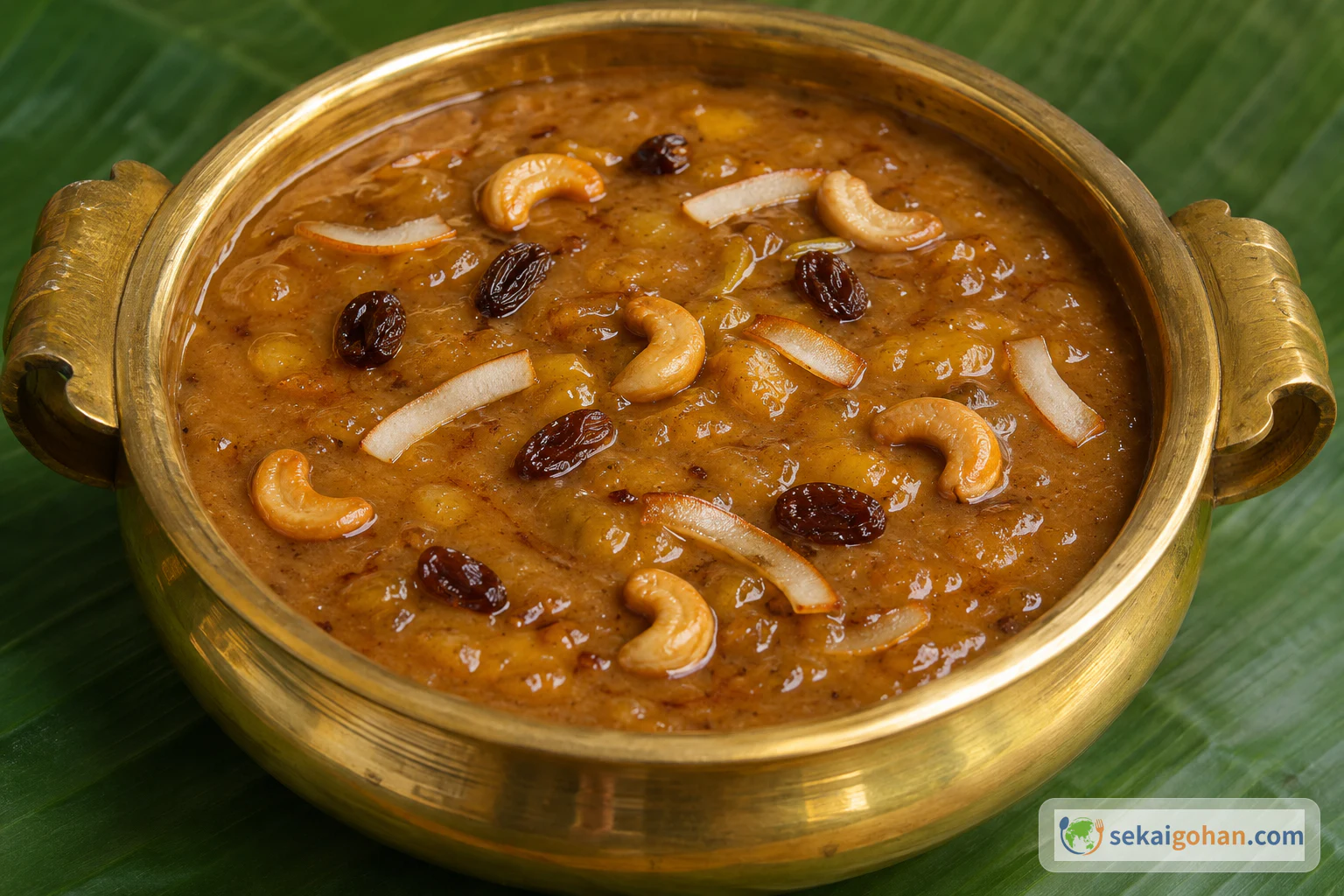
Pazhapradhaman topped with fried nuts, raisins and pieces of coconut
Cuisine
Indian (Kerala)

How to make pazhapradhaman, a Kerala sweet of steamed ripe Nenthra plantain, jaggery and three pressings of coconut milk, finished with cashews, raisins and coconut strips fried in ghee. Follows one published MeemisKitchen recipe step by step, with the milk order and when to turn off the heat.

Cooking flow

Cooking steps

STEP11 / 11

Dissolve and strain the jaggery

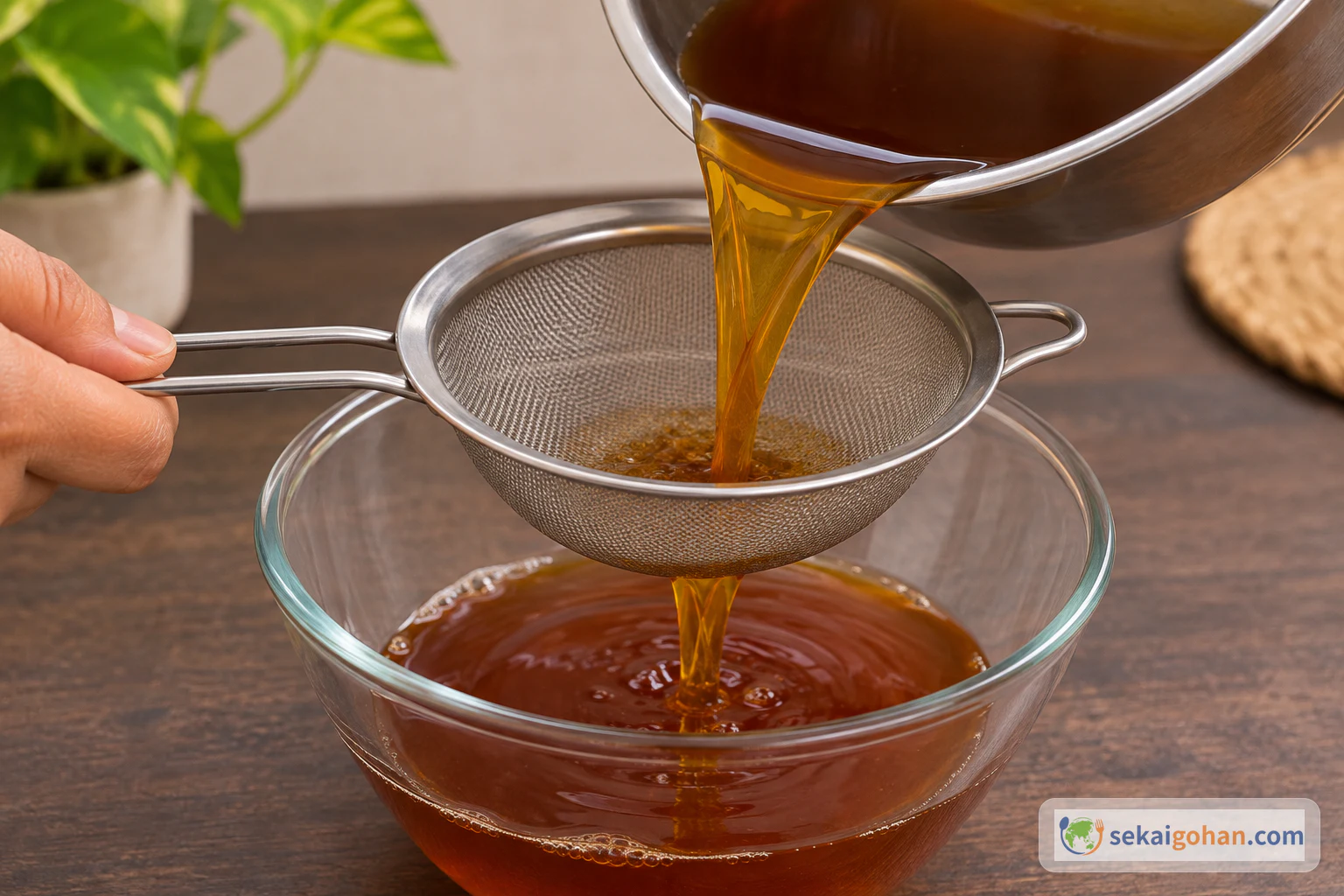
Dissolved jaggery syrup being poured through a fine strainer
Strain the syrup into a clean bowl

Put the 350 g jaggery and 1/2 to 3/4 cup water in a small saucepan. Heat, stirring, until the jaggery dissolves into a dark syrup. Pour the syrup through a fine strainer into a bowl and set it aside.

STEP22 / 11

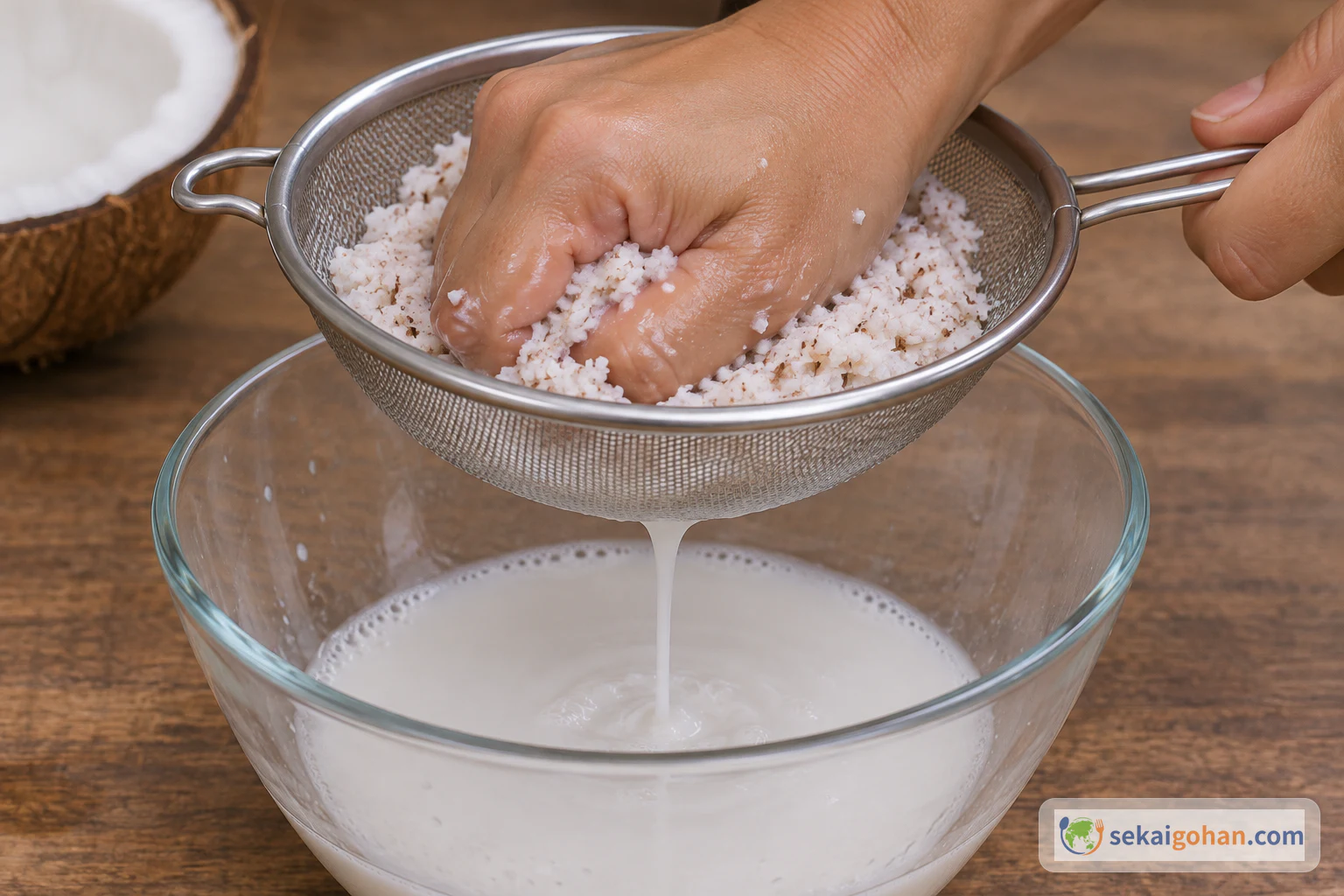
Make the first, thick coconut milk

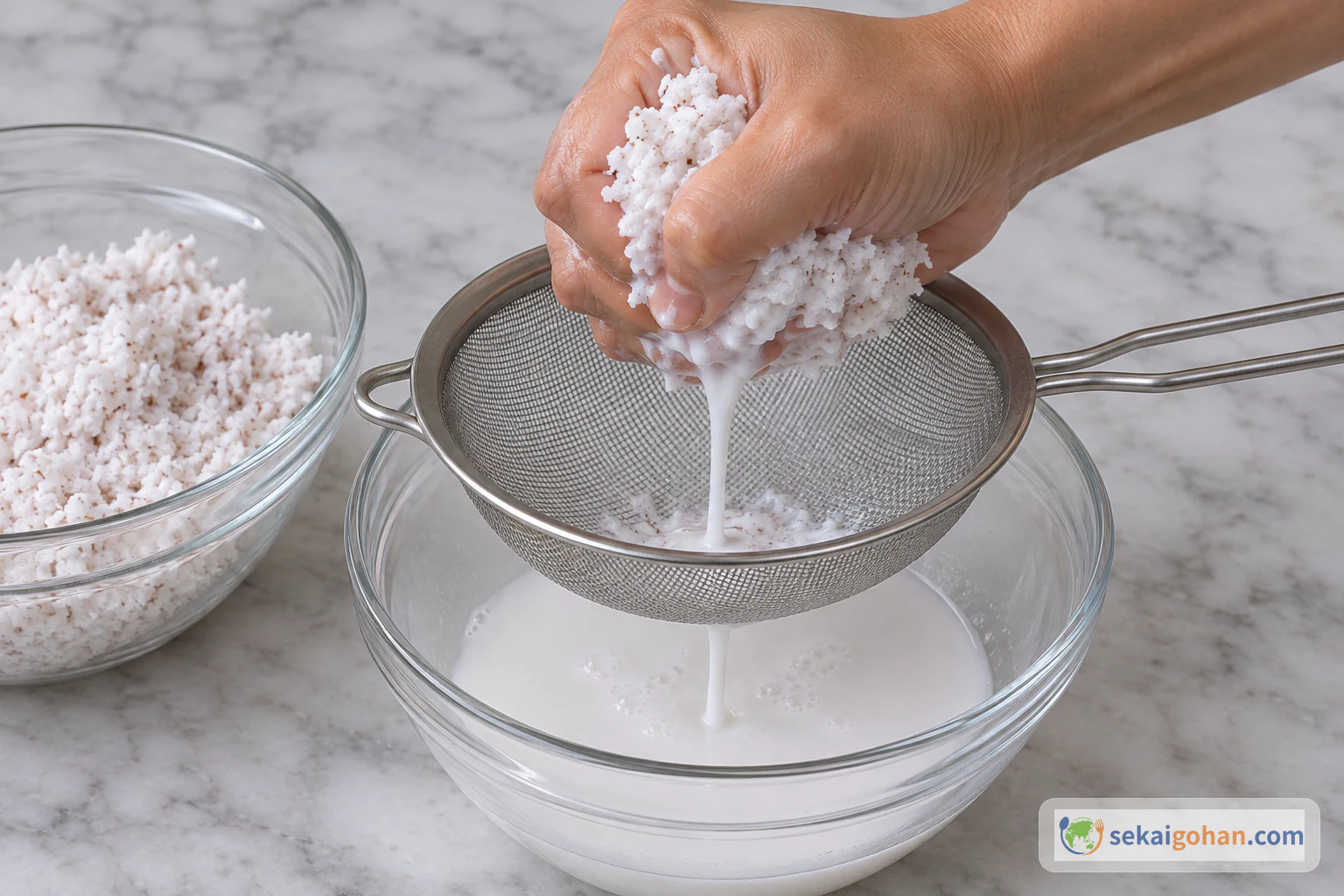
A hand squeezing the first coconut milk over a strainer
This thick first milk goes into the pot last

Put the grated coconut and 1/2 cup water in a blender and grind. Press the ground coconut over a fine strainer into a bowl to collect 1/2 cup first (thick) milk. Keep the coconut residue for the next grind.

STEP33 / 11

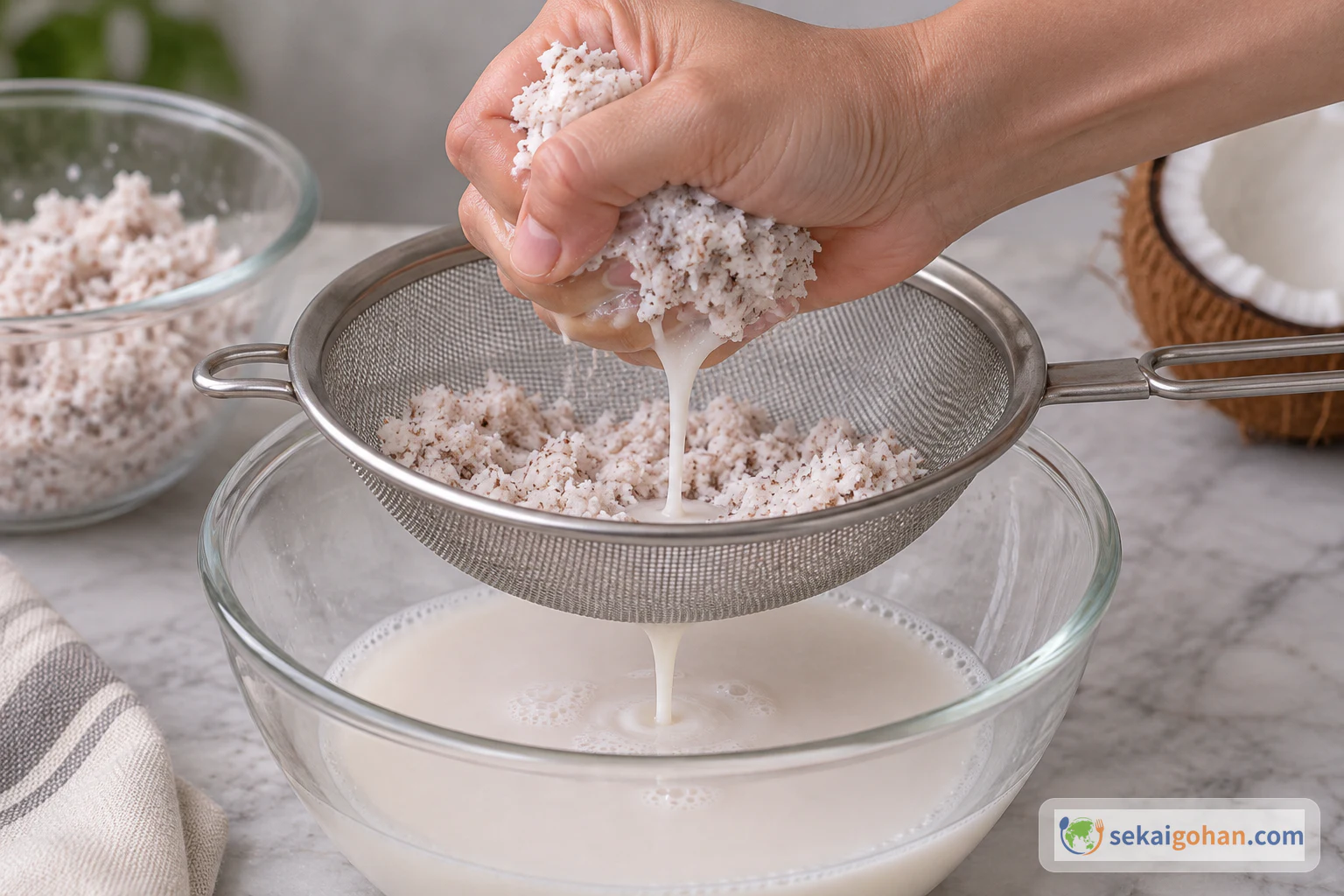
Make the second, skimmed coconut milk

A hand squeezing the second coconut milk over a strainer
Collect the second milk in its own bowl

Return the residue to the blender, add more water as needed, and grind. Press the coconut over the strainer into a second bowl to collect 1 cup second (skimmed) milk. Keep the residue.

STEP44 / 11

Make the third, thin coconut milk

A hand squeezing the third coconut milk over a strainer
This thin third milk goes into the pot first

Return the residue to the blender with 1 cup water and grind again. Press the coconut over the strainer into a third bowl to collect 1 cup third (thin) milk. You now have three bowls of milk: the thin one goes into the pot first and the thick one last.

STEP55 / 11

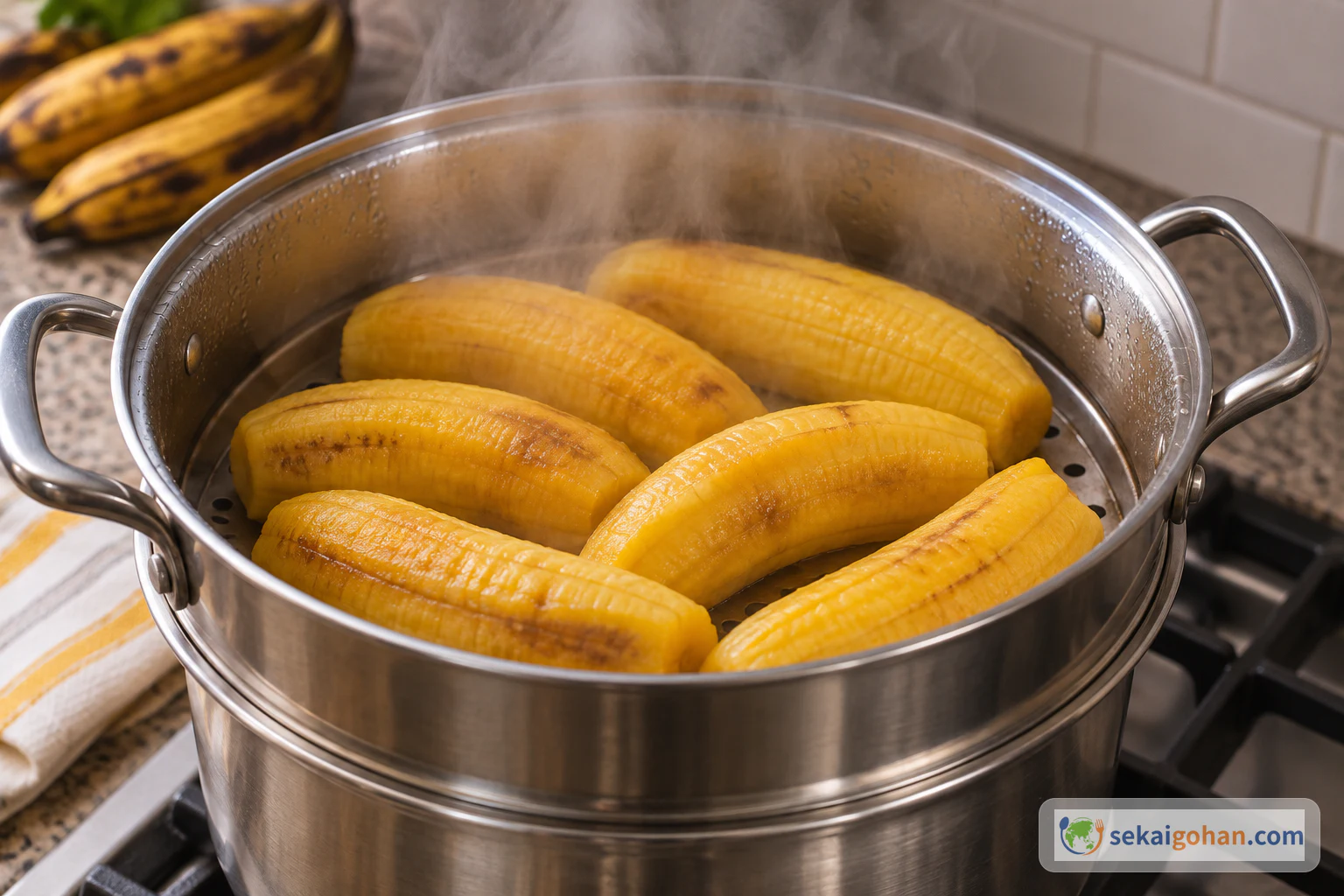
Steam the plantains

Peeled plantains steaming above a pot
Steam until the plantains are soft

Peel the 5 ripe plantains. Steam the peeled plantains until soft.

STEP66 / 11

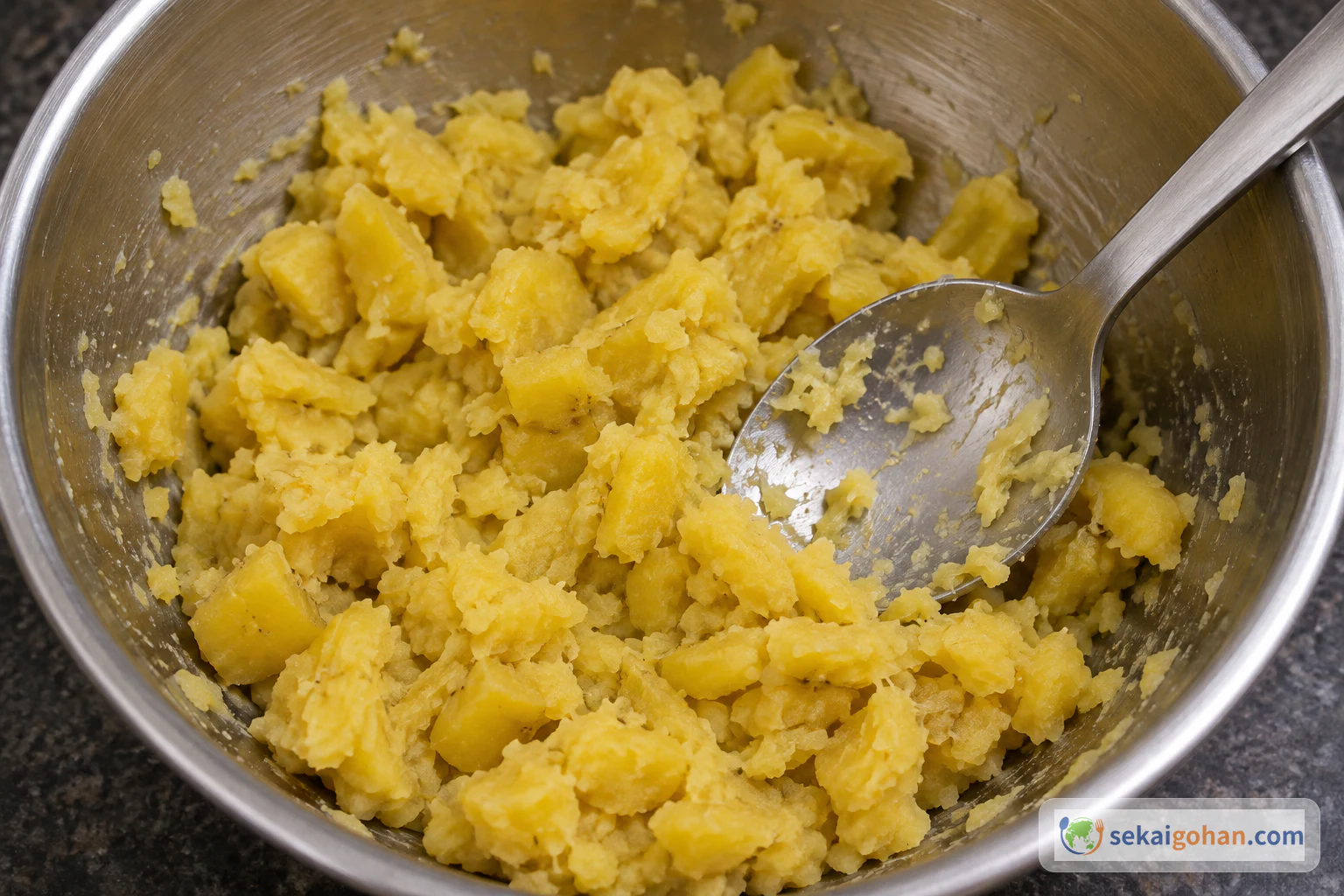
Clean and mash the plantains

Steamed plantain coarsely mashed in a bowl with a spoon
Leave some small pieces in the mash

Open the steamed plantains and lift out the black strands and seeds. Mash the plantain in a bowl, leaving some small pieces.

STEP77 / 11

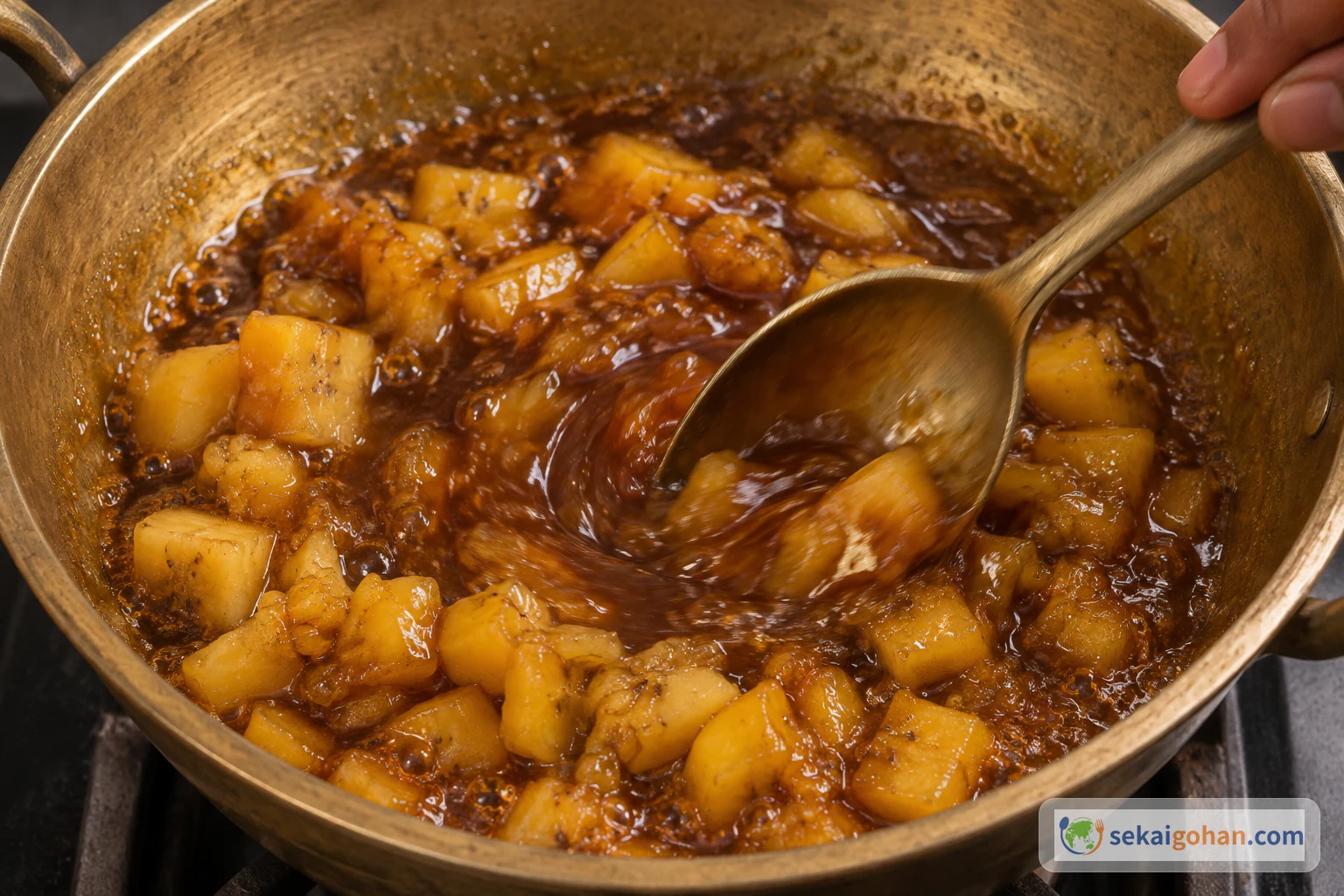
Cook the plantain with ghee and syrup

A spoon mixing plantain and jaggery syrup in the pot
Mix the syrup through the plantain

Warm 2 tbsp ghee in a heavy pot or uruli. Add the mashed plantain and stir until coated in the ghee. Pour in the strained syrup a little at a time, tasting as you go; add all of it, or stop when the sweetness suits you. Mix the plantain and syrup together and heat well.

STEP88 / 11

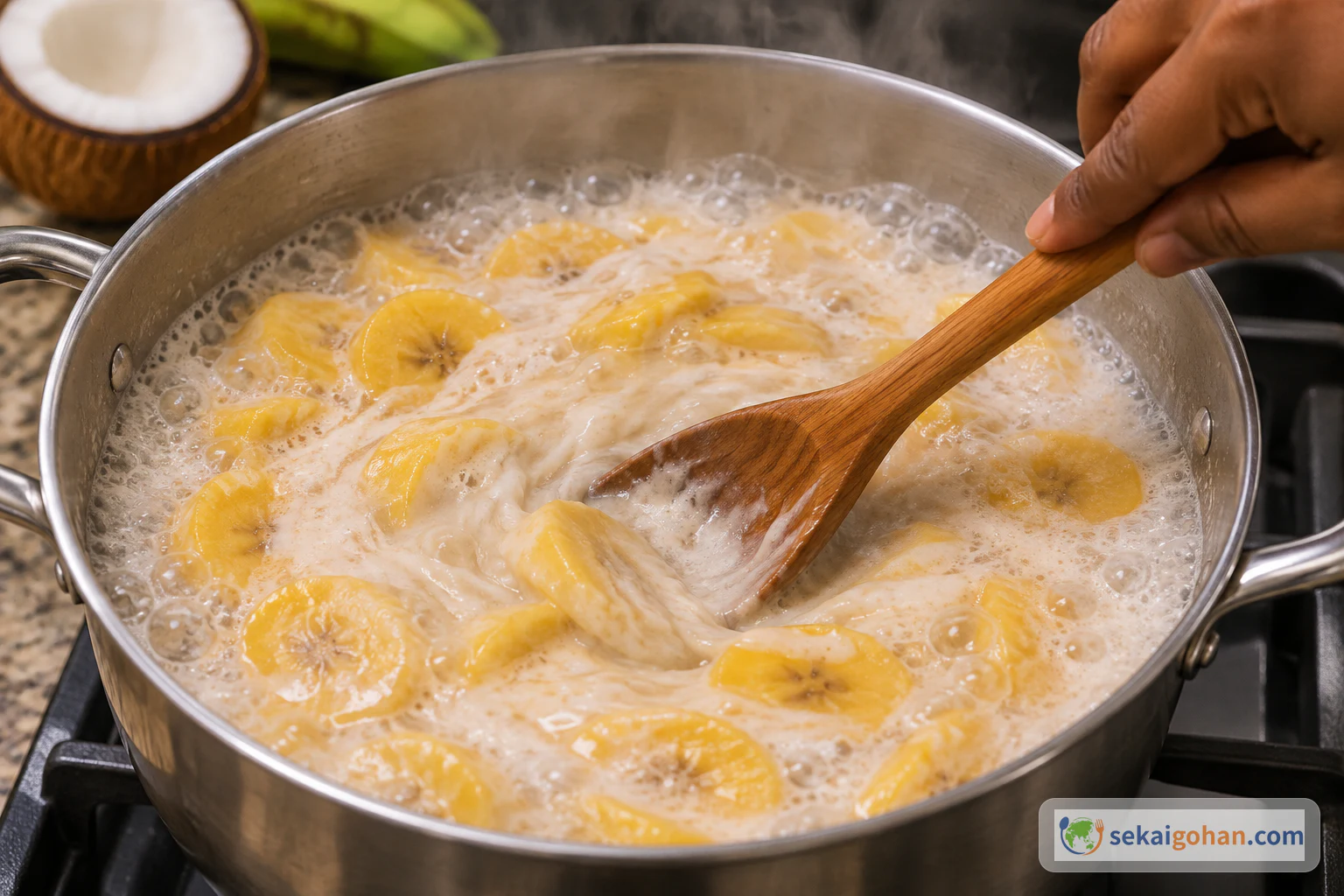
Simmer with the thin and skimmed milks

The contents of the pot being stirred as they come to a boil
Keep stirring as the pot boils

Pour in the 1 cup third (thin) milk and stir the pot as it comes to a simmer. Add the 1 cup second (skimmed) milk in several additions. Keep stirring and bring the pot to a boil.

STEP99 / 11

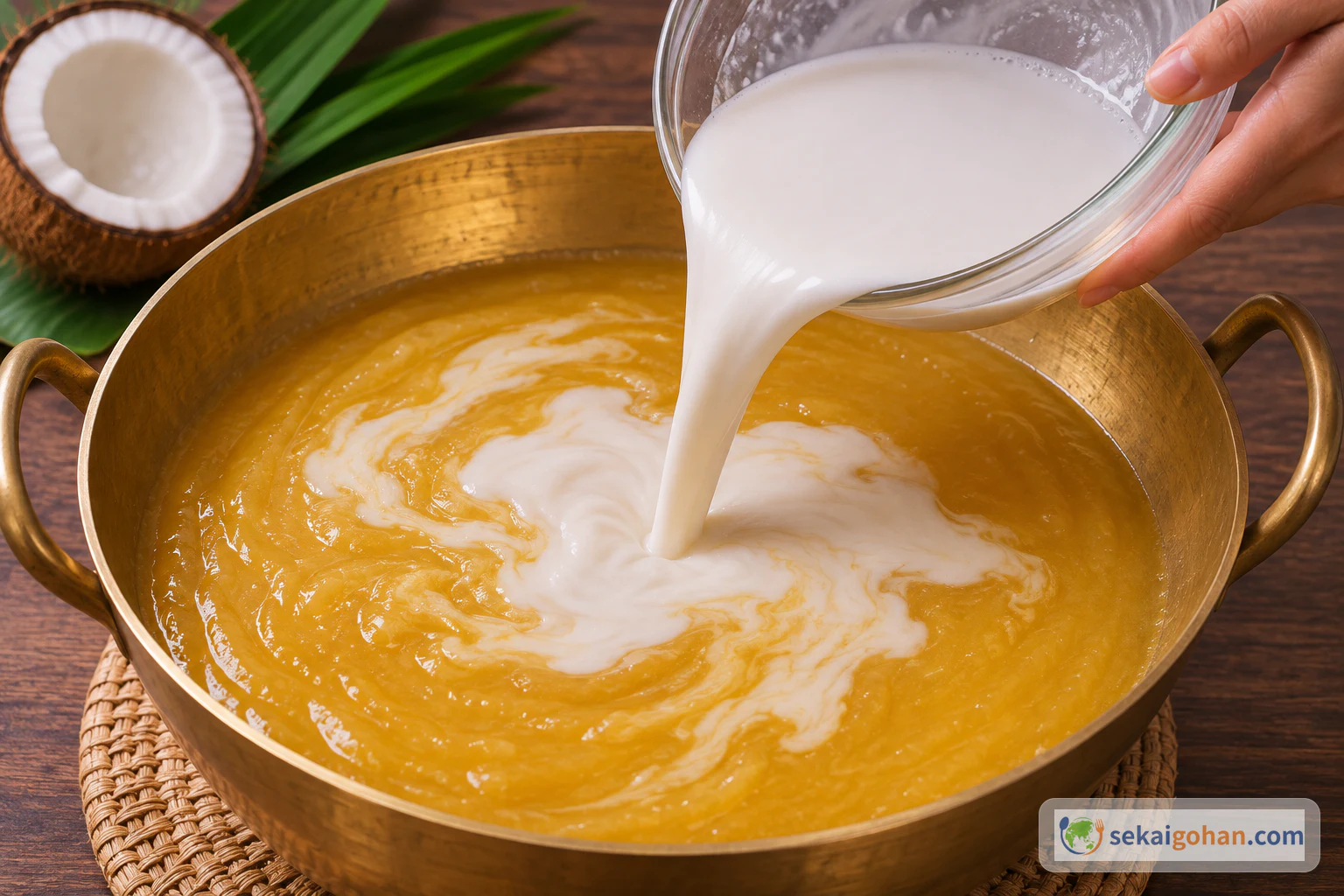
Finish with cardamom and thick milk

Thick first coconut milk being poured into the pot
The thick first milk goes in last

Crush the 3 cardamom pods to a powder in a mortar and sprinkle it into the pot. Pour in the 1/2 cup first (thick) milk, then turn off the heat right away. Do not keep the pot boiling once the first milk is in. With the heat off, mix everything together.

STEP1010 / 11

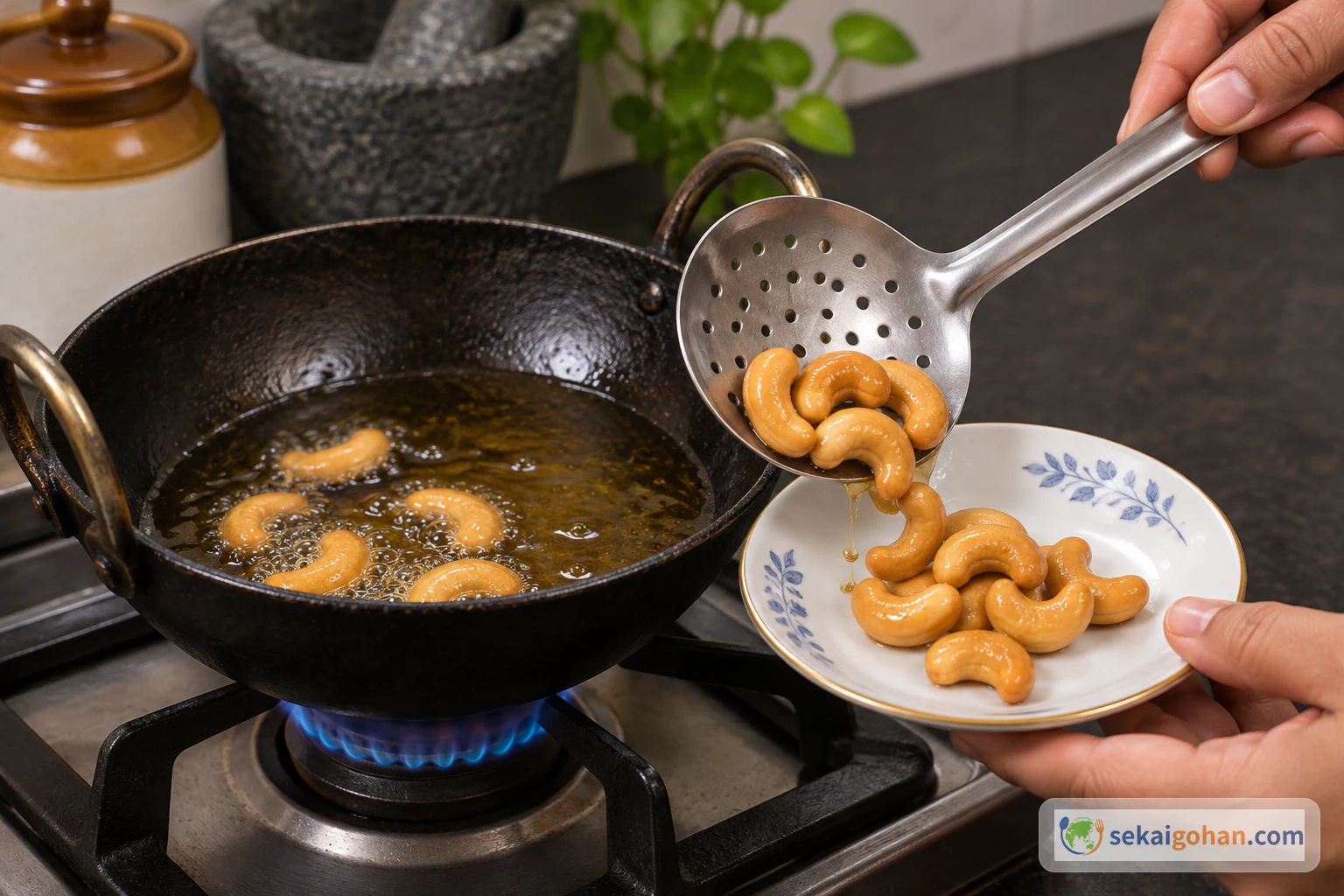
Fry the cashews and raisins

Fried cashews being lifted out with a slotted spoon
Leave the ghee behind in the pan

Warm the remaining 2 tbsp ghee in a small heavy pan. Fry the 15 g cashews in it, then lift them onto a small plate with a slotted spoon, leaving the ghee in the pan. Fry the 15 g raisins in the same ghee and lift them onto the plate.

STEP1111 / 11

Fry the coconut strips and garnish

The three fried toppings being added to the pudding from a spoon
The fried toppings go on at the very end

Fry the 1/4 cup thin coconut strips in the same ghee, then lift them onto the plate with the slotted spoon. Take the fried cashews, raisins and coconut strips on a spoon and add them to the finished pradhaman.

0 / 0
Ingredients

Ingredients

1 / 1

Ingredients

Ingredient Amount Role
Ripe Nenthra plantains (Nenthra Pazham / Ethapazham) 5 The body of the pudding; steamed, then coarsely mashed
Jaggery (Sharkkara) 350 g Sweetness; melted into a strained syrup
Water, for the syrup 1/2 to 3/4 cup Dissolves the jaggery
Small coconut, grated 1 Pressed three times for all of the coconut milk
Water, for the first pressing 1/2 cup Gives 1/2 cup first (thick) milk
Water, for the second pressing as needed Gives 1 cup second (skimmed) milk
Water, for the third pressing 1 cup Gives 1 cup third (thin) milk
Ghee, for the pot 2 tbsp Coats the mashed plantain
Green cardamom 3 pods Ground to a powder for aroma
Ghee, for the garnish 2 tbsp Fries the three toppings
Cashews 15 g Fried topping
Raisins 15 g Fried topping
Thin coconut strips 1/4 cup Fried topping
0 / 0

Jaggery melts into a dark syrup and runs through a fine strainer, while one small coconut goes through the blender three times to give three bowls of milk, each thinner than the last. Ripe plantains come out of the steamer soft enough to mash, then meet ghee, syrup and those three milks in a heavy pot, one at a time. Cashews, raisins and thin strips of coconut, each fried separately in ghee, go on top at the end. This is Pazham Pradhaman, a Kerala pudding of ripe plantain, jaggery and coconut milk.

Pazhapradhaman in Kerala

Pazham Pradhaman, also called Nenthra Pazham Pradhaman, is made with ripe Nenthra plantain, known as Ethapazham. It belongs to the Kerala Sadya and to the festivals of Onam and Vishu. To keep exploring the country's food, browse more dishes from India.

Ingredients: Plantain, Jaggery and One Small Coconut
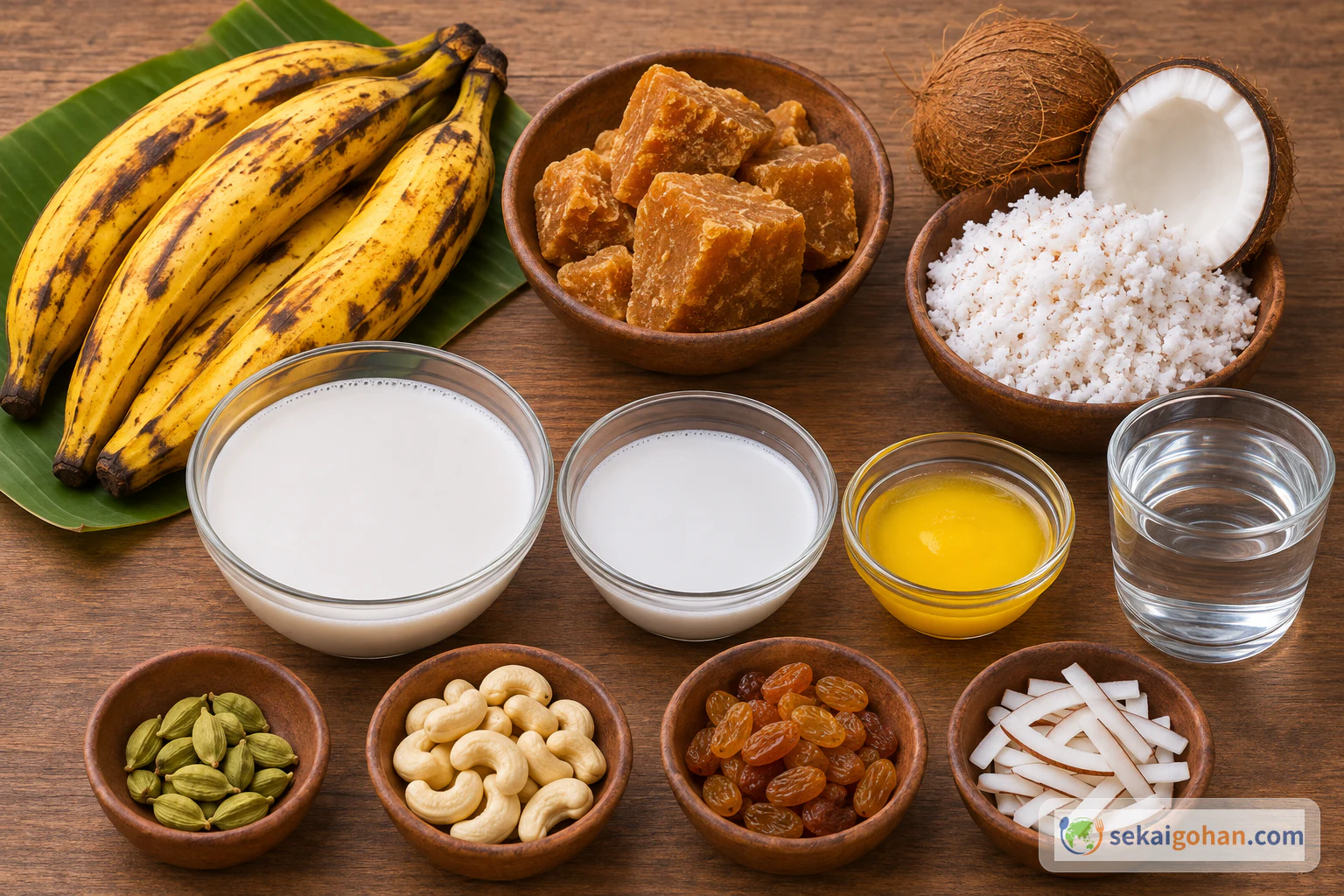
Plantains, jaggery, coconut, ghee and the flavoring ingredients for pazhapradhaman
Everything laid out separately before you start

One coconut makes all three milks, because the same residue goes back in the blender each time. Measure the milk you collect, not the water you add. Keep the three milks in separate bowls.

The plantain and grated coconut are ingredients for cooking and are not served raw. Everything is cooked before serving.

Equipment

  • Small saucepan
  • Fine strainer
  • Blender
  • Bowls
  • Steamer that fits over a pot
  • Heavy pot or uruli
  • Small heavy pan
  • Mortar and pestle
  • Wooden spoon
  • Slotted spoon
  • Small plate

Choosing Plantain and Coconut

Plantain: Use ripe Nenthra plantain (Ethapazham), and peel it before steaming. Other plantains and bananas aren't traditional here. If ripe banana is what you have, start from the Pazha Pradhaman with banana listed under Variations rather than changing the amounts in this recipe.

Coconut: Use fresh grated coconut, pressed in three stages. Canned or boxed coconut milk won't give you the same three milks.

Method: Syrup, Three Milks, Plantain, Then the Pot

Hot syrup

Hot jaggery syrup and the boiling pot can burn. Pour slowly and keep your hands clear of the pot. Taste carefully when adjusting the sweetness.

Each photo shows one action. Follow the written amounts, and judge doneness by what you see in the pot.

Common Pazhapradhaman Problems

Most of this dish comes down to order and restraint, so judge each step by what you see in the pot. Three habits matter most:

Three things to get right

Keep small pieces of plantain in the mash. Add the coconut milk from thinnest to thickest. Pour in the thick first milk last, turn off the heat, and only then mix.

What you notice What to do
The pot is sweet enough before the syrup is used up Stop adding syrup. You add it gradually so that you can adjust the sweetness
You are unsure how much water the second pressing needs Add water as needed. Aim for 1 cup second milk in the bowl
You can't remember which bowl is which Label the bowls as you press them. The order into the pot is third, second, then first
The first milk is in and the pot is bubbling Turn off the heat right away, then mix
You spot a black strand after mashing Lift it out before the plantain goes into the pot
The mash has turned completely smooth Carry on, but mash less next time. Keep some small pieces
The toppings are all mixed together in the pan Next time, fry them one kind at a time, lifting each out before adding the next

Serving and Variations

Pazhapradhaman served in a bowl
A small bowl with a spoon is all it needs

Spoon the pradhaman into small bowls so that each one gets some of the fried toppings and some of the soft plantain pieces.

The dish has other versions, and each works as its own recipe. Treat them separately rather than mixing their amounts and steps into the method above.

Version How it differs
Pan-cooked plantain Instead of steaming, the plantain is cooked in a pan with water and a little ghee
Extra ghee Adds optional extra ghee
Pazha Pradhaman with banana A separate recipe that also combines ripe banana, jaggery and coconut milk. The banana is cooked in water and mashed before the jaggery goes in, and the coconut milk is not boiled
Versions with dairy milk or sago Separate formulas

Frequently Asked Questions

Why are there three coconut milks when the ingredients list only thin and thick?

The ingredients list the milk as 2 cups thin and 1/2 cup thick. The method splits the thin milk into 1 cup second (skimmed) milk and 1 cup third (thin) milk, so the amounts agree and you aren't making extra.

Do I need three coconuts?

No. One small coconut does the whole job, because the same residue is ground and pressed three times.

Why does the first milk go in right before the heat goes off?

The thick first milk is added last for the quality of the finished dish. Pour it in, turn off the heat, then mix.

Sources

  • Meena Meenattoor, MeemisKitchen, "Pazham Pradhaman / Nenthra Pazham Pradhaman." The main recipe for this article: ingredients, amounts, the steamed plantain option, the order of the coconut milks, the garnish, and the author's introduction connecting the dish with the Sadya, Onam and Vishu. https://meemiskitchen.com/2019/09/09/pazham-pradhaman-nenthra-pazham-pradhaman/
  • Chef Jomon Kuriakose, "Pazha Pradhaman with Chef Jomon Kuriakose." Used for comparison only: a separate recipe with ripe banana, jaggery and coconut milk, in which the banana is cooked in water and mashed and the coconut milk is not boiled. https://www.chefjomon.com/pazhapradhaman/