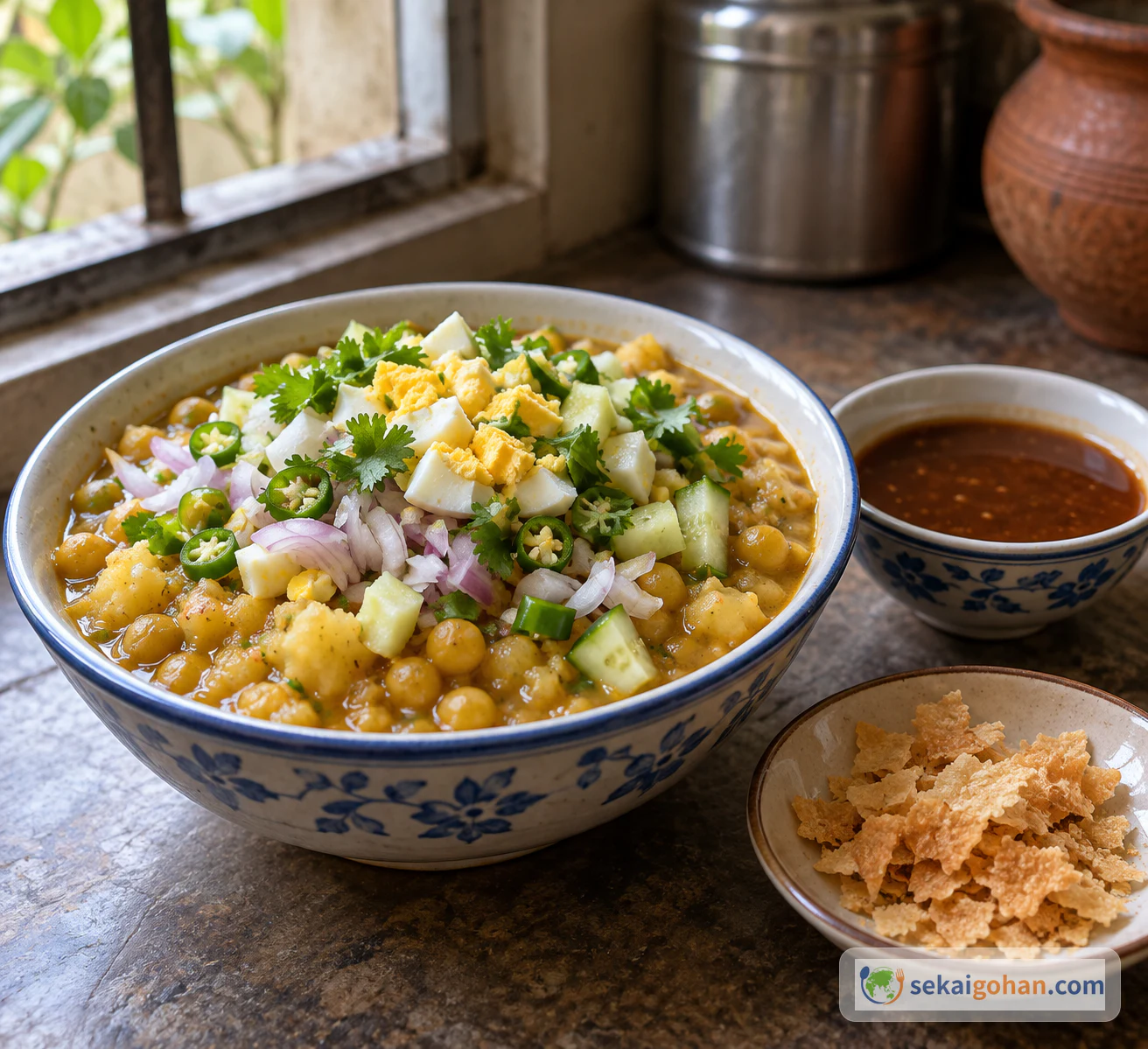
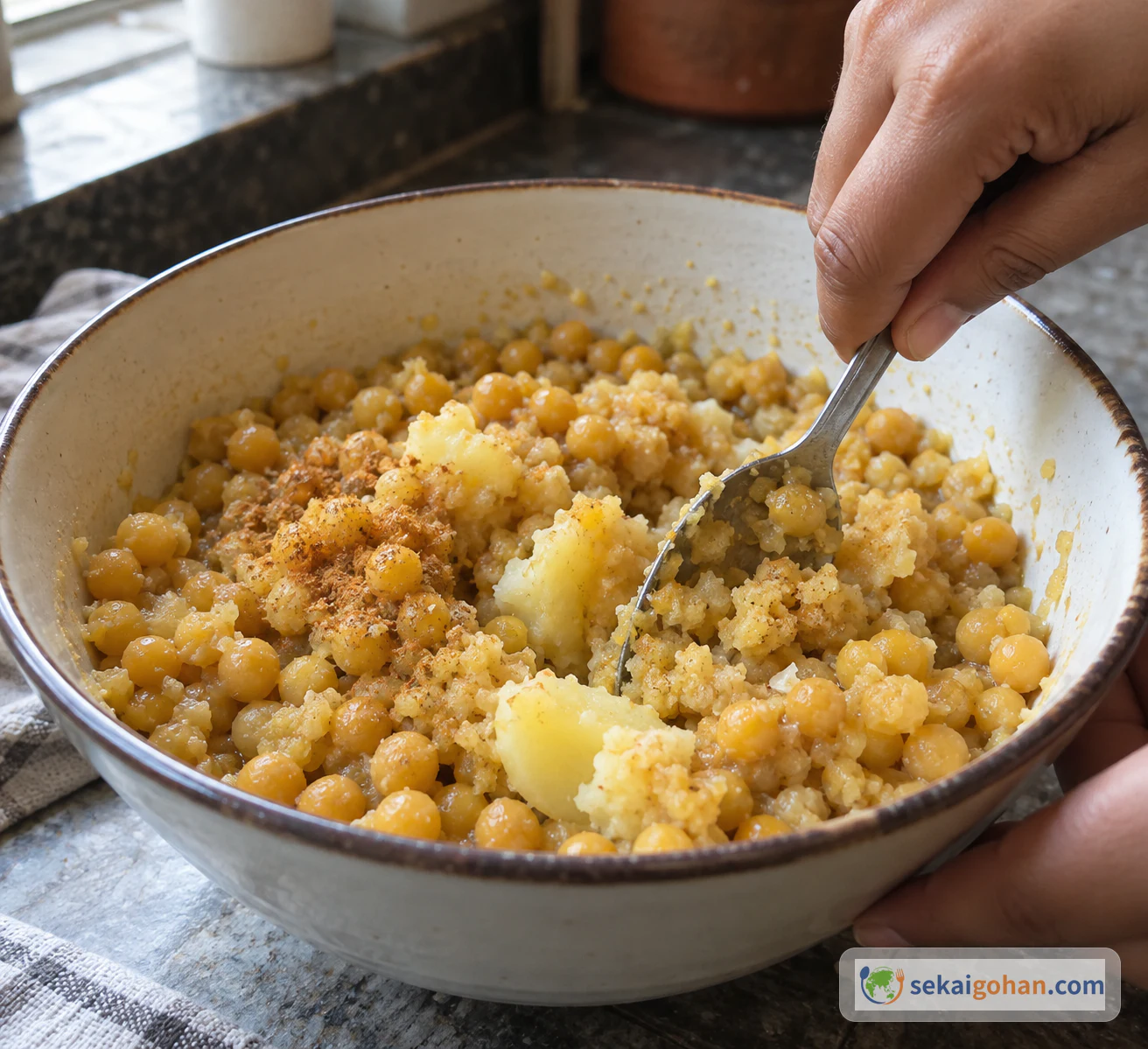
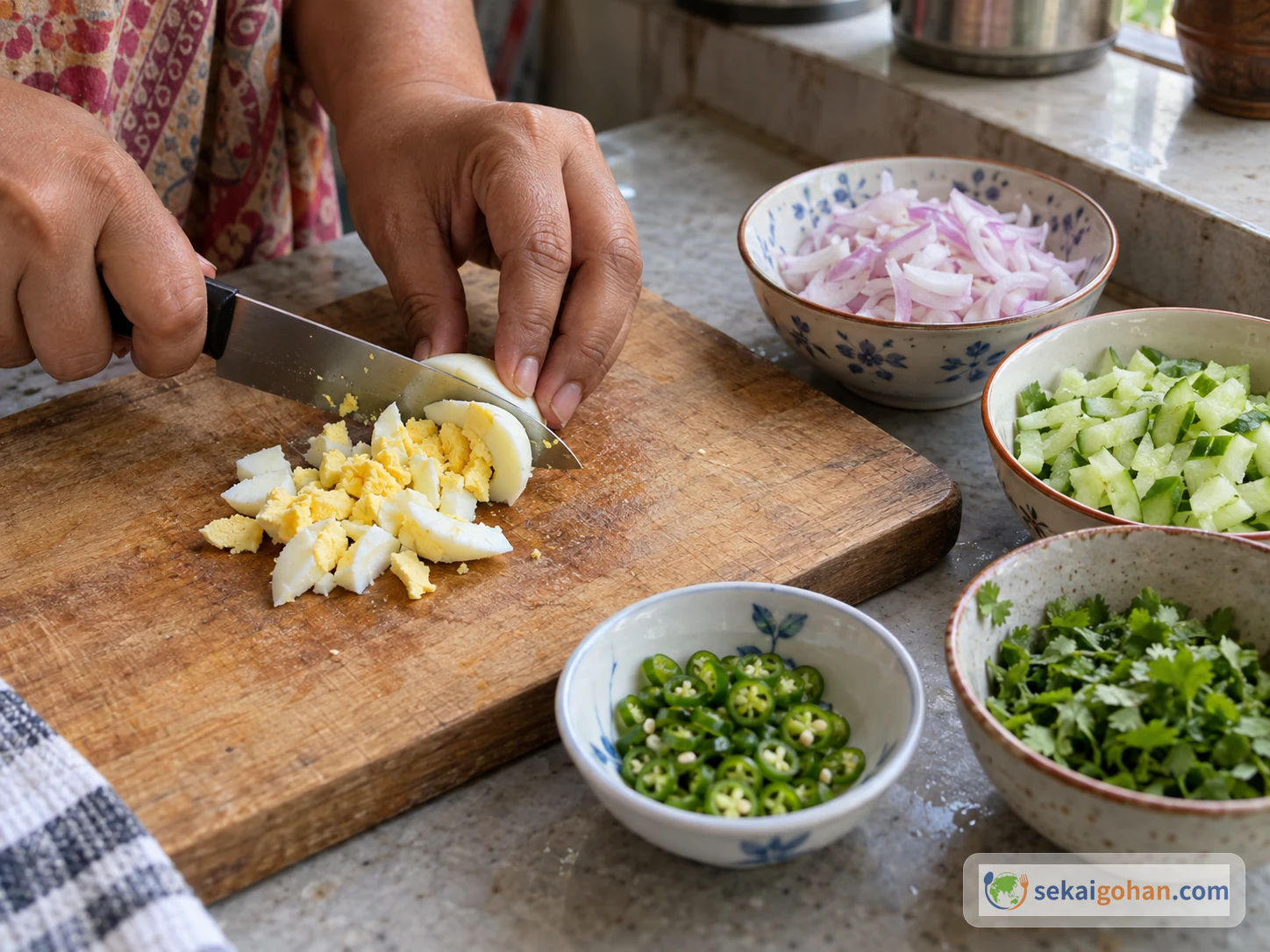
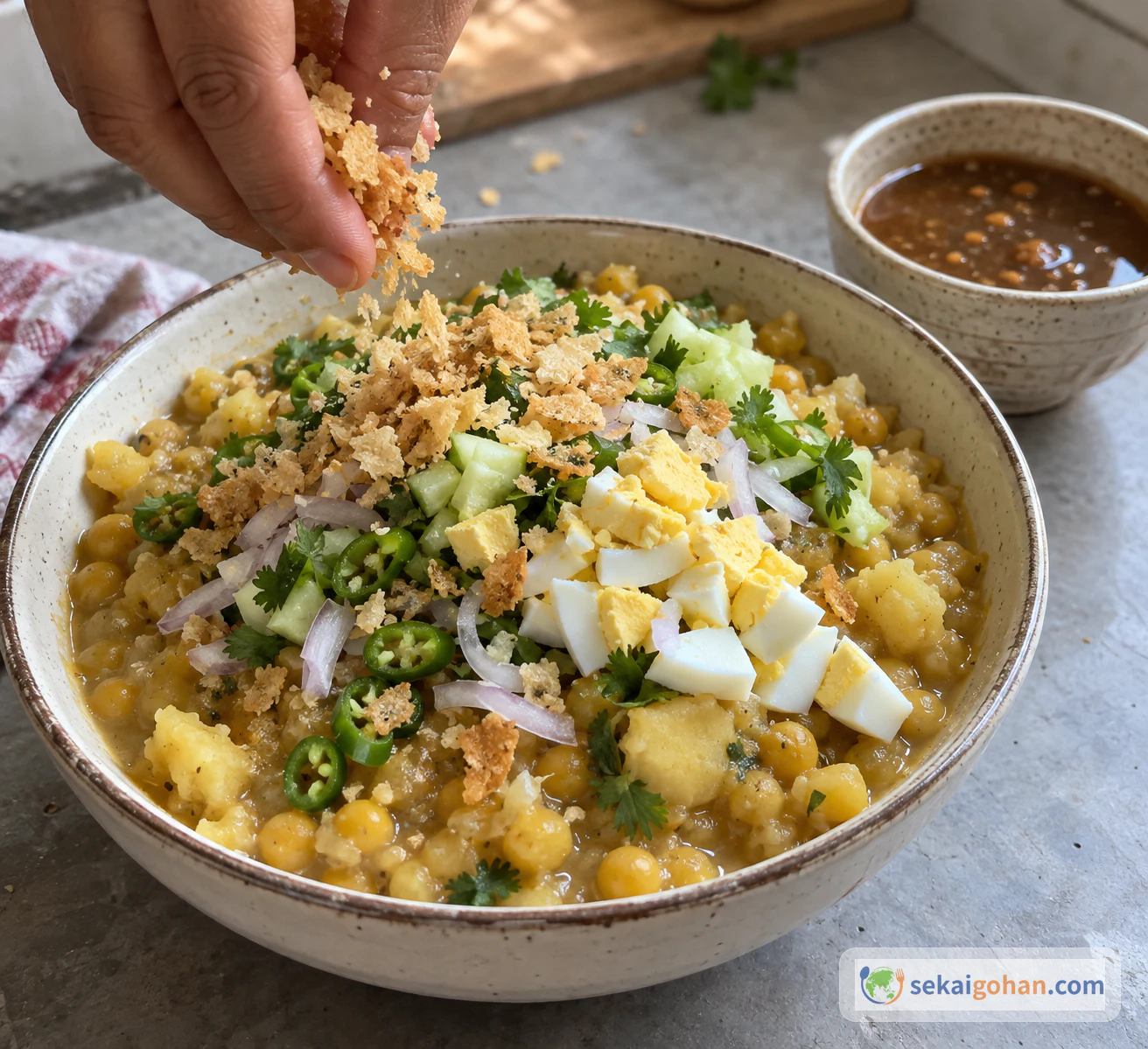
In Dhaka, fuchka carts set up in neighborhood alleys and in front of parks and lakes, and many of them sell chotpoti alongside. Fuchka are hollow shells, filled and dipped. Chotpoti is the bowl next to them: tender yellow peas mixed with mashed potato and chaat masala, topped with chopped egg and raw vegetables, with a sour tamarind water poured over or served on the side. It's spicy, tangy and soft, with a little crunch if you crush a fuska shell over the top.
What Chotpoti Is and How It's Eaten in Dhaka
Fuchka-chotpoti carts are part of Dhaka's street food. Some sell the two side by side, and some offer combined plates. Fuchka sellers vary their tamarind water in many ways: some sweeten it, some offer mint or yoghurt versions, and one makes a version with Naga chilli. Those variations belong to fuchka, though, not to the way chotpoti is seasoned.
Chotpoti is always eaten from a bowl. Panipuri, and the Kolkata panipuri that Dhaka's fuchka is often compared with, is a hollow shell that gets filled. In chotpoti the fuska shell shows up only as an optional crushed garnish, never as a container. The base matters too: chotpoti is made with yellow peas, and a version made with chickpeas is a different dish, chole chat. For more dishes from the country, see Bangladesh.
In English it is usually written Chotpoti. In Bengali it is চটপটি.
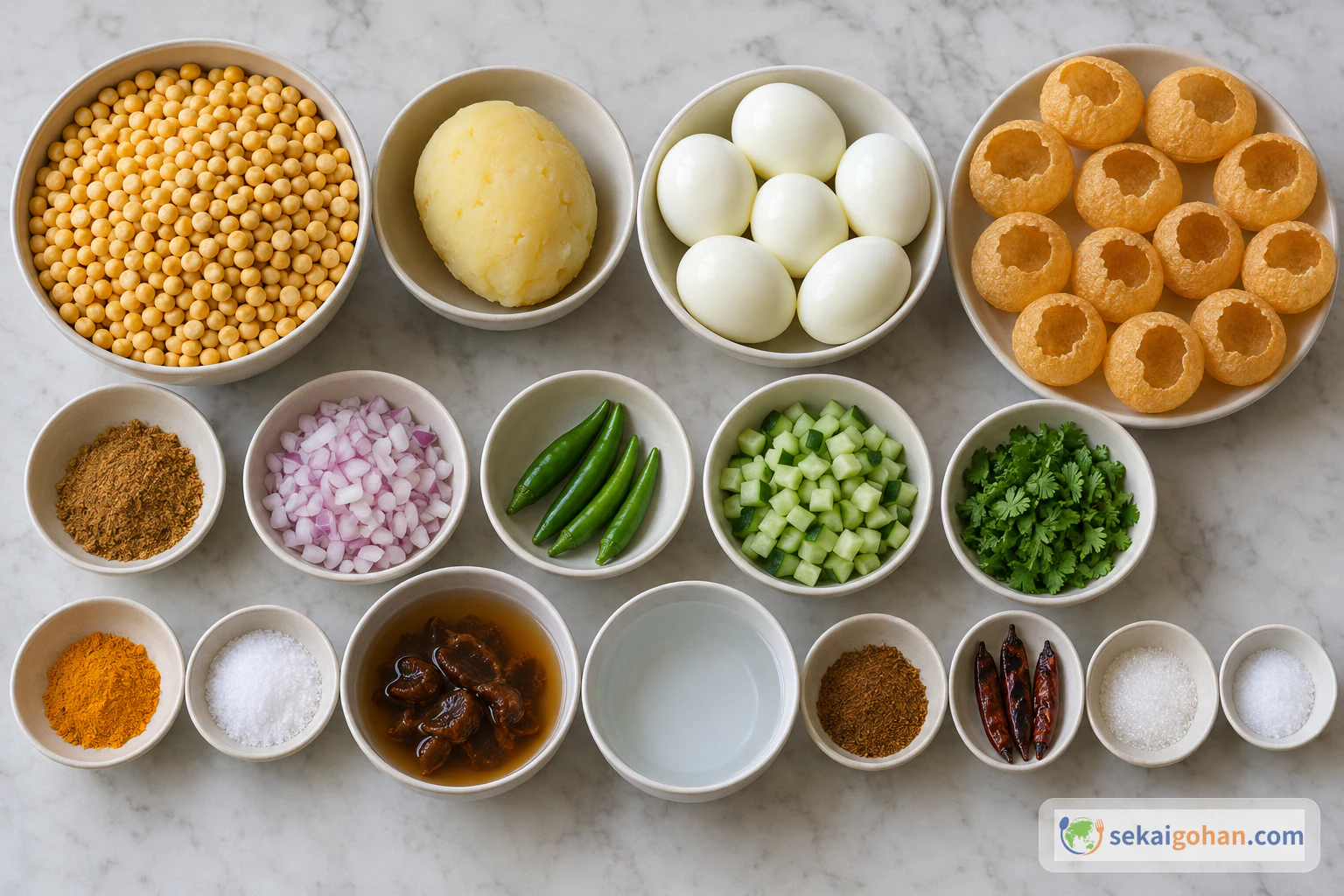
Ingredients
Equipment
- A bowl for soaking the peas overnight
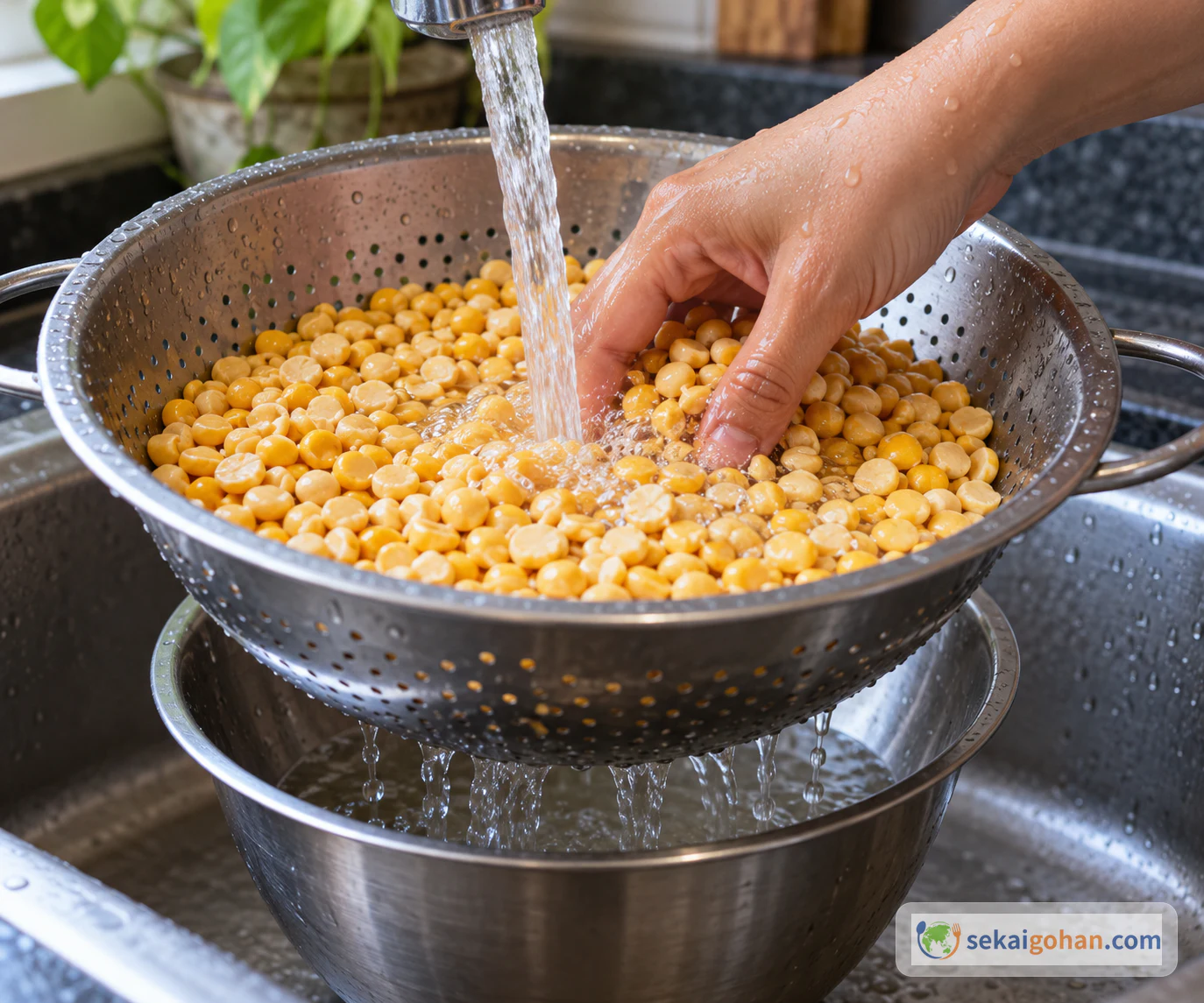
- A colander for washing the soaked peas
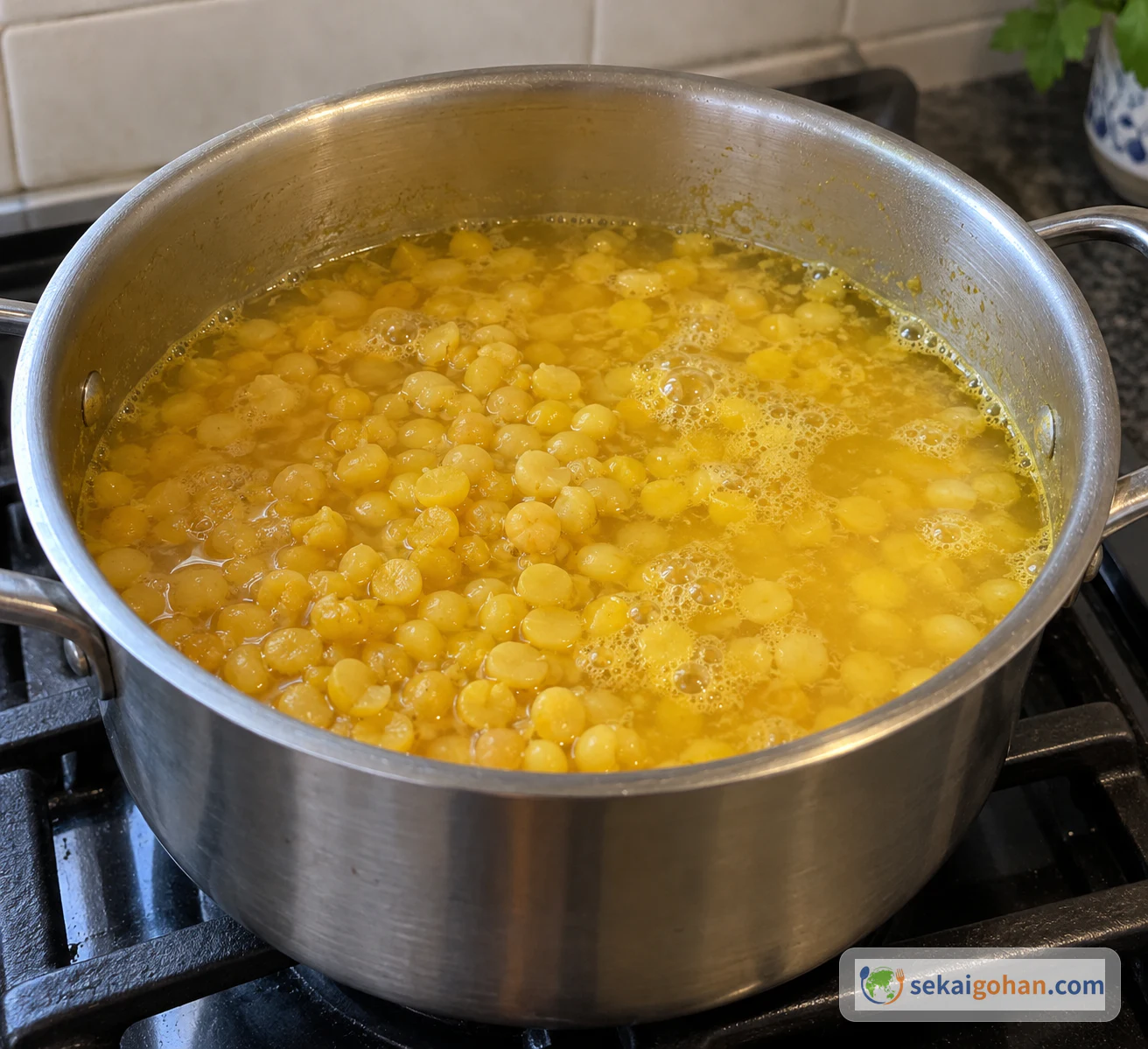
- A pot for boiling the peas
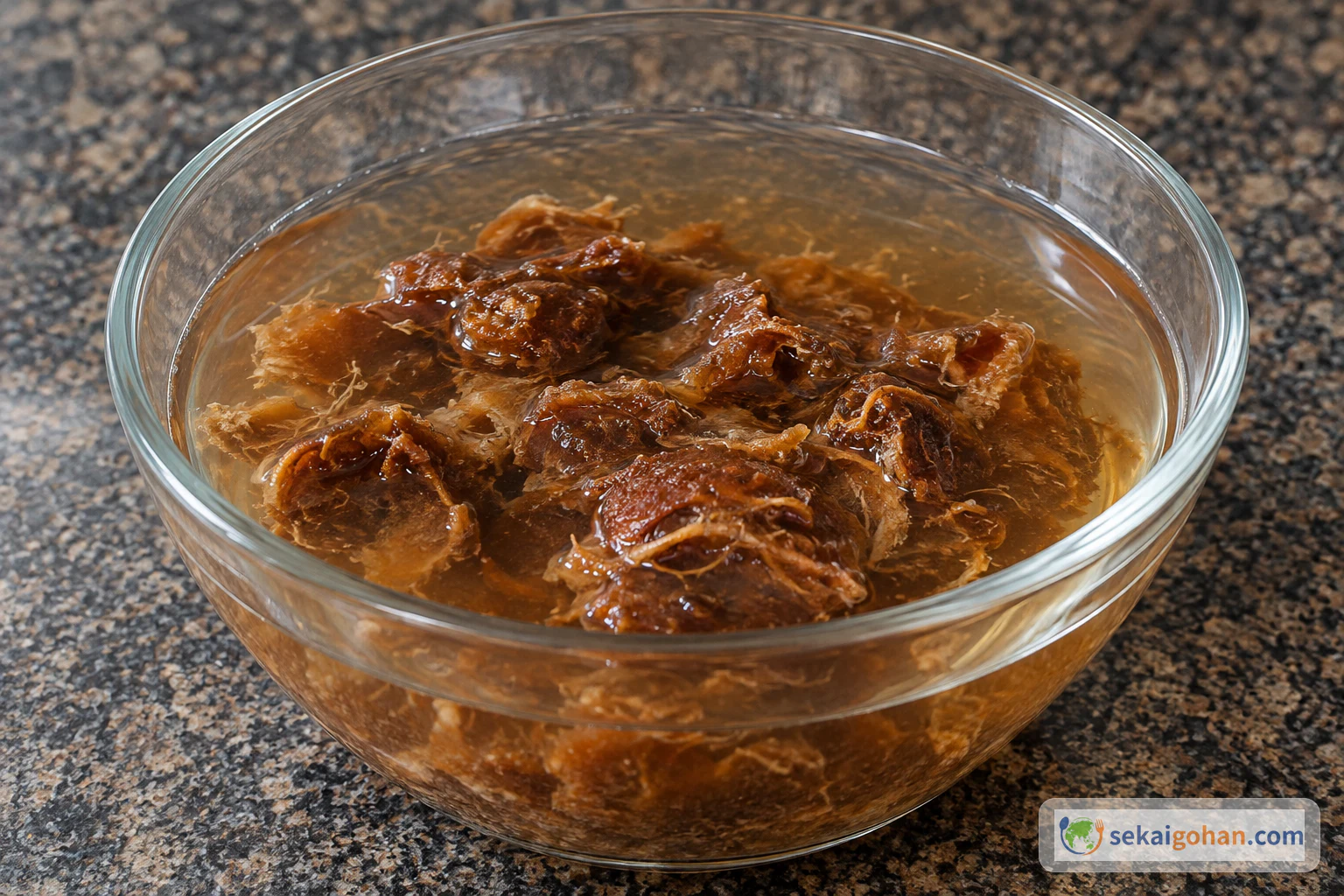
- A bowl for soaking the tamarind and mixing the tamarind water
- A large bowl for mashing the potato and mixing the base
- A knife and cutting board for the egg and vegetables
- Small serving bowls, plus a small bowl or cup for the tamarind water
Choosing Ingredients for Chotpoti
Peas. Look for dried peas labeled as yellow peas. A bag that just says "peas" won't tell you which kind it holds or how large they are, so check the package. Other peas can work, but chickpeas aren't an equal swap.
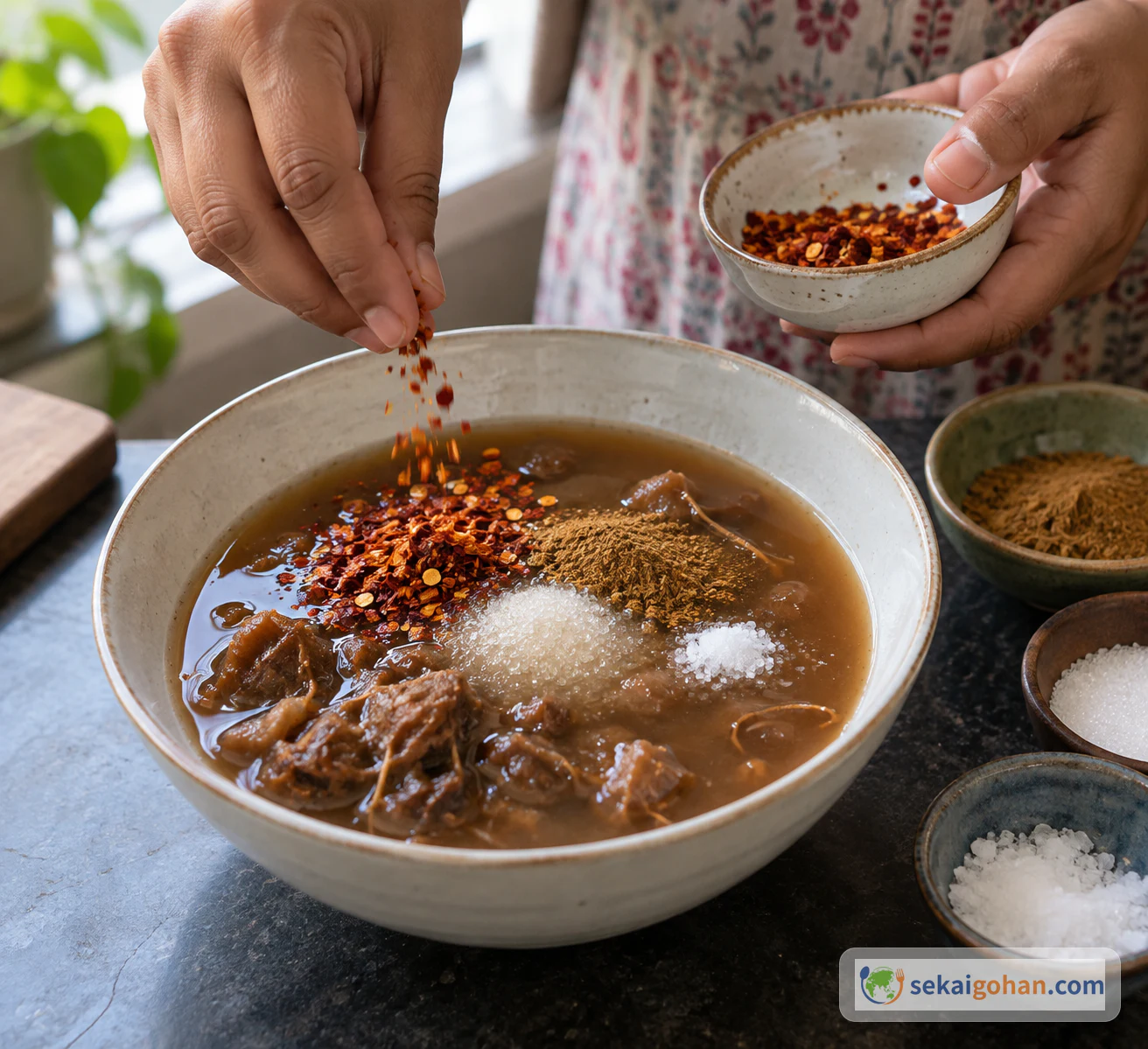
Chaat masala. Garam masala, curry powder and other spice mixes won't give you the same flavor. If you can't find chaat masala, buy it before you cook rather than improvising a blend.
Tamarind. Use plain brown tamarind flesh, with the hard outer shell removed. Concentrated paste doesn't replace it one-for-one, and lemon, vinegar or other sour ingredients won't stand in for it.
Black salt. It's an optional, unmeasured addition to the tamarind water. This version leaves it out.
Oil. Some cooks use a little oil to fry the onion and cook the potato and peas together. This recipe uses none, so the onion stays raw.
Method
The peas need to soak overnight, so start the day before. Make the tamarind water and the pea mixture separately. They only meet in the serving bowl.
Common Chotpoti Problems
| Situation | What the recipe says | How to handle it |
|---|---|---|
| The peas are not tender yet | Boil "until tender"; no time given | Keep boiling and test again |
| Unsure whether to dice or mash the potato | The list says diced, the method says mash | Mash it |
| Unsure how much salt to use in the tamarind water | Unmeasured | Season it to taste |
| The tamarind water looks cloudy or has pieces of flesh in it | No straining or heating is mentioned | Leave it as it is; don't strain or heat it |
Chotpoti Variations
Cooks in Bangladesh, at home and in restaurants, each make chotpoti their own way. One "restaurant-style" version uses different amounts of peas and potato, adds ginger and garlic pastes and a packaged chotpoti masala, and mixes a boiled egg into the base. It's finished with grated egg and a separately prepared tamarind sour.
In this recipe, the flexible parts are the fuska shells and the black salt, both optional. Either way, the bowl stays a dish of peas and potato.
Frequently Asked Questions
How many servings does this make?
No serving count is given. The list calls for 6 boiled eggs and 12 optional fuska shells, and each bowl gets 1 chopped egg and 2 crushed fuska shells, so plan your bowls from there.
Do I need a pressure cooker?
No. Boil the peas until tender. A pressure cooker saves time, but there's no set time or setting to follow.
Can I use tamarind paste or concentrate?
Use 50 gram of plain tamarind flesh. There's no reliable conversion for paste or concentrate.