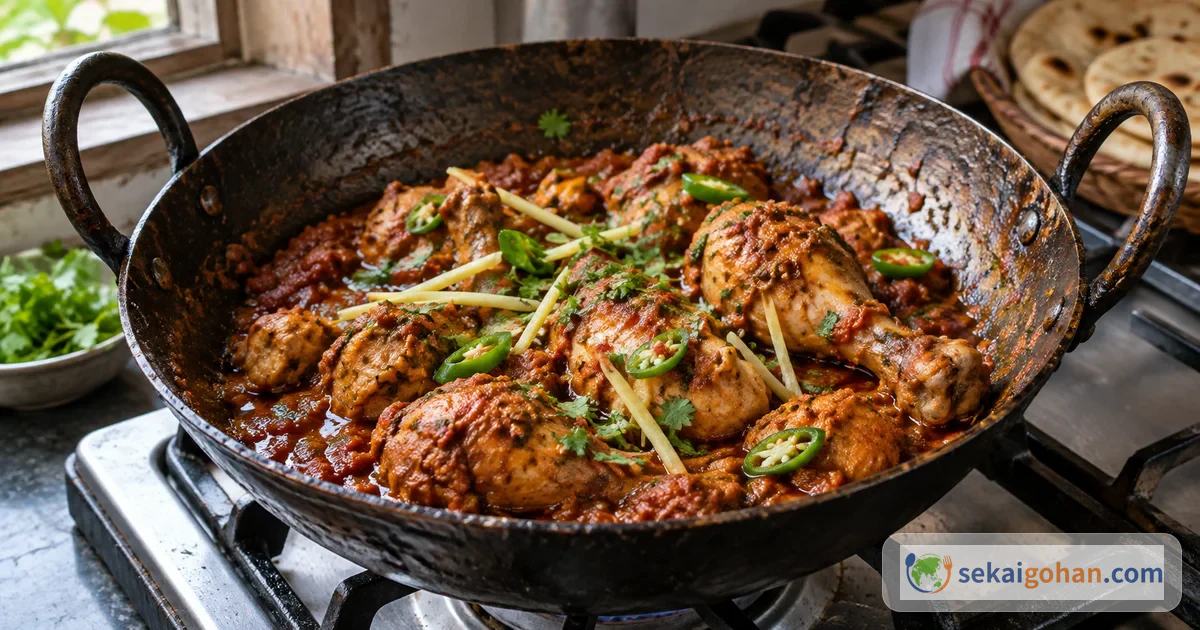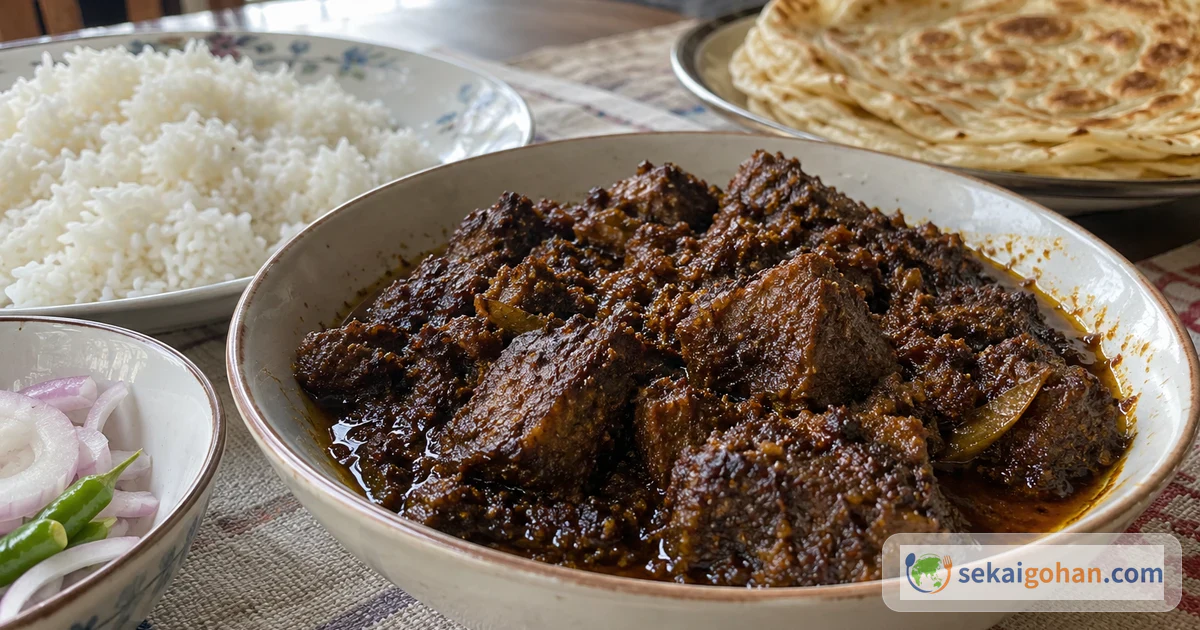
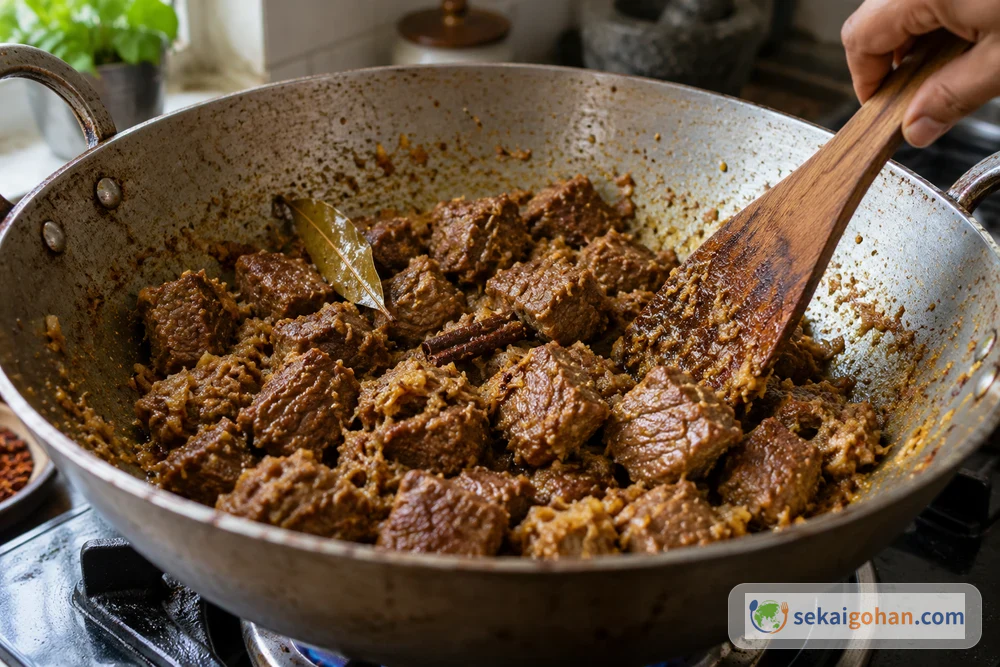
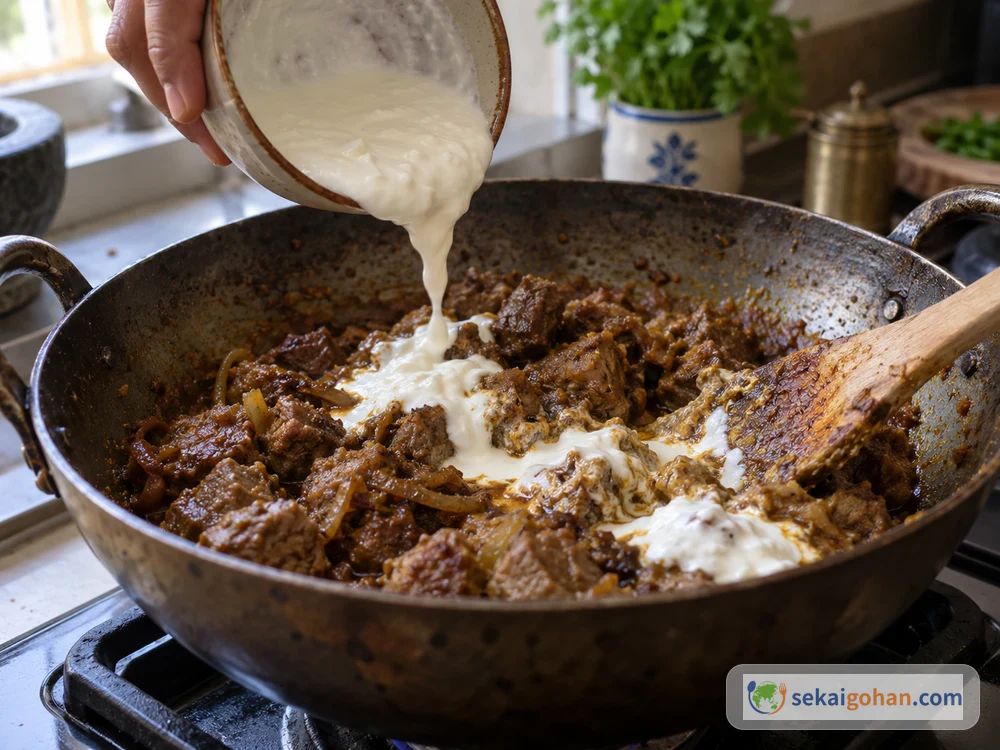
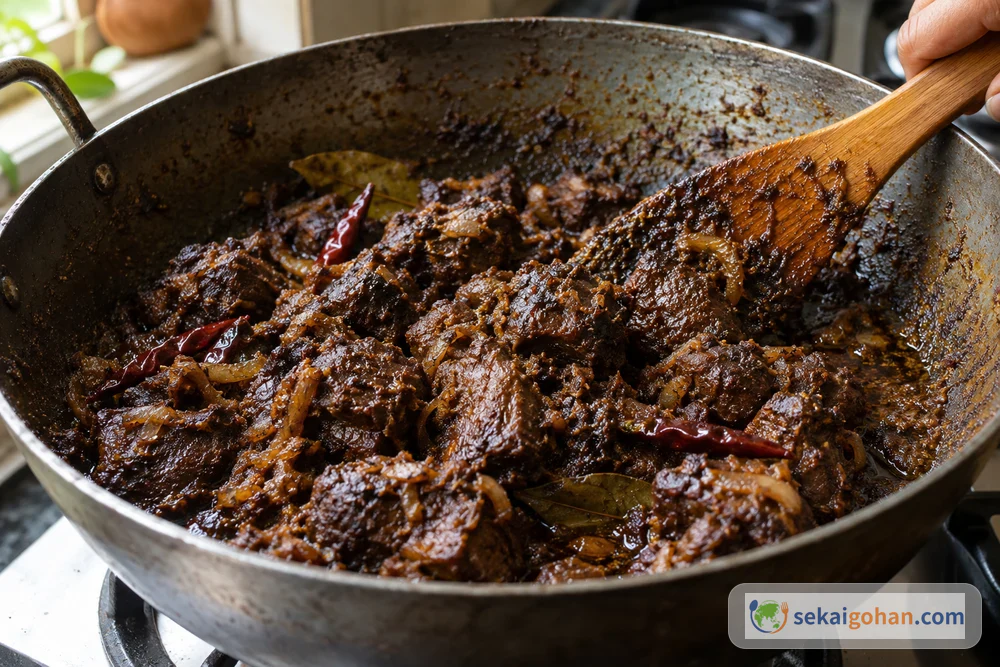
In a big pot, chunks of beef slowly darken: brown with a little red at first, dark brown after 30 minutes, and after another hour so deep they're almost black. The sharp scent of mustard oil mixes with cardamom, cinnamon and sweet fried onion, and it fills the whole kitchen. Scrape the bottom of the pot with a wooden spoon and the meat rolls over, glossy with oil, with nearly all its liquid gone. This is kala bhuna, the beef dish that Chittagong, the port city in southeastern Bangladesh, takes pride in.
Kala bhuna, Chittagong's celebration beef
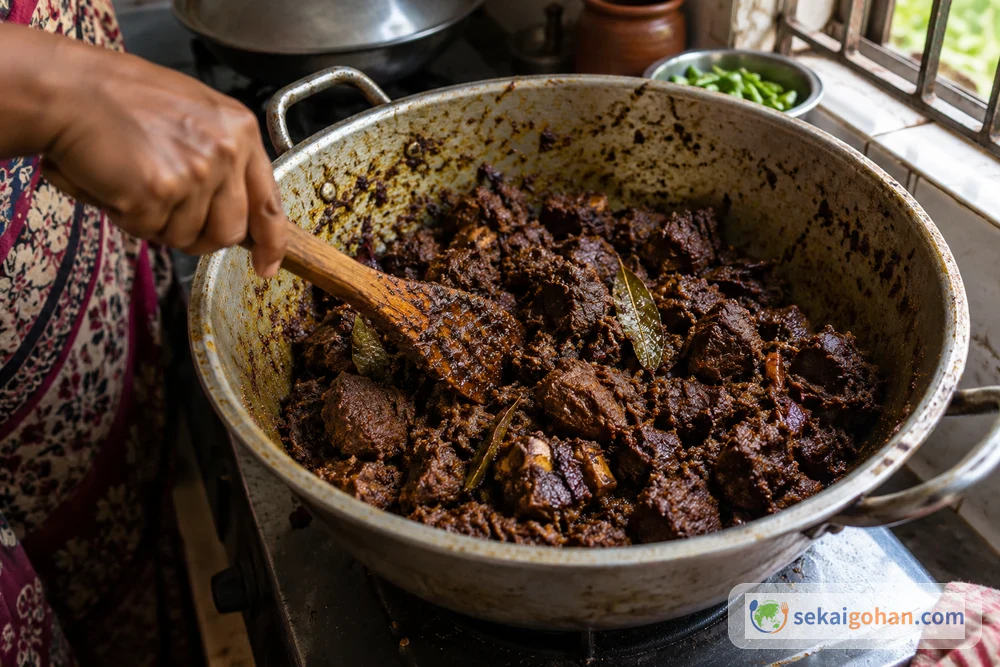
In Bengali it is written কালা ভুনা. "Kala (kalo)" means black. "Bhuna" is a South Asian cooking method: spices and ingredients are fried slowly in oil, which draws out their aroma and drives off moisture. After a long fry and simmer with plenty of spices, the meat takes on a blackish color, and that look gave the dish its name.
The dish comes from Chittagong (now officially Chattogram), where the local dialect pronounces it "Hala Buno." It has since spread to other Bangladeshi cities, including the capital Dhaka, Sylhet and Khulna. Some cooks use mutton, but beef is the most favored.
Chittagong has a tradition of large feasts called "mezban (mezbani)," and kala bhuna is a favorite on those tables. It also appears at occasions where people gather, such as Eid celebrations, weddings of Bengali Muslims, and the pre-dawn meal sehri and the post-sunset iftar during Ramadan.
What sets it apart from an ordinary curry is how little liquid it has. You cook until the meat is blackened and the gravy is half thick, so it's closer to a long fry than a braise. The meat turns tender but holds its shape, with spices and fried onion clinging to the surface in a black coating. It's eaten piping hot with white rice, pulao, paratha, naan or roti.
Ingredients (serves 4)
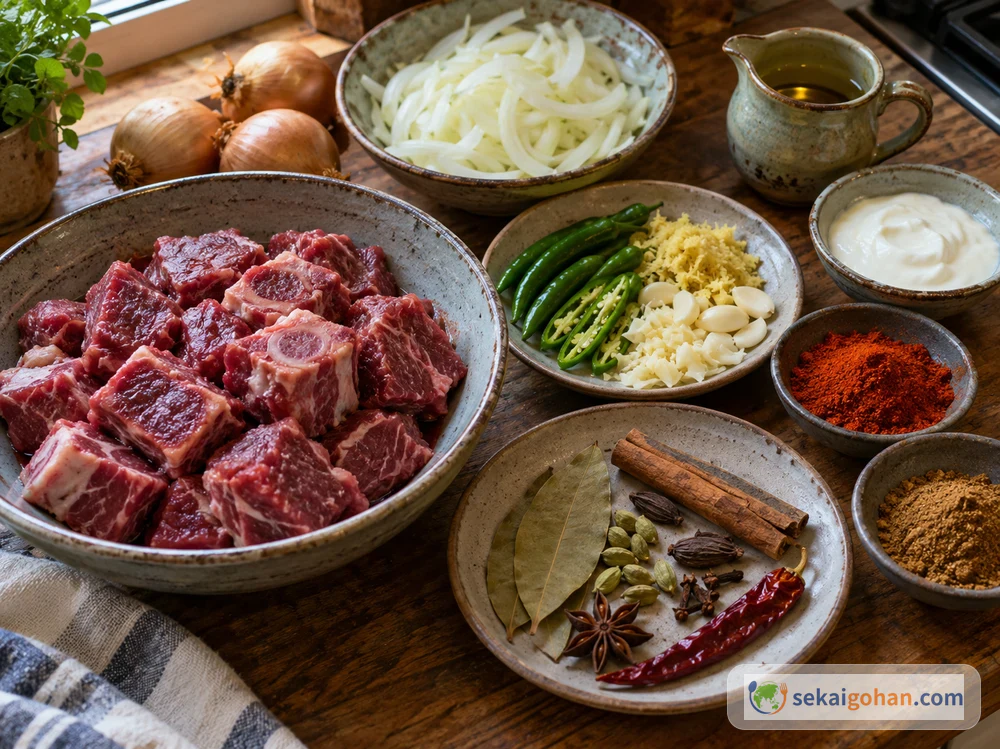
| Ingredient | Amount | Substitutes & notes |
|---|---|---|
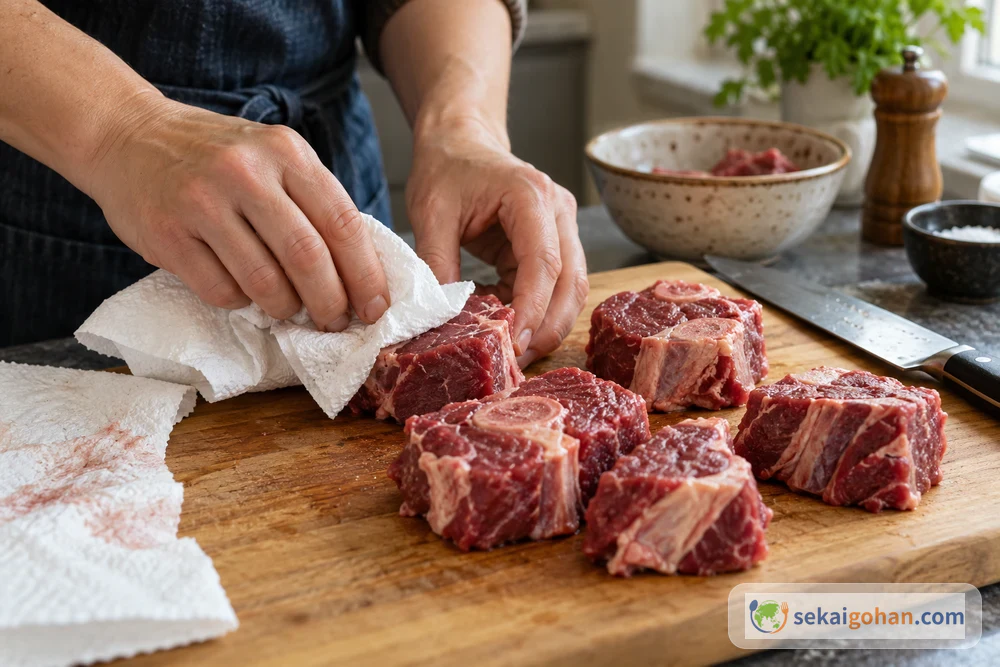
| Beef (bone-in chunks or shank) | 1 lb (500 g) | Cut into 1.5 inches (4 cm) cubes |
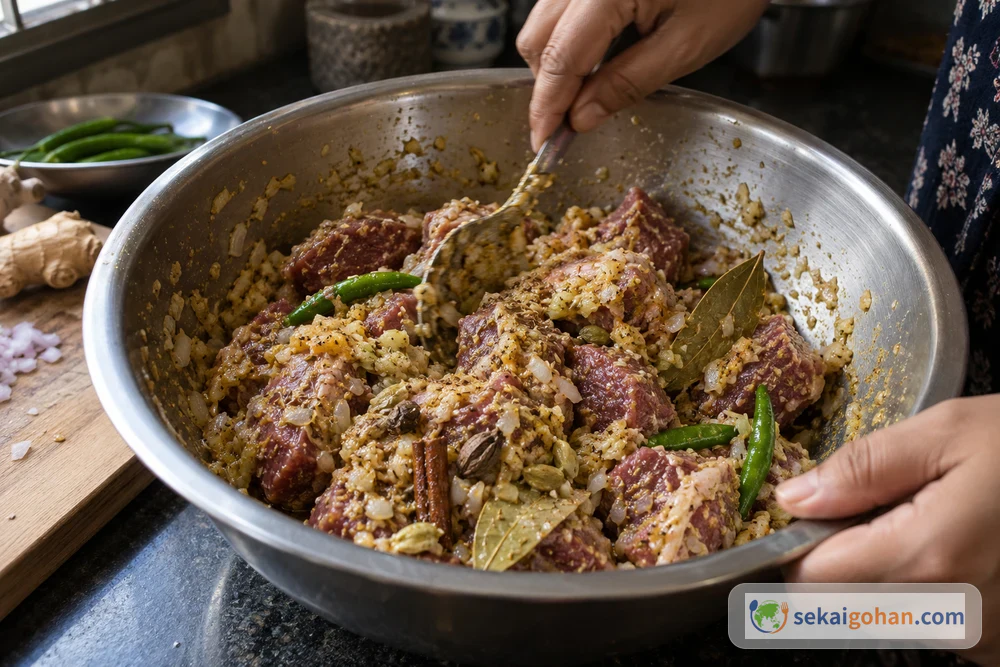
| Onion (to chop) | 2 | Finely chopped. Some goes into the marinade, the rest is fried |
| Green chilies | 2–3 | Slit lengthwise |
| Ginger (grated) | 1 tbsp | — |
| Garlic (grated) | 1/2 tbsp | — |
| Ground cumin | 1/2 tsp | — |
| Roasted ground cumin | 1/2 tsp | Cumin seeds dry-roasted and ground |
| Celery seed powder | 1/2 tsp | Omit if you have none |
| Mustard oil (for the marinade) | 1 1/2 tbsp | Vegetable oil also works |
| Salt | 1 tsp | Adjust at the end |
Whole spices
| Ingredient | Amount | Substitutes & notes |
|---|---|---|
| Bay leaves | 2 | — |
| Cinnamon stick | 1 inches (2.5 cm) | — |
| Green cardamom | 3 pods | Lightly crushed |
| Black cardamom | 1 pod | Omit if you have none |
| Cloves | 3 | — |
| Star anise | 1/2 | — |
| Mace (ground) | 1/8 tsp | Ground nutmeg can substitute |
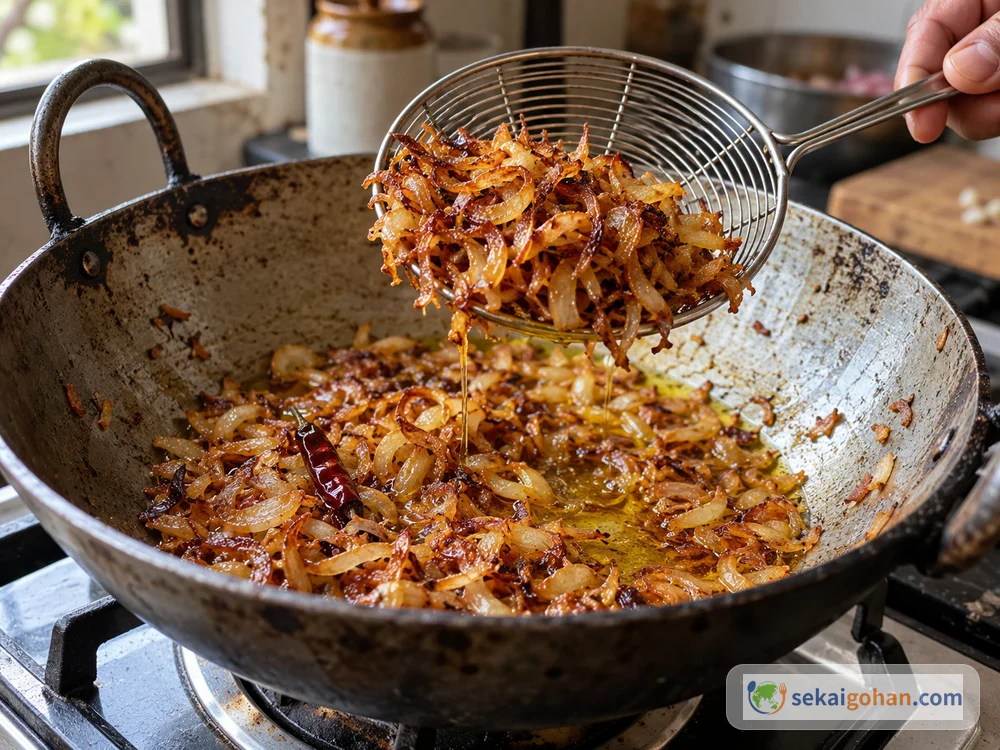
| Dried red chili | 1 | Fried together with the fried onion |
For the fry-braise
| Ingredient | Amount | Substitutes & notes |
|---|---|---|
| Onion (to slice) | 2 1/2 | Sliced |
| Plain yogurt | 3.5 oz (100 g) | Unsweetened. Whisk well |
| Chili powder | 1/2 tsp | Reduce if you dislike heat |
| Mustard oil (for frying) | ½ cup (125 ml) | Vegetable oil also works |
Choosing ingredients for kala bhuna
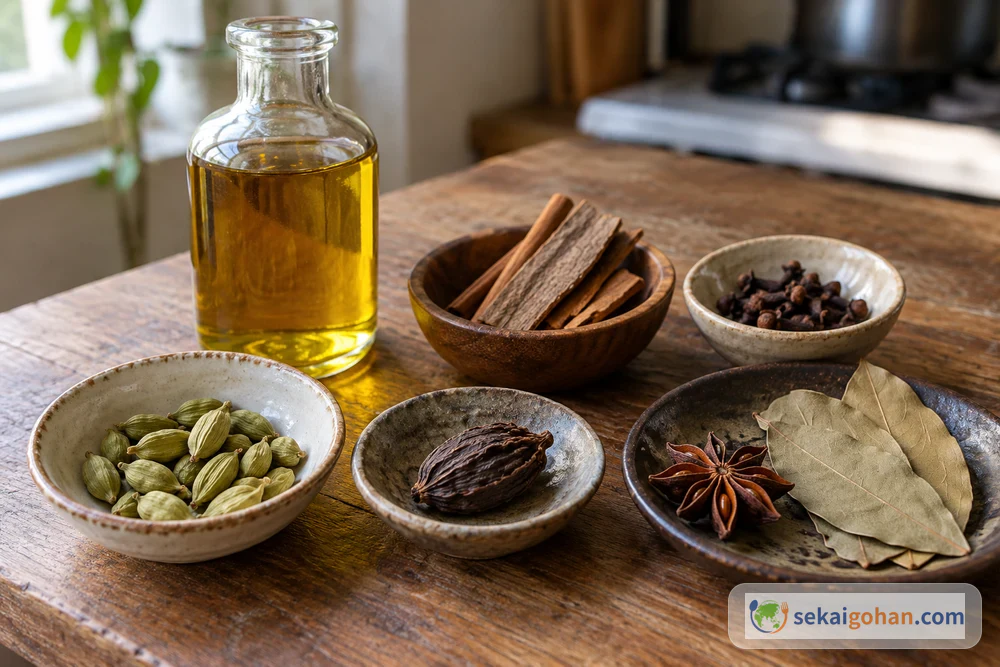
The aroma of this dish comes from mustard oil. It's pressed from mustard seeds and gives off a distinctive sharp smell when heated. Buy a bottle labeled as edible from an Indian or Bangladeshi grocery or online. If you can't find it, vegetable oil works, though the aroma will be gentler.
The whole spices are green cardamom, black cardamom, cinnamon stick, cloves, star anise and bay leaf. Black cardamom is a large, smoky-smelling cardamom sold at Indian groceries; leave it out if you can't find it. Mace is the dried red covering around the nutmeg seed, and the same amount of ground nutmeg can stand in for it. The celery (powder) in the list is celery seed powder, and you can skip it if you don't have any.
For the beef, bone-in chunks are the local way, but shank or a block of chuck is easier to handle elsewhere, and keeps its shape through long frying. Avoid lean round, which tends to dry out when cooked long.
How to make kala bhuna
Marinate for 3–4 hours, then keep frying over low heat for about 1 hour 45 minutes. About 5 hours 45 minutes in all. You are by the stove for a long time, so working in parallel with the prep of other dishes wastes nothing.
Putting onion into a pot of heated mustard oil makes the oil spatter from the moisture. Add the onion little by little from the edge of the pot and don't bring your face too close. Don't leave the pot during the shallow-frying, and lower the heat if it smokes heavily.
During the long low-heat frying, the places most likely to burn are the bottom and corners of the pot. Stir so that you scrape the bottom broadly with the wooden spoon. The brown stuck to the bottom, if scraped up with a little added water, turns straight into color and aroma. Leave any portion that has become a black, bitter scorch unscraped.
Serving and variations
Rice, paratha and sides
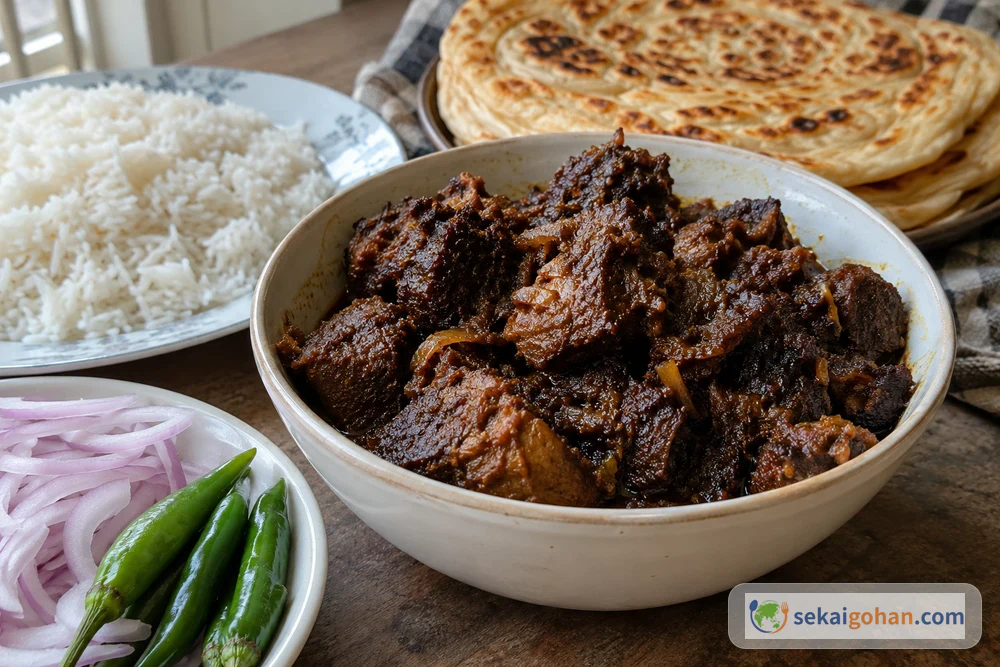
Because kala bhuna has so little liquid, its oil and spices soak into white rice, and the spice aroma lasts to the last bite. With paratha or naan, tear off a piece and wrap it around the meat and the black sauce.
Sliced raw onion, green chilies and cucumber on the side refresh your mouth between rich bites. If you're making another Bengali dish, begun bhorta, roasted eggplant dressed with aromatics, goes well, and so does hilsa shorshe ilish, which uses the same mustard oil. For another meat dish, try haleem, a Bangladeshi favorite on Ramadan tables.
In Bangladesh, ready-mixed spice blends for kala bhuna are sold commercially. At home it is common to use such a mix to make it quickly, instead of gathering whole spices one by one.
Lamb and milder versions
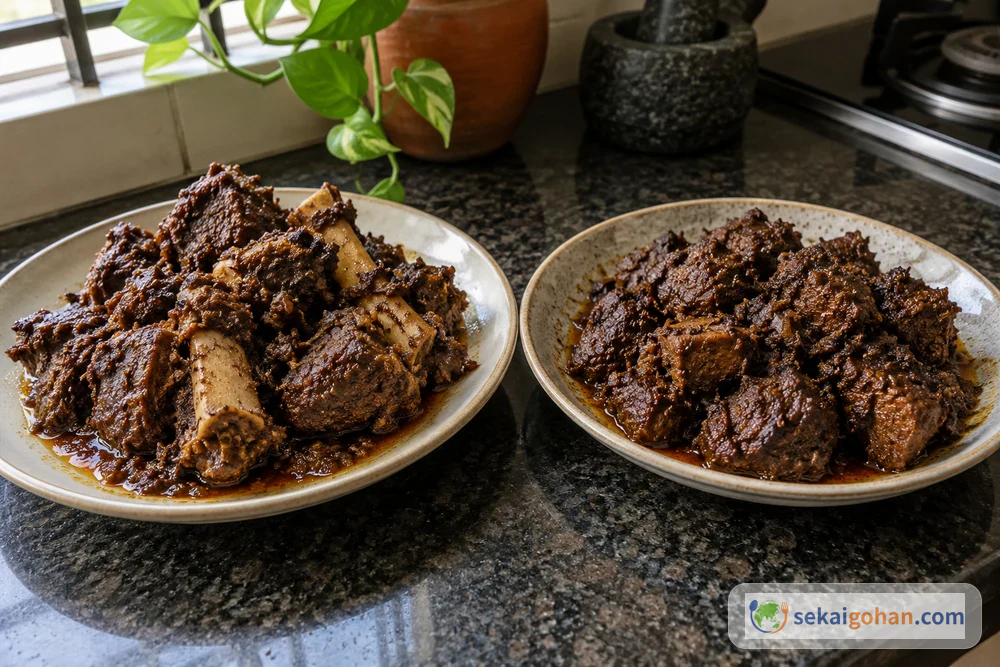
Lamb or mutton works too. Cut bone-in lamb shoulder to the same size and follow the same steps. Lamb usually turns tender faster than beef, so during the last 30 minutes, test it with a bamboo skewer and stop sooner if it's ready.
For less heat, halve the green chilies and chili powder and skip frying the dried red chili. Even with less heat the black color and aroma come out, so it's easy to make a version kids can eat. For more heat, scatter chopped green chilies over the top at the end.
FAQ
Can a pressure cooker shorten the time?
You can use a pressure cooker to tenderize the meat, but the black color and aroma come from frying uncovered over low heat until the moisture cooks off. Once the meat is tender, take the lid off and fry over low heat until the color turns blackish and the sauce thickens.
Can I make it ahead?
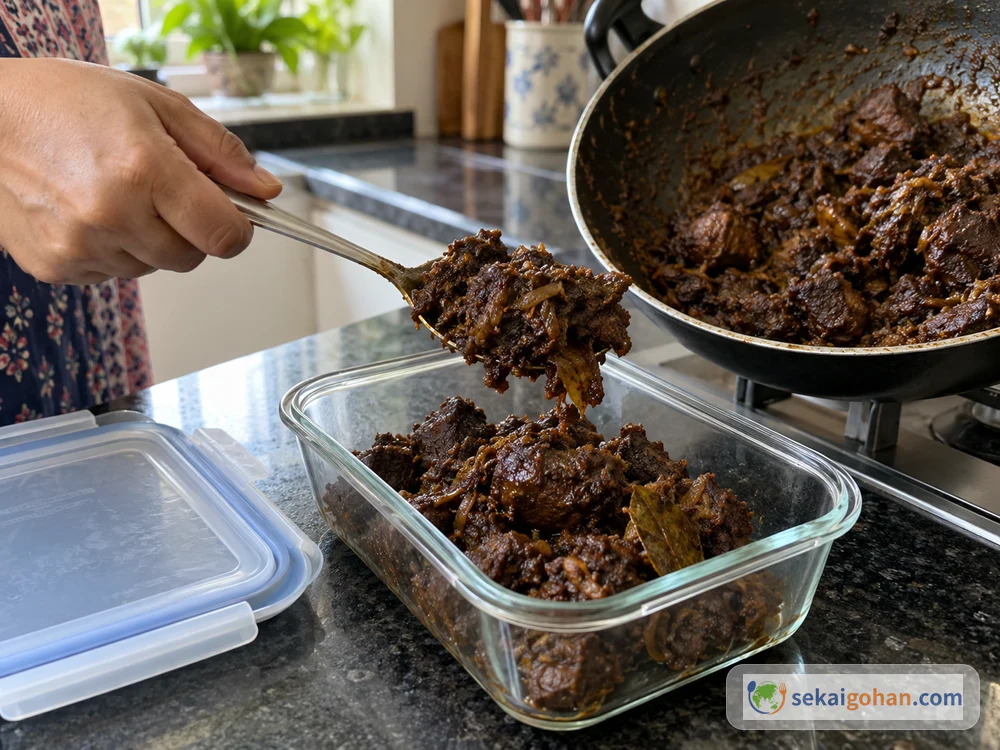
Let it cool slightly, move it to a storage container and refrigerate, then eat it by the next day. To reheat, add a little water to the pot and warm it over low heat, stirring until it's hot all the way through. There's very little liquid, so watch that it doesn't scorch.
The mustard oil smells too strong.
Swap part of it, say half, for vegetable oil to soften the aroma. Once you're used to it, using all mustard oil gets you closer to how it tastes locally.
It isn't turning black.
Usually the heat is too low or the frying time too short. The color deepens slowly while the meat's released juices are still in the pot, so keep frying uncovered until the moisture is gone and you can hear the meat frying in the oil. Frying the onion well, to a deep color, also helps darken the dish.