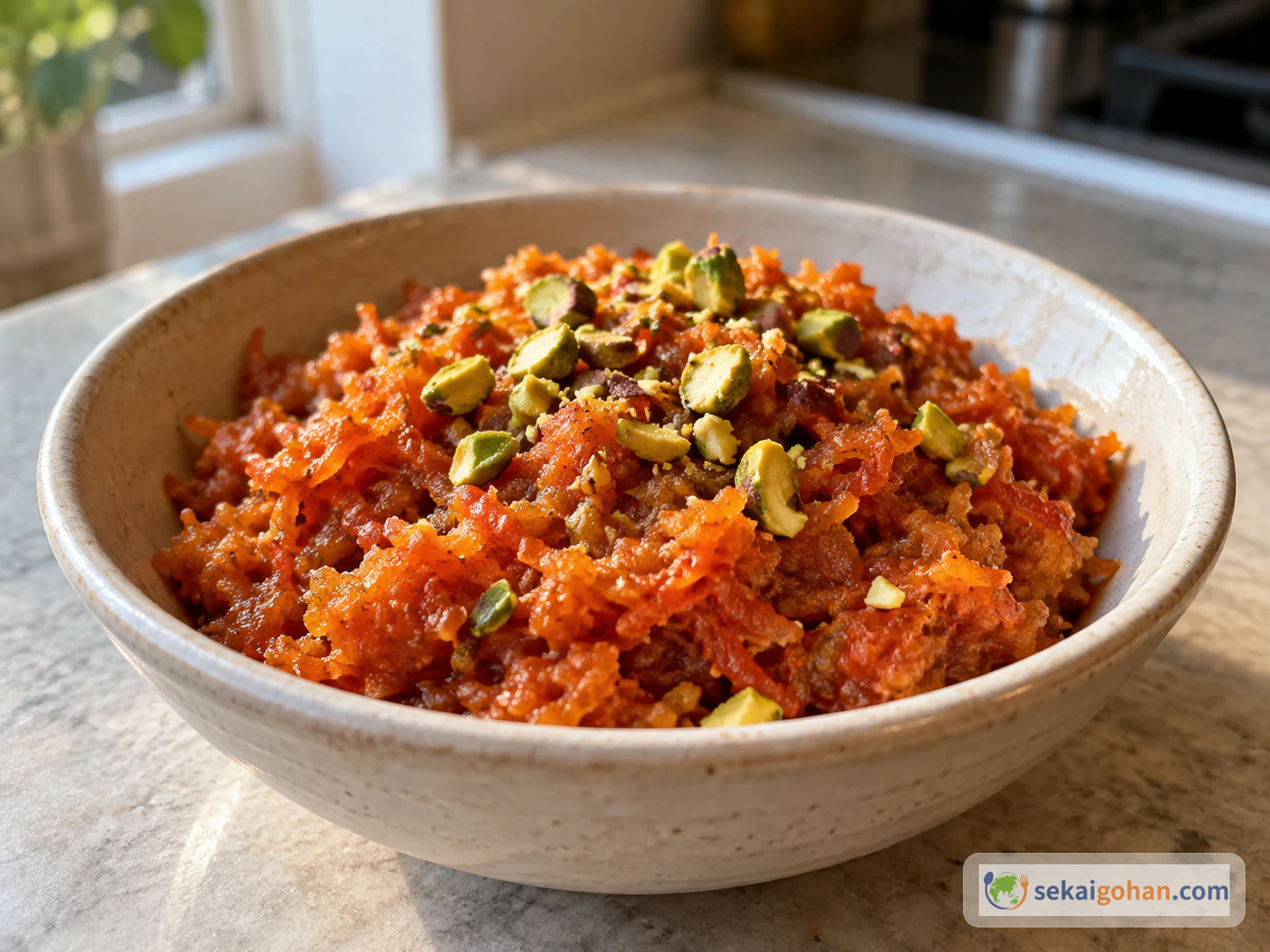
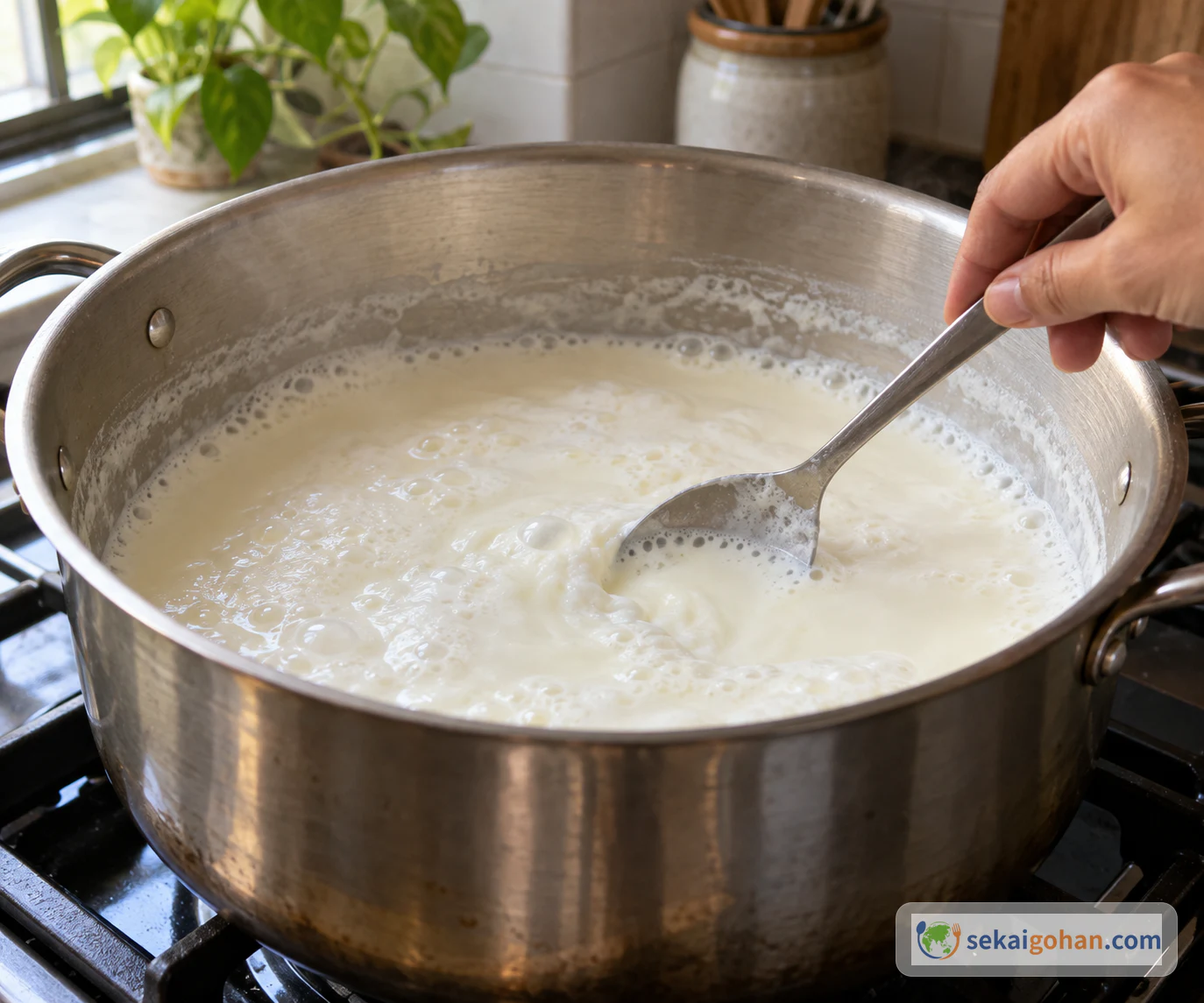
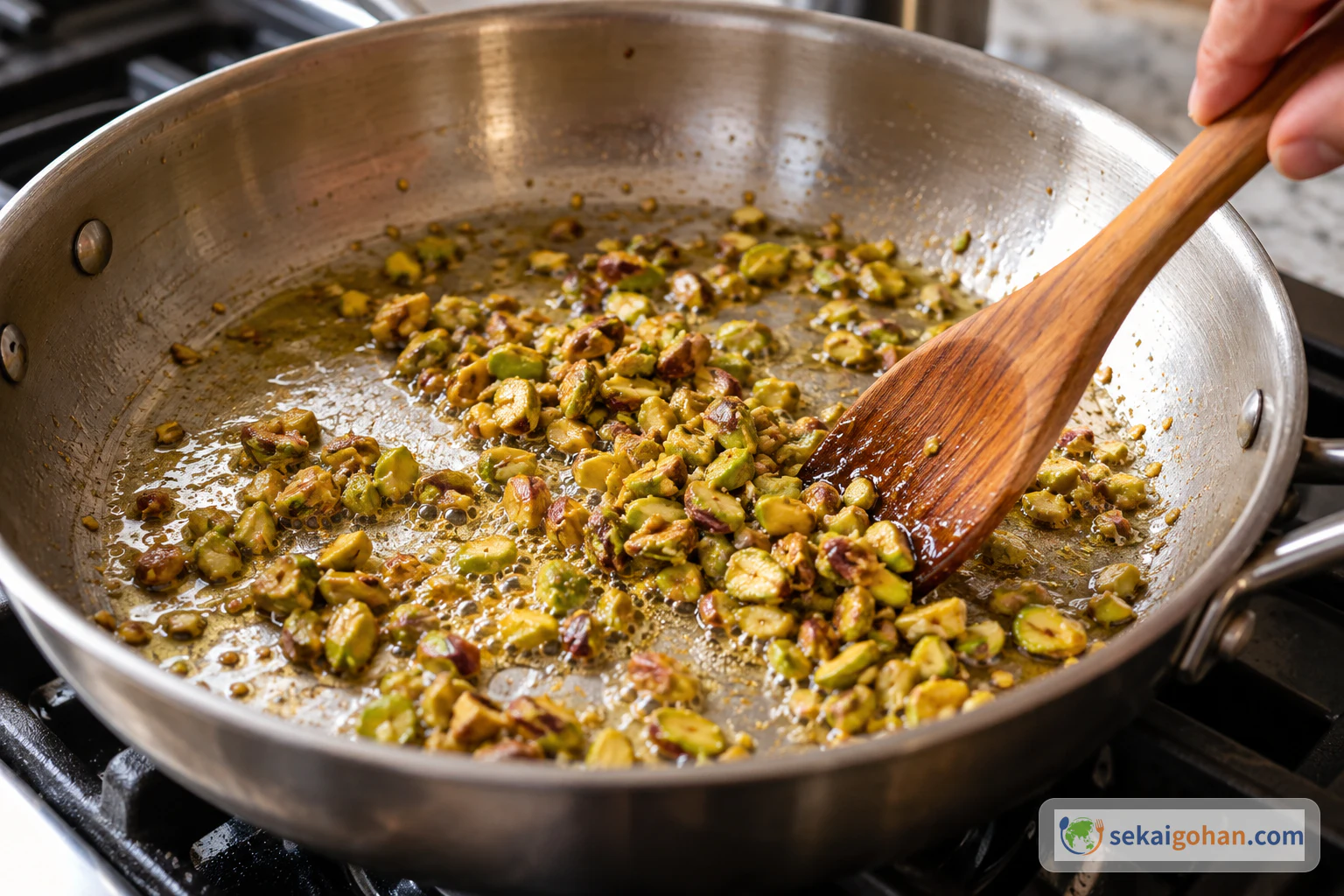
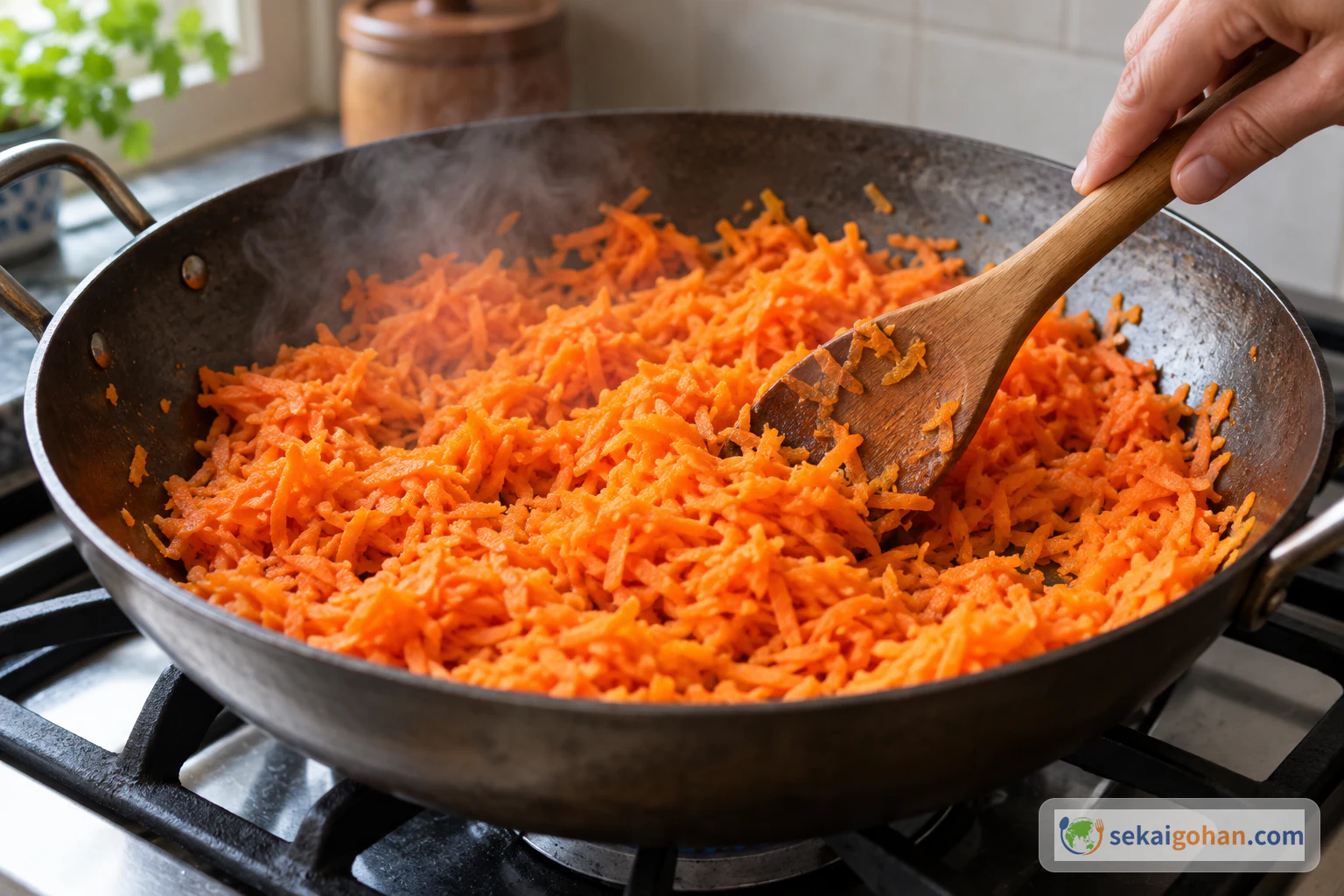
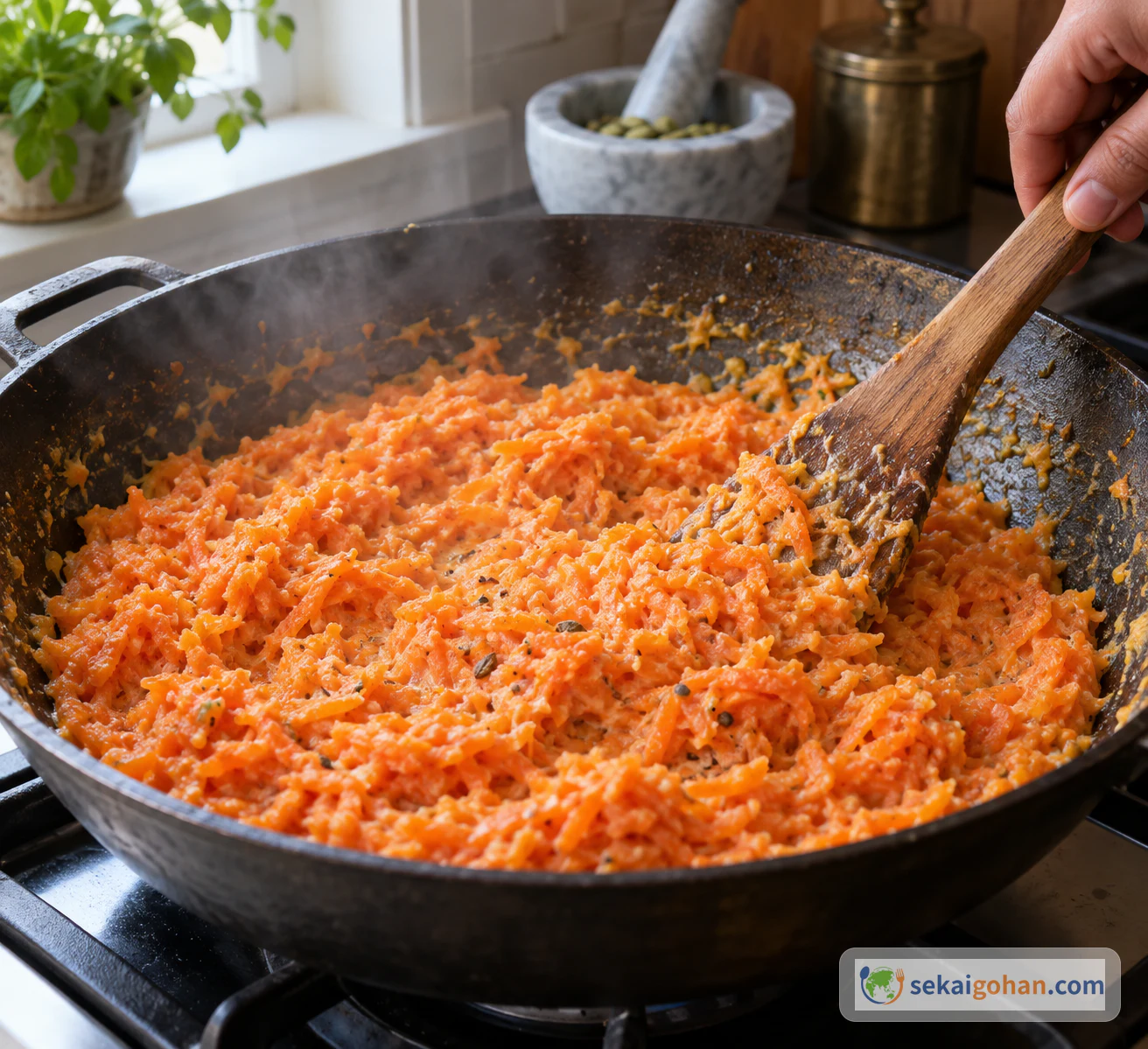
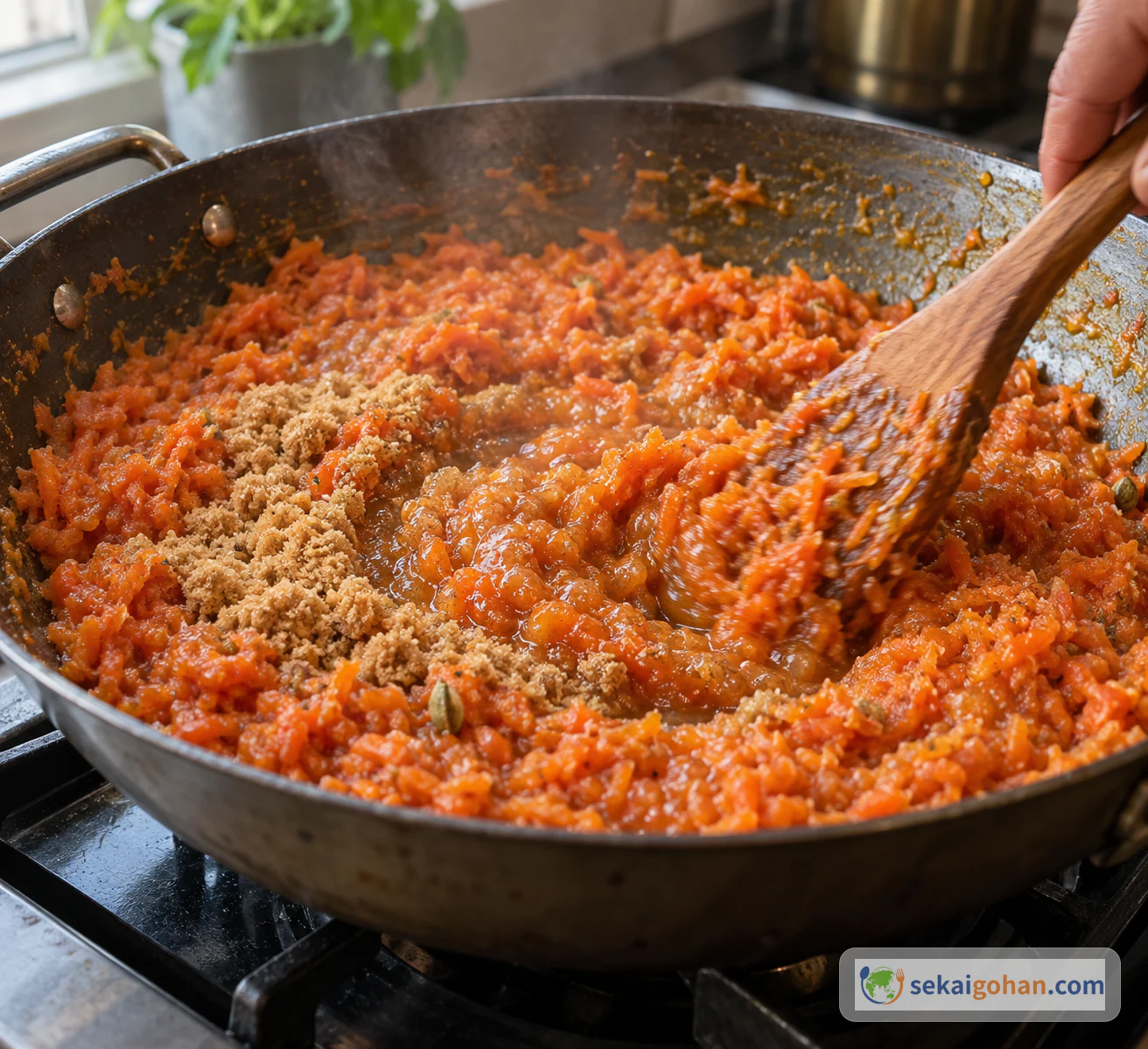
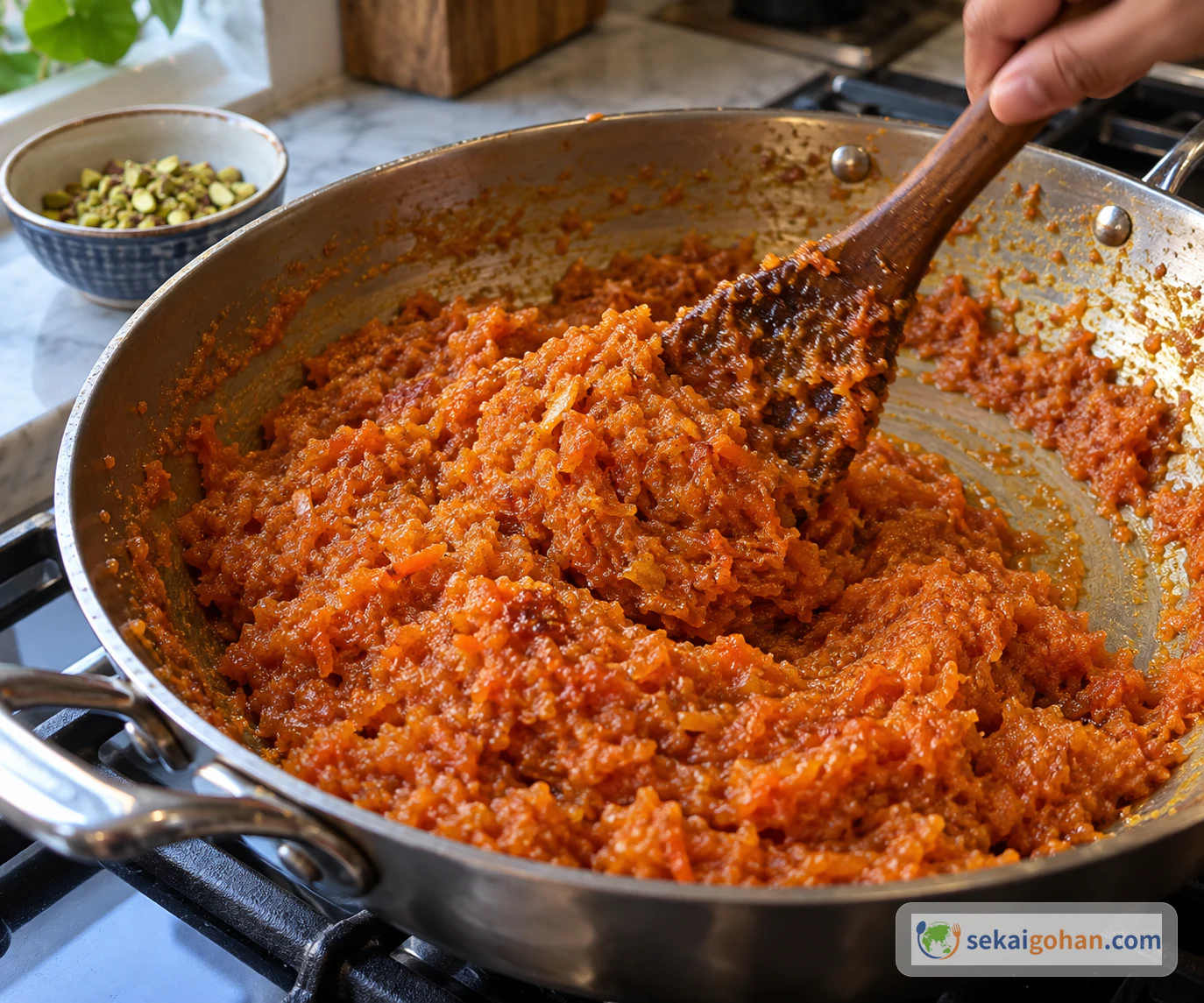
A heavy-bottomed pot of whole milk sits at a low boil, stirred often, slowly cooking down while a skillet waits on the next burner for the carrots. That first reduction, done before any carrot touches the milk, is the heart of this gajar ka halwa. The Punjabi carrot dessert is made for special occasions such as Diwali, when the weather starts to cool and lal gajar (red carrots) come into season. Here the carrots are grated coarsely and cooked until the milk is completely absorbed, and only then does the sugar go in. The finished halwa keeps its texture instead of collapsing into a mash. Plan on 1 hour 55 minutes in all, about 1 hour 10 minutes of it at the stove.
Gajar Ka Halwa at Home and Across India
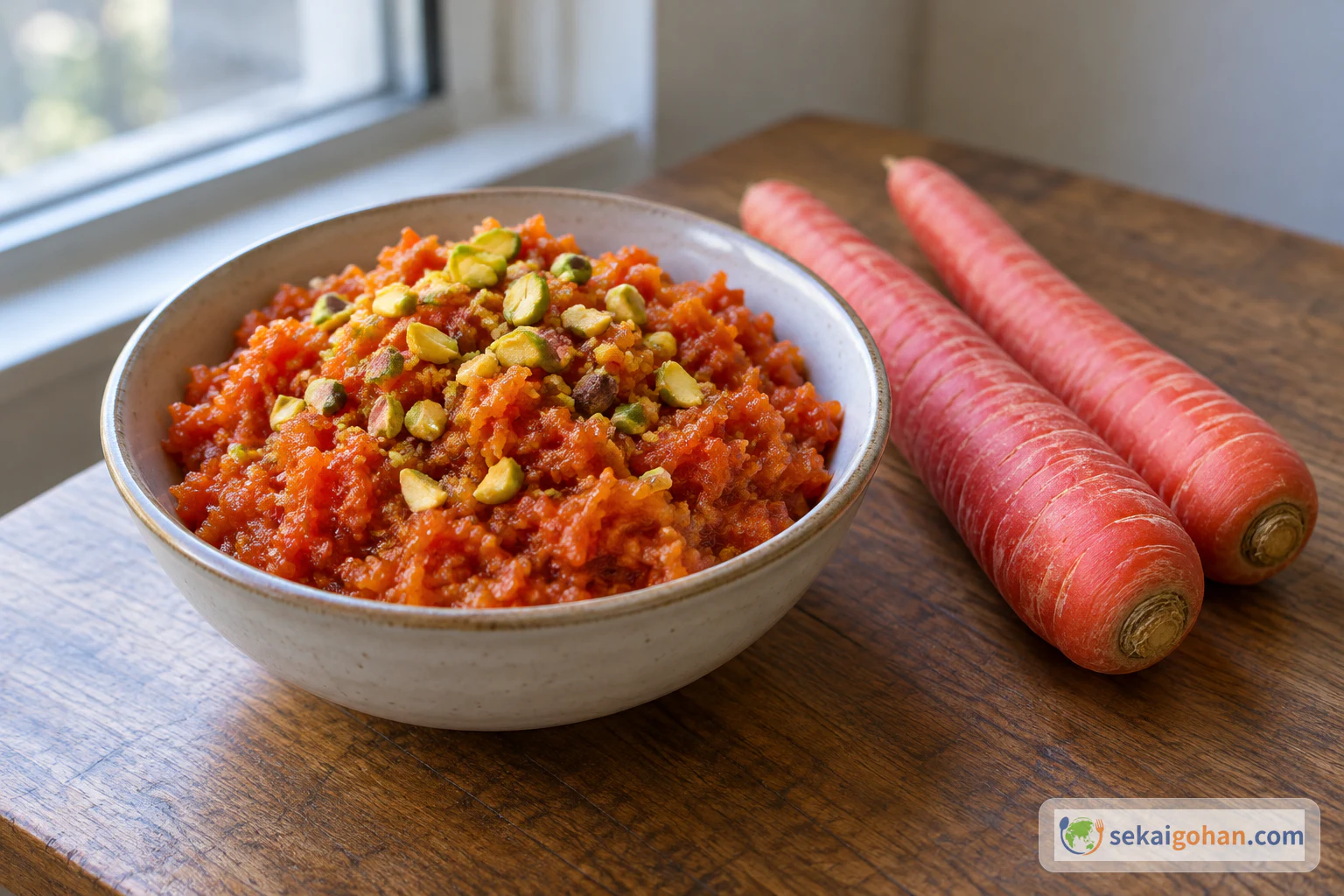
The dish is also known as gajorer halwa, gajarno halwo, gajar pak, carrot pudding, gajar ka meetha pak and gajrela. You may also see the spelling gajar halwo.
Winter and Family Kitchens
For many families, this halwa belongs to the cold months. In Delhi it is tied to the city's cold winters. Making it with family in winter often means grating carrots, adding them straight to simmering milk and stirring while the milk reduces; this recipe keeps those two stages separate.
Outside India, the halwa travels with the holiday. One Indian American family makes Diwali visits and brings sweets to share. You may also come across a gajar-ka-halwa-inspired blondie, a loose fusion rather than a traditional recipe.
Regional Halwas and Origins
Carrot halwa changes from city to city. Old Delhi has a white-carrot halwa, sold by at least one shop there, while Lucknow is known for black-carrot halwa, tied to local memory and to winter and the wedding season. Each has its own texture and sweetness, and they are separate regional dishes rather than stand-ins for this one.
The origin is less settled. Accounts differ, and the exact period when halwa arrived in Indian kitchens is uncertain. For more from the country, see our India page.
Ingredients (4 to 5 Servings)
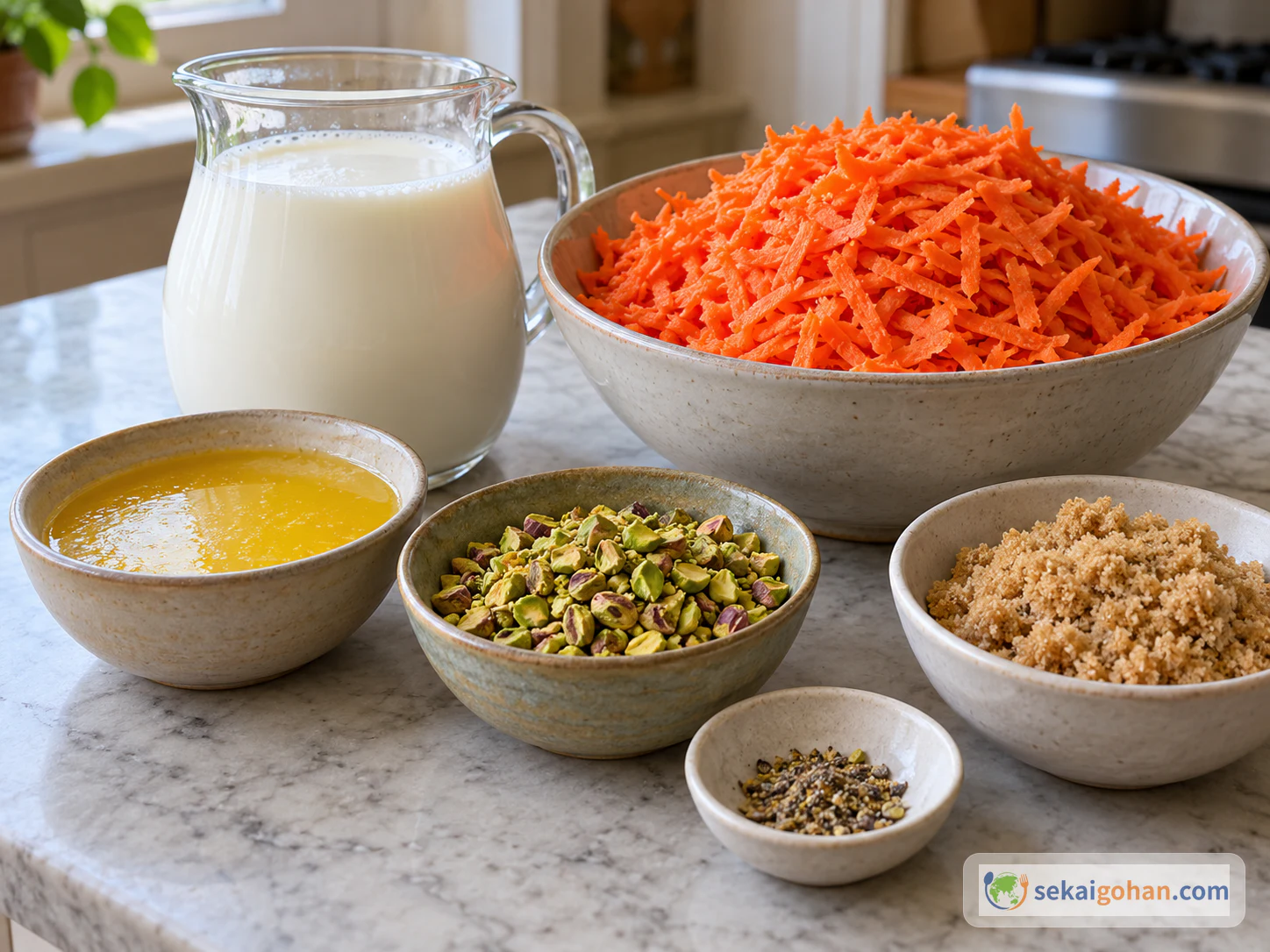
Peel and grate the carrots before you start cooking. Use the large holes of the grater so the shreds stay coarse.

Equipment
- Large heavy-bottomed pot
- Large heavy skillet
- Box grater with large holes
- Paper towel
Choosing Carrots, Nuts and Ghee
Carrots. Use whatever carrots you have. Lal gajar are traditional, but any variety works.
Nuts. Pistachios, almonds or cashews all work. This recipe uses pistachios.
Ghee. Plan on 4 to 6 tablespoons in all: 1 tablespoon for the nuts, another 1 tablespoon only if the carrots start to stick, and 3 tablespoons for the finish.
Gajar Ka Halwa Texture and Troubleshooting
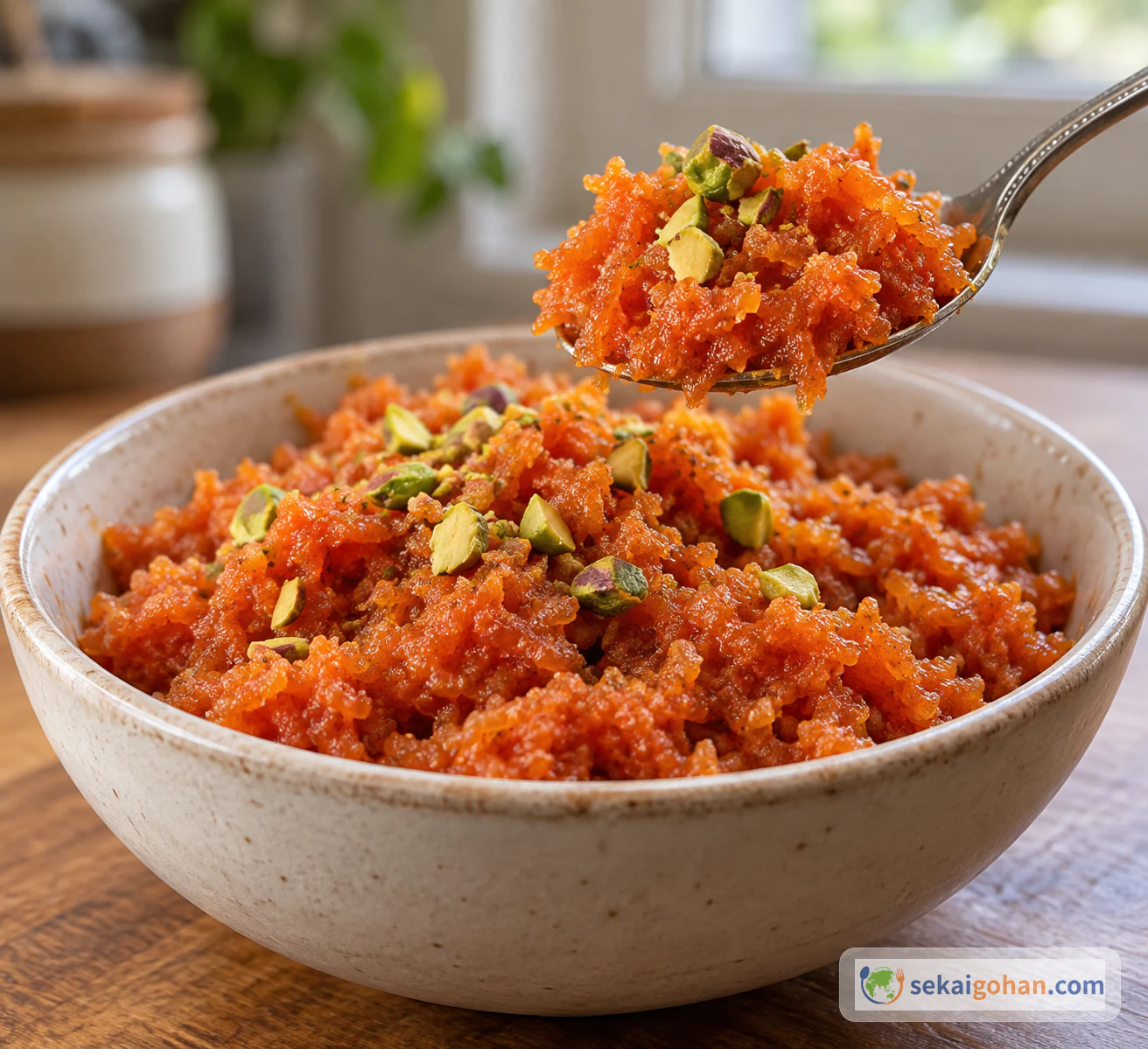
Go by the visual cues in each step as much as by the clock. The photos show the stages, but color and sweetness are yours to judge. When the halwa is done, serve it right away.
| What you notice | What to do |
|---|---|
| The carrots start to stick during step 3 | Add 1 tablespoon of ghee, as the directions allow |
| Milk is still visible at the end of the simmer | Keep stirring at a heavy simmer until it is completely absorbed |
| The halwa tastes less sweet than you would like after thickening | Add more light brown sugar, tasting as you go |
| The halwa has not begun to pull from the pan sides | Keep stirring. The cue is the pull from the sides plus a little caramelization |
| The texture is closer to a mash than you wanted | Next time, grate the carrots on the large holes of the box grater |
Frequently Asked Questions
Can I use evaporated milk instead of reducing whole milk?
You can use 1 1/2 cups of canned unsweetened evaporated milk as a shortcut, but the taste is not as good and you will not get the same crunchy caramelization. This recipe uses fresh whole milk.
Why grate the carrots coarsely?
Coarse shreds hold their shape through the long cooking, so the halwa keeps some bite instead of turning into a total mash. Use the large holes of a box grater.
Do I have to use cardamom, and should the seeds stay in?
Cardamom is optional, and you can remove the seeds after the sugar stage if you prefer. This recipe includes 1/2 teaspoon and leaves the seeds in.