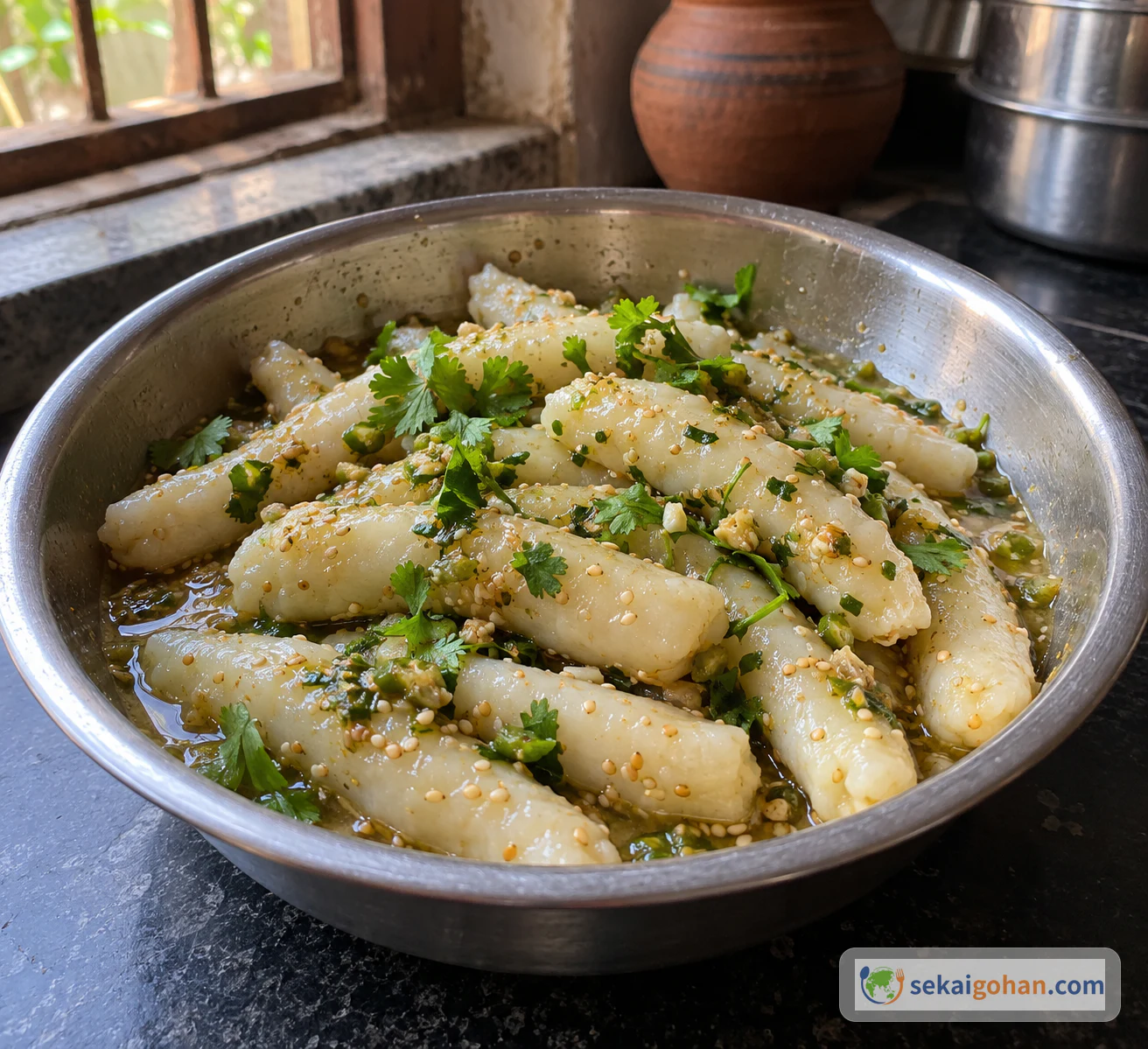
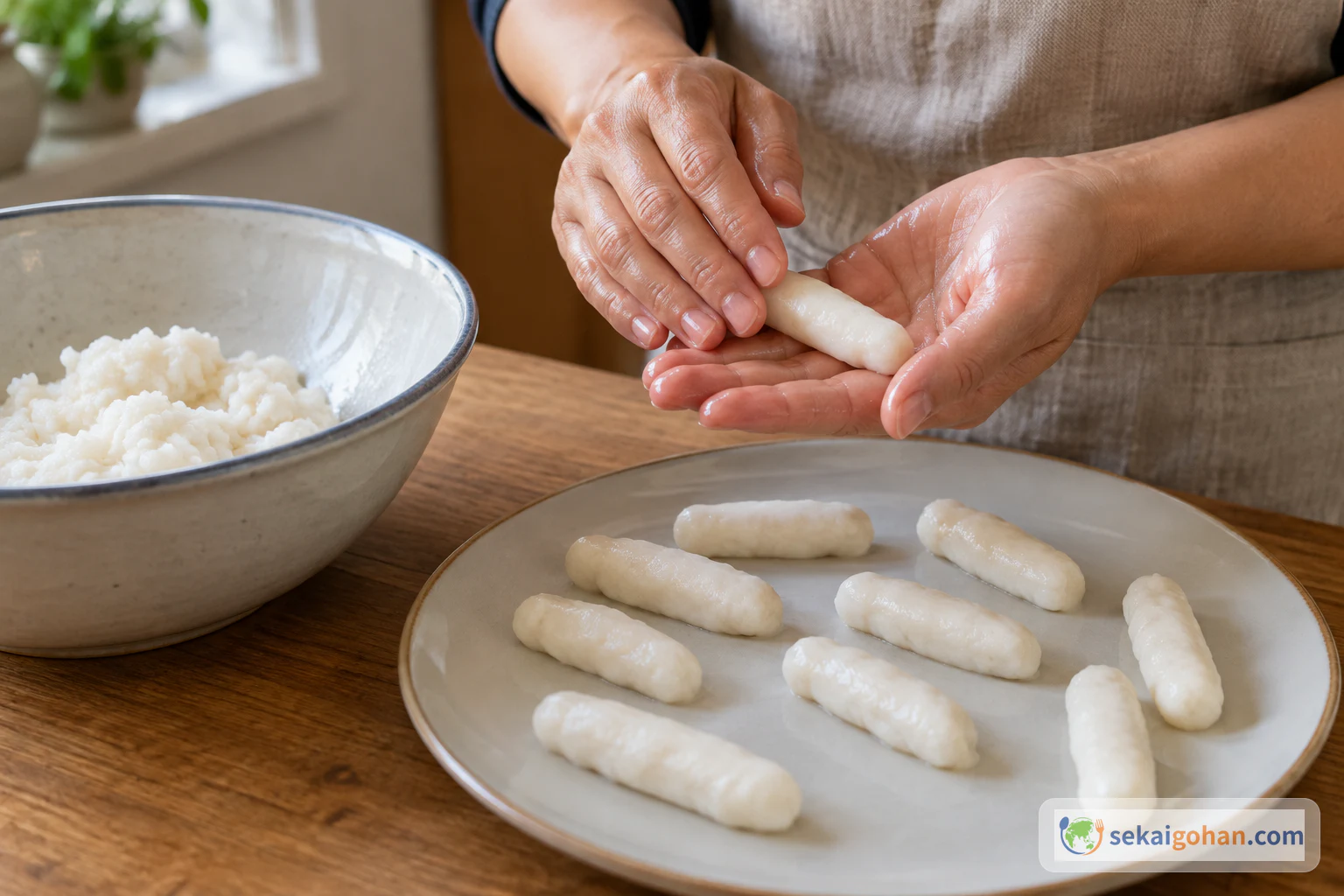
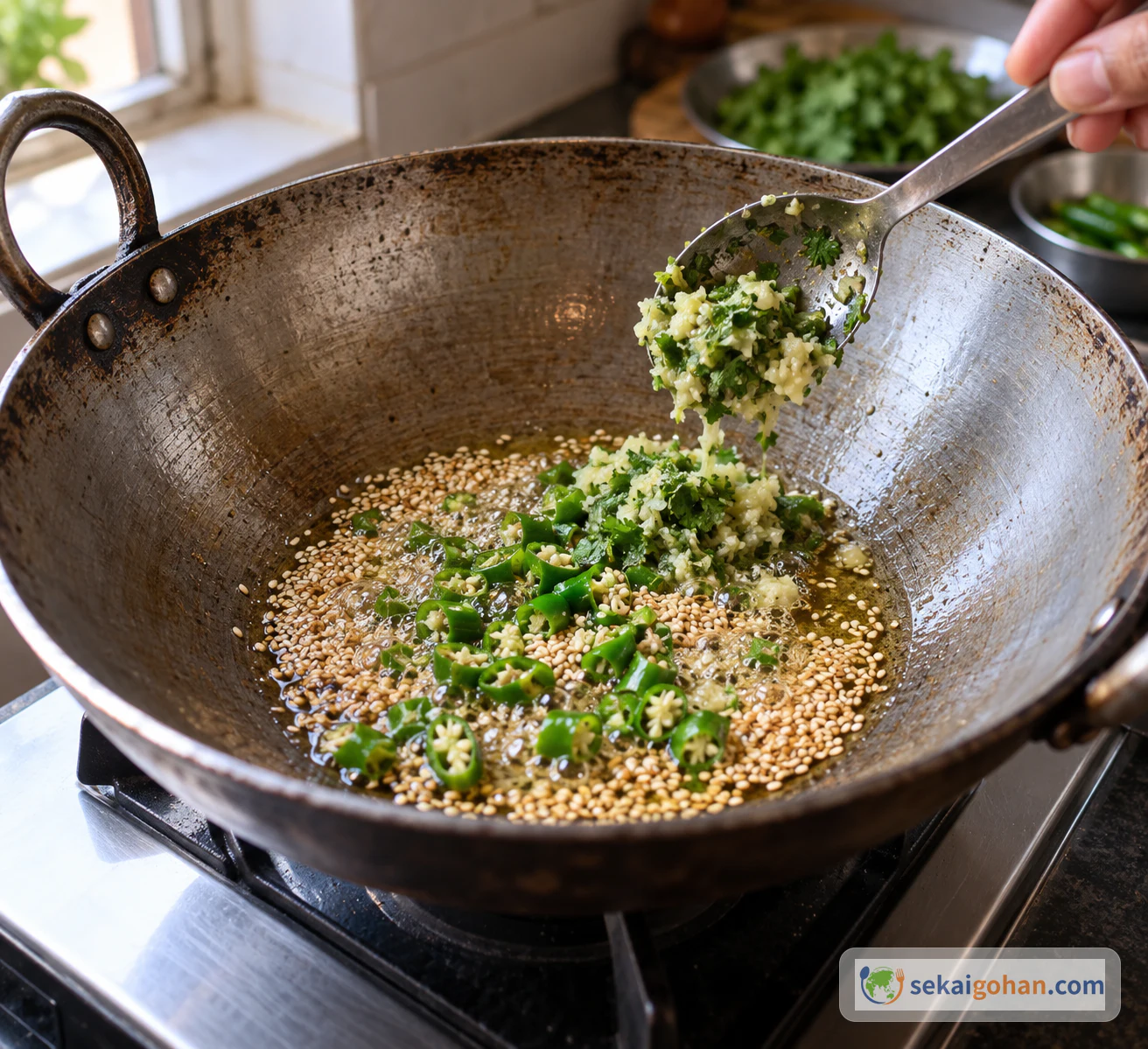
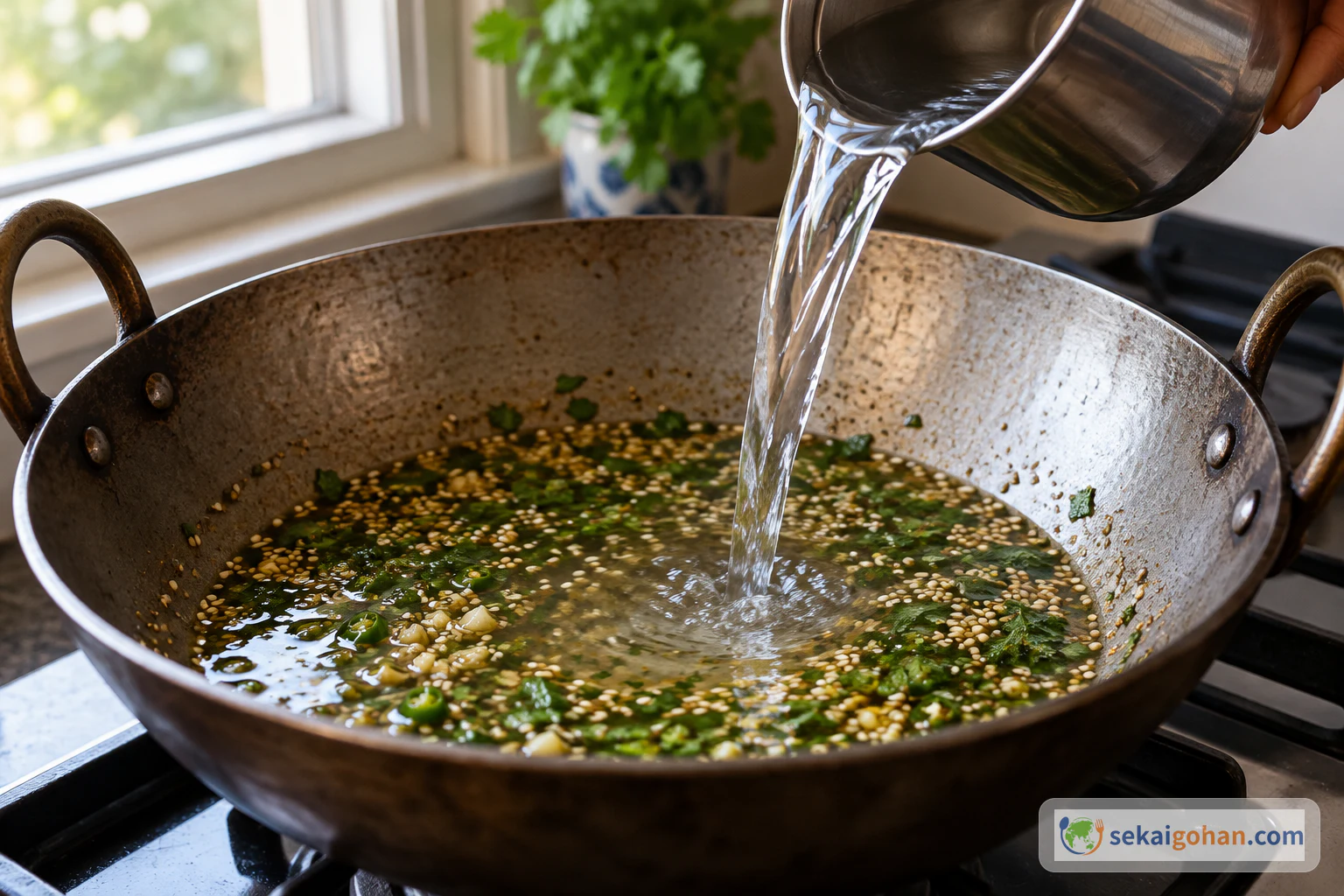
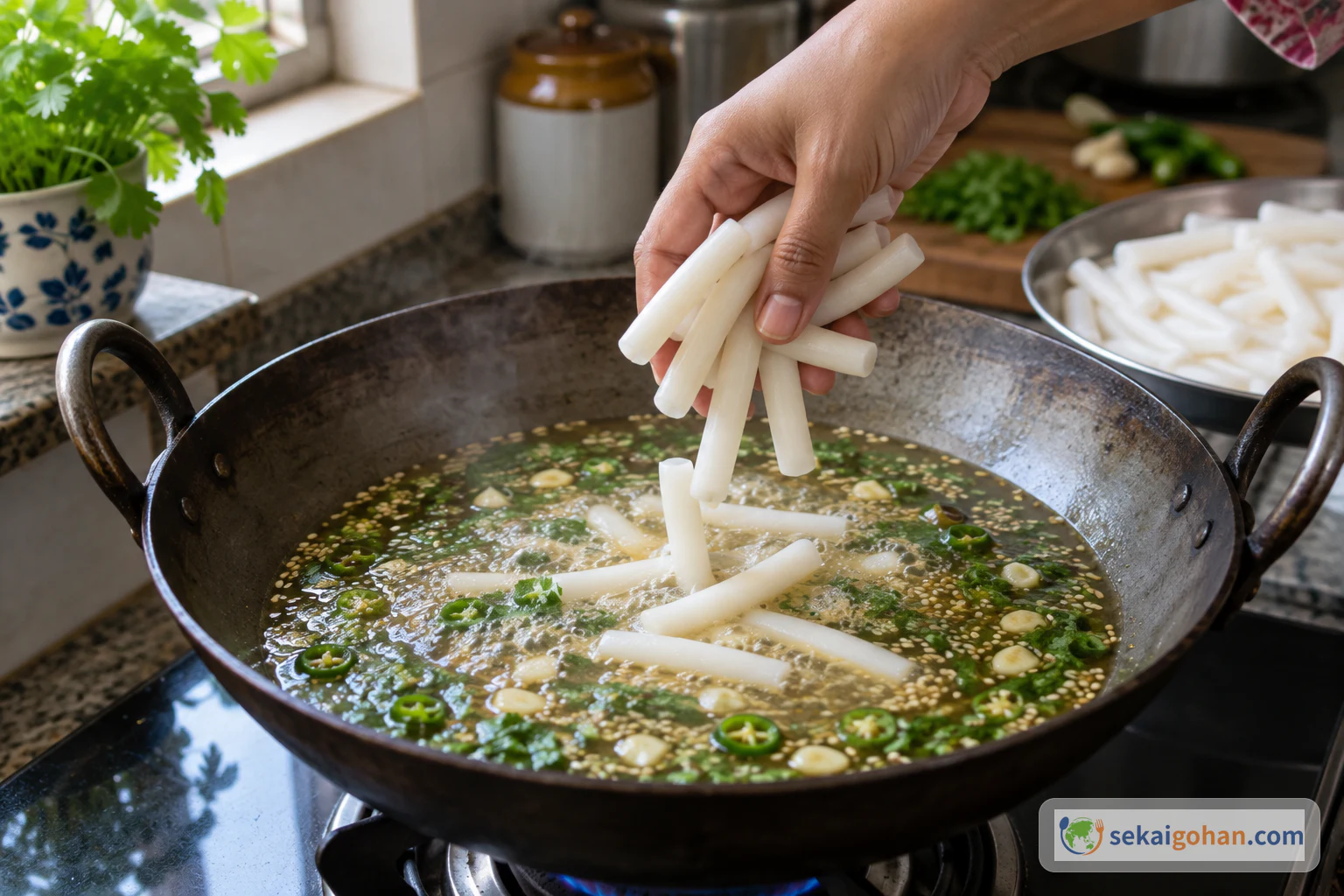
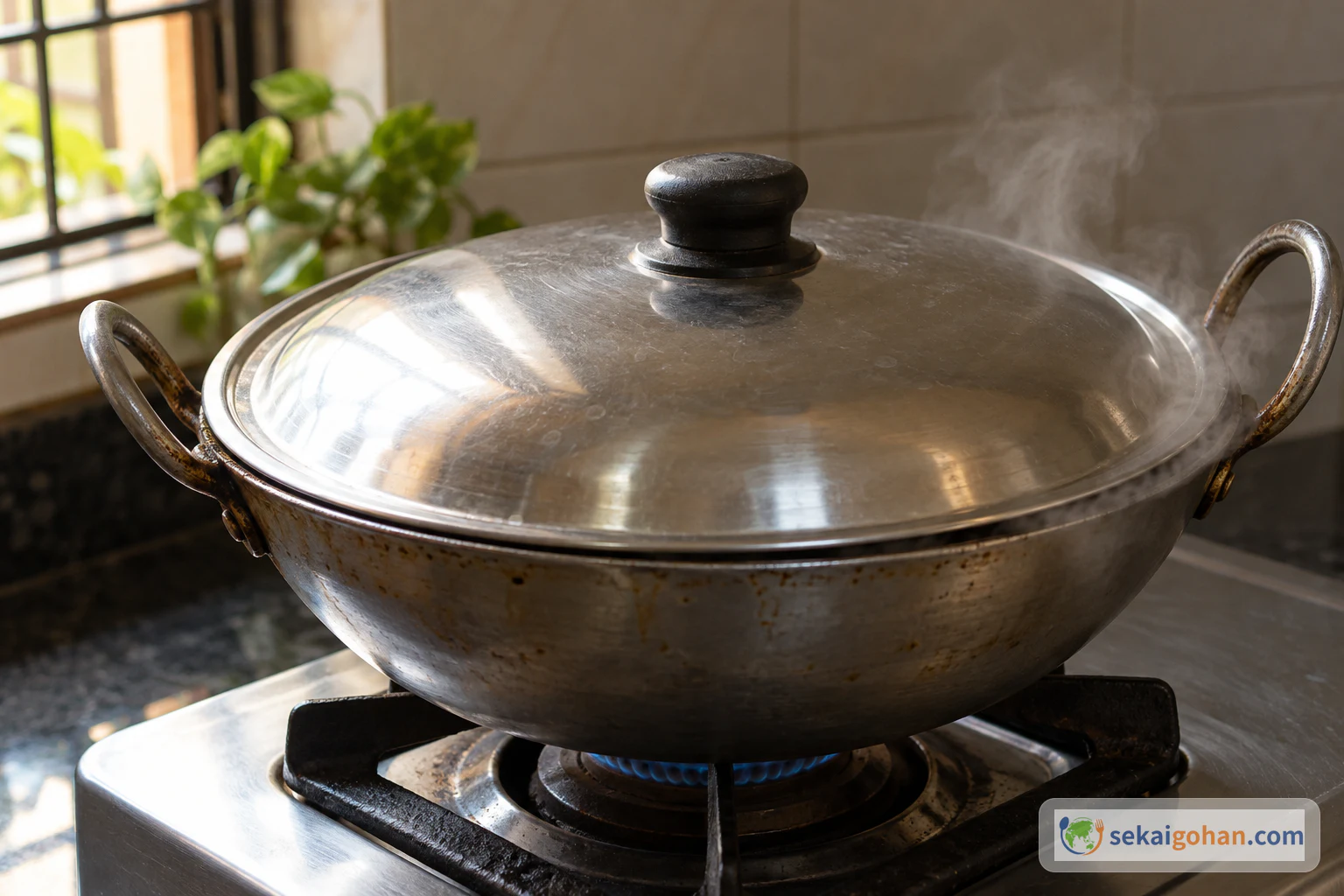
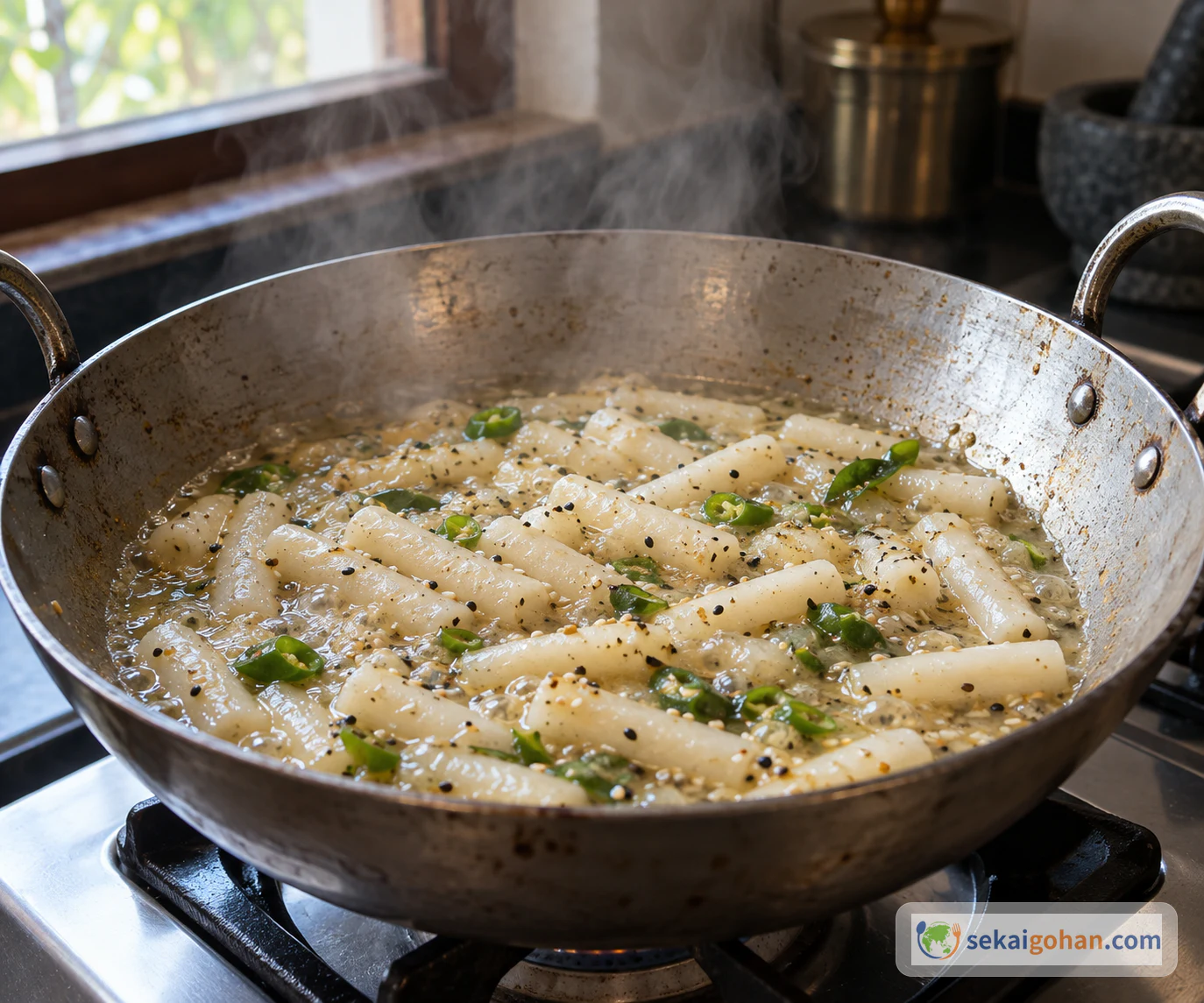
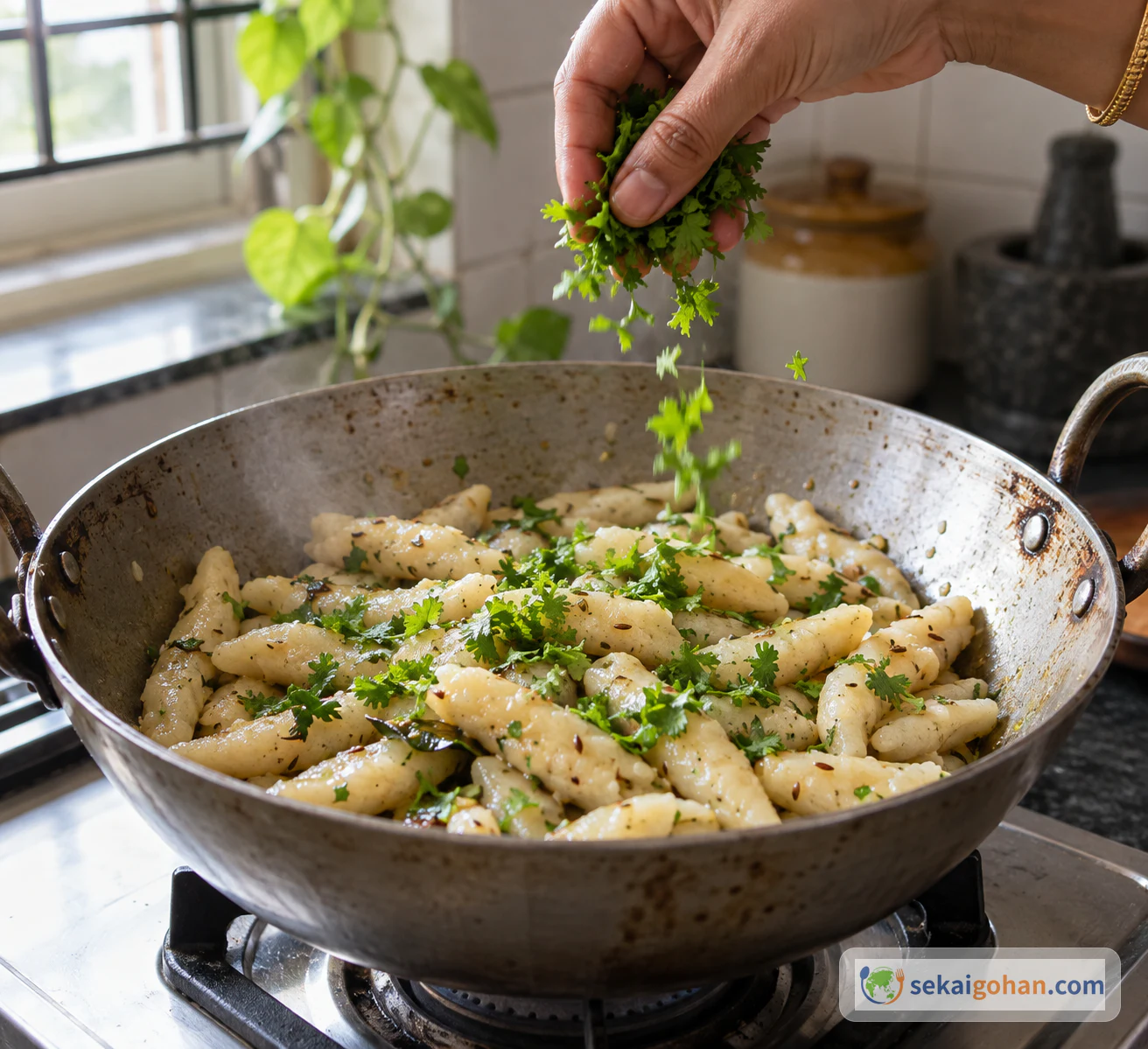
Small sticks of rice-flour dough, rolled between oiled hands, go into a kadhai of bubbling liquid made from toasted sesame, crushed green chillies and a paste of garlic and green coriander. A few minutes under the lid and a few more without it, then a scattering of coriander leaves goes on top. This is Fara (फरा) from Chhattisgarh. These are plain rice-flour sticks with no filling, and you don't need a steamer: they cook right in their seasoning. For more dishes from the country, see our India page.
Fara and Its Regional Versions
The name Fara covers several different dishes. Fara is one of the snacks of Chhattisgarh, and it doesn't always look like the version here. A common form uses rice-flour dough, sometimes mixed with cooked rice. The dough is salted, shaped into finger rolls and steamed, then tempered with sesame and chilli. The main difference from this recipe is the cooking: those rolls are steamed, while these sticks simmer in the seasoning liquid.
Other regions and households take the dish further still:
| Version | Labelled as | Dough and filling | Cooking |
|---|---|---|---|
| This version | Chhattisgarh | Rice flour only, no filling, small sticks | Simmered in sesame, green chilli and garlic-coriander liquid, covered then uncovered |
| Steamed rolls | Chhattisgarh | Cooked rice and rice flour, one bowl each, long shapes | Steamed 10–15 minutes (toothpick test), then tempered with mustard, cumin, chilli, curry leaves and sesame |
| Dal Fara | Chhattisgarh (Dal Fara) | Rice-flour wrapper around coarse chana-dal filling (soaked 4–5 hours) | Steamed 15–20 minutes, optional tempering or frying |
| Uttar Pradesh version | Uttar Pradesh | Rice flour with 2 tsp milk, soaked chana-dal filling | Steamed 12–15 minutes |
| Whole-wheat Dal Fara | Dal Fara / Farra | Whole-wheat atta wrapper, coarse chana-dal filling, half-moon shape | Boiled in water, optional spice fry |
Dal Fara also goes by Farra, Gojha and Peetha. It is a separate dish from the plain rice-flour sticks in this recipe, with its own amounts and methods.
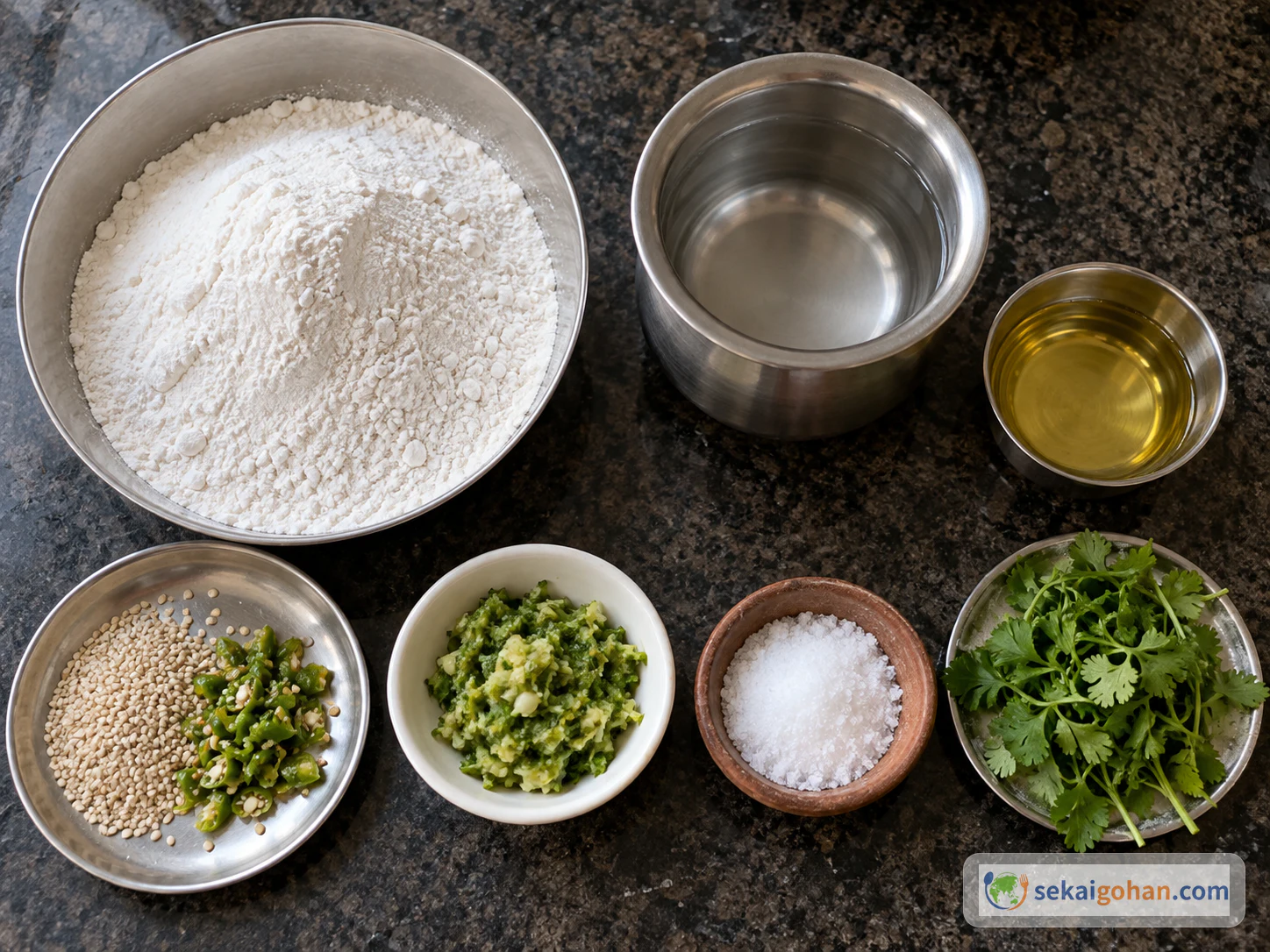
Ingredients
Equipment
- A pot for boiling the water, with a lid
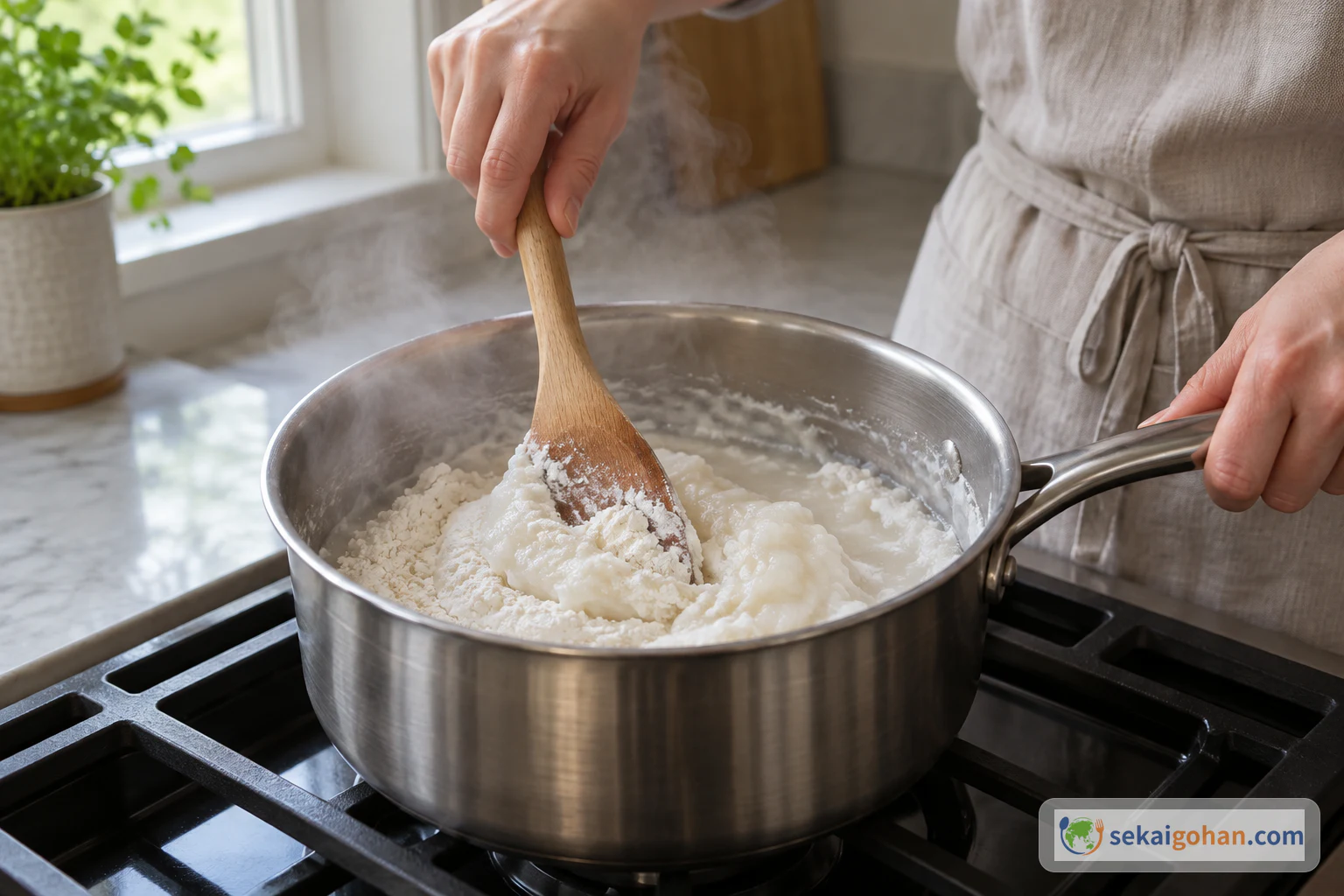
- A spoon for stirring in the rice flour
- A kadhai or wok
- A plate for the roasted sesame
- A plate or bowl for shaping the sticks
Choosing Rice Flour and Other Ingredients for Fara
Rice flour comes in more than one kind. It can be milled from non-glutinous (uruchi) rice or from glutinous rice, and the milling and processing change how the flour behaves. Shiratamako, for example, is made from glutinous rice and is used for soft white dumplings. For this dish, start with a plain rice flour made from non-glutinous rice. Glutinous flours such as mochiko or shiratamako behave differently, so don't swap them in at the same amounts.
The amounts use cups, tablespoons and teaspoons, so measure them as written rather than converting to grams or millilitres. Of the 4 tbsp oil, 1/4 tsp goes into the boiling water, a little goes on your hands for shaping, and the rest goes into the kadhai for the seasoning. How you split that last part is up to you.
- Green chillies: peppers vary in heat, moisture and shape, so there is no exact substitute. Pick ones whose heat you know.
- Oil: an ordinary cooking oil.
- Garlic and green coriander paste: this is one combined paste. If you make it yourself, you choose how much garlic and how much coriander goes in. The coriander leaves for garnish aren't measured.
- Kadhai: a round-bottomed Indian wok. A deep frying pan works in its place, though a different pan shape and heat will change how the seasoning and liquid behave.
Sesame is a common allergen. If you need to avoid gluten or other allergens, check the labels of your rice flour and other ingredients for cross-contact statements.
Method: From Hot-Water Dough to Simmered Sticks
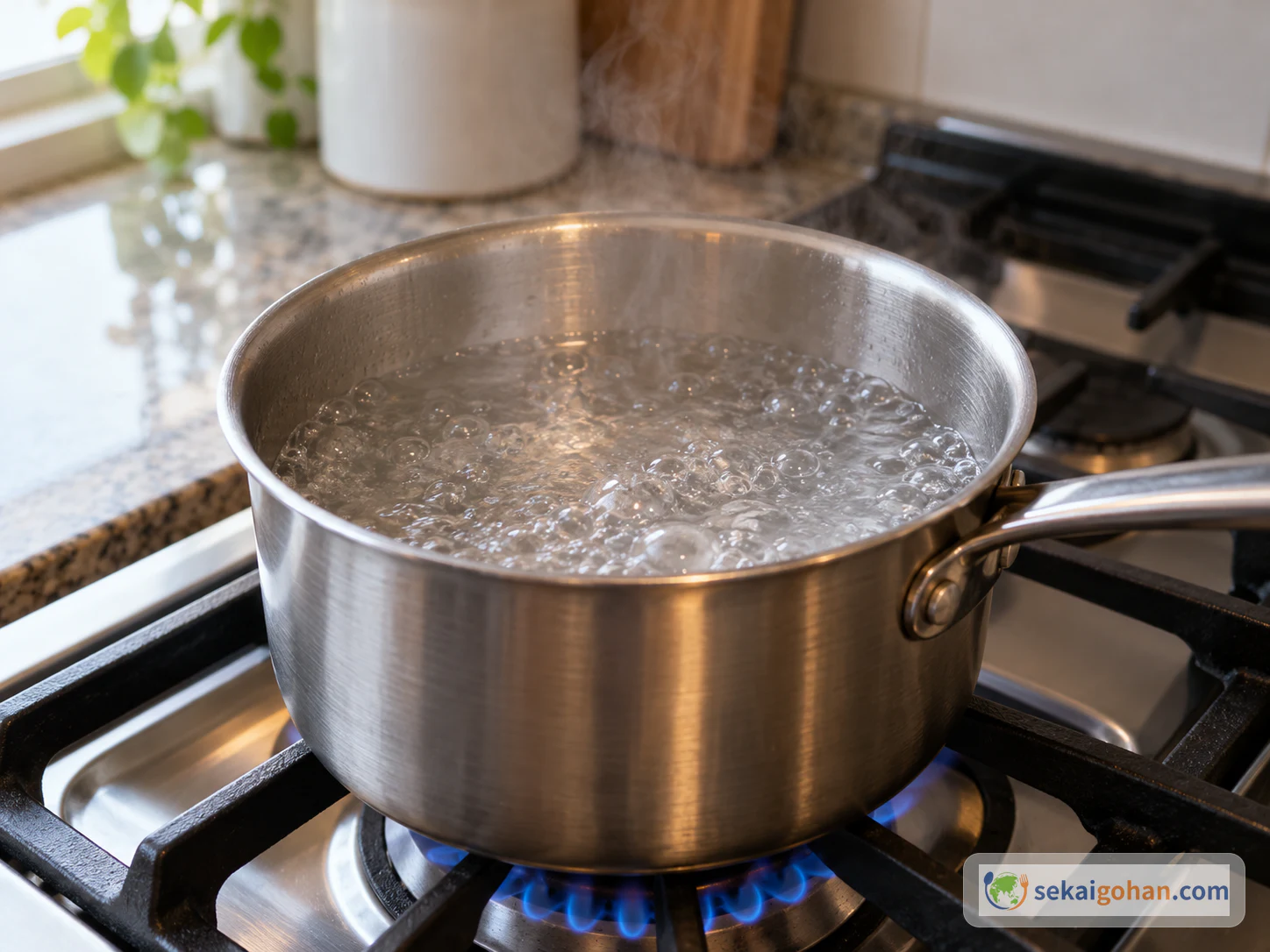
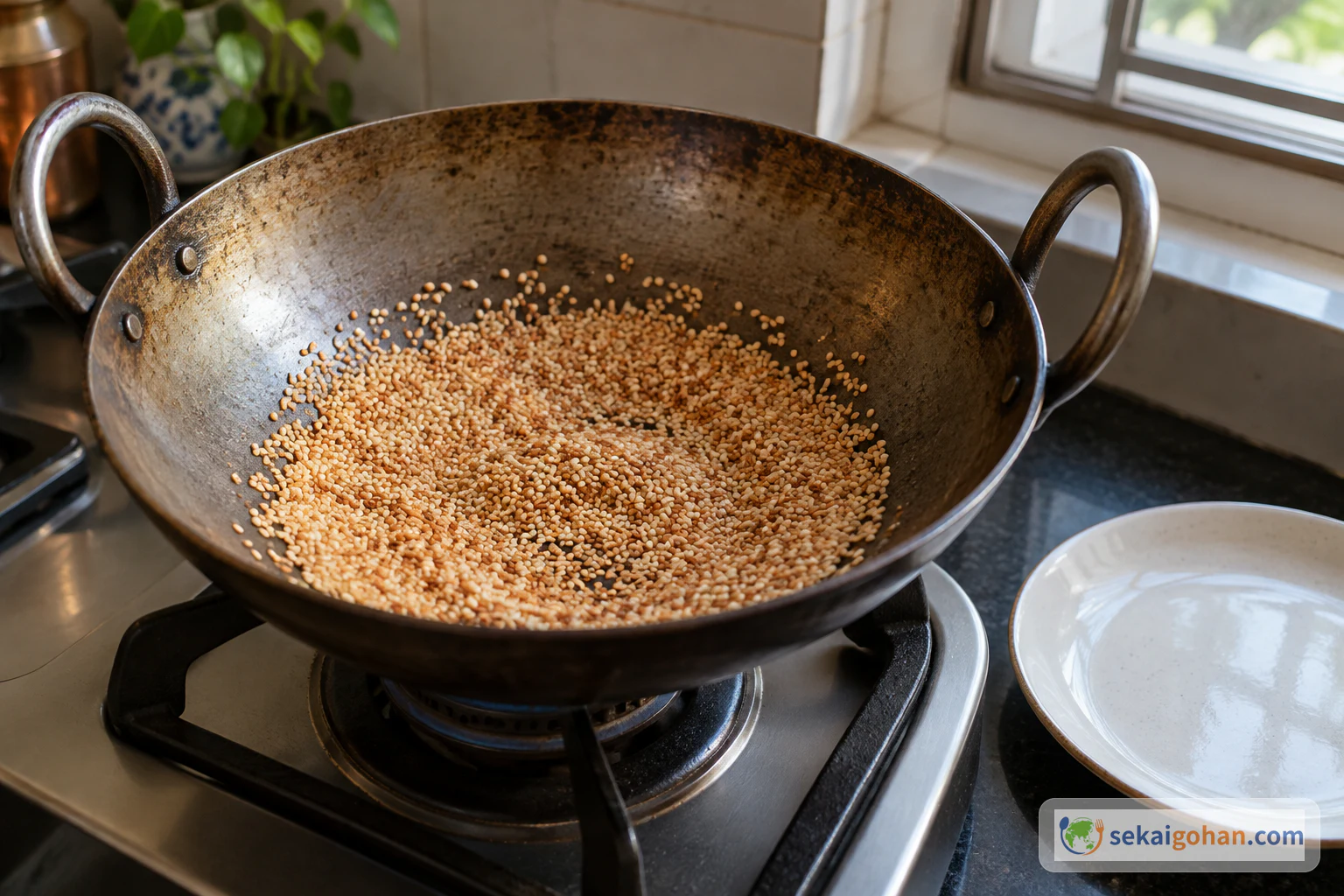
The checkpoints in this recipe are few: the water boiling before you turn off the heat, the sesame turning reddish, the seasoning becoming fragrant, the liquid boiling before the sticks go in, and then about 5 minutes covered and 2–3 minutes uncovered.
Getting the Fara Sequence Right
This is a short recipe, and most problems come from changing the order of the steps. These are the points to watch:
| Stage | Cue in the recipe | Why the order matters |
|---|---|---|
| Dough water | The water boils, then the heat goes off before the flour goes in | The flour is mixed into hot water off the heat, not cooked on the flame |
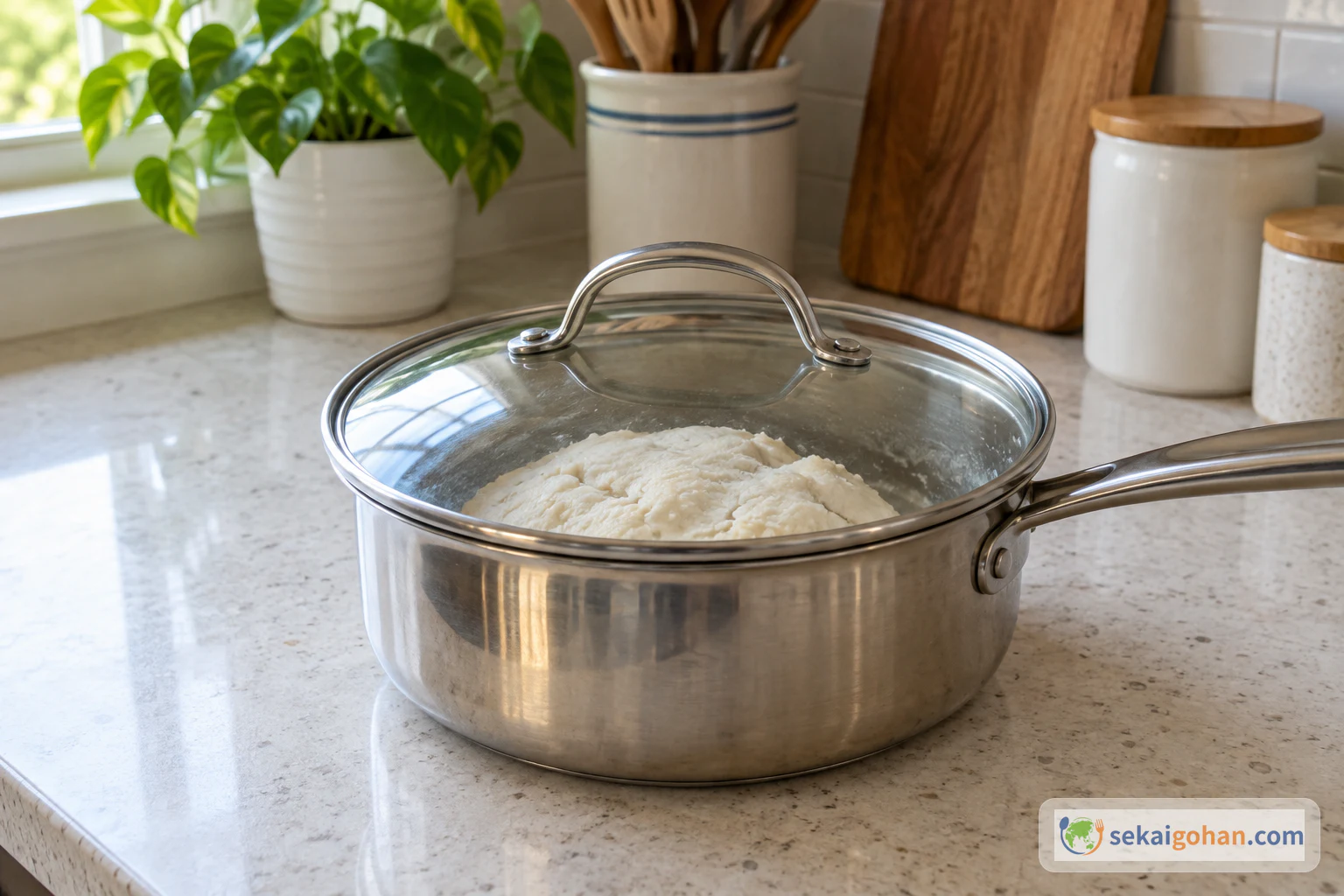
| Resting | The pot is covered and set aside | The lid keeps the dough covered while you prepare the rest |
| Sesame | Roasted until reddish, then moved to a plate | The roasted seeds go into the seasoning later |
| Seasoning | Water goes in only once there is a nice aroma | The sesame, chillies and paste cook in oil first |
| Sticks | Added only after the liquid boils | The sticks start cooking in liquid that is already boiling |
| Finish | Covered first, then uncovered | The liquid simmers with the lid on, then without it |
The feel of the dough, the size of the sticks and the heat for the final simmer are left to you. Treat your first batch as a trial and write down anything you change.
Frequently Asked Questions
Does Fara have a filling?
Not this one. These Chhattisgarh sticks are plain rice flour. Other versions are filled: Chhattisgarhi Dal Fara and Uttar Pradesh Fara both use chana dal, and one Dal Fara uses a whole-wheat wrapper.
Do I need a steamer?
No. The sticks cook in the seasoning liquid, first covered and then uncovered. Versions that steam the rolls use a different method.
How much water do I need in total?
The ingredients list 1 1/2 cups water, and the method adds 1/2 cup to the seasoning. It isn't clear whether that half-cup is part of the 1 1/2 cups, so don't add the two together.