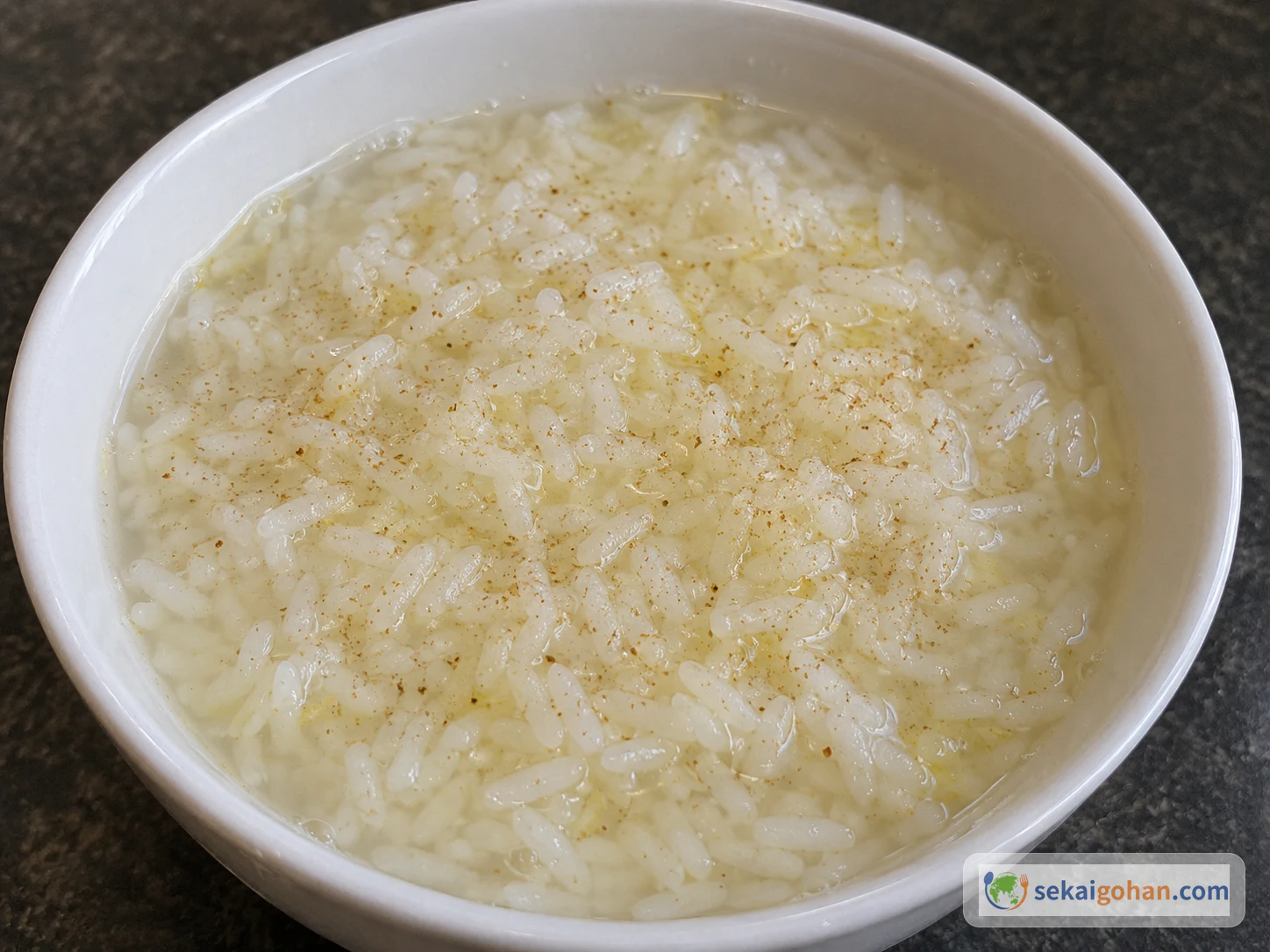
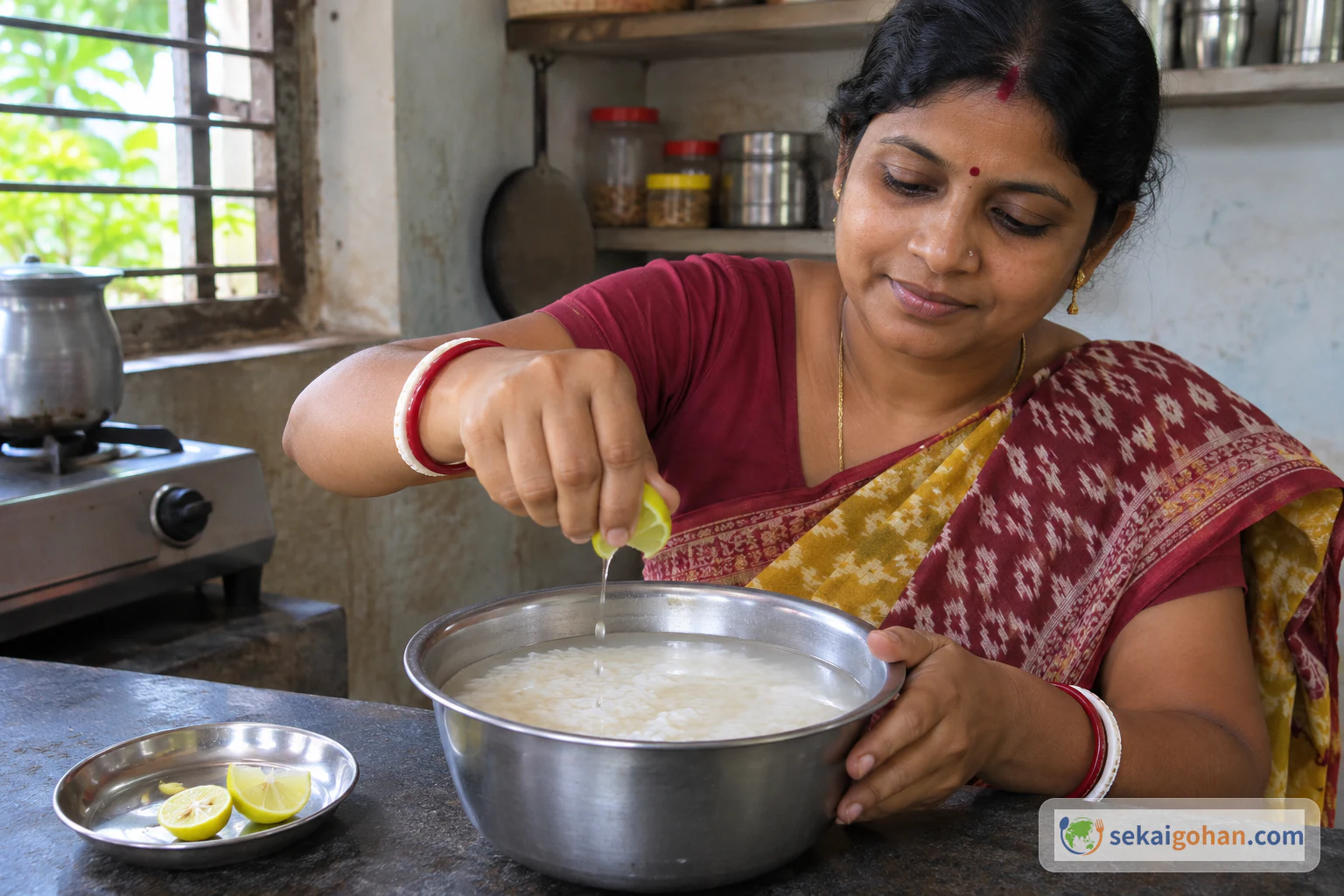
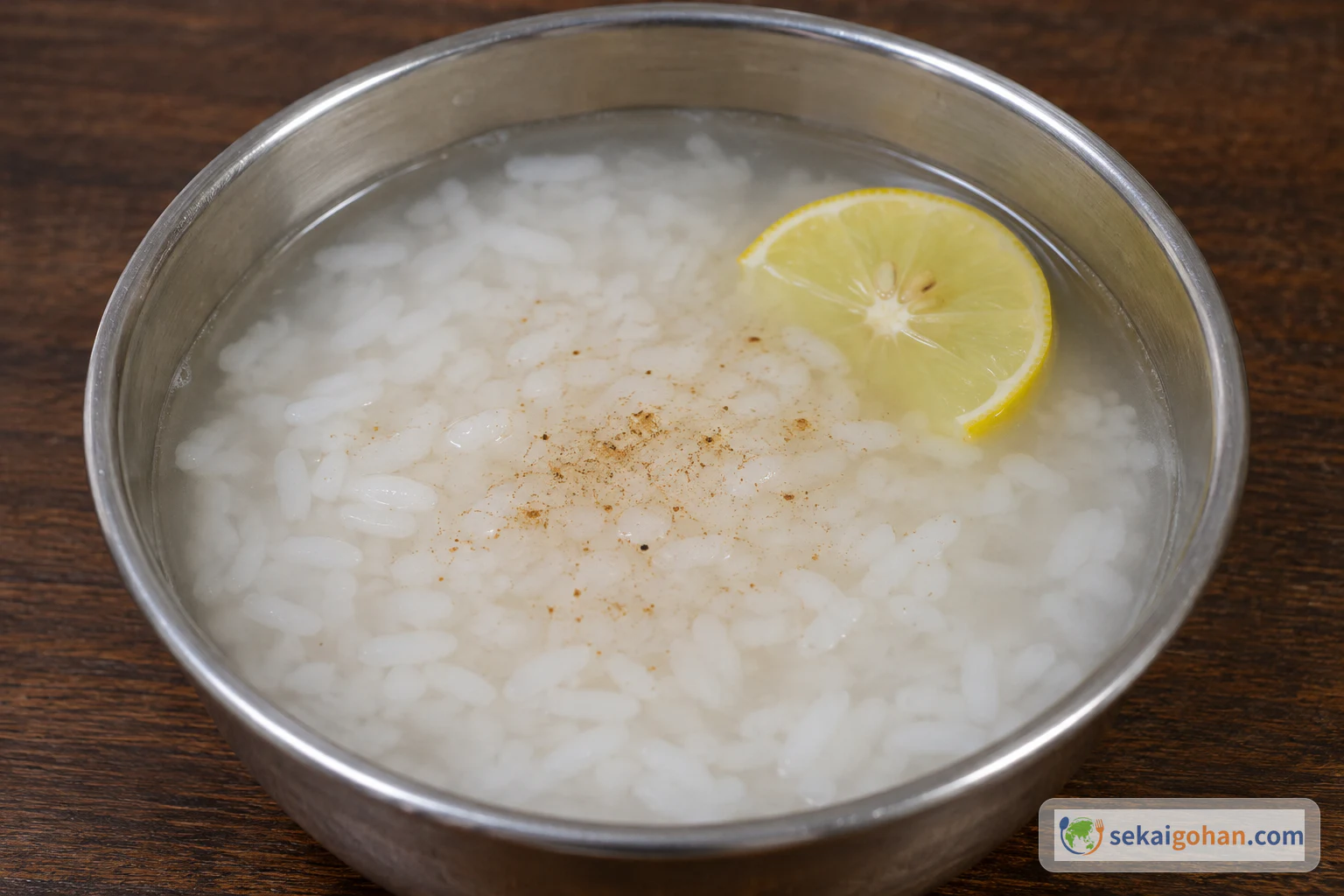
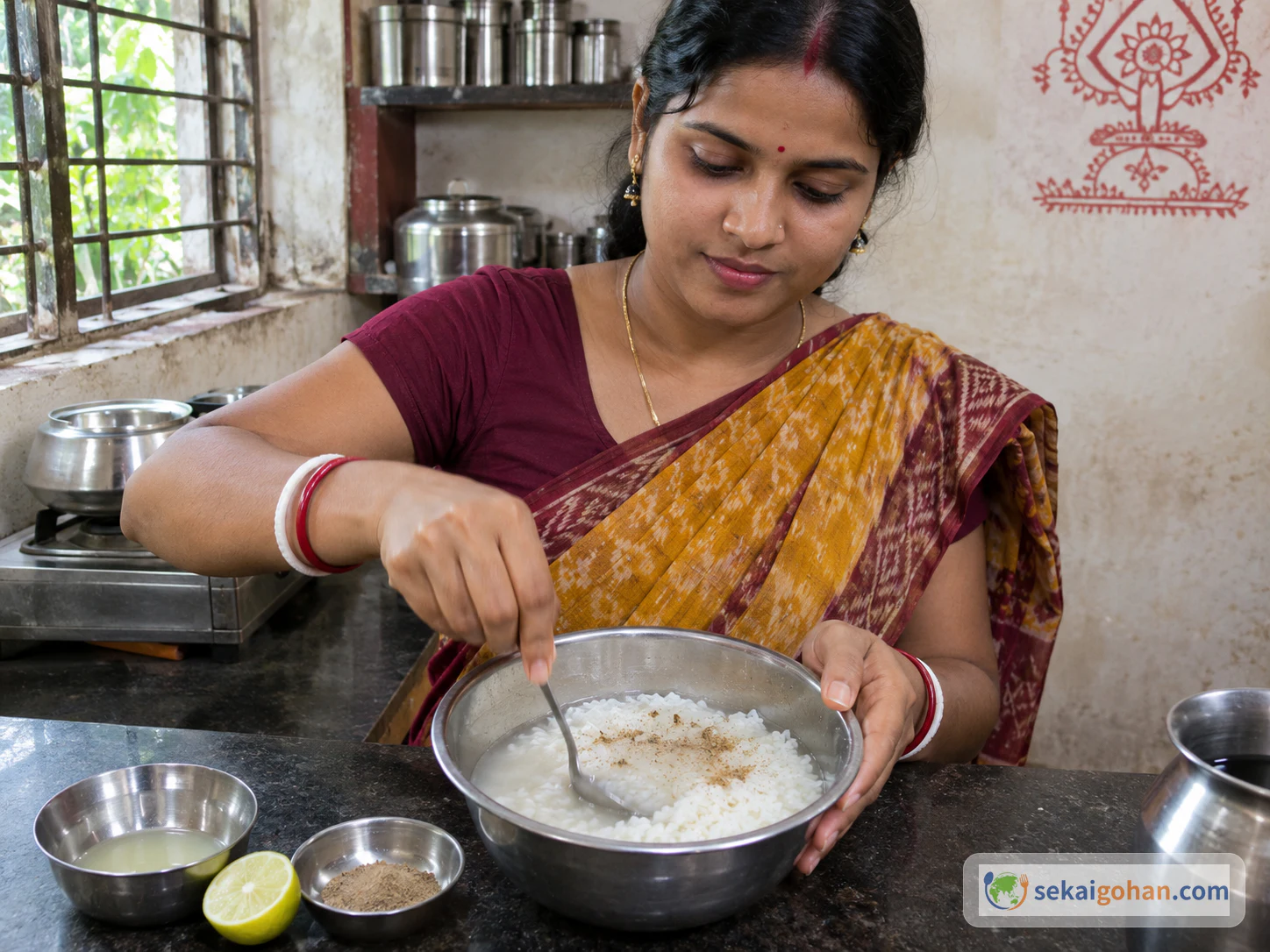
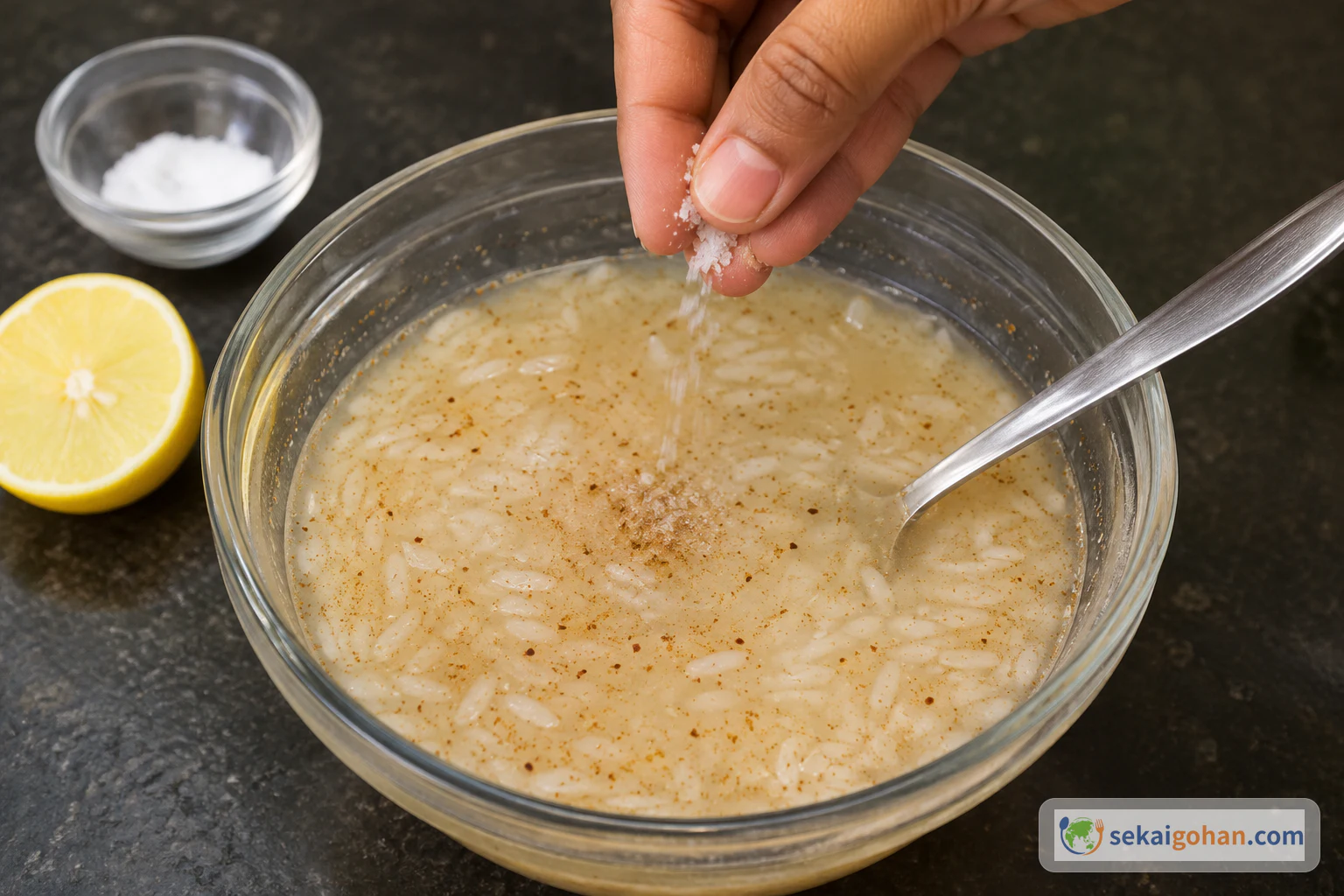
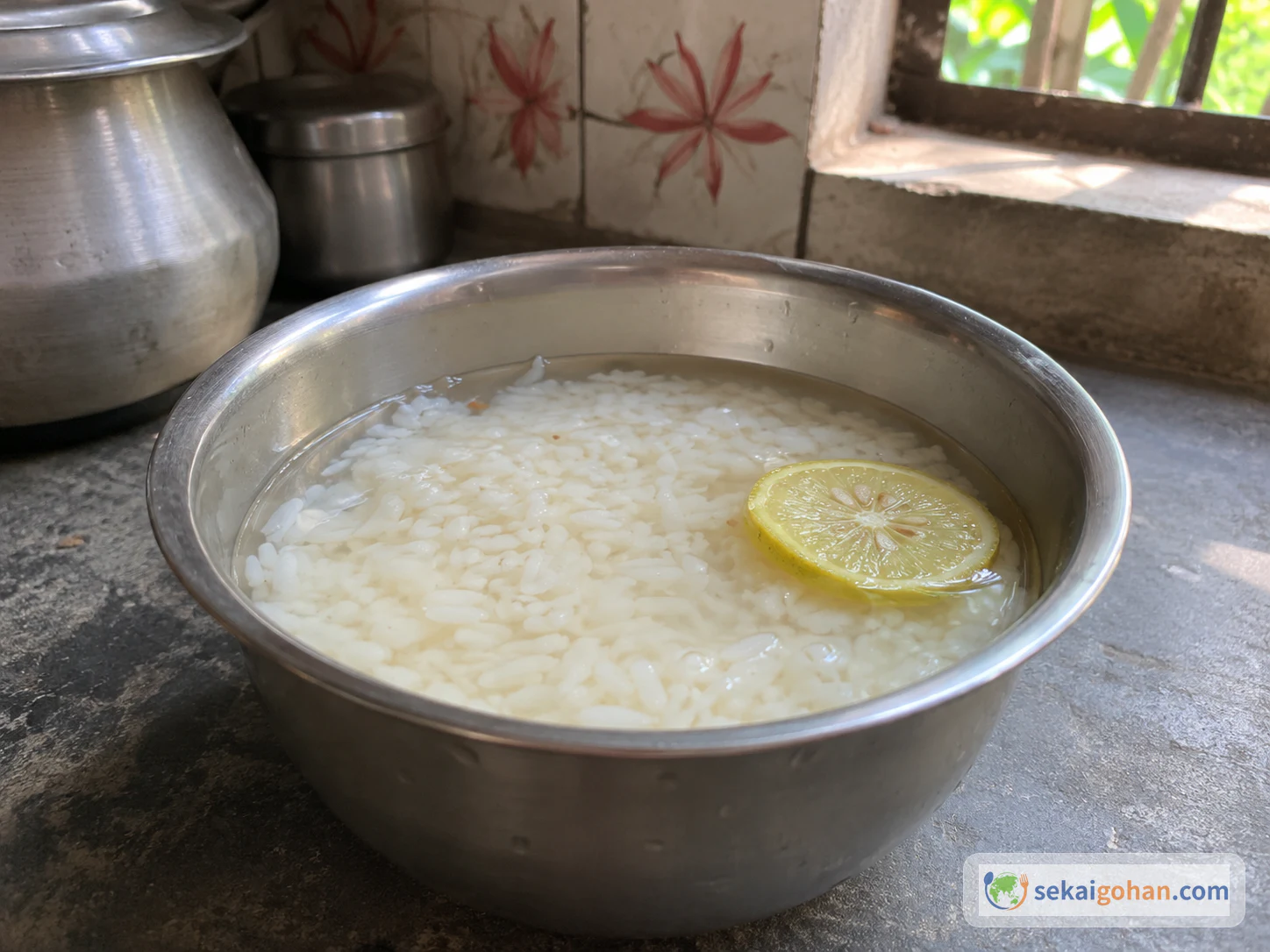
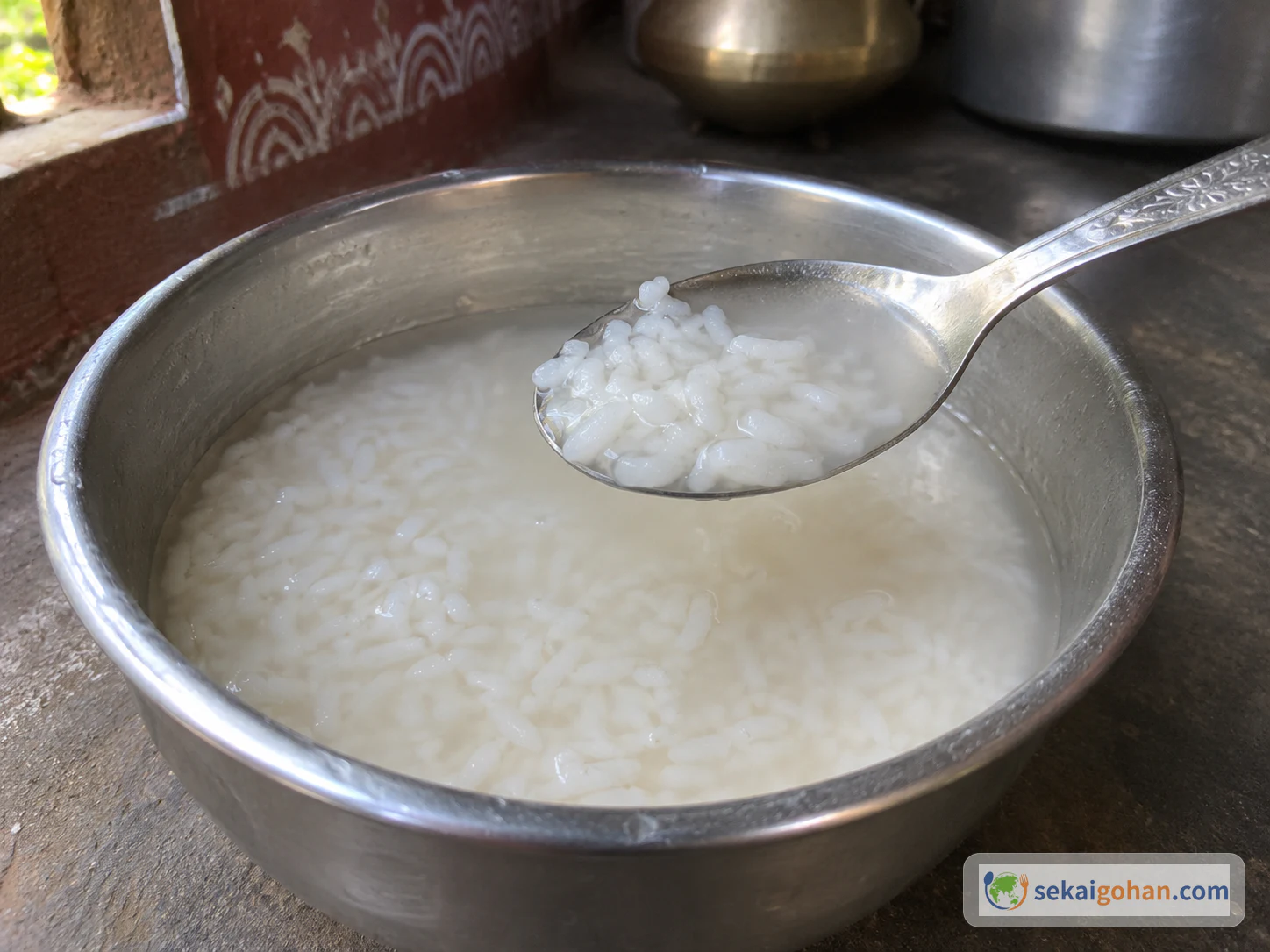
Spoon a mound of rice into a bowl, pour cold water over it until it disappears, and squeeze in a little lemon. That's Saja Pakhala, the fresh, unfermented version of Odisha's beloved rice-in-water. It's cool, mild and lightly sour, the kind of bowl that makes sense on a hot day, with salty, crunchy and spicy sides set around it to bring it to life.
Pakhala in Odisha
Pakhala is cooked rice that has been cooled and soaked in water, then served with foods such as baadi chura, vegetables, fish and torani. None of these is required, and there's no fixed set. You pick what you like and build the meal around the bowl.
The dish comes in several styles: Basi, Saja, Dahi, Sugandhi, Chupuda and Mitha. Traditional Basi Pakhala is left to stand in water overnight and is classically eaten with badi-chura. Saja is the quick one: freshly cooked rice with water and a few drops of lemon, no fermentation needed. Some cooks add curd and tempering to Saja as well. Pakhala is popular enough to have its own day, Pakhala Dibasa, held every year on March 20.
Other parts of India have their own rice-and-water traditions, but Pazhaya Soru, Panta Bhat and curd rice are separate dishes. For more dishes from around the country, see India.
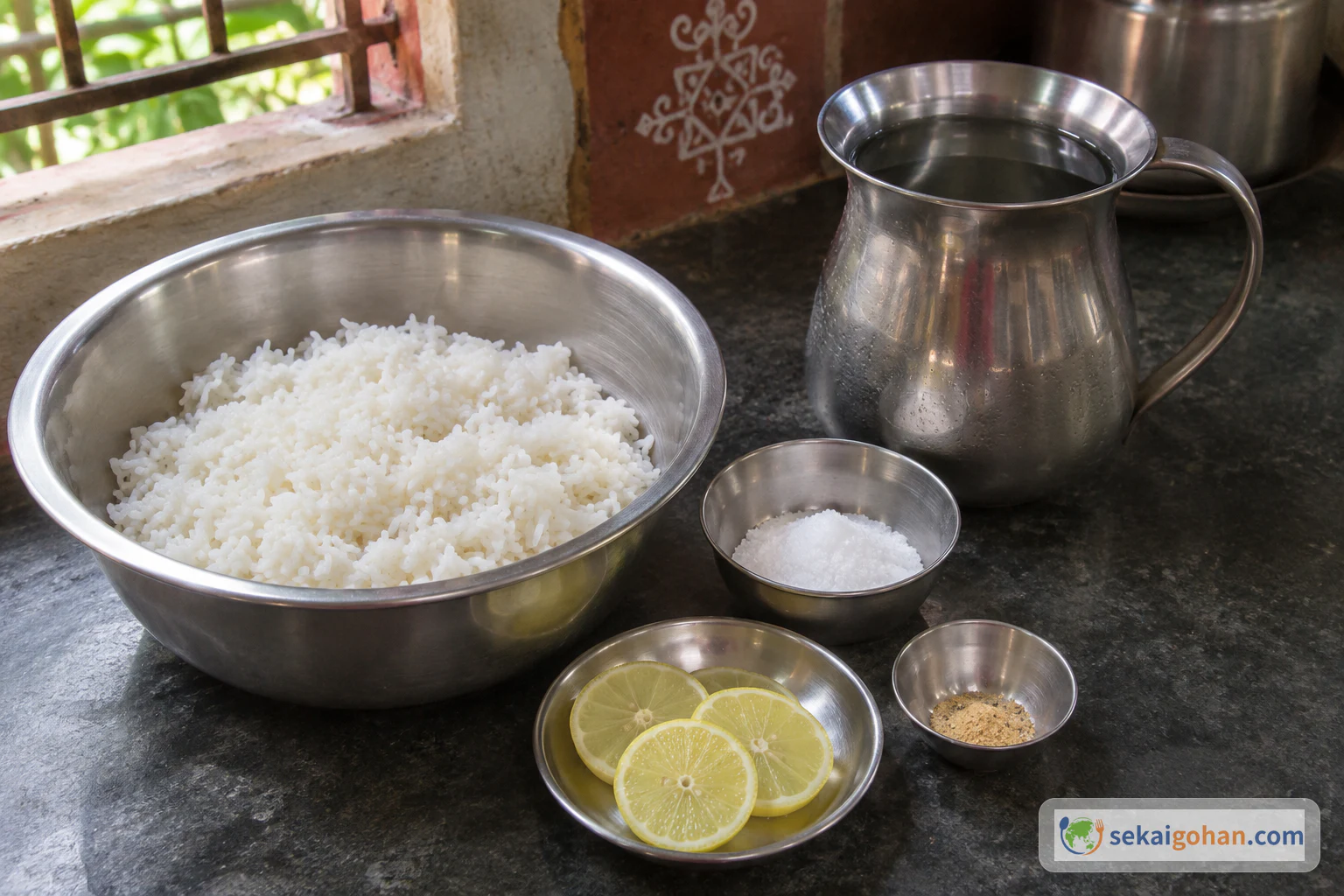
Ingredients
Equipment
- Clean shallow dish
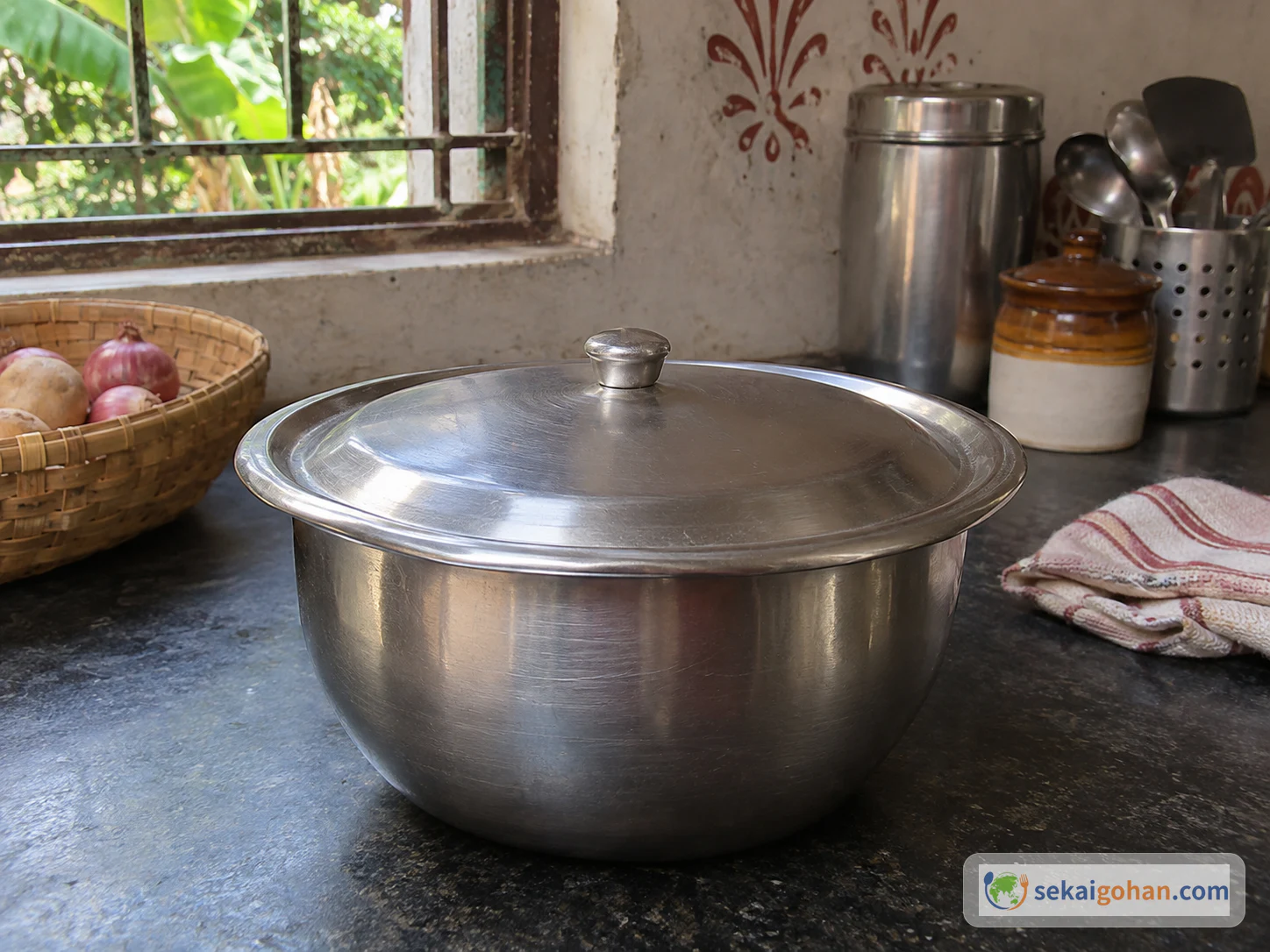
- Clean container with a lid
- Knife and cutting board
- Spoon
- Serving bowls
- Refrigerator at 50°F (10°C) or below
Choosing the Rice, Water and Chaat Masala
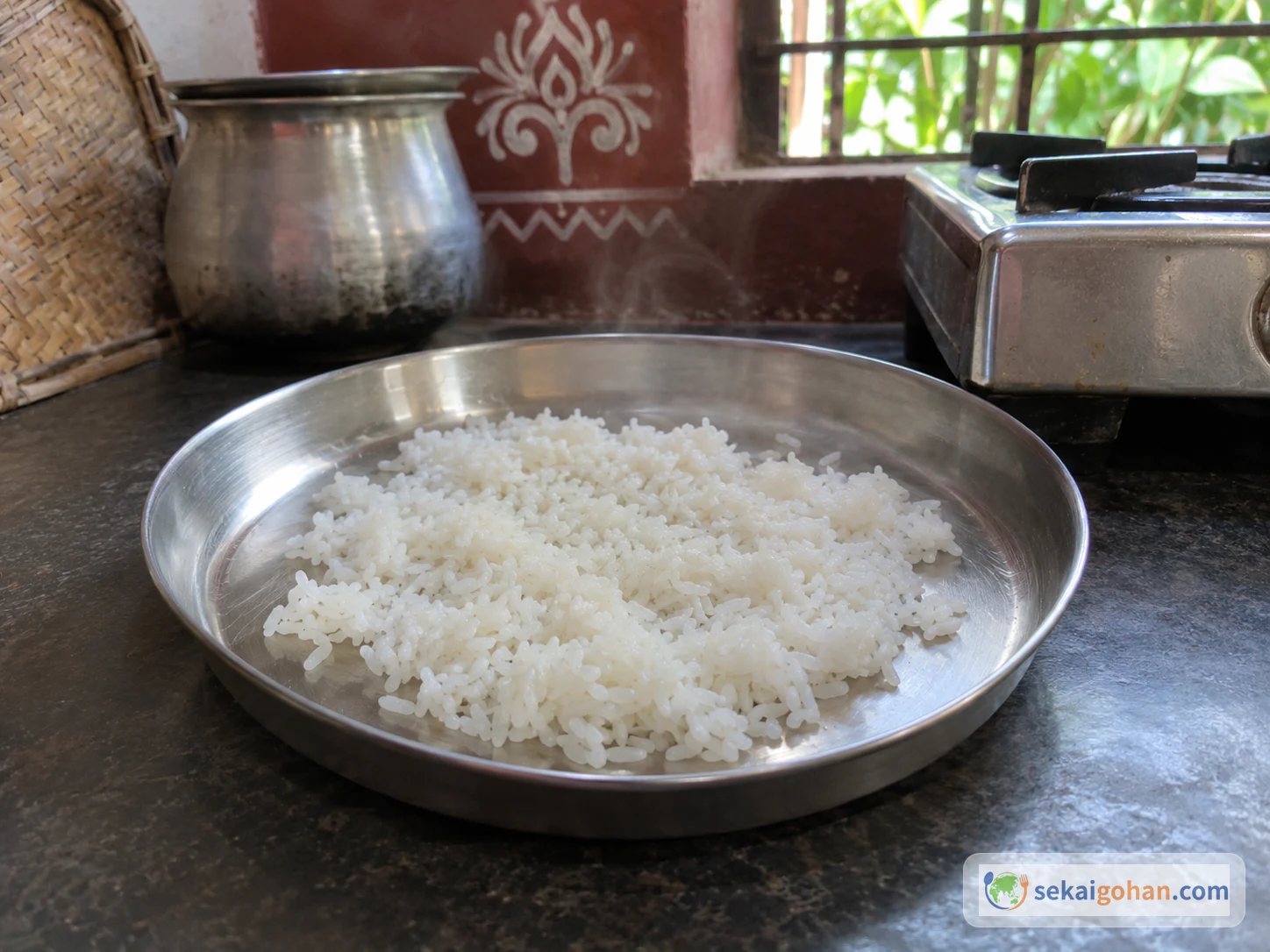
Rice: Cook it fresh for this dish. Rice made ahead or left over from the day before isn't a good fit here, because the point is to get it chilled before it has time to sit around.
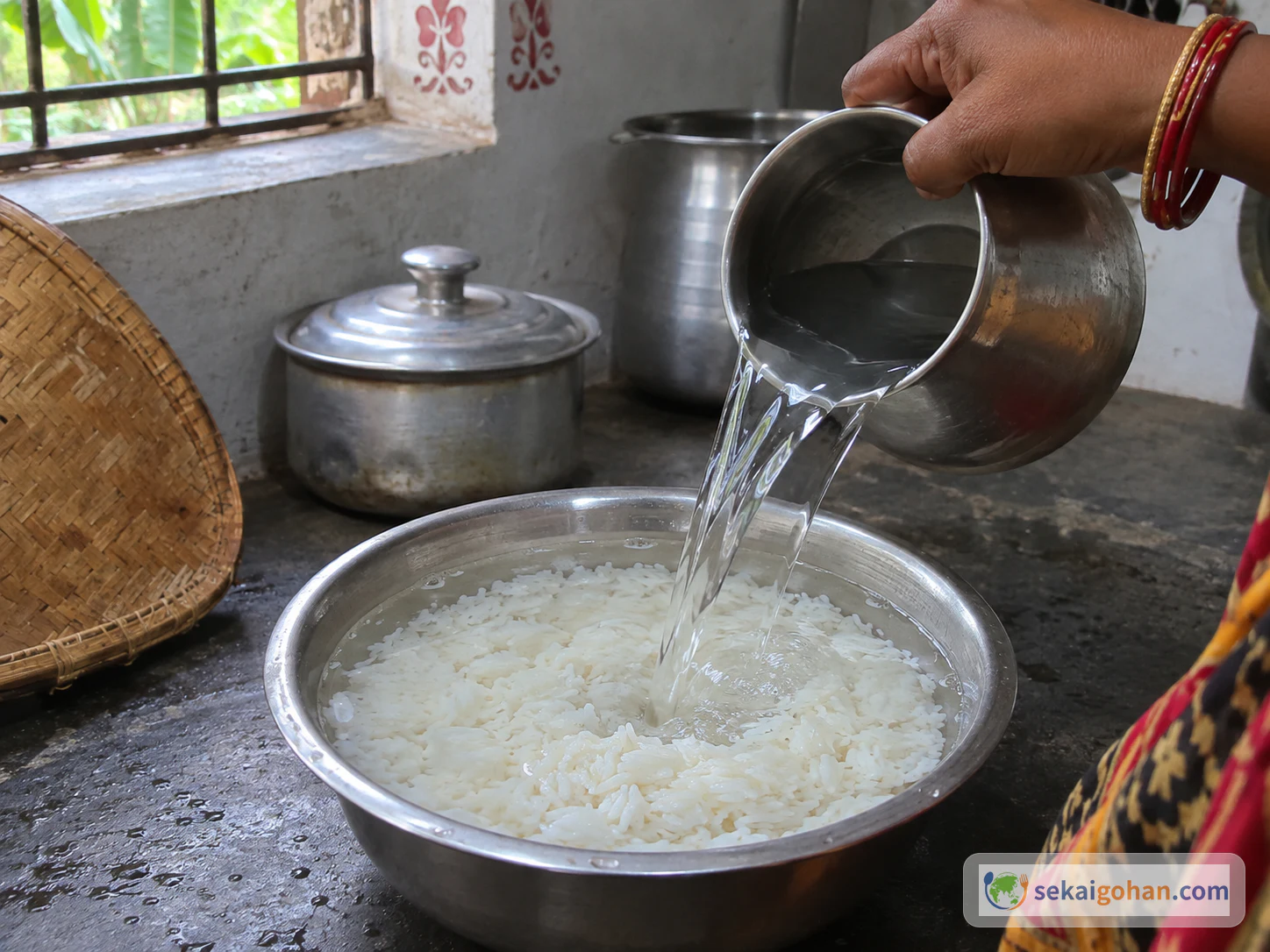
Water: The amount is flexible. What matters is that the rice ends up completely submerged.
Chaat masala: It isn't a traditional Saja seasoning, since Saja itself relies on lemon, but it adds a nice savory edge. Blends differ by brand, so check the label for allergens.
Method
Bacillus cereus spores can survive cooking. In rice left at room temperature for a long time, they multiply and produce a toxin that heating does not readily destroy. Keep the rice moving from pot to fridge, and don't leave it standing on the counter. Don't rely on lemon, smell, bubbles, taste or reheating to tell you the rice is safe.
Wash the lemon peel well before you cut it, since the juice runs over the peel as you squeeze. Check that the rice is fully under water before you put the lid on.
Fixing Common Problems with Saja Pakhala
Most problems come down to water, salt or lemon, and they're easy to fix at the table. The two safety cases in the last rows have only one answer.
| What happened | What to do |
|---|---|
| Rice is poking above the water | Add more cold drinking water until it is fully covered |
| The bowl tastes flat | Add salt a little at a time |
| It is too sharp with lemon | Add a little more cold drinking water, and use fewer slices next time |
| You only have leftover rice | Make this another day with freshly cooked rice |
| The covered rice sat out on the counter for a long time | Throw it away. Reheating or adding lemon won't fix it |
| It smells and tastes fine, but it is from yesterday | Don't eat it. Smell and taste are not safety checks |
Serving, Storing and Other Styles
Set out whatever sides you have: baadi chura, vegetables, fish or torani all work. In the fermented style, Pakhala Bhata, yogurt sometimes takes the place of lemon, and tempering and coriander are optional extras.
Saja Pakhala is a same-day dish. Until you eat it, keep it covered in the refrigerator at 50°F (10°C) or below, and throw away anything that has sat at room temperature for a long time or that you have any doubt about. Cold cooked rice is normally safe within 24 hours if it is cooled quickly and refrigerated, but this rice sits in water, so finish it the day you make it. Heating it up won't rescue rice left out too long, because the toxin resists heat.
Frequently Asked Questions
How much water should I use?
Use 2–3 cups, but what counts is covering the rice completely. Treat the amount as flexible, not a fixed ratio.
Can I leave it out overnight at room temperature?
Traditional Basi Pakhala is made that way, but Saja is different: chill the rice and eat it the same day.
Can I use leftover rice?
Fermented Pakhala is often made with day-old rice, but Saja uses freshly cooked rice, so it goes into the fridge before it has time to sit around.
Is chaat masala traditional in Saja Pakhala?
No. Saja is seasoned with lemon; chaat masala is borrowed from the fermented Pakhala Bhata style.