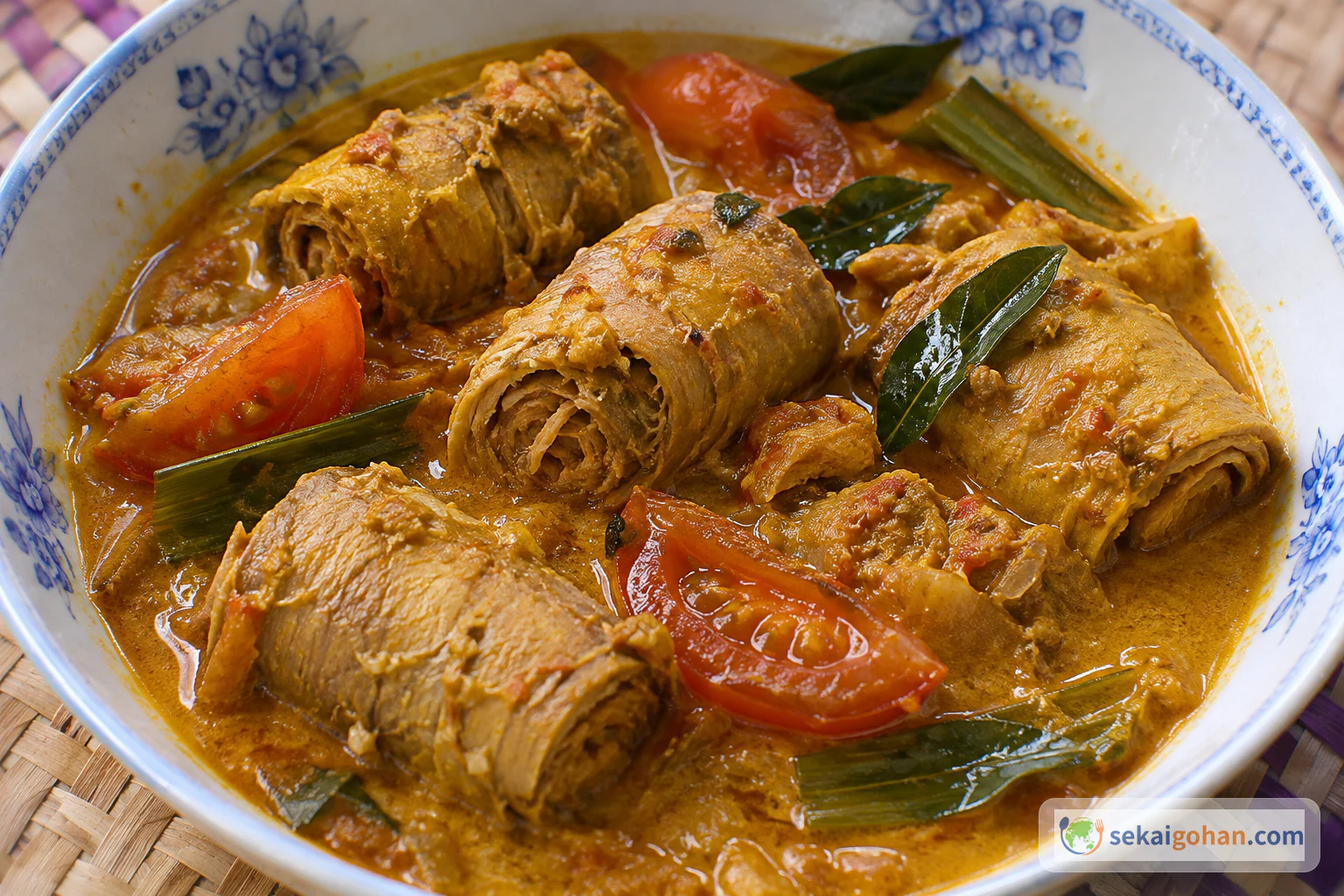
Kandu Kukulhu: Maldivian Rolled Tuna Curry with Spice Paste

Tuna curry with spice paste rolled inside the fish
Serves
6 servings
Level
Intermediate
Cuisine
Maldivian

How to make kandu kukulhu, the Maldivian curry of thin tuna strips spread with spice paste, rolled and simmered. This 6-serving modern home recipe covers the smooth coconut paste, rolling and securing the fish, the uncovered simmer, the coconut milk finish, safe centre cooking and ingredient choices.

Cooking flow

Cooking steps

STEP11 / 11

Prep the paste aromatics and the pot ingredients

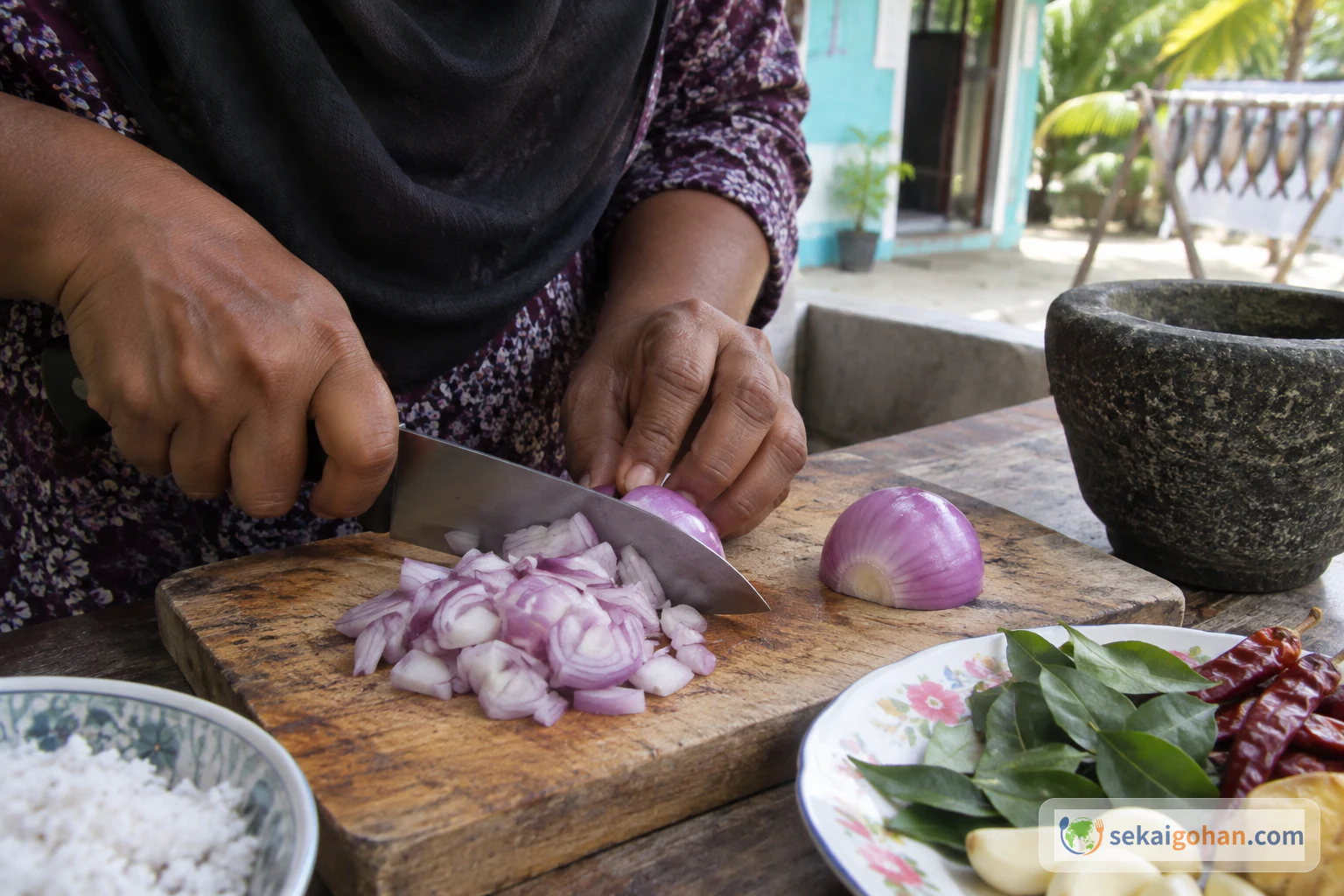
Roughly chopping an onion with a knife
Rough pieces are enough because the paste gets blended

Roughly chop the onion until you have 6 oz (170 g), and grate fresh ginger until you have 1 tbsp. Cut the 2 fresh medium tomatoes into quarters, and cut a piece of pandan leaf about 3 × 3.5 inches (9 cm) for the pot; it adds aroma and is not used to tie the fish. Wearing gloves, cut 1/4 of a habanero, or the amount you prefer, on a separate board, and keep your hands away from your eyes. Set the tomatoes, pandan and habanero aside for the pot; the onion and ginger are ready for the paste when the onion is in rough pieces and the ginger is a fine, wet pile.

STEP22 / 11

Blend the spice paste

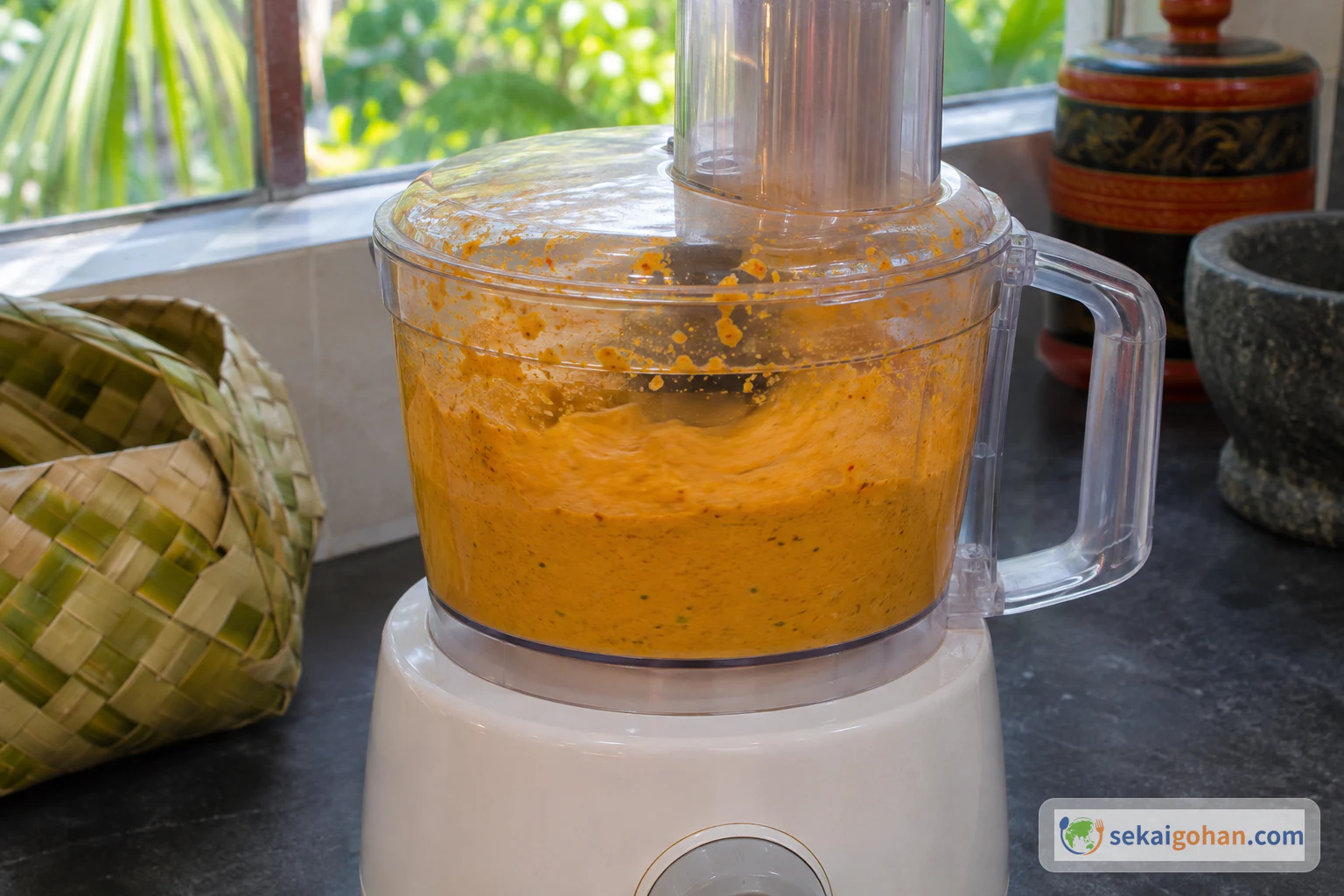
Blending the mixture into a smooth paste
Blend with the lid closed until smooth

Put the desiccated coconut, 1 sprig of curry leaves, dried chilies, garlic, ginger, onion, fennel, cumin, turmeric, 1 tsp paste salt, cardamom, cinnamon, fenugreek and 1/2 cup water into the food processor. No fish, tomato or coconut milk goes in at this stage. Close the lid and blend until the paste is smooth.

STEP33 / 11

Rinse and cut the tuna

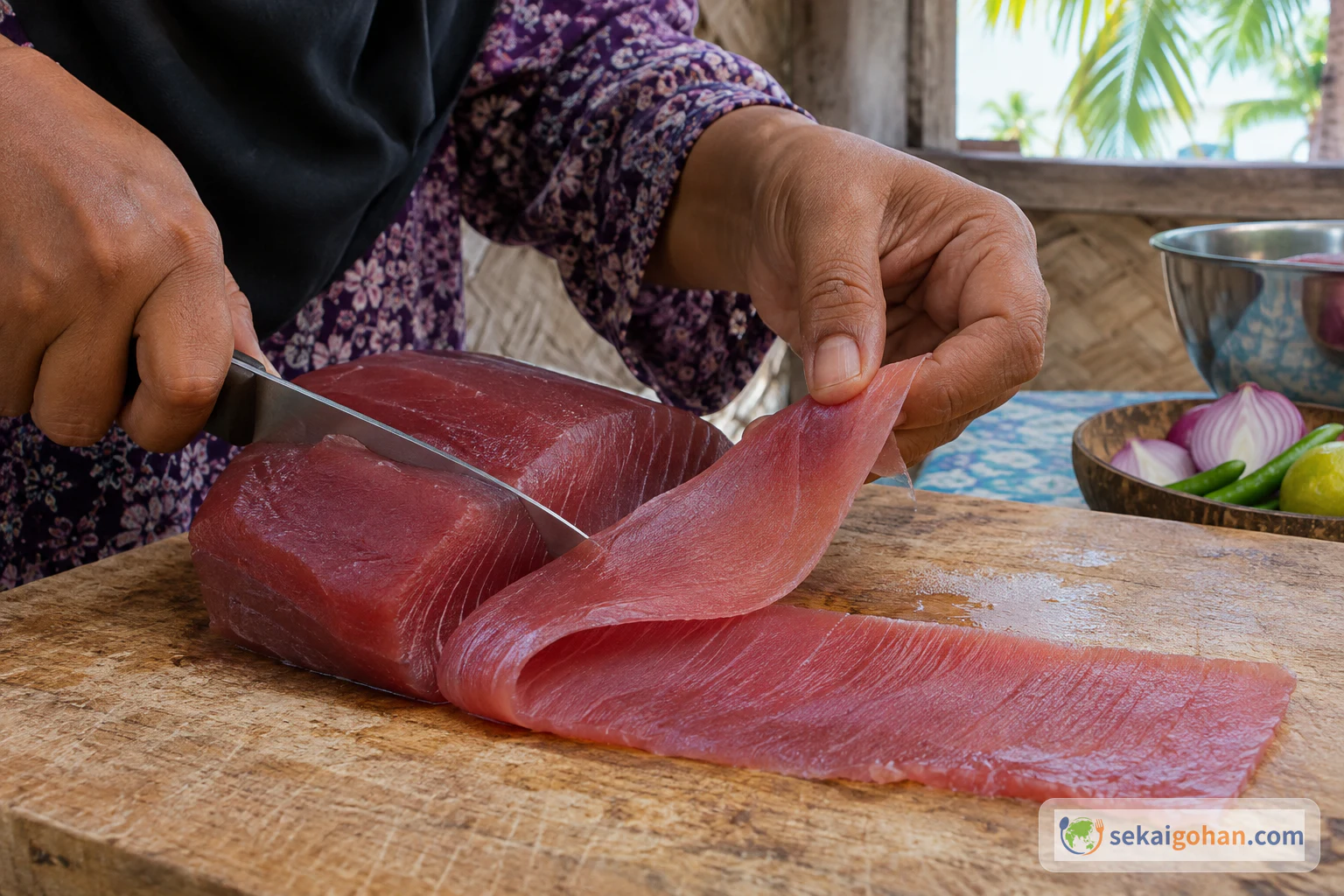
Slicing a tuna block open into a long, thin strip
Open the block into strips, not cubes or steaks

Place the tuna in a raw-fish tray inside a clear sink and rinse it gently with a small, controlled amount of water. Keep splashes away from other ingredients and ready-to-eat food. This does not sterilize the fish, so clean your hands, the sink and your tools afterward. Using the raw-fish board and knife, slice around the 1.25 lb (530 g) tuna block as if unrolling a Swiss roll, until you have long, thin strips about 2 × 6.5 inches (17 cm), not cubes or steaks.

STEP44 / 11

Salt and paste the strips

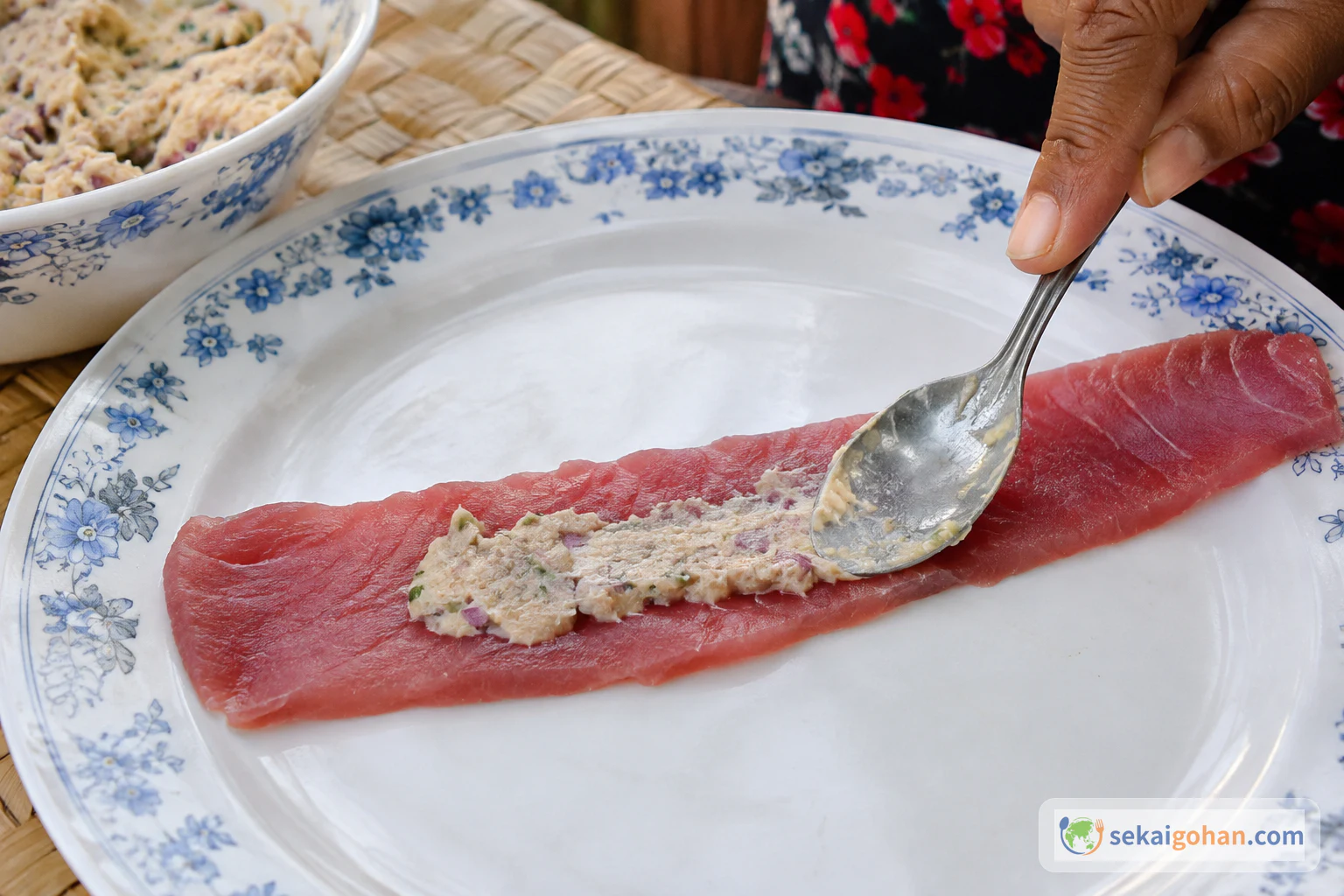
Spreading spice paste on a tuna strip with a spoon
A thin layer of paste on each strip

Gently rub the 1/2 tsp fish salt over the tuna strips; this is the fish salt, separate from the other two. Spread 1 tsp of paste over each strip in a thin layer, using a separate spoon on the fish so the rest of the paste stays clean for the pot. Each strip is ready when it is evenly salted and coated in a thin layer of paste.

STEP55 / 11

Roll and secure the tuna

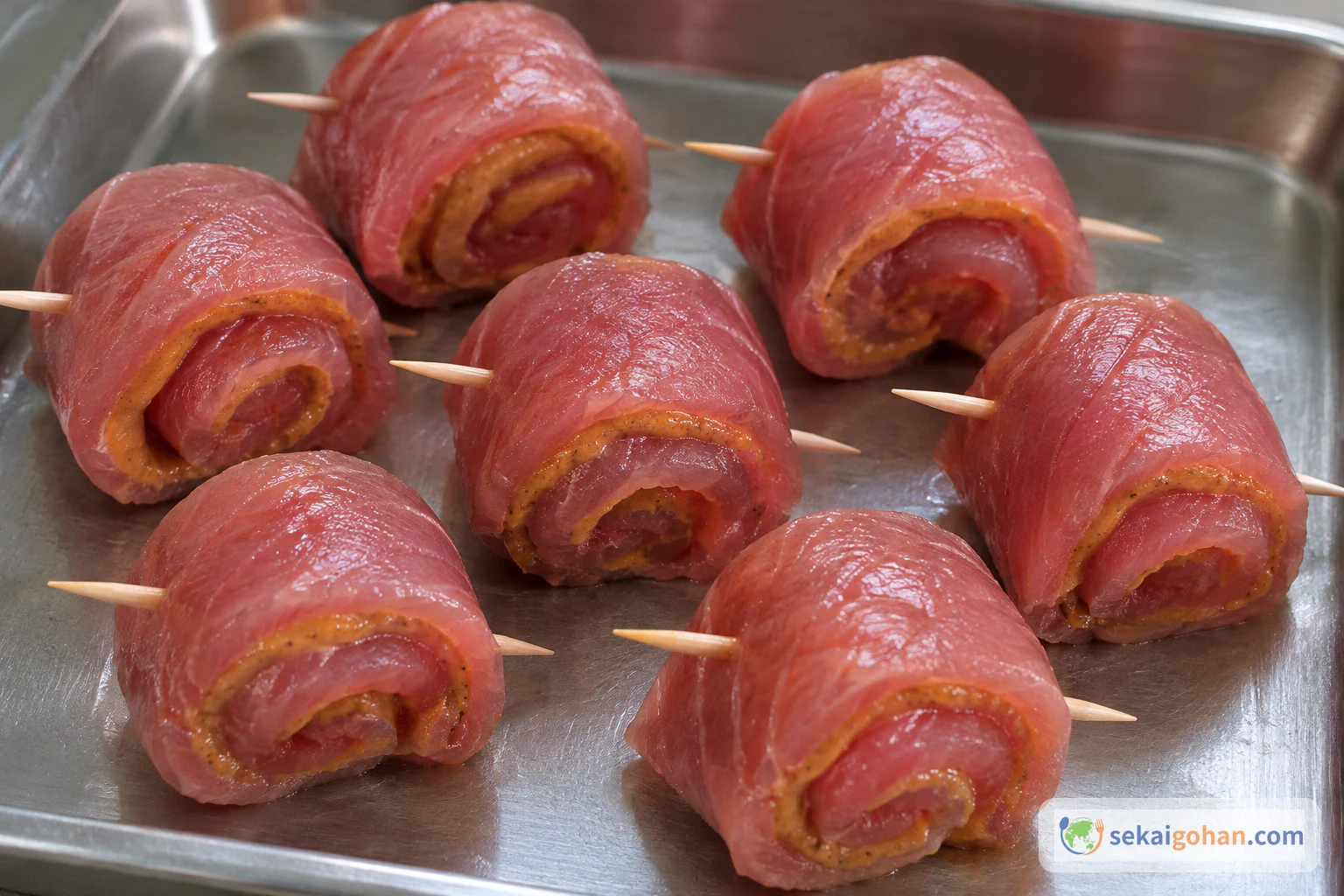
Several raw tuna rolls secured with toothpicks on a tray
The prepared rolls wait on the raw-fish tray

Starting at one end, roll each strip tightly into a compact spiral. Push a toothpick through each roll to hold it closed, and count the toothpicks as you go so you can account for each one later. Rest the finished rolls on the raw-fish tray; they are done when every roll is a compact spiral held shut by a toothpick.

STEP66 / 11

Boil the curry base

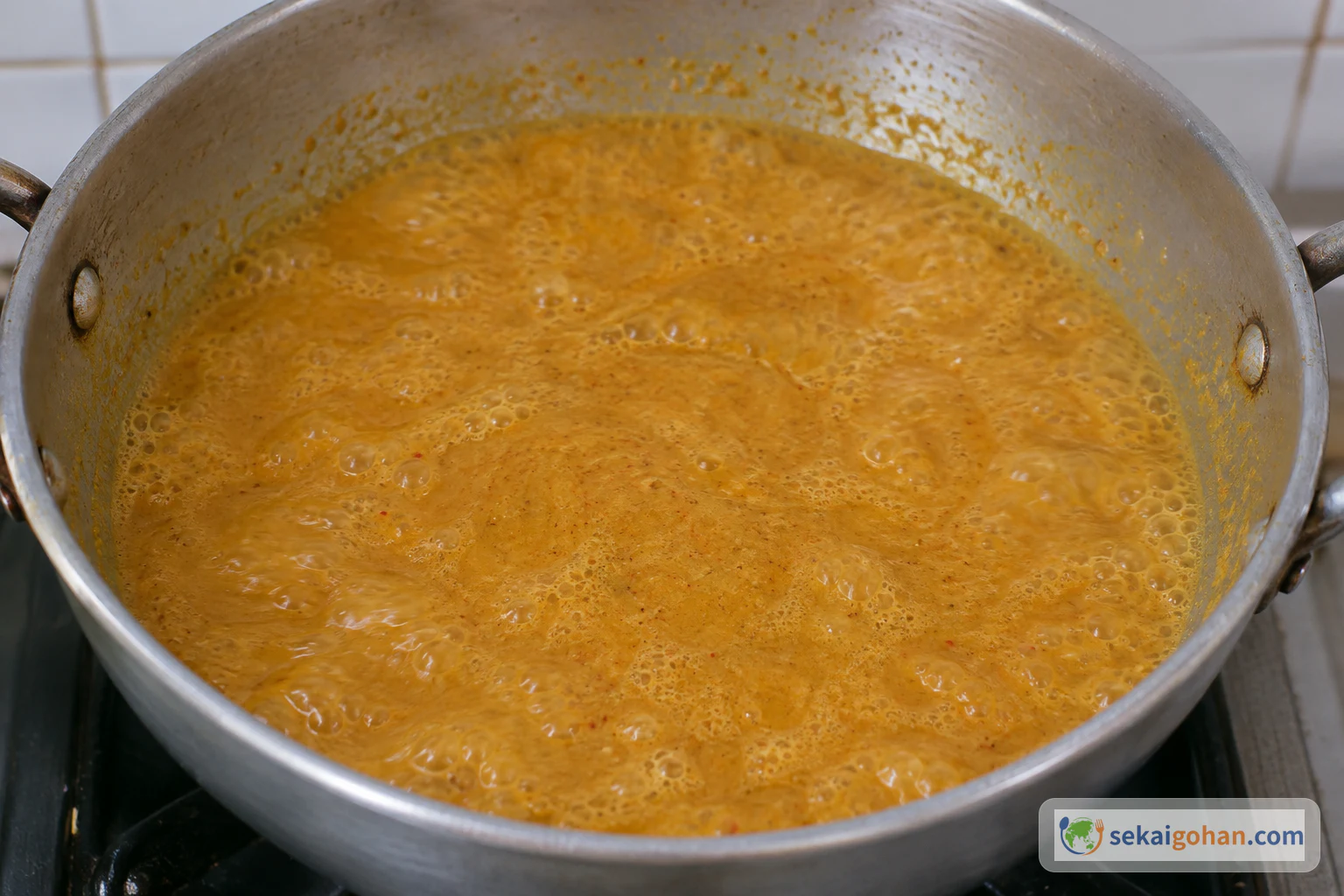
The paste and water base boiling in an open pan
Let the base boil before the fish goes in

Put the remaining paste, about 1 1/3 cups, into a medium pan. Do not add oil. Pour in the 2 cups of pot water and stir it into the paste. Bring it to a boil in the uncovered pan, until the base is bubbling before the fish goes in.

STEP77 / 11

Add the tuna and aromatics

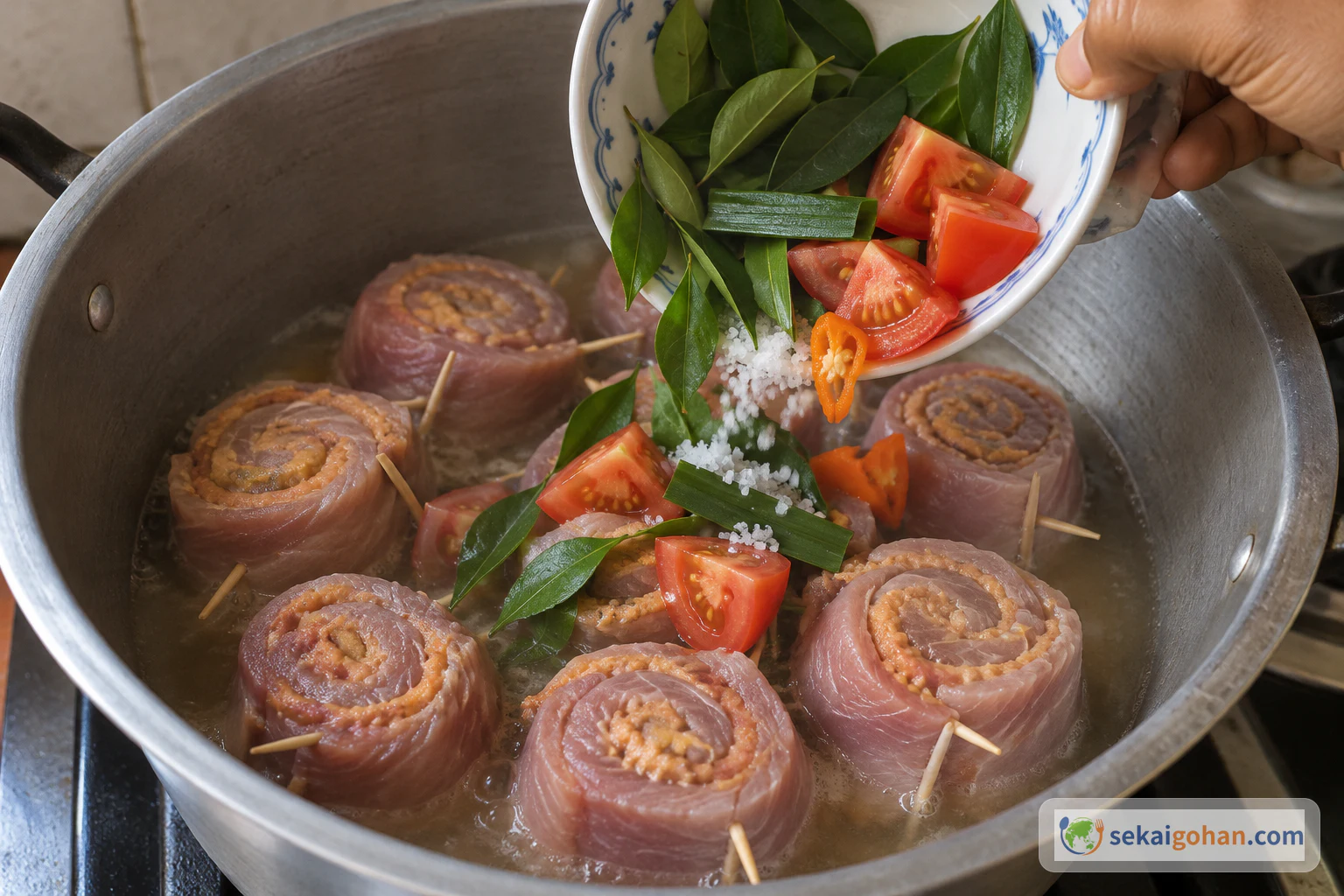
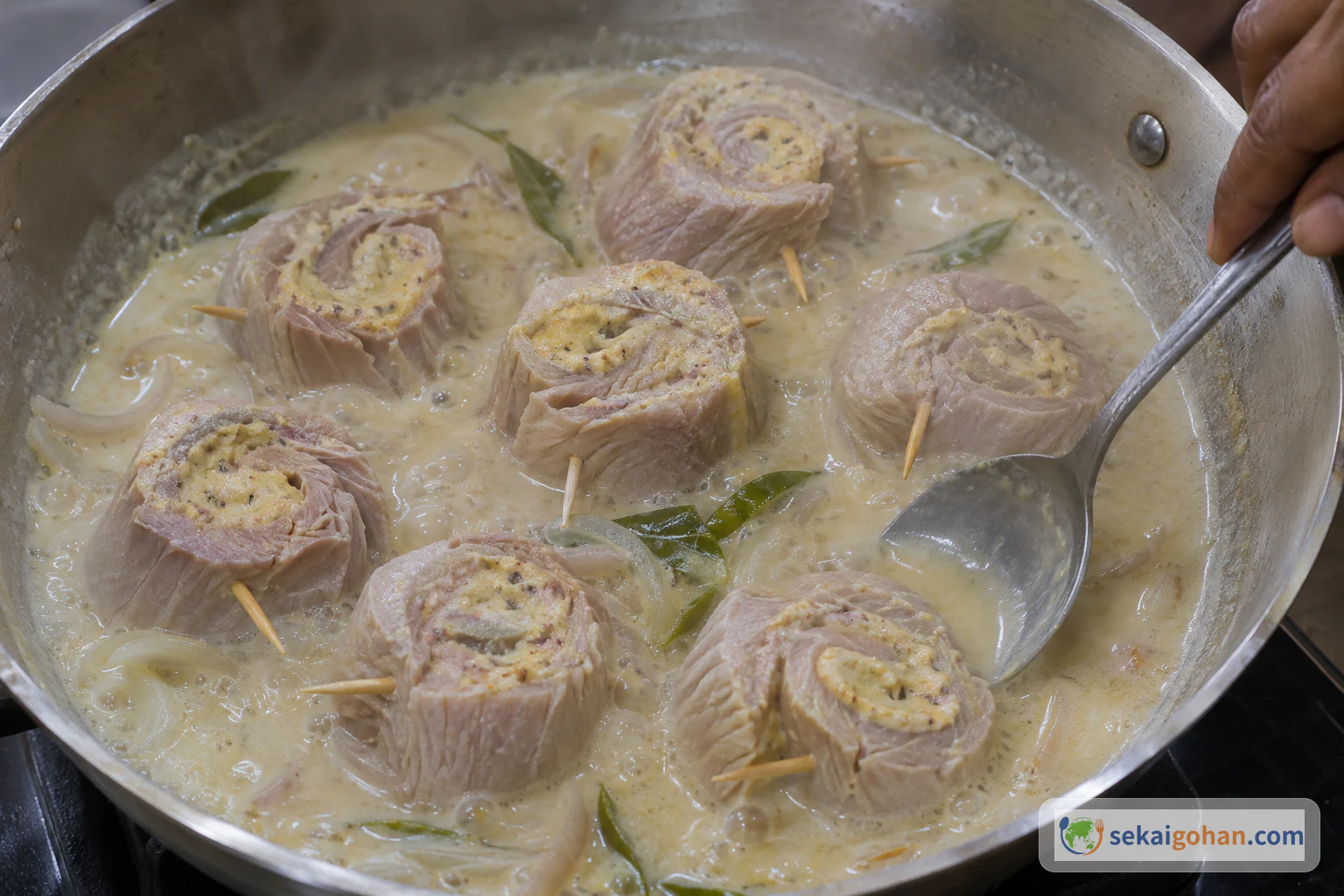
Adding curry leaves, pandan, tomato, habanero and salt to the pan
These ingredients go in together, after the fish

Using clean tongs, lower the rolls into the boiling base, and wash the tongs before they touch cooked food. Add the second sprig of curry leaves, the pandan, quartered tomatoes, habanero and 1 tsp curry salt, or salt to taste, all together after the fish. The pan is ready to simmer when the rolls sit in the base with the aromatics around them.

STEP88 / 11

Simmer the curry

Gently stirring around the tuna rolls so they stay intact
Stir around the rolls without crushing them

Cook without a lid over medium-high heat for about 15 minutes. Stir occasionally during this time, moving the spoon gently around the rolls so they stay intact and are not crushed. The curry is ready for the coconut milk when it has simmered the full 15 minutes with the rolls still whole.

STEP99 / 11

Add the coconut milk

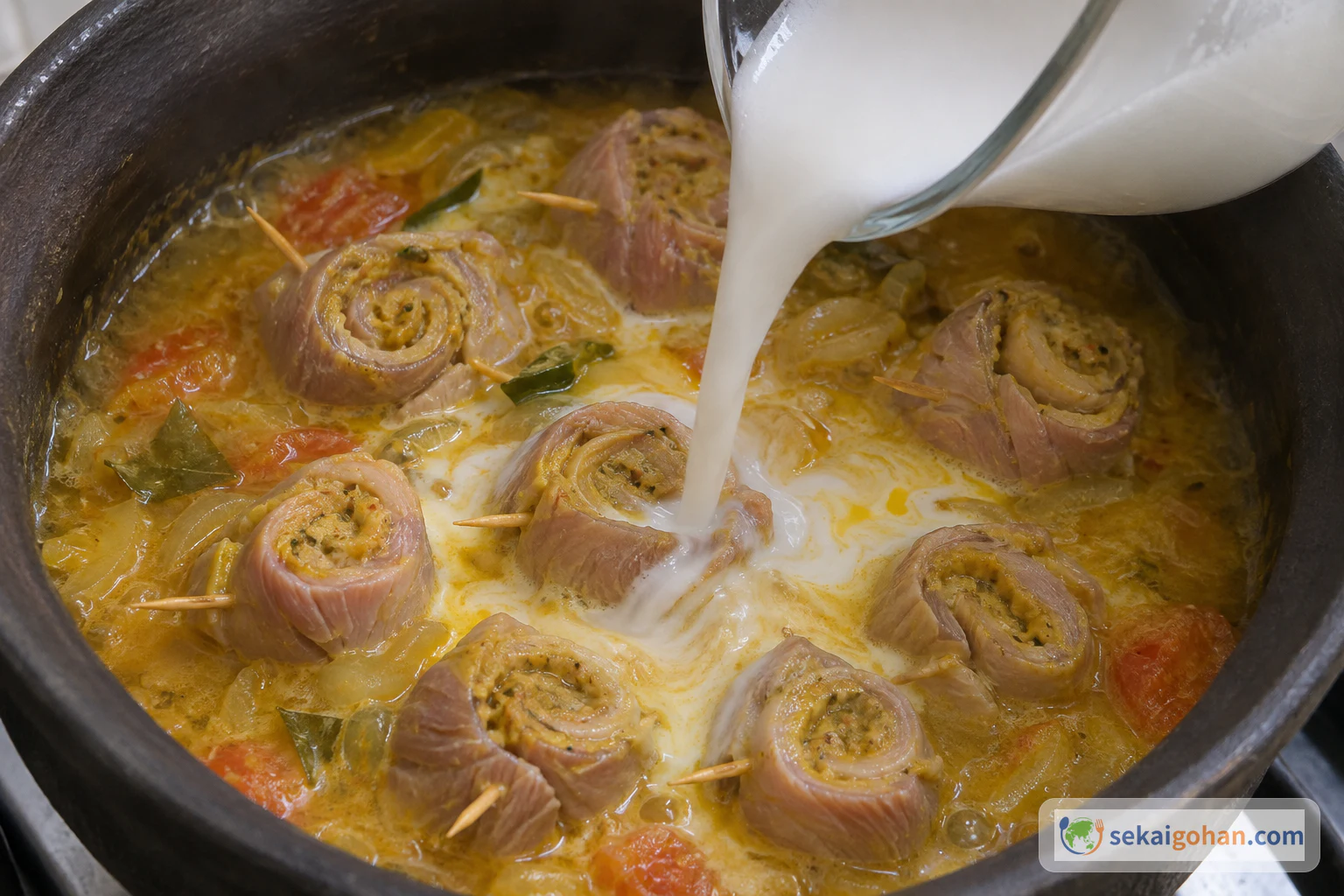
Pouring the dissolved coconut milk into the curry
The coconut milk goes in after the 15-minute simmer

In a heatproof jug, whisk the 1/4 cup coconut milk powder into the 1/2 cup hot water until dissolved, separately from the curry. Pour the dissolved coconut milk into the curry and continue cooking for about 2 more minutes. Turn off the stove once the curry is simmering gently with the coconut milk stirred in.

STEP1010 / 11

Check the centre of the rolls

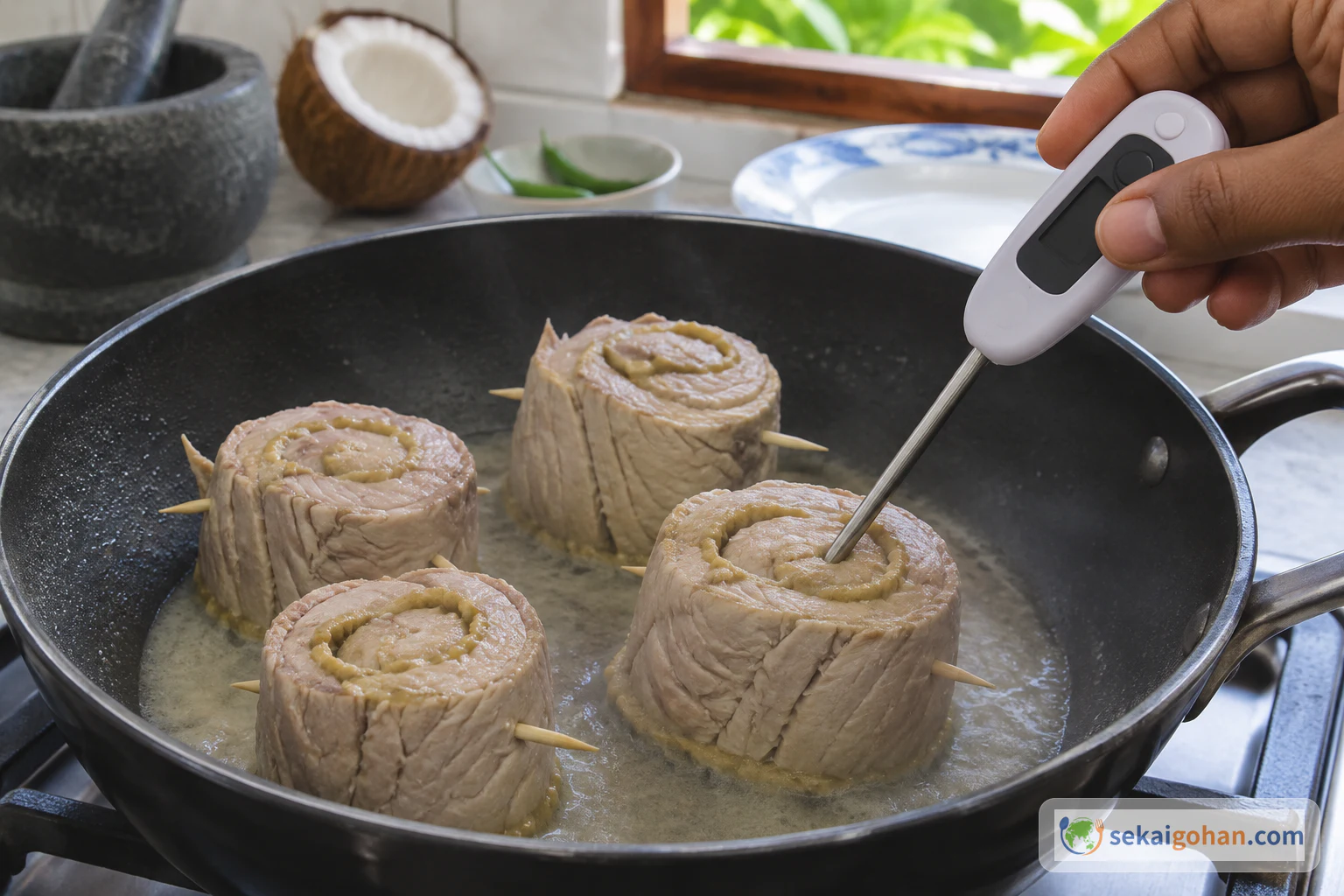
Checking the centre of a tuna roll with a thermometer
Check the centre of a thick roll with a thermometer

Insert a clean food thermometer into the centre of one of the thickest rolls. The centre should reach 167°F (75°C) and hold for at least 1 minute. If it does not, turn the heat back on, keep cooking and check again. Cooking time and fish colour do not show that it is done.

STEP1111 / 11

Remove the toothpicks and serve

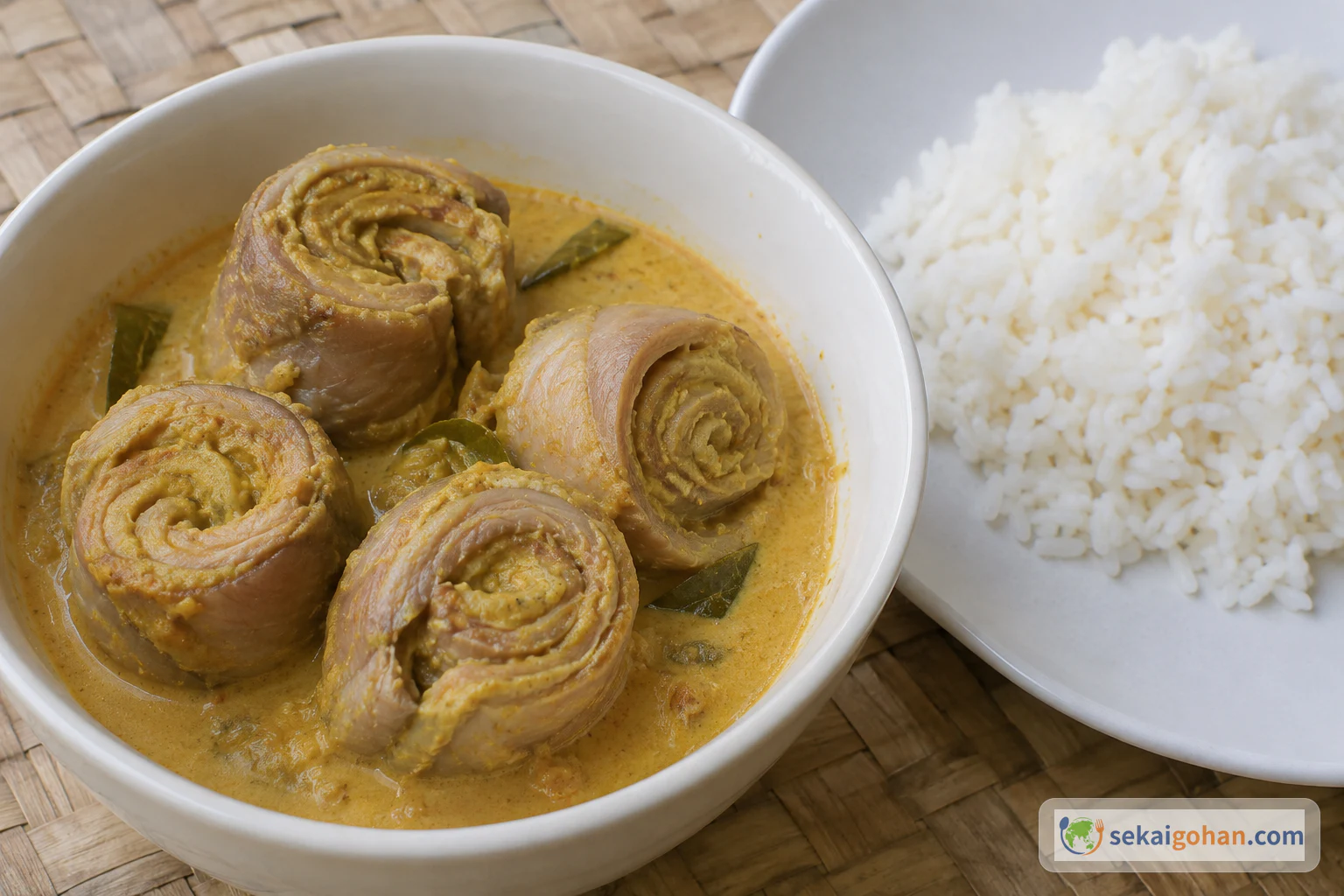
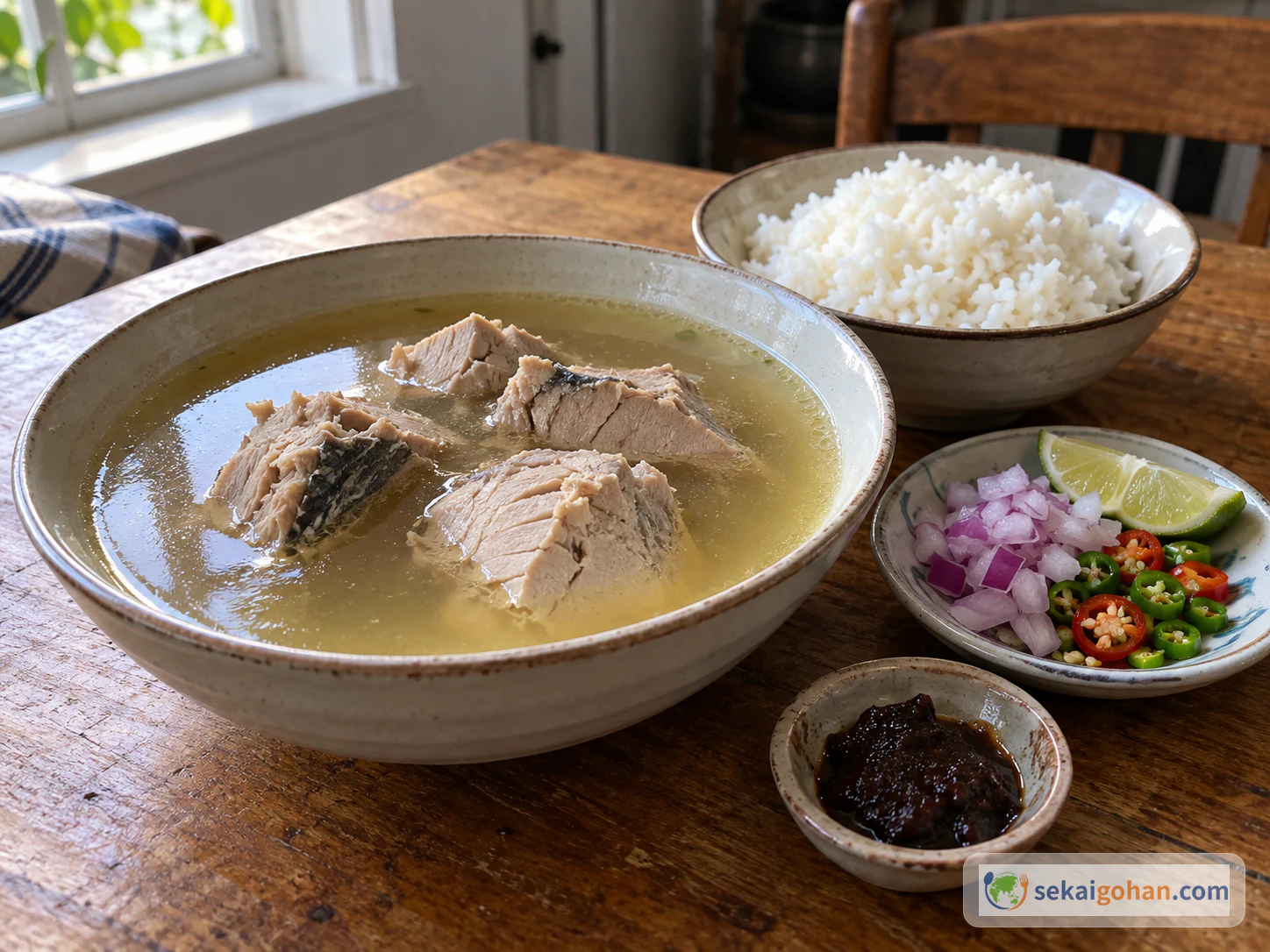
The hot tuna curry served with rice on the side
Curry and plain rice in separate dishes

With clean tongs, pull each toothpick out into a separate dish, and count them against the number you used. Remove all the toothpicks before serving. Serve the hot curry with plain rice on the side, in separate dishes.

0 / 0
Ingredients

Ingredients

1 / 1

Ingredients

Ingredient Amount Role
Unsweetened desiccated coconut 8 tbsp Body and coconut flavour
Curry leaves 1 sprig Aroma in the paste
Dried red chilies 5 Heat and colour
Garlic 6 cloves Aromatic base
Fresh ginger, grated 1 tbsp Aromatic base
Onion, roughly chopped 170 g Blended into the paste
Fennel seeds 1 tbsp Spice
Cumin seeds 1 tsp Spice
Turmeric powder 1/2 tsp Spice and colour
Salt, for the paste 1 tsp Seasons the paste
Green cardamom 6 pods Spice
Ground cinnamon 1/2 tsp Spice
Fenugreek seeds pinch Spice
Water, for the paste 1/2 cup Helps it blend smooth
Fresh tuna 530 g Cut into strips and rolled
Salt, for the fish 1/2 tsp Seasons the tuna
Prepared spice paste 1 tsp per strip Spread inside each roll
Remaining spice paste about 1 1/3 cups Curry base
Water, for the pot 2 cups Curry liquid
Curry leaves 1 sprig Aroma in the pot
Pandan leaf 3 × 9 cm piece Aroma in the pot
Fresh medium tomatoes, quartered 2 Added to the curry
Habanero 1/4, or to taste Fresh chilli heat
Salt, for the curry 1 tsp, or to taste Seasons the curry
Coconut milk powder 1/4 cup Coconut finish
Hot water 1/2 cup Dissolves the powder
Plain rice as needed Served separately
0 / 0

Kandu kukulhu is a Maldivian tuna curry built around rolls. Long strips of fresh tuna are spread with a coconut and spice paste, rolled up tight, and simmered in a curry made from that same paste. When you cut a roll open, you see a thin spiral of spice running through the fish. It serves 6 and takes about an hour: 30 minutes to prep and 30 minutes to cook.

Kandu Kukulhu in Maldivian Cooking

What sets kandu kukulhu apart is the rolling. A general fish curry (mas riha) and a chicken curry (kukulhu riha) are both different dishes. So is maskurolhi, an uncooked side dish of tuna and coconut. In kandu kukulhu, every piece of fish carries a layer of paste inside it.

The dish uses what Maldivian cooking is built on: tuna, coconut and rice. Cumin is one of its spices, and influences from several regions reached the islands along Indian Ocean trade routes. Cooks don't all make it the same way. Some tie the tuna rolls with coconut leaf and simmer them in coconut milk made to a different formula. You'll find more dishes from the same islands among our Maldivian recipes.

Ingredients: Paste, Tuna and Pot (Serves 6)
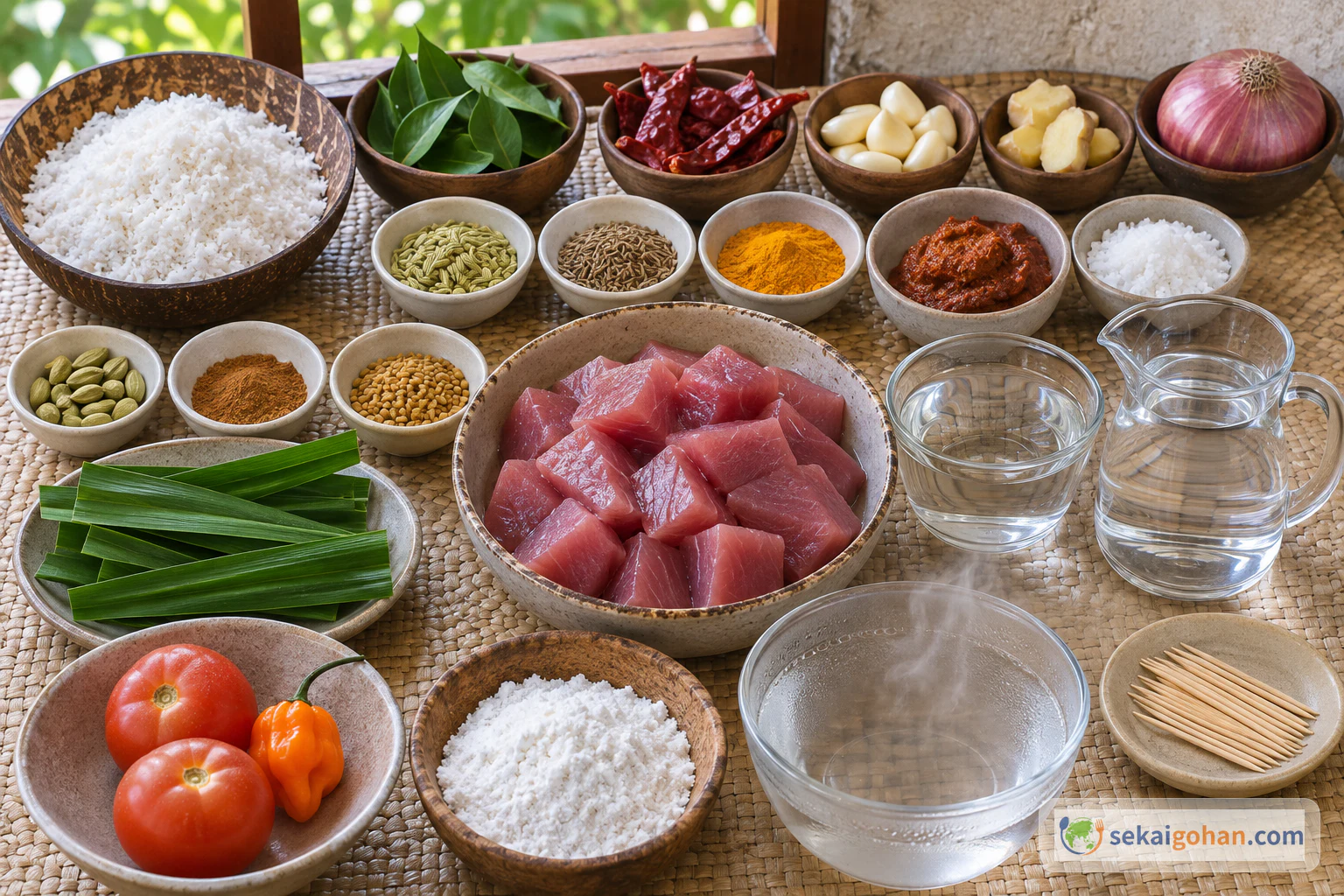
Ingredients for the paste, the fish and the pot, laid out in separate groups
Keep the paste, fish and pot ingredients in separate groups

Salt appears three times and curry leaves twice, so measure each one separately. The water for the paste, the water for the pot and the hot water for the coconut milk are also separate.

Equipment

  • Food processor
  • Grater
  • Sharp knife and cutting board for vegetables
  • Separate cutting board, knife and tray for raw fish
  • Toothpicks
  • Medium cooking pan
  • Clean tongs and a spoon
  • Heatproof jug and whisk
  • Food thermometer
  • Small dish for discarded toothpicks

Choosing Ingredients for Kandu Kukulhu

Item What to choose What changes
Tuna Fresh tuna in a block you can open into long strips Plain chunks make a different dish
Desiccated coconut Unsweetened Sweetened baking coconut makes the curry sweet
Coconut milk powder The powder, dissolved separately in hot water No equal-amount swap for canned milk is given
Curry leaves and pandan Keep both if you can Leaving them out changes the aroma, and bay leaf does not smell the same
Dried chilies and habanero Reduce either one for less heat Milder, but it departs from the listed amounts

When you shop, look for these names: tuna block, unsweetened desiccated coconut, coconut milk powder, curry leaves, pandan leaf, fennel seeds, green cardamom and fenugreek seeds.

Method: Paste, Rolls, Simmer, Finish

Reading the photos

The photos show each stage. They do not show amounts, heat or doneness. The curry looks pale and opaque before the coconut milk goes in, because the paste already contains desiccated coconut.

Fixing Kandu Kukulhu Problems

Key points

Blend the paste until smooth, keep the tuna in tight rolls, and add the dissolved coconut milk only near the end. Take out every toothpick before anyone eats.

Cooking the fish through

Cook the fish until the centre reaches 167°F (75°C) and holds there for at least 1 minute. Check it with a food thermometer. Simmering time and the colour of the fish do not show that it is done. Keep raw fish away from other foods. Rinsing tuna does not sterilize it.

What you notice What to look at What to do
The paste feels coarse It has not finished blending Blend longer before any of it touches the fish
Powder clumps in the jug It has not fully dissolved Keep whisking in the jug before adding it to the curry
The curry looks pale before the coconut milk goes in The paste already contains desiccated coconut That's normal, so carry on
A roll starts to open The toothpick or your stirring Stir more gently around the rolls, and secure them firmly next time
The center has not reached temperature The thickest roll Return to the heat, keep cooking and check again
A toothpick is missing from your count The pan and the servings Find it before anyone eats

Serving and Variations

The curry is served with plain rice. It's made with whole garlic cloves and habanero, and the rolls are held with toothpicks. Each of these can be swapped on its own, and the method stays the same:

  • Garlic: use 2 tsp chopped garlic in place of the 6 whole cloves.
  • Fresh chilli: use Scotch bonnet in place of habanero, at 1/4 or to taste.
  • Securing the rolls: tie the rolls with pandan strips instead of toothpicks. Use as many strips as you need for tying, and keep them separate from the piece that goes in the pot.
  • What to serve with it: serve roti or folhi in place of rice.

Frequently Asked Questions

Can I leave the tuna in fillets or chunks?

This curry depends on thin strips rolled around the paste. If you use plain chunks, you're making a different dish.

How thick should the strips be, and how many will I get?

Aim for strips of about 2 × 6.5 inches (17 cm). The recipe doesn't give a thickness or a number of pieces.

What if I can't find pandan?

You can still make the curry, but the aroma will change. The rolls are held with toothpicks, so you only need pandan in the pot.

Can I use canned coconut milk?

Use the powder dissolved in hot water. There's no equal-amount conversion to canned milk, so if you swap, you'll have to adjust it yourself.

Why check for 167°F (75°C) if the recipe gives times?

Treat the times as a guide. Cooking time alone doesn't guarantee the fish is done, so check the center of the thickest roll with a food thermometer. It should reach 167°F (75°C) and hold there for at least 1 minute.

Sources