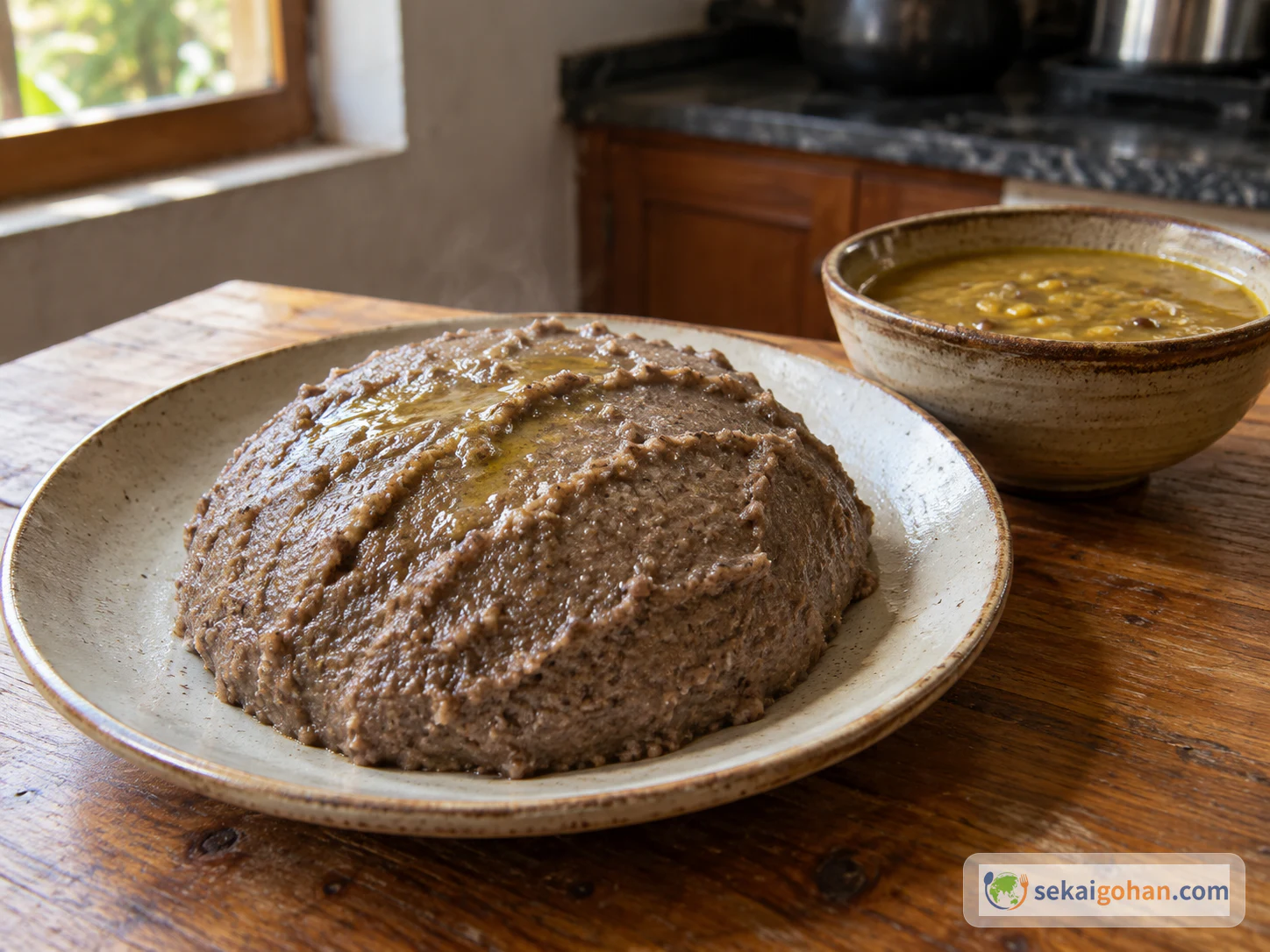
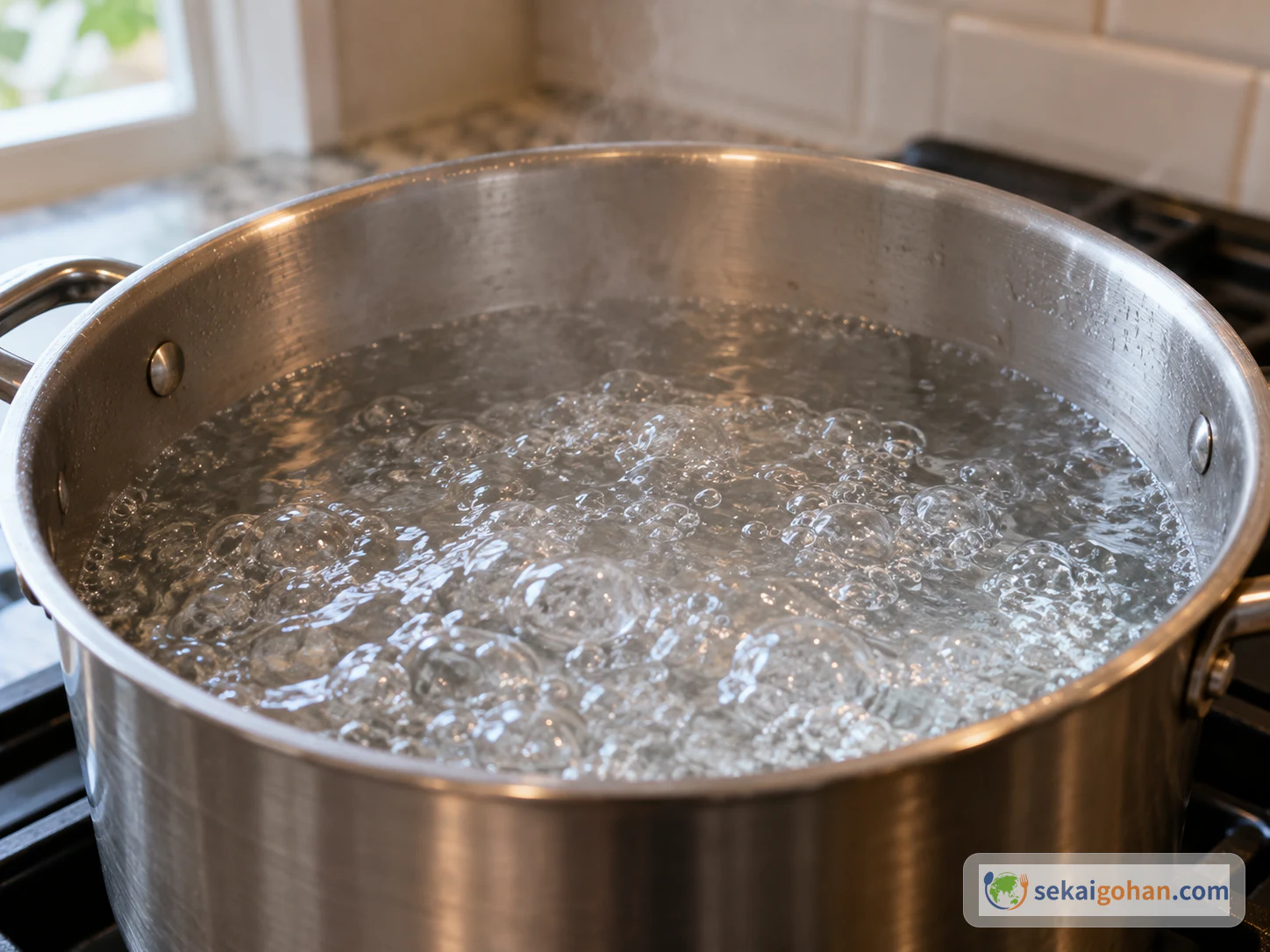
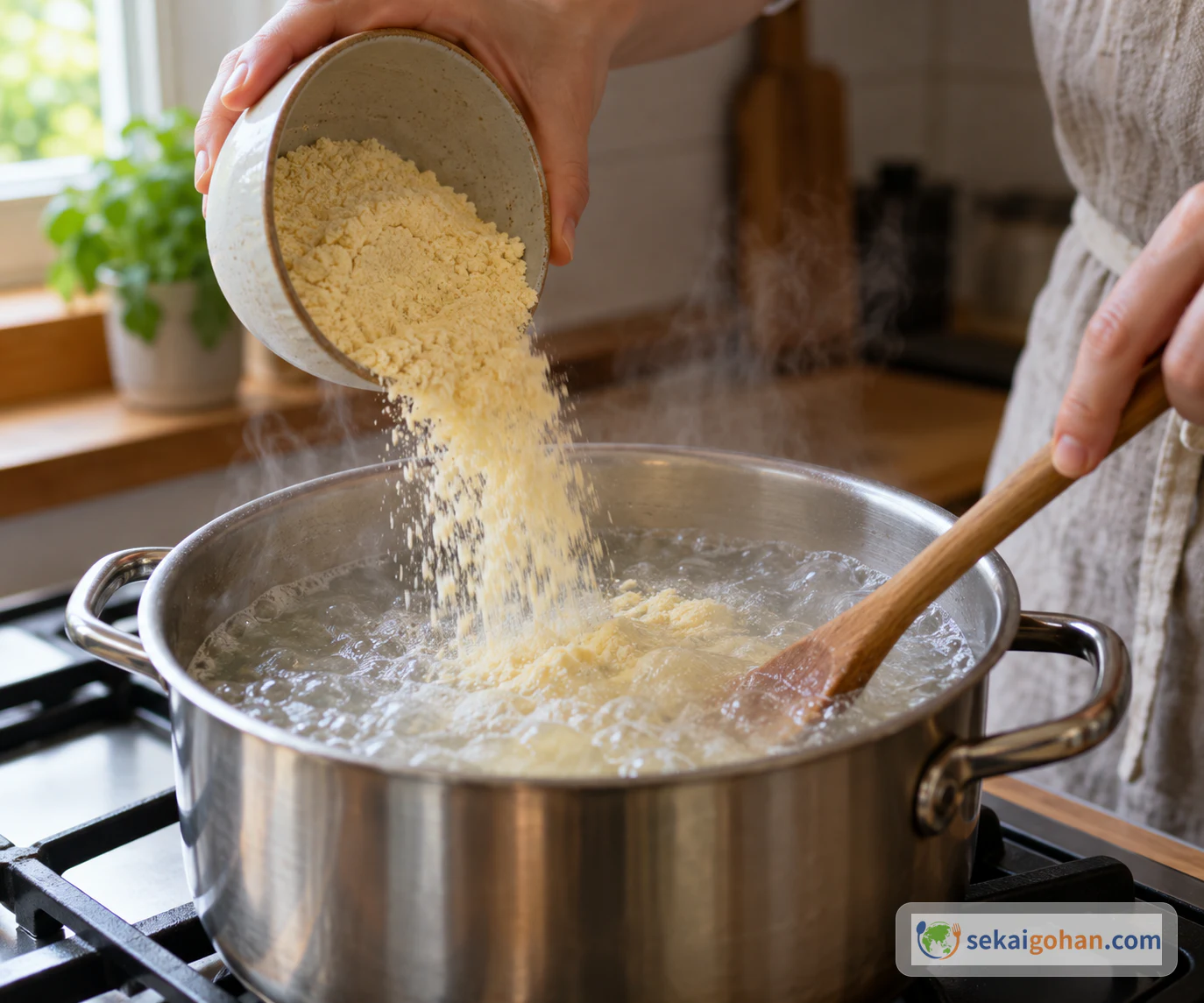
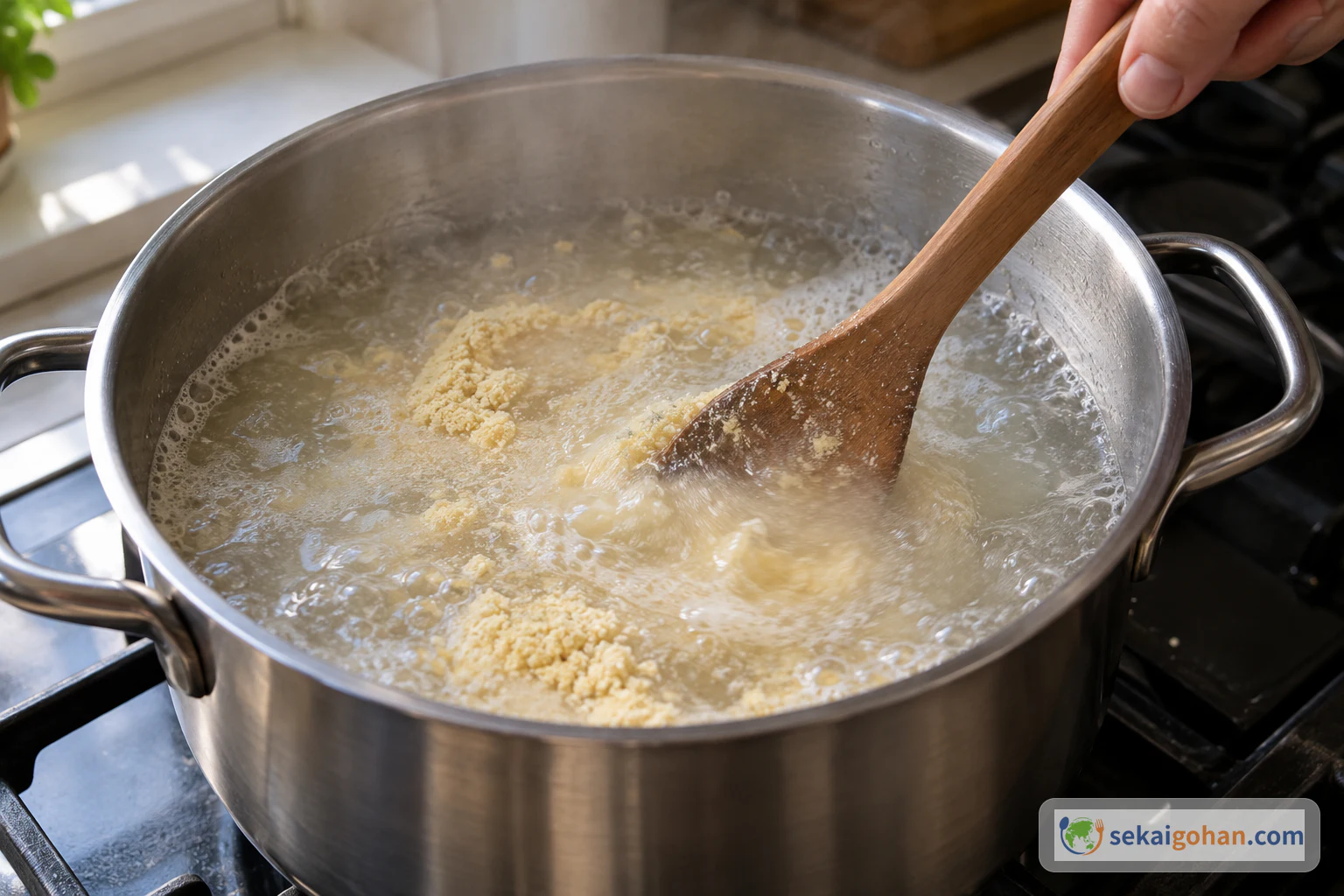
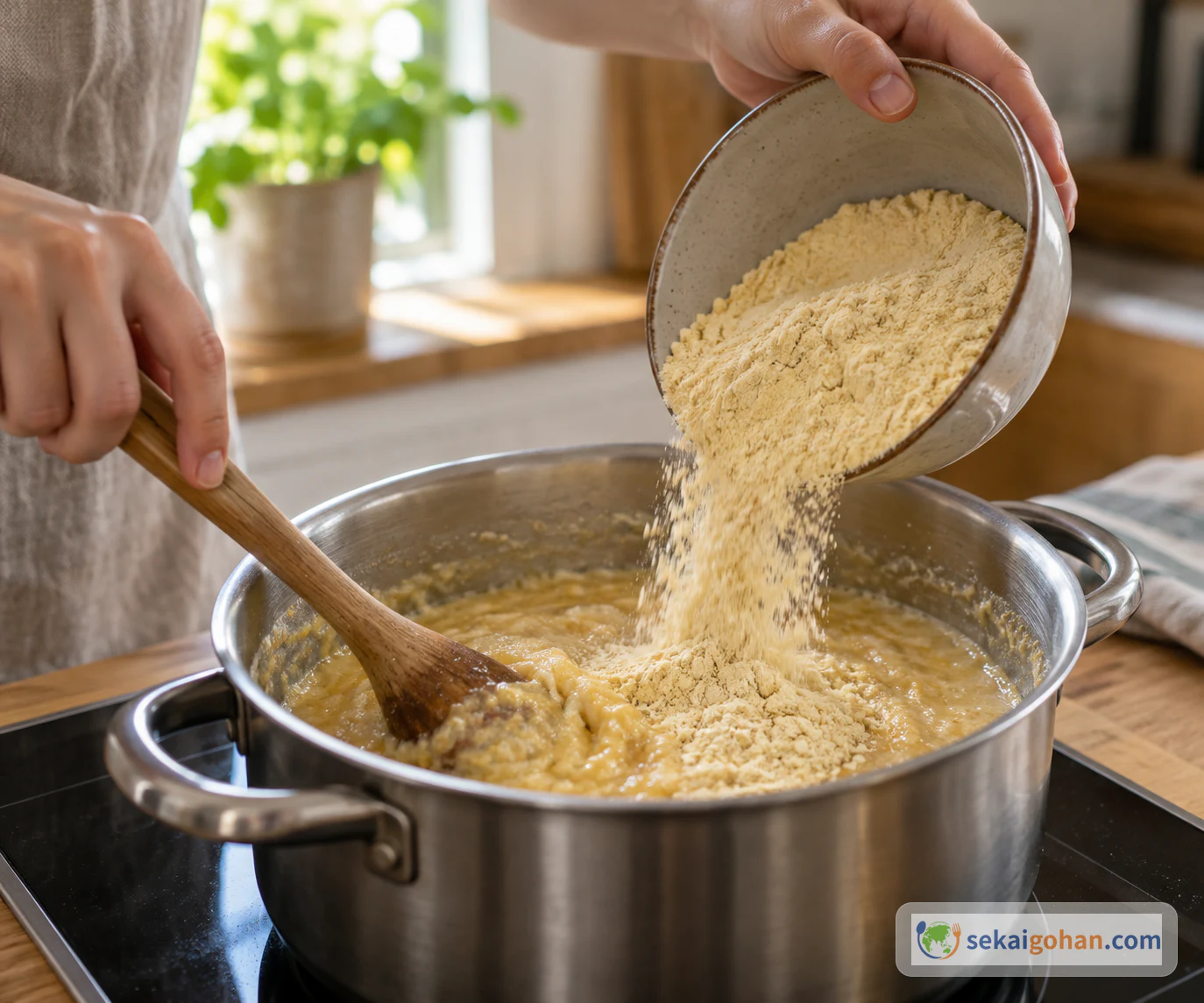
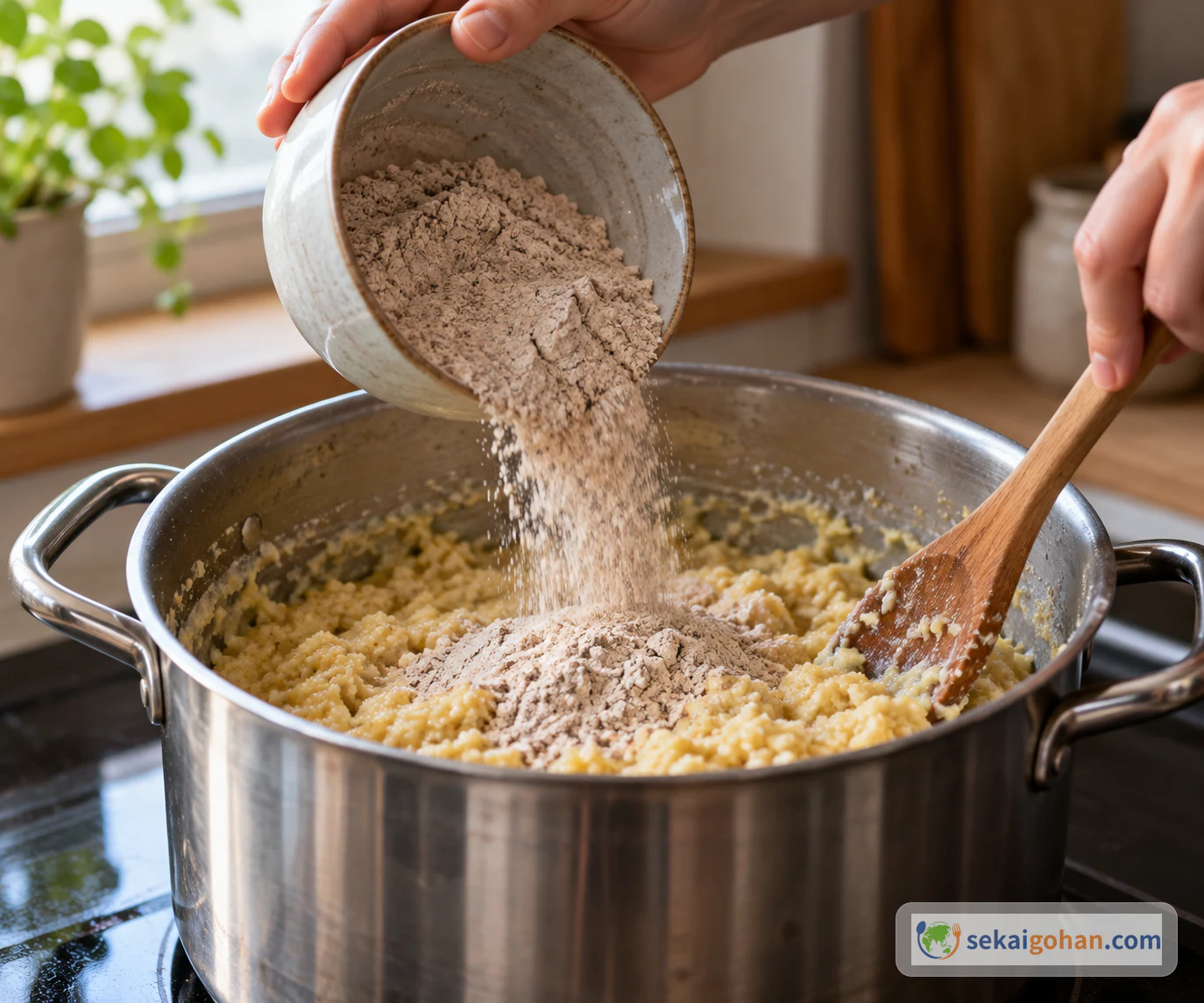
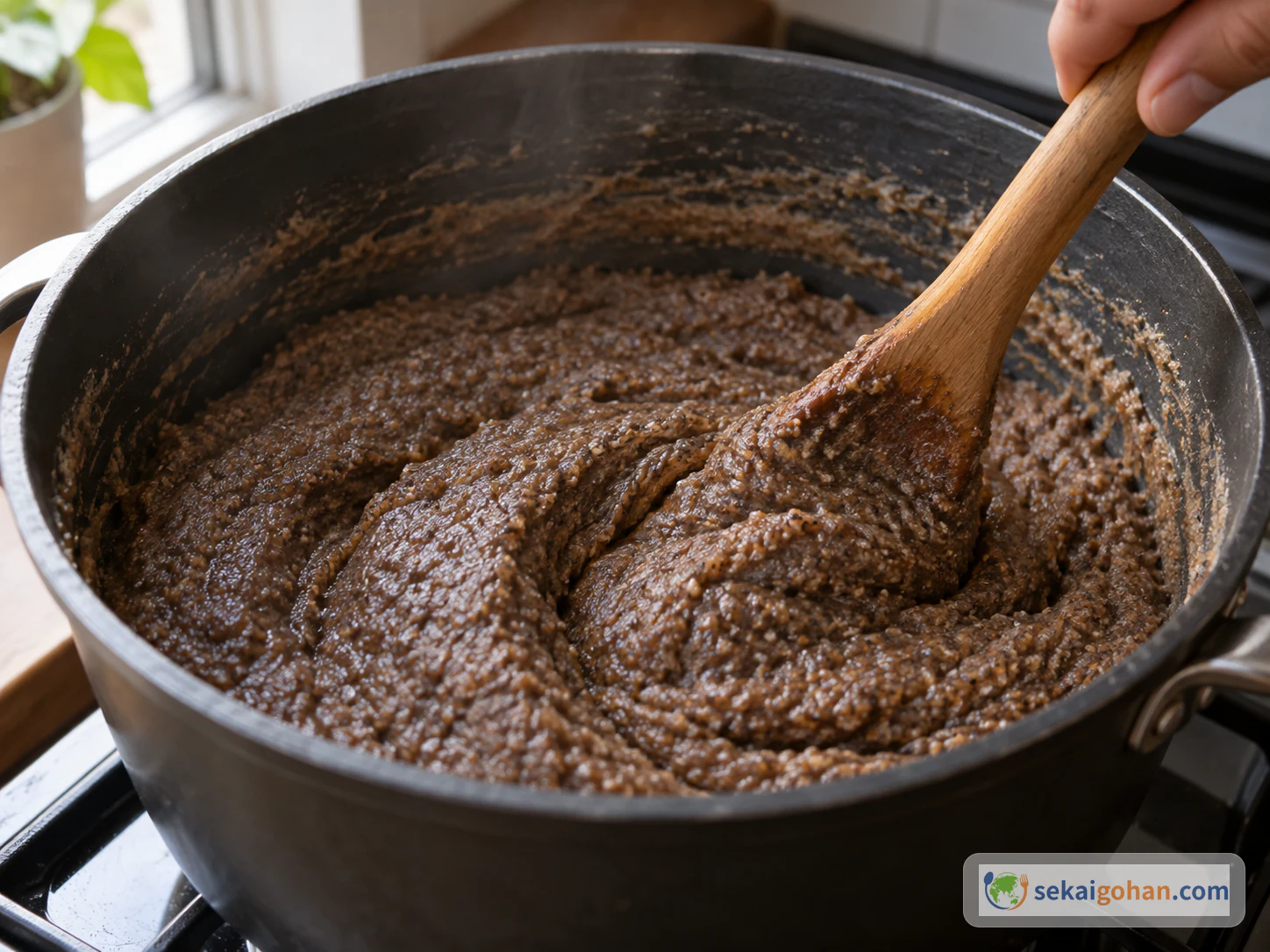
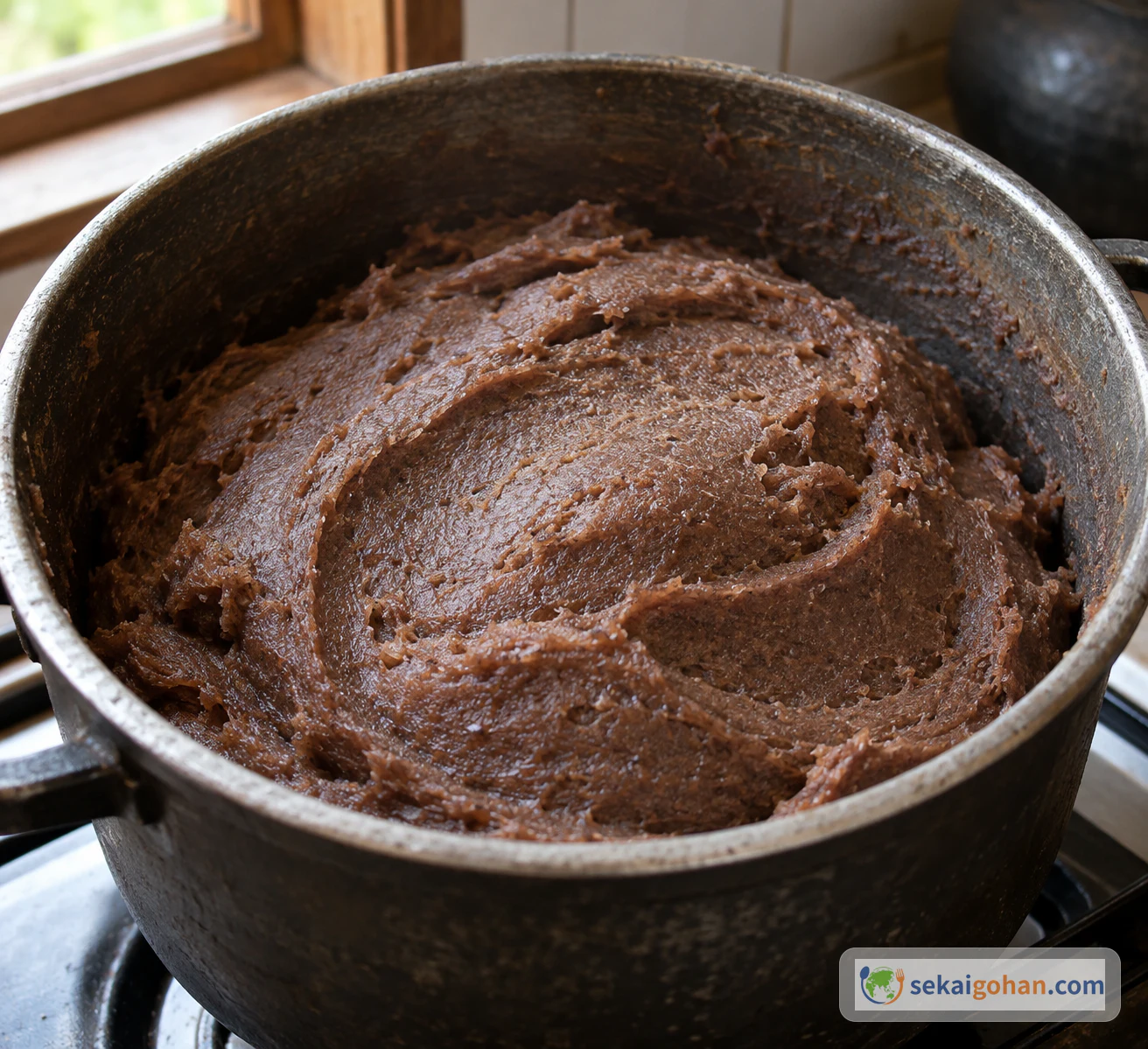
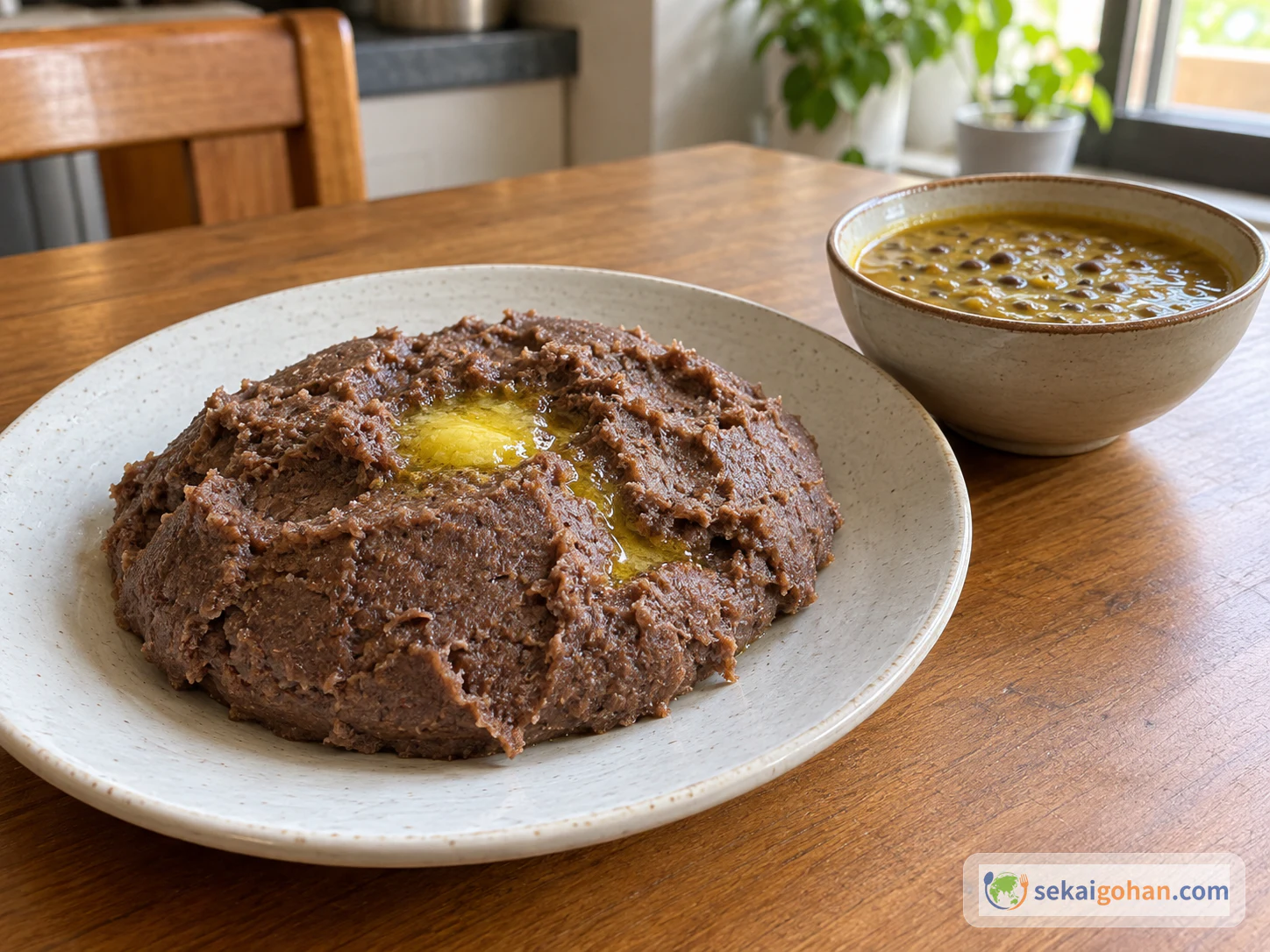
A big pot of water comes to a boil. The spoon is already moving when the first handful of millet flour goes in, then the rest of the millet, then the buckwheat flour. The stirring never stops, and the mixture thickens into a smooth, dark brown mass with no lumps. This is dhido, the Nepali flour porridge, and this version uses two flours. Serve it hot with dal.
What is dhido? Dhido is a thick Nepali porridge made by stirring flour into boiling water until it forms a smooth mass. This version uses millet and buckwheat flour and takes about 7–10 minutes of constant stirring; it is served with dal and ghee.
Dhido and Its Many Versions
The name "dhido" doesn't fix the flour or the amount of water. The cook does. This version uses millet and buckwheat. You add the millet in two parts and the buckwheat last, and you stir constantly for 7–10 minutes. Ghee goes on top, with a favorite curry or dal alongside.
Other cooks make it differently. A single-flour dhido uses 1 cup to 3 cups of water and is seasoned with salt and 1 tsp of ghee. Sometimes it gets a short covered simmer over low heat at the end. A corn flour version uses 500 g of corn flour to 1 liter of water, stirred until solid, and comes with nettle (sisno) soup and akabare chili. For more of the country's cooking, see our Nepal country page, or try gundruk and momo.
Ingredients: Water, Two Flours, Ghee and Dal
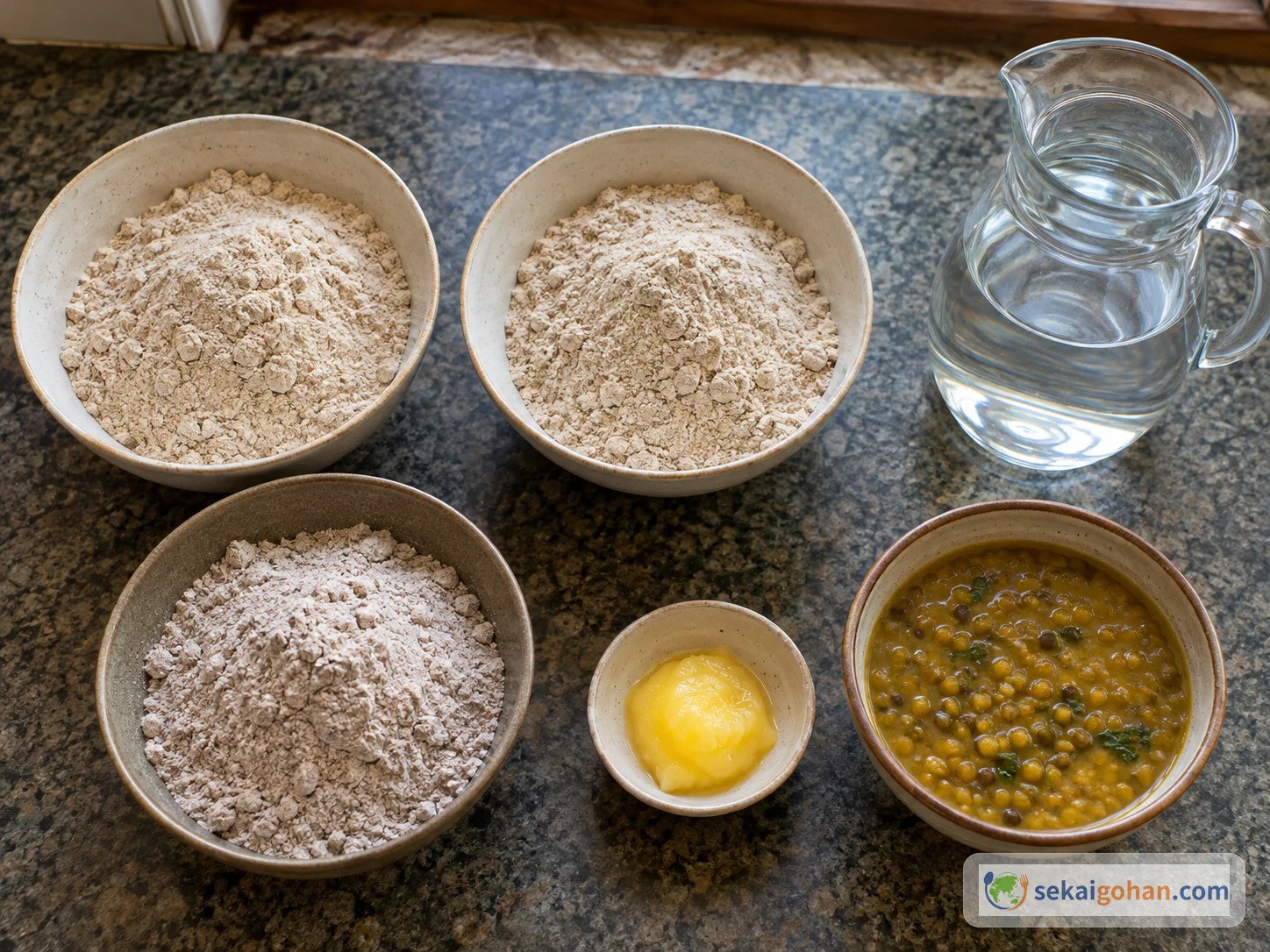
Weigh the millet flour into two portions before you start: 1.75 oz (50 g) and 3.5 oz (100 g). Keep the buckwheat flour separate. Don't mix the flours together ahead of time.
Equipment
- A large pot
- A sturdy spoon for constant stirring
- A scale for weighing the flours
- A small separate bowl for the dal
Choosing Flours for Dhido
"Millet" covers several different grains, so buy flour sold simply as millet flour. It isn't automatically ragi, finger millet, or whatever millet is most common where you live. The buckwheat flour belongs in this formula, so keep the full 3.5 oz (100 g). It gives the dhido its character next to the millet.
This recipe contains buckwheat. If you're cooking gluten-free or need to avoid cross-contact, check the labels on both flours before you buy.
Method: Boil, Add in Stages, Stir Until Dark Brown
Have both millet portions and the buckwheat flour weighed and within reach. Once the first flour goes in, the stirring doesn't stop.
Common Dhido Mistakes and Fixes
Everything depends on two things: adding the flours in stages and never stopping the spoon. You're aiming for dhido that is free of lumps and dark brown after 7–10 minutes of stirring. Once lumps form there's no rescue step, so prevention is all you've got.
| What to watch | What to do |
|---|---|
| Adding all the flour at once | Keep the three additions separate: 1.75 oz (50 g) millet, then 3.5 oz (100 g) millet, then 3.5 oz (100 g) buckwheat |
| Mixing the flours together beforehand | Keep them in separate bowls; the millet goes in fully before the buckwheat |
| Pausing the spoon | Stir continuously from the first addition onward |
| Lumps appearing | Stick to the staged additions and constant stirring; there is no fix once lumps form |
| Judging by color alone | Look for lump-free, dark brown dhido. Color alone doesn't show temperature, safety, elapsed time or which flour was used |
Heat level and pot size are up to you. Let what's happening in the pot guide you.
Serving Dhido
Divide the 1.5 tbsp (20 ml) ghee among the plates and spoon it over the hot dhido. You can also leave it off. Serve dal you've already made on the side, or a favorite curry if you'd like a change.
Frequently Asked Questions
How long does it take to cook dhido?
About 7–10 minutes of constant stirring once the first flour goes into the boiling water. It is ready when it has no lumps and has turned dark brown. Some other versions add a short covered simmer over low heat at the end.
What do you eat dhido with?
Serve it with dal you've already made and a little ghee, or a favorite curry if you'd like a change. For a full Nepali meal, see dal bhat.
Which kind of millet flour is it?
Use flour sold simply as millet flour. The recipe doesn't name a particular species.
Do I add all the flour at once?
No. Add 1.75 oz (50 g) millet flour first, then the remaining 3.5 oz (100 g) millet flour, then the 3.5 oz (100 g) buckwheat flour. Keep stirring the whole time.
Is there salt?
No. Salt belongs to the single-flour version of dhido.
Is dhido gluten-free?
That depends on your flours, so check the labels, especially if you need to avoid cross-contact.