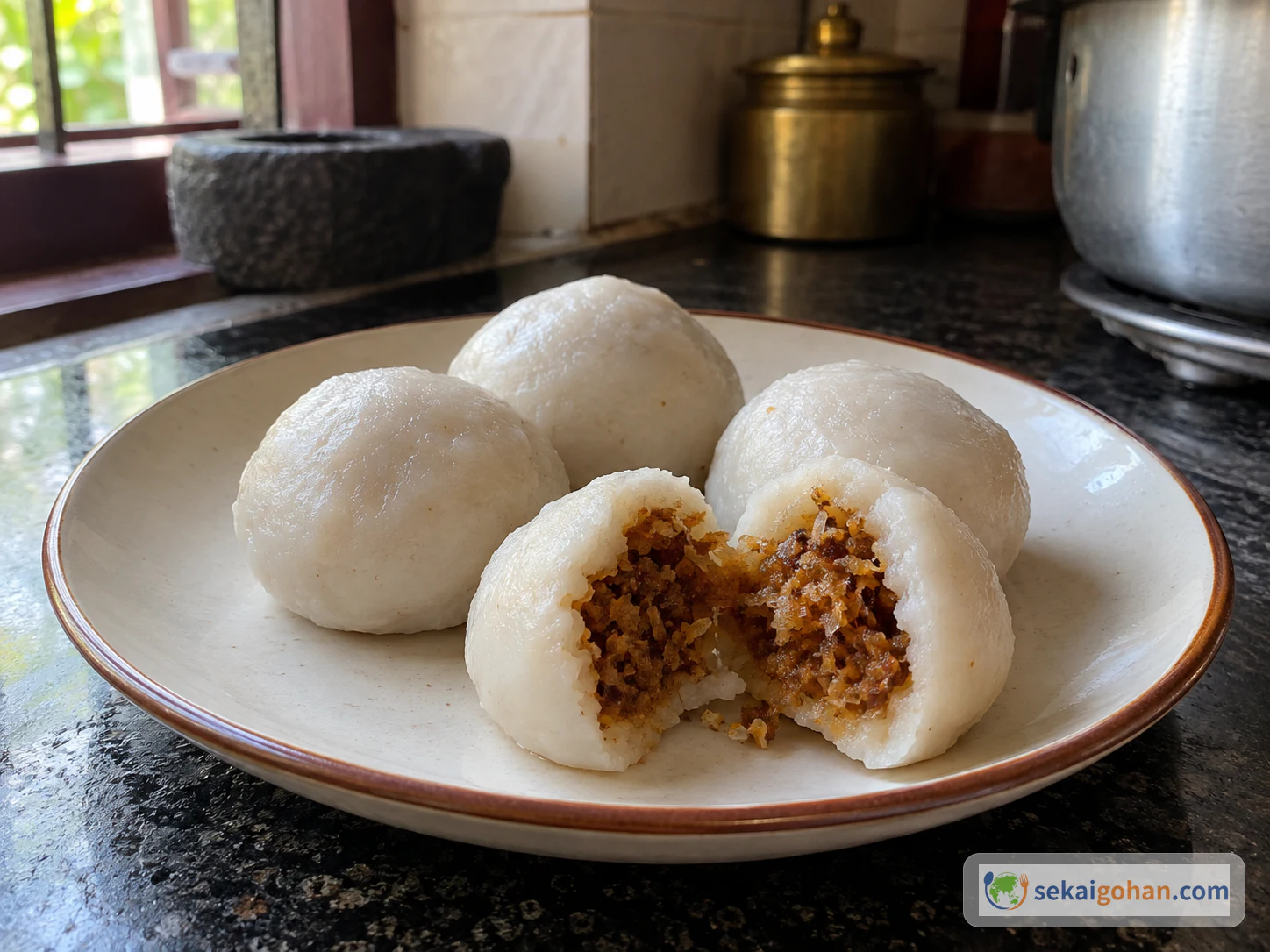
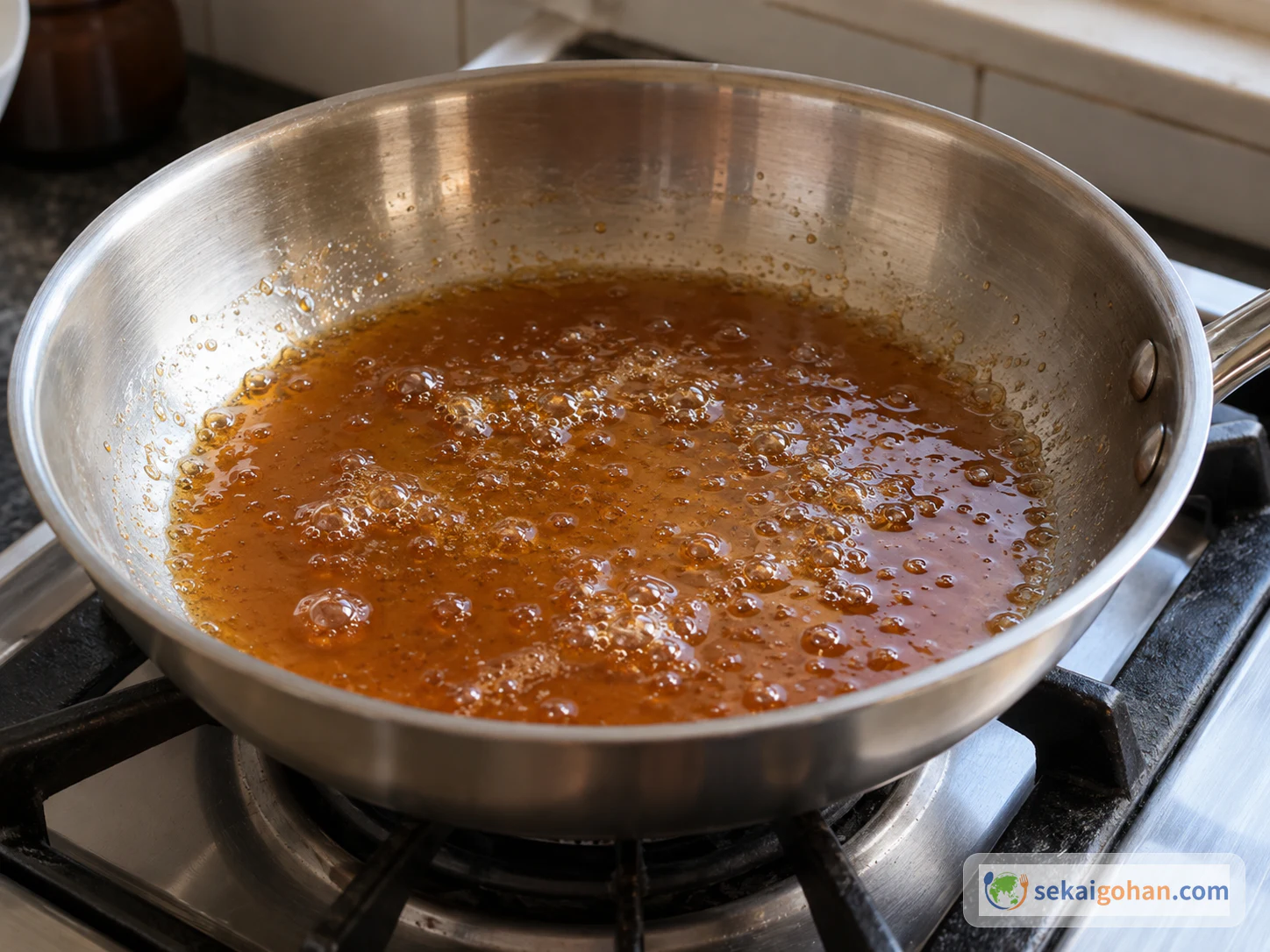
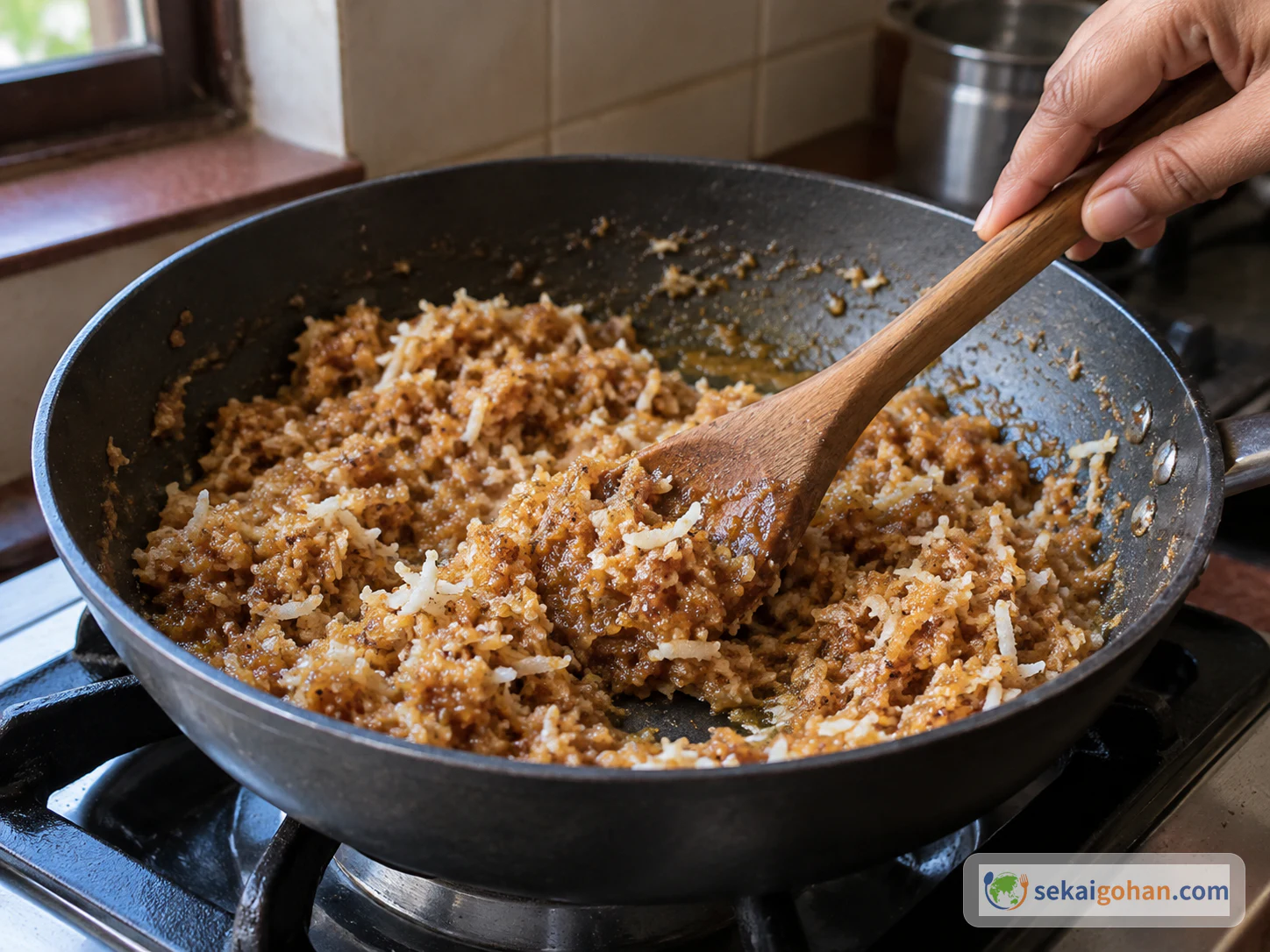
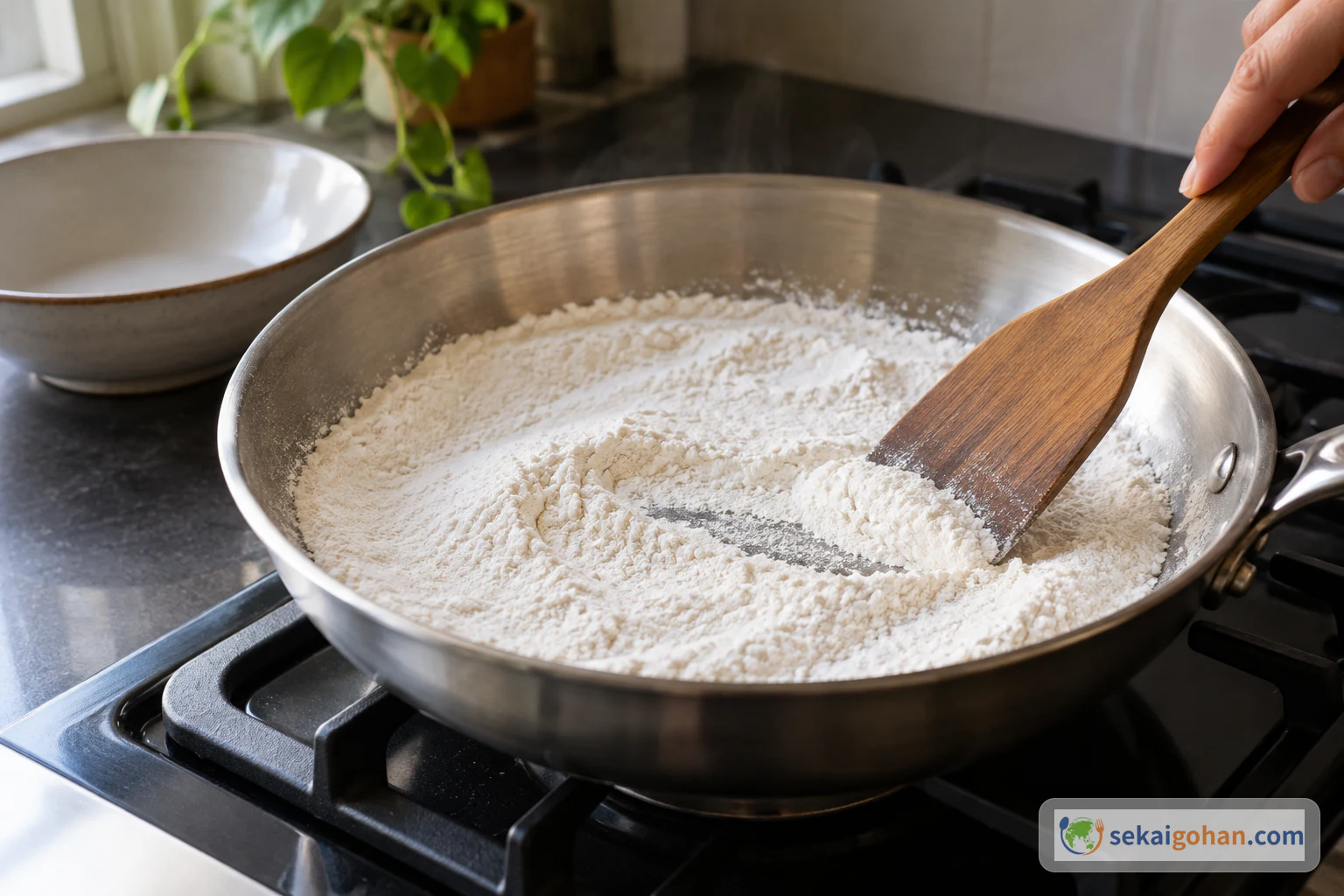
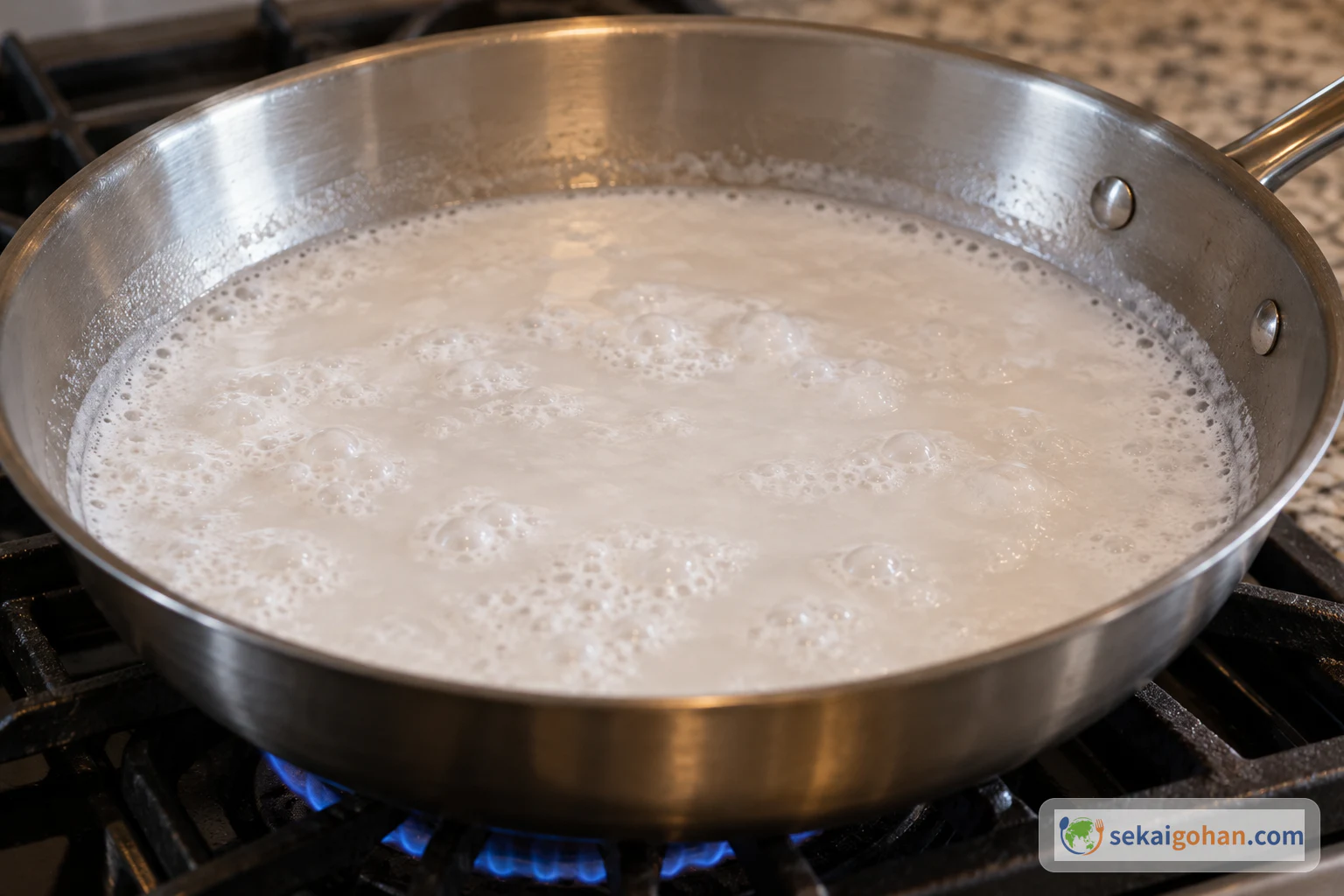
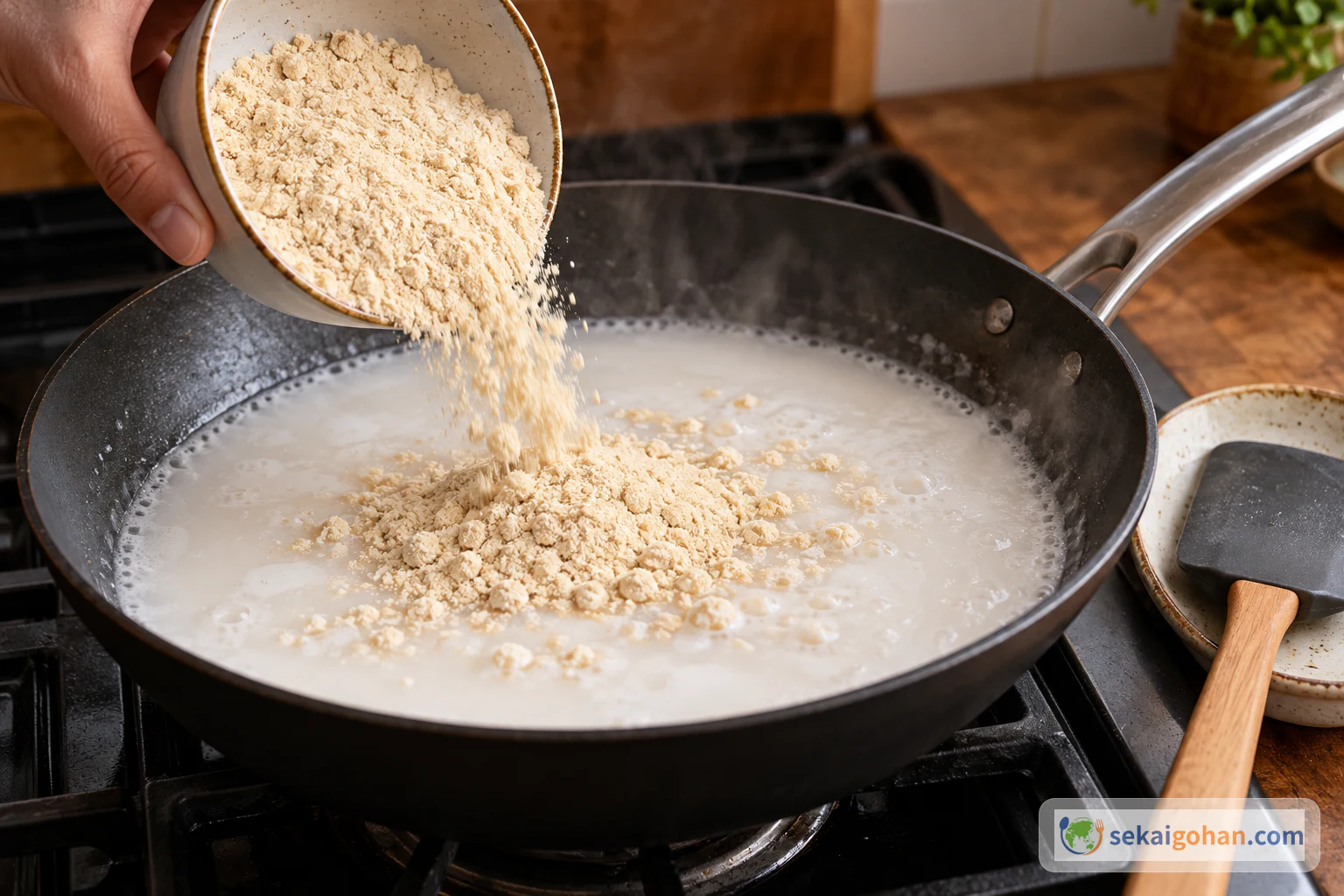
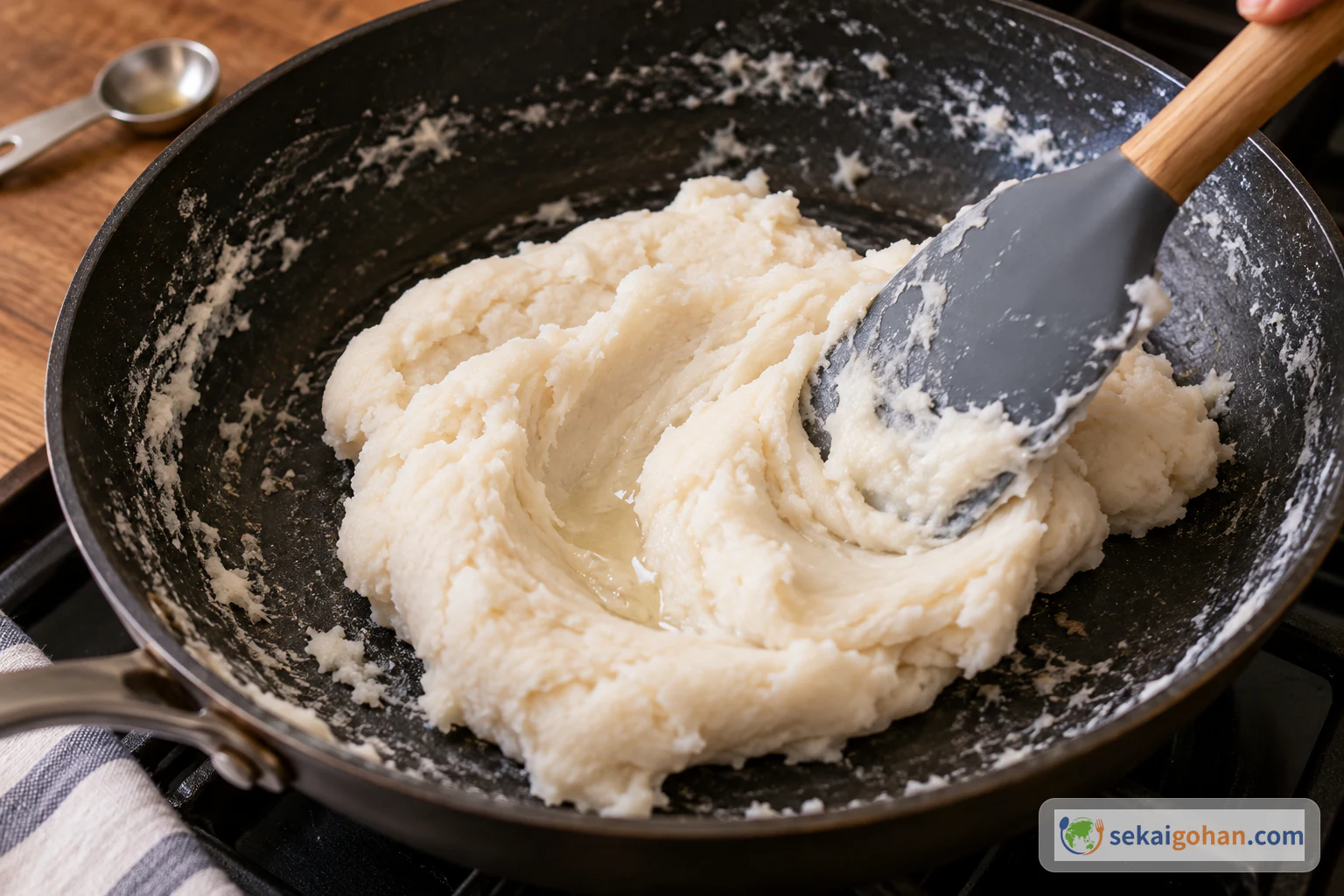
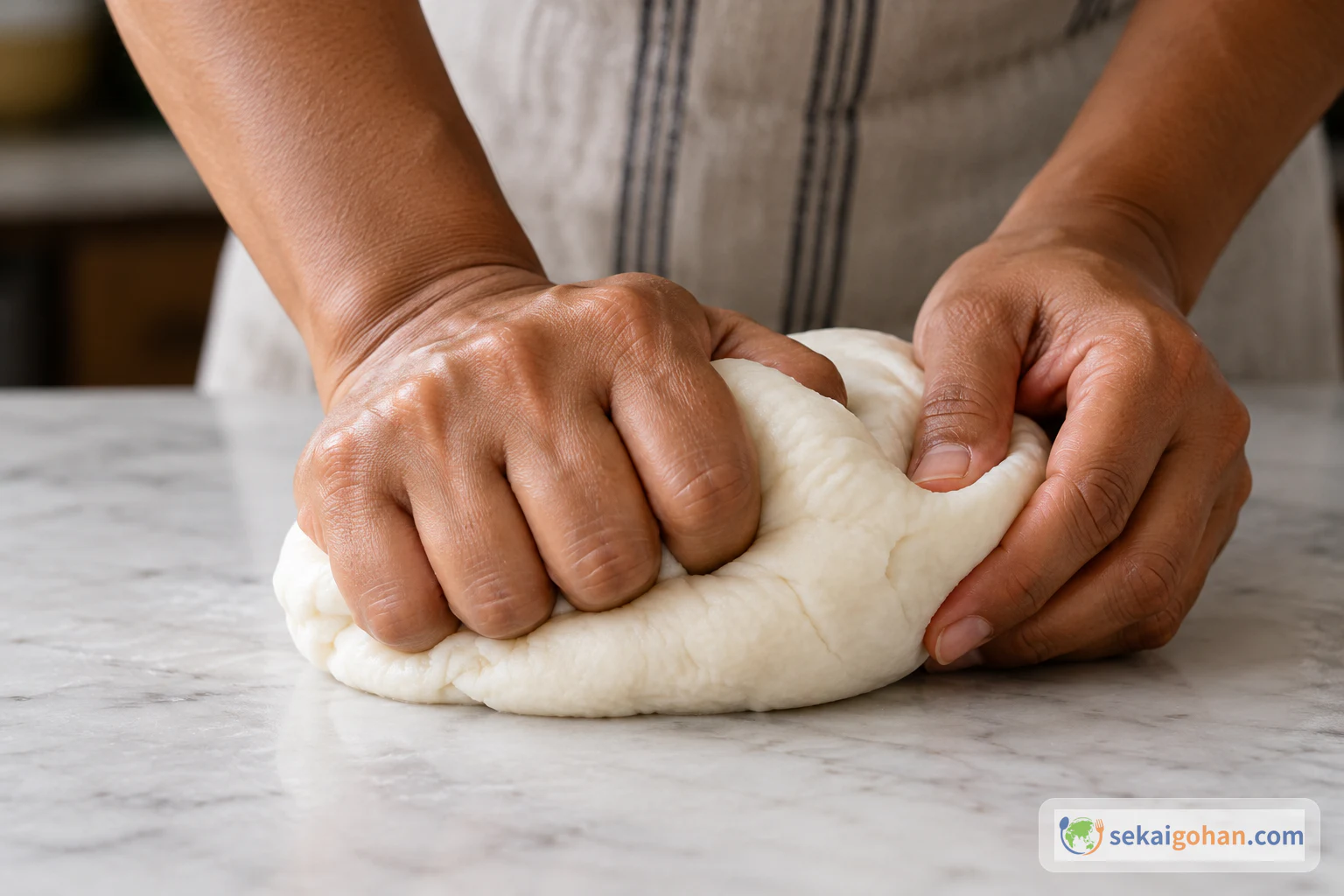
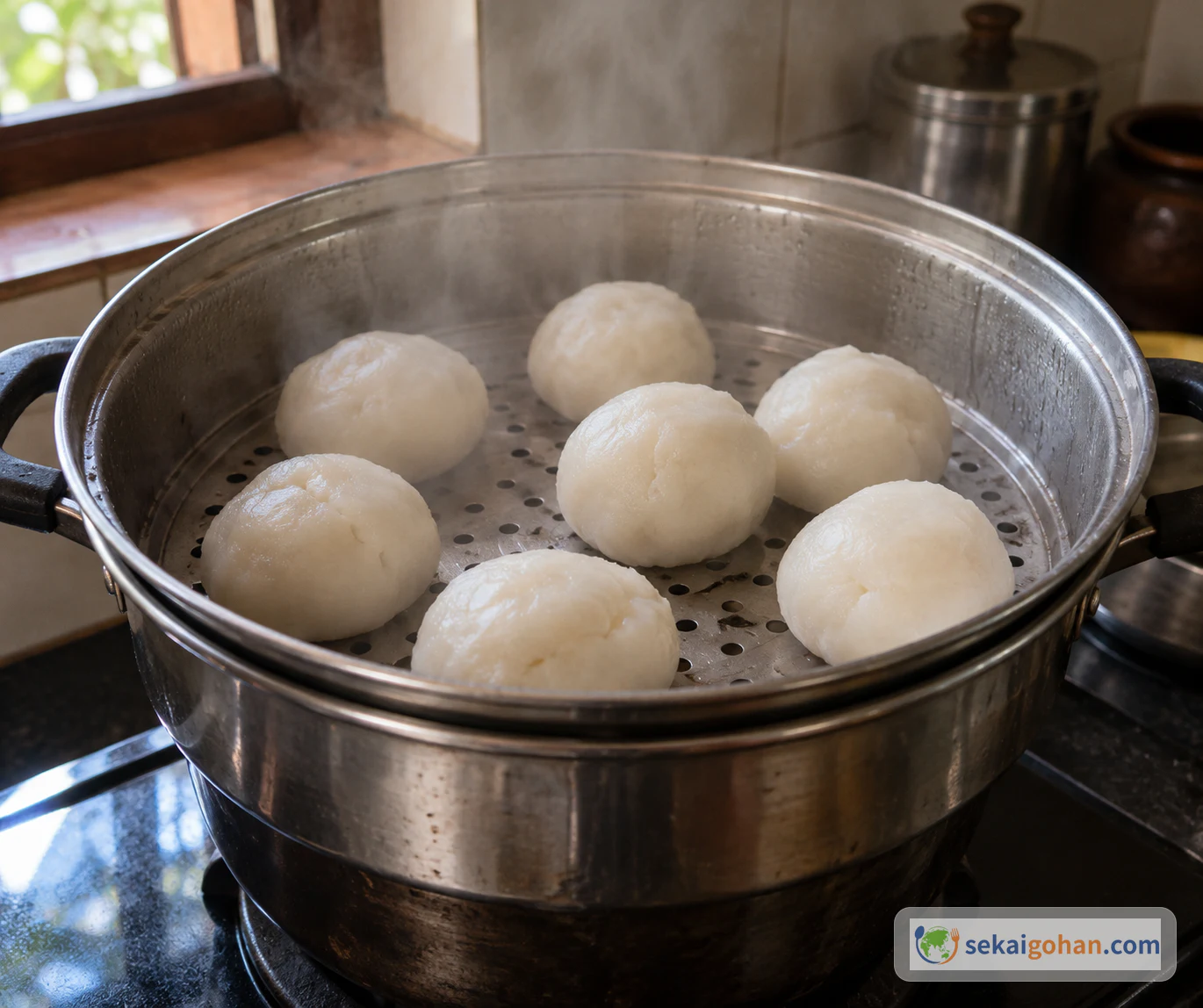
Kozhukatta is a smooth, round dumpling from Kerala with a soft, slightly sticky shell and a warm filling of coconut and melted jaggery. The shell is made from toasted rice flour and coconut milk. The filling is cooked until the jaggery clings to every shred of coconut, then scented with cardamom and cumin. It tastes gently sweet and fragrant, and it comes from a family table where it belongs to memories of Palm Sunday.
What Kozhukatta Is
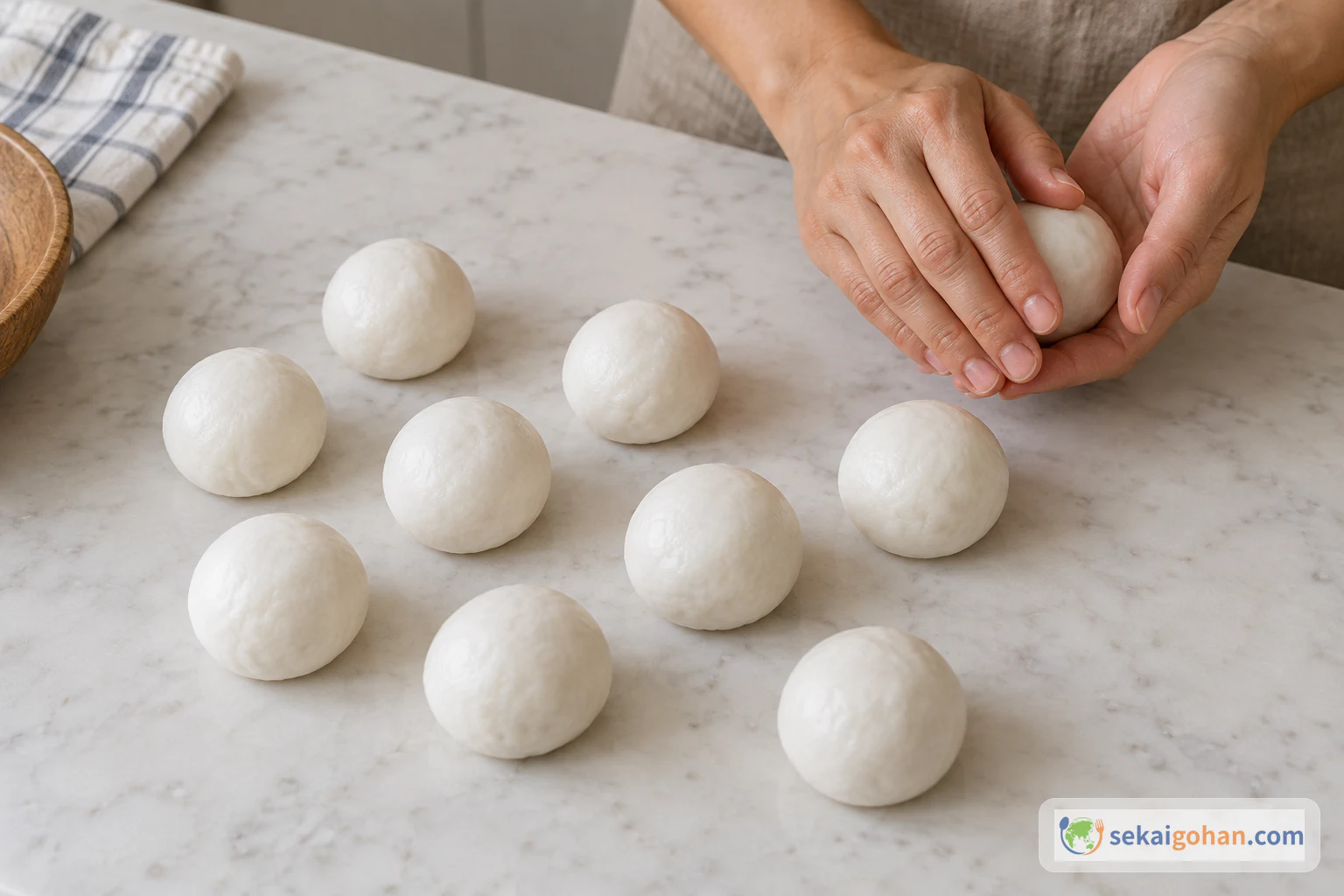
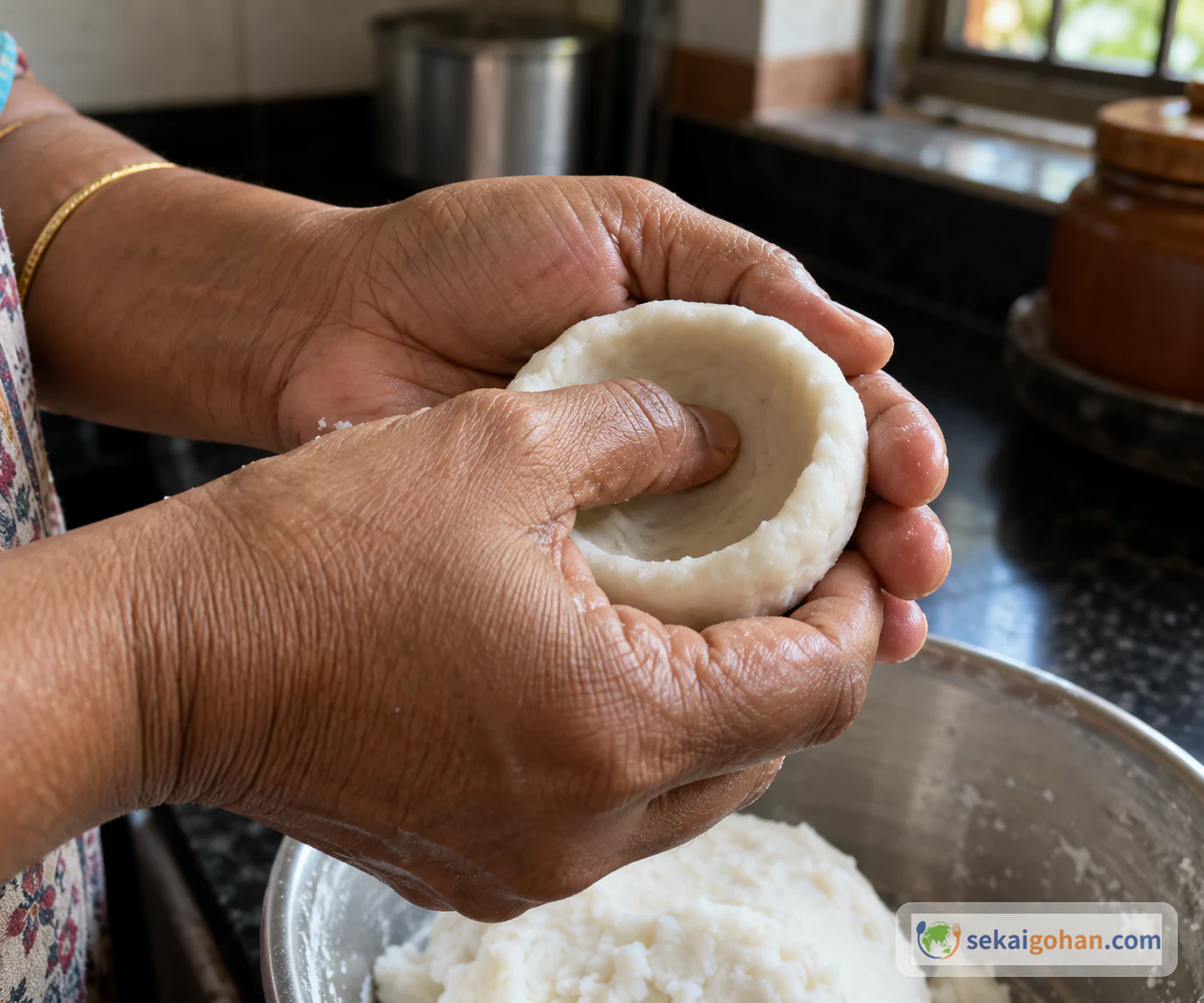
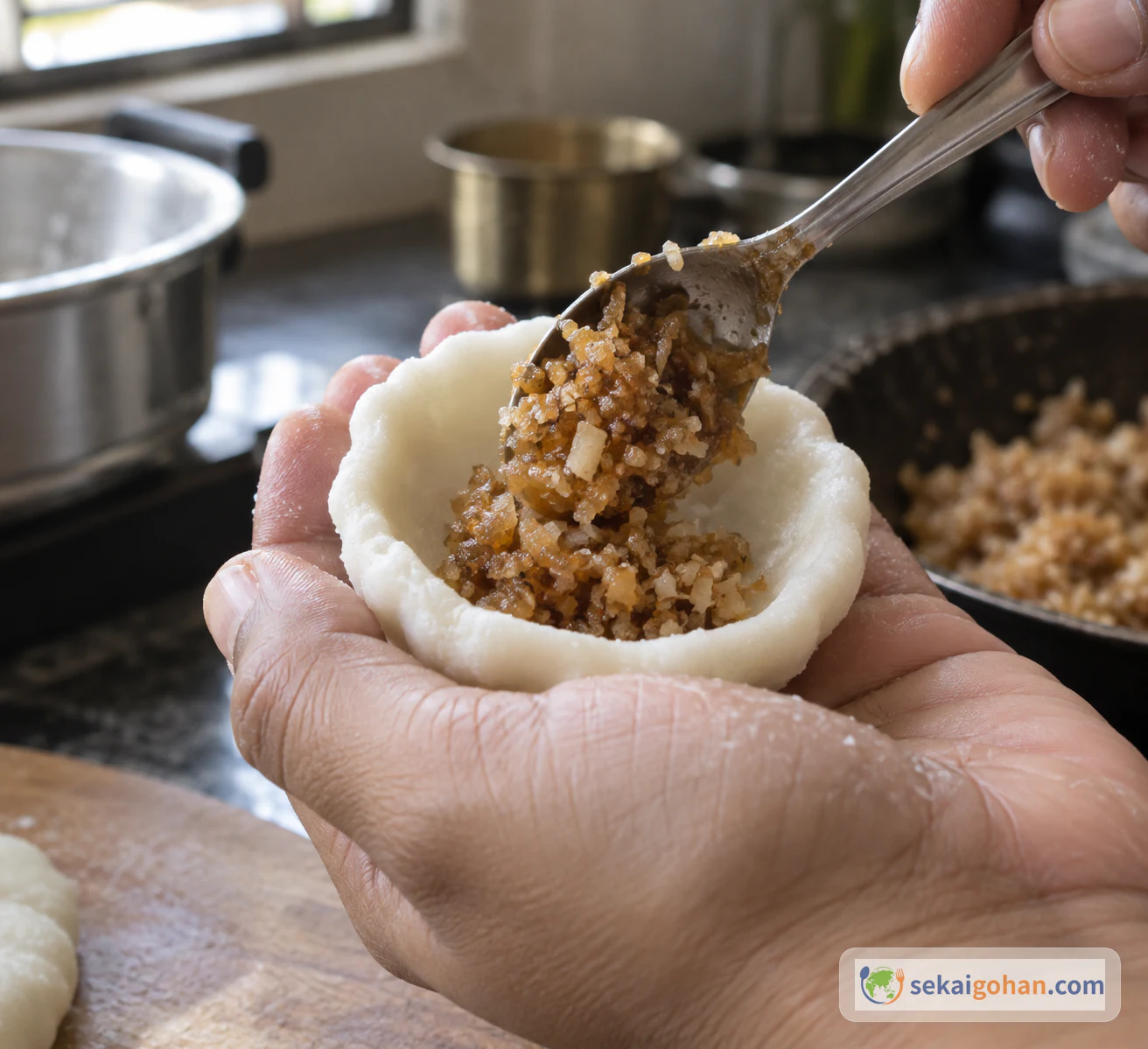
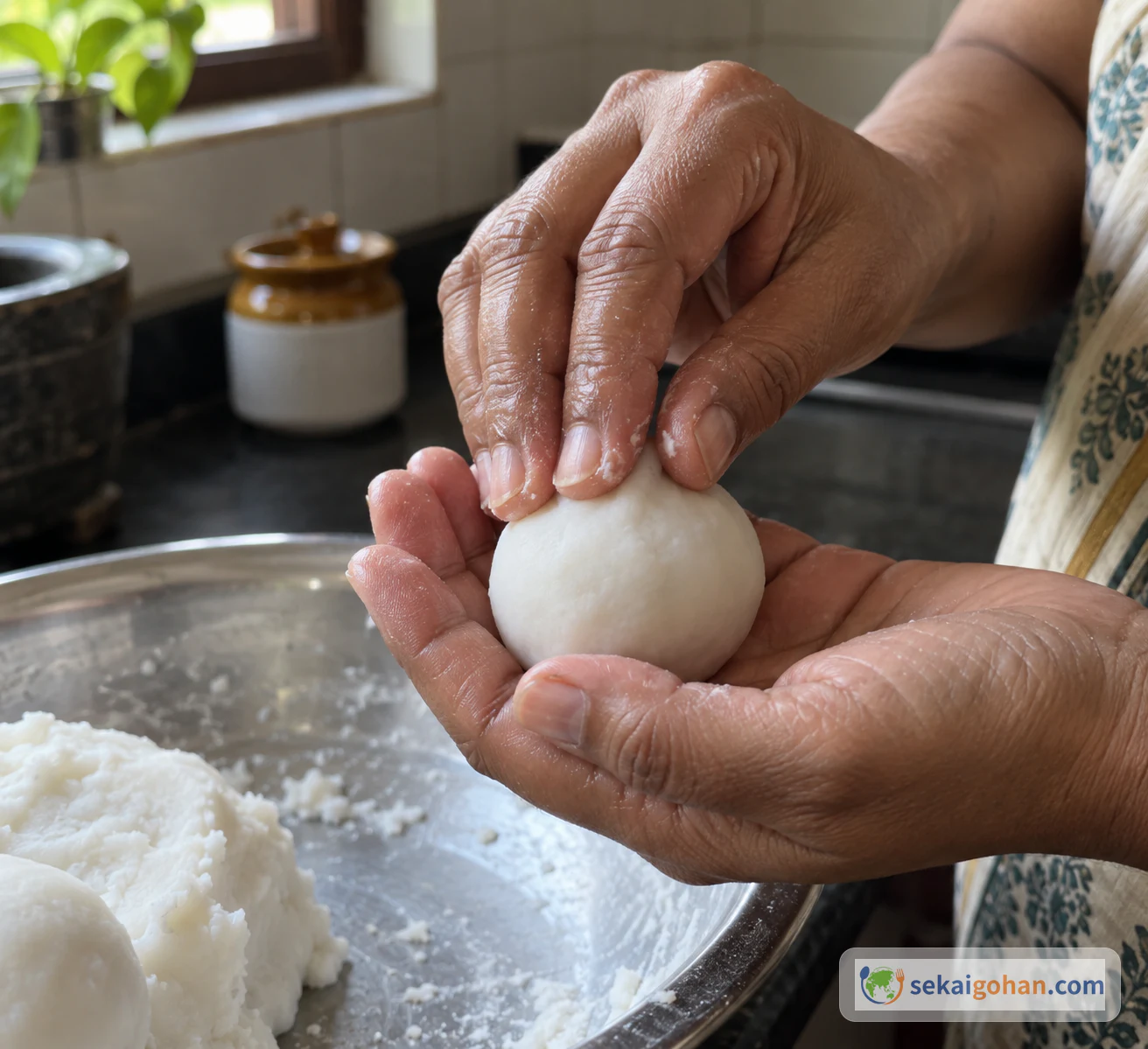
In Kerala, in southern India, Kozhukatta (കൊഴുക്കട്ട) is the name for dumplings made with rice flour. This one is the sweet kind. A little dough is pressed into a small cup and filled with the jaggery-coconut mixture. The cup is then closed into a ball, smoothed by hand and steamed until the shell loses its bright white and turns slightly sticky.
The name covers more than one dish. On the Malabar coast, a savory Kozhukkatta is made with rice flour and a separately cooked, spiced coconut mixture. For more dishes from across the country, see our India recipes.
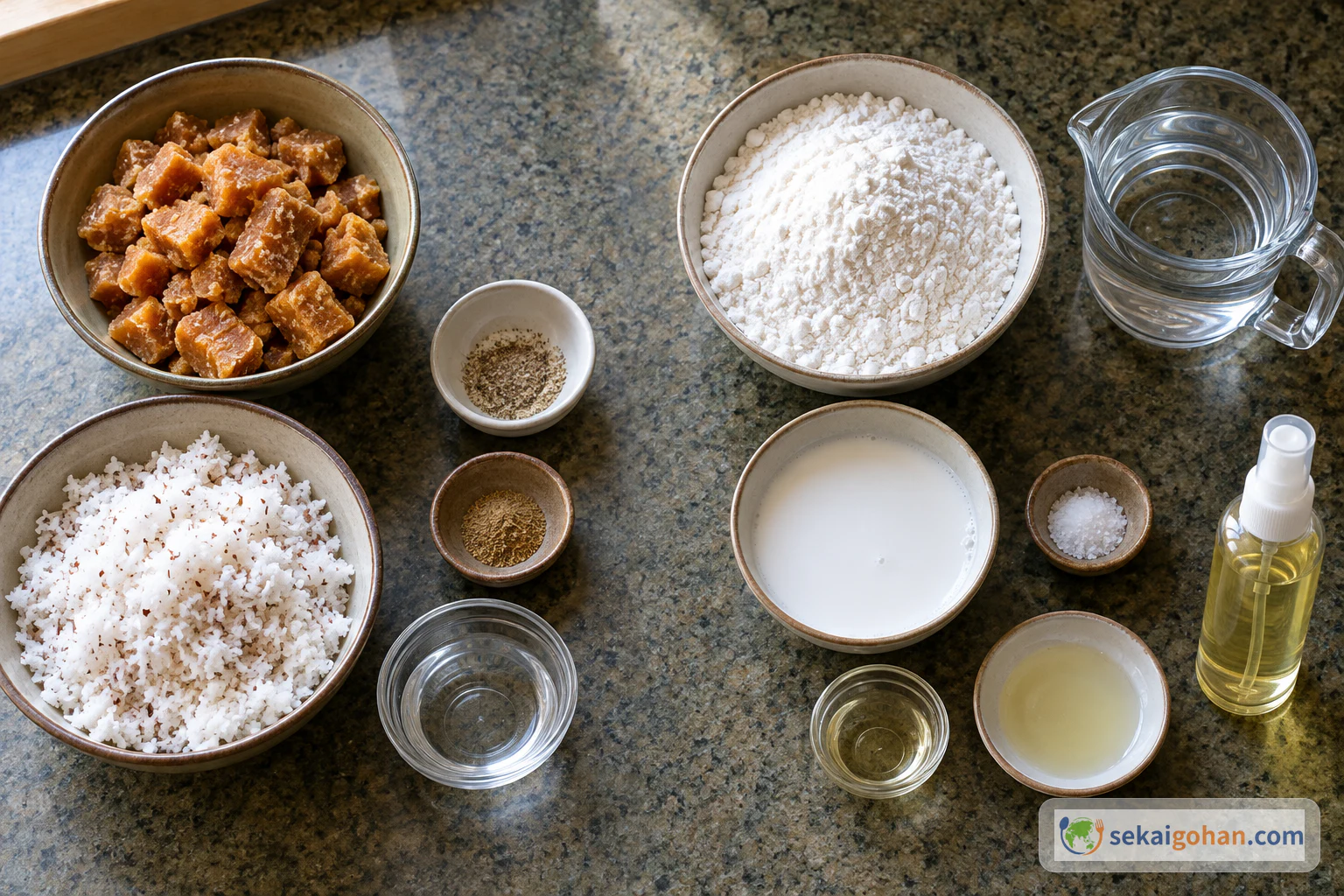
Ingredients for 10 Kozhukatta: Filling and Dough
Equipment
- A skillet for the filling
- A clean skillet for toasting the flour and making the dough
- A bowl for the toasted rice flour and a bowl or plate for the cooked filling
- A spatula for stirring
- Cup and spoon measures
- A clean work surface for resting, kneading and shaping
- A small spoon (about 1 tbsp) for filling
- A basket steamer set over water for steaming (this water is separate from the 1 cup in the dough)
Choosing the Jaggery, Coconut and Rice Flour
Jaggery. Jaggery is the only sweetener here, and its deep, caramel-like sweetness is what flavors the filling. Grated coconut goes into the filling, and frozen grated coconut works well. For the shell, use a product sold simply as rice flour. The coconut milk goes into the dough.
Spices. For the cardamom, take the seeds out of green pods and grind them. The cumin is ground too.
Three oils, three jobs. Coconut oil goes into the dough. A little more coconut oil goes on your hands so the dough doesn't stick while you shape it, and cooking oil spray goes inside the steamer. The filling and the dough also each get their own water. Keep the amounts for each part separate rather than adding them together.
Method: Filling First, Then a Dough Made in Hot Liquid
Make and set aside the filling before you start the dough. For the dough, the toasted flour goes into the hot liquid, gradually, not the other way round.
Troubleshooting Kozhukatta Dough and Shaping
| What you notice | What to do |
|---|---|
| The dough is still crumbly after all the flour is in | Add a little more warm water, a small amount at a time |
| The dough feels too loose to shape | Add the oil only after the dough starts coming together, then let it rest and knead it for 2–3 minutes. You want a soft dough that holds its shape when pressed |
| The filling is wet and runny | Keep stirring over medium heat until most of the moisture has evaporated and the jaggery sticks to the coconut |
| Cracks or filling show after closing | Pinch the opening shut again and smooth the ball until you can't see any cracks, holes or filling |
| Filling is left over | Use about 1 tbsp per dumpling and don't overfill |
| The dumplings came out pleated or pointed | Close each one and smooth it by hand into a plain round ball |
Frequently Asked Questions
Can I use frozen grated coconut?
Yes. Frozen grated coconut works well in the filling.
How do I know the dumplings are done?
After 12–15 minutes of steaming on medium-high, the shell turns slightly sticky and looks less bright white than it did before steaming.
Is Kozhukatta the same as modak?
No. This Kozhukatta is a plain round dumpling with no pleats, unlike the pleated shape of ukadiche modak.
Can I coat the dumplings in coconut milk before steaming?
Yes, you can. Some cooks coat the shaped dumplings in coconut milk just before they go into the steamer.