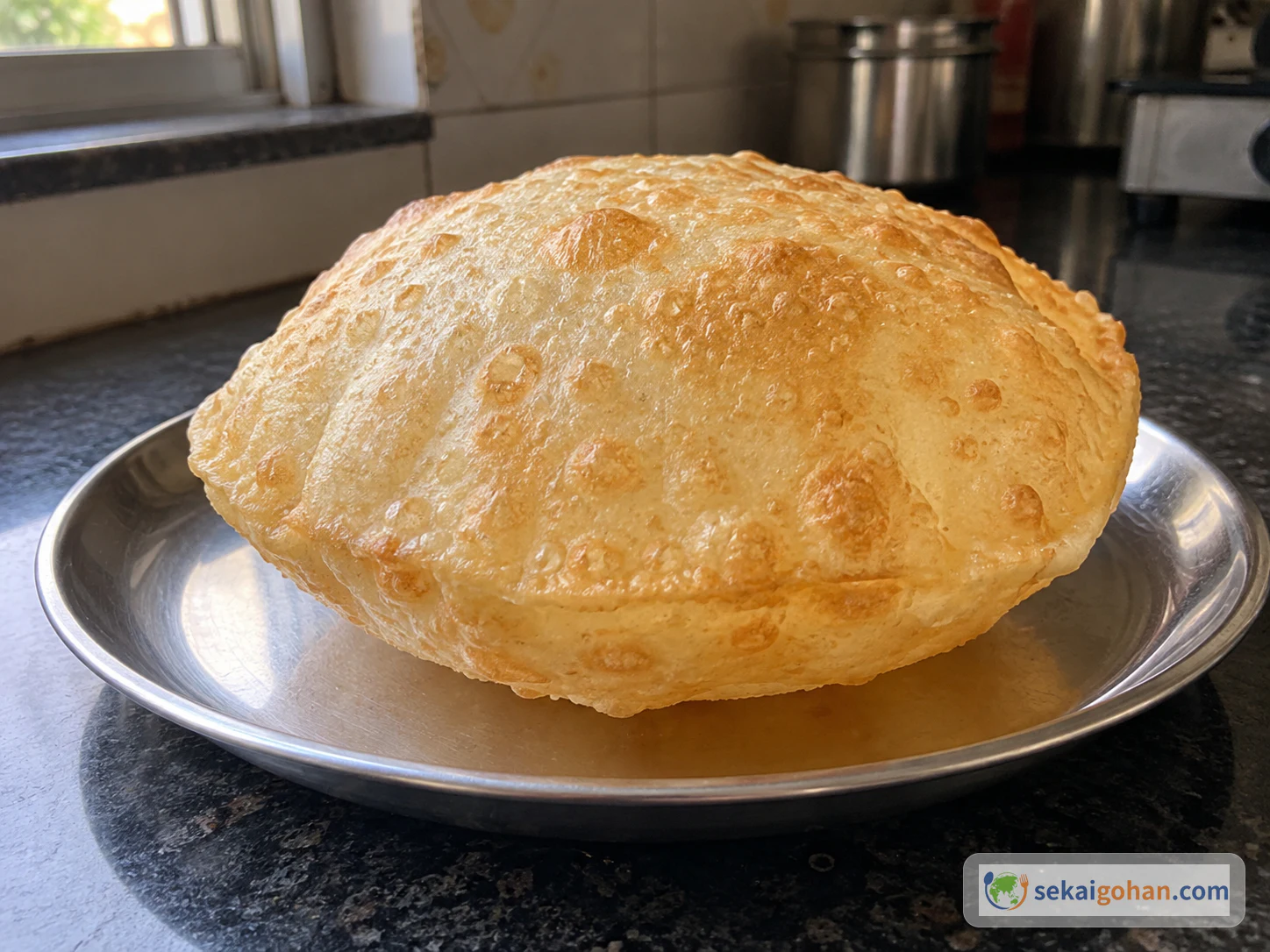
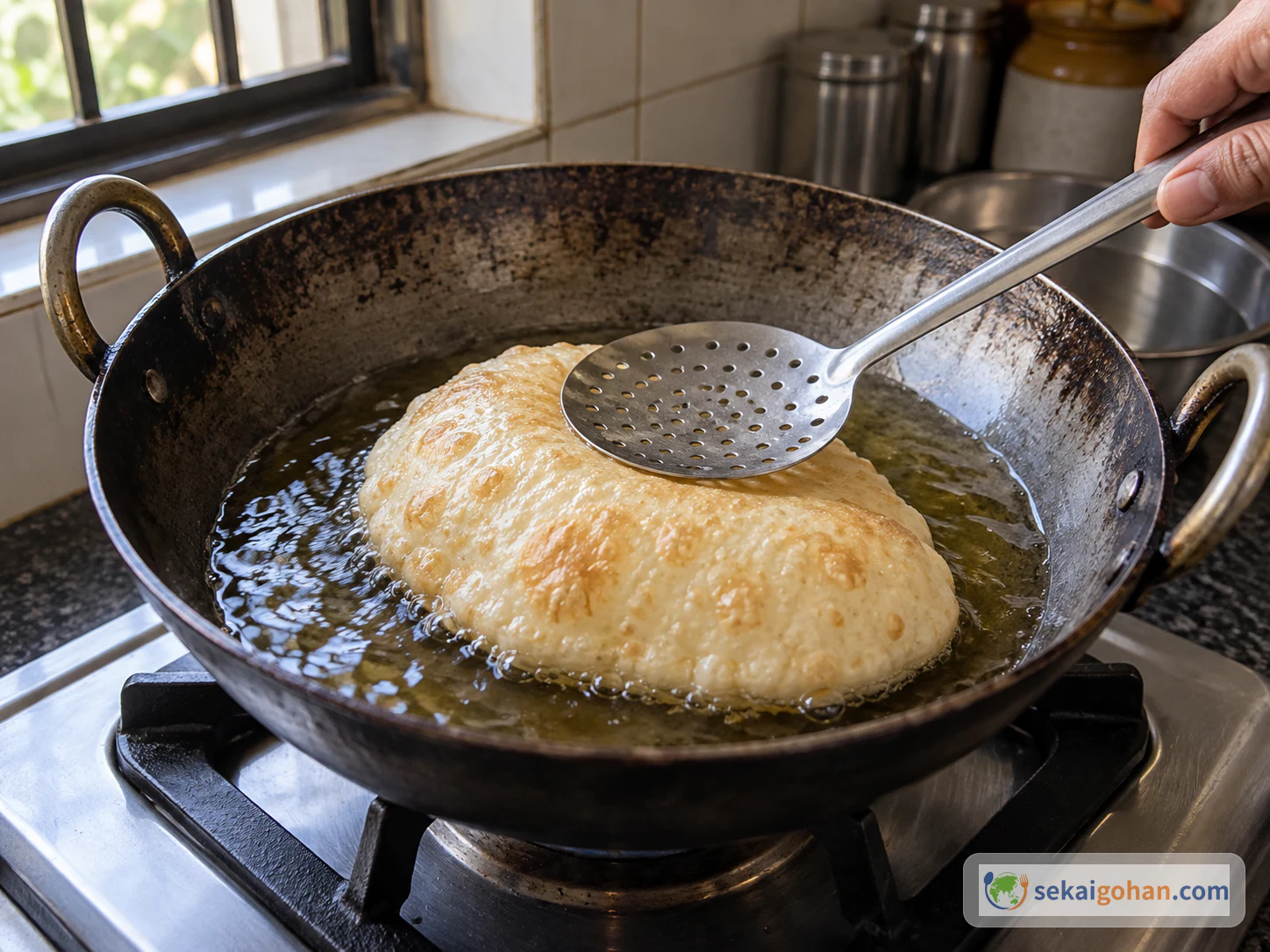
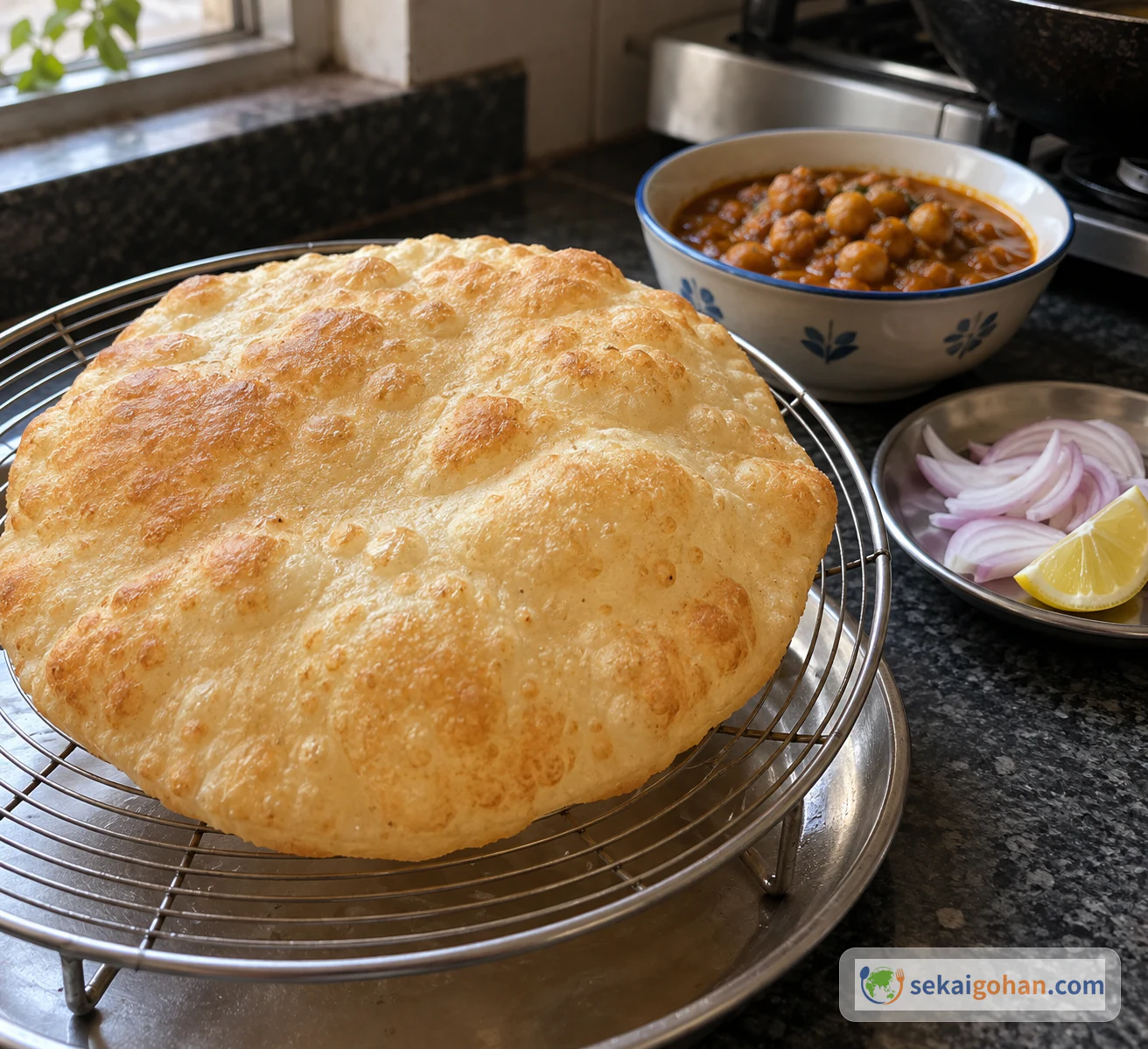
A thin oval of dough slides into hot oil, sinks for a moment, then swells into a round, blistered pillow as a slotted spoon presses gently on its center. That puff is the reason to fry bhatura at all. This North Indian bread is soft and supple inside, pale golden outside, and best known for its partnership with chole, the spiced chickpea dish.
Bhatura and Chole Bhature
Chole bhature is North Indian and Punjabi food. In Delhi and Punjab people eat it for breakfast or brunch, and you'll find it everywhere from street stalls to home kitchens. For more dishes from the same country, see the India page.
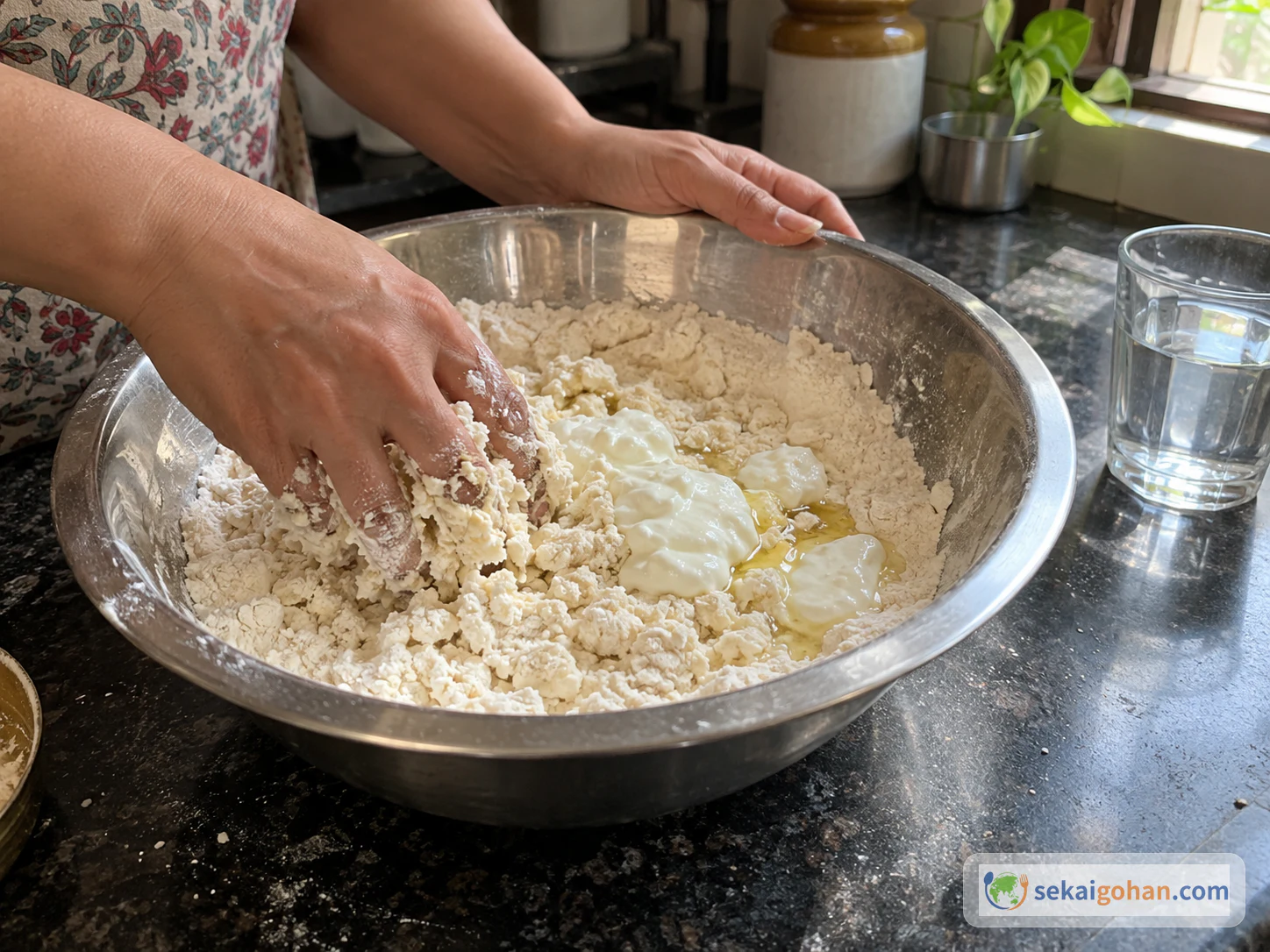
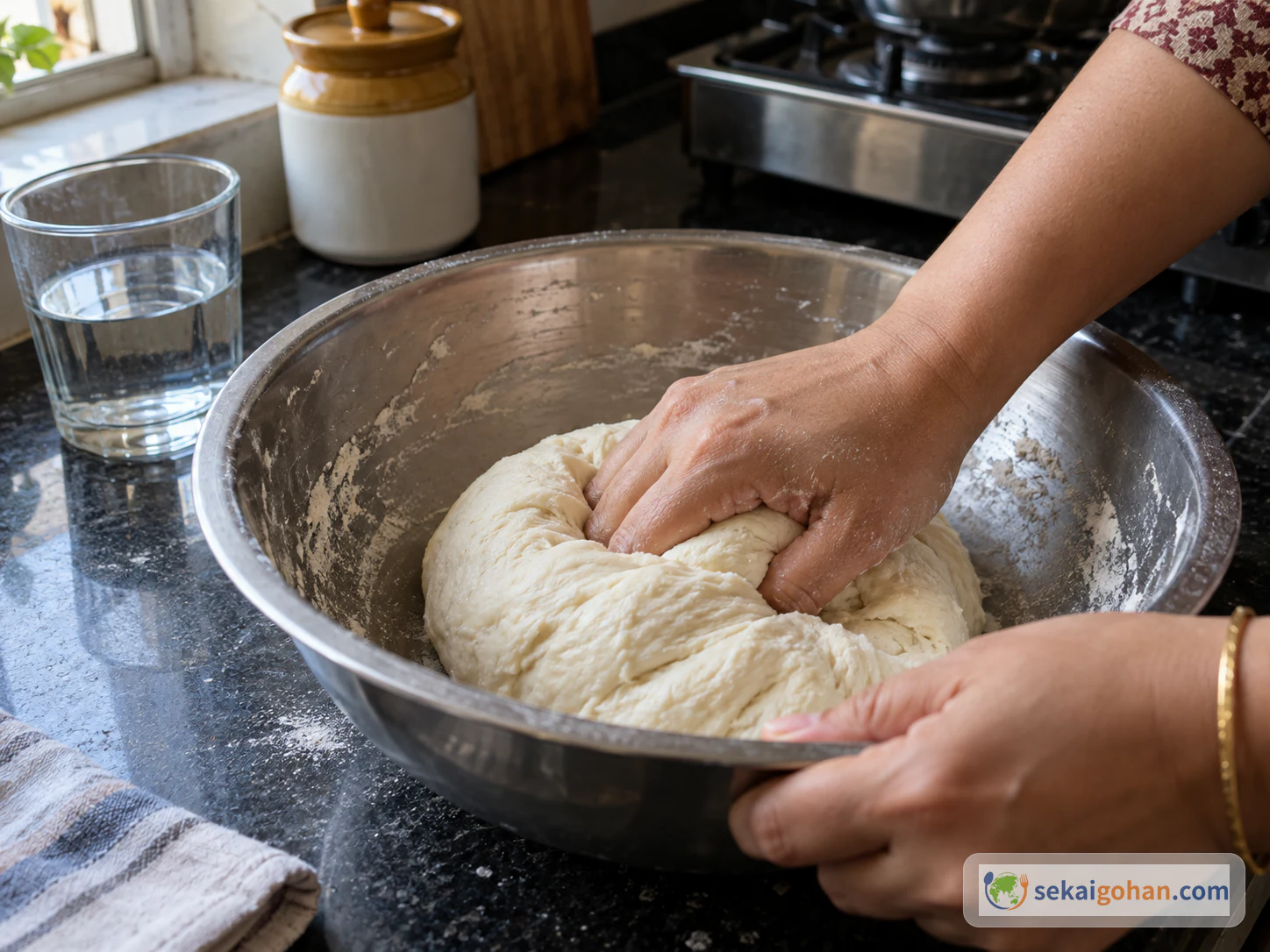
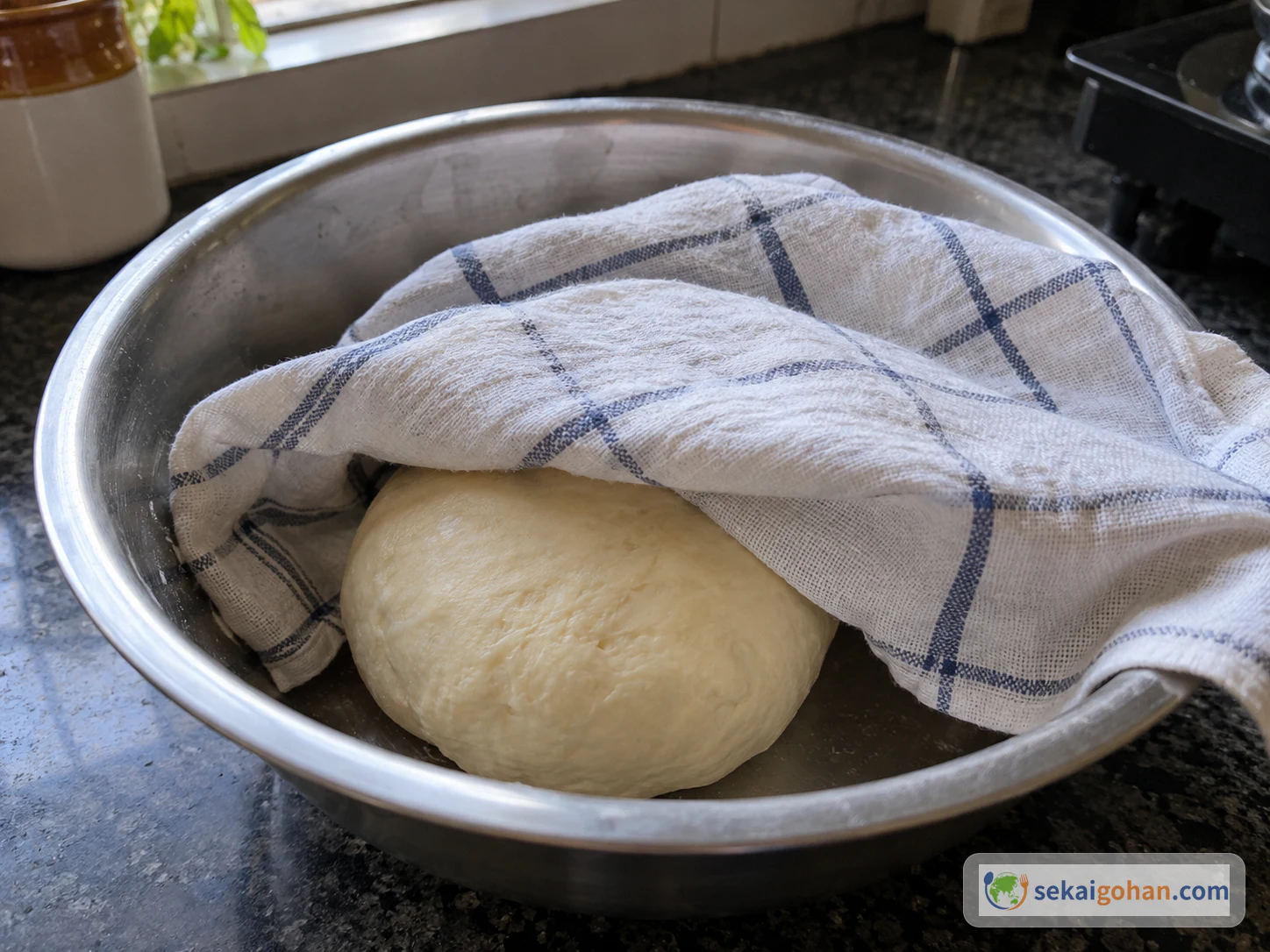
There is no single bhatura dough. Some versions use whole wheat flour, some rely on a long rest, and some use yogurt with chemical raising agents to speed things up. This one has no yeast. It's made with maida (refined flour), fine semolina, yogurt, baking soda and baking powder, and it rests only a short time before frying. Each step describes how the dough should feel, and that feel is your best guide.
Ingredients: Makes 8 Bhature
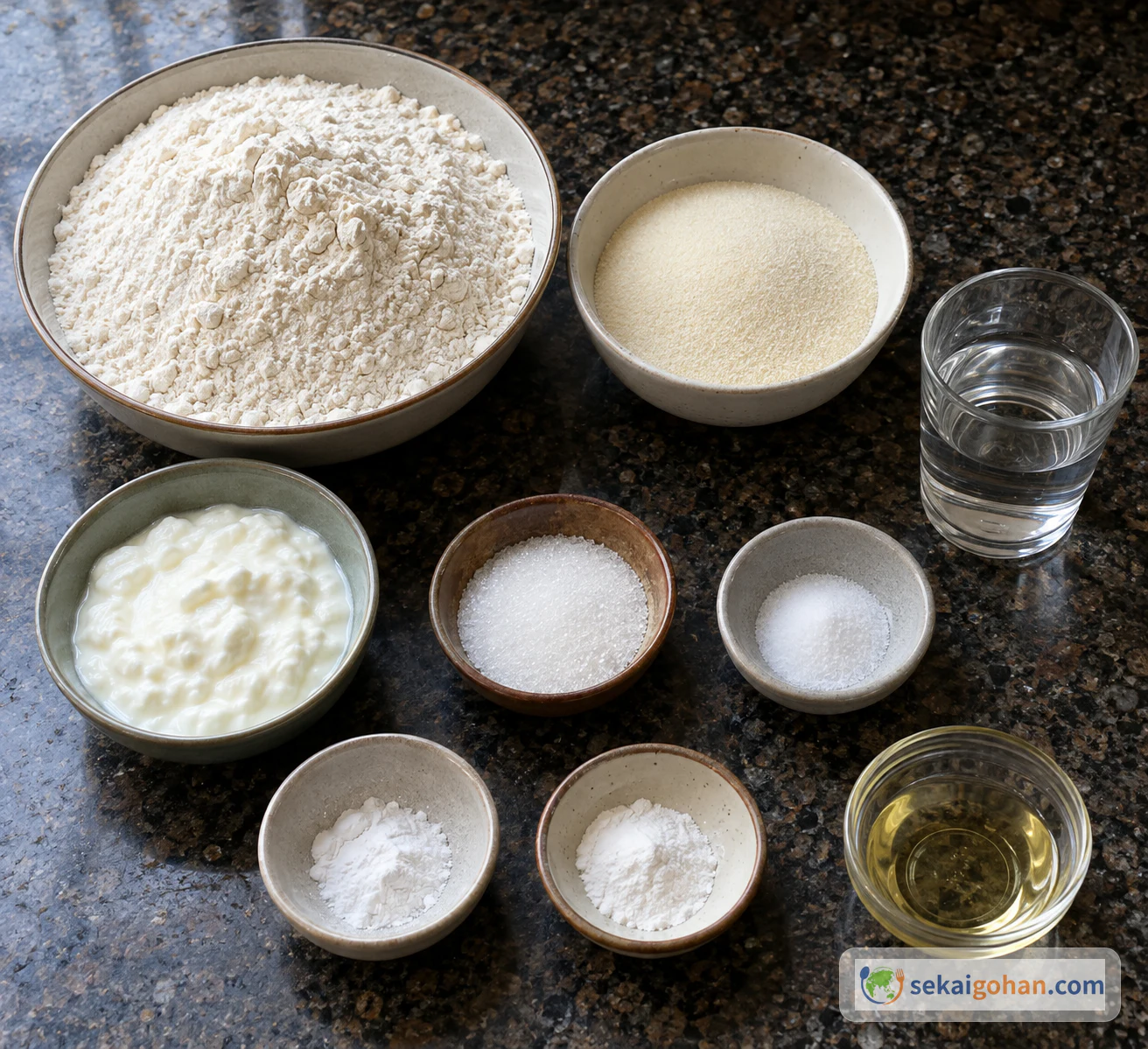
The 2 tbsp of oil or ghee goes into the dough; the oil for deep frying is separate.
Use 7 tbsp of semolina (not ⅓ cup).
Equipment
- Sieve
- Wide mixing bowl
- US measuring cups and spoons
- Clean cotton kitchen cloth, dampened
- Rolling pin and board
- Deep pot or kadai
- Slotted spoon
- Wire rack or paper towels
This bread contains wheat and milk (yogurt, and ghee if you use it). Check product labels for allergen and shared-facility statements. Never leave hot oil unattended, do not heat it until it smokes, and keep children and wet utensils away from the pan.
Choosing Ingredients for Bhatura
- Flour: Ordinary all-purpose flour (maida), a refined wheat flour, is what you want.
- Semolina: Look for fine semolina, sold as sooji or rava. A coarse grind changes the mouthfeel.
- Yogurt: Choose plain yogurt with no sugar or flavoring, since this is a savory bread.
- Oil or ghee in the dough: Either works. Ghee brings its own flavor, and it is a dairy product.
- Rice flour instead of semolina: Rice flour can take the place of semolina, and the bhature stay softer even after cooling.
Fixing Common Bhatura Problems
| Problem | Likely cause | What to do |
|---|---|---|
| Dough is dry or crumbly | Not enough water | Add water a little at a time and stop once no dry flour remains |
| Dough is sticky | Too much water | Work in only a small amount of flour |
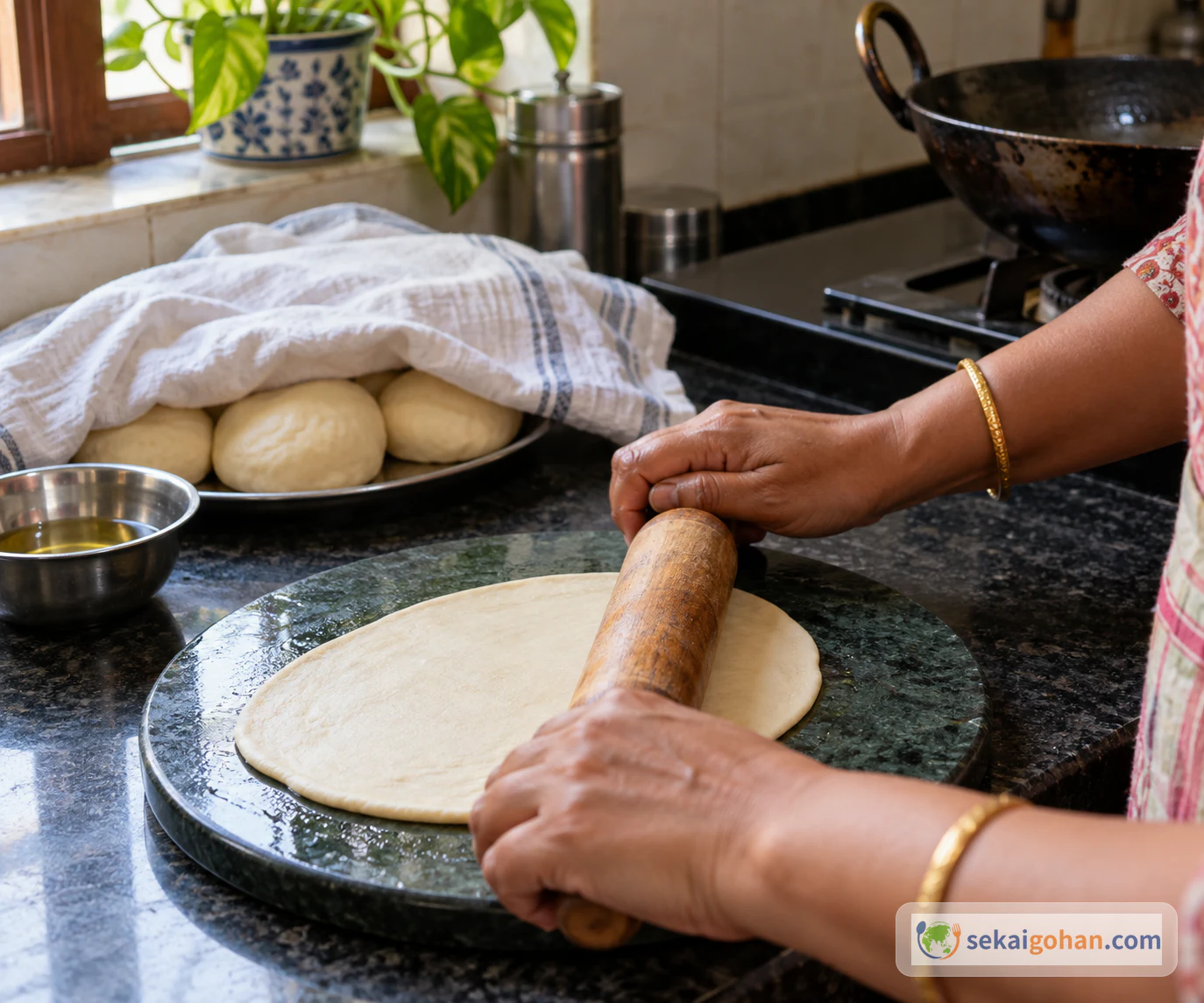
| Puffs unevenly or not at all | Uneven thickness, edges rolled too thin, or dough not soft enough | Roll evenly, keep the edges about 2–3 mm, and press the bread gently with a slotted spoon in the oil |
| Greasy bread | Oil too cool, so the bread absorbs oil | Let the oil come back up over medium to medium-high heat before the next one |
| Outside browns before it puffs | Oil too hot | Lower the heat slightly; the oil should never smoke |
Drop in a small piece of dough. If it rises to the surface quickly, the oil is ready.
Serving Bhatura and Other Doughs
Bhatura is meant to be eaten hot, as soon as it has drained. Chole or chana masala is the usual partner, with onion, pickle and lemon on the side.
Once you've made this version, two other doughs are worth trying. Each is a recipe of its own, with its own amounts and rest times. Every version shares a few things, though: a wheat dough, yogurt, some form of leavening, and that moment in hot oil when the flat oval puffs into bread.
| Variation | What changes | |
|---|---|---|
| Maida with whole wheat flour | Refined flour 11 oz (315g), wholewheat flour 9 oz (250g), salt 1 tsp, baking soda 1 tsp, plain yogurt 9 oz (250g), plus water and vegetable oil; rested 2–3 hours and divided into 20–25 pieces; fried in oil about 2 inches (5 cm) deep | |
| Instant bhatura | All-purpose flour 10.5 oz (300g), semolina 1.75 oz (50g), yoghurt 3 tbsp, salt and sugar ¾ tsp each, baking soda ¼ tsp, ghee 2 tbsp; rested at least 30 minutes and rolled slightly thicker before frying |
Frequently Asked Questions
Can I make bhatura without yeast?
Yes. This recipe uses no yeast at all. Yogurt, baking soda and baking powder do the work, with a 30–45 minute rest.
Why didn't my bhatura puff?
A bhatura puffs when three things come together: a soft, supple dough, even rolling, and oil at the right heat. Make sure the oval is the same thickness all over and the edges aren't rolled too thin. Press it gently with a slotted spoon as it fries, and keep the oil over medium to medium-high heat.
Is nutrition information available?
No figures are given, because how much oil each bread absorbs depends on how you fry it.