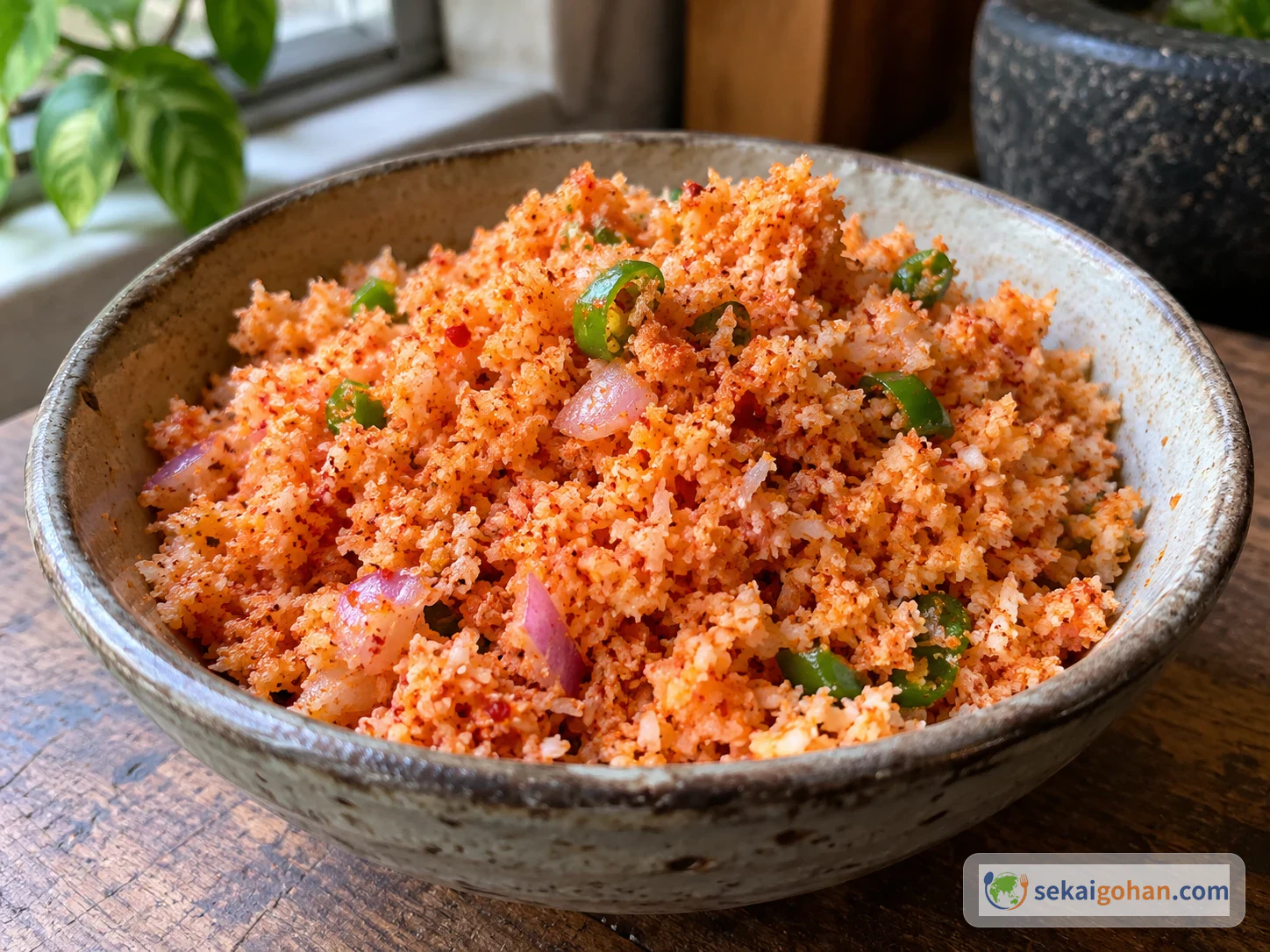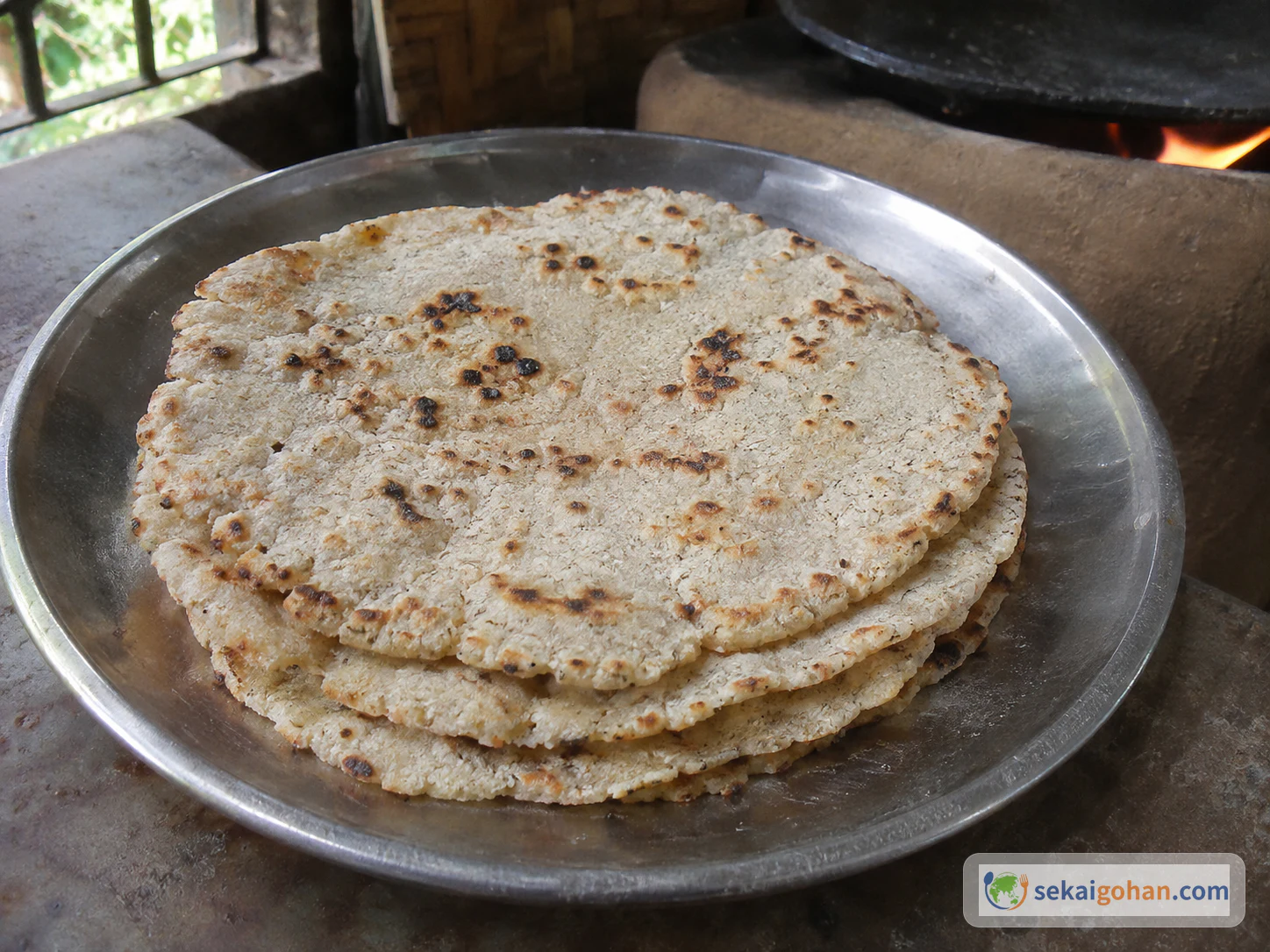
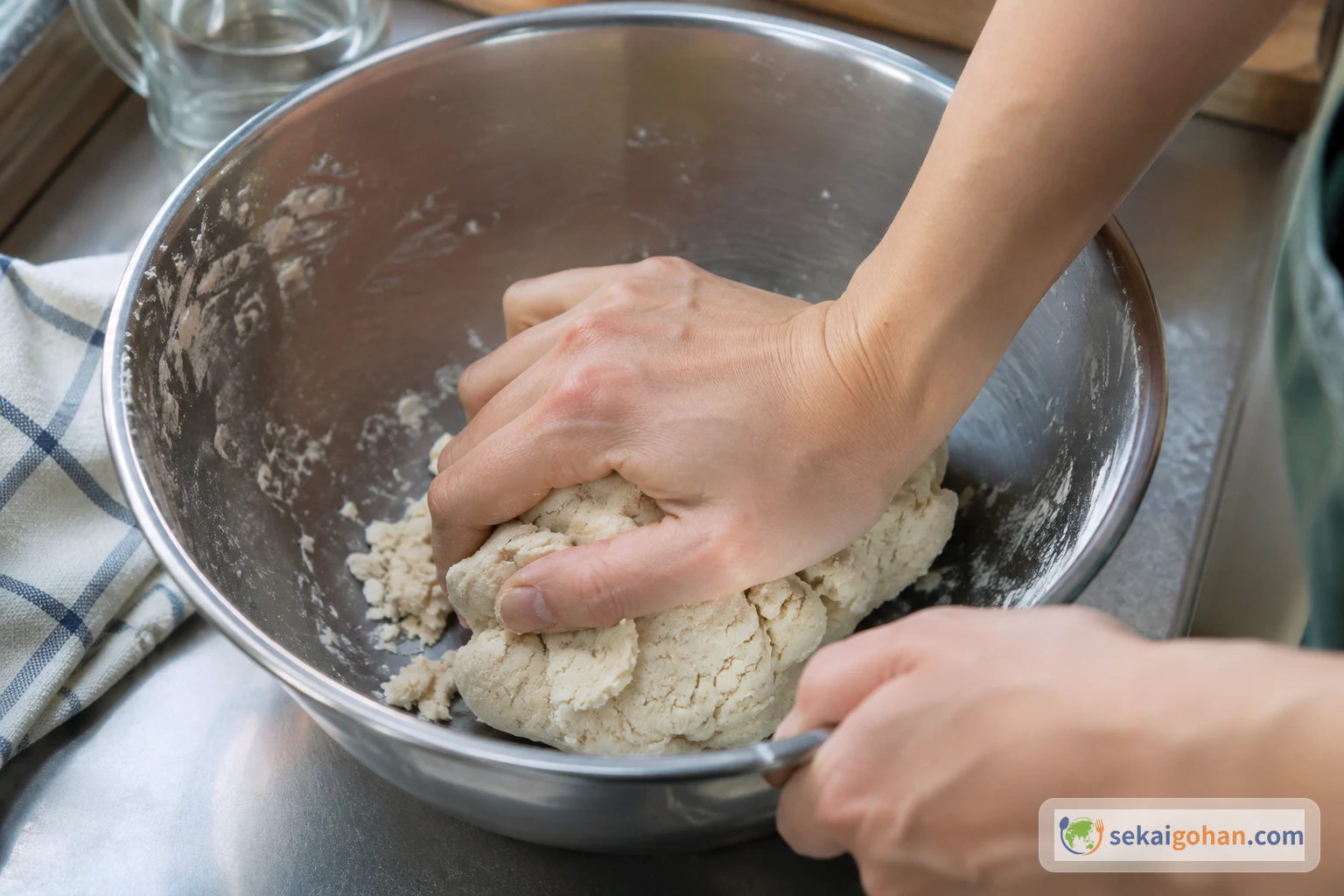
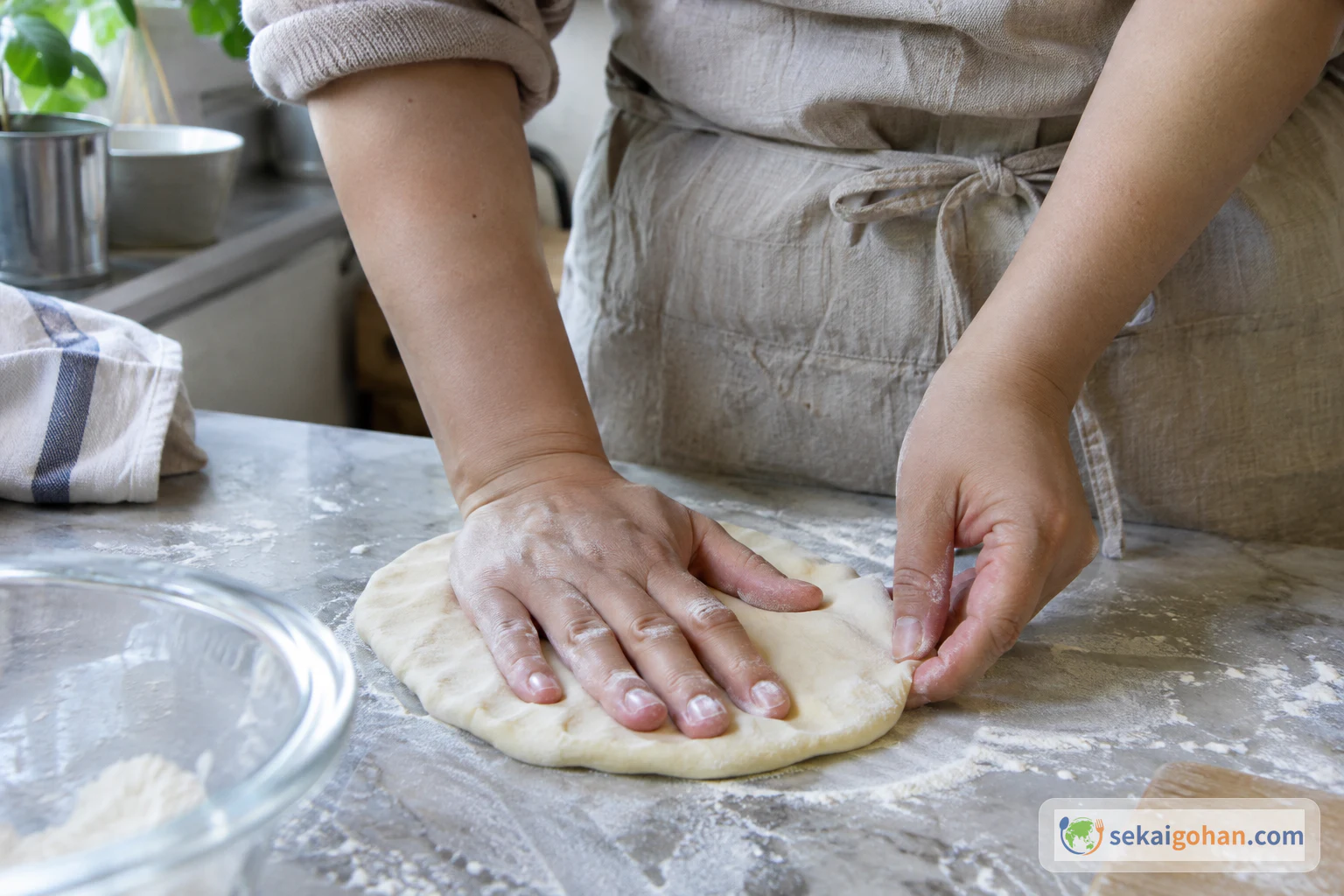
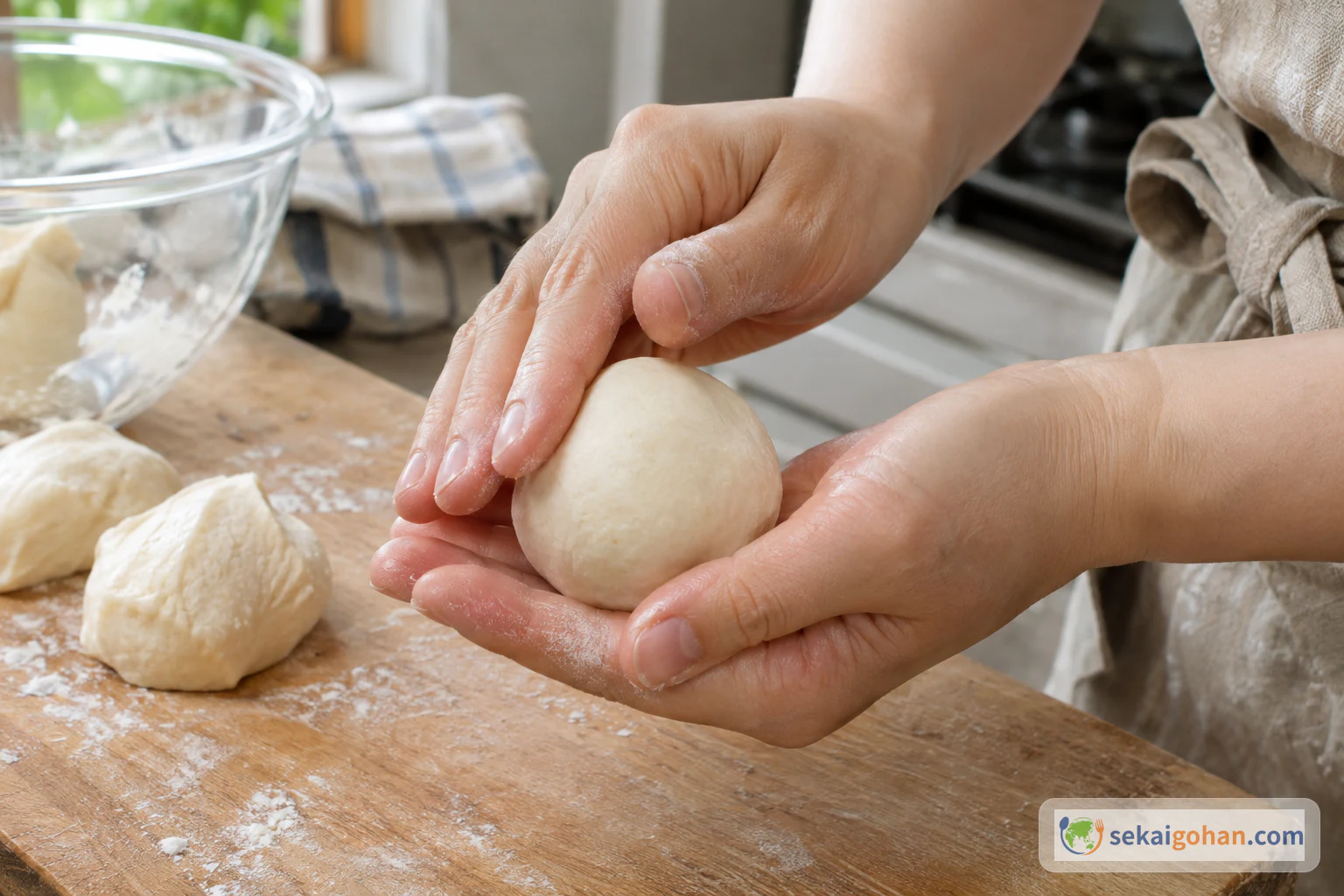
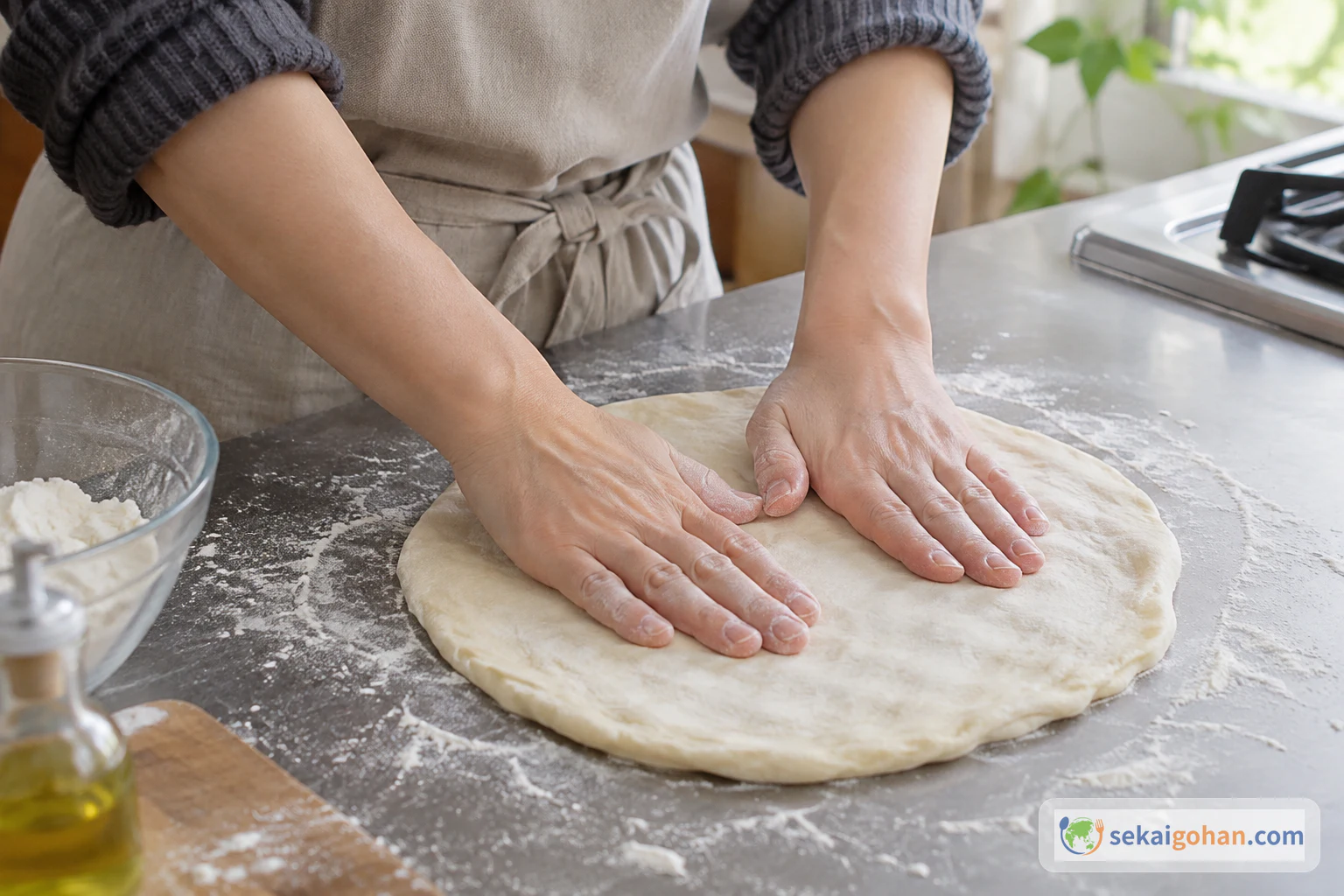
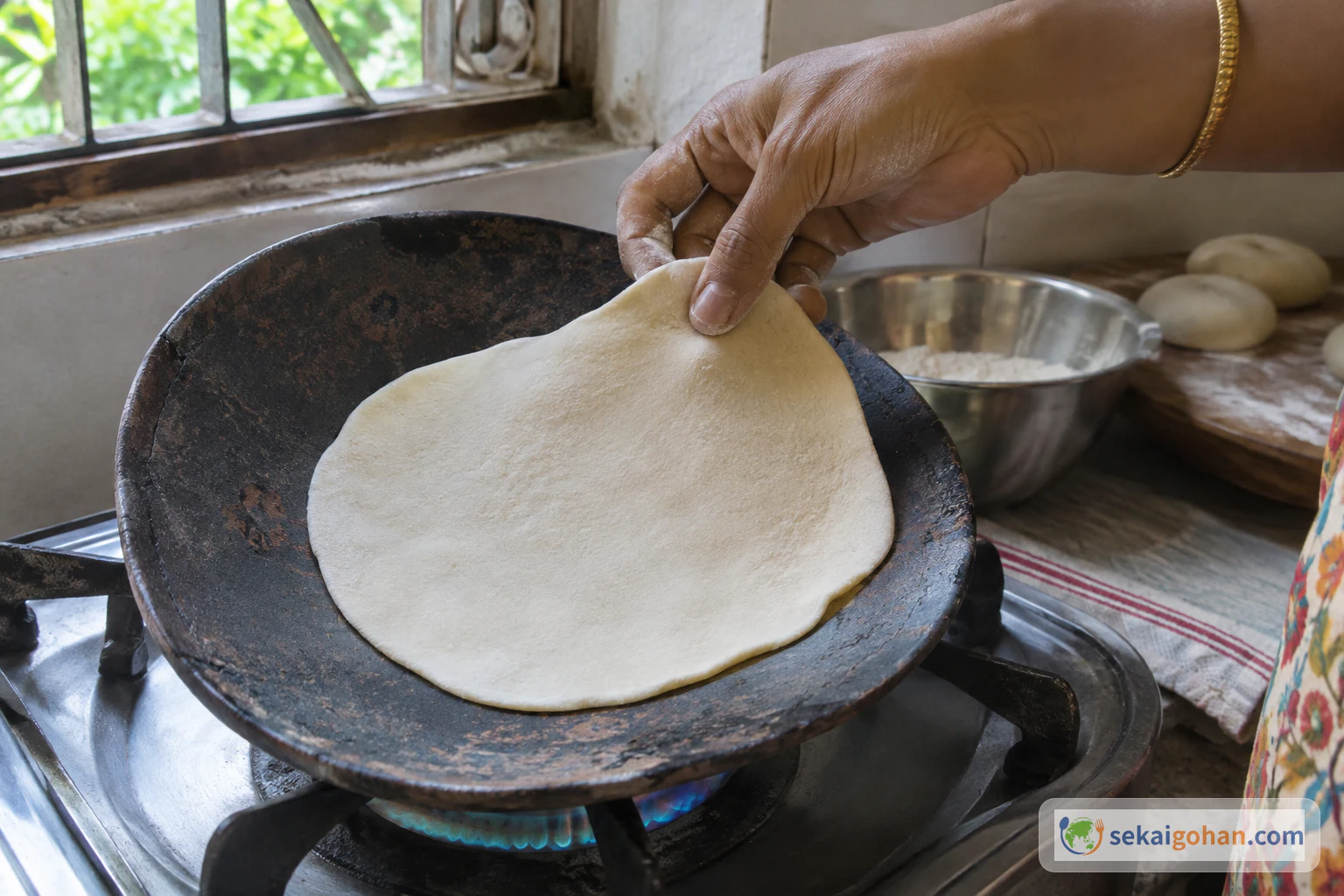
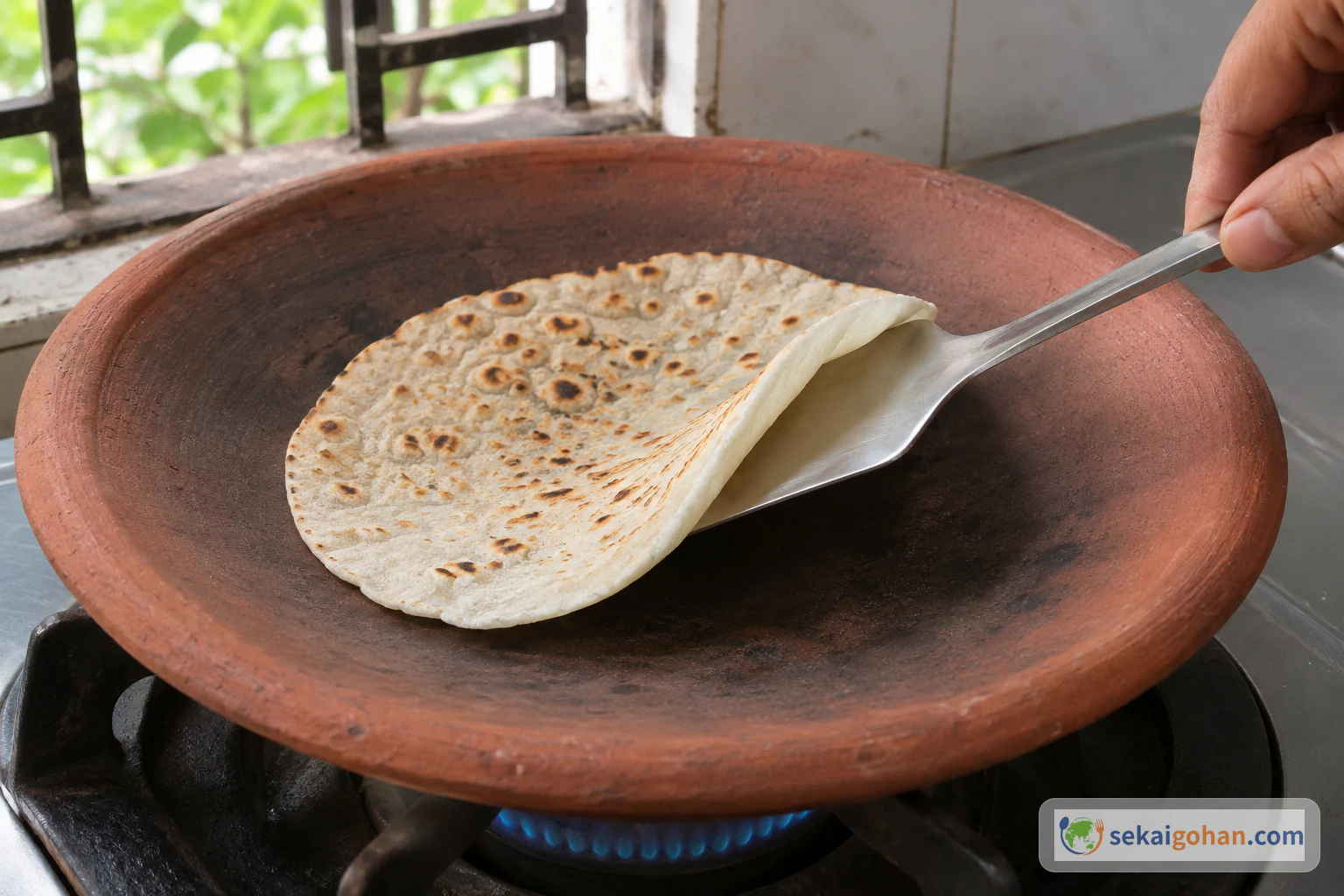
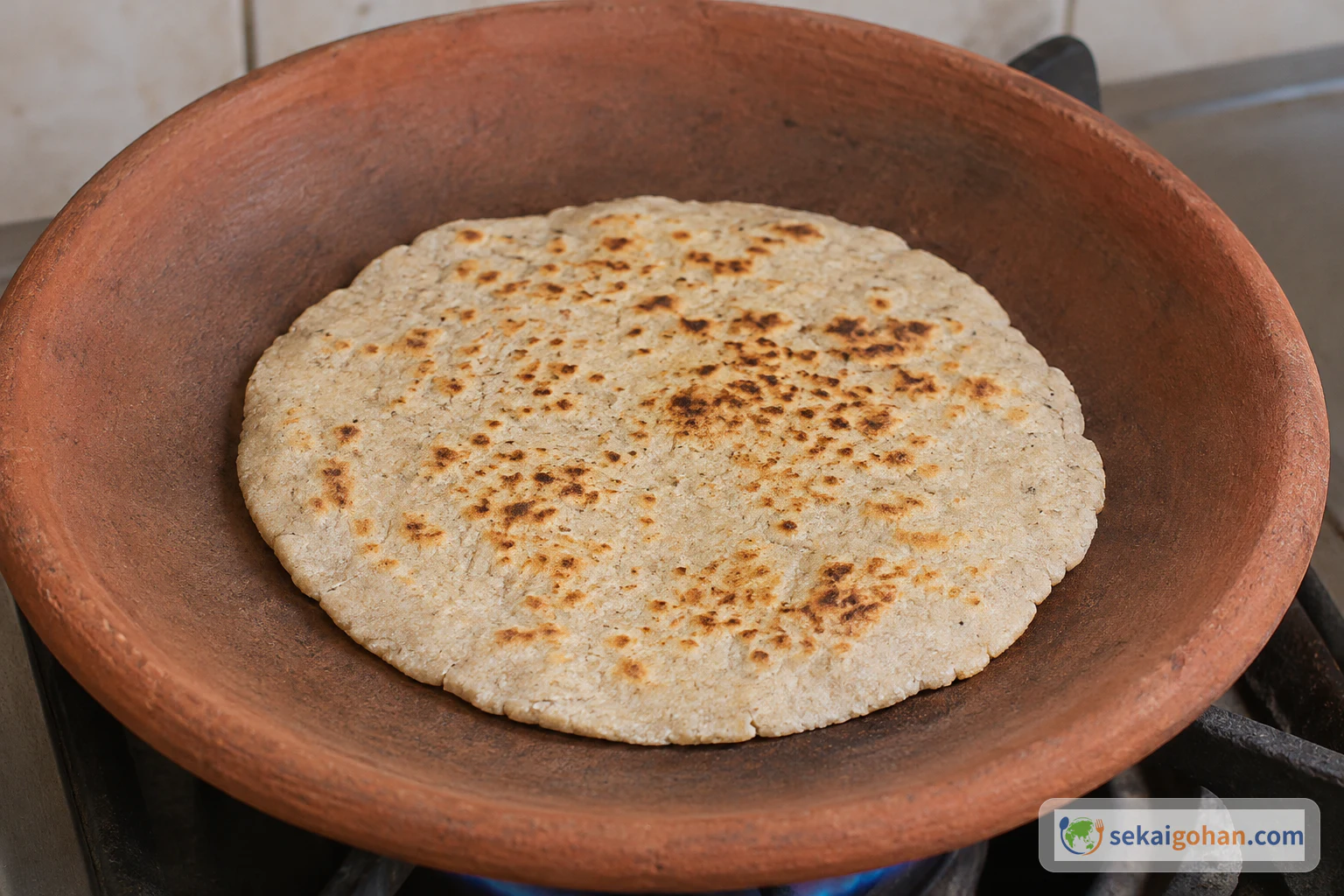
Steam rises off each round as it comes away from the hot clay khola, roasted dry on both sides with no oil at all. Before that, the dough has been pressed again and again under the palms and fingers until it turned soft, then spread into rounds by hand, with damp hands if it started to stick. This is kalai ruti (কালাই রুটি), a flatbread from Chapainawabganj in northwest Bangladesh, made from nothing but rice flour, mashkalai (black gram) flour and water. It is pressed and shaped by hand, never rolled, and eaten while it is still hot.
Kalai Ruti in Chapainawabganj and Rajshahi
Kalai ruti is a specialty of Chapainawabganj and the wider Rajshahi area, and part of North Bengal's culinary heritage. It has no single fixed formula: versions differ in their flours and proportions, and the region has more than one way of serving it. The method here is the Chapainawabganj way, and the dough has no salt, oil, wheat flour, yeast or egg.
In English you will see kalai ruti and kalai roti. Kalai refers to the pulse, and mashkalai is the Bengali name for black gram (urad). Searching with "mashkalai flour" or "urad flour" makes the flour easier to find outside Bangladesh.
Ingredients: Rice Flour, Mashkalai Flour and Water
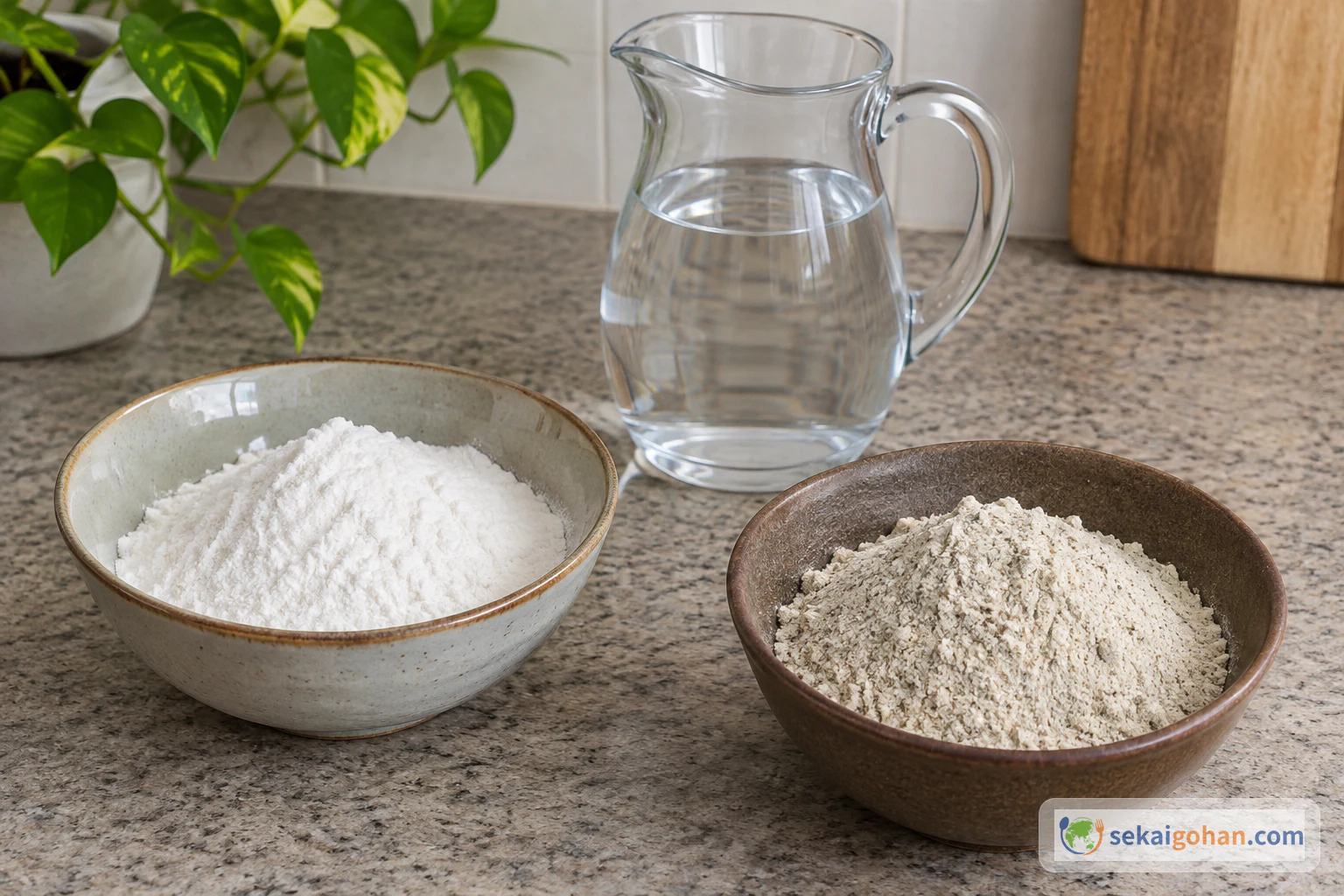
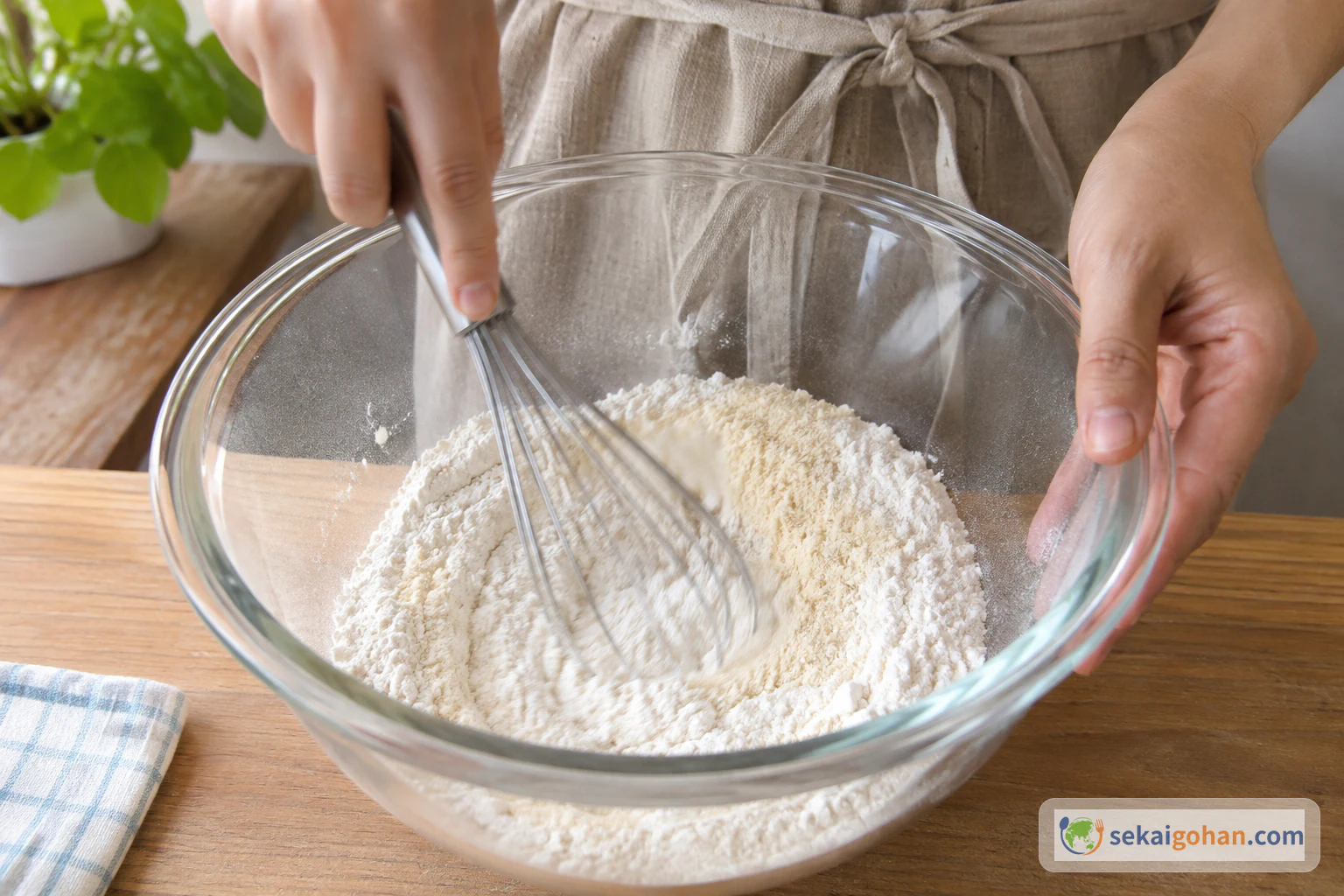
The dough has three ingredients. Add the water little by little and stop when the dough holds together firmly.
Equipment
- Sieve
- Mixing bowl
- A food-use clay khola (earthenware griddle) suitable for strong heat. A heavy food-use flat pan suitable for the heat you will use can serve as an alternative (see the note below).
- Spatula, for turning
- Serving plate
Choosing Flours and a Griddle for Kalai Ruti
Flours. Look for rice flour and mashkalai (black gram, urad) flour as two separate products; South Asian grocers often stock both. Check the label of each one for allergen and shared-facility information.
Griddle. Use a food-use clay khola suitable for strong heat over an earthen-stove fire or gas burner. A heavy food-use flat pan works as an alternative. Follow the maker's instructions on heat and use, and keep ordinary serving plates and tableware away from the flame.
Method: From Sieved Flour to Hot Bread
Judge each stage by its state: a firm dough first, then a soft dough after pressing, then a round without holes, then both sides dry-roasted. The photos show each action.
Fixing Kalai Ruti Dough
| What you see | What to try |
|---|---|
| Dry flour stays in the bowl and the dough won't come together | Add a little more water and keep working it until it forms a firm dough |
| The dough still feels firm and stiff when you go to shape it | Go back to pressing it with your palms and fingers until it softens |
| The dough sticks to your hands while spreading | Wet your hands lightly and continue |
| A hole opens while spreading | Press gently and evenly from the center outward. If a hole has already formed, patch it with a small piece of dough |
This is a bread made by feel. Judge the dough by eye and touch, and watch the bread on the griddle rather than the clock.
Serving Kalai Ruti and Other Versions
Kalai ruti can be eaten with hot beef, begun bhorta (mashed eggplant), dried chilies, pickles, onion, mustard oil and coriander chutney. Honestly, though, it is complete on its own, eaten hot and plain.
Elsewhere, the bread changes shape a little. One version reverses the proportions, using 10.5 oz (300 g) black gram to 3.5 oz (100 g) rice by weight, adds salt, and is served with a bharta alongside. Another North Bengal version includes wheat flour. Each has its own units, ratios and steps, so treat them as separate recipes.
Frequently Asked Questions
How big is the "cup" in this recipe?
The cup size is not given. Measure both flours with the same cup to keep the 3 to 1 ratio.
How many breads does it make, and how large should they be?
The dough is divided into three portions. Spread each one by hand and judge the size by eye.
Can I add salt or oil?
This version uses only rice flour, mashkalai flour and water, and the bread is dry-roasted without oil. Versions with salt or wheat flour are different recipes.
Can I make it ahead?
Kalai ruti is best served hot, straight from the griddle.
Is kalai ruti gluten-free or allergen-free?
Check the label of each flour for allergen and shared-facility information.