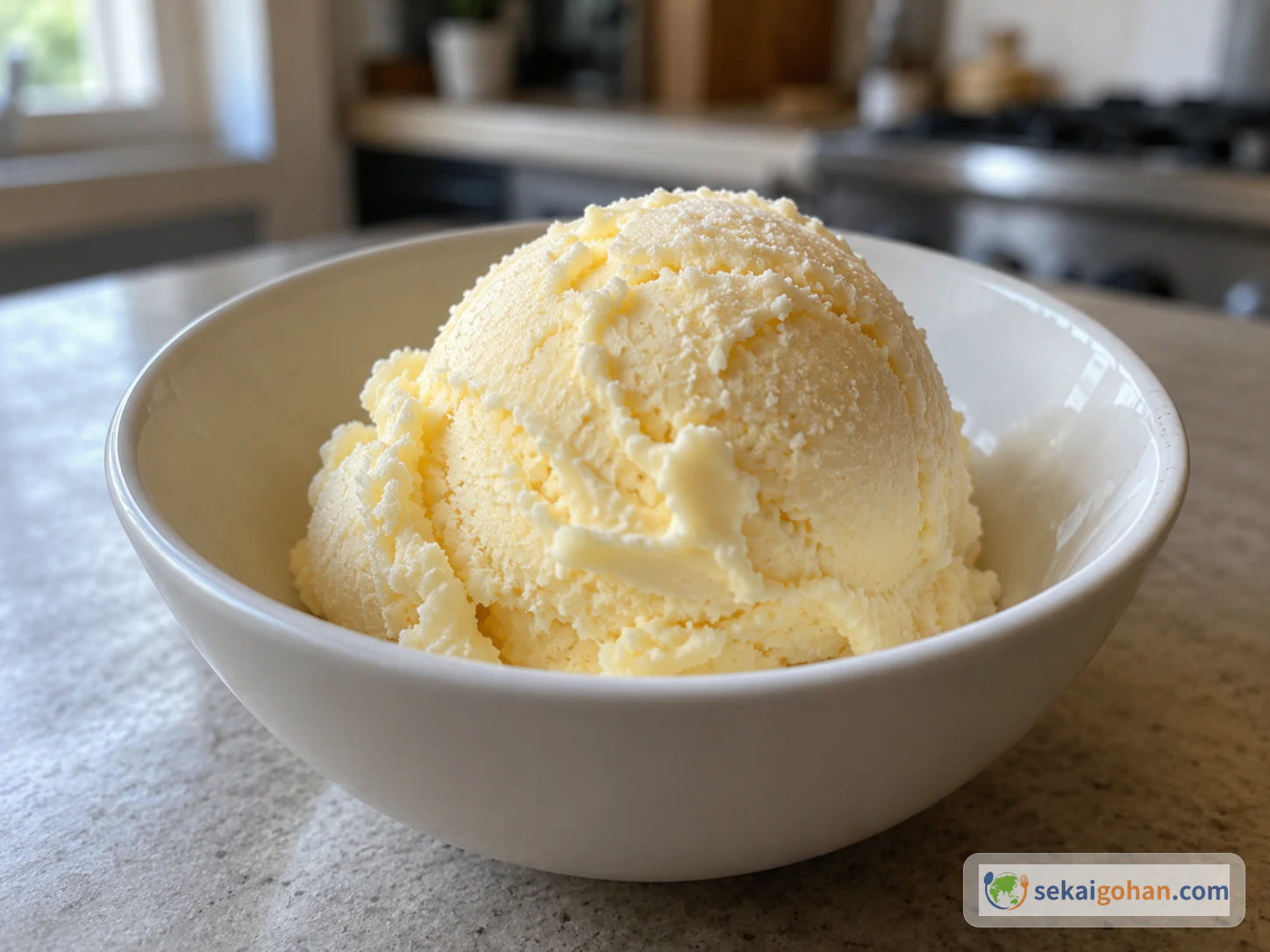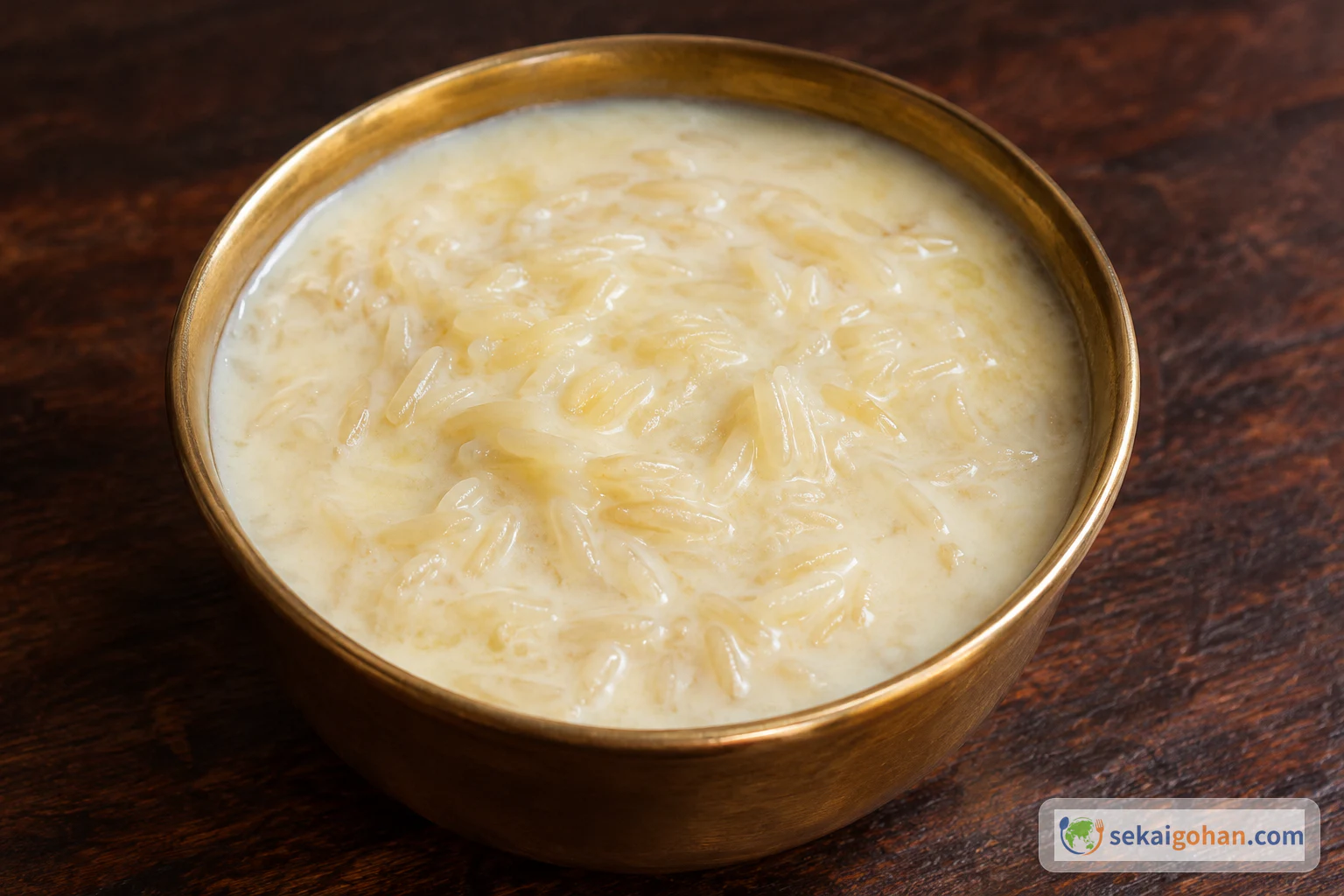
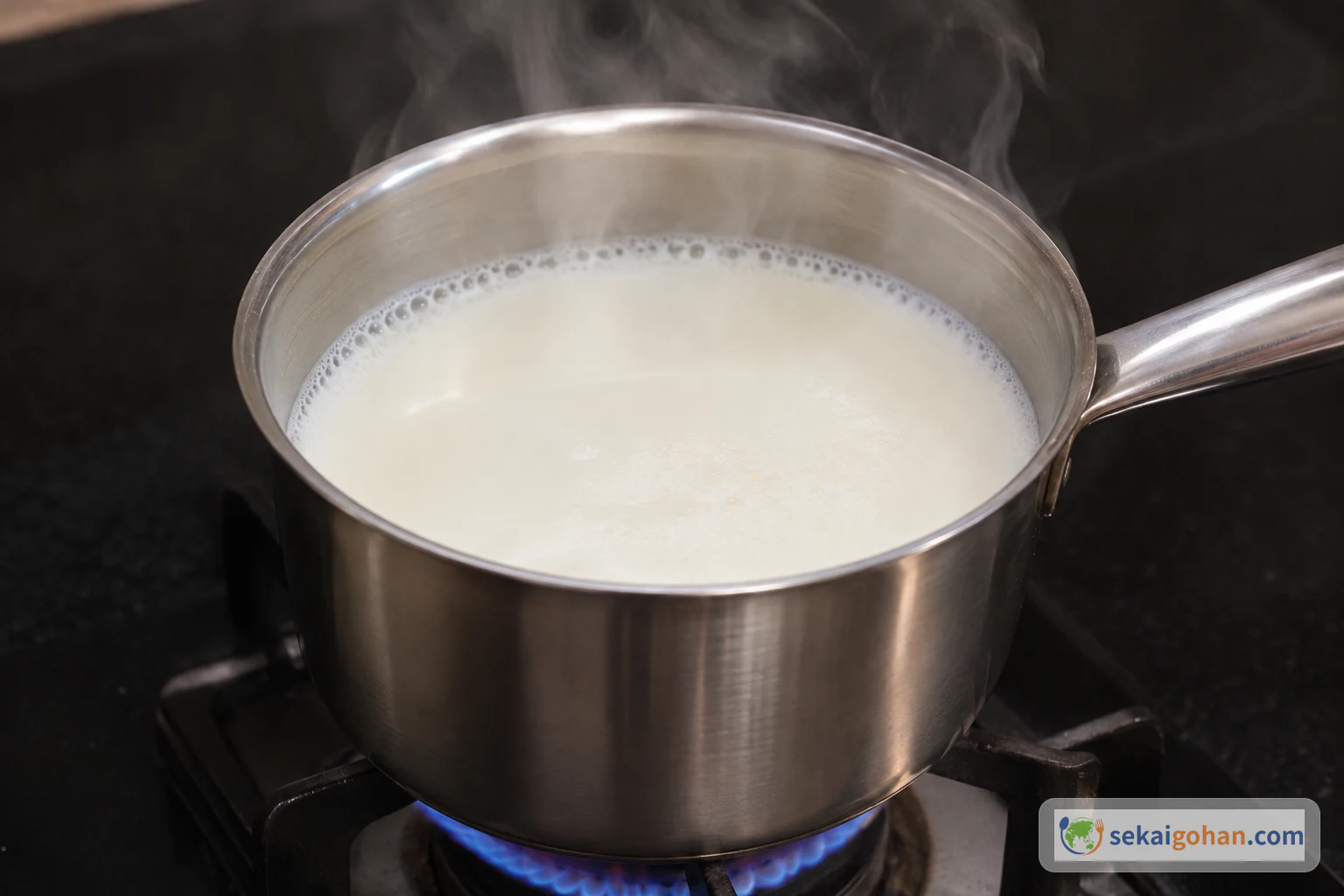
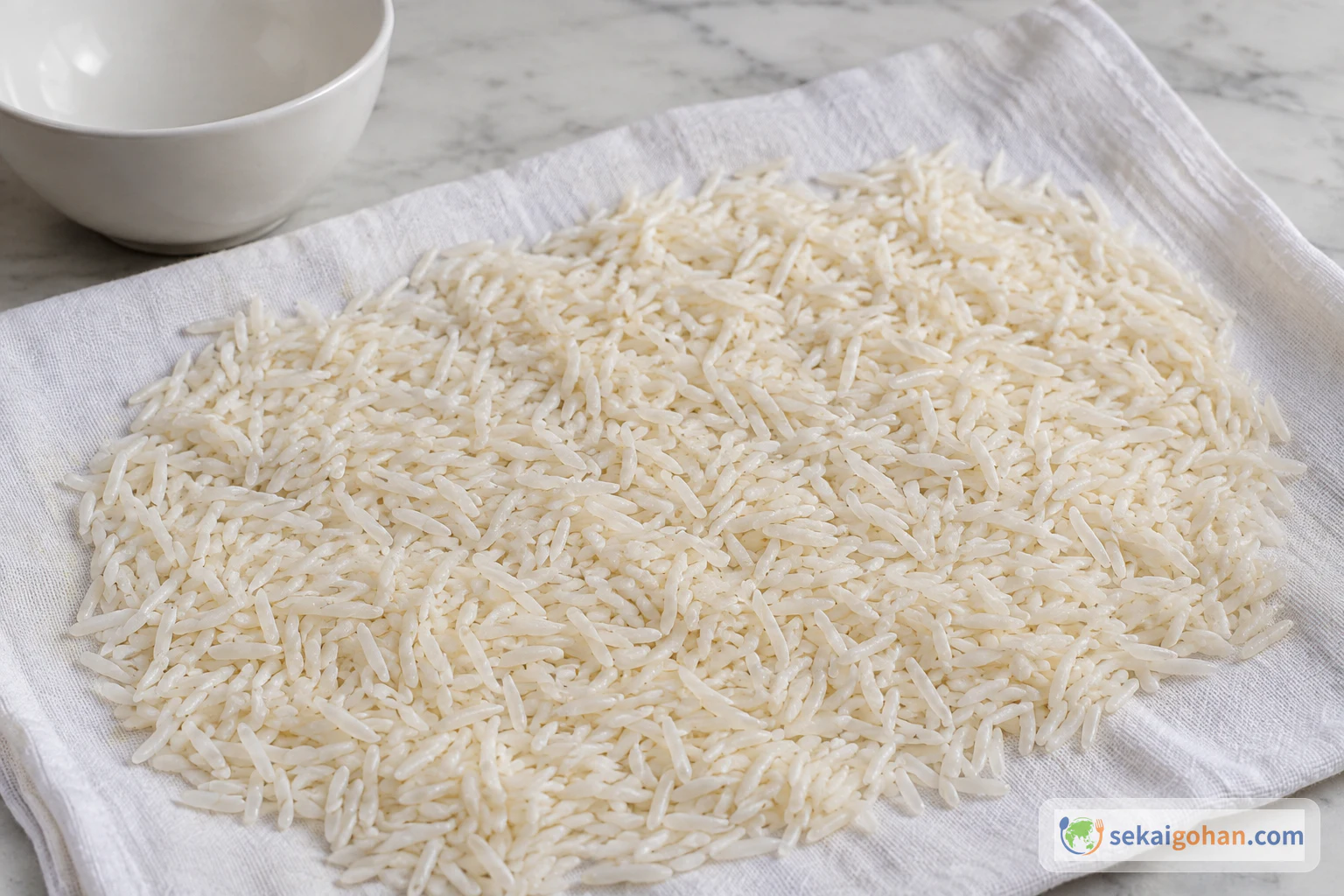
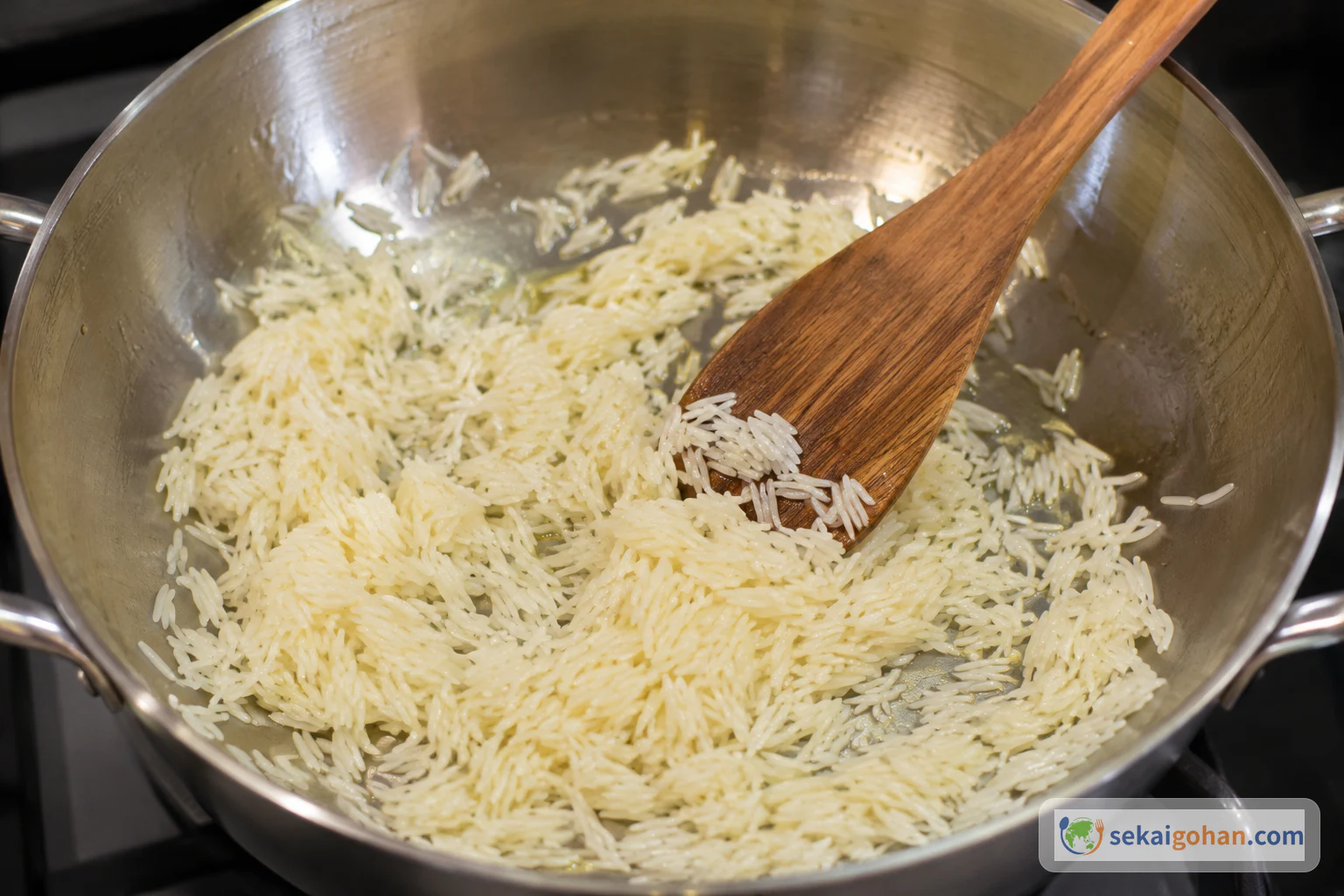
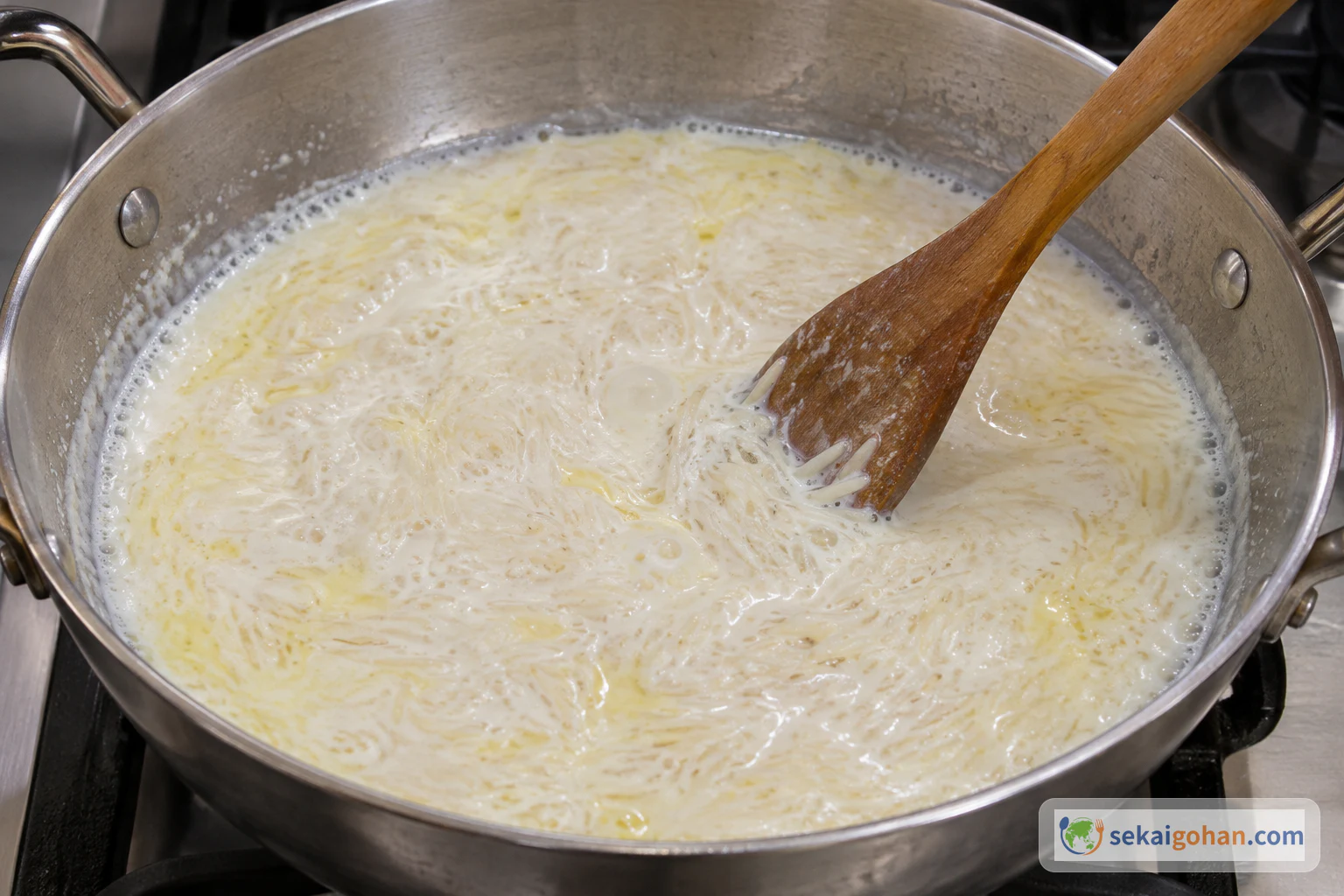
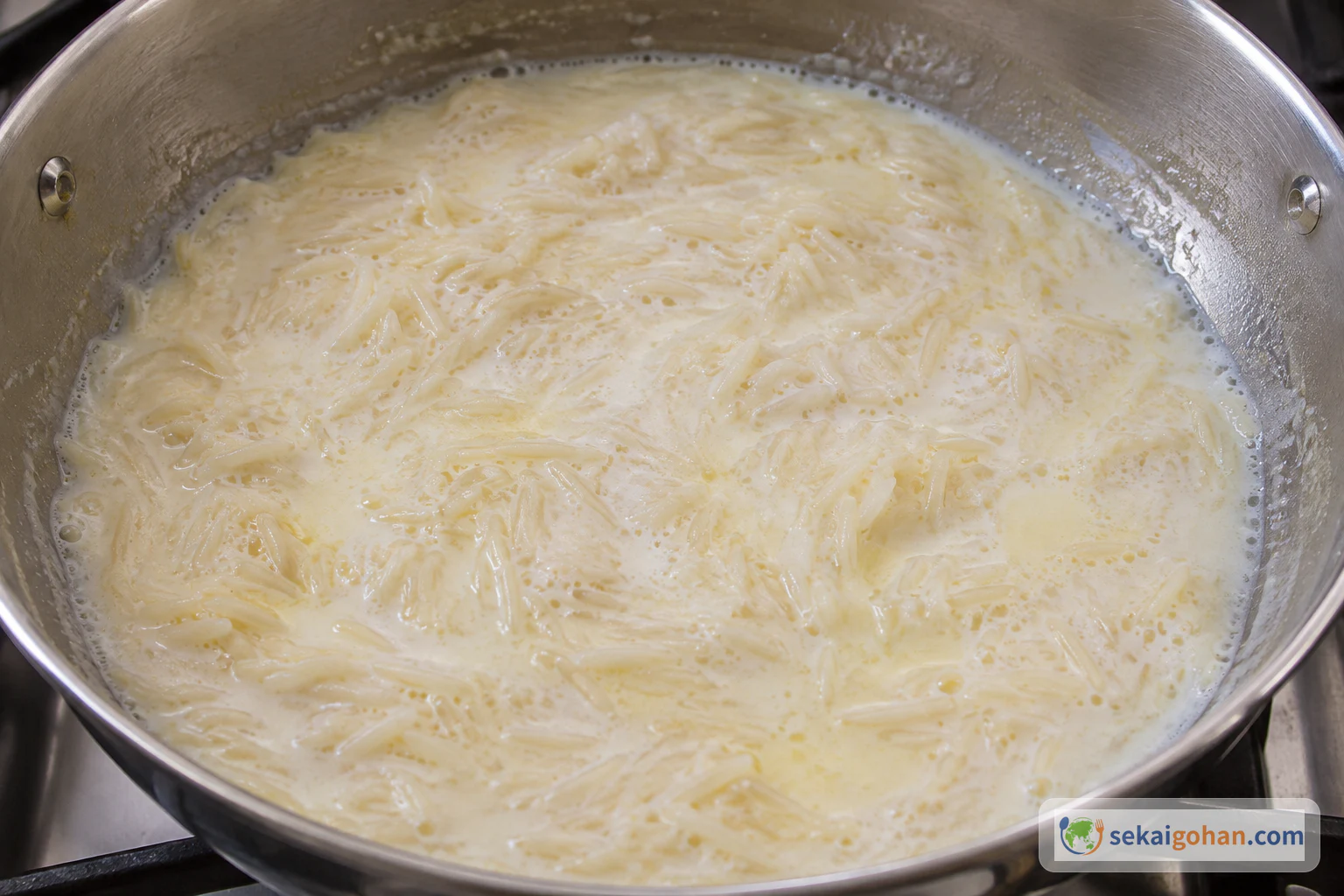
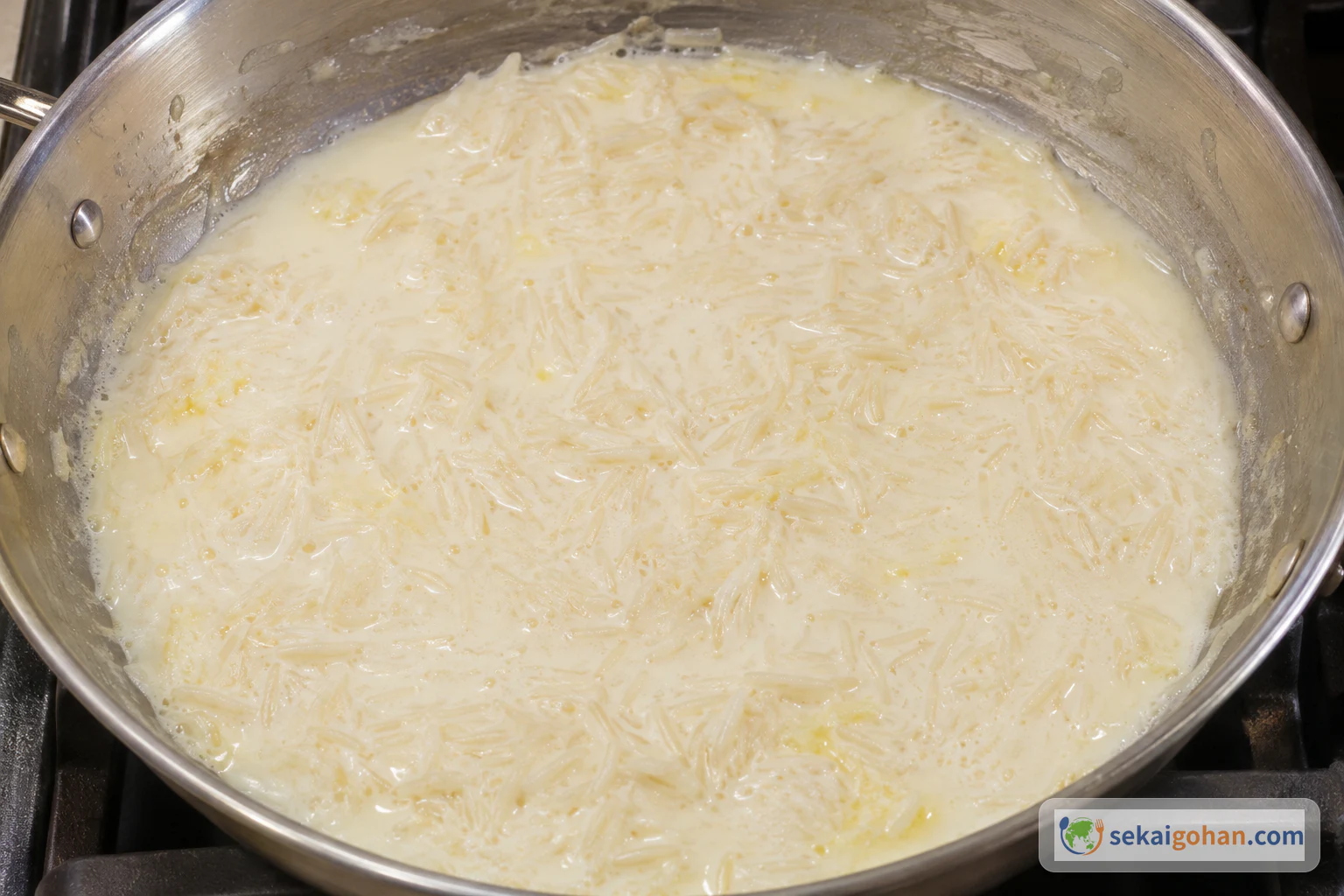
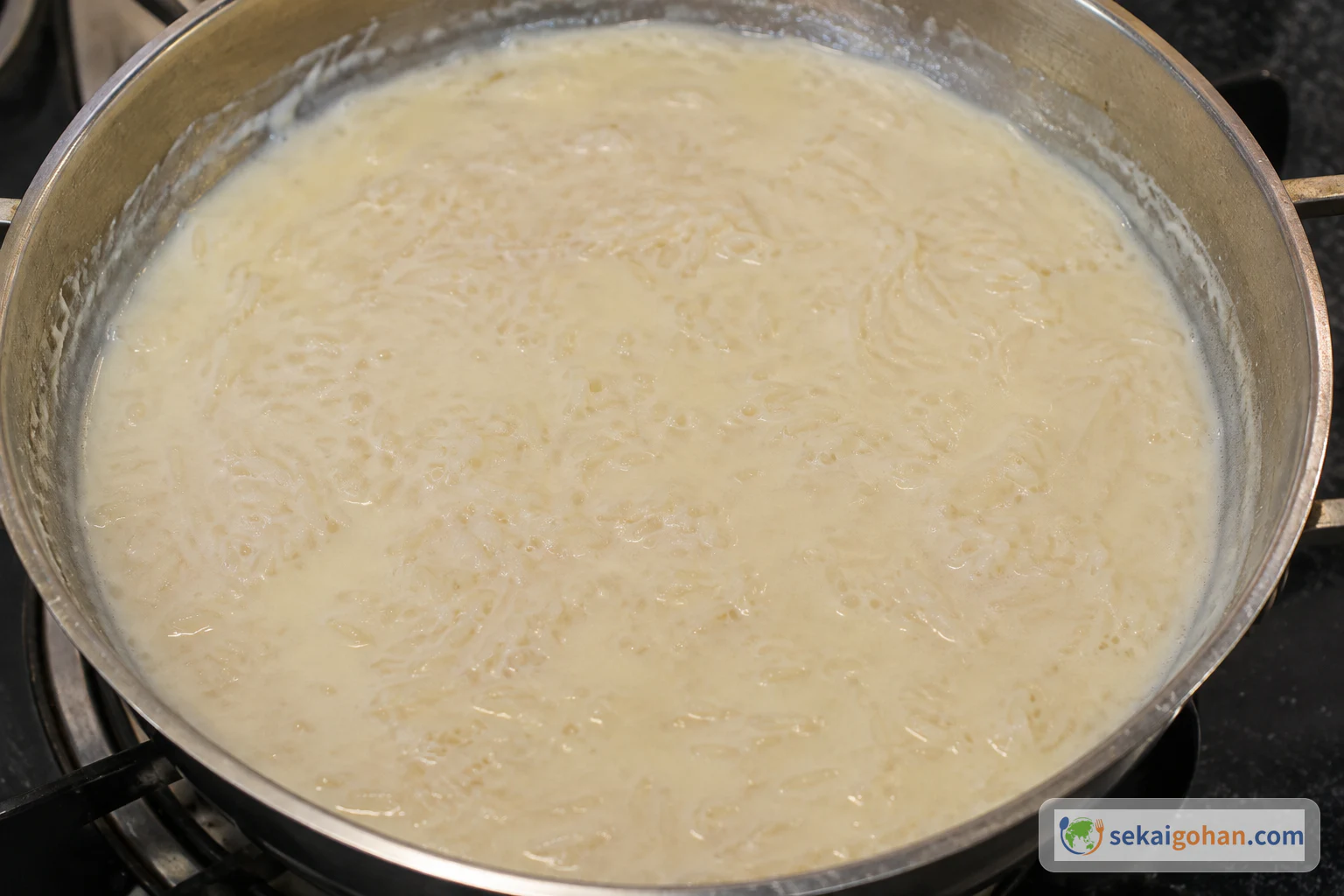
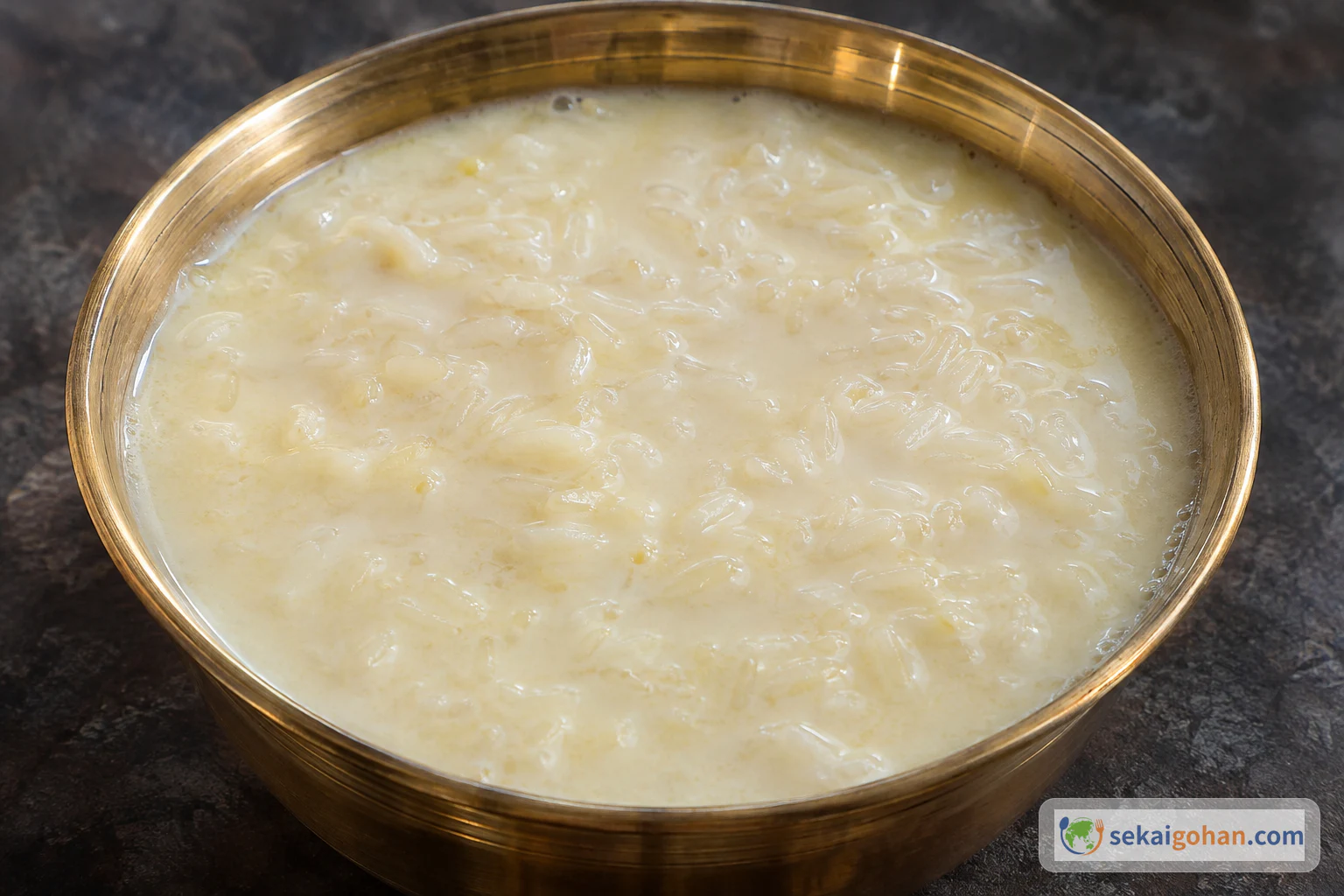
A spoonful of ghee melts in a wide pan. Slender white basmati grains go in and turn fragrant within about 30 seconds, without taking on any color. Then the hot milk goes in, and the pan stays uncovered for a long, gentle simmer. This is paal payasam, a Tamil-style rice payasam from Tamil Nadu: rice, milk, raw sugar and ghee, served plain and hot straight from the pan. It makes 4 servings in 60 minutes total (10 minutes of prep, 50 of cooking), but the softness of the rice tells you when to move on, not the clock.
Paal Payasam and Its Relatives
Payasam is a broad name that covers many dishes, and they change quickly from one region to the next. In Kerala, the Sadya feast serves payasams toward the end of the meal, including Palada and Ada Pradhaman. This open-pan paal payasam is a Tamil home-style dish and stands apart from that Kerala tradition.
Here is how it compares with a few related recipes:
| Style | How it differs |
|---|---|
| This Tamil-style paal payasam | Unbroken white basmati stirred in ghee with no soaking, cooked in hot milk in an open pan, sweetened with raw sugar once fully soft, and served with no flavorings or garnish |
| A Kerala-style pal payasam | Uses Chamba rice cooked in a pressure cooker, with a different formula and method |
| Kerala Sadya payasams | Types such as Palada and Ada Pradhaman are named as distinct payasams |
| A North Indian family-style kheer | Soaks rinsed basmati, adds it to boiling milk, skips the ghee, and uses cardamom, saffron, nuts and raisins |
These are comparisons between specific recipes, though. The names payasam and kheer don't always split dishes the same way. For more dishes from the same country, see the India page.
Ingredients: Four and No More
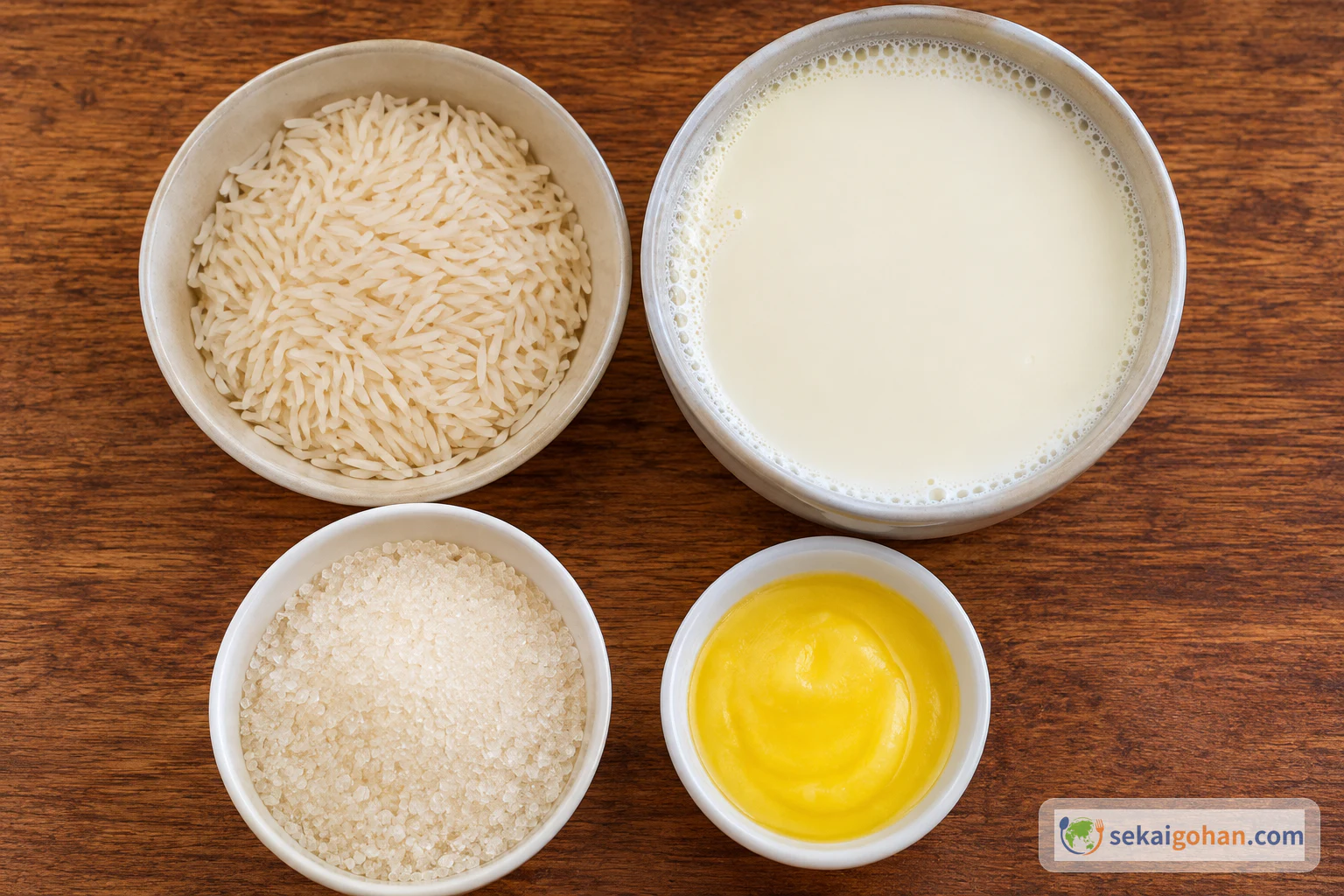
Use water only for rinsing the rice. No water goes into the pudding.
Equipment
- Saucepan for boiling the milk
- Wide, thick-bottomed pan
- Bowl for rinsing the rice
- Clean plate or cloth for drying the rice
- Spoon for stirring
- Ladle and serving bowls
Choosing Rice, Milk and Sugar for Paal Payasam
Rice: Buy ordinary polished white basmati with the grains intact. "Whole" rice here means rice that hasn't been ground. It doesn't mean brown rice, so skip brown rice, and skip rice flour and broken rice too.
Milk: Choose pasteurized whole cow's milk from the store and boil it well before you start.
Sugar and flavorings: Raw sugar is the only sweetener, so leave out jaggery and condensed milk. The payasam also goes without cardamom, saffron, rose, nuts, raisins or any other garnish. Add them and you're making a different dish.
Method: The Rice Softens First, the Sugar Comes Later
Add the sugar only when the rice is fully soft. About 30 minutes of simmering is a midway point, not the finish. Go by the rice in your own pan rather than the clock or the photos.
Paal Payasam Troubleshooting
Most problems show up in the pan long before you taste anything, so keep an eye on it as you stir.
| What you notice | What to do |
|---|---|
| The rice is starting to color in the ghee | It should stay pale. Keep the heat at low to medium, stir for only about 30 seconds until fragrant, and add the hot milk |
| The milk is catching on the bottom | Check that the heat is no higher than low to medium, and stir more regularly |
| The rice is still firm after about 30 minutes | That is an expected midway stage. Keep simmering uncovered and hold back the sugar |
| You are unsure whether the rice is ready for sugar | Lift out a few grains and check them. If any are not fully soft, keep simmering |
| You can still see sugar crystals | Keep stirring until they dissolve, then continue reducing |
| The milk looks thin after 8–10 minutes | Keep simmering until the milk has reduced and thickened |
Frequently Asked Questions
Is it done after 30 minutes?
No. At around 30 minutes the rice is only about three-quarters cooked. Keep simmering until it is fully soft, and only then add the sugar.
Do I need to reduce the milk by half?
No. Once the sugar has dissolved, simmer for about 8–10 minutes, until the milk has reduced and thickened.
Can I make it ahead or serve it cold?
This payasam is meant to be cooked and served fresh and hot, right away.